A Practical Guide to RNA-seq Differential Expression Analysis: From Candidate Genes to Confident Conclusions
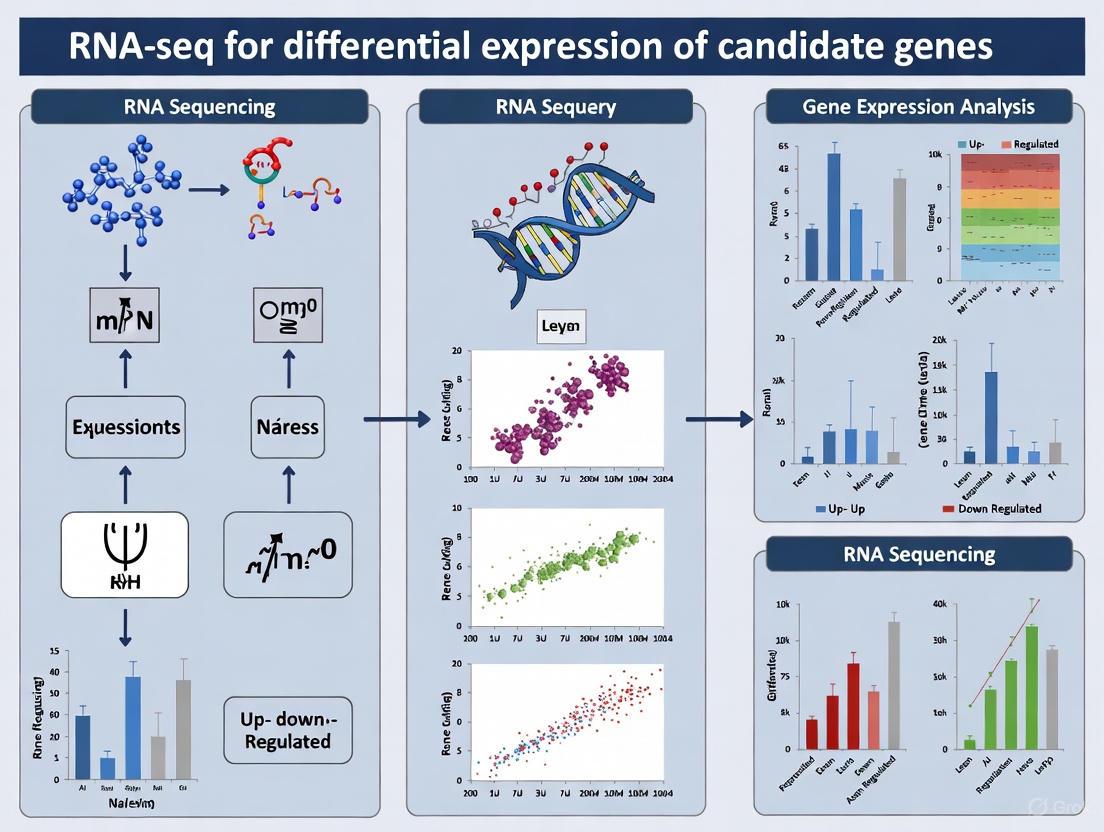
This article provides a comprehensive, decision-oriented guide for researchers and drug development professionals conducting RNA-seq differential expression analysis on candidate genes.
A Practical Guide to RNA-seq Differential Expression Analysis: From Candidate Genes to Confident Conclusions
Abstract
This article provides a comprehensive, decision-oriented guide for researchers and drug development professionals conducting RNA-seq differential expression analysis on candidate genes. It covers the complete workflow from foundational principles and experimental design to advanced methodological execution, troubleshooting common pitfalls, and rigorous validation of findings. By synthesizing current best practices and comparative tool assessments, this guide empowers scientists to design robust experiments, select appropriate computational tools, optimize analytical parameters, and confidently interpret results for impactful biological and clinical insights.
Laying the Groundwork: Core Principles and Experimental Design for Robust RNA-seq
Within the framework of RNA sequencing for differential expression analysis, the transformation of complementary DNA (cDNA) into a digital count matrix constitutes a critical computational phase. This process converts analog expression signals into quantitative data that powers statistical discovery of candidate genes [1]. The integrity of this step directly influences the accuracy and reliability of all subsequent biological interpretations, making it a cornerstone of robust transcriptomics research [2]. This guide details the experimental protocols and key decision points for researchers and drug development professionals executing this core component of the RNA-seq workflow.
Key Stages from cDNA to Count Matrix
Library Preparation and Sequencing
Following cDNA synthesis, the library is prepared for sequencing. This involves fragmentation of cDNA, size selection, and the ligation of sequencing adapters containing sample-specific barcodes to enable multiplexing [3]. The choice between stranded and non-stranded library prep is crucial; stranded protocols preserve the information about the originating DNA strand, allowing for the precise identification of antisense transcripts and enhancing the annotation of genes in overlapping regions [4] [5]. The final library is then sequenced on a high-throughput platform.
Read Alignment and Splice-Aware Mapping
Sequencing produces raw read files (typically in FASTQ format), which must be aligned to a reference genome or transcriptome. For eukaryotic mRNA, this requires specialized splice-aware aligners capable of mapping reads that span exon-exon junctions, a challenge posed by intron splicing [6] [7].
Alignment Strategy Decision Matrix:
| Strategy | Pros | Cons | Best For |
|---|---|---|---|
| Align against genome (Splice-aware) [6] | Most versatile; enables novel transcript, splicing variant, and fusion gene discovery. | Computationally intensive. | Comprehensive analysis, novel discovery. |
| Align against transcriptome [6] | Simpler, faster alignment. | Limited to known annotations; cannot detect novel genes or variants. | Well-annotated organisms, targeted studies. |
| Pseudo-alignment (e.g., Salmon, Kallisto) [6] | "Blazingly fast"; provides accurate quantification. | Cannot detect novel transcripts or genomic anomalies; quantification-focused. | Rapid gene-level expression quantification. |
Commonly used splice-aware aligners include STAR, HISAT2, and TopHat2 [6] [7]. The alignment output is a Sequence Alignment Map (SAM) or its compressed binary version (BAM) file, cataloguing where each read maps within the genome.
Quantification: Generating the Count Matrix
The aligned reads are then assigned to genomic features (e.g., genes, exons) to create the count matrix. This step determines the raw expression value for each gene in each sample.
Tools for Read Quantification:
| Tool | Method | Key Features |
|---|---|---|
| featureCounts (Rsubread) [8] | Alignment-based | Fast and widely used for generating count matrices from BAM files. |
| HTSeq [8] | Alignment-based | Provides precise counting rules for handling ambiguous reads. |
| summarizeOverlaps (GenomicAlignments) [8] | Alignment-based | An R/Bioconductor function for flexible read counting in R. |
| NCBI Pipeline [9] | Alignment-based | Uses HISAT2 for alignment and featureCounts for quantification on submitted human/mouse data. |
The result is a count matrix—a table where rows represent genes, columns represent samples, and each cell contains the raw number of reads assigned to that gene in that sample [8] [9]. This matrix is the fundamental input for differential expression analysis tools.
Experimental Workflow
The following diagram illustrates the complete workflow from sample to count matrix, highlighting key decision points.
Normalization and Quality Control
The raw count matrix cannot be compared directly between samples due to technical variations like sequencing depth and RNA composition [10]. Normalization is essential.
Common Normalization Methods for Downstream Analysis:
| Method | Package | Principle | Best Use |
|---|---|---|---|
| DESeq2's Median of Ratios [2] [10] | DESeq2 | Estimates size factors based on the median ratio of counts to a per-gene geometric mean. | Differential expression analysis between samples. |
| Trimmed Mean of M-values (TMM) [2] [10] | edgeR | Uses a weighted trimmed mean of log-expression ratios to estimate scaling factors. | Differential expression analysis between samples. |
| TPM [9] [10] | Various | Transcripts Per Kilobase Million. Accounts for gene length and sequencing depth. | Within-sample gene expression comparisons. |
| FPKM/RPKM [9] [10] | Various | Similar to TPM but with a different calculation order. Not recommended for between-sample comparisons. | Legacy data; use TPM instead. |
Post-alignment Quality Control (QC) is critical. Tools like RSeQC and Picard Tools can evaluate sequencing saturation, coverage uniformity, and strand specificity [6]. Sample-level QC is performed using Principal Component Analysis (PCA) and hierarchical clustering on normalized, log-transformed counts to identify batch effects, outliers, and overall data structure [10] [1].
The Scientist's Toolkit
Research Reagent Solutions and Essential Materials
| Item | Function in the Workflow |
|---|---|
| Poly(A) Selection Beads | Enriches for mRNA by binding the poly-A tail, reducing ribosomal RNA (rRNA) contamination [5] [3]. |
| Ribo-depletion Kits | Selectively removes rRNA from total RNA, preserving both coding and non-coding RNA species [5] [3]. |
| Library Prep Kit (e.g., Illumina Stranded) | Provides all reagents for cDNA fragmentation, end-repair, dA-tailing, and adapter ligation in a single, optimized system [5]. |
| DNase I (RNase-free) | Ensures RNA samples are completely free of genomic DNA contamination prior to library preparation [4]. |
| Agilent Bioanalyzer/TapeStation | Assesses RNA Integrity Number (RIN) to confirm input RNA quality and checks final library size distribution [4] [1]. |
| Size Selection Beads (e.g., SPRI) | Performs clean-up and size selection of cDNA fragments to ensure libraries contain inserts of the desired length [3]. |
| CCT373566 | CCT373566, MF:C26H29ClF2N6O3, MW:547.0 g/mol |
| (R)-Tco4-peg7-NH2 | (R)-Tco4-peg7-NH2, MF:C25H48N2O9, MW:520.7 g/mol |
The path from cDNA to a count matrix is a multi-stage process laden with critical choices that define the scope and resolution of an RNA-seq study. The selection between alignment-based and pseudoalignment-based quantification, coupled with the appropriate normalization strategy, tailors the analysis to the research objective, whether it is novel transcript discovery or rapid candidate gene screening. By adhering to rigorous QC protocols and understanding the tools and reagents involved, researchers can generate a high-quality count matrix—a robust foundation for identifying differentially expressed genes with confidence in drug development and basic research.
The reliability of conclusions drawn from RNA-seq data, especially in differential expression (DE) studies for identifying candidate genes, is not a matter of chance but a direct consequence of rigorous experimental design. Flawed designs can lead to wasted resources, irreproducible results, and misleading biological interpretations. This document outlines critical considerations for researchers designing RNA-seq experiments, focusing on three pillars of robust design: biological replication, optimal sequencing depth, and the mitigation of batch effects. The primary goal is to provide actionable protocols and evidence-based guidelines to ensure that your RNA-seq data is both powerful and trustworthy for downstream differential expression analysis.
The Critical Role of Biological Replication
Biological vs. Technical Replicates
A fundamental decision in any experimental design is the type of replication to use. In RNA-seq, the distinction is critical:
- Biological Replicates are measurements derived from distinct biological samples (e.g., different animals, individual plants, or independently cultured cell lines) representing the same condition. They are essential for capturing the natural biological variation within a population, which is necessary for making generalizable statistical inferences about the condition being studied [11].
- Technical Replicates are repeated measurements of the same biological sample. While they were once important for measuring technical noise in microarray experiments, in modern RNA-seq, technical variation is considerably lower than biological variation. Consequently, technical replicates are generally unnecessary and do not increase the power to detect biologically relevant differential expression [11] [12].
The following diagram illustrates the logical relationship between replication, sequencing depth, and the resulting statistical power in an experimental design.
Determining the Number of Biological Replicates
The number of biological replicates is the most critical factor for the statistical power of a DE study. While more replicates are always beneficial, practical constraints require informed choices. Evidence from highly replicated studies provides clear guidance.
Table 1: Recommended Biological Replicates Based on Experimental Goals
| Experimental Goal | Minimum Recommended Replicates | Rationale and Evidence |
|---|---|---|
| General Gene-level DE | 4-6 replicates per condition | With 3 replicates, tools detect only 20-40% of DE genes; 6 replicates significantly improve power and FDR control [13]. |
| Detecting all DE genes (any fold-change) | 12 or more replicates per condition | To detect >85% of all significantly DE genes, including those with small fold-changes, more than 20 replicates may be needed [13]. |
| Detecting large-fold-change DE genes | 3-5 replicates per condition | For DE genes changing by more than fourfold, 3-5 replicates can identify >85% of them [13]. |
The data clearly shows that investing in biological replicates yields a greater return in statistical power than investing in deeper sequencing. A landmark study demonstrated that adding more biological replicates improves power significantly regardless of sequencing depth, whereas increasing sequencing depth beyond 10 million reads per sample gives diminishing returns [12]. For example, moving from two to three replicates at 10 million reads increased the number of detected DE genes by 35%, while tripling the reads per sample for two replicates yielded only a 27% increase [12].
Optimizing Sequencing Depth
Sequencing Depth Guidelines
Sequencing depth refers to the number of reads sequenced per sample. While deeper sequencing can improve the detection of lowly expressed transcripts, it must be balanced against the cost of sequencing and the greater benefit of additional replicates.
Table 2: Recommended Sequencing Depth for Different RNA-seq Applications
| Application / Analysis Goal | Recommended Sequencing Depth | Additional Considerations |
|---|---|---|
| General Gene-level Differential Expression | 15-30 million single-end (SE) reads per sample [11] [14]. | 15 million reads is often sufficient with >3 replicates. ENCODE guidelines suggest 30 million SE reads [11]. |
| Detection of Lowly Expressed Genes | 30-60 million reads per sample [11]. | Deeper sequencing helps quantify genes with low expression levels. |
| Isoform-level Differential Expression (Known isoforms) | At least 30 million paired-end (PE) reads [11]. | Paired-end reads are required to map exon junctions effectively. |
| Isoform-level Differential Expression (Novel isoforms) | >60 million PE reads [11]. | Longer read lengths are beneficial for spanning junctions. |
| Toxicogenomics / Dose-Response Studies | 20-40 million reads [15]. | Key toxicity pathways can be reliably detected even at modest depths; replication is more critical. |
Protocol: Experimental Design and Power Analysis
- Define Primary Objective: Clearly state the goal of your experiment (e.g., general DE, isoform discovery, detection of low-abundance transcripts).
- Prioritize Replicates: Allocate your budget to maximize the number of biological replicates. A minimum of 4 replicates per condition is strongly recommended, with 6 or more being ideal for robust DE analysis [13].
- Select Sequencing Depth: Based on your primary objective, select an appropriate sequencing depth using Table 2 as a guide. When in doubt, err on the side of more replicates with moderate depth (e.g., 20-30 million PE reads) rather than fewer replicates with ultra-deep sequencing.
- Consult a Statistician/Bioinformatician: If possible, perform a formal power analysis prior to the experiment. Tools like
PROPER(for RNA-seq power analysis in R) can help determine the optimal replicate number and depth for your expected effect size and biological variation.
Understanding and Mitigating Batch Effects
Defining and Identifying Batch Effects
Batch effects are technical sources of variation introduced during the experimental process that are unrelated to the biological question. They can arise from differences in reagent lots, personnel, day of processing, or even sequencing platform [16] [17]. If not controlled for, batch effects can increase variability, reduce statistical power, and, in the worst cases, create false associations or obscure true biological signals, leading to incorrect conclusions [16].
To determine if you have batches in your experiment, ask yourself the following questions [11]:
- Were all RNA isolations performed on the same day?
- Were all library preparations performed on the same day?
- Did the same person perform the RNA isolation/library prep for all samples?
- Did you use the same reagents (e.g., same lot number) for all samples?
- Were all samples sequenced on the same lane/flow cell/sequencing platform?
If the answer to any of these questions is "No," then you have batches.
Best Practices for Avoiding and Managing Batch Effects
The following workflow provides a strategic approach to managing batch effects throughout your experiment.
1. During Study Design: Avoid Confounding and Balance Batches The most effective way to handle batch effects is to design your experiment to avoid confounding. Confounding occurs when the effect of a batch is indistinguishable from the effect of your biological variable of interest. For example, if all control samples are processed in one batch and all treatment samples in another, the technical variation between batches is perfectly confounded with the treatment effect, making it impossible to separate the two [11].
- Best Practice: Ensure that samples from all experimental conditions are evenly distributed across all anticipated batches [11] [14]. If you have two treatment groups and must process samples in four batches, each batch should contain samples from both groups. This is a form of blocking that allows the statistical model to later separate the batch effect from the biological effect of interest.
2. During Sample Processing: Standardize and Randomize
- Standardize Protocols: Use the same protocols, reagents (preferably from the same lot), and personnel for all samples whenever possible.
- Randomize Processing Order: If samples cannot be processed simultaneously, randomize the order of processing across experimental conditions to avoid confounding with time.
3. During Metadata Collection: Document Everything Meticulously record all technical and procedural information. This metadata is essential for diagnosing and correcting for batch effects during analysis.
- Essential Metadata to Record: Date of RNA extraction, date of library prep, researcher who performed each step, reagent lot numbers, sequencing lane/flow cell ID, and sequencing platform.
4. During Data Analysis: Include Batch as a Covariate If you have designed your experiment to avoid confounding (i.e., batches are balanced across conditions), you can account for the technical variation during statistical testing.
- Protocol for DESeq2: In your statistical model, you can include
batchas a factor in the design formula. For example, if you have one primary condition and one batch effect, the design formula in DESeq2 would be:~ batch + condition[17]. This model will estimate the effect of the batch and remove it, allowing you to test for the effect of the condition while controlling for the batch.
The Scientist's Toolkit: Essential Reagents and Materials
Table 3: Key Research Reagent Solutions for RNA-seq Experiments
| Item | Function / Purpose | Considerations for Experimental Design |
|---|---|---|
| RNA Extraction Kit | Isolate high-quality, intact RNA from biological samples. | Use the same kit and, ideally, the same reagent lot for all samples to minimize batch effects. Check RNA Integrity Number (RIN); a RIN > 8 is often recommended for mRNA-seq [14]. |
| Library Prep Kit | Prepare sequencing libraries from RNA samples. | Stranded kits are recommended for accurate transcript assignment. Consistent use of kit and lot number is critical. |
| RNA Spike-in Controls | Exogenous RNA added to samples in known quantities. | Can be used to monitor technical variation and normalize for library preparation efficiency. Useful in specialized applications. |
| Universal Human Reference RNA (UHRR) | A standardized reference sample. | Can be included as a control across batches or labs to assess technical reproducibility and cross-study consistency. |
| Barcodes/Indexes | Short DNA sequences ligated to samples during library prep. | Allow for multiplexing—pooling multiple samples in a single sequencing lane. Ensure barcodes are balanced across conditions and batches. |
| High-Sensitivity DNA Assay Kit | Quantify the final library concentration accurately. | Essential for pooling libraries at equimolar concentrations to ensure even sequencing depth across samples. |
| GW461484A | GW461484A, MF:C19H15ClFN3, MW:339.8 g/mol | Chemical Reagent |
| Thidiazuron-D5 | Thidiazuron-D5, MF:C9H8N4OS, MW:225.28 g/mol | Chemical Reagent |
Designing a robust RNA-seq experiment for differential expression requires careful forethought. The evidence overwhelmingly shows that biological replication is the cornerstone of a powerful study, providing greater returns on investment than ultra-deep sequencing. Furthermore, a vigilant approach to batch effects—through balanced experimental design, meticulous metadata tracking, and appropriate statistical correction—is non-negotiable for ensuring the validity and reproducibility of your findings. By adhering to the protocols and guidelines outlined in this document, researchers can generate high-quality, reliable data capable of uncovering meaningful biological insights in candidate gene research and beyond.
In differential gene expression research, the journey from raw sequencing output to biological insight relies on a structured pathway of data formats. Each format represents a stage of data reduction and refinement, transforming billions of raw sequence reads into a concise matrix of gene expression counts suitable for statistical analysis. This application note details the three cornerstone file formats—FASTQ, BAM, and count tables—that form the essential pipeline for RNA-seq studies aiming to identify candidate genes. Understanding the structure, generation, and interplay of these formats is fundamental for researchers, scientists, and drug development professionals conducting robust, reproducible transcriptomic analyses.
The FASTQ Format: Raw Sequence Data
Format Specification and Contents
The FASTQ format is the primary output of high-throughput sequencing instruments and serves as the fundamental starting point for RNA-seq analysis. This text-based format stores both the nucleotide sequences and their corresponding quality scores in a single file [18]. Each sequencing read in a FASTQ file comprises four lines, as detailed below:
- Line 1 - Sequence Identifier: Begins with a '@' character followed by a unique instrument-specific identifier and metadata about the read's origin [19] [18].
- Line 2 - Raw Sequence Letters: The actual base calls (A, C, T, G, N) representing the sequenced fragment [19].
- Line 3 - Separator: A '+' character, optionally followed by the same sequence identifier [18].
- Line 4 - Quality Scores: Encoded quality values for each base in Line 2, using Phred+33 ASCII character representation [19].
A key feature of Illumina sequencing is paired-end reading, which generates two separate FASTQ files (R1 and R2) for each sample, representing both ends of each cDNA fragment [19] [20]. This approach provides more comprehensive sequencing coverage compared to single-read approaches.
Quality Encoding and Interpretation
The quality scores in FASTQ files are encoded using Phred scoring, which represents the probability of an incorrect base call. The formula Q = -10 × log10(P), where P is the probability of an error, translates to the following quality value interpretations [18] [20]:
Table: Quality Score Interpretation in FASTQ Files
| Phred Quality Score | Error Probability | Base Call Accuracy | Typical ASCII Character Range |
|---|---|---|---|
| 10 | 1 in 10 | 90% | : (58) to ? (63) |
| 20 | 1 in 100 | 99% | 5 (53) to F (70) |
| 30 | 1 in 1000 | 99.9% | ? (63) to ^ (94) |
| 40 | 1 in 10000 | 99.99% | I (73) to ~ (126) |
These quality scores follow a specific ASCII encoding order, starting with '!' (lowest quality, value 0) to '~' (highest quality, value 93) [18]. Modern Illumina pipelines typically use #NNNNNN for the multiplex ID index sequence, providing sample-specific barcoding for pooled sequencing runs [18].
FASTQ Generation and Quality Assessment Protocol
Materials Required:
- Raw sequencing data in BCL (Binary Call) format from Illumina sequencer
- bcl2fastq conversion software (Illumina)
- Computing infrastructure with adequate storage
- FASTQC application for quality metrics (Babraham Institute)
Step-by-Step Procedure:
BCL to FASTQ Conversion: After sequencing completes, the instrument's Real-Time Analysis (RTA) software outputs raw base calls in BCL files. Convert these to FASTQ format using bcl2fastq conversion software [19].
Demultiplexing (if required): For multiplexed samples, the software assigns each sequence to its original sample based on the index (barcode) sequence, generating separate FASTQ files for each sample [19].
File Organization: A single-read run produces one FASTQ file (R1) per sample per lane, while a paired-end run produces two files (R1 and R2) per sample per lane. Files are typically compressed with the extension
.fastq.gz[19].Quality Assessment: Run FASTQC on all FASTQ files to generate comprehensive quality metrics:
This generates HTML reports containing per-base quality plots, sequence duplication levels, adapter contamination, and other essential metrics [20].
Basic Statistics Extraction: Use tools like
seqkit statsto obtain basic file statistics:This command returns the number of sequences, sum of sequence lengths, and average length for each FASTQ file [20].
Figure 1: FASTQ file generation and quality control workflow.
The BAM Format: Aligned Sequence Data
Format Specification and Conversion
BAM (Binary Alignment Map) files represent the compressed binary version of SAM (Sequence Alignment/Map) files and serve as the standard format for storing aligned sequencing reads [21] [22]. This format efficiently handles the massive data volumes typical in RNA-seq experiments while enabling rapid access and querying through indexing.
Key structural components of BAM files include:
- Header Section: Contains metadata about the entire file, including sample information, reference sequence details, and alignment method parameters [21] [22].
- Alignment Section: Contains the actual sequence alignments, with each record including the read name, sequence, quality scores, alignment position, mapping quality, and custom tags [21].
BAM files are generated through alignment of FASTQ files to a reference genome or transcriptome using alignment tools such as HISAT2, STAR, or Bowtie2. The binary format is significantly more storage-efficient than its text-based SAM counterpart—for example, a 321MB SAM file compresses to just 67MB in BAM format [23].
Essential Alignment Tags and Information
BAM files contain numerous tags that encode critical information about each alignment, with several being particularly relevant for RNA-seq analysis:
Table: Key Alignment Tags in BAM Files for RNA-Seq Analysis
| Tag | Full Name | Description | Importance in RNA-Seq |
|---|---|---|---|
| RG | Read Group | Identifies the sample/library for the read | Essential for multiplexed samples; links reads to experimental conditions |
| BC | Barcode Tag | Records the demultiplexed sample ID | Ensures proper sample tracking in pooled sequencing |
| NM | Edit Distance | Records the Levenshtein distance between read and reference | Quantifies alignment quality and sequence variation |
| AS | Alignment Score | Paired-end alignment quality | Indicates confidence in fragment alignment |
| XS | Strandness | Indicates transcription strand | Crucial for strand-specific RNA-seq protocols |
BAM File Processing and Manipulation Protocol
Materials Required:
- SAMtools software package
- Reference genome sequence (FASTA format)
- Reference genome annotation (GTF/GFF format)
- Alignment software (HISAT2, STAR, etc.)
- Computing infrastructure with adequate memory
Step-by-Step Procedure:
Software Installation: Install SAMtools using Conda for easiest deployment:
Sequence Alignment: Align FASTQ files to reference using an appropriate aligner. For example, with HISAT2:
SAM to BAM Conversion: Convert the text-based SAM output to compressed BAM format:
BAM File Sorting: Sort the BAM file by genomic coordinates, required for downstream analysis and indexing:
BAM Indexing: Generate an index file (.bai) for rapid random access to the sorted BAM:
Quality Assessment: Generate alignment statistics using SAMtools:
Figure 2: BAM file generation and processing workflow.
The Count Table Format: Gene Expression Matrix
Format Specification and Content
The count table represents the final data reduction step in RNA-seq processing, transforming aligned reads into a numerical matrix of gene expression counts suitable for statistical analysis. This tab-delimited text file contains raw or normalized counts where rows correspond to genes and columns correspond to samples [9] [24].
The NCBI RNA-seq pipeline generates two primary types of count matrices [9]:
- Raw Counts Matrix: Contains unnormalized counts suitable for differential expression tools like DESeq2 and edgeR. The first column contains unique Gene IDs, with subsequent columns containing raw counts for each sample.
- Normalized Counts Matrix: Contains counts normalized according to sequencing depth and gene length, including:
- FPKM: Fragments Per Kilobase Million (paired-end) or Reads Per Kilobase Million (single-end)
- TPM: Transcripts Per Kilobase Million, often preferred for cross-sample comparisons
Count Distribution and Statistical Considerations
RNA-seq count data exhibits specific distribution characteristics that directly influence the choice of statistical models for differential expression analysis [24]:
- Zero Inflation: A large proportion of genes (often >20,000) have zero counts across all samples, requiring careful filtering [24].
- Mean-Variance Relationship: Unlike Poisson distribution assumptions (mean = variance), RNA-seq data consistently shows mean < variance, making the Negative Binomial distribution more appropriate for modeling [24].
- Long Right Tail: The data lacks an upper expression limit, resulting in a long right tail with highly expressed genes dominating the total count distribution.
Count Table Generation Protocol
Materials Required:
- Sorted BAM files from alignment step
- Genome annotation file (GTF/GFF format)
- Quantification software (featureCounts, HTSeq-count, or Salmon)
- R statistical environment with tximport package
- Computing infrastructure with adequate storage
Step-by-Step Procedure:
Read Quantification with featureCounts: Assign aligned reads to genomic features using featureCounts (from Subread package):
This command counts reads falling into exons and aggregates them by gene_id.
Alternative: Pseudoalignment with Salmon: For transcript-level quantification that doesn't require pre-alignment:
Transcript to Gene Summarization: When using transcript-level quantifiers, summarize to gene level using tximport in R:
Data Filtering: Remove lowly expressed genes to reduce noise in downstream analysis:
Normalization: Apply normalization to adjust for technical variations:
Figure 3: Count table generation and processing workflow.
Integrated RNA-Seq Workflow for Differential Expression
End-to-End Experimental Protocol
Research Reagent Solutions and Essential Materials:
Table: Essential Research Reagents and Materials for RNA-Seq Analysis
| Category | Specific Item/Reagent | Function/Purpose |
|---|---|---|
| Sequencing Reagents | Illumina Sequencing Kits (NovaSeq, NextSeq) | Cluster generation and sequencing-by-synthesis chemistry |
| Library Preparation | Poly(A) Selection Kits, rRNA Depletion Kits | mRNA enrichment from total RNA |
| Reference Materials | Reference Genomes (GRCh38, GRCm39) | Sequence alignment template |
| Gene Annotation (GENCODE, RefSeq) | Gene model definitions for quantification | |
| Software Tools | bcl2fastq (Illumina) | Base call to FASTQ conversion |
| HISAT2, STAR | Sequence alignment to reference | |
| SAMtools | BAM file processing and manipulation | |
| featureCounts, HTSeq-count | Read quantification per gene | |
| DESeq2, edgeR, limma | Differential expression analysis |
Comprehensive Experimental Workflow:
Sample Preparation and Sequencing:
- Extract high-quality total RNA from biological samples
- Perform poly(A) selection or rRNA depletion to enrich for mRNA
- Prepare sequencing libraries with appropriate barcodes for multiplexing
- Sequence on Illumina platform to generate BCL files
Primary Data Analysis:
- Convert BCL to FASTQ using bcl2fastq with demultiplexing
- Perform quality control with FASTQC
- Trim adapters and low-quality bases if necessary
Alignment and Processing:
- Align reads to reference genome/transcriptome using HISAT2 or STAR
- Convert SAM to BAM, sort, and index using SAMtools
- Assess alignment quality with flagstat and idxstats
Quantification:
- Generate raw count matrix using featureCounts or similar tool
- Alternatively, use pseudoalignment with Salmon followed by tximport
- Filter lowly expressed genes (e.g., keep genes expressed in ≥80% of samples)
Differential Expression Analysis:
- Read count data into R and create DGEList object (edgeR)
- Normalize using TMM method
- Perform dimensionality reduction (PCA) to assess sample relationships
- Conduct statistical testing for differential expression using appropriate design matrix
- Interpret results with visualization (volcano plots, heatmaps)
Quality Control Checkpoints
Throughout the workflow, several quality metrics should be assessed [9] [20]:
- FASTQ Stage: Minimum 50% alignment rate for inclusion in NCBI pipeline; Q30 scores for base quality
- BAM Stage: Alignment rates >70-80%; proper pairing rates >90% for paired-end data
- Count Table Stage: Examination of count distributions; identification of sample outliers via PCA
The progression from FASTQ to BAM to count tables represents both a technical and conceptual refinement of RNA-seq data, with each format serving distinct purposes in the analytical pipeline. FASTQ files contain the raw sequence data and quality metrics, BAM files provide genomic context through alignment, and count tables deliver the numerical abstraction required for statistical testing of differential expression. Understanding the structure, generation, and proper handling of these three fundamental formats empowers researchers to conduct robust transcriptomic analyses, identify candidate genes with confidence, and generate biologically meaningful insights for drug development and basic research.
The Analytical Pipeline: A Step-by-Step Guide from Raw Data to Differential Expression
In candidate gene research, the integrity of downstream differential expression analysis is entirely dependent on the quality of the initial data. Quality control (QC) and read trimming are the critical first steps in any RNA-seq pipeline, serving as the primary defense against erroneous conclusions. The principle of "garbage in, garbage out" is particularly apt here; flawed raw data will inevitably lead to flawed biological interpretations, no matter the sophistication of subsequent differential expression algorithms [25]. This protocol details the implementation of a robust QC workflow using FastQC for quality assessment, fastp for read trimming and filtering, and MultiQC for aggregate reporting, ensuring that data proceeding to alignment and quantification is of the highest possible quality for reliable candidate gene identification.
The consequences of inadequate QC are profound. Sequencing artifacts, adapter contamination, or poor-quality bases can masquerade as biological signal, leading to both false positives and false negatives in differential expression calls [26] [27]. For research focused on specific candidate genes, this noise can obscure true expression differences, wasting resources and potentially misdirecting experimental validation. By implementing the comprehensive QC strategies outlined below, researchers can confidently proceed to differential expression analysis with DESeq2 or similar tools, knowing their findings are built upon a solid foundation.
The quality control process for RNA-seq data is a sequential pipeline where the output of each tool informs the next step. The following diagram illustrates the integrated workflow and the logical relationships between the primary tools and processes.
Essential QC Tools and Their Functions
The Scientist's Toolkit: Key Software Solutions
The following table details the core software tools required for implementing a robust RNA-seq QC pipeline, along with their specific functions in the context of candidate gene research.
| Tool Name | Primary Function | Role in RNA-seq QC Pipeline |
|---|---|---|
| FastQC [28] [29] [30] | Quality Assessment | Provides a modular set of analyses to assess raw sequence data quality, including per-base sequencing quality, adapter contamination, and GC content. |
| fastp [28] [29] | Read Trimming & Filtering | Performs rapid, all-in-one preprocessing: adapter trimming, quality filtering, and polyG trimming (for modern Illumina instruments). |
| MultiQC [28] [29] | Report Aggregation | Synthesizes results from multiple tools (FastQC, fastp, etc.) and samples into a single, interactive HTML report for comparative analysis. |
| Trimmomatic [29] [31] | Read Trimming (Alternative) | A flexible, widely-used alternative to fastp for trimming Illumina adapters and removing low-quality bases. |
| CAQK peptide | CAQK peptide, MF:C17H32N6O6S, MW:448.5 g/mol | Chemical Reagent |
| POPEth-d5 | POPEth-d5, MF:C39H78NO8P, MW:725.0 g/mol | Chemical Reagent |
Interpreting Key QC Metrics
Successful quality control requires not just running tools, but also correctly interpreting their output. The table below summarizes critical metrics from FastQC and fastp reports and their implications for your data's quality and your downstream differential expression analysis.
| QC Metric | Target/Interpretation | Impact on Differential Expression Analysis |
|---|---|---|
| Per-base Sequence Quality (FastQC) | Phred scores > 30 (Q30) are ideal [29] [31]. A drop at the 3' end is common but may require trimming. | Low quality can cause misalignment, reducing accurate quantification of your candidate genes. |
| Adapter Content (FastQC) | Should be low or absent. If significant (>~5%), adapter trimming is crucial [27]. | Adapter sequences can prevent reads from aligning, artificially reducing expression counts. |
| Sequence Duplication Levels (FastQC) | High levels can indicate PCR bias. Note: This is expected for 3' sequencing protocols like QuantSeq [25]. | Over-estimation of duplication can incorrectly flag true, highly expressed candidate genes as technical artifacts. |
| GC Content (FastQC) | Should generally follow a normal distribution. Sharp peaks often indicate contamination. | Unusual distributions can suggest contaminants that confound inter-sample comparisons. |
| Surviving Reads (fastp Report) | The percentage of reads remaining after trimming. A very low yield (e.g., <70%) may indicate poor sample quality. | Low yield reduces statistical power, making it harder to detect differential expression, especially for low-abundance transcripts. |
Detailed Experimental Protocols
Protocol 1: Initial Quality Assessment with FastQC
This protocol provides the first diagnostic snapshot of your raw sequencing data, identifying issues like poor quality, adapter contamination, or overrepresented sequences before they compromise downstream analysis.
Step-by-Step Method:
- Environment Setup: Ensure FastQC is installed, for example via Conda:
conda install -c bioconda fastqc[28]. - Create Output Directory:
mkdir fastqc_raw_results - Run FastQC: Execute FastQC on all your raw FASTQ files. For paired-end data, run on both files. The
-toption specifies the number of threads for parallel processing, speeding up the analysis. For a single sample, specify the files directly [28] [30]: - Interpret Results: Open the generated HTML report(s). Check for "fail" or "warn" flags in key modules like Per base sequence quality, Adapter Content, and Per sequence quality scores. These will guide your trimming strategy in the next protocol.
Protocol 2: Read Trimming and Filtering with fastp
This protocol uses the diagnostic information from FastQC to clean the raw reads by removing technical sequences (adapters) and low-quality bases, thereby increasing the accuracy of subsequent alignment to the reference genome.
Step-by-Step Method:
- Install fastp: Install via Conda:
conda install -c bioconda fastp[28]. - Run fastp: The following command is for paired-end data. fastp will automatically detect and trim adapters, apply quality filtering, and generate a comprehensive HTML report. The
-lparameter sets the minimum length for a read to be kept after trimming. For single-end data, specify the adapter sequence directly for more reliable trimming [28]: - Verify Trimming: Re-run FastQC on the trimmed FASTQ files (
sample1_R1_trimmed.fastq.gz, etc.) to confirm improvements in quality and adapter content.
Protocol 3: Aggregated Reporting with MultiQC
After running multiple tools across all samples, MultiQC synthesizes the results into a single, interactive report. This is indispensable for identifying trends, batch effects, and outliers in larger studies, which is critical for ensuring balanced and unbiased comparisons in differential expression analysis.
Step-by-Step Method:
- Install MultiQC: Install via Conda:
conda install -c bioconda multiqc[28]. - Run MultiQC: Navigate to the directory containing all your analysis outputs (FastQC and fastp reports). MultiQC will automatically scan, parse, and combine the data.
- Review the Aggregate Report: Open the
multiqc_report.htmlfile. Use this report to:- Quickly compare sequencing quality across all samples.
- Verify the consistency of trimming efficiency via the fastp statistics.
- Identify any sample outliers that may need to be excluded from downstream analysis based on poor overall quality or low read count after trimming [29].
Troubleshooting and Best Practices
Even with a standardized protocol, challenges can arise. The following table addresses common problems and provides evidence-based solutions to ensure data quality.
| Common Issue | Potential Cause | Recommended Solution |
|---|---|---|
| Low Quality Scores at Read Ends | Common artifact of Illumina sequencing chemistry. | A "light" trim of the 3' end using fastp's quality filtering is often sufficient [31]. |
| High Adapter Content | DNA fragments shorter than the read length. | Use --detect_adapter_for_pe (for paired-end) or provide a specific adapter sequence to fastp [28]. |
| Abnormal GC Content Distribution | Can indicate microbial or other contamination. | Compare the distribution to what is expected for your organism. Investigate potential sources of contamination if the distribution is multimodal [27]. |
| High Sequence Duplication | Can be due to PCR over-amplification during library prep or true biological overexpression. | Interpret with caution. For standard RNA-seq, it can be an issue. For 3'-end protocols (e.g., QuantSeq), high duplication is expected and should not be filtered aggressively [25]. |
| Low Read Count After Trimming | Severely degraded RNA or heavily contaminated libraries. | Check RNA Integrity Number (RIN) from the wet-lab QC. If the starting material was poor, consider re-preparing libraries. |
Best Practice: Incorporate QC checkpoints throughout the entire RNA-seq pipeline, not just at the start. For example, use tools like Qualimap after alignment to the reference genome to assess metrics like the distribution of reads across genomic features (exons, introns, intergenic regions), which can further validate library quality [28] [27] [32].
A rigorous quality control and trimming protocol is the cornerstone of reliable RNA-seq analysis. By systematically employing FastQC, fastp, and MultiQC, researchers can transform raw, noisy sequencing data into a clean, reliable dataset fit for purpose. In the context of candidate gene research, this initial effort directly translates to increased confidence in downstream differential expression results, ensuring that identified genes are true biological candidates and not artifacts of a flawed analytical foundation. This disciplined approach provides the robust platform required for subsequent steps of alignment, quantification, and statistical testing, ultimately leading to biologically meaningful and reproducible insights.
In the context of RNA sequencing (RNA-seq) for differential expression analysis, the steps of read alignment and quantification are foundational. These processes transform raw sequencing data into a gene count matrix, which serves as the input for statistical tests to identify candidate genes [33] [1]. The choice of tools directly impacts the accuracy, sensitivity, and computational efficiency of the entire study [34]. Researchers are primarily faced with a choice between two methodological approaches: splice-aware alignment to a reference genome (e.g., with STAR or HISAT2), followed by counting, or pseudoalignment/pseudo-mapping directly to a reference transcriptome (e.g., with Salmon or Kallisto) which simultaneously performs quantification [35] [36] [37].
This article provides a detailed comparison of these tools, supported by quantitative data and standardized protocols, to guide researchers in selecting and implementing the optimal pipeline for robust differential gene expression analysis.
Tool Comparison: Fundamental Differences and Performance
Core Concepts and Classifications
The tools can be categorized based on their underlying methodology and primary output.
Table 1: Fundamental Classifications and Characteristics of RNA-seq Quantification Tools
| Tool | Primary Classification | Reference Type | Key Output | Handles Splice Junctions? | Isoform-Level Quantification? |
|---|---|---|---|---|---|
| STAR [38] [35] | Splice-aware Aligner | Genome | Base-level alignments (BAM/SAM files) | Yes (Splice-aware) | No (requires downstream tool like RSEM) |
| HISAT2 [38] [39] | Splice-aware Aligner | Genome | Base-level alignments (BAM/SAM files) | Yes (Splice-aware) | No (requires downstream tool) |
| Kallisto [38] [35] [39] | Pseudoaligner (De Bruijn graph) | Transcriptome | Transcript abundance estimates | Implicitly, via transcriptome | Yes |
| Salmon [38] [35] [39] | Quasi-mapper / Pseudoaligner | Transcriptome | Transcript abundance estimates | Implicitly, via transcriptome | Yes |
- Traditional Aligners (STAR, HISAT2): Tools like STAR perform a full, base-by-base alignment of reads to a reference genome, identifying their precise genomic coordinates. This is a computationally intensive process but provides rich data for quality control and the detection of novel genomic features [35] [36]. HISAT2 uses a hierarchical indexing system for memory efficiency [38] [39]. Both require a separate counting step (e.g., with
featureCountsorHTSeq) to generate the gene-level count matrix [40] [39]. - Pseudoaligners (Kallisto, Salmon): These tools forgo precise base-level alignment. Instead, they determine the set of transcripts from which a read could have originated by matching
k-mersor using "quasi-mapping," without specifying the exact location within the transcript [38] [35] [36]. This approach is dramatically faster and less memory-intensive, and it directly outputs abundance estimates while naturally handling multi-mapping reads [35] [36]. A key limitation is their dependence on a pre-defined transcriptome; they cannot discover novel transcripts or splice variants not included in the reference [35].
Empirical Performance and Benchmarking Data
Independent studies have systematically compared the performance of these tools in terms of their correlation and their impact on differential expression (DE) results.
Table 2: Empirical Performance Comparison Based on Published Studies
| Comparison Metric | Findings | Source / Context |
|---|---|---|
| Raw Count Correlation | Kallisto vs. Salmon: R² > 0.99 (Counts), R² > 0.80 (Abundance). STAR/HISAT2 vs. others: High correlation (>0.97) but with higher variance for lowly expressed genes. | [38] [39] |
| DEG Overlap | Kallisto vs. Salmon: ~97-98% overlap in identified DEGs. STAR/HISAT2 vs. Pseudoaligners: ~92-94% overlap. Majority of discrepancies due to differences in adjusted p-values, not log2 fold changes. | [38] [39] |
| Computational Resources | Kallisto was found to be 2.6x faster and use up to 15x less RAM than STAR. Salmon and Kallisto are generally comparable in speed and are significantly faster than alignment-based workflows. | [35] [36] |
| Alignment Rate | STAR achieved 99.5% mapping rate for Col-0 A. thaliana accession. Performance can drop for polymorphic accessions (e.g., 98.1% for N14). | [38] |
A benchmark analysis of HISAT2, Salmon, and Kallisto on a checkpoint blockade-treated CT26 mouse model dataset revealed that while all three methods showed a high correlation in the log2 fold changes of commonly identified differentially expressed genes (DEGs) (R² > 0.95), their adjusted p-values varied more considerably (R² ~ 0.4 - 0.7) [39]. This suggests that the core biological signal is consistent, but the statistical confidence assigned to each gene can differ, leading to the ~200-300 genes that are uniquely identified as significant by one method over another [39].
Experimental Protocols
Below are detailed, step-by-step protocols for two common and robust pipelines: an alignment-based workflow using STAR and a pseudoalignment-based workflow using Salmon. These protocols assume prior quality control of raw FASTQ files using tools like FastQC and optional adapter trimming with Trimmomatic or Cutadapt [40] [34].
Protocol 1: Alignment-Based Quantification with STAR and featureCounts
This pipeline is recommended when comprehensive quality control from BAM files, detection of novel splice junctions, or discovery of unannotated genomic features is a priority [35] [36].
- Genome Indexing (Prerequisite): First, generate a genome index for STAR.
- Read Alignment: Map the sequencing reads from each sample to the reference genome.
This generates a sorted BAM file (
sample_Aligned.sortedByCoord.out.bam) containing the genomic alignments. - Gene-level Quantification: Generate the count matrix using
featureCountsfrom theRSubreadpackage. The-t exonand-g gene_idparameters specify to count reads overlapping exons and aggregate them by gene identifier [40] [39].
Protocol 2: Pseudoalignment-Based Quantification with Salmon
This pipeline is ideal for rapid, accurate quantification of gene expression when a high-quality transcriptome is available and the primary goal is differential expression analysis [35] [36] [37].
- Transcriptome Indexing (Prerequisite): Build a Salmon index from a transcriptome FASTA file.
- Quantification: Run Salmon directly on the raw FASTQ files for each sample.
The
-l Aflag allows Salmon to automatically infer the library type [36]. The--validateMappingsoption enables selective alignment, which improves accuracy [35]. - Generating the Gene-level Count Matrix: Salmon outputs transcript-level abundance estimates (in
quant.sffiles). To perform gene-level differential expression analysis with tools like DESeq2, use thetximportR package to summarize transcript counts to the gene level and correct for potential length biases [36].
Workflow Visualization
The following diagram illustrates the two primary workflows for RNA-seq data analysis, from raw reads to a count matrix, highlighting the key differences between alignment-based and pseudoalignment-based approaches.
Differential Expression Analysis with DESeq2
The final gene count matrix from either protocol is analyzed for differential expression using statistical software like DESeq2. The core steps of the DESeq2 analysis pipeline are summarized below.
The DESeq() function is a wrapper that performs three key steps in sequence [37]:
- Normalization: Corrects for differences in sequencing depth and RNA composition between samples using the "median of ratios" method [37].
- Dispersion Estimation: Models the variance in gene expression as a function of the mean, accounting for overdispersion common in count data using a negative binomial model [37].
- Model Fitting and Testing: Fits a generalized linear model for each gene and tests for differential expression using the Wald test or likelihood ratio test [37].
Results are typically extracted by specifying the contrast of interest (e.g., treated vs. control), and genes are considered differentially expressed based on a user-defined threshold for the adjusted p-value (e.g., FDR < 0.05) and log2 fold change [40].
Table 3: Key Research Reagents and Computational Resources for RNA-seq Analysis
| Item / Resource | Function / Description | Example / Note |
|---|---|---|
| Reference Genome | A sequence of the organism's DNA used as a map for alignment. | FASTA file (e.g., GRCm39 for mouse). Required for STAR/HISAT2. |
| Genome Annotation | File describing the locations of genes, transcripts, exons, and other features. | GTF or GFF file (e.g., from Ensembl). Critical for alignment and counting. |
| Reference Transcriptome | A collection of all known transcript sequences for an organism. | FASTA file. Mandatory for Salmon and Kallisto. |
| Stranded RNA Library Prep Kit | Determines whether the sequenced read originates from the sense or antisense strand. | Kits like Illumina's TruSeq Stranded Total RNA. Crucial for specifying library type during quantification [33] [36]. |
| Ribosomal RNA Depletion Kit | Enriches for non-ribosomal RNAs (mRNA, lncRNA) by removing abundant rRNA. | Kits like Ribo-Zero. Essential for studying non-polyadenylated RNAs [33]. |
| Poly(A) Selection Kit | Enriches for messenger RNA (mRNA) by capturing the poly-A tail. | Standard for mRNA-seq. Not suitable for degraded RNA (e.g., from FFPE) [33]. |
| High-Performance Computing (HPC) Cluster | Provides the substantial computational power and memory required for data processing. | Necessary for running STAR on large datasets. Salmon/Kallisto can often be run on a powerful desktop [35] [36]. |
In the realm of RNA-sequencing (RNA-seq) for differential expression (DE) analysis, normalization is not merely a preliminary step but a foundational statistical requirement for ensuring data integrity. RNA-seq enables genome-wide quantification of RNA abundance, offering more comprehensive transcriptome coverage and finer resolution of dynamic expression changes compared to earlier methods like microarrays [41]. However, raw transcript counts derived from sequencing are influenced by technical variables including sequencing depth, gene length, and library composition [41] [42]. Without correction, these factors can obscure true biological signals and lead to the spurious identification of differentially expressed candidate genes, directly impacting the validity of downstream conclusions in drug development research [43] [44]. This guide details the core principles and practical applications of both standard and advanced normalization methods, providing a rigorous framework for their implementation in a research setting focused on differential expression.
The Necessity of Normalization in RNA-seq Analysis
Normalization adjusts raw transcriptomic data to account for technical factors that mask actual biological effects [42]. The primary sources of technical bias are:
- Sequencing Depth: Samples with a greater total number of sequenced reads (library size) will naturally have higher raw counts for a gene, even if its actual expression level is unchanged [41].
- Gene Length: For a given expression level, longer genes will generate more sequencing fragments than shorter ones. This is a critical factor when comparing expression levels between different genes within the same sample [42].
- RNA Composition: In certain conditions, a small number of genes may be extremely highly expressed in one sample. These genes consume a large fraction of the sequencing reads, skewing the count distribution and making the rest of the genes appear less expressed by comparison [41] [42]. This is a key challenge for cross-sample comparisons.
Failure to correct for these biases can result in false positives or false negatives during differential expression testing, misdirecting research efforts and potentially compromising biomarker discovery [44].
Within-Sample Normalization Methods
Within-sample normalization enables the comparison of expression levels between different genes within a single sample by accounting for sequencing depth and gene length [42]. However, these methods are generally not suitable for differential expression analysis across samples, as they do not adequately correct for composition effects [43] [45].
Table 1: Comparison of Within-Sample Normalization Methods
| Method | Stands For | Corrects for Sequencing Depth | Corrects for Gene Length | Primary Use Case |
|---|---|---|---|---|
| CPM | Counts Per Million | Yes | No | Comparing the same gene across samples (when used with between-sample methods); not for DE [41] [45] [42]. |
| RPKM/FPKM | Reads/Fragments Per Kilobase Million | Yes | Yes | Comparing gene expression within a single sample; not recommended for cross-sample comparison or DE [46] [43] [42]. |
| TPM | Transcripts Per Kilobase Million | Yes | Yes | Comparing gene expression within a single sample; preferred over RPKM/FPKM for within-sample comparisons [46] [45] [42]. |
The calculation workflows for these methods are distinct. The following diagram illustrates the logical sequence of operations for TPM and RPKM/FPKM, highlighting the key difference in order that makes TPM more reliable for within-sample analysis.
Figure 1. Workflow Comparison of TPM and RPKM/FPKM Calculations. The key difference lies in the order of operations: TPM normalizes for gene length first, then sequencing depth, resulting in consistent totals across samples. RPKM/FPKM performs these steps in reverse [46].
Protocol: Calculating TPM for a Single Sample
Purpose: To obtain normalized expression values suitable for comparing the relative abundance of different transcripts within a single RNA-seq sample.
Procedure:
- Input Raw Data: Begin with a vector of raw read counts mapped to each gene or transcript in the sample.
- Normalize for Gene Length: Divide each gene's raw read count by its length (in kilobases). This yields Reads Per Kilobase (RPK).
RPK_gene_i = (RawCount_gene_i) / (GeneLength_gene_i_kb)
- Calculate Scaling Factor: Sum all RPK values in the sample. Divide this sum by 1,000,000 to obtain a "per million" scaling factor.
ScalingFactor = (Sum_of_all_RPK) / 1,000,000
- Normalize for Sequencing Depth: Divide each RPK value by the scaling factor to obtain TPM.
Note: The sum of all TPM values in a sample will always be 1,000,000, allowing for direct comparison of the proportion of the transcriptome represented by each gene across different samples [46].
Between-Sample Normalization for Differential Expression
Differential expression analysis requires specialized between-sample normalization methods that are robust to library composition biases. These methods are embedded within established statistical packages for DE analysis and are the gold standard for identifying candidate genes [43] [44].
Table 2: Comparison of Advanced Between-Sample Normalization Methods
| Method | Package/Algorithm | Key Assumption | Mechanism | Strengths |
|---|---|---|---|---|
| TMM (Trimmed Mean of M-values) | edgeR [41] [44] | Most genes are not differentially expressed (DE) [42]. | Trims extreme fold-changes (M-values) and library sizes to compute a scaling factor relative to a reference sample [41] [42]. | Robust to unequal RNA compositions; highly effective for DE analysis [44] [45]. |
| Median-of-Ratios (RLE) | DESeq2 [41] [44] | Most genes are not DE. | Calculates a reference expression for each gene; the size factor for a sample is the median of the ratios of its counts to these references [41]. | Consistently performs well in benchmarks; robust for DE analysis [43] [44]. |
Protocol: Differential Expression Analysis with DESeq2
Purpose: To perform a rigorous differential expression analysis between two or more biological conditions using the DESeq2 package, which incorporates the median-of-ratios normalization method.
Procedure:
- Input Data Preparation:
- Count Matrix: A matrix of raw, non-normalized integer read counts. Rows represent genes and columns represent samples. Do not use FPKM, TPM, or other pre-normalized counts [47].
- Column Data: A data frame specifying the experimental design (e.g., ~ condition).
Create DESeqDataSet Object:
Perform Differential Analysis and Normalization: The
DESeq()function performs normalization (estimating size factors via the median-of-ratios method), model fitting, and hypothesis testing in a single step.Extract Normalized Counts (Optional): These can be used for visualization, but not for further DE analysis.
Extract Results: Obtain the table of differential expression statistics, including log2 fold changes and adjusted p-values.
Experimental Design Considerations:
- Biological Replicates: A minimum of three replicates per condition is standard. With only two replicates, the ability to estimate variability and control false discovery rates is greatly reduced [41].
- Sequencing Depth: For standard DGE analysis, ~20–30 million reads per sample is often sufficient [41].
The overall workflow for a differential expression analysis, from raw data to biological insight, integrates these normalization and analysis steps.
Figure 2. End-to-End Workflow for RNA-seq Differential Expression Analysis. The critical stage of between-sample normalization is performed by specialized tools like DESeq2 or edgeR as part of the differential expression analysis, using the raw count matrix as input [41] [47].
Table 3: Key Tools and Reagents for RNA-seq Analysis
| Item | Function/Description | Example Tools/Protocols |
|---|---|---|
| Quality Control & Trimming | Assesses raw read quality and removes adapter sequences/low-quality bases. | FastQC, multiQC, Trimmomatic, Cutadapt [41]. |
| Alignment Software | Maps sequenced reads to a reference genome or transcriptome. | STAR, HISAT2, TopHat2 [41]. |
| Pseudoalignment Tools | Rapid quantification of transcript abundances without full alignment. | Kallisto, Salmon [41]. |
| Quantification Tools | Generates the raw count matrix summarizing reads per gene. | featureCounts, HTSeq-count [41]. |
| Differential Expression Packages | Performs statistical testing for DE, incorporating robust normalization. | DESeq2, edgeR, limma [41] [47]. |
| Unique Molecular Identifiers (UMIs) | Molecular barcodes used in some protocols to correct for PCR amplification bias. | Common in droplet-based scRNA-seq protocols (e.g., Drop-Seq, inDrop) [48]. |
The choice of normalization method is a critical determinant of success in RNA-seq studies aimed at differential expression. For comparing gene expression within a single sample, TPM is the preferred metric. However, for the core task of identifying differentially expressed candidate genes across conditions, the advanced between-sample normalization methods embedded in DESeq2 (median-of-ratios) and edgeR (TMM) are the established and benchmarked gold standards [43] [44]. These methods are specifically designed to handle the technical variances of RNA-seq data, providing the statistical rigor required for robust biomarker discovery and downstream applications in drug development.
Differential expression (DE) analysis represents a fundamental step in understanding how genes respond to different biological conditions in RNA-seq experiments, playing a crucial role in candidate gene research and drug development [49]. When researchers perform RNA sequencing, they're essentially taking a snapshot of all the genes active in samples at a given moment, with the real biological insights emerging from understanding how these expression patterns change between conditions, time points, or disease states [49]. The power of DE analysis lies in its ability to identify these changes systematically across tens of thousands of genes simultaneously while accounting for biological variability and technical noise inherent in RNA-seq experiments [49]. For researchers investigating candidate genes, the selection of appropriate statistical tools is paramount, with DESeq2, edgeR, and limma emerging as the most widely-used tools for differential gene expression analysis of bulk transcriptomic data [50]. These tools address specific challenges in RNA-seq data including count data overdispersion, small sample sizes, complex experimental designs, and varying levels of biological and technical noise [49]. This application note provides a comprehensive framework for leveraging these tools within the context of candidate gene research, offering detailed protocols, comparative analyses, and visualization strategies to enhance research reproducibility and biological insight generation.
Comparative Analysis of DE Tools
Statistical Foundations and Performance Characteristics
DESeq2, edgeR, and limma employ distinct statistical approaches for differential expression analysis, each with unique strengths for specific experimental conditions in candidate gene research. DESeq2 utilizes negative binomial modeling with empirical Bayes shrinkage for dispersion estimates and fold changes, performing internal normalization based on geometric means [49]. EdgeR similarly employs negative binomial modeling but offers more flexible options for common, trended, or tagged dispersion estimation with TMM normalization by default [49]. In contrast, limma uses linear modeling with empirical Bayes moderation and a voom transformation that converts counts to log-CPM values, improving variance estimates for small sample sizes [49].
Extensive benchmark studies have provided valuable insights into the relative strengths of these tools. A 2024 study evaluating robustness of differential gene expression analysis found that patterns of relative DGE model robustness proved dataset-agnostic and reliable for drawing conclusions when sample sizes were sufficiently large [51]. Overall, the non-parametric method NOISeq was the most robust followed by edgeR, voom, EBSeq and DESeq2 [51]. Another study comparing association analyses of continuous exposures found that linear regression methods (as used in limma) are substantially faster with better control of false detections than other methods [52].
Table 1: Comparative Analysis of DESeq2, edgeR, and limma
| Aspect | limma | DESeq2 | edgeR |
|---|---|---|---|
| Core Statistical Approach | Linear modeling with empirical Bayes moderation | Negative binomial modeling with empirical Bayes shrinkage | Negative binomial modeling with flexible dispersion estimation |
| Data Transformation | voom transformation converts counts to log-CPM values | Internal normalization based on geometric mean | TMM normalization by default |
| Variance Handling | Empirical Bayes moderation improves variance estimates for small sample sizes | Adaptive shrinkage for dispersion estimates and fold changes | Flexible options for common, trended, or tagged dispersion |
| Ideal Sample Size | ≥3 replicates per condition | ≥3 replicates, performs well with more | ≥2 replicates, efficient with small samples |
| Computational Efficiency | Very efficient, scales well | Can be computationally intensive | Highly efficient, fast processing |
| Best Use Cases | Small sample sizes, multi-factor experiments, time-series data | Moderate to large sample sizes, high biological variability, subtle expression changes | Very small sample sizes, large datasets, technical replicates |
Tool Selection Guidelines for Candidate Gene Research
For researchers focused on candidate gene analysis, tool selection should be guided by specific experimental parameters and research goals. Limma demonstrates remarkable versatility and robustness across diverse experimental conditions, particularly excelling in handling outliers that might skew results in other methods [49]. Its computational efficiency becomes especially apparent when processing large-scale datasets containing thousands of samples or genes, making it valuable for candidate gene validation across multiple sample cohorts [49]. However, limma's statistical framework relies on having sufficient data points to estimate variance reliably, which translates to a requirement of at least three biological replicates per experimental condition [49].
DESeq2 and edgeR share many performance characteristics, which isn't surprising given their common foundation in negative binomial modeling [49]. Both tools perform admirably in benchmark studies using both real experimental data and simulated datasets where true differential expression is known [49]. However, they do show subtle differences in their sweet spots – edgeR particularly shines when analyzing genes with low expression counts, where its flexible dispersion estimation can better capture the inherent variability in sparse count data [49]. This makes it particularly valuable for candidate genes that may be lowly expressed but biologically significant.
A 2024 comprehensive workflow for optimizing RNA-seq data analysis emphasized that different analytical tools demonstrate variations in performance when applied to different species, suggesting that researchers working with non-model organisms should consider tool performance specific to their experimental system [53]. For fungal pathogen studies, for example, the study found that edgeR and DESeq2 showed superior performance for differential expression analysis in plant pathogenic fungi [53].
Experimental Design and Setup
Research Reagent Solutions
Table 2: Essential Research Reagents and Computational Tools
| Item | Function/Application | Examples/Notes |
|---|---|---|
| RNA Extraction Kits | Isolation of high-quality RNA from biological samples | Ensure RNA Integrity Number (RIN) > 8 for optimal results |
| Library Preparation Kits | Construction of sequencing libraries | Poly(A) selection for mRNA or rRNA depletion protocols |
| Alignment Software | Mapping reads to reference genome | HISAT2, STAR, TopHat [54] |
| Quantification Tools | Generating count matrices from aligned reads | featureCounts, HTSeq [54] |
| R/Bioconductor Packages | Differential expression analysis | DESeq2, edgeR, limma [49] [50] |
| Quality Control Tools | Assessing RNA-seq data quality | FastQC, Trimmomatic, fastp [53] [54] |
Sample Size Considerations and Experimental Design
Robust experimental design is crucial for reliable candidate gene detection in RNA-seq studies. For organism-specific studies, a 2024 comprehensive workflow for optimizing RNA-seq data analysis demonstrated that different analytical tools show variations in performance when applied to different species [53]. Their analysis of fungal RNA-seq datasets revealed that tool performance can vary significantly across species, highlighting the importance of species-specific optimization when investigating candidate genes in non-model organisms.
Regarding sample size, the required number of biological replicates depends on the effect size researchers aim to detect and the statistical power desired. While edgeR can technically work with as few as 2 replicates per condition, reliable detection of differentially expressed candidate genes typically requires at least 3-5 biological replicates per condition for adequate statistical power [49]. For candidate gene research where effect sizes may be subtle but biologically important, increasing replicate number is often more valuable than increasing sequencing depth.
For complex experimental designs involving multiple factors such as time series, drug doses, or genetic backgrounds, limma provides particularly flexible modeling capabilities [49]. Its ability to handle complex designs elegantly makes it well-suited for sophisticated candidate gene studies that go beyond simple two-group comparisons [49].
Detailed Protocols
Comprehensive RNA-seq Workflow
The following diagram illustrates the complete RNA-seq differential expression analysis workflow, from raw data to biological interpretation:
DESeq2 Analysis Protocol
The DESeq2 package provides a comprehensive pipeline for differential expression analysis of RNA-seq data. The following protocol assumes availability of a count matrix and sample metadata table:
Step 1: Data Preparation and DESeqDataSet Creation
Step 2: Differential Expression Analysis
edgeR Analysis Protocol
EdgeR provides robust differential expression analysis, particularly effective for studies with limited replicates:
Step 1: Data Preparation and Normalization
Step 2: Differential Expression Testing
limma Analysis Protocol
Limma with voom transformation is particularly effective for complex experimental designs:
Step 1: Data Preparation and Voom Transformation
Results Visualization and Interpretation
Comparative Result Analysis
After running individual analyses with DESeq2, edgeR, and limma, researchers should compare results across methods to identify robust candidate genes:
Visualization of Method Concordance
The relationship between the three differential expression methods and their shared results can be visualized as follows:
Advanced Visualization Techniques
For comprehensive result interpretation, researchers should employ multiple visualization approaches:
Volcano Plot Implementation:
For candidate gene research using RNA-seq technology, robust differential expression analysis requires careful tool selection and methodological rigor. DESeq2, edgeR, and limma each offer distinct advantages depending on experimental design, sample size, and biological question [49]. The high concordance observed between these methods when applied to well-powered studies strengthens confidence in candidate genes identified by multiple approaches [49] [50].
Best practices for candidate gene research include: (1) utilizing at least two differential expression methods to identify high-confidence candidates; (2) employing appropriate multiple testing correction with FDR control at 5%; (3) applying biologically relevant fold-change thresholds in addition to statistical significance; (4) validating key findings using orthogonal methods such as qRT-PCR; and (5) considering species-specific performance characteristics when selecting analytical tools [53].
The implementation of standardized workflows using these established tools enhances reproducibility in candidate gene research and facilitates meta-analyses across studies. As RNA-seq technologies continue to evolve and find applications in molecular diagnostics, rigorous methodological approaches for differential expression analysis remain fundamental to advancing our understanding of gene function in health and disease [51].
Navigating Challenges and Enhancing Analysis Accuracy
RNA sequencing (RNA-seq) has become the cornerstone of modern transcriptomics, providing unprecedented resolution for differential gene expression (DGE) studies in basic research and drug development. However, the intricate workflow from sample preparation to data analysis introduces several technical challenges that can compromise data integrity and lead to erroneous biological interpretations. Library composition bias, over-trimming of reads, and ambiguous read mapping represent three critical pitfalls that directly impact the accuracy of candidate gene expression quantification. These technical artifacts can obscure genuine biological signals, introduce false positives in differential expression analysis, and ultimately misdirect therapeutic development efforts. This Application Note details the origins, consequences, and practical mitigation strategies for these challenges, providing researchers with validated protocols to enhance the reliability of their RNA-seq data within the context of differential expression research.
Understanding and Mitigating Library Composition Bias
Origins and Impact on Differential Expression
Library composition bias arises when differential representation of RNA species in sequencing libraries distorts the apparent abundance of transcripts. Unlike library size bias (which affects the total number of reads per sample), composition bias concerns the relative proportions of different transcripts within and between samples [55]. This bias fundamentally stems from the nature of RNA-seq data as a relative measurement—the count for a gene is proportional to its abundance divided by the total RNA abundance in the sample. Consequently, a massive upregulation of a few genes in one condition can artificially depress the counts for other, non-differentially expressed genes in the same sample, making them appear downregulated [55].
The core of the problem lies in normalization. Simple normalization methods like Counts Per Million (CPM) assume that the total RNA output between samples is equivalent and that most genes are not differentially expressed. However, in experiments with global transcriptional shifts, such as drug treatments or disease states, these assumptions break down. Table 1 summarizes the primary sources and consequences of this bias.
Table 1: Sources and Consequences of Library Composition Bias
| Source of Bias | Description | Impact on Differential Expression |
|---|---|---|
| Extreme Differential Expression | A small subset of genes is vastly overexpressed in one condition, consuming a larger share of the sequencing "budget" [55]. | Non-DE genes in the same sample are artificially depressed, leading to false positives for downregulation. |
| Global Transcriptional Shifts | The total cellular RNA content differs significantly between experimental groups or cell types [56]. | Standard global scaling methods fail, distorting expression estimates for a large number of genes. |
| Protocol Selection | PCR amplification during library prep preferentially amplifies certain transcripts based on GC content or length [57]. | Introduces systematic technical variation that can be confounded with biological effects. |
Practical Solutions and Normalization Strategies
To correct for composition bias, researchers should employ normalization methods designed to be robust to such imbalances. The key is to identify a stable set of genes assumed to be non-differentially expressed across conditions and use them to calculate scaling factors.
- Robust Normalization Algorithms: Use methods like TMM (Trimmed Mean of M-values) implemented in
edgeRor RLE (Relative Log Expression) used inDESeq2[55]. These methods are resilient to extreme differential expression by focusing on a stable subset of genes. - Utilize Spike-In Controls: For experiments where global transcriptional changes are expected, include exogenous RNA spike-in controls of known concentration. These provide an external standard for normalization that is independent of the biological sample's RNA content [58].
- Experimental Design Considerations: When possible, use Unique Molecular Identifiers (UMIs) during library preparation. UMIs correct for PCR duplication bias, allowing for the estimation of absolute RNA molecule counts, which can circumvent some limitations of relative abundance measurements [56].
The Double-Edged Sword of Read Trimming
Defining Over-trimming and Its Consequences
Trimming is a standard pre-processing step to remove low-quality bases and adapter sequences from raw RNA-seq reads. While necessary, over-trimming—excessively aggressive removal of sequence data—can be detrimental. The primary goal of trimming is to increase mapping rates and accuracy by eliminating artifacts that interfere with alignment [59]. Adapter contamination, if not removed, can prevent reads from mapping to the reference genome or lead to misalignment [60].
However, over-trimming presents several risks for gene expression estimation. Excessively shortening reads reduces their mappability, especially in regions of sequence homology or across splice junctions. This can lead to a loss of uniquely mapping reads, directly reducing the number of counts for affected genes and biasing expression estimates downward [60]. Furthermore, shortening all reads to a uniform length can introduce unpredictable noise, as the effective "sequence-able" length of transcripts is altered. The central challenge is to balance the removal of technical artifacts with the preservation of biological signal.
A Balanced Protocol for Trimming RNA-seq Data
The following step-by-step protocol ensures effective yet conservative trimming.
Step 1: Initial Quality Control
Run FastQC on raw FASTQ files to assess per-base sequence quality and the level of adapter contamination. This report guides the stringency of trimming parameters [59] [34].
Step 2: Adapter Trimming
Use a tool like Cutadapt or Trimmomatic to remove adapter sequences. Provide the tool with the exact adapter sequence used in your library prep kit. This is a non-negotiable step if adapter contamination is detected [59] [60].
Step 3: Quality-Based Trimming
Apply a sliding window approach. A common and balanced parameter is to trim a read when the average quality score within a 4-base window falls below 20-30 (e.g., SLIDINGWINDOW:4:20 in Trimmomatic) [60]. This removes poor-quality segments while preserving high-quality portions of the read.
Step 4: Read Filtering After trimming, discard reads that have fallen below a minimum length threshold (typically 50-60 bases for long-read RNA-seq). This prevents short, difficult-to-map reads from reducing alignment efficiency [59] [34].
Step 5: Post-Trim Quality Control
Run FastQC again on the trimmed FASTQ files to confirm the removal of adapters and an improvement in per-base quality. The final check is to proceed with alignment and compare the mapping rates and count distributions before and after trimming. If the results are nearly identical, it indicates that aggressive trimming was not necessary for your dataset [60].
Table 2: Recommended Tools and Parameters for Trimming
| Tool | Primary Function | Recommended Parameters | Rationale |
|---|---|---|---|
| FastQC | Quality Control | N/A | Visualize base quality, GC content, and adapter contamination to inform trimming. |
| Cutadapt | Adapter Removal | -a ADAPTER_SEQ -q 20 -m 50 |
Removes adapters, trims low-quality ends ( |
| Trimmomatic | Adapter & Quality Trimming | SLIDINGWINDOW:4:20 MINLEN:50 |
Trims when 4-base avg quality <20; discards reads shorter than 50bp. |
Navigating the Challenge of Ambiguous Read Mapping
Causes and Implications for Gene Quantification
Ambiguous mapping, where a sequenced read aligns equally well to multiple genomic locations, is a major source of inaccuracy in RNA-seq quantification. This problem is pervasive due to the complex structure of eukaryotic genomes, which contain numerous paralogous genes, pseudogenes, and repetitive elements [61] [62]. When a read maps to multiple positions, standard alignment tools must decide whether to discard it, assign it randomly, or proportionally allocate the count. Any of these actions can distort gene expression estimates.
The impact is most severe for genes with high sequence similarity to other genomic loci, such as pseudogenes. For instance, a study demonstrated that different aligners (HISAT2, STAR, Subread) produced significantly different count estimates for the same genes across multiple datasets, with a large proportion of these "ambiguous genes" being pseudogenes [61]. This misalignment can lead to both false positives and false negatives in differential expression analysis, as expression changes in one gene can be misattributed to its homologous counterpart. Furthermore, these genes often have lower predictive power in classification models, undermining their utility as biomarkers [61].
Strategies for Improved Mapping and Quantification
A multi-faceted approach is required to mitigate the effects of ambiguous mapping.
- Aligners that Report Multiple Mappings: Use splice-aware aligners like
STARorHISAT2, which can be configured to output all possible alignments for a read rather than just one best hit. This preserves information for downstream probabilistic resolution [61] [62]. - Probabilistic Allocation of Counts: Employ quantification tools like
RSEMorSalmonthat use statistical models (e.g., Expectation-Maximization) to proportionally assign multi-mapping reads to their likely genes of origin based on other uniquely mapping evidence and an expression prior [61] [34]. This is superior to discarding or randomly assigning such reads. - Annotation Awareness: Be critical of results for genes known to belong to large families or that have many pseudogenes. Validation by an orthogonal method like qRT-PCR is highly recommended for such candidates [61].
The diagram below illustrates a recommended workflow that integrates the solutions for ambiguous mapping, trimming, and composition bias into a cohesive pipeline for robust differential expression analysis.
The Scientist's Toolkit: Essential Reagents and Computational Tools
Successful RNA-seq analysis requires both wet-lab reagents and dry-lab software. The table below lists key solutions for mitigating the pitfalls discussed in this note.
Table 3: Research Reagent and Tool Solutions for RNA-seq Pitfalls
| Category / Pitfall | Item / Tool | Function and Application |
|---|---|---|
| Wet-Lab Reagents | ||
| Library Bias | ERCC Spike-In Controls | Exogenous RNA mixes of known concentration for normalization against composition bias [58]. |
| Library Bias | UMI Adapter Kits | Unique Molecular Identifiers to tag original molecules, correcting for PCR duplication bias [56]. |
| RNA Degradation | RNase Inhibitors & mirVana Kit | Preserve RNA integrity and improve yield, especially for small RNAs, reducing isolation bias [57]. |
| Computational Tools | ||
| Trimming | Cutadapt, Trimmomatic | Remove adapter sequences and low-quality bases from reads [59] [34]. |
| Ambiguous Mapping | STAR, HISAT2 | Splice-aware aligners that can be configured to report multiple mappings per read [61]. |
| Ambiguous Mapping | RSEM, Salmon | Quantification tools that probabilistically resolve multi-mapping reads to their most likely transcript of origin [61] [34]. |
| Composition Bias | edgeR (TMM), DESeq2 (RLE) | Differential expression tools with robust normalization methods resistant to composition effects [55]. |
| Raja 42-d10 | Raja 42-d10, MF:C14H15ClN2O2, MW:288.79 g/mol | Chemical Reagent |
The pursuit of robust differential expression results from RNA-seq data demands a vigilant and informed approach to experimental design and computational analysis. Library composition bias, over-trimming, and ambiguous mapping are not merely theoretical concerns but practical obstacles that can directly alter biological conclusions and the direction of candidate gene research. By understanding the mechanisms of these pitfalls—whether the finite counting nature of sequencing that drives composition bias, the delicate balance in cleaning reads without over-trimming, or the statistical resolution of ambiguous mappings—researchers can make deliberate choices. Adopting the protocols and tools outlined here, from robust normalization and conservative trimming to probabilistic quantification, will significantly enhance the accuracy and reliability of gene expression data, thereby strengthening the foundation of transcriptomic research in drug development and molecular biology.
Ribonucleic Acid sequencing (RNA-seq) has become the predominant method for transcriptome analysis, offering robust, high-resolution data on gene expression and transcription activation at a genome-wide level [34]. Its application in drug discovery, from target identification to studying drug mode-of-action, makes the reliability of its results paramount [63]. However, the analysis of RNA-seq data is complex, involving multiple steps such as trimming, alignment, quantification, and differential expression analysis, with a vast array of algorithms available for each stage [34]. This diversity leads to a critical challenge: there is no clear consensus on the most appropriate algorithms and pipelines, and different methodological choices can significantly impact the final results, including lists of differentially expressed genes [34] [64]. This article, framed within the context of RNA-seq for differential expression of candidate genes research, synthesizes evidence from systematic comparisons to guide researchers and drug development professionals in selecting tools and parameters that ensure accurate and reliable outcomes.
Systematic Evidence of Tool Impact on RNA-seq Results
The selection of computational tools and parameters is not a mere technicality but a fundamental aspect of experimental design that directly influences biological interpretation. Multiple studies have systematically evaluated the performance of various algorithms to provide evidence-based guidance.
Impact on Raw Gene Expression Quantification
A comprehensive study evaluated 192 distinct analytical pipelines, constructed from combinations of 3 trimming algorithms, 5 aligners, 6 counting methods, 3 pseudoaligners, and 8 normalization approaches, applied to 18 samples from two human multiple myeloma cell lines [34]. The performance of these pipelines in raw gene expression quantification was assessed for precision and accuracy against a set of 107 housekeeping genes and validated experimentally by qRT-PCR on 32 genes. The findings revealed substantial differences in performance across pipelines, underscoring the profound effect of each analytical choice on the final gene expression signal [34].
Another systematic assessment focused on how experimental designs (sequencing depth and read length) affect quantification algorithms like HTSeq, Cufflinks, and MISO [64]. The evaluation, based on simulated data with known ground-truth expression, used metrics including the number of usable fragments, detection of genes/isoforms, correlation, and quantification accuracy. The results demonstrated trade-offs: while Cufflinks utilized the largest number of fragments, leading to better detection of genes and isoforms, HTSeq produced more accurate expression estimates [64]. Each algorithm was also affected differently by variations in sequencing depth and read length, indicating that the optimal tool can be application-dependent [64].
Performance in Differential Expression Analysis
The final and most critical step in many RNA-seq studies is identifying differentially expressed genes (DEGs). The aforementioned study of 192 pipelines evaluated 17 differential expression methods using the results from the top-performing raw quantification pipelines [34]. The results highlighted considerable variation in the performance of these methods, reinforcing that the choice of differential expression tool is a major determinant of the final gene list. The study validated its findings using qRT-PCR, providing a robust benchmark for method evaluation [34].
Table 1: Summary of Key Systematic Comparisons in RNA-seq Analysis
| Study Focus | Tools/Pipelines Assessed | Key Findings | Reference |
|---|---|---|---|
| Overall RNA-seq Workflow | 192 pipelines from 3 trimmers, 5 aligners, 6 counting methods, 3 pseudoaligners, 8 normalizations; 17 DE tools | Significant differences in precision and accuracy of gene expression signals and DEG lists were observed across pipelines. | [34] |
| Expression Quantification Tools | HTSeq, Cufflinks, MISO | Cufflinks used more fragments for better gene/isoform detection; HTSeq provided more accurate expression estimates. | [64] |
| Long-read vs. Short-read Protocols | Short-read cDNA, Nanopore direct RNA, direct cDNA, PCR-cDNA, PacBio IsoSeq | Long-read protocols more robustly identify major isoforms; gene expression is robustly estimated across protocols. | [65] |
Emergence of Long-Read RNA Sequencing
The Singapore Nanopore Expression (SG-NEx) project provides a contemporary benchmark of five RNA-seq protocols, including short-read and three Nanopore long-read methods, as well as PacBio IsoSeq [65]. This comparison highlights that while gene-level expression is robustly estimated across protocols, long-read RNA-seq more reliably identifies full-length transcript isoforms, including alternative promoters, exon skipping, and intron retention events [65]. However, the study also found that library preparation methods for long-read sequencing introduce differences in read length, coverage, and transcript diversity. For instance, PCR-amplified cDNA sequencing showed a bias towards highly expressed genes, while PacBio IsoSeq was depleted of shorter transcripts [65]. This underscores that tool- and protocol-specific biases persist even with evolving technologies.
Experimental Protocols for Reliable RNA-seq Analysis
To ensure reproducible and accurate results in differential expression studies, particularly in a drug discovery context, adherence to detailed and validated experimental protocols is crucial. The following section outlines a beginner-friendly protocol for RNA-seq data analysis and key considerations for experimental design.
Protocol: RNA-seq Data Processing and Differential Expression Analysis
This protocol provides a step-by-step guide for analyzing raw RNA-seq data (.fastq files) to identify differentially expressed genes [54].
Software and Datasets Required:
- Conda: A package manager for easy software installation.
- FastQC: For quality control of sequence data.
- Trimmomatic: For adapter removal and quality trimming.
- HISAT2: For read alignment to a reference genome.
- Samtools: For processing alignment files.
- featureCounts (part of the Subread package): For assigning reads to genomic features.
- R and R Studio: For statistical analysis and visualization.
- Bioconductor and R packages (e.g.,
DESeq2,pheatmap,ggplot2): For differential expression analysis and plotting [54].
Procedure:
- Software Installation:
- Install Miniconda and verify the installation:
conda --version. - Update Conda:
conda update conda. - Install the required bioinformatics tools:
- Install R and RStudio, then open R and install necessary packages:
- Install Miniconda and verify the installation:
Read Alignment:
- Build a HISAT2 index for your reference genome (if not pre-built).
- Align the trimmed reads to the reference genome:
bash
hisat2 -x reference_genome_index -1 output_R1_paired.fastq -2 output_R2_paired.fastq -S aligned_output.sam
[54]
Process Alignment Files and Quantification:
- Convert the SAM file to a sorted BAM file:
samtools view -S -b aligned_output.sam | samtools sort -o aligned_sorted.bam - Index the sorted BAM file:
samtools index aligned_sorted.bam - Generate read counts for each gene using featureCounts:
bash
featureCounts -a annotation.gtf -o gene_counts.txt -p aligned_sorted.bam
[54]
- Convert the SAM file to a sorted BAM file:
Differential Expression Analysis in R:
- The following R code using
DESeq2is a template for differential expression analysis. ```RLoad required libraries
library(DESeq2) library(pheatmap) library(ggplot2) library(ggrepel)
Read in the count data and sample information
countData <- as.matrix(read.table("gene_counts.txt", header=TRUE, row.names=1, sep="\t"))
Ensure your sample information table (sampleInfo) matches the columns in countData
sampleInfo <- data.frame( condition = factor(c("control", "control", "treatment", "treatment")) )
Create a DESeq2 dataset
dds <- DESeqDataSetFromMatrix(countData = countData, colData = sampleInfo, design = ~ condition)
Pre-filter low-count genes
dds <- dds[rowSums(counts(dds)) >= 10, ]
Run the differential expression analysis
dds <- DESeq(dds)
Extract results
res <- results(dds, contrast = c("condition", "treatment", "control")) resOrdered <- res[order(res$padj), ]
Write significant results (e.g., adjusted p-value < 0.05) to a file
write.csv(as.data.frame(resOrdered[which(resOrdered$padj < 0.05), ]), file="DESeq2significantresults.csv")
Create a volcano plot
volcanoplot <- ggplot(as.data.frame(res), aes(x=log2FoldChange, y=-log10(padj))) + geompoint(aes(color=ifelse(padj < 0.05 & abs(log2FoldChange) > 1, "Significant", "Not significant"))) + scalecolormanual(values=c("black", "red")) + thememinimal() + geomtextrepel(data=subset(as.data.frame(res), padj < 0.05 & abs(log2FoldChange) > 2), aes(label=rownames(subset(as.data.frame(res), padj < 0.05 & abs(log2FoldChange) > 2))), box.padding=0.5) ggsave("volcanoplot.png", plot=volcano_plot)
Generate a heatmap of top significant genes
topGenes <- head(order(res$padj), 50) normalizedcounts <- counts(dds, normalized=TRUE) heatmapdata <- normalizedcounts[topGenes, ] pheatmap(heatmapdata, clusterrows=TRUE, clustercols=TRUE, scale="row", filename="heatmaptopgenes.png") ``` [54]
- The following R code using
Experimental Design Considerations for Drug Discovery
A robust experimental design is the foundation of a successful RNA-seq study in drug discovery [63].
- Sample Size and Replicates: Statistical power to detect genuine differential expression is heavily influenced by sample size. At least 3 biological replicates per condition are typically recommended, with 4-8 being ideal to account for biological variation. Technical replicates can help assess technical variation but are less critical than biological replicates [63].
- Controls: Include appropriate controls such as untreated or vehicle (e.g., DMSO) controls. The use of spike-in RNAs (e.g., SIRVs, ERCC) is highly valuable as an internal standard for normalization, quality control, and assessing technical variability, especially in large-scale experiments [63] [65].
- Batch Effects: Plan the plate layout and sample processing to minimize and enable correction for batch effects—systematic non-biological variations that can confound results. This is critical for large studies processed over time or across multiple sites [63].
- Pilot Studies: Conducting a pilot study with a representative subset of samples is essential to validate wet lab and data analysis workflows before committing to a full-scale experiment [63].
Workflow and Relationship Diagrams
The following diagram illustrates the logical workflow of a standard RNA-seq analysis for differential expression, integrating the tools and considerations discussed.
Diagram 1: Standard RNA-seq Data Analysis Workflow. The process begins with raw sequencing files and proceeds through quality control, alignment, quantification, and statistical analysis to identify differentially expressed genes.
The Scientist's Toolkit: Research Reagent Solutions
Table 2: Essential Research Reagents and Materials for RNA-seq Experiments
| Item | Function/Application |
|---|---|
| TruSeq Stranded mRNA Prep | A common Illumina library preparation kit for mRNA sequencing that provides strand-specific information [5]. |
| Spike-in RNA Controls (e.g., SIRVs, ERCC, Sequin) | Artificial RNA sequences added to the sample in known quantities. They serve as an internal standard for normalization, quality control, and assessing technical performance, sensitivity, and quantification accuracy [63] [65]. |
| RNeasy Plus Mini Kit | A widely used kit for total RNA extraction from cells and tissues, ensuring high-quality RNA free of genomic DNA contamination [34]. |
| TruSeq Stranded Total RNA Prep | A library preparation kit for total RNA sequencing, which includes ribosomal RNA depletion to enable the study of both polyadenylated and non-polyadenylated transcripts [5]. |
| QuantSeq 3' mRNA-Seq Library Prep Kit | A 3' sequencing approach focused on gene expression and pathway analysis, often beneficial for large-scale drug screens as it allows for library preparation directly from cell lysates, omitting RNA extraction [63]. |
| Nuclease-free Water | A essential reagent for diluting samples and reagents without degrading RNA. |
Accounting for Hidden Factors and Batch Effects with Covariate Selection and SVA
In RNA-sequencing (RNA-seq) studies, a primary objective is the identification of differentially expressed genes (DEGs) across conditions of interest, such as diseased versus healthy tissues or treated versus control groups [2]. However, the accurate detection of true biological signals is often compromised by technical artifacts and unmeasured confounding variables. Batch effects, arising from factors like different sequencing dates, personnel, or platforms, constitute a major source of technical variation that can substantially influence differential expression analysis and lead to both false positives and false negatives if not properly addressed [66] [67]. Furthermore, in addition to the primary factor of interest and these hidden artifacts, RNA-seq experiments typically collect multiple measured covariates (e.g., demographic, clinical, or technical factors), only some of which may genuinely influence gene expression [66]. Existing methodological approaches often address the challenges of covariate selection and hidden factor adjustment separately. This protocol details integrated strategies that combine these approaches to enhance the rigor and reliability of DEG discovery [66].
Background and Key Concepts
The Challenge of Non-Biological Variation
Systematic technical differences, or batch effects, are ubiquitous in high-throughput genomic experiments. In RNA-seq analysis, failing to account for these effects can induce spurious associations, mask true biological differences, and severely compromise the reproducibility of findings [67]. Batch effects can be either known (e.g., recorded in the experiment's metadata) or latent/unknown, requiring specialized statistical methods for their detection and adjustment.
The Role of Covariate Selection
An RNA-seq dataset often includes numerous measured covariates. Indiscriminately including all available covariates in a statistical model can reduce statistical power and lead to overfitting. Therefore, selecting the most relevant variables is a critical step for robust differential expression analysis [66]. Methods such as the False Selection Rate (FSR) controlled variable selection provide a disciplined framework for identifying covariates that significantly influence gene expression [66].
Surrogate Variable Analysis for Hidden Factors
Surrogate Variable Analysis (SVA) is a widely used method to estimate and adjust for hidden factors, including unknown batch effects and other unmeasured confounders, directly from the gene expression data itself [66] [67]. The Iteratively Re-weighted SVA (IRW-SVA) method, implemented in the sva R package, can estimate these hidden factors without requiring prior variable selection among available covariates [66].
Integrated Strategies for Covariate Selection and Hidden Factor Adjustment
No single method simultaneously addresses both variable selection and hidden factor adjustment when determining explanatory variables for differential expression analysis. Recent research investigates two integrated strategies, FSRsva and SVAallFSR, which combine the FSR variable selection method with SVA [66].
Strategy 1: FSR_sva
This sequential strategy first applies the FSR method to identify the most relevant measured covariates from the available pool. Subsequently, surrogate variables (SVs) are estimated from the gene expression data, adjusting for the primary variable of interest and the selected covariates. The final model for differential expression analysis includes the primary factor, the selected covariates, and the estimated SVs [66].
Strategy 2: SVAall_FSR
This alternative strategy first estimates surrogate variables using all available measured covariates. The FSR variable selection method is then applied to the combined set of original covariates and the estimated SVs. The final model includes only the covariates (both original and surrogate) that are selected by this FSR-controlled procedure [66].
Performance Comparison
Simulation studies based on real RNA-seq datasets have shown that the performance of these strategies depends on the underlying data structure [66]:
- FSR_sva performs comparably to existing methods when no available relevant covariates are strongly associated with the main factor of interest.
- SVAall_FSR achieves the best performance among compared methods when some available relevant covariates are strongly correlated with the primary factor of interest.
The following workflow diagram illustrates the decision-making process and steps involved in these two integrated strategies:
Detailed Experimental Protocol
This protocol provides a step-by-step guide for implementing the integrated FSR and SVA analysis in R.
Prerequisites: Software and Data Preparation
Research Reagent Solutions:
- R and R Studio: The core computational environment for statistical analysis and scripting.
- R/Bioconductor Packages: Essential tools for specific analytical steps.
csrnaseq: Provides theFSRAnalysisBSfunction for FSR-controlled variable selection [66].sva(version ≥3.56.0): Provides thesvafunction for estimating surrogate variables using the IRW-SVA algorithm [66].limma: Used for the final differential expression analysis, incorporating precision weights from thevoomtransformation [66] [2].edgeR: Facilitates data normalization and can be used to create a DGEList object, which is often a starting point forvoom[2] [68].
Input Data: The analysis requires three key data components:
- A raw count matrix (genes as rows, samples as columns).
- A sample information data frame containing the primary factor of interest and all measured covariates.
- The library size for each sample, often calculated as the 75th percentile of its counts [66].
Step-by-Step Workflow
Step 1: Data Normalization and Transformation
Begin by transforming the raw count data into log-counts-per-million (log-CPM) values using the formula from [66]:
y_gi = log2( (c_gi + 0.5) / (R_i + 1) * 10^6 )
where c_gi is the read count for gene g in sample i, and R_i is the library size for sample i.
Step 2: Define Primary and Candidate Variables Separate the covariates into primary variables (always included in the model, e.g., the main condition) and candidate covariates (subject to selection).
Step 3: Implement the FSR_sva Strategy
Sub-step 3.1: Covariate Selection with FSR Use the
FSRAnalysisBSfunction from thecsrnaseqpackage to perform backward selection on the candidate covariates and control the False Selection Rate.Sub-step 3.2: Surrogate Variable Estimation Estimate the surrogate variables using the
svafunction, adjusting for the primary factor and the covariates selected by FSR.Sub-step 3.3: Final Differential Expression Analysis Perform the DE analysis using the
voommethod in thelimmapackage, including the primary factor, selected covariates, and surrogate variables in the model.
Step 4: Implement the SVAall_FSR Strategy
Sub-step 4.1: Initial Surrogate Variable Estimation Estimate surrogate variables using all candidate covariates in the initial model.
Sub-step 4.2: Combined Variable Selection with FSR Combine the original covariates and the estimated surrogate variables into a new candidate set. Apply the FSR method to this combined set to select the final variables for the model.
Sub-step 4.3: Final Differential Expression Analysis Conduct the DE analysis using the final set of variables selected by the FSR procedure.
The table below summarizes the key characteristics, performance, and software requirements of the two integrated strategies.
Table 1: Comparison of Integrated Covariate Selection and Hidden Factor Adjustment Strategies
| Feature | FSR_sva Strategy | SVAall_FSR Strategy |
|---|---|---|
| Core Principle | Sequential: Select covariates first, then estimate SVs. | Integrated: Estimate SVs using all covariates, then perform joint selection. |
| Workflow Order | 1. FSR Covariate Selection2. SV Estimation3. DE Analysis | 1. SV Estimation (with all covariates)2. FSR Selection (covariates + SVs)3. DE Analysis |
| Optimal Use Case | When measured covariates are not strongly correlated with the primary factor of interest. | When some measured covariates are strongly correlated with the primary factor. |
| Reported Performance | Comparable to standard methods in low-correlation scenarios. | Superior power and control in high-correlation scenarios [66]. |
| Key R Functions | FSRAnalysisBS() (from csrnaseq), sva(), voom(), lmFit() |
sva(), FSRAnalysisBS(), voom(), lmFit() |
Accounting for both measured covariates and hidden batch effects is a critical step in robust RNA-seq differential expression analysis. The integrated strategies of FSRsva and SVAallFSR provide powerful and flexible frameworks that combine disciplined variable selection with adjustment for unmeasured confounders. The choice between these strategies should be informed by the experimental context and the suspected relationship between covariates and the primary biological factor. Implementation of these protocols, using the provided code and workflows, will help researchers minimize false discoveries and enhance the biological validity of their findings in candidate gene research and drug development.
RNA sequencing (RNA-seq) has revolutionized transcriptomic analysis by enabling comprehensive gene expression profiling in virtually any organism, not just traditional model species. For researchers studying non-model species and pathogens, this technology provides unprecedented opportunities to investigate differential expression of candidate genes in contexts such as host-pathogen interactions, environmental adaptations, and evolutionary studies. The fundamental advantage of RNA-seq in these contexts is its ability to profile transcriptomes without requiring species-specific probes or primers, making it uniquely suited for organisms where genomic resources may be limited or non-existent [69].
However, conducting meaningful RNA-seq studies in non-model systems presents distinctive challenges that require careful experimental and computational considerations. Unlike work with model organisms where standardized protocols and well-annotated reference genomes are available, research on non-model species demands additional planning at every stage—from sample preparation through data interpretation. The key to success lies in understanding these challenges and implementing strategies specifically designed to address the unique characteristics of your study system, whether you're working with non-model eukaryotes, prokaryotes, or pathogens within host environments.
Critical Experimental Design Considerations
Strategic Planning for Non-Model Systems
Experimental design forms the foundation of any successful RNA-seq study, but this is particularly true for non-model organisms where resources may be limited and opportunities for follow-up experiments constrained. Several key factors must be considered during the planning phase to ensure your data will be capable of answering your biological questions.
Library Preparation and RNA Selection The choice between whole transcriptome (WTS) and 3' mRNA-seq approaches represents a fundamental strategic decision with significant implications for your study. WTS protocols typically use random primers for cDNA synthesis and require either poly(A) selection or ribosomal RNA (rRNA) depletion to enrich for mRNA. This approach provides a global view of all RNA types—both coding and non-coding—and enables identification of alternative splicing, novel isoforms, and fusion genes. In contrast, 3' mRNA-seq uses oligo(dT) priming to target the 3' ends of polyadenylated transcripts, generating one fragment per transcript which simplifies quantification and analysis [70].
Your choice between these methods should be driven by your research goals and biological system. WTS is preferable when you need comprehensive transcriptome characterization, especially for discovering novel transcripts or splicing variants. However, 3' mRNA-seq offers significant advantages for quantitative gene expression studies in non-model organisms: it requires substantially lower sequencing depth (1-5 million reads per sample compared to 20-30 million for WTS), is more cost-effective for large sample sizes, performs better with degraded RNA (such as FFPE samples), and has a simpler analysis workflow [70]. For pathogen studies, note that prokaryotic mRNA lacks poly(A) tails, making rRNA depletion essential for bacterial transcriptomics.
Sequencing Depth and Replication Appropriate sequencing depth and biological replication are critical for robust statistical power in differential expression analysis. For 3' mRNA-seq, 1-5 million reads per sample typically suffices for gene-level quantification, while WTS generally requires 20-30 million reads per sample to adequately cover transcripts [70]. The number of biological replicates has a greater impact on statistical power than sequencing depth; a minimum of three replicates per condition is standard, but increased replication (5-6 per group) significantly enhances detection of differentially expressed genes, especially those with modest fold-changes [27].
Table 1: Experimental Design Recommendations for Non-Model Organisms
| Factor | Recommendation | Rationale |
|---|---|---|
| Library Type | 3' mRNA-seq for gene expression; WTS for transcript discovery | 3' mRNA-seq requires less depth, simpler analysis; WTS provides isoform information [70] |
| Sequencing Depth | 1-5M reads (3' mRNA-seq); 20-30M reads (WTS) | Balances cost with detection sensitivity [70] |
| Replication | Minimum 3, ideally 5-6 biological replicates per condition | Enhances statistical power more than increased depth [27] |
| Strandedness | Strand-specific protocols recommended | Resolves overlapping transcripts, common in novel genomes [27] |
| Batch Effects | Distribute experimental groups across sequencing runs | Controls for technical variability [1] |
Special Considerations for Pathogen Studies
Studies involving pathogens present additional layers of complexity, particularly when analyzing infected host tissues. The simultaneous analysis of host and pathogen transcripts in the same sample requires careful experimental planning. The relative abundance of host versus pathogen RNA can vary dramatically depending on the infection stage, pathogen load, and tissue type. In some cases, pathogen RNA may represent less than 1% of total RNA, necessitating deeper sequencing to adequately capture pathogen transcriptomes [69].
RNA extraction methods must preserve both host and pathogen RNA, and researchers should consider whether ribosomal depletion or poly(A) selection is more appropriate for their specific system. For intracellular pathogens, efficient lysis methods that release microbial RNA without excessive host RNA degradation are essential. When studying pathogen gene expression within host environments, the dynamic range of expression can be extreme, with some pathogen genes highly expressed while others are nearly silent. This variability necessitates careful consideration of normalization methods during analysis.
Analysis Workflows for Non-Model Organisms
Reference-Based Versus Assembly-Based Approaches
For non-model organisms, the analysis workflow diverges based on the availability of genomic resources. When a reference genome is available, the standard approach involves aligning reads to the genome followed by transcriptome reconstruction and quantification. However, for truly non-model species without a reference genome, researchers traditionally rely on de novo transcriptome assembly, which involves piecing together transcripts from RNA-seq reads without a reference guide [71].
The conventional de novo assembly approach requires constructing a transcriptome using tools like Trinity, SOAPdenovo-Trans, or Oases, followed by annotation against protein databases using BLAST-like algorithms [71]. While this method can be effective, it has significant limitations: it is computationally intensive (often requiring weeks on high-performance computers with hundreds of gigabytes of memory), produces fragmented transcripts, and often results in inconsistent or missing functional annotations [71]. Assembly errors including over-extension, fragmentation, and incompleteness of contigs can adversely impact downstream expression analysis [72].
Innovative Assembly-Free Methods
Recently, assembly-free approaches have emerged as powerful alternatives that bypass the challenges of de novo assembly. These methods directly map RNA-seq reads to ortholog databases or reference proteomes, offering substantial advantages in speed, accuracy, and computational efficiency.
The Seq2Fun algorithm exemplifies this approach by mapping RNA-seq reads directly to ortholog databases using translated search, effectively quantifying expression at the functional level [71]. This method dramatically reduces computational requirements—processing a typical dataset in under 30 minutes compared to tens of hours for assembly-based approaches—while maintaining high sensitivity and precision [72]. The ExpressAnalyst platform implements this approach through a user-friendly web interface, integrating Seq2Fun with the EcoOmicsDB ortholog database containing approximately 13 million protein-coding genes from 687 species [71].
Similarly, the SAMAR pipeline employs DNA-protein alignment using the LAST aligner to map reads directly to a reference proteome, followed by a counting method that distributes multi-mapping reads based on unique coverage estimates [72]. This assembly-free approach has demonstrated higher sensitivity and precision compared to assembly-based methods in benchmark studies, while reducing memory requirements from tens of gigabytes to tens of megabytes [72].
Table 2: Comparison of Analysis Approaches for Non-Model Organisms
| Method | Requirements | Advantages | Limitations |
|---|---|---|---|
| De Novo Assembly | RNA-seq reads only | Discovers novel transcripts; No reference needed | Computationally intensive; Prone to fragmentation; Annotation challenges [71] [72] |
| Seq2Fun/ExpressAnalyst | Ortholog database | Fast (hours vs days); Good functional coverage; User-friendly web interface | Limited to annotated orthologs; May miss lineage-specific genes [71] |
| SAMAR (Assembly-Free) | Reference proteome | Very fast (<30 min); Low memory usage; High sensitivity/precision | Dependent on proteome quality; May miss non-coding RNA [72] |
| PipeOne-NM | Reference genome (optional) | Comprehensive (coding & non-coding RNAs); Integrated analysis pipeline | Requires more computational resources; Complex setup [73] |
Figure 1: Analysis workflow decision tree for non-model organisms
Detailed Methodological Protocols
Protocol 1: Assembly-Free Analysis Using ExpressAnalyst
Principle This protocol utilizes the ExpressAnalyst web platform to directly map RNA-seq reads to ortholog groups, bypassing traditional transcriptome assembly. The approach leverages the EcoOmicsDB database, which contains high-resolution ortholog groups from 687 eukaryotic species, providing comprehensive functional coverage without requiring species-specific references [71].
Materials
- RNA-seq data in FASTQ format (single-end or paired-end)
- Computer with internet access for web platform
- Alternatively, Docker installation for local processing (recommended for large datasets or privacy concerns)
Procedure
- Data Upload: Create an account on ExpressAnalyst and upload FASTQ files. The platform supports up to 30GB of data per account. For larger datasets or privacy-sensitive data, use the provided Docker image for local installation.
- Read Processing: Select the appropriate analysis mode for non-model organisms. ExpressAnalyst will automatically process reads using Seq2Fun 2.0, which maps reads to the EcoOmicsDB ortholog database using translated search.
- Quantification: The platform generates count tables based on ortholog groups rather than individual genes. This count matrix is automatically formatted for downstream differential expression analysis.
- Differential Expression: Use the integrated DESeq2 implementation to identify differentially expressed ortholog groups between conditions.
- Functional Analysis: Leverage the automated functional enrichment analysis, which utilizes the pre-annotated ortholog groups in EcoOmicsDB for Gene Ontology and pathway analysis.
Technical Notes ExpressAnalyst significantly reduces computational time compared to de novo assembly—most datasets process within 24 hours, with the majority of this time being unsupervised processing [71]. The platform also includes SeqTract functionality, which allows extraction of mapped reads for specific genes of interest if transcript assembly is needed for key targets.
Protocol 2: Comprehensive Analysis Using PipeOne-NM
Principle PipeOne-NM provides an integrated pipeline for non-model organisms with available reference genomes, enabling comprehensive transcriptome annotation and analysis of both coding and non-coding RNAs [73].
Materials
- Reference genome (if available) in FASTA format
- Annotation file in GTF format (optional)
- RNA-seq data in FASTQ format
- High-performance computing resources
Procedure
- Quality Control and Alignment
- Perform quality checking using fastp (version 0.23.0 or later)
- Align reads to reference genome using HISAT2 (version 2.2.1 or later)
- Convert SAM files to sorted BAM files using SAMtools
Transcriptome Reconstruction
- Reconstruct transcriptomes for each sample using StringTie (version 2.1.6 or later)
- Merge transcriptomes from multiple samples using TACO to create a unified annotation file
- Identify alternative splicing events using integrated algorithms
Transcript Identification and Annotation
- Identify coding and non-coding transcripts through combinatorial assessment
- Extract ORFs using TransDecoder (version 5.5.0 or later)
- Annotate against UniProt Swiss-Prot and Pfam-A databases using BLASTP and hmmscan
- Predict signal peptides and transmembrane domains using SignalP and tmhmm
Quantification and Differential Expression
- Quantify expression using Salmon with TPM normalization
- Filter low-expression transcripts (raw expression ≥10, TPM ≥0.1 in sufficient samples)
- Perform differential expression analysis using DESeq2 or similar tools
Technical Notes PipeOne-NM is particularly valuable when studying non-coding RNAs (lncRNAs, circRNAs) in addition to protein-coding genes. The pipeline includes specific modules for lncRNA identification through a multi-step filtering approach that considers transcript length, coding potential, and expression characteristics [73].
Visualization and Interpretation Strategies
Data Visualization for Non-Model Organisms
Effective visualization is particularly important for non-model organism studies, where researchers may lack prior knowledge about the biological system. Standard RNA-seq visualization techniques include Principal Component Analysis (PCA) for assessing sample similarity and group separation, volcano plots for visualizing differential expression results, and heatmaps for displaying expression patterns across samples and conditions [74] [69].
For non-model organisms, functional enrichment visualization becomes crucial for interpretation. Since gene identifiers may be unfamiliar, graphical representations of enriched pathways and processes help researchers quickly identify biologically meaningful patterns. Bubble plots and bar charts showing enriched Gene Ontology terms or pathways, with statistical significance and effect size metrics, enable efficient knowledge extraction even when dealing with unfamiliar gene sets [69].
Specialized Visualization Tools
Several platforms have emerged specifically to address the visualization needs of researchers working with non-model organisms or without bioinformatics expertise. ROSALIND provides an interactive cloud-based platform that enables visual exploration of RNA-seq data without programming skills [75]. The platform allows real-time adjustment of filtering criteria (fold-change and p-value thresholds) with immediate updating of all visualizations and functional enrichment results. This interactive approach is particularly valuable for non-model organisms, where standard cutoffs may need adjustment based on data quality and biological context.
ExpressAnalyst incorporates comprehensive visualization capabilities specifically designed for ortholog-based analysis, including pathway diagrams colored by expression values and interactive functional enrichment displays [71]. These visualizations help researchers quickly identify conserved biological processes affected in their experiments, even when working with poorly characterized species.
Table 3: Essential Research Reagents and Computational Tools
| Category | Specific Tools/Reagents | Purpose/Function |
|---|---|---|
| Library Prep Kits | QuantSeq (3' mRNA-seq), KAPA Stranded mRNA-Seq (WTS) | Generate sequencing libraries optimized for different applications [70] |
| Quality Control | FastQC, fastp, Trimmomatic | Assess read quality, remove adapters, filter low-quality bases [27] [73] |
| Alignment | HISAT2, STAR | Map reads to reference genomes when available [73] [74] |
| De Novo Assembly | Trinity, SOAPdenovo-Trans | Reconstruct transcripts without reference genome [71] [73] |
| Assembly-Free Analysis | Seq2Fun/ExpressAnalyst, SAMAR | Direct read mapping to ortholog/protein databases [71] [72] |
| Quantification | HTSeq, featureCounts, Salmon | Generate count tables for differential expression [76] [73] |
| Differential Expression | DESeq2, edgeR | Statistical analysis of expression differences [72] [74] |
| Functional Analysis | topGO, GO::TermFinder | Gene ontology and pathway enrichment [76] |
| Visualization | ROSALIND, EnhancedVolcano, ExpressAnalyst | Interactive data exploration and publication-quality figures [76] [75] |
| Ortholog Databases | EcoOmicsDB, KEGG Orthology | Provide functional annotations for non-model organisms [71] |
Figure 2: Visualization workflow for non-model organism RNA-seq data
RNA-seq analysis in non-model organisms and pathogens requires thoughtful adaptation of standard methodologies to address the unique challenges of these systems. By selecting appropriate experimental designs—choosing between 3' mRNA-seq and whole transcriptome approaches based on research goals—and implementing optimized analysis workflows such as assembly-free methods when appropriate, researchers can extract meaningful biological insights even from poorly characterized species. The key considerations outlined in this article, combined with the detailed protocols and resources provided, offer a roadmap for successful differential gene expression studies across diverse biological systems. As RNA-seq technologies continue to evolve and computational methods become more accessible, the barriers to studying non-model organisms will continue to diminish, opening new frontiers in evolutionary biology, ecology, and host-pathogen interactions.
Ensuring Biological Relevance and Reproducibility
Accurate and precise analysis of RNA sequencing (RNA-seq) data is a foundational requirement in modern genomic research, particularly for differential expression analysis of candidate genes in drug development. The choice of computational pipeline—comprising sequence mapping, expression quantification, and normalization methods—significantly influences gene expression estimation and subsequent biological interpretation [77]. In the context of a broader thesis on RNA-seq for differential expression research, this document establishes that pipeline selection is not merely a computational concern but a critical methodological variable that directly impacts the reliability of scientific findings. Benchmarking studies conducted by initiatives such as the FDA-led Sequencing Quality Control (SEQC) project have demonstrated that different pipeline components jointly and significantly affect the accuracy of gene expression estimation, extending this impact to downstream predictions of clinical outcomes [77] [78]. This protocol provides detailed methodologies for benchmarking RNA-seq pipelines, with a specific focus on metrics for precision and accuracy, enabling researchers to make informed decisions that enhance the validity of their differential expression analyses.
Key Benchmarking Metrics and Their Interpretations
A comprehensive benchmarking framework for RNA-seq analysis pipelines requires the evaluation of multiple performance dimensions. The SEQC project defined three principal metrics—accuracy, precision, and reliability—which quantitatively describe how well a pipeline estimates gene expression values [77] [78]. The relationship between these metrics and their corresponding analytical objectives provides crucial guidance for pipeline selection based on research goals.
Table 1: Core Metrics for Benchmarking RNA-seq Pipelines
| Metric | Definition | Measurement Approach | Interpretation in Differential Expression |
|---|---|---|---|
| Accuracy | Deviation of RNA-seq-derived log ratios from qPCR-based log ratios [77] | Comparison against orthogonal qPCR measurements on benchmark samples [77] | High accuracy ensures correct estimation of expression fold changes between conditions |
| Precision | Coefficient of variation (CoV) of gene expression across replicate libraries [77] | Calculation of CoV across technical or biological replicates within the same condition [77] | High precision ensures reproducible detection of expression differences |
| Reliability | Consistency of gene expression rankings across replicate libraries [77] | Spearman's rank correlation of gene expression values between replicates [77] | High reliability ensures robust gene ranking and prioritization |
The application of these metrics reveals substantial variability in pipeline performance. In the SEQC study, the accuracy deviation of log ratios across 278 evaluated pipelines ranged from 0.27 to 0.63 for all genes, with low-expression genes showing larger deviations (0.45 to 0.69) [77]. Precision measurements showed coefficients of variation ranging from 6.30% to 7.96% for all genes, increasing to 11.0%-15.6% for low-expression genes [77]. Different pipeline components influence these metrics disproportionately; normalization methods were identified as the largest statistically significant source of variation for accuracy, while quantification and mapping algorithms most significantly affected precision [77].
Experimental Protocol for Pipeline Benchmarking
Experimental Design and Reference Materials
A rigorous benchmarking experiment requires well-characterized reference materials and a structured comparison framework. The following protocol adapts the SEQC project methodology for laboratory implementation [77].
Table 2: Essential Research Reagent Solutions
| Reagent/Category | Function in Benchmarking | Implementation Example |
|---|---|---|
| RNA Spike-in Controls | Artificial RNA sequences with known concentrations to assess accuracy [77] | Commercially available ERCC (External RNA Control Consortium) spike-ins |
| Reference RNA Samples | Well-characterized biological samples with established expression profiles [77] | SEQC benchmark samples (A, B, C, D) with defined mixing ratios |
| qPCR Validation Set | Orthogonal technology for ground truth measurement [77] | TaqMan assays for 10,222 genes filtered to fit expected titration ratios |
| Cell Line RNA | Biological reference material with consistent genetic background [77] | Human brain tissue from dorsolateral prefrontal cortex [79] |
Procedure:
- Sample Preparation:
- Obtain or prepare reference RNA samples. The SEQC project used samples A (Human Brain Reference RNA), B (Human Universal Reference RNA), C (3:1 mixture of A:B), and D (1:3 mixture of A:B) [77].
- Include RNA spike-in controls at known concentrations during library preparation.
- Prepare multiple technical replicates (minimum n=5) for each sample to assess precision.
- Library Preparation and Sequencing:
- Convert RNA to cDNA using reverse transcriptase [80].
- Prepare sequencing libraries using both poly(A) enrichment and ribosomal RNA depletion protocols to assess method-specific biases [79].
- Sequence all libraries on the same sequencing platform using standardized depth (recommended 20-30 million reads per sample) [80].
Computational Analysis and Metric Calculation
Procedure:
- Pipeline Configuration:
- Select multiple combinations of mapping, quantification, and normalization tools for evaluation. The SEQC project assessed 278 pipelines comprising 13 mapping tools, 3 quantification methods, and 7 normalization approaches [77].
- Process all replicate samples through each pipeline configuration.
Metric Calculation:
- Accuracy: For each pipeline, calculate log ratios (e.g., A/B, C/D) for all genes. Compute the absolute deviation between RNA-seq-derived log ratios and qPCR-derived log ratios. Report the median deviation across all genes [77].
- Precision: For each pipeline and sample type, calculate the coefficient of variation (CoV = standard deviation/mean) of expression values for each gene across technical replicates. Report the median CoV across all genes [77].
- Reliability: For each pipeline, calculate Spearman's rank correlation of gene expression values between all pairs of technical replicates. Report the median correlation coefficient [77].
Statistical Analysis:
Workflow Visualization and Decision Pathways
The benchmarking process involves multiple sequential steps and decision points, which can be visualized through the following workflow:
RNA-seq Pipeline Benchmarking Workflow
The decision-making process for selecting appropriate pipelines based on benchmarking results follows a structured pathway:
Pipeline Selection Decision Pathway
Implementation Guidelines for Differential Expression Research
For researchers conducting differential expression studies of candidate genes, specific pipeline configurations demonstrate superior performance. The SEQC project found that normalization was the most significant factor affecting accuracy, with median normalization consistently outperforming other methods [77]. Pipelines combining Bowtie2 multi-hit mapping with count-based quantification showed particularly large deviations from qPCR measurements and should be avoided for accuracy-critical applications [77].
When precision is the primary concern, quantification methods significantly influence performance. Pipelines using RSEM quantification with Novoalign, GSNAP un-spliced, or WHAM mapping demonstrated higher coefficients of variation (lower precision), while count-based or Cufflinks quantification generally provided higher precision [77]. For low-expression genes—particularly relevant for detecting weakly expressed candidate genes—the [Bowtie2 multi-hit + count-based] pipelines unexpectedly showed the highest precision among all methods [77].
For comprehensive differential expression analysis, researchers must also address hidden factors and covariate selection. Methods that jointly address covariate selection and hidden factors (e.g., FSRsva and SVAallFSR) show improved performance in differential expression analysis, particularly when available covariates are strongly correlated with the primary factor of interest [66]. These considerations should be incorporated into the final analysis workflow after pipeline benchmarking and selection.
The resources established by benchmarking studies—including standardized metrics, reference datasets, and performance rankings—enable biological and clinical researchers to select optimal RNA-seq pipelines for their specific applications [78]. By implementing these benchmarking protocols, researchers can significantly improve the accuracy, precision, and reliability of gene expression estimation, leading to more robust differential expression results and more confident identification of candidate genes in drug development research.
The adoption of RNA-seq as a primary tool for differential gene expression analysis has revolutionized transcriptomics, offering an unprecedented genome-wide view of transcriptional activity. Despite its power and general reliability, orthogonal validation using quantitative reverse transcription PCR (qRT-PCR) remains a critical step, particularly when research conclusions hinge on the expression patterns of a limited number of genes [81]. While RNA-seq does not suffer from the same technical limitations as earlier microarray platforms, studies have identified a small but significant fraction of genes (approximately 1.8%) for which RNA-seq and qRT-PCR results can be severely non-concordant, often involving genes with low expression levels or small fold-changes [81]. This application note outlines a structured framework for designing and executing robust validation experiments, ensuring that RNA-seq findings are both technically sound and biologically credible.
Experimental Design and Planning
Determining When Validation is Necessary
Not all RNA-seq experiments require validation. The decision to proceed with qRT-PCR should be guided by the specific context of the research.
- Validation is Recommended: When the entire biological story or conclusion depends on the differential expression of a small number of genes. This is especially critical if the genes of interest show low expression levels or modest fold-changes (typically below 2) [81].
- Validation may be Less Critical: When the conclusions are based on large, coherent gene sets (e.g., enriched pathways) derived from a well-powered RNA-seq experiment with an adequate number of biological replicates and state-of-the-art analysis pipelines [81] [34].
Selection of Genes for Validation
A strategic approach to gene selection enhances the value of the validation exercise.
- Target Genes: Prioritize genes central to the research hypothesis. Include genes with a range of expression levels and fold-changes.
- Reference Genes: The single most critical factor for accurate qRT-PCR normalization is the use of stably expressed reference genes. Traditionally used "housekeeping" genes (e.g., ACTB, GAPDH) are often unstable under specific experimental conditions and can lead to misinterpretation of results [82] [83]. The ideal approach is to select novel reference genes directly from the RNA-seq dataset itself [84] [83].
Wet-Lab Protocol: From RNA to qRT-PCR Data
Sample Preparation and Reverse Transcription
- Starting Material: Use the same RNA samples that were subjected to RNA-seq analysis. This controls for biological variability and allows for a direct comparison.
- RNA Quality: Ensure RNA integrity is high (e.g., RIN > 8). Treat samples with DNase to remove genomic DNA contamination [85].
- Reverse Transcription: Generate cDNA using a high-efficiency reverse transcriptase kit (e.g., SuperScript III). Consistent input RNA amounts (e.g., 50 ng - 1 µg) across all samples is crucial [86].
Quantitative Real-Time PCR
- Assay Design: Use sequence-specific primers with high amplification efficiency (90–110%). TaqMan probe-based chemistries offer superior specificity [86] [87].
- Experimental Run: Perform reactions in duplicate or triplicate to account for technical variance. Include no-template controls (NTCs) to check for contamination. A standard protocol using TaqMan master mix on a modern real-time PCR detection system is recommended [86].
Computational Protocol: Selecting Reference Genes from RNA-seq Data
The following protocol, summarized in the workflow below, describes how to use an RNA-seq dataset to identify optimal reference and target validation genes.
Procedure
- Data Input: Compile a gene expression matrix from your RNA-seq analysis, with genes as rows and samples as columns. Use Transcripts Per Million (TPM) values, as this normalization method allows for more direct cross-sample comparison [82].
- Initial Filtering: Remove any gene that has a TPM value of zero in any of the samples analyzed [82].
- Calculate Metrics: For each gene, calculate the following across all samples:
- Mean of Log2(TPM)
- Standard Deviation of Log2(TPM)
- Coefficient of Variation (CoV = Standard Deviation / Mean)
- Select Reference Genes: Apply the following sequential filters to identify candidate reference genes [82]:
- Low Variation: Standard Deviation of Log2(TPM) < 1.
- High Expression: Mean of Log2(TPM) > 5.
- No Outliers: Ensure no single sample's Log2(TPM) value deviates from the mean by more than a factor of 2.
- Low Dispersion: Coefficient of Variation < 0.2.
- Final Ranking: Use a comprehensive tool like RefFinder, which integrates multiple algorithms (geNorm, NormFinder, BestKeeper, comparative ΔCt), to generate a final stability ranking from the shortlisted candidates [84].
- Select Variable Target Genes: To identify suitable target genes for validation, apply a different filter: Standard Deviation of Log2(TPM) > 1 and Mean of Log2(TPM) > 5. This selects genes that are both variable and expressed at a level easily detectable by qRT-PCR [82].
Data Analysis and Interpretation
qRT-PCR Data Normalization and Quantification
- Normalization: Normalize the Cq values of your target genes using the geometric mean of Cq values from the two or three most stable reference genes identified in Section 4.1 [84] [83].
- Quantification: Use the comparative ΔΔCt method to calculate relative fold-changes between experimental conditions [86].
Correlation Analysis
Assess the concordance between RNA-seq and qRT-PCR results. A strong positive correlation (e.g., Pearson r > 0.85) typically validates the RNA-seq findings. It is critical to report the correlation statistics and to visually inspect the data using scatter plots. One must be aware that for certain complex gene families, such as the highly polymorphic HLA genes, a more moderate correlation (e.g., rho between 0.2 and 0.53) might be observed due to technical challenges in both RNA-seq quantification and qPCR for these loci [85].
Table 1: Key Software Tools for Reference Gene Selection and Validation
| Tool Name | Primary Function | Input Data | Key Feature |
|---|---|---|---|
| GSV [82] | Selection of reference & target genes | RNA-seq TPM matrix | Identifies stable, highly expressed genes directly from transcriptomic data. |
| RefFinder [84] | Comprehensive stability ranking | qRT-PCR Cq values | Integrates four algorithms (geNorm, NormFinder, etc.) into a consensus ranking. |
| GeNorm [84] | Stability analysis & optimal number of genes | qRT-PCR Cq values | Determines the optimal number of reference genes required. |
| NormFinder [84] | Stability analysis with intra-/inter-group variance | qRT-PCR Cq values | Performs well in experiments with defined sample subgroups. |
The Scientist's Toolkit: Essential Reagents and Software
Table 2: Research Reagent Solutions for qRT-PCR Validation
| Item | Function / Description | Example |
|---|---|---|
| RNA Isolation Kit | Purification of high-quality, DNA-free total RNA. | RNeasy kits (Qiagen) [85] |
| Reverse Transcriptase | Synthesis of first-strand cDNA from RNA template. | SuperScript III (Thermo Fisher) [86] |
| qPCR Master Mix | Pre-mixed solution containing polymerase, dNTPs, buffer, and dye. | TaqMan Gene Expression Master Mix (Thermo Fisher) [86] |
| Primer/Probe Assays | Sequence-specific primers and/or probes for target amplification. | TaqMan Gene Expression Assays (FAM/MGB-labeled) [86] |
| Reference Gene Assays | Validated assays for stable reference genes. | Assays for 18S rRNA (VIC/TAMRA-labeled) or custom-selected genes [86] |
| Real-Time PCR System | Instrument for thermal cycling and fluorescence detection. | Bio-Rad CFX Touch System [86] |
Integrating qRT-PCR as an orthogonal method to confirm RNA-seq findings is a cornerstone of rigorous transcriptomics research. By moving beyond traditional reference genes and leveraging the power of the original RNA-seq data to select optimal internal controls, researchers can significantly enhance the accuracy and reliability of their gene expression measurements. The protocols and guidelines outlined here provide a structured, evidence-based path for technical validation, ensuring that key scientific conclusions stand on a solid experimental foundation. This practice is indispensable for building robust datasets that can effectively inform downstream functional studies and biomarker development.
Pathway enrichment analysis has become a cornerstone of modern genomics, enabling researchers to extract meaningful biological insights from complex gene lists generated by high-throughput technologies like RNA sequencing (RNA-seq). This methodology identifies biological pathways that are over-represented in a gene list more than would be expected by chance, transforming lengthy gene inventories into interpretable biological narratives [88]. For researchers investigating differential expression of candidate genes through RNA-seq, this approach provides a critical bridge between statistical findings and mechanistic understanding, helping to prioritize candidate genes and generate testable hypotheses about underlying biology [89]. The utility of this approach is exemplified by studies that have identified targetable pathways in complex diseases, such as discovering histone and DNA methylation by the polycomb repressive complex as a therapeutic target in childhood brain cancers [88].
This protocol focuses on two foundational enrichment resources: Gene Ontology (GO), which provides a hierarchically organized set of thousands of standardized terms for biological processes, molecular functions, and cellular components, and KEGG (Kyoto Encyclopedia of Genes and Genomes), which offers intuitive pathway diagrams covering various biological processes [88] [90]. We present a practical, step-by-step guide to performing enrichment analysis using freely available tools, with special consideration for applications in candidate gene research from RNA-seq experiments.
Background and Key Concepts
Definition of Core Concepts
- Pathway: Genes that work together to carry out a biological process [88].
- Gene Set: A set of related genes, such as all genes in a particular pathway. Gene sets can also be based on other relationships like cellular localization or enzymatic function [88].
- Gene List of Interest: The list of genes derived from an omics experiment (e.g., differentially expressed genes from RNA-seq) that serves as input for pathway enrichment analysis [88].
- Ranked Gene List: In many omics datasets like RNA-seq, genes can be ranked according to a score (e.g., level of differential expression), providing more information for certain types of enrichment analysis [88].
- Pathway Enrichment Analysis: A statistical technique to identify pathways that are significantly over-represented in a gene list or ranked gene list [88].
- Multiple Testing Correction: A statistical adjustment applied to p-values when thousands of pathways are tested individually, reducing the chance of false-positive enrichments [88].
Statistical Foundations
Enrichment analysis typically employs the hypergeometric test (or similar statistical tests) to calculate the probability that the observed overlap between a gene list and a pathway occurs by chance alone [90]. The resulting p-values are then corrected for multiple testing using methods like the Benjamini-Hochberg procedure to control the False Discovery Rate (FDR) [90].
Two key metrics are essential for interpretation:
- FDR q-value: Measures statistical significance after correcting for multiple testing. Lower values indicate greater significance [90].
- Fold Enrichment: Measures effect size by calculating the percentage of genes in your list belonging to a pathway divided by the corresponding percentage in the background genes [90].
Table 1: Key Pathway Databases for Enrichment Analysis
| Database | Type | Focus | Access |
|---|---|---|---|
| Gene Ontology (GO) [88] | Gene Set | Biological processes, molecular functions, cellular components | Open access |
| KEGG [88] | Detailed Biochemical | Pathways with intuitive diagrams | Licensing restrictions |
| Reactome [88] | Detailed Biochemical | Human pathways, actively updated | Open access |
| MSigDB [88] | Gene Set | Multiple curated collections, hallmark gene sets | Open access |
| WikiPathways [88] | Meta-database | Community-driven collection | Open access |
Protocol: From RNA-seq Data to Biological Interpretation
Stage 1: Defining a Gene List from RNA-seq Data
Step 1: Data Processing and Quality Control
Process raw RNA-seq data through standard pipelines to obtain normalized gene expression values. For example, in a study of rodent cocaine self-administration, researchers processed RNA-seq data to identify differentially expressed genes, though they noted challenges with statistical power common in behavioral studies [89].
Step 2: Identify Differentially Expressed Genes
Using statistical packages (e.g., DESeq2, edgeR), identify genes significantly differentially expressed between experimental conditions. Apply appropriate thresholds considering both statistical significance (FDR) and biological relevance (fold-change) [88].
Step 3: Prepare Gene List Input
Two primary input formats are accepted by enrichment tools:
- Gene List: A simple list of differentially expressed genes (e.g., FDR < 0.05 and fold-change > 2) [88].
- Ranked Gene List: A list of all genes ranked by a metric such as degree of differential expression (e.g., by signed p-values or fold-change) [88].
Table 2: Advantages of Different Gene List Formats
| List Type | Best Used When | Tools | Considerations |
|---|---|---|---|
| Thresholded List | Clear differential expression cutoff is justified | g:Profiler [88], ShinyGO [90] | May miss subtle but coordinated changes |
| Ranked List | More nuanced analysis is needed; smaller effect sizes across many genes | GSEA [88] | Captures weaker but consistent patterns |
Stage 2: Performing Pathway Enrichment Analysis
Step 4: Select Appropriate Tool and Parameters
Option A: Using ShinyGO ShinyGO provides a user-friendly web interface suitable for researchers with limited bioinformatics experience [90].
- Access ShinyGO at: https://bioinformatics.sdstate.edu/go/ [90]
- Paste your gene list (Ensembl IDs or common gene symbols) [90]
- Select appropriate species from over 14,000 available [90]
- Set background genes (recommended: all genes detected in your RNA-seq experiment) [90]
- Adjust pathway size limits (typically 5-5000 genes) and FDR cutoff (usually 0.05) [90]
- Execute analysis and review results
Option B: Using g:Profiler or GSEA For more advanced users, g:Profiler (for gene lists) and GSEA (for ranked lists) offer additional functionality [88].
- Both tools are freely available online and support multiple organisms [88]
- GSEA is particularly useful for detecting subtle expression changes that manifest as coordinated pathway alterations [88]
Step 5: Statistical Considerations and Background Genes
The choice of background genes significantly impacts results. While the default is often all protein-coding genes in the genome, it is statistically preferable to use all genes detected in your RNA-seq experiment (e.g., genes with counts above a minimum threshold) as this more accurately represents the sampling universe [90].
Diagram 1: Enrichment analysis workflow from RNA-seq data
Stage 3: Visualization and Interpretation
Step 6: Initial Review of Enriched Pathways
Examine the table of significantly enriched pathways, noting both statistical significance (FDR) and magnitude (fold enrichment). Large pathways often show smaller FDRs due to increased statistical power, while smaller pathways might have higher FDRs despite biological relevance [90].
Step 7: Visualize Relationships Between Terms
Use hierarchical clustering trees and network plots to identify clusters of related GO terms. These visualizations group pathways that share many genes, helping to identify overarching biological themes [90].
Diagram 2: Interpretation workflow for enrichment results
Step 8: Generate KEGG Pathway Diagrams
When using KEGG database, visualize your genes on significant pathway diagrams where your genes will be highlighted in red, providing immediate visual context for how your candidate genes interact within broader biological systems [90].
Step 9: Functional Characterization
Compare the characteristics of your gene list with the rest of the genome to see if your genes have special characteristics in terms of genomic location, length, or other features [90].
Expected Results and Interpretation Guidelines
Critical Assessment of Enrichment Results
Effective interpretation requires careful consideration of both statistical and biological factors:
- Consider both FDR and fold enrichment: While FDR measures statistical significance, fold enrichment indicates effect size. Pathways with high fold enrichment but marginal FDR may still be biologically important, especially in underpowered studies [90] [89].
- Address redundancy: Many GO terms are closely related (e.g., "Cell Cycle" and "Regulation of Cell Cycle"). Use the "Remove redundancy" option in ShinyGO or examine top 50 terms to avoid missing important pathways [90].
- Examine leading-edge genes: In GSEA analysis, identify the subset of genes that account for a pathway being defined as enriched, as these often drive the biological signal [88].
- Large sample sizes caution: With large sample sizes, small differences can appear extremely significant. Always consider fold enrichment alongside FDR values [90].
Table 3: Troubleshooting Common Enrichment Analysis Issues
| Issue | Potential Cause | Solution |
|---|---|---|
| No significant pathways | Overly conservative multiple testing correction; low power | Relax FDR threshold; use ranked list approaches; report effect sizes [89] |
| Too many significant pathways | Inappropriate background; overly liberal thresholds | Use experimental background genes; apply stricter FDR cutoff [90] |
| Redundant terms dominate | Hierarchical nature of GO | Use redundancy removal; examine top 50 terms; use tree plots [90] |
| Large generic pathways only | Common in highly differential expression | Focus on specific pathways with high fold enrichment [90] |
Special Considerations for Candidate Gene Prioritization
In RNA-seq studies for candidate gene research, additional prioritization strategies can enhance translational potential:
- Evolutionary conservation: Prioritize candidate genes with higher evolutionary conservation, as these may have greater translational relevance [89].
- Brain-enriched expression: For neuroscience applications, prioritize genes with preferential expression in relevant brain regions [89].
- Integration with external evidence: Cross-reference enrichment results with protein-protein interaction networks and existing literature [90] [88].
Research Reagent Solutions
Table 4: Essential Tools for Enrichment Analysis
| Tool/Resource | Type | Function | Access |
|---|---|---|---|
| ShinyGO 0.85 [90] | Web Application | User-friendly GO and KEGG enrichment analysis with visualization | https://bioinformatics.sdstate.edu/go/ |
| g:Profiler [88] | Web Service | Enrichment analysis for gene lists from multiple databases | https://biit.cs.ut.ee/gprofiler/ |
| GSEA [88] | Software | Ranked list enrichment analysis with advanced statistics | https://www.gsea-msigdb.org/gsea/ |
| Cytoscape + EnrichmentMap [88] | Visualization | Network visualization of enrichment results | https://cytoscape.org/ |
| STRING-db [90] | Database | Protein-protein interactions and functional enrichment | https://string-db.org/ |
GO and KEGG enrichment analysis provides a powerful framework for extracting biological meaning from RNA-seq derived gene lists. By following this structured protocol, researchers can systematically transition from differential expression results to mechanistic insights, generating testable hypotheses about underlying biology. The integration of appropriate statistical methods with thoughtful interpretation and visualization creates a robust approach for candidate gene prioritization and biological discovery in the era of high-throughput genomics.
As with any bioinformatic analysis, verification using independent methods and tools remains essential. Furthermore, researchers should remain cognizant of the dynamic nature of pathway databases, which are continually updated with new annotations and improvements [90] [88].
The comprehensive analysis of transcriptomes is a cornerstone of modern molecular biology, enabling researchers to understand gene regulation, disease mechanisms, and developmental processes. Alternative splicing (AS) and the discovery of novel transcripts represent two critical aspects of transcriptome complexity, with current estimates suggesting that over 95% of multi-exonic human genes undergo alternative splicing, dramatically expanding the functional proteome [91]. The emergence of diverse RNA sequencing technologies, particularly long-read sequencing platforms, has revolutionized our ability to detect and quantify these transcriptional events with unprecedented resolution.
Despite these technological advances, the accurate identification of splicing events and novel transcripts remains computationally challenging. The performance of detection tools varies significantly based on sequencing technologies, experimental designs, and the specific types of transcriptional events being investigated. A systematic evaluation of eight common human cell lines sequenced with five different RNA-seq protocols revealed that long-read RNA sequencing more robustly identifies major isoforms compared to short-read approaches, though each method introduces distinct biases in read length, coverage, and transcript diversity [65]. This underscores the critical need for a standardized framework to assess and compare the growing suite of bioinformatic tools designed for these applications.
Within the broader context of RNA-seq for differential expression of candidate genes research, accurate splicing and isoform detection provides an essential layer of biological insight. Splicing differences can serve as powerful biomarkers for tissue discrimination and patient stratification, while novel transcripts may reveal previously uncharacterized regulatory mechanisms [92]. This application note establishes a comprehensive comparative framework for assessing tool performance, complete with experimental protocols, benchmark datasets, and implementation guidelines tailored for researchers, scientists, and drug development professionals.
Performance Comparison of Splicing Detection Tools
Tool Performance Across Sequencing Technologies
The performance of alternative splicing detection tools varies considerably based on the sequencing technology employed and the specific types of splicing events targeted. A computational comparison of four splicing tools (MAJIQ, rMATS, MISO, and SplAdder) using targeted RNA long-amplicon sequencing (rLAS) revealed distinct performance profiles across different splicing event types [93]. MAJIQ demonstrated the broadest capability, successfully detecting all tested event types (exon-skipping, multiple-exon-skipping, alternative 5′ splicing, and alternative 3′ splicing) with the exception of one exon-skipping event. In contrast, rMATS showed specialized strength for exon-skipping events, detecting all such events perfectly but failing to detect other event types. Both MISO and SplAdder failed to detect any of the validated events in this evaluation framework [93].
For long-read RNA sequencing, benchmark studies have identified StringTie2 and bambu as top-performing tools for isoform detection [94]. These tools demonstrate superior performance in accurately identifying and quantifying transcript isoforms from complex mixtures. For differential transcript expression analysis, DESeq2, edgeR, and limma-voom consistently deliver the most reliable results, while differential transcript usage analysis lacks a clear front-runner, suggesting this application requires further methods development [94].
Table 1: Performance of Alternative Splicing Detection Tools Across Sequencing Platforms
| Tool | Sequencing Platform | Optimal Application | Strengths | Limitations |
|---|---|---|---|---|
| MAJIQ | Short-read (rLAS) | Multiple event types | Detects AS, MXS, A5'SS, A3'SS | Missed one exon-skipping event |
| rMATS | Short-read (rLAS) | Exon-skipping events | Perfect exon-skipping detection | Fails on non-exon-skipping events |
| StringTie2 | Long-read | Isoform detection & quantification | Superior performance in benchmarks | - |
| bambu | Long-read | Novel transcript discovery | Identifies high-confidence novel isoforms | - |
| isoLASER | Long-read | Allele-specific splicing | Discerns cis- and trans-directed splicing | Requires heterozygous SNPs |
Quantitative Benchmarking Metrics
Rigorous benchmarking of splicing and isoform detection tools requires comprehensive metrics that reflect real-world analytical challenges. The Singapore Nanopore Expression (SG-NEx) project has established a robust benchmark dataset comprising seven human cell lines sequenced with five different RNA-seq protocols, including spike-in controls with known concentrations to enable precise accuracy measurements [65]. This resource facilitates assessment of tools based on:
- Detection accuracy: Proportion of correctly identified known splicing events or transcripts
- Quantification precision: Correlation between estimated and expected expression values
- Technical variability: Consistency across replicates and protocols
- Sensitivity to low-abundance events: Ability to detect rarely spliced transcripts
- False discovery rate: Proportion of incorrectly called novel events
For novel transcript detection, a multi-tool approach significantly enhances reliability. Research on human brain transcriptomes demonstrated that curating novel isoforms consistently identified by three different assembly tools (including Bambu) yielded a set of 170 high-confidence novel RNA isoforms (104 mRNAs and 66 lncRNAs), substantially reducing false positives compared to single-tool approaches [91].
Table 2: Key Performance Metrics for Splicing and Isoform Detection Tools
| Performance Category | Specific Metrics | Ideal Benchmark Data |
|---|---|---|
| Detection Sensitivity | Recall, F1-score, ROC curves | Spike-ins with known isoforms [65] |
| Quantification Accuracy | Pearson/Spearman correlation, MAE | RNA mixtures with known ratios [94] |
| Technical Robustness | Coefficient of variation, ICC | Multiple replicates & protocols [65] |
| Event-Type Specificity | Type-specific precision/recall | Validated events of each type [93] |
| Computational Efficiency | CPU time, memory usage | Large datasets (>100M reads) |
Experimental Design and Methodologies
Sequencing Platform Selection and Library Preparation
The choice of RNA sequencing platform fundamentally shapes the capabilities and limitations of subsequent splicing and isoform analysis. Short-read sequencing (e.g., Illumina) provides high accuracy and depth at lower cost, making it suitable for quantifying known splicing events and detecting differential splicing through junction reads [92]. However, short reads struggle to resolve complex isoforms and cannot provide phasing information needed to determine cis- and trans-directed splicing regulation [95].
Long-read sequencing platforms (Oxford Nanopore Technologies and PacBio) enable full-length transcript sequencing, overcoming the fragmentation and assembly challenges of short-read approaches. The SG-NEx project systematically compared five RNA-seq protocols, reporting that PCR-amplified cDNA sequencing generated the highest throughput, while direct RNA sequencing provided the most natural representation of transcript diversity without amplification bias [65]. PacBio IsoSeq generated the longest reads but showed significant depletion of shorter transcripts, highlighting how each protocol introduces distinct biases that must be considered in experimental design.
For targeted splicing analysis, approaches like targeted RNA long-amplicon sequencing (rLAS) offer a cost-effective alternative for deep sequencing of specific disease-causing genes. This method enables the detection of abnormal splicing events in low-expressing genes through targeted transcript amplification, making it particularly valuable for diagnostic applications [93].
Bioinformatic Processing Pipelines
A standardized processing pipeline ensures consistent and reproducible analysis across samples and studies. The nf-core/nanoseq pipeline provides a community-curated framework for long-read RNA-seq data that performs quality control, alignment, transcript discovery, quantification, and differential expression analysis [65]. Key steps include:
- Quality Control and Trimming: Tools like FastQC and multiQC assess sequence quality, adapter contamination, and GC bias, followed by trimming with Trimmomatic or Cutadapt [80].
- Read Alignment: HISAT2 and STAR are preferred for short-read data, with HISAT2 showing slightly better mapping rates for targeted approaches [93]. For long-read data, Minimap2 using a two-pass alignment approach with splice junction filtering improves accuracy [91].
- Variant Calling and Phasing: For allele-specific splicing analysis, isoLASER performs variant calling, gene-level phasing, and linkage testing between haplotypes and alternative exonic segments, achieving superior precision compared to existing methods [95].
- Transcript Quantification: Tools like featureCounts or HTSeq-count generate raw count matrices for short-read data, while Bambu and IsoQuant enable joint transcript discovery and quantification for long-read data [80] [91].
Diagram 1: Experimental workflow for splicing and isoform detection tool assessment. Workflow bifurcates based on sequencing platform selection, with specialized tool recommendations for short-read versus long-read data analysis.
Experimental Validation Framework
Robust validation of splicing events and novel transcripts requires orthogonal approaches that confirm both the existence and functional relevance of detected events. The following methodologies provide complementary validation:
- Orthogonal Sequencing Verification: Confirming splicing events or novel transcripts using a different sequencing technology (e.g., validating long-read discoveries with short-read data) [91].
- Spike-in Controls: Using synthetic RNA sequences with known splicing patterns and abundances (e.g., sequins, SIRVs, ERCC) to quantify detection accuracy and false discovery rates [94] [65].
- In Silico Mixtures: Creating computational mixtures of real datasets in known ratios to assess differential expression and splicing detection without assuming ground truth [94].
- RT-PCR and Sanger Sequencing: Traditional molecular validation of high-priority splicing events, particularly for diagnostic applications [93].
- Allele-Specific Validation: For cis-directed splicing events, confirming linkage between genetic variants and splicing patterns using phased genotype data [95].
The Scientist's Toolkit: Essential Research Reagents and Materials
Table 3: Essential Research Reagents and Materials for Splicing and Isoform Detection Studies
| Category | Specific Resource | Function/Application | Examples/Providers |
|---|---|---|---|
| Reference Materials | Spike-in RNA Controls | Quality control & quantification calibration | Sequins, SIRVs, ERCC mixes [94] [65] |
| Cell Line Resources | Certified Reference Materials | Method benchmarking & standardization | SG-NEx cell lines (HCT116, HepG2, A549, etc.) [65] |
| Software Pipelines | Community-Curated Workflows | Reproducible data processing | nf-core/nanoseq [65] |
| Data Resources | Benchmark Datasets | Tool performance assessment | SG-NEx data, LRGASP resources [91] [65] |
| Library Prep Kits | Platform-Specific Kits | cDNA synthesis & sequencing | ONT cDNA-PCR, Direct RNA, PacBio IsoSeq [65] |
Implementation Protocols
Protocol 1: Benchmarking Splicing Detection Tools with rLAS Data
This protocol outlines the procedure for evaluating alternative splicing tool performance using targeted RNA long-amplicon sequencing data, based on the methodology described in [93].
Materials:
- RNA samples with known splicing events (validated by prior analysis)
- Targeted RNA long-amplicon sequencing (rLAS) library preparation reagents
- Computing infrastructure with at least 16GB RAM and multi-core processors
- Reference genome and transcriptome annotations (e.g., GENCODE)
Procedure:
- Sample Preparation and Sequencing
- Extract high-quality RNA from patient samples or cell lines containing known splicing variants.
- Prepare rLAS libraries targeting specific transcripts of interest using the SMARTer method for full-length cDNA synthesis.
- Sequence libraries on an appropriate platform (Illumina recommended) to achieve sufficient depth (>100x coverage of target transcripts).
Read Mapping and Alignment Quality Assessment
- Assess raw read quality using FastQC and perform adapter trimming with Trimmomatic.
- Align reads to the reference genome using both HISAT2 and STAR aligners with default parameters.
- Compare mapping rates and on-target rates between aligners using alignment statistics.
Splicing Analysis with Multiple Tools
- Process aligned BAM files through four splicing detection tools: MAJIQ, rMATS, MISO, and SplAdder.
- Use default parameters for each tool, ensuring consistent annotation files across analyses.
- For rMATS, specify the event type parameter to test both exon skipping and other event types.
Performance Evaluation
- Compare detected events against the known validated splicing events in your samples.
- Calculate sensitivity (recall) and precision for each tool and event type.
- Generate a composite performance score weighting both detection accuracy and event type coverage.
Troubleshooting Tips:
- If mapping rates are low (<80%), check RNA integrity and consider increasing PCR cycles during library preparation.
- If tools fail to detect known events, verify that annotation files include the relevant transcript versions.
- For inconsistent results between tools, manually inspect splicing events in IGV to confirm true positives.
Protocol 2: Novel Transcript Discovery with Long-Read RNA Sequencing
This protocol describes a comprehensive approach for identifying novel transcriptional isoforms using long-read sequencing data and multiple assembly tools, adapted from [91].
Materials:
- High-quality total RNA (RIN > 8.5)
- Oxford Nanopore Technologies (ONT) or PacBio long-read sequencing platform
- Computational resources with substantial memory (≥32GB RAM recommended)
- bambu, IsoQuant, and StringTie2 software installations
Procedure:
- Library Preparation and Sequencing
- Extract total RNA using a column-based method with DNase I treatment.
- For ONT sequencing: Prepare cDNA libraries using the PCR-cDNA sequencing kit with 12-14 PCR cycles.
- Sequence on ONT MinION or PromethION platforms for 48 hours or until sufficient yield is achieved.
Data Preprocessing and Alignment
- Perform base calling of raw signals using Guppy (ONT) with high-accuracy mode.
- Align reads to the reference genome using Minimap2 in a two-pass approach:
- First pass:
minimap2 -a -x splice -k14 - Score splice junctions from first-pass alignment using 2passtools
- Second pass:
minimap2 -a -x splice -k14 --junc-bed <filtered_junctions>
- First pass:
- Filter aligned reads to remove low-quality mappings and artifacts.
Multi-Tool Transcript Assembly
- Process aligned reads through three independent assembly tools:
- bambu with default parameters
- IsoQuant with comprehensive annotation mode
- StringTie2 with novel transcript discovery enabled
- For each tool, output transcript models in GTF format with expression quantifications.
- Process aligned reads through three independent assembly tools:
High-Confidence Novel Isoform Curation
- Compare novel transcripts identified by each tool and retain only those consistently detected by at least two methods.
- Filter novel isoforms based on expression threshold (e.g., CPM > 1 in at least one sample).
- Annotate novel transcripts by comparing to existing databases (GENCODE, RefSeq) using gffcompare.
- Classify novel transcripts as mRNA or lncRNA based on coding potential assessment.
Validation and Downstream Analysis:
- Validate select novel isoforms using orthogonal short-read RNA-seq data from the same samples.
- Perform tissue-specific expression analysis across multiple sample types.
- Assess potential functional roles through protein domain prediction and conservation analysis.
Diagram 2: Multi-tool approach for novel transcript discovery. Implementation of three independent assembly tools followed by comparative analysis increases confidence in novel isoform identification.
Data Analysis and Interpretation Framework
Statistical Considerations for Differential Splicing
The identification of statistically robust splicing events requires careful consideration of multiple factors that influence detection power and false discovery rates. Experimental design must include sufficient biological replicates – while three replicates per condition is often considered the minimum standard, studies with high biological variability may require additional replicates to achieve adequate power [80]. Sequencing depth represents another critical parameter, with 20-30 million reads per sample generally sufficient for standard differential expression analysis, though splicing detection may require greater depth for low-abundance events [80].
Hidden technical factors and batch effects can substantially impact differential splicing analysis. Integrated strategies like FSRsva and SVAallFSR jointly address covariate selection and hidden factor adjustment, with SVAall_FSR performing best when available covariates are strongly correlated with the primary factor of interest [66]. Normalization remains essential for cross-sample comparisons, as raw read counts depend on both expression level and sequencing depth. Methods like TMM (edgeR), median ratio (DESeq2), and voom (limma) effectively remove these technical biases to enable valid biological comparisons [80].
Biological Interpretation of Splicing Events
The functional interpretation of detected splicing events and novel transcripts represents a critical step in translating analytical findings into biological insights. For alternative splicing, classification based on regulatory mechanisms provides valuable context – cis-directed events show linkage to genetic variants and may represent stable, heritable regulatory differences, while trans-directed events reflect environmental influences and cellular states [95]. This distinction has particular relevance for disease mechanisms, as cis-directed events may represent therapeutic targets while trans-directed events might serve as biomarkers of disease状æ€.
For novel transcripts, several lines of evidence support functional relevance:
- Evolutionary conservation: Sequence conservation across species suggests functional importance.
- Expression specificity: Tissue- or condition-specific expression patterns indicate regulated transcription.
- Protein coding potential: Assessment of open reading frames and protein domain preservation.
- Association with genetic variants: Colocalization with GWAS hits suggests disease relevance.
- Structural features: Presence of specific motifs, domains, or secondary structures.
In the context of differential expression studies of candidate genes, splicing and isoform information adds a crucial layer of resolution. For example, a recent study of Alzheimer's disease-relevant genes identified novel cis-directed splicing events in MAPT and BIN1 that would have been missed by gene-level expression analysis alone [95]. Similarly, the detection of tissue-specific novel lncRNAs in brain regions suggests potential roles in neuronal function and disease [91].
The comprehensive assessment of alternative splicing and novel transcript detection tools requires a multi-faceted approach that considers sequencing technologies, analytical methods, and biological contexts. As this application note outlines, no single tool excels across all applications – MAJIQ provides the broadest event coverage for short-read data, rMATS specializes in exon-skipping detection, while StringTie2 and bambu lead in long-read isoform detection [93] [94]. The emerging capability to distinguish cis- and trans-directed splicing events through long-read sequencing and haplotype-aware analysis represents a particularly promising advancement for understanding genetic regulation of splicing [95].
For researchers conducting differential expression studies of candidate genes, incorporating splicing and isoform-level analysis provides critical mechanistic insights that complement gene-level expression findings. The protocols and frameworks presented here offer practical guidance for implementing these analyses while avoiding common pitfalls. As sequencing technologies continue to evolve and computational methods improve, the integration of multi-modal data and machine learning approaches will further enhance our ability to decipher the complex landscape of transcriptional diversity and its role in health and disease.
Conclusion
Successful RNA-seq differential expression analysis hinges on a rigorous, end-to-end approach that integrates thoughtful experimental design with informed computational choices. By understanding foundational principles, meticulously applying methodological steps, proactively troubleshooting, and rigorously validating results, researchers can transform raw sequencing data into reliable biological insights. As RNA-seq technologies and analytical methods continue to evolve, future directions will likely involve greater automation of optimized workflows, enhanced strategies for integrating multi-omics data, and the development of more sophisticated statistical models to unravel complex gene regulatory networks, ultimately accelerating biomarker discovery and therapeutic development in clinical research.
References
- 1. A Beginner's Guide to Analysis of RNA Sequencing Data [https://pmc.ncbi.nlm.nih.gov/articles/PMC6096346/]
- 2. Differential gene expression analysis pipelines and ... [https://pmc.ncbi.nlm.nih.gov/articles/PMC10951429/]
- 3. RNA Sequencing and Analysis - PMC [https://pmc.ncbi.nlm.nih.gov/articles/PMC4863231/]
- 4. Getting Started with RNA-Sequencing (RNA-Seq) | NEB [https://www.neb.com/en-us/tools-and-resources/usage-guidelines/getting-started-with-rna-seq]
- 5. RNA Sequencing | RNA-Seq methods & workflows [https://www.illumina.com/techniques/sequencing/rna-sequencing.html]
- 6. Alignment - Bioinformatics for Beginners 2022 [https://bioinformatics.ccr.cancer.gov/docs/b4b/RNASeq_Overview/05.Alignment/]
- 7. Aligning RNA-seq data - NGS Analysis - NYU [https://learn.gencore.bio.nyu.edu/rna-seq-analysis/aligning-rna-seq-data/]
- 8. Count Based RNA-seq analysis [https://kasperdanielhansen.github.io/genbioconductor/html/Count_Based_RNAseq.html]
- 9. NCBI-generated RNA-seq count dataBETA - GEO - NIH [https://www.ncbi.nlm.nih.gov/geo/info/rnaseqcounts.html]
- 10. Differential gene expression (DGE) analysis | Training-modules [https://hbctraining.github.io/Training-modules/planning_successful_rnaseq/lessons/sample_level_QC.html]
- 11. Experimental design considerations | Introduction to RNA-seq ... [https://hbctraining.github.io/Intro-to-rnaseq-fasrc-salmon-flipped/lessons/02_experimental_planning_considerations.html]
- 12. RNA-seq differential expression studies: more sequence or ... [https://pmc.ncbi.nlm.nih.gov/articles/PMC3904521/]
- 13. How many biological replicates are needed in an RNA-seq ... [https://pmc.ncbi.nlm.nih.gov/articles/PMC4878611/]
- 14. Experimental Design: Best Practices - Bioinformatics [https://bioinformatics.ccr.cancer.gov/ccbr/project-support/experimental-design-best-practices/]
- 15. Evaluation of Replicate Number and Sequencing Depth in ... [https://www.sciencedirect.com/science/article/pii/S2468111324000094]
- 16. Assessing and mitigating batch effects in large-scale omics ... [https://genomebiology.biomedcentral.com/articles/10.1186/s13059-024-03401-9]
- 17. RNA-seq batch effect due to sequencing platform [https://www.biostars.org/p/144938/]
- 18. FASTQ format [https://en.wikipedia.org/wiki/FASTQ_format]
- 19. FASTQ files explained [https://knowledge.illumina.com/software/general/software-general-reference_material-list/000002211]
- 20. Introducing the FASTQ file and assessing sequencing data ... [https://bioinformatics.ccr.cancer.gov/docs/b4b/Module2_RNA_Sequencing/Lesson10/]
- 21. BAM File Format [https://support.illumina.com/help/BS_App_RNASeq_Alignment_OLH_1000000006112/Content/Source/Informatics/BAM-Format.htm]
- 22. BAM (file format) [https://en.wikipedia.org/wiki/BAM_(file_format)]
- 23. Learning the BAM format - davetang.github.io [https://davetang.github.io/learning_bam_file/]
- 24. The RNAseq count matrix [https://hds-sandbox.github.io/bulk_RNAseq_course/develop/05b_count_matrix.html]
- 25. Primary Data Analysis of RNA-Seq data| RNA Lexicon [https://www.lexogen.com/blog/rna-lexicon-data-analysis-and-quality-control-primary-analysis/]
- 26. RNA-QC-chain: comprehensive and fast quality control for ... [https://bmcgenomics.biomedcentral.com/articles/10.1186/s12864-018-4503-6]
- 27. A survey of best practices for RNA-seq data analysis [https://genomebiology.biomedcentral.com/articles/10.1186/s13059-016-0881-8]
- 28. RNA-seq: a step-by-step analysis pipeline. [https://github.com/CebolaLab/RNA-seq]
- 29. RNASequencing Data Analysis : A Comprehensive Guide [https://medium.com/@biodiversityfirst/rnasequencing-data-analysis-a-comprehensive-guide-cacda8068ef1]
- 30. Introduction to RNA-Seq using high-performance computing [https://hbctraining.github.io/Intro-to-rnaseq-hpc-salmon/lessons/02_assessing_quality.html]
- 31. 10 Best Practices for Effective RNA-Seq Data Analysis - Focal [https://www.getfocal.co/post/10-best-practices-for-effective-rna-seq-data-analysis]
- 32. RNA-Seq Analyses [https://nbisweden.github.io/workshop-ngsintro/2105/lab_rnaseq.html]
- 33. Commentary: a review of technical considerations for ... [https://pmc.ncbi.nlm.nih.gov/articles/PMC12522984/]
- 34. Systematic comparison and assessment of RNA-seq ... [https://www.nature.com/articles/s41598-020-76881-x]
- 35. Could you explain the difference between STAR, ... [https://www.biostars.org/p/400009/]
- 36. [Tutorial] Bulk RNA-seq DE analysis [https://informatics.fas.harvard.edu/resources/tutorials/differential-expression-analysis/]
- 37. rnaseq: Usage [https://nf-co.re/rnaseq/latest/docs/usage/differential_expression_analysis/theory]
- 38. Evaluation of Seven Different RNA-Seq Alignment Tools ... [https://pmc.ncbi.nlm.nih.gov/articles/PMC7084517/]
- 39. Evaluating HISAT2, Salmon and Kallisto alignment using ... [https://github.com/sk7-dotcom/Evaluating_RNAseq_aligners]
- 40. RNA-Seq quantification and differential expression analysis [https://bio-protocol.org/exchange/minidetail?id=10313736&type=30]
- 41. a practical guide to RNA sequencing data analysis [https://pmc.ncbi.nlm.nih.gov/articles/PMC12599993/]
- 42. RNA-Seq Normalization: Methods and Stages [https://bigomics.ch/blog/why-how-normalize-rna-seq-data/]
- 43. TPM, FPKM, or Normalized Counts? A Comparative Study of ... [https://translational-medicine.biomedcentral.com/articles/10.1186/s12967-021-02936-w]
- 44. A benchmark of RNA-seq data normalization methods for ... [https://www.nature.com/articles/s41540-024-00448-z]
- 45. Ming "Tommy" Tang's Post [https://www.linkedin.com/posts/%F0%9F%8E%AF-ming-tommy-tang-40650014_rna-seq-normalization-what-you-need-to-activity-7396559075603279872-c8fW]
- 46. RPKM, FPKM and TPM, clearly explained [https://www.rna-seqblog.com/rpkm-fpkm-and-tpm-clearly-explained/]
- 47. 差异分æžä¸‰å·¨å¤´â€”— DESeq2ã€edgeR å’Œlimma 包 [https://blog.csdn.net/weixin_43843918/article/details/135899489]
- 48. Navigating single-cell RNA-sequencing: protocols, tools ... [https://pmc.ncbi.nlm.nih.gov/articles/PMC12085826/]
- 49. How to Analyze RNAseq Data for Absolute Beginners Part 20 [https://ngs101.com/how-to-analyze-rnaseq-data-for-absolute-beginners-part-20-comparing-limma-deseq2-and-edger-in-differential-expression-analysis/]
- 50. Differential expression analysis with inmoose, the integrated ... [https://bmcbioinformatics.biomedcentral.com/articles/10.1186/s12859-025-06180-7]
- 51. Robustness of differential gene expression analysis ... [https://www.sciencedirect.com/science/article/pii/S200103702100221X]
- 52. Benchmarking association analyses of continuous exposures ... [https://pmc.ncbi.nlm.nih.gov/articles/PMC8574950/]
- 53. A comprehensive workflow for optimizing RNA-seq data analysis [https://bmcgenomics.biomedcentral.com/articles/10.1186/s12864-024-10414-y]
- 54. A Guide to Basic RNA Sequencing Data Processing and ... [https://pmc.ncbi.nlm.nih.gov/articles/PMC12067304/]
- 55. Rna Composition Bias In Rna-Seq Analysis [https://www.biostars.org/p/83617/]
- 56. Exploring and mitigating shortcomings in single-cell ... [https://genomebiology.biomedcentral.com/articles/10.1186/s13059-025-03525-6]
- 57. Bias in RNA-seq Library Preparation: Current Challenges ... [https://pmc.ncbi.nlm.nih.gov/articles/PMC8079181/]
- 58. Guide for library design and bias correction for large-scale ... [https://bmcbioinformatics.biomedcentral.com/articles/10.1186/s12859-019-3017-9]
- 59. Trimming RNA-seq Data: A Step-by-Step Guide [https://pluto.bio/resources/Learning%20Series/how-to-trim-rna-seq-data]
- 60. Does trimming RNA-Seq reads affect the differentially ... [https://www.biostars.org/p/466867/]
- 61. Ambiguous genes due to aligners and their impact on RNA ... [https://www.nature.com/articles/s41598-023-41085-6]
- 62. Sensitive gene fusion detection using ambiguously mapping ... [https://pmc.ncbi.nlm.nih.gov/articles/PMC3072550/]
- 63. RNA-Seq Experimental Design Guide for Drug Discovery [https://www.lexogen.com/blog/planning-for-success-a-strategic-design-guide-for-rna-seq-experiments-in-drug-discovery/]
- 64. Systematic Assessment of RNA-Seq Quantification Tools ... [https://pmc.ncbi.nlm.nih.gov/articles/PMC4985018/]
- 65. A systematic benchmark of Nanopore long-read RNA ... [https://www.nature.com/articles/s41592-025-02623-4]
- 66. Covariate Selection for RNA-Seq Differential Expression ... [https://www.mdpi.com/2227-7390/13/18/3047]
- 67. A comparison of methods accounting for batch effects in ... [https://pmc.ncbi.nlm.nih.gov/articles/PMC7163294/]
- 68. Transformation, Normalization, and Batch Effect Removal [https://bio-protocol.org/exchange/protocoldetail?id=4462&type=1]
- 69. Exploring RNA-Seq Data Analysis Through Visualization ... [https://www.mdpi.com/2306-5354/12/1/56]
- 70. Whole Transcriptome vs 3' mRNA-Seq: How to Choose ... [https://www.lexogen.com/blog/choosing-between-whole-transcriptome-total-rna-seq-and-3-mrna-seq/]
- 71. ExpressAnalyst: A unified platform for RNA-sequencing ... [https://www.nature.com/articles/s41467-023-38785-y]
- 72. Assembly-free rapid differential gene expression analysis in ... [https://bmcgenomics.biomedcentral.com/articles/10.1186/s12864-021-08278-7]
- 73. Comprehensive RNA-Seq Analysis Pipeline for Non-Model ... [https://www.mdpi.com/2073-4425/14/5/989]
- 74. Bulk RNAseq Methodology and Analysis Guide [https://www.cores.emory.edu/eicc/_includes/documents/sections/resources/RNAseq_Methodology.html]
- 75. RNA-seq Data Analysis: Explore Gene Expression [https://www.rosalind.bio/rna-seq-data-analysis]
- 76. RNA-Seq Data Analysis: A Practical Guide for Model and ... [https://pubmed.ncbi.nlm.nih.gov/38808970/]
- 77. Impact of RNA - seq data analysis algorithms on gene expression... [https://www.nature.com/articles/s41598-020-74567-y?error=cookies_not_supported&code=dfa00f38-79bc-4d69-b636-e6faf929b4ac]
- 78. Guidelines to select sensible RNA - seq pipelines for... | RNA - Seq Blog [https://www.rna-seqblog.com/guidelines-to-select-sensible-rna-seq-pipelines-for-the-improved-accuracy-precision-and-reliability-of-gene-expression-estimation/]
- 79. Deconvolution Methods in Benchmarking -Sequencing RNA [https://scisimple.com/en/articles/2025-10-29-benchmarking-deconvolution-methods-in-rna-sequencing--a984gvg]
- 80. From bench to bytes: a practical guide to RNA sequencing ... [https://www.frontiersin.org/journals/genetics/articles/10.3389/fgene.2025.1697922/full]
- 81. Do results obtained with RNA-sequencing require ... [https://pmc.ncbi.nlm.nih.gov/articles/PMC7823214/]
- 82. RNA-seq validation: software for selection of reference and ... [https://bmcgenomics.biomedcentral.com/articles/10.1186/s12864-024-10511-y]
- 83. Use of RNA-seq data to identify and validate RT-qPCR ... [https://www.nature.com/articles/srep44905]
- 84. Selection and validation of reference genes for quantitative ... [https://pubmed.ncbi.nlm.nih.gov/40328166/]
- 85. Comparison between qPCR and RNA-seq reveals challenges ... [https://pmc.ncbi.nlm.nih.gov/articles/PMC9883133/]
- 86. Correlation of qRT-PCR to RNA-seq Data [https://bio-protocol.org/exchange/minidetail?id=18990218&type=30]
- 87. Consensus guidelines for the validation of qRT-PCR ... [https://pmc.ncbi.nlm.nih.gov/articles/PMC8792405/]
- 88. Pathway enrichment analysis and visualization of omics data ... [https://pmc.ncbi.nlm.nih.gov/articles/PMC6607905/]
- 89. An approach for prioritizing candidate genes from RNA-seq ... [https://pubmed.ncbi.nlm.nih.gov/37433118/]
- 90. ShinyGO 0.85 [https://bioinformatics.sdstate.edu/go/]
- 91. Discovery of Novel Protein-Coding and Long Non ... [https://pmc.ncbi.nlm.nih.gov/articles/PMC11885362/]
- 92. Comparison of Alternative Splicing Junction Detection ... [https://pmc.ncbi.nlm.nih.gov/articles/PMC5476949/]
- 93. Computational Comparison of Differential Splicing Tools ... [https://pmc.ncbi.nlm.nih.gov/articles/PMC11989494/]
- 94. Benchmarking long-read RNA-sequencing analysis tools ... [https://www.rna-seqblog.com/benchmarking-long-read-rna-sequencing-analysis-tools-using-in-silico-mixtures/]
- 95. Long-read RNA-seq demarcates cis- and trans-directed ... [https://www.nature.com/articles/s41467-025-64605-6]