Advancing Breeding Programs: A Comprehensive Guide to Genomic Prediction Models
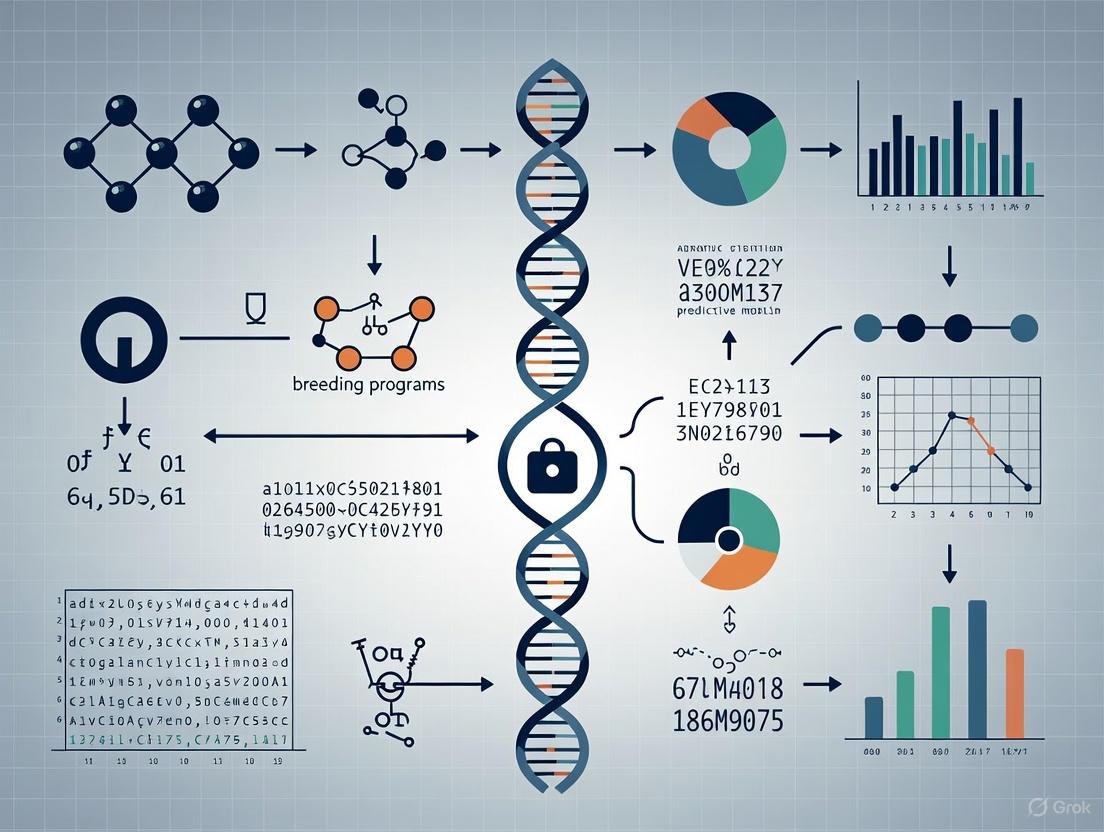
This article provides a comprehensive overview of the latest advancements in genomic prediction (GP) models and their transformative impact on modern breeding programs.
Advancing Breeding Programs: A Comprehensive Guide to Genomic Prediction Models
Abstract
This article provides a comprehensive overview of the latest advancements in genomic prediction (GP) models and their transformative impact on modern breeding programs. It explores the foundational principles of GP, from traditional genomic estimated breeding values (GEBVs) to more sophisticated cross-performance tools (GPCP) that account for dominance effects. The scope extends to methodological innovations, including the integration of multi-omics data and advanced statistical learning techniques, which significantly enhance prediction accuracy for complex traits. The article also addresses critical challenges in model optimization, selection, and validation, offering practical insights for researchers and scientists in drug development and agriculture. Finally, it presents a comparative analysis of model performance across different breeding contexts and species, empowering professionals to select the most effective strategies for accelerating genetic gain and achieving precision in breeding outcomes.
The Genomic Prediction Landscape: From GEBV to Cross-Performance and Foundational Concepts
Core Principles of Genomic Selection and its Impact on Breeding Cycles
Genomic Selection (GS) is a modern breeding strategy that utilizes genome-wide marker information to predict the genetic merit of selection candidates, thereby accelerating genetic gains in both plant and animal breeding programs. Unlike traditional marker-assisted selection (MAS), which is effective only for traits controlled by a few major genes, GS is designed for complex quantitative traits influenced by many genes with small effects [1]. The core principle involves estimating the effect of thousands of molecular markers spread across the entire genome to calculate a Genomic Estimated Breeding Value (GEBV) for each individual. This value represents the sum of all marker effects and provides an early, accurate prediction of an individual's breeding potential, even in the absence of its own phenotypic record [1] [2]. By enabling selection based on GEBVs, GS significantly shortens the generational interval, especially for traits that are difficult or time-consuming to measure, such as those expressed late in life or dependent on specific environmental conditions [1] [3]. The implementation of GS has been shown to considerably increase the rates of genetic gain and is transforming breeding programs worldwide [4].
Core Principles and Key Factors
The efficiency of genomic selection is governed by several interconnected factors that influence the accuracy of genomic prediction.
- Training Population: The foundation of an accurate GS model is a well-designed training population. Key considerations include its size, the genetic diversity within it, and its relationship to the breeding population (the candidates for selection). A larger training population generally improves prediction accuracy, though benefits diminish beyond an optimal size, necessitating a balance with resource allocation [3]. The genetic relationship between the training and breeding populations is critical; a closer relationship typically leads to higher prediction accuracy [5].
- Markers and Genetic Architecture: The density and distribution of genetic markers (e.g., Single Nucleotide Polymorphisms or SNPs), along with the level of Linkage Disequilibrium (LD) between markers and quantitative trait loci (QTL), are vital. Higher marker density is required for populations with low LD. Furthermore, the genetic architecture of the target trait—including its heritability and the number and effect sizes of the underlying QTL—profoundly affects how well it can be predicted [3].
- Statistical Models: A variety of statistical models are employed to estimate marker effects and compute GEBVs. These range from classical mixed models like Genomic Best Linear Unbiased Prediction (GBLUP) to more complex machine learning and deep learning algorithms capable of modeling non-additive genetic effects and complex interactions [6] [7]. The choice of model depends on the trait's genetic architecture and the available computational resources.
Table 1: Key Factors Influencing Genomic Prediction Accuracy
| Factor | Description | Impact on Prediction Accuracy |
|---|---|---|
| Training Population Size | Number of phenotyped and genotyped individuals used to train the model. | Generally increases with size, but with diminishing returns [3]. |
| Marker Density | Number of genetic markers used per genome. | Higher density improves accuracy, especially in populations with low LD [3]. |
| Trait Heritability | Proportion of phenotypic variance due to genetic factors. | Higher heritability traits are predicted more accurately [8] [3]. |
| Genetic Relationship | Relatedness between the training and breeding populations. | Closer relationships lead to substantially higher accuracy [5]. |
| Genetic Architecture | Number of genes controlling a trait and their effect sizes. | Traits controlled by many small-effect genes are well-suited to GS [1]. |
Experimental Protocols and Workflows
A Standard Genomic Selection Protocol
The following protocol outlines the key steps for implementing GS in a breeding program, adaptable for species like wheat, maize, or livestock.
Step 1: Training Population Design and Phenotyping
- Objective: Assemble a representative set of individuals that capture the genetic diversity of the broader breeding population.
- Procedure: Select a few hundred to a few thousand individuals from existing breeding lines or a reference population [9]. Ensure this group has a strong genetic relationship to the future selection candidates. For each individual, collect high-quality phenotypic data for the target trait(s) in replicated trials across multiple environments to obtain robust estimates of performance [5].
Step 2: Genotyping and Data Quality Control
- Objective: Obtain high-density genotype data for the training population.
- Procedure: Extract DNA from tissue samples (e.g., blood, leaf). Genotype using a high-density SNP array or, for a more cost-effective approach, low-coverage whole genome sequencing (lcWGS) followed by imputation to recover missing genotypes [9].
- Quality Control: Filter raw genotype data using software like PLINK [9]. Apply thresholds for minor allele frequency (e.g., MAF > 0.01), individual and marker call rates, and Hardy-Weinberg equilibrium to ensure data integrity [9].
Step 3: Model Training and Validation
- Objective: Develop a prediction model that links genotypes to phenotypes.
- Procedure: Use statistical software or machine learning platforms to train the model. The phenotypic records are the response variable, and the genotype markers are the predictors [1] [7].
- Validation: Assess model accuracy using cross-validation techniques. For a realistic assessment of predicting new families, use Leave-One-Family-Out (LOFO) cross-validation, where the model is trained on all families except one, which is used for validation [5].
Step 4: Genomic Prediction and Selection
- Objective: Predict the performance of unphenotyped selection candidates.
- Procedure: Genotype the breeding population (selection candidates) using the same platform as the training population. Apply the trained model to their genotype data to calculate GEBVs for all candidates.
- Selection: Select top-performing individuals based on their GEBVs for advancement in the breeding program or as parents for the next generation.
Diagram 1: Genomic Selection Workflow. This diagram outlines the standard steps for implementing genomic selection in a breeding program, from population design to selection.
Protocol for a Cost-Effective GS Approach Using Low-Coverage Sequencing
For species without commercial SNP arrays, lcWGS with imputation provides a cost-effective alternative [9].
Step 1: Library Preparation and Low-Coverage Sequencing
- Procedure: Shear genomic DNA and prepare sequencing libraries. Sequence libraries on a platform like Illumina NovaSeq to achieve an average genome coverage of 1x to 4x [9].
Step 2: Genotype Imputation
- Objective: Infer missing genotypes from low-coverage data.
- Procedure: Use imputation algorithms such as STITCH or Beagle to predict ungenotyped variants. STITCH is particularly useful when a reference haplotype panel is unavailable, as it constructs haplotypes directly from sequencing read data [9].
- Evaluation: Assess imputation accuracy by comparing imputed genotypes with a truth set (e.g., high-coverage sequences from a subset of individuals). Accuracy is influenced by sequencing depth, sample size, and minor allele frequency [9].
Step 3: Genomic Prediction with Imputed Data
- Procedure: Use the imputed genotype dosages to construct a genomic relationship matrix (G matrix) for models like GBLUP. Multi-trait GBLUP models can be employed to improve accuracy for correlated traits [9].
Table 2: Comparison of Common Genomic Prediction Models
| Model Category | Example Models | Underlying Principle | Best Suited For |
|---|---|---|---|
| Parametric / Mixed Models | GBLUP, RR-BLUP | Assumes all markers have a normally distributed effect; uses a genomic relationship matrix [1]. | Traits with additive genetic architecture; computationally efficient [7]. |
| Bayesian Methods | BayesA, BayesB, BayesC | Allows for marker-specific variances, assuming some markers have large effects and others small [8] [4]. | Traits with a mix of small and large-effect QTL; more computationally intensive [4]. |
| Machine Learning (ML) | Regularized Regression (LASSO), Ensemble Methods (Random Forests), Deep Learning | Flexible algorithms that can capture non-linear and interaction effects without pre-specified assumptions [6] [7]. | Complex traits with non-additive effects; performance is data- and trait-dependent [7]. |
The Scientist's Toolkit
Successful implementation of GS relies on a suite of reagents, technologies, and software.
Table 3: Essential Research Reagents and Tools for Genomic Selection
| Item | Function / Description | Application in GS Protocol |
|---|---|---|
| DNA Extraction Kit (e.g., QIAamp DNA Investigator Kit) | Isolates high-quality, pure genomic DNA from tissue samples (blood, leaf). | Essential first step for all downstream genotyping, whether using SNP arrays or sequencing [9]. |
| SNP Genotyping Array | A targeted genotyping platform that assays a predefined set of thousands to millions of SNPs. | Provides high-quality, reproducible genotype data for training and breeding populations. Common in established breeding programs [5]. |
| Illumina Sequencing Library Prep Kit | Prepares DNA fragments for sequencing on Illumina platforms (e.g., NovaSeq). | Required for whole-genome sequencing approaches, including low-coverage WGS [9]. |
| Imputation Software (e.g., STITCH, Beagle) | Infers missing genotypes in a dataset based on a reference panel or read data. | Critical for cost-effective GS using low-coverage sequencing data to create a unified, high-density genotype dataset [9]. |
| Statistical Software (e.g., R/python with specialized packages) | Provides environment for data QC, model training (GBLUP, Bayesian, ML), and prediction. | Used in the model training and validation step to analyze the relationship between genotype and phenotype [7]. |
Genomic selection fundamentally reshapes and accelerates the breeding cycle. Traditional breeding relies heavily on multi-year, multi-location field trials to accurately measure phenotypic performance, which lengthens the generation interval. In contrast, GS allows breeders to select juvenile animals or seedlings based solely on their GEBVs, drastically reducing the time per cycle [1] [2]. This enables more cycles of selection per unit time, leading to a direct increase in the rate of genetic gain per year [4]. Furthermore, GS increases selection intensity by allowing breeders to evaluate a much larger number of candidates at an early stage with minimal phenotyping costs [1]. The integration of GS is therefore not merely an incremental improvement but a paradigm shift that turbocharges breeding programs. It enhances the utilization of genetic resources and is poised to play a critical role in developing climate-resilient crops and livestock to meet future food security challenges [1] [2].
Genomic Estimated Breeding Values (GEBVs) are a fundamental tool in modern breeding programs, enabling the prediction of an individual's genetic merit based on genome-wide marker data. The traditional additive model, which forms the basis of GEBV calculation, operates on the principle that the genetic value of an individual can be approximated by summing the additive effects of thousands of genetic markers across the genome. This approach assumes that all single nucleotide polymorphisms (SNPs) contribute equally to the genetic variance of the trait, providing a robust framework for genomic selection that has significantly accelerated genetic gains in both plant and animal breeding.
The genomic best linear unbiased prediction (GBLUP) method has emerged as one of the most widely implemented approaches for calculating GEBVs, particularly in dairy cattle, pig, and poultry breeding programs [10] [11]. By leveraging dense marker panels and mixed model methodology, GBLUP efficiently captures the additive genetic relationships between individuals, allowing for more accurate selection decisions earlier in an animal's life. The implementation of GBLUP has reduced generation intervals in dairy cattle from 7 years to less than 2.5 years, dramatically reducing breeding costs while accelerating genetic progress [10].
Fundamental Principles of the Additive Model
Theoretical Foundation
The traditional additive model for GEBV calculation is rooted in quantitative genetics theory, specifically the infinitesimal model which posits that traits are controlled by an infinite number of genes, each with infinitesimally small effects. In practice, this is implemented using dense genetic markers that cover the entire genome, allowing breeders to capture the collective effect of quantitative trait loci (QTL) without necessarily identifying individual loci.
The GBLUP method implements this additive genetic principle through the statistical model:
y = 1μ + Zg + e [10]
Where:
- y is the vector of phenotypic observations (or deregressed proofs)
- 1 is a vector of ones
- μ is the overall mean
- Z is an incidence matrix linking observations to genomic values
- g is the vector of genomic breeding values, assumed to follow a normal distribution (g \sim N(0,G\sigma_g^2))
- e is the vector of residual errors, assumed to follow (e \sim N(0,I\sigma_e^2))
- G is the genomic relationship matrix
- (\sigmag^2) and (\sigmae^2) are the additive genetic and residual variances, respectively
The genomic relationship matrix G is calculated from marker data as:
[ G{ij} = \frac{1}{m}\sum{g=1}^{m}\frac{(M{ig} - 2pg)(M{jg} - 2pg)}{2pg(1-pg)} ]
Where (M{ig}) and (M{jg}) are the genotypes of individuals i and j at marker g, (p_g) is the allele frequency of marker g, and m is the total number of markers [10].
Key Assumptions and Limitations
The traditional additive model operates under several key assumptions that define its applicability and limitations:
- Additivity Assumption: The model assumes purely additive genetic effects, excluding dominance and epistatic interactions [12]
- Equal Variance Contribution: All SNPs are presumed to contribute equally to genetic variance, which may not reflect biological reality where some markers have larger effects [10]
- Normal Distribution: Breeding values are assumed to follow a multivariate normal distribution
- Linkage Disequilibrium: Markers are in linkage disequilibrium with QTL, allowing them to capture the genetic variance
These assumptions make the model computationally efficient and statistically robust, but can limit accuracy for traits with significant non-additive genetic components or those influenced by major genes [12] [10].
Experimental Protocols and Implementation
Standard GBLUP Implementation Workflow
The following workflow diagram illustrates the key steps in implementing GBLUP for GEBV calculation:
Detailed Methodological Protocols
Genotypic Data Processing and Quality Control
Sample Collection and Genotyping
- Collect biological samples (blood, tissue, or semen) from the reference population
- Extract genomic DNA using standardized protocols
- Perform genotyping using appropriate SNP panels (e.g., 50K, 80K, or 150K SNP arrays)
- In poultry breeding programs, whole-genome resequencing may be employed, generating millions of SNPs [11]
Quality Control Procedures
- Filter individuals with call rates < 0.90 using PLINK software [10] [11]
- Remove SNPs with minor allele frequency (MAF) < 0.05 [10] [11]
- Exclude markers failing Hardy-Weinberg equilibrium (HWE < 1e-6) [10]
- Implement genotype imputation using Beagle v5.0 or similar software to handle missing data [10] [11]
- Validate imputation accuracy using metrics like genotype correlation (COR > 0.9) and concordance rate (CR > 0.9) [10]
Phenotypic Data Preparation
Data Collection and Adjustment
- Collect phenotypic records for target traits in the reference population
- For abdominal fat in chickens, record combined weight of abdominal fat deposits in grams following slaughter [11]
- Adjust raw phenotypes for fixed effects and covariates using the model: y = μ + Line + Sex + Weight + e [11]
- Where Line represents strain effects, Sex is the fixed effect of gender, and Weight is a covariate for live weight
Heritability Estimation
- Estimate variance components using specialized software (ASReml, DMUv6) or mixed model packages [13] [11]
- Calculate heritability as (h^2 = \sigmag^2 / (\sigmag^2 + \sigma_e^2))
- Use estimated heritability to inform model parameters and expectations of prediction accuracy
Genomic Relationship Matrix Construction and GEBV Calculation
GRM Implementation
- Calculate the genomic relationship matrix G using quality-controlled SNP data
- Standardize markers using allele frequencies to ensure relationships are comparable to pedigree-based relationships
- Validate G matrix by comparing with pedigree-based relationship matrix where available
Variance Component Estimation and GEBV Prediction
- Estimate variance components using restricted maximum likelihood (REML) approaches
- Solve the mixed model equations to obtain GEBVs for all genotyped individuals
- Validate model fit and check for convergence issues
- Calculate GEBV accuracies using cross-validation or comparison with progeny tests
Performance Evaluation and Comparison
Quantitative Performance Metrics
Table 1: Comparative Performance of GBLUP Against Alternative Methods Across Species
| Species/Trait | GBLUP Accuracy | Comparison Method | Alternative Accuracy | Relative Performance |
|---|---|---|---|---|
| Holstein Cattle [10] | ||||
| Fat Percentage (FP) | Baseline | WGBLUP_BayesBπ | +4.9% | Inferior |
| Protein Percentage (PP) | Baseline | DPAnet | +1.1% | Inferior |
| Feet & Legs (FL) | Baseline | DPAnet | +1.1% | Inferior |
| Simulated Population [13] | 0.774 | BayesCπ | 0.938 | Inferior |
| Sheep [14] | ||||
| Growth Traits (h²=0.35) | Varies by strategy | BLUP (Pedigree) | Up to 62% improvement | Superior |
| Chicken Abdominal Fat [11] | Baseline | DAWSELF (ML Ensemble) | Significantly higher | Inferior |
Table 2: Factors Influencing GBLUP Prediction Accuracy
| Factor | Impact on Accuracy | Evidence | Practical Implications |
|---|---|---|---|
| Reference Population Size | Positive correlation | Cattle: 16,122 individuals [10] | Larger reference populations improve accuracy |
| Marker Density | Moderate impact | Chicken: 6-9 million SNPs [11] | Higher density improves accuracy but with diminishing returns |
| Trait Heritability | Strong positive correlation | Sheep: h²=0.35 vs h²=0.10 [14] | Higher heritability traits yield better predictions |
| Genetic Architecture | Variable impact | Purely additive vs dominance traits [12] | Superior for additive traits, inferior for non-additive |
| Genotyping Strategy | Significant impact | Sheep: Random vs selective genotyping [14] | Random genotyping outperforms selective approaches |
Computational Efficiency Considerations
GBLUP maintains a crucial advantage in computational efficiency compared to more complex methods:
- Processing Time: GBLUP requires, on average, less than one-sixth the computational time of Bayesian methods or machine learning approaches [10]
- Scalability: Efficiently handles large datasets, with implementations successfully applied to populations exceeding 16,000 individuals [10]
- Software Availability: Widely implemented in multiple software packages, making it accessible for breeding programs of various scales
Research Reagent Solutions
Table 3: Essential Research Reagents and Tools for GBLUP Implementation
| Category | Specific Tool/Reagent | Function/Application | Implementation Example |
|---|---|---|---|
| Genotyping Platforms | BovineSNP50 BeadChip (54,609 SNPs) | Standardized genotyping in cattle [10] | Holstein cattle genomic selection |
| GeneSeek GGP-bovine 80K SNP BeadChip | Higher density genotyping [10] | Enhanced prediction accuracy | |
| GGP BovineSNP 150K (139,376 SNPs) | High-density genotyping [10] | Maximum marker coverage | |
| Quality Control Tools | PLINK | SNP filtering (MAF, HWE, call rates) [10] [11] | Pre-processing of genotype data |
| VCFtools | Variant call format processing [11] | Handling sequencing data | |
| Imputation Software | Beagle v5.0 | Genotype imputation [10] [11] | Handling missing genotypes and unifying different SNP panels |
| Statistical Analysis | R software with specialized packages | Statistical implementation of GBLUP [14] | Mixed model analysis |
| ASReml (v4.2) | Variance component estimation [11] | Heritability estimation | |
| DMUv6 | Traditional BLUP and variance estimation [13] | Pedigree-based comparison | |
| Simulation Tools | AlphaSimR | Breeding program simulation [12] [14] | Method validation and optimization |
Limitations and Considerations
Contextual Limitations of the Additive Model
The traditional additive GBLUP model demonstrates specific limitations that researchers must consider when selecting genomic prediction approaches:
Genetic Architecture Constraints
- Performs suboptimally for traits with significant dominance effects, where genomic predicted cross-performance (GPCP) models superiorly identify optimal parental combinations [12]
- Assumption of equal SNP contributions limits accuracy for traits influenced by major genes [10]
- Unable to effectively capture non-additive genetic variation, which can be substantial for certain traits and populations
Implementation Challenges
- Accuracy substantially influenced by reference population design and composition [14]
- Sensitive to pedigree errors and relationship misidentification, though genomic information can mitigate some of these effects [14]
- Performance varies significantly across species and breeding systems, with different optimal implementation strategies
Strategic Applications
Despite these limitations, GBLUP remains the foundational approach for genomic selection in many contexts:
- Ideal Applications: Traits with predominantly additive genetic architecture, programs with large reference populations, initial implementation of genomic selection
- Complementary Approaches: Bayesian methods for traits with major genes, machine learning for complex non-linear relationships, GPCP for hybrid breeding schemes [12] [10] [11]
- Future Directions: Ensemble methods combining GBLUP with other approaches show promise for enhancing prediction accuracy across diverse genetic architectures [15]
The traditional additive model for GEBV calculation represents a robust, computationally efficient approach that continues to form the backbone of genomic selection in many breeding programs. While newer methods may offer advantages for specific applications, GBLUP's simplicity, interpretability, and proven effectiveness ensure its ongoing relevance in agricultural genomics research and application.
Genomic Predicted Cross-Performance (GPCP) represents a significant advancement in genomic prediction for plant and animal breeding. While traditional genomic selection has predominantly focused on estimating additive breeding values (GEBVs), GPCP utilizes a mixed linear model that incorporates both additive and directional dominance effects to predict the performance of specific parental combinations [12]. This approach provides a more comprehensive framework for breeding programs aiming to maximize genetic gain, particularly for traits influenced by non-additive genetic effects and in species where clonal propagation is prevalent.
The fundamental advantage of GPCP lies in its ability to effectively identify optimal parental combinations and enhance crossing strategies, especially for traits with significant dominance effects [12]. For clonally propagated crops where inbreeding depression and heterosis are prevalent—and reciprocal recurrent selection is impractical—GPCP offers a robust solution that maintains a higher proportion of dominance variance compared to individual-based selection on GEBV alone [12]. This protocol details the implementation, application, and analysis of GPCP within breeding programs.
Computational Protocol for GPCP Analysis
Software Environment and Installation
The GPCP tool is implemented within the BreedBase environment and is also available as an R package, gpcp, which can be installed directly from GitHub [16].
The gpcp package depends on several R packages: sommer for mixed model analysis, dplyr for data manipulation, and AGHmatrix for constructing genomic relationship matrices [16].
Data Preparation and Input Requirements
Successful GPCP analysis requires proper formatting of both genotypic and phenotypic data:
Phenotypic Data Format (CSV file):
- The phenotype file should be a data frame containing at minimum columns for genotype IDs and traits of interest.
- Fixed effects (e.g., location, replication) should be included as separate columns.
- Missing data should be appropriately coded (e.g., as NA).
Genotypic Data Format:
- Acceptable formats include VCF (Variant Call Format) or HapMap.
- For polyploid species, allele dosages must be accurately represented (0-Ploidy for polysomic inheritance).
- The data should undergo standard quality control: filtering for minor allele frequency, call rate, and Hardy-Weinberg equilibrium.
Running the GPCP Analysis
The core function runGPCP() executes the genomic prediction of cross performance. Below is a comprehensive example with all necessary parameters:
Output Interpretation
The runGPCP() function returns a data frame containing:
- Parent1: The first parent genotype ID
- Parent2: The second parent genotype ID
- CrossPredictedMerit: The predicted merit of the cross based on the weighted index of traits [16]
The output is automatically sorted by descending CrossPredictedMerit, enabling breeders to immediately identify the most promising parental combinations.
Research Reagent Solutions
Table 1: Essential research reagents and computational tools for GPCP implementation.
| Item Name | Function/Application | Specifications |
|---|---|---|
| SNP Genotyping Array | Genome-wide marker data generation | 58K SC Affymetrix Axiom SNP array for sugarcane [17]; EuChip60K for Eucalyptus [18] |
| gpcp R Package | Core GPCP analysis | Implements additive and dominance effects model; supports diploid and polyploid species [16] |
| BreedBase Platform | Integrated breeding data management | Web-based database for storing phenotypic and genotypic data; supports GPCP implementation [12] |
| sommer R Package | Mixed model analysis | Fits mixed models with additive and dominance relationship matrices; used by gpcp [12] [16] |
| AGHmatrix R Package | Genomic relationship matrices | Computes additive and dominance genomic relationship matrices for diploid and polyploid species [16] |
| AlphaSimR Package | Breeding program simulation | Simulates breeding programs for testing GPCP strategies; generates synthetic datasets [12] |
Experimental Applications and Performance Data
Performance in Clonal Crops
GPCP has demonstrated significant advantages in clonally propagated crops where non-additive effects play a substantial role:
Table 2: GPCP performance in sugarcane breeding for key agronomic traits.
| Trait | Traditional GEBV | GPCP Approach | Improvement |
|---|---|---|---|
| Tonnes Cane per Hectare (TCH) | Baseline | +57% | 57% [17] |
| Commercial Cane Sugar (CCS) | Baseline | +12% | 12% [17] |
| Fibre Content | Baseline | +16% | 16% [17] |
In sugarcane, non-additive effects account for almost two-thirds of the total genetic variance for TCH, with average heterozygosity having a major impact on this trait [19]. The extended-GBLUP model (which includes non-additive effects) improved prediction accuracies by at least 17% for TCH compared to models with only additive effects [19].
Simulation Studies
A comprehensive simulation study conducted using the AlphaSimR package evaluated GPCP across different genetic architectures [12]:
- Population sizes: 250, 500, 750, and 1000 individuals
- Dominance architectures: Mean dominance degree (meanDD) values of 0, 0.5, 1, 2, and 4
- Heritability settings: Ranging from 0.1 to 0.6
The simulation modeled a multi-stage clonal pipeline with progressively higher heritability at each stage (clonal evaluation: h² = 0.15; preliminary yield trial: h² = 0.25; advanced yield trial: h² = 0.45; uniform yield trial: h² = 0.65) [12]. GPCP proved superior to classical GEBVs for traits with significant dominance effects, effectively identifying optimal parental combinations across these diverse scenarios.
Training Set Optimization
Research in tetraploid potato has revealed important considerations for training set composition in GPCP:
- A training set of 280-480 clones with 10,000 markers was sufficient for robust predictions [20].
- Prediction within a specific market segment led to higher accuracy compared to adding clones from other market segments [20].
- Including clones with low trait values (lowest 10%) in a training set predominantly composed of high-performing clones can improve prediction accuracy by better capturing the population genetic variance [20].
Workflow and Strategic Implementation
GPCP Analysis Workflow
GPCP Decision Framework for Breeding Programs
Best Practices and Technical Notes
Model Specifications
The GPCP model implemented follows the mathematical formulation presented by [12]:
[ y = X\beta + Za a + Zd d + W\delta + \varepsilon ]
Where:
- (y) is the vector of phenotype means
- (X) is an incidence matrix for fixed effects
- (\beta) represents the vector of fixed effects
- (Z_a) is the matrix of allele dosages for additive effects
- (a) is the vector of additive effects
- (Z_d) is the matrix for dominance effects
- (d) is the vector of dominance effects
- (W) represents the vector with inbreeding coefficients
- (\delta) is a parameter indicating the effect of genomic inbreeding on performance
- (\varepsilon) is the vector of residual effects
The random effects (a), (d), and (\varepsilon) are assumed to be normally distributed with mean zero and variances (\sigmaa^2), (\sigmad^2), and (\sigma_\varepsilon^2), respectively [12].
Ploidy Considerations
The GPCP implementation supports both diploid and polyploid species:
- For diploids: allele dosages are 0, 1, 2; heterozygosity is coded as 0 (homozygous) or 1 (heterozygous)
- For polyploids (tetraploids, hexaploids): allele dosages range 0-4 or 0-6; heterozygosity represents the proportion of heterozygous allele combinations [12]
For highly polyploid species like sugarcane, a pseudo-diploid parameterization can provide appropriate approximation when exact dosage information is uncertain [19].
When to Implement GPCP
GPCP provides the greatest advantage over traditional GEBV-based selection when:
- Traits exhibit significant dominance effects and inbreeding depression [12] [21]
- Breeding programs focus on clonally propagated crops where both additive and non-additive effects can be exploited [17] [21]
- Species biology or cost prevents the use of reciprocal recurrent selection [12]
- The breeding goal is to maximize short to medium-term genetic gain while maintaining genetic diversity [21]
Genomic Predicted Cross-Performance represents a sophisticated approach to parental selection that integrates both additive and dominance genetic effects. The implementation of GPCP within the BreedBase environment and as an R package makes this powerful tool accessible to breeding programs across different species and ploidy levels. Through its ability to predict the performance of specific parental combinations rather than individual breeding values, GPCP enables more informed crossing decisions, potentially accelerating genetic gain for traits with significant non-additive genetic components. The protocols and applications detailed in this document provide a foundation for implementing GPCP in both research and commercial breeding contexts.
Genomic prediction has revolutionized plant and animal breeding by enabling the selection of superior genotypes based on molecular marker information. Two predominant models in this field are Genomic Estimated Breeding Values (GEBV) and Genomic Predicted Cross-Performance (GPCP). While GEBV focuses on additive genetic effects, GPCP incorporates both additive and non-additive effects to predict the performance of specific parental combinations. This article provides a structured comparison of these approaches and offers practical protocols for their implementation, framed within the context of optimizing breeding programs for genetic gain.
Core Concept Comparison: GEBV vs. GPCP
The choice between GEBV and GPCP fundamentally hinges on the breeding program's objectives, the reproductive biology of the species, and the genetic architecture of target traits. The table below summarizes the primary characteristics of each model.
Table 1: Fundamental Characteristics of GEBV and GPCP Models
| Feature | Genomic Estimated Breeding Value (GEBV) | Genomic Predicted Cross-Performance (GPCP) |
|---|---|---|
| Genetic Effects Captured | Additive effects only [12] [22] | Additive and directional dominance effects [12] [17] |
| Primary Output | Breeding value of an individual genotype [12] | Predicted mean genetic value of a specific cross's progeny [12] [22] |
| Primary Breeding Goal | Long-term increase of additive genetic value in a population [22] | Maximizing the total genetic value (including heterosis) of immediate progeny, particularly in clonal or hybrid programs [22] [17] |
| Optimal Use Cases | Programs with negligible dominance effects; longer time horizons focusing on additive gain [12] [22] | Traits with significant dominance, inbreeding depression, or heterosis; clonally propagated crops; hybrid breeding [12] [19] [22] |
Decision Framework: Selecting the Appropriate Model
The decision to implement GEBV or GPCP is multi-faceted. The following diagram and subsequent table outline the key factors to consider.
Diagram 1: GEBV vs. GPCP Decision Workflow
Table 2: Detailed Decision Factors for Model Selection
| Decision Factor | Favor GEBV | Favor GPCP |
|---|---|---|
| Trait Genetic Architecture | Purely additive traits or traits with negligible dominance effects [12] [22]. | Traits with significant dominance variance, inbreeding depression, and heterosis [12] [19] [22]. |
| Species Biology & Propagation | Inbred line development; species where controlled crossing is difficult or impossible [12]. | Clonally propagated crops (e.g., sugarcane, potato, strawberry) and hybrid crops [12] [22] [17]. |
| Program Time Horizon | Longer-term programs focused on sustained additive genetic gain [12] [22]. | Programs aiming to maximize the performance of the immediate progeny generation [22]. |
| Quantitative Evidence | Simulation studies show GEBV is sufficient when mean dominance deviation is 0 [12]. | For traits with dominance, GPCP produces faster genetic gain and better maintains heterozygosity [12] [22]. In sugarcane, models including non-additive effects improved TCH prediction accuracy by 17% [19]. |
Experimental Protocols
Protocol 1: Implementing a GPCP Analysis
This protocol details the steps for implementing GPCP analysis using the R package or the BreedBase environment, as presented in [12].
1. Input Data Preparation:
- Genotypic Data: A matrix of allele dosages (e.g., 0, 1, 2 for diploids) for all training and candidate individuals.
- Phenotypic Data: A vector of phenotype means (e.g., BLUPs) for the training population.
- Model Inputs: Linear selection index weights for traits, and specification of fixed or random factors.
2. Model Fitting:
Fit the GPCP mixed linear model using a package like sommer in R [12]:
[
\textbf{y} = \textbf{X}\beta + \textbf{Z}a + \textbf{W}d + \textbf{S}h + \epsilon
]
Where:
- y is the vector of phenotype means.
- X is an incidence matrix for fixed effects ((\beta)).
- Z is a matrix of allele dosages for additive effects ((a)).
- W is a matrix capturing heterozygosity for dominance effects ((d)).
- S is a vector of inbreeding coefficients, and (h) is the effect of genomic inbreeding.
- (\epsilon) is a vector of residual effects.
3. Cross-Performance Prediction: For each potential parental cross, predict the mean genetic value of the F1 progeny using the estimated additive and dominance effects from the model. The prediction is based on the differences in allele frequencies between the two parents, which allows for the maximization of heterosis [12].
4. Parent and Cross Selection: Select the top-performing parental combinations based on their predicted GPCP scores to generate the next breeding cycle.
Protocol 2: A Simulation-Based Comparison Study
This protocol outlines a method to empirically compare GEBV and GPCP within a breeding program context, based on simulation studies [12] [22].
1. Population Simulation:
- Use a software like AlphaSimR [12] to generate a founder population with realistic linkage disequilibrium and allele frequencies.
- Define multiple traits with varying degrees of dominance deviation (e.g., mean DD of 0, 0.5, 1, 2, 4) and different heritabilities.
2. Breeding Program Simulation:
- Model a multi-stage clonal pipeline (e.g., Clonal Evaluation → Preliminary Yield Trial → Advanced Yield Trial) with progressive selection [12].
- At the end of each cycle, use the candidate population as parents for the next generation.
- Apply both GEBV and GPCP selection methods independently in parallel simulations.
- For GEBV, select top individuals based on additive marker effects.
- For GPCP, select top parental crosses based on predicted cross merit.
3. Metric Tracking and Comparison:
- Run the simulation for multiple cycles (e.g., 40 cycles) [12].
- Track key metrics per cycle for both methods:
- Genetic Gain: The mean genetic value of the population.
- Usefulness Criterion (UC): Combines mean genotypic value with selection intensity and genetic standard deviation.
- Population Heterozygosity (H): To monitor genetic diversity.
- Calculate the difference in these metrics ((\Delta UC = UC{GPCP} - UC{GEBV})) to determine the superior method under different genetic architectures.
The Scientist's Toolkit
Table 3: Essential Research Reagents and Software for Genomic Prediction
| Tool Name | Type/Category | Primary Function | Application in Protocol |
|---|---|---|---|
| BreedBase [12] | Integrated Platform | A database and tool platform for managing breeding data. | Used for seamless prediction, saving, and management of crosses in GPCP. |
| GPCP R Package [12] | Statistical Software | An R package that implements the Genomic Predicted Cross-Performance model. | Direct implementation of the GPCP model as described in Protocol 1. |
| AlphaSimR [12] | Simulation Software | An R package for stochastic simulations of breeding programs and genomic data. | Generating founder populations and simulating breeding programs as in Protocol 2. |
| sommer [12] | Statistical Software | An R package for fitting mixed linear models using BLUP. | Used for fitting the GPCP model with additive and dominance relationship matrices. |
| Extended-GBLUP Model [19] [17] | Statistical Model | A genomic model that accounts for additive, dominance, and heterozygosity effects. | The core statistical model for predicting clonal performance in GPCP. |
| GBLUP Model [19] [23] | Statistical Model | A standard genomic model that accounts for additive genetic effects using a genomic relationship matrix. | The standard model for estimating GEBVs for comparison against GPCP. |
{#cover}
The Critical Role of Training Populations and Foundational Data Infrastructure
Genomic Prediction (GP) has revolutionized plant and animal breeding by enabling the selection of individuals based on their predicted genetic merit, significantly accelerating genetic gains for complex traits [24]. At the heart of any successful GP pipeline lies a robust foundational layer: a high-quality training population and a scalable data infrastructure. The training population, comprising individuals with both genotypic and phenotypic data, serves as the reference set used to build statistical models that predict the performance of new, un-phenotyped individuals [24] [25]. The accuracy of these models, and therefore the efficiency of the entire breeding program, is critically dependent on the size, genetic diversity, and phenotypic reliability of this foundational dataset. This application note details the protocols for constructing and managing these essential resources, framing them within the broader context of a modern, data-driven breeding strategy.
Core Principles and Quantitative Benchmarks
The relationship between training population design and prediction accuracy is well-established. Key factors include population size, genetic relatedness, and trait architecture. The following table synthesizes empirical findings on how these factors influence predictive performance across different species.
Table 1: Impact of Training Population Design on Genomic Prediction Accuracy
| Species | Trait | Key Finding on Training Population | Reported Impact on Accuracy | Source |
|---|---|---|---|---|
| Barley | Grain Yield & Quality | Using RNA-Seq data with parental WGS data for prediction | Achieved prediction abilities of 0.73 - 0.78; outperformed 50K SNP array in inter-population predictions [25]. | |
| Norway Spruce | Growth & Wood Quality | Preselection of ~100 top GWAS SNPs was optimal for one trait; for others, 2000-4000 SNPs were best. | Predictive ability was maximized with marker preselection for some traits [26]. | |
| Multi-Species Benchmark | Various | Benchmarking across 10 species (barley, maize, rice, pig, etc.) showed accuracy is highly species- and trait-dependent. | Mean prediction accuracy (r) was 0.62, with a range from -0.08 to 0.96 [27]. | |
| Wheat | Grain Yield | Machine learning (VBS-ML) applied to large populations (2,665 - 10,375 lines) improved accuracy. | VBS-ML consistently improved accuracy over legacy linear models on large datasets [28]. |
Protocol: Designing and Implementing a Training Population
Protocol 1: Construction of a Representative Training Population
Objective: To establish a training population that captures the genetic diversity of the target breeding program and enables accurate genomic predictions.
Materials and Reagents:
- Genetic Material: A core collection of lines or individuals representative of the current and future genetic pools of the breeding program.
- Genotyping Platform: High-density SNP array, Genotyping-by-Sequencing (GBS) kit, or whole-genome sequencing services.
- Phenotyping Resources: Controlled environment growth facilities, field trial plots, and high-throughput phenotyping equipment (e.g., for spectral imaging).
- Data Management System: A secure database (e.g., based on MySQL or PostgreSQL) for storing and version-controlling genotypic and phenotypic data.
Methodology:
- Population Sizing and Composition: The training population should be as large as feasibly possible. Studies have shown that accuracy typically increases with size, often following a diminishing returns curve. For initial implementation, a minimum of 300-500 individuals is recommended, with larger populations (>1000) being ideal for complex, polygenic traits [24] [27].
- Maximizing Genetic Diversity: Select individuals to maximize the captured genetic diversity and relatedness to the selection candidate pool. This can be achieved by ensuring the population includes founders and key ancestors from the breeding program.
- Phenotyping for Heritability: Phenotypic data must be collected with high precision. Employ replicated field trials across multiple locations and years to obtain Best Linear Unbiased Estimators (BLUPs) or Best Linear Unbiased Predictors (BLUEs), which remove non-genetic effects and provide a better estimate of the genetic value [25] [28].
- Genotypic Data Quality Control:
- Model Training and Validation: Use a cross-validation strategy (e.g., 5-fold cross-validation) within the training population to evaluate the expected accuracy of the genomic prediction model before deploying it on selection candidates [24] [7].
Workflow Diagram: The following diagram illustrates the integrated workflow for building and utilizing a genomic prediction model.
Protocol 2: Leveraging Machine Learning on Large-Scale Data
Objective: To implement a machine learning-based GP model that can handle large-scale genotypic data and capture non-additive genetic effects.
Rationale: While linear mixed models (e.g., GBLUP) are standard, machine learning (ML) methods offer advantages in modeling complex patterns and interactions, especially as data size increases [28] [7] [6].
Materials and Reagents:
- Computational Resources: High-performance computing (HPC) cluster or a workstation with substantial RAM and multi-core GPUs.
- Software: Python with libraries like TensorFlow/Keras or PyTorch for deep learning, and scikit-learn for other ML methods. R with packages like
rrBLUPorBGLRfor benchmark comparisons.
Methodology:
- Data Preparation: Standardize both genotypic (markers coded as 0,1,2) and phenotypic data. Split the data into training (e.g., 80%) and validation (20%) sets, ensuring families are not split across sets to avoid biased accuracy estimates.
- Model Selection and Sparsity:
- Consider ML models that introduce sparsity to handle high-dimensionality. For example, the VBS-ML (Variational Bayesian Sparsity in Machine Learning) architecture uses a Bayesian sparsity layer for feature selection of important markers, reducing over-parameterization in the initial network layers [28].
- Compare the ML model's performance against legacy linear models (e.g., GBLUP, BayesA) as a benchmark.
- Model Training and Tuning: Train the ML model, tuning hyperparameters (e.g., learning rate, number of layers and nodes, sparsity parameters) using the validation set. This process can be computationally intensive but is crucial for optimal performance [7].
- Accuracy Assessment: Evaluate the final model on the held-out test set. The primary metric is typically the Pearson correlation coefficient (r) between the predicted and observed values [27] [7].
Table 2: Key Reagents and Tools for Genomic Prediction Infrastructure
| Category | Item | Specific Example / Function | Application in GP Workflow |
|---|---|---|---|
| Genotyping | SNP Array | Custom 20K Affymetrix array (wheat) [28] | High-quality, standardized genome-wide marker data. |
| Genotyping-by-Sequencing (GBS) | Low-cost, high-throughput marker discovery [27]. | Ideal for species without a commercial array. | |
| Transcriptomics | RNA-Seq | VAHTS Universal V6 RNA-seq Library Prep Kit [25]. | Provides gene expression data as a predictor; can also be a source for SNP calling. |
| Phenotyping | Spatial Linear Mixed Models | Software for field trial analysis (e.g., ASReml, sommer) [28]. | Derives adjusted yield predictions by accounting for spatial field variation. |
| Data Management | Curated Benchmark Datasets | EasyGeSe database [27]. | Provides standardized datasets for method benchmarking and validation. |
| Software & Algorithms | Machine Learning Platforms | TensorFlow, PyTorch for implementing VBS-ML and other DL architectures [28] [6]. | Building and training complex, non-linear prediction models. |
| Traditional GP Software | BGLR, rrBLUP in R [24] [7]. | Implementing standard Bayesian and GBLUP models for baseline comparison. |
A meticulously designed training population and a robust, scalable data infrastructure are not merely supportive elements but are the very foundation upon which successful genomic prediction is built. As breeding programs continue to generate ever-larger multi-omics datasets, the principles outlined here—emphasizing data quality, appropriate population structure, and the integration of advanced statistical machine learning methods—will be critical for unlocking greater genetic gains and ensuring future food security.
Model Architectures in Action: From Bayesian Alphabets to Multi-Omics Integration
Genomic selection (GS) has revolutionized breeding programs by using genome-wide molecular markers to predict the genetic value of individuals, thereby accelerating genetic gain and reducing breeding cycles [29]. At the heart of GS are statistical models capable of handling high-dimensional genomic data, among which the Bayesian Alphabet and rrBLUP represent two fundamental approaches. The Bayesian Alphabet encompasses a family of methods (including BayesA, BayesB, and BayesC) that employ Bayesian statistical frameworks with different prior distributions for marker effects [30]. These models are particularly valued for their flexibility in accommodating various genetic architectures. In parallel, rrBLUP (ridge regression BLUP), which is equivalent to Genomic Best Linear Unbiased Prediction (GBLUP), operates under the assumption that all markers contribute equally to genetic variation [31] [27]. This article provides a detailed practical guide to implementing these core genomic prediction models, framed within the context of modern breeding programs. We present structured comparisons, experimental protocols, and essential tools to enable researchers to effectively apply these methods in both plant and animal breeding contexts.
Model Foundations and Comparative Analysis
Theoretical Underpinnings
The Bayesian Alphabet models share a common Bayesian framework but differ primarily in their assumptions about the distribution of marker effects, which is reflected in their prior specifications. BayesA assumes that all single nucleotide polymorphisms (SNPs) have a non-zero effect and that these effects follow a t-distribution, making it suitable for traits influenced by many genes of small effect [30] [29]. BayesB introduces a more sophisticated architecture by assuming that only a proportion of SNPs (π) have non-zero effects, with the remaining markers having zero effect, making it particularly effective for traits governed by a few genes with large effects [30] [29]. BayesC is similar to BayesB but estimates the proportion π of markers with non-zero effects from the data itself, rather than setting it as a fixed parameter [30] [29]. This model represents a balance between the assumptions of BayesA and BayesB.
In contrast, rrBLUP/GBLUP takes a different approach by using a linear mixed model that replaces the pedigree-based relationship matrix with a genomic relationship matrix (G) constructed from marker data [31] [27]. This model assumes all markers contribute equally to the genetic variance, which simplifies computation but may be less optimal for traits with a known architecture of major genes.
Performance Comparison Across Species and Traits
The performance of these models varies significantly depending on the genetic architecture of traits and the species under investigation. The table below summarizes key comparative findings from recent studies:
Table 1: Comparative Performance of Genomic Prediction Models Across Species
| Species | Trait Characteristics | Model Performance Findings | Citation |
|---|---|---|---|
| Alpine Merino Sheep | Wool traits with varying heritability | GBLUP superior for low-heritability traits; Bayesian Alphabet advantages increased with higher heritability | [30] |
| Large Yellow Croaker | Body weight (continuous trait) | GBLUP demonstrated greater efficacy for continuous traits compared to machine learning and Bayesian approaches | [31] |
| Multiple Species Benchmark | Diverse traits across 10 species | Bayesian methods showed slightly higher accuracy but significantly longer computation times vs. non-parametric methods | [27] |
Prediction accuracy in these studies was typically measured using Pearson's correlation coefficient (r) between predicted and observed values, or as the proportion of correctly predicted phenotypes in cross-validation studies [30] [27]. For instance, in the Alpine Merino sheep study, the genomic prediction accuracy for six wool traits ranged between 0.28 and 0.60 across different models and marker densities [30].
Model Selection Framework
Choosing the appropriate model requires careful consideration of multiple biological and practical factors. The following diagram illustrates the decision-making workflow for selecting among these genomic prediction models:
Experimental Protocols and Implementation
Standardized Benchmarking Protocol
To ensure reproducible comparison of genomic prediction models, we recommend the following standardized protocol based on the EasyGeSe framework, which has been validated across multiple species [27]:
Data Preparation and Quality Control: Begin with genotypic data in a standard format (e.g., VCF, PLINK). Apply quality control filters including:
- Minor Allele Frequency (MAF) > 0.05
- Individual missing rate < 0.1
- Marker missing rate < 0.1
- Remove individuals with excessive heterozygosity Impute missing genotypes using algorithms like Beagle or SVD-based imputation [27].
Population Structure Assessment: Perform Principal Component Analysis (PCA) or similar methods to identify potential population stratification that may confound predictions.
Heritability Estimation: Estimate genomic heritability using the GBLUP model to establish trait heritability baseline.
Cross-Validation Scheme: Implement a five-fold cross-validation approach where the population is randomly partitioned into five subsets. For each iteration:
- Use four subsets as the training population
- Use one subset as the validation population
- Repeat until all subsets have served as the validation set
- Ensure family structure is maintained across training and validation sets when applicable
Model Training and Prediction: Train each model (rrBLUP/GBLUP, BayesA, BayesB, BayesC) using the training population and generate Genomic Estimated Breeding Values (GEBVs) for the validation population.
Accuracy Assessment: Calculate prediction accuracy as the Pearson correlation coefficient between GEBVs and observed phenotypes in the validation population. For binary traits, use proportion of correctly classified individuals.
Table 2: Key Parameters for Bayesian Alphabet Implementation
| Model | Key Parameters | Prior Distributions | Computational Requirements | Recommended Use Cases |
|---|---|---|---|---|
| rrBLUP/GBLUP | Genetic variance, Residual variance | Normal distribution for all effects | Low; fast computation | Initial screening, traits with polygenic architecture |
| BayesA | Degrees of freedom, scale parameter | t-distribution for marker effects | Moderate | Traits with many small-effect QTLs |
| BayesB | π (proportion of non-zero markers), priors for variances | Mixture distribution (point-mass at zero and t-distribution) | High | Traits with major genes and sparse architecture |
| BayesC | π (estimated from data), priors for variances | Mixture distribution (point-mass at zero and normal distribution) | High | When proportion of causal variants is unknown |
Implementation in Breeding Programs
For integrating these models into operational breeding programs, we recommend the following workflow:
Preliminary Analysis: Start with GBLUP as a baseline model due to its computational efficiency and robustness.
Model Refinement: Based on initial results and prior knowledge of trait architecture, select appropriate Bayesian models for further refinement.
Marker Density Optimization: Evaluate prediction accuracy with different marker densities. Studies in Alpine Merino sheep showed that increasing marker density generally improves accuracy, but the degree of improvement depends on the model and trait heritability [30].
Regular Model Updating: Recalibrate models regularly as new phenotypic and genotypic data become available to maintain prediction accuracy over breeding cycles.
The Scientist's Toolkit
Essential Research Reagents and Computational Tools
Table 3: Essential Resources for Genomic Prediction Research
| Category | Resource | Description | Application in Bayesian Alphabet Research |
|---|---|---|---|
| Genotyping Platforms | Liquid SNP arrays (e.g., NingXin-III) | High-throughput genotyping systems | Generate marker data for genomic prediction [31] |
| Genotyping-by-sequencing (GBS) | Reduced-representation sequencing | Cost-effective marker discovery for large populations [27] | |
| Data Resources | EasyGeSe | Curated multi-species dataset collection | Benchmarking and comparing model performance [27] |
| BreedBase | Integrated breeding platform | Manage phenotypic and genotypic data [12] | |
| Software Packages | BGLR | R package | Implement Bayesian Alphabet models [29] |
| rrBLUP | R package | GBLUP implementation [29] | |
| AlphaSimR | R package | Breeding program simulation [12] | |
| Quality Control Tools | PLINK | Whole-genome association analysis | Data quality control and preprocessing [27] |
| BEAGLE | Software package | Genotype imputation [27] |
Workflow Visualization for Genomic Prediction
The following diagram illustrates the complete experimental workflow for implementing genomic prediction models in a breeding program context:
The Bayesian Alphabet and GBLUP models represent foundational approaches in genomic prediction, each with distinct strengths and optimal application domains. As breeding programs increasingly generate multi-omics data and larger training populations, integration of these classical models with emerging machine learning approaches presents a promising frontier [27] [29]. Recent benchmarking studies indicate that while non-parametric methods like XGBoost can offer modest accuracy improvements (+0.025 in correlation coefficient) and computational advantages for certain scenarios, Bayesian methods remain competitive, particularly for traits with known genetic architectures [27].
Future developments will likely focus on optimizing model selection for specific trait-species combinations, improving computational efficiency for large-scale applications, and integrating additional biological information to enhance prediction accuracy for complex traits. The continued development of standardized benchmarking resources like EasyGeSe will be crucial for fair comparison of new methods against these established models [27]. As one review notes, "additional artificial intelligence techniques will be required for big data management, feature processing, and model innovation to generate a comprehensive model to optimize the prediction accuracy of genomic selection" [29].
In practice, successful implementation of these models requires careful consideration of trait architecture, computational resources, and breeding program objectives. By following the protocols and guidelines presented herein, researchers can effectively leverage these powerful tools to accelerate genetic gain in breeding programs.
Genomic Best Linear Unbiased Prediction (G-BLUP) has established itself as a cornerstone method in genomic selection, revolutionizing animal and plant breeding programs over the past decade [32] [33]. As a relationship-based model, G-BLUP utilizes genomic relationship matrices derived from DNA marker information to predict the genetic merit of individuals with greater accuracy than traditional pedigree-based approaches [32] [34]. The method's robustness, computational efficiency, and interpretability have made it a preferred choice for predicting complex traits controlled by many small-effect loci [35] [33].
This article explores the fundamental principles of G-BLUP, detailing its statistical framework and practical implementation. We further examine significant extensions to the standard model that enhance its predictive capability for specific genetic scenarios, including models accounting for genomic imprinting, dominance effects, multiple-trait analyses, and the integration of known causal variants. Each extension is presented with its theoretical basis, application context, and experimental protocols to provide researchers with comprehensive guidance for implementing these advanced genomic prediction models in breeding programs.
The Basic G-BLUP Framework
Statistical Foundation
The G-BLUP method is built upon the mixed linear model framework. The basic model equation is expressed as:
y = 1μ + Zg + e [36]
Where:
- y is the vector of corrected phenotypic observations
- μ is the overall population mean
- 1 is a vector of ones
- Z is a design matrix allocating records to breeding values
- g is the vector of genomic breeding values, assumed to follow a normal distribution g ~ N(0, Gσ²g)
- e is the vector of residual errors, assumed e ~ N(0, Iσ²e)
The genomic relationship matrix (G) is central to the model, defining the covariance between individuals based on observed similarity at the genomic level rather than expected similarity based on pedigree [32] [36]. This matrix is constructed from dense single nucleotide polymorphism (SNP) markers distributed across the genome, capturing the actual proportion of the genome shared between individuals.
Computational Implementation Protocol
Protocol 1: Basic G-BLUP Implementation Using R
Data Preparation
- Format genotype data as a matrix of SNP markers (coded as 0, 1, 2)
- Format phenotype data as a vector of corrected phenotypic values
- Ensure individual identifiers match between genotype and phenotype datasets
Construction of Genomic Relationship Matrix (G)
- Calculate the genomic relationship matrix using the method of VanRaden (2008):
- Center the genotype matrix by subtracting twice the minor allele frequency for each marker
- Compute G = MM' / 2∑pᵢ(1-pᵢ), where M is the centered genotype matrix and pᵢ is the minor allele frequency of marker i
- Calculate the genomic relationship matrix using the method of VanRaden (2008):
Model Fitting
- Use the
mixed.solve()function from therrBLUPpackage in R:
- Use the
Model Validation
- Implement cross-validation by partitioning data into training and validation sets
- Calculate prediction accuracy as Pearson's correlation between predicted and observed values in the validation set
- Compute normalized root mean square error (NRMSE) to assess prediction bias [33]
Table 1: Key Research Reagents for G-BLUP Implementation
| Reagent/Software | Function | Specification |
|---|---|---|
| SNP Genotyping Array | Genotype data generation | Platform-specific (e.g., Illumina, Affymetrix) |
| R Statistical Environment | Data analysis and modeling | Version 3.5 or higher |
| rrBLUP R Package | Mixed model solving | Version 4.6 or higher |
| Phenotypic Database | Trait measurements | Standardized experimental designs |
Key Extensions of the G-BLUP Framework
G-BLUP with Imprinting Effects (GBLUP-I)
Genomic imprinting represents an epigenetic phenomenon where gene expression depends on the parental origin of the allele. Many livestock traits exhibit genomic imprinting, which can substantially contribute to the total genetic variation of quantitative traits [37].
Statistical Model Extension The GBLUP-I method extends the basic model by partitioning genetic effects into parent-of-origin components. Two primary approaches have been developed:
- GBLUP-I1: Models imprinting effects based on genotypic values
- GBLUP-I2: Models imprinting effects using gametic values [37]
The model incorporating imprinting can be represented as:
y = 1μ + Zg + Wi + e
Where:
- i is the vector of imprinting effects
- W is an incidence matrix relating observations to imprinting effects
Simulation studies demonstrate that when imprinting variances account for 1.4% to 6.0% of phenotypic variances, the accuracies of estimated total genetic values with GBLUP-I1 exceed those with standard G-BLUP by 1.4% to 7.8% [37].
Protocol 2: Implementing GBLUP with Imprinting Effects
Parental Allele Tracing
- Determine parental origin of alleles through pedigree information or molecular methods
- Phase genotypes to assign paternal and maternal alleles
Separate Relationship Matrices
- Construct paternal (Gp) and maternal (Gm) relationship matrices
- Calculate genomic relationship matrices separately for paternal and maternal alleles
Extended Model Fitting
- Fit the model with multiple random effects using specialized software such as BLUPF90 or ASReml
- Include both standard genomic effect and parent-of-origin effect
Variance Component Estimation
- Use restricted maximum likelihood (REML) to estimate variance components
- Test significance of imprinting variance using likelihood ratio tests
G-BLUP with Dominance Effects
For traits influenced by non-additive genetic effects, incorporating dominance relationships can improve prediction accuracy. The inclusion of dominance effects is particularly valuable for mating program optimization [34].
Statistical Model Extension The model with dominance effects extends the basic G-BLUP framework:
y = 1μ + Za + Zd + e
Where:
- a is the vector of additive genetic effects (a ~ N(0, Gσ²a))
- d is the vector of dominance effects (d ~ N(0, Dσ²d))
- D is the dominance relationship matrix calculated from SNP data
Studies in Holsteins and Jerseys have shown that including dominance variance can contribute 3.7-4.1% of the total genetic variance for milk yield, providing economic benefits in mating programs [34].
Multiple-Trait G-BLUP with Reaction Norm Models
Genotype-by-environment interactions (G×E) present significant challenges in breeding programs. Multiple-trait G-BLUP approaches address this issue through character-state and reaction norm models [38].
Statistical Framework The multiple-trait reaction norm model expresses breeding values as functions of environmental covariates:
gij = x'ijγi
Where:
- gij is the breeding value of individual i in environment j
- xij is the vector of environmental covariates
- γi is the vector of random regression breeding values
The equivalence between reaction norm and character-state models enables the derivation of genetic parameters for specific environments when estimates of reaction norm parameters are available [38].
Protocol 3: Implementing Multiple-Trait Reaction Norm Models
Environmental Characterization
- Quantify environmental conditions using continuous variables (temperature, humidity, management practices)
- Standardize environmental covariates to a common scale
Matrix Construction
- Construct the X matrix of environmental covariates for all trait-environment combinations
- Define the covariance structure for random regression coefficients
Parameter Estimation
- Estimate variance components for random regression coefficients using REML
- Convert reaction norm parameters to character-state parameters for specific environments using the equivalence: var(g) = X'var(γ)X [38]
Genetic Evaluation
- Predict breeding values for target environments
- Optimize selection based on multiple traits across environments
Incorporating Known Causal Variants
The accuracy of genomic prediction can be improved by incorporating information from known quantitative trait loci (QTL) or major genes, particularly through weighted approaches or two-step methods [39] [40].
Statistical Approaches
- Weighted G-BLUP (wGBLUP): Assigns different weights to markers based on their estimated effects
- Two-Step G-BLUP: Includes pre-selected markers as a separate genetic effect in the model
Research demonstrates that when known QTL explaining up to 80% of the genetic variance are included, prediction accuracy increases significantly [40]. In spring wheat, incorporating major plant adaptation genes (FT/Ppd/Rht/Vrn) as fixed effects within an RKHS framework improved genomic predictive abilities by 13.6% for grain yield, 19.8% for total spikelet number per spike, and 22.5% for heading date [39].
Protocol 4: Integrating Known Causal Variants in G-BLUP
QTL Identification
- Conduct genome-wide association studies (GWAS) or meta-analyses to identify significant markers
- Utilize prior biological knowledge of major genes
Model Specification
- For two-step approach: y = 1μ + Xb + Za + e
- b is the vector of fixed effects for known QTL
- X is the incidence matrix for known QTL
- For weighted G-BLUP: apply differential weighting to markers in the relationship matrix
- For two-step approach: y = 1μ + Xb + Za + e
Implementation
- Use specialized software such as BayZ or GCTA for weighted analyses
- Validate model performance through cross-validation
Table 2: Comparison of G-BLUP Extensions for Different Breeding Scenarios
| Extension | Genetic Architecture | Typ Accuracy Gain | Primary Application |
|---|---|---|---|
| Basic G-BLUP | Additive, polygenic | Baseline | General breeding value estimation |
| GBLUP-I | Parent-of-origin effects | 1.4-7.8% | Livestock traits with imprinting |
| Dominance G-BLUP | Non-additive effects | 3.7-4.1% (milk yield) | Mating program optimization |
| Multiple-Trait G-BLUP | G×E interactions | Environment-dependent | Multi-environment breeding |
| wGBLUP with QTL | Major genes + polygenic | Up to 22.5% (heading date) | Traits with known major genes |
Advanced Applications and Emerging Methodologies
Comparison with Machine Learning Approaches
Recent studies have compared the performance of G-BLUP with various machine learning methods, including deep learning (DL), random forests (RF), and support vector regression (SVR) [35] [40]. While DL models can capture complex, non-linear genetic patterns and may provide superior predictive performance for certain traits, G-BLUP remains highly competitive, particularly for traits with predominantly additive genetic architectures and in larger datasets [35].
A comprehensive analysis across 14 plant breeding datasets revealed that neither method consistently outperformed the other across all traits and scenarios. The success of DL models significantly depended on careful parameter optimization, whereas G-BLUP provided more stable performance with less computational demand [35]. Similarly, in simulated livestock populations, G-BLUP consistently outperformed SVR, and both models showed slight improvements when QTL information was incorporated [40].
Dynamic Genomic Prediction
Emerging methodologies extend G-BLUP to model trait development over time. The dynamicGP approach combines genomic prediction with dynamic mode decomposition to predict the developmental dynamics of multiple traits across the growth period of plants [41]. This innovation enables the prediction of trait expression at different time points, providing a more comprehensive understanding of plant development and potentially enhancing selection efficiency for complex agronomic traits.
The G-BLUP framework and its extensions represent powerful tools for modern breeding programs, offering flexibility to address various genetic architectures and breeding objectives. While basic G-BLUP remains effective for many applications, specialized extensions provide enhanced accuracy for specific scenarios, including traits influenced by imprinting, dominance, genotype-by-environment interactions, or known major genes.
As genomic selection continues to evolve, the integration of G-BLUP with emerging technologies such as dynamic modeling and machine learning offers promising avenues for further improving prediction accuracy and breeding efficiency. The protocols provided in this article serve as practical guides for researchers implementing these advanced genomic prediction models in their breeding programs.
Figure 1: Comprehensive workflow for implementing G-BLUP and its extensions in breeding programs.
Genomic selection (GS) has revolutionized plant and animal breeding by enabling the selection of superior genotypes using genomic estimated breeding values [42]. However, a key limitation of traditional GS is its reliance on genomic markers alone, which often fails to fully capture the complex molecular networks governing polygenic traits [42] [43]. The integration of multi-omics data, particularly transcriptomics and metabolomics, has emerged as a powerful strategy to enhance prediction accuracy by providing a more comprehensive view of the biological pathways linking genotype to phenotype [42] [44].
Transcriptomics reveals dynamic gene expression patterns and regulatory networks, while metabolomics captures downstream biochemical profiles that closely reflect phenotypic outcomes [44]. Together, these complementary data layers bridge critical gaps in our understanding of trait architecture, offering breeders unprecedented insights for accelerating genetic gain [45] [46]. This Application Note provides detailed protocols and frameworks for effectively integrating transcriptomic and metabolomic data into genomic prediction models, with a focus on practical implementation in breeding programs.
Quantitative Evidence for Prediction Enhancements
Substantial empirical evidence demonstrates the predictive advantages of multi-omics integration over genomic-only approaches. The following table summarizes key performance metrics from recent studies across various species:
Table 1: Predictive Performance Gains from Multi-Omics Integration
| Species | Trait Category | Genomic-Only Accuracy | Multi-Omics Accuracy | Improvement | Citation |
|---|---|---|---|---|---|
| Maize & Rice | Hybrid Performance | GP Baseline | MM_GP (Metabolic Marker-assisted) | 4.6-13.6% | [47] |
| Japanese Quail | Efficiency Traits | GBLUP | GTCBLUPi (Genomic-Transcriptomic) | Significant increase (variances explained) | [48] |
| Arabidopsis | Flowering Time | G-based Models | Integrated G+T+gbM Models | Best Performance | [46] |
| Maize | Complex Agronomic | Genomic-Only | Model-based Multi-omics Fusion | Consistent Improvement | [42] |
| Pigs | Average Daily Gain | GBLUP: 0.60 | MGBLUP: 0.61-0.74 | Small Increases | [49] |
Beyond prediction accuracy, integrated models provide significant biological insights. For flowering time prediction in Arabidopsis, different omics layers identified distinct sets of important genes, with nine additional genes validated as regulators through experimental follow-up [46]. This demonstrates how multi-omics approaches can reveal novel biological mechanisms beyond what single-omics analyses can uncover.
Experimental Protocols for Multi-Omics Integration
Metabolic Marker-Assisted Genomic Prediction (MM_GP)
The MM_GP approach enhances hybrid breeding by incorporating preselected metabolic markers identified through metabolome-wide association studies (MWAS) [47].
Table 2: Key Reagents for Metabolomic Profiling
| Reagent/Platform | Function | Application Context |
|---|---|---|
| LC-MS/MS Systems | Separation and detection of metabolites | Untargeted metabolomics |
| NMR Spectrometer | Quantitative metabolite profiling | Blood plasma/serum analysis |
| GC-MS Platforms | Volatile metabolite analysis | Plant secondary metabolites |
| Fluidigm BioMark HD | High-throughput candidate validation | Targeted metabolite screening |
Protocol: MM_GP Implementation
Metabolomic Profiling: Conduct broad-spectrum metabolomic profiling of parental lines using LC-MS or GC-MS platforms. For blood-based metabolomics, collect plasma samples and analyze using NMR spectroscopy following standardized operating procedures [49].
Metabolome-Wide Association Study (MWAS):
- Perform statistical association between metabolite abundances and target traits
- Apply false discovery rate correction (FDR < 0.05) to identify significant metabolite-trait associations
- Select metabolic markers with strong phenotypic linkages for inclusion in prediction models
Model Development:
- Construct baseline genomic prediction (GP) model:
y = Xb + Zg + ε - Develop metabolic marker-assisted genomic prediction (MM_GP):
y = Xb + Zg + Zm + ε - Where
mrepresents the vector of metabolic marker effects - Compare predictive abilities using cross-validation or independent validation sets
- Construct baseline genomic prediction (GP) model:
Transcriptomic-Genomic Best Linear Unbiased Prediction (TGBLUP)
Integration of transcriptomic data requires specialized statistical approaches to address redundancy between genomic and transcriptomic information [48].
Protocol: GTCBLUPi Implementation
Transcriptomic Data Collection:
- Collect tissue samples at developmental stages relevant to target traits
- For intestinal efficiency traits in quail, ileum mucosa sampling is optimal [48]
- Extract RNA and perform RNA sequencing or targeted expression analysis
- Preprocess data: normalize read counts, correct for batch effects, and quality control
Data Integration and Modeling:
- Compute genomic relationship matrix (G) from SNP data
- Compute transcriptomic relationship matrix (T) from normalized expression data
- Implement GTCBLUPi model to account for overlapping information:
- Where
trepresents transcriptomic effects conditioned on genotypes - Estimate variance components using REML procedures
- Validate model performance via cross-validation schemes
Multi-Omics Early and Late Fusion Strategies
Different integration strategies offer distinct advantages depending on trait complexity and data characteristics [42].
Protocol: Fusion Method Selection and Implementation
Early Fusion (Data Concatenation):
- Combine omics datasets at the feature level prior to modeling
- Standardize all features to comparable scales
- Apply dimensionality reduction (PCA or autoencoders) for high-dimensional data
- Input combined matrix into prediction algorithms
Model-Based Integration:
- Implement kernel-based methods that assign different kernels to each omics layer
- Use hierarchical Bayesian models that partition variance components
- Apply stacking ensembles where base learners trained on individual omics layers are combined via meta-learners
Validation Framework:
- Employ stratified cross-validation that maintains population structure
- Use independent validation sets representing real-world application scenarios
- Benchmark against genomic-only models using paired t-tests or similar statistical comparisons
Workflow Visualization
Multi-Omics Integration Workflow for Genomic Prediction
The Scientist's Toolkit
Table 3: Essential Research Reagent Solutions for Multi-Omics Studies
| Category | Specific Tools/Reagents | Function in Multi-Omics Studies |
|---|---|---|
| Sequencing | RNA-seq Kits (Illumina) | Genome-wide transcriptome profiling |
| Metabolomics | LC-MS Grade Solvents | High-sensitivity metabolite detection |
| Bioinformatics | NMR IVDr Platform | Standardized metabolite quantification |
| Statistical Analysis | R/Bioconductor Packages (ASReml-R) | Variance component estimation and mixed models |
| Quality Control | Bioanalyzer RNA Integrity kits | RNA quality assessment for transcriptomics |
| Data Integration | Custom Python/R Scripts | Multi-omics data fusion and modeling |
The integration of transcriptomics and metabolomics with genomic data represents a paradigm shift in predictive breeding, moving beyond genetic markers to capture the functional dynamics that drive phenotypic variation. The protocols outlined herein provide a roadmap for breeders and researchers to implement these approaches effectively, with empirical evidence demonstrating consistent improvements in prediction accuracy, particularly for complex traits influenced by multiple biological pathways. As high-throughput omics technologies become more accessible and computational methods continue to advance, multi-omics integration will play an increasingly vital role in accelerating genetic gain and developing climate-resilient crops and livestock.
Leveraging AI and Machine Learning for Non-Linear and Complex Trait Prediction
The emergence of large-scale biobanks and the accumulation of vast amounts of phenotypic and genomic data have significantly advanced the fields of genetics and biomedicine [50]. However, accurately predicting complex traits remains challenging due to their often non-linear genetic architectures, influenced by epistatic interactions and complex genotype-to-phenotype mappings [51]. Traditional linear models for genomic prediction, such as polygenic risk scores (PRS), frequently fail to account for these non-linearities, limiting their predictive performance [51]. Artificial intelligence (AI) and machine learning (ML) approaches present a paradigm shift, enabling the capture of complex genetic relationships and improving prediction accuracy for traits with non-linear inheritance patterns [52]. This application note details protocols and methodologies for implementing these advanced computational approaches in breeding and biomedical research.
AI/ML Approaches in Genomic Prediction
Key Methodologies and Algorithms
Non-linear ML models address limitations of traditional linear PRS by accounting for interactions and non-additive effects. Several algorithms have demonstrated superior performance for various trait types and genetic architectures.
Gradient Boosting Machines (XGBoost, LightGBM) utilize an ensemble of decision trees built sequentially to correct errors from previous trees, effectively modeling complex feature interactions [50] [51]. They have shown particular success in genetically non-linear traits.
Deep Learning (DL) employs neural networks with multiple hidden layers to learn hierarchical representations of data [53]. Models such as Deep Neural Genomic Prediction (DNGP) can capture intricate patterns from high-dimensional genomic data [54] [52].
Generative AI creates synthetic genomic and phenotypic data to augment training datasets, helping overcome limitations of data scarcity and imbalance [55]. Techniques include Generative Adversarial Networks (GANs) and Variational Autoencoders (VAEs).
Ensemble Methods combine predictions from multiple models (e.g., trained on both observed and imputed phenotypes) to enhance robustness and accuracy [50].
Table 1: Comparison of AI/ML Models for Genomic Prediction
| Model Type | Examples | Key Features | Best-Suited Traits | Relative Performance Gain |
|---|---|---|---|---|
| Gradient Boosting | XGBoost, LightGBM | Captures SNP interactions; handles non-linearities [51] | Lipoprotein(a), LDL, Blood Pressure [50] [51] | +22% to 100% PVE vs. linear PRS [51] |
| Deep Learning | SoyDNGP, Deep Neural Networks | Models complex hierarchical patterns; high parameter capacity [54] [52] | Complex crop traits, general complex architectures [54] | Varies by trait and dataset |
| Generative AI | GANs, VAEs | Generates realistic synthetic data; augments datasets [55] | All traits (for data augmentation) | Improves model generalizability |
| Ensemble & Stacking | Model stacking classifiers | Integrates multiple models; improves robustness [50] [56] | Fertility traits, general complex traits [56] | Maximizes precision and recall (F1-score=0.96) [56] |
Trait Imputation for Enhanced Modeling
A significant challenge in genomic prediction is missing phenotypic data in biobanks. LS-imputation is a nonparametric method that leverages individual-level genotypes and external GWAS summary statistics to impute missing phenotypes, preserving non-linear genetic relationships [50].
Protocol: LS-Imputation for Non-Linear Traits
- Objective: Impute missing phenotypes using genotype matrix
Xand GWAS summary statisticsβ*^to retain non-linear genetic information for downstream ML modeling. - Inputs:
X: Ann x pgenotype matrix fornindividuals andpSNPs.β*^: Ap x 1vector of GWAS summary statistics from an external study.
- Computational Procedure:
- Data Validation: Ensure alignment of SNP identifiers and alleles between
Xandβ*^. - Imputation Calculation: Compute the imputed phenotype vector
Y~using the formula:Y~ = arg min Y ||β*^ - (1/(n-1)) * X'Y||² = (n-1) * X'⁺ β*^whereX'⁺denotes the Moore-Penrose inverse ofX'[50]. - Quality Control: Assess imputation quality by correlating
Y~with any available observed phenotypes in a subset of the data.
- Data Validation: Ensure alignment of SNP identifiers and alleles between
- Applications: The imputed traits serve as training phenotypes for non-linear models (e.g., XGBoost), effectively expanding the sample size for more robust model training [50].
Experimental Protocols for Non-Linear Genomic Prediction
Protocol 1: XGBoost for Non-Linear Polygenic Prediction
This protocol outlines an ensemble method combining LASSO-based feature selection with XGBoost to model non-linear genetic effects for complex traits [51].
Table 2: Research Reagent Solutions for Genomic Prediction
| Reagent / Resource | Type | Function in Protocol |
|---|---|---|
| TOPMed Dataset | Genotypic/Phenotypic Data | Provides diverse, multi-ancestry training and testing data for model development and validation [51]. |
| UK Biobank Data | Genotypic/Phenotypic Data | Serves as a source for individual-level genotypes and phenotypes for imputation and model training [50]. |
| GWAS Summary Statistics | Data | Used as input for trait imputation methods (e.g., LS-imputation) and for constructing baseline PRS [50]. |
| PRS-CS / LDpred2 | Software Tool | Generates linear polygenic scores for baseline comparison and for use as features in non-linear models [50] [51]. |
| LASSO Regression | Algorithm | Performs initial feature selection to reduce the dimensionality of the SNP data before XGBoost modeling [51]. |
| XGBoost Library | Software Library | Implements the gradient boosted trees algorithm for final non-linear model training and prediction [51]. |
Workflow Steps:
Phenotype Preprocessing:
- Adjust the raw phenotype values for relevant covariates (e.g., age, sex, principal components for ancestry).
- Rank-normalize the residuals to a Gaussian distribution.
SNP Selection via LASSO:
- Use LASSO regression on the training set to select a subset of informative SNPs. This step reduces dimensionality and mitigates overfitting in subsequent ML steps.
- The regularization strength (λ) in LASSO should be tuned via cross-validation to optimize feature selection.
Model Training with XGBoost:
- Train an XGBoost model using the LASSO-selected SNPs as features.
- Key Hyperparameters for Tuning:
max_depth: Maximum depth of a tree (controls complexity).learning_rate: Step size shrinkage.subsample: Fraction of samples used for training each tree.colsample_bytree: Fraction of features used per tree.
- Perform k-fold cross-validation on the training set to identify the optimal hyperparameters.
Model Integration (XGBoost + PRS):
- For a potentially more powerful model, train a second XGBoost model using both the LASSO-selected SNPs and the best-performing linear PRS (from PRSice, LDpred2, or lassosum2) as input features [51].
Performance Evaluation:
- Evaluate all models on a held-out test set that was not used in training or tuning.
- Primary Metric: Calculate the Percentage Variance Explained (PVE), defined as the R² between the predicted and observed normalized phenotypic residuals [51].
Protocol 2: Ensemble Modeling with Imputed and Observed Data
This protocol leverages a small dataset with complete genotypes and phenotypes alongside a larger genotyped dataset with missing phenotypes to build an improved non-linear predictor [50].
Workflow Steps:
Data Preparation and Imputation:
- Dataset A (Complete): A small dataset with both genotypes (
X_small) and observed phenotypes (Y_obs). - Dataset B (Incomplete): A large dataset with genotypes (
X_large) but missing phenotypes. - GWAS Summary Stats: External summary statistics (
β*^) for the target trait. - Perform LS-imputation on
X_largeusingβ*^to generate imputed phenotypes (Y_imp) [50].
- Dataset A (Complete): A small dataset with both genotypes (
Base Model Training:
- Train a non-linear model (e.g., XGBoost) on the small complete dataset:
Model_obs = f(X_small, Y_obs). - Train a second non-linear model on the large dataset with imputed phenotypes:
Model_imp = f(X_large, Y_imp).
- Train a non-linear model (e.g., XGBoost) on the small complete dataset:
Ensemble Model Construction:
- Create a new ensemble dataset. Use both
Model_obsandModel_impto generate predictions for a validation set (distinct from training and test sets). - The features for the ensemble model are the predicted values from the two base models.
- Train a final meta-learner (e.g., a linear model or another XGBoost) on this ensemble dataset to combine the predictions from the two base models.
- Create a new ensemble dataset. Use both
Validation:
- Assess the final ensemble model's performance on a completely independent test set with observed phenotypes.
Performance Benchmarking and Applications
Quantitative Performance Across Traits
Non-linear ML models demonstrate significant improvements for traits with known non-linear genetic architectures, while performance for highly polygenic, linear traits is more comparable to advanced linear models.
Table 3: Performance of XGBoost Models vs. Linear PRS Across Traits
| Trait | Genetic Architecture | Best-Performing Linear PRS Model | XGBoost + PRS (PVE) | Relative PVE Increase vs. Linear PRS |
|---|---|---|---|---|
| Diastolic Blood Pressure | Non-linear | LDpred2 | XGBoost + PRS | 100% [51] |
| LDL Cholesterol | Non-linear [50] | PRSice | XGBoost + PRS | 77% [51] |
| Triglycerides | Non-linear [50] | Lassosum2 | XGBoost + PRS | 66% [51] |
| Systolic Blood Pressure | Non-linear | LDpred2 | XGBoost + PRS | 58% [51] |
| Body Mass Index | Mixed/Non-linear | Lassosum2 | XGBoost + PRS | 50% [51] |
| Sleep Duration | Lower Heritability | LDpred2 | XGBoost + PRS | 50% [51] |
| Total Cholesterol | Mixed | PRSice | XGBoost + PRS | 64% [51] |
| HDL Cholesterol | Mixed | PRSice | XGBoost + PRS | 27% [51] |
| Height | Highly Polygenic, Linear [50] | LDpred2 | XGBoost + PRS | 22% [51] |
Multi-Species and Cross-Domain Applications
The principles of non-linear genomic prediction are successfully applied across biological domains, from human biomedicine to plant and animal breeding.
- Animal Husbandry: ML classifiers are used to analyze breeding protocol descriptions, such as identifying timed artificial insemination (TAI) events in dairy cattle with high precision (F1-score = 0.96), enabling unbiased genetic evaluation of natural fertility [56].
- Crop Breeding: Deep learning models like SoyDNGP (Soybean Deep Neural Genomic Prediction) are transforming genomic selection by capturing complex non-additive genetic effects for yield and other agronomic traits [54].
- Precision Livestock Farming: AI integrates high-throughput phenotypic measurement (HTP) from sensors (e.g., computer vision, sound) with high-precision genomic selection (GS), creating a synergistic feedback loop for improved breeding and management [52].
- Benchmarking Resources: Tools like EasyGeSe provide curated, multi-species datasets (barley, maize, rice, pig, etc.) for standardized benchmarking of genomic prediction methods, facilitating fair comparison of non-linear ML models against parametric and semi-parametric alternatives [57].
AI and machine learning methodologies represent a significant advancement in the prediction of complex traits governed by non-linear genetic architectures. Techniques such as XGBoost, deep learning, and ensemble modeling that incorporate imputed traits consistently outperform traditional linear models for a wide range of traits, achieving relative improvements in variance explained of 22% to 100% [51]. The successful application of these protocols across diverse species—from human disease risk prediction to crop and livestock improvement—highlights their robustness and transformative potential. As the field evolves, the integration of generative AI for data augmentation [55] and the development of standardized benchmarking resources [57] will further empower researchers to build more accurate, generalizable, and interpretable genomic prediction models, ultimately accelerating gains in biomedical research and selective breeding programs.
Genomic prediction (GP) has emerged as a cornerstone of modern breeding programs, enabling the selection of superior genotypes based on genomic data alone. This accelerates genetic gain for traits of interest by using statistical and machine learning models to predict the breeding value of individuals [57]. The core principle involves estimating the relationship between genome-wide markers and phenotypic traits in a training population, then applying this model to a breeding population where only genotypic data is available to predict performance. For breeding programs, this methodology shortens breeding cycles, reduces phenotyping costs, increases selection intensity, and ultimately leads to faster genetic improvement [12] [57]. This guide provides a detailed, step-by-step workflow from initial data input to final selection decisions, contextualized for researchers and scientists in plant and animal breeding.
Foundational Concepts and Models
Before detailing the workflow, it is essential to understand the core genomic estimated values and model types used in breeding.
Key Genomic Estimated Values: The appropriate genomic value for a breeding program depends on trait architecture (e.g., presence of inbreeding depression and heterosis), breeding time horizon, and species reproductive biology [12].
- Genomic Estimated Breeding Value (GEBV): Predicts an individual's additive genetic merit, focusing solely on the value it transmits to offspring. It is most effective for purely additive traits [12].
- Genomic Estimated General Combining Ability (GEGCA): Used in reciprocal recurrent selection programs, it estimates the average performance of a parent in a series of crosses with other parents [12].
- Genomic Predicted Cross Performance (GPCP): Predicts the mean performance of a specific parental cross by incorporating both additive and dominance effects of SNP markers. This method is superior for traits with significant dominance effects and is particularly useful for clonally propagated crops where inbreeding depression and heterosis are prevalent [12].
Model Typologies: Genomic prediction models can be broadly categorized as follows [57] [58]:
- Parametric Methods: Include Genomic Best Linear Unbiased Prediction (GBLUP) and Bayesian methods (e.g., BayesA, BayesB, BayesC, Bayesian Lasso). These are linear models with clear assumptions about the distribution of marker effects.
- Semi-Parametric Methods: Reproducing Kernel Hilbert Spaces (RKHS) is a prominent semi-parametric method that uses a Gaussian kernel function to fit the model.
- Non-Parametric/Machine Learning (ML) Methods: Include random forest (RF), support vector regression (SVR), and gradient boosting machines (e.g., LightGBM, XGBoost). These algorithms can capture complex, non-linear relationships without strict distributional assumptions.
- Deep Learning (DL) Methods: Such as Deep Neural Network Genomic Prediction (DNNGP), use multi-layered networks to dynamically learn features from raw omics data, effectively capturing complex non-additive effects [58].
Table 1: Comparison of Primary Genomic Prediction Models
| Model Type | Example Algorithms | Key Characteristics | Best Suited For |
|---|---|---|---|
| Parametric | GBLUP, Bayesian Methods | Linear models; clear assumptions; computationally efficient. | Traits with predominantly additive genetic architecture. |
| Semi-Parametric | RKHS | Uses kernel functions to model complex relationships. | Traits with moderate non-additive effects. |
| Non-Parametric/ML | Random Forest, LightGBM, SVR | Captures non-linear relationships; may require hyperparameter tuning. | Complex traits with non-additive and epistatic effects. |
| Deep Learning | DNNGP, DeepGS | High capacity for learning complex patterns; can integrate multi-omics data. | Large-scale datasets and complex trait prediction with multi-omics integration. |
Step-by-Step Implementation Workflow
The following section outlines the standard workflow for implementing genomic prediction in a breeding program, from data collection to the final selection decision.
Data Collection and Preprocessing
Step 1: Genotypic Data Collection and Processing
- Action: Collect DNA from the training and breeding populations. Genotype individuals using a high-density SNP array, genotyping-by-sequencing (GBS), or other sequencing technologies [57].
- Protocol Details:
- Quality Control (QC): Filter markers based on a minimum minor allele frequency (MAF, e.g., 5%) and a maximum missing data rate (e.g., 10%) per SNP [57].
- Imputation: Use software like Beagle to fill in missing genotype calls [57].
- Formatting: Arrange the final genotypic data into an
n x mmatrix, wherenis the number of individuals andmis the number of markers. Dosages are typically 0, 1, 2 for diploids, representing the number of alternative alleles [12].
Step 2: Phenotypic Data Collection and Processing
- Action: Measure the target trait(s) in the training population under controlled or multi-environment field trials.
- Protocol Details:
- Replication: Use replicated trials (e.g., preliminary yield trial, advanced yield trial) to control for environmental variance and obtain more accurate phenotypes [12].
- Data Adjustment: Calculate Best Linear Unbiased Estimators (BLUEs) or Best Linear Unbiased Predictors (BLUPs) for the genetic value of each genotype to account for fixed and random experimental effects [12] [57].
Step 3: Population Structure Assessment
- Action: Perform principal component analysis (PCA) or related analyses on the genotypic data to identify population stratification, family relatedness, or outliers. This helps in ensuring the training population is representative of the breeding population and can inform model choice.
Model Training and Validation
Step 4: Model Selection
- Action: Choose an appropriate prediction model based on trait architecture, population structure, and data size (see Table 1). For instance, GBLUP is a robust starting point for additive traits, while DNNGP or other ML models may be better for complex traits with non-additive effects [58].
Step 5: Data Partitioning
- Action: Split the training population into a subset for model training (e.g., 80-90%) and a subset for model validation (e.g., 10-20%). This is typically done using k-fold cross-validation to ensure robust accuracy estimates.
Step 6: Model Training
- Action: Fit the selected model using the training subset. The model regresses the observed phenotypes on the genotype markers to estimate marker effects.
- For GBLUP/Linear Models: The model can be represented as y = Xβ + Zu + e, where y is the vector of phenotypes, X and Z are incidence matrices, β represents fixed effects, u is the vector of random marker effects (u ~ MVN(0, Gσ²ₐ)), and e is the residual [59].
- For GPCP: An extended model incorporating dominance is used: y = Xβ + Fδ + Za + Wd + e, where F is a vector of inbreeding coefficients, δ is the effect of inbreeding, a is the additive effects, d is the dominance effects, and W is a matrix capturing heterozygosity [12].
Step 7: Model Validation and Accuracy Assessment
- Action: Use the validation subset to assess prediction accuracy.
- Protocol Details:
- Prediction: Apply the trained model to the genotypes in the validation set to generate predicted genetic values (GEBVs, GPCPs, etc.).
- Calculation: Compute the Pearson's correlation coefficient (r) between the predicted values and the observed phenotypes (BLUEs/BLUPs) in the validation set. This correlation is the primary metric for prediction accuracy [57].
Table 2: Example Benchmarking Accuracies Across Species and Models (based on EasyGeSe resource data) [57]
| Species | Trait | GBLUP (r) | LightGBM (r) | Random Forest (r) | XGBoost (r) |
|---|---|---|---|---|---|
| Barley | Disease Resistance | 0.65 | 0.67 | 0.66 | 0.68 |
| Common Bean | Seed Weight | 0.71 | 0.73 | 0.72 | 0.74 |
| Maize | Yield | 0.58 | 0.60 | 0.59 | 0.61 |
| Soybean | Days to Maturity | 0.75 | 0.78 | 0.76 | 0.79 |
| Pig | Not Specified | 0.55 | 0.57 | 0.56 | 0.58 |
Selection Decision
Step 8: Genomic Prediction on Breeding Population
- Action: Apply the validated model to the genotyped-but-not-phenotyped breeding population to obtain genomic estimates for all candidates.
Step 9: Selection Strategy Implementation
- Action: Rank the candidates based on the genomic estimates and select the top performers.
- Advanced Criterion: Incorporate a cross-usefulness criterion that considers not only the mean performance but also the expected genetic variance and inbreeding of the progeny to maintain long-term genetic gain [12].
Step 10: Crossing and Next Cycle Initiation
- Action: Create the next generation of the breeding program by making the selected crosses (based on GEBV or GPCP). These progeny will form the new breeding population, and the cycle repeats.
The following workflow diagram visualizes this multi-stage process.
The Scientist's Toolkit: Research Reagent Solutions
Successful implementation of genomic prediction relies on a suite of computational and biological resources. The following table details key tools and materials essential for the workflow.
Table 3: Essential Research Reagents and Tools for Genomic Prediction
| Item Name | Type/Format | Primary Function | Example Use Case |
|---|---|---|---|
| High-Density SNP Array | DNA Analysis Kit | Genotyping platform for scoring hundreds of thousands of single nucleotide polymorphisms (SNPs) across the genome. | Genotyping training and breeding populations to create the marker matrix. |
| Genotyping-by-Sequencing (GBS) | Library Prep & Seq Protocol | A reduced-representation sequencing method for discovering and scoring SNPs. | A cost-effective genotyping alternative for species without a commercial SNP array. |
| EasyGeSe | Curated Data Resource | A collection of standardized, cleaned genomic and phenotypic datasets from multiple species for benchmarking prediction models [57]. | Testing a new ML model's performance across diverse biological contexts (barley, maize, rice, etc.). |
| BreedBase | Database & Platform | An integrated database system for managing breeding program data, including genotypes, phenotypes, and pedigrees. It hosts tools like the GPCP tool [12]. | Storing field trial data, running genomic predictions, and managing cross lists within a breeding program. |
| GPCP Tool (in BreedBase/R) | Software Tool | Implements the Genomic Predicted Cross-Performance model using a mixed linear model with additive and directional dominance effects [12]. | Predicting which specific parental crosses will yield the best progeny for traits with dominance. |
| DNNGP | Deep Learning Software | A deep neural network-based method for genomic prediction that can integrate multi-omics data and capture complex non-additive effects [58]. | Predicting phenotypes using large-scale genomic data and integrating transcriptomic or metabolomic data. |
| AlphaSimR | R Software Package | A forward-time simulation package for breeding programs. Used to simulate genomes, traits, and selection cycles [12]. | Designing and optimizing a breeding strategy by testing the long-term outcome of different selection schemes. |
| sommer R Package | R Software Package | Fits linear mixed models with multiple random effects using the AI algorithm. Used for calculating BLUPs and fitting GS models [12]. | Fitting the GPCP model with additive and dominance relationship matrices. |
This guide provides a comprehensive roadmap for implementing genomic prediction. The workflow—from rigorous data preprocessing and model validation to the critical choice of selection criterion (GEBV vs. GPCP)—is fundamental to success. By leveraging the growing toolkit of resources like EasyGeSe for benchmarking and advanced models like DNNGP and GPCP, researchers and breeders can make informed, data-driven selection decisions. This systematic approach maximizes genetic gain, optimizes resource allocation, and ultimately enhances the efficiency and impact of modern breeding programs.
Overcoming Implementation Hurdles: Hyperparameter Tuning, Data Challenges, and Model Optimization
In the field of genomic selection (GS), the sophistication of prediction models has grown considerably, with machine learning (ML) and deep learning (DL) algorithms offering powerful alternatives to traditional statistical methods [60] [61]. These models can capture complex, non-linear relationships in high-throughput genomic data, potentially leading to more accurate genomic estimated breeding values (GEBVs) [60] [57]. However, a significant bottleneck impedes their widespread adoption in practical breeding programs: hyperparameter tuning [60] [61].
Hyperparameters are configuration variables that govern the model's learning process (e.g., learning rate, number of layers in a neural network, regularization parameters). The process of finding their optimal values is often described as a "maze" due to its complexity, time-consuming nature, and requirement for specialized expertise [60]. This article provides Application Notes and Protocols to help researchers navigate this maze, enabling the development of more robust and accurate genomic prediction models for plant and animal breeding.
The Hyperparameter Optimization Landscape in Genomics
Genomic datasets present unique challenges for hyperparameter optimization, including high dimensionality, complex population structures, and varying trait architectures [62]. Traditional manual tuning or exhaustive methods like Grid Search are often computationally infeasible or inefficient [60] [62]. Consequently, several automated strategies have been developed, each with distinct advantages.
Table 1: Overview of Hyperparameter Optimization Strategies
| Strategy | Core Principle | Advantages | Limitations | Typical Genomics Use-Case |
|---|---|---|---|---|
| Grid Search [62] | Exhaustive search over a predefined set of values | Simple, guaranteed to find best point in grid | Computationally prohibitive for high dimensions, poor scalability | Tuning a small number of hyperparameters (e.g., <3) |
| Random Search [60] | Random sampling from defined distributions | More efficient than grid search, good for parallelization | May miss optimal regions, requires many iterations | Initial exploration of hyperparameter space |
| Tree-structured Parzen Estimator (TPE) [60] [62] | Bayesian optimization using probability densities to model promising regions | Highly efficient, good for complex spaces, handles mixed variable types | Implementation can be complex | Optimizing ML models like KRR and SVR for genomic prediction [60] |
| Genetic Algorithm (GA) [63] | Evolutionary approach using selection, crossover, and mutation | Effective for non-differentiable, complex search spaces | Can be computationally intensive, many meta-parameters | Tuning ensemble models (e.g., stacking) and complex architectures |
Application Notes: Performance of Advanced Tuning Methods
Recent research demonstrates the tangible benefits of employing advanced hyperparameter optimization techniques in genomic prediction.
Tree-structured Parzen Estimator (TPE) in Machine Learning
Integrating TPE with Kernel Ridge Regression (KRR) and Support Vector Regression (SVR) has shown significant promise. In studies comparing TPE to random search (RS) and grid search, KRR-TPE achieved the highest prediction accuracy in both simulated and real datasets (Chinese Simmental beef cattle and Loblolly pine) [60]. For instance, KRR-TPE provided an 8.73% and 6.08% average improvement in prediction accuracy compared to the standard GBLUP model for the Chinese Simmental beef cattle and Loblolly pine populations, respectively [60]. This method simplifies the use of ML for breeders by automating the sophisticated tuning process.
Genetic Algorithms (GA) in Ensemble Modeling
Beyond individual models, GAs are effective for tuning hyperparameters of complex ensemble methods. One study developed a hybrid stacking model (combining multilayer perceptron, random forest, SVM, and XGBoost) for predicting rock strength, a problem analogous to predicting complex traits from genomic data. Using a GA for hyperparameter optimization, the stacking model achieved a high coefficient of determination (R²) of 0.9762 during testing, outperforming all individual base models [63]. This highlights GA's capability to navigate the vast hyperparameter space of ensemble learners.
The Calibration Challenge in Deep Learning
Deep learning models, while powerful, are particularly challenging to train due to their numerous hyperparameters. Imperfect tuning can result in biased predictions, even after extensive optimization [61]. A proposed solution is a post-processing calibration method (DLM2) for continuous traits. In evaluations across four crop breeding datasets, this calibration consistently improved the prediction performance of deep learning models compared to the standard, uncalibrated approach (DLM1), though GBLUP remained the most accurate model overall [61]. This underscores the importance of post-tuning adjustments to refine model outputs.
Experimental Protocols
Protocol 1: Hyperparameter Tuning with Tree-structured Parzen Estimator (TPE) for Genomic Prediction
Application: Optimizing machine learning models like Kernel Ridge Regression (KRR) and Support Vector Regression (SVR) for genomic prediction of continuous traits [60].
Workflow Diagram: TPE-based Optimization for Genomic Prediction
Materials and Reagents:
- Genotypic Data: High-density SNP array or sequencing data (e.g., Illumina BovineHD BeadChip, Illumina PorcineSNP60) [60] [64].
- Phenotypic Data: High-quality trait measurements for the training population (e.g., live weight, disease resistance scores) [60] [57].
- Computing Infrastructure: High-performance computing (HPC) cluster or workstation with sufficient RAM and multiple cores.
- Software: Python libraries
scikit-optimize(for TPE implementation) oroptuna; R programming environment.
Step-by-Step Procedure:
- Data Preparation:
- Perform standard quality control (QC) on genotypic data: filter SNPs based on minor allele frequency (MAF, e.g., < 5%), call rate (e.g., < 95%), and deviation from Hardy-Weinberg equilibrium [60].
- Impute missing genotypes using software like Beagle [57].
- Correct phenotypes for fixed effects (e.g., sex, trial location) if necessary.
Define Model and Search Space:
- Select the ML algorithm (e.g., KRR or SVR).
- Define the hyperparameter distributions to search. For KRR, this typically includes:
- Penalty parameter (λ): Log-uniform distribution (e.g.,
log10_min=-5,log10_max=2) - Kernel parameters: e.g., bandwidth for the Gaussian kernel [60].
- Penalty parameter (λ): Log-uniform distribution (e.g.,
Initialize and Run TPE:
- Start with a small random sample (e.g., 20 configurations) to initialize the TPE algorithm.
- For a set number of iterations (e.g., 100-200), repeat:
- Split the evaluated observations into "good" and "bad" groups based on a pre-defined quantile (e.g., the top 15%).
- Model the probability densities
p(x|good)andq(x|bad)using Parzen estimators. - Select the next hyperparameter set
x_nextthat maximizes the ratiop(x|good)/q(x|bad). - Evaluate the model with
x_nextusing a cross-validation scheme on the training data. - Record the performance (e.g., Pearson correlation between predicted and observed values) and update the observation history.
Validation:
- Apply the best hyperparameter configuration found by TPE to a fully independent validation set or use a nested cross-validation approach to obtain an unbiased estimate of prediction accuracy.
Protocol 2: Genetic Algorithm for Stacking Model Hyperparameter Tuning
Application: Optimizing the hyperparameters of a heterogeneous stacking ensemble model for complex trait prediction [63].
Workflow Diagram: Genetic Algorithm Hyperparameter Tuning
Materials and Reagents:
- Datasets: As described in Protocol 1.
- Computing Infrastructure: Similar to Protocol 1; the process is inherently parallelizable.
- Software: Python libraries
deaporsklearn-geneticfor genetic algorithms; standard ML libraries (scikit-learn,XGBoost).
Step-by-Step Procedure:
- Define the Stacking Architecture and Search Space:
- Define the base models (e.g., Random Forest, XGBoost, SVM, Multilayer Perceptron).
- Define the meta-learner (e.g., Linear Regression).
- Encode the hyperparameters of all base models and the meta-learner into a single "chromosome".
Initialize the Genetic Algorithm:
- Set GA parameters: population size (e.g., 50), number of generations (e.g., 40), crossover rate (e.g., 0.8), mutation rate (e.g., 0.1).
- Generate an initial population of random hyperparameter vectors.
Run the Evolutionary Cycle:
- Fitness Evaluation: For each individual in the population, train the entire stacking pipeline with its hyperparameters and evaluate its performance using a cross-validation metric (e.g., R²) as the fitness score.
- Selection: Select parent individuals for mating, favoring those with higher fitness (e.g., using tournament selection).
- Crossover: Recombine the hyperparameters of parent pairs to create offspring, exploring new combinations.
- Mutation: Randomly alter hyperparameters in the offspring with a small probability, introducing new variations.
- New Generation: Form the next generation from the offspring (with or without elitism to carry the best individuals forward).
Final Model Selection:
- Upon termination, select the hyperparameter set from the individual with the highest fitness across all generations.
- Retrain the final stacking model on the entire training dataset using these optimal hyperparameters.
The Scientist's Toolkit: Research Reagent Solutions
Table 2: Essential Materials for Genomic Prediction and Hyperparameter Optimization
| Item | Function/Application | Example Specifications / Notes |
|---|---|---|
| Genotyping Arrays | Provides high-density genome-wide marker data for training and prediction. | Illumina BovineHD BeadChip (770k SNPs) [60], Illumina PorcineSNP60 [60], custom 70K SNP array for Olive Flounder [64]. |
| Phenotyping Resources | Accurate trait measurement is critical for model training and validation. | Protocols for quantitative traits (e.g., live weight, average daily gain, fiber quality) in field trials or controlled environments [60] [65]. |
| High-Performance Computing (HPC) | Essential for computationally intensive hyperparameter search and model training. | Cluster with multiple cores and high RAM to parallelize evaluations for TPE, GA, or Grid Search [60] [62]. |
| Benchmarking Datasets | Standardized datasets for fair comparison and benchmarking of new methods. | Resources like EasyGeSe, which provides curated genomic and phenotypic data from multiple species (barley, maize, pig, etc.) [57]. |
| Optimization Software Libraries | Pre-built implementations of advanced tuning algorithms. | Python: scikit-optimize (TPE, Bayesian Opt.), optuna (TPE), deap (GA). R: rBayesianOptimization, DiceKriging. |
Addressing High Dimensionality and Data Heterogeneity in Multi-Omics Integration
The integration of multi-omics data represents a paradigm shift in biological research, enabling a systems-level understanding of complex traits and diseases. In the specific context of genomic prediction (GP) models for breeding programs, multi-omics integration provides unprecedented opportunities to decode the genetic architecture of agriculturally important traits [66] [6]. The fundamental premise of multi-omics approaches lies in combining complementary datasets across genomic, transcriptomic, epigenomic, proteomic, and metabolomic layers to reveal interactions and biological mechanisms that remain invisible when analyzing individual omics layers in isolation [67] [68].
However, the characterization and integration of these diverse molecular profiles introduce significant computational and statistical challenges, primarily stemming from the high dimensionality and inherent heterogeneity of the data [69]. High dimensionality refers to the situation where the number of measured features (p) vastly exceeds the number of biological samples (n), creating analytical obstacles such as multicollinearity and overfitting [66]. Data heterogeneity encompasses variations in measurement scales, noise distributions, data types, and biological interpretations across different omics platforms [69]. Together, these challenges complicate the identification of robust biological signals and their translation into improved predictive models for breeding applications.
This application note provides a structured framework for addressing these challenges, with a specific focus on methodologies applicable to plant breeding programs. We present experimental protocols, analytical workflows, and practical solutions designed to enhance the efficiency and accuracy of multi-omics data integration for genomic prediction.
Key Challenges in Multi-Omics Data Integration
Computational and Statistical Hurdles
The analysis of multi-omics datasets involves navigating several interconnected computational and statistical hurdles that can compromise the validity and reproducibility of findings if not properly addressed [69] [70]:
- Data Heterogeneity and Complexity: Different omics technologies exhibit varying precision levels, signal-to-noise ratios, and statistical distributions. For instance, chromatin immunoprecipitation sequencing (ChIP-seq) is generally less sensitive than RNA sequencing (RNA-seq), potentially leading to mismatches when correlating chromatin modifications with gene expression patterns [68]. These technological differences necessitate tailored preprocessing and normalization approaches for each data type before integration can occur.
- The Curse of Dimensionality: Multi-omics datasets typically comprise thousands to millions of features measured across a relatively small number of samples. This
p >> nscenario complicates parameter estimation, increases computational complexity, and elevates the risk of identifying spurious associations [66] [70]. High-dimensional data also often contain numerous correlated or redundant variables, further complicating feature selection and interpretation. - Integration and Interoperability: Effectively combining datasets from different omics platforms remains challenging due to statistical power imbalances, incomplete data at certain omics levels, and the limitations of many integration methods that can only operate on a few types of omics layers simultaneously [68] [69]. Assembling comprehensive multi-omics datasets is often a manual, time-consuming process that may yield incomplete representations of the biological system.
- Interpretation and Actionable Insights: Translating the complex outputs of multi-omics integration algorithms into biologically meaningful insights and actionable recommendations for breeding programs presents a significant bottleneck [69]. Without careful experimental design and analytical rigor, adding more omics layers can sometimes obscure the true biological signal rather than clarify it.
Impact on Genomic Prediction in Breeding
In plant breeding programs, these challenges directly impact the accuracy and efficiency of genomic prediction models. High-dimensional secondary phenotyping data, such as hyperspectral reflectivity measurements of crop canopies, often contain valuable information that could improve predictions for focal traits like yield [66]. However, direct integration of these data is complicated by multicollinearity among features and the computational demands of analyzing high-dimensional matrices [66]. Furthermore, the transferability of genomic prediction models across different market segments or breeding populations can be limited by underlying heterogeneity in genetic architectures and genotype-by-environment interactions [20].
Methodological Approaches for Data Integration
Dimensionality Reduction and Factor Analysis
Dimensionality reduction techniques are essential for addressing high dimensionality in multi-omics data. These methods project the original high-dimensional data into a lower-dimensional space while preserving the essential biological information.
glfBLUP (genetic latent factor Best Linear Unbiased Prediction) is a recently proposed pipeline that specifically addresses the challenges of high-dimensional secondary phenotyping data in breeding programs [66]. The method is based on the concept that high-throughput phenotyping (HTP) features typically represent many noisy measurements of a much lower-dimensional set of latent biological features. The glfBLUP protocol involves:
- Dimensionality Reduction: Using generative factor analysis to reduce the original high-dimensional HTP data to a data-driven number of uncorrelated genetic latent factors.
- Covariance Matrix Regularization: Applying redundancy-filtered and regularized genetic and residual correlation matrices to fit a maximum likelihood factor model.
- Multitrait Genomic Prediction: Incorporating the estimated genetic latent factor scores into multitrait genomic prediction models.
This approach has demonstrated superior performance compared to alternatives in both simulations and real-world applications, while producing interpretable and biologically relevant parameters [66].
Composite Likelihood Methods
CLIMB (Composite LIkelihood eMpirical Bayes) provides a statistical framework for learning patterns of condition-specificity in large-scale genomic data [71]. This method addresses the computational intractability that arises when analyzing multiple conditions simultaneously by:
- Pairwise Modeling: Fitting a bi-dimensional model for each pairwise combination of conditions using a pairwise composite likelihood framework.
- Latent Class Filtering: Estimating which subset of possible latent association vectors are supported by the data across each pair of dimensions.
- Joint Bayesian Analysis: Performing a tractable joint Bayesian analysis informed by the initial composite likelihood modeling.
CLIMB has been successfully applied to hematopoietic data, showing improved statistical precision and capturing biologically relevant clusters in chromatin accessibility, gene expression, and protein binding patterns [71].
Network-Based and Graph Approaches
Network-based methods represent biological entities as nodes and their relationships as edges in a graph, providing a flexible framework for integrating heterogeneous data types.
MoRE-GNN (Multi-omics Relational Edge Graph Neural Network) is a heterogeneous graph autoencoder that dynamically constructs relational graphs directly from data [72]. The methodology involves:
- Graph Construction: Calculating similarity matrices for each modality and constructing relational adjacency matrices by retaining only the top K connections for each cell.
- Heterogeneous Message Passing: Employing Graph Convolutional Networks (GCNs) and attention mechanisms (GATv2) to learn embeddings that capture modality-specific similarity relationships.
- Contrastive Training: Training the model in a contrastive fashion with modality-specific decoders predicting positive and negative edge links.
This approach has demonstrated strong performance in capturing biologically meaningful relationships, particularly in settings with strong inter-modality correlations [72].
Similarity Network Fusion (SNF) is another network-based approach that constructs a sample-similarity network for each omics dataset and then fuses these networks via non-linear processes to generate an integrated network capturing complementary information from all omics layers [69].
Factorization-Based Integration
Factorization methods decompose multi-omics data matrices into lower-dimensional representations that capture the shared and specific sources of variation across datasets.
MOFA (Multi-Omics Factor Analysis) is an unsupervised factorization-based method that infers a set of latent factors capturing principal sources of variation across data types [73] [69]. The model employs a Bayesian probabilistic framework, assigning prior distributions to latent factors, weights, and noise terms to ensure that only relevant features and factors are emphasized.
DIABLO (Data Integration Analysis for Biomarker discovery using Latent cOmponents) is a supervised integration method that uses known phenotype labels to achieve integration and feature selection [69]. The algorithm identifies latent components as linear combinations of the original features that capture common sources of variation relevant to the phenotype of interest.
Table 1: Comparison of Multi-Omics Integration Methods
| Method | Type | Key Features | Applications in Breeding |
|---|---|---|---|
| glfBLUP [66] | Dimensionality reduction | Genetic latent factors, unsupervised dimensionality reduction | Integration of high-throughput phenotyping data for complex traits |
| CLIMB [71] | Composite likelihood | Learns condition-specificity patterns, handles multiple conditions | Understanding genotype × environment interactions |
| MoRE-GNN [72] | Graph neural network | Dynamically constructed graphs, attention mechanisms | Modeling complex biological interactions across omics layers |
| MOFA [73] [69] | Factorization | Unsupervised, Bayesian framework, identifies latent factors | Discovering hidden sources of variation affecting breeding traits |
| DIABLO [69] | Factorization | Supervised, uses phenotype labels, feature selection | Biomarker discovery for disease resistance or quality traits |
| SNF [69] | Network-based | Fuses similarity networks, non-linear integration | Sample stratification based on multi-omics profiles |
Experimental Protocols and Workflows
Comprehensive Workflow for Multi-Omics Integration
The following workflow diagram illustrates a comprehensive protocol for multi-omics data integration, incorporating key steps from experimental design through biological interpretation:
Diagram 1: Comprehensive multi-omics integration workflow, highlighting key stages from experimental design to application in breeding decisions.
Protocol for Multi-Omics Study Design
Robust multi-omics study design is critical for generating biologically meaningful and statistically valid results. Based on comprehensive benchmarking studies, the following evidence-based recommendations should be implemented [70]:
- Sample Size Determination: Include at least 26 samples per class to ensure robust clustering performance and reliable discrimination of biological groups.
- Feature Selection Strategy: Select less than 10% of omics features to reduce dimensionality while maintaining biological signal. This approach has been shown to improve clustering performance by up to 34% [70].
- Class Balance Maintenance: Maintain a sample balance under a 3:1 ratio between classes to prevent biased model performance and ensure equitable representation of biological conditions.
- Noise Management: Control noise levels below 30% to preserve biological signal integrity and minimize the impact of technical variability on integration results.
Table 2: Multi-Omics Study Design Parameters and Recommendations
| Parameter | Recommended Threshold | Impact on Analysis | Practical Implementation |
|---|---|---|---|
| Sample Size [70] | ≥26 samples per class | Ensures robust clustering performance and reliable group discrimination | Power analysis during experimental planning; consider resource constraints |
| Feature Selection [70] | <10% of omics features | Improves clustering performance by up to 34%; reduces dimensionality | Apply variance-based filtering, biological knowledge, or statistical criteria |
| Class Balance [70] | <3:1 ratio between classes | Prevents biased model performance toward over-represented classes | Stratified sampling during experimental design; resampling techniques if needed |
| Noise Level [70] | <30% | Preserves biological signal integrity; minimizes technical variability | Rigorous quality control; batch effect correction; technical replicates |
| Statistical Power [69] | Balanced across omics | Prevents dominance of one data type; ensures equal contribution | Consider different signal-to-noise ratios when designing multi-omics studies |
Protocol for Knowledge Graph Implementation
Structuring multi-omics data using knowledge graphs with Graph Retrieval-Augmented Generation (Graph RAG) provides an advanced framework for data integration and interpretation [68]. The implementation protocol involves:
Graph Construction:
- Define node types (genes, proteins, metabolites, phenotypes, environments)
- Establish relationship types (protein-protein interactions, gene-disease associations, metabolic pathways)
- Incorporate quantitative attributes (z-scores, heritability estimates, effect sizes) directly into graph nodes
Community Detection:
- Partition the knowledge graph into communities based on biological themes (tissue type, breeding population, gene family)
- Create community summaries to enable efficient querying and retrieval
Querying and Retrieval:
- Implement entity-aware graph traversal combined with semantic embeddings
- Retrieve relevant subgraphs and community summaries based on specific breeding questions
- Generate evidence tables with traceable connections to supporting data
This approach enables transparent reasoning chains, reduces hallucinations in AI-based analyses, and facilitates the discovery of novel biological relationships across disparate omics datasets [68].
The Scientist's Toolkit: Essential Research Reagents and Materials
Table 3: Research Reagent Solutions for Multi-Omics Integration
| Reagent/Resource | Function | Application in Multi-Omics Integration |
|---|---|---|
| High-Throughput Genotyping Arrays | Genome-wide marker identification | Provides genomic data for integration with other omics layers; foundation for genomic prediction |
| RNA Sequencing Kits | Transcriptome profiling | Captures gene expression data; reveals regulatory relationships with genomic variants |
| Mass Spectrometry Platforms | Protein and metabolite quantification | Generates proteomic and metabolomic data; links genetic variation to functional phenotypes |
| DNA Methylation Assays | Epigenomic profiling | Identifies epigenetic modifications; reveals additional layer of regulatory information |
| Multi-Omics Integration Software (MOFA+, DIABLO) | Statistical integration of diverse datatypes | Implements factorization methods to identify shared and specific variation across omics layers |
| Graph Neural Network Frameworks (MoRE-GNN) | Deep learning-based integration | Models complex nonlinear relationships between biological entities across omics layers |
| Knowledge Graph Databases | Structured biological knowledge representation | Organizes multi-omics data with explicit relationships; enables sophisticated querying and analysis |
| Reference Genomes and Annotations | Genomic context and functional information | Provides biological context for interpreting integrated multi-omics signals |
Addressing high dimensionality and data heterogeneity in multi-omics integration requires a systematic approach that spans experimental design, computational methodology, and biological interpretation. The protocols and methodologies outlined in this application note provide a structured framework for tackling these challenges in the context of genomic prediction for breeding programs.
By implementing robust study design principles, selecting appropriate integration methods based on specific breeding questions, and leveraging emerging technologies such as graph neural networks and knowledge graphs, researchers can unlock the full potential of multi-omics data to enhance our understanding of complex biological systems and accelerate genetic improvement in agricultural species.
The successful application of these approaches will ultimately depend on continued methodological development, interdisciplinary collaboration, and the creation of user-friendly tools that make advanced multi-omics integration accessible to the broader plant breeding community.
In genomic prediction, complex traits are often influenced by non-additive genetic effects, which include dominance (interactions between alleles at the same locus) and epistasis (interactions between alleles at different loci) [74]. While traditional genomic models primarily focus on additive effects, accurately predicting traits with substantial non-additive components—such as hybrid performance, disease susceptibility, and many quantitative traits in plants and animals—requires specific strategies and models. Ignoring these effects can limit prediction accuracy, particularly in applications like hybrid breeding or when dealing with traits influenced by biochemical pathways where gene interactions are prevalent [74] [75]. This protocol outlines the rationale and methods for identifying significant non-additive effects and incorporating them into genomic prediction models to enhance selection accuracy in breeding programs.
Background and Key Concepts
Defining Dominance and Epistasis
- Dominance occurs at a single locus when the phenotype of the heterozygote differs from the average of the two homozygotes. The degree of dominance quantifies this deviance, with a value of 0 indicating no dominance (additivity), and positive or negative values indicating the direction of the effect [74].
- Epistasis is a statistical interaction between two or more loci, meaning the effect of a variant at one locus depends on the genotype at another locus [76] [74]. It can be quantified as the deviance from an additive (or log-additive) expectation of combining two mutations [74].
Biophysical and Biological Foundations
Non-linear relationships between genotype and phenotype are fundamental drivers of epistasis and dominance. Even simple biophysical systems, such as:
- Protein folding: The sigmoidal relationship between protein folding energy and the fraction of folded protein can generate within-allele epistasis [74].
- Ligand-binding: The addition of a single ligand-binding reaction to a system can generate between-allele interactions and dominance, the magnitude and sign of which can change with ligand concentration [74]. These foundational reactions demonstrate that genetic interactions are not exceptional but expected, and their effects are plastic and dependent on system parameters and cellular conditions [74].
Model Selection and Comparison Framework
Selecting the appropriate genomic prediction model is critical and depends on the genetic architecture of the trait, the breeding objective, and the population structure. The table below summarizes the primary models and their optimal use cases.
Table 1: Genomic Prediction Models for Traits with Non-Additive Effects
| Model Name | Key Features | Best Suited For | Reported Performance |
|---|---|---|---|
| sERRBLUP (Selective Epistatic Random Regression BLUP) | Accounts for a selected subset of top-ranked pairwise SNP interactions; reduces noise from full epistasis models [76]. | Traits where a limited number of strong epistatic interactions are known or suspected [76]. | Increased predictive ability by an average of 47% over additive GBLUP in univariate models for maize traits [76]. |
| GPCP (Genomic Predicted Cross Performance) | Predicts cross performance using additive and directional dominance effects; optimizes parental combinations [12]. | Hybrid breeding, clonal crops, traits with significant dominance and inbreeding depression [12]. | Superior to GEBV for traits with non-negligible dominance; maintains genetic diversity and heterozygosity [12]. |
| GCA-Model (Extended) | Splits hybrid performance into GCA (additive + within-group epistasis) and SCA (across-group epistasis + dominance); accounts for incomplete inbreeding in parents [75]. | Predicting performance of three-way hybrids in crops like rye and sugar beet; programs with structured heterotic groups [75]. | Higher predictive abilities for SCA and maternal GCA compared to models assuming complete inbreeding [75]. |
| Deep Learning (CNN) | Captures complex non-linear patterns and interactions without explicit parameterization [77]. | Scenarios with strong, complex epistasis; polyploid species where modeling interactions is challenging [77]. | Outperformed linear Bayesian models under strong epistatic simulation scenarios [77]. |
| Multi-Trait (MT) Models | Incorporates easily-measured, correlated secondary traits to improve prediction of a complex primary trait [78]. | Primary traits that are expensive/low-heritability but correlated with cheaper/higher-heritability secondary traits [78]. | Improved predictive ability for grain yield by 4.8 to 138.5% in wheat when using physiological secondary traits [78]. |
Experimental Protocols
Protocol 1: Implementing sERRBLUP for Epistasis
Purpose: To enhance genomic prediction accuracy by selectively incorporating pairwise SNP interactions with the largest effect variances [76].
Materials:
- Genotypic data (e.g., SNP genotypes for all individuals)
- Phenotypic data for the training population
- Computing environment with software capable of running RRBLUP and variable selection (e.g., R)
Procedure:
- Estimate Variances for All Interactions: First, run the full Epistatic Random Regression BLUP (ERRBLUP) model. This model includes a relationship matrix that captures all possible pairwise SNP interactions [76].
- Select Top Interactions: From the ERRBLUP output, rank all pairwise SNP interactions based on their estimated effect variances. Select the subset of interactions with the highest variances. The optimal number to select can be determined via cross-validation [76].
- Build Selective Prediction Model: Construct a new genomic relationship matrix that includes only the selected top interactions from Step 2. Use this matrix in the selective ERRBLUP (sERRBLUP) model for genomic prediction [76].
- Validate Model: Evaluate the predictive ability of the sERRBLUP model using cross-validation and compare its performance to a standard additive model (e.g., GBLUP) by calculating the correlation between predicted and observed phenotypes [76].
Protocol 2: Setting up a GPCP Analysis for Hybrid Breeding
Purpose: To identify optimal parental combinations by predicting the mean performance of F1 progeny, leveraging both additive and dominance effects [12].
Materials:
- Genotyped and phenotyped training population of hybrids
- Genotypic data (SNP markers) of candidate parental lines
- Software: BreedBase platform or the
GPCPR package [12]
Procedure:
- Model Training: Fit the following GPCP model to your training data using a mixed model approach (e.g., in R/sommer) [12]:
y = Xβ + Fδ + Za + Wd + eWhere:yis the vector of phenotypic means.Xβrepresents fixed effects.Fδcaptures the directional dominance effect (Fis a vector of inbreeding coefficients).Zarepresents additive effects (Zis the allele dosage matrix).Wdrepresents residual dominance effects (Wis the heterozygosity matrix).eis the residual.
- Predict Cross Performance: For each possible pair of candidate parents (
iandj), predict the mean genetic value of their F1 progeny using the formula [12]:GPCP_ij = (a_i + a_j)/2 + (1 - 0.5 * (F_i + F_j)) * δ + d_ijWhereaare the additive genetic values,Fare the inbreeding coefficients,δis the genome-wide inbreeding effect, andd_ijis the sum of dominance effects for the specific cross. - Select and Make Crosses: Rank all potential crosses based on their predicted
GPCPvalues. The crosses with the highest predicted performance are selected to generate the next generation [12].
Workflow Visualization
The following diagram illustrates the decision-making process and key steps for optimizing genomic prediction of complex traits.
The Scientist's Toolkit: Research Reagent Solutions
Table 2: Essential Materials and Tools for Implementation
| Item / Reagent | Function / Application | Example & Notes |
|---|---|---|
| High-Density SNP Chip Arrays | Genotyping of training and candidate populations to obtain genome-wide marker data. | Custom Illumina Infinium chips (e.g., 15K for rye [75]); Affymetrix Axiom microarrays (e.g., 21K for sugar beet [75]). |
| GBS (Genotyping-by-Sequencing) | A cost-effective method for discovering and genotyping large numbers of SNPs, especially in crops without commercial chips. | Used to generate 27,466 SNPs in wheat for genomic prediction studies [78]. |
| Phenotyping Platforms (HTP) | High-throughput measurement of secondary physiological traits for MT models. | Enables efficient collection of correlated traits like NDVI and Canopy Temperature in wheat [78]. |
| Statistical Software (R/Python) | Platform for implementing and comparing genomic prediction models. | R packages: sommer (for GPCP [12]), AlphaSimR (for simulation [12]). Python: deepGS (for DL in polyploids [77]). |
| Breeding Database Platform | Integrated platform to manage phenotypic, genotypic, and pedigree data, and run analyses. | BreedBase, which now integrates the GPCP tool for predicting and managing crosses [12]. |
Moving beyond purely additive models is essential for unlocking the full potential of genomic prediction for complex traits. The strategies outlined here—including the selective modeling of epistasis with sERRBLUP, the prediction of cross performance with GPCP, and the leveraging of correlated traits in multi-trait models—provide a robust toolkit for researchers and breeders. The choice of optimal strategy is context-dependent, hinging on a clear understanding of the breeding objective and the underlying genetic architecture of the target traits. By adopting these advanced models, breeding programs can significantly accelerate genetic gain for traits influenced by dominance and epistasis.
Managing Computational Cost and Workflow Efficiency in Large-Scale Breeding Programs
In the face of a growing global population and climate change, modern plant breeding represents a critical strategy for enhancing food security [79]. Contemporary breeding programs increasingly leverage advanced technologies such as high-throughput omics and genomic selection, generating vast amounts of complex data [80] [79]. This data deluge, characterized by volume, velocity, and variety, presents significant challenges in managing computational resources and optimizing workflow efficiency [79]. The integration of artificial intelligence (AI) and machine learning (ML) further compounds these challenges, requiring robust computational infrastructure and sophisticated data management strategies [79] [81]. This application note provides a structured framework and detailed protocols for managing computational costs and enhancing workflow efficiency within large-scale breeding programs, contextualized within genomic prediction model research.
The management of computational resources requires a clear understanding of the data landscape and associated processing demands. The table below summarizes the core dimensions of "big data" in plant breeding and their implications for resource allocation.
Table 1: Key Data Dimensions and Computational Implications in Modern Breeding Programs
| Data Dimension | Description in Breeding Context | Computational & Workflow Implication |
|---|---|---|
| Volume [79] | Massive datasets from genomics, phenomics, and environmental monitoring [79]. | Requires high-performance computing (HPC) and efficient data storage solutions. |
| Velocity [79] | Rapid generation of data from high-throughput technologies and real-time sensors [79]. | Necessitates streamlined data pipelines and rapid processing capabilities to keep pace. |
| Variety [79] | Diverse data types, from structured genomic matrices to unstructured field images and notes [79]. | Demands flexible data integration tools and specialized algorithms for each data type. |
The selection of analytical models also significantly impacts computational load. The following table compares common genomic prediction approaches.
Table 2: Comparison of Genomic Prediction Modeling Approaches
| Model Type | Typical Application | Computational Cost | Key Considerations for Efficiency |
|---|---|---|---|
| GBLUP/ RR-BLUP [12] [81] | Genomic estimated breeding values (GEBVs) for additive traits. | Moderate; relies on mixed linear models. | Well-established, computationally efficient for large-scale additive genetic analysis. |
| Machine Learning (e.g., XGBoost, Random Forest) [81] | Complex trait prediction, identifying non-linear relationships [79] [81]. | Can be high, especially for large datasets and hyperparameter tuning. | Tree-based models can outperform deep learning for tabular genomic data [81]. |
| Deep Learning (e.g., CNN) [81] | Predicting phenotypes from genotypes, image-based phenotyping [81]. | Very high; requires significant GPU resources and specialized expertise. | Best suited for very large datasets or specific data types like images; benchmarks are crucial [81]. |
| GPCP (Genomic Predicted Cross Performance) [12] | Predicting performance of specific parental crosses, including dominance effects. | Higher than GEBV due to modeling of additive and dominance effects. | More computationally intensive but provides superior value for traits with significant dominance [12]. |
Strategic Framework for Cost and Workflow Optimization
The Accelerated Breeding Modernization - Breeding and Operational Excellence (ABM-BOx) framework provides a holistic structure for transforming breeding programs into efficient, data-driven systems [80]. Its two synergistic engines are directly relevant to managing computational workflows:
- Breeding Excellence (BE): Focuses on enhancing genetic gains through strategies like demand-driven breeding, genomic selection, and predictive breeding. These strategies increase selection accuracy and shorten the breeding cycle, thereby improving the return on computational investment [80].
- Operational Excellence (OE): Ensures speed, efficiency, and scalability through smart breeding (digital tools), breeding informatics (AI-powered decision tools), and strategic costing (optimizing investments) [80]. This engine directly addresses the need for streamlined data management and analysis workflows.
Workflow Visualization: An Integrated Breeding Informatics Pipeline
The following diagram illustrates a streamlined informatics workflow that integrates data from multiple sources into actionable decisions for breeders, aligning with the OE component of ABM-BOx.
Detailed Experimental Protocols
Protocol 1: Implementing Genomic Predicted Cross-Performance (GPCP)
Principle: The GPCP model moves beyond estimating additive breeding values (GEBVs) to predict the mean performance of specific parental crosses by incorporating both additive and directional dominance effects [12]. This is particularly valuable for traits with significant dominance variance and in clonally propagated crops where heterosis is important [12].
Materials:
- Genotypic Data: SNP array or sequencing data for training population and candidate parents.
- Phenotypic Data: High-quality trait data from the training population.
- Computing Environment: BreedBase platform [12] or R statistical environment with the
sommerpackage [12]. - Software: GPCP tool available within BreedBase or as an R package [12].
Procedure:
- Data Curation: Assemble a training population with both genotypic and phenotypic data. Ensure data quality through standard genomic and phenotypic quality control procedures.
- Model Training: Fit the GPCP mixed linear model using the training data. The model is defined as [12]:
y = Xβ + Fδ + Za + Wd + ewhereyis the vector of phenotype means,Xis an incidence matrix for fixed effectsβ,Fis a vector of inbreeding coefficients with effectδ,Zis the allele dosage matrix for additive effectsa,Wis the heterozygosity matrix for dominance effectsd, andeis the vector of residual effects. - Cross Prediction: For all potential parental combinations (crosses) of interest, predict the mean genetic value of their F1 progeny using the formula-based approach, which incorporates the estimated additive and dominance effects from the trained model [12].
- Selection: Rank all potential crosses based on their predicted cross-performance. Select the top-performing crosses for generating the next breeding generation.
Computational Considerations: The GPCP model is more computationally intensive than GEBV models due to the estimation of dominance effects. For programs with limited resources, it is recommended to prioritize its use for traits with known significant non-additive genetic variance [12].
Protocol 2: Efficient ML Model Selection and Benchmarking
Principle: Machine learning models can capture complex, non-linear relationships in breeding data, but model selection is critical for balancing prediction accuracy and computational cost [79] [81].
Materials:
- Integrated Dataset: A curated table integrating genotypic, phenotypic, and optionally environmental data.
- Computing Resources: Access to a server or HPC cluster with sufficient memory and, for deep learning, GPU acceleration.
- Software: R or Python with relevant ML libraries (e.g.,
scikit-learn,tidymodels,XGBoost,TensorFlow).
Procedure:
- Data Preprocessing: Partition the integrated dataset into training (e.g., 70%), validation (e.g., 15%), and test (e.g., 15%) sets. Perform necessary normalization and handle missing values.
- Benchmark Model Selection: Choose a set of candidate models representing different complexity levels. A recommended starter set includes:
- Hyperparameter Tuning: Use a validation set or cross-validation to tune the key hyperparameters for each model (e.g., learning rate for XGBoost, number of trees for Random Forest). Employ methods like grid search or random search, balancing comprehensiveness with computational time.
- Model Benchmarking: Evaluate all tuned models on the held-out test set using relevant metrics (e.g., predictive correlation, mean squared error). Compare results to determine the most efficient model (best accuracy per computational unit).
- Deployment: Deploy the best-performing model for genomic prediction on new, un-phenotyped candidates.
Computational Considerations: Tree-based models like XGBoost and Random Forest have been shown to outperform deep learning in many genomic prediction tasks for structured tabular data, offering a favorable balance of high accuracy and lower computational demand [81].
The Scientist's Toolkit: Essential Research Reagents & Solutions
Table 3: Key Computational Tools and Platforms for Breeding Informatics
| Tool / Platform | Primary Function | Role in Workflow Efficiency |
|---|---|---|
| BreedBase [12] | A centralized breeding management system. | Serves as an integrated platform for data management, analysis (hosting tools like GPCP), and collaboration, reducing data fragmentation [12]. |
| R / Python with ML Libraries (e.g., sommer, XGBoost) [12] [81] | Statistical analysis and machine learning. | Provides a flexible environment for implementing a wide range of genomic prediction models, from GBLUP to complex ML algorithms [12] [81]. |
| High-Performance Computing (HPC) / Cloud Computing | Provides scalable computational power. | Essential for processing large-scale omics data, running complex simulations, and training demanding ML models in a timely manner [79]. |
| Genomic Prediction Models (GEBV, GPCP) [12] | Accelerating selection through DNA-based prediction. | Reduces reliance on costly and time-consuming multi-location field phenotyping, shortening breeding cycles [80] [12]. |
Workflow Visualization: Model Selection Decision Tree
The following diagram provides a logical pathway for selecting the most computationally efficient analytical model based on the specific breeding problem and data context.
Effectively managing computational costs and workflow efficiency is not merely an IT concern but a core strategic component of modern, impactful breeding programs [80]. By adopting integrated frameworks like ABM-BOx, leveraging purpose-built tools like the GPCP, and making informed decisions on model selection through rigorous benchmarking, breeding programs can significantly accelerate genetic gains. The protocols and tools outlined herein provide a roadmap for researchers to optimize their resource allocation, ensuring that the power of genomic prediction and big data is harnessed in a sustainable and cost-effective manner to meet global food security challenges.
Genomic prediction (GP) has revolutionized plant and animal breeding by enabling the selection of superior genotypes based on genomic estimated breeding values (GEBVs), thereby accelerating genetic gain and shortening breeding cycles [82] [83]. However, a significant challenge persists in translating complex model outputs into biologically meaningful and actionable strategies for breeding programs. As noted by Escamilla et al., while GP began with major crops like corn, wheat, and soybeans, its application is now expanding to many other crops, including legumes and vegetables, underscoring the need for robust biological interpretation frameworks [83].
The core challenge lies in bridging the gap between statistical predictions and their biological implications. As Montesinos-López et al. emphasize, even with advanced multi-omics integration, predicting complex traits remains constrained without a comprehensive understanding of the molecular mechanisms underlying phenotypic variation [82]. This application note addresses this translational gap by providing structured methodologies and protocols to enhance the biological relevance of genomic predictions and facilitate their direct application in breeding decisions.
Background: The Biological Interpretation Challenge in Genomic Prediction
The fundamental limitation of conventional genomic selection models stems from their reliance on genomic markers alone, which often capture limited information about the intricate biological pathways influencing complex traits [82]. This limitation becomes particularly evident when considering genotype-by-environment (G×E) interactions, where traits performing well in one environment may not translate to others, complicating breeding program design [84]. Recent research indicates that integrating multi-omics data can provide a more comprehensive view of these molecular mechanisms, but this integration introduces new complexities in data interpretation and biological validation [82].
The concept of biological relevance in genomic prediction extends beyond statistical accuracy to encompass how well predictions align with underlying biological systems and their practical utility in real-world breeding contexts. Depardieu et al. demonstrated that in white spruce, significant G×E interactions dramatically affect genomic predictions for productivity, defense, and climate-adaptability traits, necessitating environment-specific interpretation strategies [85]. Similarly, studies in potato have revealed that prediction accuracy varies substantially across different market segments, emphasizing the need for context-specific biological interpretation [20].
Protocol 1: Multi-Omics Data Integration for Enhanced Biological Insight
Multi-omics integration enhances genomic prediction by incorporating complementary biological data layers that provide a more systems-level understanding of trait architecture. The fundamental principle is that different omics layers capture distinct aspects of the biological hierarchy, from genetic potential to functional activity, thereby offering a more complete picture of the genotype-phenotype relationship [82]. Montesinos-López et al. demonstrated that specific integration methods consistently improve predictive accuracy over genomic-only models, particularly for complex traits [82].
Experimental Workflow
Figure 1: Multi-omics data integration workflow for enhancing biological relevance in genomic prediction.
Materials and Reagents
Table 1: Essential research reagents and platforms for multi-omics data generation
| Reagent/Platform | Function | Specification Considerations |
|---|---|---|
| SNP Genotyping Array | Genome-wide marker identification | Density should match species complexity; 10K-100K markers for diploids, 200K for tetraploids [20] |
| RNA Sequencing Reagents | Transcriptome profiling | Minimum 20M reads/sample; strand-specific protocols preferred [82] |
| LC-MS/MS Platform | Metabolite identification and quantification | Reverse-phase chromatography for hydrophobic compounds; HILIC for polar metabolites [82] |
| DNA/RNA Extraction Kits | Nucleic acid purification | Should include DNase treatment for RNA; quality control (RIN >8.0 for RNA) [85] |
| PCR and Library Prep Kits | Amplification and sequencing library preparation | Should include unique molecular identifiers to reduce technical variability [82] |
Step-by-Step Procedure
Sample Collection and Preparation: Collect tissue samples representing the target population. For transcriptomic and metabolomic analyses, flash-freeze samples in liquid nitrogen immediately after collection to preserve RNA integrity and metabolite stability [82].
Multi-Omics Data Generation:
- Genomics: Extract DNA and genotype using appropriate SNP arrays or whole-genome sequencing. For tetraploid species like potato, use platforms specifically designed for polyploid calling [20].
- Transcriptomics: Sequence mRNA using RNA-seq protocols. Include biological replicates (minimum n=3) to account for technical variability.
- Metabolomics: Perform metabolite extraction using methanol:water:chloroform protocols and analyze via LC-MS/MS with appropriate internal standards [82].
Data Preprocessing and Quality Control:
- Genomic data: Impute missing genotypes using reference panels; filter markers with call rate <90% and minor allele frequency <5% [20] [85].
- Transcriptomic data: Align reads to reference genome; normalize read counts using TPM or FPKM; remove batch effects using ComBat or similar methods.
- Metabolomic data: Perform peak alignment and annotation; normalize using internal standards; apply log-transformation to reduce heteroscedasticity [82].
Data Integration Strategies:
- Early Fusion (Concatenation): Combine features from different omics layers into a single matrix prior to modeling. Use dimensionality reduction (PCA) if needed to manage high dimensionality [82].
- Model-Based Integration: Implement methods that can capture non-additive, nonlinear, and hierarchical interactions across omics layers, such as multi-kernel learning or hierarchical Bayesian models [82].
Biological Validation: Conduct pathway enrichment analysis using databases like KEGG or GO to identify biological processes significantly associated with predictive features. Validate key findings using targeted experiments (e.g., qPCR for transcriptomic hits) [82].
Data Interpretation Guidelines
Table 2: Performance comparison of multi-omics integration strategies across species
| Integration Method | Dataset | Trait Category | Prediction Accuracy | Biological Interpretability |
|---|---|---|---|---|
| Genomics-Only (Baseline) | Maize282 | Growth Traits | 0.41 [82] | Limited to genomic regions |
| Early Fusion (G+T) | Maize282 | Growth Traits | 0.46 [82] | Moderate (additive effects) |
| Model-Based (G×T) | Maize282 | Growth Traits | 0.52 [82] | High (interaction networks) |
| Early Fusion (G+M) | Maize368 | Metabolic Traits | 0.44 [82] | Moderate (pathway associations) |
| Model-Based (G×M) | Maize368 | Metabolic Traits | 0.49 [82] | High (regulatory mechanisms) |
| Three-Way Fusion (G+T+M) | Rice210 | Stress Response | 0.38 [82] | Comprehensive systems view |
Protocol 2: Environmental Adaptation Forecasting Using Genomic Offsets
Genomic Offsets (GO) quantify the genetic mismatch between current populations and future environmental conditions, providing a predictive framework for breeding climate-resilient crops and animals [84]. This approach leverages genotype-environment associations (GEAs) to forecast adaptation requirements, enabling proactive rather than reactive breeding strategies. The method is particularly valuable for addressing G×E interactions, where traits performing well in current environments may not translate to future climate scenarios [84] [85].
Experimental Workflow
Figure 2: Genomic offset workflow for forecasting environmental adaptation needs.
Materials and Reagents
Table 3: Essential resources for genomic offset analysis
| Resource Type | Specific Requirements | Data Sources |
|---|---|---|
| Environmental Data | Bioclimatic variables (temperature, precipitation), soil parameters, seasonal extremes | WorldClim, CHELSA, soil grids |
| Climate Projections | Downscaled climate models for relevant future scenarios (2050, 2070) | CMIP6, regional climate models |
| Genomic Resources | Landscape-level sampling across environmental gradients; minimum 30 individuals per population | Breeder collections, natural populations |
| Computational Tools | R packages (gradientForest, LEA, BayPass) for GEA and offset calculation | CRAN, Bioconductor |
| Validation Resources | Common garden trials, phenotyping platforms for fitness measurements | Field stations, controlled environments |
Step-by-Step Procedure
Environmental and Genomic Data Collection:
- Collect genomic data from populations distributed across environmental gradients, ensuring representative sampling of the target species range.
- Obtain current and future climate data for the same locations, focusing on biologically relevant variables (e.g., temperature seasonality, precipitation of driest quarter) [84].
Genotype-Environment Association Analysis:
- Perform GEA using mixed models that account for population structure (e.g., LFMM, BayPass).
- Identify putatively adaptive loci significantly associated with environmental variables after multiple testing correction (FDR < 0.05) [84].
Genomic Offset Calculation:
- Calculate genetic values for each population using the effect sizes of adaptive loci.
- Compute the multivariate difference between current genetic values and those required under future climate projections using Mahalanobis distance or gradient forest approaches [84].
Biological Interpretation of Offsets:
Integration into Breeding Programs:
- Use offset values to select parents with genetic compositions better suited to future environments.
- Implement the Adaptive Breeding Framework, which incorporates offset information into optimal contribution selection to manage genetic risk while maintaining genetic gain [84].
Data Interpretation Guidelines
Table 4: Interpretation framework for genomic offset values in breeding decisions
| Offset Magnitude | Adaptation Risk | Recommended Breeding Strategy | Validation Priority |
|---|---|---|---|
| Low (< population mean) | Minimal | Continue standard selection; monitor periodically | Low |
| Moderate (mean - 1SD) | Moderate | Incorporate offset in mating designs; seek introgressions | Medium |
| High (>1SD above mean) | Substantial | Prioritize for pre-breeding; targeted gene editing; assisted gene flow | High |
| Very High (>2SD above mean) | Critical | Implement cryopreservation; establish new breeding populations | Immediate |
Protocol 3: Biological Validation Through Multi-Environment Testing
Multi-environment testing provides the biological context necessary to validate genomic predictions and understand G×E interactions. This approach is essential for identifying stable genetic effects across environments versus those that are environment-specific, thereby enhancing the biological relevance of breeding decisions [20] [85]. As demonstrated in potato breeding programs, prediction accuracy varies significantly across different market segments and environments, emphasizing the need for context-specific validation [20].
Experimental Design Framework
Site Selection: Choose testing locations that represent the target population of environments, including both current production areas and future climate analogs [85].
Experimental Design: Implement replicated trials using randomized complete block designs with 4-6 replications per location. Include common checks across all environments to account for spatial variation [20] [85].
Trait Assessment: Measure both primary traits of economic importance and secondary traits related to adaptive responses (e.g., drought resistance, water use efficiency) [85].
Statistical Analysis: Fit multi-environment models that partition genetic and G×E variance components. Use factor analytic structures to model genetic correlations between environments [85].
Implementation Guidelines
- For optimal training set design in genomic prediction, include 280-480 genotypes with representation across the trait distribution, including some individuals with poor performance for the target trait to maintain genetic diversity [20].
- When significant G×E is detected, implement environment-specific genomic prediction models rather than across-environment models to improve accuracy [20] [85].
- For traits with high G×E, prioritize selection of parents with stable performance across environments or specific adaptation to target environments [85].
Translating genomic prediction outputs into actionable breeding insights requires a multifaceted approach that integrates multi-omics data, environmental forecasting, and rigorous biological validation. The protocols outlined provide a structured framework for enhancing the biological relevance of genomic predictions, moving beyond statistical associations to mechanistic understanding. As genomic selection continues to evolve with incorporating artificial intelligence and new decision-support tools [83], the principles of biological validation and interpretation will remain fundamental to its successful application in breeding programs. By implementing these protocols, breeders can better navigate the complexity of G×E interactions, accelerate genetic gain for complex traits, and develop cultivars equipped to meet future agricultural challenges.
Benchmarking for Success: Cross-Validation, Model Comparison, and Accuracy Assessment
k-Fold Cross-Validation (CV) stands as a foundational statistical method for evaluating the performance and generalizability of predictive models, particularly when working with limited data samples. In the context of genomic prediction for breeding programs, where phenotyping is costly and time-consuming, robust validation becomes paramount for developing reliable selection tools. The core principle of k-fold CV involves partitioning a dataset into k equal-sized subsets, or folds, then iteratively training the model on k-1 folds and validating it on the remaining single fold [86] [87]. This process ensures every data point is used exactly once for validation, providing a comprehensive assessment of model performance across the entire dataset and mitigating the risk of overfitting that can occur with a single train-test split [86].
The procedure offers significant advantages for genomic selection. It reduces variance in performance estimates by averaging results across multiple splits, overcoming the potential bias of a single, potentially fortunate or unfortunate, data partition [86]. It maximizes data utilization, a critical feature when working with the often limited and expensive phenotypic data available in breeding programs. Furthermore, it helps detect overfitting; a large, consistent gap between training and validation performance across folds serves as a clear warning sign [86]. For breeding research, this translates into more trustworthy Genomic Estimated Breeding Values (GEBVs) and more confident selection decisions.
Experimental Design and Validation Strategies
Choosing the Value of k and the Bias-Variance Tradeoff
The choice of k is a critical decision that involves a direct trade-off between the bias and variance of the performance estimate. A smaller value of k (e.g., 3 or 5) results in a larger training set per fold, which can reduce the variance in the training process but may produce a performance estimate with higher bias [86] [87]. Conversely, a larger value of k (e.g., 10 or 20) means each training set is nearly as large as the entire dataset, leading to a lower-bias estimate of performance. However, these training sets are also highly overlapping, which can result in higher variance in the performance estimate across folds [87]. For most applications in genomic prediction, values of k=5 or k=10 have been empirically shown to provide a good balance, offering a stable and reliable estimate without excessive computational cost [86] [87]. Leave-one-out cross-validation (LOOCV), where k equals the number of samples, represents the extreme end of this spectrum, providing the lowest possible bias but the highest computational expense and variance [86].
Specialized Considerations for Genomic and Clinical Data
Genomic and clinical prediction data present unique challenges that must be addressed in the validation design. A primary consideration is the distinction between record-wise and subject-wise (or genotype-wise) splitting [88]. In genomic data, multiple records (e.g., repeated measurements across environments or years) may belong to the same genotype. A record-wise approach, which splits individual records randomly into folds, risks data leakage. A model could appear to perform well because it has encountered data from the same genotype in the training set, learning genotype-specific noise rather than generalizable genetic relationships. A subject-wise approach ensures all records from a single genotype are contained within the same fold, either for training or validation, providing a more realistic estimate of a model's ability to predict the performance of new, unseen genotypes [88].
Furthermore, for binary classification problems with imbalanced class outcomes—such as disease resistance versus susceptibility—stratified k-fold cross-validation is recommended. This technique ensures that each fold preserves the same percentage of samples of each target class as the complete dataset, preventing folds with zero instances of a rare class and stabilizing performance estimates [88].
Table 1: Summary of k-Selection Strategies and Their Implications
| Value of k | Bias | Variance | Computational Cost | Recommended Use Case |
|---|---|---|---|---|
| Low (e.g., 3, 5) | Higher | Lower | Lower | Large datasets; initial model prototyping |
| Moderate (e.g., 10) | Moderate | Moderate | Moderate | Standard practice for most applications [87] |
| High (e.g., n/LOOCV) | Lower | Higher | Higher | Very small datasets where data is at a premium [86] |
Workflow for k-Fold Cross-Validation
The following diagram illustrates the standard workflow for performing k-fold cross-validation, highlighting the iterative process of model training and validation.
Implementation Protocols and Reagents
Computational Implementation with Scikit-Learn
The scikit-learn library in Python provides robust, high-level implementations for performing k-fold cross-validation efficiently. Below are protocols for the most common approaches.
Protocol 1: Manual Iteration with the KFold Class
This method offers maximum control over the cross-validation process, allowing for custom operations within each fold [86].
Protocol 2: Streamlined Evaluation with cross_val_score
For a quick evaluation using a single primary metric, the cross_val_score function is the most straightforward protocol [86].
Protocol 3: Comprehensive Evaluation with cross_validate
For a more comprehensive analysis involving multiple metrics and the option to return trained estimators, the cross_validate function is the optimal choice [86].
The Scientist's Toolkit: Essential Research Reagents
Table 2: Key Computational Tools for Genomic Prediction and Cross-Validation
| Tool/Reagent | Function/Description | Application in Genomic Prediction |
|---|---|---|
| Python & Scikit-Learn | A primary programming language and its core machine learning library providing KFold, cross_val_score, and cross_validate. |
The standard ecosystem for implementing custom or streamlined k-fold cross-validation workflows [86] [89]. |
R & sommer/AlphaSimR |
Statistical programming language and specialized packages for mixed models and genomic simulation. | Used for fitting genomic prediction models with Best Linear Unbiased Prediction (BLUP) and for simulating breeding populations to test methodologies [12]. |
| Genomic Relationship Matrices | Matrices (Additive, Dominance) quantifying genetic similarity between individuals based on marker data. | Serves as the input features for the model, capturing the genetic relatedness used to predict phenotypic performance [12]. |
| Phenotypic Data | Curated, cleaned measurements of the target trait(s) from field or lab trials. | Represents the response variable (y) in the model. Quality and accuracy are paramount for developing reliable predictions. |
| GPCP Tool (BreedBase/R) | A specialized tool for Genomic Predicted Cross Performance. | Extends beyond GEBVs to predict the mean performance of specific parental crosses, incorporating both additive and dominance effects [12]. |
Application in Genomic Prediction for Breeding
Model Comparison and Selection
A powerful application of k-fold cross-validation in breeding programs is the objective comparison of different genomic prediction models or hyperparameter settings. For instance, a breeder can compare a standard Linear Regression model against a more complex Random Forest model to determine which offers superior predictive ability for a given trait [86].
Protocol for Model Comparison:
Table 3: Example Results from a Model Comparison Study
| Genomic Prediction Model | Mean R² (5-Fold CV) | Standard Deviation | Interpretation |
|---|---|---|---|
| Linear Regression | 0.65 | ± 0.04 | Moderate predictive ability, high stability. |
| Random Forest (100 trees) | 0.72 | ± 0.07 | Higher accuracy, but more variance across folds. |
| Random Forest (200 trees) | 0.73 | ± 0.06 | Best performance, optimal balance for selection. |
From Genomic Estimated Breeding Values (GEBVs) to Cross Performance (GPCP)
While k-fold CV validates models predicting GEBVs, its principles are also foundational for more advanced genomic tools. Genomic Predicted Cross Performance (GPCP) is one such tool that moves beyond evaluating individual genotypes to predicting the mean performance of specific parental crosses [12]. This is particularly valuable for traits with significant non-additive (dominance) genetic effects, where hybrid performance (heterosis) is important.
The GPCP model typically uses a mixed linear model incorporating both additive and directional dominance effects [12]: [ \mathbf{y} = \mathbf{X}\mathbf{\beta} + \mathbf{F}\mathbf{\delta} + \mathbf{Z}\mathbf{a} + \mathbf{W}\mathbf{d} + \mathbf{\epsilon} ] Where:
- (\mathbf{y}) is the vector of phenotypic means.
- (\mathbf{X}\mathbf{\beta}) represents the fixed effects.
- (\mathbf{F}\mathbf{\delta}) models directional dominance via inbreeding coefficients.
- (\mathbf{Z}\mathbf{a}) and (\mathbf{W}\mathbf{d}) are the random additive and dominance effects, respectively.
k-Fold cross-validation is critical for evaluating and tuning such GPCP models, ensuring that predictions of cross performance are robust and generalizable to new, untested parental combinations in the breeding program.
Workflow for Genomic Selection Integrating k-Fold CV
The following diagram integrates k-fold cross-validation into a broader genomic selection workflow, from genotyping to selection decisions.
Paired Comparison Techniques for High-Statistical-Power Model Selection
In the domain of genomic prediction, breeding programs increasingly rely on statistical models to estimate the genetic potential of plant and animal lines. The accuracy of these predictions directly impacts the rate of genetic gain. With a expanding variety of models available—from G-BLUP and various Bayesian methods to machine learning approaches—researchers face the critical challenge of selecting the most appropriate model for their specific prediction task [90] [7]. Paired comparison techniques using cross-validation provide a robust framework for this model selection, enabling researchers to identify statistically significant differences in predictive performance and make informed decisions that optimize breeding outcomes.
The fundamental principle behind paired comparisons is that by testing candidate models on identical data splits, one can reduce the variance of the estimated performance difference, leading to higher statistical power to detect true differences [90]. This article details the application of rigorous paired comparison protocols for genomic prediction model selection, providing breeders and researchers with standardized methodologies to enhance the reliability and effectiveness of their genomic selection programs.
Background: Genomic Prediction Model Landscape
Genomic prediction models are broadly designed to relate genotypic variation from dense marker panels to phenotypic variation in a breeding population [90]. These models can be generally categorized into two families:
- Models using Genomic Relationship Matrices (GRMs): These include methods like G-BLUP, which uses a genomic relationship matrix to model the covariance among genetic effects [90] [91]. The single-step GBLUP (ssGBLUP), which integrates both genomic and pedigree data, has been shown to consistently provide accurate predictions [91].
- The "Bayesian Alphabet" and Other Regression-Based Methods: This family includes regression-based approaches where marker effects are assigned prior distributions (e.g., BayesA, BayesB, BayesC) [90]. Additionally, machine learning methods such as regularized regression, ensemble methods, and deep learning are increasingly used for genomic prediction due to their ability to handle high-dimensional data and model complex, non-linear relationships [7].
No single model is universally superior; performance depends on the genetic architecture of the trait, the population structure, and the specific breeding context [90] [7]. This underscores the necessity for systematic model comparison tailored to each unique scenario.
Core Principles of Paired Comparisons
The Paired k-Fold Cross-Validation Framework
Paired k-fold cross-validation is the recommended methodology for comparing genomic prediction models. The process, as illustrated in the workflow below, ensures that models are evaluated on identical data partitions, making the performance comparisons directly comparable.
Defining Relevance and Equivalence Margins
A critical step in model selection is distinguishing statistical significance from practical relevance. A minuscule difference in accuracy might be statistically significant due to a large sample size but be irrelevant for breeding decisions.
To address this, researchers should pre-define an equivalence margin (δ), which represents the smallest difference in predictive accuracy that is considered biologically or economically meaningful in the context of the breeding program [90]. For instance, an accuracy difference of 0.01 might be negligible, while a difference of 0.05 could substantially impact genetic gain. This margin is then used in equivalence tests to determine if models are practically equivalent or if one is demonstrably superior.
Experimental Protocol for Model Comparison
Protocol: k-Fold Paired Cross-Validation for Model Selection
Objective: To compare the predictive accuracy of two or more genomic prediction models and select the best-performing one for a given trait and population, using a statistically powerful paired design.
Materials:
- Phenotypic and genotypic dataset (n lines with phenotypes, p markers).
- Computing environment with genomic prediction software (e.g., R/BGLR, sommer, Python).
- Standardized data preprocessing pipeline.
Procedure:
- Data Preparation: Perform quality control on genotypic data (e.g., using PLINK). Adjust phenotypes for fixed effects (e.g., sex, farm, year-month) if necessary to obtain corrected phenotypes [91].
- Define Cross-Validation Folds: Randomly partition the entire dataset into k folds (typically k=5 or k=10). Stratified sampling based on key factors like family structure or tester groups is recommended to maintain similar data distributions across folds [7].
- Iterative Training and Testing: For each fold i (from 1 to k): a. Hold out fold i as the validation set. b. Use the remaining k-1 folds as the training set. c. Train all candidate models (Model A, Model B, ...) on this identical training set. d. Use each trained model to predict the phenotypes of the identical validation set. e. Record the predictive accuracy (e.g., correlation between predicted and observed values, or mean squared error) for each model on this fold. This generates a vector of paired accuracy measurements.
- Performance Comparison: Apply a paired statistical test (e.g., paired t-test) to the vectors of accuracy values from all k folds to assess if the observed difference in mean accuracy is statistically significant.
Notes: Using a larger number of folds (e.g., k=10) has been shown to improve the estimation of prediction accuracy compared to fewer folds [91]. The entire process should be repeated multiple times (e.g., 10 replicates) with different random partitions to ensure the stability of the results [7].
Quantitative Data from Comparative Studies
Table 1: Comparison of genomic prediction model performance across studies. Accuracy is measured as the correlation between predicted and observed values.
| Study / Species | Trait(s) | Best Performing Model(s) | Reported Accuracy | Key Finding |
|---|---|---|---|---|
| Pigs (DLY Population) [91] | Carcass & Body Traits | ssGBLUP | 0.371 - 0.502 | ssGBLUP, which integrates pedigree and genomic data, consistently outperformed GBLUP and Bayesian models. |
| Maize (KWS Breeding Program) [7] | Grain Yield | Regularized Regression & Linear Mixed Models | Competitive Performance | Classical methods showed competitive predictive performance compared to more complex machine learning, with greater computational efficiency. |
| Drosophila (DGRP) [92] | Starvation Resistance | Variable Selection Methods | Higher Accuracy for specific traits | Methods performing variable selection achieved higher prediction accuracy for starvation resistance in females. |
| Synthetic & Empirical Data [7] | Simulated Milk Traits, Maize Yield | Dependent on Data and Trait | Varied | The relative performance of machine learning groups (ensemble, deep learning) depended on both the data and target traits. |
Table 2: Impact of experimental parameters on genomic prediction accuracy.
| Parameter | Impact on Prediction Accuracy | Practical Recommendation |
|---|---|---|
| Marker Density [91] | Improves with increasing density, particularly in low-density panels; plateaus in medium-to-high-density scenarios. | Use medium-density panels (e.g., 10K-100K) as a cost-effective default; consider high-density for traits with known rare variants. |
| Number of CV Folds [91] | Larger fold numbers (e.g., k=10) lead to improved accuracy estimation compared to fewer folds (e.g., k=2). | Use 5-fold or 10-fold CV for a robust reliability assessment. |
| Trait Heritability | Higher heritability generally enables higher prediction accuracy. | Account for trait heritability when setting expectations for achievable accuracy. |
The Scientist's Toolkit: Research Reagent Solutions
Table 3: Essential software tools for implementing paired comparisons in genomic prediction.
| Tool / Resource | Function | Application Note |
|---|---|---|
| R Statistical Environment | Platform for statistical analysis and implementation of CV protocols. | Extensive packages (e.g., BGLR, sommer) are available for fitting a wide range of genomic prediction models [90] [12]. |
| BGLR R Package [90] | Fits Bayesian regression models including the "Bayesian Alphabet". | Well-suited for models with complex priors; allows extensive hyper-parameter tuning. |
| sommer R Package [12] | Fits mixed models including those with additive and dominance relationship matrices. | Used for GBLUP and genomic predicted cross-performance (GPCP) models. |
| PLINK Software [91] | Performs genotype data quality control and management. | Essential for pre-processing genomic data (filtering for call rate, MAF) before analysis. |
| ColorBrewer & Viz Palette | Assists in selecting accessible color palettes for data visualization. | Critical for creating clear and interpretable charts and figures for publications and reports [93]. |
Advanced Topics and Future Directions
Incorporating Biological Knowledge
Prediction accuracy can sometimes be improved by incorporating biological information. For example, informing models with functional annotation such as Gene Ontology (GO) terms has been shown to improve accuracy for traits like starvation resistance in Drosophila by prioritizing relevant genes [92]. This represents a move towards more biologically informed priors in model development.
Predicting Cross Performance
For breeding programs where identifying superior parental combinations is key, Genomic Predicted Cross-Performance (GPCP) tools are highly valuable. These models, which incorporate both additive and dominance effects, are superior to classical Genomic Estimated Breeding Values (GEBVs) for traits with significant non-additive genetic effects and are particularly useful for clonally propagated crops [12]. The decision flow below outlines the process for selecting the appropriate genomic value for a breeding program.
The systematic application of paired comparison techniques, primarily through paired k-fold cross-validation, is fundamental for robust genomic prediction model selection. By adhering to the detailed protocols outlined in this article—including proper data partitioning, the use of relevant statistical tests, and the interpretation of results through the lens of practical relevance—breeding programs can reliably identify the most accurate models. This rigorous approach directly contributes to enhanced genetic gain and more efficient breeding strategies. As the field evolves with more complex models and diverse data types, these foundational comparison principles will remain critical for validating new methodologies and ensuring their practical utility in agricultural improvement.
In the two decades since its inception, genomic selection (GS) has revolutionized plant and animal breeding by enabling the selection of superior genotypes based on genomic estimated breeding values (GEBVs), thereby accelerating genetic gain and shortening breeding cycles [42]. As a result, a great variety of genomic prediction models have been developed, ranging from traditional mixed models to complex machine learning algorithms [94] [7] [29]. However, this proliferation of models presents practitioners with a significant challenge: selecting the most appropriate model for their specific breeding program.
When focusing on predictions, most model selection decisions are driven by the goal of optimizing predictive accuracy, which is typically estimated through cross-validation procedures [94] [90]. Nevertheless, a crucial yet often overlooked aspect of model comparison is determining what constitutes a relevant difference in predictive performance—a difference that translates to meaningful genetic gain in practical breeding scenarios. Without established standards for relevance, breeders may spend valuable resources optimizing models that offer statistically significant but practically negligible improvements.
This application note addresses this critical gap by introducing the concept of equivalence margins borrowed from clinical research, and provides detailed protocols for their implementation in genomic selection frameworks. By establishing biologically meaningful thresholds for model comparison, breeders can make informed decisions that directly optimize resource allocation and genetic gain in their breeding programs.
Theoretical Foundation: From Statistical Significance to Practical Relevance
The Limitations of Current Model Comparison Approaches
Traditional model comparison in genomic selection has primarily relied on statistical significance testing to detect differences in predictive accuracy. However, this approach presents several limitations in breeding contexts:
- Large sample sizes can detect statistically significant but practically irrelevant differences
- Failure to reject a null hypothesis does not prove equivalence between models
- Statistical significance does not necessarily translate to meaningful genetic gain
- Arbitrary thresholds (e.g., p < 0.05) lack biological justification for breeding decisions
As noted in recent literature, "most benchmarks have been done seeking to compare such accuracies among competing models. Most conclude that there is no better model in general, with the recommendation that practitioners evaluate the entertained models with their own data and for the specific prediction tasks at hand" [94]. This uncertainty highlights the need for more pragmatic approaches to model selection.
Equivalence Margins: A Paradigm from Clinical Research
Equivalence testing, well-established in clinical research, provides a formal framework for determining whether two treatments or methods are practically equivalent. This approach is characterized by:
- Pre-specified margins of equivalence that represent clinically meaningful differences
- Focus on practical relevance rather than statistical detection of any difference
- Formal testing procedures that can demonstrate equivalence rather than just failure to detect differences
In genomic selection, equivalence margins (δ) can be defined as "the minimum difference in accuracy which is relevant in practice" [94]. These margins should be determined based on expected genetic gain rather than statistical conventions, making them inherently tied to breeding program objectives and economic considerations.
Defining Equivalence Margins for Genomic Selection
Conceptual Framework and Calculation
The establishment of equivalence margins requires connecting prediction accuracy to genetic gain, which follows the classic breeders' equation:
ΔG = i × r × σₐ / L
Where:
- ΔG = genetic gain per unit time
- i = selection intensity
- r = accuracy of selection (prediction accuracy)
- σₐ = additive genetic standard deviation
- L = generation interval
From this equation, the equivalence margin for prediction accuracy can be derived based on the minimum meaningful change in genetic gain. For a breeding program to consider switching from a established model (A) to a new model (B), the improvement in accuracy must translate to sufficient genetic gain to justify any additional costs or complexities.
Table 1: Parameters for Calculating Equivalence Margins
| Parameter | Description | Considerations for Setting Value |
|---|---|---|
| Base Accuracy (r₀) | Current prediction accuracy | Typically 0.5-0.8 for established models |
| Minimum ΔG | Minimum meaningful genetic gain | Program-specific economic threshold |
| Selection Intensity (i) | Standardized selection differential | Fixed by program resources |
| Genetic SD (σₐ) | Genetic standard deviation | Trait and population specific |
| Generation Interval (L) | Time per breeding cycle | Program logistics and biology |
Protocol for Establishing Program-Specific Equivalence Margins
Protocol 1: Calculation of Equivalence Margins for Genomic Prediction Models
Materials Required:
- Historical prediction accuracy data
- Economic values for target traits
- Breeding program parameters (selection intensity, cycle time)
- Computational resources for simulation
Procedure:
- Determine Economic Threshold: Calculate the minimum increase in genetic gain (ΔG_min) that would justify changing models based on implementation costs and expected benefits
- Rearrange Breeders' Equation: Solve for the minimum meaningful difference in accuracy (δ) using: δ = (ΔG_min × L) / (i × σₐ)
- Validate with Simulation: Use breeding simulations to verify that the calculated δ produces meaningful differences in genetic gain
- Document Rationale: Clearly record the assumptions and calculations for future reference and justification
Example Calculation: For a wheat breeding program with:
- i = 1.2
- σₐ = 0.3
- L = 4 years
- ΔG_min = 0.5% yield per year
The equivalence margin would be: δ = (0.005 × 4) / (1.2 × 0.3) = 0.02 / 0.36 ≈ 0.056
Thus, for this program, prediction accuracy differences smaller than 0.056 would be considered practically equivalent.
Experimental Design for Model Comparison
Paired k-Fold Cross-Validation Protocol
Proper experimental design is crucial for comparing genomic prediction models with sufficient precision to detect relevant differences. Paired k-fold cross-validation provides a statistically powerful approach for this purpose [94].
Protocol 2: Implementation of Paired k-Fold Cross-Validation
Materials Required:
- Genotypic and phenotypic dataset
- Computational infrastructure
- Genomic prediction software (e.g., BGLR, rrBLUP)
- Data management tools
Procedure:
- Data Preparation: Ensure data quality, handle missing values, and standardize genotypes and phenotypes
- Stratified Random Splitting: Divide the dataset into k folds (typically k=5 or k=10), preserving population structure and trait distributions across folds
- Paired Design: For each replication, apply the same splits to all models being compared to ensure direct comparability
- Model Training: Train each model on k-1 folds using identical preprocessing and hyperparameter tuning procedures
- Prediction: Generate predictions for the held-out fold using each model
- Accuracy Calculation: Compute prediction accuracy (e.g., correlation between predicted and observed values) for each model-fold combination
- Replication: Repeat the entire process multiple times (typically 10-50) with different random splits to account for variability
Table 2: Example Cross-Validation Results for Three Models (Accuracy ± SE)
| Fold | G-BLUP | BayesA | Random Forest |
|---|---|---|---|
| 1 | 0.672 ± 0.021 | 0.685 ± 0.019 | 0.679 ± 0.023 |
| 2 | 0.691 ± 0.018 | 0.688 ± 0.022 | 0.694 ± 0.020 |
| 3 | 0.683 ± 0.020 | 0.692 ± 0.017 | 0.681 ± 0.019 |
| 4 | 0.677 ± 0.019 | 0.679 ± 0.021 | 0.672 ± 0.022 |
| 5 | 0.689 ± 0.017 | 0.701 ± 0.018 | 0.687 ± 0.018 |
| Mean | 0.682 ± 0.007 | 0.689 ± 0.008 | 0.683 ± 0.008 |
Figure 1: Workflow for paired k-fold cross-validation experimental design for comparing genomic prediction models. The paired structure ensures direct comparability between models.
Statistical Analysis Protocol for Equivalence Testing
Protocol 3: Equivalence Testing for Genomic Prediction Models
Materials Required:
- Cross-validation results from Protocol 2
- Statistical software (R, Python)
- Pre-specified equivalence margin (δ) from Protocol 1
Procedure:
- Calculate Pairwise Differences: For each replication and fold, compute the accuracy difference between models (e.g., Model B - Model A)
- Compute Summary Statistics: Calculate the mean difference and its confidence interval across all replications
- Conduct Equivalence Test: Apply the Two One-Sided Tests (TOST) procedure:
- Test H01: δ ≤ -δ (inferiority)
- Test H02: δ ≥ δ (superiority)
- Reject both to conclude equivalence
- Practical Superiority Test: If equivalence is concluded, test whether the difference is practically superior:
- Test H0: δ ≤ 0 vs Ha: δ > 0 (with δ as the relevance threshold)
- Interpret Results: Categorize results as:
- Practically Superior: Confidence interval entirely above 0
- Practically Equivalent: Confidence interval within ±δ
- Practically Inferior: Confidence interval entirely below 0
- Inconclusive: Confidence interval spans 0 and ±δ
Application to Multi-Omics Integration Scenarios
Recent advances in genomic selection have highlighted the potential of multi-omics integration to improve prediction accuracy. Studies have evaluated "24 integration strategies combining three omics layers: genomics, transcriptomics, and metabolomics" using both early data fusion and model-based integration techniques [42]. In such complex scenarios, equivalence testing becomes particularly valuable for identifying integration strategies that offer meaningful improvements.
Special Considerations for Multi-Omics Data
When applying equivalence testing to multi-omics integration:
- Account for increased complexity: More complex models may require larger improvements to justify implementation costs
- Consider computational resources: Model-based integration techniques may offer diminishing returns relative to computational requirements
- Evaluate biological interpretability: Models that provide biological insights may warrant different equivalence margins than black-box approaches
- Assess stability across environments: Consistency of performance may be as important as mean accuracy
Table 3: Example Multi-Omics Integration Results for Complex Traits in Maize
| Integration Strategy | Prediction Accuracy | Comparison to Genomics-Only | Equivalence Conclusion |
|---|---|---|---|
| Genomics-Only (Baseline) | 0.642 ± 0.015 | - | - |
| Early Fusion (Concatenation) | 0.651 ± 0.014 | +0.009 ± 0.008 | Equivalent |
| Model-Based Non-linear | 0.681 ± 0.012 | +0.039 ± 0.009 | Superior |
| Hierarchical Integration | 0.673 ± 0.013 | +0.031 ± 0.010 | Superior |
| Kernel Fusion | 0.659 ± 0.014 | +0.017 ± 0.008 | Equivalent |
Table 4: Essential Research Reagents and Computational Resources for Genomic Prediction Studies
| Category | Item | Specification/Function | Example Tools/Platforms |
|---|---|---|---|
| Data Management | Genotypic Data | High-density molecular markers for genomic relationship matrix | SNP arrays, GBS, WGS |
| Phenotypic Data | Trait measurements for training and validation | Field trials, lab assays | |
| Environmental Data | Environmental covariates for G×E models | Weather stations, soil sensors | |
| Software Tools | Genomic Prediction | Implementation of GS models | BGLR, rrBLUP, synbreed |
| Statistical Analysis | Equivalence testing and visualization | R, Python with specialized packages | |
| Data Simulation | Validation of statistical approaches | AlphaSim, breeding simulations | |
| Computational Resources | High-Performance Computing | Handling large-scale genomic data | Cluster computing, cloud resources |
| Data Storage | Managing multi-omics datasets | Secure databases, cloud storage |
The establishment of biologically meaningful equivalence margins represents a critical advancement in genomic selection methodology, shifting the focus from statistical significance to practical relevance. By implementing the protocols outlined in this application note, breeding programs can make informed decisions about model selection that directly optimize resource allocation and genetic gain.
The integration of equivalence testing with paired cross-validation designs provides a robust framework for comparing genomic prediction models in diverse contexts, from traditional genomic models to advanced multi-omics integration strategies. As the field continues to evolve with increasingly complex models and datasets, these principles will become ever more essential for translating statistical advances into practical genetic gain.
Future directions should focus on developing community standards for equivalence margins across different species and breeding contexts, as well as integrating these approaches with economic models that directly connect prediction accuracy to breeding program profitability.
Genomic prediction has become a cornerstone of modern breeding programs, accelerating genetic gains by shortening breeding cycles. Traditionally, genomic estimated breeding values (GEBVs), which focus on additive genetic effects, have been the standard approach for selecting superior individual genotypes [12] [95]. However, for many breeding programs, particularly those dealing with clonally propagated crops or traits influenced by dominance effects, predicting the performance of specific parental combinations may provide greater value.
This application note presents a case study on Genomic Predicted Cross-Performance (GPCP), a tool that utilizes a mixed linear model incorporating both additive and directional dominance effects. We assess its effectiveness against classical GEBVs using both simulated traits with varying genetic architectures and real-world data from yam breeding programs [12] [96]. The findings provide a protocol for breeders to implement this advanced genomic selection strategy, particularly for traits where non-additive genetic effects play a significant role.
Experimental Protocols and Methodologies
The GPCP Model
The core GPCP model implemented in this study is formulated as follows [12]:
y = Xβ + Fα + Za + Wd + ε
Where:
- y is a vector of phenotype means.
- X is an incidence matrix for fixed effects (β).
- F is a vector of inbreeding coefficients, with α representing the effect of genomic inbreeding on performance.
- Z is a matrix of allele dosages (0, 1, 2 for diploids), scaling the vector of additive effects (a).
- W is a matrix capturing heterozygosity (0 for homozygous, 1 for heterozygous in diploids), related to the vector of dominance effects (d).
- ε is a vector of residual effects.
The random effects a, d, and ε are assumed to be normally distributed with mean zero and variances σ²a, σ²d, and σ²ε, respectively. This model enables the prediction of the mean genetic value of F1 progeny by leveraging both additive and dominance effects of SNP markers, focusing on parental complementarity to maximize heterosis [12].
Simulation Study Protocol
A comprehensive simulation study was conducted to evaluate GPCP against GEBV across different genetic architectures [12].
- Software: The
AlphaSimRpackage in R was used to simulate founder populations of varying sizes (N = 250, 500, 750, and 1000 individuals) [12]. - Genome Structure: Each population featured 18 chromosomes with a total of 18,000 SNPs and 56 quantitative trait loci (QTLs) [12].
- Trait Scenarios: Five uncorrelated traits with distinct dominance levels were simulated:
- Trait 1: Purely additive (mean dominance deviation, DD = 0; narrow-sense heritability, h² = 0.6).
- Traits 2-5: Increasing non-additive effects (mean DD = 0.5, 1, 2, and 4; h² = 0.3 for the first three, 0.1 for Trait 5) [12].
- Breeding Pipeline: A multi-stage clonal pipeline was modeled, including clonal evaluation (CE), preliminary yield trial (PYT), advanced yield trial (AYT), and uniform yield trial (UYT). Heritability and replication increased at each stage to mimic real-world attrition and selection [12].
- Selection Methods: At each cycle, parents were selected either based on GEBV (using only additive effects) or GPCP (using both additive and dominance effects). Key metrics like useful criterion (UC) and mean heterozygosity (H) were tracked over 40 selection cycles [12].
Yam Case Study Protocol
The performance of GPCP was further validated on four agronomic traits in yam (Dioscorea alata), a key clonally propagated crop. This real-data case study exemplifies the tool's application in a practical breeding context where dominance and heterosis are relevant [96] [97].
- Genetic Materials: A diverse panel of Dioscorea alata genotypes was used [97].
- Phenotyping: Traits related to stress response and yield were measured, including leaf dry matter content, mean leaf area, net photosynthesis, and transpiration rate [97].
- Genotyping and Analysis: High-quality SNPs were used for genomic prediction. The
sommerR package was employed to fit models and calculate Best Linear Unbiased Predictions (BLUPs) for both GEBV and GPCP models [12].
Results and Performance Benchmarking
Quantitative Performance Comparison
The table below summarizes the key performance metrics of GPCP versus GEBV from the simulation study and yam case study.
Table 1: Benchmarking GPCP against GEBV across Simulated and Yam Traits
| Trait / Scenario | Genetic Architecture | Key Metric | GPCP Performance | GEBV Performance | Conclusion |
|---|---|---|---|---|---|
| Simulated Trait 1 | Purely Additive (DD=0, h²=0.6) | Genetic Gain | Comparable | Comparable | No significant advantage for GPCP |
| Simulated Traits 2-4 | Significant Dominance (DD=0.5-2, h²=0.3) | Genetic Gain | Superior [12] | Lower | GPCP effectively exploits dominance |
| Simulated Trait 5 | Very High Dominance (DD=4, h²=0.1) | Genetic Gain | Superior [12] | Lower | GPCP highly advantageous |
| Yam Traits | Mixed (likely some dominance) | Crossing Strategy | Superior [96] | Lower | Better identification of optimal parental combinations |
| All Scenarios | Varying Dominance | Maintained Heterozygosity | Higher [12] | Lower | GPCP better maintains genetic diversity |
Workflow and Logical Relationship
The following diagram illustrates the critical decision-making workflow for determining when to implement GPCP over traditional GEBV in a breeding program, based on the findings of this case study.
Implementation Protocol
Software and Tool Implementation
The GPCP tool is publicly available and can be accessed through the following platforms:
- BreedBase Environment: The tool is integrated into the open-source BreedBase platform, allowing breeders to seamlessly predict, save, and manage crosses within a comprehensive data management system [12].
- R Package: A standalone R package is available on CRAN, providing flexibility for custom analyses and integration into existing R-based breeding pipelines [12].
Step-by-Step Usage Guide
To implement a GPCP analysis, follow this protocol:
Input Data Preparation:
- Genotypic Matrix: A dataset with genome-wide marker information (e.g., SNP dosages: 0,1,2 for diploids) for all candidate parents [12].
- Phenotypic Data: A training set of genotypes with high-quality phenotype records for the target traits [12].
- Model Parameters: Define linear selection index weights for traits and specify any fixed or random factors for the model [12].
Model Fitting:
- Use the
sommerR package or the equivalent function in the GPCP package to fit the mixed linear model (see Section 2.1) and obtain BLUPs for the additive and directional dominance effects [12].
- Use the
Cross Prediction and Selection:
The Scientist's Toolkit
The table below lists key research reagents, software tools, and datasets essential for replicating the genomic prediction benchmarking described in this application note.
Table 2: Essential Research Reagents and Resources for Genomic Prediction Benchmarking
| Item Name | Type/Category | Specifications / Version | Primary Function in Research |
|---|---|---|---|
| AlphaSimR | R Software Package | Version as of 2025 [12] | Stochastic forward-time simulation of breeding programs and genomic data [12] [98]. |
| BreedBase | Database/Platform | Integrated GPCP tool [12] | Open-source platform for breeding data management, including cross prediction and management [12]. |
| GPCP R Package | R Software Package | Available on CRAN [12] | Standalone implementation of the Genomic Predicted Cross-Performance model for genomic prediction. |
| sommer R Package | R Software Package | Version 4.0.0+ [12] | Fitting mixed linear models using BLUP to estimate additive and dominance variance components [12]. |
| Yam Diversity Panel | Biological Material | Dioscorea alata genotypes [97] | A characterized population for validating genomic prediction models in a clonal crop; used for phenotyping leaf morpho-physiological traits [97]. |
| High-Density SNP Array | Genotyping Reagent | Species-specific (e.g., >10,000 markers) | Genome-wide genotyping to establish genomic relationship matrices for prediction models. |
This case study demonstrates that GPCP provides a robust and superior solution for predicting cross-performance compared to traditional GEBV, particularly for traits with significant dominance effects and in breeding programs for clonally propagated crops like yam [12] [96]. By effectively leveraging both additive and dominance genetic variances, GPCP enables breeders to make more informed decisions on parental selection, thereby enhancing genetic gain and maintaining greater genetic diversity throughout the breeding cycles.
The provided protocols, benchmarking data, and decision-making workflow offer researchers and breeders a clear pathway to implement this advanced genomic selection tool, ultimately contributing to the development of more productive and resilient crop varieties.
Comparative Analysis of Integration Methods for Genomics, Transcriptomics, and Metabolomics
The advancement of genomic prediction (GP) models is pivotal for accelerating genetic gains in modern breeding programs. While genomic selection (GS) has traditionally relied on DNA-based markers, predictive accuracy for complex traits is often limited by the intricate biological pathways that separate genotype from phenotype [99] [82]. The integration of multi-omics data—encompassing genomics, transcriptomics, and metabolomics—provides a transformative strategy to capture these complex interactions. These complementary data layers provide a multidimensional view of biological systems, enabling a more precise dissection of the genotype-phenotype relationship [82]. This application note provides a systematic comparison of integration methodologies and detailed experimental protocols for implementing multi-omics approaches in breeding research, framed within the context of enhancing genomic prediction models.
Comparative Analysis of Multi-Omics Integration Strategies
Methodological Approaches for Data Integration
Integrating heterogeneous omics data presents significant statistical challenges due to differences in dimensionality, measurement scales, and inherent noise. Based on recent research, integration strategies can be broadly categorized into early fusion (data-level) and late fusion (model-level) approaches [82].
Early Fusion (Data Concatenation): This approach involves merging different omics datasets into a single matrix prior to model building. While computationally straightforward, it often fails to capture the complex, non-linear interactions between omics layers and can be disproportionately influenced by high-dimensional modalities [82].
Model-Based Integration: These more sophisticated approaches maintain the distinct structure of each omics layer while modeling their interactions. Techniques include:
- Conditional Variational Autoencoders (CVAE): Frameworks like SpatialMETA employ CVAE with tailored decoders and loss functions for effective cross-modal integration, using Zero-Inflated Negative Binomial (ZINB) distributions for transcript count data and Gaussian distributions for continuous metabolite intensities [100].
- Multi-Kernel Learning: Combines kernel matrices from different omics layers to capture modality-specific relationships.
- Deep Learning Architectures: Utilize specialized neural network designs to handle high-dimensional, heterogeneous omics data while capturing non-linear relationships [6] [82].
Performance Comparison Across Integration Strategies
Recent benchmarking studies using real-world datasets from maize and rice provide quantitative comparisons of integration strategies. The evaluation of 24 different integration methods reveals significant variation in predictive performance based on the integration technique and trait complexity [82].
Table 1: Performance Comparison of Multi-Omics Integration Strategies
| Integration Approach | Specific Method | Prediction Accuracy (Relative to Genomics Only) | Optimal Use Cases | Computational Complexity |
|---|---|---|---|---|
| Genomics Only | GBLUP, RR-BLUP | Baseline (0.0%) | Traits with simple architecture | Low |
| Early Fusion | Simple Concatenation | -5% to +8% [82] | Preliminary analysis | Medium |
| Model-Based Fusion | CVAE (SpatialMETA) | +12% to +25% [100] [82] | Complex traits, spatial data | High |
| Model-Based Fusion | Multi-Kernel Models | +10% to +20% [82] | Medium-sized datasets | Medium-High |
| Model-Based Fusion | Deep Learning | +8% to +22% [82] | Large datasets (>500 samples) | Very High |
| Transcriptomics Only | Expression-based GP | -15% to +5% [82] | Tissue-specific traits | Medium |
| Metabolomics Only | Metabolite-based GP | -10% to +15% [82] | Metabolic traits | Medium |
Table 2: Dataset Characteristics for Multi-Omics Benchmarking
| Dataset | Population Size | Genomic Features | Transcriptomic Features | Metabolomic Features | Traits Assessed |
|---|---|---|---|---|---|
| Maize282 [82] | 279 lines | 50,878 markers | 17,479 genes | 18,635 metabolites | 22 traits |
| Maize368 [82] | 368 lines | 100,000 markers | 28,769 genes | 748 metabolites | 20 traits |
| Rice210 [82] | 210 lines | 1,619 markers | 24,994 genes | 1,000 metabolites | 4 traits |
The performance gains from multi-omics integration are most pronounced for complex traits influenced by multiple biological pathways. For instance, model-based integration approaches have demonstrated 12-25% improvements in prediction accuracy for metabolic and stress tolerance traits compared to genomics-only models [100] [82]. However, simple concatenation approaches often underperform, highlighting the importance of selecting appropriate integration strategies.
Experimental Protocols for Multi-Omics Studies
Integrated Transcriptomic and Metabolomic Profiling Protocol
This protocol outlines the standard workflow for generating paired transcriptome and metabolome data from biological samples, adapted from studies on rice heat tolerance [101] and honeysuckle flavonoid biosynthesis [102].
Sample Preparation and RNA Extraction:
- Tissue Collection: Immediately flash-freeze tissue samples in liquid nitrogen. For plant studies, consistent developmental stages (e.g., 'Dabai period' in honeysuckle [102]) must be standardized.
- RNA Extraction: Purify total RNA using TRIzol or commercial kits (e.g., TransZol, TransGen Biotech). Assess RNA quality using Agilent Bioanalyzer (RIN > 8.0 required) [102] [103].
- Library Preparation and Sequencing: Construct cDNA libraries using NEBNext Ultra RNA Library Prep Kit and sequence on Illumina platforms (NovaSeq 6000 recommended) with 150 bp paired-end reads at minimum 20 million reads per sample [102].
Metabolite Extraction and Profiling:
- Metabolite Extraction: Homogenize 100 mg frozen tissue in 1 mL pre-chilled methanol:water (4:1, v/v) using a bead beater. Centrifuge at 14,000 × g for 15 min at 4°C [102].
- Metabolite Analysis: Employ UPLC-MS/MS system (e.g., Thermo Q-Exactive HF-X) with C18 column for metabolite separation. Use both positive and negative ionization modes with mass range 50-1500 m/z [102].
- Metabolite Identification: Compare fragmentation spectra with databases (HMDB, KEGG, Metlin) and authentic standards when available [104].
Data Processing and Integration:
- Transcriptomic Analysis: Align reads to reference genome (HISAT2, STAR), quantify gene expression (featureCounts), and identify differentially expressed genes (DEGs) using DESeq2 with FDR < 0.05 [101] [102].
- Metabolomic Analysis: Process raw MS data (MS-DIAL, XCMS) for peak detection, alignment, and normalization. Identify differentially accumulated metabolites (DAMs) with VIP > 1.0 and p < 0.05 [102].
- Integrated Analysis: Conduct joint pathway analysis (KEGG) and correlation networks (WGCNA) to identify key gene-metabolite relationships [101] [102] [104].
Spatial Multi-Omics Integration Protocol
The SpatialMETA framework enables integrated analysis of spatial transcriptomics (ST) and spatial metabolomics (SM) data from adjacent tissue sections [100].
Tissue Processing and Data Generation:
- Tissue Sectioning: Prepare consecutive tissue sections (5-10 μm thickness) for ST (10X Visium) and SM (MALDI/DESI) profiling.
- Spatial Transcriptomics: Process ST sections following 10X Visium protocol, including H&E staining, imaging, permeabilization, and cDNA synthesis.
- Spatial Metabolomics: Apply matrix (e.g., DHB for positive mode) for MALDI-MSI analysis. Use DESI with solvent spray (e.g., methanol:water) for SM profiling.
Data Alignment and Integration with SpatialMETA:
- Data Alignment: Use rotation, translation, and non-linear distortion to align ST and SM spatial coordinates based on tissue morphology [100].
- Resolution Matching: Apply K-nearest neighbor (KNN) approach to reassign SM data to ST spot resolution for unified analysis.
- Joint Embedding: Implement SpatialMETA CVAE framework with batch conditioning to learn joint latent representations while correcting for technical variation.
- Spatial Cluster Identification: Identify spatially coherent regions with distinct gene expression and metabolic features using the joint embedding.
The Scientist's Toolkit: Essential Research Reagents and Platforms
Table 3: Essential Research Reagents and Platforms for Multi-Omics Studies
| Category | Specific Tool/Reagent | Application | Key Features |
|---|---|---|---|
| RNA Sequencing | NEBNext Ultra RNA Library Prep Kit | cDNA library construction | High efficiency, compatibility with degraded RNA |
| RNA Sequencing | Illumina NovaSeq X Plus | High-throughput sequencing | 10B+ reads per flow cell, low error rate |
| Metabolomics | Q-Exactive HF-X Mass Spectrometer | Metabolite profiling | High resolution (>240,000), fast polarity switching |
| Metabolomics | C18 Reverse Phase Columns | Metabolite separation | Broad metabolite coverage, high reproducibility |
| Spatial Omics | 10X Visium Spatial Gene Expression | Spatial transcriptomics | Whole transcriptome, tissue context preservation |
| Spatial Omics | MALDI-TOF/TOF | Spatial metabolomics | High spatial resolution (5-10 μm), label-free |
| Bioinformatics | SpatialMETA [100] | ST-SM integration | CVAE framework, batch correction, joint embedding |
| Bioinformatics | DESeq2 [101] | Differential expression | Negative binomial model, FDR control |
| Bioinformatics | XCMS/MS-DIAL | Metabolomics processing | Peak detection, alignment, annotation |
The integration of genomics, transcriptomics, and metabolomics data represents a paradigm shift in genomic prediction for breeding programs. Based on current evidence, the following implementation recommendations are provided:
Trait-Dependent Strategy Selection: For complex traits influenced by multiple biological pathways (e.g., stress tolerance, metabolic composition), model-based integration approaches (CVAE, multi-kernel) provide substantial improvements in prediction accuracy (12-25%) over genomics-only models [82].
Data Quality Considerations: Ensure high-quality data generation with appropriate replication. For transcriptomics, RIN > 8.0 and minimum 20 million reads per sample; for metabolomics, implement rigorous quality control with internal standards and pooled quality control samples [102].
Computational Resource Planning: Model-based integration approaches require substantial computational resources. For large breeding populations (>500 samples), allocate appropriate HPC resources for model training and validation.
Spatial Context Integration: When tissue organization is relevant to the trait (e.g., tumor microenvironment, seed development), implement spatial multi-omics approaches like SpatialMETA to capture spatial gene-metabolite relationships [100].
The systematic implementation of these multi-omics integration strategies will enable more accurate genomic predictions and accelerate the development of improved varieties in breeding programs.
Conclusion
The evolution of genomic prediction models is fundamentally accelerating breeding cycles and enhancing genetic gains. This synthesis underscores that no single model is universally superior; the optimal choice depends on trait architecture, breeding objectives, and species biology. The integration of multi-omics data and sophisticated AI/ML algorithms consistently emerges as a powerful strategy to boost predictive accuracy, particularly for complex traits governed by intricate biological pathways. However, realizing this potential requires careful attention to model validation, hyperparameter tuning, and the management of high-dimensional data. Looking forward, the convergence of advanced computational frameworks, such as genomic language models, with ever-expanding biological datasets promises to unlock deeper insights into the genome-to-phenome relationship. For biomedical and clinical research, these advancements pave the way for more predictive in silico trials, enhanced participant matching, and the development of highly targeted, genomics-driven therapeutics, ultimately pushing the boundaries of precision medicine.
References
- 1. Genomic Selection: A Tool for Accelerating the Efficiency of ... [https://pmc.ncbi.nlm.nih.gov/articles/PMC8864149/]
- 2. Genomic selection: Essence, applications, and prospects [https://pubmed.ncbi.nlm.nih.gov/40452138/]
- 3. Genomic selection in plant breeding: Key factors shaping ... [https://www.sciencedirect.com/science/article/pii/S1674205224000807]
- 4. Genomic Prediction in Animals and Plants: Simulation of ... [https://pmc.ncbi.nlm.nih.gov/articles/PMC3567728/]
- 5. Evaluation of genomic and phenomic prediction for ... [https://bmcplantbiol.biomedcentral.com/articles/10.1186/s12870-025-06104-w]
- 6. Expanding genomic prediction in plant breeding [https://www.sciencedirect.com/science/article/pii/S1360138524003455]
- 7. Genomic prediction using machine learning: a comparison of ... [https://bmcgenomics.biomedcentral.com/articles/10.1186/s12864-023-09933-x]
- 8. Accuracy of Genomic Selection Using Different Methods to ... [https://pmc.ncbi.nlm.nih.gov/articles/PMC2206101/]
- 9. Towards a Cost-Effective Implementation of Genomic ... [https://www.frontiersin.org/journals/genetics/articles/10.3389/fgene.2021.728764/full]
- 10. Comparative evaluation of SNP-weighted, Bayesian, and ... [https://bmcgenomics.biomedcentral.com/articles/10.1186/s12864-025-12218-0]
- 11. Optimization of Genomic Breeding Value Estimation Model ... [https://pmc.ncbi.nlm.nih.gov/articles/PMC12523389/]
- 12. Genomic Predicted cross performance: a tool for optimizing ... [https://pmc.ncbi.nlm.nih.gov/articles/PMC12620651/]
- 13. Comparison of five methods for genomic breeding value ... [https://pmc.ncbi.nlm.nih.gov/articles/PMC3363155/]
- 14. Genotyping strategies for single-step genomic predictions ... [https://www.frontiersin.org/journals/genetics/articles/10.3389/fgene.2025.1697103/full]
- 15. Breeding perspectives on tackling trait genome-to- ... [https://link.springer.com/article/10.1007/s00122-025-04960-6]
- 16. Genomic Prediction of Cross Performance ( gpcp ) [https://cran.r-project.org/web/packages/gpcp/readme/README.html]
- 17. leveraging non-additive effects via mate-allocation strategies [https://www.frontiersin.org/journals/plant-science/articles/10.3389/fpls.2023.1260517/full]
- 18. Integrating genome-wide association mapping of additive ... [https://pubmed.ncbi.nlm.nih.gov/35441826/]
- 19. Improved genomic prediction of clonal performance in ... [https://link.springer.com/article/10.1007/s00122-021-03822-1]
- 20. Transferability of genomic prediction models across market ... [https://pmc.ncbi.nlm.nih.gov/articles/PMC12367938/]
- 21. Genomic selection strategies for clonally propagated crops [https://link.springer.com/article/10.1007/s00122-023-04300-6]
- 22. Genomic selection strategies for clonally propagated crops [https://pmc.ncbi.nlm.nih.gov/articles/PMC10036424/]
- 23. A comparison of five methods to predict genomic breeding ... [https://pmc.ncbi.nlm.nih.gov/articles/PMC2814805/]
- 24. The utility of genomic prediction models in evolutionary ... [https://pmc.ncbi.nlm.nih.gov/articles/PMC8334854/]
- 25. Assessment of genomic prediction capabilities ... [https://pmc.ncbi.nlm.nih.gov/articles/PMC12423136/]
- 26. Preselection of QTL markers enhances accuracy of genomic ... [https://bmcgenomics.biomedcentral.com/articles/10.1186/s12864-023-09250-3]
- 27. EasyGeSe – a resource for benchmarking genomic prediction ... [https://pmc.ncbi.nlm.nih.gov/articles/PMC12551357/]
- 28. Improved genomic prediction using machine learning with ... [https://plantmethods.biomedcentral.com/articles/10.1186/s13007-023-01073-3]
- 29. Progress and perspectives on genomic selection models ... [https://www.maxapress.com/article/id/67f5dbd8fa6c5866a7a7cf7d]
- 30. Evaluation of Bayesian alphabet and GBLUP based on ... [https://pmc.ncbi.nlm.nih.gov/articles/PMC8527494/]
- 31. Comparative analysis of genomic prediction models based ... [https://www.sciencedirect.com/science/article/abs/pii/S0044848625000110]
- 32. Genomic best linear unbiased prediction (gBLUP) for the ... [https://pubmed.ncbi.nlm.nih.gov/23756897/]
- 33. GBLUP Outperforms Quantile Mapping and Outlier Detection ... [https://pmc.ncbi.nlm.nih.gov/articles/PMC12026829/]
- 34. Mating programs including genomic relationships and ... [https://www.sciencedirect.com/science/article/pii/S0022030213006899]
- 35. comparing deep learning and GBLUP across diverse plant ... [https://www.frontiersin.org/journals/genetics/articles/10.3389/fgene.2025.1568705/full]
- 36. Genomic Best Linear Unbiased Prediction [https://bio-protocol.org/exchange/minidetail?id=9175428&type=30]
- 37. Genomic best linear unbiased prediction method including ... [https://gsejournal.biomedcentral.com/articles/10.1186/s12711-015-0091-y]
- 38. Multiple trait breeding programs with genotype ... [https://pmc.ncbi.nlm.nih.gov/articles/PMC8670171/]
- 39. Enhancing genomic predictive ability of yield and ... [https://pubmed.ncbi.nlm.nih.gov/41186692/]
- 40. Incorporating information of causal variants in genomic ... [https://jasbsci.biomedcentral.com/articles/10.1186/s40104-025-01250-5]
- 41. New method for predicting plant traits for higher yields [https://www.mpg.de/24592833/new-method-for-predicting-plant-traits-for-higher-yields]
- 42. Genomic prediction powered by multi-omics data - PMC [https://pmc.ncbi.nlm.nih.gov/articles/PMC12485622/]
- 43. Harnessing Multi-Omics and Predictive Modeling for Climate-Resilient Crop Breeding: From Genomes to Fields [https://www.mdpi.com/2073-4425/16/7/809]
- 44. Transcriptomics and Metabolomics as Integrative Tools for ... [https://psr.crcjournals.org/transcriptomics-and-metabolomics-as-integrative-tools-for-modern-plant-breeding-programs/]
- 45. Accelerating perennial crop improvement via multi‐omics ... [https://pmc.ncbi.nlm.nih.gov/articles/PMC12627917/]
- 46. Prediction of plant complex traits via integration of multi- ... [https://www.nature.com/articles/s41467-024-50701-6]
- 47. Metabolic marker-assisted genomic prediction improves ... [https://www.sciencedirect.com/science/article/pii/S2590346224006205]
- 48. Incorporating transcriptomic data into genomic prediction models to improve the prediction accuracy of phenotypes of efficiency traits | Genetics Selection Evolution | Full Text [https://gsejournal.biomedcentral.com/articles/10.1186/s12711-025-01008-7]
- 49. Metabolomic-genomic prediction realizes small increases in accuracy of estimated breeding values for daily gain in pigs | Genetics Selection Evolution | Full Text [https://gsejournal.biomedcentral.com/articles/10.1186/s12711-025-00972-4]
- 50. Trait imputation enhances nonlinear genetic prediction for ... [https://pmc.ncbi.nlm.nih.gov/articles/PMC12098936/]
- 51. Non-linear machine learning models incorporating SNPs ... [https://www.nature.com/articles/s42003-022-03812-z]
- 52. Empowering Precision Livestock Farming: Artificial ... [https://www.sciencedirect.com/science/article/pii/S277237552500886X]
- 53. Guiding principles of AI: application in animal husbandry and ... [https://pmc.ncbi.nlm.nih.gov/articles/PMC11700609/]
- 54. AI breeder: Genomic predictions for crop breeding [https://www.sciencedirect.com/science/article/pii/S2949952623000109]
- 55. Generative AI for predictive breeding: hopes and caveats [https://pubmed.ncbi.nlm.nih.gov/40500545/]
- 56. Machine learning classification of breeding protocol ... [https://pubmed.ncbi.nlm.nih.gov/36055841/]
- 57. EasyGeSe – a resource for benchmarking genomic prediction ... [https://bmcgenomics.biomedcentral.com/articles/10.1186/s12864-025-12129-0]
- 58. DNNGP, a deep neural network-based method for genomic ... [https://www.sciencedirect.com/science/article/pii/S167420522200404X]
- 59. Genomic Prediction Using Individual-Level Data and ... [https://pmc.ncbi.nlm.nih.gov/articles/PMC6116972/]
- 60. Improving Genomic Prediction with Machine Learning ... [https://pmc.ncbi.nlm.nih.gov/articles/PMC9688023/]
- 61. A New Deep Learning Calibration Method Enhances ... [https://www.frontiersin.org/journals/genetics/articles/10.3389/fgene.2021.798840/full]
- 62. K-hyperparameter tuning in high-dimensional genomics ... [https://link.springer.com/article/10.1007/s41870-024-02279-x]
- 63. Stacking modeling with genetic algorithm-based ... [https://www.sciencedirect.com/science/article/pii/S2590197425000588]
- 64. Genomic prediction model optimization for growth traits of ... [https://www.sciencedirect.com/science/article/pii/S2352513424002205]
- 65. Genomics and Bioinformatics Research: Stoneville, MS [https://www.ars.usda.gov/research/project/?accnNo=441704]
- 66. Improving Genomic Prediction Using High‐Dimensional ... [https://pmc.ncbi.nlm.nih.gov/articles/PMC12504928/]
- 67. Integrating Multi-Omics Data: Methods and Applications in ... [https://www.sciencedirect.com/science/article/pii/S2215017X25000657]
- 68. How to Structure Your Multi-Omics Data: Knowledge Graph + ... [https://blackthorn.ai/blog/how-to-structure-your-multi-omics-data/]
- 69. Multi-Omics: Challenges and Solutions [https://bigomics.ch/blog/key-challenges-in-multi-omics-data-integration/]
- 70. A review on multi-omics integration for aiding study design ... [https://pmc.ncbi.nlm.nih.gov/articles/PMC12372284/]
- 71. CLIMB: High-dimensional association detection in large ... [https://www.nature.com/articles/s41467-022-34360-z]
- 72. Multi-omics Data Integration with a Heterogeneous Graph ... [https://arxiv.org/html/2510.06880v1]
- 73. Introduction to multi-omics data integration and visualisation [https://www.ebi.ac.uk/training/events/introduction-multi-omics-data-integration-and-visualisation-2025]
- 74. Dominance vs epistasis: the biophysical origins and ... [https://www.nature.com/articles/s41467-023-41188-8]
- 75. Prediction of additive, epistatic, and dominance effects ... [https://www.frontiersin.org/journals/plant-science/articles/10.3389/fpls.2023.1193433/full]
- 76. Accounting for epistasis improves genomic prediction of ... [https://pmc.ncbi.nlm.nih.gov/articles/PMC8354961/]
- 77. Exploring Deep Learning for Complex Trait Genomic ... [https://www.frontiersin.org/journals/plant-science/articles/10.3389/fpls.2020.00025/full]
- 78. Multi-trait genomic prediction using in-season physiological ... [https://bmcgenomics.biomedcentral.com/articles/10.1186/s12864-022-08487-8]
- 79. Machine Learning-Assisted Approaches in Modernized Plant ... [https://pmc.ncbi.nlm.nih.gov/articles/PMC10137951/]
- 80. Accelerated breeding modernization: a global blueprint for ... [https://pmc.ncbi.nlm.nih.gov/articles/PMC12592266/]
- 81. Application of machine learning and genomics for orphan ... [https://www.nature.com/articles/s41467-025-56330-x]
- 82. Genomic prediction powered by multi-omics data [https://www.frontiersin.org/journals/genetics/articles/10.3389/fgene.2025.1636438/full]
- 83. Articles describe genomic selection's potential to meet future ... [https://www.cals.iastate.edu/news/2025/articles-describe-genomic-selections-potential-meet-future-challenges-agriculture]
- 84. Applying Genomic Offsets to Breeding Programmes [https://pmc.ncbi.nlm.nih.gov/articles/PMC12557460/]
- 85. Revealing stable SNPs and genomic prediction insights ... [https://www.nature.com/articles/s41437-025-00747-z]
- 86. K-Fold Cross Validation: The Gold Standard for Model ... [https://medium.com/@prathik.codes/k-fold-cross-validation-the-gold-standard-for-model-evaluation-90648b3f6b08]
- 87. A Gentle Introduction to k-fold Cross-Validation [https://www.machinelearningmastery.com/k-fold-cross-validation/]
- 88. Practical Considerations and Applied Examples of Cross ... [https://pmc.ncbi.nlm.nih.gov/articles/PMC11041453/]
- 89. Visualizing 3 Sklearn Cross-validation: K-Fold, Shuffle & ... [https://towardsdatascience.com/visualizing-sklearn-cross-validation-k-fold-shuffle-split-and-time-series-split-a13221eb5a56/]
- 90. Comparing Genomic Prediction Models by Means of Cross ... [https://www.frontiersin.org/journals/plant-science/articles/10.3389/fpls.2021.734512/full]
- 91. A Comparative Study of Optimizing Genomic Prediction ... [https://www.mdpi.com/2076-2615/15/7/966]
- 92. Comparing statistical learning methods for complex trait ... [https://journals.plos.org/plosone/article?id=10.1371/journal.pone.0317516]
- 93. How to choose colors for data visualizations [https://www.atlassian.com/data/charts/how-to-choose-colors-data-visualization]
- 94. Comparing Genomic Prediction Models by Means of Cross ... [https://pmc.ncbi.nlm.nih.gov/articles/PMC8639521/]
- 95. Optimizing the selection of quantitative traits in plant ... [https://www.frontiersin.org/journals/plant-science/articles/10.3389/fpls.2025.1495662/full]
- 96. Genomic Predicted cross performance: a tool for optimizing ... [https://pubmed.ncbi.nlm.nih.gov/41243822/]
- 97. Identification and analysis of genomic regions influencing leaf ... [https://bmcplantbiol.biomedcentral.com/articles/10.1186/s12870-025-07595-3]
- 98. Genotyping strategies for single-step genomic predictions ... [https://pubmed.ncbi.nlm.nih.gov/41287792/]
- 99. Integrated Genomic Selection for Accelerating Breeding ... [https://pmc.ncbi.nlm.nih.gov/articles/PMC10380062/]
- 100. Integrating cross-sample and cross-modal data for spatial ... [https://www.nature.com/articles/s41467-025-63915-z]
- 101. Integrated transcriptomic and metabolomic analysis unveils ... [https://pmc.ncbi.nlm.nih.gov/articles/PMC12403516/]
- 102. Integrated metabolomic and transcriptomic analysis ... [https://www.frontiersin.org/journals/plant-science/articles/10.3389/fpls.2025.1636028/full]
- 103. Integrative Analysis of Transcriptomics and Metabolomics ... [https://www.mdpi.com/2304-8158/14/14/2477]
- 104. Integrated transcriptomics and metabolomics to explore the ... [https://bmcgenomics.biomedcentral.com/articles/10.1186/s12864-025-11483-3]