Integrating Heterogeneous Biological Databases: Strategies for Next-Generation Gene Discovery
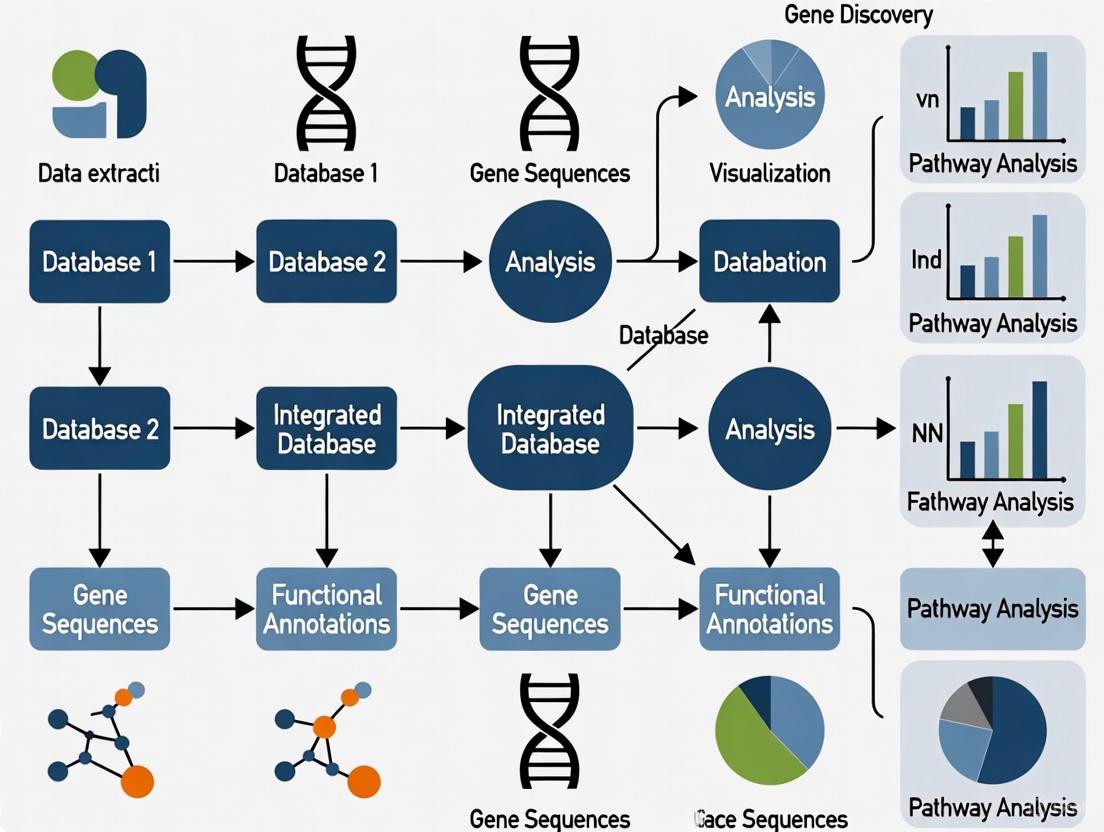
This article provides a comprehensive guide for researchers and drug development professionals on integrating heterogeneous biological databases to accelerate gene discovery.
Integrating Heterogeneous Biological Databases: Strategies for Next-Generation Gene Discovery
Abstract
This article provides a comprehensive guide for researchers and drug development professionals on integrating heterogeneous biological databases to accelerate gene discovery. It explores the foundational principles of data integration, from the latest NAR database collection to core computational concepts. The piece details cutting-edge methodological frameworks, including multi-omics approaches and machine learning, supported by real-world case studies in disease research. It further addresses critical challenges in data harmonization and optimization, and concludes with robust validation techniques and comparative analyses of integration tools. This resource synthesizes current knowledge to empower scientists in navigating the complex landscape of biological data for targeted discovery and therapeutic development.
The Landscape of Biological Data: Foundations for Effective Integration
Core Concepts: FAQs on Database Fundamentals
FAQ 1: What are controlled vocabularies and why are they critical for database integration?
Controlled vocabularies are specific, predefined lists of terms used to annotate data, which are essential for reducing ambiguity and duplication in biological databases [1]. Unlike free text entry, they enable both computers and humans to categorize information consistently, thereby reducing redundancy and errors [1]. This standardization is a foundational prerequisite for integrating heterogeneous databases, as it ensures that data from different sources, such as a biobank's clinical records and a public repository's genomic data, can be interoperable and jointly analyzed [2].
FAQ 2: What are the common data types encountered in integrated gene discovery research?
Gene discovery research relies on the integration of diverse data types. The table below summarizes the key categories often stored in modern biobanks and databases.
Table 1: Key Data Types in Integrated Gene Discovery Research
| Data Category | Specific Types | Role in Gene Discovery |
|---|---|---|
| Clinical Data | Demographic information, disease status, treatment history, pathology findings [2] | Provides the phenotypic context essential for correlating genotype with phenotype. |
| Omics Data | Genomic (DNA sequences, variations), Transcriptomic (gene expression), Proteomic (protein expression), Metabolomic (metabolite profiles) [2] | Identifies candidate genes and elucidates their functional impact across biological layers. |
| Image Data | Histopathological images, Medical scans (MRI, CT), Microscopy images [2] | Offers qualitative and quantitative insights into tissue and cellular morphology associated with genetic conditions. |
| Biospecimen Data | Blood, tissue biopsies, saliva, urine [2] | Serves as the primary source for molecular profiling and analysis. |
Troubleshooting Common Data Challenges
Challenge 1: Resolving "sequence import errors" in public repositories like GenBank.
A common issue when submitting sequences to repositories is the failure to import FASTA files.
- Problem: The submission fails with an error related to the FASTA definition line.
- Solution:
- Check the SeqID: Ensure the sequence identifier (SeqID) after the ">" is unique, contains no spaces, and is limited to 25 characters or less. Use only permitted characters: letters, digits, hyphens, underscores, periods, colons, asterisks, and number signs [3].
- Verify the Definition Line: The entire FASTA definition line must be a single line of text with no hard returns. Check that your editing software has not inserted any line breaks [3].
- Format Modifiers Correctly: Source organism information (e.g.,
[organism=Mus musculus]) must follow the[modifier=text]format without spaces around the "=" sign [3]. - Validate Sequence Characters: The nucleotide sequence itself should use only IUPAC symbols. For ambiguous bases, use "N" and avoid "-" or "?" characters, which will be stripped upon processing [3].
Challenge 2: Managing semantic heterogeneity during multi-database analysis.
When combining data from different resources, the same concept (e.g., "length") may be described with different terms ("length", "len", "fork length"), a problem known as semantic heterogeneity [4].
- Problem: Inability to effectively group and analyze measurements from disparate datasets.
- Solution: Utilize the identifier fields recommended by standards like Darwin Core. Instead of relying only on free-text fields like
measurementType, populate the corresponding identifier fields (measurementTypeID,measurementValueID,measurementUnitID) with Unique Resource Identifiers (URIs) from controlled vocabularies [4].- For example, always use a URI from the NERC Vocabulary Server's P01 collection for
measurementTypeIDto unambiguously define the measurement type [4]. This allows machines to correctly aggregate all length measurements, regardless of the original free-text description.
- For example, always use a URI from the NERC Vocabulary Server's P01 collection for
Experimental Protocols for Data Integration
Protocol: An Integrative Functional Genomics Workflow for Cross-Species Gene Discovery
This methodology leverages the GeneWeaver analysis system to identify novel genes underlying aging and disease by integrating heterogeneous genomic datasets [5].
- Objective: To find genes and pathways associated with a biological process (e.g., aging) by integrating data from multiple studies and species.
Materials & Reagents:
- GeneWeaver.org Account: A web-based system for storing and analyzing functional genomics gene sets [5].
- Gene Sets: Collections of genes from user-submitted experiments, published literature, and other databases (e.g., KEGG, OMIM, MSigDB) [5].
- Orthology Mapping Resources: Tools to map gene identifiers across species (e.g., mouse to human orthologs).
Procedure:
- Data Curation and Upload: Identify relevant genome-wide studies from literature searches (e.g., PubMed). Curate gene lists from these publications and upload them as distinct gene sets into your GeneWeaver workspace [5].
- Data Combination: Use the "Combine" tool to find the union of genes across multiple related gene sets. For example, create a master set of all genes associated with cellular senescence from various studies. This tool provides a count of how many sets each gene appears in, highlighting frequently implicated candidates [5].
- Similarity and Overlap Analysis: Use the "Jaccard Similarity" tool to perform pairwise comparisons between different gene sets. This calculates the similarity coefficient (size of intersection divided by size of union) and visually displays the overlap, for instance, between genes from a senescence study and those from a cognitive decline study [5].
- Statistical Validation: Employ the built-in resampling strategy to compute empirical p-values for the observed overlaps, assessing their statistical significance beyond chance [5].
- Cross-Species Validation: Identify a candidate gene (e.g., Cd63 from integrated data) and test its role in a model organism (e.g., perform RNAi knockdown of its ortholog, tsp-7, in C. elegans) to validate its effect on a phenotype like lifespan [5].
The following workflow diagram illustrates the key steps of this integrative genomics protocol:
The Scientist's Toolkit: Research Reagent Solutions
Table 2: Essential Tools for Database Integration and Gene Discovery
| Tool / Resource | Function | Application in Research |
|---|---|---|
| BLAST (NCBI) [6] | Finds regions of local similarity between biological sequences (nucleotide/protein). | Inferring functional and evolutionary relationships; identifying members of gene families. |
| NERC Vocabulary Server [4] | Provides URIs for controlled vocabulary terms for measurements, units, and values. | Annotating data for interoperability, ensuring unambiguous data integration across platforms. |
| GeneWeaver [5] | An analysis system for the integration of heterogeneous functional genomics data. | Storing, searching, and analyzing user-submitted and public gene sets to find convergent evidence. |
| PROKKA / RATT [7] | Tools for rapid genome annotation and annotation transfer between assemblies. | Annotating novel bacterial genomes or ancestral sequences using existing reference data. |
| BODC P01 Collection [4] | A controlled vocabulary collection for unambiguously describing types of measurements. | Standardizing measurementTypeID in databases to enable accurate grouping and analysis. |
Frequently Asked Questions (FAQs)
General Concepts
Q1: What is the core difference between a data warehouse and a federated database system?
The primary difference lies in how and where data is stored and accessed. A data warehouse uses an "eager" integration approach, where data is physically copied from various source systems, transformed, and stored in a central repository. This creates a single, consistent source for querying but requires significant storage and can contain data that is not real-time [8] [9].
In contrast, a federated database system uses a "lazy" approach. It creates a virtual database that provides a unified view of data, but the data itself remains in its original, distributed source systems. When you query the federation, it retrieves and combines data from these sources on the fly, offering access to more current data without the need for massive storage duplication [8] [9] [10].
Q2: What is a "schema" in the context of biological databases?
A schema is the structured, "queryable" blueprint of a database. It defines how data is organized, including the tables, fields, relationships, and data types. In biological research, a unified or global schema is often created to map and translate data from heterogeneous sources into a consistent format, making it possible to integrate and query them together [8] [11].
Q3: Why are ontologies and standards critical for data integration?
Ontologies and standards are the foundation of successful data integration. They provide an agreed-upon set of terms and definitions for describing biological data [8]. By using standards:
- Data becomes searchable and comparable: A "kinase" defined by one research group means the same thing to another.
- Interoperability is enabled: Different databases can link and share information unambiguously.
- Annotation is consistent: Both manual and automatic annotation processes can attach meaningful metadata to raw biological entities reliably [8]. Key resources include the OBO (Open Biological and Biomedical Ontologies) Foundry and the NCBO BioPortal [8].
Troubleshooting Federated Systems
Q4: What should I do if my federated query is running very slowly?
Performance and latency are common challenges in federated systems, as queries must access multiple, potentially remote, databases [10]. To troubleshoot:
- Check the query plan: Ensure the federation's query optimizer is pushing down operations like filters and aggregations to the source systems to minimize the amount of data transferred [10].
- Review network latency: Slow network connections to one or more source databases can bottleneck the entire query.
- Consider source system load: The query might be overloading a source database not designed for heavy analytical workloads. Schedule intensive queries for off-peak hours [12] [10].
- Verify timeouts: Adjust query governance execution time (
QRYGOVEXECTIME) to be larger than the expected query execution time [12].
Q5: I encountered error 1040235: "Remote warning from federated partition." What does this mean and how can I resolve it?
This error often indicates that the metadata in your local outline is out of sync with the fact table in the remote data source [12]. To resolve it:
- Remove the federated partition and its associated connection [12].
- Manually clean up any Essbase-generated tables and objects that failed to be removed automatically from the remote database schema [12].
- Ensure outline consistency: Make the necessary changes to both the Essbase outline and the remote fact table to ensure they are aligned. Common causes include adding, renaming, or removing dimensions or stored members [12].
- Re-create the connection to the remote database [12].
- Re-create the federated partition [12].
Q6: How do I add a new biological data source to my federated system?
A key advantage of a federated architecture is its flexibility [10]. The general process involves:
- Establish a connection: The FDBMS must connect to the new source (e.g., a new genomic database) using a suitable connector or adapter [10].
- Define schema mapping: Map the source's native schema (table names, field names, data types) to the global, unified schema of the federation. This tells the system how to translate the new source's data into the common format [10].
- Update the metadata catalog: Add the mapping and connection information to the federation's central metadata catalog so the query engine knows how to access and interpret the new data [10].
Comparative Analysis of Data Integration Approaches
The table below summarizes the core characteristics of the two primary data integration models to help you select the right strategy for your research project.
Table 1: Comparison of Data Warehousing and Federation
| Feature | Data Warehousing (Eager Approach) | Data Federation (Lazy Approach) |
|---|---|---|
| Data Location | Centralized physical repository [8] [9] | Distributed across original sources [8] [9] |
| Data Freshness | Can be outdated until the next ETL cycle [9] | Real-time or near-real-time access [9] [10] |
| Storage Cost | High (stores redundant copies of data) [9] [10] | Lower (avoids data duplication) [9] [10] |
| Implementation & Maintenance | Complex ETL processes and storage management [8] | Complex query optimization and schema mapping [8] [10] |
| Impact on Source Systems | Low during querying (data is local) [9] | High during querying (load is on source systems) [10] |
| Ideal Use Case | Large-scale, reproducible analysis of historical data [8] | Integrated queries across live, up-to-date sources [9] [10] |
Technical Diagrams
Data Integration Models in Biology
Federated System Architecture
Research Reagent Solutions: Data Integration Tools
Table 2: Essential Tools and Resources for Biological Data Integration
| Tool / Resource | Type | Primary Function | Key Initiative/Example |
|---|---|---|---|
| Ontologies | Vocabulary Standard | Provides unambiguous, agreed-upon terms for describing biological entities and processes [8]. | OBO Foundry, NCBO BioPortal [8] |
| Global Schema | Data Blueprint | Defines a unified structure for mapping and querying disparate data sources [8] [11]. | Object-Protocol Model (OPM) [11] |
| Federated Query Engine | Middleware | Parses, optimizes, and executes queries across distributed sources, returning unified results [10]. | BIO2RDF [8] |
| Connectors/Wrappers | Integration Component | Translates queries and results between the federation layer and a specific source system's format [10]. | Distributed Annotation System (DAS) [8] |
Troubleshooting Guides
This section addresses common challenges researchers face when implementing data integration strategies for gene discovery.
1. Problem: My data integration query is slow, and I'm unsure whether to use an Eager or Lazy approach.
- Question: How do I choose between Eager and Lazy loading to improve performance?
- Diagnosis: Slow queries often stem from fetching too much data at once (a problem with Eager loading) or making too many individual database queries (a problem with Lazy loading). The optimal choice depends on your data size and how you will use it.
- Solution:
- Use Eager Loading when you know you will need all the related data for a set of primary objects. For example, if you are analyzing a specific gene pathway and need all associated protein interactions, gene expressions, and clinical annotations upfront, Eager Loading fetches this in a single query, preventing repetitive, smaller queries later [13] [14].
- Use Lazy Loading when you are unsure which related data you will need or are only conditionally accessing it. For instance, when browsing a genome browser, you might only load detailed transcriptome data for a gene if a user clicks on it. This defers the cost of loading that data until it is absolutely necessary [13] [15].
- Experimental Protocol: To diagnose, run your application with database query logging enabled. A single large query suggests Eager Loading, while a rapid succession of many small queries (the "N+1 queries" problem) indicates Lazy Loading is causing overhead [14]. Switch the loading strategy and re-run your benchmarks.
2. Problem: My integrated view of biological data is inconsistent or has missing links.
- Question: How can I ensure data from different sources (e.g., GenBank, UniProt) are compatible?
- Diagnosis: Heterogeneous databases use different formats, schemas, and identifiers, making integration difficult. This is a fundamental challenge in biological data integration [8].
- Solution:
- Leverage Data Standards and Ontologies: Use controlled vocabularies and ontologies from resources like the OBO (Open Biological and Biomedical Ontologies) Foundry or NCBO BioPortal [8]. These provide universally agreed-upon terms for biological entities.
- Utilize Unique Identifiers: Always use standardized, unique alphanumeric strings (e.g., from UniProt or GenBank) to refer to biological entities rather than names, which can be ambiguous [8].
- Experimental Protocol: Implement a translation layer in your integration workflow that maps external database identifiers to a unified internal ID system. Tools like the Distributed Annotation System (DAS) use a client-server system with a translation layer to integrate annotation data from multiple distant servers into a single view [8].
- Question: How can I manage the challenges of a data warehouse that becomes stale?
- Diagnosis: This is a known challenge of the "eager" data warehousing approach, where a central repository can become inconsistent with the original sources [8].
- Solution:
- Consider a Federated or Lazy Approach: Instead of maintaining a full local copy, use systems that query data from distributed sources on-demand. The Distributed Annotation System (DAS) is a prime example in bioinformatics [8].
- Implement Scheduled Updates: If a warehouse is necessary, establish an automated pipeline to regularly pull updates from source databases.
- Experimental Protocol: For a gene annotation project, you could use a DAS client to pull the latest sequence annotations from various authoritative servers (like UniProt and Ensembl) each time you run your analysis, ensuring you always have the most current data [8].
Frequently Asked Questions (FAQs)
Q1: What are the core technical differences between Eager and Lazy data integration? In computational science, the frameworks are classified into two major categories [8]:
- Eager Approach (Warehousing): Data is copied into a central repository or data warehouse. This provides a unified, global schema for querying [8] [13].
- Lazy Approach (Federated/Linked Data): Data remains in its original, distributed sources. A global schema or mapping service is used to query and combine this data on-demand when a user requests it [8] [13].
Q2: Can you provide real-world biological examples of these models? Yes, the bioinformatics field employs both models [8]:
- Eager/Warehousing: UniProt and GenBank are centralised resources. Pathway Commons collects pathway data from multiple sources into a shared repository for querying [8].
- Lazy/Federated: The Distributed Annotation System (DAS) allows a client to integrate and display annotation data from multiple distant servers in a single view without centralizing the data [8].
- Lazy/Linked Data: BIO2RDF creates a network of interlinked biological data by using hyperlinks to connect related data from multiple providers [8].
Q3: When should I definitely use one approach over the other? The choice is often a trade-off, but some general rules apply:
- Use Eager Loading/Warehousing for data-dense dashboards or reporting systems where all related data is needed immediately for analysis. It ensures no delays when accessing related data, as everything is available upfront [13].
- Use Lazy Loading/Federated for applications with conditional data fetching, like content-heavy websites or interactive tools where users may not access all available information. It optimizes initial load time and memory usage [13].
Q4: What are the key computational trade-offs? The table below summarizes the performance characteristics of Eager vs. Lazy loading in application development, which directly applies to designing data integration systems [13].
| Feature | Lazy Loading | Eager Loading |
|---|---|---|
| Initial Load Time | Faster | Slower |
| Memory Usage | Lower (only for accessed data) | Higher (loads all data upfront) |
| Number of Queries | May result in multiple queries | Typically fewer queries (sometimes just one) |
| Code Complexity | More complex to handle deferred loading | Simpler, as all data is available immediately |
| Bandwidth Usage | Uses less bandwidth initially | Can use more bandwidth if fetching unnecessary data |
Data Integration Model Comparison
The following table summarizes the key aspects of Eager and Lazy integration models as they apply to biological research, synthesizing the conceptual and practical differences [8].
| Aspect | Eager Integration (Warehousing) | Lazy Integration (Federated/Linked Data) |
|---|---|---|
| Core Principle | Data copied to a central repository. | Data remains distributed; unified on-demand. |
| Data Freshness | Challenging to keep updated; can become stale. | Queries live sources; generally more current. |
| Initial Query Speed | Can be slower due to large initial data transfer. | Faster initial response. |
| Subsequent Performance | Excellent, as all data is local. | Can suffer latency from multiple source queries. |
| Scalability | Limited by central server capacity. | Highly scalable; leverages distributed sources. |
| Example in Biology | UniProt, GenBank, Pathway Commons [8]. | Distributed Annotation System (DAS), BIO2RDF [8]. |
Experimental Protocols for Data Integration
Protocol 1: Implementing a Federated Query Using DAS for Gene Annotation
- Objective: To integrate gene sequence annotations from multiple autonomous databases without creating a local copy.
- Methodology:
- Identify Data Sources: Determine the URLs of DAS servers providing the annotations you need (e.g., for genomic sequences, protein features).
- Specify Genomic Region: Your DAS client sends a query specifying the genome and genomic coordinates of interest.
- Query Distribution: The DAS client sends simultaneous requests to all configured annotation servers.
- Data Retrieval and Integration: Each server returns its annotations in a standardized XML format. The client then integrates and overlays all annotations into a unified view.
- Significance: This protocol exemplifies the "lazy" approach, allowing researchers to always access the most up-to-date annotations from expert curators directly [8].
Protocol 2: Building a Local Data Warehouse for Multi-Omics Analysis
- Objective: To create a centralized, high-performance resource for integrated analysis of transcriptomic and proteomic data.
- Methodology:
- Schema Design: Create a global database schema (e.g., using a star or snowflake schema) to hold gene expression, protein abundance, and clinical data.
- ETL (Extract, Transform, Load):
- Extract: Download data from public repositories like The Cancer Genome Atlas (TCGA) and Gene Expression Omnibus (GEO).
- Transform: Map external identifiers to a common ontology (e.g., Gene Ontology). Convert data into a unified format.
- Load: Populate the transformed data into the central warehouse.
- Query Interface: Provide tools (e.g., SQL interfaces, custom APIs) for researchers to run complex queries across the integrated data.
- Significance: This "eager" approach optimizes query speed for complex, cross-dataset analyses, which is crucial for discovering gene-disease associations [8].
Workflow and Logical Diagrams
The following diagram illustrates the core architectural difference between the Eager (Warehousing) and Lazy (Federated) data integration models in a biological context.
Diagram 1: Architectural comparison of Eager and Lazy data integration.
The Scientist's Toolkit: Research Reagent Solutions
The following table lists key "reagents" – in this case, data resources and software tools – essential for conducting biological data integration research.
| Item | Function in Research |
|---|---|
| UniProt Knowledgebase | A central, authoritative resource for protein sequence and functional data, often used as a core component in both eager and lazy integration systems [8]. |
| Gene Ontology (GO) | A structured, controlled vocabulary (ontology) that describes gene functions. It is critical for annotating and enabling interoperability between different biological datasets [8]. |
| Distributed Annotation System (DAS) | A client-server system that allows for the integration and display of biological sequence annotations from multiple, distributed sources without centralization [8]. |
| OBO Foundry Ontologies | A suite of orthogonal, interoperable reference ontologies for the life sciences, used to standardize data representation and enable meaningful integration [8]. |
| BIO2RDF | A project that uses Semantic Web technologies to create a network of linked data for the life sciences, exemplifying the linked data approach to lazy integration [8]. |
| Python/R Bio-packages | Libraries like Biopython and BioConductor provide pre-built functions and data structures for accessing biological databases and parsing standard file formats, simplifying the creation of custom integration scripts. |
The Critical Role of Standards, Ontologies, and Unique Identifiers
Troubleshooting Guides and FAQs
FAQ: Core Concepts
Q1: What is biological data integration and why is it critical for gene discovery? Biological data integration is the computational process of combining data from different sources to provide users with a unified view, allowing them to fetch, combine, manipulate, and re-analyze data to create new datasets [8]. For gene discovery, this is crucial because it enables researchers to leverage findings from disparate studies (e.g., genomics, proteomics) to identify novel genetic associations that might be missed when analyzing single datasets in isolation [16]. Without integration, the reproducibility and expansion of biological studies are severely hampered [8].
Q2: What is the difference between a data standard and an ontology? A data standard is an agreement on the representation, format, and definition for common data [8]. An ontology is a structured way of describing data using a set of unambiguous, universally agreed terms to describe biological entities, their properties, and their relationships [8]. In practice, you use a standard to format your data file (e.g., in a specific XML schema), and you use an ontology to precisely describe the meaning of the concepts within that file (e.g., using a term from the Cell Ontology to define a cell type).
Q3: My analysis pipeline failed because gene identifiers from my single-cell RNA-seq experiment don't match those in the public protein interaction database I want to use. What should I do? This is a common issue arising from identifier heterogeneity. Follow these steps:
- Identify the Source: Determine the namespace of your identifiers (e.g., are they Ensembl Gene IDs, Entrez Gene IDs, or symbols?) and the namespace required by the target database.
- Use a Mapping Service: Utilize a dedicated service for identifier conversion. Databases like UniProt [8] and bioinformatics portals like ExPASy [8] often provide built-in mapping tools or links to external databases that can help translate between different identifier types.
- Leverage Ontologies: Where possible, map your identifiers to a central ontology like the Cell Ontology (CL) or Uberon [17]. A study showed that fine-tuned LLMs can assist in this annotation process for cell lines and cell types with high recall [17], though manual curation is still recommended to ensure validity.
Q4: How can I account for population structure as a confounder when searching for genetically heterogeneous regions associated with a disease? Standard single-marker tests can produce false positives due to confounders like population structure. To address this, use methods like FastCMH, which is specifically designed to perform a genome-wide search for associated genomic regions while correcting for categorical confounders [16]. FastCMH combines the Cochran-Mantel-Haenszel (CMH) test with an efficient multiple testing correction framework, dramatically reducing genomic inflation and false positives compared to methods that cannot adjust for covariates [16].
Troubleshooting Common Experimental Issues
Problem: Inconsistent sample annotation is blocking my data submission to a public repository.
- Solution: Implement a manual and automated annotation workflow.
- Manual Curation: For a small number of samples, use established ontologies from resources like the OBO Foundry [8] or NCBO BioPortal [8] to find the correct terms for your sample metadata (e.g., cell type, tissue).
- Automated Assistance: For larger datasets, consider using automated annotation tools. Recent research indicates that fine-tuned Large Language Models (LLMs) can be effective for assigning ontological identifiers to biological sample labels, particularly for cell lines and cell types, achieving precision of 47–64% and recall of 88–97% [17]. This can significantly accelerate the process, though expert review is still required.
- Validation: Use an ontology lookup service (OLS) to validate the identifiers and terms before submission.
Problem: I need to compare single-cell trajectories (e.g., in vitro vs. in vivo development) but standard methods assume all cell states have a direct match.
- Solution: Employ an alignment method that can handle both matches and mismatches.
- Standard Dynamic Time Warping (DTW) assumes every time point in a reference matches at least one in the query, which is often biologically inaccurate [18].
- Use the Genes2Genes (G2G) framework, a dynamic programming algorithm that jointly handles matches, warps, and mismatches (indels) [18]. This allows you to identify not only similar cell states but also states that are divergent or unobserved in one of the systems, providing a more nuanced biological interpretation.
Problem: My genome-wide association study (GWAS) for a complex trait has insufficient power because individual genetic variants have weak effects.
- Solution: Use a region-based association method that aggregates signals.
- Genetic heterogeneity means different variants in the same genomic region can influence the same phenotype. Methods like FastCMH test all possible contiguous genomic regions by creating a meta-marker for each region, which can aggregate these weak signals into a statistically powerful association [16]. This approach can discover associations missed by single-marker tests or burden tests that are limited to predefined regions like genes [16].
Experimental Protocols
Protocol 1: Aligning Single-Cell Trajectories Using Genes2Genes (G2G)
Application: Comparing dynamic processes (e.g., differentiation, disease progression) between a reference and query system at single-gene resolution [18].
Detailed Methodology:
- Input Preprocessing:
- Obtain log1p-normalized scRNA-seq count matrices for both reference and query systems, along with their pseudotime estimates.
- Normalize the pseudotime axis for each system to the [0,1] range using min-max normalization.
- For each gene, perform interpolation: estimate its expression as a Gaussian distribution at a predefined number of equispaced time points. The expression value for an interpolation point is calculated using all cells, kernel-weighted by their pseudotime distance to that point [18].
- Dynamic Programming (DP) Alignment:
- Run the G2G DP algorithm for each gene to find the optimal alignment between the reference and query interpolated trajectories.
- The algorithm uses a Bayesian information-theoretic scoring scheme based on Minimum Message Length (MML) to compute the cost of matching, warping, or inserting a gap between time points. This cost function accounts for differences in both the mean and variance of gene expression distributions [18].
- The output for each gene is an alignment described as a five-state string (M, V, W, I, D), defining matches, compression warps, expansion warps, and insertions/deletions in sequential order [18].
- Downstream Analysis:
- Clustering: Calculate the pairwise Levenshtein distance between all gene-level alignment strings. Perform agglomerative hierarchical clustering on this distance matrix to identify genes with similar alignment patterns.
- Aggregation: Generate a representative alignment for each cluster. Aggregate all gene-level alignments to create a single, cell-level alignment that provides an average mapping between the reference and query trajectories.
- Pathway Analysis: Perform gene set over-representation analysis on clusters of interest (e.g., genes showing a divergent pattern) to identify associated biological pathways [18].
Protocol 2: Accounting for Categorical Confounders in Genome-Wide Association Analysis with FastCMH
Application: Discovering genomic regions associated with a binary phenotype while correcting for categorical confounders (e.g., gender, population batch) under a model of genetic heterogeneity [16].
Detailed Methodology:
- Data Preparation:
- Encode genotypic data for
nindividuals as a sequence oflbinary markers (e.g., using a dominant/recessive model for SNPs). - Define a binary phenotype vector
y(e.g., case/control). - Record a categorical covariate
cwithkstates for each individual.
- Encode genotypic data for
- Meta-marker Construction:
- For every possible genomic region
[ts, te](wheretsis the start marker andteis the end marker), create a meta-marker for each individual. - The meta-marker
gi([ts, te]) = max(gi[ts], gi[ts+1], ..., gi[te])is1if the region contains any minor/risk allele for that individual, and0otherwise [16]. This aggregates weak signals from individual markers within the region.
- For every possible genomic region
- Association Testing with Cochran-Mantel-Haenszel (CMH):
- For each genomic region
[ts, te], test the conditional association of its meta-marker with the phenotypey, given the covariatec. - The CMH test is used for this purpose. It constructs a
2x2contingency table for each category of the confounderc, summarizing the counts of cases/controls with the meta-marker present/absent within that stratum [16]. - The CMH test statistic is computed across all strata to produce a single p-value for the region, adjusting for the confounder.
- For each genomic region
- Multiple Testing Correction with Tarone's Trick:
- FastCMH uses Tarone's trick to account for the enormous number of tests performed (all possible genomic regions). This method identifies and excludes "untestable" hypotheses—regions that can never achieve statistical significance—from the multiple testing correction procedure, thereby maintaining computational efficiency and statistical power [16].
- The final output is a list of significant genomic regions, with FWER-controlled p-values, that are associated with the phenotype after correcting for the specified confounder.
Data Presentation
Table 1: Performance of Automated Ontology Annotation Tools
This table summarizes the precision and recall of a fine-tuned GPT model compared to the text2term tool for annotating biological sample labels to specific ontologies, highlighting its utility for cell lines and types [17].
| Ontology | Ontology Domain | Fine-tuned GPT Precision (%) | Fine-tuned GPT Recall (%) | text2term Performance |
|---|---|---|---|---|
| Cell Line Ontology (CLO) | Cell Lines | 47-64 | 88-97 | Outperformed |
| Cell Ontology (CL) | Cell Types | 47-64 | 88-97 | Outperformed |
| Uberon (UBERON) | Anatomy | 47-64 | 88-97 | Outperformed |
| BRENDA Tissue (BTO) | Tissues | 14-59 (Variable) | Not Specified | Variable Performance |
Table 2: Comparison of Single-Cell Trajectory Alignment Methods
This table compares key features of trajectory alignment methods, illustrating the advanced capabilities of the Genes2Genes framework [18].
| Feature | Dynamic Time Warping (DTW) / CellAlign | TrAGEDy | Genes2Genes (G2G) |
|---|---|---|---|
| Handles Mismatches (Indels) | No | Via post-processing of DTW output | Yes, jointly with matches |
| Alignment Assumption | Every time point must match | Definite match required | Allows for no match |
| Distance Metric | Euclidean distance of means | Not Specified | Bayesian MML (mean & variance) |
| Identifies Warps | Yes | Yes | Yes |
| Output | Mapping of all time points | Processed DTW alignment | Five-state string per gene |
Workflow and Relationship Visualizations
Diagram 1: Biological Data Integration Workflow
Diagram 2: FastCMH Method for Genetic Heterogeneity
Diagram 3: Genes2Genes Trajectory Alignment Logic
The Scientist's Toolkit: Research Reagent Solutions
| Tool / Resource | Type | Primary Function | Key Application |
|---|---|---|---|
| OBO Foundry [8] | Ontology Repository | Provides a set of principled, orthogonal reference ontologies for the biological sciences. | Finding standardized terms for annotating biological data. |
| NCBO BioPortal [8] | Ontology Repository | A comprehensive repository of biomedical ontologies and terminologies. | Browsing and searching a wide array of ontologies for data annotation. |
| UniProt [8] | Centralized Database | A comprehensive resource for protein sequence and functional information. | Accessing expertly curated protein data with rich annotation. |
| Genes2Genes (G2G) [18] | Software Framework | A dynamic programming tool for aligning single-cell pseudotime trajectories. | Comparing dynamic processes (e.g., differentiation) between two systems. |
| FastCMH [16] | R Package | A method for genome-wide search of genetically heterogeneous regions associated with a phenotype, correcting for confounders. | Discovering genomic regions with weak but aggregated signals in GWAS. |
| Color Contrast Analyser | Accessibility Tool | Checks the contrast between foreground and background colors. | Ensuring visualizations and diagrams meet accessibility standards for readability [19] [20]. |
| text2term [17] | Annotation Tool | A state-of-the-art tool for mapping text to ontological terms. | Automating the annotation of dataset labels for integration. |
From Data to Discovery: Methodological Frameworks and Real-World Applications
A Step-by-Step Tutorial for Genomic Data Integration
Genomic data integration is a cornerstone of modern gene discovery research. It involves the computational process of combining data from different sources—such as genome, transcriptome, and methylome datasets—to provide a unified view, thereby enabling the discovery of biological insights that cannot be gleaned from individual datasets alone [8] [21]. For researchers and drug development professionals, mastering this process is crucial for cross-validating noisy data, gaining broad interdisciplinary views, and identifying robust biomarkers or therapeutic targets [21] [22]. This guide provides a step-by-step tutorial and troubleshooting resource to navigate the conceptual, analytical, and practical challenges of genomic data integration.
Conceptual Framework: Understanding Data Integration
Before embarking on technical steps, it is vital to understand the key models and concepts that underpin data integration strategies in computational biology.
Key Integration Models
In computational science, theoretical frameworks for data integration are primarily classified into two categories [8]:
- Eager Approach (Data Warehousing): Data is copied from various sources into a central repository or data warehouse. This model must overcome challenges related to keeping the data updated and consistent.
- Lazy Approach (Federated Databases): Data remains in its original, distributed sources and is integrated on-demand using a global schema to map the information. The challenge here lies in optimizing the query process across sources.
The choice between these models depends on the data volume, ownership, and existing infrastructure [8].
Fundamental Terminology
Familiarity with the following terms is essential for understanding the integration process [8] [21]:
- Data Integration: The process of combining data that reside in different sources to provide users with a unified view.
- Ontology: A structured way of describing data using a set of unambiguous, universally agreed-upon terms.
- Unique Identifier: An alphanumeric string that serves as a unique representation for a biological entity (e.g., a gene or protein), crucial for accurately linking data across databases.
- Metadata: Data that provides information about other data, such as the experimental conditions or analysis parameters.
- Controlled Vocabulary: A collection of standardized terms for describing a specific domain of interest.
Step-by-Step Tutorial for Genomic Data Integration
The following workflow outlines the best practices for integrating genomic data, from initial design to final execution. Adhering to this structured process is key to achieving reliable and interpretable results.
Step 1: Design the Data Matrix
The first step is to construct a structured data matrix where the biological units (e.g., genes) are arranged in rows, and the different genomic variables (e.g., expression levels, methylation values) are arranged in columns [22]. This format is particularly powerful for investigating gene-level relationships across multiple data types.
- Example Matrix: In a plant case study, the matrix consisted of 42,950 genes (rows) and 70 variables (columns). These variables represented transcriptome and methylome data (in CG, CHG, CHH contexts for both promoter and gene-body) across ten different populations [22].
Step 2: Formulate the Biological Question
The analytical approach is determined by the specific biological question you aim to answer. These generally fall into three categories [22]:
- Description: Understanding major interplay between variables (e.g., "How does DNA methylation impact gene expression genome-wide?").
- Selection: Identifying key biological units or biomarkers (e.g., "Which groups of genes show contrasting methylation and expression patterns?").
- Prediction: Building models to infer outcomes (e.g., "Can gene expression levels be predicted from methylation data in new individuals?").
Step 3: Select an Integration Tool
Selecting the right software tool is critical and depends on your biological question, data types, and preferred statistical methods. The following table summarizes some of the most cited tools available in the R programming environment.
Table: Select Genomic Data Integration Tools
| Tool Name | Primary Method | Supported Questions | Key Feature |
|---|---|---|---|
| mixOmics [22] | Dimension Reduction (PCA, PLS) | Description, Selection, Prediction | Suitable for integrating two or more datasets; offers extensive graphical functions. |
| MOFA [22] | Factor Analysis | Description, Selection | Uncover the main sources of variation across multiple data types. |
| iCluster [22] | Clustering | Selection | Identifies subgroups across heterogeneous datasets. |
Step 4: Preprocess the Data
Data preprocessing ensures the quality and consistency of your data before integration, which is vital for the validity of the results. This stage involves [22]:
- Handling Missing Values: Decide on a strategy such as deletion (removing rows/columns with too many missing values) or imputation (replacing missing values with estimated ones like the median).
- Addressing Outliers: Identify and decide how to handle unusual values that could skew the analysis.
- Normalization: Adjust data to remove technical biases and make different datasets comparable.
- Batch Effect Correction: Account for technical variations introduced by different experimental batches, days, or platforms.
Step 5: Conduct Preliminary Analysis
Before integration, perform descriptive statistics and analyze each dataset individually. This step helps you understand the structure and quality of each omics layer, prevents misinterpretation during integration, and can reveal data-specific patterns or biases [22].
Step 6: Execute Genomic Data Integration
Finally, run the chosen integration method (e.g., mixOmics in R) on your preprocessed and understood datasets. The output will allow you to explore the relationships between variables, select features of interest, or build predictive models as dictated by your initial biological question [22].
Troubleshooting Common Issues
Even with a careful workflow, challenges can arise. The table below outlines common problems, their symptoms, and potential solutions.
Table: Troubleshooting Common Data Integration Issues
| Problem Area | Common Symptoms | Possible Causes | Corrective Actions |
|---|---|---|---|
| Data Quality & Input [23] [24] | Low library yield; smear in electropherogram; enzyme inhibition. | Degraded DNA/RNA; sample contaminants (phenol, salts); inaccurate quantification. | Re-purify input sample; use fluorometric quantification (Qubit) over UV; check purity ratios (260/230 > 1.8). |
| Fragmentation & Ligation [23] | Unexpected fragment size; sharp ~70-90 bp peak (adapter dimers). | Over-/under-shearing; poor ligase performance; suboptimal adapter-to-insert ratio. | Optimize fragmentation parameters; titrate adapter ratios; ensure fresh enzymes and buffers. |
| Amplification & PCR [23] | Overamplification artifacts; high duplicate rate; bias. | Too many PCR cycles; carryover of enzyme inhibitors; mispriming. | Reduce the number of PCR cycles; re-purify sample to remove inhibitors; optimize annealing conditions. |
| Bioinformatics Pipeline [25] [24] | Low mapping rates; pipeline failures; incompatible formats. | Incorrect reference genome; poor quality reads; tool version conflicts; adapter contamination. | Use correct/indexed reference genome (e.g., GRCh38); perform QC with FastQC; trim adapters; use workflow managers (Nextflow, Snakemake). |
| Data Heterogeneity [21] | Inability to combine datasets; erroneous mappings. | Different file formats, structures, or identifier systems across databases. | Use translation layers or tools like Gintegrator [26] to map identifiers (e.g., between NCBI and UniProt) in real-time. |
Frequently Asked Questions (FAQs)
Q1: Why should I submit my genomic data to a public repository like GEO? Journals and funders often require data deposition in public repositories to ensure reproducibility and validation of scientific findings. Submission also provides long-term archiving, increases the visibility of your research, and integrates your data with other resources, amplifying its utility [27].
Q2: What are the key data and documentation required for submission? Repositories like the Gene Expression Omnibus (GEO) require complete, unfiltered data sets. This includes raw data (e.g., FASTQ files), processed data, and comprehensive metadata describing the samples, protocols, and overall study. Heavily filtered or partial datasets are not accepted [27].
Q3: How does the GDC handle different data types and ensure consistency? The NCI Genomic Data Commons (GDC) employs a process called harmonization. It realigns incoming genomic data (e.g., BAM files) to a consistent reference genome (GRCh38) and applies uniform pipelines for generating high-level data like mutation calls and RNA-seq quantifications. This creates a standardized resource that facilitates direct comparison across different cancer studies [28].
Q4: What are the consent requirements for sharing human genomic data? For studies involving human data, NHGRI expects explicit consent for future research use and broad data sharing. Data submitted to controlled-access repositories like dbGaP require authorization for access, ensuring patient privacy is protected in accordance with ethical and legal standards [28] [29].
Table: Key Research Reagent Solutions and Databases
| Resource Name | Type | Primary Function in Integration |
|---|---|---|
| NCBI GEO [27] | Data Repository | Archives and redistributes functional genomic datasets; crucial for data submission and access. |
| GDC [28] | Data Repository & Knowledge Base | Provides harmonized cancer genomic data, standardizing data from projects like TCGA for integrated analysis. |
| UniProt [8] | Protein Database | Provides a central repository of protein sequence and functional data. |
| OBO Foundry [8] | Ontology Resource | Provides a suite of open, standardized biological ontologies to enable consistent data annotation. |
| Gintegrator [26] | Identifier Translation Tool | Translates gene and protein identifiers across major databases (e.g., NCBI, UniProt, KEGG) in real-time. |
| mixOmics [22] | R Software Package | Provides statistical and graphical functions for the integration of multiple omics datasets. |
Frequently Asked Questions (FAQs)
Q1: What is the core value of a multi-omics approach compared to single-omics studies? A multi-omics approach provides a holistic and complementary view of the different layers of biological information. While a single-omics dataset (e.g., genomics) shows one piece of the puzzle, integrating multiple 'omes' (e.g., genomics, transcriptomics, proteomics, metabolomics) allows researchers to uncover the complex, causative relationships between them. This leads to a more comprehensive picture of cellular biology, enabling the discovery of more robust biomarkers and drug targets that would not be identifiable from a single data type alone [30] [31].
Q2: What are the primary types of multi-omics data integration? Multi-omics data integration strategies are broadly categorized based on how the samples are collected [32]:
- Matched (Vertical) Integration: Multiple types of omics data (e.g., DNA, RNA, protein) are measured from the same set of samples. This keeps the biological context consistent and is powerful for identifying direct associations between different molecular layers [32].
- Unmatched (Horizontal) Integration: Data is combined from different studies, cohorts, or samples that measure the same type of omic. This is often used to increase statistical power by combining datasets from multiple sources [21] [32].
Q3: My multi-omics datasets have different scales, formats, and lots of missing values. What are the first steps to handle this? This is a common challenge due to the inherent heterogeneity of omics technologies. A standard first step is preprocessing and normalization tailored to each data type [32]. This involves:
- Format Conversion: Converting data from different sources into a common structure and dimension for integration [21].
- Noise and Batch Effect Correction: Accounting for technical variations introduced by different platforms, labs, or experimental conditions [21] [32].
- Missing Value Imputation: Using computational methods to infer plausible values for missing data points, which is crucial for downstream statistical analysis [33].
Q4: What are the main computational methods for integrating matched multi-omics data? There are several classes of methods, each with a different approach. The choice depends on your biological question (e.g., unsupervised clustering vs. supervised classification). The table below summarizes some commonly used methods [32]:
| Method Name | Integration Type | Key Principle | Best For |
|---|---|---|---|
| MOFA (Multi-Omics Factor Analysis) | Unsupervised | Identifies latent factors that are common sources of variation across all omics datasets. | Discovering hidden structures and subgroups in data without prior labels. |
| DIABLO (Data Integration Analysis for Biomarker discovery using Latent cOmponents) | Supervised | Identifies components that discriminate pre-defined sample groups (e.g., healthy vs. disease). | Identifying multi-omics biomarker panels for disease classification. |
| SNF (Similarity Network Fusion) | Unsupervised | Fuses sample-similarity networks from each omics layer into a single combined network. | Clustering patient samples into integrative molecular subtypes. |
| MCIA (Multiple Co-Inertia Analysis) | Unsupervised | A multivariate method that finds a shared dimensional space to reveal correlated patterns across datasets. | Jointly visualizing and interpreting relationships across multiple omics datasets. |
Q5: How can I interpret the results from a multi-omics integration analysis to gain biological insights? After running an integration model, focus on:
- Factor/Loading Interpretation (for MOFA): Examine which features (genes, proteins, etc.) have the highest weights ("loadings") in each latent factor. Features with high loadings for the same factor are co-varying across omics layers and are likely biologically linked [32].
- Pathway and Network Analysis: Input the list of important features identified by the integration model into pathway enrichment or protein-protein interaction network tools. This helps place the multi-omics findings in the context of established biological processes [32].
- Validation: Use independent experimental techniques (e.g., PCR, western blot) or cross-reference with publicly available databases to confirm key findings [30].
Troubleshooting Guides
Problem: My integrated model is overfitting and fails to generalize to new data. Potential Causes and Solutions:
- Cause 1: High Dimensionality, Low Sample Size (HDLSS). The number of variables (genes, proteins) vastly exceeds the number of samples, a common issue in omics [33].
- Solution: Employ feature selection before integration to reduce dimensionality. Use methods embedded in algorithms like DIABLO, which include penalization (e.g., Lasso) to select only the most informative features [32].
- Cause 2: Data Leakage. Information from the test dataset was inadvertently used during the model training process [31].
- Solution: Strictly partition your data into training, validation, and test sets before any preprocessing. Ensure that normalization parameters are learned only from the training set and then applied to the validation/test sets.
- Cause 3: Under-specification. The training process can produce many models that fit your training data well but make different predictions on new data [31].
- Solution: Use ensemble methods or perform multiple training runs with different initializations to ensure the stability and robustness of your model.
Problem: I am getting inconsistent signals between different omics layers (e.g., high RNA but low protein for a gene). Potential Causes and Solutions:
- Cause 1: Biological Regulation. This discrepancy is often biologically real and informative, due to post-transcriptional regulation, differences in protein turnover rates, or technical limitations in detecting certain proteins [30] [34].
- Solution: Do not assume perfect correlation. Use integration methods that can handle these non-linear relationships. Investigate the specific genes/proteins involved in the context of known biology; this inconsistency may reveal important regulatory mechanisms.
- Cause 2: Technical Noise. Different omics technologies have varying sensitivities and specificities [21] [32].
- Solution: Apply technology-specific quality control thresholds. For proteomics, be aware that mass spectrometry may not detect low-abundance proteins, which could explain a missing signal despite high RNA expression [34].
Problem: My data has significant batch effects from different experimental runs. Potential Causes and Solutions:
- Cause: Systematic technical variations introduced when samples are processed in different batches, on different days, or by different personnel [21] [32].
- Solution:
- Study Design: Whenever possible, randomize samples across batches to avoid confounding batch with biological groups.
- Batch Correction Algorithms: Use tools like ComBat or functions in R packages (e.g.,
sva,limma) to statistically remove batch effects after normalization but before data integration. Always validate that correction preserves biological signal.
- Solution:
Experimental Protocols for Key Multi-Omics Workflows
Protocol 1: A Basic Matched Multi-Omics Workflow from a Single Tissue Sample This protocol outlines how to process a single tissue sample to extract multiple analytes for integrated analysis.
1. Sample Lysis and Fractionation:
- Objective: To simultaneously isolate DNA, RNA, protein, and metabolites from a single sample.
- Steps: a. Homogenize ~50 mg of frozen tissue in a commercially available trizol-like or multi-omics lysis reagent. b. Perform phase separation by adding chloroform and centrifuging. The resulting mixture will separate into: * Upper aqueous phase: Contains RNA. * Interphase: Contains DNA. * Lower organic phase: Contains proteins and metabolites. c. Carefully collect each phase separately for downstream processing.
2. Omics-Specific Processing:
- Genomics/DNA: a. Precipitate DNA from the interphase using ethanol. b. Wash, purify, and resuspend the DNA pellet. c. Proceed to DNA sequencing library preparation (e.g., for Whole Genome Sequencing).
- Transcriptomics/RNA: a. Precipitate RNA from the aqueous phase using isopropanol. b. Wash the RNA pellet (e.g., with 75% ethanol) and dissolve in RNase-free water. c. Assess RNA quality (e.g., RIN > 8) using a Bioanalyzer. d. Proceed to RNA sequencing library preparation (e.g., mRNA enrichment, reverse transcription to cDNA).
- Proteomics/Proteins: a. Precipitate proteins from the organic phase with isopropanol. b. Wash the protein pellet and dissolve in a suitable buffer. c. Digest proteins into peptides using trypsin. d. Desalt the peptides and analyze by Liquid Chromatography-Mass Spectrometry (LC-MS/MS).
- Metabolomics/Metabolites: a. Dry down the metabolite-containing organic phase under nitrogen or vacuum. b. Reconstitute in a solvent compatible with your analysis platform (e.g., LC-MS or GC-MS).
Logical Workflow Diagram:
Protocol 2: Transcriptomic and Proteomic Integration for Biomarker Discovery This protocol details a paired analysis of gene and protein expression from the same biological condition.
1. Sample Preparation:
- Split a cell pellet or tissue homogenate into two aliquots.
- Aliquot 1 (for Transcriptomics): Preserve in RNA-later or immediately extract total RNA. Proceed with RNA-seq library prep and sequencing.
- Aliquot 2 (for Proteomics): Lyse cells in a protein-compatible buffer (e.g., RIPA with protease inhibitors). Quantify total protein. Proceed with protein digestion and LC-MS/MS.
2. Data Preprocessing and Normalization:
- RNA-seq Data: a. Generate raw count tables from sequencing reads using an alignment tool (e.g., STAR) or pseudoalignment (e.g., Kallisto). b. Normalize raw counts using a method like TMM (for cross-sample comparison) and transform to log2-CPM (Counts Per Million).
- Proteomics Data: a. Identify and quantify proteins from MS/MS spectra using search engines (e.g., MaxQuant). b. Normalize protein abundance values to correct for technical variation (e.g., using median or quantile normalization).
3. Data Integration and Analysis:
- Objective: Identify genes that show concordant or discordant regulation at the RNA and protein level.
- Steps: a. Match gene symbols (for RNA) to corresponding protein names. b. Calculate the fold-change (e.g., diseased vs. control) for both RNA and protein. c. Create a scatter plot of RNA log2-fold-change vs. Protein log2-fold-change. d. Statistically test for correlation (e.g., Pearson) and identify outliers (genes with large protein fold-change but minimal RNA change, suggesting post-transcriptional regulation). e. Input the list of concordant, highly changing biomarkers into a supervised integration tool like DIABLO to build a robust multi-omics classifier.
Data Integration Strategy Diagram:
The Scientist's Toolkit: Research Reagent Solutions
The following table details essential reagents and tools for generating multi-omics data, with a focus on nucleic acid-based methods which form the core of genomics, epigenomics, and transcriptomics [30].
| Reagent / Tool | Function / Application | Relevant Omics Layer(s) |
|---|---|---|
| DNA Polymerases | Enzymes that synthesize new DNA strands; critical for PCR, library amplification, and sequencing. | Genomics, Epigenomics, Transcriptomics |
| Reverse Transcriptases | Enzymes that transcribe RNA into complementary DNA (cDNA); essential for RNA-seq. | Transcriptomics |
| PCR Kits & Master Mixes | Optimized buffered solutions containing polymerase, dNTPs, and co-factors for efficient and specific DNA amplification. | Genomics, Epigenomics, Transcriptomics |
| Oligonucleotide Primers | Short, single-stranded DNA sequences designed to bind to a specific target region and initiate DNA synthesis by polymerase. | All nucleic acid-based layers |
| dNTPs (deoxynucleotide triphosphates) | The building blocks (A, T, C, G) for DNA synthesis. | Genomics, Epigenomics, Transcriptomics |
| Methylation-Sensitive Enzymes | Restriction enzymes or other modifying enzymes used to detect and study DNA methylation patterns. | Epigenomics |
| Restriction Enzymes | Proteins that cut DNA at specific recognition sequences; used in various library prep and epigenomic assays. | Genomics, Epigenomics |
| Mass Spectrometry Kits | Reagents for protein/peptide standard curves, digestion, labeling (e.g., TMT), and cleanup for LC-MS/MS. | Proteomics, Metabolomics |
Technical Support Center: FAQs & Troubleshooting Guides
Frequently Asked Questions (FAQs)
Q1: What are the most common data-related issues causing poor ML model performance in biological data fusion? Poor ML model performance often stems from data quality issues rather than algorithmic problems. The most common culprits include:
- Incomplete or insufficient data: Missing values in genomic datasets or datasets too small for model training lead to underfitting and poor generalization [35].
- Data corruption: Mismanagement or improper formatting of heterogeneous biological data from different sources [35].
- Imbalanced data: Unequal distribution of data classes, such as rare disease variants versus common variants, skews predictions [35].
- Inadequate feature selection: Including irrelevant genomic features that don't contribute to predictive output [35].
Q2: How can we effectively integrate heterogeneous biological databases with different structures and formats? Successful integration requires both technical and strategic approaches:
- Adaptive data modeling: Use hybrid database architectures combining relational databases for structured genomic data and document-oriented databases (e.g., MongoDB) for unstructured experimental data [36].
- Graph databases: Implement graph databases (e.g., Neo4j) for highly interconnected biological data like protein-protein interaction networks [36].
- Automated data pipelines: Deploy tools like Apache NiFi with error-handling frameworks to process raw biological data files (e.g., FASTQ) and normalize inputs [36].
- Interactive data environments: Create specialized integration layers that enable cross-repository analyses while preserving specialized governance of underlying databases [36].
Q3: What preprocessing steps are essential for genomic data before ML analysis? Essential preprocessing steps include [35]:
- Handling missing data: Remove entries with excessive missing values or impute using mean/median values for minor missing data.
- Addressing outliers: Use box plots to identify and remove values that distinctly stand out from the dataset.
- Feature normalization/standardization: Scale features to the same magnitude to prevent models from giving undue weight to high-magnitude features.
- Balancing imbalanced datasets: Apply resampling techniques or data augmentation to address skewed class distributions.
Q4: How can we validate that our gene prioritization framework is performing optimally? Validation should include multiple approaches:
- Cross-validation: Divide data into k subsets, using k-1 for training and one for testing, repeated k times [35].
- Benchmarking against established tools: Compare performance against tools like GEO2R and STRING [37] [38].
- Performance metrics: Evaluate using precision, recall, F1 score, and AUC-ROC curves [37] [38].
- Bias-variance tradeoff assessment: Ensure models balance underfitting and overfitting through regularization and complexity management [35].
Q5: What are the key advantages of using AI-driven literature analysis in target prioritization? AI-driven literature analysis provides:
- Automated evidence synthesis: GPT-4 and similar models can automate the synthesis of preclinical and clinical evidence, identifying targets with mechanistic and translational relevance [37] [38].
- Reduced manual curation: Significantly decreases the time required for literature review while maintaining comprehensive coverage [37].
- Identification of structural domains: LLMs can predict essential information about gene targets, including structural domains, toxicity, functional significance, and clinical relevance [37].
Troubleshooting Common Experimental Issues
Issue 1: Model Overfitting on Genomic Data
- Symptoms: Excellent performance on training data but poor performance on validation/test data [35].
- Diagnosis: Low bias but high variance, often occurring with complex models on limited genomic datasets [35].
- Solutions:
Issue 2: Handling Rare Genetic Variants in Prediction Models
- Symptoms: Poor prediction accuracy for rare variants despite good overall model performance [39].
- Diagnosis: Tree-based models may treat individuals with 1 or 2 risk alleles identically due to sparse data, incidentally learning a dominant model [39].
- Solutions:
- Apply specialized sampling techniques to oversample rare variant cases.
- Use ensemble methods combining multiple algorithms.
- Consider semi-supervised learning approaches for partially labeled data [39].
- Implement feature engineering to create aggregated rare variant scores.
Issue 3: Integration of Multi-omics Data with Different Scales and Distributions
- Symptoms: Model performance degrades when combining genomic, transcriptomic, and proteomic data.
- Diagnosis: Different omics data types have varying magnitudes, units, and distributions [35].
- Solutions:
- Apply modality-specific normalization before integration.
- Use hybrid AI frameworks like graph neural networks that can handle heterogeneous data structures [40].
- Implement multi-stage integration approaches rather than simple concatenation.
- Employ dimensionality reduction techniques like PCA on individual omics layers before fusion [35].
Issue 4: Interpretability of AI Models in Biological Discovery
- Symptoms: Difficulty understanding model decisions and biological relevance of prioritized genes.
- Diagnosis: Black-box models like deep neural networks provide limited biological insights [40].
- Solutions:
- Incorporate explainable AI techniques like SHAP or LIME.
- Use biologically constrained models that embed prior knowledge.
- Implement attention mechanisms in neural networks to highlight relevant features.
- Validate findings through network-based prioritization and functional annotations [37].
Experimental Protocols & Methodologies
GETgene-AI Framework for Disease Gene Prioritization
The GETgene-AI framework provides a systematic approach for prioritizing actionable drug targets in cancer research, demonstrated through a pancreatic cancer case study [37] [38].
Detailed Methodology
1. Initial Gene List Generation
- G List (Genetic Variants): Compile 2,493 genes with high mutational frequency, functional significance, and genotype-phenotype associations from databases like TCGA and COSMIC [37] [38].
- E List (Differential Expression): Identify 2,000 genes exhibiting significant differential expression in pancreatic ductal adenocarcinoma compared to normal tissues [37] [38].
- T List (Known Targets): Curate 131 genes annotated as drug targets in clinical trials, patents, or approved therapies [37] [38].
2. Network-Based Prioritization and Expansion
- Process each list through the Biological Entity Expansion and Ranking Engine (BEERE) [37] [38].
- Iteratively prioritize by taking the top 500 genes from each list, re-expanding and ranking [37] [38].
- Leverage protein-protein interaction networks, functional annotations, and experimental evidence [37].
3. Multi-list Integration and Annotation
- Merge the refined G, E, and T lists.
- Annotate with biologically significant features.
- Benchmark against genes implicated in pancreatic cancer clinical trials to set weights for RP score ranking [37].
4. AI-Driven Literature Validation
- Integrate GPT-4o for automated literature analysis [37] [38].
- Validate prioritized targets through synthesis of preclinical and clinical evidence [37].
- Further annotate the target list based on literature evidence [37].
Performance Evaluation
The framework was benchmarked against established tools with the following results:
Table 1: Performance Comparison of GETgene-AI Against Established Tools
| Metric | GETgene-AI | GEO2R | STRING |
|---|---|---|---|
| Precision | Superior | Lower | Moderate |
| Recall | Superior | Lower | Moderate |
| Efficiency | Higher | Lower | Moderate |
| False Positive Mitigation | Effective | Limited | Moderate |
The framework successfully prioritized high-priority targets such as PIK3CA and PRKCA, validated through experimental evidence and clinical relevance [37].
Machine Learning for Polygenic Risk Scoring in Brain Disorders
Methodology for Enhanced PRS with ML
1. Data Preparation and Quality Control
- Apply standard GWAS quality control procedures [39].
- Conduct population stratification correction using principal component analysis [39].
- Implement linkage disequilibrium pruning [39].
2. Feature Selection and Engineering
- Univariate and Bivariate Selection: Identify features firmly related to output variables using statistical tests [35].
- Principal Component Analysis (PCA): Reduce dimensionality while preserving features with high variance [35].
- Feature Importance Analysis: Leverage algorithms like Random Forest and ExtraTreesClassifier to select high-importance features [35].
3. Model Selection and Training
- Algorithm Selection: Choose based on prediction task: regression for numerical values, classification for categorical data, clustering for structure discovery [35].
- Ensemble Methods: Implement boosting, bagging, stacking, or cascading for complex datasets [35].
- Neural Networks: Apply for complex and larger datasets [35].
4. Hyperparameter Tuning and Validation
- Tune hyperparameters (e.g., k in k-nearest neighbors) to optimize performance [35].
- Implement k-fold cross-validation to assess model generalizability [35].
- Balance bias-variance tradeoff by selecting optimal model complexity [35].
Table 2: Performance of ML-Enhanced PRS for Brain Disorders
| Disorder | Traditional PRS (AUC) | ML-Enhanced PRS (AUC) | Notes |
|---|---|---|---|
| Schizophrenia | 0.73 | 0.54-0.95 (varied) | Highly heritable disorder [39] |
| Alzheimer's Disease | 0.70-0.75 (clinical) 0.84 (pathological) | Improved range reported | APOE status significantly impacts risk [39] |
| Bipolar Disorder | 0.65 | Improved range reported | Lower heritability than schizophrenia [39] |
Workflow Visualization
GETgene-AI Framework Workflow
ML Model Development & Validation Workflow
The Scientist's Toolkit: Research Reagent Solutions
Table 3: Essential Research Tools for ML in Biological Data Fusion
| Tool/Resource | Function | Application in Research |
|---|---|---|
| BEERE (Biological Entity Expansion and Ranking Engine) | Network-based prioritization tool | Expands and ranks gene lists using protein-protein interaction networks and functional annotations [37] [38] |
| GPT-4o | Large language model | Automates literature analysis, synthesizes preclinical and clinical evidence for target validation [37] [38] |
| Graph Databases (Neo4j) | Relationship modeling | Stores and queries highly interconnected biological data like protein-protein interaction networks [36] |
| Document-oriented Databases (MongoDB) | Flexible data storage | Captures variable biological data with nested structures, suitable for single-cell sequencing experiments [36] |
| Apache NiFi | Data pipeline automation | Processes raw biological data files with error-handling frameworks [36] |
| TCGA (The Cancer Genome Atlas) | Genomic data repository | Provides comprehensive genomic data for cancer research and target discovery [37] [38] |
| COSMIC (Catalogue of Somatic Mutations in Cancer) | Mutation database | Curates comprehensive information on somatic mutations in human cancer [37] [38] |
| AlphaFold | Protein structure prediction | Accurately predicts protein 3D structures using advanced neural networks [40] |
| DeepBind | DNA/RNA binding site prediction | Identifies protein binding sites and regulatory elements in genomes [40] |
FAQs: Gene Discovery Methods and Challenges
Q: What are the primary computational methods for discovering new disease-gene associations in rare diseases?
A: Gene burden testing is a primary analytical framework. This method tests for the enrichment of rare, protein-coding variants in cases versus controls. The process involves:
- Variant Filtering: Focusing on rare, predicted pathogenic variants (e.g., loss-of-function, de novo variants).
- Statistical Modeling: Using methods like Firth’s logistic regression to account for rare events and unbalanced studies.
- Multiple Testing Correction: Applying false discovery rate (FDR) adjustments to identify significant associations. Tools like the open-source geneBurdenRD R package have been developed specifically for this purpose in Mendelian diseases [41].
Q: How can a case-only study design be valid for identifying disease genes?
A: While case-control designs are ideal, large-scale collaborations often generate data only for affected individuals. A case-only design can be effective with careful execution [42]:
- Variant Filtering: Use publicly available control databases (e.g., gnomAD, 1000 Genomes) to filter out common variants (typically with Minor Allele Frequency, MAF, >1%).
- Variant Prioritization: Prioritize rare variants with predicted high functionality, such as loss-of-function or splice-site alterations.
- Gene Prioritization: Combine genetic data with other evidence, such as gene constraint or pathway information. This approach is particularly powerful for identifying rare, penetrant variants when large control sets sequenced with the same technology are unavailable [42].
Q: What role do graph databases play in integrating data for gene discovery?
A: Graph databases like Neo4j are increasingly valuable for managing the complex, interconnected nature of biological data. They offer significant advantages over traditional relational databases (e.g., MySQL) for gene discovery research [43]:
- Efficient Querying: They natively represent relationships, allowing for fast traversal of complex connections (e.g., between genes, proteins, diseases, and drugs) without computationally expensive "join" operations.
- Hypothesis Generation: By easily querying diverse relationships, researchers can uncover novel associations, such as potential drug repurposing opportunities.
- Performance: In performance tests, a graph database containing 114,550 nodes and over 82 million relationships significantly outperformed MySQL in query execution speed, especially for complex queries [43].
Q: What is the clinical impact of solving undiagnosed rare disease cases?
A: Obtaining a definitive genetic diagnosis can be transformative for patients and families, ending a long "diagnostic odyssey." The impact includes [44]:
- Prognostic Clarity: Providing families with a clear understanding of the disease's expected course.
- Access to Support: Enabling eligibility for government or institutional support programs.
- Therapeutic Opportunities: Opening doors to clinical trials, including innovative gene therapies. Specialized clinics, like the Undiagnosed Rare Disease Clinic (URDC), use advanced technologies like whole-genome sequencing and AI-driven analysis to solve these complex cases, achieving diagnoses where standard testing has failed [44].
Troubleshooting Guides
Troubleshooting Gene Burden Analysis
Problem: High false positive rate in gene-disease association signals.
| Possible Cause | Solution |
|---|---|
| Inadequate control population | Ensure controls are phenotypically distinct from cases. Use a large, ancestrally matched control cohort to filter out population-specific variants [41]. |
| Incorrect variant filtering | Apply strict quality control. Remove variants seen in any control to mimic a fully penetrant Mendelian model. Use multiple variant consequence categories (LoF, pathogenic) [41]. |
| Overlooked alternative diagnoses | Re-evaluate cases driving a new signal; exclude those with an existing, confirmed molecular diagnosis for a different gene [41]. |
Troubleshooting Insertional Mutagenesis Screens
Problem: Identifying false positive common insertion sites (CIS) in cancer gene discovery.
| Possible Cause | Solution |
|---|---|
| Biases in viral integration | Use a combination of different insertional mutagens (e.g., Retroviruses, Transposons) to cross-validate findings and reduce agent-specific bias [45]. |
| Insufficient statistical power | Increase the sample size (number of tumors analyzed). Use robust statistical models designed for CIS identification that account for local genomic features [45]. |
| Complex structural variations | Employ long-read genome sequencing (LRS) to fully resolve complex rearrangements that short-read sequencing may misrepresent as simple insertions [46]. |
Experimental Protocols
Protocol 1: Gene Burden Analysis for Rare Disease
Methodology from the 100,000 Genomes Project [41]:
- Cohort Definition: Define cases based on specific rare disease categories. Controls are probands from other, phenotypically distinct disease groups.
- Variant Calling and Quality Control: Perform whole-genome sequencing. Process variants using a prioritization tool (e.g., Exomiser). Filter to retain rare, protein-coding variants.
- Variant Categorization: Categorize variants for burden testing:
- Predicted Loss-of-Function (LoF)
- Highly predicted pathogenic (e.g., Exomiser score ≥0.8)
- Highly predicted pathogenic in Constrained Coding Regions (CCR)
- De novo variants (in trio families)
- Statistical Testing: For each case-control analysis and gene, test for enrichment of variant categories in cases using a cohort allelic sums test (CAST) statistic within a Firth’s logistic regression model.
- Multiple Testing Correction: Apply a False Discovery Rate (FDR) threshold (e.g., 0.5%) to identify significant disease-gene associations.
- Post-Analysis Triage:
- Remove associations in non-coding RNA genes.
- Check for haploinsufficiency evidence (e.g., gnomAD LOEUF score <0.5) for dominant LoF signals.
- Clinically review cases to confirm no alternative diagnosis.
Protocol 2: Insertional Mutagenesis Screen for Cancer Gene Discovery
Methodology for Forward Genetics Screening [45]:
- Animal Model Infection: Infect newborn mice (e.g., with Moloney murine leukemia virus) to achieve life-long viremia and widespread random genomic integration.
- Tumor Monitoring: Monitor animals for tumor formation over a period of months.
- Integration Site Cloning: Isolate genomic DNA from resulting tumors. Use techniques (e.g., linker-mediated PCR) to clone the proviral integration sites from the tumor cells.
- Identification of Common Insertion Sites (CIS): Map all retrieved integration sites to the host genome. Use bioinformatic and statistical tools to identify genomic loci that are enriched for insertions across independent tumors—these are CIS.
- Candidate Gene Validation: Genes located near or within CIS are considered candidate cancer drivers. Validate their oncogenic or tumor-suppressor function through downstream functional experiments.
Data Presentation
| Disease Area | Gene Discovered | Discovery Method | Key Functional Impact | Reference |
|---|---|---|---|---|
| Monogenic Diabetes | UNC13A | Gene burden testing (100K GP) | Disruption of known β-cell regulator [41]. | [41] |
| Schizophrenia | GPR17 | Gene burden testing (100K GP) | New association for psychiatric disorder [41]. | [41] |
| Epilepsy | RBFOX3 | Gene burden testing (100K GP) | New association for neurological disorder [41]. | [41] |
| Carbamoyl Phosphate Synthetase 1 Deficiency | CPS1 | Personalized CRISPR therapy | First successful in vivo gene correction for a rare liver disease [47]. | [47] |
| Achromatopsia | CNGA3, CNGB3, etc. | Whole genome sequencing (URDC) | Diagnosis via discovery of non-coding "second hit" in junk DNA [44]. | [44] |
| Autism & Intellectual Disability | RFX3 | Long-read genome sequencing | Resolved complex structural variant causing haploinsufficiency [46]. | [46] |
Table 2: Research Reagent Solutions for Gene Discovery
| Reagent / Tool | Function in Gene Discovery |
|---|---|
| geneBurdenRD (R package) | An open-source analytical framework for performing gene burden testing in rare disease sequencing cohorts [41]. |
| Exomiser | A variant prioritization tool that filters and scores rare, protein-coding variants based on frequency, pathogenicity, and phenotype matching [41]. |
| Long-Read Sequencer (PacBio/Oxford Nanopore) | Technology that reads long, continuous DNA fragments; essential for detecting complex structural variations missed by short-read tech [46]. |
| Retrovirus (MoMLV) / Transposon Vectors | Integrating mutagens used in forward genetic screens to randomly disrupt genes and identify drivers of tumorigenesis in model organisms [45]. |
| Neo4j Graph Database | A platform to store and query highly interconnected biological data (e.g., gene-protein-disease networks), enabling novel relationship discovery [43]. |
Workflow and Pathway Diagrams
Gene Burden Analysis Workflow
Insertional Mutagenesis Mechanisms
Variant Prioritization Logic
Navigating Computational Hurdles: Strategies for Troubleshooting and Optimization
Technical Support Center: FAQs & Troubleshooting Guides
Frequently Asked Questions
What are the most common sources of heterogeneity in biological databases? Heterogeneity arises from multiple sources, including structural differences in database schemas, syntactic variations in data formats (e.g., FASTA, GenBank, PDB), and semantic inconsistencies where the same biological concept is defined differently across sources [48].
My data integration pipeline has failed. What should I check first? First, inspect the workflow log for error messages [49]. The most common causes are simple typos in commands, incorrect file paths, or corrupt input data [50]. Ensure all software versions and dependencies are compatible [24].
How can I manage data quality when integrating diverse datasets? Implement cross-format data quality testing [51]. Use validation frameworks to check that data from different sources (e.g., CSV, JSON, Parquet) conforms to expected structures and is complete and accurate before proceeding with integration and analysis [51].
What is the difference between a data warehouse and a federated database? A data warehouse uses an ETL (Extract, Transform, Load) process to centralize data into a single, unified repository [48]. In contrast, a federated database leaves data in its original sources and provides a unified query interface that translates your questions into source-specific queries [8] [48].
Which data integration method is best for my gene discovery research? The best method depends on your needs. Data warehousing (eager approach) is suitable when you need fast query performance and can maintain a central copy [8]. Federated databases or linked data (lazy approaches) are better when data sources are frequently updated or you cannot store a local copy [8] [48].
Troubleshooting Common Experimental Issues
Problem: Tool Compatibility Error in a Variant Calling Workflow
- Symptoms: Pipeline fails with error messages about missing functions or incompatible versions.
- Solution: This is often caused by conflicts between software versions [24]. Create a containerized environment (e.g., using Docker or Singularity) with version-locked dependencies. Alternatively, use a workflow management system like Nextflow or Snakemake, which can manage isolated software environments for each tool [24].
Problem: Computational Bottlenecks in Metagenomic Analysis
- Symptoms: Pipeline execution is extremely slow or runs out of memory.
- Solution: This is typically due to insufficient resources for large datasets [24].
- Profile your pipeline to identify the specific step consuming the most resources.
- For the problematic step, check if parameters can be optimized for efficiency.
- Consider migrating the resource-intensive step to a cloud platform with scalable computing power [24].
Problem: Semantic Inconsistency in Integrated Gene Lists
- Symptoms: Queries across different databases return conflicting or non-overlapping results for the same gene.
- Solution: This is a semantic heterogeneity issue [48].
Problem: Schema Drift in Continuously Ingested Data
- Symptoms: A pipeline that worked previously suddenly fails because new data has a different structure or new columns.
- Solution: Schema drift is a common challenge in data lakes [51]. Implement a schema-on-read approach or use data processing frameworks that can handle evolving schemas. Incorporate data validation steps (e.g., using Great Expectations) to detect drift early [51].
Data Integration Challenges and Methodologies
The following table summarizes the core computational challenges in data integration as identified by the research community [52].
| Challenge | Description | Impact on Analysis |
|---|---|---|
| Different Size, Format, and Dimensionality | Datasets vary in file format (CSV, JSON, BAM), size (MB to TB), and number of features (dimensionality) [52] [51]. | Hampers uniform processing; requires specialized tools for each data type. |
| Presence of Noise and Biases | Experimental noise, batch effects, and systematic data collection biases are common in biological data [52]. | Can lead to false discoveries and unreliable models if not accounted for. |
| Effective Dataset Selection | Determining which datasets among many are informative and relevant for a specific biological question [52]. | Integrating uninformative data can reduce signal-to-noise ratio and analytical performance. |
| Concordant/Discordant Datasets | Different datasets may provide conflicting evidence (discordant) or agreeing evidence (concordant) for a hypothesis [52]. | Methods must weigh evidence appropriately to handle biological complexity and context-specificity. |
| Scalability | The ability of an integration method to handle increasing numbers and sizes of datasets efficiently [52]. | Limits the scope of analysis; non-scalable methods become computationally prohibitive with large-scale data. |
Experimental Protocol: Constructing a Functional Linkage Network (FLN)
Objective: To collectively mine multiple heterogeneous biological datasets to build a unified FLN for gene discovery and hypothesis generation [52].
Methodology Details: This protocol uses an integrative machine learning approach to predict gene associations.
- Data Collection and Curation:
- Gather diverse datasets, including:
- Protein-Protein Interactions (PPI): From databases like BioGRID or STRING.
- Gene Co-expression Data: From sources like GEO or TCGA.
- Genomic Sequence Data: To derive sequence similarity metrics [52].
- Gene Ontology (GO) Annotations: For functional semantic similarity [48].
- Pathway Data: From resources like KEGG or Reactome [48].
- Gather diverse datasets, including:
- Data Transformation and Feature Engineering:
- Convert each data source into a gene-gene association matrix.
- Normalize association scores to a common scale (e.g., 0 to 1) across all datasets.
- Handle missing data using appropriate imputation techniques or by treating absence as a separate feature.
- Model Training and Integration (Using Non-negative Matrix Factorization - NMF):
- Reasoning: NMF-based approaches are well-suited for integrating heterogeneous data as they can handle diverse data types and uncover latent factors that represent shared biological processes [52].
- Procedure: Apply NMF to the combined set of association matrices to decompose them into a consensus matrix (the FLN) that captures the most robust gene-gene associations across all input data [52].
- Validation and Interpretation:
- Positive Control: Validate the FLN by measuring its enrichment for known gene functions and pathways.
- Functional Prediction: Use the FLN to predict novel gene functions or interactions for poorly characterized genes [52].
- Candidate Prioritization: Prioritize candidate genes for further experimental validation in your gene discovery research based on their connections in the FLN.
Quantitative Performance of Data Formats
The choice of data format significantly impacts storage efficiency and query performance in heterogeneous systems [51].
| Format | Type | Best Use Case | Performance Notes |
|---|---|---|---|
| Parquet | Columnar | Analytical Queries, Big Data Processing | High efficiency for read-heavy analytical workloads; excellent compression [51]. |
| Avro | Row-based | Serialization, Data Transmission, Streaming | Supports schema evolution; compact binary format; good for write-heavy streams [51]. |
| CSV | Text | Data Exchange, Simple Tables | Human-readable but less efficient for large-scale processing; no built-in schema [51]. |
| JSON | Text | Web APIs, Semi-structured Data | Lightweight and flexible; less compact than binary formats for high-throughput streaming [51]. |
The Scientist's Toolkit: Research Reagent Solutions
| Tool / Resource | Function in Data Integration |
|---|---|
| Workflow Management System (e.g., Nextflow, Snakemake) | Automates multi-step bioinformatics pipelines, manages software environments, and ensures reproducibility [24]. |
| Data Harmonization Technique (e.g., NLP, ML, DL) | Core techniques for managing structured, semi-structured, and unstructured data to create a uniform representation [53]. |
| Ontology (e.g., Gene Ontology) | Provides a structured, controlled vocabulary for describing gene functions, enabling semantic integration and reducing ambiguity [48]. |
| Unique Identifier (e.g., from UniProt) | A unique alphanumeric string that unambiguously represents a biological entity (e.g., a protein) across different databases [8]. |
| Integration Platform (e.g., InterMine, BioMart) | Provides a pre-built data warehouse and query interface for multiple biological databases, simplifying access for researchers [48]. |
Workflow and Architecture Diagrams
Data Harmonization Workflow
Data Integration Architectures
Managing Noise, Bias, and Source Completeness in Integrated Queries
Frequently Asked Questions (FAQs)
Data Noise & Quality
Q1: Our integrated queries are returning inconsistent results. What could be causing this, and how can we resolve it?
Inconsistent results often stem from technical noise or batch effects in the underlying biological data. Technical noise arises from factors like reagent variability, cell cycle asynchronicity, and stochastic gene expression [54] [55]. To resolve this, implement a network filtering denoising technique.
Protocol: Network Filter Denoising
- Input: A matrix of gene expression measurements (or other molecular profiles) and a relevant biological network (e.g., Protein-Protein Interaction network).
- Network Partitioning: Use a community detection algorithm (e.g., Louvain method) to partition the network into structural modules (
G_s). This step accounts for heterogeneous correlation patterns within the network [55]. - Apply Filter: For each node
iin a modules_i, calculate the denoised value using the appropriate filter.- For assortative relationships (correlated signals), use a smoothing filter:
f_smooth[i, x, G_s_i] = (1 / (1 + k_i)) * (x_i + Σ_(j in neighbors) x_j)[55] - For disassortative relationships (anti-correlated signals), use a sharpening filter:
f_sharpen[i, x, G_s_i] = α * (x_i - f_smooth[i, x, G_s_i]) + x̄[55] whereαis a scaling factor (often ~0.8) andx̄is the global mean.
- For assortative relationships (correlated signals), use a smoothing filter:
- Output: A denoised data matrix. Applying this to proteomics data before machine learning training has been shown to increase prediction accuracy by up to 43% [55].
Q2: What are the best practices for reducing batch effects when combining datasets from different public repositories like GenBank and PDB?
Batch effects are a major source of noise and bias. Best practices involve a combination of technical and computational approaches.
- Technical Standards: Standardize data collection and entry processes as much as possible. Use clear, documented formats for data capture to minimize inconsistencies from the start [56] [57].
- Computational Correction: Employ advanced noise-reduction tools designed for high-dimensional biological data. For example, tools like iRECODE can simultaneously reduce both technical and batch noise while preserving full-dimensional data, which is crucial for cross-dataset comparisons in transcriptomics, epigenomics, and spatial domains [58].
- Data Integration Strategy: Adopt a mosaic integration approach. This does not require matching individuals or features across datasets but instead embeds them into a common space (e.g., using UMAP), making it more robust to batch effects [59].
Data Bias & Integration
Q3: Our gene discovery pipeline seems biased towards well-studied genes. How can we mitigate this selection bias?
This is a common issue known as literature bias, where data-rich domains overshadow others. Mitigation requires strategies that handle heterogeneous data concordance.
- Use Integration Methods that Handle Discordance: Choose machine learning or network-based integration methods specifically designed to effectively incorporate both concordant and discordant datasets. This prevents well-studied, data-rich networks from dominating the analysis [52].
- Leverage Multi-Omic Integration: Move beyond a single data type. Integrate complementary datasets (e.g., genomics, transcriptomics, proteomics) to allow common noisy signals to be identified and to increase the resolution in under-studied genomic regions [59].
- Implement Vertical or Mosaic Integration: These frameworks allow for the connection of different features across individuals or a joint embedding of non-matching datasets, which can help uncover novel relationships beyond the well-annotated genes [59].
Q4: What are the primary computational challenges in integrating heterogeneous biological data, and what methods are suited to address them?
The main challenges arise from the differing characteristics of biological data sources. The table below summarizes these challenges and recommended methodologies.
Table 1: Computational Challenges in Biological Data Integration
| Computational Challenge | Description | Recommended Methods |
|---|---|---|
| Different Data Size, Format & Dimensionality | Datasets vary in scale (e.g., sequences vs. images), structure (e.g., tables vs. networks), and number of features [52]. | Non-negative Matrix Factorization (NMF): Flexible for integrating heterogeneous data of different sizes and formats [52]. |
| Presence of Noise & Biases | Data contains technical noise, measurement errors, and collection biases [52] [54]. | Network Filters: Leverage biological networks to denoise data [55]. RECODE/iRECODE: Reduce technical and batch noise in single-cell data [58]. |
| Dataset Selection & Concordance | Selecting informative datasets and handling both agreeing (concordant) and disagreeing (discordant) information is difficult [52]. | Machine Learning & Network-Based Methods: Use methods designed to weight datasets and handle discordance, preventing data-rich sources from dominating [52]. |
| Scalability | Methods must handle the large number and size of modern biological datasets efficiently [52]. | Random Walk/Diffusion Methods: Scalable for large networks. NMF-based Approaches: Also noted for their scalability with large datasets [52]. |
Source Completeness
Q5: How do we assess if our integrated data source is "complete enough" for reliable gene discovery?
Data completeness is about having all necessary data elements present for your analysis [60]. Assess it using these metrics:
Table 2: Key Metrics for Data Completeness
| Metric | Definition | Calculation Example |
|---|---|---|
| Record Completeness | The percentage of records (e.g., gene entries) that have all mandatory fields populated [57]. | (Number of complete records / Total number of records) * 100 |
| Attribute/Field Completeness | The percentage of a specific field (e.g., "gene function annotation") that contains valid data across all records [56] [57]. | (Number of non-null values in a field / Total number of records) * 100 |
| Data Coverage | Whether data is present for all required entities or attributes across the entire scope of your research question [57]. | Assess if data for all genes in your pathway of interest is available in the integrated source. |
| Data Consistency & Conformance | Ensures that data follows the required format or rules (e.g., standardized gene nomenclature) [57]. | Check that all gene identifiers conform to a standard like HGNC. |
Q6: We have identified missing values in key phenotypic fields. What techniques can we use to address this?
Addressing missing data involves a combination of prevention and computational correction.
- Prevention via Standardization: Implement standardized data collection procedures and clear validation rules at the point of entry to minimize omissions [56] [60].
- Data Cleansing Techniques:
- Data Profiling: First, analyze the data to understand the patterns and extent of missingness [57].
- Imputation: Use statistical methods (e.g., mean/mode imputation, k-nearest neighbors) to fill in missing values. In biological contexts, network-based imputation that uses information from interacting genes or proteins can be particularly effective [57].
- Data Integration: Merge data from multiple complementary sources. A value missing in one database (e.g., Cellosaurus) might be present in another (e.g., GTEx), helping to create a more complete dataset [36] [57].
The Scientist's Toolkit
Table 3: Essential Research Reagent Solutions for Data Integration Studies
| Reagent / Resource | Function in Research |
|---|---|
| Protein-Protein Interaction (PPI) Network | Provides a network of known physical interactions between proteins, used for denoising data via network filters and predicting gene function [52] [55]. |
| Gene Ontology (GO) Database | Provides a structured, controlled vocabulary for gene function annotation, essential for validating and interpreting gene discovery results [52]. |
| Cell Line Annotation (e.g., Cellosaurus) | Offers standardized information on cell lines, including tissue origin and disease relevance, crucial for selecting appropriate biological models for validation [36]. |
| Single-Cell RNA-seq Data | Enables genome-wide profiling of transcriptomes in individual cells, providing high-resolution data that requires specialized noise reduction tools like RECODE [58]. |
| Gene Regulation Network (GRN) | A network of regulatory interactions between genes, used in integration methods to infer novel gene functions and prioritize disease genes [52]. |
Workflow Visualizations
Network Filter Denoising Workflow
Data Integration for Gene Discovery
Troubleshooting Guides and FAQs
Handling Missing Values
FAQ: My dataset has missing values. What is the first thing I should do? Before any imputation, analyze the pattern and mechanism of the missingness. Use statistical tests and visual diagnostics to determine if data is Missing Completely at Random (MCAR), Missing at Random (MAR), or Missing Not at Random (MNAR). This diagnosis directly informs the most appropriate handling method [61] [62].
FAQ: Which simple imputation method should I choose for a numeric column? For a quick initial approach, median imputation is often more robust than mean imputation if your data contains outliers. For categorical data, use mode imputation. Remember that these are simple methods and may not preserve relationships between variables [63].
FAQ: My machine learning pipeline broke due to missing values. What is the safest immediate fix?
If you need a rapid solution to get your pipeline running, consider using multiple imputation (e.g., with the mice package in R) which creates several complete datasets and accounts for the uncertainty in the imputed values, leading to more robust standard errors and model estimates [61].
Troubleshooting Guide: Addressing High Missingness in Specific Columns
| Observation | Potential Cause | Recommended Action |
|---|---|---|
| A column has >60% missing values [62] | Feature not present (e.g., PoolQC missing for houses with no pool) |
Consider dropping the column or creating a new binary flag (e.g., has_pool) |
| Multiple columns are missing together [62] | Structural absence (e.g., all Bsmt* columns missing for houses without a basement) |
Treat as a block: impute with a single value (e.g., "None") or create a composite missingness indicator |
| Missingness correlates with another observed variable (MAR) [61] | Data collection bias (e.g., older participants less likely to report weight) | Use multiple imputation, including the predictive variable in the imputation model |
| Missingness depends on the unobserved value itself (MNAR) [61] | Systematic non-response (e.g., individuals with high income decline to report it) | Use specialized MNAR models (e.g., pattern mixture models) or conduct sensitivity analyses |
Handling Outliers
FAQ: What is the quickest way to detect outliers in a single numeric variable?
Use the Interquartile Range (IQR) method. Calculate the 25th (Q1) and 75th (Q3) percentiles. Any data point below Q1 - 1.5 * IQR or above Q3 + 1.5 * IQR can be considered a potential outlier. This method is non-parametric and works for most distributions [64].
FAQ: An outlier detection method flagged a data point I believe is biologically valid. Should I remove it? Not necessarily. Do not automatically remove outliers just because they are extreme. Investigate their origin. In translational research, an outlier could represent a rare but critical biological phenomenon, such as a patient with an extraordinary treatment response. Always consult domain knowledge before exclusion [65].
FAQ: How can I reduce the influence of outliers without deleting them from my dataset? Winsorizing is an effective technique. This involves capping extreme values at a certain percentile (e.g., the 5th and 95th). Alternatively, use statistical models that are inherently robust to outliers, such as tree-based methods or models using Huber loss [64].
Troubleshooting Guide: Common Outlier Scenarios and Solutions
| Scenario | Symptom | Mitigation Strategy |
|---|---|---|
| Skewed Model Estimates | Model parameters (e.g., mean) are heavily influenced by a few points [64] | Trim the data by removing values beyond specific percentiles (e.g., 5th and 95th) [64] |
| Distance-Based Algorithm Failure | Algorithms like KNN or SVM perform poorly due to one high-scale feature [66] | Scale features using RobustScaler, which uses median and IQR and is less sensitive to outliers [66] |
| Need for Stable Parameter Estimates | Confidence intervals for means are very wide [64] | Bootstrap the data: repeatedly sample with replacement to create a stable sampling distribution [64] |
| Uncertain Outlier Origin | It is unclear if a point is a data error or a true biological signal [65] | Analyze in context: Use visualization tools like Spotfire to explore outliers in relation to other variables and metadata [65] |
Handling Batch Effects
FAQ: What is a batch effect and how can I quickly check for it in my data? Batch effects are systematic technical variations introduced by processing samples in different batches, labs, or at different times [67]. A quick check is to perform a Principal Component Analysis (PCA) and color the plot by batch. If samples cluster strongly by batch rather than by biological group, a significant batch effect is likely present.
FAQ: I am integrating proteomics data from multiple labs. At what level should I correct for batch effects? A 2025 benchmarking study in Nature Communications recommends performing batch-effect correction at the protein level, rather than at the precursor or peptide level. This strategy was found to be the most robust for enhancing data integration in large-scale cohort studies [67].
FAQ: What is a major risk of using batch effect correction algorithms like ComBat? A key risk is over-correction—the accidental removal of true biological signal alongside the technical noise. This is especially likely when biological groups are confounded with batches (e.g., all cases processed in one batch and all controls in another) [68]. Always validate that known biological differences persist after correction.
Troubleshooting Guide: Batch Effect Correction in Multi-Omics Data
| Problem | Recommendation | Algorithms & Tools to Consider |
|---|---|---|
| Confounded Design: Biological groups are not balanced across batches [67] | Use a reference-based method. Process a universal reference sample (e.g., pooled from all groups) in every batch. | Ratio-based methods: Normalize study samples to the reference sample for each feature [67] [68] |
| Multi-Omics Integration: Batch effects differ across data types (e.g., RNA-seq, ChIP-seq) [68] | Correct batches within each data modality first before integration. Model technical and biological covariates separately. | Harmony, Pluto Bioplatform: Effective for integrating multiple samples and data types [67] [68] |
| Complex, Non-Linear Batch Effects | Move beyond simple linear regression models. | WaveICA2.0: Removes batch effects using multi-scale decomposition. NormAE: A deep learning-based approach for non-linear correction [67] |
| Validation of Correction | Ensure correction preserved biological signal. | PVCA (Principal Variance Component Analysis): Quantify the proportion of variance explained by batch vs. biology before and after correction [67] |
Experimental Protocols and Methodologies
Detailed Protocol: Diagnosing Missing Data Mechanisms
Purpose: To statistically determine whether missing data is MCAR, MAR, or MNAR to guide appropriate handling strategies [61].
Materials: Dataset with missing values, R software with naniar, mice, and ggplot2 packages.
Procedure:
- Quantify Missingness: Calculate the percentage of missing values for each variable.
- Visualize Patterns: Use a heatmap to visualize correlations between missingness indicators (
is.na) for different variables. High correlation suggests a systematic pattern (MAR/MNAR) [62]. - Test for MCAR: Apply Little's statistical test for MCAR. A non-significant p-value (p > 0.05) fails to reject the null hypothesis that the data is MCAR [62].
- Investigate MAR: For a variable with missing values (e.g.,
BMI), split the data into records whereBMIis observed and where it is missing. Compare the distributions of other complete variables (e.g.,Age,Gender) between these two groups. If distributions differ significantly, the data is likely MAR, with missingness predictable from the other observed variables [61]. - Consider MNAR: If the reason for missingness is suspected to be the value of the variable itself (e.g., high-income individuals not reporting income), this is MNAR. This is often inferred from domain knowledge, as it is difficult to test statistically with the data at hand [63] [61].
Detailed Protocol: Protein-Level Batch Effect Correction for Proteomics Data
Purpose: To remove unwanted technical variation in mass spectrometry-based proteomics data from multiple batches, enhancing the robustness of downstream analysis for biomarker discovery [67]. Materials: Multi-batch proteomics dataset (precursor or peptide intensities), protein quantification software, R/Python environment with batch-effect correction algorithms. Procedure:
- Protein Quantification: Aggregate precursor/peptide-level intensities to the protein level using a quantification method such as MaxLFQ [67].
- Batch Annotation: Ensure each sample has a clear batch identifier (e.g., processing date, lab ID).
- Algorithm Selection: Select a batch-effect correction algorithm (BECA). For a balanced design, Combat or Median centering may be sufficient. For a confounded design, a Ratio-based method using a universal reference is more robust [67].
- Correction Execution: Apply the chosen BECA to the protein-level abundance matrix. The input is a samples (rows) x proteins (columns) matrix, and the output is a corrected matrix of the same dimensions.
- Validation:
- PCA Visualization: Generate PCA plots colored by batch and biological group before and after correction. Successful correction is indicated by the mixing of batches while biological clusters remain distinct.
- Signal-to-Noise Ratio (SNR): Calculate the SNR for differentiating known biological groups. An increase in SNR post-correction indicates successful removal of technical noise [67].
- Principal Variance Component Analysis (PVCA): Use PVCA to quantify the variance contributed by the batch factor. A significant reduction in the batch variance component post-correction indicates success [67].
Workflow and Pathway Visualizations
Data Preprocessing Decision Workflow
Multi-Omics Batch Effect Correction Pathway
The Scientist's Toolkit: Key Research Reagents & Software
Table: Essential Resources for Data Preprocessing in Genomic/Proteomic Research
| Item Name | Type | Function/Best Use Case |
|---|---|---|
| Universal Reference Materials (e.g., Quartet reference materials) [67] | Wet-lab Reagent | Profiled alongside study samples in every batch to enable robust ratio-based normalization and batch-effect correction. |
mice (R Package) [61] |
Software Tool | Implements Multiple Imputation by Chained Equations (MICE), a state-of-the-art method for handling missing data under the MAR mechanism. |
naniar (R Package) [61] [62] |
Software Tool | Provides a coherent suite of functions for visualizing, quantifying, and exploring missing data patterns. |
| ComBat / Harmony [67] [68] | Software Algorithm | Statistical and PCA-based methods for adjusting for batch effects in high-dimensional data (e.g., gene expression, proteomics). |
| Pluto Bio platform [68] | Online Platform | A no-code solution for harmonizing and visualizing multi-omics data, simplifying batch effect correction for bench scientists. |
| MaxLFQ Algorithm [67] | Software Algorithm | A robust label-free protein quantification method frequently used in proteomics to aggregate peptide intensities to protein-level abundance. |
Ensuring Scalability and Selecting Informative Datasets for Efficient Integration
Troubleshooting Guides
Troubleshooting Guide 1: Scalability in Bioinformatics Analysis
Problem: Analysis pipelines (e.g., for transcriptomics) become prohibitively slow or run out of memory with large datasets.
Solution: Implement a distributed computing strategy.
Diagnosis Questions:
- Is the job failing due to memory errors?
- Is the computation time increasing exponentially with dataset size?
- Are you unable to use complex models like nested cross-validation due to time constraints?
Resolution Steps:
- Profile your code to identify computational bottlenecks.
- Choose a scalability framework based on your workload. For data-intensive tasks in Python, consider Dask, which integrates with popular libraries like pandas and scikit-learn [69]. Dask divides data into smaller blocks for parallel processing, allowing larger datasets to fit into memory [69].
- Refactor your code to use the framework's parallel data structures (e.g., Dask DataFrames) and leverage its capabilities for parallelizing operations [69].
- Deploy on a high-performance computing (HPC) cluster or cloud environment to access multiple nodes and cores [70].
Preventative Best Practices:
- Use efficient data formats (e.g., Parquet) for I/O operations.
- Implement lazy evaluation where possible to avoid loading entire datasets into memory at once.
- For hyper-parameter optimization, use random search instead of exhaustive grid search to reduce the number of model training cycles [69].
Troubleshooting Guide 2: Integrating Heterogeneous Biological Datasets
Problem: Integrated networks or datasets are noisy, biased, or yield uninterpretable results.
Solution: Apply rigorous filtering and cross-validation techniques.
Diagnosis Questions:
- Does the integrated data contain many false positives from low-quality sources?
- Is the data skewed towards well-studied genes or proteins?
- Are the predicted links or modules not biologically meaningful?
Resolution Steps:
- Assess data quality: Evaluate the source of each dataset for known biases and noisiness [71]. Be aware that data can be skewed towards certain gene families or species due to research biases [71].
- Apply topological and support filters: Use tools like GraphWeb to filter edges in a biological network based on a minimum number of supporting datasets or a threshold on edge weights [72]. This highlights associations with strong evidence.
- Address sparsity and imbalance: When observed cross-layer links are rare (highly sparse), use sampling techniques or algorithms designed for imbalanced data during model training [71].
- Validate with orthogonal data: Interpret discovered modules using functional knowledge from Gene Ontology (GO), pathways, or regulatory features [72]. This ensures biological relevance.
Preventative Best Practices:
- Pre-process individual datasets (e.g., normalize gene expression data) before integration [69].
- When constructing multi-layered networks, use established resources like HetioNet as a template [71].
- Treat missing links as "unknown" rather than false to adhere to the open world assumption common in biological data [71].
Frequently Asked Questions (FAQs)
FAQ 1: What are the main scalability challenges in modern gene expression analysis, and what are the primary solutions?
The surge in volume and variety of sequencing data is a major challenge, exacerbated by computationally intensive tasks like nested cross-validation and hyper-parameter optimization in machine learning pipelines [69]. The primary solutions involve distributed and parallel computing frameworks.
Table: Scalability Solutions for Bioinformatics
| Computing Approach | Core Idea | Example Application |
|---|---|---|
| Cluster Computing | Networked computers with distributed memory, using protocols like MPI for communication. | mpiBLAST: Parallelized sequence similarity search [70]. |
| Grid Computing | A collection of heterogeneous, geographically distributed hardware connected via the internet. | GridBLAST: Distributing BLAST queries across a grid [70]. |
| GPGPU | Using Graphics Processing Units (GPUs) for general-purpose, highly parallel computation. | CUDASW++: Accelerating Smith-Waterman local sequence alignment [70]. |
| Cloud Computing | On-demand access to a shared pool of configurable computing resources via the internet [70]. | Dask: A flexible parallel computing library for analytics that can be deployed on cloud infrastructure [69]. |
FAQ 2: How can I select the most informative datasets from heterogeneous biological databases to minimize noise in my integrated network?
Selection should be based on quality, relevance, and complementary evidence.
Table: Dataset Selection and Quality Metrics
| Criterion | Description | Strategy for Assessment |
|---|---|---|
| Data Source & Bias | Data may be skewed towards certain gene families or species [71]. | Use databases that document curation methods. Be critical of under-studied areas. |
| Experimental Noisiness | Observations can be inconsistent due to different protocols or computational pipelines [71]. | Prefer datasets with documented replicates and consistent processing. |
| Predictive Certainty | Computationally inferred relations have varying levels of confidence [71]. | Use datasets that provide confidence scores (e.g., from text mining). |
| Conditionality | Biological relations are dynamic and context-dependent [71]. | Ensure data is relevant to your biological context (e.g., specific tissue or disease). |
FAQ 3: What are the standard protocols for building a predictive model from transcriptomics data, and where are the scalability bottlenecks?
A standard supervised learning pipeline for gene expression data involves several key steps [69]:
- Data Loading & Preprocessing: Load gene expression and phenotype data. Apply necessary preprocessing like feature selection, scaling, and normalization to handle noise and amplitude [69].
- Train/Test Split: Split the data into a training set (for model building) and a hold-out test set (for final evaluation) [69].
- Model Training with Nested Cross-Validation:
- k-Fold Cross-Validation (CV): The training set is split into k subsets. The model is trained k times, each time using a different subset as validation and the rest as training. This provides a robust estimate of model performance [69].
- Hyper-parameter Optimization (HPO): For each training fold, a search (e.g., grid or random search) is performed to find the best model parameters [69].
- Combining CV and HPO creates a nested CV procedure, which is the gold standard for obtaining unbiased performance estimates but is highly computationally expensive [69].
Scalability Bottlenecks: The primary bottlenecks are in Step 3. The combinatorial nature of HPO and the need to repeat it for every fold in CV leads to an exponential increase in required computations. This is where frameworks like Dask provide significant advantages by parallelizing these tasks [69].
FAQ 4: Which tools are available for the construction and analysis of heterogeneous multi-layered biological networks?
Several tools facilitate the integration and analysis of diverse biological data.
- GraphWeb: A public web server for biological network analysis and module discovery. It can integrate heterogeneous and multi-species data, discover network modules using various algorithms, and interpret modules using functional knowledge from GO and pathways [72].
- Cytoscape: A popular software platform for visualizing complex networks. It can be extended with plugins for additional analytical features [72].
- Heterogeneous Multi-Layered Network (HMLN) Models: Computational frameworks like HetioNet integrate multiple types of biological entities (e.g., compounds, genes, diseases) into a structured, multi-layered network for knowledge discovery and link prediction [71].
Experimental Protocols
Protocol 1: Module Discovery in Integrated Networks Using GraphWeb
Objective: To identify functional modules (e.g., protein complexes, pathways) from a integrated network of heterogeneous data.
Methodology:
- Network Construction: Input your integrated network or select from pre-defined datasets (e.g., PPI from IntAct, regulatory networks) [72]. GraphWeb supports directed/undirected and weighted/unweighted networks.
- Data Integration & Orthology Mapping: Combine different data sources. For multi-species data, use the automatic orthology mapping to a target organism [72].
- Graph Filtering: Apply filters to select edges based on the number of supporting datasets, edge weights, or top-ranking edges to refine the network [72].
- Module Detection: Choose an algorithm for module discovery:
- Connected Components: Finds groups of genes where every pair is connected directly or indirectly [72].
- Cliques: Identifies fully connected modules where every pair of nodes is directly linked [72].
- Hub-based Modules: Extracts modules centered on highly connected nodes (hubs) [72].
- Neighbourhood Modules: Retrieves modules based on a user-defined list of genes and their connections [72].
- Interpretation: Analyze the resulting modules for significant functional enrichment using Gene Ontology, pathways, or regulatory features [72].
Protocol 2: Scalable Transcriptomics Analysis with Dask
Objective: To perform machine learning analysis on large transcriptomics datasets that exceed the memory capacity of a single machine.
Methodology:
- Environment Setup: Install Dask and ensure compatibility with your Python data science stack (pandas, scikit-learn) [69].
- Data Loading: Use Dask DataFrames to lazily load large expression matrices. Data is partitioned into smaller blocks that can be processed in parallel [69].
- Preprocessing: Perform feature selection, scaling, and normalization using Dask-powered operations that work on the partitioned data [69].
- Model Building: Use
dask_mlto parallelize thescikit-learnworkflow. This is particularly effective for: - Execution: Execute the computation. Dask will automatically handle the scheduling of tasks across all available cores or a distributed cluster [69].
Diagrams and Visualizations
Diagram 1: Scalable ML Workflow for Transcriptomics
Diagram 2: Heterogeneous Multi-Layered Network (HMLN) Model
The Scientist's Toolkit: Research Reagent Solutions
Table: Essential Tools for Scalable Data Integration and Analysis
| Tool / Reagent | Function | Application in Research |
|---|---|---|
| Dask | A flexible parallel computing library for analytics that scales Python [69]. | Enables machine learning and data analysis on transcriptomics datasets larger than memory. |
| GraphWeb | A web server for biological network analysis and module discovery [72]. | Integrates heterogeneous datasets (PPI, regulatory) to find functional gene/protein modules. |
| Cytoscape | An open-source platform for visualizing complex networks and integrating with attribute data [72]. | Visualizes and manually explores integrated biological networks and analysis results. |
| Scikit-learn | A core machine learning library for Python [69]. | Builds predictive models to map gene expression data to phenotypic outcomes. |
| Heterogeneous Multi-Layered Network (HMLN) | A computational model that represents multiple types of biological entities and their relations [71]. | Provides a structured framework for integrating diverse omics data and predicting novel cross-domain links (e.g., drug-disease). |
Ensuring Robust Discovery: Validation Frameworks and Tool Comparison
Integrating heterogeneous biological databases is a cornerstone of modern gene discovery research. The process combines diverse data types—from genomic sequences and protein interactions to clinical phenotypes—to generate a unified, systems-level understanding that can accelerate the identification of disease-associated genes. However, the success of these integration efforts hinges on robust benchmarking. Without standardized metrics and validation techniques, researchers cannot discern whether an integrated dataset provides a biologically coherent view or is compromised by technical artifacts. This technical support center provides troubleshooting guides and FAQs to help researchers and drug development professionals validate their data integration pipelines, ensuring that the biological insights they generate are both reliable and actionable.
Key Metrics for Benchmarking Data Integration
Evaluating the success of data integration involves assessing two competing objectives: the removal of unwanted technical batch effects and the preservation of meaningful biological variation. A successful method must optimally balance these two goals [73].
The table below summarizes the core metrics used for this evaluation, categorized by their primary objective.
Table 1: Key Metrics for Benchmarking Data Integration Success
| Metric Category | Specific Metric | What It Measures | Interpretation |
|---|---|---|---|
| Batch Effect Removal | k-Nearest Neighbor Batch Effect Test (kBET) | Whether local cell neighborhoods are well-mixed across batches [73]. | A higher score indicates better batch mixing and removal of batch effects. |
| Average Silhouette Width (ASW) Batch | The average distance of a cell to cells in the same batch versus cells in different batches [73]. | Values closer to 0 indicate good batch mixing; negative values suggest poor integration. | |
| Graph Integration Local Inverse Simpson's Index (graph iLISI) | The diversity of batches within a cell's neighborhood, without using cell identity labels [73]. | A higher score indicates a greater diversity of batches in each neighborhood. | |
| Biological Conservation | Cell-type ASW | The average distance of a cell to cells of the same type versus different types [73]. | Higher scores indicate biological cell types are more distinct and well-preserved. |
| Normalized Mutual Information (NMI) / Adjusted Rand Index (ARI) | How well the clustering of the integrated data matches known cell-type annotations [73]. | Scores range from 0 (random) to 1 (perfect match); higher is better. | |
| Isolated Label Score | How well integration preserves the identity of rare cell populations that are unique to specific batches [73]. | A higher F1 score indicates rare cell types are kept together without being mixed with other types. | |
| Trajectory Conservation | How well the integrated data preserves continuous biological processes, such as development or cell cycles [73]. | Measures if data topology (e.g., a developmental path) is maintained post-integration. |
Experimental Protocols for Validation
Protocol: Benchmarking an Integrated Functional Linkage Network
This protocol outlines a method to validate an integrated Functional Linkage Network (FLN) constructed from heterogeneous data (e.g., protein-protein interactions, gene co-expression) for prioritizing candidate disease genes [52].
1. Define Ground Truth and Positive Controls:
- Input: A list of known disease-associated genes for a condition of interest (e.g., from OMIM or ClinVar).
- Method: Designate these known genes as positive controls. Hold out a subset of these genes from the integration and training process to use as a validation set.
2. Construct the Integrated Network:
- Input: Multiple heterogeneous datasets (e.g., PPI, co-expression, genetic interactions).
- Method: Use a chosen data integration method (e.g., non-negative matrix factorization) to construct a unified FLN where genes are connected by weighted edges representing the strength of functional association [52].
3. Perform Gene Prioritization:
- Input: The integrated FLN and a set of "seed" genes (known disease genes not in the hold-out set).
- Method: Use a network-based prioritization algorithm (e.g., random walk with restart) to score all other genes in the network based on their proximity to the seed genes [52].
4. Validate and Benchmark:
- Analysis: Generate a ranked list of candidate genes based on their scores. Assess the method's performance by measuring how highly the genes in the hold-out validation set are ranked.
- Metrics: Use the Area Under the Receiver Operating Characteristic Curve (AUROC) or recall at specific rank thresholds (e.g., Recall@100).
The following workflow diagram illustrates this gene discovery and validation pipeline, showing how heterogeneous data sources are integrated and systematically evaluated.
Protocol: Validating a Novel Disease-Gene Association
When a novel gene-disease association is identified through integrated data, additional statistical and functional validation is required to confirm causality [74].
1. Statistical Validation:
- Method: Use tools like RD-Match to calculate the probability that two or more unrelated individuals with the same phenotype would have variants in the same candidate gene by chance alone [74]. A low p-value (e.g., < 0.05) strengthens the statistical evidence.
2. Functional Validation with Model Organism Data:
- Method: Integrate high-throughput functional data from model organisms to bolster evidence.
- Analysis: For your candidate gene, check its essentiality in resources like:
- Interpretation: A match between the candidate gene's suspected function and its essentiality profile (e.g., an autosomal dominant disorder gene being essential in a human cell assay) provides strong supporting evidence [74].
3. Segregation Analysis:
- Method: Analyze how the genetic variant segregates with the disease within a family, following Mendelian inheritance expectations.
Table 2: Integrating Evidence for Gene-Disease Causality
| Evidence Type | Description | Example Tools & Data Sources |
|---|---|---|
| Statistical (N of 2) | Assesses the likelihood of recurrent gene matches in unrelated patients by chance. | RD-Match [74] |
| Functional (In Silico) | Leverages neutrally ascertained data on gene essentiality from model systems. | CRISPR screens (e.g., KBM7), Mouse knockout data (IMPC) [74] |
| Segregation | Tracks variant inheritance in a family to confirm it aligns with the observed disease pattern. | Familial co-segregation analysis |
The Scientist's Toolkit: Research Reagent Solutions
Table 3: Essential Resources for Integration and Validation Experiments
| Resource | Type | Primary Function in Integration/Validation |
|---|---|---|
| RD-Match | Software Tool | Calculates the statistical significance of recurrent gene variants in unrelated patients with the same phenotype [74]. |
| Human Cell Atlas | Data Repository | Provides large-scale, multi-omics single-cell data from diverse tissues; serves as a benchmark for testing integration methods on complex, atlas-level data [73]. |
| OMIM (Online Mendelian Inheritance in Man) | Database | The authoritative source for known human genes and genetic phenotypes; critical for establishing ground truth in gene discovery validation [75]. |
| scIB Python Module | Software Pipeline | A standardized benchmarking pipeline for objectively evaluating and comparing data integration methods on single-cell data using multiple metrics [73]. |
| UK Biobank | Data Repository | A large-scale biomedical database containing genetic, clinical, and phenotypic data; enables the integration of genomic information with health outcomes [76]. |
| Matchmaker Exchange | Platform | A network for connecting researchers to find additional cases with similar genotypes and phenotypes, facilitating the statistical validation of novel gene-disease associations [74]. |
Troubleshooting Guides and FAQs
FAQ 1: Our integrated data shows good batch mixing according to some metrics, but known cell types are no longer distinct. What is the likely cause and how can we fix it?
Answer: This is a classic sign of over-integration, where the integration method is too aggressive and is removing biological signal along with technical batch effects [73].
- Potential Cause: The method's parameters may be too strong, or you may be using a method that is not well-suited for your data's specific level of complexity (e.g., using a simple linear method on data with complex, non-linear batch effects).
- Solutions:
- Re-balance Parameters: Adjust the parameters that control the balance between batch removal and biological conservation. For instance, in methods like Harmony or scVI, parameters related to the batch correction strength can be tuned.
- Method Selection: Switch to a method that has been benchmarked to perform well on complex integration tasks while conserving biology, such as Scanorama, scVI, or scANVI (if some cell annotations are available) [73].
- Preprocessing: Ensure you are using Highly Variable Gene (HVG) selection before integration, as this has been shown to improve the performance of most integration methods by focusing on biologically relevant features [73].
FAQ 2: We have identified a novel candidate gene through data integration, but the statistical evidence from recurrent cases is weak. How can we strengthen the evidence for causality?
Answer: A weak statistical signal from recurrent cases is common, especially for large genes or very rare diseases [74]. To build a stronger case, you must integrate multiple independent lines of evidence.
- Actions to Take:
- Seek Additional Cases: Use platforms like Matchmaker Exchange to find more patients with a similar phenotype and variants in your candidate gene. Increasing the "N" in your "N of 2" can dramatically improve statistical power [74].
- Incorporate Functional Data: As outlined in the validation protocol, integrate data from functional assays. Evidence that a gene is essential in a relevant cell type or model organism can significantly bolster a statistically weak association [74].
- Perform Segregation Analysis: If family data is available, confirm that the variant co-segregates with the disease in an expected inheritance pattern.
- Leverage Reanalysis: Genomic reanalysis every 12-18 months can incorporate new scientific discoveries. A gene not linked to disease today might be established as a disease gene tomorrow, which could explain your candidate's role [75].
FAQ 3: How do we choose the right data integration method from the many available options?
Answer: The choice of method is not one-size-fits-all and depends on your data type, scale, and biological question. Use a systematic approach based on the following criteria [73]:
- Data Modality: Are you integrating scRNA-seq, scATAC-seq, or a mix? Some methods are specialized. For example, Harmony and LIGER have been shown to be effective for scATAC-seq data [73].
- Task Complexity: For simple tasks with few batches, many methods may work. For complex atlas-level data with many nested batches, methods like Scanorama, scVI, and scANVI are more robust [73].
- Scalability: If you are integrating over 1 million cells, you need a method that is computationally efficient, such as Scanorama or scVI [73].
- Availability of Annotations: If you have some trusted cell-type labels, semi-supervised methods like scANVI can leverage this information to improve integration [73].
- Recommendation: The most reliable way to choose is to benchmark several top-performing methods on your own data using a pipeline like the scIB module, which allows for an objective comparison based on the metrics discussed [73].
FAQ 4: Our benchmarking results vary widely between different integration tasks. Why is there no single "best" method?
Answer: This is an expected and fundamental observation in data integration benchmarking. The performance of a method is highly dependent on the context of the integration task [73].
- Underlying Reasons:
- Nature of Batch Effects: The structure and complexity of batch effects (e.g., linear vs. non-linear, nested by donor and protocol) differ across datasets. A method good for one type may fail on another.
- Bignal-to-Noise Ratio: The amount of true biological variation relative to technical noise varies between studies, affecting how easily a method can distinguish the two.
- Data Quality and Completeness: Differences in sequencing depth, number of cells, and missing data across batches can influence method performance.
- Best Practice: Therefore, it is not about finding a universally best method, but about selecting the right method for your specific data and biological question. This underscores the importance of running your own benchmarking pipeline as a standard step in the analysis [73].
Comparative Analysis of Leading Integration Tools and Platforms
The integration of heterogeneous biological databases is a cornerstone of modern gene discovery research. Data integration is defined as the computational solution that allows users to fetch data from different sources, combine, manipulate, and re-analyze them to create new datasets for sharing with the scientific community [8]. For researchers and drug development professionals, effectively leveraging these tools is essential for uncovering meaningful biological insights from disparate data types—from genomic sequences and protein-protein interactions to clinical and expression data [8] [43].
The fundamental challenge lies in the heterogeneous nature of biological data, which varies semantically (meaning of data), structurally (data model), and syntactically (data format) across sources [77]. This technical overview, framed within a broader thesis on database integration for gene discovery, provides a practical guide to navigating the leading tools and platforms, complete with troubleshooting advice and experimental protocols to directly support your research endeavors.
In computational science, theoretical frameworks for data integration are classified into two major categories: "eager" and "lazy" approaches. The distinction lies in how and where the data are unified [8].
- Eager Approach (Data Warehousing): In this model, data from various sources are copied into a central repository—a data warehouse—and stored under a global schema. This approach faces challenges in keeping the data updated and consistent and in protecting the global schema from corruption [8]. Examples include UniProt and GenBank [8].
- Lazy Approach (Federated/Linked Data): Here, data remain in their original, distributed sources and are integrated on-demand using a global schema that maps the data between sources. The primary challenges for this approach involve optimizing the query process and ensuring source completeness [8]. The Distributed Annotation System (DAS) and BIO2RDF are valuable examples of this model [8].
The following table summarizes the core architectures and their typical applications in biological research.
Table 1: Comparative Analysis of Data Integration Architectures
| Integration Architecture | Core Principle | Advantages | Disadvantages | Example Platforms/Tools |
|---|---|---|---|---|
| Data Warehousing [8] | Data copied into a central repository. | Fast query performance; unified data model. | Difficult to keep data updated; high storage overhead. | UniProt [8], GenBank [8] |
| Federated Databases [8] | Data queried from distributed sources via a unified view. | Access to live data; lower local storage needs. | Query performance depends on source availability and network. | Distributed Annotation System (DAS) [8] |
| Linked Data [8] | Data from multiple providers interconnected via hyperlinks in a large network. | Promotes discovery and interoperability. | Can be complex to navigate and query systematically. | BIO2RDF [8] |
| Workflow Systems [78] | Scripted pipelines that automate multi-step analyses, often fetching data from various sources. | Highly reproducible, scalable, and transferable. | Requires learning workflow syntax and management. | Snakemake, Nextflow [78] |
| Graph Databases [43] | Data stored natively as nodes (entities) and edges (relationships). | Excellent for querying complex, interconnected relationships. | Different paradigm from traditional SQL; requires learning new query language (e.g., Cypher). | Neo4j [43] |
| Ontology-Based Integration [77] [79] | Uses structured, shared vocabularies (ontologies) to map and query heterogeneous sources. | Solves semantic heterogeneity; enables powerful semantic queries. | Requires building and maintaining ontologies and mapping rules. | SPARQL endpoints, OBO Foundry ontologies [8] |
Diagram 1: High-level overview of data integration architectures, showing how users interact with various source systems.
Comparative Analysis of Integration Platforms and Tools
Workflow Management Systems
Workflow systems are indispensable for automating multi-step, data-intensive biological analyses, ensuring reproducibility and scalability [78]. They are often classified as either "research" workflows (for iterative development) or "production" workflows (for mature, standardized analyses) [78].
Table 2: Comparison of Popular Workflow Management Systems
| Workflow System | Primary Language | Key Strengths | Ideal Use Case | Documentation/Tutorial |
|---|---|---|---|---|
| Snakemake [78] | Python | Flexibility, integration with Python ecosystem, iterative development. | Research pipelines in iterative development. | Snakemake Docs [78] |
| Nextflow [78] | DSL / Groovy | Reproducibility, portability across platforms, strong community. | Both research and production-level pipelines. | Nextflow Docs [78] |
| Common Workflow Language (CWL) [78] | YAML/JSON | Standardization, scalability, platform independence. | Production pipelines requiring high scalability and interoperability. | CWL Docs [78] |
| Workflow Description Language (WDL) [78] | DSL | Scalability, user-friendly syntax, designed for production. | Large-scale production workflows in cloud environments. | WDL Docs [78] |
Database Technologies for Integration
The choice of underlying database technology significantly impacts the efficiency of querying interconnected biological data.
- Relational Databases (e.g., MySQL): Traditional systems that store data in multiple tables. They can become a bottleneck for complex biological network queries that require numerous "join" operations, leading to latent or unfinished responses [43].
- Graph Databases (e.g., Neo4j): These databases natively store data as nodes (biological entities) and edges (relationships). A comparative study demonstrated that Neo4j significantly outperformed MySQL in query execution speed across all tested scenarios, especially for complex queries traversing multiple relationships [43]. This makes graph databases exceptionally suited for exploring deep connections in biological networks, such as protein-protein interactions or gene-disease-drug relationships [43].
Table 3: Performance Comparison: MySQL vs. Neo4j Graph Database
| Query Complexity | MySQL Performance | Neo4j Performance | Context for Gene Discovery |
|---|---|---|---|
| Simple Lookup | Fast | Very Fast | Retrieving basic information for a single gene. |
| Moderate Joins (2-3 tables) | Acceptable | Very Fast | Finding all proteins that interact with a target gene. |
| Complex Traversal (>5 joins/relationships) | Latent or Unfinished [43] | Very Fast [43] | Identifying all genes in a pathway, their associated drugs, and related diseases. |
Specialized Analytical Tools
Some tools are designed to solve specific integration challenges, such as meta-analysis.
- GeneRaMeN (Gene Rank Meta Analyzer): This R Shiny tool addresses the challenge of integrating and comparing ranked gene lists from multiple high-throughput experiments (e.g., CRISPR screens) [80]. It uses rank aggregation methods like Robust Rank Aggregation (RRA) to bypass issues with normalizing enrichment scores across studies, thereby generating consensus lists of host factors or cancer dependencies [80].
The Scientist's Toolkit: Essential Research Reagents and Materials
Table 4: Key Reagents and Resources for Integration Experiments
| Item / Resource | Function / Description | Example in Context |
|---|---|---|
| CRISPR sgRNA Library [80] | A collection of single-guide RNAs targeting genes across the genome for functional genetic screens. | Used to generate ranked gene lists for identifying virus host factors or cancer vulnerabilities [80]. |
| Reference Genome [81] | A high-quality, assembled genome sequence used as a baseline for mapping and variant calling. | Serves as the isogenic reference for identifying heterogeneity sites in bacterial populations [81]. |
| Controlled Vocabulary / Ontology [8] | A set of agreed-upon terms for describing a domain, enabling semantic integration. | OBO Foundry ontologies are used to annotate data, making it easily searchable and linkable [8]. |
| Solexa/Illumina Short Reads [81] | Millions of short DNA sequencing reads generated by next-generation sequencing platforms. | Provide the raw data for genome-wide heterogeneity analysis using tools like GenHtr [81]. |
| SPARQL Endpoint [77] [79] | A query interface for ontologies and semantic data stored in RDF format. | Used to query integrated biological data in an Ontology-Based Data Access (OBDA) system [77]. |
Experimental Protocols and Workflows
Protocol: Meta-Analysis of CRISPR Screens Using GeneRaMeN
Objective: To identify consensus host factors from multiple independent CRISPR screening datasets.
Detailed Methodology: [80]
- Data Preprocessing: Import sorted gene lists from various studies. GeneRaMeN maps all gene name aliases to their current official symbols using the Bioconductor
annotationDbipackage to ensure compatibility. - Rank Aggregation: Choose an aggregation method. The Robust Rank Aggregation (RRA) method is recommended as it calculates the probability of a gene achieving a certain rank across lists compared to a null model of random ranking.
- Threshold Setting: To handle unreliable lower ranks, set a maximum rank threshold. Genes ranked below this threshold are treated as having the threshold rank for subsequent computations, ensuring more stringent hit selection.
- Consensus List Generation: Execute the aggregation to produce a final, consensus-ranked list of genes. This list can then be subjected to functional enrichment analysis using tools like g:Profiler to identify over-represented biological pathways.
Diagram 2: Workflow for meta-analysis of CRISPR screens using a rank-based approach.
Protocol: Building an Integrated Graph Database with Neo4j
Objective: To integrate heterogeneous biological data (e.g., PPI, drug-target, gene-disease) into a graph database for complex relationship mining.
Detailed Methodology: [43]
- Data Collection: Gather data from various public sources (e.g., protein-protein interaction databases, drug repositories, disease ontologies).
- Data Normalization: Remove duplicates and redundant entries. Standardize identifiers and formats to create clean, non-redundant datasets.
- Schema Design: Define node types (e.g.,
Gene,Protein,Disease,Drug) and relationship types (e.g.,INTERACTS_WITH,TARGETS,ASSOCIATED_WITH). - Database Population: Use Neo4j's
CREATEorLOAD CSVcommands to insert nodes and relationships into the graph. - Performance Tuning: Optimize the Neo4j instance for large-scale data:
- Memory Configuration: Allocate sufficient memory to the page cache (to hold the entire graph) and the JVM heap.
- Disk I/O Configuration: Increase the open file limit on the server and adjust transaction log settings.
Technical Support Center: Troubleshooting Guides and FAQs
Frequently Asked Questions (FAQs)
Q1: What is the primary purpose of data integration tools in bioinformatics? A: The primary purpose is to automate and streamline the analysis of biological data from disparate sources, enabling researchers to combine, manipulate, and re-analyze them to extract meaningful, unified insights that are not visible when examining individual datasets in isolation [8] [82].
Q2: How can I start building a bioinformatics pipeline if I'm not proficient in programming? A: You can use online platforms like Galaxy, Cavatica, or EMBL-EBI MGnify, which offer user-friendly graphical interfaces for building workflows [78]. Alternatively, you can use pre-built pipeline applications (e.g., nf-core RNA-seq pipeline, Sunbeam metagenome pipeline) that wrap workflow system code in a more accessible command-line interface [78].
Q3: My complex query in a relational database (MySQL) is very slow. What are my options? A: This is a common issue when queries involve multiple join operations across large tables [43]. You can:
- Optimize your database: Ensure proper indexing and increase buffer pool size (
innodb_buffer_pool_size) [43]. - Consider a different technology: For heavily interconnected data, migrating to a graph database like Neo4j can yield dramatic performance improvements, as it natively stores relationships and avoids expensive joins [43].
Q4: How do I ensure the accuracy and reproducibility of my integrated data analysis? A: Key practices include:
- Use Workflow Systems: Tools like Snakemake and Nextflow ensure that every analysis step is documented and repeatable [78].
- Adopt Standards: Use controlled vocabularies and ontologies (e.g., from OBO Foundry) to annotate data consistently [8].
- Document Everything: Maintain detailed documentation of all steps, including software versions, parameters, and data sources [82].
Q5: The overlap between my genetic screen and a published one is minimal. What could be wrong? A: This is often due to technical variations (e.g., different sgRNA libraries, cell lines, bioinformatics pipelines) making enrichment scores non-comparable [80]. Instead of comparing raw scores or using Venn diagrams, use rank-based meta-analysis tools like GeneRaMeN, which integrate lists based on gene ranks to identify consensus hits [80].
Troubleshooting Common Issues
Problem: "Tool Compatibility Error" when integrating different software in a pipeline.
- Solution: Use containerization technologies (e.g., Docker, Singularity) within your workflow system (Snakemake/Nextflow support these). Containers package tools and their dependencies, ensuring a consistent and compatible runtime environment across different systems [78].
Problem: "Inconsistent Gene Symbols" when merging lists from multiple studies.
- Solution: Implement an automatic gene symbol standardization step at the start of your workflow. Tools like GeneRaMeN use Bioconductor's
annotationDbito map all aliases to current official symbols, preventing the same gene from appearing under different names [80].
- Solution: Implement an automatic gene symbol standardization step at the start of your workflow. Tools like GeneRaMeN use Bioconductor's
Problem: "Low Performance on Complex Queries" in a graph database.
- Solution: This is often a memory configuration issue. For Neo4j, ensure that the
dbms.memory.pagecache.size(to hold the graph) and the JVM heap size are allocated sufficient memory, ideally large enough to fit your entire dataset and operations in RAM [43].
- Solution: This is often a memory configuration issue. For Neo4j, ensure that the
Linking Integrated Findings to Experimental Validation and Clinical Outcomes
The integration of heterogeneous biological databases has become a cornerstone of modern gene discovery research. This approach allows researchers to move seamlessly from computational predictions to experimental validation and, ultimately, to understanding clinical relevance. This technical support center provides essential troubleshooting guides and frequently asked questions to help you navigate common challenges in this complex workflow, ensuring your research maintains both scientific rigor and translational impact.
FAQs & Troubleshooting Guides
FAQ 1: How can I identify the most relevant biological databases for my gene discovery research?
Answer: The landscape of biological databases is vast, but focusing on authoritative, well-maintained resources is crucial. The annual Nucleic Acids Research database issue is the definitive source for discovering new and updated databases. For 2025, this collection includes 2,236 databases, with 74 new resources added in the last year alone [83].
The table below summarizes some key database types relevant to gene discovery:
Table 1: Categories of Biological Databases for Gene Discovery Research
| Database Category | Example Databases | Primary Utility |
|---|---|---|
| Genomic & Epigenomic | EXPRESSO, UCSC Genome Browser, dbSNP, NAIRDB | Studying 3D genome structure, genetic variation, and epigenetic modifications [83]. |
| Transcriptomic & Proteomic | CELLxGENE, LncPepAtlas, ASpdb, BFVD | Exploring gene expression, single-cell data, and protein structures/isoforms [83]. |
| Pathway & Network | STRING, KEGG | Understanding gene functions within metabolic and signaling pathways [83]. |
| Clinical & Pharmacogenomic | ClinVar, PharmFreq, PGxDB, DrugMAP | Linking genetic variants to diseases, drug responses, and allele frequencies [83]. |
Troubleshooting Guide: A common issue is database overload. If you are unsure where to start, begin with large, integrated resources like the Ensembl genome browser or UniProt, which provide a centralized point of access, and then drill down into more specialized databases as needed [83].
FAQ 2: What is the best way to validate gene signatures derived from multiple heterogeneous datasets?
Answer: A robust method is to use a network-based meta-analysis. This approach leverages the power of heterogeneity among studies to identify a common gene signature that is consistent across diverse cohorts and demographics. The workflow involves:
- Data Collection: Pool transcriptome data from multiple studies (e.g., 27+ datasets) that contain your condition of interest (e.g., active disease) and contrasting controls [84].
- Differential Expression Analysis: Conduct a differential gene expression analysis for each cohort and condition comparison [84].
- Network Integration: Integrate the results into a gene covariation network to identify genes that are not only differentially expressed but also co-vary consistently across studies [84].
- Model Training: Use the identified common gene signature to train a machine-learning model (e.g., a random forest regression model) for prediction and prognosis [84].
Troubleshooting Guide: If your gene signature performs poorly on a new validation cohort, the issue is often a failure to account for technical or demographic heterogeneity during the discovery phase. The network-based meta-analysis is specifically designed to address this by building heterogeneity into the model from the start [84].
FAQ 3: How can I strengthen the causal link between a genetically validated target and a clinical outcome?
Answer: Human genetic evidence is one of the strongest indicators of a causal link between a target and a clinical outcome. Recent large-scale analyses have quantified this:
Table 2: Impact of Genetic Evidence on Clinical Success [85]
| Type of Genetic Evidence | Impact on Success Rate (Relative Success) | Key Insights |
|---|---|---|
| Any Genetic Support | 2.6x greater probability of success from clinical development to approval | Confirms the substantial de-risking value of genetics [85]. |
| Mendelian Evidence (OMIM) | 3.7x greater probability of success | Offers very high confidence in the causal gene [85]. |
| GWAS Evidence | >2x greater probability of success | Success improves with higher confidence in variant-to-gene mapping (L2G score) [85]. |
| Therapy Area Variation | Highest success in Hematology, Metabolic, Respiratory, and Endocrine diseases | Impact of genetic evidence varies across different disease areas [85]. |
Troubleshooting Guide: If a genetically supported target still fails in clinical development, investigate the nature of the genetic evidence. Targets with genetic support that is specific to a single disease (high indication similarity) tend to have a higher success rate, as they are more likely to be disease-modifying rather than merely managing symptoms across many conditions [85].
FAQ 4: What is a robust experimental workflow to functionally validate a genetic association from a GWAS?
Answer: A powerful strategy is to combine human genome-wide association studies (GWAS) with subsequent validation in animal models. The following workflow, derived from a study on chronic post-surgical pain (CPSP), provides a detailed template [86]:
Diagram 1: GWAS to Experimental Validation Workflow
Troubleshooting Guide:
- Lack of Statistical Power in GWAS: Ensure your meta-analysis includes a sufficient number of cohorts and individuals. The referenced study used 1,350 individuals across five surgery types [86].
- Unclear Functional Mechanism: If the GWAS points to a broad genomic locus, use partitioned heritability and gene annotation to pinpoint the most relevant biological systems (e.g., immune system, nervous system) for further testing [86].
FAQ 5: How can I visually represent a biological network effectively for publication?
Answer: Creating clear and informative biological network figures is a critical skill. Follow these evidence-based rules [87]:
- Determine the Figure's Purpose First: Write the caption you intend to use before creating the figure. Decide if you are conveying network structure or network function, as this will dictate your layout and encodings [87].
- Consider Alternative Layouts: Node-link diagrams are common, but for dense networks, an adjacency matrix may be more effective at reducing clutter and showing edge attributes [87].
- Beware of Unintended Spatial Interpretations: Readers will naturally interpret nodes in proximity as being related. Use a layout algorithm (e.g., force-directed) that positions nodes based on a meaningful similarity measure (e.g., connectivity strength) [87].
- Provide Readable Labels and Captions: Labels must be legible at publication size. If labels must be small due to space constraints, provide a high-resolution, zoomable version online [87].
Troubleshooting Guide: If your network figure is cluttered and confusing, the most likely issue is a mismatch between the figure's purpose and its visual encoding. Revisit Rule 1: use arrows and a flow-based layout for functional pathways, and use undirected edges with a structural layout for interaction networks [87].
The Scientist's Toolkit: Research Reagent Solutions
Table 3: Essential Resources for Integrated Gene Discovery and Validation
| Resource / Reagent | Function / Application | Example Use Case |
|---|---|---|
| Cytoscape | Network visualization and analysis software. | Creating and styling biological network figures from interaction data [87]. |
| Rag1 Null Mutant Mice | An in vivo model lacking mature B and T cells. | Functionally validating the role of the adaptive immune system in a phenotype identified by GWAS [86]. |
| Flow Cytometry | Technique to analyze and sort individual cells. | Tracking recruitment and infiltration of specific immune cell types (e.g., B-cells) in tissues post-intervention [86]. |
| Open Targets Genetics (OTG) | Platform aggregating human genetic evidence on drug targets. | Prioritizing drug targets based on variant-to-gene (L2G) confidence scores and association data [85]. |
| Citeline Pharmaprojects | Commercial database tracking the drug development pipeline. | Analyzing the success rates of drug targets with and without genetic support [85]. |
| Calibrated von Frey Filaments | Tools for measuring mechanical sensitivity in rodent models. | Quantifying allodynia (pain response) in preclinical pain models [86]. |
Evaluating the Impact of Integrated Databases on Drug Repurposing and Functional Genomics
Integrated biological databases have become indispensable in modern drug repurposing and functional genomics, enabling researchers to uncover novel therapeutic uses for existing drugs by systematically analyzing complex biological data. The process of drug repurposing involves identifying new medical uses for already approved or investigational drugs outside their original indication, offering significant advantages in reduced development costs and accelerated timelines compared to traditional drug discovery [88]. Functional genomics, which investigates the roles of genes and their products in biological systems, provides critical insights into disease mechanisms and potential drug targets [89]. However, researchers frequently encounter substantial challenges when working with these heterogeneous data sources, including disparate data formats, identifier inconsistencies, and difficulties in data retrieval and integration. This technical support center addresses these specific operational challenges through targeted troubleshooting guides and FAQs, framed within the context of advancing gene discovery research through effective database integration.
Frequently Asked Questions (FAQs) & Troubleshooting Guides
Common Database Integration Challenges
Q1: Why do my database queries return incomplete or inconsistent results when integrating multiple biological databases?
This problem typically stems from identifier mapping issues, coverage limitations, or data obsolescence. When integrating databases like DrugBank, DisGeNET, and DepMap, inconsistent results often occur due to:
- Identifier Mapping Issues: Different databases use different nomenclature for the same biological entities. For example, a gene might be referred to by its official symbol in one database (e.g., "MAPK1" in DrugBank) and by an alternate name or ID in another (e.g., "ERK2" in KEGG) [90] [89].
- Coverage Limitations: Each database has varying coverage of chemicals, genes, diseases, and interactions. A 2020 survey highlighted that of 102 drug-relevant databases, target coverage varied significantly, with some databases specializing in specific data types like drug-target interactions (e.g., DrugBank, DTC) while others focus on disease associations (e.g., DisGeNET) [88].
- Data Obsolescence: Biological data is continuously updated, and identifiers can become obsolete. As noted in the bioDBnet documentation, "Some of the identifiers may be obsolete and so bioDBnet might not have any information for these" [90].
Troubleshooting Protocol:
- Verify Identifier Status and Format: Use a mapping service like bioDBnet to check if your identifiers are current and to convert them to the required format for your target database. Ensure you're using the correct format (e.g., "NM130786" not "NM130786.2" for RefSeq in bioDBnet) [90].
- Check Database Coverage: Consult the documentation of each database to understand its scope. The table below summarizes the key focus areas of major database categories to guide your selection.
- Implement Harmonization: Use integration platforms or parsers that regularly update data from public FTP sites to maintain consistency, as done by bioDBnet, which updates its databases daily on weekdays to minimize lag time [90].
- Validate with Known Associations: Test your integration pipeline with a small set of known drug-disease-gene relationships (e.g., Imatinib for CML and GIST via BCR-ABL and KIT targets) to verify the system is pulling correct and complete data [88].
Table 1: Key Database Categories for Drug Repurposing
| Category | Primary Focus | Example Databases | Key Data Types |
|---|---|---|---|
| Chemical Databases | Drug compounds, structures, properties | DrugBank, ChEMBL | Chemical structures, properties, drug classifications [88] |
| Biomolecular Databases | Genes, proteins, pathways | KEGG, cBioPortal, DepMap | Pathways, gene expression, genomic alterations [88] [89] |
| Drug-Target Interaction Databases | Drug-protein interactions, effects | DrugBank, DTC, DTP | Binding affinities, dose-response, mechanisms of action [88] |
| Disease Databases | Disease-gene associations, phenotypes | DisGeNET, GWAS Catalog | Disease-associated genes, variants, phenotypes [88] [89] |
Q2: How can I effectively select the most appropriate databases for my specific drug repurposing project?
The selection depends on your specific research question, whether it is target-based, disease-based, or drug-based repurposing. A 2020 survey of 102 databases recommends categorizing your need and then selecting databases based on data quality and comprehensiveness [88].
Selection Workflow:
- Define Research Scope: Determine if your project starts with a specific drug, a target protein/pathway, or a disease of interest.
- Identify Relevant Categories: Refer to Table 1 to identify which database categories are most relevant to your scope.
- Choose Specific Databases: Consult the following table of recommended databases, which synthesizes findings from recent literature on their primary applications in functional genomics and drug repurposing [88] [89].
Table 2: Recommended Databases for Functional Genomics and Drug Repurposing
| Database Name | Primary Application | Key Features | Use in Drug Repurposing |
|---|---|---|---|
| DrugBank | Drug-target identification | Comprehensive drug-target interactions, chemical data, pathways [88] | Identifying new targets for existing drugs; understanding mechanisms of action [89] |
| DepMap | Cancer dependency | Gene essentiality and drug sensitivity screens in cancer cell lines [88] | Identifying cancer-specific vulnerabilities that can be targeted with existing drugs [88] |
| DisGeNET | Disease gene association | Integrates disease-associated genes and variants from multiple sources [88] | Linking drug targets to diseases beyond their original indication [88] |
| KEGG | Pathway analysis | Curated pathways mapping genes, proteins, and drugs [88] | Understanding drug effects on pathways in different disease contexts [89] |
| GWAS Catalog | Genetic variant prioritization | Repository of GWAS results linking genetic variants to diseases [89] | Identifying genetically-supported drug targets for repurposing (e.g., via Mendelian randomization) [89] |
| DrugTargetCommons (DTC) | Crowdsourced DTI data | Crowdsourcing platform to integrate and validate drug-target interactions [88] | Accessing validated, quantitative data on drug binding for new targets |
Analytical Method Challenges
Q3: What are the best practices for integrating genomic and clinical data to identify clinically actionable biomarkers for drug repurposing?
Integrating high-dimensional genomic data with clinical data presents challenges in data standardization, statistical methodology, and result interpretation. Successful integration requires both technical and procedural strategies [91].
Experimental Protocol for Integrated Biomarker Discovery:
- Objective: To identify patient subgroups and predictive biomarkers for drug repurposing by integrating heterogeneous clinical and genomic data.
Materials: Clinical trial data (e.g., patient history, lab results), genomic data (e.g., gene expression from GEO, genotyping data), and integrated database infrastructure.
Step-by-Step Methodology:
- Data Standardization: Map clinical data to standard terminologies (e.g., SNOMED CT) and summarize biological data (e.g., normalize gene expression arrays) to a common scale. This is a critical first step to ensure comparability [91].
- Database Implementation: Utilize flexible database designs like the Entity-Attribute-Value (EAV) model to manage the diverse and evolving nature of clinical and genomic data [91].
- Integrated Analysis:
- Patient Stratification: Use clustering algorithms (e.g., hierarchical clustering, principal component analysis) on integrated data to identify distinct patient subgroups based on both molecular and clinical profiles [91].
- Association Mining: Apply statistical tests or machine learning models to find associations between molecular features (e.g., gene expression signatures from DepMap) and clinical outcomes (e.g., drug response) across multiple trials [91].
- Validation: Technically validate biomarkers using independent experimental methods (e.g., PCR, immunohistochemistry) and clinically validate them in independent patient cohorts to ensure robustness [91].
The diagram below illustrates this multi-staged workflow for biomarker discovery and validation.
Diagram 1: Workflow for Integrated Biomarker Discovery
Q4: My computational analysis for drug target identification yielded a candidate list that is too large to test experimentally. How can I prioritize the most promising targets?
This is a common challenge in data-intensive fields like functional genomics. Prioritization requires integrating additional layers of evidence to filter and rank candidates.
Troubleshooting Guide:
- Leverage Genetic Evidence: Incorporate data from Genome-Wide Association Studies (GWAS). Targets with genetic evidence supporting a causal role in the disease are twice as likely to succeed in drug development. The GWAS Catalog can be used for this purpose [89].
- Apply Functional Genomics Data: Use data from loss-of-function screens (e.g., from DepMap) to prioritize genes essential for survival in specific cancer cell lines but not in healthy tissues [88] [89].
- Utilize Network Proximity: Analyze the protein-protein interaction (PPI) network. Candidates that are topologically close to known disease genes in the interactome are often higher priority. For instance, studying the MAPK signaling cascade involves analyzing the PPI network to deduce signaling pathways [89].
- Check Druggability: Cross-reference your candidate list with databases like DrugBank to see if any existing drugs are known to modulate the target or related proteins, which can significantly streamline repurposing efforts [89].
The Scientist's Toolkit: Essential Research Reagent Solutions
The following table details key computational tools and data resources that function as essential "reagents" for conducting research in functional genomics and drug repurposing.
Table 3: Key Research Reagent Solutions for Database Integration and Analysis
| Tool/Resource Name | Type | Function in Research |
|---|---|---|
| bioDBnet | Data Integration Tool | Provides simplified conversions and mappings between biological database identifiers (e.g., Gene ID to UniProt), acting as a crucial connector to overcome integration hurdles [90]. |
| R/Bioconductor | Analytic Platform | Provides a vast collection of packages for statistical analysis and visualization of high-throughput genomic data, enabling integrated exploratory analyses [91]. |
| DrugBank | Knowledge Base | Serves as a primary source for detailed drug, target, and mechanism of action information, which is fundamental for building repurposing hypotheses [88] [89]. |
| GEQ Query | Data Repository | A public repository of gene expression profiles, used to compare disease signatures with drug-induced signatures to find reversing drugs [89]. |
| DAVID | Functional Annotation Tool | Provides functional interpretation of large gene lists derived from genomic studies, helping to understand the biological meaning behind the data [90]. |
| axe-core | Accessibility Engine | An open-source JavaScript library for testing the accessibility of web-based applications, including color contrast checks for data visualization tools [92]. |
Advanced Integrative Analysis Protocol
This protocol details a specific methodology for using integrated databases to generate a drug repurposing hypothesis, exemplified here in an oncology context.
Protocol Title: Identification of Oncology Drug Repurposing Candidates via Integrated Genomic and Drug-Target Data Analysis
Background: This protocol leverages the concept that if a drug modulates a target protein, and that target is functionally implicated in a cancer's pathology, the drug may be repurposed for that cancer [88] [89]. It integrates data from protein structures, drug-target interactions, and functional genomics.
Materials:
- Software: Molecular docking software (e.g., AutoDock Vina), R/Bioconductor environment.
- Databases: Protein Data Bank (PDB), DrugBank, KEGG, DepMap.
Detailed Methodology:
- Target Selection and Preparation:
- Select a protein target of known oncogenic importance (e.g., MAPK1/ERK2) [89].
- Retrieve the 3D crystal structure of the target protein from the PDB.
- Prepare the protein structure for docking by removing water molecules, adding hydrogen atoms, and defining the binding pocket.
Ligand Library Preparation:
- Compound Sourcing: Download the 3D structures of approved drug molecules from the DrugBank database [89].
- Ligand Preparation: Convert drug structures to the appropriate format and optimize their geometry.
Computational Molecular Docking:
- Perform Docking: Dock each drug molecule from your library into the binding site of the target protein. This screens for drugs that may bind to the new target [89].
- Analyze Results: Rank the drugs based on docking scores (binding affinity) and analyze the binding modes/poses of the top candidates.
Functional Genomic Validation:
- Check Target Dependency: Query the DepMap database to determine if the target gene (e.g., MAPK1) is essential for the survival of specific cancer cell lines [88].
- Analyze Pathway Context: Use KEGG to map the target into its broader signaling pathway (e.g., the MAPK cascade) and identify other potential nodes for intervention [89].
Hypothesis Generation:
- Integrate Findings: A strong repurposing hypothesis is supported by a high docking score (strong predicted binding), DepMap evidence of cancer cell dependency, and a clear biological pathway context.
- Prioritize Candidates: Drugs that meet these criteria can be prioritized for in vitro experimental validation.
The following diagram outlines the logical flow of this integrative analysis, showing how data from disparate sources is synthesized to form a testable hypothesis.
Diagram 2: Integrative Workflow for Drug Repurposing
Conclusion
The integration of heterogeneous biological databases has evolved from a technical challenge into a cornerstone of modern gene discovery and therapeutic development. By mastering foundational concepts, applying robust methodological frameworks, proactively troubleshooting computational hurdles, and rigorously validating outputs, researchers can unlock systemic biological insights that are inaccessible through isolated data analysis. The future of this field lies in the development of even more sophisticated, AI-driven integration platforms that can seamlessly unify multi-omics, clinical, and real-world evidence. This progression will be crucial for advancing personalized medicine, enabling the rapid repurposing of drugs for diseases like cancer and neurodegenerative disorders, and ultimately delivering on the promise of precision healthcare. The continued collaboration between experimental biologists, bioinformaticians, and clinicians will be paramount to translating these integrated data landscapes into tangible patient benefits.
References
- 1. Controlled vocabularies | Bioinformatics for the terrified [https://www.ebi.ac.uk/training/online/courses/bioinformatics-terrified/what-makes-a-good-bioinformatics-database/controlled-vocabularies/]
- 2. Data Management in Biobanking: Strategies, Challenges, and ... [https://pmc.ncbi.nlm.nih.gov/articles/PMC11417763/]
- 3. FASTA Format for Nucleotide Sequences - NCBI - NIH [https://www.ncbi.nlm.nih.gov/genbank/fastaformat]
- 4. 14 Controlled vocabulary for eMoF [https://manual.obis.org/vocabulary.html]
- 5. Integration of heterogeneous functional genomics data in ... [https://journals.plos.org/plosone/article?id=10.1371/journal.pone.0214523]
- 6. BLAST: Basic Local Alignment Search Tool [https://blast.ncbi.nlm.nih.gov/Blast.cgi]
- 7. How to go from a fasta file to an annotated genome ... [https://www.biostars.org/p/451876/]
- 8. Data integration in biological research: an overview - PMC - NIH [https://pmc.ncbi.nlm.nih.gov/articles/PMC4557916/]
- 9. A guide to data federation: Everything you need to know [https://www.domo.com/learn/article/a-guide-to-data-federation-everything-you-need-to-know]
- 10. Complete Guide to Data Federation: All You Need to Know [https://hydrolix.io/glossary/data-federation/]
- 11. Exploring heterogeneous biological databases: Tools and ... [https://link.springer.com/chapter/10.1007/BFb0101005]
- 12. Federated Partition Cube Maintenance and Troubleshooting [https://docs.oracle.com/en/database/other-databases/essbase/21/ugess/federated-partition-cube-maintenance-and-troubleshooting.html]
- 13. Lazy Loading vs. Eager Loading [https://www.geeksforgeeks.org/advance-java/lazy-loading-vs-eager-loading/]
- 14. Lazy Vs Eager Loading With Entity Framework Core [https://dev.to/rasheedmozaffar/lazy-vs-eager-loading-with-entity-framework-core-lcg]
- 15. Eager is Easy, Lazy is Labyrinthine | by Donald Raab [https://medium.com/javarevisited/eager-is-easy-lazy-is-labyrinthine-b12605f13048]
- 16. Genome-wide genetic heterogeneity discovery with ... [https://pmc.ncbi.nlm.nih.gov/articles/PMC5870548/]
- 17. Annotation of biological samples data to standard ... [https://www.sciencedirect.com/science/article/pii/S2001037025001837]
- 18. Gene-level alignment of single-cell trajectories [https://www.nature.com/articles/s41592-024-02378-4]
- 19. Accessibility Color Contrast [https://www.w3schools.com/accessibility/accessibility_color_contrast.php]
- 20. Colour theory - W3C Wiki [https://www.w3.org/wiki/Colour_theory]
- 21. Data Integration in Genetics and Genomics: Methods ... [https://pmc.ncbi.nlm.nih.gov/articles/PMC2950414/]
- 22. Genomic data integration tutorial, a plant case study [https://bmcgenomics.biomedcentral.com/articles/10.1186/s12864-023-09833-0]
- 23. How to Troubleshoot Sequencing Preparation Errors (NGS ... [https://www.cd-genomics.com/resource-sequencing-preparation-troubleshooting.html]
- 24. Bioinformatics Pipeline Troubleshooting [https://www.meegle.com/en_us/topics/bioinformatics-pipeline/bioinformatics-pipeline-troubleshooting]
- 25. Troubleshooting Your First NGS Dataset [https://genomebeans.com/blog/troubleshooting-your-first-ngs-dataset-how-genomebeans-simplifies-it]
- 26. Enhancing biological sequences data integration with real- ... [https://www.sciencedirect.com/science/article/pii/S2352711025000081]
- 27. Frequently Asked Questions - GEO - NCBI - NIH [https://www.ncbi.nlm.nih.gov/geo/info/faq.html]
- 28. GDC FAQs - NCI Genomic Data Commons [https://gdc.cancer.gov/about-gdc/gdc-faqs]
- 29. NHGRI-Specific GDS Policy FAQs [https://www.genome.gov/about-nhgri/Policies-Guidance/Data-Sharing-Policies-and-Expectations/NHGRI-specific-GDS-Policy-FAQs]
- 30. Supporting Multi-omics Approaches [https://www.thermofisher.com/us/en/home/brands/thermo-scientific/molecular-biology/molecular-biology-learning-center/molecular-biology-resource-library/spotlight-articles/supporting-multi-omics-approaches.html]
- 31. A guide to multi-omics [https://frontlinegenomics.com/a-guide-to-multi-omics/]
- 32. Multi-Omics: Challenges and Solutions [https://bigomics.ch/blog/key-challenges-in-multi-omics-data-integration/]
- 33. Challenges in multi-omics data integration [https://www.mindwalkai.com/blog/challenges-in-multi-omics-data-integration]
- 34. Components and techniques of multiomics [https://www.nautilus.bio/blog/components-and-techniques-of-multiomics/]
- 35. The Lazy Data Scientist's Guide to AI/ML Troubleshooting [https://odsc.medium.com/the-lazy-data-scientists-guide-to-ai-ml-troubleshooting-abaf20479317?source=post_internal_links---------0----------------------------]
- 36. Integrated data-driven biotechnology research environments [https://pmc.ncbi.nlm.nih.gov/articles/PMC12462373/]
- 37. GETgene-AI: a framework for prioritizing actionable cancer ... [https://pmc.ncbi.nlm.nih.gov/articles/PMC12515665/]
- 38. GETgene-AI: a framework for prioritizing actionable cancer ... [https://www.frontiersin.org/journals/systems-biology/articles/10.3389/fsysb.2025.1649758/full]
- 39. unravelling brain disorders through data integration and ... [https://www.nature.com/articles/s41380-025-03330-4]
- 40. AI and Machine Learning in Biology: From Genes to Proteins [https://pmc.ncbi.nlm.nih.gov/articles/PMC12562255/]
- 41. Rare disease gene association discovery in the ... [https://www.nature.com/articles/s41586-025-08623-w]
- 42. Case-Only Exome Sequencing and Complex Disease ... [https://pmc.ncbi.nlm.nih.gov/articles/PMC4503357/]
- 43. Use of Graph Database for the Integration ... [https://pmc.ncbi.nlm.nih.gov/articles/PMC5389944/]
- 44. Case solved Undiagnosed Rare Disease Clinic resolves ... [https://medicine.iu.edu/blogs/rare-disease-research/case-solved-undiagnosed-rare-disease-clinic-resolves-familys-15-year-journey-to-diagnosis]
- 45. Cancer gene discovery: exploiting insertional mutagenesis [https://pmc.ncbi.nlm.nih.gov/articles/PMC3836224/]
- 46. Advanced Genome Sequencing Enables Genetic ... [https://radygenomics.org/2025/advanced-genome-sequencing-enables-genetic-diagnosis-for-complex-psychiatric-conditions/]
- 47. Infant with rare, incurable disease is first to successfully ... [https://www.nih.gov/news-events/news-releases/infant-rare-incurable-disease-first-successfully-receive-personalized-gene-therapy-treatment]
- 48. 2.8 Database integration and interoperability [https://fiveable.me/bioinformatics/unit-2/database-integration-interoperability/study-guide/22SHdBU0Y4IbPBYJ]
- 49. Troubleshooting [https://resources.qiagenbioinformatics.com/manuals/cloudplugin/current/index.php?manual=Troubleshooting.html]
- 50. a beginner's guide to troubleshooting command error messages [https://wildlife-genomics.sydney.edu.au/the-error-in-your-way-a-beginners-guide-to-troubleshooting-command-error-messages/]
- 51. Heterogeneous Data: Use Cases, Tools & Best Practices [https://lakefs.io/blog/heterogeneous-data/]
- 52. Methods for biological data integration: perspectives and ... [https://pmc.ncbi.nlm.nih.gov/articles/PMC4685837/]
- 53. Data Harmonization for Heterogeneous Datasets [https://www.mdpi.com/2076-3417/11/17/8275]
- 54. Noise in Biology - PMC - PubMed Central - NIH [https://pmc.ncbi.nlm.nih.gov/articles/PMC4033672/]
- 55. Denoising large-scale biological data using network filters [https://bmcbioinformatics.biomedcentral.com/articles/10.1186/s12859-021-04075-x]
- 56. What Is Data Completeness? Definition, Examples, And KPIs [https://www.montecarlodata.com/blog-what-is-data-completeness/]
- 57. Ensuring Data Completeness: Key Steps for Reliable ... [https://www.acceldata.io/blog/data-completeness]
- 58. Comprehensive noise reduction in single-cell data with the ... [https://www.sciencedirect.com/science/article/pii/S2667237525002140]
- 59. Navigating Through the Noise: A Roadmap for Combining ... [https://link.springer.com/article/10.1007/s11692-025-09655-w]
- 60. What is Data Completeness? Examples, Differences & Steps [https://atlan.com/what-is-data-completeness/]
- 61. Handling Missing Data in R: A Comprehensive Guide [https://www.r-bloggers.com/2025/08/handling-missing-data-in-r-a-comprehensive-guide/]
- 62. Handling Missing Values: A Comprehensive Guide [https://medium.com/@maxwienandts/handling-missing-values-a-comprehensive-guide-da59a4353955]
- 63. ML | Handling Missing Values [https://www.geeksforgeeks.org/machine-learning/ml-handling-missing-values/]
- 64. Outlier Detection: 3 Methods Every Data Scientist Needs [https://medium.com/data-science-collective/outlier-detection-made-simple-3-effective-methods-every-data-scientist-should-know-005fea304ddd]
- 65. Detecting outliers in data: Leveraging Spotfire for anomaly ... [https://www.spotfire.com/blog/2025/06/10/detecting-outliers-in-data-leveraging-spotfire-for-anomaly-detection/]
- 66. Data Preprocessing in Machine Learning: Steps & Best ... [https://lakefs.io/blog/data-preprocessing-in-machine-learning/]
- 67. Protein-level batch-effect correction enhances robustness ... [https://www.nature.com/articles/s41467-025-64718-y]
- 68. Stop Wasting Time: Correcting Batch Effects in Multi-Omics ... [https://pluto.bio/resources/Learning%20Series/batch-effects-multi-omics-data-analysis]
- 69. Scalable transcriptomics analysis with Dask: applications in ... [https://bmcbioinformatics.biomedcentral.com/articles/10.1186/s12859-022-05065-3]
- 70. Scalability and Validation of Big Data Bioinformatics Software [https://pmc.ncbi.nlm.nih.gov/articles/PMC5537105/]
- 71. Heterogeneous Multi-Layered Network Model for Omics ... [https://www.frontiersin.org/journals/genetics/articles/10.3389/fgene.2019.01381/full]
- 72. GraphWeb: mining heterogeneous biological networks for ... [https://pmc.ncbi.nlm.nih.gov/articles/PMC2447774/]
- 73. Benchmarking atlas-level data integration in single-cell ... [https://www.nature.com/articles/s41592-021-01336-8]
- 74. integrating statistical and functional data in gene discovery [https://pmc.ncbi.nlm.nih.gov/articles/PMC5411689/]
- 75. Reanalysis in Genetic Testing: Three Case Studies That ... [https://3billion.io/blog/reanalysis-in-genetic-testing-three-case-studies-that-changed-patient-outcomes]
- 76. Two Main Gene Discovery Methods Reveal ... [https://nyulangone.org/news/two-main-gene-discovery-methods-reveal-complementary-aspects-biology]
- 77. Semantic Integration of Heterogeneous Data Sources ... [https://pmc.ncbi.nlm.nih.gov/articles/PMC9362348/]
- 78. Streamlining data-intensive biology with workflow systems [https://pmc.ncbi.nlm.nih.gov/articles/PMC8631065/]
- 79. Semantic Integration and Enrichment of Heterogeneous Biological Databases - PubMed [https://pubmed.ncbi.nlm.nih.gov/31278681/]
- 80. GeneRaMeN enables integration, comparison, and meta ... [https://pmc.ncbi.nlm.nih.gov/articles/PMC11410378/]
- 81. a tool for comparative assessment of genetic heterogeneity in ... [https://pmc.ncbi.nlm.nih.gov/articles/PMC2967562/]
- 82. Bioinformatics Pipeline Tools [https://www.meegle.com/en_us/topics/bioinformatics-pipeline/bioinformatics-pipeline-tools]
- 83. The 2025 Nucleic Acids Research database issue and ... [https://pmc.ncbi.nlm.nih.gov/articles/PMC11701706/]
- 84. Gene signature discovery and systematic validation across ... [https://journals.plos.org/ploscompbiol/article?id=10.1371/journal.pcbi.1010770]
- 85. Refining the impact of genetic evidence on clinical success [https://www.nature.com/articles/s41586-024-07316-0]
- 86. Genome-wide association studies with experimental ... [https://pmc.ncbi.nlm.nih.gov/articles/PMC11282472/]
- 87. Ten simple rules to create biological network figures for ... [https://pmc.ncbi.nlm.nih.gov/articles/PMC6762067/]
- 88. Exploration of databases and methods supporting drug ... [https://pmc.ncbi.nlm.nih.gov/articles/PMC7986597/]
- 89. Genomic strategies for drug repurposing [https://jenci.springeropen.com/articles/10.1186/s43046-024-00245-z]
- 90. bioDBnet - Biological Database Network [https://biodbnet-abcc.ncifcrf.gov/dbInfo/faq.php]
- 91. Clinical and biological data integration for biomarker ... [https://www.sciencedirect.com/science/article/abs/pii/S1359644610001972]
- 92. Elements must meet minimum color contrast ratio thresholds [https://dequeuniversity.com/rules/axe/4.8/color-contrast]