Strategies to Enhance Diagnostic Yield in Whole Exome Sequencing: A Research and Clinical Implementation Guide
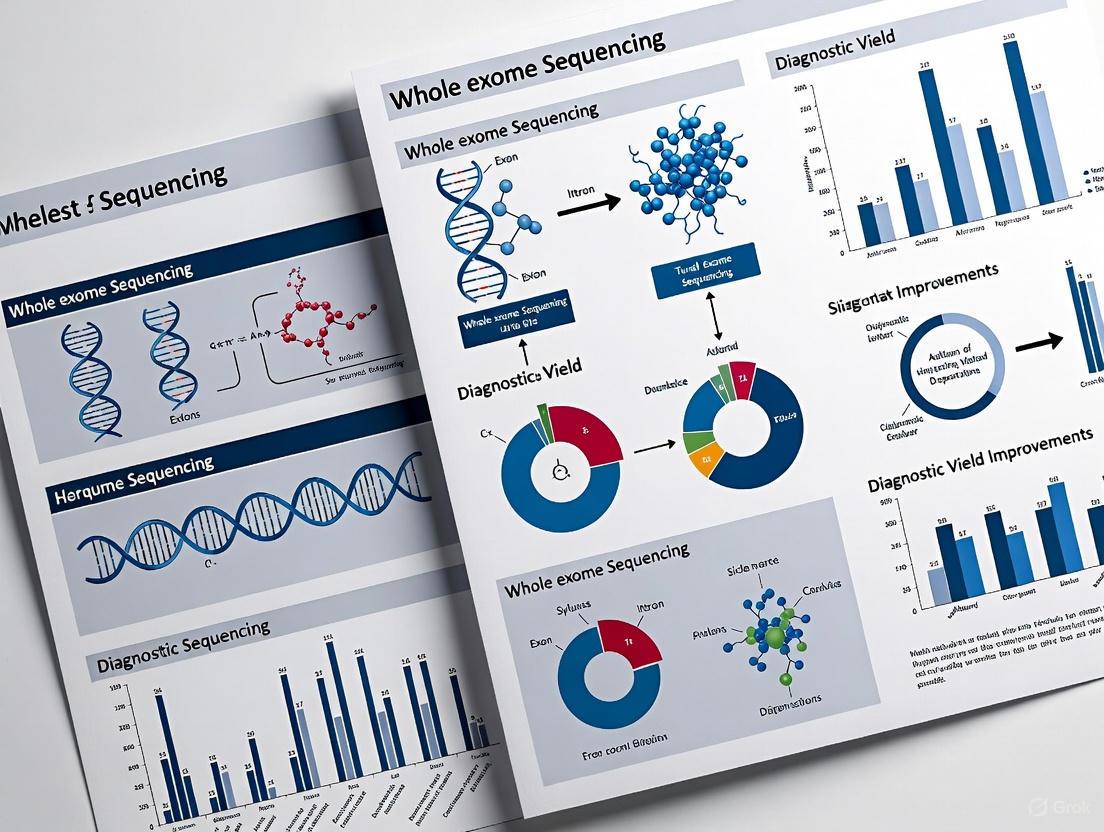
Whole exome sequencing (WES) has revolutionized the diagnosis of rare genetic diseases, yet a significant proportion of cases remain unresolved, presenting a major challenge for researchers and clinicians.
Strategies to Enhance Diagnostic Yield in Whole Exome Sequencing: A Research and Clinical Implementation Guide
Abstract
Whole exome sequencing (WES) has revolutionized the diagnosis of rare genetic diseases, yet a significant proportion of cases remain unresolved, presenting a major challenge for researchers and clinicians. This article provides a comprehensive analysis of evidence-based strategies to maximize the diagnostic yield of WES. We explore the current landscape of WES diagnostic performance across diverse populations and disease indications, examine methodological refinements from bioinformatic pipelines to functional validation, and present optimization protocols including systematic reanalysis and integration with complementary genomic technologies. Through comparative analysis with whole genome sequencing and other testing modalities, we delineate the specific advantages and limitations of WES in clinical and research settings. This resource aims to equip genetic researchers, biomedical scientists, and drug development professionals with practical frameworks to enhance diagnostic outcomes and advance precision medicine initiatives.
Establishing the Diagnostic Landscape and Yield Benchmarks for WES
Frequently Asked Questions (FAQs) on Diagnostic Yield
Q1: What is a typical diagnostic yield for Whole Exome Sequencing (WES)? The diagnostic yield for WES varies significantly based on the clinical indication and patient cohort. Recent large-scale studies report an overall yield of approximately 33% to 39% in heterogeneous patient groups with rare diseases [1] [2]. However, for specific indications, such as prelingual sensorineural hearing loss, yields can be higher, reaching 46% [3].
Q2: Which patient factors are associated with a higher diagnostic yield? Several factors increase the likelihood of obtaining a genetic diagnosis through WES:
- Positive Family History: Familial cases show a higher yield (58.3%) compared to sporadic cases (39.0%) [3].
- Consanguinity: Patients from consanguineous parents have a significantly higher diagnostic yield, reported as 59% [2].
- Syndromic Presentations: Patients with complex phenotypes involving multiple organ systems, particularly neurodevelopmental disorders with additional symptoms (46%), show higher yields than those with isolated neurodevelopmental issues [2].
- Specific Phenotypes: Higher yields are noted for phenotypes including growth abnormalities, musculoskeletal abnormalities, and ear abnormalities [1] [3].
Q3: What is the advantage of a "trio" WES analysis? A trio analysis (sequencing the patient and both parents) enhances the diagnostic yield and variant interpretation. Its strengths include the immediate identification of de novo variants (which accounted for 46% of solved cases in one large study) and confirmation of compound heterozygosity. It also allows for the dismissal of inherited variants found in a healthy parent, significantly streamlining the analysis [2].
Q4: Our WES analysis failed to provide a diagnosis. What are the next steps? A negative result requires a systematic review. First, re-evaluate the patient's phenotype and ensure it has been accurately translated into standardized terms like the Human Phenotype Ontology (HPO) [1]. Second, review the wet-lab and bioinformatics processes, including sequencing coverage of relevant genes. Third, consider re-analysis of the existing data after 1-2 years, as new disease genes are regularly discovered. One study found that 30% of patients previously analyzed with a singleton gene panel received a diagnosis upon subsequent trio analysis [2].
Troubleshooting Guide for WES Experiments
Issue 1: Lower-Than-Expected Diagnostic Yield
A low diagnostic yield can stem from pre-analytical, analytical, or post-analytical factors.
- Possible Cause: Inadequate Phenotyping
- Possible Cause: Suboptimal Sequencing or Analysis
- Solution: Verify that the sequencing platform provides sufficient coverage and uniformity across the exome. Confirm that the bioinformatics pipeline is updated and robust for detecting different variant types (SNVs, indels, etc.) [2].
- Possible Cause: Overly Restrictive Analysis
- Solution: If an initial targeted gene panel analysis is negative, consider expanding to a full WES or WGS trio analysis. This approach can increase the diagnostic yield by ~30% by enabling analysis of all known disease genes and identifying de novo variants [2].
Issue 2: Challenges in Variant Interpretation and Classification
A common bottleneck is the classification of variants of uncertain significance (VUS).
- Possible Cause: Insufficient Segregation Data
- Possible Cause: Incomplete Literature and Database Resources
General Troubleshooting Methodology
When facing an experimental problem, follow a structured approach [4] [5]:
- Identify the Problem: Clearly define the issue (e.g., "diagnostic yield is 20% below the published average for our cohort").
- List Possible Causes: Brainstorm explanations across the entire workflow—from patient selection and DNA quality to bioinformatics and variant interpretation.
- Collect Data: Gather information from quality control metrics, patient phenotypes, and control experiments.
- Eliminate Causes: Systematically rule out possibilities based on the collected data.
- Test Experimentally: Design focused experiments to test the remaining hypotheses (e.g., re-sequencing a subset of samples or applying a different bioinformatics tool).
- Identify the Root Cause: Implement the solution that resolves the issue and document the process for future reference [5].
Diagnostic Yield Performance Across Clinical Indications
The following tables summarize diagnostic yields from recent studies, highlighting how performance varies across different patient populations and clinical indications.
Table 1: Overall Diagnostic Yield of WES in Large Cohorts
| Study Cohort Description | Cohort Size (Index Patients) | Overall Diagnostic Yield | Key Findings | Source |
|---|---|---|---|---|
| Heterogeneous Rare Diseases | 825 | 33.7% (278/825) | Higher yield for patients with complex, multi-organ phenotypes. | [1] |
| Clinical Trio Analyses (ES/GS) | 1000 | 39% (390/1000) | Highest yield (46%) for syndromic neurodevelopmental disorders. | [2] |
| Prelingual Sensorineural Hearing Loss | 100 | 46% (46/100) | Yield was 58.3% for familial and 39.0% for sporadic cases. | [3] |
Table 2: Diagnostic Yield by Phenotypic Category in a Trio Sequencing Cohort (n=1000) [2]
| Phenotypic Category | Description | Diagnostic Yield |
|---|---|---|
| NDD + Syndrome | Neurodevelopmental disorder with additional syndromic symptoms | 46% |
| Syndrome without NDD | Syndromic presentation without neurodevelopmental disorder | 37% |
| Known Consanguinity | Offspring of consanguineous parents | 59% |
| NDD (only) | Isolated neurodevelopmental disorder | 8% |
Table 3: Causative Genes Identified in Prelingual Sensorineural Hearing Loss (n=100) [3]
| Gene | Associated Syndrome or Type | Inheritance Pattern | Notes |
|---|---|---|---|
| GJB2 | Nonsyndromic (nsSNHL) | Autosomal Recessive | One of the most prevalent causes globally. |
| SLC26A4 | Nonsyndromic (nsSNHL) & Pendred syndrome | Autosomal Recessive | Second most prevalent cause in the study. |
| MYO15A, MYO7A, OTOF, PCDH15, TMPRSS3 | Nonsyndromic (nsSNHL) | Autosomal Recessive | Commonly identified genes. |
| PAX3, SOX10, MITF | Waardenburg/Tietz syndromes | Autosomal Dominant | Associated with pigmentary abnormalities. |
Detailed Experimental Protocol: Whole Exome Sequencing for Rare Diseases
This protocol outlines the key steps for performing WES in a clinical or research setting for rare disease diagnosis, based on methodologies from the cited studies [3] [2].
Patient Phenotyping and Selection
- Procedure: Conduct a thorough clinical evaluation. Record all abnormalities and translate them into standardized HPO terms.
- Rationale: Precise phenotyping is critical for filtering and prioritizing variants after sequencing. Involving a clinical geneticist is recommended [1] [2].
- Materials: Clinical assessment forms, HPO database (https://hpo.jax.org/).
Sample Collection and DNA Extraction
- Procedure: Collect peripheral blood from the patient (and both parents for a trio analysis). Extract genomic DNA using standard protocols (e.g., phenol-chloroform or commercial kits).
- Quality Control: Assess DNA purity and concentration using spectrophotometry (e.g., Nanodrop) and fluorometry (e.g., Qubit). Ensure DNA is of high molecular weight on agarose gel electrophoresis.
- Materials: Blood collection tubes, DNA extraction kit, spectrophotometer, fluorometer.
Library Preparation and Exome Sequencing
- Procedure: Prepare paired-end sequencing libraries according to the manufacturer's instructions (e.g., Illumina TruSeq). Capture exonic regions using a clinical-grade exome capture kit (e.g., Agilent SureSelect). Sequence on a high-throughput platform (e.g., Illumina NovaSeq) to a mean coverage of >100x, with >95% of the target base pairs covered at >20x.
- Rationale: High and uniform coverage is essential to confidently call variants across all exons [2].
- Materials: Library prep kit, exome capture kit, sequencing platform.
Bioinformatic Analysis and Variant Calling
- Procedure:
- Alignment: Map raw sequencing reads to a reference genome (e.g., GRCh38).
- Variant Calling: Call single nucleotide variants (SNVs) and small insertions/deletions (indels) using a standardized pipeline (e.g., GATK Best Practices).
- Annotation: Annotate variants with functional predictions, population frequency, and known disease associations using databases like ClinVar and OMIM.
- Rationale: A robust, standardized pipeline ensures consistent and accurate variant detection [2].
- Materials: High-performance computing cluster, bioinformatics software (e.g., BWA, GATK).
Variant Filtering, Prioritization, and Interpretation
- Procedure:
- Filtering: Filter variants based on population frequency (e.g., <1% in gnomAD), quality metrics, and predicted functional impact (e.g., missense, loss-of-function).
- Prioritization: Prioritize variants in genes known to be associated with the patient's HPO terms. In a trio, prioritize de novo and compound heterozygous variants.
- Classification: Classify the pathogenicity of prioritized variants according to the ACMG-AMP guidelines into: Pathogenic (P), Likely Pathogenic (LP), Variant of Uncertain Significance (VUS), Likely Benign (LB), or Benign (B) [1] [3].
- Rationale: This multi-step process is crucial for moving from thousands of variants to a handful of strong candidates. Trio analysis vastly improves the efficiency of this step [2].
Validation and Reporting
- Procedure: Confirm all reported P/LP variants and key VUSes using an independent method (e.g., Sanger sequencing). Issue a clinical report that clearly states the findings, their classification, and their correlation with the patient's phenotype.
- Rationale: Orthogonal validation ensures the result is not a technical artifact. Clear reporting is essential for clinical decision-making [3].
WES Diagnostic Pathway and Troubleshooting Logic
WES Diagnostic Workflow
Troubleshooting Logic for Low Diagnostic Yield
The Scientist's Toolkit: Essential Research Reagents & Materials
Table 4: Key Research Reagent Solutions for WES Workflows
| Item | Function / Application | Example Products / Databases |
|---|---|---|
| Exome Capture Kit | Enriches genomic DNA for protein-coding exons prior to sequencing. | Agilent SureSelect, Illumina Nextera, IDT xGen Exome Research Panel [2]. |
| Library Prep Kit | Prepares fragmented DNA for sequencing by adding adapters and indexes. | Illumina TruSeq DNA PCR-Free, KAPA HyperPrep [2]. |
| HPO (Human Phenotype Ontology) | Provides standardized vocabulary for patient phenotypes, crucial for variant prioritization. | HPO Database (https://hpo.jax.org/) [1] [2]. |
| Variant Annotation Databases | Provides information on population frequency, functional impact, and clinical significance of variants. | gnomAD, ClinVar, OMIM, dbSNP [3] [2]. |
| ACMG-AMP Guidelines | A standardized framework for interpreting and classifying sequence variants. | Published guidelines and associated clinical decision support tools [1] [3]. |
| 3',5'-Di-p-toluate Thymidine-13C,15N2 | 3',5'-Di-p-toluate Thymidine-13C,15N2, MF:C26H26N2O7, MW:481.5 g/mol | Chemical Reagent |
| Acremine I | Acremine I, MF:C12H16O5, MW:240.25 g/mol | Chemical Reagent |
For researchers and clinicians utilizing whole exome sequencing (WES) to diagnose rare diseases, a persistent challenge remains: why do some cases yield clear molecular diagnoses while others remain elusive? The answer increasingly points to the critical role of phenotypic information. The detailed characterization of a patient's clinical presentation serves not merely as background context but as an essential filter for prioritizing the thousands of genetic variants typically identified through WES. This technical guide examines how systematic phenotypic documentation and analysis directly influences diagnostic success, providing troubleshooting guidance and methodological frameworks to enhance research outcomes in genomic medicine.
Understanding the Diagnostic Landscape of Whole Exome Sequencing
Diagnostic Yield Benchmarks and Challenges
WES interrogates the protein-coding regions of the genome, identifying variants potentially responsible for a patient's condition. However, several technical and biological factors constrain its diagnostic capabilities:
- Incomplete exome coverage: Current WES technologies do not capture 100% of exonic regions, potentially missing disease-causing variants in poorly covered exons [6].
- Limited structural variation detection: WES has low sensitivity for identifying structural variations (SVs), including copy number variants (CNVs), inversions, and translocations [6].
- Non-coding region exclusion: WES does not sequence non-coding intronic regions, potentially missing functional regulatory variants that influence gene expression [6].
Table 1: Whole Exome Sequencing Technical Limitations and Implications
| Limitation | Impact on Diagnostic Yield | Complementary Approaches |
|---|---|---|
| Incomplete exome coverage (not 100% of exons) | Potential false negatives in poorly covered regions | Genome sequencing (GS) provides more complete exon coverage [6] |
| Limited structural variation detection | Missed CNVs, inversions, translocations | Chromosomal microarrays, GS for improved SV detection [6] |
| Exclusion of non-coding regions | Missed regulatory variants affecting gene expression | Whole genome sequencing to capture non-coding regions [6] |
| Variant interpretation challenges | High rate of variants of uncertain significance (VUS) | Improved functional annotation, family segregation studies [7] |
Despite these limitations, WES remains a powerful diagnostic tool, with reported diagnostic rates typically ranging from 25% to 58% depending on patient selection criteria and disease type [8]. A three-year follow-up study demonstrated that initial diagnostic yield of 41% could be boosted to at least 53% through systematic reanalysis of exome data [8].
Phenotypic Documentation: The Researcher's Toolkit
Essential Phenotypic Data Elements
Comprehensive phenotypic documentation requires systematic capture of specific data elements throughout the research process:
Table 2: Essential Phenotypic Data Elements for Maximizing Diagnostic Yield
| Data Category | Specific Elements to Document | Research Utility |
|---|---|---|
| Developmental history | Developmental milestones, regression patterns, congenital anomalies | Helps prioritize genes associated with neurodevelopmental disorders [8] |
| Organ system involvement | Detailed neurological, cardiac, musculoskeletal, sensory findings | Identifies potential syndromic patterns beyond primary presentation [9] |
| Family history | First- and second-degree relatives with similar or related symptoms | Informs inheritance patterns, aids variant segregation analysis [10] |
| Ancillary test results | Neuroimaging, metabolic panels, electrophysiology studies | Provides objective measures to corroborate clinical findings [8] |
| Disease evolution | Age of onset, symptom progression, response to interventions | Helps distinguish static vs. progressive disorders, treatment implications [8] |
| (S)-N-(1H-Indole-3-acetyl)tryptophan-d4 | (S)-N-(1H-Indole-3-acetyl)tryptophan-d4, MF:C21H19N3O3, MW:365.4 g/mol | Chemical Reagent |
| Octadecanoyl Isopropylidene Glycerol-d5 | Octadecanoyl Isopropylidene Glycerol-d5, MF:C24H46O4, MW:403.6 g/mol | Chemical Reagent |
Research Reagent Solutions for Phenotypic Characterization
Table 3: Essential Research Materials for Comprehensive Phenotypic Analysis
| Research Reagent/Method | Function/Application | Technical Considerations |
|---|---|---|
| Human Phenotype Ontology (HPO) terms | Standardized vocabulary for phenotypic abnormalities | Enables computational analysis, cross-study comparisons [7] |
| Phenotype-Gene Relationship Databases (e.g., ClinVar, OMIM) | Curated knowledge on gene-disease associations | Critical for variant prioritization based on phenotypic match [8] |
| Structured phenotypic capture forms | Systematic documentation of clinical features | Ensures comprehensive data collection across research cohort [9] |
| Bioinformatic filtering pipelines | Integration of phenotypic data with variant prioritization | Customizable algorithms to rank variants by phenotypic similarity [7] |
Troubleshooting Guide: FAQs for Researchers
FAQ 1: How does detailed phenotypic information specifically improve variant prioritization in WES analysis?
Detailed phenotypic information enables researchers to filter thousands of genetic variants based on clinical relevance. The process involves:
Gene-disease association matching: Variants in genes known to cause the patient's specific phenotypic features are prioritized. In one study, 50% of new diagnoses made through exome reanalysis came from genes that had weak or no disease association at the time of initial analysis [8].
Inheritance pattern application: Detailed family history allows researchers to apply appropriate inheritance filters (autosomal dominant, recessive, X-linked) to variant prioritization.
Phenotypic similarity scoring: Computational approaches can score how closely a patient's phenotype matches known disease presentations associated with specific genes [11].
FAQ 2: What are the most common phenotypic documentation gaps that hinder diagnostic success?
Based on analysis of diagnostic odyssey cases, these documentation gaps most frequently impede diagnosis:
Incomplete family history: Failure to document affected relatives across multiple generations limits the ability to apply inheritance pattern filters. First-degree relative phenotypic information is particularly valuable [10].
Evolution of features over time: Many genetic disorders have characteristic trajectories (e.g., developmental plateauing vs. regression) that are diagnostically informative but often poorly documented.
Subtle dysmorphic features: Minor physical anomalies may go unrecorded but can provide crucial clues to specific genetic syndromes.
Incomplete objective testing documentation: Missing neuroimaging, metabolic studies, or other ancillary test results reduces phenotypic specificity.
FAQ 3: How does phenotypic heterogeneity affect genetic diagnosis, and what strategies can address this?
Phenotypic heterogeneity—where variants in the same gene cause different clinical presentations—significantly complicates diagnosis. Strategic approaches include:
Implementing gene-based approaches: Methods like Sherlock-II translate SNP-phenotype associations to gene-phenotype associations by integrating GWAS with eQTL data, helping overcome heterogeneity [11].
Cross-disorder analysis: Recognizing that many genetic factors span multiple diagnostic categories, as demonstrated by widespread genetic correlations across psychiatric disorders [10].
Periodic reanalysis: Scheduled reanalysis of unsolved cases incorporates new gene-disease associations that may explain atypical presentations [8].
FAQ 4: What quantitative improvements in diagnostic yield can be achieved through enhanced phenotypic correlation?
Multiple studies have demonstrated measurable improvements in diagnostic yield through phenotypic optimization:
Table 4: Impact of Methodological Improvements on Diagnostic Yield
| Methodological Improvement | Impact on Diagnostic Yield | Study/Reference |
|---|---|---|
| Systematic exome reanalysis with updated phenotypic data | Increased yield from 41% to 53% (additional 12% absolute increase) [8] | 3-year follow-up study of 104 patients |
| Enhanced communication between clinical and analysis teams | Improved variant interpretation and prioritization efficiency [6] | Laboratory analysis of WES limitations |
| Implementation of gene-based approaches (Sherlock-II) | Detection of genetic overlaps not identifiable by SNP-based methods [11] | Analysis of 59 human traits |
| Periodic reinterpretation of existing data | 26% diagnostic rate in previously negative cases through reanalysis [8] | Cohort of 46 undiagnosed individuals |
Advanced Methodologies: Experimental Protocols
Protocol: Systematic Phenotypic Data Collection for Genomic Research
Purpose: To standardize the collection of comprehensive phenotypic data for correlation with WES findings.
Materials:
- Structured phenotypic capture form (electronic or paper-based)
- Human Phenotype Ontology (HPO) browser or reference
- Family history pedigree drawing software
- Imaging and test result repository
Procedure:
- Initial phenotypic assessment:
- Document core presenting features with age of onset and progression
- Conduct comprehensive review of all organ systems
- Record detailed developmental history (for pediatric patients)
Family history documentation:
- Construct three-generation pedigree minimum
- Document specific diagnoses and ages of onset in relatives
- Note consanguinity and ethnic background
Ancillary test result compilation:
- Collect and review all available diagnostic test results
- Note abnormal findings even if considered incidental
- Document imaging findings with formal radiology reports when possible
HPO term assignment:
- Map clinical features to standardized HPO terms
- Assign terms for both positive and negative findings where relevant
- Include frequency qualifiers (e.g., occasional, frequent) when appropriate
Data integration:
- Enter structured phenotypic data into research database
- Ensure linkage between phenotypic elements and genomic data
- Schedule periodic reviews for phenotypic data updates
Technical Notes: The phenotypic data should be treated as dynamic, with regular updates as new clinical features emerge or existing features evolve. This is particularly important for progressive disorders where the phenotypic spectrum may expand over time.
Protocol: Exome Reanalysis Incorporating Updated Phenotypic Data
Purpose: To systematically reanalyze previously uninformative WES data incorporating updated phenotypic information and new gene-disease discoveries.
Materials:
- Stored WES raw data and variant calls
- Updated phenotypic profile for participant
- Current databases of gene-disease associations (OMIM, ClinVar, GeneReviews)
- Updated bioinformatic pipelines and annotation resources
Procedure:
- Data preparation:
- Retrieve and quality-check stored WES data
- Update bioinformatic pipelines to current standards
- Annotate variants against latest genome build and databases
Phenotypic data review:
- Compare original phenotypic profile with current clinical status
- Identify any new clinical features that have emerged
- Update HPO terms to reflect current phenotypic spectrum
Variant re-prioritization:
- Apply phenotype-aware filtering using updated clinical information
- Prioritize variants in genes newly associated with disease since initial analysis
- Re-evaluate previously classified VUSs in light of updated phenotypic data
Candidate validation:
- Select high-priority candidates for confirmatory testing
- Perform segregation analysis in family members when available
- Consider functional studies for novel gene-disease associations
Technical Notes: The optimal interval for reanalysis is approximately 18-24 months, as this allows sufficient time for substantial updates to gene-disease databases and literature while maintaining research momentum [8].
The correlation between clinical presentation and diagnostic success in whole exome sequencing is not merely observational but foundational to effective genomic medicine. As the research community continues to unravel the complexity of genotype-phenotype relationships, systematic approaches to phenotypic documentation, analysis, and correlation will remain essential for maximizing diagnostic yield. By implementing the troubleshooting guides, methodological frameworks, and technical protocols outlined in this document, researchers can significantly enhance their ability to extract meaningful diagnoses from genomic data, ultimately accelerating both patient care and gene discovery.
FAQs: Navigating Reimbursement and Funding Hurdles
FAQ 1: What are the most common reasons insurers deny coverage for Whole Exome Sequencing (WES)?
Insurance denials for WES often center on payers deeming the test "experimental" or not "medically necessary," arguing it lacks proven efficacy or does not impact health outcomes [12]. Common specific reasons include:
- Policy Exclusions: The patient's insurance policy may not include WES as a covered benefit or may explicitly exclude it [12].
- Failure to Meet Specific Criteria: Even with coverage policies, patients may not meet specific clinical criteria set by the payer (e.g., specific symptoms, prior testing requirements) [12].
- Lack of Pre-authorization: Appropriate pre-authorization and appeals processes may not have been pursued by patients or providers [12].
FAQ 2: What evidence supports the clinical utility of WES in overcoming diagnostic odysseys?
Substantial evidence demonstrates the value of WES. A study of patients who faced insurance barriers found a molecular diagnostic yield of 35% using WES [12]. Furthermore, a diagnosis resulted in clinical actions for 61% of diagnosed patients, directly impacting medical management and ending long diagnostic journeys [12]. In neonatal intensive care units (NICUs), where genetic disorders are a major cause of morbidity and mortality, genomic sequencing has shown superior diagnostic rates compared to standard genetic testing methods [13].
FAQ 3: What logistical and infrastructure barriers impede the implementation of genomic sequencing?
The adoption of advanced genomic technologies faces several key barriers, which are summarized in the table below alongside potential implementation strategies.
Table 1: Barriers and Facilitators for Genomic Sequencing Implementation
| Barrier Category | Specific Challenges | Recommended Implementation Strategies |
|---|---|---|
| Financial & Reimbursement | High initial costs, uncertain ROI, misalignment of costs/benefits, lack of funding/reimbursement [14] [15]. | Demonstrate long-term cost-effectiveness, align incentives across stakeholders, secure dedicated funding [15]. |
| Technical & Infrastructure | Lack of IT infrastructure, system interoperability issues, vendor product immaturity [16] [14]. | Invest in robust IT systems, advocate for data standards, carefully vet vendor solutions [16]. |
| Workforce & Knowledge | Specialist shortages, lack of clinician training/awareness, insufficient bioinformatics support [14] [15]. | Deploy training/educational programs, create clinical guidelines, expand specialist training opportunities [16] [15]. |
| Psychological & Workflow | Physician/organizational resistance, perceived negative impact on workflow, increased workload [16] [14]. | Engage users early, redesign workflows jointly with staff, demonstrate technology effectiveness to improve buy-in [16]. |
Experimental Protocols & Methodologies
Protocol: Assessing Diagnostic Yield in an Undiagnosed Cohort
This protocol is modeled on methodologies used to evaluate WES in research networks [12].
1. Objective: To determine the molecular diagnostic yield of clinical WES in a cohort of patients with undiagnosed rare diseases who have faced insurance coverage barriers.
2. Patient Enrollment & Criteria:
- Inclusion Criteria: Patients of any age with objective clinical findings suggestive of a genetic disorder, for whom prior comprehensive clinical workup has been non-diagnostic. Documented insurance denial for clinically ordered WES or coverage under a payer with a known non-coverage policy is required.
- Exclusion Criteria: Patients with a prior molecular diagnosis, those who have undergone previous WES or whole genome sequencing (WGS), or cases where a genetic etiology is deemed unlikely by clinical experts.
3. Sequencing and Bioinformatic Analysis:
- Sample Collection: Obtain blood or saliva samples from the proband. Trio sequencing (proband + both parents) is recommended where possible to aid in variant interpretation [13].
- Sequencing: Perform Whole Exome Sequencing using a CLIA-certified/CAP-accredited laboratory. The exome is captured using a clinical exome kit, and sequencing is conducted on a next-generation sequencing platform (e.g., Illumina) [12].
- Variant Calling & Annotation: Align sequences to a reference genome (e.g., GRCh38). Variants are called and annotated using standard pipelines and population/clinical databases (e.g., gnomAD, ClinVar).
4. Variant Interpretation and Validation:
- Classification: Variants are classified according to American College of Medical Genetics and Genomics (ACMG) guidelines into categories: Pathogenic, Likely Pathogenic, Variant of Uncertain Significance (VUS), Likely Benign, or Benign [12].
- Diagnostic Criteria: A case is considered diagnostic only if: (a) identified variant(s) are Pathogenic/Likely Pathogenic; (b) the patient's phenotype is consistent with the associated gene-disease; (c) the mode of inheritance is satisfied; and (d) segregation analysis in the family, if possible, supports the finding [12].
- Confirmation: All diagnostic variants are confirmed by an independent method (e.g., Sanger sequencing) [12].
5. Outcome Measures:
- Primary Outcome: Molecular diagnostic yield (percentage of patients receiving a diagnosis).
- Secondary Outcomes: Proportion of diagnoses leading to clinical actions (e.g., change in management, referral to a specialist, ending of diagnostic odyssey).
Protocol: Evaluating the Impact of Rapid WGS in a NICU Setting
This protocol outlines the implementation of rapid genomic sequencing for critically ill infants [13].
1. Objective: To assess the impact of rapid trio Whole Genome Sequencing (rWGS) on diagnostic yield, time-to-diagnosis, and clinical management changes in a Neonatal Intensive Care Unit (NICU) population.
2. Patient Selection:
- Cohort: Critically ill neonates in the NICU with a suspected genetic disorder of unknown etiology, particularly those with congenital anomalies, neurodevelopmental concerns, or metabolic instability.
- Inclusion Criteria: Admission to the NICU; clinical suspicion of a genetic disorder; informed consent from parent(s) or legal guardian(s).
3. Rapid Sequencing Workflow:
- Sample Acquisition: Rapid collection of blood samples from the neonate (proband) and both parents (trio).
- Sequencing & Analysis: Perform whole genome sequencing on an urgent basis. Utilize an ultra-rapid sequencing platform and accelerated bioinformatic pipeline. The entire process, from sample receipt to preliminary report, is optimized for speed, with targets of 26-48 hours [13].
- Multidisciplinary Review: Findings are reviewed immediately by a multidisciplinary team including clinical geneticists, molecular pathologists, genetic counselors, and the treating NICU team.
4. Data Collection and Analysis:
- Metrics: Record time from enrollment to diagnosis, diagnostic yield, and any changes in clinical management instigated by the genetic result (e.g., initiation of specific therapy, surgical decisions, palliative care initiation).
- Cost Analysis: Compare the cost of rWGS to the estimated costs of standard, prolonged diagnostic care in the NICU.
The logical workflow and decision points for this protocol are summarized in the following diagram:
The Scientist's Toolkit: Research Reagent Solutions
Table 2: Essential Materials for Genomic Sequencing Research
| Item | Function / Application |
|---|---|
| CLIA-Certified Laboratory | A clinical laboratory environment that meets the Clinical Laboratory Improvement Amendments (CLIA) standards, essential for performing and reporting patient diagnostic tests [12]. |
| Clinical Exome Kit | A target capture kit (e.g., IDT xGen Exome Research Panel, Illumina Nextera Flex for Enrichment) used to isolate the exonic regions of the human genome for sequencing [12]. |
| Next-Generation Sequencer | Platform (e.g., Illumina NovaSeq, Illumina NextSeq) for high-throughput parallel sequencing of the captured exome or whole genome libraries [12]. |
| Bioinformatic Pipeline | A suite of software and algorithms for sequence alignment (e.g., BWA), variant calling (e.g., GATK), and annotation (e.g., SnpEff, VEP) against reference genomes and population databases [12]. |
| Population Frequency Databases | Public databases (e.g., gnomAD, 1000 Genomes) used to filter out common polymorphisms and prioritize rare variants likely to be causative of disease [12]. |
| Clinical Variant Databases | Curated resources (e.g., ClinVar, HGMD) that aggregate information on the clinical significance of genetic variants [12]. |
| Sanger Sequencing | An independent method used for orthogonal validation of pathogenic and likely pathogenic variants identified through NGS before reporting [12]. |
| ACMG/AMP Guidelines | The standard framework from the American College of Medical Genetics and Genomics and the Association for Molecular Pathology for the interpretation and classification of sequence variants [12]. |
| DL-4-Hydroxy-2-ketoglutarate lithium | DL-4-Hydroxy-2-ketoglutarate lithium, MF:C5H6LiO6, MW:169.1 g/mol |
| 4-Bromo-1,1'-biphenyl-d9 | 4-Bromo-1,1'-biphenyl-d9, MF:C12H9Br, MW:242.16 g/mol |
Visualizing the Diagnostic Pathway and Barriers
The journey from clinical suspicion to a confirmed genetic diagnosis involves several stages, each with potential barriers. The following diagram maps this pathway and the associated challenges.
Frequently Asked Questions (FAQs)
Q1: What is the typical initial diagnostic rate for clinical exome sequencing, and how many cases remain unsolved? Initial diagnostic exome sequencing (ES) for rare diseases typically yields a molecular diagnosis in approximately 25–30% of cases [17] [18]. This means about 70-75% of cases are initially unsolved, creating a significant "diagnostic gap" that requires further research analysis [18].
Q2: Why do so many exome sequencing cases remain unsolved initially? Unsolved cases often result from limitations in initial clinical analysis, which might miss variants due to several factors [17] [18]:
- Rare Variants: Analysis may not detect very rare or novel disease-associated variants.
- Technical Limitations: Inability to detect certain variant types like copy number variants (CNVs) or short tandem repeat expansions.
- Inheritance Complexity: Over-reliance on certain inheritance models or missing de novo mutations.
- Insufficient Family Data: Lack of parental or familial sequencing data for compound heterozygous or de novo variant identification.
Q3: What research strategies can improve the diagnostic yield for unsolved cases? Research reanalysis employing complementary strategies can identify contributory variants in 36% to 51% of previously unsolved cases [18]. Key approaches include [17] [18]:
- Sequencing Additional Family Members: Moving from proband-only to trio (parent-offspring) or quartet sequencing.
- Relaxed Bioinformatics Filtering: Using less stringent variant filtering parameters in research pipelines.
- Comprehensive Inheritance Models: Analyzing all possible modes of Mendelian inheritance.
- Combined Variant Analysis: Simultaneously evaluating single nucleotide variants (SNVs) and copy number variants (CNVs).
Q4: How does whole-genome sequencing (WGS) help address the "missing heritability" problem? Recent WGS studies on large cohorts demonstrate it can capture approximately 88% of the genetic signal underlying complex traits and diseases [19]. WGS provides a more complete picture by better capturing rare variants and structural variations that are often missed by exome sequencing or genome-wide association studies (GWAS) [19].
Q5: What are the key advantages of implementing a research pipeline for unsolved clinical exomes? A dedicated research pipeline enables [17] [18]:
- Novel Gene Discovery: Identification of new disease-associated genes through findings in multiple families.
- Enhanced Diagnostic Yield: Potential to diagnose nearly half of previously unsolved cases.
- Mechanistic Insights: Understanding diverse genetic contributions to Mendelian disorders.
- Collaborative Frameworks: Establishment of partnerships between clinical diagnostic and research laboratories.
Troubleshooting Guide: Solving Unsolved Exome Cases
Problem: Low Diagnostic Yield in Clinical Exome Sequencing
| Troubleshooting Step | Objective | Key Parameters & Tools | Expected Outcome |
|---|---|---|---|
| Recruit Additional Family Members [18] | Enable compound heterozygote & de novo mutation detection | Parent-offspring trios; affected siblings; quartet families [18] | ~47.6% diagnosis rate in trios vs. lower singleton rates [18] |
| Implement Research Reanalysis Pipeline [17] | Systematic variant re-prioritization | ACMG classification; Phenolyzer scores; OMIM integration; relaxed filtering [17] | 21/34 previously diagnosed variants ranked as top candidate [17] |
| Analyze All Inheritance Models [18] | Comprehensive genetic model assessment | Recessive (homozygous/compound heterozygous); de novo; X-linked [18] | Likely contributory variant identification in 36-51% of unsolved cases [18] |
| Integrate CNV & SNV Analysis [18] | Detect structural & single nucleotide variants | WES/WGS data; complementary bioinformatics approaches [18] | Identification of clinically significant variants standard approaches miss [18] |
Advanced Research Analysis Protocol
Systematic Reanalysis of Unsolved Clinical Exomes [17] [18]
Sample Requirements:
- Input: Initially unsolved clinical exome data
- Family Structure: Preference for trios or multiplex families
- Phenotypic Data: HPO terms for precise phenotypic matching
Bioinformatic Protocol:
Variant Calling & Annotation
- Utilize open-access tools and databases
- Annotate all variants with ACMG pathogenicity classifiers and ClinVar links [17]
Sequential Variant Filtering & Prioritization
Stepwise Analysis Workflow [18]
- Step 1: Recessive homozygous predicted loss-of-function (LOF) and/or missense variants
- Step 2: Compound heterozygous LOF and/or missense variants
- Step 3: Heterozygous LOF variants (for potential truncating de novo mutations)
- Step 4: De novo variants and potential parental mosaic variants using trio-WES
Validation & Interpretation
Quantitative Data: Diagnostic Yield from Research Reanalysis
Table 1: Diagnostic Yield Improvements Through Research Reanalysis
| Study Cohort | Initial Cohort Size | Cases with Additional Research Analysis | Likely Contributory Variant Identified | Candidate Variant (Single Family) | Total Yield from Reanalysis |
|---|---|---|---|---|---|
| Pilot Study (2017) [18] | 74 families | 74 families | 36% (27/74) | 15% (11/74) | 51% (38/74) |
| Pipeline Performance (2020) [17] | 179 individuals | 145 unsolved cases | 15% (22/145) | 19% (27/145) | 34% (49/145) |
| Pipeline Ranking | Number of Diagnoses | Key Characteristics of Lower-Ranked Variants |
|---|---|---|
| Ranked 1st (Top Candidate) | 21/34 | High-impact variants; strong phenotype match |
| Ranked ≤7th | 26/34 | Includes majority of diagnosed variants |
| Ranked ≥13th | 3/34 | Low Phenolyzer scores; potential benign variants |
The Scientist's Toolkit: Essential Research Reagents & Computational Solutions
Table 3: Key Research Reagents and Computational Tools for Unsolved Cases
| Item Name | Function/Application | Specification Notes |
|---|---|---|
| Twist Human Comprehensive Exome Panel [20] | Target enrichment for exome sequencing | Used in research services for comprehensive exome coverage |
| NimbleGen VCRome 2.1 [18] | Custom exome capture reagent | >196K targets, 42 Mbp genomic regions; coding exons from Vega, CCDS, RefSeq |
| DRAGEN Secondary Analysis [19] | Whole-genome sequence calling | Version 3.7.8 used in recent WGS studies for variant calling |
| PrimateAI-3D [19] | Rare variant interpretation using deep-learning | Shows significant correlation with variant effect sizes |
| Phenolyzer [17] | Gene prioritization based on phenotype | Integrates HPO terms for candidate gene ranking |
| DNM-Finder [18] | De novo mutation identification | In-house software for trio-based de novo variant detection |
| Mercury Pipeline [18] | Automated variant calling | Utilizes BWA, GATK, Atlas2; available via DNANexus cloud platform |
| ACMG Classification [17] | Variant pathogenicity assessment | Standardized framework for classifying variants as pathogenic/likely pathogenic |
| 1,1-Diethoxyhexane-d10 | 1,1-Diethoxyhexane-d10, MF:C10H22O2, MW:184.34 g/mol | Chemical Reagent |
| Collinone | Collinone, MF:C27H18O12, MW:534.4 g/mol | Chemical Reagent |
Advanced Analytical Frameworks and Implementation Protocols for Enhanced Detection
Troubleshooting Guides
FAQ 1: How Can I Improve the Diagnostic Yield of My Exome Sequencing Analysis?
Answer: Improving diagnostic yield involves optimizing your variant prioritization strategy and ensuring data quality. Research shows that after an initial negative Exome Sequencing (ES) result, Genome Sequencing (GS) can provide a additional diagnostic yield of 7.0% in pediatric rare disease cases [21]. For optimal variant prioritization using tools like Exomiser, parameter optimization is critical. Evidence-based tuning can increase the percentage of coding diagnostic variants ranked in the top 10 from 67.3% to 88.2% for ES data [22].
Table: Strategies to Improve Diagnostic Yield
| Strategy | Implementation | Expected Benefit |
|---|---|---|
| ES Reanalysis [21] | Periodic reanalysis of existing ES data with updated databases and methods. | Diagnostic yield of 14.2% after prior negative ES. |
| Parameter Optimization [22] | Adjust Exomiser parameters for gene-phenotype association and variant pathogenicity. | Increases top-10 diagnostic variant ranking by ~20 percentage points. |
| Phenotype Quality [22] | Use comprehensive, high-quality Human Phenotype Ontology (HPO) terms. | Directly impacts the accuracy of phenotype-driven variant prioritization. |
Experimental Protocol: Exomiser Parameter Optimization
- Input Preparation: Prepare a multi-sample VCF file from your sequenced family and a pedigree file (PED format). Collect proband phenotype terms as HPO codes [22].
- Baseline Analysis: Run Exomiser with default parameters to establish a performance baseline.
- Parameter Tuning: Systematically adjust key parameters:
- Gene-Phenotype Association: Prioritize algorithms that leverage recent gene-disease knowledge bases.
- Variant Pathogenicity: Incorporate updated, technology-specific pathogenicity predictors.
- Frequency Filters: Apply appropriate minor allele frequency filters for the population and disease model [22].
- Validation: Validate the optimized parameter set on a set of known solved cases to confirm improved ranking of diagnostic variants.
Optimization Path for Undiagnosed Cases
FAQ 2: My Variant Calling Pipeline Produces Errors or Inconsistent Results. How Do I Troubleshoot This?
Answer: Pipeline errors generally fall into two categories: those with detailed tool errors and those with system-level failures. The first step is to identify the error type and then investigate the specific component, such as data quality, tool compatibility, or computational resources [23] [24].
Step-by-Step Troubleshooting Protocol:
- Identify the Error Type:
- Error with Details: The pipeline job status is "Error" with specific tool information (e.g., Prokka version 1.13 failed). Check the tool's
stderrandstdoutlogs for the exact error message [24]. - Error without Details: The job failed without a specific tool error. Check the system log files (e.g., IRIDA log) for issues like file upload timeouts or missing tools in the analysis environment [24].
- Error with Details: The pipeline job status is "Error" with specific tool information (e.g., Prokka version 1.13 failed). Check the tool's
- Isolate the Failed Stage: Map the error back to the pipeline stage.
- Data Input & QC: Use FastQC and Trimmomatic to check for low-quality reads, adapter contamination, or incorrect file formats [23] [25].
- Alignment & Variant Calling: Check alignment rates with SAMtools. For variant calling, ensure tool versions (e.g., BWA, GATK) are compatible and that all dependencies are correctly installed [23] [24].
- Resolve and Validate:
- For tool compatibility issues, update software and resolve dependencies.
- For computational bottlenecks (e.g., a metagenomics pipeline slows down), consider migrating to a cloud platform with scalable resources [23].
- After fixes, validate the pipeline on a small, known dataset before processing full data.
FAQ 3: What Are the Best AI-Based Variant Callers, and How Do They Compare?
Answer: AI-based variant callers use deep learning (DL) to achieve higher accuracy, especially in complex genomic regions. The choice depends on your sequencing technology and data type [26].
Table: Comparison of AI-Based Variant Calling Tools
| Tool | Technology | Key Features | Strengths | Limitations |
|---|---|---|---|---|
| DeepVariant [26] | Short & Long Reads (PacBio, ONT) | Uses CNN on pileup images. | High accuracy; automatically filters variants. | High computational cost. |
| DeepTrio [26] | Short & Long Reads | Extension of DeepVariant for family trios. | Improved accuracy by leveraging familial context. | High computational cost. |
| DNAscope [26] | Short & Long Reads (PacBio, ONT) | Combines GATK HaplotypeCaller with ML model. | Fast, low memory overhead, high accuracy. | Machine learning-based, not deep learning. |
| Clair3 [26] | Short & Long Reads | CNN-based, successor to Clairvoyante. | Fast and performs well at lower coverages. | Earlier versions struggled with multi-allelic sites. |
Experimental Protocol: Benchmarking a Variant Caller
- Data Selection: Obtain a reference dataset (e.g., from GIAB - Genome in a Bottle) with known ground-truth variants for your sequencing type (WES).
- Pipeline Execution: Run your raw sequencing reads (FASTQ) through the chosen AI variant caller (e.g., DeepVariant) according to its documentation, generating a VCF file.
- Performance Assessment: Use a tool like
hap.py(https://github.com/Illumina/hap.py) to compare your VCF against the ground-truth VCF. - Metric Analysis: Calculate key metrics from the comparison: Precision (how many of the called variants are real) and Recall (how many of the real variants were called). A good tool maximizes both.
FAQ 4: How Do I Handle Poor Data Quality That Is Affecting My Downstream Analysis?
Answer: The "Garbage In, Garbage Out" (GIGO) principle is central to bioinformatics. Up to 30% of published research contains errors traceable to initial data quality issues [25]. Implementing rigorous Quality Control (QC) at every stage is non-negotiable.
Methods for Ensuring High Data Quality:
- Standardized Protocols (SOPs): Use detailed, validated SOPs from sample collection through DNA extraction and sequencing to minimize variability [25].
- QC Checkpoints:
- Pre-Sequencing: Assess DNA/RNA integrity (e.g., RIN score).
- Post-Sequencing (Raw Data): Use FastQC to visualize base quality scores, GC content, and adapter contamination. Follow up with trimming/cleaning tools like Trimmomatic or Picard [23] [25].
- Post-Alignment: Use SAMtools and Qualimap to check alignment rates, insert sizes, and coverage uniformity [25].
- Data Validation: Perform biological validation. Cross-check key genetic variants from WES with an orthogonal method like Sanger sequencing or qPCR to rule out technical artifacts [25].
Data Quality Control Workflow
The Scientist's Toolkit
Table: Key Research Reagent Solutions for NGS Pipelines
| Item | Function | Example Tools / Resources |
|---|---|---|
| Variant Prioritization Software | Ranks variants by integrating genotype and phenotype data to identify likely diagnostic candidates. | Exomiser, Genomiser (for non-coding variants) [22]. |
| AI-Based Variant Callers | Uses deep learning models to call genetic variants from aligned sequencing data with high accuracy. | DeepVariant, DeepTrio, DNAscope, Clair3 [26]. |
| Workflow Management Systems | Orchestrates complex pipelines, ensures reproducibility, and manages computational resources. | Nextflow, Snakemake, Galaxy [23]. |
| Data Quality Control Tools | Assesses the quality of raw sequencing data and aligned reads to identify issues early. | FastQC, MultiQC, Trimmomatic, SAMtools, Qualimap [23] [25]. |
| Variant Annotation Databases | Provides functional, population frequency, and clinical interpretation for genetic variants. | gnomAD, ClinVar, dbSNP. |
| Antiparasitic agent-15 | Antiparasitic agent-15, MF:C17H16N4OS, MW:324.4 g/mol | Chemical Reagent |
| Antitubercular agent-29 | Antitubercular agent-29, MF:C20H12ClN3O5, MW:409.8 g/mol | Chemical Reagent |
Whole Exome Sequencing (WES) has traditionally been leveraged for detecting single nucleotide variants (SNVs) and small insertions/deletions (indels). However, copy number variants (CNVs)—genomic alterations resulting in abnormal copies of one or more genes—represent a significant class of disease-causing variation that can be missed in standard analyses [27] [28]. On average, 5%-10% of disease-causing variants are CNVs, with this number rising to as high as 35% in some clinical specialties [29]. Structural genomic events such as duplications, deletions, translocations, and inversions can cause CNVs, which have been associated with susceptibility to diseases including cancer, autoimmune diseases, and inherited genetic disorders [27] [28]. For research focused on improving diagnostic yield, expanding WES capabilities to include robust CNV detection is therefore paramount, allowing labs to detect CNVs, SNVs, and areas of heterozygosity (AOH) from a single platform [27].
Core CNV Detection Methods in WES
The primary method for detecting CNVs from WES data is the read-depth (RD) method [27] [30]. This approach is based on the correlation between the depth of sequencing coverage in a genomic region and its copy number [27]. Unlike whole-genome sequencing (WGS), where multiple methods can be combined, most CNV breakpoints in WES fall in non-targeted, non-coding regions and are not sequenced, leaving read depth as the predominant indicator of CNVs [30].
The following diagram illustrates the fundamental workflow of the read-depth method for CNV calling in WES data.
Figure 1: Core Read-Depth CNV Calling Workflow for WES Data.
The Critical Importance of Reference Cohorts
A defining requirement for accurate CNV calling in WES is the use of a properly designed reference cohort of other samples for normalization [31]. The read-depth approaches used for CNV calling in WGS assume relatively uniform read distribution across the genome. This assumption fails in WES due to the variable specificity and efficiency of the capture probes used for targeting different exonic regions, which introduces strong biases in the number of mapped reads per region [31]. Using a reference cohort corrects for these technical artifacts.
Optimal Reference Cohort Characteristics: [31]
- Size: At least 5 samples, with an ideal size of approximately 10.
- Processing: All samples (test and reference) should be prepared with the same library protocol, sequenced on the same platform, and ideally generated in the same sequencing batch.
- Biology: Samples should originate from unrelated individuals. For sex chromosome analysis, all samples should be of the same sex.
Troubleshooting Common WES CNV Detection Challenges
FAQ: Addressing Low Sensitivity and Specificity
Q: Our CNV analysis is producing an unacceptably high number of false positives. How can we improve specificity?
A: High false positive rates often stem from inadequate normalization of capture and sequencing biases.
- Solution 1: Optimize your reference cohort. Ensure your reference samples are truly comparable. Using samples from different batches, protocols, or from related individuals can introduce systematic noise that is misinterpreted as a CNV [31].
- Solution 2: Leverage advanced normalization. Employ statistical tools that use methods like Principal Component Analysis (PCA) to perform rigorous, data-driven normalization without requiring prior knowledge of all potential confounders [30].
- Solution 3: Manually review calls. Especially when using "sensitive mode" in callers like ExomeDepth, manual review by an experienced analyst is crucial to filter out false positives resulting from residual technical artifacts [27] [31].
Q: We are missing known, validated CNVs (low sensitivity), particularly small, single-exon events. What steps can we take?
A: Detecting small CNVs (<3 exons) is challenging but critical, as they account for a significant portion (up to 43%) of all CNVs [29].
- Solution 1: Ensure deep and uniform sequencing coverage. The resolution of the read-depth method is primarily based on the depth of coverage; smaller events require higher depth to be detectable [27].
- Solution 2: Utilize multiple bioinformatic tools. Relying on a single calling algorithm may miss events. A multi-tool approach increases the chance of detection, though it requires careful integration of results [32] [29].
- Solution 3: Enable "sensitive mode" if available. Some CNV callers, like the one in VarSome Clinical, offer a sensitive mode that applies a lower detection threshold, optimizing the trade-off for clinical settings where detecting small CNVs is paramount [31].
FAQ: Technical and Analytical Pitfalls
Q: What are the inherent limitations of WES for CNV detection that we should acknowledge in our reporting?
A: It is critical to understand and disclose the methodological constraints [27].
- Limited Genomic View: WES produces reads covering only ~2% of the human genome (the exons). Therefore, the full spectrum of CNVs and their precise breakpoints may not be completely characterized [31].
- Size and Type Misses: Many large CNVs and cross-chromosome events (e.g., translocations) may not be detected, as their breakpoints lie in intronic or intergenic regions [27] [31].
- Single-Exon Limitations: WES data is often not suitable for reliably detecting single-exon deletions or duplications, and assays should be validated for this purpose if required [27].
Q: How does the choice of sample type (e.g., FFPE vs. fresh frozen) impact CNV calling quality?
A: Non-analytical factors significantly influence results [32].
- FFPE Artifacts: Formalin-fixed paraffin-embedded (FFPE) samples can introduce DNA fragmentation and cross-linking, which lead to uneven coverage and higher false positive rates compared to fresh-frozen samples [32].
- Mitigation: When working with FFPE samples, it is even more critical to use a reference cohort processed with the same fixation protocol and to employ CNV callers and parameters that are specifically tuned or validated for such material.
Table 1: Key Bioinformatic Tools for WES CNV Calling
| Tool Name | Primary Method | Key Feature / Use Case | Considerations |
|---|---|---|---|
| ExomeDepth [31] | Read-Depth | Designed for cohort-based WES/panel analysis; uses an optimized reference set. | Requires multiple samples (5-10); less suitable for single-sample analysis. |
| CNVkit [32] | Read-Depth | Can analyze both WES and WGS data; uses a binning approach for smoothing. | A widely used, versatile tool for targeted sequencing. |
| DRAGEN CNV [33] [34] | Read-Depth | Integrated, highly optimized pipeline on Illumina's DRAGEN platform. | A commercial solution offering high speed and accuracy. |
| FACETS [32] | Read-Depth/B-Allele | Specifically designed for tumor-normal paired samples; estimates tumor purity and ploidy. | Essential for somatic CNV detection in cancer research. |
Table 2: Critical Experimental Factors for Reliable WES CNV Detection
| Factor | Goal | Impact on CNV Calling |
|---|---|---|
| Sample Quality & Purity | High-molecular-weight, pure DNA. | Poor quality or impure DNA leads to low coverage and false calls [32] [29]. |
| Sequencing Depth | High uniform coverage (>100x often recommended). | Higher depth enables detection of smaller CNVs [27]. |
| Coverage Uniformity | Consistent read distribution across targets. | Poor uniformity creates artificial "valleys" and "peaks" mistaken for CNVs [27]. |
| Reference Cohort | Matched in protocol, batch, and genetics. | The single most important factor for reducing false positives in WES [31]. |
| Orthogonal Confirmation | Policy for validating calls (e.g., by MLPA or array). | Maximizes diagnostic confidence and minimizes reporting of false positives [29]. |
Advanced Workflow: Implementing a Multi-Tool CNV Detection Strategy
For labs seeking to maximize diagnostic yield, a multi-faceted approach is recommended. The following diagram outlines an advanced, robust workflow that integrates multiple tools and validation steps.
Figure 2: Advanced Multi-Tool CNV Analysis and Validation Workflow.
Workflow Steps:
- Input Preparation: Begin with sequence data (BAM files) and a meticulously curated reference cohort that meets the criteria outlined in Section 2.1 [31].
- Parallel CNV Calling: Run at least two complementary CNV calling algorithms (e.g., ExomeDepth and CNVkit) on the same dataset. This leverages the different statistical models of each tool to increase sensitivity [32] [29].
- Callset Integration & Manual Review: Intersect the results from the different callers. CNVs detected by multiple tools are considered high-confidence. All calls, especially those from only one tool, must be visually reviewed in a genome browser to inspect read depth and filter out obvious artifacts [29].
- Orthogonal Confirmation: Before reporting for diagnostic purposes, confirm high-confidence CNVs using an independent method, such as quantitative PCR (qPCR) or MLPA. This step is a best practice in clinical research to ensure results are not technical artifacts [29].
Integrating robust CNV detection into WES analysis is no longer an optional upgrade but a necessity for research aimed at maximizing diagnostic yield. By understanding the read-depth method, strategically building reference cohorts, implementing multi-tool bioinformatic pipelines, and maintaining a rigorous troubleshooting mindset, researchers can successfully expand WES capabilities beyond SNVs and indels. This holistic approach unlocks the full potential of a single assay, ensuring that the substantial fraction of disease caused by copy number variation is no longer overlooked.
FAQs: Optimizing Virtual Panels in Whole Exome Sequencing
1. What is a virtual panel in Whole Exome Sequencing (WES), and how can it improve my diagnostic yield?
A virtual panel is a bioinformatics approach that involves computationally filtering WES data to focus on a pre-defined set of genes relevant to a specific disease or clinical phenotype. This strategy improves diagnostic yield by reducing the background of irrelevant variants, allowing researchers to concentrate on genes with the highest clinical relevance. It leverages the comprehensive data capture of WES while providing the focused analysis benefits of a targeted gene panel. A 2025 study on inherited retinal dystrophies demonstrated that periodic WES reanalysis with updated virtual panels was a key factor in increasing the overall molecular diagnostic rate from 59.6% to 67.6% in their cohort [35].
2. My WES data initially returned negative results. What are the benefits of reanalyzing this data with a virtual panel?
Reanalyzing existing WES data with updated virtual panels is a powerful, cost-effective strategy for uncovering new diagnoses. Gene-disease associations are continuously being discovered, and bioinformatics tools are constantly improving. A reanalysis allows you to re-interpret the same data against a more current knowledge base, which may include newly discovered disease genes or refined understanding of existing genes. This approach can resolve previously unexplained cases without requiring new wet-lab sequencing, making it highly efficient [35].
3. When should I consider using a custom virtual panel versus a pre-designed one?
The choice depends on your research question. Use a pre-designed, established virtual panel for common, well-characterized conditions or for standardized analyses. A customized virtual panel is preferable when investigating specific ethnic populations, complex presentations, or when you have a hypothesis about a unique set of genes. A 2025 market report highlights that customized gene panels are becoming more favored for complex diagnostic needs as they offer greater diagnostic accuracy and clinical relevance for specific scenarios [36].
4. What is the role of RNA Sequencing (RNA-seq) in conjunction with WES and virtual panels?
RNA-seq provides functional evidence that can be crucial for validating the pathogenicity of variants identified through WES and virtual panel analysis. It is particularly useful for clarifying the impact of non-coding and splice-site variants that may be missed or misinterpreted by DNA-based methods alone. Research presented in 2025 showed that RNA-seq was able to provide functional evidence to reclassify half of the eligible variants from exome and genome sequencing, thereby providing critical insights that led to rare disease diagnoses and significantly enhancing diagnostic yield [37].
5. How do I handle variants of uncertain significance (VUS) found through my virtual panel analysis?
VUS management is a multi-step process. First, use updated in-silico prediction tools (e.g., REVEL for missense, SpliceAI for splicing) and the latest ACMG-AMP guidelines for re-classification. Second, perform segregation analysis within the family to see if the variant co-segregates with the disease. Third, consider functional assays, such as minigene/midigene studies to test splicing impact, to gather confirmatory evidence of pathogenicity. These steps are essential for converting a VUS into a definitive diagnostic finding [35].
Troubleshooting Guide for Virtual Panel Analysis
Issue 1: Low Diagnostic Yield Despite Comprehensive Virtual Panel
| Possible Cause | Investigation Steps | Potential Solution |
|---|---|---|
| Outdated Gene-Disease Knowledge | Review the last update of your gene list. Check recent publications (e.g., OMIM, ClinGen) for new associations. | Re-analyze WES data with a updated virtual panel that includes newly discovered genes [35]. |
| Non-Coding or Structural Variants | Inspect WES data for copy number variants (CNVs). Analyze sequencing depth in key regions. | Integrate CNV analysis from your WES data. For complex cases, consider supplementing with Whole Genome Sequencing (WGS) to detect deep intronic variants and structural variants [35]. |
| Atypical Disease Mechanisms | Look for single pathogenic variants in recessive genes that might suggest missed second hit. | Employ functional assays like mRNA analysis to uncover splicing defects or other non-canonical variant effects [35]. |
Issue 2: High Number of Variants of Uncertain Significance (VUS)
| Possible Cause | Investigation Steps | Potential Solution |
|---|---|---|
| Insufficient Functional Evidence | Use bioinformatics tools (REVEL, SpliceAI) to prioritize VUS for further testing. | Apply RNA-seq from patient tissue or blood to assess the functional impact on transcription, which can provide evidence for reclassification [37]. |
| Incomplete Segregation Data | Check if family members are available for targeted testing. | Perform segregation analysis to see if the VUS co-occurs with the disease phenotype in the family, strengthening or weakening its putative role [35]. |
| Suboptimal Filtering | Re-visit population frequency filters (e.g., gnomAD) and phenotype-specific filters. | Refine virtual panel filters using Human Phenotype Ontology (HPO) terms to ensure better variant prioritization [35]. |
Issue 3: Inconsistent Results Across Replicates or Platforms
| Possible Cause | Investigation Steps | Potential Solution |
|---|---|---|
| Bioinformatics Pipeline Variability | Document and compare all software versions, parameters, and reference databases used. | Standardize the bioinformatics workflow across all analyses, including the variant calling and annotation tools, to ensure consistency [35]. |
| Low Sequencing Quality/Depth | Check metrics like coverage uniformity and read depth in the regions of interest. | Ensure a minimum read depth of 20x is achieved across all target regions of your virtual panel, with a higher depth (e.g., 50-100x) recommended for critical exons [35]. |
Experimental Protocols for Enhanced Virtual Panel Analysis
Protocol 1: Periodic WES Reanalysis with Updated Virtual Panels
Methodology: This protocol involves the systematic re-evaluation of existing WES data using a refreshed bioinformatics pipeline and gene list.
- Data Access: Retrieve raw sequencing data (BAM files) from the initial WES.
- Pipeline Update: Employ updated bioinformatics software for alignment and variant calling (e.g., recent versions of Datagenomics or similar platforms) [35].
- Virtual Panel Refresh: Apply a current, comprehensive list of disease-associated genes. For non-syndromic cases, use an updated IRD gene panel; for syndromic or complex cases, use a phenotype-driven approach with HPO-guided analysis [35].
- Variant Re-annotation and Filtering: Re-annotate variants with the latest databases. Filter using an allele frequency threshold (e.g., <0.05 in gnomAD) and prioritize deleterious variants (nonsense, frameshift, splice site, missense).
- Re-classification: Re-interpret prioritized variants according to the most recent ACMG-AMP standards and gene-specific guidelines [35].
Protocol 2: Integrating RNA Sequencing for Functional Validation
Methodology: This protocol uses RNA-seq to provide functional evidence for variants identified by WES virtual panels, particularly for reclassifying VUS.
- Sample Collection: Obtain appropriate tissue from the patient. Whole blood or cultured fibroblasts are commonly used; specialized tissues like nasal ciliary cells can be utilized for specific genes [35].
- RNA Extraction: Use standardized kits (e.g., RNeasy Mini Kit, Maxwell RSC SimplyRNA Blood Kit) to isolate high-quality RNA [35].
- Library Prep and Sequencing: Perform whole transcriptome RNA-sequencing (TxRNA-seq) using validated clinical protocols to ensure sensitivity, even for genes with low expression [37].
- Data Analysis: Analyze the RNA-seq data to assess transcript-level abnormalities, such as aberrant splicing, monoallelic expression, or altered expression levels, that corroborate the DNA findings [37].
- Variant Interpretation: Use the functional evidence from RNA-seq to upgrade or downgrade the classification of a VUS, following established guidelines [37].
Research Reagent Solutions
The following table details key reagents and materials used in the advanced genomic strategies discussed.
| Item | Function/Application in Virtual Panel Workflow |
|---|---|
| KAPA HyperPrep Kit | Used for whole genome sequencing (WGS) library preparation to detect structural variants missed by WES [35]. |
| Agilent SureSelect XT HS2 | Used for creating custom targeted panels for complex regions (e.g., ABCA4 deep intronic regions, RPGR-ORF15) [35]. |
| RNeasy Mini Kit | For RNA extraction from patient samples (e.g., cells, tissues) for subsequent functional RNA sequencing [35]. |
| Illumina NovaSeq 6000 | A high-throughput sequencing platform used for both WGS and RNA-seq to generate comprehensive genomic data [35]. |
| Datagenomics Software | A bioinformatics platform used for WES reanalysis, variant filtering, and interpretation with updated virtual panels [35]. |
| Human Phenotype Ontology (HPO) | A standardized vocabulary of phenotypic abnormalities used for phenotype-driven virtual panel analysis [35]. |
Workflow and Strategy Visualization
Diagnostic Yield Data from Recent Studies
The following table summarizes quantitative findings from recent studies that implemented the advanced virtual panel and multi-omic strategies described in this guide.
| Study Focus | Initial Diagnostic Yield | Post-Reevaluation Yield | Key Strategies Employed |
|---|---|---|---|
| Prelingual Sensorineural Hearing Loss (2025) [38] | N/A | 46% overall (58.3% familial, 39.0% sporadic) | WES with target gene analysis. |
| Inherited Retinal Dystrophies (2025) [35] | 59.6% (313/525 probands) | 67.6% (355/525 probands) | WES reanalysis, custom panels, WGS, functional assays. |
| RNA-seq for Rare Disease (2025) [37] | Eligible cases from 3594 exome/genome sequences | 50% of eligible variants reclassified | Targeted RNA-seq for functional evidence. |
| Transcriptome RNA-seq (2025) [37] | 45 undiagnosed patients | 24% (11/45) positive diagnostic rate | Whole Transcriptome RNA-seq (TxRNA-seq). |
FAQs: Addressing Key Challenges in WES and Functional Integration
Q1: Why does a significant percentage of cases remain unsolved after initial Whole Exome Sequencing (WES)? Despite the utility of WES in identifying variants in coding regions, nearly 40% of cases in some disease cohorts remain undiagnosed after initial testing [39]. Key reasons include:
- Limited Coverage: WES has limited sensitivity for deep intronic variants, structural variants (SVs), and pathogenic variants in repetitive or GC-rich regions [40] [39].
- Interpretation Challenges: Many variants are classified as Variants of Uncertain Significance (VUS), which lack sufficient evidence for definitive classification [40] [7] [41]. A study on inherited retinal dystrophies highlighted that periodic reanalysis and updated classification standards are crucial for resolving these VUS [39].
Q2: What is the evidence that integrating functional assays with WES improves diagnostic yield?
Functional data constitute one of the strongest types of evidence for classifying a variant as pathogenic or benign [41]. In a study of 101 previously unresolved cases, a personalized approach that included functional assays confirmed the pathogenicity of variants in genes like ABCA4, ATF6, REEP6, and TULP1. This strategy contributed to a 48.5% increase in diagnoses among the re-evaluated cohort [39].
Q3: What are the common sources of error in NGS data that can confound pathogenicity confirmation? Sequencing errors are key confounding factors for detecting low-frequency variants. A comprehensive analysis found that error rates differ by nucleotide substitution type, ranging from 10â»âµ to 10â»â´ [42]. Specific issues include:
- Sample-Level Damages: These can dominate elevated C>A/G>T errors [42].
- Enrichment PCR: Target-enrichment PCR can lead to an approximately 6-fold increase in the overall substitution error rate [42].
- Data Quality: Issues like high duplicate read rates can reduce effective coverage and variant-calling sensitivity, while the inclusion of alternate contigs in the reference genome can prevent variant calling in complex regions [7].
Q4: How do I choose the right functional assay for a VUS? The choice of assay depends on the predicted molecular consequence of the variant:
- Splicing Defects: Use minigene/midigene assays or mRNA analysis from patient cells (e.g., blood, nasal ciliary cells) to confirm aberrant splicing [39].
- Protein Function Impact: For missense variants, deep mutational scans can systematically measure the effects of thousands of amino acid substitutions on protein function in a single experiment [41].
- Regulatory Variants: Massively Parallel Reporter Assays (MPRAs) can query the effects of non-coding variants on gene expression [41].
Troubleshooting Guides
Guide 1: Addressing Low Diagnostic Yield in WES
| Symptom | Potential Cause | Recommended Action |
|---|---|---|
| High number of VUS | Insufficient evidence for variant classification | 1. Re-analyze WES data with updated virtual gene panels and annotation databases.2. Perform segregation analysis within the family [40] [39].3. Utilize computational predictors (e.g., REVEL, SpliceAI) as preliminary evidence [39]. |
| No candidate variants found | Variants in non-coding or complex genomic regions not covered by WES | 1. Move to Whole Genome Sequencing (WGS) to detect deep intronic variants, SVs, and variants in repetitive regions [40] [21] [39].2. Consider long-read sequencing (e.g., PacBio, ONT) to resolve complex variants [40]. |
| Single heterozygous variant in a recessive gene | Possible missed second variant in a non-coding region | 1. Use WGS to search for a second deep intronic or structural variant [39].2. Employ customized gene panels targeting difficult-to-sequence regions of the specific gene (e.g., ABCA4, RPGR-ORF15) [39]. |
Guide 2: Validating Functional Assay Results
| Challenge | Solution |
|---|---|
| Inaccessibility of target tissue (e.g., retinal tissue for eye disease) | Use surrogate tissues for mRNA analysis, such as whole blood or nasal ciliary cells, to study splicing defects [39]. |
| Interpreting assay output | 1. Establish a clear positive and negative control for each experiment.2. For minigene assays, sequence the RT-PCR products to confirm the exact aberrant splice isoforms [39].3. Correlate the functional assay result with the patient's phenotype and family segregation data. |
| Assay does not recapitulate the native cellular environment | Acknowledge this inherent limitation. Use assay results as strong supporting evidence but not as the sole determinant of pathogenicity. Integrate findings with other clinical and genetic data [41]. |
Experimental Protocols for Key Functional Assays
Protocol 1: Minigene/Midigene Splicing Assay
Purpose: To determine the impact of a genomic variant on mRNA splicing in vitro.
Methodology (as applied to the ABCA4 gene) [39]:
- Cloning: A wild-type midigene construct (e.g., "BA7") containing the genomic region of interest (e.g., exons 7-11 of
ABCA4) is cloned into an expression vector. - Site-Directed Mutagenesis: The candidate variant (e.g.,
ABCA4c.859-442C>T) is introduced into the wild-type construct using specific oligonucleotides. - Transfection: Both wild-type and mutant constructs are transfected into a suitable cell line (e.g., HEK293T cells).
- RNA Analysis:
- After 24-48 hours, total RNA is extracted from the transfected cells (using kits such as Nucleospin RNA).
- cDNA is synthesized via reverse transcription (using kits such as iScript).
- RT-PCR is performed using primers flanking the alternative exons.
- Product Characterization: The RT-PCR products are separated by gel electrophoresis and analyzed by Sanger sequencing to identify any aberrantly spliced transcripts.
Protocol 2: mRNA Analysis from Surrogate Tissues
Purpose: To analyze splicing defects directly from patient-derived cells.
Methodology (as applied to REEP6 and ATF6 genes) [39]:
- RNA Extraction: Isolate total RNA from an accessible patient tissue:
- For
REEP6: RNA was extracted from nasal ciliary cells using the RNeasy Mini Kit. - For
ATF6: RNA was extracted from whole blood using the Maxwell RSC SimplyRNA Blood Kit.
- For
- cDNA Synthesis: Synthesize cDNA from the extracted RNA using a reverse transcription kit (e.g., PrimeScript RT Reagent Kit).
- PCR Amplification: Amplify the target gene region using gene-specific primers.
- Sequencing and Analysis: Purify the PCR products and analyze by Sanger sequencing. Compare the electrophoretograms from the patient with a wild-type control to identify abnormal splicing patterns.
Table 1: Impact of a Stepwise Genomic Approach on Diagnostic Yield in Inherited Retinal Dystrophies (IRDs) [39]
| Cohort | Number of Probands | Initial Diagnostic Yield | Additional Diagnoses from Re-evaluation | Overall Diagnostic Yield After Re-evaluation |
|---|---|---|---|---|
| Full IRD Cohort | 525 | 313 (59.6%) | 42 (from 101 re-evaluated cases) | 355 (67.6%) |
| Re-evaluated Subgroup | 101 (previously unresolved) | 0 (0%) | 42 (41.6%) | 42 (41.6%) |
Table 2: Comparison of Sequencing Technologies for Variant Detection [40] [21] [39]
| Technology | Best For | Key Limitations |
|---|---|---|
| Whole Exome Sequencing (WES) | Identifying known and novel coding variants; cost-effective [40]. | Poor detection of deep intronic, structural, and repetitive region variants [40] [39]. |
| Whole Genome Sequencing (WGS) | Comprehensive detection of coding, non-coding, and structural variants [40] [39]. | Higher cost and data management burden; may still have challenges with some highly repetitive regions [40]. |
| Long-Read Sequencing (PacBio, ONT) | Resolving complex variants, long tandem repeats, and full-length isoforms [40]. | Historically higher error rates (though improving); higher cost per gigabase [40]. |
Visualized Workflows and Pathways
Workflow for Integrated WES and Functional Analysis
Decision Pathway for Functional Assay Selection
The Scientist's Toolkit: Research Reagent Solutions
Table 3: Essential Reagents and Kits for Integrated WES and Functional Studies
| Category | Item / Kit | Primary Function | Example Use Case |
|---|---|---|---|
| Library Prep & Sequencing | KAPA HyperPrep Kit, xGen DNA Library Prep EZ Kit | Preparation of sequencing-ready libraries from DNA. | Used in WGS library construction for unresolved IRD cases [39]. |
| RNA Extraction | RNeasy Mini Kit (Qiagen), Maxwell RSC SimplyRNA Blood Kit (Promega) | Isolation of high-quality total RNA from cells or tissues. | RNA extraction from nasal ciliary cells and whole blood for splicing analysis [39]. |
| cDNA Synthesis | PrimeScript RT Reagent Kit (TaKaRa), iScript (Bio-Rad) | Reverse transcription of RNA into complementary DNA (cDNA). | First-strand cDNA synthesis prior to PCR amplification in splicing assays [39]. |
| Variant Effect Prediction | REVEL, SpliceAI | In silico tools to predict the pathogenicity of missense variants and splice-altering variants. | Used for preliminary pathogenicity assessment and variant prioritization [39]. |
| Functional Assay Core | Site-Directed Mutagenesis Kits, Cell Lines (e.g., HEK293T), Agilent SureSelect XT HS2 | Introduction of specific variants into constructs and subsequent functional testing. | Creating mutant midigene constructs and targeted sequencing of complex regions like ABCA4 [39]. |
| Anti-neuroinflammation agent 2 | Anti-neuroinflammation agent 2, MF:C27H40O4, MW:428.6 g/mol | Chemical Reagent | Bench Chemicals |
| Antibacterial agent 221 | Antibacterial agent 221, MF:C25H20F3N3O, MW:435.4 g/mol | Chemical Reagent | Bench Chemicals |
Systematic Reanalysis and Iterative Approaches for previously Negative Cases
Periodic reanalysis of whole exome sequencing (WES) data represents a powerful, cost-effective strategy for improving diagnostic yield in genomic research. As knowledge of gene-disease associations expands and bioinformatic tools evolve, systematic reanalysis of existing data can uncover previously missed diagnoses without the need for costly additional testing. This technical guide provides researchers and clinicians with evidence-based protocols for implementing effective reanalysis workflows, troubleshooting common issues, and maximizing diagnostic outcomes through leveraging updated databases and classification guidelines.
Quantitative Evidence for Reanalysis Yield
Multiple studies demonstrate the significant value of periodic WES data reanalysis across various clinical and research contexts. The table below summarizes key quantitative findings:
| Study Focus | Initial Cohort Size | Reanalysis Yield | Key Factors for Success | Citation |
|---|---|---|---|---|
| Recessive Intellectual Disability | 159 families | 11.9% total yield (10.6% in 1st phase) | Updated bioinformatic pipelines; novel gene discovery [43] | |
| Paediatric Cohort (WGS) | 100 patients | 10.9% yield in undiagnosed (7/64 cases) | New gene-disease associations; ~2 year interval [44] | |
| Inherited Retinal Dystrophies | 101 unresolved cases | 48.5% new diagnoses (49/101 cases) | Multi-modal approach; functional assays [39] |
The evidence consistently indicates that systematic reanalysis conducted at 1-3 year intervals can identify explanatory variants in approximately 10-50% of previously undiagnosed cases, depending on the disorder and methodology [43] [44] [39].
Experimental Protocols & Workflows
Core Reanalysis Methodology
A successful reanalysis protocol incorporates both bioinformatic updates and clinical re-evaluation through a structured, multi-phase approach.
Phase 1: Data Re-processing and Updated Variant Calling
- Bioinformatic Pipeline Updates: Utilize updated alignment and variant calling tools (e.g., BWA-GATK, Illumina DRAGEN Bio-IT Platform) to reprocess raw sequencing data [43].
- Variant Annotation with Current Databases: Employ updated annotation tools (e.g., ANNOVAR, Ilyome) with recent downloads of population frequency databases (gnomAD), in-silico prediction tools, and disease databases (ClinVar, HGMD) [43] [44].
- Comprehensive Variant Assessment: Filter variants based on:
Phase 2: Phenotype-Driven Re-evaluation
- Clinical Re-assessment: Conduct thorough clinical re-evaluation of patients and families, documenting any evolving phenotypic features [43].
- Expanded Gene-Disease Association Review: Systematically review newly published gene-disease associations in OMIM and other literature sources since initial analysis [44].
- Phenotype-Based Filtering: Implement HPO-guided analysis for syndromic conditions and updated virtual panels for disease-specific genes [39].
Phase 3: Advanced Analysis and Validation
- Specialized Detection Methods: Employ WGS in selected cases to identify structural variants, deep intronic variants, and complex rearrangements missed by WES [39].
- Functional Validation: Implement mRNA analysis, minigene/midigene assays, and other functional studies to confirm variant pathogenicity, particularly for non-coding variants [39].
- Variant Classification: Apply current ACMG-AMP guidelines and latest recommendations from the Sequence Variant Interpretation Working Group for consistent variant interpretation [39].
Troubleshooting Guide: FAQs
Q: What is the recommended interval for WES data reanalysis? A: Evidence supports reanalysis every 1-2 years for undiagnosed cases. This timeframe allows for sufficient updates in gene-disease knowledge and bioinformatic tools. Reanalysis should be considered sooner if the patient's phenotype evolves significantly [44].
Q: What are the primary reasons variants are missed in initial analyses? A: The most common reasons include:
- Novel Gene Discoveries: Genes not previously associated with human disease at time of initial analysis (accounts for ~71% of missed diagnoses) [44]
- Insufficient Evidence: Variants with limited case data initially that later show compelling evidence for pathogenicity [44]
- Phenotype Expansion: Known genes subsequently associated with broader phenotypic spectrum [44]
- Technical Limitations: Inadequate detection of structural variants or non-coding variants by WES [39]
Q: How can we troubleshoot low yield in our reanalysis pipeline? A: For low diagnostic yield, verify the following:
- Input Quality: Ensure original FASTQ files have sufficient coverage and quality metrics [45]
- Pipeline Validation: Confirm updated bioinformatic tools are properly calibrated and validated [43]
- Phenotype Accuracy: Verify HPO terms accurately reflect the clinical presentation [39]
- Functional Studies: Implement mRNA analysis and minigene assays to validate splicing and structural variants [39]
Q: What are the key considerations for transitioning from WES to WGS in unresolved cases? A: Consider WGS when:
- Strong clinical suspicion of genetic etiology persists despite negative WES
- Phenotype suggests possible structural variants or deep intronic mutations
- Consanguinity is present, increasing likelihood of homozygous variants in non-coding regions
- Resources allow for comprehensive assessment of all variant types [39]
Q: How should we handle variants of uncertain significance (VUS) discovered during reanalysis? A: VUS should be:
- Interpreted using the latest ACMG-AMP guidelines and gene-specific criteria [39]
- Evaluated through segregation analysis in available family members
- Considered for functional validation when possible
- Carefully discussed in the context of the patient's phenotype during return of results [39]
Research Reagent Solutions
The table below outlines essential materials and tools for implementing an effective WES reanalysis protocol:
| Reagent/Tool Category | Specific Examples | Primary Function | Application Notes |
|---|---|---|---|
| Bioinformatic Pipelines | BWA-GATK, Illumina DRAGEN, VarSeq | Alignment, variant calling, and CNV detection | Updated versions significantly improve variant detection [43] [39] |
| Variant Annotation Tools | ANNOVAR, Ilyome, Datagenomics | Functional annotation of variants | Critical for leveraging updated population and disease databases [43] [39] |
| Variant Interpretation Platforms | Emedgene, CNAG GPAP | Phenotype-driven variant prioritization | HPO-term integration enhances candidate gene identification [39] |
| Functional Assay Kits | PrimeScript RT Reagent Kit, iScript cDNA Synthesis, Nucleospin RNA | mRNA analysis and cDNA synthesis | Essential for validating splicing defects from non-coding variants [39] |
| Splicing Assay Systems | Minigene/Midigene constructs (e.g., ABCA4 BA7 midigene) | In vitro validation of splice-altering variants | Crucial for demonstrating pathogenicity of non-coding variants [39] |
| Validation Technologies | Sanger sequencing, digital PCR, MLPA | Orthogonal confirmation of putative variants | Required for diagnostic-grade confirmation of NGS findings [39] |
Quantitative Evidence: Diagnostic Yield from Advanced Genomic Strategies
Structured deep phenotyping significantly enhances the diagnostic yield of genomic sequencing. The tables below summarize key quantitative findings from recent studies.
Table 1: Diagnostic Yield of Genome Sequencing (GS) vs. Exome Sequencing (ES) in Pediatrics
| Sequencing Method | Cohort Size | Additional Diagnostic Yield over ES | Key Findings |
|---|---|---|---|
| Genome Sequencing (GS) | 1684 patients (11 studies) | 7.0% (95% CI: 5.1%-9.5%) [21] | GS established molecular diagnoses in 7.0% more patients after a negative ES [21]. |
| ES Reanalysis | Subset of above cohort | Diagnostic Rate: 14.2% (8.9%-21.8%) [21] | Periodic reanalysis and variant reinterpretation are critical, showing similar diagnostic power to GS in some cohorts [21]. |
Table 2: Impact of a Personalized, Stepwise Genomic Approach in Inherited Retinal Dystrophies (IRDs)
| Analysis Stage | Probands Resolved | Diagnostic Yield | Key Methodologies |
|---|---|---|---|
| First-Tier Testing | 313/525 | 59.6% [39] | Initial genetic testing (e.g., gene panels, initial WES) [39]. |
| Re-evaluation of Unresolved Cases | +42/101 probands+7 familial cases | 48.5% of previously unresolved cases [39] | WES reanalysis, WGS, custom panels, and functional assays (mRNA, minigene) [39]. |
| Overall Yield Post-Re-evaluation | 355/525 | 67.6% [39] | Integrated, patient-centred strategy [39]. |
Implementation and Workflow: Integrating Structured Phenotyping at Point-of-Care
Structured data capture directly within clinical workflows is feasible and effective. The following diagram illustrates the core workflow for integrating deep phenotyping at the point of care.
Workflow Overview: A practical application of this model is PheNominal, a web application embedded within the Epic EHR system. It allows clinicians to rapidly browse and select terms from the Human Phenotype Ontology (HPO) during patient encounters [46]. The selected terms are saved as discrete data within the patient's record via bi-directional application programming interfaces [46].
Impact: In 16 months of use, this system captured over 11,000 HPO terms for 1,500 individuals, reducing the average time for phenotype entry from 15 to 5 minutes per patient and reducing annotation errors [46].
Technical Support Center: Troubleshooting Guides and FAQs
A. Common Research Instrumentation Problems & Solutions
Researchers integrating deep phenotyping may encounter several common issues. The table below outlines these problems and their solutions.
Table 3: Troubleshooting Common Deep Phenotyping Integration Challenges
| Problem Category | Specific Issue | Troubleshooting Steps & Solutions |
|---|---|---|
| Data Entry & Workflow | Long phenotype entry times and user errors in clinical workflows. | Implement EHR-Integrated Apps: Use tools like PheNominal to allow rapid HPO term selection at point-of-care [46]. Use Standardized Ontologies: Adopt HPO to ensure data is structured and computable from the start [46]. |
| Data Mining & Analysis | Difficulty identifying patients with similar phenotypes from unstructured clinical notes. | Employ NLP-Based Warehouses: Use systems like Dr. Warehouse that apply Vector Space Models (VSM) and TF-IDF scoring to mine narrative reports for phenotypic "K-concepts" [47]. Calculate a Similarity Index (SI): Use SI to find patients with highly similar clinical feature vectors in large databases [47]. |
| Diagnostic Yield | Low diagnostic yield from initial Whole Exome Sequencing (WES). | Prioritize Periodic Reanalysis: Systematically reanalyze WES data with updated virtual gene panels and annotation tools [39]. Utilize Functional Assays: Implement mRNA analysis and minigene/midigene assays to validate the pathogenicity of variants, especially for splicing impact [39]. |
B. Frequently Asked Questions (FAQs)
Q1: What exactly is meant by "deep phenotyping" in a large cohort study? A1: Deep phenotyping involves the collection of high-fidelity, multidimensional clinical data. This includes, but is not limited to, detailed clinical histories, imaging data, biospecimen collection for biomarker and multi-omics studies (e.g., genomics, transcriptomics), and behavioral assessments [48]. The key is the granularity and standardization of the data.
Q2: Our research site has limited resources. How can we participate in deep phenotyping initiatives? A2: Large programs like the NIH's INCLUDE Project are designed to build infrastructure at resource-limited institutions. The coordinating center (DS-4C) often provides capitation costs for each recruited subject, training for staff, and materials for testing and biospecimen collection, making it feasible for a wider range of sites to participate [49].
Q3: A patient in our cohort has a VUS (Variant of Uncertain Significance). What is the recommended stepwise approach? A3: A patient-centred, stepwise genomic strategy is recommended [39]:
- Reanalyze existing WES data with updated bioinformatics pipelines and gene panels.
- If unresolved, consider Whole Genome Sequencing (WGS) to detect structural variants and deep intronic mutations.
- Employ customized gene panels for complex regions (e.g.,
RPGR-ORF15). - Conduct functional assays (e.g., mRNA analysis from patient cells, minigene assays) to provide experimental evidence of pathogenicity, which is crucial for VUS reclassification [39].
The Scientist's Toolkit: Essential Research Reagents & Materials
Table 4: Key Reagents and Tools for Deep Phenotyping and Genomic Integration
| Item Name | Function/Application | Specific Example/Use Case |
|---|---|---|
| Human Phenotype Ontology (HPO) | A standardized vocabulary of phenotypic abnormalities for structured data capture [46]. | Used in tools like PheNominal to allow clinicians to select discrete terms like "Myoclonic jerks" and "Hyperexcitability" instead of free text [46] [47]. |
| Unified Medical Language System (UMLS) Meta-thesaurus | A compendium of biomedical concepts and vocabularies that facilitates natural language processing (NLP) of clinical text [47]. | Systems like Dr. Warehouse use UMLS to extract and map concepts from unstructured clinical narrative reports for data mining [47]. |
| Term Frequency-Inverse Document Frequency (TF-IDF) | An algorithm that scores the importance of a phenotypic term (concept) within a patient's record relative to its frequency across the entire database [47]. | Identifies the most salient "K-concepts" (e.g., "myoclonia," "encephalopathy") that define a patient's phenotype, filtering out common, less informative terms [47]. |
| Minigene/Midigene Splicing Assay | An in vitro method to study the impact of a genetic variant on mRNA splicing. | Used to functionally validate the pathogenicity of non-coding variants, such as the deep intronic ABCA4 variant c.859-442C>T in inherited retinal diseases [39]. |
| MEK Inhibitors (e.g., Selumetinib) | Targeted therapy that inhibits the MEK pathway downstream of the Ras protein. | An example of how genotype-phenotype correlation drives treatment. Approved for NF1 patients with symptomatic, inoperable plexiform neurofibromas [50]. |
Advanced Data Mining Protocol: Unraveling Genotype-Phenotype Correlations
For researchers aiming to discover novel genotype-phenotype correlations in large, unstructured clinical datasets, the following methodology provides a detailed protocol.
Objective: To identify patients with highly similar, rare clinical features from a clinical data warehouse to uncover novel genotype-phenotype correlations.
Methodology Overview: This protocol is based on the successful use of the Dr. Warehouse system, which mined ~500,000 patient records to identify a cohort of patients harboring the same specific de novo variant in the KCNA2 gene [47].
Step-by-Step Procedure:
- Data Ingestion: Compile all available clinical narrative reports into a searchable data warehouse. The foundational study used 6 million documents from 60 different departments, including inpatient and outpatient reports, discharge letters, and imaging reports [47].
- Concept Extraction: Use an NLP pipeline to automatically extract and normalize medical terms from the narrative reports. Map these terms to standardized concepts in the UMLS Meta-thesaurus [47].
- Vector Space Model Construction: Represent each patient as a numerical vector (a list of numbers) in a high-dimensional space, where each dimension corresponds to a specific medical concept (e.g., "myoclonia," "hyperexcitability") [47].
- Similarity Index Calculation:
- Use a Vector Space Model (VSM) to compute the similarity between patients.
- The algorithm should incorporate: 1) the polarity of the concept (negated or not), 2) the number of concepts two patients have in common, and 3) the TF-IDF score [47].
- TF-IDF is crucial. It assigns higher weight to phenotypes that are frequent in a specific patient's record (Term Frequency) but rare in the overall database (Inverse Document Frequency). This effectively highlights the most discriminative "K-concepts" for a given patient [47].
- Cohort Identification via Querying:
- Using an index case (a patient with a known or suspected genetic condition), query the database for patients with the highest Similarity Index (SI) scores.
- In the
KCNA2study, this process identified 5 patients with the highest SI. The top match (SI=66) shared numerous specific neonatal and childhood features with the index case [47].
- Genetic Validation & Correlation:
- Perform targeted genetic testing (e.g., using an NGS panel or WES) on the identified high-SI cohort.
- In the case study, the top-matched patient (Patient A) was found to harbor the same de novo
KCNA2(p.T374A) variant as the original index cases, confirming a strong genotype-phenotype correlation and validating the data mining approach [47].
FAQs: Core Concepts and Troubleshooting
Q1: What is the fundamental difference between Exome Sequencing (ES) and Genome Sequencing (GS) for gene discovery, and how does it impact diagnostic yield?
While both ES and GS are powerful next-generation sequencing technologies, GS provides broader genomic coverage. A 2025 meta-analysis showed that for pediatric patients with rare diseases, GS could establish a molecular diagnosis in 7.0% more patients after a negative ES result. The total diagnostic yield for GS in a cohort of 1,684 patients was 24.1%, compared to 14.2% for ES reanalysis. GS is particularly valuable for identifying variants in non-coding regions, which are missed by ES [21].
Q2: Our diagnostic pipeline often gets overwhelmed by the number of candidate variants. What is an evidence-based strategy to optimize variant prioritization?
Parameter optimization in widely used tools like Exomiser can dramatically improve performance. A 2025 study on Undiagnosed Diseases Network (UDN) probands demonstrated that by systematically optimizing parameters—such as gene-phenotype association data, variant pathogenicity predictors, and phenotype term quality—the percentage of coding diagnostic variants ranked within the top 10 candidates increased from 49.7% to 85.5% for GS data, and from 67.3% to 88.2% for ES data. For non-coding variants prioritized with Genomiser, top-10 rankings improved from 15.0% to 40.0% [22].
Q3: Large Language Models (LLMs) show promise for gene prioritization, but how can we overcome issues like hallucination and bias?
Implementing a structured, multi-stage framework is key. A 2025 benchmark study recommends combining LLM-based screening with literature-grounded validation. This involves:
- Multi-criteria evaluation for disease relevance.
- Using Retrieval-Augmented Generation (RAG) with a curated corpus of scientific publications to ground the model's responses in factual evidence.
- A faithfulness evaluation system to verify that LLM predictions align with retrieved literature. This approach has demonstrated high filtering efficiency (>94%) and a 71.2% recall rate when validated against expert-curated databases, effectively mitigating hallucination risks [51] [52].
Q4: What are the most common pitfalls in data quality that can compromise gene prioritization results?
The "Garbage In, Garbage Out" (GIGO) principle is critical in bioinformatics. Common pitfalls include:
- Sample Mislabeling: A 2022 survey found up to 5% of samples in clinical sequencing labs had labeling or tracking errors.
- Neglecting Data Validation: Skipping quality checks due to time constraints can lead to false conclusions.
- Batch Effects: Systematic technical variations between sample groups processed at different times can mimic biological signals.
- Technical Artifacts and Contamination: These include PCR duplicates, adapter contamination, and cross-sample contamination, which can be identified and removed with tools like Picard and Trimmomatic [25].
Q5: After an initial negative ES result, what are the most effective next steps?
Two primary strategies have proven effective:
- ES Reanalysis: Periodic reanalysis of existing ES data can yield new diagnoses. The diagnostic rate for ES reanalysis is 14.2%, as new gene-disease associations are discovered and existing variant interpretations are updated [21].
- Genome Sequencing (GS): If reanalysis is uninformative, GS is a powerful subsequent step, providing an additional 7.0% diagnostic yield by uncovering variants in regions not covered by ES [21].
Quantitative Data in Gene Discovery and Validation
Table 1: Diagnostic Yield of Sequencing and Prioritization Strategies
| Metric | Default/Baseline Performance | Optimized Performance | Context / Technology |
|---|---|---|---|
| Additional Diagnostic Yield | N/A | 7.0% | GS after negative ES [21] |
| Total GS Diagnostic Yield | N/A | 24.1% | In a cohort with prior negative ES [21] |
| ES Reanalysis Diagnostic Yield | N/A | 14.2% | Periodic reanalysis of existing data [21] |
| Coding Variants in Top 10 Rank | 49.7% (GS)67.3% (ES) | 85.5% (GS)88.2% (ES) | Using optimized Exomiser parameters [22] |
| Non-coding Variants in Top 10 Rank | 15.0% | 40.0% | Using optimized Genomiser parameters [22] |
| LLM-based Filtering Efficiency | N/A | >94% | For identifying disease-relevant genes [52] |
| Sample Mislabeling Rate | Up to 5% | Can be mitigated with SOPs | Pre-implementation of corrective measures [25] |
Experimental Protocols & Workflows
Optimized Variant Prioritization Protocol Using Exomiser/Genomiser
This protocol is based on the optimized parameters from the UDN study [22].
Input Requirements:
- VCF File: A multi-sample family Variant Call Format (VCF) file, aligned to GRCh38.
- Phenotype Data: Proband's clinical features encoded as HPO terms.
- Pedigree File: A PED-formatted file detailing family relationships.
Procedure:
- Data Preparation: Ensure VCF files have been jointly called and processed through a standardized pipeline (e.g., the Clinical Genome Analysis Pipeline) to minimize batch effects and technical artifacts [25] [22].
- Phenotype Curation: Manually review medical records and encode phenotypic features as both positive (present) and negative (absent) HPO terms using software like PhenoTips. The quality and quantity of HPO terms significantly impact prioritization accuracy [22].
- Parameter Configuration in Exomiser/Genomiser:
- Adjust key parameters related to gene-phenotype similarity algorithms, variant pathogenicity scores, and frequency filters as per data-driven guidelines. The study showed that moving from default to optimized parameters led to a ~36% increase in coding diagnostic variants ranked in the top 10 for GS data [22].
- For cases with prior negative ES, run both Exomiser (focusing on coding variants) and Genomiser (for non-coding regulatory variants) as complementary tools [22].
- Output Refinement: Apply post-processing filters to the Exomiser output, such as using p-value thresholds and flagging genes that are frequently ranked high but rarely associated with true diagnoses [22].
- Manual Review and Validation: The final ranked list of candidate variants should be reviewed by a multidisciplinary team. Cross-validation using an alternative method (e.g., PCR for genetic variants) is recommended to rule out sequencing artifacts [25].
LLM-Assisted Gene Prioritization Workflow
This framework transforms unreliable LLM outputs into systematically validated biological insights [52].
Procedure:
- Initial Gene Set Curation: Start with a comprehensive gene set (e.g., the 10,824 genes from the BloodGen3 repertoire).
- LLM-based Multi-Criteria Screening: Use an LLM (e.g., GPT-4) to perform an initial evaluation of genes against multiple criteria for disease relevance. To mitigate bias, implement a divide-and-conquer strategy with mini-batching [51].
- Retrieval-Augmented Generation (RAG): For the shortlisted genes, use a RAG system to ground the LLM's analysis in factual evidence. The LLM is provided with relevant text chunks from a curated corpus of scientific publications (e.g., 6,346 sepsis publications in the cited study) [52].
- Faithfulness Evaluation: Implement a novel evaluation system to verify that the LLM's predictions and justifications are faithful to the retrieved literature evidence, not hallucinations [52].
- Benchmark Validation: Validate the final candidate list against expert-curated databases to measure recall and ensure biological coherence. The cited study achieved a 71.2% recall rate, balancing discovery (11 novel genes) with validation (19 known genes) [52].
Visualizing Workflows and Pathways
Diagnostic Gene Discovery Workflow
LLM Gene Prioritization Framework
The Scientist's Toolkit: Research Reagent Solutions
Table 2: Essential Tools and Databases for Gene Prioritization
| Tool / Resource | Type | Primary Function | Key Application |
|---|---|---|---|
| Exomiser [22] | Software Suite | Prioritizes coding variants by integrating genotype, phenotype (HPO), and inheritance data. | First-line analysis of ES/GS data to rank candidate genes. |
| Genomiser [22] | Software Suite | Extends Exomiser to prioritize non-coding regulatory variants using ReMM scores. | Identifying pathogenic variants in regulatory regions after negative coding analysis. |
| Human Phenotype Ontology (HPO) [22] | Controlled Vocabulary | Standardizes the representation of patient phenotypic abnormalities. | Crucial input for phenotype-driven prioritization in Exomiser and similar tools. |
| PhenoTips [22] | Software Tool | Facilitates the capture and storage of detailed phenotypic information as HPO terms. | Clinical patient data entry and HPO term management. |
| FastQC [25] | Quality Control Tool | Provides quality metrics for raw sequencing data (e.g., Phred scores, GC content). | Initial QC check to identify issues in sequencing runs or sample prep. |
| Picard / Trimmomatic [25] | Data Processing Tool | Identifies and removes technical artifacts (e.g., PCR duplicates, adapter sequences). | Data cleaning to prevent artifacts from affecting downstream variant calling. |
| Clinical Genome Analysis Pipeline (CGAP) [22] | Analysis Pipeline | A standardized workflow for aligning sequences and calling variants. | Ensures consistent, high-quality processing of GS/ES data from FASTQ to VCF. |
| GPT-4 [51] | Large Language Model | Assists in initial gene screening and literature-based validation within a structured framework. | Accelerating the initial filtering of large gene sets and summarizing evidence. |
Frequently Asked Questions (FAQs) for Researchers
FAQ 1: What is a VUS and why is it a major challenge in our genomic research?
A Variant of Uncertain Significance (VUS) is a genetic variant for which there is insufficient evidence to classify it as either pathogenic or benign [53]. The central challenge is that VUS results fail to resolve the clinical or research question for which testing was initiated, leaving patients and researchers without clear guidance [54]. This uncertainty complicates clinical decision-making, can lead to adverse psychological outcomes for patients, and places significant demands on healthcare and research resources [54]. Furthermore, the high prevalence of VUS—they substantially outnumber pathogenic findings in many tests—makes this a pervasive issue [54].
Table 1: Quantitative Impact of VUS in Genetic Testing
| Metric | Value | Context |
|---|---|---|
| VUS to Pathogenic Variant Ratio | 2.5:1 | Observed in a meta-analysis of genetic testing for breast cancer predisposition [54]. |
| Patient VUS Rate | 47.4% | Found in an 80-gene panel used with 2,984 unselected cancer patients [54]. |
| VUS Reclassification Rate to Pathogenic/Likely Pathogenic | 10-15% | Proportion of reclassified VUS that are upgraded [54]. |
| VUS Reclassification over 10 Years | 7.7% | Percentage of unique VUS resolved over a decade in a major lab's cancer-related testing [54]. |
| VUS Reclassification in Neurodevelopmental Registry | 25.4% | Proportion of monogenic VUS reclassified as Likely Pathogenic or Pathogenic through systematic reevaluation [55]. |
FAQ 2: What is the foundational framework for classifying sequence variants?
The standard framework for variant interpretation was established by the American College of Medical Genetics and Genomics and the Association for Molecular Pathology (ACMG/AMP) [53]. It classifies variants into a five-tier system:
- Pathogenic (P)
- Likely Pathogenic (LP)
- Variant of Uncertain Significance (VUS)
- Likely Benign (LB)
- Benign (B) [53]
This classification is based on combining evidence from multiple criteria, which are weighted as Very Strong, Strong, Moderate, or Supporting evidence for either pathogenicity or benign impact [53]. An openly available online tool can help researchers implement these guidelines efficiently [56].
FAQ 3: What are the most effective strategies for reclassifying a VUS?
Successful VUS reclassification relies on a systematic, multi-faceted approach:
- Periodic Reevaluation: Implement a policy of regular, systematic reinterpretation of VUS. Annual reevaluation has proven effective, leading to significant reclassification rates [55].
- Familial Segregation Analysis: Performing genetic testing on family members (cascade testing) provides powerful segregation data. Observing whether a variant co-occurs with the disease phenotype in multiple affected family members is strong evidence for pathogenicity [54] [53].
- Functional Studies: Conducting experiments to assess the biological consequences of a variant is a key line of evidence. Well-established functional studies that show a damaging effect provide strong support for pathogenicity [53].
- Data Sharing and Collaboration: Submit and cross-reference VUS in public databases like ClinVar. Collaboration with international consortia and gene-specific expert panels helps accumulate and standardize evidence [55] [57].
FAQ 4: Which functional assays are best for characterizing VUS at scale?
Traditional one-by-one functional assays are being supplemented by scalable, multiplexed methods known as Multiplexed Assays of Variant Effects (MAVEs). These technologies allow for the functional assessment of hundreds to thousands of variants simultaneously in a single experiment [58].
Table 2: Scalable Functional Assays for VUS Characterization
| Assay Name | Core Technology | Key Application | Considerations |
|---|---|---|---|
| Saturation Genome Editing (SGE) | CRISPR-Cas9 with HDR to install variants [58]. | Functional analysis of all possible SNVs in a genomic region at single-nucleotide resolution [58]. | Ideal for essential genes where LoF affects cell fitness. Complex library design [58]. |
| Base Editing | CRISPR-based editors that directly convert one base pair to another without DSBs [58]. | Efficient introduction of specific transition mutations (e.g., C•G to T•A) in a high-throughput manner [58]. | Limited to specific transition mutations; potential for off-target editing [58]. |
| Prime Editing | CRISPR-based search-and-replace system that can make all 12 possible base-to-base conversions [58]. | More versatile editing without requiring DSBs; broader range of editable variants compared to base editing [58]. | Lower editing efficiency compared to other methods; more complex gRNA design [58]. |
FAQ 5: How can we minimize the burden of VUS in our study design from the outset?
Proactive strategies can reduce the initial identification of VUS:
- Use Curated Gene Panels: Employ multi-gene panels that include only genes with strong, definitive evidence of association with the disease in question. Avoid panels that include genes with disputed or limited evidence [54].
- Leverage Population Databases: Use large, diverse population frequency databases (e.g., gnomAD) as a primary filter. Variants with a frequency above the expected threshold for the disease are unlikely to be pathogenic [59].
- Implement Computational Prediction Tools: Integrate multiple in silico tools (e.g., SIFT, PolyPhen-2, CADD, REVEL, SpliceAI) to predict the functional impact of variants during the prioritization phase [59].
Troubleshooting Guides
Problem: Low yield in VUS reclassification.
- Potential Cause 1: Insufficient or low-quality evidence. Reclassification often requires accumulating multiple independent lines of evidence.
- Solution: Systematically gather evidence across all relevant ACMG/AMP criteria categories. Prioritize strong evidence types, such as functional data or segregation data from multiple families [53] [55].
- Potential Cause 2: Lack of family studies.
- Solution: Initiate familial cascade testing where possible. Segregation of the variant with the disease in multiple affected relatives provides moderate to strong evidence for pathogenicity [54] [55].
Problem: Scalability of functional validation for VUS.
- Potential Cause: Traditional low-throughput methods. Relying on one-by-one assays is time- and resource-intensive.
- Solution: Adopt high-throughput MAVE methods like Saturation Genome Editing (SGE). These pooled assays allow you to score hundreds of variants in a single experiment, generating functional evidence at scale [58].
Problem: Inconsistent variant classification between research groups.
- Potential Cause: Subjective application of ACMG/AMP guidelines. The interpretation of evidence strength can vary.
- Solution: Use the publicly available Genetic Variant Interpretation Tool based on ACMG/AMP criteria to standardize the process [56]. Furthermore, consult and contribute to gene-specific guidelines developed by ClinGen Expert Panels, which provide refined, disease-specific rules for applying the criteria [57].
Experimental Protocols for Key Functional Studies
Protocol 1: Saturation Genome Editing (SGE) for Functional Assessment of a Gene Region
Objective: To systematically score the functional impact of all possible single-nucleotide variants in a specified genomic region (e.g., an exon or critical domain) in their endogenous context.
Methodology Summary: This protocol uses CRISPR-Cas9-mediated homology-directed repair (HDR) to introduce a library of variants into a population of cells. The relative abundance of each variant is tracked over time by sequencing. Variants that compromise gene function (e.g., in an essential gene) will deplete from the population, while neutral variants will persist [58].
Step-by-Step Workflow:
- Library Design: Design a library of single-stranded oligodeoxynucleotides (ssODNs) containing every possible single-nucleotide change in the target region. Each template must include silent "protospacer adjacent motif (PAM) protection edits" (PPEs) to prevent re-cleavage by Cas9 after HDR [58].
- Cell Line Selection: Select an appropriate cell line. Near-haploid HAP1 cells are often used for recessive disorders or essential genes because editing one copy is sufficient to manifest a phenotype. For dominant disorders or specific cell contexts, diploid cells (e.g., HEK293T) may be used, potentially with haploidization at the target locus [58].
- Transfection & Editing: Co-transfect cells with:
- A plasmid expressing Cas9 and a guide RNA targeting the genomic region of interest.
- The synthesized library of variant-harboring HDR templates.
- Cell Culture & Time Points: Culture the transfected cell population for multiple generations (e.g., 2-3 weeks). Collect cell pellets for genomic DNA extraction at several time points (e.g., day 0, 4, 11, 18).
- Sequencing & Variant Calling: Amplify the target region from genomic DNA at each time point and perform high-throughput sequencing. Count the reads for each variant.
- Data Analysis: Use analysis tools (e.g., DESeq2) to model the change in abundance of each variant over time relative to a reference (e.g., wild-type or synonymous variants). Calculate a functional score (e.g., logarithmic fold change) for each variant. Variants with significantly negative scores are considered functionally deleterious [58].
Protocol 2: A Structured Framework for VUS Reclassification
Objective: To provide a systematic, evidence-driven pathway for reclassifying a VUS by leveraging clinical, computational, and experimental data.
Methodology Summary: This protocol outlines a continuous cycle of evidence gathering and re-evaluation based on the ACMG/AMP guidelines. It integrates clinical and family data, in silico predictions, and functional evidence to reach a more definitive classification [54] [53] [55].
Step-by-Step Workflow:
- Initial Triage & Evidence Review:
- Gather all existing evidence: clinical phenotype, family history, and original lab data.
- Query population databases (gnomAD) to confirm variant rarity.
- Run computational predictors (SIFT, PolyPhen-2, CADD, SpliceAI) to assess potential impact.
- Pursue Segregation Analysis:
- If possible, perform familial cascade testing. Test affected and unaffected relatives for the VUS.
- Analyze if the variant co-segregates with the disease in the family. This provides PP1/BS4 evidence [53].
- Generate Functional Data:
- Based on the gene's function and the variant type, design a functional assay. This could be a low-throughput focused assay or leveraging data from high-throughput MAVE studies.
- Well-established functional studies that show a damaging effect provide PS3 evidence; studies showing no effect provide BS3 evidence [53].
- Reclassify and Report:
- Schedule Periodic Re-review:
- Establish a process for re-evaluating unresolved VUS annually, as new evidence from global research continuously emerges [55].
The Scientist's Toolkit: Essential Research Reagents & Materials
Table 3: Key Reagents and Resources for VUS Functional Studies
| Item Name | Function/Application | Specific Examples / Notes |
|---|---|---|
| CRISPR-Cas9 System | Engineered nucleases for precise genome editing. Core technology for SGE, base editing, and prime editing [58]. | Cas9 protein or plasmid, guide RNA (gRNA). |
| HDR Template Library | Single-stranded DNA templates containing the variants to be introduced into the genome. | Custom-synthesized ssODN pools with PAM protection edits (PPEs) [58]. |
| Appropriate Cell Line | Cellular model for conducting functional assays. | HAP1 (for haploid screens), HEK293T, or disease-relevant cell types (e.g., B-cells for immune genes) [58]. |
| Next-Generation Sequencer | High-throughput DNA sequencing to track variant abundance in pooled screens. | Platforms from Illumina, Thermo Fisher, etc. Essential for MAVE readouts [58]. |
| Variant Annotation & Analysis Software | Software to annotate variants with population frequency, predictive scores, and ACMG criteria. | Commercial (e.g., VarSeq [61]) or open-source tools. Integrates data for prioritization. |
| ACMG/AMP Variant Interpretation Tool | A standardized tool to apply evidence criteria and assign variant classification consistently [56]. | Openly available online tool from the University of Maryland [56]. |
| Population Genome Databases | Reference databases to filter out common polymorphisms and assess variant rarity. | gnomAD, ExAC [59]. Critical for PM2/BS1 evidence. |
| Variant Prediction Algorithms | In silico tools to predict the functional impact of amino acid substitutions and splice variants. | SIFT, PolyPhen-2, CADD, REVEL, SpliceAI [59]. Provide PP3/BP4 evidence. |
| Public Variant Databases | Repository to share and compare variant classifications and evidence. | ClinVar. Submitting and mining data here is crucial for community knowledge [55] [60]. |
Positioning WES within the Diagnostic Arsenal: Yield Comparisons and Complementary Technologies
Quick Comparison at a Glance
The table below summarizes the core differences in diagnostic yield and cost between Whole Exome Sequencing (WES) and Targeted Gene Panels.
| Feature | Targeted Gene Panel | Whole Exome Sequencing (WES) |
|---|---|---|
| Typical Diagnostic Yield | 30% - 56% [62] [63] | 23.2% - 58% [64] [65] [62] |
| Cost per Test | ~$1,700 [62] | ~$2,500 [62] |
| Effective Cost per Diagnosis | ~$3,450 (at 30% yield) [62] | ~$2,500 (at 30% yield) [62] |
| Key Advantage | Faster turnaround; deeper coverage for somatic variants [62] | Interrogates all ~20,000 genes; potential for novel gene discovery [62] [63] |
| Best For | Well-defined clinical presentations [62] | Genetically heterogeneous diseases; atypical presentations [62] |
Detailed Performance Analysis by Clinical Scenario
Diagnostic Yield Across Specialties
The diagnostic success of WES and targeted panels varies significantly depending on the patient population and clinical indication, as shown in the table below.
| Clinical Scenario | Targeted Panel Yield | WES Yield | Notes |
|---|---|---|---|
| Primary Immunodeficiency (PID) [62] | 56% (433/780 patients) | 58% (451/780 patients with follow-up WES) | WES provided an additional 4.3% absolute yield after a negative panel. |
| Complex Pediatric Epilepsy [63] | 42.1% (102/242 patients) | 42.4% (67/158 patients) | Trio-WES was particularly valuable after inconclusive TES, achieving a 35.7% diagnostic yield. |
| Prenatal Structural Anomalies [66] | Information not specified in source | 21.1% (36/171 fetuses) | Study performed trio-WES after normal chromosomal microarray. |
| Non-Small Cell Lung Cancer [67] | Not directly comparable | Information not specified in source | WES/Whole-Transcriptome Sequencing (WTS) identified more actionable alterations, improving survival. |
Cost-Effectiveness and Workflow
Choosing the most efficient testing strategy involves balancing upfront costs with long-term diagnostic efficiency.
- Overall Cost-Effectiveness: A 2024 Bayesian Markov model analyzing 870 pediatric patients found that first-tier WES was cost-effective compared to first-tier targeted testing, with the highest probability of being cost-effective at standard willingness-to-pay thresholds [64].
- The "Tiered Approach" vs. WES-First: A large study on Primary Immunodeficiencies (PIDs) demonstrated that a strategy of starting with a targeted panel ($1,700) and then performing WES ($2,500) on negative cases leads to a higher final cost per patient than using WES as a first-line test.
- In a high-yield population (56% diagnosis rate), the tiered approach cost $2,800 per patient, while a WES-only approach cost $2,500, saving $300 per patient [62].
- In a lower-yield population (30% diagnosis rate), the savings with a WES-first strategy increased to $950 per patient ($3,450 vs. $2,500) [62].
- Operational and Discovery Advantages: WES offers a simplified laboratory workflow and is not limited to a pre-defined gene set. This allows for the identification of novel disease genes and the reanalysis of data as new gene-disease associations are published, which is a significant advantage over static panels [62].
Experimental Protocol: Extended WES for Improved Diagnostic Yield
Standard WES focuses on the exons of ~20,000 genes, but many disease-causing variants lie in non-coding regions. The following protocol, adapted from a recent study, details a wet-lab method to augment WES by expanding its target regions, thereby improving cost-effectiveness and diagnostic yield without requiring whole-genome sequencing [68].
Probe and Library Preparation
- Custom Probe Design: Design and synthesize custom capture probes (e.g., via Twist Bioscience) to target specific genomic regions beyond the standard exome. As an illustrative example, the target regions should include [68]:
- Intronic and Untranslated Regions (UTRs) of clinically relevant genes (e.g., 188 genes from a specific national health insurance list, 81 genes from ACMG Secondary Findings v3.2).
- 70 known pathogenic repeat expansion loci.
- The entire mitochondrial genome (can use a commercial kit like the Twist Mitochondrial Panel).
- Library Preparation: Prepare the sequencing library using a kit such as the Twist Library Preparation EF Kit 2.0, following the manufacturer's instructions [68].
- Probe Mixing Optimization: To maximize cost-efficiency, the custom "extended" probes for introns/UTRs can be mixed with the main exome capture probes at a lower concentration (e.g., 0.25x or 0.5x), as high-depth sequencing is less critical for detecting large structural variants in these regions. Validate coverage across a series of mixing ratios [68].
Sequencing and Data Analysis
- Sequencing: Sequence the library on an Illumina platform (e.g., NextSeq 500) using 150 bp paired-end reads [68].
- Variant Calling and Analysis:
- SNVs and Indels: Call single-nucleotide variants and small insertions/deletions using GATK following best practices [68].
- Structural Variants (SVs): Detect SVs using both Illumina DRAGEN and CNVkit [68].
- Repeat Expansions: Detect repeat expansions using specialized tools like ExpansionHunter and visualize them with STRipy (REViewer) [68].
Research Reagent Solutions
The table below lists key reagents and tools used in the extended WES protocol.
| Item | Function | Example Product/Catalog Number |
|---|---|---|
| Exome Capture Probe Pool | Hybridizes to and enriches exonic regions for sequencing. | Twist Exome 2.0 plus Comprehensive Exome spike-in [68] |
| Custom Biotinylated Probes | Synthesized to target specific non-coding genomic regions (introns, UTRs, repeats). | Custom design via Twist Bioscience [68] |
| Mitochondrial Panel | Enriches for the entire mitochondrial genome. | Twist Mitochondrial Panel Kit [68] |
| Library Prep Kit | Prepares genomic DNA for sequencing on Illumina platforms. | Twist Library Preparation EF Kit 2.0 [68] |
| Variant Caller | Identifies single-nucleotide variants and small insertions/deletions. | GATK v4.5.0.0 [68] |
| SV Caller | Detects large structural variants from sequencing data. | Illumina DRAGEN (v4.3), CNVkit [68] |
| Repeat Expansion Detector | Identifies and characterizes short tandem repeat expansions. | ExpansionHunter [68] |
Frequently Asked Questions (FAQs)
In a resource-limited setting, should I start with a targeted panel or WES for childhood epilepsy?
For complex childhood epilepsy, a trio-WES strategy demonstrates comparable diagnostic yield (around 42%) to a large targeted exome sequencing (TES) panel and can be more cost-effective in the long run. Crucially, for patients with an initial negative TES result, subsequent trio-WES can still achieve a high diagnostic yield (over 35%), making WES a powerful tool for ending diagnostic odysseys [63].
Our lab uses a large, well-curated gene panel with a high diagnostic yield. Why should we consider switching to WES?
Even with a high-performing panel, a WES-first strategy can be more cost-effective overall. Studies show that when a panel with a 56% yield is followed by WES for negative cases, the total cost per patient is higher than using WES alone. This cost advantage holds even in populations with a lower (30%) diagnostic yield, where WES-first can save nearly $1,000 per patient. Additionally, WES future-proofs your data, allowing for reanalysis as new genes are discovered, unlike static panels [62].
What is the single biggest factor causing price variability for WES services?
The number of samples a lab processes is a primary driver of cost variability. High-throughput platforms become cost-effective only with large sample volumes, making it challenging for smaller labs to achieve competitive pricing. Other significant factors include geographical region, local insurance and policy landscapes, and whether the service is offered through a public or commercial entity [69].
Our clinical team is hesitant to adopt WES due to cost and interpretation complexity. How can I convince them?
Focus on the broader clinical utility and long-term value. Emphasize that professional societies like the American Academy of Pediatrics (AAP) now recommend exome or genome sequencing as a first-tier test for conditions like global developmental delay, citing superior diagnostic yield and cost-effectiveness [65]. Furthermore, WES can significantly reduce the time to diagnosis—from over 9 months to just under 2 weeks in some studies—which directly improves patient management and can reduce overall care costs by eliminating other unnecessary tests [65].
This technical support center provides resources for researchers and scientists working to improve the diagnostic yield of whole exome sequencing (WES) in rare disease research. As next-generation sequencing technologies evolve, understanding the technical capabilities and limitations of WES versus whole genome sequencing (WGS) becomes crucial for experimental design and clinical diagnostics. The following guides and FAQs address common experimental challenges and methodological considerations based on current evidence.
Diagnostic Performance Comparison
Table 1: Comparative Diagnostic Yields of WES and WGS Across Clinical Cohorts
| Study / Cohort Description | WES Diagnostic Yield | WGS Diagnostic Yield | Incremental Yield with WGS | Key Findings |
|---|---|---|---|---|
| Meta-analysis of pediatric rare diseases (1,684 patients) [21] | 17.1% (after ES reanalysis) | 24.1% (total yield) | 7.0% | GS provided a statistically significant 7% absolute increase in diagnosis after negative ES. ES reanalysis alone achieved a 14.2% yield. |
| 1,000 clinical trio cases (various rare diseases) [2] | Information missing | 39% (overall trio analysis yield) | Information missing | Highest detection rates were for syndromic neurodevelopmental disorders (46%) and consanguineous families (59%). |
| Karolinska University Hospital cohort [2] | Information missing | 39% | Information missing | Trio genome sequencing enabled detection of SNVs, indels, SVs, short tandem repeats, and CNVs simultaneously. |
| Brazilian cohort (3,025 NGS tests) [70] | 32.7% | Information missing | Information missing | ES had the highest detection rate but also the highest inconclusive rate (VUS) across tested modalities. |
| Pediatric outpatients [71] | 24% - 37% | 27% - 43% | Information missing | WGS demonstrates a higher diagnostic yield range compared to WES in outpatient settings. |
| NICU patients (Rapid testing) [71] | Information missing | 31% - 43% | Information missing | rWGS provides a higher likelihood of finding a diagnosis compared to traditional methods (3-20% yield). |
Table 2: Technical Capabilities and Variant Detection
| Feature | Whole Exome Sequencing (WES) | Whole Genome Sequencing (WGS) |
|---|---|---|
| Genomic Coverage | ~1-2% (protein-coding exons) [72] [73] | 98-100% (entire genome) [71] |
| Variant Types Detected | Single nucleotide variants (SNVs), small insertions/deletions (indels) [72] | SNVs, indels, copy number variants (CNVs), structural variants (SVs), short tandem repeats (STRs), regions of homozygosity (ROH) [74] [71] |
| Non-Coding Region Analysis | No | Yes (captures regulatory elements, deep intronic variants) [74] |
| Copy Number Variant (CNV) Detection | Limited [73] | Yes, comprehensive [71] |
| Structural Variant (SV) Detection | No [73] | Yes (inversions, translocations, complex rearrangements) [74] |
| Uniformity of Coverage | Variable due to capture probe efficiency [73] | More uniform [73] |
| Approximate Data Volume per Sample | 4-8 GB [72] | >90 GB [72] |
Experimental Protocols and Methodologies
Protocol 1: Standard Trio-Based Genome Sequencing Analysis for Rare Diseases
This protocol is adapted from the clinical pipeline described in the Karolinska University Hospital study of 1,000 patients [2].
- Sample Requirements: Genomic DNA from patient and both parents (trio), ideally extracted from peripheral blood leukocytes using standard protocols.
- Library Preparation & Sequencing: Utilize PCR-free library preparation protocols to minimize biases. Sequence on a short-read sequencing platform (e.g., Illumina) to a minimum depth of 30x coverage for the proband and both parents.
- Bioinformatic Processing:
- Alignment & QC: Align raw sequencing reads to a reference genome (e.g., GRCh38). Perform quality control checks on mapping quality and coverage.
- Variant Calling: Simultaneously call a wide range of genetic variations using multiple callers:
- Small Variants: SNVs and small indels using tools like GATK.
- Structural Variants: Utilize multiple SV callers (e.g., Manta, Delly) to capture diverse architectures [74].
- Copy Number Variants: Perform CNV analysis from sequencing data, corresponding to an array-CGH resolution [2].
- Short Tandem Repeats: Use tools like ExpansionHunter Denovo (EHdn) to screen for repeat expansions [74].
- Variant Prioritization & Analysis:
- Inheritance Filtering: Leverage trio data to immediately identify de novo variants, confirm compound heterozygosity for recessive disorders, and dismiss inherited variants found in healthy parents.
- Annotation: Annotate all variants against databases of known disease genes (e.g., OMIM morbid genes) and population frequency.
- Phenotype Integration: Filter variants against the patient's clinical features using Human Phenotype Ontology (HPO) terms.
Protocol 2: Resolving Inconclusive WES Findings with Genome Sequencing
This protocol outlines a follow-up approach for cases where WES is negative or yields a variant of uncertain significance (VUS), based on studies demonstrating the incremental yield of WGS [74] [21].
- Candidate Variant Validation: For a VUS found in a compelling candidate gene via WES, use WGS to rule out missed nearby structural variants or deep intronic mutations that may affect the gene's regulation or splicing.
- Hypothesis-Free Re-interrogation: Perform comprehensive WGS analysis as described in Protocol 1, with a specific focus on variant types poorly detected by WES:
- Non-Coding Variants: Investigate intergenic or intronic SVs that may disrupt distal cis-regulatory elements (enhancers, promoters) [74].
- Complex SVs: Use WGS data, potentially supplemented by long-read sequencing or optical genome mapping, to resolve the precise architecture of complex rearrangements (e.g., chromothripsis, inverted duplications) [74].
- Repeat Expansions: Quantify the length of tandem repeats in non-coding regions using WGS-based tools, which can reveal novel etiologies near transcription start sites [74].
The Scientist's Toolkit: Research Reagent Solutions
Table 3: Essential Materials for WES and WGS Workflows
| Reagent / Material | Function / Application | Considerations for Diagnostic Yield |
|---|---|---|
| Exome Enrichment Kits (e.g., Agilent SureSelect, Illumina Nextera) | Target capture of protein-coding exons from fragmented genomic DNA for WES. | Kit quality directly impacts on-target efficiency and coverage uniformity. Poor performance can lead to uncovered exons and false negatives [75]. |
| PCR-Free Library Prep Kits | Preparation of sequencing libraries without amplification biases, critical for both WES and WGS. | Reduces GC-bias and improves detection accuracy for SNVs and small indels, especially in WGS [2]. |
| Matched Trio DNA Samples | Genomic DNA from the proband and both parents. | Enables identification of de novo variants and confirmation of compound heterozygosity, significantly boosting diagnostic yield and variant interpretation [2]. |
| Bioinformatic Pipelines (e.g., GATK, multiple SV callers, EHdn) | Software for variant calling, annotation, and filtration. | A multifaceted pipeline is essential. Reliance on a single caller for SNVs or failure to use dedicated SV/CNV/expansion callers will miss pathogenic variants [74] [2]. |
| Population Frequency Databases (e.g., gnomAD) | Filter out common polymorphisms unlikely to cause rare, penetrant disease. | Critical for reducing false positives. The choice of matched ancestral population improves filtration accuracy [70]. |
| Phenotype-Gene Databases (e.g., OMIM, HPO) | Correlate genetic findings with the patient's clinical presentation. | Integration of precise HPO terms is vital for prioritizing candidate variants from the thousands found by WES/WGS [2]. |
Frequently Asked Questions (FAQs)
Q1: Our research team is designing a large-scale rare disease study. Should we use WES or WGS?
The choice depends on your primary research goal, budget, and bioinformatic capacity.
- Choose WES if: Your hypothesis is focused on coding regions, you require cost-effectiveness for a large sample size, and your bioinformatics resources are limited [72] [73]. Be aware that you will likely miss ~7-10% of diagnoses attributable to non-coding and complex variants [21].
- Choose WGS if: You aim for the highest possible diagnostic yield in a hypothesis-free manner, need to discover novel non-coding disease mechanisms, or have the computational infrastructure to handle large data sets. WGS provides a more future-proof dataset that can be reanalyzed as new disease genes and regulatory elements are discovered [74] [71].
Q2: We obtained a negative WES result. What are the most productive next steps?
A significant number of cases can be resolved by re-analysis or upgrading to WGS.
- WES Data Re-analysis: Periodically re-analyze the existing WES data. Updated bioinformatics pipelines and new gene-disease associations can yield a diagnosis in an additional ~14% of cases [21].
- Proceed to WGS: As shown in Table 1, WGS can provide a molecular diagnosis in ~7% of patients after a negative WES. It is particularly effective at uncovering structural variants, copy number variations, and variants in non-coding regions that are invisible to WES [74] [21].
- Functional Studies: For strong candidate variants of uncertain significance (VUS), consider orthogonal validation using RNA sequencing to assess transcript impact or long-read sequencing to resolve complex structural variants [74].
Q3: How does the trio sequencing strategy improve diagnostic yield, and is it applicable to both WES and WGS?
Trio sequencing (sequencing the proband and both parents) significantly enhances the interpretation of variants for both WES and WGS. Key benefits include:
- Identification of De Novo Variants: Immediate flagging of new mutations, a major cause of dominant neurodevelopmental disorders [2].
- Phasing for Recessive Inheritance: Confirmation that two variants in a gene are on opposite chromosomes (in trans), confirming a diagnosis of autosomal recessive disease.
- Filtering of Benign Variants: Inherited variants from healthy parents can be deprioritized, drastically reducing the candidate variant list [2]. This strategy is applicable and highly recommended for both WES and WGS, though the absolute yield is higher with WGS due to its comprehensive variant detection [2].
Q4: What are the main challenges in transitioning from WES to WGS in a research setting?
The primary challenges are not just technical but also analytical and financial.
- Data Management: WGS generates ~90 GB of data per sample, requiring significant storage and high-performance computing resources [72].
- Bioinformatic Complexity: Interpreting non-coding variants and complex SVs requires sophisticated and often multiple bioinformatic tools, plus deep expertise to distinguish technical artifacts from true positives [74] [73].
- Cost: While the cost of sequencing has dropped, the total cost of ownership for WGS (including data storage and analysis) remains higher than for WES [72] [73].
- Variant Interpretation: The number of VUS findings can increase with WGS, necessitating robust functional validation strategies to confirm pathogenicity [70].
Frequently Asked Questions (FAQs)
FAQ 1: What is the core difference between sequential and parallel testing strategies in a diagnostic workflow?
Sequential testing involves performing diagnostic tests in a specific order, where the result of one test determines whether the next test is run. This is often done to confirm a finding or to exclude a condition. In contrast, parallel testing involves running multiple diagnostic assays simultaneously on a single sample. The core difference lies in the workflow and objective: sequential testing prioritizes specificity and cost-effectiveness, while parallel testing prioritizes speed and comprehensive detection [76] [77].
FAQ 2: We are struggling with long turnaround times for our whole exome sequencing (WES) diagnostic results. Which testing strategy should we consider?
For reducing turnaround time (TAT), a parallel, concurrent testing strategy is typically superior. Research shows that a Concurrent Execution Strategy (CES), where computational resources are distributed to process multiple samples' data simultaneously, can achieve speedups in latency of 2 to 2.4 times compared to a naive strategy that processes samples one after another [78]. For the wet-lab component, a simplified hybrid capture workflow that eliminates bead-based capture and post-hybridization PCR can reduce the time from library preparation to sequencing by over 50% [79].
FAQ 3: Our research aims to maximize the detection of all possible druggable genetic targets without exceeding the budget. Is parallel testing always more expensive?
Not necessarily. A cost-effectiveness study in metastasized non-squamous non–small-cell lung cancer (NSCLC) found that an NGS-based parallel testing strategy was diagnostically superior and €266 cheaper per patient on average than a single-gene-based sequential testing approach. This is because parallel testing with a comprehensive panel can identify more actionable mutations in a single run, avoiding the cumulative cost of multiple sequential single-gene tests [76].
FAQ 4: How do I decide between a serial positive and a serial negative sequential testing strategy?
The choice depends on your primary diagnostic goal [77]:
- Use a Serial Positive (Confirmation) Strategy when the priority is to avoid false positives, especially for high-stakes diagnoses. This strategy maximizes specificity. An example is following up a positive cancer screening test with an invasive biopsy for confirmation.
- Use a Serial Negative (Exclusion) Strategy when the priority is to avoid missing true positive cases (maximizing sensitivity). This is best for screening serious conditions where a missed diagnosis has severe consequences. A negative initial test is followed by a second, different test to rule out the disease.
FAQ 5: What are the key wet-lab reagents required for a modern, streamlined hybrid capture workflow?
A simplified hybrid capture workflow, such as the "Trinity" method, reduces the number of required reagents by eliminating post-hybridization PCR and bead-based cleanups. The essential reagents include [79]:
- Fragmented Genomic DNA Library: The prepared sample library.
- Biotinylated Oligo Baits (Probes): Designed to hybridize with target genomic regions of interest.
- Streptavidin Flow Cell: A specialized sequencing flow cell surface that directly captures the biotinylated probe-library complexes.
- Hybridization Buffer: A solution to facilitate the binding of the library fragments to the baits.
Troubleshooting Guides
Issue 1: Low Diagnostic Yield with Sequential Single-Gene Testing
- Problem: The current sequential single-gene testing strategy is failing to identify targetable genetic aberrations in a significant number of samples.
- Solution: Transition to a parallel, NGS-based panel testing strategy.
- Protocol:
- Extract DNA/RNA from the patient sample.
- Prepare a sequencing library from the extracted nucleic acids.
- Hybridize the library with a comprehensive NGS panel that includes DNA and RNA baits to capture a wide range of genetic variants (SNVs, indels, fusions) simultaneously [76].
- Sequence the captured library on a high-throughput sequencer.
- Bioinformatic Analysis: Use a concurrent execution strategy (CES) to distribute computational resources and analyze all samples' data in parallel, significantly reducing the time to results [78].
- Expected Outcome: One study showed that parallel NGS testing detected additional relevant targetable genetic aberrations in 20.5% of cases compared to a sequential single-gene approach [76].
Issue 2: High Indel (Insertion/Deletion) False Positive and False Negative Rates
- Problem: The standard hybrid capture workflow is generating an unacceptably high rate of false indel calls, compromising data quality.
- Solution: Implement a PCR-free simplified hybrid capture workflow.
- Protocol:
- PCR-free Library Preparation: Use a library prep kit designed for PCR-free applications to maintain original library complexity and reduce amplification biases [79].
- Fast Hybridization: Hybridize the library with the probe panel using a shortened protocol (e.g., 1-2 hours).
- Direct Loading: Eliminate bead-capture and post-hybridization PCR steps by directly loading the hybridization product onto a functionalized streptavidin flow cell for sequencing [79].
- Expected Outcome: This workflow has demonstrated an 89% reduction in false positive indels and a 67% reduction in false negative indels [79].
Issue 3: Inefficient Computational Pipeline Leading to Slow Data Analysis
- Problem: The bioinformatics pipeline for analyzing WES data is slow, creating a bottleneck even when wet-lab TAT is improved.
- Solution: Adopt a Concurrent Execution Strategy (CES) instead of a Naive Parallel Strategy (NPS).
- Protocol:
- Profile the Pipeline: Identify which tasks in the pipeline are parallelly computable (PaCo), like alignment, and which are non-scalable (NS).
- Allocate Resources: For analyzing N samples with K available processors, distribute the processors equally among the samples (K/N processors per sample). This allows all samples to be processed concurrently [78].
- Configure Workflow Management System (WMS): Set the WMS to enforce this concurrent resource allocation rather than allowing each sample's task to use all available processors.
- Expected Outcome: The CES approach leverages the sub-linear scaling of PaCo tasks more efficiently, leading to a total execution time that is 2 to 2.4 times faster than the NPS approach [78].
Data Presentation
Table 1: Cost-Effectiveness Comparison: Parallel NGS vs. Sequential Single-Gene Testing in NSCLC [76]
| Metric | Sequential Single-Gene Testing | Parallel NGS Testing | Difference |
|---|---|---|---|
| Average Diagnostic Cost | Base (Reference) | -€266 | €266 cheaper |
| Additional Findings | Base (Reference) | +20.5% | 20.5% more cases |
| Therapeutic Cost | Base (Reference) | +€8,358 | Increased |
| QALYs Gained | Base (Reference) | +0.12 | Increased |
| Incremental Cost-Effectiveness Ratio (ICER) | - | - | €69,614/QALY |
Table 2: Performance Comparison of Traditional vs. Simplified Hybrid Capture Workflows [79]
| Performance Metric | Traditional Hybrid Capture | Simplified "Trinity" Workflow | Improvement |
|---|---|---|---|
| Total Workflow Time | 12-24 hours | < 5 hours | Over 50% faster |
| Indel False Positives | Base (Reference) | -89% | 89% reduction |
| Indel False Negatives | Base (Reference) | -67% | 67% reduction |
| Key Steps | Bead capture, multiple washes, post-hybridization PCR | Direct flow cell loading, no post-hybridization PCR | Streamlined |
Workflow Visualization
Diagnostic Strategy Decision Guide
Hybrid Capture Workflow Comparison
The Scientist's Toolkit: Research Reagent Solutions
Table 3: Essential Reagents for a Simplified Hybrid Capture Workflow [79]
| Item | Function | Key Consideration |
|---|---|---|
| Enzymatic Shearing Mix | Fragments genomic DNA to optimal size for library preparation. | Prefer enzymatic over mechanical shearing for integration with automated, high-throughput systems. |
| PCR-Free Library Prep Kit | Prepares sequencing library without PCR amplification bias. | Critical for maintaining native library complexity and improving accuracy for indel calling. |
| Biotinylated Exome/Panel Probes | Baits that hybridize to and enrich specific genomic regions of interest. | Panel design should be tailored to the research focus (e.g., comprehensive exome, targeted gene panels). |
| Streptavidin-Functionalized Flow Cell | A specialized sequencer flow cell that directly captures biotinylated probe-library complexes. | This novel component is key to eliminating the need for magnetic beads and multiple wash steps. |
| Hybridization Buffer | A chemical environment that facilitates specific binding between library fragments and biotinylated probes. | Optimized buffers are often included in commercial kits to ensure high on-target rates. |
Core Concepts of Whole Exome Sequencing
What is Whole Exome Sequencing and what are its primary advantages?
Whole Exome Sequencing (WES) is a targeted next-generation sequencing (NGS) method that identifies variations in all protein-coding regions of the genome (exons) [20] [80]. These exons constitute about 1-2% of the human genome but are estimated to harbor 85% of known disease-causing variants [20] [81]. The primary advantage of WES is its ability to efficiently interrogate a functionally rich portion of the genome at a lower cost and with more manageable data output (~5 Gb) compared to Whole Genome Sequencing (WGS, ~90 Gb) [81]. This makes it a powerful, cost-effective tool for discovering the genetic basis of Mendelian disorders, complex diseases, and cancer [82] [80].
How does WES differ from Whole Genome Sequencing (WGS)?
The choice between WES and WGS depends on the research or diagnostic goals. The key differences are summarized in the table below.
Table: Comparison of Whole Exome Sequencing (WES) and Whole Genome Sequencing (WGS)
| Feature | Whole Exome Sequencing (WES) | Whole Genome Sequencing (WGS) |
|---|---|---|
| Target Region | Protein-coding exons (~1-2% of genome) [80] [81] | Entire genome (100%) [81] |
| Sequencing Depth | High depth of target regions is feasible [81] | Lower depth for the same cost and data output [20] |
| Variant Detection | Excellent for coding SNVs and small INDELs [82] | Comprehensive; includes non-coding variants, structural variants [83] |
| Cost & Data Management | Lower cost; smaller, more manageable data sets [20] [81] | Higher cost; large, complex data sets requiring robust bioinformatics [81] |
| Best Suited For | Identifying coding variants; cost-effective large-scale studies [84] | Discovering novel non-coding variants; comprehensive variant discovery [83] |
Troubleshooting Common WES Challenges
How can I improve the diagnostic yield of my WES research?
Improving diagnostic yield involves optimizing both wet-lab and bioinformatics processes. Key strategies include:
- Utilize Trio Sequencing: Performing WES on the patient and both parents (a "trio") is the preferred method. Trio analysis decreases the chance of uncertain results, helps identify de novo (new) mutations, and ensures the most comprehensive interpretation, thereby increasing diagnostic rates [80].
- Provide Detailed Phenotypic Information: The accuracy of variant prioritization is highly dependent on the quality and quantity of clinical information. Using standardized Human Phenotype Ontology (HPO) terms allows bioinformatics tools to more effectively rank variants in genes associated with the patient's specific symptoms [85].
- Implement Optimized Bioinformatics Pipelines: Relying on robust, optimized bioinformatic workflows is critical. For example, one study showed that parameter optimization in the Exomiser variant prioritization tool significantly improved the ranking of diagnostic variants within the top ten candidates from 67.3% to 88.2% for WES data [85].
- Plan for Reanalysis: A negative result does not always mean there is no genetic cause. With continuous updates in gene-disease associations and bioinformatics resources, periodic reanalysis of existing WES data can lead to new diagnoses [86] [80].
Even in regulated clinical labs, errors in variant calling can occur. Common issues and their solutions include [7]:
Table: Common WES Data Issues and Mitigation Strategies
| Issue | Impact | Mitigation Strategy |
|---|---|---|
| High Sequencing Error Rates | Many spurious variant calls (false positives) [7] | Implement extensive quality control (QC) checks (e.g., with Qualimap) on raw sequencing data; track trends in quality metrics [7]. |
| High Duplicate Read Rates | Reduced number of true variant calls (false negatives); lower effective coverage [7] | Monitor the percentage of duplicate reads; establish and update quality thresholds for this metric [7]. |
| Incorrect Alternate Contig Alignment | Variants in complex genomic regions are not called (false negatives) [7] | Carefully consider the reference genome build and alignment parameters, as including all alternate contigs can lead to ambiguously mapped reads [7]. |
| INDEL Calling Errors | High false positive and false negative rates for insertions/deletions, especially in homopolymer (A/T) regions [83] | Use assembly-based callers (e.g., Scalpel) for larger INDELs; consider PCR-free library preparation to reduce amplification artifacts; higher WGS coverage (e.g., 60X) can be more accurate than WES even in targeted regions [83]. |
Our WES results were negative. What are the potential reasons and next steps?
A negative result indicates that no clearly disease-causing variant was identified. This can happen for several reasons [86] [80]:
- The disease may not be genetic in origin.
- Technical limitations: The genetic variant may be present in a region that is difficult to sequence or capture (e.g., regions with high GC content), or it may be a type of variant that is challenging to detect with standard WES bioinformatics (e.g., complex structural variants, repeat expansions, or deep intronic variants) [86] [83].
- * Biological limitations:* The causative gene may not yet be associated with human disease, or the variant's properties may not meet reporting thresholds.
Recommended next steps: Communicate to patients/families that the possibility of finding an answer in the future remains open [86]. Consider the following actions:
- Re-submit for analysis in 1-2 years, as knowledge bases are continuously updated.
- Move to Whole Genome Sequencing (WGS) to interrogate non-coding regions and detect structural variants missed by WES [83].
- Explore research collaborations for deeper investigation into candidate genes or novel mechanisms.
Experimental Protocols & Methodologies
What is a standard workflow for a WES experiment?
The following diagram outlines the key steps in a standard Whole Exome Sequencing workflow, from sample preparation to data utilization.
What are the key methodologies for accurate INDEL detection?
Accurate detection of insertions and deletions (INDELs) remains challenging. The following protocol is recommended based on comparative analyses [83]:
- Library Preparation: Whenever possible, use PCR-free library preparation methods. PCR amplification is a major source of false-positive INDEL calls, particularly in homopolymer regions (stretches of single nucleotides like AAAAA or TTTTT) [83].
- Sequencing Platform: Generate 2x100 bp or longer paired-end reads on an Illumina platform to provide sufficient sequence context for accurate alignment [83].
- Bioinformatic Analysis:
- Alignment: Map reads to the reference genome (e.g., GRCh37/hg19 or GRCh38) using an aligner like BWA-MEM [83].
- INDEL Calling: Employ assembly-based variant callers (e.g., Scalpel) for significantly improved accuracy in calling INDELs, especially those larger than 5 bp. Studies show assembly-based callers have a much higher positive predictive value (PPV) compared to alignment-based callers [83].
- Quality Classification: Implement a classification scheme that flags low-quality INDEL calls based on metrics like local sequence composition (e.g., homopolymer content) and coverage features. This can reduce the error rate from 51% to 7% [83].
- Coverage Depth: For WGS, aim for a minimum mean coverage of 60X when using an assembly-based caller like Scalpel to recover 95% of detectable INDELs. Note that accurate detection of heterozygous INDELs requires about 1.2-fold higher coverage than homozygous INDELs [83].
What is a standard methodology for variant prioritization in rare disease research?
For rare disease diagnostics, prioritizing one or a few diagnostic variants from the thousands found in an exome is critical. An optimized protocol using the widely adopted Exomiser tool involves [85]:
Input Data Preparation:
- Variant Call Format (VCF) File: The file containing all called variants from the WES/WGS data.
- Phenotype Data: A list of the patient's abnormal phenotypes described using precise Human Phenotype Ontology (HPO) terms. The quantity and quality of these terms are crucial for success.
- Pedigree/Family Data: Information on the mode of inheritance and segregation of variants in the family, if available.
Parameter Optimization (Key to Improved Performance):
- Variant Pathogenicity Predictors: Use a combination of updated computational predictors (e.g., AlphaMissense for missense variants).
- Gene-Phenotype Association Data: Rely on the full suite of available data, including human, mouse, and functional genomics data.
- Inheritance Models: Configure the analysis based on the suspected mode of inheritance (e.g., autosomal dominant, autosomal recessive).
Analysis and Output Refinement:
- Run the Exomiser analysis with the optimized parameters.
- The tool generates a ranked list of candidate variants, integrating phenotypic relevance and genomic evidence.
- Apply post-analysis filters, such as setting a significance (p-value) threshold on the phenotype match score, to further refine the top candidate list.
This optimized process has been shown to rank 88.2% of WES diagnostic variants within the top 10 candidates, a significant improvement over default parameters [85].
The Scientist's Toolkit
What are key research reagent solutions for WES?
Table: Essential Research Reagents and Materials for Whole Exome Sequencing
| Item | Function | Example/Note |
|---|---|---|
| Exome Capture Panel | A pool of oligonucleotide probes designed to hybridize and "capture" all human exonic regions from a sequencing library. | Panels are available from various vendors (e.g., Twist Human Comprehensive Exome, IDT xGen Exome Hyb Panel). Quality of probe synthesis and coverage uniformity are key differentiators [20] [81]. |
| Library Prep Kit | Reagents for fragmenting DNA, repairing ends, adding adapters, and PCR amplification (if needed) to create a sequence-ready library. | Kits are often platform-specific (e.g., for Illumina, Ion Torrent). PCR-free kits are recommended to reduce amplification bias and INDEL errors [83]. |
| Reference Genome | A standardized digital DNA sequence representing the human genome used as a baseline for comparing patient sequences. | GRCh37 (hg19) and GRCh38 are common. Consistency in the reference used across an project is critical for reproducibility [7]. |
| Variant Caller Software | A bioinformatics tool designed to identify genetic variants (SNVs, INDELs) by comparing sequence data to the reference genome. | Tools range from standalone (e.g., FreeBayes, Strelka) to integrated pipelines (e.g., GATK). Choice depends on variant type; assembly-based callers like Scalpel are superior for INDELs [82] [83]. |
| Variant Prioritization Tool | Software that integrates genetic, phenotypic, and functional data to rank thousands of variants and identify the most likely causative ones. | Exomiser is the most widely adopted open-source tool for this purpose. Proper configuration is essential for high performance [85]. |
FAQs on WES Applications and Results
What diagnostic yield can I expect from WES?
The diagnostic yield for WES in rare diseases varies but is generally estimated to be between 25% and 50%, which is higher than traditional gene-by-gene testing [80]. The yield is influenced by the patient's phenotype. It is higher in individuals with:
- Serious conditions involving multiple organ systems.
- Early age of symptom onset.
- A trio (patient + both parents) sequencing approach [80]. For example, in Low-Function Autism Spectrum Disorders (LF-ASDs), specific phenotypic features like severe global developmental delay, complex neurological comorbidities, head circumference abnormalities, and brain malformations are strong predictors of a higher diagnostic yield with trio-WES [87].
What types of results are reported in a clinical WES test?
A clinical WES report typically includes four possible outcomes [86] [80]:
- Positive: One or more pathogenic or likely pathogenic variants were identified in a gene that explains the patient's symptoms. This result can be used for genetic counseling and testing other family members.
- Variant of Uncertain Significance (VUS): A genetic change was found in a disease-associated gene, but there is not enough evidence to classify it as disease-causing or benign. Testing other family members may help clarify its significance, but it should not be used for medical decision-making.
- Candidate Gene Finding: A VUS in a gene not yet strongly associated with human disease but suspected based on the variant type and gene function. This often requires further research.
- Negative: No variants related to the patient's symptoms were found.
What are secondary findings, and should I report them?
Secondary findings are pathogenic or likely pathogenic variants discovered in genes that are not related to the primary reason for testing but are associated with other serious, medically actionable conditions (e.g., hereditary cancer or heart disease syndromes) [86] [80]. The American College of Medical Genetics and Genomics (ACMG) provides a recommended list of genes for which to report secondary findings. Patients (or participating family members) must provide separate, informed consent to receive this information, which is typically delivered in a separate report to ensure privacy [80].
Conclusion
Maximizing the diagnostic yield of whole exome sequencing requires a multifaceted approach that integrates technological refinement, systematic reanalysis, and strategic implementation within diagnostic pathways. Evidence confirms that periodic reanalysis of WES data alone can resolve approximately 14% of previously negative cases, while integration with functional assays and deep phenotyping further enhances diagnostic resolution. While emerging technologies like whole genome sequencing offer advantages for specific variant types, WES remains a powerful, cost-effective cornerstone of genetic diagnosis when optimized through the strategies outlined. For researchers and drug developers, these yield optimization approaches not only advance diagnostic precision but also accelerate gene discovery, cohort stratification for clinical trials, and the development of targeted therapies. Future directions must focus on standardizing reanalysis protocols, improving functional validation tools, and developing integrated diagnostic frameworks that leverage the complementary strengths of multiple genomic technologies to ultimately resolve the remaining diagnostic odyssey for patients with rare diseases.
References
- 1. Diagnostic yield of whole exome sequencing in a cohort ... [https://pubmed.ncbi.nlm.nih.gov/40907741/]
- 2. Diagnostic yield of 1000 trio analyses with exome and ... [https://www.frontiersin.org/journals/genetics/articles/10.3389/fgene.2025.1580879/full]
- 3. Diagnostic yield of whole exome sequencing with targeted ... [https://www.nature.com/articles/s41598-025-18038-2]
- 4. Troubleshooting Protocols - Biological Sciences: Summer ... [https://guides.library.cmu.edu/biologicalsciencesSRI/troubleshooting]
- 5. How to be a Better Troubleshooter in Your Laboratory [https://www.goldbio.com/blogs/articles/how-to-be-a-better-troubleshooter?srsltid=AfmBOoqNXl4IXpyzN8Obr3586FHkKEsdJtY4rUwftAtclFFOoaEPCGLa]
- 6. Limitations of Whole Exome Sequencing [https://3billion.io/blog/limitations-of-whole-exome-sequencing]
- 7. Clinical exome sequencing—Mistakes and caveats - PMC [https://pmc.ncbi.nlm.nih.gov/articles/PMC9541396/]
- 8. A three-year follow-up study evaluating clinical utility of ... [https://www.nature.com/articles/s41525-020-00144-x]
- 9. Utility and limitations of exome sequencing as a genetic ... [https://www.nature.com/articles/s41436-018-0004-x]
- 10. Genetic and phenotypic similarity across major psychiatric ... [https://pmc.ncbi.nlm.nih.gov/articles/PMC10981737/]
- 11. Identifying the genetic basis and molecular mechanisms ... [https://elifesciences.org/reviewed-preprints/107957]
- 12. Yield of Whole Exome Sequencing in Undiagnosed ... [https://pmc.ncbi.nlm.nih.gov/articles/PMC6901723/]
- 13. Benefits and barriers to broad implementation of genomic ... [https://www.sciencedirect.com/science/article/pii/S000292972500148X]
- 14. Barriers to HIT Implementation - Digital Healthcare Research [https://digital.ahrq.gov/barriers-hit-implementation]
- 15. Challenges and recommendations to increasing the use of ... [https://equityhealthj.biomedcentral.com/articles/10.1186/s12939-022-01809-y]
- 16. Barriers and facilitators to utilizing digital health technologies ... [https://pmc.ncbi.nlm.nih.gov/articles/PMC10507089/]
- 17. A flexible computational pipeline for research analyses of ... [https://www.nature.com/articles/s41525-020-00161-w]
- 18. Lessons learned from additional research analyses of ... [https://genomemedicine.biomedcentral.com/articles/10.1186/s13073-017-0412-6]
- 19. Mind the Gap: Whole Genome Sequencing and Phenotype ... [https://www.diagnosticsworldnews.com/news/2025/11/14/mind-the-gap--whole-genome-sequencing-and-phenotype-prediction]
- 20. Exome Sequencing Frequently Asked Questions | GENEWIZ [https://web.genewiz.com/faqs/wes]
- 21. Diagnostic Yield of Genome Sequencing Versus Exome ... [https://pubmed.ncbi.nlm.nih.gov/40519120/]
- 22. An optimized variant prioritization process for rare disease ... [https://pmc.ncbi.nlm.nih.gov/articles/PMC12539062/]
- 23. Bioinformatics Pipeline Troubleshooting [https://www.meegle.com/en_us/topics/bioinformatics-pipeline/bioinformatics-pipeline-troubleshooting]
- 24. Troubleshooting Pipelines Guide - GitHub Pages [https://phac-nml.github.io/irida-documentation/user/administrator/troubleshooting/pipelines/]
- 25. Garbage In, Garbage Out: Dealing with Data Errors ... [https://blog.omni-inc.com/blog/garbage-in-garbage-out-dealing-with-data-errors-bioinformatics]
- 26. Artificial intelligence in variant calling: a review [https://www.frontiersin.org/journals/bioinformatics/articles/10.3389/fbinf.2025.1574359/full]
- 27. Copy Number Variation (CNV) Analysis: A Guide for ... [https://pages.bionano.com/copy-number-variant-cnv-analysis]
- 28. Copy Number Variation (CNV) Analysis | NGS & array ... [https://www.illumina.com/techniques/popular-applications/genotyping/copy-number-variation-analysis.html]
- 29. Copy number variant (CNV) detection at Blueprint Genetics [https://www.blueprintgenetics.com/resources/copy-number-variant-cnv-detection-at-blueprint-genetics/]
- 30. Whole Exome Sequencing (WES) based Copy-Number ... [https://www.creative-biolabs.com/suprecision/whole-exome-sequencing-for-copy-number-variants-cnvs-detection.htm]
- 31. CNV calling analysis [https://docs.varsome.com/en/cnv-calling-analysis]
- 32. Copy Number Variation (CNV) Calling [https://www.cancer.gov/about-nci/organization/cbiit/training/library/cnv]
- 33. Copy Number Variant Calling [https://support-docs.illumina.com/SW/dragen_v42/Content/SW/DRAGEN/CopyNumVariantCalling.htm]
- 34. Copy Number Variant Calling [https://support-docs.illumina.com/SW/DRAGEN_v310/Content/SW/DRAGEN/CopyNumVariantCalling.htm]
- 35. Personalised genomic strategies improve diagnostic yield in ... [https://pmc.ncbi.nlm.nih.gov/articles/PMC12583820/]
- 36. Deep Dive into the Gene Panel Market 2025 [https://www.marketbusinessinsights.com/gene-panel-market]
- 37. Baylor Genetics Presents New Data on Clinical and ... [https://www.baylorgenetics.com/news/baylor-genetics-presents-new-data-on-clinical-and-diagnostic-utility-of-rna-sequencing-for-rare-disease-at-ashg-2025-annual-meeting/]
- 38. Diagnostic yield of whole exome sequencing with targeted ... [https://pubmed.ncbi.nlm.nih.gov/40998904/]
- 39. Personalised genomic strategies improve diagnostic yield ... [https://www.nature.com/articles/s41433-025-03981-1]
- 40. Increasing pathogenic germline variant diagnosis rates in ... [https://pmc.ncbi.nlm.nih.gov/articles/PMC12374290/]
- 41. Variant Interpretation: Functional Assays to the Rescue - PMC [https://pmc.ncbi.nlm.nih.gov/articles/PMC5590843/]
- 42. Analysis of error profiles in deep next-generation sequencing ... [https://genomebiology.biomedcentral.com/articles/10.1186/s13059-019-1659-6]
- 43. Improved Diagnostic Yield in Recessive Intellectual ... [https://pubmed.ncbi.nlm.nih.gov/39748273/]
- 44. Periodic reanalysis of whole-genome sequencing data ... [https://pmc.ncbi.nlm.nih.gov/articles/PMC5945683/]
- 45. How to Troubleshoot Sequencing Preparation Errors (NGS ... [https://www.cd-genomics.com/resource-sequencing-preparation-troubleshooting.html]
- 46. PheNominal: an EHR-integrated web application for ... - PubMed [https://pubmed.ncbi.nlm.nih.gov/35902925/]
- 47. Deep phenotyping unstructured data mining in an ... [https://www.nature.com/articles/s41436-020-01039-z]
- 48. General FAQs for Down Syndrome Cohort Development ... [https://www.nih.gov/research-training/medical-research-initiatives/include-project/faqs/general-faqs-down-syndrome-cohort-development-program-ds-cdp-down-syndrome-federated-biobanking-resource-ds-biorepository]
- 49. FAQs for Down Syndrome Clinical Cohort Coordinating ... [https://www.nih.gov/research-training/medical-research-initiatives/include-project/faqs/faqs-down-syndrome-clinical-cohort-coordinating-center-ds-4c]
- 50. Genotype–phenotype correlations and treatment ... [https://pmc.ncbi.nlm.nih.gov/articles/PMC11268811/]
- 51. Survey and improvement strategies for gene prioritization ... [https://pubmed.ncbi.nlm.nih.gov/40666130/]
- 52. from naive scoring to literature-grounded validation [https://pubmed.ncbi.nlm.nih.gov/41071041/]
- 53. Standards and Guidelines for the Interpretation of Sequence ... [https://pmc.ncbi.nlm.nih.gov/articles/PMC4544753/]
- 54. The challenge of genetic variants of uncertain clinical ... [https://pmc.ncbi.nlm.nih.gov/articles/PMC10555957/]
- 55. Article Improvement of variant reclassification in genetic ... [https://www.sciencedirect.com/science/article/pii/S2949774424009919]
- 56. Genetic Variant Interpretation Tool [https://www.medschool.umaryland.edu/genetic_variant_interpretation_tool1.html/]
- 57. Sequence Variant Interpretation [https://clinicalgenome.org/working-groups/sequence-variant-interpretation/]
- 58. Analyzing the functional effects of DNA variants with gene ... [https://pmc.ncbi.nlm.nih.gov/articles/PMC11133854/]
- 59. Variant Analysis in Genomic Medicine Workflow [https://www.cd-genomics.com/blog/variant-analysis-genomic-medicine-workflow.html]
- 60. Handling variants of uncertain significance (VUS) in clinical ... [https://sanogenetics.com/resources/blog/handling-variants-of-uncertain-significance-vus-in-clinical-trials]
- 61. VarSeq | Next-Generation Sequencing Analysis Software [https://www.goldenhelix.com/products/VarSeq/]
- 62. Efficacy and economics of targeted panel versus whole ... [https://pmc.ncbi.nlm.nih.gov/articles/PMC7870529/]
- 63. A real-world comparison between the diagnostic yield of ... [https://www.sciencedirect.com/science/article/abs/pii/S1059131125000846]
- 64. Cost-Effectiveness of Whole-Genome vs Whole-Exome ... [https://pmc.ncbi.nlm.nih.gov/articles/PMC10818217/]
- 65. Addressing the Challenges of Clinical Adoption ... [https://perspectives.nsgc.org/Article/addressing-the-challenges-of-clinical-adoption-of-genomic-sequencing-and-its-rapid-evolution]
- 66. Diagnostic yield and clinical impact of prenatal whole ... [https://pubmed.ncbi.nlm.nih.gov/41139937/?utm_source=FeedFetcher&utm_medium=rss&utm_campaign=None&utm_content=10mYP7P18fgf0rFt_Xb3n1UM6u9Xzmes9jKzKUn1JSgytYPgAX&fc=None&ff=20251103124108&v=2.18.0.post22+67771e2]
- 67. Costs and Benefits of Whole-Exome, Whole-Transcriptome ... [https://pmc.ncbi.nlm.nih.gov/articles/PMC12184969/]
- 68. Augmenting cost-effectiveness in clinical diagnosis using ... [https://www.nature.com/articles/s10038-025-01403-4]
- 69. Why does the Whole exome sequencing cost variable? [https://3billion.io/blog/whole-exome-sequencing-cost-factors-impacting-price-variability]
- 70. Assessing the impact of exome sequencing on diagnostic ... [https://pmc.ncbi.nlm.nih.gov/articles/PMC12356641/]
- 71. Understanding Whole Genome Sequencing [https://www.baylorgenetics.com/understanding-whole-genome-sequencing/]
- 72. Whole Genome Sequencing vs. Whole Exome Sequencing [https://www.foregenomics.com/blog/whole-genome-sequencing-what-are-the-differences?srsltid=AfmBOoqgKshiyNS3Hla_m81SZTjWWH2SZXiI-rZs-HKr-tYsc8zqPIIb]
- 73. WGS vs WES: Which Genetic Sequencing Method is Right ... [https://www.novogene.com/us-en/resources/blog/wgs-vs-wes-which-genetic-sequencing-method-is-right-for-you/]
- 74. Genome sequencing provides high diagnostic yield and ... [https://www.nature.com/articles/s41525-025-00521-4]
- 75. Whole Exome Sequencing Market Size 2025-2029 [https://www.technavio.com/report/whole-exome-sequencing-market-industry-analysis]
- 76. Cost-Effectiveness of Parallel Versus Sequential Testing of ... [https://pmc.ncbi.nlm.nih.gov/articles/PMC9307305/]
- 77. Sequential Testing Analysis: A Comprehensive Guide [https://www.serdarbalci.com/meddecide/articles/36-sequential-testing-comprehensive.html]
- 78. Impact of concurrency on the performance of a whole exome ... [https://bmcbioinformatics.biomedcentral.com/articles/10.1186/s12859-020-03780-3]
- 79. A simplified hybrid capture approach retains high ... [https://pmc.ncbi.nlm.nih.gov/articles/PMC12403294/]
- 80. Whole exome sequencing (WES) guide for patients and ... [https://www.blueprintgenetics.com/whole-exome-sequencing-wes-guide-patients-families/]
- 81. Whole Exome Sequencing [https://eu.idtdna.com/pages/technology/next-generation-sequencing/dna-sequencing/targeted-sequencing/exome-sequencing]
- 82. Comprehensive Outline of Whole Exome Sequencing Data ... [https://pmc.ncbi.nlm.nih.gov/articles/PMC6895801/]
- 83. Reducing INDEL calling errors in whole genome and exome ... [https://genomemedicine.biomedcentral.com/articles/10.1186/s13073-014-0089-z]
- 84. Advancing human genetics research and drug discovery ... [https://www.nature.com/articles/s41588-021-00885-0]
- 85. An optimized variant prioritization process for rare disease ... [https://www.medrxiv.org/content/10.1101/2025.04.18.25326061v1]
- 86. Practical tips on understanding whole exome sequencing ... [https://3billion.io/blog/practical-tips-on-understanding-whole-exome-sequencing-test-results]
- 87. Predicting the diagnostic efficacy of trio-based whole ... [https://pmc.ncbi.nlm.nih.gov/articles/PMC12537426/]