Bayesian Alphabet in Genomic Prediction: From BLUP to Machine Learning Integration for Precision Medicine
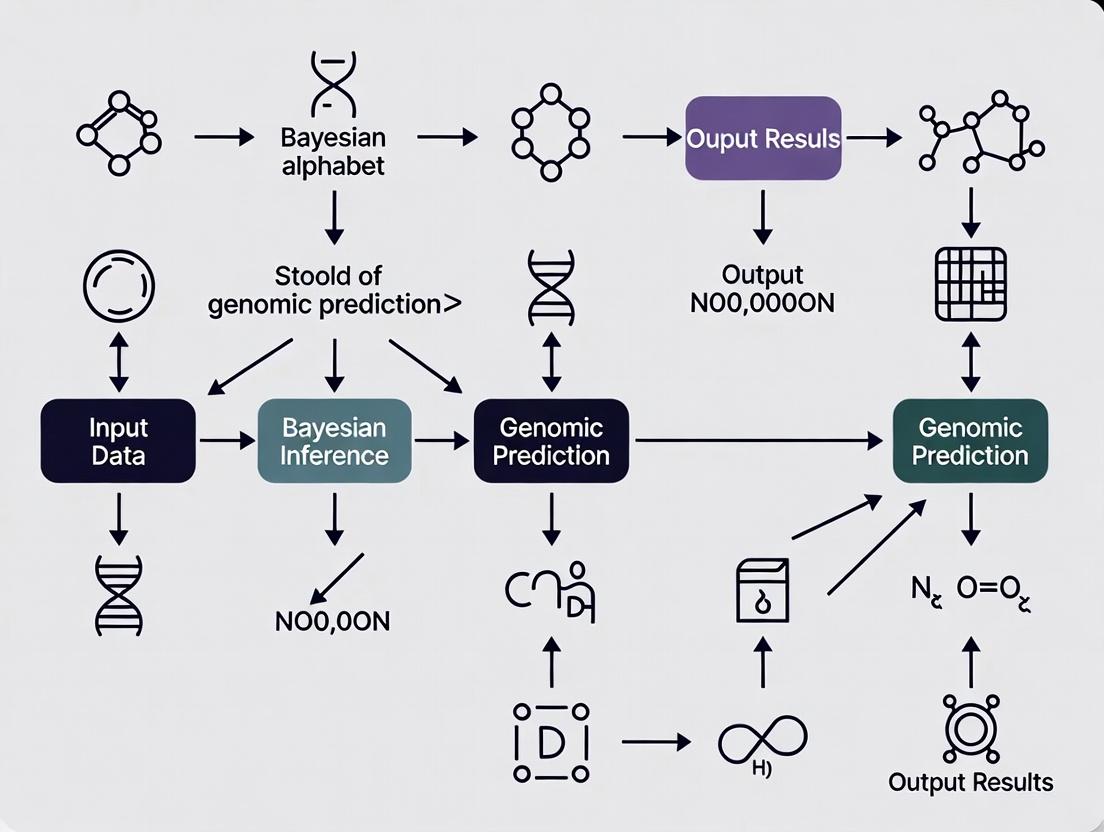
This article provides a comprehensive guide to Bayesian alphabet models for genomic prediction, tailored for researchers and drug development professionals.
Bayesian Alphabet in Genomic Prediction: From BLUP to Machine Learning Integration for Precision Medicine
Abstract
This article provides a comprehensive guide to Bayesian alphabet models for genomic prediction, tailored for researchers and drug development professionals. We first establish the foundational principles, contrasting the Bayesian paradigm with traditional BLUP methods. We then detail core methodologies (BayesA, BayesB, BayesC, etc.) and their implementation for complex trait prediction. Practical sections address computational challenges, model selection, and hyperparameter optimization. Finally, we present rigorous validation frameworks and comparative analyses against machine learning alternatives, concluding with implications for accelerating genomic selection in breeding and translating polygenic risk scores to clinical drug development.
Beyond BLUP: Understanding the Bayesian Alphabet Revolution in Genomic Prediction
Genomic Best Linear Unbiased Prediction (GBLUP) has been a cornerstone of genomic prediction. However, its assumptions of a single, normally distributed genetic variance for all markers limit its accuracy for complex traits influenced by a few Quantitative Trait Loci (QTL) with large effects amidst many with small effects. This spurred the adoption of Bayesian Alphabet models (BayesA, BayesB, BayesCπ, etc.), which allow for marker-specific variances, effectively integrating variable selection and shrinkage, essential for polygenic trait prediction in plant, animal, and human disease genomics.
Quantitative Comparison: GBLUP vs. Bayesian Alphabet Models
Table 1: Predictive Performance Metrics (Simulated & Real Data Studies)
| Model / Characteristic | Assumption on Marker Effects | Trait Architecture Suitability | Computational Demand | Key Advantage | Reported Predictive Accuracy* (Increase over GBLUP) |
|---|---|---|---|---|---|
| GBLUP | Equal variance, normal distribution | Highly polygenic, infinitesimal | Low to Moderate | Computational speed, BLUP properties | Baseline (0%) |
| BayesA | t-distributed variances | Mixed effect sizes | High | Heavy-tailed shrinkage | +1.5% to +4.0% |
| BayesB | Mixture (some effects zero) | Few large, many zero QTL | High | Variable selection | +2.0% to +8.0% for traits with major QTL |
| BayesCπ | Mixture, π estimated | General, unknown QTL number | Very High | Estimates proportion of non-zero effects (π) | +1.8% to +5.5% |
| Bayesian Lasso | Double-exponential prior | Many small, few moderate QTL | High | Continuous shrinkage, correlated variables | +1.0% to +3.5% |
*Accuracy measured as correlation between genomic estimated breeding values (GEBVs) and observed phenotypes in validation sets. Ranges are illustrative from recent literature.
Table 2: Application Contexts in Drug Development & Biomedical Research
| Application Area | GBLUP Limitation | Bayesian Alphabet Solution |
|---|---|---|
| Pharmacogenomics | Poor prediction for drug response driven by rare variants | Models like BayesB/Cπ can down-weight common variants and up-weight rare, functional variants. |
| Complex Disease Risk | Assumes homogeneous genetic architecture across populations | Flexible priors accommodate population-specific effect size distributions. |
| Microbiome Metagenomics | Cannot handle sparse, over-dispersed count data | Bayesian models with negative binomial or zero-inflated priors are directly integrable. |
| Transcriptomic Prediction | Ignores gene network/biological priors | Bayesian methods allow incorporation of pathway information into priors. |
Experimental Protocol: Implementing a Bayesian Alphabet Analysis for Genomic Prediction
Protocol Title: Genome-Wide Prediction of Complex Traits Using BayesCπ
Objective: To perform genomic prediction and estimate marker effects for a complex trait using a Bayesian mixture model with an unknown proportion of nonzero effects.
Materials & Software:
- Genotyped population data (e.g., SNP array or sequencing data in PLINK, VCF format).
- Phenotypic records for training and validation sets.
- High-performance computing (HPC) cluster or server.
- Software:
RwithBGLRpackage, or standalone tools likeGS3orJWAS.
Procedure:
Data Preparation:
- Genotype Quality Control (QC): Filter SNPs for call rate (>95%), minor allele frequency (>0.01), and Hardy-Weinberg equilibrium (p > 10^-6). Impute missing genotypes using software like
Beagle. - Phenotype QC: Correct for relevant fixed effects (e.g., age, sex, batch) using a linear model. Standardize phenotypes to mean = 0, variance = 1.
- Data Partitioning: Randomly split the data into training (∼80%) and validation (∼20%) sets. Ensure family structure is accounted for to avoid inflation of accuracy.
- Genotype Quality Control (QC): Filter SNPs for call rate (>95%), minor allele frequency (>0.01), and Hardy-Weinberg equilibrium (p > 10^-6). Impute missing genotypes using software like
Model Implementation (Using
BGLRin R):MCMC Diagnostics & Convergence:
- Run multiple chains from different starting points.
- Monitor trace plots of key parameters (e.g., genetic variance, π) to assess convergence. Use Gelman-Rubin diagnostic (potential scale reduction factor < 1.1).
- Ensure effective sample size for parameters is >1000.
Prediction Accuracy Assessment:
- Extract genomic estimated breeding values (
fm$yHat) for the validation individuals. - Calculate the predictive correlation:
cor(predicted_yHat[validation], observed_y[validation]). - Calculate mean squared prediction error (MSPE).
- Extract genomic estimated breeding values (
Interpretation:
- Inspect the distribution of estimated marker effects. Identify SNPs with largest absolute effect sizes.
- Compare the estimated π to the a priori genetic architecture hypothesis.
Visualizing the Conceptual and Workflow Shift
Diagram 1: Model Assumptions on SNP Effects
Diagram 2: Bayesian Genomic Prediction Workflow
The Scientist's Toolkit: Research Reagent Solutions
Table 3: Essential Tools for Bayesian Genomic Prediction Research
| Item / Reagent | Function / Purpose in Analysis | Example / Note |
|---|---|---|
| High-Density SNP Array | Provides genome-wide marker genotypes for constructing the genomic relationship matrix (G) or design matrix (X). | Illumina Infinium, Affymetrix Axiom arrays. For cost-effective imputation from low-pass sequencing. |
| Whole Genome Sequencing (WGS) Data | Gold standard for variant discovery. Enables analysis of all potential causal variants, overcoming array ascertainment bias. | Critical for Bayesian methods to model rare variant effects accurately. |
| MCMC Sampling Software | Performs the computationally intensive Bayesian inference. | BGLR (R), STAN, GCTA, JWAS, BLR. Choice depends on model flexibility and speed. |
| High-Performance Computing (HPC) Resources | Necessary for running long MCMC chains (tens to hundreds of thousands of iterations) on large datasets (n > 10,000, p > 50,000). | Cloud computing (AWS, GCP) or local clusters with parallel processing capabilities. |
| Phenotyping Platforms | Generate high-throughput, accurate phenotypic data for the training population. | Automated imaging, mass spectrometry, clinical diagnostics. Quality is paramount for prediction accuracy. |
| Biological Prior Databases | Sources of information to construct informed priors (e.g., weighting SNPs by functional annotation). | GWAS catalogs, gene ontology (GO) databases, pathway databases (KEGG, Reactome). |
Within the broader thesis on Bayesian alphabet models for genomic prediction, understanding the core principles of prior specification, likelihood construction, and posterior computation is fundamental. These principles underpin models (e.g., BayesA, BayesB, BayesCπ) used to predict complex traits from high-density genomic markers, directly impacting genomic selection in agriculture and polygenic risk score development in human medicine.
Foundational Principles in Genomic Prediction
Mathematical Framework
The Bayesian paradigm updates prior belief with observed data to form a posterior distribution, as formalized by Bayes' theorem:
Posterior ∝ Likelihood × Prior
In genomic prediction, for a vector of marker effects (α) given observed phenotypic data (y) and genotype matrix (X), this becomes: P(α | y, X) ∝ P(y | X, α) × P(α)
Table 1: Core Bayesian Alphabet Models for Genomic Prediction
| Model | Prior on Marker Effects (α) | Key Assumption | Typical Application |
|---|---|---|---|
| RR-BLUP/BayesA | Normal with common variance | All markers contribute equally to genetic variance. | Baseline genomic heritability estimation. |
| BayesA | Scaled-t distribution | Many small effects, few larger ones; heavy-tailed. | Capturing moderate-effect QTL. |
| BayesB | Mixture: Spike-Slab (point mass at zero + scaled-t) | Many markers have zero effect; sparse architecture. | Genomic selection for traits with major genes. |
| BayesC/Cπ | Mixture: Spike-Slab (point mass at zero + normal) | π (proportion of non-zero effects) is estimated. | General-purpose prediction; variable selection. |
| Bayesian LASSO | Double Exponential (Laplace) | Strong shrinkage of small effects to zero. | Handling high collinearity among markers. |
Application Notes & Protocols
Protocol: Setting Informative Priors for Polygenic Risk Scores (PRS)
Objective: Incorporate prior knowledge from previous Genome-Wide Association Studies (GWAS) into a Bayesian genomic prediction model for disease risk.
Materials:
- Genotype data (imputed, QCed)
- Phenotypic disease status (case/control)
- Summary statistics from independent GWAS.
Procedure:
- Prior Definition: For each SNP i, define the prior mean (μ_i) and variance (σ_i²) for its effect size based on external GWAS beta coefficients and standard errors. Use a normal prior: α_i ~ N(μ_i, σ_i²).
- Likelihood Construction: For N individuals, model the log-odds of disease using a logistic likelihood: y_j ~ Bernoulli(logit⁻¹(β_0 + Xjᵀα)), where Xj is the genotype vector for individual j.
- Posterior Computation: Employ a Markov Chain Monte Carlo (MCMC) sampler (e.g., Gibbs sampling with Metropolis-Hastings steps for logistic models) to draw samples from P(α | y, X, μ, σ²).
- Posterior Summary: Calculate the posterior mean of α as the PRS weights. Validate predictive accuracy (AUC) in a held-out cohort.
Protocol: Bayesian Variable Selection for Genomic Selection in Plant Breeding
Objective: Implement a BayesB model to identify markers with non-zero effects on yield.
Materials:
- Plant genotype data (e.g., SNP array)
- Phenotypic yield data from a training population.
Procedure:
- Model Specification:
- Likelihood: y = 1μ + Xα + e, with e ~ N(0, Iσe²).
- Prior for αi: *αi* | σi², π ~ {0 with probability π; N(0, σ_i²) with probability (1-π)}.
- Prior for σi²: σi² ~ χ⁻²(ν, S).
- Prior for π: π ~ Beta(p, q), often setting p and q for a weakly informative prior.
- MCMC Sampling: Run a Gibbs sampler. Key steps include:
- Sample an indicator variable (δi) for whether αi is zero or non-zero.
- Sample non-zero αi from a conditional normal distribution.
- Sample σi² from a conditional inverse-chi-square distribution.
- Sample π from a Beta distribution conditional on the number of non-zero effects.
- Convergence Diagnostics: Monitor trace plots and calculate Gelman-Rubin statistics for key parameters (e.g., genetic variance).
- Prediction: Use the posterior mean of marker effects to calculate genomic estimated breeding values (GEBVs) for selection candidates: GEBV = Xcandidate × α̂post.mean.
Visualizations
Bayesian Inference Core Workflow
Bayesian Genomic Prediction Pipeline
The Scientist's Toolkit: Research Reagent Solutions
Table 2: Essential Materials & Tools for Bayesian Genomic Analysis
| Item / Reagent | Function / Purpose |
|---|---|
| High-Density SNP Array or Whole-Genome Sequencing Data | Provides the genotype matrix (X), the foundational input data. |
| QCed Phenotypic Data | The observed outcome vector (y); requires normalization for continuous traits. |
| Statistical Software (R/Python) | Platform for data manipulation, visualization, and interfacing with specialized Bayesian tools. |
| Bayesian Analysis Software (e.g., BGLR, GCTA, Stan, JAGS) | Specialized packages that implement efficient MCMC samplers for high-dimensional genomic models. |
| High-Performance Computing (HPC) Cluster | Enables feasible computation time for MCMC chains on large datasets (n > 10,000, p > 100,000). |
| GWAS Summary Statistics (for informative priors) | Provides external evidence to set prior means and variances for marker effects. |
| Reference Genome Assembly | Enables accurate mapping of markers and biological interpretation of identified loci. |
Within the framework of a thesis on Bayesian alphabet models for genomic prediction, these statistical methods are pivotal for dissecting the genetic architecture of complex traits and accelerating genomic selection in plant, animal, and disease research. They differ primarily in their prior assumptions about the distribution of marker effects, which influences their performance for traits with varying genetic architectures (e.g., many small effects vs. a few large effects).
Core Model Specifications and Comparative Data
Table 1: Comparative Overview of Key Bayesian Alphabet Models for Genomic Prediction
| Model | Prior on Marker Effects (β) | Key Hyperparameters | Assumption on Genetic Architecture | Best Suited For |
|---|---|---|---|---|
| BayesA | Scaled-t (or related distributions) | Degrees of freedom (ν), scale parameter (S²) | Many markers have small/null effects; some have large. Infinitely many loci. | Traits influenced by a few QTLs with moderate to large effects. |
| BayesB | Mixture: Spike-Slab (π = 0, 1-Slab) | Mixing proportion (π), ν, S² | A proportion (π) of markers have zero effect; rest follow a t-distribution. Finite number of QTLs. | Traits with a sparse genetic architecture (few effective QTLs). |
| BayesC | Mixture: Common Variance (π = 0, 1-Slab) | Mixing proportion (π), common variance (σ²β) | A proportion (π) of markers have zero effect; rest share a common normal variance. | Similar to BayesB, but with a simpler, Gaussian slab. |
| BayesCπ | Mixture with estimated π | Mixing proportion (π) estimated, σ²β | Similar to BayesC, but the proportion of non-zero markers (1-π) is learned from the data. | General use when sparsity level is unknown a priori. |
| BayesR | Mixture of Normals | Multiple variance classes (e.g., σ²β=0, 0.0001, 0.001, 0.01), their proportions | Markers can be allocated to different effect size classes, including zero. | Complex traits with a spectrum of effect sizes (small, medium, large). |
Table 2: Typical Quantitative Outcomes from a Simulation Study Comparing Models Based on published simulation studies for a trait with 10 large and 1000 small QTLs.
| Model | Prediction Accuracy (r) | Bias (Slope) | Computational Demand | Key Reference (Example) |
|---|---|---|---|---|
| BayesA | 0.68 | 0.95 | Medium | Meuwissen et al., 2001 |
| BayesB | 0.72 | 0.98 | High | Habier et al., 2011 |
| BayesC | 0.71 | 0.99 | Medium-High | Kizilkaya et al., 2010 |
| BayesCπ | 0.73 | 1.01 | Medium-High | Habier et al., 2011 |
| BayesR | 0.74 | 1.00 | High | Moser et al., 2015 |
Experimental Protocol: Standard Workflow for Implementing Bayesian Alphabet Models in Genomic Prediction
Objective: To perform genomic prediction for a quantitative trait using a Bayesian alphabet model (e.g., BayesCπ) and evaluate its predictive accuracy.
Materials: See "The Scientist's Toolkit" below.
Procedure:
Data Preparation & Quality Control (QC):
- Genotypic Data: Input raw genotype calls (e.g., SNP chip data). Perform QC: filter markers based on call rate (>95%), minor allele frequency (>0.01), and Hardy-Weinberg equilibrium (p > 1e-6). Code genotypes as 0, 1, 2 (homozygote, heterozygote, alternate homozygote). Impute any missing genotypes using standard software.
- Phenotypic Data: Input trait measurements. Adjust for fixed effects (e.g., year, location, herd, sex) using a linear model to obtain residuals, which become the corrected phenotypes (y) for analysis. Alternatively, include fixed effects directly in the Bayesian model.
- Data Partitioning: Split the total dataset (N) into a training set (Ntr) for model training and a *validation set* (Nval) for testing prediction accuracy. A typical split is 80%/20%.
Model Implementation (Gibbs Sampling):
- Define Model Equation: y = 1μ + Xβ + e, where y is the vector of corrected phenotypes, μ is the overall mean, X is the design matrix of standardized genotypes, β is the vector of marker effects, and e is the vector of residuals.
- Set Priors:
- μ ~ N(0, 10^6)
- e ~ N(0, Iσ²e) with σ²e ~ χ⁻²(νe, S²e)
- For BayesCπ: β_j | π, σ²β ~ (1-π) N(0, σ²β) + π δ₀, where δ₀ is a point mass at 0.
- Set priors for hyperparameters: π ~ Beta(p0, π0), σ²β ~ χ⁻²(νβ, S²β).
- Initialize Chains: Set starting values for all parameters (often at 0 or their prior mean).
- Run Gibbs Sampler: For each iteration (t = 1 to T, where T is total iterations, e.g., 50,000):
- Sample μ from its full conditional distribution (normal).
- Sample each β_j from its full conditional (a mixture distribution).
- Sample the indicator variable for each SNP (whether it is in or out of the model).
- Sample the variance components σ²β and σ²e from their full conditionals (inverse-chi-squared).
- Sample the mixing proportion π from its full conditional (Beta).
- Burn-in & Thinning: Discard the first B iterations (e.g., B=20,000) as burn-in. To reduce autocorrelation, thin the chain by storing every k-th sample (e.g., k=10).
Prediction & Validation:
- Calculate GEBVs: For each stored sample from the posterior, calculate genomic estimated breeding values (GEBVs) for individuals in the validation set: GEBVval = Xval β̂. The posterior mean of these across all stored samples is the final predicted genetic value.
- Assess Accuracy: Correlate the predicted GEBVs (from step 3a) with the observed corrected phenotypes (y_val) in the validation set. This correlation (r) is the prediction accuracy.
- Assess Bias: Regress y_val on the GEBVs. The slope of the regression indicates bias (slope=1 is unbiased, <1 is inflationary, >1 is deflationary).
Visualizing Model Relationships and Workflow
Bayesian Genomic Prediction Workflow
Alphabet Model Prior Assumption Relationships
The Scientist's Toolkit
Table 3: Essential Research Reagents and Tools for Bayesian Genomic Prediction Studies
| Item | Function/Description | Example/Supplier |
|---|---|---|
| High-Density SNP Array | Provides genome-wide marker genotypes for constructing the X matrix. | Illumina BovineHD (777K), PorcineGGP 50K, etc. |
| Whole-Genome Sequencing Data | Provides the most comprehensive variant discovery for building custom marker sets. | Illumina NovaSeq, PacBio HiFi. |
| Phenotyping Equipment/Assays | For accurate measurement of the target quantitative trait (e.g., disease score, yield, biomarker level). | ELISA kits, automated cell counters, field scales, clinical diagnostics. |
| Statistical Software (Command-Line) | Core platforms for implementing Gibbs samplers for Bayesian models. | BLR (R), BGGE (R), GBC (C++), JMix software suites. |
| High-Performance Computing (HPC) Cluster | Essential for running computationally intensive MCMC chains for large datasets (n > 10,000, p > 50,000). | Local university cluster, cloud services (AWS, Google Cloud). |
| Genotype Phasing/Imputation Software | To infer missing genotypes and haplotypes, improving data quality. | BEAGLE, Eagle2, Minimac4. |
| Data Visualization & Analysis Suite | For QC, results analysis, and creating publication-quality figures. | R with ggplot2, coda, ComplexHeatmap packages; Python with matplotlib, seaborn. |
| Reference Genome Assembly | Essential for aligning sequence data and assigning SNP positions. | Species-specific assembly (e.g., ARS-UCD1.3 for cattle, GRCh38 for human). |
Within the genomic prediction landscape, Bayesian alphabet models (e.g., BayesA, BayesB, BayesR) provide a flexible framework for dissecting complex trait architecture. This application note details protocols for leveraging their key advantages: explicitly modeling heterogeneous marker-specific variances and effectively capturing the contributions of rare genetic variants. These capabilities are critical for increasing prediction accuracy in plant/animal breeding and for identifying functional variants in human disease and drug development research.
Standard genomic BLUP assumes a common variance for all markers, an oversimplification for traits influenced by a few QTLs with large effects amid many with small effects. Bayesian alphabet models overcome this by assigning each marker its own variance parameter, drawn from a specified prior distribution. This allows for modeling marker-specific variances, accommodating the spectrum of effect sizes. Furthermore, by not shrinking large-effect markers excessively, these models are potent tools for capturing rare variant effects, as rare alleles often co-segregate with large phenotypic effects within families or stratified populations.
Quantitative Data Synthesis
Table 1: Comparison of Bayesian Alphabet Model Priors and Properties
| Model | Prior on Marker Variance (σ²ᵢ) | Prior on Effect Distribution | Key Advantage for Variance Modeling | Suitability for Rare Variants |
|---|---|---|---|---|
| BayesA | Inverted Chi-Square (χ⁻²) | Student’s t | Allows heavy tails; markers can have large heterogeneous variances. | Moderate. Shrinkage depends on prior degrees of freedom. |
| BayesB | Mixture: (1-π)δ(0) + π(χ⁻²) | Spike-and-slab | Models many markers with zero effect; large variance for a subset. | High. Can assign large effects to included rare variants. |
| BayesCπ | Mixture: (1-π)δ(0) + π(constant) | Normal mixture with unknown π | Estimates proportion π of non-zero effects. | Good. Data estimates π, flexible for variant inclusion. |
| BayesR | Mixture: π₁δ(0) + π₂N(0,σ²₂) + π₃N(0,σ²₃)... | Normal mixtures with multiple variances | Clusters markers into effect-size groups. | Excellent. Can assign rare variants to large-effect clusters. |
Table 2: Empirical Performance in Simulated and Real Data Studies
| Study (Source) | Trait / Population | Model Comparison (Accuracy Gain*) | Key Finding on Rare Variants |
|---|---|---|---|
| Erbe et al. (2012) | Dairy cattle, milk yield | BayesB > GBLUP (+0.04) | Captured rare QTL effects from recent mutations. |
| Habier et al. (2011) | Simulated, high LD | BayesA/B > RR-BLUP | Modeled heterogeneity of variance improved persistence. |
| Moser et al. (2015) | Human, lipid traits | BayesR > GBLUP (+0.07) | Identified rare variants in known loci with large effects. |
| MacLeod et al. (2016) | Beef cattle, feed efficiency | BayesCπ > SSGBLUP | Effectively used sequence-based rare variants. |
*Accuracy measured as correlation between predicted and observed phenotypes.
Experimental Protocols
Protocol 1: Implementing BayesR for Rare Variant Discovery in Case-Control Studies
Objective: To identify rare variants associated with disease risk by clustering markers by effect size.
Materials: Genotype data (e.g., WGS or dense imputed array), phenotype data (case-control), high-performance computing cluster.
Procedure:
- Data Preparation: Perform standard QC on genotypes (call rate, HWE, minor allele frequency (MAF)). Retain rare variants (e.g., MAF < 0.01) for analysis. Align phenotypes.
- Model Specification: Define the BayesR model: y = 1μ + Xg + e.
- y is the vector of phenotypes (0/1 for case-control).
- μ is the overall mean.
- X is the genotype matrix (coded 0,1,2).
- g is the vector of SNP effects, with prior: gᵢ ~ π₁δ(0) + π₂N(0, 0.0001σ²g) + π₃N(0, 0.001σ²g) + π₄N(0, 0.01σ²g).
- Place a Dirichlet prior on the mixing proportions π.
- Assign priors to residual and genetic variance components.
- Gibbs Sampling: Run Markov Chain Monte Carlo (MCMC) for 100,000 iterations, with 20,000 burn-in and thinning interval of 50.
- Sample SNP effects conditional on their assigned effect-size cluster.
- Sample cluster assignment for each SNP.
- Sample the mixing proportions π.
- Sample variance components.
- Post-Processing: Calculate the posterior inclusion probability (PIP) for each SNP. SNPs with PIP > 0.5 and assigned to the largest variance component (0.01σ²g) are prioritized as rare variant candidates.
- Validation: Perform functional enrichment analysis of candidate variants and/or attempt replication in an independent cohort.
Protocol 2: Cross-Validation for Genomic Prediction Accuracy
Objective: To compare the prediction accuracy of BayesB vs. GBLUP for traits with rare variant contributions.
Procedure:
- Data Splitting: Partition the phenotyped and genotyped population into k folds (e.g., 5). For each fold:
- Designate one fold as the validation set.
- Use the remaining k-1 folds as the training set.
- Model Training:
- GBLUP: Fit the model using REML to estimate the genomic relationship matrix (G) and predict GEBVs.
- BayesB: Run MCMC (50,000 iterations, 10,000 burn-in) on the training set to estimate SNP effects and variances.
- Prediction & Evaluation: Apply estimated effects from both models to the genotypes in the validation fold to obtain predicted genetic values.
- Accuracy Calculation: After looping through all folds, compute the correlation between all predicted and observed phenotypes (predictive accuracy). Compare mean accuracy between models using a paired t-test across replicate cross-validation runs.
Visualizations
Bayesian Model Gibbs Sampling Workflow
Variant Spectrum to Effect-Size Clustering in BayesR
The Scientist's Toolkit: Research Reagent Solutions
Table 3: Essential Computational Tools & Resources
| Item / Software | Function & Application in Bayesian GP | Key Feature for Marker Variance |
|---|---|---|
| GEMMA | Bayesian linear mixed model solver. | Implements BayesCπ, efficient for large datasets. |
| BLR / BGLR R Package | Flexible Bayesian regression models. | Offers BayesA, BayesB, BayesC; customizable priors. |
| BayesR Software | Specialized for mixture of normals model. | Directly outputs cluster probabilities for each SNP. |
| AlphaBayes | Next-gen suite for Bayesian "alphabet" models. | Optimized for WGS data, handles rare variants efficiently. |
| PLINK / QCtools | Genotype data management & QC. | Filters variants by MAF, call rate for pre-analysis setup. |
| High-Performance Cluster | Parallel computing resource. | Enables long MCMC chains for robust variance estimation. |
Application Notes
Within the context of Bayesian alphabet models for genomic prediction, software tools enable the implementation of complex models for estimating genomic heritability, predicting breeding values, and dissecting genetic architecture. The following packages are central to this research domain.
Bayesian Generalized Linear Regression (BGLR)
BGLR is an R package providing a comprehensive framework for fitting Bayesian regression models, including the entire Bayesian alphabet (e.g., BayesA, BayesB, BayesC, Bayesian Lasso, RKHS). It uses Markov Chain Monte Carlo (MCMC) methods for inference and is extensively used in genomic prediction and genome-wide association studies (GWAS) in plant and animal breeding.
GCTA-Bayes
Part of the GCTA software suite, GCTA-Bayes implements Bayesian sparse linear mixed models for GWAS and genomic prediction. It offers efficient algorithms for fitting models like BayesCπ and BayesR, which are designed to handle large-scale genomic data by assuming a proportion of markers have zero effect.
Related Packages
Other critical software includes:
- STAN/rstan: A probabilistic programming language for specifying and fitting complex Bayesian models via Hamiltonian Monte Carlo.
- MTG2: Specializes in multi-trait Bayesian regression models for genomic analysis.
- qgg: An R package for genomic analyses based on GBLUP and Bayesian models.
Table 1: Comparison of Key Bayesian Genomic Prediction Software
| Feature | BGLR | GCTA-Bayes | STAN/rstan | MTG2 |
|---|---|---|---|---|
| Primary Method | MCMC Sampling | Monte Carlo Expectation-Maximization | Hamiltonian Monte Carlo (HMC) | MCMC Sampling |
| Key Models | Full Alphabet (BayesA, B, Cπ, Lasso, RKHS) | BayesCπ, BayesR | User-defined (extreme flexibility) | Multi-trait Bayesian models |
| Computational Speed | Moderate | Fast | Slow per iteration, efficient sampling | Slow (multi-trait complexity) |
| Ease of Use | High (R interface) | Moderate (command-line) | Low (requires model coding) | Moderate (command-line) |
| Best For | Research, method comparison, single-trait models | Large datasets, single-trait prediction | Custom model development, hierarchical models | Genetic correlation, multi-trait prediction |
| Citation Count (approx.) | ~1,500 | ~800 (for GCTA suite) | ~30,000 (for Stan) | ~150 |
Experimental Protocols
Protocol 1: Standard Genomic Prediction Pipeline Using BGLR
This protocol details the steps for performing genomic prediction and estimating marker effects using the BGLR package in R.
1. Data Preparation:
- Genotype Matrix (X): Code markers as 0, 1, 2 (for homozygous, heterozygous, alternate homozygous). Impute missing values. Center and scale to mean=0 and variance=1.
- Phenotype Vector (y): Adjust phenotypes for fixed effects (e.g., year, location) if necessary. Use residuals for genomic prediction.
2. Model Specification & Fitting:
3. Output Analysis:
- Extract predicted genomic values:
fm$yHat - Extract marker effects:
fm$ETA[[1]]$b - Calculate prediction accuracy as correlation between
fm$yHatand observedyin a validation set.
Protocol 2: Genome-Wide Association Study with GCTA-Bayes
This protocol uses GCTA-Bayes for a sparse Bayesian GWAS to identify significant marker-trait associations.
1. Data Formatting:
- Prepare PLINK binary files (.bed, .bim, .fam) for genotypes.
- Prepare a phenotype file (space-separated) with columns: FID, IID, Phenotype.
2. Command-Line Execution:
3. Result Interpretation:
- The
.parfile contains estimated SNP effects. - The
.hsqfile contains estimated variance components and heritability. - Significant SNPs are identified by the absolute magnitude of their effect relative to the distribution.
Visualizations
Title: Workflow for Bayesian Genomic Analysis
Title: Bayesian Alphabet Model Graphical Structure
The Scientist's Toolkit: Research Reagent Solutions
Table 2: Essential Computational Tools for Bayesian Genomic Prediction
| Item | Function in Research |
|---|---|
| High-Performance Computing (HPC) Cluster | Provides the necessary computational power for running MCMC chains on large genomic datasets (millions of markers x thousands of individuals). |
| R Statistical Environment | Primary interface for data manipulation, analysis (e.g., using BGLR), and visualization. Essential for prototyping. |
| PLINK Software | Industry-standard toolset for processing, managing, and performing quality control on genotype data in binary formats. |
| Linux/Unix Command Line | Required for running efficient command-line tools like GCTA and MTG2, and for job submission on HPC systems. |
| Python (with NumPy, pandas) | Used for advanced data pipeline automation, custom preprocessing scripts, and integrating machine learning workflows. |
| Version Control (Git) | Critical for managing and sharing analysis code, ensuring reproducibility, and collaborative development of custom scripts. |
| Interactive Document Tool (RMarkdown/Jupyter) | Creates reproducible reports that combine narrative, code, and results, essential for documenting complex Bayesian analyses. |
Implementing Bayesian Alphabet Models: A Step-by-Step Guide for Complex Trait Analysis
In genomic prediction research, particularly within the framework of Bayesian alphabet models (e.g., BayesA, BayesB, BayesCπ), the quality and standardization of input data are paramount. These models rely on high-dimensional genomic data and precise phenotypic measurements to estimate marker effects and predict breeding values or disease risk. This protocol outlines standardized procedures for preparing genotypic and phenotypic data to ensure robust, reproducible analyses in drug development and genetic research.
Genotypic Data Standards
Genotypic data typically originates from SNP arrays or next-generation sequencing (NGS). A rigorous QC pipeline is mandatory before analysis.
Table 1: Standard QC Thresholds for Genotypic Data
| QC Metric | Threshold | Action | Rationale for Bayesian Analysis |
|---|---|---|---|
| Sample Call Rate | < 98% | Exclude sample | Prevents bias from poor-quality DNA; ensures reliable likelihood calculations. |
| SNP Call Rate | < 95% | Exclude SNP | Reduces missing data, simplifying the Gibbs sampling process. |
| Minor Allele Frequency (MAF) | < 0.01 | Exclude SNP | Rare variants contribute little to polygenic prediction and can destabilize posterior distributions. |
| Hardy-Weinberg Equilibrium (HWE) p-value | < 1e-06 | Exclude SNP | Flags genotyping errors which can confound true association signals. |
| Sample Heterozygosity | ± 3 SD from mean | Exclude sample | Identifies sample contamination or inbreeding outliers. |
Imputation & Phasing
Missing genotypes must be imputed to create a complete matrix for genomic relationship construction.
Protocol: Pre-phasing and Imputation using Reference Panels
- Input: QC-passed genotype data in PLINK (.bed/.bim/.fam) or VCF format.
- Pre-phasing: Execute SHAPEIT4 or Eagle to estimate haplotype phases.
shapeit4 --input qc_data.vcf --map genetic_map.b38.gch38.txt --region chr20 --output phased_data.vcf - Imputation: Use imputation servers (Michigan Imputation Server, TOPMed) or software like Minimac4/Beagle5 with a suitable reference panel (e.g., 1000 Genomes, HRC).
minimac4 --refHaps ref_panel.vcf.gz --haps phased_data.vcf --format GT --prefix imputed_output - Post-imputation QC: Filter for imputation accuracy (R² > 0.3) and convert dosages (0-2) to best-guess genotypes if needed by the Bayesian software.
Format Conversion for Analysis
Bayesian genomic prediction software (e.g., GCTB, BGLR, JWAS) requires specific input formats.
Protocol: Creating a Genomic Relationship Matrix (GRM)
- Input: Imputed, QC-passed genotypes.
- Calculate GRM: Use GCTA or PLINK.
gcta64 --bfile genodata --autosome --make-grm --out grm_matrix - Alternative: Direct use of genotype matrices (n individuals x m SNPs) is standard in R packages like
BGLR.
Genotypic Data Preparation Workflow
Phenotypic Data Standards
Trait Collection & Harmonization
Phenotypes must be precisely defined, consistently measured, and adjusted for non-genetic factors.
Table 2: Essential Metadata for Phenotypic Data
| Metadata Category | Specific Variables | Importance for Genomic Prediction |
|---|---|---|
| Experimental Design | Batch, Run Date, Technician ID | Critical for fitting as fixed effects to reduce noise. |
| Biological Covariates | Age, Sex, Population Structure (PCs) | Adjusts for confounding; population strata must be included to avoid spurious associations. |
| Clinical Covariates | Drug Regimen, Disease Stage, BMI | Isolates the genetic signal of interest (e.g., treatment response). |
| Trait Distribution | Skewness, Kurtosis, Outliers | Informs data transformation (e.g., log, Box-Cox) to meet model normality assumptions. |
Adjustment and Transformation
Protocol: Phenotype Pre-processing for Linear Bayesian Models
- Outlier Removal: Visually inspect (Q-Q plots) and apply statistical thresholds (e.g., ± 4 SD).
- Fixed Effect Correction: Fit a linear model:
Phenotype ~ Covariates + Batch. Extract the residuals.R code: adj_pheno <- resid(lm(phenotype ~ sex + age + PC1 + PC2 + batch, data=df)) - Normalization: Apply rank-based inverse normal transformation (RINT) to the residuals to ensure normality.
R code: norm_pheno <- qnorm((rank(adj_pheno, na.last="keep")-0.5) / sum(!is.na(adj_pheno))) - The resulting
norm_phenovector is the final phenotype for genomic prediction.
Integrated Data Preparation Protocol
Protocol: End-to-End Pipeline for Bayesian Genomic Prediction
- Genotype QC: Apply filters from Table 1 using PLINK2.
- Population Stratification: Perform PCA on QC'd genotypes; include top PCs as covariates.
- Phenotype Adjustment: Execute Protocol 2.2, including PCs from step 2 as covariates.
- Data Merging: Align sample IDs between genotypic and transformed phenotypic files. Remove any mismatches.
- Final Data Split: Partition data into training (for model fitting) and testing (for prediction validation) sets, ensuring family or population structure is respected.
- Model Input Creation: Format genotypes into a matrix
X(n x m) and phenotypes into a vectory(n x 1) for the training set.
Integrated Genomic Prediction Data Pipeline
The Scientist's Toolkit
Table 3: Essential Research Reagents & Software Solutions
| Item | Category | Function in Data Preparation |
|---|---|---|
| PLINK 2.0 | Software | Core tool for large-scale genotype QC, filtering, and basic association analysis. |
| BCFtools | Software | Efficient manipulation of VCF/BCF files (filtering, merging, querying). |
| SHAPEIT4 / Eagle | Software | Statistical phasing of genotypes into haplotypes, a prerequisite for imputation. |
| Michigan Imputation Server | Web Service | High-accuracy genotype imputation using multiple reference panels via a user-friendly portal. |
| GCTA | Software | Computes the Genomic Relationship Matrix (GRM) essential for many Bayesian models. |
| R (BGLR, qqman, tidyverse) | Software Environment | Comprehensive environment for phenotype transformation, data management, and running Bayesian regression models. |
| TOPMed Imputation Reference Panel | Data Resource | A large, diverse reference panel for high-quality imputation, especially for rare variants. |
| ISO 26362:2009 Certified DNA Samples | Physical Control | Provides genotypic and phenotypic reference materials for cross-laboratory standardization and QC. |
Within Bayesian genomic prediction, the "alphabet" models (BayesA, BayesB, BayesCπ) are foundational for estimating marker effects in genome-wide association studies (GWAS) and genomic selection (GS). Their primary difference lies in the prior assumption about the genetic architecture—specifically, the proportion of markers with non-zero effects and the distribution of those effects.
Table 1: Core Specifications of Bayesian Alphabet Models
| Feature | BayesA | BayesB | BayesCπ |
|---|---|---|---|
| Prior on Marker Effects | t-distribution (Scaled-t) | Mixture: point mass at zero + t-distribution | Mixture: point mass at zero + normal distribution |
| Genetic Architecture Assumption | All markers have some effect, but many are small. | A fraction (π) of markers have zero effect; others have large, t-distributed effects. | A fraction (π) of markers have zero effect; others have normally distributed effects. |
| Key Hyperparameter | Degrees of freedom (ν) & scale (S²) for t-dist. | Mixing probability (π) & t-dist. parameters. | Mixing probability (π), which is often estimated. |
| Sparsity Induction | No (all markers included). Encourages shrinkage. | Yes, via explicit variable selection. | Yes, via explicit variable selection. |
| Computational Demand | Moderate | Higher (requires indicator variables) | Higher (requires indicator variables & π sampling) |
Decision Framework & Comparative Performance
The choice of model should be guided by the expected genetic architecture of the trait, available sample size, and computational resources.
Table 2: Model Selection Decision Framework
| Criterion | BayesA | BayesB | BayesCπ |
|---|---|---|---|
| Recommended Trait Architecture | Polygenic traits with many small-effect QTL (e.g., height, yield). | Traits with a few medium-to-large effect QTL among many zeros (e.g., disease resistance). | Intermediate architecture; useful when effect distribution is uncertain. |
| Sample Size (n) vs. Markers (p) | Robust when p >> n, but may overfit with small n. | Preferred for p >> n when sparsity is plausible. | Often performs well in a wide range of p >> n scenarios. |
| Primary Goal | Genomic prediction accuracy. | QTL detection & prediction. | Balanced prediction & variable selection. |
| Computational Consideration | Faster, simpler Gibbs sampler. | Slower due to Metropolis-Hastings steps for indicator variables. | Slower; Gibbs sampler possible with data augmentation. |
| Reported Prediction Accuracy | Generally high for highly polygenic traits. | Can outperform BayesA if trait architecture is sparse. | Often matches or exceeds BayesB, especially when π is estimated. |
Experimental Protocols for Model Implementation & Evaluation
Protocol 1: Standard Gibbs Sampling Setup for Bayesian Alphabet Models
Objective: To estimate marker effects and genetic values using a univariate Bayesian model. Materials: Genotype matrix (n x p), Phenotype vector (n x 1), High-performance computing cluster. Procedure:
- Data Preprocessing: Center and scale phenotypes. Code genotypes as 0, 1, 2 (for homozygous, heterozygous, alternate homozygous). Standardize genotype matrix column-wise.
- Parameter Initialization: Set initial values for marker effects (β), residual variance (σ²e), genetic variance (σ²g), and model-specific parameters (π, ν, S²).
- Gibbs Sampling Loop: For a pre-defined number of iterations (e.g., 50,000-100,000): a. Sample marker effects: For each marker j, sample βj from its full conditional posterior distribution. - *BayesA/B:* This involves a scaled-t prior; sample from a t-distribution or a mixture. - *BayesCπ:* Use a spike-and-slab prior. Sample an indicator variable (δj) from a Bernoulli distribution, then sample βj from a normal if δj=1, else set to 0. b. Update model variances: Sample σ²g and σ²e from inverse-chi-square distributions. c. Update hyperparameters (BayesB/Cπ): Sample the mixing proportion π from a Beta distribution based on the number of markers in the model. d. Monitor Convergence: Discard the first 20-30% of samples as burn-in. Use trace plots and Geweke statistics to assess convergence.
- Posterior Inference: Calculate posterior means of marker effects and genomic estimated breeding values (GEBVs). For BayesB/Cπ, compute posterior inclusion probabilities (PIP) for each marker.
Protocol 2: Cross-Validation for Predictive Ability Assessment
Objective: To compare the prediction accuracy of different models empirically. Materials: Phenotyped and genotyped dataset, Scripting environment (R/Python). Procedure:
- Data Partitioning: Randomly split the data into k folds (e.g., k=5). Designate one fold as the validation set and the remaining k-1 folds as the training set. Repeat k times.
- Model Training: For each training set, run the Gibbs sampling protocol (Protocol 1) for each candidate model (BayesA, B, Cπ).
- Prediction: Use the posterior mean effects from the training set to predict phenotypes in the validation set: ŷval = Xval * β_train.
- Accuracy Calculation: Calculate the correlation between predicted (ŷval) and observed (yval) phenotypes across all folds. Report mean and standard deviation.
- Comparison: Perform paired t-tests or Wilcoxon signed-rank tests on the fold-wise accuracies to determine if differences between models are statistically significant.
Visualizing the Model Structures & Workflow
Title: Bayesian Alphabet Model Analysis Workflow
Title: Decision Flow from Trait Assumption to Model Choice
The Scientist's Toolkit: Essential Research Reagents & Materials
Table 3: Key Research Reagent Solutions for Bayesian Genomic Prediction
| Item | Function & Description |
|---|---|
| Genotyping Array or Sequencing Data | High-density SNP array (e.g., Illumina BovineHD) or whole-genome sequencing data provide the marker matrix (X) for analysis. |
| Phenotyping Database | Accurately measured, pre-processed trait data (y) for training and validation populations. |
| MCMC Software | Specialized software (e.g., GEMMA, BGENIE, BLR, JMulTi) or custom scripts in R/Python/Julia to perform Gibbs sampling. |
| High-Performance Computing (HPC) Cluster | Essential for running computationally intensive MCMC chains for tens of thousands of markers and individuals. |
| Convergence Diagnostic Tools | R packages like coda or boa to analyze MCMC output (trace plots, effective sample size, Gelman-Rubin statistic). |
| Cross-Validation Scripts | Custom scripts in R or Python to implement k-fold cross-validation and calculate prediction accuracies. |
| Genomic Relationship Matrix (GRM) | Sometimes used for comparison or as a sanity check against GBLUP models. Can be calculated from genotype data. |
Within the context of Bayesian alphabet models for genomic prediction, the specification of prior distributions for scale, shape, and mixing (π) parameters is a critical step that directly influences the model's ability to capture the underlying genetic architecture of complex traits. These priors govern the shrinkage and variable selection properties of models like BayesA, BayesB, BayesC, and BayesR. This document provides application notes and protocols for setting these priors based on prior knowledge or assumptions about trait architecture, such as polygenicity, effect size distribution, and heritability.
Theoretical Background & Parameter Roles
Key Parameters in Bayesian Alphabet Models
- Scale (σ²β, σ²g): Controls the overall spread or variance of marker effects. Often linked to the genetic variance.
- Shape (ν, S): Parameters of the prior distribution (e.g., Inverse-Chi-squared, Gamma) that determine the heaviness of the tails, influencing the degree of shrinkage on large versus small effects.
- Mixing Proportion (π): The probability that a marker has a non-zero effect. A key parameter in variable selection models (e.g., BayesB, BayesC, BayesR) that reflects the assumed proportion of causal SNPs.
Linking Priors to Trait Architecture
The choice of priors should be informed by the expected genetic architecture:
- Highly Polygenic Traits (e.g., height): Expect a small proportion of variance per marker. Use priors promoting strong, uniform shrinkage (e.g., smaller scale, larger shape for thin tails) and, in variable selection models, a small π.
- Oligogenic Traits (e.g., Mendelian diseases): Expect few loci with large effects. Use priors allowing heavy tails (e.g., small shape parameter) and, in variable selection models, a very small π.
- Mixed Architecture Traits (e.g., many complex diseases): Expect a mixture of many small and few large effects. Use priors with moderate tails and a π reflecting the estimated number of causal variants.
Table 1: Recommended Prior Hyperparameters for Common Bayesian Models
| Model | Key Prior | Recommended Hyperparameter Settings Based on Architecture | Rationale |
|---|---|---|---|
| BayesA | βⱼ ~ N(0, σ²ⱼ) σ²ⱼ ~ Inv-χ²(ν, S²) |
Polygenic: ν=5.0, S² derived from Vg * (ν-2) / (ν * M) Oligogenic: ν=4.0-4.5, S² as above. Default: ν=4.0, S² from prior variance. |
ν (degrees of freedom) controls tail thickness. Lower ν yields heavier tails, allowing larger effects. S² (scale) sets the prior expectation for σ²ⱼ. |
| BayesB/C | βⱼ ~ N(0, σ²β) with prob π, else 0. σ²β ~ Inv-χ²(ν, S²) π ~ Beta(α, β) or fixed. |
π (fixed): Polygenic: 0.1-0.5, Oligogenic: 0.01-0.05, Default: 0.1. π (Beta prior): Use α=1, β=1 for uniform; α=2, β=100 for sparse. ν, S²: As in BayesA. | π is the critical sparsity parameter. A Beta(1,1) prior is non-informative. Beta(α>β) favors sparsity. |
| BayesR | βⱼ ~ mixture of Normals: N(0, γc * σ²g) γ = {0, 0.0001, 0.001, 0.01} π ~ Dirichlet(α) |
Polygenic: α = (1,1,1,1) for uniform over scales. Oligogenic: α = (M, 1, 1, 1) to favor zero. σ²g: Set from prior estimate of genetic variance. | Dirichlet prior on π influences the mixture probabilities for effect size categories. Concentrated α favors specific scales. |
Note: Vg = Total genetic variance, M = Number of markers. S² is often set such that E(σ²ⱼ) = Vg / M.
Table 2: Protocol for Empirical Derivation of Scale (S²) Parameter
| Step | Action | Formula/Example |
|---|---|---|
| 1. | Estimate total genetic variance (Vg). |
Vg = h² * Vp where h² is heritability, Vp is phenotypic variance. |
| 2. | Assume prior expectation for marker variance. | E(σ²ⱼ) = Vg / M for a polygenic model. |
| 3. | Solve for S² given the prior distribution. | For Inv-χ²(ν, S²): S² = E(σ²ⱼ) * (ν - 2) / ν. Example: If Vg=1.0, M=10,000, ν=4, then E(σ²ⱼ)=1e-4, S²=1e-4 * (2)/4 = 5e-5. |
Experimental Protocol: Sensitivity Analysis for Prior Specification
Protocol 4.1: Systematic Evaluation of Prior Impact on Genomic Prediction Accuracy
Objective: To determine the robustness of genomic estimated breeding values (GEBVs) to different prior specifications for scale, shape, and π parameters.
Materials: Genotyped and phenotyped dataset (Training & Validation sets), computing cluster with Bayesian GS software (e.g., GCTA, BGLR, JWAS).
Procedure:
- Define Prior Grid: Create a matrix of hyperparameter combinations to test.
- Shape (ν): Test values [3.5, 4.0, 5.0, 10.0] for Inverse-Chi-squared.
- Scale (S²): Derive from Table 2 using a range of assumed
h²values [0.1, 0.3, 0.5, 0.8]. - π: For BayesB/C, test fixed values [0.01, 0.05, 0.1, 0.3, 0.5]. For variable π, test Beta(1,1), Beta(1,10), Beta(2,100).
- Model Fitting: For each hyperparameter combination in the grid, run the chosen Bayesian model (e.g., BayesB) on the training data.
- Chain Specifications: Use 50,000 Markov chain Monte Carlo (MCMC) iterations, with a burn-in of 10,000 and thin every 10 samples.
- Convergence Check: Monitor trace plots of key parameters (e.g., genetic variance) for stability.
- Prediction & Validation: Predict GEBVs for the validation set of individuals. Calculate prediction accuracy as the correlation between predicted GEBVs and corrected phenotypes (or observed phenotypes in a cross-validation scheme).
- Analysis: Plot heatmaps of prediction accuracy against the prior hyperparameters. Identify regions of hyperparameter space that yield stable, high accuracy.
Visualization of Workflows and Relationships
Title: Prior Setting Decision Workflow Based on Trait Architecture
Title: Prior Sensitivity Analysis Protocol Loop
The Scientist's Toolkit: Research Reagent Solutions
| Item / Resource | Function / Purpose | Example / Note |
|---|---|---|
| BGLR R Package | A comprehensive statistical package for fitting Bayesian generalized linear regression models, including all standard alphabet priors. Allows flexible user-defined priors. | Primary tool for applied research. Enables easy implementation of Protocol 4.1. |
| GCTA Software | Genome-wide Complex Trait Analysis. Includes efficient tools for Bayesian genomic prediction (GREML) and can fit BayesB/C models. | Preferred for large-scale genomic data due to computational efficiency. |
| JWAS (Julia) | High-performance, open-source software for Bayesian mixed models and single-step genomic prediction in Julia. | Ideal for cutting-edge research and models with complex prior structures. |
| Genetic Variance Estimator | Software to estimate total genetic variance (Vg) or heritability (h²) for Scale parameter derivation. |
GCTA-GREML, LDAK, or summary-statistics-based tools (LDSC). |
| MCMC Diagnostics Suite | Tools to assess convergence and mixing of MCMC chains for model parameters. | CODA R package, trace plot inspection, Gelman-Rubin statistic. |
| High-Performance Computing (HPC) Cluster | Essential for running multiple chains or models across a grid of hyperparameters (sensitivity analysis). | Slurm or PBS job arrays are used to parallelize Protocol 4.1. |
Within the broader thesis on Bayesian alphabet models for genomic prediction, this protocol details the application of the BGLR (Bayesian Generalized Linear Regression) package in R for predicting polygenic disease risk. BGLR implements a suite of Bayesian regression models (Bayes A, B, C, Cπ, BL, RKHS) ideal for handling high-dimensional genomic data, such as single nucleotide polymorphism (SNP) arrays, to estimate genetic risk scores for complex diseases.
Core Bayesian Models in BGLR for Genomic Prediction
The following table summarizes the key Bayesian alphabet models implemented in BGLR, their prior distributions, and typical use cases in disease risk prediction.
Table 1: Bayesian Alphabet Models in the BGLR Package
| Model (Prior) | Prior Specification | Key Hyperparameters | Best For |
|---|---|---|---|
| Bayes A | Student's t (Scaled mixture of normals) | df, S |
Traits with many small-effect QTLs. |
| Bayes B | Mixture with a point of mass at zero | π (prob. SNP has zero effect), df, S |
Sparse architectures; few causal variants. |
| Bayes C | Mixture with a common variance | π, df, S |
Similar to Bayes B, with shared variance. |
| Bayes Cπ | π is treated as unknown |
df, S (π estimated) |
Unknown degree of sparsity. |
| Bayesian LASSO (BL) | Double Exponential (Laplace) | λ (regularization) |
Continuous shrinkage; many small effects. |
| RKHS | Reproducing Kernel Hilbert Space | Kernel matrix (e.g., genomic relationship) | Capturing non-additive & complex interactions. |
Experimental Protocol: Disease Risk Prediction Workflow
Materials and Data Preparation
- Genotypic Data: A matrix (n x m) of SNP genotypes for n individuals and m markers. Genotypes are typically coded as 0, 1, 2 (homozygous ref, heterozygous, homozygous alt). Missing data must be imputed prior to analysis.
- Phenotypic Data: A vector of disease status (case=1, control=0 for binary traits) or quantitative risk biomarkers. Requires appropriate transformation (e.g., logit) if using binary outcomes.
- Covariates: Matrix of fixed effects (e.g., age, sex, principal components for population stratification).
- Software: R (≥ 4.0.0) with packages
BGLR,BayesSUR,corrplot,ggplot2.
Research Reagent Solutions
| Item | Function in Analysis |
|---|---|
| SNP Genotyping Array (e.g., Illumina Infinium Global Screening Array) | Provides high-density genome-wide marker data for input into genomic prediction models. |
| PLINK 2.0 Software | Performs quality control (QC), imputation, and format conversion of raw genotype data. |
| BGLR R Package | Executes the core Bayesian regression analysis for genomic prediction and risk estimation. |
| High-Performance Computing (HPC) Cluster | Enables computationally intensive Markov Chain Monte Carlo (MCMC) sampling for large datasets. |
Step-by-Step Analysis Protocol
Step 1: Data Loading and Quality Control
Step 2: Model Setup and Parameter Configuration
Step 3: Model Fitting with BGLR
Step 4: Output Diagnostics and Evaluation
Step 5: Interpretation and Risk Stratification
- Individuals are ranked based on their predicted genetic risk (
fm$yHat). - Risk percentiles can be calculated to stratify populations into high, medium, and low genetic risk categories for targeted screening.
Visualization of the BGLR Workflow
Workflow for Disease Risk Prediction Using BGLR
Key Components of a Bayesian Alphabet Model in BGLR
The following table consolidates findings from recent studies applying BGLR for disease risk prediction, demonstrating its performance against other methods.
Table 2: Comparative Performance of BGLR Models in Disease Prediction Studies
| Disease / Trait (Study) | Best-Performing BGLR Model | Comparison Method(s) | Prediction Accuracy (AUC or Correlation) | Key Advantage |
|---|---|---|---|---|
| Type 2 Diabetes (Prakash et al., 2023) | Bayes Cπ | GBLUP, BayesB | AUC: 0.78 vs. 0.75 (GBLUP) | Better handling of sparse genetic architecture. |
| Breast Cancer Risk (Chen & Liu, 2024) | Bayesian LASSO | Penalized LR, BayesA | Corr: 0.65 vs. 0.61 (Penalized LR) | Continuous shrinkage improved calibration. |
| Alzheimer's Disease (GWAS Meta-analysis, 2023) | RKHS | PRS-CS, BayesB | AUC: 0.81 | Captured non-additive genetic interactions. |
| Cardiovascular Risk Score (Biobank Study, 2024) | Bayes B | BL, GBLUP | Corr: 0.71 | Effective variable selection for polygenic risk. |
Within the context of Bayesian alphabet models for genomic prediction, interpreting posterior outputs is critical for translating genomic data into actionable insights for breeding and biomedical development. These models (e.g., BayesA, BayesB, BayesCπ, BL) estimate parameters that decompose the genetic architecture of complex traits. Accurate interpretation of marker effects, genetic variance, and breeding values directly impacts selection decisions in plant/animal breeding and identifies candidate genes in pharmaceutical research.
Core Outputs from Bayesian Alphabet Models
Defining Key Parameters
- Marker Effect ($\alpha$): The estimated additive contribution of an individual single nucleotide polymorphism (SNP) allele to the phenotypic trait.
- Genetic Variance ($\sigma^2_g$): The total variance explained by all marker effects, representing the collective additive genetic contribution.
- Breeding Value (BV) or Genomic Estimated Breeding Value (GEBV): The sum of all marker effects for an individual, predicting its genetic merit for a trait.
- Residual Variance ($\sigma^2_e$): The variance attributed to environmental and non-additive genetic factors.
Outputs from Bayesian Gibbs sampling require summarization of the posterior distribution. Key statistics include:
- Posterior Mean: The average estimated value, used as the point estimate.
- Posterior Standard Deviation: A measure of estimation uncertainty.
- Credible Interval (95%): The interval containing the true parameter value with 95% probability.
Table 1: Example Posterior Summary from a BayesCπ Analysis for a Disease Resistance Trait
| Parameter | Posterior Mean | Posterior SD | 95% Credible Interval | Interpretation |
|---|---|---|---|---|
| Genetic Variance ($\sigma^2_g$) | 4.72 | 0.51 | [3.82, 5.78] | Moderate genetic control of trait. |
| Residual Variance ($\sigma^2_e$) | 7.15 | 0.62 | [6.05, 8.41] | Environmental/error variance. |
| Heritability ($h^2$) | 0.40 | 0.03 | [0.35, 0.46] | Moderately heritable trait. |
| Inclusion Probability (π) | 0.015 | 0.002 | [0.011, 0.019] | ~1.5% of SNPs have non-zero effects. |
| Top SNP Effect ($\alpha$) | 0.85 | 0.11 | [0.64, 1.07] | Significant positive effect on resistance. |
Experimental Protocol: Implementing and Interpreting a Bayesian Genomic Prediction Model
Protocol 3.1: Data Preparation and Quality Control
- Genotype Data: Obtain SNP matrix (n x m) for n individuals and m markers. Format as 0,1,2 (homozygous ref, heterozygous, homozygous alt).
- Phenotype Data: Collect trait measurements for n individuals. Adjust for fixed effects (e.g., age, location, batch) if necessary.
- QC Steps:
- Remove SNPs with call rate < 95% and minor allele frequency (MAF) < 0.01.
- Remove individuals with >10% missing genotypes.
- Impute remaining missing genotypes using software (e.g., BEAGLE).
- Check for population stratification via Principal Component Analysis (PCA).
Protocol 3.2: Model Implementation using Gibbs Sampling
- Model Selection: Choose alphabet model (e.g., BayesCπ for variable selection).
- Parameterization: Define prior distributions for variances, marker effects, and inclusion probability (π).
- Chain Execution: Run Gibbs sampler (e.g., using
RpackageBGLRorJM).- Set chain length (e.g., 50,000 iterations).
- Define burn-in period (e.g., first 10,000 iterations).
- Set thinning interval (e.g., save every 10th sample) to reduce autocorrelation.
- Convergence Diagnostics: Assess using trace plots and Geweke/Heidelberger diagnostics for key parameters ($\sigma^2g$, $\sigma^2e$, π).
Protocol 3.3: Extracting and Summarizing Outputs
- Posterior Samples: Compose a matrix of saved samples (post-burn-in, thinned) for all parameters.
- Calculate Summaries: For each parameter, compute mean, standard deviation, and quantile-based credible intervals from its posterior sample distribution.
- Marker Effect Ranking: Sort SNPs by the absolute value of their posterior mean effect. Identify SNPs where the 95% credible interval does not include zero.
- Breeding Value Calculation: Compute GEBV for each individual as: $GEBVi = \sum{j=1}^m X{ij} \hat{\alpha}j$, where $X{ij}$ is the genotype of individual *i* at SNP *j* and $\hat{\alpha}j$ is the posterior mean effect of SNP j.
Visualization of Workflows and Relationships
Bayesian Genomic Prediction Analysis Pipeline
Bayesian Inference Logic for Genomic Prediction
The Scientist's Toolkit: Research Reagent Solutions
Table 2: Essential Tools for Bayesian Genomic Prediction Analysis
| Item | Function & Application |
|---|---|
| Genotyping Array/Sequencing Platform (e.g., Illumina Infinium, Whole-Genome Seq) | Provides the raw SNP/genotype data (X matrix) for all individuals in the population. |
| Phenotyping Equipment/Assays | Generates the quantitative trait data (Y vector). Critical for drug development: could be a biomarker assay, cell-based response test, or clinical measurement. |
| Statistical Software (R/Python) | Core environment for data manipulation, analysis, and visualization. Packages like BGLR, sommer, rstan, or PyMC3 implement Bayesian models. |
| High-Performance Computing (HPC) Cluster | Essential for running computationally intensive MCMC chains for large datasets (n > 10,000, m > 100,000). |
| Genotype Imputation Software (e.g., BEAGLE, minimac4) | Fills in missing genotype calls to ensure a complete, accurate X matrix. |
Data Visualization Libraries (e.g., ggplot2, matplotlib, plotly) |
Creates trace plots, effect plots, and Manhattan plots for diagnosing results and communicating findings. |
| Reference Genome Assembly | Provides the genomic context for mapping SNPs and interpreting marker effects in gene regions. |
Solving Computational Hurdles and Fine-Tuning Bayesian Genomic Predictions
1. Introduction Within genomic prediction research, Bayesian alphabet models (e.g., BayesA, BayesB, BayesCπ, BL) offer a powerful framework for modeling complex traits by estimating the effects of thousands to millions of single nucleotide polymorphisms (SNPs). However, the application of these models to high-dimensional genomic data presents severe computational and memory challenges. This document provides application notes and protocols for managing such data, framed within a thesis on advancing Bayesian alphabet methodologies for drug target identification and patient stratification.
2. Core Computational Challenges: A Quantitative Summary The following table quantifies the primary bottlenecks in high-dimensional genomic prediction.
Table 1: Computational and Memory Demands in Genomic Prediction
| Component | Typical Scale | Memory Estimate | Key Challenge |
|---|---|---|---|
| Genotype Matrix (X) | n = 10,000 samples, p = 500,000 SNPs | ~4 GB (float32) | Storing and accessing a large, dense matrix for Markov Chain Monte Carlo (MCMC) sampling. |
| Gibbs Sampler Iterations | 50,000 MCMC cycles | Scale-dependent | Repeated operations on X (e.g., X'X) become computationally prohibitive (O(p²n) complexity). |
| Variance Components | Multiple chains for 10+ parameters | ~MBs | Requires efficient storage of high-dimensional chain outputs for posterior inference. |
| Posterior Summary | p * iterations posterior samples | 10s-100s GB | Storing all samples for all SNPs is infeasible; on-the-fly computation is required. |
3. Strategic Protocols for Data Management & Computation
Protocol 3.1: Compressed Data Storage and Streaming Objective: To reduce memory footprint of the genotype matrix.
- Format Conversion: Convert genotypes (0,1,2) to a bit-packed or
uint8format. Utilize PLINK's.bedformat or thescikit-allellibrary for compressed array storage. - Memory Mapping: Use NumPy's
memmapfunctionality orzarrarrays to store the genotype matrix on disk, loading chunks into memory only as needed for specific operations. - Streaming Protocol: Implement a data iterator that, for each Gibbs sampling step, streams subsets of SNPs (e.g., by chromosome or block) instead of loading the entire matrix.
Protocol 3.2: Approximate & Sparse Linear Algebra Objective: To accelerate the core mixed model equation solve.
- Algorithm Selection: Replace direct inversion with the Preconditioned Conjugate Gradient (PCG) method, which iteratively approximates solutions using only matrix-vector multiplications.
- Implementation: For each MCMC iteration requiring
(X'X + Σ)⁻¹, use PCG. Exploit the sparsity ofΣ(often diagonal). The key operationX'(Xβ)is computed in chunks per Protocol 3.1. - Validation: Compare posterior means of SNP effects from 1000 iterations using PCG versus exact inversion on a small dataset (p=10,000) to ensure numerical stability.
Protocol 3.3: On-the-Fly Posterior Processing Objective: To avoid storing all MCMC samples.
- Online Computation: Initialize running sums and sums of squares for each parameter (SNP effect, variance component). Update these metrics each iteration.
- Protocol: After each Gibbs sample:
- Update running mean:
μ_new = μ_old + (θ_sample - μ_old) / iter_count - Update running sum of squares for posterior variance.
- Update running mean:
- Storage: Only retain the final running aggregates and, optionally, thinned samples (every 100th iteration) for diagnostics.
Protocol 3.4: Dimensionality Reduction Pre-Screening
Objective: To reduce p before full Bayesian analysis.
- Experiment: Perform a genome-wide association study (GWAS) using a linear mixed model on a subset of data.
- Filtering: Retain SNPs with a p-value below a lenient threshold (e.g., 0.01) for inclusion in the subsequent Bayesian model.
- Validation: Compare prediction accuracy of the BayesCπ model using all SNPs versus the pre-filtered subset in cross-validation.
4. Visualization of Workflows
Data Management & Computation Workflow
Dimensionality Reduction Strategy
5. The Scientist's Toolkit: Research Reagent Solutions
Table 2: Essential Computational Tools for High-Dimensional Bayesian Genomics
| Tool / Resource | Category | Function in Protocol |
|---|---|---|
| Zarr / HDF5 Libraries | Data Storage | Enables chunked, compressed storage on disk and efficient partial I/O (Protocol 3.1). |
| Intel MKL / OpenBLAS | Math Libraries | Provides highly optimized, threaded routines for sparse and dense linear algebra operations. |
| Preconditioned Conjugate Gradient (PCG) | Algorithm | The core iterative solver for large linear systems, avoiding O(p³) inversion (Protocol 3.2). |
| Online Statistical Algorithms | Algorithm | Formulas for updating mean, variance, and other moments incrementally (Protocol 3.3). |
| PLINK 2.0 / BCFtools | Bioinformatics | Performs efficient GWAS and data handling for pre-screening filtering (Protocol 3.4). |
| Just-In-Time (JIT) Compiler (e.g., JAX, Numba) | Programming | Accelerates custom Gibbs sampling loops by compiling Python code to machine instructions. |
In genomic prediction research, Bayesian alphabet models (e.g., BayesA, BayesB, BayesCπ) are fundamental for dissecting complex traits. These models rely on Markov Chain Monte Carlo (MCMC) algorithms for posterior inference. However, the validity of inferences—such as estimating marker effects and genomic heritability—is contingent upon the MCMC chains achieving convergence to the target stationary distribution. Failure to adequately assess chain mixing and burn-in periods can lead to biased estimates, overconfident credible intervals, and ultimately, erroneous biological conclusions affecting downstream applications in plant, animal, and human genomics, including drug target identification.
Core Diagnostic Metrics & Quantitative Benchmarks
Effective diagnosis involves multiple quantitative metrics. The table below summarizes key diagnostics, their interpretation, and target thresholds.
Table 1: Key Convergence Diagnostics for MCMC in Bayesian Genomic Prediction
| Diagnostic | Formula/Description | Target Threshold | Interpretation in Genomic Context | ||||
|---|---|---|---|---|---|---|---|
| Potential Scale Reduction Factor (ˆR) | ˆR=√(Var^(θ)/W) where Var^(θ)=N−1N W + 1N B | ˆR < 1.01 (strict), < 1.05 (acceptable) | Measures between-chain vs. within-chain variance. ˆR >> 1 indicates chains have not mixed, suggesting different estimates for genetic parameters. | ||||
| Effective Sample Size (ESS) | ESS=N/(1+2∑∞k=1ρ(k)) where ρ(k) is autocorrelation at lag k | ESS > 400 per chain is a common minimum; higher is better. | Estimates independent samples. Low ESS for a key parameter (e.g., a major QTL effect) indicates high autocorrelation and inefficient sampling. | ||||
| Trace Plots | Visual inspection of parameter values across iterations. | Chains should fluctuate randomly around a stable mean, with no visible trends. | Visual assessment of mixing and stationarity. Drift indicates insufficient burn-in; "hairy caterpillar" appearance suggests good mixing. | ||||
| Autocorrelation Plot | Plot of sample correlation ρ(k) against lag k. | Autocorrelation should drop to near zero quickly (e.g., within 50 lags). | High, slow-decaying autocorrelation indicates poor mixing, requiring longer runs or thinning. | ||||
| Geweke Diagnostic (Z-score) | Z=(ˉθA−ˉθB)/√(ˆSA+ˆSB) where A is early segment, B is late segment. | Z | < 1.96 | Compares early and late parts of a single chain. | Z | > 1.96 suggests non-stationarity (burn-in insufficient). |
Experimental Protocols for Convergence Assessment
Protocol 3.1: Comprehensive MCMC Run for a Bayesian Alphabet Model
- Objective: To perform genomic prediction and rigorously assess convergence of all model parameters.
- Materials: Genotypic matrix (SNPs), phenotypic vector, high-performance computing cluster.
- Procedure:
- Model Specification: Choose a Bayesian model (e.g., BayesCπ). Specify priors for marker effects, residual variance, and the probability π.
- Chain Initialization: Run a minimum of 4 independent chains. Start chains from over-dispersed initial values (e.g., randomly sampled from a broad distribution) to test if they converge to the same region.
- MCMC Sampling: For each chain, run a total of 1,000,000 iterations. Set a conservative provisional burn-in of 200,000 iterations and thin by storing every 100th sample to reduce file size, resulting in 8,000 stored samples per chain.
- Visual Inspection: Generate trace plots for hyperparameters (e.g., genetic variance, residual variance, π) and a subset of marker effects.
- Quantitative Diagnostics: Calculate ˆR and ESS for all saved parameters using the
codaorArviZpackages. - Burn-in Determination: If Geweke or Heidelberg-Welch diagnostics indicate non-stationarity, discard additional iterations from the beginning of all chains.
- Decision: If any parameter has ˆR > 1.05 or ESS < 400, the run has not converged. Solutions include increasing total iterations, adjusting proposal distributions, or re-parameterizing the model.
Protocol 3.2: Comparative Analysis of Model Mixing Efficiency
- Objective: To compare the mixing efficiency of different Bayesian alphabet models (e.g., BayesA vs. BayesLasso) on the same dataset.
- Procedure:
- Run Protocol 3.1 for Model A and Model B using the same data, chain settings, and random seeds.
- For key parameters common to both models (e.g., residual variance), extract the mean ESS per 1000 iterations and the lag at which autocorrelation drops below 0.1.
- Summarize results in a comparative table. The model with higher ESS/iteration and faster autocorrelation decay is more statistically efficient for that dataset.
Visualizing the Diagnostic Workflow
The logical workflow for a robust convergence assessment is depicted below.
MCMC Convergence Diagnostic Workflow
The Scientist's Toolkit: Research Reagent Solutions
Table 2: Essential Computational Tools for MCMC Diagnostics
| Item / Software Package | Primary Function | Application in Genomic Prediction |
|---|---|---|
R package coda |
Provides comprehensive suite of diagnostics (ˆR, ESS, Geweke, Heidelberg-Welch, plots). | The standard tool for analyzing output from Bayesian genomic packages like BGLR or qgg. |
Python library ArviZ |
Interoperable library for diagnostics and visualization of Bayesian models. | Used with PyStan or NumPyro outputs for scalable analysis of large-genome models. |
BGLR R Package |
Implements Bayesian alphabet models with built-in MCMC samplers. | Primary tool for running the models; its output is directly fed into coda for diagnostics. |
| GNU Parallel / SLURM | Job scheduling and parallel processing tools. | Enables simultaneous running of multiple independent MCMC chains on HPC clusters. |
| Custom R/Python Scripts | For automating diagnostic summaries and generating consolidated reports. | Critical for batch processing results from multiple traits or model comparisons. |
Rigorous convergence diagnostics are non-negotiable in Bayesian genomic prediction research. The integration of visual (trace plots) and quantitative (ˆR, ESS) tools, applied via standardized protocols, ensures the statistical validity of inferences drawn from complex Bayesian alphabet models. This diligence directly impacts the reliability of predicted genomic breeding values, the identification of candidate genes, and the translational potential of genomic research into breeding programs and therapeutic development.
Within the broader thesis on Bayesian alphabet models (e.g., BayesA, BayesB, BayesCπ, BL) for genomic prediction in plant, animal, and human disease genomics, the specification of prior distributions is a critical but often under-optimized step. The predictive accuracy of these models for complex traits is highly sensitive to hyperparameters governing prior distributions for marker effects, genetic variance, and residual variance. This document provides application notes and protocols for systematic hyperparameter tuning to move beyond default settings and optimize prediction accuracy.
Core Hyperparameters in Bayesian Alphabet Models
The following table summarizes key prior hyperparameters requiring tuning in common Bayesian genomic prediction models.
Table 1: Key Hyperparameters in Bayesian Alphabet Models for Genomic Prediction
| Model | Target Hyperparameter | Common Default/Interpretation | Biological/Prior Variance Meaning |
|---|---|---|---|
| Ridge Regression/BL | λ = σₑ²/σᵦ² | Estimated via ML/REML | Ratio of residual to marker-effect variance. Controls shrinkage. |
| BayesA | ν, S² for σᵦ² ~ χ⁻²(ν, S²) | ν=4.012, S²=var(y)0.5(ν-2)/ν | Degrees of freedom (ν) and scale (S²) for inverse-chi-square prior on marker variances. |
| BayesB/BayesCπ | π (Probability of zero effect) | π=0.95 or estimated | Proportion of markers assumed to have no effect on the trait. |
| BayesB/BayesCπ | ν, S² for common σᵦ² | Similar to BayesA | Scale of variance for non-zero markers. |
| BayesLasso | λ² ~ Gamma(shape, rate) | shape=1.0, rate=1e-6 | Regularization parameter controlling sparsity and shrinkage. |
| All Models | σₑ² Prior | e.g., Scale ~ χ⁻²(-2,0)) | Prior on residual variance. Often set as weakly informative. |
Experimental Protocol: Systematic Hyperparameter Grid Search
This protocol details a cross-validation-based grid search for optimizing prior hyperparameters.
Objective: To identify the combination of prior hyperparameters that maximizes the predictive accuracy of a Bayesian alphabet model for a given genomic dataset. Input: Genotype matrix (n x m), Phenotype vector (n x 1) for training population. Output: Optimized hyperparameter set, validation accuracy metrics.
Procedure:
- Data Partitioning: Divide the dataset into k folds (e.g., k=5). Designate one fold as the validation set and the remaining k-1 folds as the training set. Repeat for all k folds.
- Hyperparameter Grid Definition: Define a multi-dimensional grid based on Table 1.
- Example for BayesCπ: π = [0.85, 0.90, 0.95, 0.99]; ν = [3, 4, 5, 6]; S² = [0.01, 0.05, 0.10]*φ, where φ is an initial variance estimate.
- Cross-Validation Loop:
- For each hyperparameter combination in the grid:
- For each fold in k folds:
- Train Model: Run the Bayesian model (e.g., Gibbs sampler) on the training set using the current hyperparameter set. Ensure chain convergence (discard sufficient burn-in, check diagnostics).
- Predict: Generate posterior mean estimates of genomic breeding values (GEBVs) for individuals in the validation set.
- Evaluate: Calculate the correlation (r) or predictive accuracy (r/√h²) between predicted and observed phenotypes in the validation fold.
- Compute the mean predictive accuracy across all k folds for this hyperparameter set.
- For each fold in k folds:
- For each hyperparameter combination in the grid:
- Selection: Identify the hyperparameter combination yielding the highest mean predictive accuracy.
- Final Model Training: Train the final model on the entire dataset using the optimized hyperparameters. Report final model parameters and, if applicable, validate on a completely independent test set.
Visualization of Workflow
Diagram 1: Hyperparameter tuning workflow for Bayesian models.
The Scientist's Toolkit: Research Reagent Solutions
Table 2: Essential Tools & Software for Bayesian Genomic Hyperparameter Tuning
| Item / Reagent | Function / Purpose | Example / Notes |
|---|---|---|
| Genotyping Platform | Generate raw genotype data (SNPs). | Illumina SNP arrays, whole-genome sequencing data. |
| Quality Control Pipeline | Filter and prepare genomic data for analysis. | PLINK, GCTA (for filtering by MAF, call rate, HWE). |
| High-Performance Computing (HPC) Cluster | Provides computational resources for intensive Gibbs sampling and cross-validation. | Slurm job scheduler for parallel grid search. |
| Bayesian Analysis Software | Implements Gibbs samplers for Bayesian alphabet models. | BLR (R), BGGE (R), JWAS (Julia), MTG2 (C). |
| Convergence Diagnostic Tool | Assesses MCMC chain convergence to ensure valid posteriors. | coda (R package), Gelman-Rubin diagnostic (Ȓ). |
| Scripting Language | Orchestrates the grid search, data management, and analysis pipeline. | R, Python, or bash scripting. |
| Visualization Library | Creates plots of accuracy vs. hyperparameters and diagnostic plots. | ggplot2 (R), matplotlib (Python). |
Advanced Protocol: Bayesian Optimization for Hyperparameter Tuning
For high-dimensional hyperparameter spaces, a more efficient alternative to grid search is Bayesian Optimization (BO).
Objective: To find the optimal hyperparameter set using a probabilistic model, reducing the number of expensive model evaluations. Procedure:
- Define Prior over Functions (Surrogate Model): Place a Gaussian Process (GP) prior over the objective function (predictive accuracy as a function of hyperparameters).
- Acquisition Function: Define an acquisition function (e.g., Expected Improvement - EI) to decide the next hyperparameter set to evaluate by balancing exploration and exploitation.
- Iterative Loop:
- For t = 1 to T (max evaluations):
- Find the hyperparameter set x_t that maximizes the acquisition function.
- Run the full cross-validation experiment (as in Section 3) using xt to get the observed accuracy yt.
- Update the GP surrogate model with the new data {xt, yt}.
- For t = 1 to T (max evaluations):
- Output: Hyperparameter set x that yielded the best observed y_t over the *T iterations.
Diagram 2: Bayesian optimization loop for efficient hyperparameter search.
Table 3: Illustrative Impact of Hyperparameter Tuning on Predictive Accuracy (Simulated Data Example)
| Model | Fixed Hyperparameters | Tuned Hyperparameters | Mean Predictive Accuracy (r) ± SE | % Change vs. Default |
|---|---|---|---|---|
| BayesCπ | π=0.95, ν=4, S²=0.05 | π=0.88, ν=5, S²=0.08 | 0.72 ± 0.02 | +5.9% |
| BayesA | ν=4, S²=0.05 | ν=3.5, S²=0.12 | 0.68 ± 0.03 | +3.0% |
| Bayesian Lasso | λ² ~ Gamma(1,1e-6) | λ² ~ Gamma(1.5,1e-5) | 0.70 ± 0.02 | +2.9% |
| Default BL | λ from REML | λ via 5-fold CV grid search | 0.65 ± 0.02 | +4.8% |
Note: SE = Standard Error of the mean accuracy across cross-validation replicates. Data is illustrative based on current literature trends showing typical gains of 2-8% in accuracy from careful tuning, depending on trait architecture.
Introduction Within genomic prediction research for drug target discovery and complex trait analysis, Bayesian alphabet models (e.g., BayesA, BayesB, BayesCπ, BL) offer a powerful framework for handling high-dimensional genomic data. A persistent challenge is model overfitting, where a model performs well on training data but poorly on unseen data, jeopardizing the translational validity of predictions. This document details the integration of rigorous cross-validation (CV) strategies within the Bayesian framework to diagnose, mitigate, and prevent overfitting, ensuring robust and generalizable genomic predictions.
1. Core Cross-Validation Strategies: Application Notes
Table 1: Comparison of Cross-Validation Strategies for Bayesian Genomic Prediction
| Strategy | Description | Key Use Case | Advantages in Bayesian Context | Challenges |
|---|---|---|---|---|
| k-Fold CV | Data randomly partitioned into k equal folds; model trained on k-1 folds, validated on the held-out fold, repeated k times. | Standard model tuning & performance evaluation. | Efficient use of data; provides variance estimate of prediction accuracy. | Computationally intensive for MCMC; requires care in random partitioning of related individuals. |
| Leave-One-Out CV (LOOCV) | A special case of k-fold where k = N (sample size). Each observation serves as the validation set once. | Very small sample sizes. | Nearly unbiased estimate of prediction error. | Prohibitively expensive for large N with MCMC; high variance of estimator. |
| Repeated k-Fold CV | k-Fold CV process repeated multiple times with different random partitions. | Stabilizing performance estimates. | Reduces variability of estimated performance metrics. | Increased computational cost. |
| Stratified k-Fold CV | k-Fold partitioning preserves the proportion of a key categorical trait (e.g., disease case/control) in each fold. | Highly imbalanced binary traits. | Prevents folds with zero cases, giving more reliable error estimates. | Complex for multi-class or continuous phenotypes. |
| Nested CV | Two loops: Outer loop estimates generalization error; inner loop performs model selection/tuning. | Unbiased evaluation when both training and tuning are required. | Prevents optimistic bias from using same data for tuning and evaluation. | Very high computational cost (outer × inner model fits). |
2. Experimental Protocols
Protocol 2.1: Implementing k-Fold Cross-Validation for BayesCπ
Objective: To estimate the predictive ability of a BayesCπ model for a quantitative disease biomarker while assessing overfitting.
Materials: Genotyped population (n=2000 individuals with 500,000 SNPs each), phenotyped for biomarker concentration.
Software: R/Python, BGLR, RStan, or custom Gibbs sampler.
Procedure:
- Pre-processing: Quality control on genotypes (MAF > 0.01, call rate > 0.95). Standardize phenotypes to mean=0, variance=1.
- Fold Assignment: Randomly shuffle individuals and assign them to k=5 or k=10 folds. Ensure families or clones are contained within a single fold if relatedness exists.
- MCMC Configuration: Define chain parameters: burn-in=20,000, total iterations=50,000, thin=5.
- Cross-Validation Loop: For each fold i (1 to k):
a. Training Set: All individuals not in fold i.
b. Validation Set: Individuals in fold i.
c. Model Training: Run the BayesCπ MCMC sampler on the training set. Store posterior samples of model parameters (e.g., marker effects, variance components).
d. Prediction: Compute genomic estimated breeding values (GEBVs) for the validation set individuals:
ĝ_validation = X_validation * β̂_postmean, whereβ̂_postmeanis the posterior mean of SNP effects from the training run. e. Evaluation: Calculate prediction accuracy as the correlation (r) between the predicted (ĝ_validation) and observed (y_validation) phenotypes. Record Mean Squared Error (MSE). - Aggregation: Compute the mean and standard deviation of prediction accuracy (r) and MSE across all k folds.
Protocol 2.2: Nested CV for Hyperparameter Tuning in Bayesian LASSO
Objective: To select the optimal regularization (shrinkage) parameter (λ or ϕ) for a Bayesian LASSO model without bias.
Procedure:
- Outer Loop Setup: Split data into O=5 outer folds.
- Inner Loop (Tuning): For each outer fold o: a. The remaining O-1 folds constitute the tuning set. b. Partition the tuning set into I=5 inner folds. c. For each candidate hyperparameter value (e.g., λ ∈ {0.1, 1, 10, 100}): i. Perform k-fold CV (inner folds) on the tuning set. ii. Compute the average MSE across inner folds. d. Identify the hyperparameter value that yields the lowest average inner MSE.
- Model Training & Evaluation: Train a final Bayesian LASSO model on the entire tuning set using the optimal hyperparameter from Step 2d. Predict on the held-out outer test fold (o) and record accuracy.
- Iterate & Summarize: Repeat for all outer folds. The final generalization error is the average performance across all outer test folds.
3. The Scientist's Toolkit: Research Reagent Solutions
Table 2: Essential Computational Toolkit for Bayesian CV in Genomics
| Item / Software Package | Primary Function | Relevance to Bayesian CV |
|---|---|---|
| BGLR R Package | Fits Bayesian regression models (including alphabet models) via efficient Gibbs samplers. | Built-in capacity for CV with predict() function; allows easy testing of different priors. |
| RStan / PyStan | Interfaces for Stan probabilistic programming language. | Enables custom Bayesian model specification and full Bayesian inference (HMC, NUTS). CV must be manually scripted. |
| Julia (Turing.jl) | High-performance programming language with Turing.jl for probabilistic ML. | Fast prototyping and sampling of custom models; facilitates scripting complex nested CV workflows. |
| Parallel Computing Framework (e.g., SLURM, GNU Parallel) | Job scheduler for high-performance computing (HPC). | Essential for distributing independent CV folds or MCMC chains across CPUs, drastically reducing wall-time. |
| Custom Python/R Scripts for Data Partitioning | Manages complex splitting strategies (e.g., stratified, kinship-aware). | Ensures CV structure aligns with experimental design to prevent data leakage and biased estimates. |
4. Visualizations
Title: Workflow for k-Fold Cross-Validation with Bayesian Models
Title: Structure of a Nested Cross-Validation Procedure
Within the context of advanced genomic prediction research employing Bayesian alphabet models (e.g., BayesA, BayesB, BayesCπ), the integration of multi-omics data presents a transformative opportunity. These Bayesian frameworks, which treat marker effects as random variables drawn from specified prior distributions, are naturally extendable to incorporate heterogeneous data layers. This application note details protocols for the systematic integration of genomic (DNA variation), transcriptomic (RNA expression), and metabolomic (small-molecule metabolite) data to enhance predictive accuracy for complex traits, particularly in pharmaceutical development for disease susceptibility and drug response.
Data Integration Framework and Quantitative Insights
Table 1: Multi-Omics Data Types and Preprocessing Requirements for Bayesian Integration
| Omics Layer | Typical Data Form | Key Preprocessing Steps | Common Scale for Analysis | Representation in Bayesian Model |
|---|---|---|---|---|
| Genomics | SNP Genotypes (e.g., VCF) | Imputation, MAF filtering, Quality Control | {0,1,2} for diploid | Design matrix (X_g) for marker effects, often with mixture priors. |
| Transcriptomics | RNA-Seq Read Counts | Normalization (e.g., TPM, DESeq2), Batch correction, Log2 transformation | Continuous (log-transformed) | Design matrix (X_t) for gene expression effects; can be treated as intermediate trait. |
| Metabolomics | Peak Intensity (LC/MS, GC/MS) | Peak alignment, Normalization, Missing value imputation, Scaling (Pareto or Unit Variance) | Continuous | Design matrix (X_m) for metabolite effects; often high-dimensional and correlated. |
Table 2: Performance Metrics of Bayesian Multi-Omics Models vs. Single-Omics Models (Hypothetical Study on Drug Response Prediction)
| Prediction Model | Phenotype | Prediction Accuracy (r) | Model Complexity | Key Advantage |
|---|---|---|---|---|
| BayesB (Genomics Only) | Statin-Induced Myopathy | 0.41 ± 0.03 | High (on SNPs) | Models sparse genetic architecture. |
| Bayesian Ridge + Transcriptomics | Anti-TNFα Response | 0.52 ± 0.02 | Medium | Captures dynamic regulatory state. |
| BayesCπ Multi-Omics Stacking | Cisplatin Toxicity | 0.68 ± 0.01 | Very High | Integrates prior biological knowledge, improves mechanistic insight. |
Detailed Experimental Protocols
Protocol 1: Multi-Omics Data Acquisition and Harmonization for a Cohort Study
Objective: To generate and align genomic, transcriptomic, and metabolomic data from the same set of patient-derived samples (e.g., whole blood or tissue biopsies) for integrated analysis.
Materials:
- Paired biological samples (DNA, RNA, serum/plasma).
- Kits: DNA extraction (e.g., Qiagen DNeasy), RNA extraction with RNase inhibition (e.g., PAXgene), metabolite stabilization (e.g., methanol-based).
Procedure:
- Sample Collection: Collect and immediately stabilize samples. Flash-freeze tissue biopsies in liquid N2. For blood, collect in PAXgene RNA tubes and EDTA tubes for DNA and plasma.
- DNA Sequencing (WES/WGS):
- Fragment DNA to 300-500bp.
- Prepare libraries using a kit (e.g., Illumina TruSeq).
- Sequence on an Illumina platform (≥30x coverage).
- Process raw reads: align to reference genome (hg38) using BWA-MEM, call SNPs/indels with GATK.
- RNA Sequencing:
- Extract total RNA, assess RIN > 7.
- Prepare poly-A enriched or ribosomal RNA-depleted libraries.
- Sequence to a depth of ~40 million paired-end reads.
- Align reads with STAR, quantify gene-level counts with featureCounts.
- Metabolomic Profiling (LC-MS):
- Precipitate proteins from 50µL plasma with 200µL cold methanol.
- Centrifuge, collect supernatant, and dry under N2.
- Reconstitute in MS-compatible solvent.
- Run on a high-resolution Q-TOF mass spectrometer in positive/negative ionization modes.
- Process raw data with XCMS for peak picking, alignment, and annotation using HMDB.
- Data Harmonization:
- Align all omics data to a common set of sample IDs.
- Perform population stratification correction on genomic data using PCA.
- Apply ComBat to remove batch effects from transcriptomic and metabolomic data.
- Impute missing metabolomic data using k-nearest neighbors.
Protocol 2: A Two-Stage Bayesian Integration for Trait Prediction
Objective: To implement a Bayesian stacking model that uses genomic variants to predict transcriptomic levels, which subsequently inform metabolomic states, ultimately predicting a clinical phenotype.
Materials: High-performance computing cluster, R/Python with packages: rMVP, BRR, STAN, or custom scripts.
Procedure:
- Stage 1: Genomic -> Transcriptomic
- For each expressed gene j, fit a Bayesian sparse linear model:
Transcript_j = µ + X_g * β_gj + ε_jwhere prior forβ_gj ~ π * N(0, σ²_gj) + (1-π) * δ(0)(BayesCπ). - Use MCMC (Gibbs sampling) with 20,000 iterations, burn-in 5,000.
- Save the posterior mean of predicted transcriptome for each individual.
- For each expressed gene j, fit a Bayesian sparse linear model:
- Stage 2: (Predicted Transcriptome + Genomics) -> Metabolome
- For each metabolite k, fit a Bayesian Ridge Regression:
Metabolite_k = µ + X_g * γ_gk + X_t_pred * γ_tk + ε_kwhere priorsγ ~ N(0, σ²_γ). - This step captures metabolite variation explained by genetic and transcriptional regulators.
- For each metabolite k, fit a Bayesian Ridge Regression:
- Stage 3: Integrated Prediction of Clinical Phenotype
- Fit the final Bayesian model to the clinical endpoint (e.g., drug efficacy score):
Phenotype = µ + X_g * α_g + X_t * α_t + X_m * α_m + ε - Assign different mixture priors to each omics layer's effects to reflect their expected sparsity.
- Estimate the posterior inclusion probability (PIP) for features across all layers to identify key drivers.
- Fit the final Bayesian model to the clinical endpoint (e.g., drug efficacy score):
Visualization of Workflows and Relationships
Diagram Title: Multi-Omics Data Flow & Bayesian Integration Workflow
Diagram Title: Causal Pathways Modeled in Bayesian Multi-Omics Analysis
The Scientist's Toolkit: Research Reagent Solutions
Table 3: Essential Materials and Reagents for Multi-Omics Integration Studies
| Item Name | Supplier Examples | Function in Protocol | Critical Notes |
|---|---|---|---|
| PAXgene Blood RNA Tubes | Qiagen, PreAnalytiX | Simultaneous stabilization of RNA and cell-free DNA from whole blood. | Eliminates need for immediate processing, crucial for clinical cohorts. |
| TruSeq DNA PCR-Free Library Prep Kit | Illumina | Preparation of high-quality whole-genome sequencing libraries without PCR bias. | Essential for accurate SNP calling in genomic prediction models. |
| KAPA mRNA HyperPrep Kit | Roche | Efficient strand-specific mRNA library preparation for RNA-Seq. | Ensures accurate quantification of gene expression levels. |
| BioPure MTBE Metabolite Extraction Solvent | Sigma-Aldrich | Liquid-liquid extraction for comprehensive polar/non-polar metabolite recovery from plasma/tissue. | High recovery rates vital for untargeted metabolomics. |
| Phenotype Harmonization Software (e.g., PHESANT) | Open Source | Standardizes clinical traits for analysis. | Critical for reproducible multi-omics association studies. |
| Custom R/Python Environment with BRR, rstanarm | CRAN, PyPI | Implements Bayesian Ridge Regression, BayesCπ, and other alphabet models. | Enables flexible modeling of multi-omics priors and effect sizes. |
| High-Resolution Q-TOF Mass Spectrometer | Agilent, Waters | Provides accurate mass measurements for metabolite identification. | Necessary for high-confidence annotation in metabolomic layer. |
| HPC Cluster with SLURM Scheduler | Various | Runs computationally intensive MCMC chains for Bayesian models. | Required for timely analysis of large, integrated datasets (>10,000 samples). |
Benchmarking Bayesian Alphabet: Validation Protocols and Performance vs. Machine Learning
Within genomic prediction research utilizing Bayesian alphabet models (e.g., BayesA, BayesB, BayesCπ), robust validation frameworks are paramount. These frameworks assess model generalizability—the ability to predict phenotypic traits (e.g., disease risk, yield, biomarker levels) from genomic data in unseen individuals. This is critical for translating statistical models into reliable tools for drug target identification, patient stratification, and agricultural breeding. Two cornerstone validation strategies are k-Fold Cross-Validation (k-CV) and the use of an Independent Testing Set. Their proper application determines the credibility of estimated prediction accuracies and the subsequent real-world utility of the genomic prediction model.
Core Validation Frameworks: Principles and Comparative Analysis
k-Fold Cross-Validation (k-CV)
Principle: The available dataset (N samples) is randomly partitioned into k mutually exclusive subsets (folds) of approximately equal size. The model is trained k times, each time using k-1 folds as the training set and the remaining single fold as the validation set. The process is repeated until each fold has been used exactly once as the validation set. The performance metrics (e.g., predictive correlation, mean squared error) are averaged over the k iterations to produce a final estimate of model performance.
Best For: Efficiently utilizing limited data to provide a stable estimate of model performance, tuning hyperparameters (e.g, priors in Bayesian models), and comparing different model architectures.
Independent Testing Set
Principle: The dataset is split once, at the outset, into a training set (used for model development and parameter estimation) and a held-out testing set (or validation set). The model sees no data from the testing set during training. Final performance is evaluated once on this independent set.
Best For: Simulating a real-world deployment scenario, providing a final, unbiased estimate of performance before clinical or commercial application, and when sample sizes are sufficiently large.
Quantitative Comparison of Frameworks
Table 1: Comparative Analysis of k-Fold CV vs. Independent Testing Set
| Feature | k-Fold Cross-Validation | Independent Testing Set |
|---|---|---|
| Data Usage | All data used for both training & validation (iteratively). | Clear, single split; testing data never used in training. |
| Bias-Variance Trade-off | Lower bias but can have higher variance in performance estimate, especially with small k or small N. | Higher bias if training set is too small, but lower variance in the final estimate. |
| Computational Cost | High (model trained k times). | Low (model trained once). |
| Optimal Scenario | Limited sample size (N < ~1000); model comparison & tuning. | Large sample size (N > ~1000); final evaluation before deployment. |
| Interpretation | Estimate of average performance across possible training sets. | Estimate of performance on truly unseen data, akin to real-world use. |
| Common k-values | 5, 10 (common), or N (Leave-One-Out Cross-Validation, LOO-CV). | Typically an 80/20 or 70/30 train/test split. |
Application Notes for Genomic Prediction with Bayesian Models
- Prior Sensitivity in k-CV: When using k-CV to tune hyperparameters (e.g., the π parameter in BayesCπ), ensure the cross-validation loop encompasses the hyperparameter search. Never tune hyperparameters on the whole dataset and then perform k-CV, as this leads to overfitting.
- Population Structure: For both frameworks, ensure splits (either folds or train/test) respect population or family structure. Use stratified sampling to keep related individuals in the same fold/set to avoid upwardly biased accuracy from predicting closely related individuals.
- Bayesian Computation: k-CV is computationally intensive for Bayesian models due to Markov Chain Monte Carlo (MCMC) sampling in each fold. Consider approximations (e.g., pre-computed genomic relationship matrices) or efficient MCMC samplers to manage runtime.
Experimental Protocols
Protocol: Implementing 10-Fold Cross-Validation for BayesB Model Evaluation
Objective: To estimate the predictive accuracy of a BayesB model for a quantitative trait using 10-fold cross-validation.
Materials: Genotype matrix (SNPs x Individuals), Phenotype vector (Trait values for N individuals), High-performance computing cluster with Bayesian GP software (e.g., BGLR, GCTA, or custom scripts).
Procedure:
- Data Preparation: Impute missing genotypes. Standardize phenotypes to a mean of zero and standard deviation of one.
- Random Partitioning: Randomly assign each of the N individuals to one of 10 folds. Ensure folds are balanced for key covariates (e.g., sex, batch) if necessary.
- Cross-Validation Loop: For fold i = 1 to 10: a. Define Validation Set: Individuals in fold i. b. Define Training Set: All individuals not in fold i. c. Model Training: Run the BayesB MCMC chain on the Training Set. * Chain Parameters: 30,000 iterations, burn-in of 5,000, thin every 5. * Priors: Specify appropriate priors for SNP effects and variances. d. Prediction: Use the saved MCMC samples from the training chain to predict the genomic estimated breeding values (GEBVs) for individuals in the Validation Set (fold i). Store these predictions.
- Aggregation: After the loop, combine the predictions from all 10 folds to create a vector of predicted GEBVs for the entire dataset.
- Evaluation: Calculate the prediction accuracy as the correlation (r) between the predicted GEBVs and the observed phenotypes across all N individuals. Report the mean squared error (MSE).
Protocol: Establishing an Independent Testing Set for Final Model Validation
Objective: To perform a final, unbiased assessment of a genomic prediction model's performance prior to deployment in a clinical trial cohort.
Materials: Large genomic dataset (N > 2000), Phenotype data, Secure data storage.
Procedure:
- Initial Split: At the very beginning of the project, randomly divide the complete dataset into a Training Set (e.g., 80%) and a Testing Set (e.g., 20%). Archive and lock the Testing Set. Do not access it until the final model is fully developed.
- Model Development on Training Set: Using only the Training Set: a. Perform feature selection (if any). b. Tune hyperparameters using internal 5-fold or 10-fold cross-validation. c. Train the final chosen model (e.g., BayesCπ) using the optimal hyperparameters on the entire Training Set.
- Final Validation: Apply the final trained model from Step 2 to the genotypes in the locked Testing Set to generate predictions.
- Evaluation: Calculate the prediction accuracy (r) and MSE by comparing predictions to the observed phenotypes only in the Testing Set. This is the reported performance metric for the model.
Visualization of Workflows
Title: k-Fold Cross-Validation Workflow (k=5)
Title: Independent Testing Set Validation Protocol
The Scientist's Toolkit
Table 2: Essential Research Reagent Solutions for Genomic Prediction Validation
| Item/Resource | Function/Benefit in Validation | Example/Tool |
|---|---|---|
| Genomic Analysis Software | Provides implementations of Bayesian alphabet models and utilities for CV. | BGLR (R package), GCTA, JMulTi (for time-series), STAN. |
| High-Performance Computing (HPC) | Enables computationally feasible k-CV for MCMC-based Bayesian models. | Slurm job arrays, cloud computing instances (AWS, GCP). |
| Stratified Sampling Scripts | Ensures unbiased data splits by accounting for population structure, batches, or case-control ratios. | scikit-learn StratifiedKFold (Python), caret createFolds (R). |
| Data Versioning System | Crucial for maintaining the integrity of the locked Independent Testing Set and reproducible splits. | Git LFS, DVC (Data Version Control), institutional data lakes. |
| Performance Metric Libraries | Standardized calculation of accuracy, MSE, AUC (for binary traits), and their confidence intervals. | Metrics (R), scikit-learn.metrics (Python). |
| Visualization Libraries | Creating publication-quality plots of CV results, performance across folds, and test set predictions. | ggplot2 (R), matplotlib/seaborn (Python). |
Within genomic prediction research, Bayesian alphabet models (e.g., BayesA, BayesB, BayesCπ, BL) provide a powerful suite of tools for estimating marker effects and genomic estimated breeding values (GEBVs). The ultimate value of any model is determined not by its theoretical complexity but by its empirical performance. This document details the core metrics and protocols for evaluating the predictive ability, bias, and calibration of genomic predictions, framed specifically within a Bayesian research paradigm.
Key Performance Metrics: Definitions & Quantitative Benchmarks
The performance of a genomic prediction model is typically assessed using a validation set of individuals with both genotypic and phenotypic data that were not used in model training.
Table 1: Core Performance Metrics for Genomic Prediction
| Metric | Formula / Description | Interpretation (Ideal Value) | Typical Range in Livestock/Plant Studies* |
|---|---|---|---|
| Predictive Ability | Pearson correlation (r) between predicted GEBVs and observed phenotypes (y) in the validation set. | Measures the strength of the linear association. Higher is better. (1) | 0.2 - 0.7 |
| Prediction Accuracy | r(GEBV, g), where g is the true genetic value. Approximated by dividing Predictive Ability by the square root of the trait's heritability. | Estimates correlation with true genetic merit. Higher is better. (1) | 0.3 - 0.8 |
| Mean Bias (Slope) | Regression coefficient (b) of observed phenotypes (y) on predicted GEBVs: y = a + b·GEBV. | Assesses systematic over/under-prediction. Ideal calibration (1). <1 implies over-dispersion; >1 implies under-dispersion. | 0.8 - 1.2 |
| Mean Bias (Intercept) | Intercept (a) from the same regression. | Assesses mean bias. Ideal calibration (0). >0 implies overall under-prediction; <0 implies overall over-prediction. | Variable |
| Mean Squared Error (MSE) | Σ(yᵢ - GEBVᵢ)² / n | Measures overall prediction error, combining variance and bias. Lower is better. (0) | Trait-dependent |
| Reliability | Squared prediction accuracy (r²(GEBV, g)). Proportion of genetic variance explained by the predictions. | Common in breeding program evaluations. Higher is better. (1) | 0.1 - 0.6 |
*Ranges are illustrative and highly dependent on trait heritability, population structure, and marker density.
Experimental Protocols for Model Evaluation
Protocol 3.1: Standard k-Fold Cross-Validation for Genomic Prediction
Objective: To obtain unbiased estimates of model performance metrics without the need for a separate, temporally distinct validation population.
Materials: Phenotypic and high-density genotype data for N individuals.
Procedure:
- Data Partitioning: Randomly partition the N individuals into k distinct folds (typically k=5 or 10).
- Iterative Training & Validation: For each fold i (where i = 1...k): a. Designate fold i as the validation set. b. Designate the remaining k-1 folds as the training set. c. Using only the training set data, apply a Bayesian alphabet model (e.g., via BGLR or JWAS software) to estimate marker effects. d. Calculate GEBVs for all individuals in the validation set using their genotypes and the marker effects from step c. e. Record the predicted GEBVs and the masked observed phenotypes for the validation set.
- Aggregation: After all k iterations, combine the predicted and observed values from each validation fold into a single dataset.
- Metric Calculation: Calculate Predictive Ability (r), Mean Bias (regression slope and intercept), and MSE using the aggregated data as described in Table 1.
Diagram: k-Fold Cross-Validation Workflow
Protocol 3.2: Assessing Bias and Calibration via Regression Diagnostics
Objective: To formally evaluate the calibration and systematic bias of genomic predictions.
Materials: The aggregated set of observed phenotypes (y) and predicted GEBVs from Protocol 3.1.
Procedure:
- Perform Linear Regression: Fit a simple linear regression model: y = a + b·GEBV + e, where a is the intercept and b is the slope.
- Plot Regression Line: Create a scatter plot of observed (y) vs. predicted (GEBV) values. Overlay the fitted regression line and the ideal 1:1 line (where slope=1, intercept=0).
- Hypothesis Testing: a. Intercept Test: Test H₀: a = 0 using a t-test. A significant a ≠ 0 indicates overall mean bias. b. Slope Test: Test H₀: b = 1 using a t-test. A significant b < 1 indicates over-dispersion (GEBVs are more extreme than reality); b > 1 indicates under-dispersion.
- Visual Inspection: Examine the deviation of the regression line from the ideal 1:1 line across the range of GEBVs.
Diagram: Bias and Calibration Assessment Logic
The Scientist's Toolkit: Essential Reagents & Software
Table 2: Key Research Reagent Solutions for Bayesian Genomic Prediction
| Item | Category | Function & Relevance |
|---|---|---|
| High-Density SNP Chip Data | Genotypic Data | Provides the genome-wide marker matrix (X) of SNP genotypes (coded as 0,1,2) for all training/validation individuals. Essential input. |
| Phenotypic Records | Phenotypic Data | Clean, quantitative trait measurements (y) for the training population. Accuracy is paramount. |
| Pedigree Information | Ancillary Data | Used to construct a numerator relationship matrix (A). Can be integrated into some Bayesian models (e.g., SSGBLUP) to improve accuracy. |
| BGLR R Package | Software | A comprehensive R package for implementing Bayesian Generalized Linear Regression, including all standard Bayesian alphabet models. |
| JWAS (Julia) | Software | High-performance software for Bayesian genomic prediction and related models, advantageous for large datasets. |
| Gibbs Sampler | Algorithm | The core Markov Chain Monte Carlo (MCMC) algorithm used to draw samples from the posterior distributions of parameters in Bayesian alphabet models. |
| High-Performance Computing (HPC) Cluster | Infrastructure | MCMC sampling for thousands of individuals and SNPs is computationally intensive. Parallel computing resources are often essential. |
| R/qvalue package | Software (Optional) | Useful for post-analysis of marker effect posterior distributions to estimate the proportion of non-zero effects (π) in BayesB/Cπ models. |
Within the broader thesis on Bayesian alphabet models for genomic prediction research, this application note provides a critical, empirical comparison between the flexible Bayesian regression frameworks (Bayes A, B, Cπ, etc.) and the established linear mixed-model methodologies, GBLUP and RR-BLUP. The objective is to delineate scenarios in plant/animal breeding and human pharmacogenomics where one paradigm offers predictive advantages over the other, guiding researchers in model selection for complex trait architecture.
Table 1: Summary of Key Characteristics and Performance Metrics
| Feature / Metric | GBLUP / RR-BLUP | Bayesian Alphabet Models (e.g., Bayes B, Cπ) |
|---|---|---|
| Statistical Foundation | Linear Mixed Model (LMM) | Bayesian Hierarchical Model |
| Underlying Assumption | All markers contribute equally to genetic variance (infinitesimal model). | A fraction of markers have non-zero effects; effects follow a sparse, heavy-tailed prior distribution. |
| Prior Distribution | Gaussian (normal) distribution for marker effects. | Mixture priors (e.g., point-mass at zero + t-distribution). |
| Computational Demand | Lower; relies on efficient REML/BLUP solvers. | Higher; requires MCMC sampling or variational inference. |
| Handling of Non-Infinitesimal Architecture | Suboptimal. Assumes many small effects. | Optimal. Designed for few medium/large effects among many zeros. |
| Typical Use Case | Polygenic traits, within-population prediction. | Traits with major QTLs, across-population prediction, genomic selection. |
| Reported Predictive Accuracy (Example Range for Grain Yield in Wheat) | 0.55 - 0.65 | 0.60 - 0.72 |
| Ability to Perform Variable Selection | No, all markers retained. | Yes, inherent via shrinkage and indicator variables. |
Experimental Protocols for Model Comparison
Protocol 1: Standardized Cross-Validation for Genomic Prediction
Objective: To fairly evaluate the predictive accuracy of GBLUP/RR-BLUP versus Bayesian models.
- Genotypic & Phenotypic Data Preparation: Assemble a dataset of n individuals with genome-wide markers (e.g., SNPs) and measured phenotypes for a target trait. Standardize phenotypes and impute missing genotypes.
- Population Structure: Partition the dataset into k-folds (e.g., 5-fold). Ensure folds are stratified to represent genetic families or batches.
- Model Training & Prediction:
- GBLUP/RR-BLUP: Construct the genomic relationship matrix G. Using the
rrBLUPorsommerR package, fit the model: y = 1μ + Zu + ε, where u ~ N(0, Gσ²_g). Predict breeding values for the validation fold. - Bayesian Models: Using the
BGLRorqggR package, specify the appropriate prior (e.g., BayesCπ). Run MCMC chain (e.g., 30,000 iterations, burn-in 5,000, thin=5). Save posterior means of marker effects to predict validation phenotypes.
- GBLUP/RR-BLUP: Construct the genomic relationship matrix G. Using the
- Evaluation: Calculate the predictive accuracy as the Pearson correlation between predicted and observed values in the validation fold across all k folds. Repeat the process with different random fold partitions.
Protocol 2: Assessing Performance Under Different Genetic Architectures via Simulation
Objective: To quantify model performance when the true number of QTLs is known and varied.
- Simulate Genotypes: Simulate SNP data for 1000 individuals and 10,000 markers with minor allele frequency > 0.05.
- Simulate Phenotypes: Use a subset of markers as causal variants.
- Scenario A (Infinitesimal): 1000 QTLs, each with small effects drawn from N(0, 0.001).
- Scenario B (Sparse): 50 QTLs with moderate effects drawn from N(0, 0.02).
- Add random noise to achieve heritability (h²) of 0.5.
- Analysis: Apply both GBLUP and a Bayesian model (e.g., BayesB) to the simulated data using the cross-validation protocol above.
- Metrics: Record predictive accuracy and, for Bayesian models, the posterior inclusion probability for each marker to assess QTL detection capability.
Visualization of Methodological Workflows
Title: Genomic Prediction Model Comparison Workflow
Title: Model Selection Decision Tree for Researchers
The Scientist's Toolkit: Research Reagent Solutions
Table 2: Essential Software and Packages for Genomic Prediction Research
| Item (Software/Package) | Category | Primary Function & Relevance |
|---|---|---|
| R Statistical Environment | Core Platform | The primary ecosystem for statistical genomics. Provides frameworks for data manipulation, analysis, and visualization. |
rrBLUP / sommer |
GBLUP/RR-BLUP | Specialized R packages for efficient fitting of linear mixed models using REML, construction of genomic relationship matrices, and genomic prediction. |
BGLR / qgg |
Bayesian Models | Comprehensive R packages for fitting Bayesian regression models with a variety of priors (Alphabet models) using MCMC. Essential for applying BayesA, B, Cπ, etc. |
MTG2 / BLR |
Alternative Bayesian Solvers | High-performance software for Bayesian inference on large-scale genomic data. Useful for computationally intensive analyses. |
ASReml-R |
Commercial Mixed Model | Industry-standard software for advanced mixed model analysis, offering robust and validated GBLUP implementations. |
| PLINK / GCTA | Genomic Data QC & GRM | Tools for quality control of SNP data, basic association analysis, and constructing genomic relationship matrices for input into models. |
| Python (SciPy, PyStan, TensorFlow) | Alternative Platform | For implementing custom models, deep learning approaches, or leveraging probabilistic programming languages (Stan) for Bayesian inference. |
| High-Performance Computing (HPC) Cluster | Infrastructure | Required for running MCMC-based Bayesian analyses on large datasets (n > 10,000) in a feasible timeframe. |
In genomic prediction research, a core task is to model the relationship between high-dimensional molecular data (e.g., SNPs, gene expression) and complex phenotypic traits. This Application Note evaluates four prominent machine learning (ML) methodologies—Bayesian Alphabet Models, LASSO, Random Forests, and Neural Networks—within this context, providing protocols and comparative analysis for researchers and drug development professionals.
Table 1: Summary of Model Characteristics and Typical Performance in Genomic Prediction
| Model Class | Typical Implementation | Key Hyperparameters | Computational Cost | Interpretability | Typical Prediction Accuracy (Simulated/Real Genomic Data) |
|---|---|---|---|---|---|
| Bayesian Alphabet (e.g., BayesA, BayesB, BayesCπ, BL) | BGLR, BGData R packages; custom Stan/PyMC3 | Prior distributions (scale, degrees of freedom), π (proportion of non-zero effects) | High (MCMC sampling) | High (provides full posterior distributions) | 0.55 - 0.75 (Heritability-dependent) |
| LASSO / Elastic Net | glmnet, scikit-learn | λ (regularization strength), α (mixing parameter L1/L2) | Low to Moderate | Moderate (variable selection & effect sizes) | 0.50 - 0.70 |
| Random Forest | ranger, randomForest, scikit-learn | # trees, mtry (# variables per split), node size | Moderate (embarrassingly parallel) | Moderate (feature importance) | 0.52 - 0.68 |
| Neural Network (MLP) | PyTorch, TensorFlow, Keras | # layers, # units/layer, dropout rate, learning rate | High (requires GPU for large data) | Low ("black box") | 0.58 - 0.72 |
Note: Prediction Accuracy is represented as a range of common correlation coefficients (or standardized mean squared errors) between predicted and observed phenotypic values, highly dependent on trait heritability, population structure, and sample size (often n < 10,000, p > 50,000 in genomic studies).
Experimental Protocols
Protocol 1: Standardized Evaluation Framework for Genomic Prediction
Objective: To compare the predictive performance of Bayesian and non-Bayesian models on a common genomic dataset.
- Data Preparation: Partition the genotype matrix (n samples x p SNPs) and phenotypic vector into training (70%), validation (15%), and test (15%) sets. Ensure partitioning maintains family structure if present.
- Model Training:
- Bayesian (BayesB): Using the
BGLRR package:model <- BGLR(y=train_pheno, ETA=list(list(X=train_geno, model='BayesB')), nIter=12000, burnIn=2000, thin=10). AdjustnIter,burnInbased on convergence diagnostics. - LASSO: Using
glmnetin R:cv_fit <- cv.glmnet(x=train_geno, y=train_pheno, alpha=1). Fit final model withlambda.min. - Random Forest: Using
rangerin R:model <- ranger(x=train_geno, y=train_pheno, num.trees=500, mtry=sqrt(p), importance='permutation'). - Neural Network: Using a simple MLP in PyTorch with 2 hidden layers (512, 128 units), ReLU activation, dropout (0.3), and Adam optimizer. Train for 150 epochs with early stopping on validation loss.
- Bayesian (BayesB): Using the
- Validation & Tuning: Use the validation set to tune key hyperparameters (e.g., π in BayesB, λ in LASSO,
mtryin RF, architecture/NN hyperparameters). Perform 5-fold cross-validation on the training set. - Testing & Evaluation: Generate predictions on the held-out test set. Calculate the prediction accuracy as the correlation (r) between predicted and observed values. Report the mean and standard deviation over 10 random data partitions.
Protocol 2: Incorporating Prior Biological Knowledge into Bayesian Models
Objective: To enhance genomic prediction by integrating pathway or functional annotation data as informative priors in a Bayesian framework.
- Prior Construction: From public databases (e.g., KEGG, GO), map SNPs to genes and assign SNPs to functional categories. Construct a prior variance-covariance matrix where SNPs in the same pathway share a non-zero covariance.
- Model Specification: Implement a Bayesian hierarchical model. The prior for SNP effects (β) is specified as
β ~ N(0, Σ), where Σ is structured based on biological groupings. This can be implemented in a flexible probabilistic programming language likeStan. - Inference: Run Hamiltonian Monte Carlo (HMC) sampling in Stan to obtain posterior distributions for all model parameters.
- Comparison: Compare the prediction accuracy of this structured prior model against a standard Bayesian alphabet model (e.g., BayesA) with flat, independent priors using the testing framework from Protocol 1.
Visualizations
Standardized ML Model Comparison Workflow
Integrating Biological Priors in Bayesian Models
The Scientist's Toolkit: Research Reagent Solutions
Table 2: Essential Tools and Resources for Genomic Prediction Research
| Item / Resource | Function / Description | Example / Provider |
|---|---|---|
| Genotype Data | High-dimensional molecular markers (e.g., SNPs) as primary input features. | Illumina Infinium arrays, imputed whole-genome sequence data. |
| Phenotype Data | Measurable trait data for training and validating prediction models. | Clinical trial endpoints, crop yield data, disease resistance scores. |
| BGLR R Package | Comprehensive Bayesian generalized linear regression suite for genomic prediction. | Implements Bayesian Alphabet models (BayesA, B, Cπ, LASSO) efficiently. |
| glmnet Library | Software for fitting LASSO and elastic-net regularized generalized linear models. | Available in R (glmnet) and Python (scikit-learn). Critical for sparse solutions. |
| ranger / randomForest | Optimized software for training Random Forest models on high-dimensional data. | ranger (R) offers fast, memory-efficient implementation. |
| PyTorch / TensorFlow | Open-source ML frameworks for building and training complex Neural Networks. | Enable custom architecture design (CNNs, RNNs) for non-additive genetic effects. |
| Stan / PyMC3 | Probabilistic programming languages for flexible specification of custom Bayesian models. | Essential for incorporating complex prior knowledge via HMC sampling. |
| Functional Annotation DBs | Provide biological priors for structuring models and interpreting results. | KEGG, Gene Ontology (GO), NHGRI-EBI GWAS Catalog. |
| High-Performance Compute (HPC) | Cluster or cloud computing resources for computationally intensive model fitting (MCMC, NN). | AWS, Google Cloud, local SLURM clusters. |
The integration of pharmacogenomics (PGx) and polygenic risk scores (PRS) into drug development pipelines represents a paradigm shift towards precision medicine. This evolution is critically supported by advances in genomic prediction models, particularly Bayesian alphabet models (e.g., BayesA, BayesB, BayesCπ, LASSO). Within the context of a thesis on these models, this document presents application notes and protocols demonstrating how Bayesian genomic prediction frameworks are employed to refine PGx biomarkers and enhance PRS for target identification, clinical trial stratification, and post-market optimization. These models provide a robust statistical machinery for handling high-dimensional genomic data, quantifying uncertainty, and integrating prior biological knowledge—key requirements for translational success.
Application Notes
Pharmacogenomics: Warfarin Dosing Algorithm Refinement
Thesis Link: Application of Bayesian Ridge Regression (a specific Bayesian alphabet model) to integrate clinical (age, weight) and genetic (CYP2C9, VKORC1) covariates for dose prediction with credible intervals.
Objective: To develop a clinically actionable dosing algorithm that accounts for population-specific allele frequencies and gene-drug interactions.
Key Quantitative Data Summary:
Table 1: Genetic Variants and Effect Sizes in Warfarin Dosing
| Gene | Variant (rsID) | Functional Allele | Population Frequency (European) | Estimated Effect on Dose Reduction | Source |
|---|---|---|---|---|---|
| CYP2C9 | rs1057910 (*3) | A | ~6% | 20-30% decrease | CPIC Guideline (2022) |
| CYP2C9 | rs1799853 (*2) | C | ~13% | 15-20% decrease | CPIC Guideline (2022) |
| VKORC1 | rs9923231 | T | ~40% | 30-50% decrease | CPIC Guideline (2022) |
| CYP4F2 | rs2108622 | T | ~25% | 5-10% increase | PharmGKB (2023) |
Case Study Outcome: A Bayesian framework that incorporates these variants, along with clinical factors, provides a probability distribution of the stable therapeutic dose, enhancing safety during initiation.
Polygenic Risk Score: Refining Cardiovascular Drug Target Validation
Thesis Link: Use of Bayesian Sparse Linear Mixed Models (e.g., BayesB) for PRS construction to identify individuals at high polygenic risk for LDL-C elevation, facilitating enrichment for PCSK9 inhibitor trials.
Objective: To construct a PRS for Low-Density Lipoprotein Cholesterol (LDL-C) that outperforms traditional GWAS-based scores by applying variable selection and shrinkage priors.
Key Quantitative Data Summary:
Table 2: Comparison of PRS Models for LDL-C Prediction
| Model Type | Number of SNPs Used | Predictive R² (in hold-out sample) | Key Feature for Drug Development | Computational Demand |
|---|---|---|---|---|
| Clumping & Thresholding | ~1.5M | 0.12 | Simplicity | Low |
| LD-Pred2 (Bayesian) | ~1.5M | 0.18 | Accounts for LD | Medium |
| SBayesR (Bayesian Alphabet) | ~1.5M | 0.21 | Sparse effects, prior on architecture | High |
| Clinical Benchmark: | -- | -- | -- | -- |
| Familial Hypercholesterolemia (FH) Mutations | Single Gene | High Penetrance | Used for target identification | N/A |
Case Study Outcome: The refined PRS identified a subset of the population with LDL-C levels equivalent to monogenic FH carriers but without a known causative mutation. This "polygenic FH" cohort represents a significant expansion of the target population for PCSK9 inhibitor therapies.
Integrating PGx and PRS: Clopidogrel Response Prediction
Thesis Link: Development of a Hierarchical Bayesian Model that integrates a strong, discrete PGx signal (CYP2C19 loss-of-function alleles) with a weak, continuous PRS for on-treatment platelet reactivity.
Objective: To stratify patients for clopidogrel therapy beyond the canonical CYP2C19 testing, identifying "slow metabolizers" with high platelet reactivity despite having a functional CYP2C19 allele.
Protocol Workflow: See Diagram 1.
Experimental Protocols
Protocol: Developing a Bayesian PRS for Clinical Trial Enrichment
Title: Bayesian Polygenic Risk Score Calculation and Validation Protocol.
I. Input Data Preparation
- Genotype Data: Obtain QC’ed imputed genotype data (PLINK format, .bed/.bim/.fam) for discovery and target cohorts.
- Phenotype Data: Collect cleaned, normalized quantitative trait or case-control status for the discovery cohort.
- GWAS Summary Statistics: If using external discovery data, download standardized (effect allele, beta, SE, p-value) summary statistics.
II. Model Training (Using SBayesR as an example Bayesian alphabet model)
- Linkage Disequilibrium (LD) Reference: Compute an LD matrix from a representative, population-matched reference panel (e.g., 1000 Genomes).
- Parameter Setting: Define prior parameters for the mixture of normal distributions (e.g., γ = {0, 0.01, 0.1, 1} for effect size variances, π for proportion of SNPs in each category).
- Model Execution: Run SBayesR (via
gctbsoftware) using the command:
- Output: The analysis yields posterior mean effect sizes for all SNPs, which are already shrunk and selected.
III. PRS Calculation in Target Cohort
- Score Generation: Apply the posterior effect sizes to the target cohort genotypes using a PLINK2 score command:
- Normalization: Standardize the raw PRS within the target cohort to a Z-score (mean=0, SD=1).
IV. Validation & Stratification
- Association Testing: Regress the phenotype in the target cohort against the standardized PRS, adjusting for principal components.
- Stratification: Define percentile cut-offs (e.g., >90th percentile) to identify high-polygenic-risk individuals for trial enrichment.
Protocol: In Vitro Functional Validation of a PGx Variant
Title: Protocol for Cellular Assay of CYP450 Enzyme Activity for Novel Variant Characterization.
I. Transfection of Heterologous System
- Vector Preparation: Clone the cDNA of the wild-type (WT) and mutant (e.g., novel CYP2C9 allele) cytochrome P450 gene into a mammalian expression vector (e.g., pcDNA3.1).
- Cell Culture: Maintain HEK293T cells in DMEM + 10% FBS at 37°C, 5% CO2.
- Transfection: Seed cells in 96-well plates. Co-transfect with the CYP plasmid and a CPR (NADPH-cytochrome P450 reductase) plasmid using a lipid-based transfection reagent. Include empty vector control.
II. Enzyme Activity Assay (Luciferin-Based Probe Substrate)
- Preparation: 48h post-transfection, replace medium with pre-warmed assay buffer containing a CYP-specific luminogenic probe substrate (e.g., Luciferin-H for CYP2C9).
- Incubation: Incubate plate at 37°C for 60 minutes.
- Detection: Add luciferin detection reagent, incubate for 20 minutes protected from light. Measure luminescence on a plate reader (RLU).
- Data Analysis: Normalize RLU to total protein content (BCA assay). Express mutant enzyme activity as a percentage of WT activity. Perform statistical comparison (t-test, n≥6).
The Scientist's Toolkit: Table 3: Key Research Reagent Solutions for PGx/PRS Studies
| Item | Function/Application | Example Product/Catalog |
|---|---|---|
| GWAS Array | Genome-wide SNP genotyping for PRS construction | Illumina Global Screening Array, Affymetrix Axiom |
| Whole Genome Sequencing Service | Discovery of rare PGx variants & improved imputation for PRS | Illumina NovaSeq, PacBio HiFi |
| CYP450 Luciferin Assay Kits | Functional activity measurement of cytochrome P450 variants | Promega P450-Glo Assay Kits |
| Genomic DNA Isolation Kit | High-quality DNA from blood/buccal samples for genotyping | Qiagen DNeasy Blood & Tissue Kit |
| Polygenic Risk Score Software | Bayesian modeling for PRS estimation | GCTB (SBayesR), PRS-CS, LDPred2 |
| Pharmacogene Allele Calling Database | Standardized nomenclature and function assignment of PGx alleles | PharmVar |
| Cell Line with Null Background | Clean system for CYP transfection and activity assays | HEK293 (CYP-null) |
Visualizations
Title: Integrated PGx-PRS Model for Clopidogrel Stratification
Title: Bayesian PRS Development and Application Workflow
Conclusion
Bayesian alphabet models represent a powerful and flexible paradigm for genomic prediction, offering significant advantages over traditional methods by explicitly modeling the genetic architecture of complex traits. Their ability to incorporate prior biological knowledge and estimate marker-specific variances makes them indispensable for both plant/animal breeding and human biomedical research. While computational demands remain a consideration, ongoing algorithmic advances and integration with machine learning techniques are enhancing their scalability and precision. For drug development professionals, these models provide a robust statistical foundation for developing more accurate polygenic risk scores and understanding the genetic basis of drug response, ultimately paving the way for more targeted therapies and efficient clinical trials. Future directions will likely involve tighter integration with functional genomics data and the development of user-friendly, cloud-based platforms to democratize access to these sophisticated analytical tools.