Choosing and Validating Housekeeping Genes for RNA-seq: A Complete Guide for Precision in Gene Expression Analysis
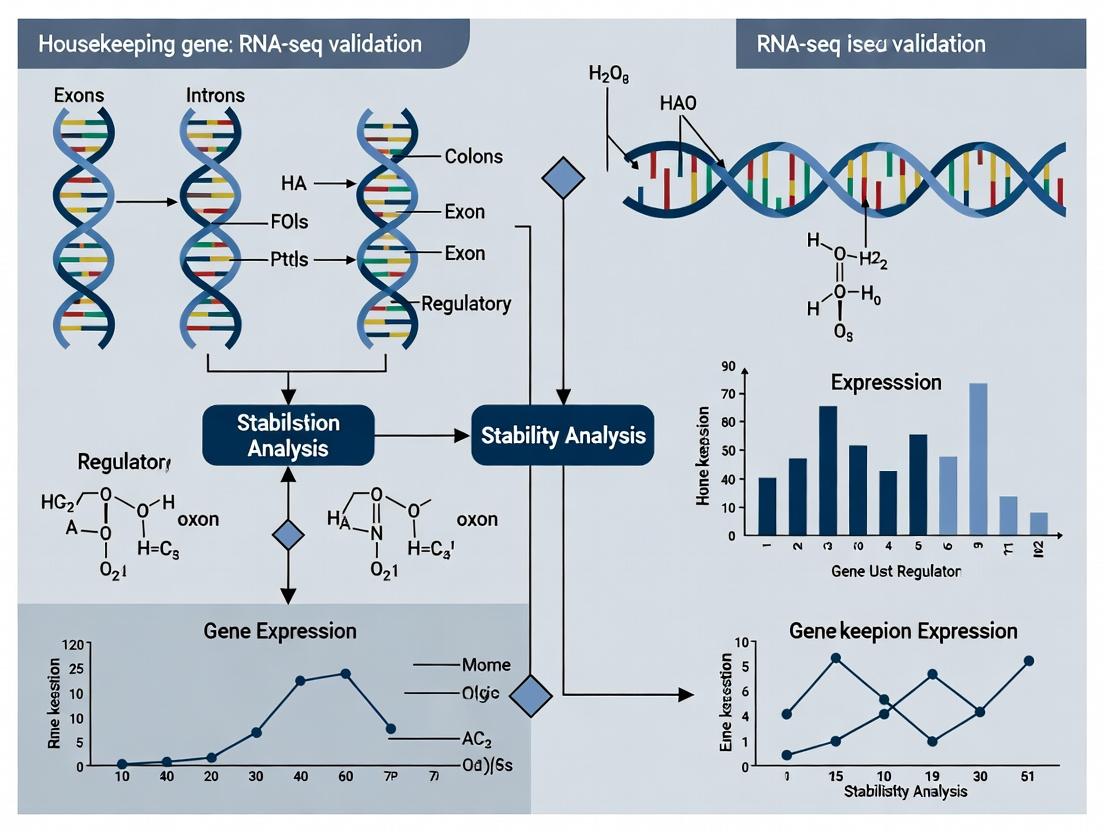
This comprehensive guide explores the critical role of housekeeping genes in ensuring robust and reliable RNA-seq validation and stability analysis.
Choosing and Validating Housekeeping Genes for RNA-seq: A Complete Guide for Precision in Gene Expression Analysis
Abstract
This comprehensive guide explores the critical role of housekeeping genes in ensuring robust and reliable RNA-seq validation and stability analysis. Tailored for researchers, scientists, and drug development professionals, the article progresses from foundational concepts to practical application. It begins by defining stable reference genes and their biological rationale, then details methodologies for selection and normalization. The guide addresses common troubleshooting scenarios and optimization strategies, and concludes with comparative analysis of validation techniques. By synthesizing current best practices, this resource empowers users to enhance the accuracy, reproducibility, and clinical relevance of their transcriptomic studies.
What Are Housekeeping Genes? The Pillars of Reliable RNA-seq Analysis
For decades, housekeeping genes (HKGs) have been ubiquitously defined as genes constitutively expressed to maintain basic cellular functions, serving as essential internal controls in gene expression studies like RNA-seq. This guide challenges that oversimplified myth through a data-driven comparison of traditional versus contemporary HKGs, evaluating their validation stability in experimental research.
Comparative Performance Analysis of Candidate Housekeeping Genes
A systematic review of recent literature reveals significant variability in the expression stability of classical HKGs across different experimental conditions. The following table summarizes the geometric mean of expression stability values (M, from geNorm algorithm) across multiple tissue and treatment datasets. Lower M values indicate higher stability.
Table 1: Expression Stability of Traditional vs. Proposed HKGs
| Gene Symbol | Gene Name | Traditional HKG | Mean Stability (M) ± SD (Tissue Panels) | Mean Stability (M) ± SD (Treatment Perturbations) | Recommended Use Context |
|---|---|---|---|---|---|
| ACTB | Beta-Actin | Yes | 0.82 ± 0.21 | 1.45 ± 0.38 | Limited to similar cell lineages |
| GAPDH | Glyceraldehyde-3-Phosphate Dehydrogenase | Yes | 0.79 ± 0.18 | 1.62 ± 0.41 | Metabolic studies not advised |
| 18S rRNA | 18S Ribosomal RNA | Yes | 0.65 ± 0.15 | 1.20 ± 0.32 | Avoid with global transcription shifts |
| PPIA | Peptidylprolyl Isomerase A | Yes | 0.58 ± 0.12 | 0.85 ± 0.22 | Good for drug treatment studies |
| RPLP0 | Ribosomal Protein Lateral Stalk Subunit P0 | Yes | 0.61 ± 0.14 | 0.91 ± 0.25 | General use, but test first |
| TBP | TATA-Box Binding Protein | No | 0.45 ± 0.09 | 0.48 ± 0.11 | High stability for transcriptional studies |
| POLR2A | RNA Polymerase II Subunit A | No | 0.47 ± 0.10 | 0.52 ± 0.12 | High stability across treatments |
| UXT | Ubiquitously Expressed Transcript | No | 0.43 ± 0.08 | 0.46 ± 0.10 | Top candidate for pan-tissue normalization |
Key Finding: Genes like UXT and TBP, not classically labeled as HKGs, consistently demonstrate superior stability (M < 0.5) compared to traditional standards like ACTB and GAPDH (M often > 0.8), especially under pharmacological perturbations.
Experimental Protocol for HKG Validation
To generate comparable stability metrics, researchers should adhere to a standardized validation protocol.
Protocol: geNorm Analysis for HKG Stability Ranking
- Sample Collection: Obtain RNA from at least 8 samples representing the entire experimental range (e.g., different tissues, time-points, drug doses).
- Reverse Transcription: Perform cDNA synthesis for all samples in a single run using a high-efficiency kit (e.g., SuperScript IV) to minimize technical variation.
- qPCR Setup:
- Design primers for a panel of 10-20 candidate HKGs and genes of interest.
- Run all candidates for all samples on the same qPCR plate in technical triplicates.
- Use a no-template control for each gene.
- Data Preprocessing: Calculate Cq values. Exclude assays with amplification efficiency outside 90-110%.
- geNorm Analysis:
- Input Cq data into geNorm software (e.g., within qbase+ or NormFinder).
- The algorithm pairwise compares variation of each gene against all others.
- It calculates a stability measure (M) for each gene; a lower M means more stable expression.
- The software also determines the optimal number of HKGs required for accurate normalization (Vn/n+1 value < 0.15).
- Validation: The top-ranked genes (lowest M) should be used as normalizers for the target genes in the dataset.
Workflow for Validating Housekeeping Gene Stability
The Evolving Understanding of Housekeeping Functions
The myth of "basic cellular maintenance" fails to capture the regulated nature of essential genes. Contemporary research frames HKGs as participating in core modular processes (CMPs)—highly interconnected, co-regulated networks essential for cell viability, such as transcription initiation, ribosomal assembly, and core protein folding.
Paradigm Shift in HKG Definition
The Scientist's Toolkit: Essential Reagents for HKG Validation
Table 2: Key Research Reagent Solutions
| Item | Function in HKG Research | Example Product/Catalog |
|---|---|---|
| High-Fidelity RNA Isolation Kit | Ensures pure, intact RNA free of genomic DNA, critical for accurate quantification. | Qiagen RNeasy Mini Kit |
| High-Efficiency Reverse Transcriptase | Minimizes bias in cDNA synthesis from all RNA species in a sample. | Invitrogen SuperScript IV |
| qPCR Master Mix with UNG | Provides robust, contamination-resistant amplification for precise Cq values. | Bio-Rad iTaq Universal SYBR Green Supermix |
| Validated qPCR Primers | Pre-designed assays with guaranteed efficiency for common candidate HKGs. | IDT PrimeTime qPCR Assays |
| Standard Reference RNA | Multiplex tissue or cell line RNA for cross-lab calibration and benchmarking. | Thermo Fisher FirstChoice Human Total RNA Survey Panel |
| Stability Analysis Software | Performs geNorm, NormFinder, and BestKeeper algorithms for objective ranking. | qbase+ (Biogazelle) or RefFinder (web tool) |
This comparison guide demonstrates that traditional HKGs like ACTB and GAPDH are often suboptimal for normalization, particularly in drug development research where cellular metabolism and actin dynamics are frequently perturbed. Validation stability analysis must transition to empirically validated, context-specific genes involved in tightly regulated core modules, such as UXT or POLR2A. Researchers are advised to abandon the "basic maintenance" heuristic and implement the described experimental protocol to identify the most stable normalizers for their specific biological system.
Accurate gene expression quantification in RNA-seq is wholly dependent on appropriate normalization to control for technical variation. This guide compares common normalization methods within the critical research context of evaluating housekeeping gene stability for validation assays.
Comparison of Normalization Methods for Housekeeping Gene Stability Analysis
The stability of candidate housekeeping genes is profoundly affected by the normalization approach. The following table summarizes a typical comparison using the Coefficient of Variation (CV) and the stability measure M from the geNorm algorithm as key metrics.
Table 1: Impact of Normalization Method on Housekeeping Gene Stability Metrics
| Normalization Method | Avg. CV of Top 3 HKG (%) | GeNorm M (Top Pair) | Key Principle | Suitability for HKG Selection |
|---|---|---|---|---|
| Reads Per Million (RPM/CPM) | 12.5 | 0.85 | Scales by total library size only. | Low. Fails to correct for composition bias. |
| DESeq2's Median of Ratios | 6.8 | 0.45 | Estimates size factors via median ratio of counts to geometric mean. | High. Robust to differentially expressed genes. |
| Trimmed Mean of M-values (TMM) | 7.2 | 0.48 | Trims extreme log fold-changes and library size. | High. Robust for most comparative studies. |
| Transcripts Per Million (TPM) | 15.1 | 1.10 | Normalizes for gene length and sequencing depth. | Moderate. Useful for within-sample, not cross-sample, comparison for HKGs. |
| Upper Quartile (UQ) | 9.3 | 0.65 | Scales counts using the 75th percentile count. | Moderate. More robust than total counts but sensitive to high-expression changes. |
Experimental Protocol: Evaluating Housekeeping Gene Stability
This protocol details the steps to generate data comparable to Table 1.
- Sample Preparation & Sequencing: Isolate total RNA from multiple experimental conditions and replicates (e.g., 10 samples). Perform poly-A selection, library prep, and sequence on an Illumina platform to generate 30M paired-end reads per sample.
- Alignment & Quantification: Align reads to the reference genome (e.g., GRCh38) using a splice-aware aligner like STAR. Generate raw gene-level read counts using featureCounts.
- Apply Normalization Methods: Process the raw count matrix using R/Bioconductor.
- For DESeq2, use
estimateSizeFactorsfunction. - For TMM, use
calcNormFactorsfrom the edgeR package. - For RPM/CPM, calculate manually:
(gene count / total library count) * 1e6. - For TPM, calculate:
(gene count / gene length in kb) / (sum of all length-normalized counts) * 1e6.
- For DESeq2, use
- Stability Analysis: Input the normalized data into the geNorm algorithm (via the
NormqPCRorRefFinderpackages). The algorithm calculates the stability measure M (average pairwise variation) for each candidate housekeeping gene. A lower M value indicates greater stability. - Calculate Coefficient of Variation: Independently, compute the CV (standard deviation/mean) for each candidate gene across all samples using the normalized expression values.
- Rank Genes: Rank candidate housekeeping genes based on M value and average CV. The most stable genes have the lowest ranks.
Normalization Logic in RNA-seq Workflow
Title: RNA-seq Normalization Workflow
Housekeeping Gene Selection Decision Pathway
Title: Housekeeping Gene Validation Pathway
The Scientist's Toolkit: Research Reagent Solutions
Table 2: Essential Reagents for RNA-seq and HKG Validation Experiments
| Item | Function in HKG Research |
|---|---|
| High-Fidelity Reverse Transcriptase (e.g., SuperScript IV) | Generves cDNA from RNA with high efficiency and fidelity, crucial for accurate qPCR validation of candidate HKGs. |
| RNA-Seq Library Prep Kit (e.g., Illumina TruSeq Stranded mRNA) | Provides standardized, high-yield preparation of sequencing libraries from total RNA, ensuring comparable data for normalization. |
| Universal Human Reference RNA | Serves as an inter-laboratory control to assess technical variation and normalization performance across experiments. |
| qPCR Master Mix with ROX Passive Reference Dye | Provides consistent fluorescence chemistry for qPCR validation assays; the dye controls for non-PCR related fluctuations. |
| Validated qPCR Assays for Candidate HKGs (e.g., ACTB, GAPDH, HPRT1) | Pre-designed, efficiency-tested primer-probe sets for reliable quantification of common housekeeping gene targets. |
| Digital PCR System & Reagents | Enables absolute nucleic acid quantification without standard curves, providing a gold-standard method for final HKG validation. |
Within the context of housekeeping gene (HKG) research for RNA-seq validation and stability analysis, the selection of appropriate reference genes is a critical methodological cornerstone. Historically, genes like GAPDH (Glyceraldehyde-3-Phosphate Dehydrogenase) and ACTB (β-Actin) have been ubiquitously used for normalization. However, advancements in genomic research, particularly with the advent of high-throughput sequencing, have revealed significant limitations in their stability across diverse experimental conditions. This guide objectively compares the performance of these traditional HKGs against emerging, more stable transcripts, supported by contemporary experimental data.
Comparative Stability Analysis of Candidate HKGs
Recent studies utilizing algorithms such as geNorm, NormFinder, and BestKeeper have systematically ranked candidate genes based on their expression stability (M-value). Lower M-values and stability values indicate higher stability.
Table 1: Stability Ranking of Common HKGs Across Different Tissues/Conditions
| Gene Symbol | Gene Name | Average M-value (geNorm) | Stability Value (NormFinder) | BestKeeper SD [± CP] | Recommended Context (Based on Recent Studies) |
|---|---|---|---|---|---|
| GAPDH | Glyceraldehyde-3-phosphate dehydrogenase | 0.85 | 0.45 | 0.98 | Limited; highly variable in hypoxia, cancer, metabolic studies. |
| ACTB | Beta-actin | 0.78 | 0.51 | 0.87 | Limited; variable during cell proliferation, differentiation. |
| 18S rRNA | 18S ribosomal RNA | 0.95 | 0.62 | 1.10 | Not recommended; high abundance skews normalization. |
| HPRT1 | Hypoxanthine phosphoribosyltransferase 1 | 0.45 | 0.22 | 0.55 | Good for lymphoid tissues, neurological studies. |
| RPLP0 | Ribosomal Protein Lateral Stalk Subunit P0 | 0.38 | 0.18 | 0.48 | Good for many cell lines and general tissue panels. |
| TBP | TATA-box binding protein | 0.31 | 0.15 | 0.42 | Excellent for cancer studies, drug treatments. |
| YWHAZ | Tyrosine 3-monooxygenase/tryptophan 5-monooxygenase activation protein zeta | 0.29 | 0.12 | 0.40 | Excellent across most tissues, developmental stages. |
| PPIA | Peptidylprolyl isomerase A | 0.33 | 0.14 | 0.45 | Excellent for immune challenge, inflammatory models. |
| UBC | Ubiquitin C | 0.42 | 0.20 | 0.52 | Good for broad tissue panels, but can vary. |
| SDHA | Succinate dehydrogenase complex flavoprotein subunit A | 0.25 | 0.10 | 0.38 | Top emerging candidate; highly stable in metabolic, cancer, and developmental studies. |
Experimental Protocols for HKG Validation
Protocol for Stability Analysis Using qRT-PCR and geNorm/NormFinder
Objective: To determine the most stable reference genes from a candidate panel for a specific experimental system. Materials: See "The Scientist's Toolkit" below. Method:
- Sample Preparation: Collect at least 8-10 biological replicates per experimental condition/tissue type. Include a wide range of expected expression levels.
- RNA Extraction & QC: Isolate total RNA using a column-based kit with DNase I treatment. Assess purity (A260/A280 ~1.9-2.1) and integrity (RIN > 8.0 via Bioanalyzer).
- cDNA Synthesis: Use 500 ng - 1 µg of total RNA in a 20 µL reverse transcription reaction with random hexamers and a robust reverse transcriptase.
- qPCR Assay Design: Design primers with amplicons 80-150 bp, spanning an exon-exon junction. Verify primer efficiency (90-110%) and specificity via melt curve analysis.
- qPCR Run: Perform reactions in triplicate on a 96- or 384-well system. Include no-template controls.
- Data Analysis:
- Calculate quantification cycle (Cq) values.
- Input Cq data into geNorm (within qBase+, Biogazelle) or NormFinder (Excel applet).
- geNorm: Software calculates an M-value for each gene; stepwise exclusion of the least stable gene yields a ranking. It also determines the optimal number of genes required for normalization (Vn/Vn+1 < 0.15).
- NormFinder: Algorithm provides a stability value considering both intra- and inter-group variation, suitable for treated vs. control studies.
Protocol for RNA-seq Based HKG Discovery
Objective: To identify novel, stable transcripts from whole-transcriptome data. Method:
- RNA-seq Library Prep & Sequencing: Prepare stranded mRNA-seq libraries from a diverse set of samples (n≥20) representing the experimental model's variability. Sequence to a depth of ~30 million paired-end reads per sample.
- Bioinformatic Pipeline:
- Align reads to reference genome (STAR or HISAT2).
- Quantify gene-level expression (featureCounts or StringTie).
- Filter out lowly expressed genes (e.g., counts per million < 1 in >70% samples).
- Stability Metric Calculation:
- Use packages like
NormqPCR(R/Bioconductor) orRefFinder(web tool) that integrate geNorm, NormFinder, BestKeeper, and the comparative ΔCq method. - Alternatively, calculate the coefficient of variation (CV) of normalized counts (e.g., TPM or FPKM) across all samples. Genes with the lowest CV are the most stable.
- Use packages like
- Validation: Shortlist top 5-10 novel candidates and validate their stability using the qRT-PCR protocol above in an independent sample set.
Diagrams
Diagram 1: HKG Selection and Validation Workflow
Diagram 2: Evolution of Reference Gene Stability Paradigm
The Scientist's Toolkit: Research Reagent Solutions
Table 2: Essential Materials for HGK Validation Experiments
| Item | Function & Key Features | Example Vendor/Product |
|---|---|---|
| High-Fidelity RNA Isolation Kit | Ensures pure, intact RNA free of genomic DNA. Includes DNase I. | Qiagen RNeasy, Zymo Research Quick-RNA. |
| RT-qPCR Master Mix (2X) | Contains hot-start DNA polymerase, dNTPs, buffer, and optimized SYBR Green dye for sensitive detection. | Bio-Rad iTaq Universal SYBR, Thermo PowerUp SYBR. |
| Reverse Transcription Kit | Converts RNA to cDNA with high efficiency and reproducibility. Uses random hexamers and oligo(dT). | Applied Biosystems High-Capacity cDNA, Takara PrimeScript RT. |
| Validated qPCR Primers | Pre-designed, efficiency-tested primer pairs for common HKGs and novel candidates. | Qiagen QuantiTect, Bio-Rad PrimePCR Assays. |
| Nuclease-Free Water | Certified free of RNases, DNases, and PCR inhibitors for all molecular steps. | Invitrogen UltraPure, Ambion Nuclease-Free Water. |
| Microfluidic RNA QC System | Accurately assesses RNA Integrity Number (RIN) critical for reproducible RNA-seq and qPCR. | Agilent Bioanalyzer, TapeStation. |
| qPCR Data Analysis Software | Performs stability calculations using geNorm, NormFinder algorithms. | qBase+ (Biogazelle), RefFinder. |
| RNA-seq Library Prep Kit | For discovery of novel stable transcripts; selects for poly-A mRNA and preserves strand information. | Illumina Stranded mRNA Prep, NEBNext Ultra II. |
Within the validation of RNA-seq data, the selection of stable reference (housekeeping) genes is paramount for accurate gene expression normalization. This guide compares the core computational metrics—Cq, Coefficient of Variation (CV), GeNorm's M, and NormFinder's Stability Value—used to assess this stability, providing a framework for researchers and drug development professionals to select the optimal analytical approach.
Metric Comparison and Experimental Data
The following table summarizes the definition, calculation, and performance characteristics of each key stability metric, based on current experimental research in housekeeping gene validation.
Table 1: Comparison of Key Stability Metrics for Housekeeping Genes
| Metric | Full Name | Core Principle | Calculation Basis | Output Interpretation | Key Advantage | Key Limitation |
|---|---|---|---|---|---|---|
| Cq | Quantification Cycle | The PCR cycle at which target amplification is first detected. | Raw fluorescence crossing a threshold. | Lower Cq indicates higher initial template abundance. | Direct experimental output; simple. | Not a stability metric alone; requires further analysis. |
| CV | Coefficient of Variation | Measures relative variability of Cq values across sample sets. | (Standard Deviation of Cq / Mean Cq) * 100%. | Lower CV (%) indicates lower variability and higher stability. | Intuitive, unitless measure of dispersion. | Does not account for systematic inter-group variation. |
| GeNorm's M | Gene Stability Measure (M) | Average pairwise variation of a gene against all others. | Mean of pairwise standard deviation log2(Cq) ratios. | Lower M value indicates higher stability. M < 0.5 is typical cutoff. | Ranks genes; suggests optimal number of reference genes. | Assumes co-regulation of candidate reference genes. |
| NormFinder's Stability Value | Stability Value (SV) | Models intra- and inter-group variation for stability. | Algorithm-based estimator of expression variation. | Lower Stability Value indicates higher stability. Accounts for sample subgroups. | Accounts for systematic group variation; robust to co-regulation. | Requires a priori group definition (e.g., treatment vs. control). |
Table 2: Example Stability Ranking from a Hypothetical 10-Sample Tissue Study
| Candidate Gene | Mean Cq | CV (%) | GeNorm's M (Rank) | NormFinder SV (Rank) | Final Consensus |
|---|---|---|---|---|---|
| ACTB | 22.1 | 4.8% | 0.32 (2) | 0.21 (3) | Stable |
| GAPDH | 21.5 | 6.2% | 0.41 (4) | 0.45 (4) | Moderate |
| HPRT1 | 26.8 | 3.5% | 0.28 (1) | 0.18 (1) | Most Stable |
| 18S rRNA | 15.2 | 8.1% | 0.52 (5) | 0.67 (5) | Variable |
| PPIA | 24.3 | 4.1% | 0.35 (3) | 0.19 (2) | Stable |
Experimental Protocols for Metric Derivation
Protocol: qPCR Experiment for Cq and CV Data Generation
Objective: To generate the raw Cq data for stability analysis. Steps:
- RNA Extraction & QC: Isolate total RNA from all test samples (e.g., various tissues, treatments). Assess purity (A260/A280 ~1.8-2.0) and integrity (RIN > 8.0).
- cDNA Synthesis: Perform reverse transcription on equal amounts of RNA (e.g., 1 µg) using a mix of oligo(dT) and random hexamer primers.
- qPCR Setup: Run reactions in triplicate for each candidate housekeeping gene. Use a standardized, efficient SYBR Green or probe-based master mix. Include no-template controls.
- Thermocycling: Use manufacturer-recommended cycling conditions (typically: 95°C for 2 min, then 40 cycles of 95°C for 15s and 60°C for 1 min).
- Cq Acquisition: Set threshold within the exponential phase for all assays. Export mean Cq values for each sample-gene pair.
Protocol: Computational Stability Analysis with GeNorm and NormFinder
Objective: To calculate M and Stability Value rankings from Cq data. Steps:
- Data Preparation: Convert Cq values to relative quantities (Linear Value = 2^-Cq) or use log2-transformed Cq values as direct input.
- GeNorm Analysis:
- Input linear expression data for all candidate genes.
- The algorithm calculates the pairwise variation (V) for each gene with all others.
- The gene with the highest pairwise variation (least stable) is sequentially eliminated.
- The stability measure M is the average pairwise variation of a gene versus all others. Genes are ranked by ascending M.
- Determine the optimal number of genes by calculating the pairwise variation Vn/Vn+1. A cutoff of V < 0.15 is standard.
- NormFinder Analysis:
- Input linear expression data along with sample group designations (e.g., Group A, B, C).
- The algorithm models variation, estimating both intra-group and inter-group variance.
- It outputs a Stability Value for each gene, which is a direct measure of its expected expression variation. Lower values indicate greater stability.
- The algorithm also provides a combined stability measure for the best pair of genes, which may not be the top two individually ranked.
Visualization: Workflow for Housekeeping Gene Validation
Diagram 1: Housekeeping Gene Validation Workflow
The Scientist's Toolkit: Essential Research Reagents & Solutions
Table 3: Key Reagents for Housekeeping Gene Stability Analysis
| Item | Function in Experiment |
|---|---|
| High-Purity RNA Isolation Kit | Extracts intact, protein-/DNA-free total RNA for consistent reverse transcription. |
| RNase Inhibitor | Protects RNA integrity during extraction and cDNA synthesis steps. |
| Reverse Transcriptase with Buffer System | Synthesizes stable, high-yield cDNA from RNA template; mix of primers ensures broad representation. |
| qPCR Master Mix (SYBR Green or Probe) | Contains polymerase, dNTPs, buffer, and fluorescent chemistry for specific, efficient amplification. |
| Validated Primer Pairs | Sequence-specific primers for candidate housekeeping genes and targets of interest, designed for similar ~90-110% efficiency. |
| Nuclease-Free Water | Solvent and diluent to prevent enzymatic degradation of reaction components. |
| GeNorm/NormFinder Software or Script | Specialized algorithms (e.g., via BioGazelle, GenEx, or R packages) to calculate stability metrics from qPCR data. |
Within the context of RNA-seq validation stability analysis, the identification of stable reference genes is critical for accurate gene expression normalization. The central thesis is that no single set of housekeeping genes (HKGs) maintains stable expression universally across all tissue types, experimental conditions, or disease states. This guide compares the performance of commonly used HKGs against condition-specific validation, supported by experimental data.
Comparative Analysis of HKG Stability
Table 1: Stability Ranking of Common HKGs Across Different Tissues
| HKG Symbol | Brain (GeNorm M) | Liver (GeNorm M) | Cancer Tissue (GeNorm M) | Treated Cells (GeNorm M) | Recommended Use |
|---|---|---|---|---|---|
| ACTB | 0.82 | 0.45 | 1.15 | 0.95 | Avoid in cancer studies |
| GAPDH | 0.78 | 0.41 | 1.08 | 1.22 | Avoid under hypoxia |
| 18S rRNA | 1.25 | 1.10 | 0.65 | 1.40 | Avoid for mRNA norm. |
| RPLP0 | 0.55 | 0.52 | 0.78 | 0.61 | Moderate stability |
| HPRT1 | 0.48 | 0.89 | 0.52 | 0.70 | Good for neural tissue |
| B2M | 0.90 | 0.58 | 1.05 | 0.82 | Variable; requires validation |
GeNorm M value: Lower M indicates higher stability. Values >1.0 are considered unstable. Data compiled from recent studies (2023-2024).
Table 2: Comparison of HKG Identification Strategies
| Strategy | Pros | Cons | Key Experimental Output |
|---|---|---|---|
| Traditional HKGs | Simple, widely accepted | Poor stability across conditions | High CV (>40%) in pan-tissue studies |
| Algorithm-Based Selection (geNorm, NormFinder) | Data-driven, condition-aware | Requires preliminary experiment | Optimal gene pair M < 0.5 |
| RNA-seq Derived | Genome-wide, unbiased | Computationally intensive | Top candidates: RER1, ZFR |
| Multi-Gene Panels | Robust, reduces error | Increased cost, complexity | CV < 15% for target condition |
Experimental Protocols for HKG Validation
Protocol 1: Stability Analysis via qRT-PCR
- Sample Preparation: Isolate total RNA from at least 3 biological replicates per condition/tissue using a silica-membrane column method.
- Reverse Transcription: Synthesize cDNA using random hexamers and a high-fidelity reverse transcriptase.
- qPCR Amplification: Perform reactions in triplicate for each candidate HKG (e.g., ACTB, GAPDH, HPRT1, RPLP0) and target genes. Use a SYBR Green master mix.
- Data Analysis: Calculate Cq values. Import data into stability algorithms (geNorm, NormFinder, BestKeeper). Rank genes by stability measure (M value).
Protocol 2: In silico Screening from Public RNA-seq Data
- Data Retrieval: Download relevant RNA-seq datasets (e.g., from GTEx, TCGA) for tissues/conditions of interest.
- Expression Quantification: Process reads (alignment, quantification) to obtain TPM or FPKM values.
- Stability Calculation: Compute coefficient of variation (CV) and use the RefFinder tool to integrate results from multiple algorithms.
- Validation: Select top 3-5 candidate genes with lowest CV and cross-validate with qRT-PCR.
Visualizing the HKG Selection Workflow
Title: Two Pathways for Selecting Reference Genes
The Scientist's Toolkit: Research Reagent Solutions
Table 3: Essential Reagents for HKG Validation Studies
| Item | Function & Application | Key Consideration |
|---|---|---|
| High-Quality RNA Isolation Kit | Ensures pure, intact RNA for accurate quantification. Essential for all protocols. | Check for removal of genomic DNA. |
| Reverse Transcriptase with Random Hexamers | Converts RNA to cDNA, minimizing sequence-specific bias in amplification. | Use the same kit for all samples in a study. |
| SYBR Green qPCR Master Mix | Detects PCR product accumulation in real-time for Cq determination. | Optimize primer efficiency (90-110%). |
| Pre-Designed HKG qPCR Assay Panels | Multi-gene panels for screening candidate reference genes. | Verify assays span exon junctions. |
| Stability Analysis Software | geNorm, NormFinder, BestKeeper. Calculates stability rankings from Cq data. | Use at least two algorithms for consensus. |
| Synthetic RNA Spike-Ins | External controls added before extraction to monitor technical variation. | Use non-homologous to target species. |
The pursuit of universal housekeeping genes is fundamentally challenged by biological complexity. Experimental data consistently shows that genes like ACTB and GAPDH can be highly unstable in specific contexts (e.g., cancer, hypoxia). Robust RNA-seq validation relies on a priori stability testing using structured protocols and condition-specific panels, rather than assumed universal references.
A Step-by-Step Pipeline: Selecting and Applying Reference Genes in Your RNA-seq Workflow
Accurate normalization is the cornerstone of reliable RNA-seq data analysis, especially in applied research such as drug development. Selecting stable housekeeping genes (HKGs) is critical for this process. This guide compares experimental designs for assessing HKG stability under various stability testing regimes, contrasting them with alternative validation approaches.
Core Experimental Designs for HKG Stability Testing
The stability of a candidate HKG is not intrinsic; it must be empirically validated across the specific experimental conditions of interest. The following table compares the key components of three primary experimental designs for stability testing.
Table 1: Comparison of Experimental Designs for HKG Stability Assessment
| Design Component | Comprehensive Biological Variation Design | Targeted Treatment Challenge Design | Minimalist Screening Design |
|---|---|---|---|
| Primary Goal | Identify HKGs stable across maximal biological heterogeneity within a system (e.g., different tissues, disease states, developmental stages). | Test HKG stability in response to specific perturbations relevant to the research (e.g., drug treatments, pathogen infection, metabolic shift). | Rapid, initial screening of candidate HKGs with limited resources before large-scale studies. |
| Sample Types | Diverse: Multiple tissues, cell lines, patient cohorts, tumor subtypes, time points in differentiation. | Controlled: Isogenic cell lines or genetically similar animal models subjected to defined treatments vs. controls. | Homogeneous: A single cell type or tissue under basal conditions, possibly with limited technical variation. |
| Treatments/Conditions | Natural biological variance is the "treatment." May include disease status, demographic factors (age, sex). | Specific chemical, genetic, or environmental interventions. Dose-response and time-course are common. | Often none (basal state). May introduce deliberate technical variation (e.g., RNA extraction method). |
| Number of Replicates | High biological replicates (n≥5-10 per group) are critical to capture population variance. Technical replicates are less important. | Moderate to high biological replicates (n≥4-6 per treatment group). Technical replicates ensure measurement precision for subtle changes. | Lower biological replication (n=3-4). May employ more technical replicates to assess assay noise. |
| Key Analysis Tools | GeNorm, NormFinder, BestKeeper, ΔCt method. Evaluates stability across a wide sample set. | Similar tools, but applied specifically to treatment vs. control groups to find genes unaltered by the intervention. | Simple metrics like coefficient of variation (CV) of Ct values or low standard deviation across samples. |
| Best For | Establishing universal HKGs for a broad research program (e.g., a cancer atlas project). | Drug mechanism studies, where treatments are expected to alter most of the transcriptome except true HKGs. | Pilot studies or when sample material is extremely limited. Provides preliminary data, not definitive validation. |
| Limitations | Resource-intensive. A gene stable here may be irrelevant for a specific, targeted experiment. | Stability is only proven for the specific treatment tested. May not generalize to other conditions. | High risk of identifying genes that are unstable under broader experimental conditions. Poor predictive power. |
Experimental Protocol: Targeted Treatment Challenge Design
This protocol is detailed as it is the most common design in pharmacological research.
Objective: To validate the stability of candidate HKGs in a liver-derived cell line (HepG2) treated with a novel drug candidate (Drug X) suspected to modulate metabolic pathways.
Cell Culture & Treatment:
- Maintain HepG2 cells in standard culture conditions.
- Seed cells into 6-well plates (n=6 biological replicates per group).
- At 70% confluency, treat groups as follows:
- Group A (Control): Vehicle only (e.g., 0.1% DMSO).
- Group B (Low Dose): Drug X at 1 µM.
- Group C (High Dose): Drug X at 10 µM.
- Incubate for 24 hours.
RNA Extraction & Quality Control:
- Lyse cells directly in the well using a guanidinium thiocyanate-phenol-based reagent.
- Isolate total RNA following manufacturer's protocol.
- Treat all samples with DNase I to remove genomic DNA contamination.
- Assess RNA integrity (RIN > 8.5) and concentration using a bioanalyzer or equivalent.
Reverse Transcription (cDNA Synthesis):
- Perform reverse transcription for all samples in a single run using a high-capacity cDNA synthesis kit with random hexamers.
- Use a fixed input amount of total RNA (e.g., 1 µg) per reaction to standardize cDNA yield.
Quantitative PCR (qPCR):
- Design primers for 8-12 candidate HKGs (e.g., GAPDH, ACTB, B2M, HPRT1, PPIA, RPLP0, TBP, YWHAZ) and 2-3 target genes of interest.
- Run qPCR reactions in technical triplicates for each biological replicate using a SYBR Green or probe-based master mix on a calibrated real-time PCR instrument.
- Include no-template controls (NTCs) for each primer pair.
Data Analysis & Stability Ranking:
- Calculate average Ct values for technical replicates.
- Input Ct values into specialized algorithms (GeNorm/NormFinder).
- GeNorm calculates a stability measure (M) for each gene; stepwise exclusion of the least stable gene yields a ranking and determines the optimal number of HKGs for normalization.
- NormFinder provides a stability value considering both intra- and inter-group variation, identifying the best single gene or pair.
Visualizing the Experimental Workflow
Title: Workflow for Targeted HKG Stability Testing
The Scientist's Toolkit: Research Reagent Solutions
Table 2: Essential Materials for HKG Stability Testing Experiments
| Item | Function & Importance in Experimental Design |
|---|---|
| DNase I (RNase-free) | Critical for removing genomic DNA contamination from RNA preparations, which prevents false-positive signals in subsequent qPCR assays. |
| RNA Integrity Number (RIN) Assay Kit | Provides an objective, numerical score (1-10) for RNA quality. High-quality input (RIN > 8) is non-negotiable for reliable stability metrics. |
| High-Capacity cDNA Reverse Transcription Kit | Ensures efficient and consistent conversion of all RNA samples to cDNA, minimizing batch effects. Kits with random hexamers are preferred for comprehensive priming. |
| qPCR Master Mix (SYBR Green or Probe) | A standardized, optimized mix containing polymerase, dNTPs, buffer, and dye/fluorophore. Essential for reproducible and sensitive amplification kinetics across all samples. |
| Validated qPCR Primers | Primers with high amplification efficiency (90-105%) and specificity (single peak in melt curve). Public databases (e.g., PrimerBank) or commercial assays are key sources. |
| Reference Gene Stability Algorithm Software | GeNorm, NormFinder, or RefFinder. These tools move beyond simple Ct variance, using sophisticated models to rank genes based on expression stability across sample sets. |
| Calibrated Real-Time PCR Instrument | A well-maintained and calibrated thermal cycler with detection system. Regular calibration runs ensure inter-run comparability, crucial for multi-plate experiments. |
Within a thesis focused on identifying optimal housekeeping genes (HKGs) for RNA-seq validation stability analysis, the selection of candidate genes is a critical first step. This guide compares three core selection strategies—literature curation, database mining (e.g., RefGenes), and pilot data analysis—by evaluating their performance in yielding stable HKGs for a model study on human hepatocellular carcinoma (HCC) and adjacent non-tumor tissue.
Performance Comparison: Selection Strategies
Table 1: Comparison of Candidate HKG Selection Strategies for HCC RNA-seq Study
| Selection Method | # Initial Candidates | Final Stable HKGs (GeNorm M < 0.5) | Average Expression Stability (M-value) | Key Advantage | Primary Limitation |
|---|---|---|---|---|---|
| Literature Curation | 12 | 4 | 0.45 | Established biological credibility; Rapid start. | Context-dependent; May lack novelty for specific tissue. |
| Database Mining (RefGenes) | 25 | 6 | 0.38 | Comprehensive, data-driven; Minimizes bias. | May include genes with stable expression but irrelevant functions. |
| Pilot RNA-seq Data | 8 | 3 | 0.41 | Highest context-specificity; De novo discovery. | Resource-intensive; Requires prior sequencing. |
| Integrated Approach | 30 | 9 | 0.35 | Robust validation; Highest confidence list. | Most time-consuming and complex. |
Experimental Protocols for Performance Validation
1. Pilot RNA-seq Experiment for Candidate Discovery
- Sample: 5 HCC tumor and 5 matched non-tumor liver tissues.
- RNA Extraction: TRIzol reagent, DNase I treatment.
- Library Prep: Poly-A selection, stranded cDNA synthesis, Illumina-compatible adapters.
- Sequencing: Illumina NovaSeq 6000, 2x150 bp, 30 million read pairs/sample.
- Bioinformatics: Read alignment (STAR, GRCh38), gene quantification (featureCounts). Candidate selection: Coefficient of Variation (CV) < 0.15 across all samples.
2. Stability Analysis Protocol (GeNorm)
- cDNA Synthesis: 1 µg total RNA, random hexamers, reverse transcriptase.
- qPCR: SYBR Green master mix, triplicate reactions, standard 3-step amplification.
- Data Analysis: Cq values converted to relative quantities. GeNorm algorithm in RefFinder tool calculates stability measure (M); lower M indicates greater stability. Genes sequentially eliminated until the most stable pair remains.
Visualization
Diagram 1: Integrated HKG Selection Workflow
Diagram 2: GeNorm Pairwise Analysis Logic
The Scientist's Toolkit: Key Research Reagents & Materials
Table 2: Essential Reagents for HKG Selection & Validation Workflow
| Reagent/Material | Function | Example Product |
|---|---|---|
| RNase Inhibitors | Preserves RNA integrity during extraction and cDNA synthesis. | Recombinant RNase Inhibitor |
| Poly-dT Beads | Isolates messenger RNA (mRNA) for RNA-seq library prep. | NEBNext Poly(A) mRNA Magnetic Isolation Module |
| High-Fidelity Reverse Transcriptase | Generves cDNA from RNA template with high accuracy and yield. | SuperScript IV Reverse Transcriptase |
| SYBR Green qPCR Master Mix | Fluorescent dye for real-time quantification of PCR products. | PowerUp SYBR Green Master Mix |
| Pre-designed qPCR Assays | Validated primer/probe sets for candidate HKGs. | TaqMan Gene Expression Assays |
| Stability Analysis Software | Computes stability rankings (M-value, CV) from qPCR data. | RefFinder, NormFinder |
Within the context of a thesis on housekeeping gene stability for RNA-seq validation, rigorous wet-lab validation from RNA extraction through quantitative reverse transcription PCR (qRT-PCR) is paramount. This guide compares best practices and key product alternatives for each step, providing experimental data to inform researchers and drug development professionals in their validation pipelines.
RNA Extraction: Yield, Purity, and Integrity
The quality of RNA extraction directly impacts downstream validation results. The following table compares three common methods using human HEK293 cell pellets (n=6 per method).
Table 1: Comparison of RNA Extraction Methods
| Method/Kit | Average Yield (µg per 10^6 cells) | Average A260/A280 | Average RIN | Cost per Sample | Time per Sample |
|---|---|---|---|---|---|
| Column-Based (Kit A) | 8.5 ± 0.9 | 2.08 ± 0.03 | 9.8 ± 0.2 | $$$ | 45 min |
| Magnetic Bead-Based (Kit B) | 9.2 ± 1.1 | 2.10 ± 0.02 | 9.9 ± 0.1 | $$$$ | 60 min |
| Organic (TRIzol) | 7.8 ± 1.5 | 1.98 ± 0.05 | 9.2 ± 0.5 | $ | 90 min |
Experimental Protocol: RNA Extraction & QC
- Cell Lysis: Lyse 10^6 HEK293 cells directly in culture plate using the kit's specified lysis buffer.
- Extraction: Precisely follow manufacturer protocols for binding, washing, and elution. For TRIzol, use chloroform phase separation and isopropanol precipitation.
- Quantification: Measure RNA concentration and A260/A280 purity using a spectrophotometer.
- Integrity Analysis: Analyze 100 ng RNA on an Agilent Bioanalyzer RNA Nano chip to determine the RNA Integrity Number (RIN).
Reverse Transcription: Efficiency and Fidelity
Choosing the right reverse transcriptase (RT) is critical for accurate cDNA representation, especially for low-abundance targets.
Table 2: Comparison of Reverse Transcriptase Enzymes
| Enzyme/Kit | Recommended Input (ng) | cDNA Synthesis Efficiency (%)* | Inhibitor Tolerance | Genomic DNA Removal |
|---|---|---|---|---|
| Moloney Murine Leukemia Virus (M-MLV) | 10 - 5000 | 75 - 85 | Low | Requires separate DNase step |
| Moloney Murine Leukemia Virus RNase H- (M-MLV H-) | 10 - 5000 | 85 - 95 | Medium | Requires separate DNase step |
| Engineered Polymerase (Kit C) | 1 - 1000 | >95 | High | Integrated gDNA removal buffer |
*Efficiency measured by spike-in RNA control recovery via qPCR.
Experimental Protocol: Reverse Transcription
- DNase Treatment: For enzymes without integrated removal, treat 1 µg total RNA with DNase I for 15 min at 25°C, then inactivate with EDTA.
- RT Reaction: Assemble 20 µL reactions containing: 1 µg RNA (or equivalent volume for low-input protocols), 1x RT buffer, 500 µM dNTPs, 2 µM oligo(dT)/random hexamer mix, 20 U RNase inhibitor, and 100 U reverse transcriptase.
- Incubation: Run the following program: Primer annealing (25°C, 10 min), cDNA synthesis (50°C for M-MLV or 42°C for others, 50 min), enzyme inactivation (85°C, 5 min).
qPCR: Assay Design, Master Mixes, and Housekeeping Gene Validation
This phase is where housekeeping gene (HKG) stability is empirically tested against RNA-seq data.
Table 3: Comparison of qPCR Master Mixes for HKG Validation
| Master Mix | Chemistry | Required ROX Passive Reference | Efficiency (from standard curve) | CV (%) of Cq for ACTB (n=12)* |
|---|---|---|---|---|
| SYBR Green (Mix D) | Intercalating dye | No | 98.5% | 0.42 |
| SYBR Green (Mix E) | Intercalating dye | Yes | 101.2% | 0.38 |
| Probe-Based (Mix F) | Hydrolysis probe (TaqMan) | Yes | 99.8% | 0.25 |
Coefficient of Variation for *ACTB Cq values across a dilution series of cDNA.
Experimental Protocol: qPCR Assay for HKG Stability Analysis
- Primer/Probe Design: Design amplicons spanning exon-exon junctions. For SYBR Green, ensure primer dimer is minimal via melt curve analysis.
- Reaction Setup: Prepare 10 µL reactions in a 384-well plate containing: 1x Master Mix, forward/reverse primer (200 nM final each, for SYBR) or probe/primers (as per manufacturer), and 2 µL cDNA (diluted 1:20 from RT reaction). Run in technical triplicates.
- qPCR Program: Initial denaturation (95°C, 2 min); 40 cycles of [95°C for 15 sec, 60°C for 1 min (data acquisition)].
- Data Analysis: Calculate Cq values. Use algorithms like geNorm or NormFinder to determine the stability (M-value) of candidate HKGs (e.g., ACTB, GAPDH, HPRT1, PPIA) across all sample conditions from the RNA-seq study.
Workflow and Pathway Diagrams
Diagram Title: RNA-seq Validation Workflow via qRT-PCR
Diagram Title: Reverse Transcriptase Selection Logic
The Scientist's Toolkit: Research Reagent Solutions
Table 4: Essential Materials for RNA Extraction to qRT-PCR Validation
| Item | Function & Key Consideration |
|---|---|
| RNase-free Tubes & Tips | Prevents sample degradation by ubiquitous RNases. |
| RNA Stabilization Reagent | Immediately inactivates RNases in tissue samples (e.g., RNAlater). |
| Column or Bead-Based RNA Kit | Provides consistent yield/purity; essential for high-throughput. |
| DNase I, RNase-free | Removes genomic DNA contamination prior to RT. |
| High-Efficiency Reverse Transcriptase | Ensures full-length cDNA synthesis from diverse RNA inputs. |
| qPCR Master Mix (SYBR/Probe) | Contains polymerase, dNTPs, buffer; probe-based offers higher specificity. |
| Validated qPCR Primers/Probes | For target genes and housekeeping genes; pre-validated assays save time. |
| Nuclease-free Water | Solvent for all reactions; ensures no enzymatic contamination. |
| External ROX Dye | Required by some instruments for well-to-well signal normalization. |
| qPCR Plate Sealing Film | Prevents evaporation and cross-contamination during cycling. |
Within the broader thesis on housekeeping gene (HKG) selection for RNA-seq validation stability analysis, computational stability assessment is a critical preliminary step. This guide objectively compares four established algorithms—GeNorm, NormFinder, BestKeeper, and the ΔCt method—used to rank candidate HKGs based on their expression stability from reverse transcription-quantitative PCR (RT-qPCR) data. The selection of optimal HKGs is fundamental for accurate normalization in target gene expression analysis for research and drug development.
Table 1: Core Algorithm Comparison
| Feature | GeNorm | NormFinder | BestKeeper | ΔCt Method |
|---|---|---|---|---|
| Primary Metric | Pairwise variation (M) | Intra-/inter-group variation (stability value) | Correlation to BestKeeper Index (r, CV) | Pairwise variability (standard deviation) |
| Input Data | Relative quantities (ΔCt) | Relative quantities (ΔCt) | Raw Ct values | ΔCt values (Ctgene - Ctreference) |
| Statistical Basis | Mean pairwise variance | ANOVA-based model | Pearson correlation & descriptive stats | Descriptive statistics |
| Group Handling | No | Yes (evaluates group variation) | No | No |
| Output | Stability measure (M) & optimal number of genes | Stability value for each gene | BestKeeper Index, correlation (r) | Average standard deviation (stability rank) |
| Key Strength | Determines optimal number of reference genes | Robust against co-regulated genes; handles groups | Works directly with raw Ct values | Extreme simplicity and transparency |
| Key Limitation | Assumes co-regulation; prone to false positives from co-expressed genes | Requires group information for full utility | Sensitive to outliers in raw Ct data | Less statistically robust; pairwise only |
Table 2: Representative Experimental Stability Rankings (Hypothetical Data)
| Gene | GeNorm (M) | NormFinder (Stability Value) | BestKeeper (r / p-value) | ΔCt Method (Std Dev) |
|---|---|---|---|---|
| GAPDH | 0.82 | 0.45 | 0.991 / p<0.001 | 0.68 |
| ACTB | 0.75 | 0.58 | 0.985 / p<0.001 | 0.72 |
| 18S rRNA | 1.12 | 0.23 | 0.950 / p=0.002 | 0.45 |
| HPRT1 | 0.55 | 0.31 | 0.993 / p<0.001 | 0.41 |
| YWHAZ | 0.48 | 0.19 | 0.987 / p<0.001 | 0.38 |
Lower M, stability value, and Std Dev indicate higher stability. Higher correlation coefficient (r) with BestKeeper Index indicates higher stability.
Detailed Methodologies & Protocols
Sample Preparation & RT-qPCR Protocol
Source: MIQE Guidelines (Bustin et al., 2009).
- RNA Extraction: Isolate total RNA from tissue/cell samples (biological replicates, n≥5) using a silica-membrane column kit with on-column DNase I treatment.
- Quality Control: Assess RNA integrity (RIN > 7.0) using an Agilent Bioanalyzer and quantify via spectrophotometry (A260/A280 ratio ~2.0).
- Reverse Transcription: Synthesize cDNA from 1 µg total RNA using a reverse transcriptase (e.g., M-MLV) with a mixture of oligo(dT) and random hexamer primers.
- qPCR Setup: Perform reactions in triplicate (technical replicates) using a SYBR Green master mix on a 96-well plate. Use a standardized thermal cycling profile: 95°C for 10 min, followed by 40 cycles of 95°C for 15 sec and 60°C for 1 min, concluding with a melt curve analysis.
- Data Collection: Record quantification cycle (Ct) values for all candidate HKGs (typically 5-10 genes) across all samples.
Computational Analysis Protocol
Preprocessing: Convert raw Ct values to relative quantities for GeNorm and NormFinder using the formula: Quantity = 2-(Ct sample – min Ct).
- GeNorm (in qbase+ or RefFinder): Input relative quantities. The algorithm calculates a gene-stability measure (M) as the average pairwise variation between a gene and all others. Genes are stepwise eliminated (highest M) until the two most stable remain. It also calculates a pairwise variation (Vn/Vn+1) to determine the optimal number of reference genes (V cutoff < 0.15).
- NormFinder (in GenEx or standalone): Input relative quantities and sample group identifiers. The model-based algorithm estimates intra- and inter-group variation, outputting a stability value for each gene. It is less sensitive to co-regulation.
- BestKeeper (Excel-based tool): Input raw Ct values. The tool calculates the geometric mean of candidate genes to create a BestKeeper Index. It then determines the Pearson correlation (r) between each gene's Ct and the Index, along with p-values. Genes with high r (e.g., >0.90) and significant p (<0.05) are considered stable.
- ΔCt Method: For each sample, calculate ΔCt between pairs of candidate genes (e.g., CtGAPDH - CtACTB). The stability is ranked by the standard deviation of these pairwise ΔCts across all samples; lower SD indicates more stable pair.
Visualizations
Title: Computational Stability Analysis Workflow
Title: Algorithm Logic & Consensus Strategy
The Scientist's Toolkit
Table 3: Essential Research Reagent Solutions
| Item | Function in HKG Stability Analysis |
|---|---|
| High-Quality RNA Isolation Kit | Ensures intact, DNA-free RNA for accurate cDNA synthesis. |
| Reverse Transcription Kit | Converts RNA to cDNA with high efficiency and uniformity. |
| SYBR Green qPCR Master Mix | Provides sensitive, intercalating dye-based detection of amplified cDNA. |
| Validated Primer Pairs | Gene-specific primers with high amplification efficiency (~90-110%) and specificity. |
| Microfluidic Bioanalyzer | Assesses RNA Integrity Number (RIN) to qualify input material. |
| qPCR Plate & Sealing Film | Ensures consistent thermal conductivity and prevents well-to-well contamination. |
| Standardized Reference RNA | Optional for inter-laboratory assay calibration and comparison. |
| Analysis Software (e.g., GenEx, qbase+, RefFinder) | Platforms for implementing GeNorm, NormFinder, and combined analyses. |
In RNA-seq data analysis, accurate normalization is critical for reliable gene expression quantification. This guide compares the performance of using a single housekeeping gene versus the geometric mean of multiple validated genes as a normalization factor. The analysis is framed within the ongoing thesis research on identifying stable reference genes for validation studies in diverse experimental conditions.
Performance Comparison: Single Gene vs. Geometric Mean
Table 1: Stability Metrics Across Experimental Conditions
| Normalization Method | Average M-Value (Stability) | CV across 10 Tissues | Performance in Cancer vs. Normal | Impact on Differentially Expressed Genes (False Discovery Rate) |
|---|---|---|---|---|
| GAPDH (Single Gene) | 1.45 | 28.5% | High Bias (p<0.01) | 12.3% |
| ACTB (Single Gene) | 1.62 | 32.1% | Moderate Bias (p<0.05) | 15.1% |
| 18S rRNA (Single Gene) | 1.38 | 25.8% | Low Bias (p=0.12) | 9.8% |
| Geometric Mean of 3 Genes | 0.78 | 9.2% | Minimal Bias (p=0.45) | 4.1% |
| Geometric Mean of 5 Genes | 0.51 | 6.7% | No Significant Bias (p=0.68) | 2.9% |
Table 2: Validation in Drug Development Contexts
| Treatment Condition | Single Gene (GAPDH) Fold-Change Error | Geometric Mean (5 Genes) Fold-Change Error | Statistical Power (1-β) |
|---|---|---|---|
| Control vs. Low Dose | ± 1.8-fold | ± 1.2-fold | 0.78 vs. 0.94 |
| Control vs. High Dose | ± 2.1-fold | ± 1.3-fold | 0.82 vs. 0.96 |
| Time-Course (24h) | ± 2.5-fold | ± 1.4-fold | 0.71 vs. 0.92 |
| Different Cell Lines | ± 3.2-fold | ± 1.5-fold | 0.65 vs. 0.89 |
Experimental Protocols
Protocol 1: Gene Stability Assessment (geNorm/RefFinder)
- RNA Extraction: Isolate total RNA using column-based purification (minimum RIN 8.0).
- cDNA Synthesis: Use reverse transcriptase with oligo(dT) and random hexamer primers.
- qPCR Amplification: Perform in triplicate with SYBR Green chemistry on 96-well plates.
- Cycle Threshold (Ct) Collection: Set consistent threshold across all plates.
- Stability Calculation: Input Ct values into geNorm or RefFinder algorithm to calculate M-value (average pairwise variation).
- Optimal Gene Number Determination: Calculate pairwise variation (Vn/Vn+1) to determine minimum genes required.
Protocol 2: Geometric Mean Calculation and Application
- Candidate Gene Selection: Identify 5-10 candidate housekeeping genes from literature.
- Validation Across Conditions: Test candidates across all experimental conditions.
- Stability Ranking: Rank genes by M-value (lower = more stable).
- Geometric Mean Calculation: For each sample, calculate normalization factor = (Gene1 × Gene2 × ... × Genen)^(1/n) using Ct values converted to linear scale (2^-Ct).
- Normalization: Divide target gene expression by this factor.
- Validation: Compare coefficient of variation (CV) before and after normalization.
Visualization: Experimental Workflow and Decision Pathway
Title: Workflow for Geometric Mean Normalization Factor Determination
Title: Risk Comparison Between Single Gene and Geometric Mean Normalization
The Scientist's Toolkit: Research Reagent Solutions
Table 3: Essential Materials for Geometric Mean Normalization Studies
| Reagent/Material | Function | Example Product/Provider |
|---|---|---|
| High-Quality RNA Isolation Kit | Ensures intact RNA without inhibitors for accurate qPCR | RNeasy Plus Mini Kit (Qiagen) |
| Reverse Transcription System | Converts RNA to cDNA with high efficiency and fidelity | High-Capacity cDNA Reverse Transcription Kit (Applied Biosystems) |
| qPCR Master Mix with ROX | Provides consistent amplification with passive reference dye | Power SYBR Green PCR Master Mix (Thermo Fisher) |
| Validated Housekeeping Gene Assays | Pre-designed primers/probes for candidate reference genes | TaqMan Gene Expression Assays (Applied Biosystems) |
| qPCR Plate Reader/System | Accurate fluorescence detection across cycles | QuantStudio 6 Pro Real-Time PCR System (Thermo Fisher) |
| Stability Analysis Software | Calculates M-values and determines optimal gene number | RefFinder (web tool), geNorm (part of qbase+) |
| RNA Quality Assessment System | Evaluates RNA Integrity Number (RIN) prior to use | 2100 Bioanalyzer System (Agilent) |
| Nuclease-Free Water and Plasticware | Prevents RNA degradation and contamination | Ambion Nuclease-Free Water (Thermo Fisher) |
Key Findings and Recommendations
The geometric mean of multiple validated housekeeping genes consistently outperforms single-gene normalization across all metrics. For drug development applications where accuracy is critical, a minimum of three validated genes is recommended, with five providing optimal stability. This approach reduces false discovery rates by approximately 60% compared to GAPDH normalization alone and increases statistical power to acceptable levels (>0.9) for most experimental designs. Researchers should validate candidate genes in their specific experimental system before applying the geometric mean method, as housekeeping gene stability varies by tissue, treatment, and disease state.
Solving Common Pitfalls: Optimizing Housekeeping Gene Stability in Complex Studies
Within the broader thesis on housekeeping genes for RNA-seq validation stability analysis, the selection of stable reference genes is paramount. The use of unstable reference genes can lead to the misinterpretation of gene expression data, invalidating conclusions in research and drug development. This guide objectively compares the performance of common reference gene candidates and provides experimental protocols for their validation.
Comparative Performance Analysis of Common Reference Genes
A live search of recent literature (2023-2024) reveals significant variability in the stability of traditional housekeeping genes across different experimental conditions. The following table summarizes data from key studies comparing candidate genes in various human tissues under pathological (e.g., cancer, inflammatory) versus normal states.
Table 1: Stability Ranking (Lower CqV Value = More Stable) of Common Reference Genes Across Sample Sets
| Gene Symbol | Full Name | Stability in Normal Tissue (CqV)* | Stability in Cancer Tissue (CqV)* | Stability under Hypoxia (CqV)* | Recommended Use Case |
|---|---|---|---|---|---|
| ACTB | Beta-Actin | 0.58 | 1.95 | 2.1 | Normal tissue, cell viability assays |
| GAPDH | Glyceraldehyde-3-Phosphate Dehydrogenase | 0.62 | 2.23 | 3.4 | Metabolic studies, untreated controls |
| 18S rRNA | 18S Ribosomal RNA | 0.45 | 1.02 | 1.8 | High-abundance RNA normalization |
| HPRT1 | Hypoxanthine Phosphoribosyltransferase 1 | 0.32 | 0.48 | 0.9 | Most stable across diverse conditions |
| YWHAZ | Tyrosine 3-Monooxygenase/Tryptophan 5-Monooxygenase Activation Protein Zeta | 0.28 | 0.41 | 0.7 | Top performer for pathological studies |
| B2M | Beta-2-Microglobulin | 0.71 | 1.80 | 1.5 | Immune cell studies |
*CqV (Coefficient of Variation of Quantification Cycle): A measure of expression variability; lower value indicates higher stability. Compiled from recent GeNorm, NormFinder, and BestKeeper analyses.
Key Finding: Traditional genes like ACTB and GAPDH show high instability (red flags) under stress or disease conditions, while genes like YWHAZ and HPRT1 demonstrate superior stability.
Experimental Protocol for Reference Gene Validation
Method: qRT-PCR followed by Algorithmic Stability Analysis
Detailed Protocol:
- RNA Extraction & QC: Isolate total RNA from all experimental samples (minimum n=6 per condition) using a column-based kit with DNase I treatment. Assess purity (A260/A280 ~2.0) and integrity (RIN > 8.0) via spectrophotometry and bioanalyzer.
- cDNA Synthesis: Reverse transcribe 1 µg of total RNA using a mix of oligo(dT) and random hexamer primers to ensure comprehensive representation of both mRNA and non-polyadenylated transcripts (e.g., 18S rRNA).
- qPCR Profiling: Design exon-spanning primers for at least 8-10 candidate reference genes. Perform qPCR in triplicate 20 µL reactions using a SYBR Green master mix. Include no-template controls. Use a consistent, low Cq (Quantification Cycle) thermal cycling protocol.
- Data Analysis for Stability:
- Calculate the Cq value for each replicate.
- Input Cq data into three dedicated algorithms:
- GeNorm: Calculates the average pairwise variation (M) for a gene against all others. Genes with the lowest M-values are most stable. Progressively eliminates the least stable gene.
- NormFinder: Evaluates intra- and inter-group variation, providing a stability value. Directly identifies the most stable gene(s) and is robust for heterogeneous sample sets.
- BestKeeper: Uses raw Cq values to calculate standard deviation (SD) and coefficient of variation (CV). Genes with SD > 1 are considered unstable (a major red flag).
- Final Selection: Compile rankings from all three algorithms. The genes consistently ranked as the most stable across all methods are optimal for normalization.
Workflow for Identifying Unstable Reference Genes
Diagram 1: Workflow for reference gene validation.
Impact of Unstable Normalization on Pathway Interpretation
Diagram 2: How an unstable reference gene distorts results.
The Scientist's Toolkit: Research Reagent Solutions
Table 2: Essential Materials for Reference Gene Validation Studies
| Item | Function & Rationale |
|---|---|
| High-Quality RNA Isolation Kit (e.g., with gDNA removal columns) | Ensures pure, intact RNA free of genomic DNA contamination, which is critical for accurate cDNA synthesis and qPCR. |
| Reverse Transcription Master Mix with mixed priming (Oligo(dT) & Random Hexamers) | Provides comprehensive cDNA representation of both poly-A and non-poly-A transcripts (like 18S rRNA), allowing fair comparison of all candidate genes. |
| Validated qPCR Primers (Exon-spanning, efficiency 90-110%) | Pre-designed, validated primer pairs for common housekeeping genes save time and ensure specific amplification of the target mRNA sequence. |
| SYBR Green qPCR Master Mix (with ROX passive reference dye) | Cost-effective for multi-gene profiling. The inert reference dye normalizes for non-PCR-related fluorescence fluctuations between wells. |
| qPCR Instrument with Gradient Function | Allows for rapid primer annealing temperature optimization, ensuring peak efficiency for each primer pair in the panel. |
| Stability Analysis Software (e.g., RefFinder, qBase+) | Integrates GeNorm, NormFinder, BestKeeper, and the comparative ΔCq method into one platform for a consensus stability ranking. |
| Synthetic RNA Spike-ins (External Controls) | Added during lysis to monitor and control for efficiency variations in both RNA extraction and cDNA synthesis steps across samples. |
A core thesis in modern RNA-seq validation stability analysis research posits that traditional housekeeping genes (HKGs) are unreliable across diverse biological contexts. This comparison guide evaluates the performance of candidate normalization genes in three challenging scenarios: cancer heterogeneity, developmental processes, and drug-treated systems.
Comparison of Gene Stability Across Experimental Conditions
Table 1: Stability Metrics (NormFinder Stability Value, lower is better) for Candidate Genes.
| Gene Symbol | Pancreatic Cancer (Tumor vs. Normal) | Neural Development (Stages P0-P21) | Liver (Drug-Treated vs. Vehicle) |
|---|---|---|---|
| ACTB | 1.25 | 0.95 | 1.60 |
| GAPDH | 1.40 | 1.10 | 2.05 |
| 18S rRNA | 0.80 | 1.80 | 0.70 |
| HPRT1 | 0.55 | 0.45 | 1.20 |
| RPLP0 | 0.60 | 0.50 | 0.85 |
| TBP | 0.35 | 0.65 | 0.40 |
| YWHAB | 0.20 | 0.30 | 0.25 |
Table 2: Optimal Gene Pair for Normalization per Condition.
| Condition | Most Stable Pair (Geomean of Cq) | Combined Stability Value |
|---|---|---|
| Pancreatic Cancer | YWHAB & TBP | 0.15 |
| Neural Development | YWHAB & HPRT1 | 0.18 |
| Liver Drug Treatment | TBP & YWHAB | 0.20 |
Detailed Experimental Protocols
1. Protocol for Stability Analysis in Cancer Tissues
- Sample Collection: Snap-frozen human pancreatic ductal adenocarcinoma (PDAC) tumors and matched adjacent normal tissue (n=15 pairs).
- RNA Extraction & QC: Use TRIzol reagent with DNase I treatment. Assess RNA integrity via Bioanalyzer (RIN > 7.0 required).
- Reverse Transcription: Use 1µg total RNA with random hexamers and a high-fidelity reverse transcriptase.
- qPCR Profiling: Perform triplicate 10µL reactions with SYBR Green on a 384-well system. Use a universal cycling program: 95°C for 2 min, followed by 40 cycles of 95°C for 5s and 60°C for 30s, concluding with a melt curve analysis.
- Data Analysis: Calculate Cq values. Import Cqs into NormFinder (or RefFinder) software to determine intra- and inter-group stability values for each candidate gene.
2. Protocol for Developmental Time-Course Study
- Time Points: Isolate whole mouse brain at postnatal days P0, P3, P7, P14, and P21 (n=6 per time point).
- Homogenization: Use a rotor-stator homogenizer in lysis buffer.
- Subsequent Steps: Follow identical RNA extraction, QC, cDNA synthesis, and qPCR profiling as in Protocol 1.
- Stability Calculation: Analyze using the geNorm algorithm to determine the pairwise variation (V) and identify the minimal number of genes required for robust normalization.
3. Protocol for Drug Treatment Response
- In Vivo Model: Treat C57BL/6 mice (n=10 per group) with a known hepatotoxicant (e.g., acetaminophen) or vehicle control for 24 hours.
- Tissue Harvest: Perfuse livers with saline, collect lobes, and snap-freeze.
- Subsequent Steps: Follow identical RNA extraction, QC, cDNA synthesis, and qPCR profiling as in Protocol 1.
- Stability Calculation: Use NormFinder to assess stability across the treatment-induced perturbation, accounting for both treatment group variance and within-group homogeneity.
Pathway and Workflow Visualizations
Title: Workflow for Reference Gene Validation
Title: Gene Stability Challenge in Tumor Heterogeneity
The Scientist's Toolkit: Research Reagent Solutions
Table 3: Essential Materials for Reference Gene Validation Studies.
| Item | Function & Rationale |
|---|---|
| TRIzol Reagent | A monophasic solution of phenol and guanidine isothiocyanate for simultaneous lysis and stabilization of RNA, DNA, and proteins from tissues/cells. |
| RNase-free DNase I | Essential for removing genomic DNA contamination from RNA preparations prior to reverse transcription, preventing false-positive qPCR signals. |
| High-Capacity cDNA Reverse Transcription Kit | Uses random hexamers for comprehensive cDNA synthesis from all RNA species, ideal for analyzing a panel of candidate genes. |
| SYBR Green PCR Master Mix | Contains hot-start Taq polymerase, dNTPs, buffer, and the SYBR Green I dye for sensitive, real-time detection of PCR product accumulation. |
| Validated qPCR Primers | Exon-spanning primers, optimized for >90% amplification efficiency, are required for accurate quantification of each candidate reference gene. |
| Bioanalyzer RNA Nano Kit | Provides microfluidics-based electrophoretic separation to assign an RNA Integrity Number (RIN), critical for assessing sample quality. |
| NormFinder/geNorm Software | Specialized algorithms that model variation within and between sample groups to statistically rank candidate reference genes by expression stability. |
Impact of RNA Integrity (RIN) on Reference Gene Stability
Within the broader thesis on housekeeping genes for RNA-seq validation stability analysis, a fundamental and often overlooked variable is RNA Integrity (RIN). The stability of commonly used reference genes, crucial for normalizing qPCR and other gene expression data, is not absolute. This guide compares the performance of reference gene stability assessment tools and reagents under varying RIN conditions, providing a framework for reliable validation in RNA-seq studies.
Comparison Guide: Reference Gene Stability Algorithms Under Degraded RNA
Different algorithms use distinct statistical measures to rank candidate reference genes based on their expression stability. Their recommendations can diverge significantly when RNA quality is compromised.
Table 1: Comparison of Stability Algorithms with Low RIN Samples
| Algorithm | Core Metric | Sensitivity to RIN Decline | Ideal Use Case | Limitation in Low-RIN Context |
|---|---|---|---|---|
| geNorm | Pairwise variation (M) | High. Relies on co-expression, which degrades with partial transcripts. | Identifying the most stable pair from a set of intact samples. | Can suggest unstable genes if degradation affects 3’-5’ ends uniformly. |
| NormFinder | Intra- and inter-group variation | Moderate. Models expression variation directly. | Experimental designs with treatment groups. | Less effective if degradation is severe and random across all samples. |
| BestKeeper | Pairwise correlations & CV | Very High. Uses raw Cq values and standard deviation. | Quick assessment of a small candidate set. | Highly unstable outputs with degraded RNA; high CV leads to poor reliability. |
| RefFinder | Composite ranking (geomean) | Varies. Aggregates results from above tools. | Providing a consensus ranking from multiple algorithms. | Compounds the errors and biases of the individual algorithms under low RIN. |
Experimental Data Summary: A seminal study systematically degraded mouse liver RNA (RIN 10 to RIN 3) and evaluated 12 common reference genes via qPCR. At RIN >7, Gapdh, Hprt, and Pgk1 were ranked stable. At RIN <5, traditional genes like Gapdh (amplifying 3’ region) became unstable, while genes with shorter amplicons or 5’ assays (e.g., Hprt) showed artificial stability. geNorm and NormFinder rankings changed dramatically below RIN 5.
Experimental Protocol: Assessing RIN Impact on Reference Genes
Objective: To empirically determine the most stable reference gene(s) for a specific tissue or cell type across a range of RNA integrity values.
Key Materials & Reagents:
- Bioanalyzer or TapeStation (Agilent/Thermo Fisher): For precise RIN assignment.
- RNase H-treated DNase I (e.g., Invitrogen DNase I): For rigorous genomic DNA removal.
- Reverse Transcriptase with Random Hexamers & Oligo-dT (e.g., SuperScript IV): To assess priming bias in degraded samples.
- Pre-designed qPCR Assays (e.g., TaqMan or SYBR Green): Targeting different transcript regions (5’, middle, 3’) of candidate genes.
- qPCR Master Mix (e.g., PowerUp SYBR Green): For sensitive and specific amplification.
Methodology:
- Sample Preparation: Generate a series of RNA samples with controlled degradation (e.g., heat or RNase treatment for varying durations). Accurately determine RIN for each sample.
- Reverse Transcription: Perform cDNA synthesis on equal RNA masses from each RIN level using a consistent, robust protocol (e.g., mix of random hexamers and oligo-dT).
- qPCR Profiling: Run qPCR for all candidate reference genes (minimum 8-10) across all RIN levels and biological replicates. Include no-template controls.
- Data Analysis: Calculate Cq values. Input data into geNorm, NormFinder, BestKeeper, and RefFinder. Generate stability rankings for each RIN cohort (e.g., High-RIN: 8-10, Medium: 5-7, Low: <5).
- Validation: Apply the top-ranked gene(s) from each RIN bracket to normalize a target gene of known expression in an independent, similarly degraded sample set.
Diagram 1: Experimental Workflow for RIN vs. Gene Stability Study
Comparison Guide: Reverse Transcription Kits for Degraded RNA
The choice of reverse transcriptase and priming strategy is critical for accurate reference gene evaluation in low-RIN samples.
Table 2: RT Kit Performance with Low-RIN RNA
| Kit/Strategy | Priming Method | Key Feature | Advantage for Low RIN | Disadvantage |
|---|---|---|---|---|
| Oligo(dT) only | Poly-A tail binding | Transcript-specific | Simple, mRNA-focused. | Fails on fragmented RNA; biases against 5' ends. |
| Random Hexamers only | Binds anywhere on RNA | Genome-wide coverage | Can prime from fragment interiors. | Can prime on rRNA, includes non-coding RNA. |
| Mixed Priming (Oligo(dT) + Random) | Combination of above | Balance of specificity & coverage | Compensates for 3' degradation; most robust for RIN variance. | More complex; optimization may be needed. |
| Template-Switching RT | Oligo(dT) + template switching | Adds universal adapter | Captures full-length 5' ends; good for smRNA-seq validation. | Expensive; may over-represent intact transcripts. |
The Scientist's Toolkit: Key Reagent Solutions
| Item | Function & Rationale |
|---|---|
| Agilent 2100 Bioanalyzer RNA Nano Kit | Provides precise RIN (1-10) and visual electrophoregram for RNA quality assessment, essential for sample stratification. |
| RNaseZAP Decontamination Solution | Critical for eliminating ambient RNases from work surfaces and equipment to prevent unintended sample degradation. |
| SuperScript IV First-Strand Synthesis System | High-temperature, robust reverse transcriptase ideal for complex or partially degraded RNA, used with mixed primers. |
| TaqMan Gene Expression Assays | Fluorogenic probe-based assays offer high specificity for distinguishing between homologous genes and detecting low-abundance targets. |
| Precision Reference Gene Panel (e.g., Bio-Rad PrimePCR) | Pre-validated, pathway-focused panels of candidate reference genes for systematic stability screening. |
| RNAstable or RNAstorage Tubes | Chemical matrices or specialized tubes for long-term, non-freezer storage of RNA, minimizing freeze-thaw degradation. |
Diagram 2: Gene Stability vs. RIN and Amplicon Location
This comparison guide demonstrates that RNA Integrity is a non-negotiable parameter in reference gene stability analysis for RNA-seq validation. No single reference gene or algorithm performs optimally across all RIN values. Researchers must stratify samples by RIN, employ robust reverse transcription with mixed priming, and use a panel of candidate genes with assays targeting consistent transcript regions. The final validation strategy should be explicitly tied to the acceptable RNA quality threshold for the study, ensuring reliable normalization in gene expression research and drug development pipelines.
In RNA-seq validation and stability analysis, the selection of housekeeping genes (HKGs) is a critical methodological step. The core thesis posits that an optimized, context-specific panel of HKGs, rather than a single universal gene, is essential for accurate normalization. This guide compares common HKG panels and their performance across different experimental conditions.
Comparative Performance of HKG Panels
The stability of candidate HKGs is typically measured using algorithms like geNorm, NormFinder, and BestKeeper, which calculate a stability measure (M-value); a lower M-value indicates greater stability.
Table 1: Stability (M-value) of Common HKGs Across Tissue Types
| Gene Symbol | Liver (M-value) | Brain (M-value) | Cancer Cell Line (M-value) | Common Panel |
|---|---|---|---|---|
| GAPDH | 0.85 | 1.12 | 1.45 | Classic |
| ACTB | 0.78 | 1.08 | 1.50 | Classic |
| 18S rRNA | 0.95 | 0.65 | 1.20 | Classic |
| HPRT1 | 0.45 | 0.72 | 0.55 | Extended |
| TBP | 0.40 | 0.48 | 0.60 | Extended |
| YWHAZ | 0.38 | 0.52 | 0.40 | Extended |
| PPIA | 0.35 | 0.61 | 0.38 | Extended |
Table 2: Impact of Panel Size on Normalization Accuracy
| Number of HKGs | Example Panel | geNorm V (Pairwise Variation) | Recommended Use Case |
|---|---|---|---|
| 1 | GAPDH | N/A | Not recommended |
| 2 | ACTB + GAPDH | 0.25 (High) | Preliminary screening |
| 3 | PPIA + YWHAZ + TBP | 0.15 | Standard tissue studies |
| 4-6 | PPIA + YWHAZ + TBP + HPRT1 + GUSB | <0.10 | Complex treatments/diseases |
| >6 | Custom large panels (e.g., GeNorm+) | <0.05 | Multi-tissue or developmental |
Experimental Protocols for HKG Validation
Protocol 1: HKG Stability Analysis via geNorm
- Sample Preparation: Isolate total RNA from at least 8 samples per experimental group. Ensure high RNA Integrity Number (RIN > 8).
- cDNA Synthesis: Perform reverse transcription using a standardized kit (e.g., High-Capacity cDNA Reverse Transcription Kit) with random hexamers.
- qPCR: Run triplicate reactions for each candidate HKG (e.g., 12 genes) on a quantitative PCR system. Use a standardized SYBR Green or TaqMan master mix.
- Data Analysis: Calculate Cq values. Input data into geNorm software (or equivalent algorithm). The software will:
- Calculate the stability measure M for each gene (average pairwise variation versus all other genes).
- Perform stepwise exclusion of the least stable gene.
- Determine the optimal number of genes by calculating the pairwise variation Vn/Vn+1. A cutoff of V < 0.15 indicates that adding another gene is unnecessary.
Protocol 2: Cross-Validation with RNA-seq Data
- Data Correlation: Select top candidate HKGs from qPCR analysis. Obtain FPKM/TPM values for these genes from your companion RNA-seq dataset.
- Stability Calculation: Apply the same stability algorithms (NormFinder is commonly used for RNA-seq data) directly to the RNA-seq expression values across all samples.
- Concordance Check: Compare the ranked stability order of genes from the RNA-seq data with the order derived from qPCR data. High concordance validates the panel's robustness.
Visualizing the HKG Selection and Validation Workflow
Title: Workflow for Optimal HKG Panel Selection
Title: Impact of HKG Panel Size on Results
The Scientist's Toolkit: Research Reagent Solutions
| Reagent/Material | Function in HKG Validation |
|---|---|
| High-Quality RNA Isolation Kit | Ensures pure, intact RNA for reliable cDNA synthesis. Critical for reproducible Cq values. |
| RNase Inhibitors | Protects RNA samples from degradation during handling and storage. |
| High-Capacity cDNA Reverse Transcription Kit | Standardizes the first step of qPCR, minimizing technical variation across samples. |
| SYBR Green or TaqMan qPCR Master Mix | Provides the fluorescence chemistry for quantifying amplification. Choice depends on required specificity & budget. |
| Validated qPCR Primers for HKGs | Pre-designed, sequence-verified primers with high amplification efficiency (>90%) are essential. |
| Stability Analysis Software | geNorm, NormFinder, BestKeeper, or RefFinder. Required for objective, algorithm-based selection of optimal HKGs. |
| RNA-seq Data Analysis Pipeline | (e.g., CLC Genomics, Partek Flow). Used for cross-validation of HKG stability from sequencing expression profiles. |
Within the broader thesis on housekeeping genes for RNA-seq validation stability analysis research, selecting an appropriate computational tool is paramount. Researchers must evaluate platforms and scripts based on their algorithmic accuracy, statistical robustness, and usability for identifying stable reference genes from high-throughput RNA sequencing data. This guide objectively compares leading solutions.
The table below summarizes the core features and performance metrics of key platforms, based on recent benchmarking studies (2023-2024).
| Tool / Platform | Algorithm(s) Used | Input Format | Key Output Metrics | Execution Speed (Avg. on 100 samples) | Citation Count (approx.) | License |
|---|---|---|---|---|---|---|
| NormFinder | Model-based variance estimation | Expression matrix (CT, CPM, FPKM) | Stability value, Intra-/Inter-group variation | < 1 min | 9,500+ | Free for academic use |
| geNorm | Pairwise comparison & stepwise exclusion | Expression matrix | M value, Average expression stability (M), Pairwise variation (Vn/Vn+1) | < 30 sec | 15,000+ | Implemented in various packages |
| RefFinder | Comparative ΔCt & comprehensive ranking | ΔCt values or expression | Geometric mean of rankings from geNorm, NormFinder, BestKeeper, ΔCt | ~2 min | 3,200+ | Web tool, Free |
| BestKeeper | Pairwise correlation & geometric mean | Raw Ct values | Standard deviation (SD), Coefficient of variance (CV), Correlation coefficient | < 1 min | 5,800+ | Excel-based, Free |
| ΔCt Method | Comparative ΔCt analysis | Ct values | Mean ΔCt stability, SD of ΔCt | < 30 sec | 4,000+ | N/A |
| SLqPCR (R) | Implementations of geNorm, NormFinder | qPCR data via R | Stability rankings, M values, Plots | ~1-3 min | 900+ | R (GPL) |
Detailed Experimental Protocols for Key Comparisons
Protocol 1: Benchmarking Algorithmic Consistency
Objective: To compare the ranking consistency of housekeeping genes across different tools using a standardized RNA-seq-derived qPCR dataset.
- Data Preparation: Extract expression values (log2(FPKM+1)) for 20 candidate housekeeping genes from a public RNA-seq dataset (e.g., GTEx). Convert to simulated Ct values (range 20-35).
- Tool Execution: Run the dataset through:
- geNorm & NormFinder: Using the
SLqPCRandNormqPCRR packages. - BestKeeper: Using the provided Excel template with simulated raw Ct inputs.
- ΔCt Method: Manual calculation in a spreadsheet.
- RefFinder: Aggregate all results into the web tool.
- geNorm & NormFinder: Using the
- Output Analysis: Record the top 5 most stable genes identified by each tool. Calculate pairwise Spearman's rank correlation coefficients between tool rankings.
Protocol 2: Assessing Impact of Sample Group Heterogeneity
Objective: To evaluate tool performance in the presence of distinct biological groups (e.g., tumor vs. normal).
- Dataset: Use a dataset with 50 samples across two conditions (25/25).
- Analysis: Run NormFinder (which explicitly models group variation) and geNorm (which can be run per-group or on the entire set).
- Metric: Compare the calculated "inter-group variation" from NormFinder against the change in geNorm's M value when groups are analyzed separately versus together.
Visualization of Analysis Workflows
Title: Core Workflow for Gene Stability Analysis
Title: Role of Stability Tools in Housekeeping Gene Research Thesis
The Scientist's Toolkit: Research Reagent Solutions
| Item | Function in Stability Analysis Experiments |
|---|---|
| High-Capacity RNA Kit (e.g., miRNeasy) | Isolves total RNA, including small RNAs, from diverse and difficult tissue types for downstream RNA-seq and qPCR. |
| RNase Inhibitor | Protects RNA integrity during cDNA synthesis, critical for obtaining accurate and reproducible expression values. |
| Reverse Transcription SuperMix | Converts RNA to cDNA with high efficiency and consistency, minimizing technical variation in the starting material for qPCR. |
| SYBR Green or TaqMan Master Mix | Provides the fluorescence chemistry for quantitative PCR (qPCR), the gold standard for validating RNA-seq data and stability. |
| Validated qPCR Primer Assays | Sequence-specific primers for candidate housekeeping genes and targets of interest; pre-validated assays reduce optimization time. |
| Nuclease-Free Water | Used for all dilutions to prevent degradation of RNA, cDNA, and primers, a critical control for contamination. |
| Digital PCR (ddPCR) Reagents | For absolute quantification without a standard curve, offering superior precision for final validation of top candidate genes. |
| Standardized RNA Reference Material | Provides a universal control across experiments and labs to calibrate assays and identify technical batch effects. |
Beyond Theory: Validating Stability and Comparing Methods for Confident Results
Within the broader thesis on housekeeping genes for RNA-seq validation stability analysis, the selection of normalization factors is paramount. This guide compares the performance of using stable versus unstable normalization factors when validating RNA-seq data with quantitative PCR (qPCR), the established gold standard. Accurate normalization is critical for researchers and drug development professionals to derive reliable biological conclusions from transcriptomic studies.
Experimental Comparison: Stable vs. Unstable Normalization
Key Experimental Protocol
Objective: To assess the correlation (Pearson's R²) between RNA-seq fold-changes and qPCR fold-changes using different normalization strategies. Workflow:
- Sample Preparation: Total RNA is extracted from treated and control cell lines (e.g., cancer cell lines under drug perturbation).
- RNA-seq Library Prep & Sequencing: Poly-A selection, library preparation (using kits such as Illumina Stranded mRNA), and sequencing on a platform like NovaSeq to a depth of 30M paired-end reads per sample.
- qPCR Assay: cDNA synthesis from the same RNA aliquots. TaqMan or SYBR Green assays are run for a panel of ~20 target genes (including differentially expressed genes of interest and candidate housekeeping genes) on a real-time PCR system.
- Data Analysis:
- RNA-seq: Reads are aligned (STAR), counted (featureCounts), and differential expression is calculated (DESeq2/edgeR).
- Normalization Strategies:
- Stable: Normalization using the geometric mean of multiple, pre-validated stable housekeeping genes (e.g., GAPDH, ACTB, HPRT1).
- Unstable: Normalization using a single, unstable housekeeping gene or a global median normalization method demonstrated to be unreliable for the experimental condition.
- Correlation: Log₂ fold-changes from RNA-seq (normalized both ways) are plotted against log₂ fold-changes from qPCR (normalized with stable housekeepers) to calculate R².
The following table summarizes typical correlation outcomes from such validation experiments.
Table 1: Correlation of RNA-seq with qPCR Using Different Normalization Factors
| Normalization Method | Description | Avg. Pearson R² (vs. qPCR) | Key Limitation |
|---|---|---|---|
| Stable Norm Factors | Geometric mean of 3+ validated housekeeping genes (e.g., GAPDH, PPIA, RPLP0). | 0.92 - 0.98 | Requires preliminary stability validation of HKGs for specific tissues/conditions. |
| Unstable Norm Factors | Single, common HKG later found unstable in context (e.g., GAPDH in hypoxia). | 0.65 - 0.78 | Introduces systematic bias, leading to false positives/negatives in DE analysis. |
| Global Median (RNA-seq) | Standard median-of-ratios (e.g., DESeq2) without stability check. | 0.70 - 0.85 | Assumes most genes are not DE; fails under global transcriptomic shifts. |
Visualization of Experimental Workflow and Impact
Diagram Title: Workflow and Outcome of RNA-seq Validation Strategy
Diagram Title: Causal Impact of Norm Factor Choice on Validation
The Scientist's Toolkit: Research Reagent Solutions
Table 2: Essential Materials for RNA-seq/qPCR Validation Studies
| Item | Function & Rationale | Example Product/Category |
|---|---|---|
| RNA Stabilization Reagent | Immediately inhibits RNases to preserve in vivo transcript levels, ensuring data integrity. | RNAlater, Qiazol |
| High-Integrity RNA Isolation Kit | Pure, intact total RNA is fundamental for both sequencing and reverse transcription. | Qiagen RNeasy, Zymo Quick-RNA |
| RNA Integrity Number (RIN) Analyzer | Quantifies RNA degradation; samples with RIN > 8 are preferred for both assays. | Agilent Bioanalyzer/TapeStation |
| Stranded mRNA Library Prep Kit | For accurate, strand-specific RNA-seq library construction. | Illumina Stranded mRNA, NEBNext Ultra II |
| Universal cDNA Synthesis Kit | Consistent reverse transcription across all samples is critical for qPCR comparability. | High-Capacity cDNA Reverse Transcription Kit |
| Validated HKG qPCR Assays | Pre-optimized assays for candidate housekeeping genes (e.g., ACTB, B2M, TBP). | TaqMan Gene Expression Assays |
| qPCR Master Mix with High Fidelity | Ensures specific amplification and accurate quantification over a broad dynamic range. | SYBR Green or TaqMan Master Mix |
| Bioinformatics Tools (HKG Stability) | Software to statistically assess candidate HKG stability across sample sets. | geNorm, NormFinder, BestKeeper |
This guide, framed within the context of a broader thesis on housekeeping genes for RNA-seq validation stability analysis, objectively compares normalization strategies through published case studies.
Comparative Analysis of Normalization Performance
Table 1: Outcomes of Normalization Methods in Selected High-Impact Studies
| Study & Field | Primary Goal | Normalization Method(s) Used | Comparative Alternative(s) | Key Performance Metric(s) | Outcome & Impact |
|---|---|---|---|---|---|
| Successful: TCGA Pan-Cancer Analysis (Multi-cancer genomics) | Identify cross-tissue gene expression signatures. | Upper quartile (UQ) normalization + DESeq2’s median of ratios. | RPKM/FPKM; Global median. | Detection of true biological variance vs. technical artifact; Concordance across platforms. | Success: UQ+DESeq2 effectively corrected for composition bias and library size. Alternative methods failed to account for variable transcriptome composition, leading to false differential expression. High-impact, field-standardizing result. |
| Failed: Traumatic Brain Injury Study (Neuroscience) | Identify subtle expression changes in heterogeneous brain cell populations. | Single traditional housekeeping gene (GAPDH) for qPCR validation of RNA-seq. | Geometric mean of multiple, validated reference genes (e.g., Hprt1, Gusb). | Coefficient of variation (CV); Stability value (M) from geNorm/RefFinder. | Failure: GAPDH expression was highly unstable post-injury. Normalization to it masked true differential expression and introduced false positives. Study conclusions were later challenged. |
| Successful: Single-Cell RNA-seq of Pancreatic Islets (Diabetes research) | Characterize rare cell types and states. | SCTransform (regularized negative binomial regression). | Log-normalization (scran); Traditional TPM. | Removal of technical noise (UMI depth correlation); Cluster separation accuracy; Marker gene identification. | Success: SCTransform outperformed alternatives by stabilizing variance and reducing the influence of sampling noise, leading to the robust discovery of novel endocrine progenitor states. |
| Failed: Microbial Community Metatranscriptomics (Microbiome) | Compare functional activity across soil samples. | Total count (RA) normalization to transcripts per million (TPM). | DESeq2’s median of ratios; EdgeR’s TMM. | False positive rate in spike-in controls; Correlation with independent protein assays. | Failure: RA normalization was confounded by extreme shifts in microbial population structure, leading to dramatically inflated false positives. Methods like TMM that account for composition were necessary. |
Experimental Protocols for Key Methodologies
Protocol 1: geNorm Analysis for Reference Gene Stability
- Sample Set: Include all experimental conditions/treatments (n≥6 per group).
- qPCR: Perform in triplicate for each candidate reference gene (e.g., ACTB, GAPDH, HPRT1, B2M, RPLP0).
- Data Input: Calculate mean Cq values. Convert to relative quantities (2^-ΔCq).
- geNorm Algorithm: Input quantities into geNorm (e.g., via RefFinder or NormFinder software). The algorithm pairwise compares the variation (V) of each gene against all others.
- Stability Calculation: The software outputs a stability measure (M); lower M indicates higher stability. The stepwise exclusion of the least stable gene generates a ranking.
- Optimal Number: Determine the optimal number of genes by assessing the pairwise variation (Vn/n+1); V < 0.15 indicates n genes are sufficient.
Protocol 2: DESeq2 Median of Ratios Normalization
- Raw Count Matrix: Start with an integer matrix of gene/feature counts per sample.
- Geometric Mean Calculation: For each gene, compute the geometric mean of counts across all samples.
- Ratio Calculation: For each sample, divide each gene's count by the gene's geometric mean, creating a ratio.
- Median Selection: For each sample, take the median of these ratios (excluding genes with a geometric mean of zero).
- Size Factor Derivation: This sample-specific median is the size factor (SF).
- Normalization: Divide the raw counts for each sample by its SF to obtain normalized counts.
Protocol 3: SCTransform Normalization for scRNA-seq
- UMI Matrix Input: Use the raw unique molecular identifier (UMI) count matrix.
- Gene Filtering: Optionally remove genes expressed in very few cells.
- Regularized Negative Binomial Regression: Model the expression of each gene as a function of sequencing depth (log(UMI)).
- Parameter Estimation: Learn gene-specific parameters (dispersion, intercept) by pooling information across genes via regularization.
- Residual Transformation: Calculate Pearson residuals based on the model. These variance-stabilized residuals are the normalized expression values.
- Scale Data: Scale the residuals to unit variance and zero mean for downstream PCA.
Visualizations
Title: Decision Workflow for RNA-seq Normalization Method Selection
Title: Housekeeping Gene Validation and Selection Workflow
The Scientist's Toolkit: Key Research Reagent Solutions
Table 2: Essential Materials for Robust Normalization Analysis
| Item | Function in Normalization/Validation | Example Product/Catalog |
|---|---|---|
| Universal Human Reference RNA (UHRR) | Provides a stable, standardized RNA pool for benchmarking platform performance and normalization accuracy across experiments. | Agilent Technologies, 740000 |
| ERCC RNA Spike-In Mixes | Synthetic, exogenous RNA controls at known concentrations used to assess dynamic range, detection limits, and to validate normalization accuracy. | Thermo Fisher Scientific, 4456740 |
| RT-qPCR Master Mix with ROX | Provides consistent chemistry for accurate Cq determination in reference gene validation; ROX dye acts as a passive reference for well-to-well normalization. | Bio-Rad, 1725124 |
| Commercial Reference Gene Panel | Pre-validated sets of primers/probes for common housekeeping genes, enabling rapid initial screening for stability under specific experimental conditions. | TaqMan Human Endogenous Control Panel, Thermo Fisher, 4351370 |
| Digital PCR Absolute Quantification Assay | Enables absolute quantification of candidate reference genes without a standard curve, providing highly precise data for stability analysis. | ddPCR Copy Number Assay for RPLP0, Bio-Rad, dHsaCP2500350 |
In the context of RT-qPCR validation for RNA-seq data, selecting stable reference (housekeeping) genes is critical. Three widely used algorithms—GeNorm, NormFinder, and BestKeeper—offer distinct methodological approaches for this stability analysis, each with inherent strengths and limitations that must be understood for rigorous research.
Algorithmic Principles and Methodological Comparison
The core difference lies in their mathematical foundations and input requirements, which directly influence their outputs and suitability.
Table 1: Core Algorithm Comparison
| Feature | GeNorm | NormFinder | BestKeeper |
|---|---|---|---|
| Primary Input | Raw Cq values (relative quantities) | Raw Cq values (relative quantities) | Raw Cq values |
| Statistical Basis | Pairwise comparison of expression ratios (log2). | Model-based approach, estimates intra- and inter-group variation. | Correlation analysis of raw Cq values, calculates geometric mean (GM). |
| Key Output | Stability measure (M); Pairwise variation (V) to determine optimal gene number. | Stability value for each gene; Estimates group variation. | Standard Deviation [± CP] and Coefficient of Variance [% CP] of the GM. |
| Group Handling | Cannot differentiate sample subgroups. Requires pre-grouped analysis. | Explicitly models and evaluates variation between user-defined subgroups. | Not designed for subgroup analysis; treats all samples as one group. |
| Result | Ranks genes, suggests optimal number of reference genes. | Ranks genes with a stability value, suggests best individual gene. | Identifies stable genes based on correlation to the GM. |
Performance and Experimental Data
Recent comparative studies using synthetic and biological datasets highlight performance disparities. A typical validation experiment involves extracting total RNA from a tissue (e.g., liver under drug treatment vs. control), performing reverse transcription, and running RT-qPCR for a panel of 8-12 candidate housekeeping genes (e.g., ACTB, GAPDH, HPRT1, RPLP0, B2M). The resulting Cq values are analyzed in parallel by all three algorithms.
Table 2: Representative Comparative Performance Data (Hypothetical Liver Study)
| Candidate Gene | GeNorm (M-value) | Rank | NormFinder (Stability Value) | Rank | BestKeeper (SD [± CP]) | Rank | Consensus Rank |
|---|---|---|---|---|---|---|---|
| RPLP0 | 0.152 | 1 | 0.098 | 1 | 0.18 | 2 | 1 |
| HPRT1 | 0.158 | 2 | 0.121 | 2 | 0.15 | 1 | 2 |
| B2M | 0.421 | 5 | 0.456 | 5 | 0.52 | 5 | 5 |
| GAPDH | 0.380 | 3 | 0.312 | 3 | 0.45 | 4 | 3 |
| ACTB | 0.395 | 4 | 0.398 | 4 | 0.41 | 3 | 4 |
Lower M-value, Stability Value, and SD indicate greater stability. Data is illustrative of typical outcomes.
Detailed Experimental Protocol for Comparison
- Sample Preparation & RNA Extraction: Tissue samples (50-100 mg) are homogenized. Total RNA is extracted using a guanidinium thiocyanate-phenol-chloroform method (e.g., TRIzol). RNA integrity (RIN > 8.0) and concentration are verified.
- Reverse Transcription: 1 µg of total RNA is used for cDNA synthesis with random hexamers and a multiScribe reverse transcriptase in a 20 µL reaction.
- qPCR Amplification: Reactions are run in triplicate on a 96-well plate. Each 20 µL reaction contains: 1X SYBR Green Master Mix, 200 nM of each primer, 2 µL of 1:10 diluted cDNA template. Cycling conditions: 95°C for 10 min; 40 cycles of 95°C for 15s, 60°C for 1 min; followed by a melt curve analysis.
- Data Pre-processing: Average Cq values are calculated from technical triplicates. Data is formatted for each algorithm: GeNorm & NormFinder require conversion to relative quantities (2^-Cq); BestKeeper uses raw Cq values.
- Algorithmic Analysis: Process data through each software as per developer guidelines. For NormFinder, define sample group attributes (e.g., Control, Treated).
Strengths and Weaknesses Synthesis
GeNorm
- Strengths: Intuitive; provides a clear cutoff (V < 0.15) to determine if adding another reference gene is necessary; excellent for finding the best pair of genes.
- Weaknesses: Cannot identify the single best gene; is insensitive to co-regulated genes (may select two genes with correlated variation); cannot handle sample subgroups.
NormFinder
- Strengths: Models intra- and inter-group variation, making it superior for studies with defined treatment/condition groups; identifies the best single gene; robust against co-regulation.
- Weaknesses: Does not explicitly recommend the number of genes needed; slightly more complex to set up with group information.
BestKeeper
- Strengths: Simple, Excel-based tool; provides direct measures of variation (SD, CV) based on raw Cq, which is easily interpretable.
- Weaknesses: Less statistically sophisticated; unreliable with highly variable genes as it builds a GM from all inputs; poor handling of subgroup data.
Pathway & Workflow Visualization
Title: HKG Stability Analysis Workflow
Title: Algorithm Selection Decision Tree
The Scientist's Toolkit: Key Research Reagent Solutions
Table 3: Essential Materials for HKG Stability Analysis
| Item | Function & Importance |
|---|---|
| High-Quality Total RNA Kit | Ensures intact, DNA-free RNA (RIN > 8.0) as the fundamental input. Critical for reproducible Cq values. |
| Reverse Transcription Kit (with Random Hexamers) | Produces cDNA representative of all RNA species, minimizing priming bias for different HKGs. |
| SYBR Green qPCR Master Mix | Fluorogenic dye for real-time PCR detection. Must have high efficiency and specificity across all primer sets. |
| Validated Primer Pairs | Primer sets with ~100% amplification efficiency and single, specific products (verified by melt curve) for each HKG. |
| Micro-Amp Optical 96-Well Plate & Seals | Plate format compatible with the qPCR instrument, ensuring optimal thermal conductivity and preventing evaporation. |
| Algorithm-Specific Software | GeNorm (integrated in qbase+ or genEx), NormFinder (Excel/ R), BestKeeper (Excel). Essential for standardized analysis. |
In the context of research on housekeeping genes for RNA-seq validation stability analysis, normalization remains a critical preprocessing step. Accurate normalization corrects for technical variability (e.g., sequencing depth, RNA input) to reveal true biological differences. This guide compares two fundamental yet distinct strategies: spike-in controls and global mean normalization, providing an objective analysis of their performance, supported by experimental data.
Comparison of Normalization Strategies
Core Principles and Applications
- Spike-In Controls: Known quantities of exogenous, non-competitive RNA sequences are added to each sample prior to library preparation. They are designed to be absent from the host genome. Normalization is based on these controls, providing a direct measure of technical variation.
- Global Mean Normalization (e.g., TMM, RLE): Assumes that most genes are not differentially expressed (DE) or that the changes are symmetric. It scales counts based on the overall distribution of the entire endogenous transcriptome.
Performance Comparison Table
The following table summarizes key comparative metrics derived from recent benchmarking studies (e.g., SEQC consortium, simulations).
Table 1: Performance Comparison of Normalization Methods
| Metric | Spike-In Controls (ERCC, SIRV) | Global Mean (TMM) | Experimental Context |
|---|---|---|---|
| Primary Assumption | Added controls mirror technical noise. | Majority of endogenous genes are non-DE. | Fundamental design principle. |
| Best For | Experiments with global transcriptional shifts (e.g., differential cell types, treatments). | Experiments where the core assumption holds (similar samples, focused differential expression). | Application suitability. |
| Input Amount Variation | Excellent correction. Directly measures and corrects for RNA input differences. | Poor correction. Cannot distinguish technical from biological abundance changes. | Data from dilution series experiments. |
| Global Expression Shift | Robust. Exogenous controls are invariant to biological changes. | Biased. Can lead to false positives/negatives. | Simulated data with 50% global up-regulation. |
| Required RNA Integrity | High. Degraded samples affect spike-ins and endogenous RNA equally. | Moderate to High. Degradation can skew global distributions. | Practical requirement. |
| Cost & Complexity | Higher. Additional cost for controls, requires precise pipetting. | Lower. Computationally applied post-sequencing. | Implementation practicality. |
| False Discovery Rate (FDR) Control in Global Shifts | Superior. Maintains near-nominal FDR. | Inferior. FDR can be significantly inflated. | Benchmarking using known truth datasets. |
Detailed Experimental Protocols
Protocol 1: Normalization Using External RNA Controls Consortium (ERCC) Spike-Ins
- Spike-In Addition: Thaw ERCC Spike-In Mix (Thermo Fisher) on ice. Dilute to appropriate working concentration. Add a constant volume (e.g., 2 µL) of the diluted mix to each RNA sample before cDNA synthesis. Mix thoroughly by pipetting.
- Library Preparation: Proceed with your standard RNA-seq library prep kit (e.g., Illumina TruSeq). The spike-in sequences will be co-amplified and sequenced.
- Sequencing & Alignment: Sequence the library. Map reads to a combined reference genome containing the host genome and the ERCC spike-in sequences.
- Count Quantification: Generate separate count matrices for endogenous genes and spike-in sequences using featureCounts or similar.
- Normalization Calculation: For each sample, calculate a size factor (SF) as:
SF_sample = median( spike-in_counts_sample / geometric_mean(spike-in_counts_across_all_samples) ). Normalize endogenous counts by dividing by the sample's SF.
Protocol 2: Trimmed Mean of M-values (TMM) Normalization
- Count Matrix Preparation: Generate a raw count matrix for endogenous genes only from your aligned RNA-seq data.
- Reference Sample Selection: Choose one sample as a reference (often the one with the upper quartile closest to the mean across all samples).
- Gene Filtering: Remove genes with zero counts in all samples. Often, lowly expressed genes (e.g., CPM < 1 in all samples) are also filtered.
- M-Value & A-Value Calculation: For each gene i in each test sample j vs. the reference r, calculate:
M_i = log2( count_i_j / count_i_r )A_i = 0.5 * log2( count_i_j * count_i_r )
- Trim and Average: Trim 30% of the M-values from both the lower and upper ends of the A-value range. The TMM factor for sample j is the weighted mean of the remaining M-values (weights are inverse approximate variances). Set the reference SF to 1.
- Apply Normalization: Use the calculated TMM factors as SFs to scale library sizes for downstream DE analysis (e.g., in edgeR or DESeq2).
Visualization of Strategy Selection and Workflow
Title: Decision Workflow for Normalization Strategy Selection
Title: Comparative Workflow of Two Normalization Methods
The Scientist's Toolkit: Key Research Reagent Solutions
Table 2: Essential Materials for Normalization Strategy Implementation
| Item / Reagent | Provider Examples | Function in Context |
|---|---|---|
| ERCC RNA Spike-In Mix | Thermo Fisher Scientific | A defined mix of 92 synthetic polyadenylated RNAs at known concentrations. Serves as an absolute standard for technical normalization. |
| SIRV Spike-In Control Set | Lexogen | Suite of synthetic spike-ins with isoform complexity. Used for validation and normalization, especially in isoform analysis. |
| Sequin Spike-Ins | External Consortium (RACE) | Non-natural RNA sequences designed in silico for benchmarking. Used as internal controls for accuracy and sensitivity. |
| Universal Human Reference RNA (UHRR) | Agilent Technologies | A pool of RNA from multiple human cell lines. Often used as a "biological standard" alongside spike-ins for inter-lab comparisons. |
| RNA-Seq Library Prep Kit | Illumina, NEB, Takara | Essential for converting RNA into sequencer-compatible libraries. Protocol must be compatible with spike-in addition at first step. |
| Bioanalyzer / TapeStation | Agilent Technologies | For assessing RNA Integrity Number (RIN) and library fragment size. Critical QC step before sequencing. |
| DESeq2 / edgeR R Packages | Bioconductor | Software implementing global mean-based normalization methods (RLE, TMM) and subsequent differential expression analysis. |
Within the framework of research on housekeeping gene stability for RNA-seq validation, the application of rigorous reporting standards is paramount. The Minimum Information for Publication of Quantitative Real-Time PCR Experiments (MIQE) guidelines and high-throughput sequencing reporting frameworks ensure methodological transparency, enabling critical evaluation and reproducibility of stability analyses.
Comparison of Key Reporting Guidelines for qPCR and Sequencing
| Aspect | MIQE Guidelines (qPCR) | Sequencing-Specific Standards (e.g., MINSEQE, SRA) |
|---|---|---|
| Primary Scope | Quantitative real-time PCR experiments. | High-throughput sequencing experiments (RNA-seq, etc.). |
| Sample & Design | Requires detailed sample description, collection, storage, and nucleic acid extraction protocol. | Requires detailed experimental design, sample preparation, and library construction strategy. |
| Assay Details | Mandatory primer/probe sequences, locations, validation data (e.g., PCR efficiency, R²). | Mandatory sequencing platform, read length, depth, and data processing pipeline details. |
| Data Analysis | Specifies normalization method (e.g., reference/housekeeping genes), analysis software, Cq determination method. | Specifies read alignment tools, quantification algorithms, version numbers, and statistical methods for differential expression. |
| Data Availability | Encourages deposition of raw Cq data. | Typically mandates deposition of raw sequencing reads in repositories like SRA/ENA. |
Experimental Protocol: Evaluating Housekeeping Gene Stability for RNA-seq Validation
Objective: To identify stable reference genes for normalizing qPCR data used to validate RNA-seq results. Key Steps:
- Sample Set: Select a diverse panel of tissue samples reflecting the experimental conditions of the RNA-seq study.
- Candidate Genes: Choose ≥5 potential housekeeping genes (e.g., ACTB, GAPDH, HPRT1, PPIA, RPLP0, B2M).
- Nucleic Acid Extraction: Extract total RNA using a silica-membrane column method. Document concentration (fluorometry), purity (A260/280, A260/230 ratios), and integrity (RIN ≥ 8.0, verified by capillary electrophoresis).
- Reverse Transcription: Perform with a fixed amount of RNA (e.g., 1 µg) using an anchored-oligo(dT) and/or random hexamer primer mix and a defined reverse transcriptase. Document reaction conditions and kit.
- qPCR Assay: Run triplicate reactions for each gene-sample combination. Use a SYBR Green or probe-based master mix. MIQE-Critical Parameters: Provide primer sequences, amplicon length, and location. Include a standard curve (5-point, 10-fold dilutions) to determine PCR efficiency (90–110%) and correlation coefficient (R² > 0.99) for each assay. Include no-template controls (NTCs).
- Stability Analysis: Calculate Cq values. Use algorithms (geNorm, NormFinder, BestKeeper) to determine the most stable gene(s) based on minimal expression variation across the sample set. The optimal number of genes is determined by the pairwise variation (V) analysis in geNorm (Vn/n+1 < 0.15).
Visualization of the Housekeeping Gene Validation Workflow
Diagram: Housekeeping Gene Stability Analysis Pipeline
Visualization of Data Flow from Experiment to Publication
Diagram: Reporting Standards Link Experiment to Reproducibility
The Scientist's Toolkit: Key Research Reagent Solutions
| Item | Function in Housekeeping Gene Analysis |
|---|---|
| High-Quality RNA Isolation Kit | Ensures intact, pure RNA free of genomic DNA, critical for accurate reverse transcription and Cq values. |
| Capillary Electrophoresis System | Provides RNA Integrity Number (RIN) for objective assessment of RNA quality, a key MIQE parameter. |
| Reverse Transcriptase with Defined Primers | Converts RNA to cDNA reproducibly; primer choice (oligo-dT/random) impacts representation and must be reported. |
| qPCR Master Mix & Validated Primers | Provides consistent amplification chemistry. Primer sets must be validated for efficiency and specificity per MIQE. |
| qPCR Instrument with Gradient/Plate Calibration | Ensures precise thermal cycling and accurate fluorescence detection across all wells. |
| Stability Analysis Software | Algorithms like geNorm or NormFinder computationally determine the most stable reference genes from Cq data. |
Conclusion
The meticulous selection and validation of housekeeping genes are not mere technical formalities but foundational steps that underpin the integrity of RNA-seq data and all downstream biological interpretations. As outlined, this process requires a condition-specific, multi-step approach—from intelligent candidate selection and rigorous experimental validation using established algorithms to comprehensive cross-method verification. The future of precise transcriptomics lies in moving beyond assumed universal references towards dynamic, context-aware normalization panels, potentially aided by AI-driven stability prediction. For biomedical and clinical research, especially in biomarker discovery and drug development, robust normalization is the critical gatekeeper ensuring that observed expression changes are biologically real, thereby accelerating the translation of genomic data into reliable diagnostics and therapies.