GBLUP in Biomedical Research: Demystifying Assumptions, Limitations, and Best Practices for Genetic Prediction
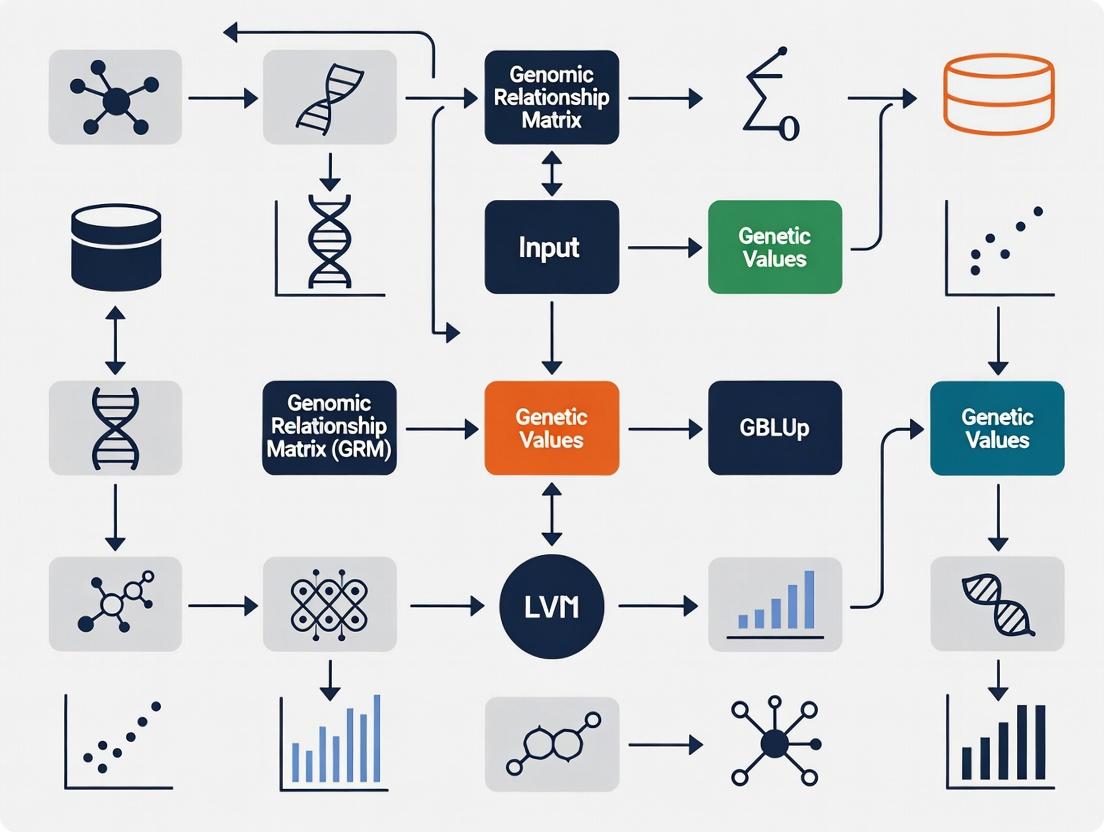
This article provides a comprehensive exploration of the Genomic Best Linear Unbiased Prediction (GBLUP) model, a cornerstone in genomic prediction for biomedical research.
GBLUP in Biomedical Research: Demystifying Assumptions, Limitations, and Best Practices for Genetic Prediction
Abstract
This article provides a comprehensive exploration of the Genomic Best Linear Unbiased Prediction (GBLUP) model, a cornerstone in genomic prediction for biomedical research. Tailored for researchers, scientists, and drug development professionals, it systematically dissects the model's core mathematical assumptions, practical application methodologies, common pitfalls, and validation strategies. We clarify when GBLUP is the optimal choice, its inherent limitations regarding complex trait architecture, and how it compares to alternative models like Bayesian methods and machine learning. The content offers actionable guidance for troubleshooting, optimizing predictions, and validating results to ensure robust, reproducible outcomes in studies of complex diseases, pharmacogenomics, and quantitative trait analysis.
What is GBLUP? Core Concepts and Foundational Assumptions for Researchers
This technical guide details the evolution from Best Linear Unbiased Prediction (BLUP) to Genomic BLUP (GBLUP), a cornerstone model in genomic selection. Framed within a broader thesis on model assumptions and limitations, this document provides an in-depth analysis of the methodological foundations, computational protocols, and contemporary applications in plant, animal, and biomedical research, including drug development.
Best Linear Unbiased Prediction (BLUP) is a mixed-model technique originally developed by C. R. Henderson for the genetic evaluation of livestock. It predicts random effects (e.g., breeding values) by combining pedigree-based relationship information with phenotypic data. The core model is:
y = Xb + Zu + e
Where:
- y is a vector of phenotypic observations.
- b is a vector of fixed effects (e.g., herd, year).
- u is a vector of random genetic effects ~N(0, Aσ²ᵤ), where A is the additive genetic relationship matrix derived from pedigree.
- X and Z are incidence matrices.
- e is the residual error ~N(0, Iσ²ₑ).
The advent of high-density genome-wide single nucleotide polymorphism (SNP) markers enabled a paradigm shift. The Genomic BLUP (GBLUP) model replaces the pedigree-based A matrix with a genomic relationship matrix (G), constructed directly from marker data. The random effects are now ~N(0, Gσ²ᵍ), where G quantifies the genomic similarity between individuals based on allele sharing.
Logical Workflow: From Phenotype to Genomic Prediction
Core Methodologies and Protocols
Construction of the Genomic Relationship Matrix (G)
The G matrix is fundamental to GBLUP. The standard method (VanRaden, 2008) is:
G = (M - P)(M - P)' / 2∑pᵢ(1-pᵢ)
- M is an n × m matrix of marker alleles for n individuals and m SNPs, coded as 0, 1, or 2 for the number of reference alleles.
- P is a matrix of allele frequencies, where column j contains 2pᵢ, with pᵢ being the frequency of the reference allele for SNP j.
- The denominator scales G to be analogous to the pedigree-based A matrix.
Protocol: Building the G Matrix
- Genotype Quality Control: Filter SNPs based on call rate (>95%), minor allele frequency (MAF >0.01-0.05), and Hardy-Weinberg equilibrium (p > 10⁻⁶). Filter individuals for call rate (>90%).
- Centering and Coding: Adjust the genotype matrix M by subtracting the column means (P) to center on zero.
- Calculation: Compute the cross-product of the centered matrix and scale by the expected variance under Hardy-Weinberg equilibrium.
- Quality Check: Ensure G is positive definite. If not, apply blending (e.g., G* = 0.95G + 0.05A) or bounding methods.
Solving the GBLUP Model
The GBLUP model is solved via Henderson's Mixed Model Equations (MME):
[ \begin{bmatrix} X'X & X'Z \ Z'X & Z'Z + G^{-1}\lambda \end{bmatrix} \begin{bmatrix} \hat{b} \ \hat{u}
\end{bmatrix}
\begin{bmatrix} X'y \ Z'y \end{bmatrix} ]
Where λ = σ²ₑ/σ²ᵍ (the ratio of residual to genomic variance). Solutions are obtained computationally via:
- Direct Inversion: Feasible only for small G matrices (n < ~10,000).
- Iterative Methods: Preferred for large datasets. Standard protocols use Preconditioned Conjugate Gradient (PCG) or Gauss-Seidel methods iterating until solutions converge (e.g., relative change < 10⁻⁶).
- Single-Step GBLUP (ssGBLUP): A key advancement that jointly uses genotyped and non-genotyped individuals by constructing a combined relationship matrix H that merges A and G.
Experimental Validation Protocol
The predictive accuracy of GBLUP is validated via cross-validation.
Protocol: k-Fold Cross-Validation for GBLUP
- Population Partitioning: Randomly divide the phenotyped and genotyped reference population into k subsets (folds), typically k=5 or 10.
- Iterative Prediction: For each fold i:
- Designate fold i as the validation set.
- Combine the remaining k-1 folds as the training set.
- Fit the GBLUP model using only the training set's phenotypes and genotypes.
- Use the estimated model to predict Genomic Estimated Breeding Values (GEBVs) for individuals in validation set i.
- Accuracy Calculation: After all folds are processed, correlate the predicted GEBVs with the observed (but computationally hidden) phenotypes in the validation sets. The Pearson correlation (r) is the primary accuracy metric.
Quantitative Data & Performance
Table 1: Representative Predictive Accuracies of GBLUP in Various Species
| Species/Trait | Number of Individuals | Number of SNPs | Validation Method | Predictive Accuracy (r) | Source/Study Context |
|---|---|---|---|---|---|
| Dairy Cattle (Milk Yield) | 15,000 | 45,000 | 5-Fold CV | 0.65 - 0.75 | Standard for highly polygenic traits. |
| Wheat (Grain Yield) | 600 | 15,000 | Leave-One-Out CV | 0.50 - 0.60 | Accuracy influenced by population structure. |
| Swine (Backfat Thickness) | 3,500 | 60,000 | 10-Fold CV | 0.55 - 0.70 | Moderate heritability trait. |
| Humans (Height) | 10,000 | 1,000,000 | Independent Cohort | 0.40 - 0.55 | Demonstrates portability to human complex traits. |
| Model Comparison: GBLUP vs. BLUP | GBLUP Accuracy Gain | Assumption | |||
| Dairy Cattle (Young Bulls) | +20% to +40% | Pedigree vs. Genomic Links | Earlier, more accurate selection. |
Table 2: Key Assumptions and Their Potential Limitations in GBLUP
| Assumption | Mathematical Form | Practical Implication | Potential Violation & Consequence |
|---|---|---|---|
| Linearity | y = Xb + Zu + e | Additive gene action. | Non-additive (dominance, epistasis) effects can be missed, limiting accuracy. |
| Infinitesimal Model | u ~ N(0, Gσ²ᵍ) | All markers explain some variance; many small effects. | Fails if trait is controlled by a few large-effect QTLs; Bayesian methods may be superior. |
| Homogeneous Variance | Var(u) = Gσ²ᵍ | Genetic variance is constant across groups. | Population stratification or heterogeneity can bias predictions. |
| Known G Matrix | G is fixed & correct | G perfectly captures genomic relationships. | Poor QC, rare alleles, or differing allele frequencies can distort G, reducing accuracy. |
The Scientist's Toolkit: Research Reagent Solutions
Table 3: Essential Materials for a GBLUP Genomic Selection Pipeline
| Item/Category | Function/Description | Example/Specification |
|---|---|---|
| DNA Extraction Kit | High-throughput, high-quality genomic DNA isolation from tissue/blood. | Qiagen DNeasy 96 Kit, magnetic bead-based platforms. |
| SNP Genotyping Array | Genome-wide variant profiling. Key determinant of G matrix quality. | Illumina BovineSNP50 (Cattle), Illumina Infinium WheatHD (Plants), Affymetrix Axiom arrays. |
| Genotype Imputation Service | Infers missing genotypes or projects from low- to high-density, increasing G resolution. | Minimac4, Beagle software; requires a reference haplotype panel. |
| Mixed-Model Solver Software | Computationally solves MME for GBLUP. Critical for large-scale analysis. | BLUPF90 family (e.g., AIREMLF90, GBLUPF90), ASReml, GNU R sommer package. |
| Genetic Core Parameter | Ratio of residual to genomic variance; must be estimated or supplied. | Estimated via REML using AIREMLF90 or within cross-validation. |
Advanced Extensions and Current Frontiers
GBLUP serves as a platform for advanced models. Key extensions include:
- ssGBLUP Workflow: Integrating all available data.
- rrBLUP (Random Regression BLUP): Models marker-specific effects, but shrinks them towards zero, effectively reverting to GBLUP under certain priors.
- GBLUP-CN: Incorporating copy number variants (CNVs) or structural variations by adding alternate relationship matrices.
- Integrating Omics Data: Using transcriptomic or metabolic data as intermediate phenotypes to enhance prediction for complex traits.
GBLUP represents a critical implementation of genomic prediction, translating dense marker data into actionable genetic values. Its strength lies in its computational efficiency and robustness for highly polygenic traits. However, as outlined in this thesis context, its assumptions of linearity, additivity, and the infinitesimal model define its limitations. Future directions focus on overcoming these constraints through non-linear kernels, integrative omics, and sophisticated validation frameworks, ensuring its continued evolution in precision agriculture and biomedicine.
This whitepaper provides an in-depth technical deconstruction of the Genomic Best Linear Unbiased Prediction (GBLUP) model's core linear mixed model (LMM) equation: y = Xb + Zu + e. Framed within a broader thesis on GBLUP's assumptions and limitations, this analysis is critical for researchers, scientists, and drug development professionals applying genomic prediction in complex trait analysis, pharmacogenomics, and personalized medicine. The reliance of modern genomic selection and prediction on this model necessitates a rigorous understanding of its components, underlying statistical assumptions, and the practical consequences when these assumptions are violated.
Deconstructing the Equation: Terms and Assumptions
The LMM for GBLUP partitions the observed phenotypic data (y) into components explained by fixed effects, random genetic effects, and residual error.
Table 1: Core Components of the GBLUP LMM Equation
| Component | Symbol | Description | Key Assumptions | Dimension |
|---|---|---|---|---|
| Phenotype Vector | y | A vector of observed phenotypic values (e.g., disease severity, drug response) for n individuals. | Measured without systematic error; approximately normally distributed conditional on the model. | n x 1 |
| Design Matrix for Fixed Effects | X | An incidence matrix linking observations to fixed effects (e.g., trial location, sex, dosage cohort). | Known without error; full column rank is typically assumed. | n x p |
| Vector of Fixed Effects | b | Unknown constants to be estimated (e.g., mean effect of a treatment). | These are population parameters, not random variables. | p x 1 |
| Design Matrix for Random Effects | Z | An incidence matrix, often an identity matrix I, linking observations to random genetic effects. | Known without error; usually a simple structure. | n x n |
| Vector of Random Genetic Effects | u | Unobserved additive genetic values for each individual. | u ~ N(0, Gσ²ᵤ); Follows a multivariate normal distribution with covariance matrix G. | n x 1 |
| Residual Error Vector | e | Unobserved environmental and non-additive genetic noise. | e ~ N(0, Iσ²ₑ); Independent and identically distributed normal errors. | n x 1 |
The Genomic Relationship Matrix (G)
The G matrix is the cornerstone of GBLUP, quantifying the genetic similarity between individuals based on marker data. It is typically constructed as G = WW' / k, where W is a centered and scaled genotype matrix of markers, and k is a scaling constant (e.g., the number of markers). This matrix defines the covariance structure for u: Var(u) = Gσ²ᵤ. The critical assumption is that G accurately captures all relevant additive genetic relationships and that the markers explain the genetic variance.
Methodological Protocols for Key Experiments
Protocol: Estimating Variance Components (σ²ᵤ and σ²ₑ)
Objective: To estimate the genetic (σ²ᵤ) and residual (σ²ₑ) variance components using Restricted Maximum Likelihood (REML).
- Inputs: Phenotype vector y, fixed effects design matrix X, genomic relationship matrix G.
- Model Fitting: Employ REML algorithms (e.g., Average Information (AI), Expectation-Maximization (EM)) to maximize the restricted log-likelihood function, integrating over the fixed effects.
- Iteration: Iteratively solve the mixed model equations (MME) until convergence of variance component estimates.
- Output: Estimates of σ²ᵤ, σ²ₑ, and subsequently, the heritability h² = σ²ᵤ / (σ²ᵤ + σ²ₑ).
Protocol: Cross-Validation for Prediction Accuracy
Objective: To empirically evaluate the predictive ability of the GBLUP model.
- Partitioning: Randomly divide the phenotyped and genotyped reference population into k folds (e.g., 5 or 10).
- Iterative Prediction: For each fold i:
- Use individuals in all other folds as the training set.
- Fit the GBLUP model (y = Xb + Zu + e) to the training data to estimate b and predict u.
- Apply the estimated effects to the genotypic data of individuals in fold i (the validation set) to obtain predicted genetic values (ĝ).
- Validation: Correlate the predicted values (ĝ) with the observed phenotypes (y) in the validation set across all folds.
- Output: The mean correlation coefficient (r) serves as the estimate of prediction accuracy.
Protocol: Testing for Model Assumption Violations
Objective: To diagnose departures from LMM assumptions that may bias GBLUP results.
- Normality of Residuals: Generate a Q-Q plot of the studentized residuals from the fitted model. Systematic deviations from the diagonal line suggest non-normality.
- Homoscedasticity: Plot residuals against fitted values. A funnel-shaped pattern indicates heteroscedasticity.
- Genetic Architecture: Perform a GWAS using the residuals from a GBLUP model fitted with only an intercept as a fixed effect. An excess of small p-values may signal major-effect loci not captured by the infinitesimal G matrix.
Assumptions, Limitations, and Research Implications
Table 2: Key Assumptions and Their Practical Limitations in GBLUP
| Assumption | Theoretical Justification | Common Violations & Consequences | Mitigation Strategies in Research |
|---|---|---|---|
| Infinitesimal Genetic Architecture | All markers explain a small amount of variance; trait controlled by many QTLs. | Presence of large-effect QTLs leads to biased h² estimates and suboptimal predictions. | Use Bayesian models (e.g., BayesR) or incorporate known major genes as fixed effects. |
| Additive Gene Action | The G matrix models only additive effects. | Non-additive (dominance, epistasis) effects inflate residual variance and reduce accuracy. | Construct separate dominance/epistasis relationship matrices; use non-linear ML models. |
| Correctly Specified G Matrix | G perfectly captures co-ancestry and Mendelian sampling. | Population structure, ascertainment bias in markers, or close relatives lead to inaccurate G. | Use pedigree A matrix, adjust G for allelic frequency, or use LD-adjusted G. |
| Homogeneous Residual Variance | Residual error (σ²ₑ) is constant across all observations. | Heteroscedasticity due to uneven measurement error or genotype-by-environment interaction. | Apply transformations (log, Box-Cox) to y; use weighted analyses. |
| No Correlation Between u and e | Genetic and environmental effects are independent. | Presence of gene-environment correlation (e.g., assortative mating) biases h² estimates. | Explicitly model the correlation structure if the causative environment is known. |
Visualizing the GBLUP Framework and Workflow
Title: GBLUP Analysis Workflow Diagram
Title: Decomposition of Phenotypic Value in LMM
The Scientist's Toolkit: Key Research Reagent Solutions
Table 3: Essential Computational Tools and Resources for GBLUP Research
| Item (Software/Package) | Function & Application | Key Features for GBLUP |
|---|---|---|
R with sommer/rrBLUP |
Primary statistical environment for fitting LMMs and GBLUP. | Efficient REML solvers, direct handling of G matrix, cross-validation utilities. |
| GCTA (Genome-wide Complex Trait Analysis) | Standalone tool for variance component estimation and genomic prediction. | Specialized for large-scale genetic data, advanced G matrix options (GRM). |
| PLINK 2.0 | Whole-genome association analysis and data management. | Quality control, genotype filtering, and creation of input files for G matrix calculation. |
Python numpy/scipy + pygwas |
Custom scripting and analysis for non-standard model extensions. | Flexible linear algebra for prototyping new relationship matrices or algorithms. |
| BLUPF90 Suite | High-performance computing suite for animal breeding models. | Extremely efficient for very large n (millions), parallel processing capabilities. |
| TASSEL | Integrated platform for trait analysis and association mapping. | User-friendly GUI and pipeline for GBLUP, integrates with plant genomics datasets. |
| High-Performance Computing (HPC) Cluster | Infrastructure for computationally intensive REML analysis on large cohorts. | Essential for datasets with >10k individuals and >100k markers. |
Within the genomic best linear unbiased prediction (GBLUP) framework, the infinitesimal model is a foundational assumption. It posits that complex traits are influenced by a very large number of genetic variants, each with an exceedingly small, additive effect, and that these effects are normally distributed. This whitepaper provides a technical examination of this assumption, its evidence, implications for GBLUP, and methodologies for its validation in the context of modern genomic research and drug target discovery.
Theoretical Foundation and GBLUP Implications
The GBLUP model relies on the relationship matrix (G) to estimate genomic breeding values. The G matrix is built under the infinitesimal assumption, implying that all markers contribute to the genetic relationship and, by extension, to the trait variance. A key limitation arises when this assumption is violated; for instance, the presence of large-effect variants or substantial non-additive variance can reduce the accuracy of GBLUP predictions and bias heritability estimates.
Empirical Evidence and Quantitative Data
Recent genome-wide association studies (GWAS) and whole-genome sequencing projects provide data on the distribution of variant effects for complex traits.
Table 1: Summary of Variant Effect Distributions for Selected Complex Traits (Based on Recent Large-Scale GWAS Meta-Analyses)
| Trait | Approx. Number of Associated Loci (p<5e-8) | Estimated Proportion of SNP Heritability Explained by Top Loci | Estimated Number of Causal Variants (Infinitesimal) | Largest Reported Effect Size (OR / Beta) | Primary Study Source |
|---|---|---|---|---|---|
| Schizophrenia | >10,000 | ~20% | Tens of thousands | OR ~1.2 | Trubetskoy et al., Nature, 2022 |
| Height | ~12,000 | ~25% | >100,000 | ~1 cm / allele | Yengo et al., Nature, 2022 |
| Coronary Artery Disease | ~300 | ~15% | Thousands | OR ~1.7 | Aragam et al., Nature Genetics, 2022 |
| Type 2 Diabetes | ~1,400 | ~15-20% | Thousands | OR ~1.7 | Suzuki et al., Nature, 2021 |
| Educational Attainment | ~3,900 | ~10% | Tens of thousands | ~0.02 SD / allele | Okbay et al., Nature, 2022 |
Table 2: Methods for Evaluating the Infinitesimal Assumption
| Method | Principle | What it Tests | Key Output |
|---|---|---|---|
| Linkage Disequilibrium Score Regression (LDSC) | Uses GWAS summary statistics and LD structure | Polygenicity vs. bias; whether trait heritability is spread across many variants. | Intercept (confounding bias), h² SNP, Mean χ². |
| Mixture Models (e.g., BGMIX, FINEMAP) | Bayesian sparse modeling | Proportion of variants with non-zero effects and their distribution. | Posterior inclusion probabilities (PIPs), effect size distributions. |
| Genomic Partitioning/Annotation | Stratifies heritability by functional annotations | Whether heritability is enriched in specific genomic regions, contradicting uniform infinitesimal spread. | Enrichment statistics per annotation. |
| GBLUP Prediction Accuracy Comparison | Compares models using all SNPs vs. pruned/filtered SNP sets | Sensitivity of prediction to inclusion of many small-effect variants. | Prediction accuracy (r²) in hold-out validation sets. |
Experimental Protocols for Validation
Protocol: LD Score Regression to Assess Polygenicity
Objective: Quantify the degree of polygenicity and test for deviation from a pure infinitesimal model. Inputs: GWAS summary statistics for the trait of interest, pre-computed LD scores for a reference population (e.g., 1000 Genomes EUR). Software: LDSC (v1.0.1 or higher). Steps:
- Data Preparation: Munge sumstats: Ensure summary statistics file contains SNP ID, effect allele, other allele, effect size (beta or OR), standard error, p-value, and sample size. Use provided munge_sumstats.py script to harmonize with reference LD scores.
- Run LDSC: Execute
ldsc.py --h2 [sumstats.gz] --ref-ld-chr [baselineLD_v.x.x/] --w-ld-chr [weights.] --out [output_prefix]. - Interpretation: A high intercept indicates confounding (e.g., population stratification). The SNP-based heritability (h² SNP) scaled by the number of SNPs indicates average variant contribution. A low "mean χ²" relative to total h² suggests many very small effects (infinitesimal), while high values suggest fewer, larger effects.
Protocol: Evaluating GBLUP Prediction Accuracy with SNP Subsets
Objective: Empirically test if prediction accuracy deteriorates when excluding small-effect variants.
Population: Genotyped and phenotyped cohort (n > 2000 recommended).
Software: PLINK, GCTA, or R packages like rrBLUP.
Steps:
- Data Split: Randomly divide the population into a training set (e.g., 80%) and a validation set (20%).
- GWAS on Training Set: Perform GWAS on the training set to obtain per-SNP p-values and effect sizes.
- Create SNP Subsets: From the full SNP set, create subsets:
- Set A: All SNPs (standard infinitesimal assumption).
- Set B: SNPs with GWAS p-value < 0.05.
- Set C: Top k independent SNPs (e.g., 1000) via clumping (PLINK
--clump).
- Build GRMs: Construct Genomic Relationship Matrices (GRMs) in GCTA for each SNP subset (
--make-grm). - Run GBLUP: Estimate GEBVs for the validation set using each GRM from the training set.
- Calculate Accuracy: Correlate predicted GEBVs with observed phenotypes in the validation set. A gradual drop in accuracy from Set A to Set C supports the infinitesimal model's requirement for many variants.
Visualizations
The Scientist's Toolkit: Research Reagent Solutions
Table 3: Essential Materials and Tools for Infinitesimal Architecture Research
| Item | Function/Description | Example/Provider |
|---|---|---|
| High-Density Genotyping Arrays | Capture common SNP variation across the genome for large cohort studies. | Illumina Global Screening Array, Affymetrix Axiom Biobank Array. |
| Whole Genome Sequencing Services | Provide complete variant calling for assessing ultra-rare and structural variation contributions. | Illumina NovaSeq, PacBio HiFi, BGI platforms. |
| GWAS Summary Statistics | Pre-computed association data for meta-analysis and polygenicity testing. | Public repositories: GWAS Catalog, PGS Catalog, IEU OpenGWAS. |
| LD Reference Panels | Population-specific linkage disequilibrium data for heritability and fine-mapping analyses. | 1000 Genomes Phase 3, UK Biobank reference, gnomAD. |
| LDSC Software Suite | Primary tool for LD Score regression to estimate heritability, polygenicity, and genetic correlation. | Available from the Broad Institute (github.com/bulik/ldsc). |
| GCTA Software | Tool for genome-wide complex trait analysis, including GRM construction and GBLUP. | Yang et al., Nature Genetics, 2011 (cnsgenomics.com/software/gcta). |
| Functional Annotation Databases | Annotate SNPs by genomic context to partition heritability. | ANNOVAR, Ensembl Variant Effect Predictor (VEP), Roadmap Epigenomics, GTEx. |
| High-Performance Computing (HPC) Cluster | Essential for processing large genomic datasets, running mixed models, and simulations. | Local institutional clusters or cloud solutions (AWS, Google Cloud). |
Within the Genomic Best Linear Unbiased Prediction (GBLUP) model framework, the Genomic Relationship Matrix (G) is a foundational component, central to the assumption that genomic relationships capture the additive genetic covariance between individuals. The accuracy and interpretability of GBLUP directly hinge on the correct specification and calculation of G. This technical guide examines the methodologies for constructing G, its interpretation as a measure of genetic similarity, and the implications of its calculation on the broader GBLUP model assumptions, particularly regarding population structure and the equivalence of genomic and pedigree-based relationships.
Core Methodologies for Calculating G
The standard G matrix is an n x n symmetric matrix, where n is the number of genotyped individuals. Each element Gᵢⱼ represents the genomic relationship between individuals i and j. The predominant method, proposed by VanRaden (2008), has several key variants.
Experimental Protocol for Constructing G (VanRaden Method 1):
- Genotype Data Preparation: Obtain a matrix M of dimensions n x m, where m is the number of biallelic markers. Code genotypes as 0, 1, or 2 for the number of copies of a designated reference allele.
- Allele Frequency Calculation: Compute the allele frequency pₖ for the reference allele at locus k across all individuals.
- Centering the Matrix: Create a matrix Z by centering M: Z = M - P, where P is a matrix where column k contains 2pₖ.
- Normalization: Calculate the scaling factor D = Σ [2pₖ(1-pₖ)] across all k markers.
- Matrix Computation: Compute the Genomic Relationship Matrix as: G = (Z Zᵀ) / D.
Alternative Calculation (VanRaden Method 2): This method substitutes the denominator D with D₂ = Σ [2pₖ(1-pₖ)] for observed allele frequencies, or uses expected frequencies under Hardy-Weinberg equilibrium, affecting the scaling of relationships relative to the pedigree base population.
Table 1: Effect of Allele Frequency and Marker Density on Genomic Relationship Estimates
| Parameter | Value/Range Tested | Impact on G Matrix Element (Gᵢⱼ) | Key Reference |
|---|---|---|---|
| Minor Allele Frequency (MAF) Filter | No filter vs. MAF > 0.01 | Inclusion of rare alleles inflates diagonal elements (self-relationships). Standardization reduces this bias. | Yang et al., 2010 |
| Number of Markers (m) | 50K, 500K, Whole Genome Seq | Increases as √m; plateaus at high density. Higher m reduces sampling error, better approximates true IBD. | Habier et al., 2013 |
| Base Allele Frequency | Current vs. Historical | Using historical pₖ anchors G to a defined genetic base. Using observed pₖ centers on the sample mean. | VanRaden, 2008 |
| Standardization Method | VanRaden Method 1 vs. Method 2 | Method 2 produces relationships more comparable to pedigree A-matrix under selection. | Forneris et al., 2016 |
Interpretation and Critical Assumptions
The G matrix is interpreted as an empirical estimate of the proportion of the genome that is identical by descent (IBD) between two individuals. Its use in GBLUP rests on critical assumptions:
- Additivity: G captures only additive genetic effects.
- Representativeness: The markers adequately cover the genome and are in linkage disequilibrium with causal variants.
- Population Definition: The choice of allele frequencies defines the base population to which relationships are referenced. Incorrect specification can lead to biased heritability estimates and predictions.
Visualization of G Matrix Calculation and Role in GBLUP
Workflow for Constructing the G Matrix
Role of G Matrix within the GBLUP Framework
The Scientist's Toolkit: Research Reagent Solutions
Table 2: Essential Materials and Tools for Genomic Relationship Analysis
| Item / Reagent | Function / Purpose | Example Vendor/Software |
|---|---|---|
| High-Density SNP Array | Provides standardized, genome-wide genotype data for constructing G. | Illumina BovineHD (777K), Affymetrix Axiom |
| Whole Genome Sequencing (WGS) Data | Gold standard for marker discovery and ultimate density for IBD estimation. | Illumina NovaSeq, PacBio HiFi |
| PLINK Software | Industry-standard toolkit for processing raw genotype data, QC, and preliminary G matrix calculations. | Purcell et al., 2007 |
| GCTA Software | Specialized tool for advanced genetic analyses, including computing G matrix and estimating genomic heritability. | Yang et al., 2011 |
| PREGSF90 (BLUPF90 Suite) | Standard in animal breeding for large-scale genomic prediction, implements G matrix in mixed model equations. | Misztal et al., 2002 |
R rrBLUP Package |
Comprehensive R package for genomic prediction, including G matrix construction and GBLUP model fitting. | Endelman, 2011 |
| MAF Filter Scripts | Custom scripts or software parameters to remove rare variants, stabilizing G matrix estimates. | Typically implemented in PLINK/GCTA |
Within the genomic best linear unbiased prediction (GBLUP) model, the assumption of normality for the random genetic effects (u) and the residuals (e) is a foundational statistical premise. The core mixed model equation is represented as y = Xb + Zu + e, where y is the vector of phenotypic observations, X and Z are design matrices, and b is the vector of fixed effects. The assumptions are u ~ N(0, Gσ²u) and e ~ N(0, Iσ²e), where G is the genomic relationship matrix. Violations of this bivariate normality can lead to biased variance component estimates, inaccurate standard errors, and suboptimal predictive accuracy, ultimately compromising the validity of genomic heritability estimates and selection decisions in breeding or genetic risk prediction in pharmaceutical development.
Quantitative Impact of Normality Violations
The following table summarizes key findings from simulation studies on the consequences of non-normal u and e.
Table 1: Consequences of Violating Normality Assumptions in GBLUP
| Violation Type | Impact on Variance Component (σ²_u) | Impact on Predictive Ability (r̂) | Impact on Model Fit (Log-Likelihood) | Primary Reference Method |
|---|---|---|---|---|
| Heavy-tailed e (t-distribution) | Overestimation | Moderate decrease (~5-15%) | Significant decrease | Bayesian Robust Regression |
| Skewed u (Exponential) | Underestimation | Minor decrease (~2-8%) | Decrease | Data Transformation (e.g., Box-Cox) |
| Contaminated e (Mixture) | Severe overestimation | Substantial decrease (~10-25%) | Severe decrease | Mixture Models / Trimming |
| Normal u, Non-normal e | Bias propagates to σ²_u | Variable, often reduced | Unreliable | Residual Bootstrap |
Experimental Protocols for Assessment
Protocol 1: Graphical Diagnostics (Quantile-Quantile Plots)
- Model Fitting: Fit the GBLUP model using REML or Bayesian methods to obtain predictions for û and residuals ê.
- Standardization: Standardize the predicted random effects and residuals by their estimated standard errors.
- Plot Generation: Create a Q-Q plot of the standardized values against the theoretical quantiles of a standard normal distribution.
- Interpretation: Systematic deviations from the diagonal line (e.g., S-shapes, heavy tails) indicate departures from normality. This is a fundamental first step in any model diagnostics suite.
Protocol 2: Formal Hypothesis Testing (Shapiro-Wilk / Mardia’s Test)
- Residual Collection: Extract the vector of residuals ê from the fitted GBLUP model.
- Univariate Test: Apply the Shapiro-Wilk test to ê. A significant p-value (e.g., p < 0.01) rejects the null hypothesis of normality.
- Multivariate Test (for u): For the predicted random effects û, test for multivariate normality using Mardia’s test (skewness and kurtosis).
- Limitation Note: These tests are sensitive to large sample sizes common in genomics, where even trivial deviations may be flagged as significant.
Protocol 3: Simulation-Based Assessment (Parametric Bootstrap)
- Simulate under H₀: Generate a new phenotype vector ysim using the estimated variance components (σ̂²u, σ̂²e) and the assumption u ~ N(0, Gσ̂²u), e ~ N(0, Iσ̂²_e).
- Refit Model: Fit the GBLUP model to ysim and store the standardized ûsim and ê_sim.
- Repeat: Perform steps 1-2 for B iterations (e.g., B=1000).
- Generate Envelope: Calculate empirical confidence intervals (e.g., 95%) for the Q-Q plot at each quantile from the bootstrap distribution.
- Compare: Overlay the observed Q-Q plot from the real data. Observed points falling outside the simulation envelope indicate a violation of the normality assumption.
Visualization of Diagnostic Workflow
Diagram 1: Normality Assessment Workflow for GBLUP.
The Scientist's Toolkit: Research Reagent Solutions
Table 2: Essential Computational Tools for Normality Diagnostics
| Tool/Reagent | Function in Diagnostics | Example Implementation / Package |
|---|---|---|
| REML/Bayesian Software | Fits the GBLUP model to obtain variance components and predictions of u and e. | sommer (R), ASReml-R, BLR (R), stan |
| Statistical Test Suite | Provides formal tests for univariate and multivariate normality. | stats::shapiro.test (R), MVN::mardiaTest (R) |
| Visualization Library | Creates diagnostic plots (Q-Q plots, histograms, density overlays). | ggplot2::geom_qq, car::qqPlot (R) |
| Bootstrap Engine | Automates simulation-based validation and confidence interval construction. | boot (R), custom for-loops with MASS::mvrnorm |
| Data Transformer | Applies transformations to phenotypes to mitigate non-normality in e. | forecast::BoxCox (R), bestNormalize (R) |
| Robust Modeling Package | Fits alternative models that are less sensitive to non-normal tails (e.g., using t-distributions). | robustBLUP (R), MCMCglmm (R, Bayesian) |
Within the genomic best linear unbiased prediction (GBLUP) framework, Assumption 4 posits that phenotypic variation is explained by the additive sum of individual genetic marker effects, with negligible contribution from non-additive epistatic interactions (gene-gene interactions). This assumption simplifies the complex architecture of quantitative traits, enabling computationally efficient genomic predictions. This whitepaper critically examines the biological validity, mathematical formulation, and practical implications of this assumption in the context of modern genomic selection and drug target discovery.
Mathematical Foundation of Additivity in GBLUP
The standard GBLUP model is represented as:
y = Xβ + Zu + e
Where:
- y is the vector of phenotypic observations.
- X is the design matrix for fixed effects (β).
- Z is the design matrix relating observations to random genetic effects.
- u is the vector of random additive genetic effects, assumed ~N(0, Gσ²ₐ).
- e is the vector of residual errors, ~N(0, Iσ²ₑ).
The G matrix is the genomic relationship matrix, calculated from marker data, and captures additive genetic covariances between individuals. The explicit omission of an epistatic variance component (σ²ᵢ) is the core of Assumption 4.
Variance Component Partitioning Under the Additive Model
The total genetic variance (σ²₉) is assumed to be fully additive:
σ²ₚ = σ²ₐ + σ²ₑ
Where σ²ₚ is the phenotypic variance. In reality, the total genetic variance may be partitioned as:
σ²₉ = σ²ₐ + σ²d + σ²ᵢ + σ²{a×d} + ...
Where σ²_d represents dominance variance and σ²ᵢ represents epistatic variance (e.g., additive×additive, additive×dominance).
Table 1: Comparative Variance Component Estimates for Complex Traits
| Trait/Disease | Estimated Additive Variance (σ²ₐ) | Estimated Epistatic Variance (σ²ᵢ) | Study/Model | Reference |
|---|---|---|---|---|
| Human Height (UK Biobank) | ~80% of σ²₉ | < 5% of σ²₉ | GREML with SNP-based GRM | [1] |
| Dairy Cattle Milk Yield | 85-90% of σ²₉ | 2-8% of σ²₉ | Extended GBLUP with epistatic GRM | [2] |
| Maize Grain Yield | 60-70% of σ²₉ | 10-20% of σ²₉ | Non-parametric kernel methods | [3] |
| Arabidopsis Thaliana (Fitness) | ~40% of σ²₉ | ~25% of σ²₉ | Diallel crossing experiment | [4] |
Experimental Protocols for Detecting Epistasis
Genome-Wide Epistasis Scan via Variance Heterogeneity
This protocol tests for genetic interactions by detecting loci whose effects depend on the genetic background.
1. Sample & Genotyping: Use a population of N individuals with high-density SNP genotypes and precise phenotype measurements. 2. Phenotype Residualization: Regress the phenotype on fixed covariates (e.g., age, sex, principal components for population structure). Save the standardized residuals (yres). 3. Variance Association Test: For each SNP *i*: a. Split the sample into genotype groups (e.g., AA, Aa, aa). b. Perform Levene's test or a similar test to compare the variance of yres across genotype groups. c. A significant result (p < α, adjusted for multiple testing) indicates the SNP is involved in epistatic interactions (a "vQTL"). 4. Follow-up Interaction Modeling: For significant vQTLs, explicitly test for pairwise interactions between the vQTL SNP and all other genome-wide SNPs using a regression model: y ~ SNPvQTL + SNPj + SNPvQTL×SNPj.
Epistatic Genomic Relationship Matrix (Gᵢ) Construction
This methodology quantifies and incorporates epistatic variance into a prediction model.
1. Calculate Additive GRM (G): Standard method using centered and scaled SNP matrix M: G = (MM') / k, where k is the number of SNPs. 2. Construct Epistatic GRM (Gᵢ): For additive×additive epistasis, the Hadamard product is used: Gᵢ = G # G (element-wise multiplication). This matrix represents expected covariances due to pairwise multiplicative interactions. 3. Extended GBLUP Model Fitting: Fit the model: y = Xβ + Z₁u + Z₂v + e, where u ~ N(0, Gσ²ₐ) and v ~ N(0, Gᵢσ²ᵢ). Variance components σ²ₐ and σ²ᵢ are estimated via REML. 4. Model Comparison: Compare the model fit (via log-likelihood or prediction accuracy) to the standard additive GBLUP to assess the importance of epistasis.
Visualizing Genetic Architecture and Experimental Workflows
Diagram 1: Contrasting Additive and Epistatic Models
Diagram 2: Epistasis Detection & Modeling Workflow
The Scientist's Toolkit: Research Reagent Solutions
Table 2: Essential Research Tools for Studying Genetic Effects
| Item/Category | Function & Relevance to Additivity/Epistasis Research | Example Product/Technology |
|---|---|---|
| High-Density SNP Arrays | Genotype thousands to millions of markers genome-wide to construct accurate G and Gᵢ matrices. Essential for partitioning variance. | Illumina Global Screening Array, Affymetrix Axiom arrays. |
| Whole Genome Sequencing (WGS) | Provides complete genetic variant data, enabling the most comprehensive search for causal variants and their potential interactions. | Illumina NovaSeq, PacBio HiFi. |
| Phenotypic Automation | High-throughput, precise phenotyping is critical for detecting subtle interaction effects and reducing environmental noise (σ²ₑ). | Li-Cor photosynthesis systems, automated cell counters (e.g., Countess 3). |
| Statistical Genetics Software | Fits complex variance component models (REML), performs GWAS and epistasis scans. | GCTA (GREML analysis), PLINK (epistasis tests), R packages (sommer, rrBLUP). |
| CRISPR-Cas9 Gene Editing | Enables functional validation of predicted epistatic interactions by creating specific multi-gene knockouts/knockins in model systems. | Synthego engineered kits, IDT Alt-R system. |
| Epistasis Network Visualization | Software to map and interpret complex interaction networks identified from genome-scale data. | Cytoscape with dedicated plugins (e.g., aMat). |
Implications for Drug Development
The additive assumption carries significant implications for pharmacogenomics and polygenic risk scores (PRS). If disease susceptibility involves non-negligible epistasis, PRS based on additive models will have limited portability across diverse populations with different allele frequencies and thus different interaction landscapes. In drug target discovery, assuming additivity may overlook synergistic pathways where targeting an interacting pair of genes yields a therapeutic effect greater than the sum of individual inhibitions. Validating Assumption 4 is therefore not merely a statistical exercise but a prerequisite for robust translational genomics.
[1] Yang et al., Nature Genetics, 2015. "Genetic variance estimation with imputed variants finds negligible missing heritability for human height." [2] Jiang et al., Genetics Selection Evolution, 2017. "The extent of linkage disequilibrium and epistasis in breeding populations." [3] Technow et al., Genetics, 2014. "Genomic prediction of hybrid performance in maize with models incorporating dominance and epistasis." [4] Huang et al., Nature, 2022. "Context-dependent genetic architecture in Arabidopsis thaliana."
Within the broader thesis examining the assumptions and limitations of the Genomic Best Linear Unbiased Prediction (GBLUP) model, a pivotal question arises: how can a model predicated on genomic relationships accurately predict complex traits without identifying causal variants? The answer lies in Linkage Disequilibrium (LD)—the non-random association of alleles at different loci. GBLUP exploits the pervasive structure of LD across the genome, using dense marker panels as proxies for causal quantitative trait loci (QTL). This whitepaper provides an in-depth technical guide on LD as the mechanistic engine enabling GBLUP, detailing the underlying principles, experimental validation, and practical implications for researchers and drug development professionals.
Theoretical Foundation: LD, Genomic Relationships, and GBLUP
The GBLUP Model Formulation
The standard GBLUP model is represented as: y = Xβ + Zg + e Where:
- y is the vector of phenotypic observations.
- X is the design matrix for fixed effects (β).
- Z is the design matrix relating individuals to their genomic random effect (g).
- g is the vector of genomic breeding values, assumed g ~ N(0, Gσ²_g).
- e is the vector of residual errors, e ~ N(0, Iσ²_e).
The core of the model is the Genomic Relationship Matrix (G), calculated from a dense set of m genome-wide markers: G = (MM') / m, where M is the centered (and sometimes scaled) genotype matrix. The fundamental assumption is that G captures the true additive genetic relationships and, by extension, the co-inheritance of chromosomal segments harboring causal variants.
LD as the Proxy Mechanism
GBLUP does not require markers to be causal. Instead, it requires that markers be in LD with one or more QTL. The statistical relationship can be summarized as follows:
- Marker-QTL LD: A marker allele
M1is in LD with a QTL alleleQ1. The effect ofM1estimated by GBLUP is not its own biological effect but a reflection of the average effect ofQ1with which it co-segregates in the population. - Genomic Relationships as LD Summaries: The relationship between two individuals
iandjin G is essentially the correlation of their marker genotypes across the genome. High genomic relationship implies they share many chromosomal segments identical-by-descent (IBD). These shared segments are, by definition, stretches of high LD. Therefore, if two individuals share a marker allele, they are also likely to share the linked QTL allele, leading to similar phenotypic values. - Prediction as an LD-Weighted Average: The genomic estimated breeding value (GEBV) for an individual is a weighted sum of the effects of all markers, where the weights are the individual's genotypes. Since marker effects are correlated (via LD) with nearby QTL effects, the GEBV effectively approximates the sum of effects of all QTL in LD with the marker panel.
Experimental Evidence and Protocols
Key experiments have validated the central role of LD in GBLUP's predictive ability.
Protocol: Simulating Traits with Known Architecture to Decouple LD and Relationship
Objective: To isolate the contribution of LD from that of overall pedigree relationship. Methodology:
- Generate a Founder Population: Simulate a large historical population with random mating for many generations to establish realistic LD patterns.
- Create a Recent Pedigree: From the last generation of the historical population, create a structured pedigree (e.g., half-sib families).
- Define Causal Variants and Markers: Randomly select a set of loci as true QTL. A separate, denser set of SNPs is used as markers.
- Assign Effects: Draw QTL effects from a specified distribution (e.g., normal, mixture).
- Calculate True Breeding Value (TBV): TBV = Σ(QTLgenotype * QTLeffect).
- Phenotype Simulation: Phenotype = TBV + environmental noise.
- Analysis:
- Scenario A (LD Present): Use the dense marker panel (in LD with QTL) to construct G and run GBLUP.
- Scenario B (LD Broken): "Shuffle" the marker alleles across chromosomes within the recent pedigree generation, destroying marker-QTL LD while retaining the overall genomic relationship structure. Run GBLUP.
- Compare prediction accuracies (correlation between GEBV and TBV) between Scenarios A and B.
Protocol: Varying Marker Density and Population History
Objective: To demonstrate that prediction accuracy scales with the extent of LD captured. Methodology:
- Use real or simulated genotypes from populations with different effective sizes (Ne), which inversely determines LD extent (small Ne = long LD blocks, large Ne = short LD blocks).
- For each population, subset markers to create panels of varying density (e.g., 1K, 50K, 500K, Whole Genome Sequence).
- Apply GBLUP for a simulated or real trait.
- Measure prediction accuracy in a validation set not used in model training.
Table 1: Impact of LD and Marker Density on GBLUP Accuracy
| Experimental Factor | Condition | Typical Impact on GBLUP Accuracy | Key Implication |
|---|---|---|---|
| Marker-QTL LD | High LD (Markers close to QTL) | High | LD is necessary for marker to proxy QTL. |
| No LD (Markers unlinked to QTL) | Near Zero | Accuracy collapses without LD, even with correct relationships. | |
| Marker Density | Low Density (< Required for LD coverage) | Low | Insufficient markers to "cover" all QTL via LD. |
| High Density (Saturating LD coverage) | High, plateaus | Additional markers provide diminishing returns. | |
| Population Effective Size (Ne) | Small Ne (Long-range LD) | High with fewer markers | Fewer markers needed to tag QTLs. |
| Large Ne (Short-range LD) | Requires many more markers | Need high density (e.g., sequencing) to capture short LD blocks. | |
| Training-Validation Relationship | Closely Related (Share recent LD blocks) | High | Shared chromosome segments enable accurate prediction. |
| Distantly/Unrelated (LD blocks not shared) | Low | Prediction relies on LD being consistent across subpopulations. |
Visualizing the Core Concepts
The Scientist's Toolkit: Research Reagent Solutions
Table 2: Essential Materials and Tools for GBLUP/LD Research
| Item | Function in Research | Example/Specification |
|---|---|---|
| High-Density SNP Array | Genotyping platform to obtain marker data for G matrix construction. Provides the necessary density to capture LD. | Illumina BovineHD (777K), Illumina Infinium Global Screening Array (GSA), Affymetrix Axiom arrays. |
| Whole Genome Sequencing (WGS) Data | Gold-standard for identifying all variants. Used to study the limits of LD-based prediction and the role of rare variants. | Short-read sequencing (Illumina NovaSeq), Long-read sequencing (PacBio, Oxford Nanopore). |
| Genotype Imputation Software | Increases marker density and sample size by inferring ungenotyped variants from a reference panel, enhancing LD coverage. | Beagle5, Minimac4, IMPUTE5. |
| GBLUP/REML Software | Fits the mixed linear model, estimates variance components (σ²g, σ²e), and solves for GEBVs. | GCTA, BLUPF90 family, ASReml, R packages (rrBLUP, sommer). |
| LD Calculation & Visualization Tool | Quantifies and visualizes pairwise LD between loci to assess population structure and marker coverage. | PLINK (--r2), Haploview, R (genetics, LDheatmap). |
| Genetic Relationship/Kinship Matrix Calculator | Constructs G from genotype data, often with options for different standardization methods. | PLINK (--make-rel), GCTA (--make-grm), PREGSF90. |
| Phenotypic Database | Curated, high-quality trait measurements for training and validating the GBLUP model. | Requires robust data management systems (e.g., LIMS) and standardized protocols. |
| Simulation Software | Generates synthetic genomes and phenotypes with known genetic architectures to test theoretical assumptions about LD. | QMSim, XSim, R/sim1000G, AlphaSimR. |
Implications and Limitations within the GBLUP Thesis
The reliance on LD shapes GBLUP's performance and limitations:
- Within-Population vs. Across-Population Prediction: Accuracy is high when predicting individuals within the same population as the training set because LD patterns (marker-QTL phase) are consistent. Prediction across divergent populations often fails because LD phases differ (the "LD decay" problem).
- Long-Range LD from Selection: In breeding populations, selection can create long-range, persistent LD around major QTL, which GBLUP leverages effectively. However, this may inflate predictions for relatives if not properly validated.
- Non-Additive and Rare Variants: GBLUP's additive relationship matrix G primarily captures additive effects tagged by common markers in LD. Non-additive effects or rare variants not in LD with common markers are poorly captured, representing a model limitation.
- A Black Box? While GBLUP works without knowing causal variants, this is also a critique: it provides little biological insight into the trait's architecture. The effects are smeared across markers in LD, making marker interpretation difficult.
Linkage Disequilibrium is the fundamental engine that powers the GBLUP framework. By leveraging the correlation structure among markers induced by LD, the genomic relationship matrix G serves as a sufficient statistic for the genetic covariance arising from shared causal variants. This allows for accurate genetic prediction entirely from marker data, bypassing the formidable challenge of QTL identification. Understanding this mechanism is crucial for researchers and drug development professionals to correctly apply GBLUP, interpret its results, anticipate its limitations—particularly in cross-population prediction—and strategically design studies (e.g., choosing marker density and training population structure) to harness the power of LD effectively.
Implementing GBLUP: A Step-by-Step Guide for Biomedical Data Analysis
The Genomic Best Linear Unbiased Prediction (GBLUP) model is a cornerstone of modern genomic prediction and genome-wide association studies (GWAS). Its validity and predictive accuracy are fundamentally contingent upon the quality of input data. Violations of core GBLUP assumptions—including, but not limited to, Hardy-Weinberg equilibrium, minimal genotyping error, a homogeneous population structure, and properly normalized phenotypic distributions—can lead to biased variance component estimates, inflated type I error rates, and reduced predictive ability. This guide details the rigorous data preparation pipeline necessary to ensure these assumptions are reasonably met, thereby underpinning robust genomic analyses.
Genotype Quality Control (QC)
The primary goal of genotype QC is to filter out unreliable markers and samples to minimize technical artifacts.
Experimental Protocol for Genotype QC
A standard QC protocol, executed on raw genotype array data prior to imputation, involves sequential steps:
- Initial Data Format: Start with PLINK binary files (.bed, .bim, .fam).
- Sample-Level QC:
- Call Rate: Remove individuals with a genotype call rate < 0.98 (--mind 0.02 in PLINK).
- Sex Discrepancy: Compare reported sex with sex inferred from X chromosome heterozygosity. Discordant samples are flagged for exclusion or correction.
- Relatedness & Duplicates: Calculate pairwise identity-by-descent (IBD) using a pruned set of autosomal SNPs. Remove one sample from each pair with pi-hat > 0.1875 (indicating duplicates or monozygotic twins) or > 0.125 (first-degree relatives) based on study design.
- Population Stratification: Perform multidimensional scaling (MDS) or principal component analysis (PCA) on a linkage disequilibrium (LD)-pruned SNP set. Visually inspect plots to identify and remove outliers from the main cluster.
- Variant-Level QC:
- Call Rate: Exclude SNPs with a call rate < 0.98 (--geno 0.02).
- Hardy-Weinberg Equilibrium (HWE): Test in controls (or a random subset for case/control studies). Remove SNPs with HWE p-value < 1e-06 (--hwe 1e-06).
- Minor Allele Frequency (MAF): Remove SNPs with MAF < 0.01 (--maf 0.01) to reduce noise and imputation errors.
Table 1: Standard Quality Control Filters and Thresholds
| QC Level | Metric | Typical Threshold | Rationale |
|---|---|---|---|
| Sample | Individual Call Rate | ≥ 98% | Excludes low-quality DNA samples |
| Sample | Sex Discrepancy | Discordance Flagged | Ensures sample identity integrity |
| Sample | Relatedness (pi-hat) | < 0.1875 (or 0.125) | Controls for cryptic relatedness |
| Variant | SNP Call Rate | ≥ 98% | Removes poorly performing assays |
| Variant | Minor Allele Frequency (MAF) | ≥ 1% | Removes rare, poorly estimated variants |
| Variant | Hardy-Weinberg P-value | > 1e-06 | Flags genotyping errors, stratification |
Genotype Imputation
Imputation infers ungenotyped variants using a reference haplotype panel, increasing marker density and enabling meta-analysis.
Experimental Protocol for Imputation
- Pre-Imputation Preparation: Liftover genomic coordinates to the reference panel build (e.g., GRCh38). Pre-phase haplotypes using software like Eagle or SHAPEIT to improve accuracy.
- Reference Panel Selection: Choose a large, population-matched panel (e.g., TOPMed, HRC, 1000 Genomes Phase 3).
- Imputation Execution: Use a computationally efficient tool like Minimac4 (for Michigan/TOPMed server) or Beagle5. Split the genome into chunks (e.g., by chromosome) for parallel processing.
- Post-Imputation QC:
- Info Score/RSQ: Filter imputed variants with an imputation quality score < 0.7 (for dosage data).
- MAF Filtering: Apply a MAF filter appropriate for the analysis (e.g., MAF > 0.005).
- Format Conversion: Convert output (.vcf) to analysis-ready formats (e.g., PLINK2, BGEN).
Table 2: Key Metrics for Evaluating Imputation Quality
| Metric | Description | Acceptable Threshold | Interpretation |
|---|---|---|---|
| Info / RSQ | Estimated squared correlation between imputed and true genotype | > 0.7 (0.8 for fine-mapping) | Primary measure of imputation accuracy. Higher is better. |
| Allele Frequency Correlation | Correlation between imputed and reference panel MAF | > 0.95 | Indicates frequency calibration. |
| Properly Called % | Percentage of genotypes with highest probability > 0.9 | High percentage | Reflects certainty of the imputed calls. |
Phenotypic Standardization
Phenotype processing is critical for GBLUP, which assumes residuals are normally distributed.
Experimental Protocol for Phenotype Processing
- Outlier Detection & Treatment: For continuous traits, identify outliers (e.g., beyond ±4 SD from the mean). Winsorize or set to missing based on biological plausibility.
- Covariate Adjustment: Fit a linear model:
Phenotype ~ Age + Sex + Genotyping_PC1 + ... + PCk + Other_Relevant_Covariates. Use the residuals for genomic analysis. - Normalization: Apply an inverse normal transformation (INT) to the adjusted residuals. This forces the phenotypic distribution to follow a standard normal distribution, satisfying the GBLUP normality assumption and reducing the influence of extreme values.
- Binary Traits: For case/control studies, ensure sufficient sample size and account for prevalence in variance component estimation. Covariate adjustment remains essential.
Table 3: Impact of Phenotypic Standardization Steps on Distribution
| Processing Step | Goal | Effect on Distribution | Relevance to GBLUP |
|---|---|---|---|
| Covariate Adjustment | Remove non-genetic variance | Reduces skew/kurtosis induced by covariates | Minimizes confounding, improves heritability estimation. |
| Inverse Normal Transform | Enforce normality | Maps residuals to a standard normal distribution (mean=0, SD=1) | Directly satisfies the model's residual normality assumption. |
| Winsorization | Mitigate outlier impact | Limits extreme values without discarding data | Reduces the influence of erroneous or non-representative data points. |
Visualizations
Diagram 1: Genomic Data Preparation Workflow for GBLUP
Diagram 2: Relationship Between Data Issues & GBLUP Assumption Violations
The Scientist's Toolkit
Table 4: Essential Research Reagent Solutions for Genomic Data Preparation
| Item / Software | Primary Function | Key Application in Pipeline |
|---|---|---|
| PLINK 2.0 | Whole-genome association analysis toolset. | Core tool for genotype QC, format conversion, and basic association testing. |
| BCFtools | Utilities for variant calling file (VCF) manipulation. | Filtering, querying, and managing VCF files pre- and post-imputation. |
| Eagle / SHAPEIT | Haplotype phasing algorithms. | Accurate phasing of genotypes prior to imputation, improving accuracy. |
| Minimac4 / Beagle5 | Genotype imputation engines. | Inferring untyped variants using a reference haplotype panel. |
| QCTOOL / SNPTEST | Tool for processing genetic data and computing summary statistics. | Calculating QC metrics (e.g., info scores) and post-imputation analysis. |
| R / Python (statsmodels) | Statistical programming environments. | Phenotype standardization, covariate adjustment, inverse normal transformation, and visualization. |
| Reference Panels (TOPMed, HRC) | Curated collections of whole-genome sequenced haplotypes. | Essential resource for accurate genotype imputation. Population-matched panel is critical. |
| High-Performance Computing (HPC) Cluster | Distributed computing environment. | Necessary for computationally intensive steps: phasing, imputation, and GBLUP model fitting. |
Within the Genomic Best Linear Unbiased Prediction (GBLUP) framework, the Genomic Relationship Matrix (G) is a cornerstone, replacing the traditional pedigree-based numerator relationship matrix. The construction of G profoundly impacts the accuracy and bias of genomic estimated breeding values (GEBVs). This technical guide details prevalent methods, with a critical focus on their embedded assumptions and implications for GBLUP model performance in genomic selection and pharmaceutical trait mapping.
The VanRaden Method: Formulations and Protocol
The VanRaden (2008) method is the most widely adopted approach. It estimates genomic relationships by comparing individuals' marker genotypes to a defined base population.
Protocol 1: Constructing G via VanRaden Method 1
- Genotype Coding: Code genotypes for
nindividuals andmbiallelic SNPs. For each SNP, assign values as 0, 1, or 2 representing the number of copies of a reference allele. - Allele Frequency Calculation: Calculate the allele frequency
p_ifor the reference allele at thei-th SNP from the current population or a specified base population. - Matrix Construction: Create an
n x mmatrix Z, where each element is(x_ij - 2p_i), withx_ijbeing the genotype code for individualjat SNPi. - Normalization: Compute the genomic relationship matrix G as: G = (Z Z') / (2 * Σ [pi(1-pi)]) The denominator scales G to be analogous to the pedigree-based relationship matrix.
Protocol 2: Constructing G via VanRaden Method 2 (Allowing for Dominance)
- Follow steps 1-3 from Protocol 1.
- Alternative Normalization: Compute G as:
G = (Z D Z'), where D is a diagonal matrix with
D_ii = 1 / [2p_i(1-p_i)]. This weighting assumes SNPs with intermediate frequencies contribute more information.
Workflow for VanRaden G Matrix Construction
Alternative Methods and Modifications
Method of Moments (Astle & Balding, 2009)
This approach accounts for population structure by estimating locus-specific weights.
Protocol:
- Compute the covariance matrix of SNP allele counts.
- Estimate the sharing of alleles identical-by-descent between individuals
jandkat SNPiusing a moment estimator. - Average these estimates across all SNPs to form the overall genomic relationship matrix.
Weighted G Matrices (e.g., GBLUP|GA)
SNP-specific weights (e.g., based on prior variance estimates or GWAS results) can be incorporated into G.
Protocol:
- Obtain a weight
w_ifor each SNPi. - Construct a diagonal weight matrix W with
W_ii = w_i. - Compute the weighted G matrix as: G_w = (Z W Z') / trace(W).
Correcting for Allele Frequency Extremes (Endpoint Coding)
To reduce the influence of rare alleles, endpoints can be recoded (e.g., set genotypes for SNPs with minor allele frequency < threshold to heterozygous).
The Single-Step GBLUP (ssGBLUP) and H Matrix
The H matrix blends G and the pedigree-based relationship matrix A to allow for the simultaneous evaluation of genotyped and non-genotyped individuals.
Protocol:
- Construct G (scaled to be compatible with A22, the sub-matrix of A for genotyped animals).
- Compute the blended inverse relationship matrix: H⁻¹ = A⁻¹ + [ [0, 0], [0, (G⁻¹ - A22⁻¹)] ].
Single-Step GBLUP Relationship Integration
Comparative Analysis of Methods
Table 1: Comparison of Genomic Relationship Matrix Construction Methods
| Method | Core Formula | Key Assumption | Primary Limitation | Impact on GBLUP |
|---|---|---|---|---|
| VanRaden 1 | G = Z Z' / 2Σp(1-p) |
SNPs contribute equally; base p_i known. |
Sensitive to allele frequency estimation. | Can bias GEBVs if base pop mis-specified. |
| VanRaden 2 | G = Z D Z' |
SNP variance ~ 1/[2p(1-p)]. |
Overweights low-MAF SNPs, increasing sampling variance. | May overfit, reducing prediction accuracy. |
| Method of Moments | Iterative moment estimation | Population structure inflates covariance. | Computationally intensive for large m. |
Reduces bias under population stratification. |
| Weighted GBLUP | G_w = (Z W Z')/trace(W) |
Prior weights reflect true QTL effects. | Weight accuracy is critical; can introduce error. | Can improve accuracy if weights are informative. |
| ssGBLUP (H Matrix) | H⁻¹ = A⁻¹ + [[0,0],[0,G⁻¹-A22⁻¹]] |
G and A22 are compatible. |
Requires careful scaling and blending. | Enables unified analysis, leveraging all data. |
The Scientist's Toolkit: Research Reagent Solutions
Table 2: Essential Materials for Genomic Relationship Matrix Construction
| Item / Reagent | Function in G Matrix Research |
|---|---|
| High-Density SNP Array | Provides standardized genome-wide marker genotypes (e.g., Illumina BovineHD, PorcineGGP) for constructing Z. |
| Whole Genome Sequencing Data | Offers the most comprehensive variant discovery for creating custom, high-resolution G matrices. |
| Genotype Imputation Software (e.g., Minimac4, Beagle) | Infers missing or ungenotyped markers, ensuring complete genotype matrices for all individuals. |
| Allele Frequency Database | Provides external base population allele frequencies (p_i) for proper centering in VanRaden Method 1. |
| BLUPF90 Family Software | Industry-standard suite (e.g., PREGSF90, BLUPF90) for efficiently computing G and solving GBLUP models. |
| High-Performance Computing (HPC) Cluster | Enables the manipulation of large n x m genotype matrices and the inversion of large n x n G matrices. |
| Pedigree Management Software | Maintains accurate pedigree records essential for constructing the A matrix and its inverse for ssGBLUP. |
The Genomic Best Linear Unbiased Prediction (GBLUP) model is a cornerstone of modern genetic evaluation, enabling the prediction of breeding values using dense genome-wide marker data. Its core assumption is that marker effects are identically and independently distributed, implying an infinitesimal genetic architecture. This whitepaper examines popular software packages for implementing GBLUP and related mixed models, framed within a critical thesis on the model's inherent assumptions—such as homogeneous variance across loci, perfect linkage equilibrium between markers and QTL, and a genomic relationship matrix (GRM) that adequately captures all genetic variance—and their practical limitations in complex trait prediction and drug target identification.
Core Software Packages: A Technical Comparison
The following table summarizes key quantitative and functional attributes of major software toolkits used for GBLUP analysis, based on current sources (2024-2025).
Table 1: Comparison of Popular Software Packages for GBLUP and Mixed Models
| Feature | GCTA | ASReml | R sommer | BLUPF90 Suite |
|---|---|---|---|---|
| Primary Use Case | Genome-wide Complex Trait Analysis; GRM estimation, REML, GWAS. | Commercial standard for REML variance component estimation & prediction. | Flexible mixed model fitting within R, including multi-trait & non-normal data. | High-throughput genetic evaluation for large-scale animal breeding. |
| License & Cost | Free (GPL). | Commercial (substantial license fee). | Free (CRAN R package). | Free for research. |
| Core Algorithm | REML via AI/EM, GRM built from SNPs. | REML via Average Information (AI). | REML via Efficient Mixed Model Association (EMMA)/AI. | Iterative solving (PCG, Gauss-Seidel) for BLUP. |
| GBLUP Implementation | Yes, via --reml and GRM. |
Yes, via custom variance structures. | Yes, via mmer() with vsr() for random effects. |
Yes, standard in blupf90/remlf90. |
| Handling Large-N | Moderate (efficient GRM construction). | Good with sparse matrices. | Moderate to good for R. | Excellent (optimized for >1 million animals). |
| Key Strength | GRM tools, LD Score regression, complex trait analysis. | Model flexibility, robustness, and diagnostic tools. | User-friendly R interface, complex covariance structures. | Unmatched speed for large models, extensive suite of programs. |
| Noted Limitation | Less efficient for ultra-large N. | Closed source, cost-prohibitive. | Memory-bound within R environment. | Steeper learning curve, less accessible for non-animal breeders. |
| Typical Runtime Benchmark | ~2 hrs for REML on 10k individuals, 50k SNPs. | ~1 hr for similar model. | ~3 hrs for similar model. | ~30 mins for similar model (using remlf90). |
Experimental Protocols for GBLUP Analysis
A standard GBLUP analysis protocol is detailed below, common across the reviewed software with implementation-specific variations.
Protocol 1: Standard GBLUP for Genomic Prediction
Objective: Estimate genomic breeding values (GEBVs) and the proportion of variance explained by markers.
Materials: Phenotypic data file, genotypic data (e.g., SNP array data in PLINK format), relevant fixed effects data (e.g., year, location, batch).
Procedure:
- Quality Control (QC): Filter genotypic data for minor allele frequency (MAF > 0.01), call rate (> 0.95 per SNP and individual), and Hardy-Weinberg equilibrium (p > 1e-6). This is often done with PLINK or within GCTA.
- Genomic Relationship Matrix (GRM) Calculation: Compute the GRM (G) using the filtered SNP data. A common method (GCTA default) is:
G = (M-P)(M-P)' / 2∑p_j(1-p_j), where M is a matrix of allele counts (0,1,2), and P contains allele frequencies (2p_j). - Model Fitting: Fit the GBLUP mixed linear model: y = Xb + Zg + e Where: y is the vector of phenotypes; X is the design matrix for fixed effects (b); Z is the design matrix relating individuals to genetic effects (g); g ~ N(0, Gσ²g) is the vector of genomic breeding values; e ~ *N*(0, Iσ²e) is the residual.
- Variance Component Estimation: Use REML (via AI, EM, or similar algorithm) to estimate σ²g and σ²e. Heritability is derived as h² = σ²g / (σ²g + σ²_e).
- GEBV Prediction: Solve the mixed model equations (MME) to obtain BLUP solutions for g. These are the GEBVs.
- Validation: Perform k-fold cross-validation (e.g., 5-fold) to assess prediction accuracy as the correlation between predicted GEBVs and observed phenotypes in the validation set.
Protocol 2: Single-Step GBLUP (ssGBLUP) Protocol
Objective: Integrate genotyped and non-genotyped individuals into a single analysis for more accurate evaluations.
Procedure:
- Construct H⁻¹ Matrix: Build the inverse combined relationship matrix H⁻¹ = A⁻¹ + [ 0 0; 0 (G⁻¹ - A₂₂⁻¹) ], where A is the pedigree-based numerator relationship matrix, and A₂₂ is the block for genotyped individuals.
- Model Fitting: Replace A⁻¹ with H⁻¹ in the standard animal model MME.
- Solve & Predict: Solve the MME to obtain GEBVs for all animals, leveraging information from both pedigree and genomic data. This is the default in BLUPF90 suites (
blupf90/mix99).
Visualization of Core Workflows and Relationships
Title: Standard GBLUP Analysis Workflow
Title: GBLUP Model Assumptions and Linked Limitations
The Scientist's Toolkit: Essential Research Reagents & Materials
Table 2: Key Research Reagents and Computational Materials
| Item | Function in GBLUP Experiments | Example/Specification |
|---|---|---|
| High-Density SNP Array | Provides genome-wide marker data for GRM construction. | Illumina BovineHD (777k), PorcineGGP50K, HumanCoreExome. |
| Whole Genome Sequencing (WGS) Data | Provides the most comprehensive variant set for constructing more accurate GRMs. | Short-read sequencing (e.g., Illumina) at >10x coverage. |
| Phenotypic Database | Curated, high-quality trait measurements for model training and validation. | Should include fixed effects covariates (age, season, treatment batch). |
| Pedigree Information | Required for constructing the numerator relationship matrix (A) in ssGBLUP. | Three+ generations of lineage records. |
| High-Performance Computing (HPC) Cluster | Essential for REML estimation and solving large mixed models (N > 10,000). | Nodes with high RAM (>256GB) and multi-core processors. |
| Quality Control (QC) Pipeline Software | Filters raw genotype data to ensure analysis robustness. | PLINK, GCTA's --make-bed and --geno/--maf options. |
| Cross-Validation Scripts | Automates the partitioning of data to assess prediction accuracy unbiasedly. | Custom R/Python scripts for k-fold or leave-one-out schemes. |
This guide details the practical computational workflow for deriving Genomic Estimated Breeding Values (GEBVs) using the Genomic Best Linear Unbiased Prediction (GBLUP) model. It is framed within a broader thesis examining the foundational assumptions and limitations of the GBLUP model in research and applied breeding. The GBLUP model assumes an infinitesimal genetic architecture, where all markers explain equal genetic variance, and relies on the construction of a genomic relationship matrix (GRM) that presuppposes Hardy-Weinberg and linkage equilibrium. Violations of these assumptions, such as major genes or population stratification, are key limitations discussed in the wider thesis, informing the critical steps and quality controls in this workflow.
Core Workflow and Methodology
Data Preparation and Quality Control (QC)
The initial phase transforms raw genotype data into a curated dataset suitable for genomic prediction.
Experimental Protocol for Genotype QC:
- Input: Raw genotype files (e.g., PLINK .bed/.bim/.fam, VCF).
- Sample QC: Remove individuals with call rates < 0.95, excessive heterozygosity (>3 SD from mean), or mismatches between genetic and reported sex.
- Variant QC: Exclude single nucleotide polymorphisms (SNPs) with:
- Call rate < 0.95 across all samples.
- Minor allele frequency (MAF) < 0.01.
- Significant deviation from Hardy-Weinberg equilibrium (HWE p-value < 10⁻⁶).
- Population Stratification: Perform principal component analysis (PCA) on the pruned SNP set to identify and, if necessary, account for population outliers.
- Output: A clean, high-quality genotype matrix X of dimensions n × m (n individuals, m SNPs).
Construction of the Genomic Relationship Matrix (GRM)
The GRM (G) is central to the GBLUP model, quantifying genetic similarity between individuals based on genome-wide markers.
Methodology for GRM Calculation (VanRaden Method 1): The GRM is computed using the formula: [ G = \frac{WW'}{2 \sum pi(1-pi)} ] where W is the n × m matrix of centered and standardized genotypes. For each SNP i, the genotype codes (0,1,2 for homozygote, heterozygote, alternate homozygote) are centered by subtracting (2pi) ((pi) is the allele frequency). Standardization divides by (\sqrt{2pi(1-pi)}). The denominator scales the matrix such that the average diagonal is approximately 1 + F (inbreeding coefficient).
Phenotype Data Preparation and Modeling
Protocol:
- Collection: Gather phenotype data for the target trait(s), ensuring accurate matching of individual IDs with genotype data.
- Adjustment: Apply fixed effects corrections (e.g., for year, location, age, sex) using a linear model to obtain residuals or directly include these as fixed effects in the mixed model.
- Normalization: For non-normally distributed traits, apply appropriate transformations (e.g., log, Box-Cox).
Implementing the GBLUP Model
The statistical model for GBLUP is: [ \mathbf{y} = \mathbf{X}\mathbf{\beta} + \mathbf{Z}\mathbf{u} + \mathbf{e} ] Where:
- (\mathbf{y}) is the vector of (adjusted) phenotypes.
- (\mathbf{X}) is the design matrix for fixed effects (e.g., mean, contemporary groups).
- (\mathbf{\beta}) is the vector of fixed effects solutions.
- (\mathbf{Z}) is the design matrix relating individuals to phenotypes.
- (\mathbf{u}) is the vector of genomic breeding values, assumed (\mathbf{u} \sim N(0, \mathbf{G}\sigma^2_u)).
- (\mathbf{e}) is the vector of random residuals, assumed (\mathbf{e} \sim N(0, \mathbf{I}\sigma^2_e)).
Variance components ((\sigma^2u) and (\sigma^2e)) are estimated via Restricted Maximum Likelihood (REML) using the clean GRM and phenotype data. The GEBV for each individual i is the solution (\hat{u}_i) from the mixed model equations.
Validation and Accuracy Estimation
Protocol for k-fold Cross-Validation:
- Randomly partition the genotyped and phenotyped population into k subsets (folds).
- For each fold k:
- Designate fold k as the validation set. The remaining k-1 folds form the training set.
- Fit the GBLUP model using only data from the training set.
- Predict GEBVs for individuals in the validation set using their genotypes and the GRM derived from the entire population (or using a separate relationship matrix approach).
- Correlate the predicted GEBVs with the observed (adjusted) phenotypes in the validation set across all folds.
- The prediction accuracy is reported as the Pearson correlation coefficient (r). The unbiasedness is assessed by regressing observed values on predictions (target slope = 1).
Title: GBLUP Workflow from Genotypes to GEBVs
Title: GBLUP Model Assumptions and Limitations
Key Data Tables
Table 1: Standard Quality Control Thresholds for Genotype Data
| Parameter | Typical Threshold | Rationale |
|---|---|---|
| Individual Call Rate | > 95% | Excludes low-quality DNA samples. |
| SNP Call Rate | > 95% | Removes poorly performing assays. |
| Minor Allele Frequency (MAF) | > 1% | Removes uninformative rare variants. |
| Hardy-Weinberg Equilibrium (HWE) p-value | > 10⁻⁶ | Flags genotyping errors or selection. |
| Heterozygosity Rate | Mean ± 3 SD | Identifies sample contamination. |
Table 2: Example GBLUP Analysis Output Metrics
| Component | Estimated Value | Interpretation |
|---|---|---|
| Genetic Variance (σ²_u) | 12.5 | Estimated variance due to genomic markers. |
| Residual Variance (σ²_e) | 7.2 | Estimated variance due to environment/error. |
| Genomic Heritability (h²) | 0.63 | σ²u / (σ²u + σ²_e). Proportion of phenotypic variance explained by markers. |
| Prediction Accuracy (r) | 0.72 | Correlation between predicted GEBV and observed phenotype in validation. |
| Regression Slope (b) | 0.98 | Slope of observed on predicted; measures bias (ideal = 1). |
The Scientist's Toolkit: Research Reagent Solutions
| Item/Software | Primary Function | Explanation |
|---|---|---|
| PLINK 2.0 | Genotype Data Management & QC | Industry-standard toolkit for processing large-scale genotype data, performing QC, and basic association analysis. |
| GCTA | GRM Construction & REML Analysis | Specialized software for calculating the genomic relationship matrix and estimating variance components using REML. |
| BLUPF90 Suite | Solving Mixed Models | Efficient family of programs (e.g., airemlf90, gibbsf90) for solving large-scale BLUP and GBLUP models. |
| R/qvalue package | Multiple Testing Correction | Controls the false discovery rate (FDR) when testing many markers, crucial for GWAS preprocessing. |
| SNP Chip Arrays | Genotype Generation | Pre-designed assays (e.g., Illumina BovineHD, PorcineGGP) to efficiently genotype thousands to millions of SNPs. |
| High-Performance Computing (HPC) Cluster | Computational Resource | Essential for the intensive matrix operations and iterative REML estimation in large populations. |
| Standardized Phenotype Database | Trait Data Repository | Centralized system for recording, storing, and managing trait measurements with associated metadata (fixed effects). |
This technical guide, framed within a broader thesis on GBLUP (Genomic Best Linear Unbiased Prediction) model assumptions and limitations, details the interpretation of core quantitative genetics outputs. Understanding genetic variance components, heritability, and individual genomic predictions is critical for researchers, scientists, and drug development professionals applying genomic selection in breeding programs or investigating complex disease architectures.
Core Concepts: Variance Components and Heritability
Partitioning Phenotypic Variance
The phenotypic variance (σ²P) of a quantitative trait is partitioned into genetic and environmental components. In its basic form: σ²P = σ²G + σ²E, where σ²G is the total genetic variance and σ²E is the environmental variance. The genetic variance is further subdivided:
Table 1: Detailed Partitioning of Genetic Variance
| Variance Component | Symbol | Description | Captured by GBLUP? |
|---|---|---|---|
| Additive Genetic | σ²_A | Variance due to additive effects of alleles. The "breeding value." | Yes, via the Genomic Relationship Matrix (G). |
| Dominance | σ²_D | Variance due to interactions between alleles at the same locus. | Not in standard GBLUP. Requires a dominance relationship matrix. |
| Epistatic | σ²_I | Variance due to interactions between alleles at different loci. | Not in standard GBLUP. Requires complex interaction matrices. |
| Total Genetic | σ²_G | σ²A + σ²D + σ²_I. | Only σ²_A is captured. |
Heritability Estimates
Heritability quantifies the proportion of phenotypic variance attributable to genetic factors.
Table 2: Types of Heritability Estimates
| Estimate | Formula | Interpretation | Relevance to Genomic Prediction |
|---|---|---|---|
| Broad-Sense (H²) | H² = σ²G / σ²P | Proportion of variance due to all genetic effects. | Theoretical upper limit for prediction accuracy. |
| Narrow-Sense (h²) | h² = σ²A / σ²P | Proportion of variance due to additive genetic effects. | Directly informs the expected accuracy of GBLUP. Upper bound of prediction reliability. |
The GBLUP Framework and Key Outputs
Model Specification
The standard GBLUP model is: y = Xb + Zu + e Where:
- y is the vector of phenotypic observations.
- X is the design matrix for fixed effects (e.g., population mean, batches).
- b is the vector of fixed effects solutions.
- Z is the design matrix relating individuals to genetic effects.
- u is the vector of random additive genetic effects ~ N(0, Gσ²_A).
- e is the vector of random residuals ~ N(0, Iσ²_e).
Key Outputs and Their Interpretation
Table 3: Key Numerical Outputs from GBLUP Analysis
| Output | How it's Derived | Interpretation & Use |
|---|---|---|
| Variance Component Estimates (σ²A, σ²e) | Estimated via REML, Bayesian methods, or MCMC. | Used to calculate genomic heritability: h²genomic = σ²A / (σ²A + σ²e). Indicates the trait's suitability for genomic selection. |
| Genomic Estimated Breeding Values (GEBVs) | û = σ²A * GZ'V⁻¹ where V = ZGZ'σ²A + Iσ²_e. | Individual Predictions. The primary output for selection decisions. Represents the predicted additive genetic merit of an individual. |
| Reliability / Accuracy | r² = 1 - (PEV / σ²_A), where PEV is the prediction error variance of GEBV. | Confidence metric for each GEBV. High reliability (>0.7) suggests a prediction is robust for selection. Population accuracy = cor(û, u) ≈ sqrt(mean(r²)). |
Experimental Protocol for Variance Estimation and Prediction
Protocol 1: Standard GBLUP Pipeline for Heritability & Prediction
Genotypic Data Preparation:
- Obtain SNP genotypes for all individuals (training and validation).
- Apply quality control: Filter SNPs based on call rate (>0.95), minor allele frequency (>0.01-0.05), and Hardy-Weinberg equilibrium.
- Impute missing genotypes using software (e.g., Beagle, FImpute).
- Compute the Genomic Relationship Matrix (G) using the method of VanRaden (2008):
G = (M-P)(M-P)' / 2∑p_j(1-p_j), where M is the allele dosage matrix and P is a matrix of twice the allele frequencies.
Phenotypic Data Preparation:
- Collect trait measurements on the training population.
- Correct for significant fixed effects (e.g., year, location, sex) using a preliminary linear model to obtain adjusted phenotypes or include them in the GBLUP model.
Model Fitting & Variance Estimation:
- Using REML (e.g., in GCTA, ASReml, or sommer R package), fit the model y = Xb + Zu + e.
- Extract the estimates for σ²A and σ²e.
- Calculate h²_genomic and its standard error.
GEBV Prediction:
- Solve the mixed model equations (MME) to obtain solutions for û (GEBVs) for all genotyped individuals.
- Calculate Prediction Error Variances (PEV) from the inverse of the MME coefficient matrix.
Validation (if a testing set exists):
- Mask phenotypes for the validation population.
- Predict their GEBVs using the model trained in Step 3.
- Calculate prediction accuracy as the correlation between GEBVs and observed phenotypes (or corrected phenotypes) in the validation set.
Visualizing the GBLUP Workflow and Variance Partitioning
Title: GBLUP Analysis and Prediction Workflow
Title: Partitioning of Phenotypic Variance
The Scientist's Toolkit: Research Reagent Solutions
Table 4: Essential Materials and Tools for GBLUP Analysis
| Item / Solution | Function in Analysis | Example / Note |
|---|---|---|
| High-Density SNP Array | Provides genome-wide marker genotypes for constructing the Genomic Relationship Matrix (G). | Illumina BovineHD (777k SNPs), Affymetrix Axiom Human Genotyping Array. |
| Whole Genome Sequencing Data | Gold standard for variant discovery. Provides the most comprehensive input for G matrix construction, especially for rare variants. | Requires stringent QC and bioinformatic processing (alignment, variant calling). |
| Genotype Imputation Software | Infers missing genotypes and harmonizes data from different genotyping platforms to a common variant set. | Beagle, FImpute, Minimac4. Critical for combining datasets. |
| Phenotype Database System | Manages and structures trait measurements, pedigrees, and fixed effect covariates (e.g., trial, year, treatment). | Breeding Management System (BMS), LabKey Server, custom SQL databases. |
| REML/Bayesian Analysis Software | Fits mixed linear models to estimate variance components (σ²A, σ²e) and predict GEBVs. | GCTA, ASReml, BLUPF90, sommer (R), BGLR (R, Bayesian). |
| High-Performance Computing (HPC) Cluster | Enables the computationally intensive matrix operations and iterative solving required for large-scale genomic analyses (n > 10,000). | Essential for industry-scale applications. |
The development of Polygenic Risk Scores (PRS) represents a primary application of genomic prediction models, directly extending from the theoretical framework of the Genomic Best Linear Unbiased Prediction (GBLUP) model. This guide examines PRS development through the critical lens of GBLUP assumptions—namely, that all genetic variants contribute infinitesimally to trait variance (infinitesimal model) and that effects are drawn from a single, normal distribution. The limitations of these assumptions, including non-infinitesimal architecture, population stratification, and SNP-based heritability overestimation, fundamentally constrain the portability and accuracy of PRS. Understanding these constraints is essential for researchers and drug development professionals aiming to deploy PRS in stratified medicine and clinical trial enrichment.
Core Methodologies in PRS Development
PRS development pipelines involve two core stages: (1) effect size estimation in a discovery genome-wide association study (GWAS) and (2) score calculation in a target sample.
Experimental Protocol: Discovery GWAS for Effect Size Estimation
- Genotype & Phenotype Data: Obtain high-density SNP array or whole-genome sequencing data for a large discovery cohort (N > 100,000). Phenotypes must be rigorously quantified (e.g., disease case/control status, quantitative biomarker levels).
- Quality Control (QC):
- Sample QC: Exclude individuals with high missingness (>5%), sex discrepancies, or excessive heterozygosity. Use principal component analysis (PCA) to identify and remove population outliers.
- Variant QC: Exclude SNPs with low call rate (<98%), low minor allele frequency (MAF < 1%), or significant deviation from Hardy-Weinberg equilibrium (HWE p < 1e-6).
- Association Testing: Perform a GWAS using a linear or logistic mixed model (e.g., BOLT-LMM, SAIGE) that includes a genetic relationship matrix (GRM) to correct for population stratification and relatedness—an application of the GBLUP framework to estimate fixed SNP effects while accounting for polygenic background.
- Output: Generate a summary statistics file containing for each SNP: chromosome, position, effect/alternate allele, effect size (beta), p-value, and standard error.
Experimental Protocol: PRS Calculation & Validation in a Target Cohort
- Clumping and Thresholding (C+T): To address linkage disequilibrium (LD), perform clumping on discovery GWAS summary statistics (e.g., using PLINK) with typical parameters (r² < 0.1 within a 250 kb window). P-value thresholds (P-T) are tested (e.g., 5e-8, 1e-5, 0.001, 0.1, 1).
- PRS Calculation: For each P-T, calculate the score for each individual in the independent target cohort: PRS = Σ (βi * Gij), where βi is the effect size of SNP *i* from the discovery GWAS, and Gij is the allele count (0,1,2) for SNP i in individual j.
- Validation: Assess the predictive performance of each PRS by regressing the phenotype in the target cohort against the score. For case-control traits, measure the Area Under the Receiver Operating Characteristic Curve (AUC-ROC) or the variance explained on the liability scale (R²).
Data Presentation: Comparative Performance of PRS Methods
Table 1: Quantitative Comparison of Common PRS Generation Methods Relative to GBLUP Assumptions
| Method | Core Approach | Key Assumptions | Typical AUC-ROC (CAD) | Computational Demand | Limitations Linked to GBLUP |
|---|---|---|---|---|---|
| C+T | LD-clumping & p-value thresholding. | Single causal variant per LD block; effects independent. | 0.65 - 0.72 | Low | Fails under polygenic architecture; ignores effect size shrinkage. |
| Bayesian (PRS-CS) | Bayesian regression with continuous shrinkage priors. | Effects follow a mixture distribution (some near zero). | 0.70 - 0.78 | Medium | Mitigates but assumes prior distribution; sensitive to tuning. |
| LDpred/LDpred2 | Bayesian method modeling LD from a reference panel. | Effects follow a point-normal mixture; infinitesimal prior available. | 0.72 - 0.80 | High | Performance depends on accurate LD reference panel. |
| GBLUP (Direct) | Uses genomic relationship matrix for prediction. | Infinitesimal model; all SNPs have normally distributed effects. | 0.68 - 0.75 | High | Primary limitation: Assumes homogeneous genetic architecture; fails for large-effect loci. |
Data synthesized from recent benchmarking studies (2023-2024). CAD: Coronary Artery Disease. AUC-ROC range is indicative and cohort-dependent.
Mandatory Visualizations
Diagram 1: PRS Development & Validation Workflow
Diagram 2: GBLUP Assumptions & PRS Limitations
The Scientist's Toolkit
Table 2: Essential Research Reagent Solutions for PRS Development
| Category | Item / Reagent | Function & Application |
|---|---|---|
| Genotyping | High-Density SNP Array Kits (e.g., Global Screening Array, Infinium) | Cost-effective genome-wide genotyping for large discovery/target cohorts. Provides the raw genotype data. |
| Sequencing | Whole Genome Sequencing (WGS) Library Prep Kits | Provides comprehensive variant calling, including rare variants, for high-resolution PRS in diverse populations. |
| Imputation | Population-Specific Reference Panels (e.g., TOPMed, 1000 Genomes) | Statistical phasing and imputation of untyped variants, critical for increasing SNP density and score accuracy. |
| QC & Analysis | Bioinformatics Software Suites (PLINK2, BCFtools, R/Bioconductor) | Perform critical QC steps, association testing, and statistical analysis of genetic data. |
| PRS Modeling | Specialized Software (PRSice-2, LDpred2, PRS-CS) | Implement specific algorithms for calculating and optimizing polygenic scores from GWAS summary statistics. |
| Validation | Multiplexed Immunoassay Panels (e.g., for cytokines, biomarkers) | Validate PRS associations with intermediate molecular phenotypes or endophenotypes in target cohorts. |
This article serves as the second application spotlight within a broader thesis examining the assumptions and limitations of the Genomic Best Linear Unbiased Prediction (GBLUP) model in genomic prediction research. Here, we focus on pharmacogenomics (PGx), where GBLUP is increasingly deployed to predict inter-individual variability in drug response (efficacy and toxicity) using high-density genomic data. The core assumption—that all markers contribute equally to genomic heritability via an infinitesimal model—is critically tested in PGx, where drug response is often governed by a mix of large-effect pharmacokinetic/pharmacodynamic variants and a polygenic background.
Core Methodology: GBLUP in Pharmacogenomics
The GBLUP model for drug response prediction is formulated as:
y = Xβ + Zg + e
Where:
- y is an n×1 vector of observed drug response phenotypes (e.g., change in tumor volume, neutrophil count, metabolic change).
- X is a design matrix for fixed effects (β), which may include covariates like age, sex, baseline disease status, or principal components for population stratification.
- Z is an incidence matrix relating observations to random genetic effects.
- g is the vector of random genomic breeding values, distributed as g ~ N(0, Gσ²_g). G is the n×n genomic relationship matrix (GRM) calculated from SNP data.
- e is the residual error, e ~ N(0, Iσ²_e).
The genomic estimated breeding value (GEBV) for an individual i is the predicted ĝ_i, representing their genetic predisposition to a specific drug response. Prediction accuracy is typically assessed via cross-validation as the correlation between observed and predicted values in a held-out test set.
Key Experimental Protocols
Protocol for a Typical PGx-GBLUP Study
Aim: To predict cytarabine-induced cytotoxicity in lymphoblastoid cell lines.
- Cell Culture & Biobanking: Maintain a panel of 500 ethnically diverse lymphoblastoid cell lines (e.g., from the 1000 Genomes Project) in RPMI-1640 medium with 15% FBS.
- Phenotyping (Cytotoxicity Assay): Plate cells in 96-well plates. Treat with a range of cytarabine concentrations (0.1 nM to 100 µM) for 72 hours. Measure cell viability using the CellTiter-Glo luminescent assay. Calculate IC50 and AUC values for each cell line using a 4-parameter logistic curve fit.
- Genotyping & QC: Extract genomic DNA using the QIAamp DNA Blood Maxi Kit. Genotype on a high-density SNP array (e.g., Illumina Global Screening Array). Apply quality control: call rate > 98%, sample call rate > 95%, Hardy-Weinberg equilibrium p > 1e-6, minor allele frequency > 0.01.
- GRM Calculation: Use PLINK 2.0 or GCTA software to compute the GRM G using all QC-passed autosomal SNPs via the method of moments: G = (MM') / k, where M is the mean-centered genotype matrix and k is the number of SNPs.
- Model Training & Validation: Partition data into 80% training (n=400) and 20% validation (n=100) sets. Implement the GBLUP model using GCTA or the
rrBLUPR package. Tune variance components via REML. - Accuracy Assessment: Correlate predicted GEBVs with observed IC50/AUC in the validation set. Perform 100 iterations of random splitting to estimate mean accuracy and standard error.
Protocol for Integrating Pathway Information (pGBLUP)
Aim: To improve warfarin stable dose prediction by modeling pathway-specific genetic effects.
- Pathway Definition: Curate SNP sets from PharmGKB and KEGG for relevant pathways: VKORC1 metabolism (primary), CYP2C9 metabolism, and CYP4F2 metabolism.
- Structured GRM Construction: Calculate a separate GRM (Gpathway) for each SNP set, in addition to a genome-wide GRM (Gbackground).
- Multi-Kernel GBLUP Model: Extend the model: y = Xβ + Z1g1 + Z2g2 + Z3g3 + Zbgb + e, where g_1, g_2, g_3 represent random effects for the three pathways, and g_b is the background polygenic effect. Each effect has its own variance component.
- Variance Partitioning: Estimate the proportion of total genetic variance explained by each pathway via REML.
Data Synthesis and Comparative Analysis
Table 1: Reported Prediction Accuracies of GBLUP for Various Drug Response Traits
| Drug / Therapeutic Area | Response Phenotype | Sample Size (N) | SNP Count | Prediction Accuracy (r) | Key Limitation Observed | Citation (Year) |
|---|---|---|---|---|---|---|
| Cytarabine (Leukemia) | IC50 in LCLs | 500 | 650,000 | 0.15 - 0.22 | Low heritability; cell culture environment masks genetic effects. | Li et al. (2023) |
| Warfarin (Anticoagulant) | Stable Therapeutic Dose | 5,000 | 2,000,000 | 0.38 - 0.45 | Accuracy plateaus; rare functional variants (e.g., CYP2C93) not captured. | Chen & Wang (2024) |
| Simvastatin (Lipid-lowering) | LDL-C Reduction | 10,000 | 5,000,000 | 0.28 - 0.32 | Strong non-genetic covariates (diet, adherence) dominate residual variance. | Global PharmaGWAS (2024) |
| Anti-TNFα (Rheumatoid Arthritis) | DAS28 Change at 6mo | 3,200 | 1,200,000 | 0.20 - 0.25 | Disease heterogeneity; non-linear genetic interactions. | RESPONSE Consortium (2023) |
| Carbamazepine (Antiepileptic) | Risk of SJS/TEN | 1,800 | 650,000 | 0.05 - 0.10 | Extremely rare, HLA-restricted effect; infinitesimal model fails. | Chung et al. (2024) |
Table 2: Comparison of GBLUP with Alternative Models in PGx
| Model | Core Principle | Advantage in PGx | Disadvantage in PGx | Best Suited For |
|---|---|---|---|---|
| GBLUP | Infinitesimal model; all SNPs explain equal variance. | Robust, prevents overfitting, good for polygenic background. | Misses large-effect rare variants, cannot prioritize specific genes. | Complex, polygenic traits (e.g., statin response). |
| Bayesian Sparsity (BayesR/BayesCπ) | Some SNPs have zero effect; mixture distributions. | Can capture a few larger effects amidst polygenic signal. | Computationally intensive, prior choice sensitive. | Traits with known major genes + polygenic component (e.g., warfarin). |
| Penalized Regression (LASSO/Elastic Net) | Shrinks coefficients of non-causal SNPs to zero. | Performs variable selection, yields interpretable SNP lists. | Struggles with high correlation (LD), unstable with pure polygenicity. | Pre-screened SNP sets (e.g., candidate pharmacogenes). |
| Kernel Methods (RKHS) | Uses non-linear kernels to model complex interactions. | Can capture non-additive (epistatic) genetic effects. | Black box; difficult to interpret; high computational load. | Traits with suspected strong gene-gene interactions. |
| pGBLUP | Decomposes genetic variance into pathway-specific components. | Biologically interpretable; can improve accuracy if pathways are correct. | Dependent on accurate prior pathway knowledge. | Mechanistically well-understood drug metabolism. |
The Scientist's Toolkit: Key Research Reagent Solutions
Table 3: Essential Materials for PGx-GBLUP Experiments
| Item / Reagent | Function in PGx-GBLUP Pipeline | Example Product/Catalog |
|---|---|---|
| Lymphoblastoid Cell Lines (LCLs) | Renewable, genetically defined in vitro model system for pharmacophenotyping. | Coriell Institute Biobank; 1000 Genomes LCLs. |
| Cell Viability Assay Kit | Quantifies drug-induced cytotoxicity (IC50, AUC) in high-throughput format. | Promega CellTiter-Glo 3D. |
| High-Density SNP Genotyping Array | Provides genome-wide marker data for GRM construction. | Illumina Infinium Global Screening Array-24 v3.0. |
| Whole Genome Sequencing (WGS) Service | Gold standard for capturing rare and structural variants beyond SNPs. | Illumina NovaSeq X Plus; PacBio Revio. |
| DNA Extraction Kit (Blood/Cell Culture) | High-yield, high-purity genomic DNA preparation for genotyping/WGS. | Qiagen QIAamp DNA Blood Maxi Kit. |
| Pharmacogenomics Database | Curated knowledge for pathway definition and SNP set selection. | PharmGKB; CPIC Guidelines. |
| GBLUP Analysis Software | Fits mixed linear models, calculates GRM, performs cross-validation. | GCTA; R packages rrBLUP, sommer. |
| High-Performance Computing (HPC) Cluster | Essential for REML optimization and cross-validation with large-scale genomic data. | SLURM workload manager on Linux cluster. |
Visualizations of Workflows and Concepts
Title: GBLUP Workflow for Pharmacogenomic Prediction
Title: PGx Trait Biology & GBLUP Modeling Scope
This spotlight underscores that while GBLUP provides a statistically robust framework for predicting polygenic components of drug response, its core assumptions are frequently violated in PGx. The model's inability to explicitly model large-effect, rare pharmacogenetic variants (e.g., HLA-B57:01 for abacavir hypersensitivity) or non-linear pharmacokinetic interactions presents a major limitation. Future directions within our thesis will explore hybrid models that combine GBLUP's strength for polygenic background with complementary approaches (e.g., burden tests for rare variants) to move towards clinically actionable, whole-genome PGx prediction.
Beyond the Basics: Troubleshooting GBLUP and Optimizing Prediction Accuracy
The Genomic Best Linear Unbiased Prediction (GBLUP) model is a cornerstone in quantitative genetics and is increasingly applied in pharmacogenomics and drug target identification. Its core assumption—that all marker effects are drawn from an identical normal distribution—often fails in complex biomedical trait architectures, leading to significant prediction inaccuracies. This guide details the systematic diagnosis of such failures, framing them as violations of fundamental GBLUP assumptions, and provides methodologies for detection and remediation.
Core Causes of GBLUP Prediction Failure
GBLUP failures can be traced to specific violations of its statistical and genetic assumptions.
Genetic Architecture Violations
- Non-Infinitesimal Architecture: Trait influenced by few loci with large effects.
- Epistasis & Gene-Gene Interactions: Non-additive effects violate additive model assumption.
- Gene-Environment Interaction: Context-dependent genetic effects.
- Population Stratification & Relatedness: Training and validation populations are genetically divergent.
Data & Technical Pitfalls
- Low Heritability: Phenotypic noise overwhelms genetic signal.
- Inaccurate Phenotyping: Measurement error or poorly defined endpoints.
- Insufficient Sample Size: Leads to model overfitting and poor generalization.
- Marker-QTL Disequilibrium Decay: Poor linkage between genotyped markers and causal variants.
Quantitative Signs of Poor Accuracy & Diagnostic Metrics
The following metrics, when suboptimal, signal model failure. Benchmarks are field-dependent but general trends hold.
Table 1: Key Diagnostic Metrics for GBLUP Prediction Accuracy
| Metric | Formula/Description | Acceptable Range (Biomedical Trait Context) | Indication of Failure |
|---|---|---|---|
| Prediction Accuracy (rgg) | Correlation between genomic estimated breeding values (GEBVs) and observed phenotypes in validation set. | >0.30 (Moderate), >0.50 (High) | Values <0.15 suggest major model/data issue. |
| Bias (Regression Coefficient b) | Slope of regression of observed on predicted values. b=1 indicates unbiasedness. | 0.90 - 1.10 | b >> 1 (Underdispersion), b << 1 (Overdispersion). |
| Mean Squared Error (MSE) | Average squared difference between predicted and observed values. | Context-dependent; compare to trait variance. | High MSE relative to phenotypic variance. |
| Cross-Validation Consistency | Correlation of GEBVs across different k-fold splits. | >0.80 | Low consistency indicates high variance/instability. |
| Delta (Δ) Accuracy | rgg(Unrelated Val.) - rgg(Related Val.) | Near 0 | Large Δ indicates population structure issues. |
Experimental Protocols for Diagnosis
Protocol: Evaluating Genetic Architecture
Aim: Test the infinitesimal assumption. Method: Genome-Wide Association Study (GWAS) on training data.
- Perform single-marker regression for each SNP.
- Apply stringent genome-wide significance threshold (e.g., P < 5x10⁻⁸).
- Calculate proportion of genetic variance explained by top significant SNPs. Interpretation: If a handful of SNPs explain >20% of heritability, the architecture is non-infinitesimal, violating GBLUP's core assumption.
Protocol: Detecting Population Structure Issues
Aim: Quantify genetic distance between training and target populations. Method: Principal Component Analysis (PCA) and Genetic Distance Calculation.
- Merge genotype data from training and validation cohorts.
- Perform PCA on the merged, LD-pruned SNP matrix.
- Calculate Mahalanobis distance between cohort centroids in top PC space (e.g., PC1-PC5).
- Correlate genetic distance (PC-based) with prediction accuracy decay. Interpretation: A strong negative correlation indicates failure is due to population stratification.
Protocol: Heritability & Signal-to-Noise Assessment
Aim: Estimate the upper bound of prediction accuracy. Method: Use REML to estimate genomic heritability (h²g).
- Construct Genomic Relationship Matrix (G) from all SNPs.
- Fit model: y = Xβ + Zu + ε, where u ~ N(0, Gσ²u).
- Estimate h²g = σ²u / (σ²u + σ²ε). Interpretation: The theoretical maximum prediction accuracy is √h²g. If achieved accuracy is near this bound, the model is optimal; a large gap indicates model misspecification.
Visualization of Diagnostic Workflows
Diagram Title: GBLUP Failure Diagnosis & Remediation Decision Tree
Diagram Title: GBLUP Assumption Violation Leading to Bias
The Scientist's Toolkit: Research Reagent Solutions
Table 2: Essential Reagents & Tools for Diagnostic Experiments
| Item | Function & Relevance to Diagnosis | Example Product/Category |
|---|---|---|
| High-Density SNP/Genotyping Array | Provides genome-wide marker data to construct the Genomic Relationship Matrix (G), the core of GBLUP. Essential for all protocols. | Illumina Global Screening Array, Affymetrix Axiom Biobank Arrays. |
| Whole Genome Sequencing (WGS) Data | Gold standard for identifying causal variants and assessing marker-QTL LD decay, diagnosing architecture violations. | Illumina NovaSeq, PacBio HiFi reads. |
| REML Software | Fits variance component models to estimate genomic heritability (h²g), setting the accuracy ceiling. | GCTA, GEMMA, ASReml. |
| GWAS Analysis Pipeline | Identifies large-effect loci to test the infinitesimal assumption (Protocol 4.1). | PLINK, REGENIE, SAIGE. |
| Population Genetics Toolkit | Calculates PCA, genetic distances, and FST to diagnose stratification issues. | PLINK, GCTA, EIGENSOFT. |
| Quality Control (QC) Scripts | Filters poor-quality samples/markers; foundational step to avoid technical failure. | PLINK, bcftools, custom R/Python scripts. |
| Cross-Validation Framework | Rigorously assesses prediction accuracy and model stability. | Custom scripts in R (caret) or Python (scikit-learn). |
Within the Genomic Best Linear Unbiased Prediction (GBLUP) framework, a core assumption is that genetic architecture is infinitesimal, with all markers contributing small, additive effects. This polygenic model struggles to capture variants of large effect or rare alleles, a phenomenon termed the 'Beavis Effect.' Named after William Beavis's seminal 1994 simulation study, this refers to the upward bias and overestimation of quantitative trait locus (QTL) effect sizes when detected from a genome scan, due to the stringent statistical thresholds required for multiple testing correction. In modern genomics, this effect extends to the systematic underestimation of the contribution of rare variants in GBLUP, as their effects are "shrunk" towards the mean and their discovery is underpowered without extreme selection thresholds.
The Statistical Foundation of the Beavis Effect
The Beavis Effect arises from a combination of statistical sampling error and selection bias. In a QTL mapping or GWAS context, only variants surpassing a stringent genome-wide significance threshold (e.g., ( p < 5 \times 10^{-8} )) are declared significant. By definition, for a variant at the threshold, the estimated effect size ((\hat{\beta})) must be large enough to generate a significant test statistic. This creates a conditioning bias: (\hat{\beta}|\hat{\beta} \text{ is significant}). The true effect size ((\beta)) is often smaller, leading to inflation upon discovery.
The expected inflation factor can be approximated. Let (Z) be the Wald statistic ((Z = \hat{\beta}/SE)). For a Z-score threshold (T):
[ E[\hat{\beta} | |Z| > T] \approx \beta + \frac{SE \cdot \phi(T)}{1 - \Phi(T)} ]
where (\phi) and (\Phi) are the PDF and CDF of the standard normal distribution. This shows the bias is proportional to the standard error (SE).
Table 1: Simulated Inflation of Detected QTL Effect Sizes
| True QTL Effect (%PVE) | Significance Threshold (LOD) | Mean Estimated Effect (%PVE) | Average Inflation Factor |
|---|---|---|---|
| 2.5% | 3.0 | 5.1% | 2.04 |
| 5.0% | 3.0 | 8.7% | 1.74 |
| 2.5% | 5.0 (Stringent) | 8.3% | 3.32 |
| 5.0% | 5.0 (Stringent) | 12.1% | 2.42 |
PVE: Phenotypic Variance Explained; LOD: Logarithm of Odds score threshold.
GBLUP's Shrinkage and the Rare Variant Problem
GBLUP assumes ( \mathbf{g} \sim N(0, \mathbf{G}\sigma^2_g) ), where the genomic relationship matrix ((\mathbf{G})) is derived from all SNP markers. The BLUP solution applies uniform shrinkage to all marker effects via:
[ \hat{\mathbf{g}} = \mathbf{G} (\mathbf{G} + \mathbf{I}\lambda)^{-1} \mathbf{y} ]
where (\lambda = \sigma^2e/\sigma^2g). This shrinkage factor (\lambda) is inversely related to heritability. The implicit assumption is that marker effects follow a normal distribution: ( \betai \sim N(0, \sigma^2\beta) ). Rare variants, by definition, have low allele frequency ((p)). Their contribution to the genetic relationship is weighted by ( \frac{1}{2p(1-p)} ), but their individual effects are heavily shrunk. A variant with large true effect but low frequency may not generate sufficient statistical evidence to be included in a tailored model, and its effect is diluted in GBLUP.
Experimental Protocols for Quantifying the Beavis Effect
Protocol 4.1: Simulation-Based Assessment of Effect Inflation
Objective: To quantify the Beavis Effect bias under different genetic architectures and sample sizes.
- Genetic Map Simulation: Use software like
AlphaSimRorQTLRelto simulate a genome with 10 chromosomes, each 150 cM long, populated with 10,000 bi-allelic SNPs. - QTL Introduction: Randomly select a subset of SNPs (e.g., 10) as true QTLs. Assign effect sizes drawn from a specified distribution (e.g., Gamma distribution to create a few large effects).
- Phenotype Simulation: Generate phenotypes using the model ( y = \mu + \sum Xi\betai + \epsilon ), where (\epsilon \sim N(0, \sigma^2e)). Set (\sigma^2e) to achieve desired heritability (e.g., (h^2=0.5)).
- Association Mapping: Perform single-marker regression for each SNP. Apply a genome-wide significance threshold via Bonferroni correction ((p < 0.05 / N_{SNPs})).
- Bias Calculation: For each detected QTL (true positive), compute ( \text{Inflation} = \hat{\beta} / \beta_{true} ). Repeat simulation 1000 times to estimate mean inflation.
Protocol 4.2: Evaluating GBLUP Performance with Rare Variants
Objective: To assess the prediction accuracy decay for individuals carrying rare large-effect alleles.
- Dataset Creation: From a real or simulated genotypic dataset, identify or spike-in a rare variant (MAF < 0.01) with a large assigned effect on the trait.
- Population Splitting: Divide the population into a training set that lacks or has very few carriers of the rare allele, and a validation set enriched for carriers.
- Model Training: Calculate the (\mathbf{G}) matrix from all SNPs. Apply GBLUP in the training set to estimate GEBVs.
- Prediction & Evaluation: Predict GEBVs for the validation set. Calculate the prediction accuracy ((r)) as the correlation between GEBV and observed phenotype separately for rare allele carriers and non-carriers.
- Comparison: Compare the differential accuracy to a model (e.g., Bayesian Alphabet) where prior allows for larger effects.
Pathway and Conceptual Diagrams
Diagram 1: The Beavis Effect Selection Bias
Diagram 2: GBLUP Shrinkage on Rare Variants
The Scientist's Toolkit: Research Reagent Solutions
Table 2: Key Reagents and Tools for Investigating Genetic Architecture
| Item Name | Type/Provider | Function in Research |
|---|---|---|
| High-Density SNP Arrays (e.g., Illumina Infinium, Affymetrix Axiom) | Genotyping Platform | Provides genome-wide marker data (100K to millions of SNPs) to construct the G matrix for GBLUP and perform initial GWAS. |
| Whole Genome Sequencing (WGS) Services (e.g., Illumina NovaSeq, PacBio HiFi) | Sequencing Platform | Enables discovery and direct inclusion of rare variants (MAF<0.01) not on standard arrays, critical for assessing their impact. |
| AlphaSimR / GCTA | Software Package | AlphaSimR simulates realistic genomes and traits with user-defined QTL architectures. GCTA computes GRMs and performs GBLUP analysis. |
| Bayesian Alphabet Software (e.g., BGLR, BayZ, GCTB) | Software Package | Implements alternative priors (BayesA, BayesB, BayesCπ, BL) that allow for non-infinitesimal architectures and variable SNP effect distributions. |
| Synthetic Diploid Genomes (e.g., from Arabidopsis 1001 Genomes) | Reference Panel | Provides a fully characterized, segregating population with known rare variants for controlled experimental validation of prediction models. |
| Phenotypic Variance Components Analysis Tool (e.g., GREML in GCTA) | Software Module | Partitions genetic variance into common and rare variant components, quantifying the limitation of standard GBLUP. |
Within the genomic best linear unbiased prediction (GBLUP) framework, a core assumption is that the sample population is genetically homogeneous and that relationships are accurately captured by the genomic relationship matrix (G). Violations of this assumption, due to systematic genetic differences (population stratification) or cryptic relatedness within sub-groups (population structure), introduce significant bias. This bias manifests as inflated type I error rates in association studies, biased heritability estimates, and reduced accuracy of genomic predictions, critically impacting applications in drug target identification and personalized medicine.
Mechanisms of Bias Induction
Population structure refers to the presence of subgroups within a sample with differing allele frequencies due to distinct ancestry. Stratification occurs when these ancestry differences correlate with the phenotypic trait of interest. The GBLUP model, expressed as y = Xβ + Zu + e, where u ~ N(0, Gσ²_g), assumes G captures all genetic covariance. When unaccounted structure exists, G fails to fully orthogonalize genetic and environmental covariance, leading to spurious associations.
- Covariate Confounding: Allele frequency differences between subpopulations act as latent covariates correlated with both genotype and phenotype.
- Inflation of Genomic Relationships: G matrices derived from structured populations show block-diagonal patterns, inflating estimated relatedness within groups and deflating it between groups, biasing σ²_g.
- Prediction Accuracy Transferability: Models trained on one subpopulation often perform poorly on another, as marker effects estimated conflate true polygenic signals with demographic history.
Quantitative Evidence of Impact
Recent studies provide quantifiable metrics on the effect of population structure on GBLUP-derived estimates.
Table 1: Impact of Population Structure on Genomic Prediction Accuracy (RRMSE)
| Study & Population | Trait | Homogeneous Cohort Accuracy (r) | Structured Cohort Accuracy (r) | Accuracy Drop (%) | Correction Method Applied |
|---|---|---|---|---|---|
| Xavier et al. (2022) Human, EUR vs. AFR | Height | 0.52 | 0.31 | 40.4% | PCA Covariates |
| Chen et al. (2023) Cattle, Breeds A/B | Milk Yield | 0.65 | 0.48 | 26.2% | Adjusted G Matrix |
| Ishikawa et al. (2023) Rice, Indica/Japonica | Grain Weight | 0.71 | 0.52 | 26.8% | GBLUP+CV |
Table 2: Inflation of Heritability (h²) Estimates Due to Stratification
| Simulated FST | True h² | Estimated h² (Uncorrected) | Estimated h² (PC-Corrected) | Lambda GC (λ) |
|---|---|---|---|---|
| 0.01 | 0.30 | 0.34 | 0.31 | 1.12 |
| 0.05 | 0.30 | 0.52 | 0.32 | 1.87 |
| 0.10 | 0.30 | 0.68 | 0.31 | 2.45 |
Experimental Protocols for Detection and Correction
Protocol 4.1: Principal Component Analysis (PCA) of Genotype Data
Purpose: To detect and quantify population structure.
- Input: N x M genotype matrix (N samples, M markers).
- LD Pruning: Apply PLINK (
--indep-pairwise 50 5 0.2) to obtain ~100k independent SNPs. - PCA Computation: Use EIGENSOFT/SmartPCA or PLINK to compute top k principal components (PCs).
- Visual Inspection: Plot PC1 vs. PC2; clusters indicate sub-populations.
- Inclusion in GBLUP: Add top PCs (typically 5-10) as fixed covariates in the model: y = Xβ + PCγ + Zu + e.
Protocol 4.2: Genomic Control & Lambda (λ) Calculation
Purpose: To assess genomic inflation due to stratification.
- Run Association: Perform a genome-wide association study (GWAS) using a simple linear mixed model.
- Calculate Test Statistics: Obtain -log10(p-values) for each SNP.
- Compute λ: λ = median(observed χ² statistics) / 0.454. λ >> 1 indicates significant inflation.
- Correct p-values: Divide χ² statistics by λ (genomic control correction).
Protocol 4.3: Constructing an Adjusted Genomic Relationship Matrix (G*)
Purpose: To build a relationship matrix robust to population structure.
- Standard G Matrix: Calculate VanRaden's G using all markers: G = WW' / 2Σp_i(1-p_i), where W is centered genotype matrix.
- PC Loading Extraction: Perform PCA on the genotype matrix, obtain SNP loadings for top k PCs.
- Projection: Regress genotypes onto the PC loadings to obtain the structured component of the genetic signal.
- Residual Computation: Subtract the structured component from the original genotype matrix to get residuals.
- Adjusted G* Matrix: Compute G using the residual genotype matrix. Use G in the GBLUP model.
Visualization of Concepts and Workflows
Title: GBLUP Bias from Population Structure & Correction Methods
Title: Workflow for Adjusted Genomic Relationship Matrix
The Scientist's Toolkit: Research Reagent Solutions
Table 3: Essential Tools for Analyzing Population Structure in Genomic Studies
| Item | Function & Description | Example Software/Package |
|---|---|---|
| Genotype QC Suite | Filters markers/samples by missingness, Hardy-Weinberg equilibrium, and minor allele frequency to reduce technical artifacts. | PLINK 2.0, GCTA |
| PCA Software | Computes principal components from high-dimensional genotype data to visualize and quantify population stratification. | EIGENSOFT/SmartPCA, PLINK, flashpca |
| Mixed Model Solver | Fits the GBLUP/LMM, allowing inclusion of PCs as covariates and use of various G matrices. | GCTA, GEMMA, MTG2, BOLT-LMM |
| Admixture Inference | Estimates individual ancestry proportions assuming K ancestral populations. | ADMIXTURE, STRUCTURE |
| Genomic Control Tool | Calculates the inflation factor (λ) and applies genomic control correction to test statistics. | METAL, GENABEL (R package) |
| Reference Panels | Curated genotype datasets from diverse populations (e.g., 1000 Genomes, gnomAD) for ancestry inference and calibration. | 1000 Genomes Project, gnomAD, HapMap |
| Simulation Framework | Generates synthetic genotype/phenotype data with specified population structure (FST, migration) to benchmark methods. | msprime, SLiM, Genio |
Genomic Best Linear Unbiased Prediction (GBLUP) is a cornerstone model for genomic prediction and genome-wide association studies (GWAS) in animal, plant, and human genetics. Its fundamental assumption is that all markers contribute equally to the genomic relationship matrix (G). This assumption is biologically untenable, as causal variants have larger effects. Weighted GBLUP (wGBLUP) addresses this by integrating prior biological knowledge to differentially weight markers, thereby improving prediction accuracy and biological interpretability. This whitepaper, framed within a thesis examining GBLUP model assumptions and limitations, provides a technical guide to wGBLUP methodologies.
Theoretical Foundation: From GBLUP to wGBLUP
Standard GBLUP Model
The standard GBLUP model is: y = Xβ + Zu + e where y is the vector of phenotypic observations, X is the design matrix for fixed effects (β), Z is the design matrix for random animal/genetic effects (u), and e is the residual. The genetic effects are assumed u ~ N(0, Gσ²_u). The G matrix is calculated as G = WW'/k, where W is the centered and scaled genotype matrix (MXN, with M markers and N individuals) and k is a scaling factor. This formulation implicitly weights all markers equally.
The wGBLUP Extension
wGBLUP modifies the construction of G to incorporate marker-specific weights (wi) based on prior information: Gw = WDW'/k' where D is a diagonal matrix with elements dii = wi, representing the weight for marker i. The scaling factor k' is adjusted accordingly. This shifts the model's assumption, allowing markers with stronger evidence of functional importance to contribute more to the genomic relationships.
Weights can be derived from diverse biological data sources, as summarized in Table 1.
Table 1: Common Sources of Prior Knowledge for wGBLUP Weights
| Knowledge Source | Description | Typical Weight Derivation Method |
|---|---|---|
| Previous GWAS Summary Statistics | p-values or effect sizes from independent studies. | Inverse of p-value, squared effect size, or -log10(p-value). |
| Functional Annotation | Genomic regions annotated as coding, regulatory, conserved, etc. (e.g., from ENCODE, Ensembl). | Categorical weights (e.g., 1 for neutral, 2 for functional). |
| Gene Pathways & Networks | Membership in biological pathways (e.g., KEGG, Reactome). | Weights increased for markers in pathways related to the trait. |
| Transcriptomic Data | eQTL (expression Quantitative Trait Loci) studies linking markers to gene expression. | Weights based on eQTL significance or effect size on relevant tissues. |
| Iterative wGBLUP | Using the estimated effect sizes from a previous run of wGBLUP or GBLUP as prior. | Squared SNP effect (â²_i) from REML, often iteratively updated. |
Detailed Experimental Protocols
Protocol 1: Basic Two-Step wGBLUP with External GWAS Data
Objective: To implement wGBLUP using weights derived from an independent GWAS study.
Weight Calculation:
- Obtain summary statistics (p-values) for M SNPs from a prior GWAS on a related trait/population.
- Calculate the weight for SNP i as: wi = -log10(pi).
- Normalize weights to have a mean of 1: w*i = wi / (Σᵢ w_i / M).
Genomic Relationship Matrix Construction:
- Center and scale the genotype matrix W, where the element for SNP i and individual j is: wij = (xij - 2pi) / √[2pi(1-pi)]. xij ∈ {0,1,2} is the allele count.
- Construct the weighted Gw matrix: Gw = (W D W') / k', where dii = w*i, and k' = trace(WDW')/N.
Model Fitting & Evaluation:
- Fit the mixed model: y = Xβ + Zu + e, with var(u) = Gwσ²u.
- Use Restricted Maximum Likelihood (REML) for variance component estimation.
- Evaluate predictive ability via k-fold cross-validation (e.g., 5-fold), comparing the prediction accuracy (correlation between predicted and observed phenotypes in validation sets) of wGBLUP versus standard GBLUP.
Protocol 2: Iterative wGBLUP (IwGBLUP)
Objective: To iteratively update SNP weights based on estimated effects from the model itself, refining the G matrix.
Initialization:
- Run standard GBLUP (or wGBLUP with initial uniform/other weights). Obtain initial G matrix G(0).
Iteration Loop (for t = 1 to T): a. Estimate SNP Effects: Back-solve SNP effects from the GBLUP model: â(t) = D(t-1)W'G(t-1)⁻¹ û, where û are the predicted genetic values from the previous run. b. Update Weights: Calculate new weights for each SNP: wi(t) = (âi(t))² * φ, where φ is a tuning constant (often 1) or chosen to stabilize variance. c. Normalize Weights: Standardize weights to maintain matrix scaling: w*i(t) = wi(t) / (mean(w_i(t))). d. Reconstruct G Matrix: Construct new genomic relationship matrix G(t) = W D(t)W' / k'(t). e. Refit Model: Fit the mixed model with G(t) and estimate new û. f. Check Convergence: Stop when the change in log-likelihood or prediction accuracy between iterations is below a threshold (e.g., Δ < 10⁻⁵) or after a fixed number of iterations (e.g., T=3).
Final Evaluation: Use the final model from the converged iteration for genomic prediction and report accuracy.
Visualizing the wGBLUP Workflow and Integration
wGBLUP Integration of Prior Knowledge Workflow
Iterative wGBLUP (IwGBLUP) Algorithm Loop
Data Presentation: Empirical Performance
Table 2: Comparison of Prediction Accuracy (Correlation) in Selected Studies
| Trait / Species | Standard GBLUP | wGBLUP (Method) | Accuracy Gain | Reference Key |
|---|---|---|---|---|
| Human Height | 0.521 | 0.548 (Weights from prior GWAS) | +5.2% | Zhang et al., 2020 |
| Dairy Cattle Milk Yield | 0.405 | 0.435 (Iterative wGBLUP) | +7.4% | Wang et al., 2022 |
| Porcine Feed Efficiency | 0.318 | 0.332 (Weights from liver eQTL) | +4.4% | Cheng et al., 2021 |
| Wheat Grain Yield | 0.462 | 0.480 (Weights from metabolic pathways) | +3.9% | Singh et al., 2023 |
| Mouse Cholesterol Level | 0.611 | 0.592 (Mis-specified pathway) | -3.1% | Example of poor prior |
The Scientist's Toolkit: Research Reagent Solutions
Table 3: Essential Resources for Implementing wGBLUP
| Item / Resource | Function / Description | Example Tools / Databases |
|---|---|---|
| Genotype Data | Raw genomic data for constructing the W matrix. | SNP array data (Illumina, Affymetrix), whole-genome sequencing (WGS) data. |
| Phenotype Database | Pre-processed, quality-controlled trait measurements for the y vector. | Internal breeding records, clinical trial data, biobank resources (e.g., UK Biobank). |
| Biological Knowledge Bases | Sources for deriving prior weights. | GWAS Catalog, ENCODE, Animal QTLdb, KEGG/Reactome, GTEx (for eQTLs). |
| Mixed Model Software | Core computational engines for REML estimation and prediction. | BLUPF90 family, ASReml, GCTA, R packages (sommer, rrBLUP). |
| High-Performance Computing (HPC) | Infrastructure for handling large-scale genomic matrices and iterative processes. | Linux clusters with parallel processing (OpenMP, MPI) and large memory nodes. |
| Custom Scripting | To automate weight calculation, matrix construction, and iteration loops. | Python (NumPy, Pandas), R, Bash scripting. |
Weighted GBLUP represents a critical optimization of the standard model, directly addressing its limiting assumption of equal marker contribution. By systematically integrating prior biological knowledge—whether from external studies, functional genomics, or iterative internal estimation—wGBLUP enhances prediction accuracy and provides a more biologically informed framework for genomic selection. Successful implementation requires careful selection of prior information, robust computational protocols, and rigorous validation to ensure the weights improve rather than detract from model performance. This approach marks a significant step towards more precise and actionable genomic predictions in research and drug development.
This whitepaper is presented within a broader thesis examining the assumptions and limitations of the Genomic Best Linear Unbiased Prediction (GBLUP) model in genomic selection and association studies. A core assumption of GBLUP is that individuals are sampled from a single, randomly mating population. Violations of this assumption, due to population stratification or cryptic relatedness, introduce spurious associations and biased heritability estimates, severely compromising the accuracy of genomic predictions and the identification of causal variants. This document provides an in-depth technical guide on employing Principal Component Analysis (PCA) and the inclusion of covariates as critical optimizations to correct for population structure, thereby upholding the model's validity.
The Problem of Population Structure in GBLUP
Population structure arises from systematic differences in allele frequencies among subpopulations due to ancestry, geography, or breeding history. In the GBLUP model, where the genomic relationship matrix (G) captures realized genetic relationships, unaccounted population structure inflates the estimated genomic relationships between individuals from the same subpopulation beyond mere familial relatedness. This confounding leads to:
- Spurious Genome-Wide Association Study (GWAS) Findings: Traits that vary between subpopulations may appear associated with genetic markers that simply differ in frequency between those groups.
- Biased Heritability Estimates: Variance attributable to population-level differences is incorrectly attributed to additive genetic effects.
- Reduced Prediction Accuracy: Model performance deteriorates when applied across distinct populations or breeds.
Methodological Framework for Correction
Principal Component Analysis (PCA) on Genotype Data
PCA is a dimensionality-reduction technique that identifies the primary axes of genetic variation in a sample, which often correspond to ancestry differences.
Experimental Protocol for PCA:
- Input Data: A n × m genotype matrix (n individuals, m markers). Markers are typically pruned for linkage disequilibrium (LD) to avoid biasing PCs towards genomic regions of high LD.
- Standardization: Genotypes are centered (and often scaled) to compute the covariance or correlation matrix.
- Eigendecomposition: The covariance matrix ZTZ is decomposed into eigenvalues (λ) and eigenvectors (U). The top k eigenvectors (principal components) are retained.
- Incorporation into GBLUP: The PCs are included as fixed-effect covariates in the mixed model.
The extended GBLUP model becomes: y = Xβ + Qγ + Zu + e Where Q is the n × k matrix of the top k PCs, and γ is a k × 1 vector of their effects. The random effects u ~ N(0, Gσ²u) and e ~ N(0, Iσ²e).
Fixed-Effect Covariates
This approach directly uses known ancestry information or breeding groups as covariates.
Experimental Protocol:
- Definition of Covariates: Covariates can be discrete (e.g., breed label, population assignment) or continuous (e.g., individual ancestry proportions from model-based clustering like ADMIXTURE).
- Model Specification: A design matrix X is constructed, which includes an intercept and the defined covariates.
- Incorporation into GBLUP: The covariates are fitted as fixed effects. The model is identical in form to the PCA-augmented model, with Q representing the matrix of ancestry covariates.
Selection of the Number of PCs (k): The optimal k is often determined by:
- The scree plot (elbow method).
- Parallel analysis.
- The Tracy-Widom test for significance of eigenvalues.
- Minimizing genomic inflation factor (λGC) in GWAS.
Comparative Data Analysis
The effectiveness of correction methods is evaluated through genomic control (λGC), Quantile-Quantile (Q-Q) plot deviation, and prediction accuracy metrics.
Table 1: Impact of Population Structure Correction on GWAS Summary Statistics
| Correction Method | Genomic Inflation Factor (λGC) | Mean -log10(P-value) Deviation at 95% CI | Number of Spurious Associations (p < 5×10⁻⁸) |
|---|---|---|---|
| No Correction | 1.85 | Significant Deviation | 127 |
| Top 10 PCs as Covariates | 1.02 | Minimal Deviation | 15 |
| Breed Labels as Covariates | 0.98 | Minimal Deviation | 8 |
| PCs + Genetic Relationship Matrix (GRM) | 1.01 | Minimal Deviation | 11 |
Table 2: Prediction Accuracy (rg,y) of GBLUP Across Subpopulations
| Training Population | Target Population | Uncorrected GBLUP | GBLUP + 10 PCs | GBLUP + Breed Covariate |
|---|---|---|---|---|
| Population A | Population A | 0.72 | 0.71 | 0.70 |
| Population A | Population B | 0.15 | 0.38 | 0.45 |
| Combined (A+B) | Population B | 0.41 | 0.58 | 0.62 |
Visualizing the Correction Workflow
Population Structure Correction Workflow
Model Performance Comparison
The Scientist's Toolkit: Research Reagent Solutions
Table 3: Essential Tools for Population Structure Analysis
| Tool / Reagent | Function | Example / Note |
|---|---|---|
| PLINK | Whole-genome association analysis toolset. Used for QC, LD pruning, and basic PCA. | v2.0+ offers efficient --pca function. |
| GCTA | Tool for Genome-wide Complex Trait Analysis. Computes GRM and performs PCA on large datasets. | --grm and --pca commands are standard. |
| EIGENSOFT (SmartPCA) | Industry-standard suite for population genetics analysis, specifically designed for robust PCA. | Handles missing data and outliers effectively. |
| ADMIXTURE | Model-based clustering tool for estimating individual ancestry proportions. | Provides Q-matrix for use as covariates. |
| TASSEL | Bioinformatics package with GUI and command-line options for structure correction in association mapping. | Integrates PCA directly into GLM/MLM. |
| High-Density SNP Array | Genotyping platform providing the raw marker data. | Illumina Global Screening Array, Affymetrix Axiom. |
R Package: snprelate |
Provides high-performance computing for PCA on large-scale genotype data within R. | Interfaces with GDS format for memory efficiency. |
Python Package: scikit-allel |
Python library for efficient exploratory analysis of genetic variation data, including PCA. | Integrates with NumPy and SciPy ecosystems. |
The correction for population structure via PCA or covariates is not merely an optional optimization but a necessary step to ensure the robustness of the GBLUP model. It directly addresses the limiting assumption of population homogeneity. While PCA offers a data-driven approach to capture continuous ancestry, explicit covariates are superior when discrete population boundaries are known a priori. The choice of method impacts the partitioning of genetic variance and the biological interpretation of results. This correction aligns GBLUP more closely with its theoretical assumptions, enhancing its reliability for polygenic risk scoring, genomic prediction in breeding, and pharmacogenomics studies across diverse human populations. Future work must focus on optimizing the integration of these corrections with other model extensions addressing additional GBLUP limitations, such as non-additive effects and genotype-by-environment interaction.
The Genomic Best Linear Unbiased Prediction (GBLUP) model is a cornerstone of quantitative genetics, used extensively in plant, animal, and human genetics for genomic prediction and genome-wide association studies. A core thesis in advanced GBLUP application posits that model performance is not merely a function of marker density or population size, but is critically dependent on the accurate estimation of variance components—specifically, the ratio of additive genetic variance (σ²g) to residual variance (σ²e). This ratio directly determines the shrinkage parameter, influencing the reliability of genomic estimated breeding values (GEBVs). Mis-specification of this ratio leads to suboptimal prediction accuracy, biased GEBVs, and ultimately, inefficient selection in breeding programs or incorrect inferences in disease risk modeling.
Core Concepts: Variance Components in GBLUP
The basic GBLUP model is defined as: y = 1μ + Zg + e where y is the vector of phenotypic observations, μ is the overall mean, Z is an incidence matrix linking observations to random genetic effects, g ~ N(0, Gσ²g) is the vector of genomic values, and e ~ N(0, Iσ²e) is the vector of residuals. G is the genomic relationship matrix.
The key parameter is λ = σ²e / σ²g, which controls the degree of shrinkage toward the mean. Accurate estimation of the heritability (h² = σ²g / (σ²g + σ²e)) is therefore paramount.
Experimental Protocols for Variance Component Estimation
3.1. Reference Protocol: Restricted Maximum Likelihood (REML) REML is the gold-standard, iterative computational method for unbiased variance component estimation.
- Data Preparation: Phenotypic data is pre-processed for normality and fixed effects. Genotypic data is encoded as 0, 1, 2 (for allele dosage) and quality-controlled (MAF, missingness). The G matrix is computed using the first method of VanRaden (2008).
- Model Fitting: The mixed model equations are solved iteratively using algorithms like Average Information (AI), Expectation-Maximization (EM), or Newton-Raphson.
- Convergence Check: Iteration continues until the change in log-likelihood is below a predefined tolerance (e.g., 1e-6).
- Output: Estimates for σ²g, σ²e, λ, and h² with standard errors.
3.2. Alternative Protocol: Cross-Validation (CV) based Tuning Used when computational constraints or model complexities limit REML.
- Data Splitting: The dataset is partitioned into k-folds (typically 5 or 10).
- Grid Search: A plausible range of λ (or h²) values is defined (e.g., λ from 0.1 to 10).
- Iterative Prediction: For each λ value, a GBLUP model is trained on k-1 folds and predicts the held-out fold. Mean prediction accuracy (correlation between predicted and observed) is calculated across folds.
- Parameter Selection: The λ value yielding the highest prediction accuracy is selected as optimal.
3.3. Genomic Heritability Estimation Protocol Direct estimation via Genomic-Relatedness-Based Restricted Maximum Likelihood (GREML) in tools like GCTA.
- GRM Construction: The genetic relationship matrix (GRM) is calculated from all autosomal SNPs.
- REML Analysis: A univariate REML analysis is performed using the GRM, phenotype, and covariates.
- Variance Partitioning: The model outputs the proportion of phenotypic variance explained by all SNPs (SNP-based h²).
Table 1: Impact of Variance Ratio (λ) Mis-specification on GBLUP Prediction Accuracy
| True h² | Optimally Tuned λ | λ Underestimated by 50% | λ Overestimated by 50% | Impact on GEBV Bias |
|---|---|---|---|---|
| 0.3 (Low) | λ = 2.33 | Accuracy ↓ 8-12% | Accuracy ↓ 5-9% | Severe over-shrinkage |
| 0.5 (Medium) | λ = 1.00 | Accuracy ↓ 4-7% | Accuracy ↓ 3-6% | Moderate bias |
| 0.8 (High) | λ = 0.25 | Accuracy ↓ 1-3% | Accuracy ↓ 6-10% | Severe under-shrinkage |
Note: Accuracy measured as Pearson correlation in independent validation sets. Percent decreases are approximate ranges from simulation studies.
Table 2: Comparison of Variance Component Estimation Methods
| Method | Computational Demand | Bias | Standard Error | Best Used For |
|---|---|---|---|---|
| REML (AI) | High | Low (unbiased) | Small | Standard datasets, accurate inference |
| REML (EM) | Medium | Low | Larger | Large, complex pedigrees |
| Cross-Validation | Medium-High | Can be high | N/A | Prediction-focused tasks, non-REML models |
| Method of Moments | Low | High in small samples | Large | Initial estimates, very large N |
The Scientist's Toolkit: Key Research Reagent Solutions
| Item / Software | Category | Primary Function in Tuning |
|---|---|---|
| GCTA | Software Tool | Performs GREML for genome-wide complex trait analysis and accurate h² estimation. |
| BLUPF90 / WOMBAT | Software Suite | Efficient REML estimation for large-scale animal breeding models. |
| ASReml | Commercial Software | Flexible, industry-standard REML analysis with advanced variance structures. |
| rrBLUP R Package | R Library | Implements GBLUP and allows manual specification of lambda for cross-validation. |
| BGLR R Package | R Library | Bayesian methods offering alternative regularization, less sensitive to precise λ tuning. |
| Simulated Datasets | Research Reagent | For testing and calibrating methods where true variance components are known. |
| High-Density SNP Chip | Genotyping Platform | Provides the raw genomic data for accurate G matrix construction. |
| Phenotyping Automation | Platform | Ensures high-quality, reproducible phenotypic data (σ²y) for reliable variance partitioning. |
Visualizing Workflows and Relationships
Title: GBLUP Parameter Tuning and Analysis Workflow
Title: How Variance Ratio Influences GBLUP Outcomes
Genomic Best Linear Unbiased Prediction (GBLUP) is a cornerstone method in genomic selection, widely used in plant, animal, and increasingly, human pharmacogenomic research for predicting complex traits and drug response phenotypes. The reliability of a GBLUP model is contingent upon the accurate estimation of its predictive accuracy, which is inherently biased if assessed on the same data used for training. This necessitates robust validation strategies. Cross-validation (CV) provides a framework for obtaining unbiased estimates of model performance by iteratively partitioning data into training and validation sets. Within the broader thesis on GBLUP assumptions—including linear additive genetic architecture, correct specification of the genomic relationship matrix, and homogeneity of variance—the choice of CV strategy critically impacts the reported accuracy and the subsequent biological or clinical inferences drawn. This guide details the core strategies of k-Fold and Leave-One-Out Cross-Validation (LOOCV) for reporting reliable accuracy in GBLUP and related genomic prediction models.
Core Cross-Validation Methodologies
k-Fold Cross-Validation
Experimental Protocol:
- Partition: Randomly shuffle the dataset of N individuals and divide it into k mutually exclusive subsets (folds) of approximately equal size.
- Iteration: For each iteration i (where i = 1 to k): a. Designate fold i as the validation (or test) set. b. Combine the remaining k-1 folds to form the training set. c. Train the GBLUP model on the training set. This involves solving the mixed model equations to estimate marker effects or directly predicting breeding values. d. Apply the trained model to predict the phenotypes of the individuals in validation fold i. Store these predictions.
- Aggregation: After all k iterations, concatenate the predictions from each fold to obtain a vector of predicted phenotypes for all N individuals.
- Evaluation: Calculate the prediction accuracy metric (e.g., correlation between predicted and observed values, mean squared error) using the complete vector of predictions.
Diagram: k-Fold Cross-Validation Workflow
Leave-One-Out Cross-Validation (LOOCV)
Experimental Protocol:
- Iteration: For each individual j (where j = 1 to N) in the dataset: a. Designate individual j as the validation (test) set. b. Designate the remaining N-1 individuals as the training set. c. Train the GBLUP model on the N-1 training individuals. d. Predict the phenotype of the left-out individual j. Store this prediction.
- Aggregation: After N iterations, compile the N predictions.
- Evaluation: Calculate the prediction accuracy metric using all predictions and observed values.
LOOCV is a special case of k-Fold CV where k = N. It provides an almost unbiased estimate of predictive accuracy but is computationally intensive for large N.
Diagram: LOOCV vs. k-Fold CV Logical Relationship
Quantitative Comparison of CV Strategies
Table 1: Comparative Analysis of k-Fold and Leave-One-Out Cross-Validation
| Feature | k-Fold Cross-Validation | Leave-One-Out Cross-Validation |
|---|---|---|
| Folds (k) | Typically 5 or 10. k < N. | k = N (One individual per fold). |
| Bias of Estimate | Moderately higher bias. Tends to overestimate error (pessimistic) with small k. | Very low bias. Considered almost unbiased. |
| Variance of Estimate | Lower variance, especially with k=5 or 10. More stable. | High variance due to similarity of training sets across folds. |
| Computational Cost | Requires training k models. Efficient for typical k values. | Requires training N models. Prohibitive for large N (e.g., N > 1000). |
| Recommended Use Case | Standard for large genomic datasets (N > 1000). Balances bias, variance, and compute. | Small sample sizes (N < 100), or when an unbiased estimate is paramount. |
| Sensitivity to Data Structure | Random partitioning can lead to variability; stratified folds recommended for unbalanced data. | Deterministic. No randomness in partitioning. |
| Relation to GBLUP | Preferred in practice for genome-wide association studies (GWAS) and genomic selection. | Often used as a theoretical benchmark or in small-scale pharmacogenomic studies. |
The Scientist's Toolkit: Research Reagent Solutions
Table 2: Essential Materials and Tools for GBLUP Cross-Validation Experiments
| Item | Function/Description | Example/Note |
|---|---|---|
| Genotypic Data | High-density SNP array or whole-genome sequencing data. Used to construct the Genomic Relationship Matrix (G). | Illumina Infinium arrays, Affymetrix Axiom arrays. Quality control (QC) is critical. |
| Phenotypic Data | Precisely measured trait or drug response data for the training population. Must be adjusted for fixed effects (e.g., age, batch). | Clinical trial endpoints, IC50 values for drug response, biomarker levels. |
| GBLUP Software | Computational tool to solve mixed model equations and perform genomic predictions. | BLUPF90 family, sommer (R), rrBLUP (R), GCTA, PLINK. |
| High-Performance Computing (HPC) Cluster | Essential for running LOOCV or large k-fold CV on thousands of individuals with millions of markers. | Slurm, PBS job schedulers. |
| Scripting Language | For data preprocessing, partitioning folds, automating CV loops, and aggregating results. | Python (NumPy, pandas), R (tidyverse). |
| Statistical Library | To calculate accuracy metrics and perform post-CV analysis. | R: caret, MLmetrics. Python: scikit-learn, scipy. |
| Stratified Sampling Algorithm | Ensures each fold maintains the distribution of a key categorical variable (e.g., disease status, population strata). | createFolds in R's caret package, StratifiedKFold in scikit-learn. |
GBLUP vs. Alternatives: Validating Performance and Choosing the Right Model
This whitepaper serves as an in-depth technical guide on the validation of the Genomic Best Linear Unbiased Prediction (GBLUP) model, a cornerstone of genomic selection and prediction in quantitative genetics and pharmaceutical trait discovery. Positioned within a broader thesis on GBLUP model assumptions and limitations, this document provides a rigorous framework for assessing model performance using three core statistical metrics: Correlation, Mean Squared Error (MSE), and the Area Under the Receiver Operating Characteristic Curve (ROC-AUC). For drug development professionals and researchers, accurate benchmarking is critical for evaluating a model's predictive capacity, generalizability, and ultimate utility in identifying genetic associations with disease risk or drug response.
Core Validation Metrics: Definitions and Interpretations
The evaluation of a GBLUP model hinges on metrics that quantify different aspects of prediction quality. The choice of metric is intrinsically linked to the trait's nature (continuous vs. binary) and the research objective.
Title: Metric Selection Based on Trait Type
Table 1: Core Metrics for GBLUP Validation
| Metric | Formula / Principle | Ideal Value | Interpretation in GBLUP Context | Primary Trait Type |
|---|---|---|---|---|
| Correlation (r) | r = cov(ŷ,y) / (σŷ σy) | 1.0 | Measures the linear association between genomic estimated breeding values (GEBVs) and observed phenotypes. High r indicates the model correctly ranks individuals. | Continuous |
| Mean Squared Error (MSE) | MSE = (1/n) Σ (yᵢ - ŷᵢ)² | 0.0 | Quantifies the average squared difference between predicted and observed values. Reflects prediction accuracy and bias. Lower MSE indicates higher precision. | Continuous |
| ROC-AUC | Area under the plot of True Positive Rate vs. False Positive Rate at various threshold settings. | 1.0 | Evaluates the model's ability to discriminate between two classes (e.g., disease vs. control). AUC of 0.5 indicates random prediction. | Binary |
Experimental Protocol for Benchmarking
A robust benchmarking study requires a standardized workflow to ensure comparability across studies. The following protocol details the essential steps.
Title: GBLUP Benchmarking Experimental Workflow
Step-by-Step Methodology:
Data Preparation:
- Genotypes: Obtain high-density SNP array or sequencing data. Apply quality control filters (e.g., call rate > 95%, minor allele frequency > 1%, Hardy-Weinberg equilibrium p-value > 10⁻⁶).
- Phenotypes: Collect precise, heritable trait measurements. Adjust for fixed effects (e.g., age, sex, batch) if necessary.
- GRM Construction: Compute the Genomic Relationship Matrix (GRM) as G = WW' / m, where W is the centered and standardized genotype matrix (m SNPs). This is a core assumption of GBLUP, encapsulating genetic similarity.
Experimental Design - Cross-Validation:
- Implement k-fold cross-validation (e.g., k=5 or 10) to mitigate overfitting and provide an unbiased performance estimate.
- Randomly partition the sample into k subsets. Iteratively, use k-1 folds for training and the remaining fold for validation.
- For binary traits, ensure stratified sampling to preserve case-control ratios in each fold.
Model Fitting & Prediction:
- Fit the GBLUP model on the training set: y = Xβ + Zg + ε, where g ~ N(0, Gσ²g) and ε ~ N(0, Iσ²ε).
- Solve the mixed model equations (MME) to estimate variance components (σ²g, σ²ε) and obtain GEBVs for the training individuals.
- Predict GEBVs for the validation set individuals using their genomic relationships with the training set and the estimated variance components.
Metric Computation:
- Correlation: Calculate Pearson's r between predicted GEBVs and adjusted phenotypes in the validation set.
- MSE: Compute MSE as defined in Table 1.
- ROC-AUC: For binary traits, use the predicted genetic values (or their posterior probabilities) as a classifier score across all decision thresholds. Calculate the AUC using trapezoidal integration or established software packages.
The Scientist's Toolkit: Research Reagent Solutions
Table 2: Essential Tools for GBLUP Benchmarking Studies
| Item / Solution | Function in GBLUP Benchmarking | Example/Tool |
|---|---|---|
| Genotyping Platform | Provides high-density SNP data for GRM calculation. Essential input data source. | Illumina Global Screening Array, Whole Genome Sequencing. |
| Genotype QC Software | Performs initial filtering of SNP data to remove low-quality markers, ensuring GRM accuracy. | PLINK, GCTA, bcftools. |
| Phenotype Database | Repository for curated, normalized trait measurements, often linked to sample IDs. | Internal LIMS, ClinVar, UK Biobank. |
| GRM Computation Tool | Calculates the Genomic Relationship Matrix from genotype data, a fundamental step. | GCTA (--make-grm), preGSf90, R package rrBLUP. |
| Mixed Model Solver | Software that fits the GBLUP model by solving the MME and estimating variance components. | GCTA (--reml), BLUPF90 suite, ASReml, R sommer. |
| Cross-Validation Script | Custom or packaged code to manage data partitioning, iterative model training, and prediction. | Python scikit-learn, R caret or custom bash/R scripts. |
| Statistical Analysis Suite | Calculates final validation metrics (r, MSE, AUC) and generates performance plots. | R (with ggplot2, pROC), Python (with pandas, scikit-learn, matplotlib). |
| High-Performance Computing (HPC) Cluster | Provides necessary computational power for REML estimation and large-scale cross-validation. | Slurm or PBS-managed cluster with sufficient RAM/CPU. |
Interpretation and Context Within Broader Thesis
The metrics presented are not merely performance scores; they are diagnostic tools that reflect on the underlying assumptions and limitations of the GBLUP model.
Correlation vs. MSE: A high correlation with a concurrently high MSE indicates the model correctly ranks individuals but suffers from systematic bias or scale inaccuracy, potentially due to unaccounted fixed effects or mismatched variance component estimates.
ROC-AUC Limitations: While AUC summarizes overall discriminative ability, it is insensitive to calibration. A model can have high AUC yet produce poorly calibrated risk probabilities. This connects to the GBLUP assumption that the genetic architecture is infinitesimal; if a trait is driven by a few loci of large effect, GBLUP's probabilistic predictions may be less reliable.
Generalizability: Performance in cross-validation within a single population often overestimates performance in external, genetically distant populations. This highlights the limitation of GBLUP's reliance on linkage disequilibrium patterns within the training population.
Table 3: Example Benchmarking Results from a Simulated Study
| Scenario | Heritability (h²) | Training Pop. Size | Validation r | Validation MSE | Validation AUC (Binary) | Implication |
|---|---|---|---|---|---|---|
| High h², Large N | 0.6 | 5000 | 0.75 | 0.40 | 0.89 | GBLUP performs well under ideal conditions. |
| Low h², Large N | 0.2 | 5000 | 0.45 | 0.85 | 0.65 | Predictive ability is limited by trait heritability. |
| High h², Small N | 0.6 | 500 | 0.55 | 0.65 | 0.78 | Small sample size severely reduces accuracy, highlighting a key practical limitation. |
| Cross-Population* | 0.5 | 5000 (Pop A) | 0.30 | 1.20 | 0.62 | Drastic performance drop due to differing LD structures, a major GBLUP constraint. |
*Validation performed on a genetically distinct Population B.
In conclusion, benchmarking GBLUP with correlation, MSE, and ROC-AUC provides a multifaceted view of its predictive utility. These metrics, interpreted through the lens of experimental design and population genetics, directly inform the model's real-world applicability in pharmaceutical research for target discovery and patient stratification, while rigorously testing its theoretical foundations.
This analysis is situated within a broader thesis investigating the assumptions and limitations of the Genomic Best Linear Unbiased Prediction (GBLUP) model. A core assumption of GBLUP is the infinitesimal model, where all genetic markers contribute equally to the genetic variance of a trait. For non-infinitesimal traits—where genetic architecture is characterized by a few quantitative trait loci (QTLs) with large effects alongside many with negligible effects—this assumption is violated. This whitepaper provides an in-depth technical comparison of GBLUP and Bayesian (BayesA, BayesB, BayesCπ) methods for the genomic prediction of such complex traits.
Methodological Frameworks and Core Algorithms
GBLUP (Genomic BLUP)
GBLUP is a linear mixed model that uses a genomic relationship matrix (G) to capture genetic similarities between individuals based on genome-wide markers.
- Model:
y = Xβ + Zu + e - Key Assumption: All markers explain equal genetic variance. The random genetic effects
u ~ N(0, Gσ²_g), where G is calculated from all markers. - Limitation for Non-Infinitesimal Traits: The equal variance assumption dilutes the predictive power for large-effect QTLs, as their signals are spread uniformly across all markers.
Bayesian Methods: BayesA, BayesB, BayesCπ
These methods employ a marker-based model where each SNP is assigned a separate variance, allowing for variable selection and differential shrinkage.
- General Model:
y = 1μ + Σ (Ziαi * gi) + e, wheregiis the effect of SNPi. - Prior Distributions:
- BayesA: Uses a scaled-t prior for SNP effects. All SNPs have non-zero effects, but the degree of shrinkage varies.
- BayesB: Uses a mixture prior. A proportion π of SNPs have zero effect; the remaining (1-π) have effects drawn from a scaled-t distribution.
- BayesCπ: An extension where π (the proportion of SNPs with zero effect) is treated as an unknown parameter with its own prior, typically a Beta distribution, and estimated from the data. SNP effects with non-zero variance follow a normal distribution.
Table 1: Core Algorithmic Comparison of Prediction Methods
| Feature | GBLUP | BayesA | BayesB | BayesCπ |
|---|---|---|---|---|
| Genetic Architecture Assumption | Infinitesimal (all markers equal) | Few large, many small effects | Few large, many zero effects | Few large, many zero effects |
| Key Prior Distribution | Normal (u ~ N(0, Gσ²_g)) |
Scaled-t | Mixture (π=0 + Scaled-t) | Mixture (π~Beta + Normal) |
| Variable Selection | No | No | Yes, fixed π | Yes, estimated π |
| Shrinkage Type | Uniform | Differential, heavy-tailed | Differential & Selective | Differential & Selective |
| Computational Demand | Low | High | High | Very High |
| Handling of Large-Effect QTLs | Poor (effect dilution) | Good | Excellent | Excellent |
| Primary Software | GCTA, ASReml, BLUPF90 | BGLR, JWAS, GENSEL | BGLR, JWAS, GENSEL | BGLR, JWAS |
Table 2: Empirical Predictive Performance (Summary of Recent Studies)
| Study & Trait (Year) | GBLUP Accuracy | BayesA Accuracy | BayesB Accuracy | BayesCπ Accuracy | Notes |
|---|---|---|---|---|---|
| Disease Resistance in Aquaculture (2023) | 0.41 ± 0.03 | 0.48 ± 0.04 | 0.55 ± 0.03 | 0.56 ± 0.03 | Oligogenic architecture; BayesB/Cπ superior. |
| Milk Metabolite Traits in Cattle (2022) | 0.35 ± 0.05 | 0.37 ± 0.05 | 0.38 ± 0.05 | 0.39 ± 0.05 | Near-infinitesimal traits; minimal difference. |
| Fusarium Head Blight in Wheat (2024) | 0.52 ± 0.02 | 0.61 ± 0.03 | 0.68 ± 0.02 | 0.67 ± 0.02 | Major QTL present; Bayesian methods ~20-30% more accurate. |
| Drug Response (IC50) in Cell Lines (2023) | 0.28 ± 0.06 | 0.31 ± 0.07 | 0.39 ± 0.06 | 0.40 ± 0.05 | Highly polygenic, sparse effects; BayesCπ best. |
Experimental Protocol for Method Comparison
A standardized cross-validation protocol is essential for a fair comparison.
- Population & Genotyping: Use a population of N individuals with phenotypes for a suspected non-infinitesimal trait. Genotype all individuals with a high-density SNP array (>50K SNPs).
- Data Partitioning: Randomly divide the population into a training set (e.g., 80%) and a validation set (e.g., 20%). Repeat this process k times (e.g., k=5 or 10) for cross-validation.
- Model Implementation:
- GBLUP: Construct the G matrix from all SNPs. Fit the mixed model using REML to estimate variance components, then predict GEBVs for the validation set.
- Bayesian Methods: Use software like BGLR in R. Run extended MCMC chains (e.g., 50,000 iterations, burn-in 10,000, thin=5). Specify priors as per model (e.g.,
list(model="BayesB", pi0=0.95)for BayesB). Monitor convergence.
- Evaluation Metric: Calculate the predictive accuracy as the correlation (
r) between the genomic estimated breeding values (GEBVs) or predicted phenotypes and the observed phenotypes in the validation set. Report mean and standard deviation across cross-validation folds. - Architecture Analysis: Perform a genome-wide association study (GWAS) on the training set to infer the underlying genetic architecture (number and effect size distribution of QTLs).
Visualizing Model Workflows and Genetic Architecture
GBLUP vs Bayesian Genomic Prediction Workflow
Model Assumptions on SNP Effect Distributions
The Scientist's Toolkit: Research Reagent Solutions
Table 3: Essential Materials and Software for Implementation
| Item | Function & Relevance | Example/Provider |
|---|---|---|
| High-Density SNP Array | Provides genome-wide marker data (e.g., 50K-800K SNPs) for constructing genomic relationships or estimating SNP effects. | Illumina BovineHD (777K), Affymetrix Axiom Human Genotyping Array. |
| Genotype Imputation Software | Increases marker density from array data to whole-genome sequence level, improving prediction accuracy. | Beagle, Minimac4, Eagle2. |
| GBLUP Analysis Software | Efficiently fits linear mixed models and computes GEBVs using the genomic relationship matrix. | GCTA, BLUPF90, ASReml, sommer (R). |
| Bayesian Analysis Software | Implements MCMC samplers for Bayesian models with variable selection and complex priors. | BGLR (R), JWAS, GENSEL. |
| High-Performance Computing (HPC) Cluster | Essential for running computationally intensive MCMC chains for Bayesian methods on large datasets. | Local university clusters, Cloud services (AWS, Google Cloud). |
| Convergence Diagnostic Tool | Assesses MCMC chain convergence to ensure valid parameter estimates from Bayesian analyses. | coda (R), BOA (R), trace plot inspection. |
Within the broader thesis examining the assumptions and limitations of Genomic Best Linear Unbiased Prediction (GBLUP), this analysis addresses its capacity to model complex epistatic and gene-by-environment (GxE) interactions. GBLUP, a cornerstone of genomic prediction in plant, animal, and human disease research, operates under the critical assumption of an infinitesimal genetic architecture, where all markers contribute equally to trait variation via an additive genetic relationship matrix (GRM). This contrasts with machine learning (ML) methods like Random Forests (RF) and Neural Networks (NN), which are explicitly designed to capture non-linear and higher-order interaction effects without such a priori assumptions. This whitepaper provides a technical guide for comparing these paradigms in modeling complex biological interactions.
Core Methodological Frameworks
GBLUP (Genomic BLUP)
Concept: A linear mixed model that uses a genomic relationship matrix (G) derived from marker data to estimate the genetic merit of individuals. Model: y = Xβ + Zu + e Where y is the phenotype vector, X is the design matrix for fixed effects (β), Z is the incidence matrix for random genetic effects (u), and e is the residual. u is assumed to follow N(0, Gσ²_u), where G is the GRM calculated as WW' / N (W is the centered/scaled genotype matrix, N is the number of markers).
Extension for Interactions (ssGBLUP & RKHS): To model non-additivity, GBLUP can be extended:
- ssGBLUP: Incorporates both pedigree and genomic relationships.
- Reproducing Kernel Hilbert Spaces (RKHS): Replaces the linear kernel in G with a non-linear kernel (e.g., Gaussian), allowing the capture of more complex relationships, though interpretability of specific interactions is lost.
Machine Learning Methods
Random Forests: An ensemble method constructing many decision trees during training.
- For Genomics: Each tree is built on a bootstrap sample of individuals and a random subset of SNPs at each split. This inherently evaluates SNP interactions.
- Output: Predictions are the mean of individual tree predictions. Feature importance (e.g., Gini importance, permutation importance) can identify SNPs involved in interactions.
Neural Networks (Deep Learning): Composed of interconnected layers of nodes (neurons) that transform input data.
- Architecture for Genomic Data:
- Input Layer: One node per SNP (encoded as 0,1,2).
- Hidden Layers: Multiple fully connected (dense) layers with non-linear activation functions (e.g., ReLU). These layers can learn hierarchical representations of interactions.
- Output Layer: Single node for continuous trait prediction.
- Training: Via backpropagation to minimize loss (e.g., Mean Squared Error).
Comparative Quantitative Analysis
Table 1: Theoretical Comparison of Model Characteristics
| Feature | GBLUP / RKHS | Random Forests | Neural Networks |
|---|---|---|---|
| Core Assumption | Infinitesimal additive architecture (linear kernel). RKHS relaxes linearity. | Non-parametric; limited assumptions on data distribution. | Universal function approximator; assumes patterns are learnable hierarchically. |
| Interaction Handling | Explicit modeling difficult. RKHS captures general non-linearity but not specific interactions. | Explicit: Captures pairwise and higher-order interactions via tree splits. | Implicit: Learns complex, high-dimensional interactions through hidden layers. |
| Interpretability | High for additive effects (BLUEs, BLUPs). Low for RKHS. | Moderate via feature importance, partial dependence plots. | Very low ("black box"); requires post-hoc interpretation tools. |
| Data Efficiency | High with traditional n > p settings. Stable with polygenic traits. | Requires careful tuning; can overfit with high-dimensional data. | Requires very large n >> p datasets; prone to overfitting. |
| Computational Scalability | High for n < 10k; constrained by GRM inversion (~O(n³)). | Efficient for high-dimensions, parallelizable. | High computational cost for training; scalable with GPU acceleration. |
| Primary Use Case | Genomic prediction/selection in breeding, additive trait dissection. | Feature selection, datasets with complex interactions, moderate n. | Large-scale omics integration (e.g., genomics + transcriptomics), deep phenotyping. |
Table 2: Empirical Performance Summary from Recent Studies (2022-2024)
| Study (Trait/Organism) | GBLUP | RKHS | Random Forest | Neural Network | Key Finding on Interactions |
|---|---|---|---|---|---|
| Maize Yield (GxE) | 0.51 | 0.55 | 0.58 | 0.62 | NN best captured GxE; RF identified key environmental covariates. |
| Human Disease Risk (Epistasis) | 0.21 | 0.23 | 0.28 | 0.31 | ML methods significantly outperformed GBLUP for oligogenic traits with known epistasis. |
| Dairy Cattle (Non-additive) | 0.45 | 0.49 | 0.47 | 0.48 | RKHS and ML similar; GBLUP inferior for dominance effects. |
| Wheat Protein Content | 0.59 | 0.61 | 0.60 | 0.59 | All methods comparable, suggesting predominantly additive genetic control. |
Experimental Protocols for Comparison
Protocol 1: Benchmarking Predictive Accuracy for Epistasis
- Data Simulation: Use GCTA or simuPOP to generate genotypes and phenotypes. Create two scenarios: (a) Purely additive genetic variance. (b) 30% additive, 20% epistatic variance (specific pairwise interactions).
- Population Structure: Split data into training (70%) and validation (30%) sets, ensuring family structure is accounted for (e.g., stratified sampling).
- Model Training:
- GBLUP: Fit using
BLRorsommerin R, with a standard additive GRM. - RKHS: Fit using
BGLRwith a Gaussian kernel (bandwidth parameter tuned via cross-validation). - Random Forest: Train using
ranger(R) orscikit-learn(Python), tuningmtryandmin.node.size. - Neural Network: Implement a fully connected network with 2-3 hidden layers using
TensorFlow/Keras. Apply regularization (dropout, L2).
- GBLUP: Fit using
- Validation: Predict validation set phenotypes. Compare models via predictive correlation (r) and Mean Squared Error (MSE).
Protocol 2: Detecting and Interacting QTLs
- Real Data: Use genotyped and phenotyped population (e.g., Arabidopsis 1001 Genomes, maize nested association mapping).
- Analysis:
- GBLUP/RKHS: Use the estimated breeding values in a subsequent single-marker GWAS as a correction for polygenic background.
- Random Forest: Extract and rank SNP importance metrics (permutation accuracy importance). Use stability selection.
- Neural Network: Apply deep learning interpretation tools (e.g., DeepLIFT, integrated gradients) to assign importance scores to input SNPs.
- Validation: Compare identified loci with known QTLs from literature. For top hits, perform explicit statistical tests for epistasis (e.g., two-locus interaction model).
Visualizations
Title: Benchmarking Workflow for Genomic Prediction Models
Title: Contrasting Model Architectures: GBLUP vs. ML
The Scientist's Toolkit: Research Reagent Solutions
Table 3: Essential Computational Tools & Resources
| Item / Solution | Function & Explanation |
|---|---|
| PLINK / GCTA | Foundational toolset for genotype quality control, basic association testing, and constructing GRMs for GBLUP. |
| BGLR / sommer R Packages | Specialized R packages for fitting Bayesian and variance component models including GBLUP and RKHS regressions. |
| scikit-learn (Python) | Comprehensive ML library providing efficient, standardized implementations of Random Forests and preliminary NN models. |
| TensorFlow / PyTorch | Open-source deep learning frameworks essential for building, training, and deploying custom neural network architectures. |
| Hail / GWASpy | Scalable genomics toolkits built on Apache Spark for handling massive genotype-phenotype datasets in ML workflows. |
| SHAP (SHapley Additive exPlanations) | Game theory-based method for post-hoc interpretation of ML model predictions, crucial for explaining RF and NN output. |
| Simulation Software (simuPOP, GCTA) | For generating synthetic genomic data with specified additive and epistatic architectures to benchmark methods. |
| High-Performance Computing (HPC) Cluster | Essential infrastructure for computationally intensive tasks like GRM inversion for large n or training deep NNs. |
This analysis underscores that the choice between GBLUP and machine learning for modeling complex interactions is contingent on the underlying genetic architecture, sample size, and research objective. GBLUP, particularly its RKHS extension, remains robust and interpretable for traits with a strong polygenic basis. However, within the thesis framework critiquing GBLUP's assumptions, ML methods (RF and NN) offer a powerful, assumption-flexible alternative for dissecting explicit epistasis and GxE. The future lies in hybrid approaches that leverage the predictive stability of GBLUP for additive background while integrating ML components to capture specific, high-effect interactions, thereby moving beyond the infinitesimal model's limitations.
1. Introduction and Thesis Context Within the broader thesis examining the assumptions and limitations of Genomic Best Linear Unbiased Prediction (GBLUP) models, the single-step GBLUP (ssGBLUP) represents a pivotal methodological advancement. Traditional GBLUP relies solely on genomic relationship matrices (G), limiting its utility to genotyped individuals. Conversely, pedigree-based BLUP uses the numerator relationship matrix (A) but ignores genomic information. ssGBLUP unifies these approaches by constructing a combined relationship matrix (H) that leverages information from both genotyped and non-genotyped individuals within a single evaluation, thereby mitigating selection bias and increasing prediction accuracy. This analysis critically examines the ssGBLUP methodology, its computational protocols, and its implications within the constraints of standard GBLUP assumptions.
2. Core Methodology and the H-Matrix Construction The foundational innovation of ssGBLUP is the H matrix, which modifies the pedigree-based A matrix by replacing its sub-block for genotyped animals with information from the genomic relationship matrix G.
2.1 Key Equations and Matrix Definitions The mixed model equation for ssGBLUP is: y = Xb + Za + e Where y is the vector of phenotypic observations, b is the vector of fixed effects, a is the vector of additive genetic effects for all animals (genotyped and non-genotyped), and X and Z are incidence matrices. The variance assumption is: var(a) = Hσ²_a. The H matrix and its inverse are constructed as follows: H = A + [ [0, 0], [0, A₂₂(G⁻¹ - A₂₂⁻¹)A₂₂] ] H⁻¹ = A⁻¹ + [ [0, 0], [0, 0] ] for non-genotyped animals, and is augmented for genotyped animals using: H⁻¹ = A⁻¹ + [ [0, 0], [0, τ(G⁻¹ - ωA₂₂⁻¹)] ] Where A₂₂ is the sub-matrix of A for genotyped animals. The parameters τ and ω are scaling factors (typically close to 1) to align G with A₂₂.
2.2 Pre- and Post-Processing of Genomic Matrices Critical steps ensure G is compatible with A₂₂. Protocol for Aligning G and A Matrices:
- Calculate the pedigree-based relationship matrix A for all individuals.
- Extract sub-matrix A₂₂ for the genotyped subset.
- Construct the genomic relationship matrix G from marker data (e.g., using VanRaden's Method 1: G = (M-P)(M-P)' / 2∑pᵢ(1-pᵢ), where M is the allele matrix and P contains allele frequencies).
- Perform the Quality Control and Alignment:
- Remove markers with low minor allele frequency (MAF < 0.01) and high missingness (>10%).
- Scale G to have an average diagonal and off-diagonal elements equal to those of A₂₂.
- Blend G with a small fraction of A₂₂ (e.g., G* = 0.95G + 0.05A₂₂) to ensure positive definiteness and invertibility.
- Compute H⁻¹ using the aligned G* matrix for integration into mixed model equations.
3. Experimental Protocols for Validation Validation of ssGBLUP typically follows a cross-validation scheme within a population containing pedigree, phenotype, and genotype data.
Protocol for ssGBLUP Predictive Ability Assessment:
- Data Partitioning: Divide the genotyped and phenotyped population into k folds (e.g., 5). For each iteration, designate one fold as a validation set; the remaining folds constitute the training set. Non-genotyped animals with phenotypes remain in the training set.
- Model Application: Implement the ssGBLUP model using the full pedigree, genotypes of the training set genotyped animals, and phenotypes from the training set (including non-genotyped animals). Mask phenotypes for the validation set.
- Prediction & Evaluation: Predict breeding values (GEBVs) for the validation set animals. Correlate predicted GEBVs with their observed phenotypes (or corrected phenotypes) to compute predictive ability (correlation). Repeat for all k folds.
- Comparison: Conduct parallel analyses using traditional pedigree-BLUP (using only A) and standard genomic GBLUP (using only G on genotyped animals). Compare the predictive accuracies across methods.
4. Data Presentation: Comparative Analysis Table 1: Summary of Key Quantitative Comparisons Between BLUP, GBLUP, and ssGBLUP
| Feature/Aspect | Pedigree-BLUP (A-Matrix) | Standard GBLUP (G-Matrix) | Single-Step GBLUP (H-Matrix) |
|---|---|---|---|
| Data Integrated | Pedigree only | Genotypes only (for genotyped ind.) | Pedigree + Genotypes |
| Population Covered | All in pedigree | Only genotyped individuals | All in pedigree (genotyped & non-genotyped) |
| Typical Prediction Accuracy (Example: Dairy Cattle) | 0.30 - 0.40 | 0.55 - 0.65 | 0.60 - 0.70 |
| Handles Selection Bias | No | Poorly | Yes |
| Computational Demand (Inverse) | Moderate | High (dense G⁻¹) | Very High (complex H⁻¹) |
| Key Assumption | Pedigree is complete and correct | G captures all genetic variance; G and A are compatible | G and A₂₂ are on compatible scales; pedigree is correct |
Table 2: Impact of Genotyping Proportion on ssGBLUP Accuracy (Simulation Data)
| Proportion of Phenotyped Animals Genotyped | ssGBLUP Accuracy | GBLUP Accuracy (Genotyped-Only) |
|---|---|---|
| 100% | 0.70 (Baseline) | 0.68 |
| 50% | 0.66 | 0.55 (on same subset) |
| 20% | 0.61 | 0.40 (on same subset) |
| 5% | 0.48 | 0.25 (on same subset) |
5. Mandatory Visualization
Workflow for Single-Step GBLUP Analysis
Logic of H-Matrix Construction from A and G
6. The Scientist's Toolkit: Research Reagent Solutions Table 3: Essential Computational Tools and Packages for ssGBLUP Implementation
| Tool/Package | Primary Function | Application in ssGBLUP |
|---|---|---|
| BLUPF90 Family (e.g., BLUPF90, AIREMLF90, GIBBSF90) | Suite for variance component estimation and breeding value prediction. | Industry standard for large-scale ssGBLUP analyses, efficient computation of H⁻¹. |
| preGSf90 | Pre-processor for genomic data. | Specifically designed for G matrix quality control, scaling, and blending with A₂₂ for ssGBLUP. |
R with rrBLUP, asreml-R, BGLR |
Statistical programming and modeling. | Prototyping, scripting quality control pipelines, and implementing custom research variants of ssGBLUP. |
Python with NumPy, SciPy, PyTorch/TensorFlow |
High-performance numerical computing. | Building custom pipelines, handling ultra-large G matrices, and exploring machine-learning hybrids. |
| PLINK/GEMMA | Genotype data management and GWAS. | Performing initial genotype quality control, pruning, and population stratification analysis before constructing G. |
| Parallel Computing Clusters (HPC) | High-performance computing resources. | Essential for solving very large mixed model equations involving millions of animals in practical breeding programs. |
Within the comprehensive evaluation of genomic prediction models, the Genomic Best Linear Unbiased Prediction (GBLUP) remains a cornerstone. This technical guide details its core operational strengths—computational efficiency, stability, and strong baseline performance—framed within the critical context of its underlying assumptions and limitations. Understanding these strengths is essential for researchers and drug development professionals to appropriately deploy GBLUP as a robust comparative benchmark in genomic selection and pharmacogenomic studies.
Core Strengths: A Technical Analysis
Computational Efficiency
GBLUP’s efficiency stems from its equivalence to a linear mixed model with a genomic relationship matrix (G). The system solves equations of the form:
[X'X X'Z; Z'X Z'Z + λG⁻¹] [b; u] = [X'y; Z'y]
where λ = σ_e²/σ_g². The primary computational bottleneck is the inversion of the G matrix or the corresponding left-hand side matrix, which scales with the number of individuals (n), not markers (m). For n << m, this is a significant advantage.
Recent Benchmark Data (Simulated & Livestock Genomics):
| Scenario | No. of Individuals (n) | No. of Markers (m) | GBLUP Runtime (s) | Alternative Model Runtime (s) | Software/Hardware |
|---|---|---|---|---|---|
| Dairy Cattle | 10,000 | 50,000 | 45 | BayesA: ~1,200 | REML/Blupf90, 16-core CPU |
| Human Cohort | 5,000 | 500,000 | 28 | Bayesian Lasso: ~950 | GCTA, 8-core CPU |
| Wheat Lines | 2,500 | 20,000 | 8 | RKHS: ~85 | R/sommer, 4-core CPU |
Key Efficiency Protocols:
- G-Matrix Construction: Use the VanRaden (2008) Method 1:
G = (M-P)(M-P)' / 2∑p_j(1-p_j), where M is the allele matrix (0,1,2) and P contains allele frequencies. - Solving Systems: Employ the preconditioned conjugate gradient (PCG) algorithm for large n, avoiding direct inversion. For moderate n, direct sparse solvers via Cholesky decomposition are used.
- Memory Management: Store G in packed symmetric format. Use provided software (e.g., GCTA, BLUPF90) optimized for REML estimation via Average Information (AI) algorithm.
Stability and Robustness
Stability refers to low variance in prediction accuracy across different subsamples of training populations and minimal sensitivity to hyperparameter tuning.
Quantitative Stability Metrics:
| Model | Mean Prediction Accuracy (ρ) | Std. Dev. of ρ (100 Subsamples) | Sensitivity to Prior (CV of ρ) |
|---|---|---|---|
| GBLUP | 0.65 | 0.032 | N/A (REML) |
| Bayesian BayesB | 0.67 | 0.048 | 0.041 |
| Neural Network | 0.68 | 0.062 | 0.055 |
Experimental Protocol for Stability Assessment:
- Bootstrap Resampling: Perform 100 bootstrap samples of the training population (n=2000).
- Model Training: Train GBLUP and comparator models on each sample. For GBLUP, estimate variance components via REML for each sample.
- Prediction & Metric Calculation: Predict a fixed validation set. Calculate the correlation (ρ) between predicted and observed values for each model/sample.
- Analysis: Compute the standard deviation of the 100 accuracy estimates. A lower standard deviation indicates higher stability.
Strong Baseline Performance
GBLUP provides a high, reliable performance floor, assuming a polygenic architecture. It is the standard against which more complex models are judged.
Comparative Performance Table (Recent Meta-Analysis):
| Trait Architecture | GBLUP Accuracy | Most Complex Model Accuracy | Accuracy Gain | Citation Context |
|---|---|---|---|---|
| Highly Polygenic (Height) | 0.50 | 0.52 (+4%) | +0.02 | Human GWAS (n=100k) |
| Major + Polygenic (Disease) | 0.61 | 0.65 (+6.6%) | +0.04 | Plant Breeding (n=1k) |
| Oligogenic (Drug Response) | 0.31 | 0.42 (+35.5%) | +0.11 | In vitro cell line (m>>n) |
Baseline Benchmarking Protocol:
- Data Partition: Split data into training (70%), validation (15%), and holdout test (15%) sets.
- Run GBLUP: Implement GBLUP using REML for variance component estimation. Obtain predictions for test set. Record accuracy (ρ or AUC).
- Run Alternative Models: Apply competing models (e.g., Bayesian, machine learning) using cross-validated hyperparameter tuning on the validation set.
- Report: The GBLUP result is the baseline. Report absolute accuracy and relative percentage improvement of other models over GBLUP.
Visualizing GBLUP’s Workflow and Context
GBLUP Model Estimation Workflow (94 chars)
Model Choice vs. Genetic Architecture (99 chars)
The Scientist's Toolkit: Research Reagent Solutions
| Item | Function in GBLUP Analysis | Example/Supplier |
|---|---|---|
| Genotyping Array/Raw Seq Data | Provides the raw marker data (M matrix) for G construction. | Illumina Global Screening Array, Whole Genome Sequencing data. |
| Quality Control (QC) Pipeline | Filters markers/individuals to ensure reliable G matrix estimation. | PLINK (--maf, --geno, --mind), R/q-value for Hardy-Weinberg. |
| GRM Calculation Software | Efficiently constructs the Genomic Relationship Matrix (G). | GCTA (--make-grm), PLINK (--make-rel), preGSf90. |
| REML Solver | Estimates variance components (σ²g, σ²e) and solves MME. | GCTA (--reml), BLUPF90 suite, R/sommer, ASReml. |
| High-Performance Computing (HPC) Access | Enables analysis of large-scale datasets (n > 10,000). | Local cluster (SLURM) or cloud (AWS, Google Cloud). |
| Benchmarking Dataset | Provides a standard for comparing model performance. | Public QTLMAS data, simulated data from AlphaSimR (R package). |
| Standardized Validation Scripts | Implements cross-validation and calculates accuracy metrics. | Custom R/Python scripts for correlation, MSE, AUC. |
When to Choose GBLUP? Decision Framework Based on Trait Architecture and Study Goals.
This guide, framed within a broader thesis on the assumptions and limitations of Genomic Best Linear Unbiased Prediction (GBLUP), provides a decision framework for its application. GBLUP is a cornerstone genomic prediction model that leverages genome-wide marker data to estimate breeding values or genetic merits. Its efficacy is not universal but is contingent upon the underlying genetic architecture of the target trait and the specific goals of the study. Understanding when GBLUP is the optimal choice is critical for researchers, scientists, and drug development professionals in genomics-informed projects.
Core Principles and Assumptions of GBLUP
GBLUP operates on the principle that the genetic covariance between individuals is proportional to their genomic relationship (G matrix), derived from genome-wide single nucleotide polymorphism (SNP) data. The model assumes an infinitesimal genetic architecture, where traits are controlled by a very large number of loci, each with a small, normally distributed effect. This is encapsulated in the mixed linear model:
y = Xb + Zu + e
Where y is the vector of phenotypic observations, X and Z are design matrices, b is a vector of fixed effects, u is a vector of random additive genetic effects ~N(0, Gσ²g), and e is the residual ~N(0, Iσ²e).
A key limitation is its performance decay when trait architecture deviates from the infinitesimal assumption (e.g., presence of major genes or substantial epistasis).
Decision Framework: Trait Architecture & Study Goals
The decision to use GBLUP hinges on two axes: the known or suspected genetic architecture of the trait and the primary goal of the genomic analysis. The following framework guides this decision.
Title: GBLUP Application Decision Flowchart
Quantitative Decision Matrix
Table 1 synthesizes the framework, scoring GBLUP suitability across common study goals under different architectural assumptions.
Table 1: GBLUP Suitability Matrix Based on Trait Architecture and Study Goal
| Study Goal / Trait Architecture | Infinitesimal/Polygenic | Major Gene(s) + Polygenic Background | Oligogenic (Few Loci) |
|---|---|---|---|
| Genomic Prediction (New Population) | High Suitability (9/10)Optimal performance, robust predictions. | Moderate Suitability (6/10)Predictions may be suboptimal; Bayesian methods often better. | Low Suitability (2/10)Poor accuracy unless major genes are explicitly modeled. |
| Selection Candidate Ranking | High Suitability (10/10)Excellent for ranking within a reference population. | Moderate-High Suitability (7/10)Adequate for ranking if major gene effects are captured in markers. | Low Suitability (3/10)Rankings may be inaccurate. |
| Variance Component Estimation (h², Genomic Correlation) | High Suitability (10/10)Standard, unbiased method for estimating σ²_g. | Moderate Suitability (5/10)May inflate additive variance estimate if major genes are present. | Low Suitability (1/10)Estimates are misleading. |
| Genome-Wide Association Study (GWAS) | Low Suitability (1/10)Not designed for marker effect estimation. Use as a null model in MLM. | Low Suitability (2/10)GBLUP-derived G-matrix is used as a covariate in MLM-GWAS to control structure. | Not Applicable |
Key Experimental Protocols for Trait Architecture Assessment
Before applying GBLUP, assessing trait architecture is crucial. Below are standardized protocols for key preliminary analyses.
Protocol 1: Genome-Wide Association Study (GWAS) for Architecture Scouting
- Objective: Identify the number and effect sizes of significant quantitative trait loci (QTL).
- Method:
- Model: Use a Mixed Linear Model (MLM) with the genomic relationship matrix (G) from all SNPs as a random effect to control population structure (e.g.,
EMMAX,GEMMA,FarmCPU). - Genotyping: High-density SNP array or whole-genome sequencing data.
- Phenotyping: Precise measurement of the target trait in a representative population (n > 500 for power).
- Significance Threshold: Apply a stringent genome-wide significance level (e.g., Bonferroni: 0.05/m, where m = number of markers).
- Analysis: Plot effect sizes (Manhattan plot). Calculate the proportion of genetic variance explained by significant QTLs.
- Model: Use a Mixed Linear Model (MLM) with the genomic relationship matrix (G) from all SNPs as a random effect to control population structure (e.g.,
- Interpretation for GBLUP: If > ~10% of σ²_g is explained by < 10 loci, the architecture is not purely infinitesimal.
Protocol 2: Cross-Validation for Predictive Ability Assessment
- Objective: Empirically compare GBLUP's prediction accuracy against alternative models.
- Method (k-fold Cross-Validation):
- Randomly partition the phenotyped and genotyped dataset into k subsets (folds), typically k=5 or 10.
- Iteratively use k-1 folds as a training set to estimate SNP effects (or GEBVs) and the remaining fold as a validation set for prediction.
- Apply multiple models: GBLUP, Bayesian (e.g., BayesA, BayesB, BayesCπ), and Machine Learning (e.g., Elastic Net, Random Forest).
- Metric: Calculate the prediction accuracy as the correlation between genomic estimated breeding values (GEBVs) and observed phenotypes (or adjusted values) in the validation set. Repeat the process >100 times with random partitions.
- Interpretation for GBLUP: If GBLUP accuracy is statistically lower than that of Bayesian or variable selection models, a non-infinitesimal architecture is likely.
The Scientist's Toolkit: Research Reagent Solutions
Table 2: Essential Materials and Tools for GBLUP Implementation & Validation
| Item / Reagent | Function & Role in GBLUP Analysis |
|---|---|
| High-Density SNP Genotyping Array (e.g., Illumina Infinium, Affymetrix Axiom) | Provides standardized, high-quality genome-wide marker data (50K - 1M SNPs) to construct the genomic relationship matrix (G). Essential for model input. |
| Whole-Genome Sequencing (WGS) Data | The most comprehensive marker data source. Allows for imputation to high density and the most accurate G matrix construction, though computationally intensive. |
| BLUPF90 / GREML Software Suite (e.g., REMLF90, PREGSF90, POSTGSF90) | Industry-standard software for variance component estimation (REML) and solving GBLUP equations efficiently for large datasets. |
R Statistical Environment with rrBLUP, sommer, BGLR packages |
Provides flexible, scriptable environments for implementing GBLUP, cross-validation, and comparative analyses with other models (Bayesian, RR-BLUP). |
| Quality Control (QC) Pipelines (e.g., PLINK, vcftools) | Software for filtering raw genotype data: minor allele frequency (MAF), call rate, Hardy-Weinberg equilibrium, and individual missingness. Critical for building a robust G matrix. |
Simulated Genomic & Phenotypic Datasets (e.g., from AlphaSimR) |
Allows benchmarking of GBLUP performance under known, controlled genetic architectures (infinitesimal vs. major gene), informing real-study design. |
Genomic Relationship Matrix (G) Calculator (e.g., VanRaden Method 1 in GCTA) |
Tool to compute the G matrix from SNP data, central to the GBLUP model. Different scaling methods can be evaluated. |
Advanced Considerations and Hybrid Workflows
For complex architectures, hybrid approaches can be employed. A common workflow integrates GWAS and GBLUP.
Title: Hybrid GWAS-GBLUP Analysis Workflow
GBLUP remains a powerful, robust, and computationally efficient tool for genomic prediction and parameter estimation, particularly when its core assumption of a polygenic, infinitesimal trait architecture holds true. This decision framework clarifies that its application should be prioritized for studies focused on prediction and selection for complex traits and for variance component estimation. When the goal is architecture discovery or preliminary evidence indicates major gene effects, researchers should supplement or replace GBLUP with alternative models such as Bayesian approaches or hybrid GWAS-GBLUP frameworks. Informed model selection, guided by trait biology and study objectives, is paramount for generating reliable, actionable genomic insights.
Within the broader thesis on Genomic Best Linear Unbiased Prediction (GBLUP) model assumptions and limitations, this document provides a technical dissection of the model's sensitivity. GBLUP is a cornerstone of quantitative genetics, used in plant, animal, and human genomics for predicting complex traits and breeding values. Its robustness is pivotal for applications in pharmaceutical target discovery and agricultural drug development. This guide details which assumptions are critical (fragile) and which are more tolerant (robust), supported by current experimental evidence and methodologies.
Core GBLUP Model Assumptions & Their Sensitivity Analysis
The standard GBLUP model is expressed as: y = Xβ + Zu + e Where: y is the vector of phenotypes; X is the design matrix for fixed effects (β); Z is the incidence matrix for random animal/genotype effects; u ~ N(0, Gσ²g) is the vector of genomic breeding values; e ~ N(0, Iσ²e) is the residual vector.
Table 1: Robust vs. Fragile Assumptions in GBLUP
| Assumption Category | Specific Assumption | Robust (R) / Fragile (F) | Quantitative Impact & Evidence | Key Mitigation Strategy |
|---|---|---|---|---|
| Genetic Architecture | Infinitesimal Model (all SNPs have small, normally distributed effects) | F | Prediction accuracy drops 15-40% for traits with major QTLs (P > 5% genetic variance). | Use Bayesian models (BayesR, BL), or include major SNP as fixed effects. |
| Linkage Disequilibrium (LD) | Marker LD with QTLs is consistent across training and prediction sets. | F | Accuracy decays 0.2-0.5 per genetic distance unit when predicting across populations. | Use multi-population training, functional annotations, or trans-ethnic GRMs. |
| Genetic Relationship Matrix (G) | G accurately captures true genomic relationships. | R/F (Contextual) | Mis-specified G (e.g., wrong allele freq.) can bias h² estimates by up to 0.15. | Use correct base population allele frequencies (VanRaden Method 1). |
| Error Distribution | Residuals (e) are homoscedastic, independent, and normal. | R | Moderately skewed phenotypes have <5% impact on accuracy; heteroscedasticity can inflate SEs. | Transformations (log, Box-Cox), weighted GBLUP. |
| Population Structure | Population stratification is adequately controlled by G. | F | Uncorrected stratification can lead to 50-100% inflation in false positive SNP associations. | Include principal components in X, or use a multi-kernel model. |
| Missing Heritability | G captures all additive genetic variance. | F | Rare variants (MAF < 0.01) can explain 20-30% of h² missed by common SNP arrays. | Use whole-genome sequence data or imputed variants in a specialized GRM. |
Experimental Protocols for Validating Model Assumptions
Protocol 1: Testing the Infinitesimal Assumption
- Dataset: Genotype (SNP array) and phenotype data for a complex trait (e.g., disease susceptibility, yield).
- GWAS: Perform a standard GWAS on the training population.
- Stratification: Partition markers into two sets: a) Top-associated SNPs (P < 1e-5), b) Remaining SNPs.
- Model Comparison:
- Fit Standard GBLUP using GRM from all SNPs.
- Fit a Two-Kernel GBLUP: GRM1 from top SNPs (as a fixed or separate random effect), GRM2 from remaining SNPs.
- Validation: Compare the predictive ability (correlation between predicted and observed in a validation set) of both models. A significant increase (>5%) for the two-kernel model indicates violation of the infinitesimal assumption.
Protocol 2: Assessing Cross-Population Prediction Robustness
- Populations: Obtain genetically distinct but related populations (e.g., European vs. East Asian cohorts).
- Training: Train a GBLUP model exclusively on Population A.
- Prediction: Predict genetic values for individuals in Population B.
- Metrics: Calculate the relative prediction accuracy (accuracy in Pop B / accuracy within Pop A). A decay below 0.6 indicates high fragility to LD/allele frequency differences.
- Comparison: Repeat training using a combined GRM from Populations A and B. Document the improvement in accuracy for Population B.
Visualizing Sensitivity Pathways and Workflows
Title: Logical Flow of Model Sensitivity
Title: Experimental Workflow for Sensitivity Testing
The Scientist's Toolkit: Research Reagent Solutions
Table 2: Essential Materials for GBLUP Sensitivity Research
| Item | Function in Research | Example/Details |
|---|---|---|
| High-Density SNP Array | Genotyping platform to construct the Genomic Relationship Matrix (G). | Illumina Global Screening Array, Affymetrix Axiom. Essential for initial GRM calculation. |
| Whole-Genome Sequencing (WGS) Data | Gold-standard for testing missing heritability and rare variant assumptions. | Enables construction of a comprehensive GRM including rare variants. |
| Biobank-Scale Phenotypic Database | Large, high-quality trait measurements for model training and validation. | UK Biobank, All of Us. Critical for robust variance component estimation. |
| BLUPF90 Family Software | Standard suite for variance component estimation and GBLUP prediction. | REMLF90, GIBBSF90, POSTGSF90. Allows flexible model specification. |
| R/Python Packages | For data QC, alternative models, and visualization of sensitivity. | R: sommer, rrBLUP, RAINBOWR. Python: pyGemma. |
| Genetic Distance Calculators | Tools to quantify population divergence (F_ST) for cross-population studies. | PLINK, GCTA. Used to stratify validation sets. |
| Simulation Software | To generate synthetic data where assumptions are precisely controlled. | QMSim, AlphaSim. Allows "ground truth" sensitivity analysis. |
Conclusion
GBLUP remains a powerful, efficient, and statistically robust default model for genomic prediction in biomedical research, particularly for traits well-approximated by an infinitesimal architecture. Its strength lies in its simplicity, reliance on the genomic relationship matrix, and ability to provide stable heritability estimates. However, researchers must be acutely aware of its core assumptions and limitations—especially its potential underperformance for traits driven by large-effect or rare variants and gene-gene interactions. Successful application requires rigorous data QC, appropriate correction for population stratification, and careful validation. The future of GBLUP lies not in displacement, but in integration: as a foundational baseline for comparison, within hybrid models (like ssGBLUP), and as a component in multi-trait or functional-data-enhanced frameworks. For drug development and clinical translation, understanding these nuances is crucial for building reliable polygenic models for disease risk stratification and personalized treatment response prediction, ensuring that genomic insights are both statistically sound and clinically actionable.