Mastering MAGeCK: A Complete Guide to Interpreting CRISPR Screen Data for Drug Discovery
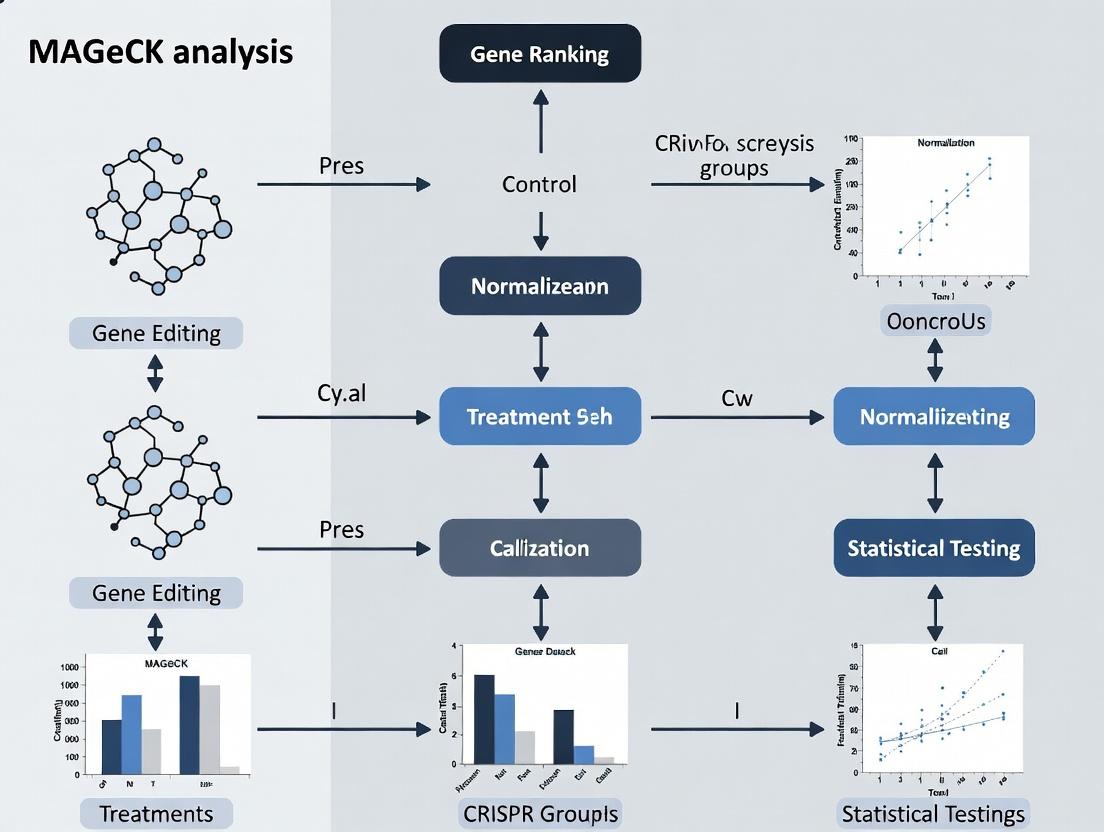
This comprehensive guide provides researchers, scientists, and drug development professionals with an in-depth understanding of MAGeCK, the essential computational tool for analyzing CRISPR-Cas9 knockout and CRISPRi/a screening data.
Mastering MAGeCK: A Complete Guide to Interpreting CRISPR Screen Data for Drug Discovery
Abstract
This comprehensive guide provides researchers, scientists, and drug development professionals with an in-depth understanding of MAGeCK, the essential computational tool for analyzing CRISPR-Cas9 knockout and CRISPRi/a screening data. We cover foundational concepts of CRISPR screen design and MAGeCK's core algorithms, deliver a step-by-step workflow from raw FASTQ files to hit gene lists, address common computational challenges and optimization strategies for robust results, and validate findings through quality control metrics and comparisons with alternative methods like BAGEL and sgRNA-seq. This guide empowers users to confidently translate screening data into actionable biological insights for target identification and validation.
CRISPR Screening and MAGeCK 101: Core Concepts for Robust Screen Design
Genome-wide CRISPR screening is a powerful, unbiased functional genomics tool for identifying genes involved in specific biological processes or phenotypes. Within the context of a thesis focused on MAGeCK (Model-based Analysis of Genome-wide CRISPR-Cas9 Knockout) for data interpretation, these screens provide the foundational raw data. MAGeCK's algorithms are designed to robustly rank essential genes from these screens by comparing sgRNA abundance between experimental conditions (e.g., initial plasmid pool vs. post-selection cells). This application note details the workflow from library design to phenotypic readout, establishing the experimental pipeline that generates data for subsequent MAGeCK analysis.
Core Components and Reagent Solutions
Research Reagent Solutions Toolkit
| Item | Function in CRISPR Screening |
|---|---|
| Genome-wide sgRNA Library (e.g., Brunello, GeCKOv2) | A pooled plasmid library containing ~4-6 sgRNAs per gene and non-targeting controls, enabling systematic knockout of every gene in the genome. |
| Lentiviral Packaging Plasmids (psPAX2, pMD2.G) | Third-generation system for producing replication-incompetent lentivirus to deliver the sgRNA and Cas9 components into target cells. |
| Cas9-Expressing Cell Line | A stable cell line constitutively expressing the Cas9 nuclease, required for generating genetic knockouts upon sgRNA delivery. |
| Transfection Reagent (e.g., PEI, Lipofectamine) | For co-transfecting packaging plasmids and sgRNA library into HEK293T cells to produce lentiviral particles. |
| Selection Antibiotics (Puromycin, Blasticidin) | To select for cells successfully transduced with the sgRNA vector, which contains an antibiotic resistance gene. |
| DNA Extraction Kit | For high-quality genomic DNA extraction from pelleted cell populations prior to sgRNA amplification. |
| High-Fidelity PCR Mix | To amplify the integrated sgRNA cassette from genomic DNA for next-generation sequencing (NGS) with minimal bias. |
| NGS Platform (Illumina) | For deep sequencing of amplified sgRNAs to quantify their abundance in different cell populations. |
Table 1: Comparison of Common Human Genome-Wide CRISPR Knockout Libraries
| Library Name | Target Species | # Genes Targeted | # sgRNAs Total | sgRNAs/Gene | Control sgRNAs | Primary Reference |
|---|---|---|---|---|---|---|
| Brunello | Human | 19,114 | 77,441 | 4 | 1,000 non-targeting | Doench et al., 2016 |
| GeCKOv2 A+B | Human | 19,050 | 123,411 | 6 | 1,000 non-targeting + 1,000 targeting EGFP | Sanjana et al., 2014 |
| Human CRISPRa v2 | Human (Activation) | 18,885 | 70,290 | 3-5 | 1,000 non-targeting | Horlbeck et al., 2016 |
| Mouse Brie | Mouse | 20,611 | 78,637 | 4 | 1,000 non-targeting | Doench et al., 2016 |
Table 2: Typical Experimental Parameters and Yield for a Genome-Wide Screen
| Parameter | Typical Value/Range | Notes for MAGeCK Analysis |
|---|---|---|
| Library Representation | 200-1000x | Guides the number of cells to transduce. Higher coverage reduces noise. |
| MOI (Multiplicity of Infection) | ~0.3-0.4 | Aim for <1 to ensure most cells receive a single sgRNA. Critical for data quality. |
| Puromycin Selection Duration | 3-7 days | Ensures only transduced cells remain. Must be optimized per cell line. |
| Post-Selection Cell Expansion | 10-14 population doublings | Allows phenotype (e.g., cell death) to manifest. |
| Genomic DNA per Sample | 5-10 µg | Sufficient for PCR amplification of all sgRNA representations. |
| NGS Sequencing Depth | 50-100 reads per sgRNA | Ensures accurate quantification of sgRNA abundance changes. |
Detailed Experimental Protocols
Protocol 1: Production of Lentiviral sgRNA Library
Objective: To generate a high-titer, representative lentiviral stock of the pooled sgRNA plasmid library.
Materials: Genome-wide sgRNA plasmid library (100ng/µL), psPAX2 packaging plasmid, pMD2.G envelope plasmid, HEK293T cells, PEI transfection reagent, DMEM + 10% FBS, 0.45 µm PVDF filter.
Method:
- Seed HEK293T cells in 15cm dishes to reach 70-80% confluency at time of transfection.
- For each dish, prepare DNA mix: 7.5 µg sgRNA library, 5.625 µg psPAX2, 1.875 µg pMD2.G in 1.5 mL serum-free DMEM.
- In a separate tube, dilute 45 µL of 1 mg/mL PEI in 1.5 mL serum-free DMEM. Incubate 5 min.
- Combine DNA and PEI mixes, vortex, and incubate 20 min at room temperature.
- Add the 3 mL DNA-PEI complex dropwise to the HEK293T cells.
- Replace medium with fresh complete medium 6-8 hours post-transfection.
- Collect viral supernatant at 48 and 72 hours post-transfection. Pool collections.
- Filter supernatant through a 0.45 µm PVDF filter to remove cellular debris. Aliquot and store at -80°C. Titrate using target cell line.
Protocol 2: Transduction and Selection of CRISPR Pooled Library
Objective: To generate a population of Cas9-expressing cells each carrying a single sgRNA, with high library coverage.
Materials: Cas9-expressing cell line, Lentiviral library stock, Polybrene (8 µg/mL), Puromycin, Cell counting equipment.
Method:
- Seed Cas9 cells at 25% confluency in appropriate medium without selection antibiotics.
- 24 hours later, thaw viral stock on ice. Prepare infection medium: fresh cell culture medium containing Polybrene (e.g., 8 µg/mL) and the calculated volume of virus to achieve an MOI of ~0.3.
- Remove medium from cells and replace with the infection medium. Include a "no virus" control plate.
- Spinoculate by centrifuging plates at 800 x g for 30 min at 32°C (optional but increases efficiency).
- Return cells to incubator for 24 hours.
- 24h post-transduction, replace medium with fresh medium without virus or Polybrene.
- 48h post-transduction, begin puromycin selection. Use the predetermined kill curve concentration (e.g., 1-3 µg/mL). Maintain selection for 3-7 days until all cells in the control plate are dead.
- Passage cells, maintaining a representation of at least 200 cells per sgRNA in the library at all times. This is the "T0" sample for genomic DNA extraction. Harvest at least 5x10^6 cells, pellet, and store at -80°C.
- Split the remaining selected cells into experimental arms (e.g., drug treatment vs. DMSO control) and continue culturing for 10-14 doublings to allow phenotype manifestation. Harvest final cell pellets for gDNA.
Protocol 3: sgRNA Amplification and Sequencing Preparation
Objective: To amplify the integrated sgRNA sequences from genomic DNA and attach NGS adapters for sequencing.
Materials: Genomic DNA from cell pellets, DNeasy Blood & Tissue Kit, Q5 Hot Start High-Fidelity 2X Master Mix, Custom PCR primers with Illumina adapters, AMPure XP beads.
Method:
- Extract gDNA: Extract genomic DNA from ~5x10^6 cells per sample using the DNeasy kit. Elute in 100 µL. Quantify by nanodrop/fluorometer.
- 1st PCR - Amplify sgRNA Region: Set up 100 µL reactions per sample using 5 µg gDNA as template. Use gene-specific primers that flank the sgRNA expression cassette.
- Cycle conditions: 98°C 30s; (98°C 10s, 63°C 30s, 72°C 20s) x 18-22 cycles; 72°C 2 min.
- Purify PCR1 Product: Pool duplicate reactions. Purify using 1.8X volume AMPure XP beads. Elute in 30 µL H2O.
- 2nd PCR - Add Indexes and Full Adapters: Use 5 µL of purified PCR1 product as template. Use primers that add the full Illumina P5/P7 flow cell adapters and unique dual index barcodes for sample multiplexing.
- Cycle conditions: 98°C 30s; (98°C 10s, 65°C 30s, 72°C 20s) x 12-15 cycles; 72°C 2 min.
- Purify and Pool Libraries: Purify each PCR2 product with 1X volume AMPure XP beads. Quantify libraries by qPCR or bioanalyzer. Pool libraries equimolarly.
- Sequence: Perform 75-100 cycle single-end sequencing on an Illumina NextSeq or HiSeq platform. The forward read should sequence the sgRNA spacer itself.
Visualization of Workflows and Analysis
Genome-wide CRISPR screen workflow.
MAGeCK data analysis pipeline.
Phenotypic readouts for CRISPR screens.
Why MAGeCK? Understanding Its Role in the CRISPR Data Analysis Pipeline
Within the context of a thesis on MAGeCK analysis for CRISPR screen data interpretation, understanding the tool's position and function is paramount. CRISPR knockout (CRISPRko) and activation (CRISPRa) screens generate complex, high-dimensional data. MAGeCK (Model-based Analysis of Genome-wide CRISPR-Cas9 Knockout) is a computational pipeline designed to robustly identify genes significantly impacting the phenotype under selection.
Application Notes: MAGeCK's Core Functions
MAGeCK processes sequencing read counts from sgRNA libraries to rank essential genes. Its model-based approach accounts for sgRNA efficiency and variance, improving sensitivity over simpler methods. Key steps include read count normalization, mean-variance modeling for sgRNA efficiency, and gene-level ranking using a Robust Rank Aggregation (RRA) algorithm.
Table 1: Key Metrics from a Representative MAGeCK Analysis (Negative Selection Screen)
| Gene Symbol | RRA Score (β) | p-value | FDR | Log2 Fold Change (Gene-level) | Phenotype |
|---|---|---|---|---|---|
| POLR2A | -3.45 | 2.1E-08 | 1.5E-05 | -2.1 | Essential |
| CDK2 | -1.98 | 4.7E-05 | 0.012 | -1.3 | Essential |
| MCL1 | -2.89 | 8.9E-07 | 0.0004 | -1.8 | Essential |
| ControlGeneX | 0.12 | 0.65 | 0.92 | 0.05 | Non-essential |
Experimental Protocol: A MAGeCK Analysis Workflow
Protocol: From FASTQ to Hit Identification using MAGeCK
I. Prerequisite Data & Quality Control
- Input: Paired-end FASTQ files from sequenced sgRNA amplicons pre- and post-selection.
- QC: Use FastQC to assess read quality. Trim adapters using cutadapt or Trimmomatic.
II. Read Alignment and Count Generation
- Alignment: Use
mageck countfunction.- Command example:
mageck count -l library_file.txt -n sample_report --sample-label SamplePretreat,SamplePosttreat --fastq SamplePretreat.fastq.gz SamplePosttreat.fastq.gz
- Command example:
- Output: This generates a count table file where each row is an sgRNA and columns contain read counts for each sample.
III. Statistical Analysis for Gene Selection
- Differential Analysis: Use
mageck testfunction.- Command example:
mageck test -k sample_count.txt -t SamplePosttreat -c SamplePretreat -n differential_analysis --norm-method control --control-sgrna control_guides.txt
- Command example:
- Algorithm: MAGeCK uses the RRA algorithm to aggregate sgRNA rankings into a gene-level score (β), p-value, and False Discovery Rate (FDR).
IV. Visualization and Interpretation
- Volcano Plots: Use
mageck mleoutput or custom R scripts (ggplot2) to plot gene β scores against -log10(FDR). - Pathway Enrichment: Use MAGeCK-VISPR or feed significant gene lists (FDR < 0.05) into tools like GSEA or Enrichr for biological interpretation.
Visualizations
Diagram Title: MAGeCK Primary Analysis Workflow
Diagram Title: MAGeCK vs Simple Ranking Method
The Scientist's Toolkit: Essential Research Reagents & Solutions
Table 2: Key Reagents for a CRISPR Screen with MAGeCK Analysis
| Item | Function in CRISPR Screen | Relevance to MAGeCK Analysis |
|---|---|---|
| Genome-wide sgRNA Library (e.g., Brunello, GeCKO) | Provides pooled sgRNAs targeting all human genes. | MAGeCK requires a precise library file mapping sgRNA IDs to target genes for count alignment. |
| Lentiviral Packaging Mix | Produces lentivirus to deliver the sgRNA library into cells. | Critical for screen quality; low viral diversity (bottlenecking) creates bias in count data. |
| Puromycin or other Selection Antibiotic | Selects for cells successfully transduced with the sgRNA construct. | Ensures a uniform population pre-selection, a key assumption for count normalization. |
| PCR Amplification Primers for NGS | Amplify the integrated sgRNA cassette from genomic DNA for sequencing. | Must be specific and generate minimal bias; PCR duplicates can be handled by MAGeCK. |
| Non-Targeting Control sgRNAs | sgRNAs with no known genomic target, included in the library. | Used by MAGeCK for normalization (--norm-method control) and negative control in statistical testing. |
| Genomic DNA Extraction Kit | High-quality, high-yield extraction from pooled cell populations. | Input material for NGS library prep; quality directly impacts read count accuracy. |
| NGS Sequencing Reagents (e.g., Illumina) | Generate raw sequencing reads (FASTQ files) of the sgRNA pool. | The primary input data for the mageck count command. Read depth is crucial for sensitivity. |
Application Notes
Within the broader thesis on MAGeCK for CRISPR screen interpretation, this deconstruction focuses on three core statistical pillars enabling robust identification of essential and non-essential genes. The MAGeCK (Model-based Analysis of Genome-wide CRISPR/Cas9 Knockout) algorithm is a comprehensive computational tool designed for analyzing CRISPR screen data. Its robustness stems from the sequential and integrative application of RRHO, Mean-Variance modeling, and RRA.
Robust Rank Aggregation (RRA) is the final and pivotal step. CRISPR screens often involve multiple sgRNAs targeting the same gene. RRA addresses the challenge of fairly integrating these sgRNA-level rankings into a single, robust gene-level score. It employs a probabilistic model to identify genes where a significant fraction of its sgRNAs rank highly (e.g., enriched or depleted) compared to a null distribution of random rankings. This method is resilient to outliers, ensuring a single poorly performing sgRNA does not mask a true gene signal. The RRA ρ-score and associated p-value provide the primary metric for gene selection in downstream analyses.
Mean-Variance Modeling is the engine for differential analysis. CRISPR count data exhibit a mean-dependent variance relationship, where genes with low read counts (means) show higher relative variability. MAGeCK employs a负二项 (Negative Binomial, NB) model or similar to accurately capture this overdispersion. This modeling allows for the precise estimation of variance for each sgRNA, which is critical for calculating the significance of observed differences between conditions (e.g., post-treatment vs. initial plasmid). Proper mean-variance modeling prevents high-variance, low-count genes from being falsely called as significant.
RRHO (Robust Rank- rank Hypergeometric Overlap) is primarily utilized in MAGeCK-VISPR for comparing two phenotype profiles (e.g., two different time points or drug treatments). It provides a visualization and statistical framework to identify the concordant and discordant signatures between two ranked gene lists. By stepping through thresholds in both lists and calculating hypergeometric overlap significance, RRHO generates a heatmap that pinstones regions of significant agreement or disagreement, beyond a simple correlation of ranks.
Table 1: Core Algorithm Output Metrics Comparison
| Algorithm Component | Primary Output | Key Metric | Interpretation | Typical Threshold |
|---|---|---|---|---|
| RRA (Gene Ranking) | Gene-level score | ρ-score (p-value) | Lower ρ & p-value indicates stronger selection. | p-value < 0.05 (FDR-adjusted) |
| Mean-Variance Model (sgRNA) | sgRNA significance | β-score, p-value | Measure of sgRNA-level log2 fold-change and its significance. | |
| RRHO (Comparison) | Overlap significance | -log10(p-value) heatmap | Peak areas indicate thresholds with significant gene list overlap. | p-value < 0.05 (after multiple testing) |
Table 2: Typical MAGeCK Workflow Input/Output Data Structure
| Data Stage | File Format | Key Columns/Content | Purpose |
|---|---|---|---|
| Input | Read Count Matrix | sgRNAID, Gene, Sample1Count, Sample2_Count... | Raw data for analysis. |
| Input | Sample Specification | Sample, Label (e.g., Ctrl, Treat) | Defines experimental groups. |
| Output (sgRNA) | .gene_summary.txt | Gene, num, rra_p_value, rra_score, neg|pos_score, neg|pos_p-value... | Final ranked list of significant genes. |
| Output (sgRNA) | .sgrna_summary.txt | sgRNA, Gene, Control_count, Treatment_count, LFC, p-value, FDR... | Detailed sgRNA-level statistics. |
Experimental Protocols
Protocol 1: Standard MAGeCK Analysis Pipeline for CRISPR Knockout Screen
Objective: To identify genes essential for cell viability under a specific condition from a genome-wide CRISPR knockout screen.
Materials & Reagents:
- High-quality genomic DNA from harvested screen cells.
- Primers for amplifying sgRNA library region.
- High-fidelity PCR mix.
- Illumina sequencing platform and associated reagents.
- Computing cluster or high-performance workstation with ≥16GB RAM.
Procedure:
- Data Preparation: Organize raw FASTQ files from sequencing. Create a read count matrix for all sgRNAs across all samples using
mageck count: This generates a normalized count table.
Differential Analysis: Perform gene ranking using RRA on count data comparing treatment to control with
mageck test:Internally, this step: a. Models sgRNA variance using the mean-variance relationship. b. Calculates sgRNA-level statistics. c. Aggregates sgRNA rankings per gene using the RRA algorithm.
Output Interpretation: The primary result is
test_output.gene_summary.txt. Sort genes by "pos" or "neg" selection p-values (or FDR) to identify significantly depleted (essential) or enriched (dropout) genes.
Protocol 2: Comparative Analysis Using MAGeCK RRA and RRHO
Objective: To compare gene essentiality profiles between two distinct experimental conditions (e.g., Drug A vs. Drug B treatment).
Materials & Reagents:
- Read count data from two independent CRISPR screens.
- MAGeCK-VISPR package installation.
Procedure:
- Independent MAGeCK Analyses: Run Protocol 1 separately for Screen A and Screen B, producing two ranked gene lists (e.g.,
ScreenA.gene_summary.txt,ScreenB.gene_summary.txt).
RRHO Analysis: Use the
mageck visualizeor RRHO-specific scripts to compare the two profiles. The input is the per-gene log2 fold-change or ranking statistic from each condition.Interpretation: The RRHO heatmap will show a characteristic signature. A peak in the top-left quadrant indicates significant overlap in genes positively selected in both screens. A peak in the bottom-right indicates overlap in negatively selected (essential) genes. A saddle or off-diagonal pattern indicates discordant selections.
Visualizations
Title: MAGeCK Algorithm Core Workflow
Title: RRA Integrates sgRNA Rankings into a Gene Score
Title: RRHO Concept for Comparing Two Ranked Lists
The Scientist's Toolkit
Table 3: Essential Research Reagent Solutions for MAGeCK-Based Studies
| Item | Function in CRISPR/MAGeCK Analysis |
|---|---|
| Genome-wide sgRNA Library (e.g., Brunello, GeCKO) | Provides the pooled reagents targeting each gene; the starting point for screen design. |
| Lentiviral Packaging Mix | Enables high-efficiency delivery of the CRISPR-Cas9/sgRNA construct into target cells. |
| Puromycin or other Selection Antibiotic | For stable cell line generation and selecting cells successfully transduced with the sgRNA library. |
| Cell Viability/Proliferation Assay Reagents (e.g., ATP-based) | Used for functional validation of candidate essential genes identified by MAGeCK. |
| Nucleic Acid Extraction Kits (gDNA) | For high-yield, high-quality genomic DNA extraction from pooled screen cells prior to sequencing. |
| High-Fidelity PCR Master Mix | For specific and unbiased amplification of sgRNA regions from genomic DNA for NGS library prep. |
| Illumina Sequencing Reagents | For generating the raw read data (FASTQ) that serves as the primary input for the MAGeCK pipeline. |
| MAGeCK Software Suite (Command Line or VISPR) | The core computational tool implementing the algorithms (RRA, Mean-Variance modeling) for data analysis. |
| R/Bioconductor Environment with RRHO2 package | For performing and visualizing comparative RRHO analyses between screen results. |
This protocol details the critical initial and final stages of a MAGeCK (Model-based Analysis of Genome-wide CRISPR-Cas9 Knockout) pipeline, a core methodology in the thesis "Advanced Computational Pipelines for Functional Genomic Screen Interpretation." Proper sample manifest preparation and accurate interpretation of gene summary outputs are foundational for deriving biologically meaningful insights from CRISPR screen data, directly impacting target identification in drug development.
Preparing the Sample Manifest File
The sample manifest is a crucial input file that defines the experimental design for MAGeCK. It maps sequencing libraries to their respective experimental conditions.
Core Requirements and Structure
The manifest file is a tab-separated values (TSV) file. Each row represents a single sequencing library.
Table 1: Required Columns for the MAGeCK Sample Manifest
| Column Name | Data Type | Description | Example |
|---|---|---|---|
sample |
String | Unique identifier for the sequencing library. | Day0_Rep1 |
fastq |
String | Full path to the FASTQ file (for mageck test) or BAM file (for mageck count). |
/path/to/D0_R1.fastq.gz |
condition |
String | The experimental condition/group for this sample. Essential for comparison. | Control |
Detailed Protocol: Manifest Creation
- Inventory Sequencing Runs: List every FASTQ file generated from the CRISPR screen sequencing.
- Assign Conditions: Logically group files into conditions (e.g., Day0, Day21Treatment, Day21Vehicle). Biological replicates share the same condition label.
Construct TSV File: a. Using a text editor or spreadsheet software, create a three-column table. b. Populate the
samplecolumn with concise, unique names. c. Enter the absolute file paths in thefastqcolumn. d. Assign the appropriateconditionto each sample. e. Save the file in TSV format (e.g.,sample_manifest.tsv).Validation Check:
- Ensure no duplicate
samplenames. - Verify all file paths are accessible.
- Confirm condition labels are consistent (case-sensitive).
- Ensure no duplicate
Workflow for Sample Manifest Creation
The primary output for gene-level analysis is the .gene_summary.txt file generated by mageck test.
Interpretation of Key Columns
Table 2: Essential Columns in MAGeCK gene_summary.txt File
| Column | Description | Critical Interpretation | |
|---|---|---|---|
id |
Gene symbol. | The gene targeted by the sgRNA library. | |
num |
Number of sgRNAs targeting the gene. | Quality metric; low numbers reduce confidence. | |
| `neg | score` | Combined β-score from negative selection. | Positive Value: Gene depletion (essential).Negative Value: Enrichment. |
| `neg | p-value` | P-value for negative selection. | Significance of depletion. |
| `neg | fdr` | False Discovery Rate for negative selection. | Adjusted p-value. Standard cutoff: FDR < 0.05. |
| `pos | score` | Combined β-score from positive selection. | Positive Value: Gene enrichment (resistance).Negative Value: Depletion. |
| `pos | p-value` | P-value for positive selection. | Significance of enrichment. |
| `pos | fdr` | FDR for positive selection. | Adjusted p-value. Standard cutoff: FDR < 0.05. |
- Load File: Import the
.gene_summary.txtinto analysis software (e.g., R, Python Pandas). - Filter by Significance:
- For essential genes:
neg|fdr< 0.05 andneg|score> 0. - For resistance genes:
pos|fdr< 0.05 andpos|score> 0.
- For essential genes:
- Rank Results: Sort remaining genes by the absolute value of the significant score to identify top hits.
- Integrate with Annotation: Cross-reference significant gene lists with pathway (KEGG, GO) and disease databases for biological interpretation.
Gene Summary File Analysis Workflow
The Scientist's Toolkit: Research Reagent Solutions
Table 3: Essential Materials for MAGeCK CRISPR Screen Analysis
| Item | Function in Protocol |
|---|---|
| Brunello or similar genome-wide sgRNA library | A highly active and specific CRISPR knockout library covering human genes. Provides the sgRNA sequences for the screen. |
| Next-Generation Sequencing (NGS) Platform (e.g., Illumina NovaSeq) | Generates the high-throughput FASTQ files containing sgRNA sequences from harvested genomic DNA. |
| MAGeCK Software Suite (v0.5.9+) | The core computational tool for counting sgRNA reads and performing robust rank analysis on gene-level phenotypes. |
| High-Performance Computing (HPC) Cluster or Cloud Instance | Provides the necessary compute resources for processing large FASTQ files and running the MAGeCK pipeline. |
| R or Python Data Science Stack (tidyverse/pandas, ggplot2/matplotlib) | Enables downstream statistical analysis, filtering, and visualization of the gene summary results. |
| Gene Set Enrichment Analysis (GSEA) Software | Used post-MAGeCK to interpret significant gene lists in the context of biological pathways and processes. |
From FASTQ to Hit Genes: A Step-by-Step MAGeCK Workflow Tutorial
This protocol constitutes the critical first computational step in a comprehensive MAGeCK (Model-based Analysis of Genome-wide CRISPR-Cas9 Knockout) pipeline for interpreting CRISPR screen data. Accurate read alignment and sgRNA counting are foundational for downstream statistical analysis of gene essentiality in drug target discovery and functional genomics research.
Experimental Protocol: sgRNA Read Counting with MAGeCK count
Objective: To align raw sequencing reads from a CRISPR screen to a reference sgRNA library and generate a raw count matrix for downstream analysis.
Prerequisites:
- Computing Environment: Linux/Unix system or high-performance computing cluster.
- Software: MAGeCK toolkit (version 0.5.9.5 or higher) installed via conda (
conda install -c bioconda mageck). - Input Files:
- FASTQ Files: Sequencing read files (e.g.,
sample1.fastq.gz) from the screen experiment. - Library File: A tab-separated text file specifying sgRNA sequences and their target genes. Columns:
sgRNA_id,sequence,gene.
- FASTQ Files: Sequencing read files (e.g.,
Detailed Procedure:
- Prepare the Sample List: Create a tab-separated file (
sample_list.txt) mapping sample labels to FASTQ file paths. Include a column for experimental conditions (e.g.,controlortreatment). - Execute MAGeCK count: Run the following command in your terminal.
- Parameter Explanation:
--list-seq: Path to the sample list file.--sample-label: Names for output columns.--fastq: Paths to input FASTQ files (order must match labels).--library: Path to the sgRNA library file.--norm-method: Specifies the normalization method (medianis default for total read count adjustment).--output-prefix: Prefix for all output files.
- Quality Control: The algorithm performs an initial quality check by trimming adapters, aligning reads to the sgRNA library sequences (allowing for a default of 1-2 mismatches), and discarding low-quality or non-unique alignments.
- Output: The primary output is
mageck_count_output.count.txt, a count matrix used as direct input for MAGeCK test.
Key Output Data and Interpretation
Table 1: Summary of MAGeCK count Output Files
| File Name | Description | Key Columns | Purpose in Downstream Analysis |
|---|---|---|---|
[prefix].count.txt |
Primary sgRNA count matrix. | sgRNA, gene, sample columns (e.g., sample1, sample2) |
Direct input for mageck test to calculate gene essentiality. |
[prefix].countsummary.txt |
Alignment statistics and QC metrics. | Sample, Total Reads, Mapped Reads, Zerocounts |
Assess sequencing depth, alignment efficiency, and screen quality. |
[prefix].count_normalized.txt |
Normalized count matrix. | Same as .count.txt, but values are normalized. |
Used for visualization and exploratory analysis. |
Table 2: Typical Alignment Statistics from a Successful Screen (Example)
| Sample | Total Reads | Mapped Reads | Mapping Rate (%) | sgRNAs with Zero Counts |
|---|---|---|---|---|
| Control_Rep1 | 45,200,000 | 42,940,000 | 95.0 | 52 |
| Control_Rep2 | 43,800,000 | 41,535,000 | 94.8 | 58 |
| Treatment_Rep1 | 48,500,000 | 45,890,000 | 94.6 | 48 |
| Treatment_Rep2 | 46,700,000 | 44,130,000 | 94.5 | 61 |
Note: A high mapping rate (>90%) and a low percentage of zero-count sgRNAs (<1% of the library) indicate high-quality data suitable for robust essentiality analysis.
Table 3: Key Resources for Read Alignment and Counting
| Item | Function/Description | Example/Format |
|---|---|---|
| CRISPR sgRNA Library | Defined pool of sgRNAs targeting genes of interest and non-targeting controls. | Brunello, GeCKO, custom library. |
| Reference Library File | Text file linking sgRNA IDs to sequences and target gene identifiers. | Tab-separated file with sgRNA, sequence, gene columns. |
| High-Quality Sequencing Reads | Raw data from deep sequencing of the post-screen sgRNA amplicons. | Paired-end or single-end FASTQ files (gzipped). |
| MAGeCK Software Suite | Core algorithm package for count processing and statistical testing. | Command-line tool installed via Conda. |
| Sample Manifest File | Metadata file linking FASTQ files to biological sample names and conditions. | Tab-separated file for --list-seq input. |
Visualization of the MAGeCK Count Workflow
Title: MAGeCK count Data Processing Workflow
Application Notes
The maggck test command is the core statistical module of the MAGeCK (Model-based Analysis of Genome-wide CRISPR-Cas9 Knockout) pipeline. It is designed to identify positively and negatively selected genes or sgRNAs from CRISPR screen data by comparing read counts between conditions (e.g., initial plasmid vs. final timepoint, or control vs. treatment). This step tests for essential genes in dropout screens or phenotype-enriching genes in positive selection screens, providing robust p-values and false discovery rates (FDRs).
Key Statistical Methodology
MAGeCK test employs a modified Negative Binomial model to account for the mean-variance relationship in sequencing count data. It integrates the Robust Rank Aggregation (RRA) algorithm to rank sgRNAs and genes based on their enrichment/depletion scores. The model is particularly effective in handling screens with high noise levels and variable sgRNA efficacy.
Core Quantitative Output Metrics: The primary output includes gene-level scores, p-values, and FDRs. Key columns in the result file are summarized below.
Table 1: Core Output Metrics from maggck test
| Metric | Description | Typical Threshold for Hit Calling |
|---|---|---|
| beta | Log₂ fold change of gene score. Negative for depletion, positive for enrichment. | Context-dependent |
| p-value | Raw p-value indicating significance of selection. | < 0.05 |
| FDR | False Discovery Rate (Benjamini-Hochberg). Primary metric for multiple test correction. | < 0.05 - 0.25 |
| Rank | Gene rank based on RRA score in the condition. | Top/bottom ~10% |
| RRA_score | Robust Rank Aggregation score (lower score = stronger selection). | < 0.05 |
Experimental Protocols
Protocol: Executing a Standardmaggck testAnalysis
I. Prerequisite Data Preparation
- Count Matrix File: A tab-separated file where rows are sgRNAs, columns are samples, and values are raw read counts. Ensure sample labels are consistent with the design matrix.
- Design Matrix File: A tab-separated file defining experimental groups. The first column is sample labels. Subsequent columns (typically labeled "control" and "treatment") use 1s and 0s to assign samples to groups for comparison.
II. Command-Line Execution Run the following command in a terminal or submit as a job to a computing cluster:
III. Parameter Explanation & Optimization
-k: Path to the count matrix file.-t&-c: Comma-separated lists of sample names for treatment and control groups, respectively.-n: Prefix for output file names.--control-sgrna: (Recommended) File containing a list of non-targeting control sgRNA IDs. This improves normalization.--norm-method: Specifies count normalization (median,total, orcontrol).medianis default and robust.--pdf-report: Generates a summary PDF with diagnostic plots (e.g., sgRNA ranking, p-value distribution).
IV. Output Interpretation
- Primary Result File:
test_output.gene_summary.txt. Sort by "pos\|selection" or "neg\|selection" FDR columns to identify top hits. - Quality Control: Examine the generated PDF report. A uniform p-value distribution except for sharp peaks near 0 indicates good data quality. The rank plot should show clear separation of positive/negative controls.
- Hit Calling: Apply an FDR cutoff (e.g., FDR < 0.1 for essential genes, < 0.25 for exploratory studies) and a log₂ fold change (beta) threshold to define high-confidence hits.
Visualizations
Workflow of the 'maggck test' Command
MAGeCK Test Statistical Pipeline
The Scientist's Toolkit
Table 2: Essential Research Reagents & Resources for MAGeCK Test
| Item | Function/Description | Example/Format |
|---|---|---|
| Sequenced CRISPR Library | The raw FASTQ files from sequenced post-screen samples. | Paired-end FASTQ files. |
| sgRNA Library Annotation | A file mapping sgRNA IDs to target genes and genomic sequences. | TSV file with columns: sgRNA, gene, sequence. |
| Non-targeting Control sgRNAs | A list of sgRNAs not targeting any genomic region, used for normalization and background estimation. | Text file, one sgRNA ID per line. |
| Count Matrix | The primary input for maggck test, generated by maggck count. |
Tab-separated file: sgRNA x Sample counts. |
| Design Matrix | Defines which samples belong to control vs. treatment groups for comparison. | TSV file with 1/0 assignment columns. |
| Positive Control Genes | Known essential (e.g., ribosomal proteins) or phenotype-associated genes used for QC. | List of gene symbols. |
| MAGeCK Software Suite | The core analysis toolkit containing the test module. |
Version 0.5.9.4 or higher. |
| High-Performance Computing (HPC) Environment | Recommended for running the analysis due to computational intensity. | Linux server or cluster with >=8GB RAM. |
This protocol details the third critical step in a comprehensive MAGeCK analysis workflow for CRISPR-Cas9 knockout or CRISPRi/a screen data interpretation. Following the identification of significantly enriched or depleted genes (gene_summary.txt), the maggck pathway command performs pathway and functional enrichment analysis. This step translates gene-level hits into biological insights by identifying over-represented Gene Ontology (GO) terms, KEGG pathways, and other custom gene sets, thereby illuminating the cellular mechanisms and processes underlying the screen's phenotype. This analysis is fundamental for drug target discovery and validation in pharmaceutical research.
Application Notes
- Core Function: The
maggck pathwaytool statistically tests the enrichment of pre-ranked gene lists frommageck testagainst defined gene set databases. - Key Databases: By default, it utilizes MSigDB collections, including hallmark gene sets, canonical pathways (KEGG, Reactome), and GO terms. Custom gene sets in GMT format can be specified.
- Ranking Metric: Genes are typically ranked by their beta score (log-fold change) from the
gene_summary.txtfile, allowing identification of pathways enriched for both positively and negatively selected genes. - Statistical Output: Primary results include the Normalized Enrichment Score (NES), p-value, and False Discovery Rate (FDR) for each gene set.
- Integration: Results from this step directly inform downstream validation experiments, such as designing functional assays for top-hit pathways.
Table 1: Example maggck pathway Output Summary (Top 5 Enriched Pathways)
| Gene Set Name | Source Database | NES | p-value | FDR | Leading Edge Genes (#) |
|---|---|---|---|---|---|
| HALLMARKMTORC1SIGNALING | MSigDB Hallmark | 2.45 | 1.2e-08 | 3.5e-06 | 32 |
| KEGG_PROTEASOME | KEGG | -2.87 | 5.8e-10 | 1.1e-07 | 28 |
| GOBPDNAREPAIR | Gene Ontology | 1.98 | 7.3e-05 | 0.009 | 41 |
| REACTOMECELLCYCLE | Reactome | 2.12 | 2.4e-06 | 0.0004 | 55 |
| CUSTOMDRUGTARGETS_V1 | Custom GMT | -2.15 | 0.0001 | 0.012 | 12 |
Table 2: Recommended Parameters for maggck pathway
| Parameter | Typical Setting | Function & Impact |
|---|---|---|
--ranking-score |
pos|neg|both |
Determines which beta scores to use for ranking. both is standard. |
--gene-set |
KEGG_and_GOBP |
Pre-defined collection within MAGeCK. Can specify path to custom GMT. |
--permutation |
1000 |
Number of permutations for significance testing. Higher = more precise but slower. |
--min-gene |
5 |
Minimum genes required in overlap between gene set and data. |
--max-gene |
500 |
Maximum genes allowed in a gene set for analysis. |
Experimental Protocol
Protocol: Executing Pathway Enrichment Analysis with MAGeCK
I. Prerequisites and Input File Preparation
- Input File: Ensure the
gene_summary.txtfile frommageck testis available. - Database: Confirm the local path to the required gene set database (e.g., MSigDB GMT files). MAGeCK typically includes common sets.
II. Command-Line Execution
- Basic Command for KEGG & GO Analysis:
-k: Specifies the gene summary file.--gene-set: Uses built-in KEGG and GO Biological Process collections.--ranking-score both: Uses genes ranked by both positive and negative beta scores.-o: Defines the prefix for all output files.
- Advanced Command with Custom Gene Sets and Parameters:
-g: Path to a custom gene set file in GMT format.--permutation: Increases permutations for more robust p-values.--min-gene 10: Filters out gene sets with fewer than 10 genes overlapping the data.--sort-criteria pos: Sorts pathways by enrichment of positively selected genes.
III. Output Interpretation
- Primary output files include:
output_prefix.gene_summary.txt: Re-annotated gene list with pathway information.output_prefix.pathway_summary.txt: The main result table with enrichment statistics for each gene set (as in Table 1).output_prefix.enrichment_histogram.pdf: Visual summary of top enriched/depleted pathways.
- Prioritize pathways with high |NES| (>2 or <-2) and low FDR (<0.05 or <0.01).
Visualizations
Title: MAGeCK Pathway Analysis Workflow
Title: Example Enriched Pathway: mTORC1 Signaling
The Scientist's Toolkit
Table 3: Essential Research Reagent Solutions for Pathway-Focused Validation
| Item | Function/Application in Validation |
|---|---|
| CRISPR Library (Sub-pool) | A focused sgRNA library targeting genes within a top-enriched pathway for secondary, high-coverage screening. |
| Pathway-Specific Reporter Cell Line | Cell line with a luciferase or GFP reporter for the activity of a key pathway (e.g., mTOR, Wnt/β-catenin). |
| Phospho-Specific Antibodies | For Western blot validation of pathway activity changes (e.g., phospho-S6K for mTOR, phospho-γH2AX for DNA damage). |
| Small Molecule Inhibitors/Agonists | Pharmacological modulators of the enriched pathway (e.g., Rapamycin for mTOR) used for phenotypic rescue/synergy experiments. |
| qPCR Assay Panels | Pre-designed primer sets for quantifying expression changes of pathway-related genes in validated hits. |
| Gene Set Enrichment Analysis (GSEA) Software | For independent, non-MAGeCK based enrichment validation using the full ranked gene list. |
Within the broader thesis on MAGeCK (Model-based Analysis of Genome-wide CRISPR/Cas9 Knockout) for CRISPR screen data interpretation, Step 4 represents the critical transition from statistical computation to biological insight. Following the robust identification of significantly enriched or depleted sgRNAs/genes from Steps 1-3 (quality control, read count normalization, and beta score estimation), visualization synthesizes these complex results into interpretable formats. This step directly addresses the core thesis aim: to translate genome-wide perturbation data into actionable hypotheses for functional genomics and drug target discovery. Effective visualization enables researchers and drug development professionals to prioritize hits, understand gene rankings, discern patterns across experimental conditions, and communicate findings.
Core Visualization Types: Rationale and Interpretation
Volcano Plot
A volcano plot is a scatterplot that displays statistical significance (-log10(p-value) or -log10(FDR)) against the magnitude of effect (beta score or log2 fold change). It allows for the simultaneous visualization of both effect size and statistical confidence, facilitating the identification of high-confidence hits (e.g., significantly depleted essential genes or enriched resistance genes).
Interpretation:
- X-axis (Beta/LFC): Positive values indicate gene enrichment (e.g., knock-out confers resistance). Negative values indicate gene depletion (e.g., knock-out confers sensitivity/essentiality).
- Y-axis (-log10(p/FDR)): Higher values indicate greater statistical significance.
- Top-left/right quadrants: Contain the most biologically relevant hits—genes with large effect sizes and high significance. Threshold lines (dashed) are typically drawn based on FDR < 0.05 (or similar) and |beta| > a defined cutoff (e.g., 0.5).
Rank Plot (or Gene Ranking Plot)
This plot visualizes the ranking of all genes based on their beta scores or associated statistics from the MAGeCK test. It is invaluable for assessing the distribution of effects and identifying where key hits fall within the global ranking.
Interpretation:
- X-axis (Gene Rank): Genes are ordered from most negatively selected (left) to most positively selected (right).
- Y-axis (Beta Score/Ranking Metric): The computed score from MAGeCK.
- Curve: Shows the trajectory of gene effects. Steep drops or rises highlight clusters of genes with strong phenotypic effects.
Heatmap
A heatmap displays the normalized read counts or beta scores for a selected gene set (e.g., top hits) across all samples or conditions in the screen. It reveals patterns, clusters, and outliers among samples and genes, which is crucial for comparative analysis (e.g., treatment vs. control, multiple time points).
Interpretation:
- Rows: Typically represent genes.
- Columns: Represent samples or experimental conditions.
- Color Intensity: Represents the relative abundance (counts) or effect size (beta). Standardized z-scoring across rows is often applied to highlight gene-centric patterns across samples.
Table 1: Summary of Key Visualization Types and Their Primary Functions
| Plot Type | Primary Axes | Key Purpose | Ideal for Identifying |
|---|---|---|---|
| Volcano Plot | Effect Size vs. -log10(p/FDR) | Compare magnitude and significance of all genes simultaneously. | High-confidence hits in all quadrants; global view of selection. |
| Rank Plot | Gene Rank vs. Beta Score | Visualize the ordered distribution of gene effects. | Position of specific genes of interest in the global context. |
| Heatmap | Genes vs. Samples (Color: Value) | Uncover patterns and clusters across conditions for a gene set. | Co-regulated genes, sample outliers, treatment-specific effects. |
Detailed Protocols for Visualization Generation
Protocol 3.1: Generating a Volcano Plot from MAGeCK Test Output
Objective: To create a publication-quality volcano plot from gene_summary.txt file generated by mageck test.
Materials & Input:
- MAGeCK output file:
gene_summary.txt - Software: R (v4.2.0+) with
ggplot2,dplyr,ggrepelpackages.
Procedure:
- Load and prepare data.
- Define significance thresholds.
- Create the plot.
- Export. Use
ggsave("volcano_plot.pdf", width=6, height=5).
Protocol 3.2: Generating a Rank Plot
Objective: To visualize the ranking of genes based on their selection beta scores.
Procedure:
- Prepare ranked data.
- Create the rank plot.
Protocol 3.3: Generating a Heatmap of Top Hits Across Samples
Objective: To create a clustered heatmap of normalized read counts for top candidate genes.
Materials & Input:
- Normalized count matrix (e.g., from
mageck count-> normalization). - List of top gene IDs from
gene_summary.txt.
Procedure:
- Load count data and subset.
- Scale data (z-score) and plot.
Workflow and Relationship Diagrams
Diagram 1: Visualization Workflow in MAGeCK Thesis
Diagram 2: Data to Insight via Plots
The Scientist's Toolkit: Research Reagent Solutions
Table 2: Essential Materials and Tools for MAGeCK Visualization
| Item / Solution | Function in Visualization Step | Example / Notes |
|---|---|---|
| MAGeCK Software Suite | Generates the essential input files (gene_summary.txt, normalized counts) from raw FASTQ data. |
Version 0.5.9.4. Command-line tool for core analysis. |
| R Statistical Environment | Primary platform for executing visualization scripts and generating plots. | R ≥ 4.2.0. Provides a flexible, open-source ecosystem. |
| R ggplot2 Package | Creates versatile, customizable, and publication-quality static plots (Volcano, Rank). | Part of the tidyverse. Enables layered grammar of graphics. |
| R pheatmap or ComplexHeatmap | Specialized packages for generating annotated, clustered heatmaps. | ComplexHeatmap offers advanced sample/gene annotation. |
| Python (Matplotlib/Seaborn) | Alternative to R for scripting visualizations. | seaborn provides high-level statistical graphics. |
| Jupyter Notebook / RMarkdown | Environments for creating reproducible analysis reports that integrate code, plots, and commentary. | Essential for documenting the workflow and sharing results. |
| Colorblind-Safe Palette | Pre-defined color sets ensuring accessibility and clarity in all plots. | Use hex codes from Google or Viridis palettes. Critical for figures. |
| High-Quality Gene Annotation | Provides gene symbols, descriptions, and pathway info for labeling plots and interpreting hits. | Resources: Ensembl, NCBI, MSigDB for gene set context. |
This document provides application notes and protocols for employing the Model-based Analysis of Genome-wide CRISPR/Cas9 Knockout (MAGeCK) tool in two primary real-world screening paradigms. Within the broader thesis on MAGeCK analysis for CRISPR screen data interpretation, these scenarios represent the core translational applications: identifying genes essential for cellular fitness (essentiality screens) and discovering genes whose modification influences response to therapeutic agents (drug-resistance modifier screens). The analytical approach, while leveraging the same robust MAGeCK algorithm, requires distinct experimental designs and nuanced interpretation.
The fundamental differences between the two screening types are summarized in Table 1.
Table 1: Core Comparison of Essentiality and Drug-Resistance Modifier Screens
| Aspect | Essentiality Screen | Drug-Resistance Modifier Screen |
|---|---|---|
| Primary Goal | Identify genes required for cellular proliferation/survival under standard conditions. | Identify genes whose knockout confers resistance or sensitivity to a drug. |
| Experimental Arms | Single condition (often endpoint vs. initial plasmid pool). | Minimum of two conditions: Treatment (drug) vs. Control (vehicle). |
| Expected Hit Types | Core fitness genes (e.g., ribosomal proteins, metabolic enzymes). | 1. Resistance hits: Enriched in drug-treated arm (e.g., drug target, pathway members).2. Sensitizer hits: Depleted in drug-treated arm (e.g., synthetic lethal partners, detoxifiers). |
| Typical MAGeCK Command | mageck test -k count.txt -t Post -c Pre -n output |
mageck test -k count.txt -t DrugTreated -c VehicleControl -n output |
| Key Output | Genes significantly depleted in the population. | Genes with significant β-scores; positive β (enriched) = resistance; negative β (depleted) = sensitizer. |
| Biological Context | Baseline cellular machinery. | Mechanism of drug action, escape pathways, and combination therapy targets. |
Detailed Protocols
Protocol A: MAGeCK for Genome-Wide Essentiality Screens
Objective: To identify genes essential for the viability/proliferation of a cell line.
Workflow:
Diagram Title: Workflow for CRISPR Essentiality Screen Analysis
Step-by-Step:
- Library Transduction: Transduce target cells with a genome-wide CRISPR knockout library (e.g., Brunello, Human GeCKO v2) at a low MOI (<0.3) to ensure single sgRNA integration. Include a non-targeting control sgRNA population.
- Selection and Sampling: 24-48 hours post-transduction, apply puromycin selection for 3-7 days. Immediately after selection, harvest a representative sample of cells (~50-100x library coverage) as the T0 reference time point. Extract genomic DNA (gDNA).
- Proliferation Phase: Culture the remaining cells, maintaining a minimum library coverage of 500x, for approximately 14-21 population doublings. Harvest the final Tend population and extract gDNA.
- Sequencing Library Prep: Amplify the integrated sgRNA sequences from gDNA using a two-step PCR protocol.
- PCR1 (From gDNA): Use primers binding the constant library vector regions.
- PCR2 (Add Barcodes/Adaptors): Use primers to add Illumina adaptors and sample barcodes. Pool and sequence on an Illumina platform to a minimum depth of 500 reads per sgRNA.
- MAGeCK Analysis:
mageck count: Align FASTQ reads to your sgRNA library reference file. Generate a count matrix.mageck test: Compare Tend vs T0 using the Robust Rank Aggregation (RRA) algorithm to identify depleted sgRNAs/genes.
- Interpretation: Top essential genes will have negative scores and low p-values in the
gene_summary.txtoutput. Core fitness genes serve as positive controls.
Protocol B: MAGeCK for Drug-Resistance Modifier Screens
Objective: To identify gene knockouts that confer resistance or sensitivity to a drug treatment.
Workflow:
Diagram Title: Workflow for CRISPR Drug-Resistance Modifier Screen
Step-by-Step:
- Library Transduction & Selection: As in Protocol A, generate a pooled, selected population of knockout cells.
- Establish Treatment Arms: Split the selected pool into two equivalent populations. Treat one with the drug of interest at a clinically relevant concentration (e.g., IC50-IC80). Treat the other with vehicle alone. Culture both arms, maintaining coverage, for a duration allowing phenotype manifestation (often ~14 doublings).
- Harvest and Sequence: Harvest cells from both arms. Prepare gDNA and sequence sgRNA libraries as in Step 4 of Protocol A. Ensure balanced sequencing depth.
- MAGeCK Analysis:
mageck count: Generate count matrix for both samples.mageck test: Perform the core comparison. The β-score sign indicates the direction of selection.
- Interpretation: Analyze the
gene_summary.txtfile.- Resistance Genes (Positive Enrichment): Positive β-score, sgRNAs enriched in drug-treated sample. Often includes the drug target itself (loss-of-function reduces drug efficacy).
- Sensitivity Genes (Negative Enrichment): Negative β-score, sgRNAs depleted in drug-treated sample. Indicates synthetic lethality with drug treatment; promising combination therapy targets.
- Visualization: Create a volcano plot (β-score vs. -log10(p-value)) to clearly separate resistance and sensitivity hits.
The Scientist's Toolkit: Key Research Reagent Solutions
Table 2: Essential Materials and Reagents for MAGeCK-Based Screens
| Item | Function / Description | Example Product / Source |
|---|---|---|
| Genome-wide sgRNA Library | Pre-designed, pooled library targeting all human/mouse genes. Provides coverage and minimal off-target effects. | Brunello (Addgene #73178), Human GeCKO v2 (Addgene #1000000049), Mouse Brie (Addgene #1000000053) |
| Lentiviral Packaging System | Produces high-titer, infectious lentiviral particles for stable sgRNA delivery. | psPAX2 (packaging plasmid, Addgene #12260), pMD2.G (envelope plasmid, Addgene #12259) |
| Cell Line-Specific Media & Reagents | Maintains optimal health and proliferation of the target cell line throughout the long screen. | Gibco, Sigma-Aldrich |
| Puromycin (or appropriate antibiotic) | Selects for cells successfully transduced with the lentiviral CRISPR construct. | Thermo Fisher Scientific, Sigma-Aldrich |
| Drug Compound / Vehicle | The therapeutic agent of interest and its matched solvent control for modifier screens. | Selleck Chemicals, MedChemExpress, Cayman Chemical |
| Genomic DNA Isolation Kit | High-yield, high-purity gDNA extraction from a large number of cultured cells. | QIAGEN Blood & Cell Culture DNA Maxi Kit, Zymo Quick-DNA Midiprep Plus Kit |
| PCR Enzymes for NGS Prep | High-fidelity polymerase for accurate, bias-free amplification of sgRNA regions from gDNA. | KAPA HiFi HotStart ReadyMix, NEBNext Ultra II Q5 Master Mix |
| Illumina Sequencing Platform | High-throughput sequencing to quantify sgRNA abundance from all samples. | Illumina NextSeq 500/550/2000, NovaSeq 6000 |
| MAGeCK Software | The core computational pipeline for count normalization, statistical testing, and hit ranking. | MAGeCK (source: https://sourceforge.net/p/mageck/wiki/Home/) |
| High-Performance Computing (HPC) Resource | Linux server or cluster for running MAGeCK and handling large NGS data files. | Local institutional HPC, Cloud computing (AWS, Google Cloud) |
Solving Common MAGeCK Pitfalls: Best Practices for Cleaner, More Reproducible Results
Addressing Low sgRNA Efficiency and High False Discovery Rates (FDR)
Within the context of a thesis on MAGeCK analysis for CRISPR screen data interpretation, a primary challenge is the accurate identification of true hits from background noise. Low sgRNA efficiency and high FDR compromise screen sensitivity and specificity, leading to missed essential genes or false-positive target identification. This document outlines the root causes, quantitative impacts, and detailed protocols for mitigation.
Quantitative Impact and Root Causes
Table 1: Common Causes and Impacts on CRISPR Screen Data Quality
| Factor | Typical Impact on FDR | Effect on sgRNA Efficiency | Quantitative Metric |
|---|---|---|---|
| Poor sgRNA Design | Increase of 5-15% | Reduces KO efficiency by 30-70% | On-target score < 0.4 |
| Low Library Complexity | Increase of 10-25% | N/A | Coverage < 200x per sgRNA |
| High Variance Replicates | Increase of 8-20% | N/A | Pearson R² < 0.7 |
| Inadequate Sequencing Depth | Increase of 5-12% | N/A | Reads/sgRNA < 200 |
| Cell Line-Specific Effects | Variable | Reduces efficiency by 20-60% | Varies by transfection/transduction |
Application Notes & Protocols
Protocol 1: Pre-Screen sgRNA Library QC and Optimization
Objective: To ensure high initial sgRNA activity and library representation.
- Design & Selection: Use validated algorithms (e.g., CRISPick, ChopChop). Filter for sgRNAs with an on-target score > 0.6 and an off-target score (CFD) < 0.05.
- Library Synthesis QC: Validate by NGS. Require > 90% of sgRNAs present at ± 5-fold of the median read count.
- Pilot Transduction: Titrate virus to achieve MOI ~0.3-0.4, ensuring > 90% of cells receive a single sgRNA. Confirm by fluorescent marker or NGS of genomic DNA 72h post-transduction.
- Harvest Initial Time Point (T0): Collect 500-1000 cells per sgRNA for genomic DNA extraction. This serves as the normalization baseline for MAGeCK.
Protocol 2: Experimental Design to Minimize FDR
Objective: To structure the screen for robust statistical analysis.
- Biological Replicates: Perform a minimum of 3 independent biological replicates per condition.
- Control sgRNAs:
- Positive Controls: Include at least 50 non-essential gene-targeting sgRNAs (e.g., targeting AAVS1).
- Negative Controls: Include at least 50 essential gene-targeting sgRNAs (e.g., targeting POLR2A, RPA3).
- Cell Coverage: Maintain a minimum of 500 cells per sgRNA throughout the screen to avoid stochastic dropout.
- Sequencing Depth: Sequence to a minimum depth of 300 reads per sgRNA for both T0 and endpoint (Tend) samples.
Protocol 3: MAGeCK Analysis Pipeline with FDR Control
Objective: To process count data with steps to enhance true signal detection.
- Data Preprocessing with
mageck count:- Normalize read counts using median scaling.
- Flag and optionally remove sgRNAs with low counts (< 30 across all samples).
- Robust Rank Aggregation with
mageck test:- Use the
--control-sgrnaparameter to define negative control sgRNAs for normalization. - The RRA algorithm is less sensitive to outliers than linear models.
- Use the
- FDR Adjustment & Hit Calling:
- Apply Benjamini-Hochberg correction to RRA p-values.
- Define primary hit list: FDR < 0.05 (for essential genes) or FDR < 0.1 (for broader phenotypes).
- Cross-reference with positive control gene performance.
Protocol 4: Post-Hoc Validation & Deconvolution
Objective: To validate screen hits and address false positives.
- Individual sgRNA Validation: Re-synthesize top-hit sgRNAs (minimum 3 per gene) and test in a secondary assay (e.g., Western blot, viability assay).
- Gene Essentiality Confirmation: Use orthogonal method (e.g., RNAi, small-molecule inhibitor) to phenocopy CRISPR knockout.
- Pathway Enrichment Analysis: Input significant genes (FDR < 0.25) into tools like Enrichr or GSEA. Consensus pathways strengthen true-hit confidence.
Visualization of Workflows and Relationships
Title: Integrated Protocol to Address FDR and Efficiency
Title: MAGeCK FDR Control Analysis Workflow
The Scientist's Toolkit
Table 2: Essential Research Reagent Solutions for CRISPR Screen Optimization
| Item | Function/Benefit | Example/Notes |
|---|---|---|
| Validated sgRNA Design Tool | Predicts high-efficiency, specific sgRNAs; reduces false negatives from poor cleavage. | CRISPick (Broad), CHOPCHOP. |
| High-Complexity Library | Ensures even representation; prevents skew from stochastic loss of sgRNAs. | Custom or genome-wide (e.g., Brunello, TorontoKO). |
| High-Titer Lentivirus | Enables low-MOI transduction; critical for maintaining single sgRNA per cell. | > 1e8 IU/mL, titrated via qPCR or fluorescence. |
| Negative Control sgRNA Set | Enables empirical FDR control during MAGeCK normalization and analysis. | Target essential genes (e.g., from Hart et al. 2015). |
| Positive Control sgRNA Set | Monitors screen dynamic range and validates assay performance. | Target safe-harbor or non-essential loci (e.g., AAVS1). |
| Deep Sequencing Kit | Provides sufficient reads per sgRNA for robust statistical comparison. | Illumina NovaSeq or NextSeq platforms. |
| Cell Line-Specific Transduction Aid | Improves sgRNA delivery efficiency in hard-to-transduce lines (e.g., primary). | Polybrene, Vectofusin-1. |
| Genomic DNA Extraction Kit | High-yield, pure gDNA for accurate sgRNA representation by PCR/NGS. | Must handle large cell numbers (> 1e7). |
| MAGeCK Software Suite | Specifically designed for robust identification of hits from CRISPR screens. | Implements RRA and negative control normalization. |
| Pathway Analysis Platform | Contextualizes hit lists to identify coherent biological signals. | Enrichr, GSEA, IPA. |
Within the broader thesis on advancing CRISPR screen data interpretation using MAGeCK (Model-based Analysis of Genome-wide CRISPR/Cas9 Knockout), a critical methodological challenge is the selection of appropriate normalization strategies and the correction for confounding copy number variations (CNV). This Application Note provides detailed protocols for these essential preprocessing steps, which are fundamental for reducing false positives and increasing the biological relevance of hit identification in drug target discovery.
Normalization Strategies for CRISPR Screen Count Data
Raw read counts from CRISPR screens are influenced by technical variables (e.g., sequencing depth, sgRNA library size) rather than solely biological effects. Normalization adjusts counts to enable fair comparison across samples.
Table 1: Comparison of Common Normalization Methods for MAGeCK Input
| Method | Core Principle | Best Use Case | Key Consideration in MAGeCK |
|---|---|---|---|
| Median Ratio | Scales counts so that median count ratio between sample and reference is 1. | Standard screens with symmetric negative control distribution. | Default in mageck count. Robust against outliers. |
| Total Count | Scales counts by total library size (e.g., counts per million - CPM). | Simple comparison, but can be biased by highly expressed genes. | Not recommended if sample sequencing depths vary drastically. |
| Control Gene (e.g., Safe-seq) | Uses a set of stable, non-targeting control sgRNAs for scaling. | Screens with well-characterized negative controls. | Directly addresses screen-specific technical noise. |
| Quantile | Forces the distribution of counts to be identical across samples. | Making sample distributions comparable, especially for integration. | May distort biological signals if applied aggressively. |
Protocol 2.1: Implementing Control Gene Normalization for MAGeCK Objective: Generate normalized count files using a predefined set of negative control sgRNAs.
- Prepare Control List: Generate a plain text file (
control_sgrnas.txt) containing the IDs of all non-targeting control sgRNAs, one per line. - Run MAGeCK Count with Normalization:
- Output: MAGeCK produces
output_sample_name.count_normalized.txt, which is used as direct input formageck test.
Controlling for Copy Number Effects
Genomic regions with high copy number are more susceptible to copy number-associated lethality, creating false-positive essential gene hits. Correction is mandatory in cancer cell lines with aneuploid genomes.
Table 2: Impact of Copy Number Correction on Hit Calling (Representative Data)
| Analysis Pipeline | Total Essential Genes Identified (FDR < 0.05) | Genes in Amplified Regions (Before/After Correction) | Notes |
|---|---|---|---|
| MAGeCK (No CNV Correction) | 1250 | 320 (25.6%) | High false-positive rate in amplified regions. |
| MAGeCK with CNV Correction | 890 | 85 (9.6%) | Removes CNV-confounded hits, yields more biologically specific targets. |
| MAGeCK+RRA (Robust) | 910 | 92 (10.1%) | Default algorithm; robust to outliers. |
| MAGeCK+Alpha-Rank | 870 | 80 (9.2%) | Incorporates gene ranking consistency. |
Protocol 3.1: Integrating Copy Number Data into MAGeCK Analysis Objective: Use segmented copy number data to weight sgRNA signals during gene ranking.
- Obtain Copy Number Data: Generate or source segmented copy number data (e.g., from SNP arrays or whole-genome sequencing) for the cell line used in the screen. Format should be:
chromosome,start,end,segmean(log2 ratio). - Map sgRNAs to CNV Segments: Use BEDTools to intersect the sgRNA genomic coordinates (BED file) with the CNV segmentation file.
- Run MAGeCK Test with CNV Correction:
The
--cnv-normflag instructs MAGeCK to penalize sgRNAs located in amplified regions.
The Scientist's Toolkit: Research Reagent Solutions
Table 3: Essential Materials for CRISPR Screen Normalization & CNV Analysis
| Item | Function/Application | Example/Notes |
|---|---|---|
| Validated Non-targeting Control sgRNA Library | Provides negative controls for normalization and background signal estimation. | Essential for --control-sgrna parameter. Commercial libraries available (e.g., Addgene). |
| Genomic DNA Extraction Kit (High-MW) | For generating copy number profiling data via array or sequencing. | Necessary for cell line-specific CNV correction. |
| MAGeCK Software Suite (v0.5.9+) | Core computational tool for count normalization, CNV correction, and statistical testing. | Open-source. Ensure latest version for updated algorithms. |
| BEDTools Suite | For intersecting genomic intervals (sgRNA locations with CNV segments). | Critical preprocessing step for custom CNV correction pipelines. |
| Cell Line-Specific CNV Profile | Reference segmented copy number data. | Can be sourced from public databases (DepMap, CCLE) or generated in-house. |
| Next-Generation Sequencing Platform | Generation of raw sgRNA read counts from genomic DNA of screened cells. | Provides the fundamental quantitative data for analysis. |
Visualized Workflows and Relationships
Title: MAGeCK Analysis Workflow with Normalization and CNV Control
Title: Logic of Copy Number Confounding and Correction
Handling Batch Effects and Technical Replicates in Complex Experimental Designs
Within a thesis focused on MAGeCK (Model-based Analysis of Genome-wide CRISPR/Cas9 Knockout) for CRISPR screen data interpretation, managing technical noise is paramount. CRISPR screens, especially in complex designs involving multiple time points, drug treatments, or cell lines, are highly susceptible to batch effects introduced across sequencing runs, library preparations, or operator handling. Technical replicates are essential for distinguishing true biological signals from this technical variation. This document provides application notes and protocols for integrating batch effect correction and replicate analysis into the MAGeCK workflow to ensure robust gene ranking and hit identification.
Table 1: Common Sources of Batch Effects in CRISPR Screening
| Source | Impact on Read Count | Typical Magnitude (Log2 FC)* | Mitigation Strategy |
|---|---|---|---|
| Different Sequencing Runs | Library depth, GC bias | 0.5 - 2 | Interleave samples across runs; Use control guides. |
| Library Preparation Date | Amplification efficiency | 0.3 - 1.5 | Include replicate preps; Normalize using total counts. |
| Operator | Consistent pipetting error | 0.1 - 0.8 | Randomize plate layout; Automate where possible. |
| Nucleic Acid Extraction Batch | RNA/DNA quality & yield | 0.4 - 1.8 | Process all samples for a condition together; Use spikes. |
| *Estimated from aggregated literature on NGS batch effects. |
Table 2: Replicate Strategies & Statistical Power
| Replicate Type | Purpose | Recommended N for MAGeCK | Expected Outcome |
|---|---|---|---|
| Technical (within-batch) | Quantify measurement noise | 2-3 | Reduces variance of read counts per sgRNA. |
| Technical (across-batch) | Quantify batch effect magnitude | 2 (different batches) | Informs correction model; identifies batch-confounded hits. |
| Biological | Capture biological variability | 3+ | Essential for in vivo or heterogeneous population screens. |
Detailed Protocols
Protocol 3.1: Experimental Design & Replicate Setup for Batch-Aware Screening
Objective: To generate CRISPR screen data that enables effective post-hoc batch effect correction. Materials: sgRNA library, cells, transduction reagents, selection agents, DNA extraction kits, sequencing platform. Procedure:
- Blocking by Batch: Divide your experimental conditions (e.g., treatment vs. control) across multiple batches. Each batch should contain samples from all conditions.
- Replicate Structure: For each condition within a batch, include at least 2 technical replicates (e.g., separately transduced and cultured wells). Plan for at least 2 independent batches.
- Randomization: Randomize the physical plate layout of samples and replicates to avoid confounding spatial effects with conditions.
- Controls: Include essential controls in every batch:
- Non-targeting control sgRNAs: For normalization and false-positive estimation.
- Positive essential gene controls: To monitor screen quality per batch.
- Spike-in controls (optional): Add a known quantity of foreign DNA/RNA during extraction to calibrate between batches.
- Parallel Processing: Process all samples within a single batch simultaneously from nucleic acid extraction through library prep to sequencing.
Protocol 3.2: MAGeCK Flute Pipeline with Batch Effect Correction
Objective: To analyze count data from multi-batch, multi-replicate screens using MAGeCK's comprehensive pipeline. Prerequisites: Raw FASTQ files, sgRNA library map file, design table. Procedure:
- Generate Count Matrix: Use
mageck counton all samples. - Create Design Matrix: Construct a design matrix file (
designmatrix.txt) specifying batch and condition. - Run MAGeCK RRA with Batch Covariate: Use
mageck testincorporating the batch factor. - Downstream Analysis with MAGeCK Flute: Use the
Flutepackage for integrative visualization, which can highlight batch-adjusted gene rankings and pathway enrichments.
Protocol 3.3: Post-MAGeCK Evaluation of Residual Batch Effects
Objective: To visually confirm successful batch correction. Procedure:
- Generate a PCA Plot: Using normalized read counts from
mageck countoutput. - Interpretation: Samples should cluster primarily by biological condition (Treatment), not by batch. Persistent batch clustering indicates residual effects requiring stronger correction (e.g., ComBat-seq).
Visualization Diagrams
Title: MAGeCK Batch Effect Correction & Evaluation Workflow
Title: Logic for Choosing Replicate Types in Screen Design
The Scientist's Toolkit
Table 3: Essential Research Reagent Solutions for Batch-Aware CRISPR Screens
| Item | Function & Relevance to Batch Handling |
|---|---|
| Validated sgRNA Library (e.g., Brunello, Brie) | Consistent starting reagent across all batches; ensures guide efficacy is not a batch variable. |
| Pooled Lentiviral Preps (Large-Scale) | Single, large-scale virus production for entire screen minimizes transduction efficiency batch effects. |
| PureLink Genomic DNA Kits (or equivalent) | Standardized, high-yield DNA extraction for accurate sgRNA representation. Requires consistent use. |
| NEBNext Ultra II FS DNA Library Prep | Reproducible, high-fidelity library preparation kit to minimize amplification bias between batches. |
| Non-Targeting Control sgRNA Pool | Critical for RRA normalization in MAGeCK and assessing false discovery rate per batch. |
| Essential Gene Positive Control sgRNAs | Quality control metric; drop-out should be consistent across batches. |
| PhiX or Custom Spike-in Control | Added during sequencing library pooling to monitor and correct for inter-run sequencing performance. |
| MAGeCK Software Suite (≥0.5.9) | Primary analysis tool with built-in functions (--batch-covariate) for statistical batch adjustment. |
| ComBat-seq (R Package) | Alternative/adjunct batch correction method for count data if residual effects persist post-MAGeCK. |
Within the broader thesis on MAGeCK (Model-based Analysis of Genome-wide CRISPR-Cas9 Knockout) for CRISPR screen data interpretation, a central challenge is the accurate interpretation of negative selection signals. A core screen analysis workflow identifies genes essential for cell fitness under a given condition. However, the observed depletion of sgRNA sequences can stem from two distinct biological causes: (1) the intended knockout of a bona fide essential gene, or (2) the unintended, sequence-specific toxicity of the sgRNA itself, independent of its target gene. This application note details protocols and analytical frameworks to distinguish between these critical possibilities, thereby refining hit-calling and reducing false-positive essential gene identifications in MAGeCK analysis.
Core Concepts and Quantitative Data
Table 1: Key Characteristics Distinguishing Gene Essentiality from sgRNA Toxicity
| Feature | Essential Gene Knockout | Toxic sgRNA Effect |
|---|---|---|
| Primary Cause | Loss of gene function critical for cell viability/proliferation. | Off-target effects, DNA damage response, or sequence-specific cellular stress. |
| sgRNA Pattern | Multiple independent sgRNAs targeting the same gene show consistent depletion. | Depletion is sgRNA-specific; other sgRNAs targeting the same gene show no phenotype. |
| Gene-Level Consistency | High gene-level consistency score in MAGeCK RRA (Robust Rank Aggregation). | Low gene-level consistency; gene ranking is driven by a single outlier sgRNA. |
| Sequence Motifs | No common sequence motif across top hits beyond the intended target site. | Enrichment of specific nucleotide motifs (e.g., poly(T) tracts) in depleted sgRNAs. |
| Validation | Gene rescue with cDNA restore cell fitness. | Replacing the toxic sgRNA with a non-toxic sgRNA to the same target restores cell counts. |
Table 2: MAGeCK Output Metrics for Interpretation
| MAGeCK Metric | Indicates Essential Gene | Indicates Potential sgRNA Toxicity | Interpretation Protocol | |
|---|---|---|---|---|
| Negatively selected gene p-value (RRA) | Low (< 0.05) | May be low if a single sgRNA is highly influential. | Always cross-reference with sgRNA-level data. | |
| Neg | score (RRA) | High positive value (e.g., > 1) | May be high, but driven by outlier. | Check beta score distribution for the gene. |
| sgRNA beta score (MAGeCK MLE) | All sgRNAs for the gene show significantly negative beta scores. | Only one sgRNA shows a highly negative beta score; others are neutral. | Use MAGeCK test command on sgRNA counts. |
|
| sgRNA p-value (MAGeCK test) | Multiple sgRNAs have significant p-values. | A single sgRNA has an extremely significant p-value. | Flag genes where the top sgRNA's -log10(p) is >5 units greater than the 2nd ranked sgRNA for the gene. |
Experimental Protocols
Protocol 3.1:In SilicoFiltering of Toxic sgRNA Motifs
Objective: To preemptively flag sgRNAs with sequences known to cause toxicity.
- Gather sgRNA Sequences: Compile the full list of sgRNA sequences from your library design file.
- Screen for Toxic Motifs: Use a command-line tool (e.g.,
grep) or Python script to identify sgRNAs containing published toxic motifs.- Example Command:
grep -n "TTTT\|AAAA\|CCCC\|GGGG" library_sgRNAs.fasta - Critical Motifs: Poly(T) tracts (≥4 Ts), which can act as RNA Polymerase III termination signals; high GC content (>85%); specific seed sequence motifs associated with off-target DNA damage.
- Example Command:
- Annotate Library File: Create a new column in the library annotation file (e.g.,
library.csv) labeledToxic_Motif_Flag. Mark sgRNAs containing toxic motifs as "TRUE". - Analysis Adjustment: During MAGeCK analysis, perform a sensitivity check by running the analysis both with and without the flagged sgRNAs. Compare the resulting essential gene lists.
Protocol 3.2: Post-Hoc Analysis of sgRNA-Level Data to Identify Toxic Outliers
Objective: To analyze MAGeCK output to identify genes whose selection signal is driven by a single, potentially toxic sgRNA.
- Run MAGeCK Analysis: Execute the standard MAGeCK count and test pipeline on your screen data to generate gene and sgRNA-level rankings.
- Example:
mageck test -k count_table.txt -t treatment_sample -c control_sample -n output_results
- Example:
- Extract sgRNA-Level Statistics: From the output file (
output_results.sgrna_summary.txt), extract columns forsgRNA,Gene,p-value, andbeta_score. - Calculate Intra-Gene sgRNA Consistency: For each negatively selected gene (e.g., top 100 hits), calculate the difference in -log10(p-value) between the most significant and the second most significant sgRNA targeting that gene.
- Flag Candidate Genes: Genes where this difference exceeds a threshold (e.g., 5) should be flagged for manual inspection. Visually examine the read count trajectory of all sgRNAs for that gene across time points or replicates.
- Validate with Alternative Analysis: Re-run the MAGeCK RRA algorithm excluding the top outlier sgRNA for each flagged gene. If the gene drops out of the significant hit list, it is a strong candidate for a toxic sgRNA artifact.
Protocol 3.3: Experimental Validation of sgRNA Toxicity
Objective: To empirically test whether a phenotype is caused by gene essentiality or sgRNA toxicity.
- Design Validation Constructs:
- Condition A (Gene Rescue): Clone the cDNA of the candidate gene (without the native promoter, under a constitutive promoter) into a lentiviral vector with a selectable marker (e.g., puromycin). The cDNA should be resistant to the sgRNA due to silent mutations (codon optimization) in the PAM/protospacer region.
- Condition B (Alternative sgRNA): Clone a second, independent sgRNA targeting the same gene into your Cas9/sgRNA expression vector. This sgRNA should have no predicted toxic motifs.
- Perform Validation Screen:
- Transduce the cell line of interest with the Cas9 nuclease stably.
- For Condition A, first transduce cells with the rescue cDNA vector and select with puromycin. Then transduce with the original suspect sgRNA.
- For Condition B, directly transduce Cas9+ cells with the new, alternative sgRNA vector.
- Maintain a non-targeting sgRNA control for both conditions.
- Monitor Cell Fitness: Track cell proliferation over 10-14 days using either cell counts or a metabolic assay (e.g., CellTiter-Glo).
- Interpretation:
- If Condition A (Rescue) reverses the growth defect, the phenotype is due to loss of the gene (true essentiality).
- If Condition B (Alternative sgRNA) shows no growth defect, the original phenotype was likely due to the toxicity of the first sgRNA.
- If both conditions fail to rescue, further investigation into gene function or alternative mechanisms is required.
Visualization of Workflows and Relationships
- Diagram 1 Title: Decision workflow for distinguishing essential genes from toxic sgRNAs.
- Diagram 2 Title: Integrated MAGeCK pipeline with toxicity checkpoints.
The Scientist's Toolkit: Research Reagent Solutions
Table 3: Essential Materials for Screen Interpretation and Validation
| Item | Function & Application | Example/Notes |
|---|---|---|
| MAGeCK Software Suite | Primary computational tool for analyzing CRISPR screen count data. Generates gene/sgRNA ranks and statistical significance. | Version 0.5.9.4+. Use mageck test for RRA, mageck mle for beta scores. |
| Toxic Motif Reference List | Curated list of nucleotide sequences known to cause sgRNA-specific toxicity. Used for in silico library filtering. | Poly(T) tracts (≥4T), Poly(A) tracts, high GC (>85%) sequences. |
| Codon-Optimized cDNA Clones | For gene rescue experiments. Silent mutations make the cDNA resistant to the original sgRNA, confirming on-target effect. | Available from repositories like Addgene or synthesized de novo. |
| Alternative sgRNA Clones | Second, independent sgRNAs targeting the same locus. Used to rule out toxicity of the first sgRNA. | Design using CRISPR design tools (e.g., Broad Institute's), avoiding toxic motifs. |
| Lentiviral Packaging System | For delivering rescue cDNA or alternative sgRNA constructs into target cells. | 2nd/3rd generation systems (psPAX2, pMD2.G). |
| Cell Viability Assay Kit | To quantitatively measure cell proliferation/fitness during validation. | CellTiter-Glo (luminescence) or similar metabolic activity assays. |
| Next-Generation Sequencing Service/Platform | For generating raw read counts from the screen at multiple time points. | Essential for calculating sgRNA depletion trajectories. |
| sgRNA Library Annotation File | A .csv file mapping each sgRNA sequence to its target gene and containing flags for QC. | Must include columns for sgRNA, Gene, sequence, Toxic_Motif_Flag. |
Within the broader thesis on advancing CRISPR screen data interpretation, robust computational resource management is a critical pillar. MAGeCK (Model-based Analysis of Genome-wide CRISPR/Cas9 Knockout) is a fundamental tool for identifying essential genes from CRISPR screening data. As screen complexity and dataset sizes grow, efficient execution on High-Performance Computing (HPC) clusters and cloud platforms becomes paramount for timely, reproducible research in drug target discovery. These Application Notes provide protocols for scalable MAGeCK deployment.
Current Landscape: HPC vs. Cloud for MAGeCK
A live search reveals that MAGeCK remains widely used, with its computational demands scaling linearly with sample count, guide library size, and permutation counts for robust negative control selection. The choice between HPC and cloud depends on access, data governance, and cost structure.
Table 1: Comparison of Computational Platforms for MAGeCK Analysis
| Platform Type | Typical Resource Manager | Key Advantage for MAGeCK | Primary Cost Model | Best Suited For |
|---|---|---|---|---|
| Institutional HPC | SLURM, PBS Pro, SGE | High-performance, low marginal cost for users, data locality. | Allocation-based (grants). | Projects with existing allocations, sensitive/regulated data. |
| Public Cloud (e.g., AWS, GCP) | AWS Batch, Google Cloud Life Sciences | Elastic scalability, no queue times, diverse instance types. | Pay-per-use (compute + storage). | Bursty workloads, rapid prototyping, multi-region collaboration. |
| Hybrid/Private Cloud | Kubernetes (K8s) | Flexibility between on-prem and cloud burst. | Capital + operational expenditure. | Organizations requiring dynamic scaling with data control. |
Detailed Protocols
Protocol 1: Running MAGeCK on an HPC Cluster (Using SLURM)
This protocol assumes MAGeCK and its dependencies (Python, R) are installed via a module system or conda environment.
1. Prepare the Environment:
2. Create a SLURM Submission Script (run_mageck.slurm):
3. Submit and Monitor Job:
Protocol 2: Running MAGeCK on AWS Cloud (Using AWS Batch & Docker)
This protocol uses a containerized MAGeCK for reproducibility.
1. Create a Dockerfile for MAGeCK:
Build and push the image to Amazon ECR.
2. Configure AWS Batch:
- Create a Compute Environment (e.g., Fargate or EC2).
- Create a Job Queue linked to the environment.
- Create a Job Definition referencing your ECR image.
3. Submit a Job via AWS CLI:
Prepare a JSON file (job.json) specifying input files from S3:
Submit the job:
Visualization: Workflow Diagrams
Title: Standard MAGeCK Computational Workflow
Title: Resource Selection Logic for MAGeCK Jobs
The Scientist's Toolkit: Research Reagent Solutions
Table 2: Essential Materials & Tools for a MAGeCK Computational Experiment
| Item | Function/Description | Example/Note |
|---|---|---|
| CRISPR Screen Count Table | Primary input data. Tab-separated file with raw or normalized read counts per sgRNA per sample. | Output from mageck count or other aligners (e.g., BWA). |
| sgRNA Library Annotation File | Maps sgRNAs to genes and control groups. Essential for --control-sgrna flag. |
Format: sgRNA, gene, [other columns]. |
| Negative Control sgRNAs | Non-targeting or targeting safe-harbor genes. Used for normalization and FDR control. | Critical for robust hit calling. |
Conda Environment (environment.yml) |
Ensures reproducible versioning of MAGeCK and all Python/R dependencies. | conda env create -f environment.yml |
| Container Image (Docker/Singularity) | Ultimate reproducibility for HPC and Cloud. Encapsulates OS, software, and environment. | Dockerfile for cloud; Singularity .sif for HPC. |
| Job Definition/Script Template | Standardizes resource requests (CPU, memory, time) and command-line arguments. | SLURM script, AWS Batch Job Definition. |
| Data Storage Solution | High-throughput, secure storage for input FASTQs, count tables, and results. | HPC parallel filesystem (e.g., Lustre) or cloud object store (e.g., S3). |
| Version Control System (Git) | Tracks changes to analysis scripts, configuration files, and job definitions. | Use with a remote repository (GitHub, GitLab). |
Beyond the Hit List: Validating MAGeCK Results and Comparing Analysis Tools
Within the thesis on MAGeCK analysis for CRISPR screen data interpretation, robust quality control (QC) is paramount. Three essential metrics—the Gini Index, sgRNA consistency, and sample correlation—serve as critical diagnostics for screen integrity, directly influencing the reliability of gene ranking and hit selection.
Core Quality Control Metrics & Protocols
Gini Index: Measure of Library Representation
Concept: The Gini Index quantifies the inequality in sgRNA read count distribution across the library pre- and post-selection. A low Gini coefficient indicates even representation, essential for screen sensitivity.
Protocol: Calculating the Gini Index from FASTQ to Value
- Sequence Alignment & Counting: Process raw FASTQ files through MAGeCK count (
mageck count -l library.csv -n output --sample-label sample1,sample2). - Extract Read Counts: Use the output
output.count.txtfile, focusing on the raw count columns (e.g.,sample1.count,sample2.count). - Calculate Lorenz Data: Sort sgRNAs by read count in ascending order. Compute cumulative proportions of sgRNAs and cumulative proportions of total reads.
- Apply Gini Formula: Calculate the Gini Index (G) from the Lorenz curve data:
G = A / (A + B), where A is the area between the line of equality and the Lorenz curve, and B is the area under the Lorenz curve. In practice, use the computational formula:G = (Σ_i Σ_j |x_i - x_j|) / (2 * n^2 * μ)where x are counts, n is the number of sgRNAs, and μ is the mean count. - Interpretation: A Gini Index <0.2 indicates good evenness. >0.4 suggests significant skew, warranting investigation into PCR over-amplification or poor transduction.
sgRNA Consistency: Assessing Replicate Concordance
Concept: This metric evaluates the correlation of fold-changes between individual sgRNAs targeting the same gene across replicates. High consistency increases confidence in gene-level phenotypes.
Protocol: Measuring sgRNA Consistency Using MAGeCK test Output
- Perform Gene Ranking: Run MAGeCK test (
mageck test -k count.txt -t treatment -c control -n output). - Extract sgRNA Log2 Fold Changes: From
output.sgrna_summary.txt, obtain theLFCcolumns for each replicate comparison. - Calculate Intra-gene Correlation:
- For each gene with multiple sgRNAs (e.g., 3-5), calculate the Pearson correlation coefficient (r) between the LFC values of its sgRNAs across two replicates.
- Perform this for all genes in the screen.
- Summarize Distribution: Report the median or mean intra-gene correlation across all genes. A median correlation >0.6 suggests strong replicate agreement at the sgRNA level.
Sample Correlation: Evaluating Replicate Reproducibility
Concept: Pearson correlation of total read counts or gene scores between biological replicates assesses global reproducibility. High correlation (R > 0.9) is expected for technical replicates.
Protocol: Computing Sample Correlation from Count Data
- Prepare Count Matrix: Use the normalized count matrix (e.g.,
output.count_normalized.txtfrom MAGeCK count). - Log-transform: Calculate log2(count + 1) for each sample column to reduce the influence of extreme values.
- Compute Pairwise Correlation: For all samples, generate a pairwise Pearson correlation matrix.
- Visualize: Create a correlation heatmap. Biological replicates should cluster tightly with R-values > 0.8 for robust screens.
Table 1: Recommended Thresholds for Essential QC Metrics in CRISPR Screens
| Metric | Calculation Stage | Ideal Value | Acceptable Range | Investigative Action Threshold |
|---|---|---|---|---|
| Gini Index | Post-counting, pre-selection | < 0.15 | 0.15 - 0.25 | > 0.3 |
| sgRNA Consistency (Median Intra-gene R) | Post gene-ranking (MAGeCK test) | > 0.7 | 0.5 - 0.7 | < 0.4 |
| Sample Correlation (Replicate R) | Post-normalization of counts | > 0.9 | 0.8 - 0.9 | < 0.7 |
Integrated QC Workflow Diagram
Diagram 1: Integrated QC workflow for MAGeCK analysis.
The Scientist's Toolkit: Essential Research Reagent Solutions
Table 2: Key Reagents and Tools for CRISPR Screen QC
| Item | Function in QC Context | Example/Note |
|---|---|---|
| Validated sgRNA Library | Provides consistent baseline for Gini and correlation metrics. | Brunello, GeCKO, or custom library with high activity scores. |
| Next-Generation Sequencing (NGS) Kit | Generates high-quality read data; essential for accurate count matrices. | Illumina Nextera XT for amplicon sequencing of sgRNA regions. |
| PCR Purification Beads | Enables size selection and clean-up to prevent skewed representation. | AMPure XP beads; critical for avoiding over-amplification artifacts. |
| MAGeCK Software Suite | Core computational tool for count normalization, testing, and QC metric extraction. | Version 0.5.9.6+; mageck count and mageck test are primary modules. |
| R/Bioconductor (edgeR, ggplot2) | For advanced calculation of Gini Index, correlation matrices, and visualization. | Used for custom scripts beyond MAGeCK's default output. |
| Cell Line with High Infectivity | Ensures high library representation, minimizing Gini Index from the start. | HEK293FT, K562; use cells with >80% transduction efficiency. |
| Puromycin or Selection Agent | Validates selection efficiency, indirectly impacting sample correlation. | Titrate to achieve 100% kill in non-transduced control within 3-5 days. |
| Digital Droplet PCR (ddPCR) | Optional orthogonal method for absolute quantification of library representation. | Can verify NGS count linearity and highlight amplification bias. |
Application Notes
CRISPR knockout screens, analyzed with pipelines like MAGeCK, generate ranked lists of candidate genes essential for a phenotype (e.g., cell viability, drug resistance). The high rate of false positives and false negatives inherent to any single screening technology necessitates orthogonal validation. This protocol details three core strategies—siRNA depletion, pharmacological inhibition, and secondary CRISPR screens—to benchmark and validate primary MAGeCK hits. Employing these methods sequentially or in parallel significantly increases confidence in hit prioritization for downstream mechanistic studies and drug target identification.
Table 1: Comparison of Orthogonal Validation Strategies
| Method | Principle | Key Metrics | Typical Timeline | Primary Advantages | Key Limitations |
|---|---|---|---|---|---|
| siRNA Knockdown | Transient mRNA degradation via RNAi. | % knockdown (qRT-PCR), fold change in phenotype vs. control. | 1-2 weeks | Rapid; assesses dose-dependency (titratable); controls for sgRNA-specific artifacts. | Off-target effects; incomplete protein depletion. |
| Pharmacological Inhibition | Use of small-molecule inhibitors to target gene product. | IC50, EC50, fold change in phenotype vs. vehicle. | 1-4 weeks | Directly tests druggability; uses clinically relevant tools. | Limited by inhibitor availability, specificity, and potency. |
| Secondary CRISPR Screen | Focused library targeting top hits in a re-screening assay. | Gene essentiality score (MAGeCK RRA) correlation with primary screen. | 4-8 weeks | Highly specific; uses independent sgRNAs; can assay in modified conditions (e.g., +drug). | Resource-intensive; does not address protein-level function. |
Experimental Protocols
Protocol 1: siRNA-Based Validation of MAGeCK Hits
Objective: To confirm phenotype upon transient knockdown of candidate genes using siRNA pools. Materials: See "Scientist's Toolkit." Procedure:
- Design & Transfection: For each MAGeCK top hit (e.g., top 20 genes), procure a pool of 3-4 individual siRNA duplexes targeting distinct mRNA regions. Include non-targeting (NT) and positive control (e.g., essential gene) siRNA pools.
- Reverse Transfection: Seed cells in 96-well plates at 30-50% confluence. Using a lipid-based transfection reagent, complex with 10-25 nM siRNA pool and transfer to cells according to manufacturer protocol.
- Knockdown Verification (72h post-transfection): Lyse a subset of wells for RNA extraction. Perform qRT-PCR using gene-specific primers to quantify mRNA levels relative to NT control. Aim for >70% knockdown.
- Phenotype Assessment (5-7 days post-transfection): Measure the relevant phenotype (e.g., cell viability via ATP-based luminescence, migration, or reporter activity) in the remaining wells. Normalize values to NT control.
- Analysis: Plot normalized phenotype vs. mRNA level. A significant, dose-dependent phenotypic change correlating with knockdown confirms the hit.
Protocol 2: Validation via Pharmacological Inhibition
Objective: To test if chemical inhibition of a candidate gene's product recapitulates the CRISPR knockout phenotype. Materials: See "Scientist's Toolkit." Procedure:
- Inhibitor Selection: For hit genes encoding druggable targets (e.g., kinases, proteases), select 1-2 well-characterized, cell-permeable inhibitors. Include a vehicle control (e.g., DMSO).
- Dose-Response Assay: Seed cells in 96- or 384-well plates. The next day, treat cells with a serial dilution of the inhibitor (e.g., 8 points, 1:3 dilution) covering a range above and below the published IC50.
- Incubation & Readout: Incubate for a duration relevant to the phenotype (e.g., 72-120h for viability). Measure the phenotype using the primary screen's assay (e.g., CellTiter-Glo for viability, fluorescence for a reporter).
- Data Analysis: Fit dose-response curves using a 4-parameter logistic model. Calculate IC50/EC50 values. A phenotype mirroring the CRISPR knockout (e.g., reduced viability) at physiologically relevant inhibitor concentrations validates the hit.
Protocol 3: Focused Secondary CRISPR-Cas9 Screen
Objective: To validate hits using an independent set of sgRNAs in the primary or a related phenotypic context. Materials: See "Scientist's Toolkit." Procedure:
- Library Design: Design a custom sgRNA library containing 5-10 sgRNAs per top candidate gene (e.g., 50-100 genes total). Include non-targeting controls and essential/ non-essential gene controls.
- Virus Production & Cell Infection: Produce lentiviral library particles at low MOI (<0.3) to ensure single integration. Infect the target cell line and select with puromycin for 3-5 days.
- Phenotypic Selection: Split the population. Maintain one arm under the same conditions as the primary screen (e.g., drug treatment). Maintain a second control arm (e.g., DMSO). Culture for ~14 population doublings.
- Sequencing & MAGeCK Analysis: Harvest genomic DNA from both arms at endpoint (and optionally at day 0 post-selection). Amplify sgRNA barcodes via PCR and sequence. Process counts through the MAGeCK (v0.5.9+) pipeline:
mageck test -k count_table.txt -t treatment_sample -c control_sample -n secondary_screen. - Validation Criteria: Confirmed hits show significant negative selection (positive beta score, FDR < 0.05) in the secondary screen and strong correlation with primary screen MAGeCK RRA scores.
The Scientist's Toolkit: Key Research Reagent Solutions
| Item | Function & Rationale |
|---|---|
| SMARTpool siRNA (Horizon Discovery) | Pools of 4 individual siRNAs targeting a single gene, increasing knockdown potency and reducing off-target effects. |
| Lipofectamine RNAiMAX (Thermo Fisher) | Optimized lipid transfection reagent for high-efficiency siRNA delivery with low cytotoxicity. |
| CellTiter-Glo 2.0 (Promega) | Luminescent ATP assay for quantifying cell viability and proliferation in a high-throughput, homogeneous format. |
| Selleckchem Inhibitor Library | Curated collection of high-purity, bioactive small-molecule inhibitors, useful for pharmacological validation. |
| Custom sgRNA Library Synthesis (Twist Bioscience) | High-fidelity, pooled oligonucleotide synthesis for constructing focused secondary CRISPR validation libraries. |
| Lentiviral Packaging Mix (psPAX2, pMD2.G) | Standard plasmids for production of VSV-G pseudotyped lentivirus to deliver CRISPR constructs. |
| Nextera XT DNA Library Prep Kit (Illumina) | Enables rapid preparation of amplicon libraries for next-generation sequencing of sgRNA barcodes. |
| MAGeCK Software (v0.5.9+) | Computational tool for robust identification of screen hits from CRISPR count data; essential for primary and secondary screen analysis. |
Diagrams
Title: Orthogonal Validation Strategy Workflow
Title: Orthogonal Methods Target Different Gene Levels
The accurate interpretation of CRISPR-Cas9 knockout screen data hinges on the selection of a robust statistical framework for identifying essential genes. This decision forms a critical chapter in any comprehensive thesis on MAGeCK analysis. Two prominent, yet philosophically distinct, tools have emerged as standards: MAGeCK (Model-based Analysis of Genome-wide CRISPR-Cas9 Knockout) and BAGEL (Bayesian Analysis of Gene Essentiality). This guide provides application notes and detailed protocols to inform the choice between these tools, emphasizing their integration into a reliable research workflow for drug target discovery and functional genomics.
Comparative Analysis: Core Algorithms and Applications
The fundamental difference lies in their analytical approach. MAGeCK uses a negative binomial model or robust rank aggregation (RRA) to compare sgRNA abundances between conditions (e.g., initial vs. final timepoint). BAGEL employs a Bayesian inference framework, comparing the log-fold changes of sgRNAs targeting a gene to a pre-compiled reference set of known essential and non-essential genes.
Table 1: Quantitative Comparison of MAGeCK and BAGEL
| Feature | MAGeCK | BAGEL |
|---|---|---|
| Core Algorithm | Negative Binomial / Robust Rank Aggregation (RRA) | Bayesian Inference with Reference Sets |
| Primary Input | Raw sgRNA count matrix | Log-fold changes (typically from MAGeCK count) |
| Reference Dependence | No; identifies essentiality de novo | Yes; requires gold-standard reference genes |
| Output Metric | β-score (positive/negative selection), p-value, FDR | Bayes Factor (BF), Probability of Essentiality (Pr(ess)) |
| Strengths | Flexible for multi-condition experiments, no reference needed, detects both essential and non-essential (enriched) genes. | High precision in core essential gene calling, robust to screen noise, provides probabilistic output. |
| Limitations | Can be sensitive to count distribution assumptions. | Requires high-quality reference set, less straightforward for novel/context-specific essentiality. |
| Best For | Discovery screens, dual-shRNA screens, time-series, identifying both essential and fitness genes. | Benchmarking, high-confidence identification of pan-essential genes, noisy datasets. |
Experimental Protocols
Protocol 1: Essential Gene Discovery Pipeline Using MAGeCK (RRA)
Objective: To identify genes essential for cell viability in a single-condition dropout screen.
Research Reagent Solutions:
- sgRNA Library Plasmid Pool: e.g., Brunello or GeCKO v2 library.
- Lentiviral Packaging Mix: For generating infectious lentiviral particles.
- Puromycin or Appropriate Selection Antibiotic: For stable cell line generation.
- DNA Extraction Kit: For harvesting genomic DNA from pelleted cells.
- PCR Amplification Reagents: High-fidelity polymerase and indexing primers for NGS library prep.
- Next-Generation Sequencing Platform: e.g., Illumina NextSeq.
Methodology:
- Screen Execution: Transduce target cells at low MOI (~0.3) to ensure single sgRNA integration. Select with puromycin for 5-7 days. Harvest cells at initial (T0) and final (T14/T21) timepoints.
- Sequencing Library Prep: Extract gDNA. Amplify sgRNA regions via PCR using staggered primers to add Illumina adapters and sample barcodes. Pool and purify libraries.
- Sequencing: Sequence on an Illumina platform to achieve >500x coverage per sgRNA.
- Data Analysis with MAGeCK:
- Interpretation: Genes with negative β-scores, low p-values, and FDR < 0.05 in
mageck_rra_output.gene_summary.txtare candidate essentials.
Protocol 2: Benchmarking Essential Genes Using BAGEL
Objective: To apply a Bayesian framework for high-confidence essential gene calling.
Research Reagent Solutions: Items 1-6 from Protocol 1, plus:
- BAGEL Reference Files: Pre-computed training sets (e.g.,
core_essential.tsv,core_nonessential.tsv).
Methodology:
- Prerequisite Data Generation: Perform steps 1-3 from Protocol 1. Generate log-fold changes (LFC) for each sgRNA. This is typically done using MAGeCK's
countandtestfunctions. - Prepare BAGEL Input: Create a file (
screen_data.tsv) with columns:gene,sgRNA,lfc. - Run BAGEL Analysis:
- Interpretation: The primary output
bagel_output.bf.txtcontains Bayes Factors (BF) for each gene. BF > 6 provides strong evidence (analogous to p < 0.05), and BF > 10 provides very strong evidence for essentiality.
Visualization of Workflows and Decision Logic
CRISPR Screen Analysis Decision Workflow
Logic for Choosing MAGeCK or BAGEL
Application Notes
CRISPR-Cas9 knockout screens are a cornerstone of functional genomics. The statistical power to reliably identify essential genes from high-throughput screening data is critically dependent on the analysis algorithm. This comparison, framed within a thesis on MAGeCK analysis for CRISPR screen data interpretation, evaluates the performance of MAGeCK against sgRNA-seq and other model-based methods (e.g., RSA, DrugZ, BAGEL, edgeR) in terms of statistical power, robustness, and applicability.
Key Findings: MAGeCK (Model-based Analysis of Genome-wide CRISPR-Cas9 Knockout) consistently demonstrates superior statistical power in detecting essential genes, especially in screens with moderate to high replicate numbers and varied effect sizes. Its negative binomial model accounts for over-dispersed count data and sgRNA efficiency variance, outperforming earlier permutation-based methods like RSA. Compared to sgRNA-seq’s simpler approach, MAGeCK's robust rank aggregation (RRA) algorithm for gene-level scoring is less susceptible to outlier sgRNAs. Methods like DrugZ (designed for drug-gene interactions) or BAGEL (Bayesian) may have specialized advantages in specific contexts but MAGeCK offers a robust, general-purpose solution.
Quantitative Power Comparison Summary: Table 1: Comparison of Method Features and Simulated Power Metrics
| Method | Core Statistical Model | Key Strength | Simulated Power (AUC)* | Optimal Use Case |
|---|---|---|---|---|
| MAGeCK | Negative Binomial + RRA | Robust to variance, high precision | 0.92 | General essentiality screens, multi-condition comparisons |
| sgRNA-seq | Simple Rank Sum | Simplicity, speed | 0.78 | Preliminary analysis, high-effect-size hits |
| RSA | Permutation-based | No distributional assumptions | 0.81 | Small screens, minimal replicates |
| DrugZ | Z-score based, Normalization | Drug resistance/sensitivity screens | 0.89 (context-specific) | Dual-condition (e.g., treated vs. control) |
| BAGEL | Bayesian | High precision with training set | 0.95 (with reference) | Benchmarked essential gene discovery |
| edgeR | Negative Binomial | Flexible for complex designs | 0.90 | Highly replicated screens, differential analysis |
Note: AUC (Area Under ROC Curve) values are illustrative approximations from published benchmarking studies under typical screening conditions (e.g., ~500 essential genes, 3 replicates).
Experimental Protocols
Protocol 1: Benchmarking Statistical Power via Simulation This protocol outlines how to compare the statistical power of different methods using simulated CRISPR screen data.
- Data Simulation: Use the
CRISPRsimpackage in R or custom scripts to generate synthetic sgRNA count data. Simulate a known set of essential (positive control) and non-essential (negative control) genes. Introduce parameters: number of replicates (e.g., 3 vs. 6), sequencing depth variance, effect size distribution, and dropout rates. - Analysis Pipeline Execution:
- Process the same simulated dataset through each tool's standard workflow.
- MAGeCK: Run
mageck countfollowed bymageck test. - sgRNA-seq: Rank genes by median sgRNA depletion and apply a rank-sum test.
- Other Methods: Execute per published guidelines (e.g.,
drugZfor Python,edgeRvia its R pipeline).
- Power Calculation: For each method, generate a Receiver Operating Characteristic (ROC) curve by plotting the True Positive Rate (TPR) against the False Positive Rate (FPR) across all gene ranking p-value thresholds. Calculate the Area Under the Curve (AUC). Repeat simulation and analysis 50-100 times to obtain mean AUC and confidence intervals.
Protocol 2: Experimental Validation Using Core Essential Gene Sets This protocol validates hit lists from a real screen against a gold-standard reference.
- Real Data Processing: Obtain raw FASTQ files from a publicly available CRISPR screen (e.g., DepMap project). Perform quality control and alignment to generate sgRNA count tables.
- Parallel Analysis: Analyze the count table with MAGeCK, sgRNA-seq, and at least one other model-based method (e.g., edgeR).
- Benchmarking: Compare the top-ranked candidate essential genes from each method against a consensus core essential gene set (e.g., from the
BAGELpackage or DepMap’s common essentials). - Metric Calculation: Calculate precision (positive predictive value) and recall (sensitivity) at various gene ranking cut-offs (e.g., top 100, 500 genes). Plot precision-recall curves to compare performance.
Visualization
Title: Statistical Power Benchmark Workflow for CRISPR Screens
Title: MAGeCK's Model-Based Analysis Pipeline
The Scientist's Toolkit
Table 2: Essential Research Reagents & Solutions for Power Comparison Studies
| Item | Function/Description | Example or Note |
|---|---|---|
| Reference CRISPR Library | Provides known essential/non-essential genes for benchmarking. | Brunello, TKOv3, or DepMap core essential gene sets. |
| Simulation Software | Generates synthetic sgRNA count data with known truths for power calculation. | CRISPRsim R package, Powersim scripts. |
| High-Performance Computing (HPC) Cluster | Enables parallel processing of multiple analysis pipelines on large datasets. | SLURM or SGE job scheduler. |
| MAGeCK Software Suite | Primary tool for model-based analysis in the comparison. | Version 0.5.9.4 or later (mageck count, mageck test). |
| Comparative Analysis Tools | Software for competing methods. | edgeR/DESeq2 (R), drugZ (Python), BAGEL2 (Python). |
| Benchmarking Metric Scripts | Custom code to calculate ROC-AUC, precision-recall from result lists. | Python (scikit-learn) or R (pROC, PRROC packages). |
| Validated Cell Line | For experimental follow-up of candidate hits from analysis. | HEK293T, K562, or other screen-appropriate lines. |
| Next-Generation Sequencing Platform | For generating raw read data from real screens used in validation. | Illumina NovaSeq, NextSeq. |
Integrating MAGeCK Output with Downstream Omics Data for Systems Biology Insights
This document provides detailed application notes and protocols for integrating MAGeCK (Model-based Analysis of Genome-wide CRISPR/Cas9 Knockout) outputs with downstream multi-omics datasets. This integration is critical for deriving systems-level insights from CRISPR screening data, a core component of modern functional genomics research in drug discovery. The process moves beyond hit identification to establish biological context, characterize mechanisms of action, and identify potential therapeutic targets or biomarker signatures.
Key Quantitative Data from MAGeCK and Omics Integration
Table 1: Core MAGeCK Output Metrics for Integration
| Metric | Description | Typical Threshold for Integration | Interpretation in Multi-omics Context | ||
|---|---|---|---|---|---|
| Beta Score (β) | Gene essentiality score from RRA algorithm. Negative scores indicate depletion (essential gene). | β | > 0 (commonly top/bottom 10%) | Core candidate list for pathway enrichment and correlation with proteomics/transcriptomics. | |
| p-value | Statistical significance of gene's essentiality. | p < 0.05 (FDR-corrected) | Primary filter for identifying high-confidence hits before integration. | ||
| FDR (q-value) | False Discovery Rate adjusted p-value. | q < 0.05, q < 0.1, or q < 0.25 (context-dependent) | Standard for controlling false positives in large-scale screen data. | ||
| Rank | Gene's rank based on essentiality. | Top 100-500 genes | Defines high-priority gene sets for cross-omics correlation networks. | ||
| sgRNA Read Counts | Normalized counts for each guide. | Log2 fold-change | Used for integrating with gene expression (RNA-seq) data at the count level. |
Table 2: Downstream Omics Data Types for Integration
| Omics Data Type | Typical Assay | Key Integrative Metric with MAGeCK | Primary Insight Gained |
|---|---|---|---|
| Transcriptomics | RNA-seq, Microarrays | Correlation between gene essentiality (β) and differential expression (log2FC). | Identifies transcriptional dependencies & synthetic lethal interactions. |
| Proteomics | Mass Spectrometry (LFQ, TMT) | Correlation between β score and protein abundance change. | Links genetic essentiality to functional protein-level impact. |
| Phosphoproteomics | LC-MS/MS with enrichment | Association of essential kinases/phosphatases with signaling flux changes. | Maps essential genes to dynamic signaling pathways. |
| Metabolomics | LC/GC-MS | Association of essential metabolic enzymes with metabolite level changes. | Reveals metabolic vulnerabilities and rewiring. |
| Epigenomics | ChIP-seq, ATAC-seq | Overlap of essential transcriptional regulators with chromatin features. | Uncovers gene regulatory mechanisms of essentiality. |
Detailed Integration Protocols
Protocol 3.1: Pre-processing and Harmonization of MAGeCK Output for Integration
Objective: Prepare a standardized gene-centric dataset from MAGeCK for cross-omics mapping.
- Input: MAGeCK
gene_summary.txtfile from themleorrratest. - Filtering: Apply significance and effect size filters to define a high-confidence gene set. A common stringent filter is
FDR < 0.05. For broader pathway analysis, useFDR < 0.25or|beta| > 1. - Identifier Mapping: Ensure gene identifiers (e.g., Entrez IDs, Gene Symbols) are consistent with downstream omics datasets. Use Bioconductor packages (
org.Hs.eg.db,clusterProfiler) or public databases (HGNC, UniProt) for conversion. - Output: Create a clean, filtered table with columns:
GeneID,GeneSymbol,Beta_score,p_value,FDR. Save as a.csvfile (e.g.,MAGeCK_HighConfidence_Hits.csv).
Protocol 3.2: Integrative Pathway and Network Enrichment Analysis
Objective: Contextualize MAGeCK hits within biological pathways using external omics-informed databases.
- Gene Set Preparation:
- Generate two gene lists: i) Positively selected genes (
beta > 0, resistance hits), ii) Negatively selected genes (beta < 0, essential/dependency hits).
- Generate two gene lists: i) Positively selected genes (
- Enrichment Analysis with Omics-Annotated Databases:
- Tools: Use
clusterProfiler(R) org:Profiler(web). - Databases: Go beyond standard GO/KEGG. Use:
- MSigDB Hallmarks: Curated, well-defined biological states/processes.
- Reactome: Detailed pathway diagrams with proteomics annotations.
- DoRothEA/ChEA3: Transcriptional target sets from ChIP-seq/perturbation data.
- Kinase-Substrate Enrichment Analysis (KSEA): Link essential kinases to phosphoproteomics data.
- Tools: Use
- Visualization and Integration:
- Generate dot plots or enrichment maps.
- Overlay pathway enrichment results with independent transcriptomics data (e.g., color pathway nodes by differential expression in a related disease model).
Protocol 3.3: Correlation Analysis with Parallel Transcriptomic/Proteomic Profiles
Objective: Statistically associate genetic dependencies with molecular phenotypes.
- Data Alignment: Align the MAGeCK gene list (N genes) with a matched omics dataset (e.g., RNA-seq from the same cell line panel). Ensure a common gene identifier.
- Calculation: For each gene present in both datasets, calculate the correlation (Pearson or Spearman) between its MAGeCK beta score across multiple cell lines/screens and its omics profile (e.g., basal expression level, protein abundance, or drug sensitivity correlate) across the same conditions.
- Visualization: Create a scatter plot with Beta score on the X-axis and the omics feature (e.g., log2 mRNA expression) on the Y-axis.
- Interpretation:
- Positive Correlation: High expression correlates with gene essentiality (oncogene-like profile).
- Negative Correlation: Low expression correlates with essentiality (potential tumor suppressor or context-specific dependency).
- Statistical Validation: Perform Gene Set Enrichment Analysis (GSEA) using the ranked list of correlation coefficients to find pathways where members show strong coordinated relationships.
Protocol 3.4: Construction of a Unified Mechanistic Hypothesis
Objective: Synthesize integrated data into a testable model.
- Identify Convergence: Look for the same pathway appearing in both the MAGeCK pathway enrichment (Protocol 3.2) and the correlation analysis (Protocol 3.3).
- Leverage Protein-Protein Interaction (PPI) Networks: Use tools like STRING or Cytoscape to build a network with: i) Core MAGeCK hits as seed nodes, ii) Connected partners from PPI databases, iii) Overlaid data from omics (e.g., node color for expression, border for essentiality).
- Prioritize Druggable Targets: Annotate the integrated network with druggability information from databases like DrugBank or DGIdb. Prioritize nodes that are essential (high |β|), have correlated omics support, and are known drug targets.
Visual Workflows and Pathways
Title: Overall workflow for integrating MAGeCK with omics data.
Title: Data integration and correlation analysis flow.
Title: Example integrated pathway from MAGeCK and omics.
The Scientist's Toolkit: Research Reagent Solutions
Table 3: Essential Tools and Resources for Integration Workflows
| Tool/Resource | Category | Function in Integration | Key Features/Notes |
|---|---|---|---|
| MAGeCK-VISPR | Computational Pipeline | Comprehensive quality control and analysis of CRISPR screen data. | Provides RRA and MLE algorithms, essential for generating robust β scores. |
| R/Bioconductor | Programming Environment | Primary platform for statistical analysis, data wrangling, and visualization. | Essential packages: clusterProfiler, fgsea, DESeq2 (for RNA-seq), limma. |
| Cytoscape | Network Analysis Software | Visualization and analysis of integrated gene/protein networks. | Use stringApp to import PPI, style nodes/edges based on MAGeCK β and omics data. |
| Synapse/DepMap Portal | Public Data Repository | Source for pre-computed CRISPR (Avana, KY) and multi-omics data across cell lines. | Enables correlation of your screen results with hundreds of other perturbed molecular profiles. |
| MSigDB | Curated Gene Set Database | Provides hallmark, canonical pathway, and regulatory target sets for enrichment analysis. | Critical for moving from gene list to biological interpretation. |
| STRING Database | Protein-Protein Interaction Resource | Provides evidence-based PPI networks to connect MAGeCK hits. | Confidence scores and functional linkages help build mechanistic networks. |
| CRISPR Clean-Seq Libraries | Wet-lab Reagent | High-quality sgRNA libraries for screening. | Ensure high representation and low bias; foundation for reliable MAGeCK input. |
| Multi-omics Assay Kits (e.g., 10x Multiome, CITE-seq) | Wet-lab Reagent | Generate paired transcriptomic and proteomic/epigenomic data from same samples. | Provides intrinsically aligned multi-omics data for more powerful integration. |
Conclusion
MAGeCK remains a cornerstone for the robust statistical interpretation of CRISPR screening data, transforming complex sequencing reads into prioritized gene targets. By mastering its foundational principles, executing a meticulous analytical workflow, proactively troubleshooting common issues, and rigorously validating results against benchmarks and orthogonal methods, researchers can maximize the reliability of their findings. As CRISPR screens evolve towards more complex models—including in vivo screens, single-cell readouts, and combinatorial perturbations—the principles of careful design and rigorous analysis championed by MAGeCK will continue to be critical. The future lies in integrating these powerful genetic insights with functional genomics and clinical data, accelerating the pipeline from screening hit to therapeutic candidate in biomedical and clinical research.