NBS-LRR Genes in Plants: Evolution, Mechanisms, and Biomedical Applications
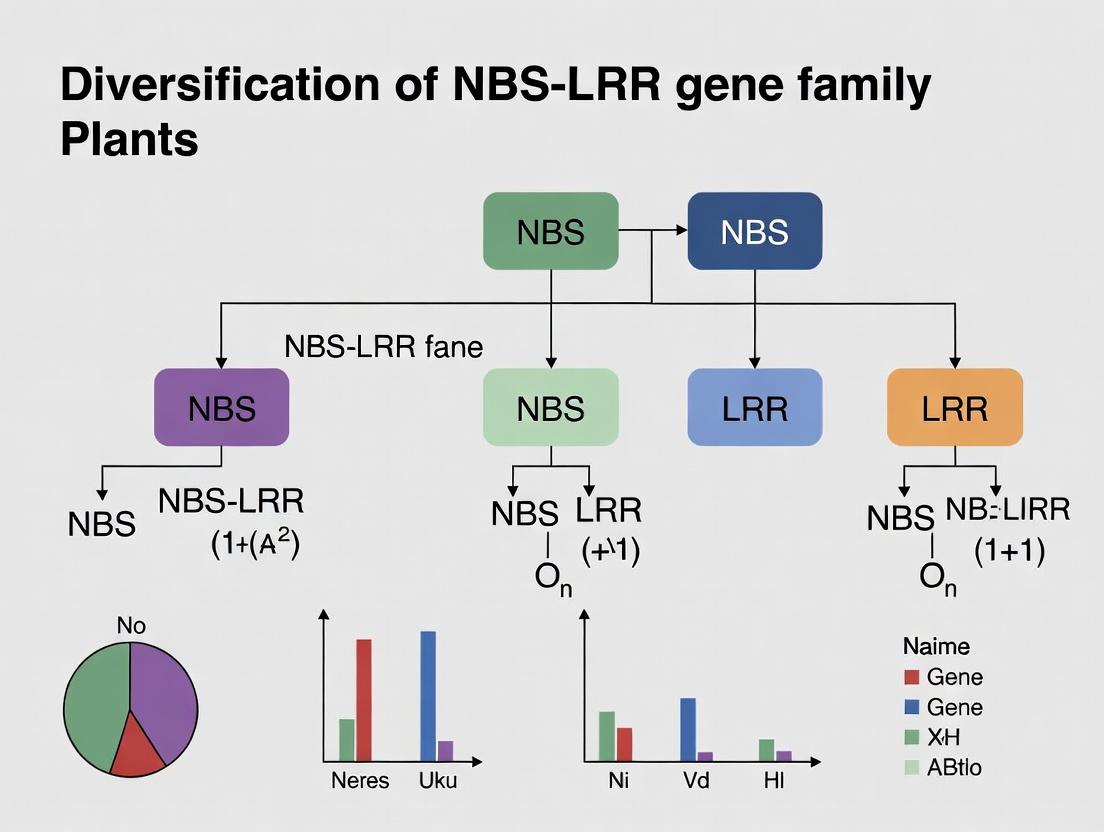
This comprehensive review explores the diversification of the NBS-LRR gene family, the cornerstone of plant innate immunity.
NBS-LRR Genes in Plants: Evolution, Mechanisms, and Biomedical Applications
Abstract
This comprehensive review explores the diversification of the NBS-LRR gene family, the cornerstone of plant innate immunity. We examine the evolutionary forces driving their expansion and contraction, detail methodologies for identifying and characterizing these resistance genes, and address common challenges in functional analysis. By comparing NBS-LRR mechanisms across plant species and relating them to analogous immune receptors in animals, we highlight their untapped potential as a source of inspiration for novel drug discovery and therapeutic strategies in biomedicine.
The Guardians of the Genome: Unraveling NBS-LRR Evolution and Structure
Within the context of plant genomic research, understanding the diversification of the Nucleotide-Binding Site Leucine-Rich Repeat (NBS-LRR) gene family is paramount. These genes constitute the largest class of plant disease resistance (R) genes, serving as intracellular immune receptors that detect pathogen effector proteins and initiate robust defense signaling. This whitepaper provides an in-depth technical guide to their core structural domains and sophisticated functional architecture, framing this knowledge as foundational for dissecting their evolutionary expansion and functional specialization across plant genomes.
Core Structural Domains
The canonical NBS-LRR protein is modular, consisting of three core domains, often with variable N- and C-terminal extensions.
Table 1: Core Domains of Canonical NBS-LRR Proteins
| Domain | Conserved Motifs/Features | Primary Function | Structural Insight |
|---|---|---|---|
| N-terminal Domain | TIR, CC, or RPW8 motifs | Variable; often involved in signaling initiation and partner interaction. TIR domains possess NADase activity. | The TIR (Toll/Interleukin-1 Receptor) type is common in dicots; CC (Coiled-Coil) types are prevalent in monocots and some dicots. |
| Nucleotide-Binding Site (NBS) Domain | Kinase 1a/P-loop, RNBS-A, -B, -C, -D, GLPL, Kinase 2, RNBS-E, MHDV | ATP/GTP binding and hydrolysis; acts as a molecular switch for activation and signaling. | The MHDV motif is a key regulator of nucleotide-binding state. Mutations here often lead to autoactivation. |
| Leucine-Rich Repeat (LRR) Domain | Repeat units of ~24 amino acids with conserved LxxLxLxx motif | Effector recognition and binding; also involved in autoinhibition and dimerization. | Hypervariable solvent-exposed residues in the β-strand/β-turn regions determine specificity. |
Table 2: Quantitative Distribution of NBS-LRR Types in Model Plant Genomes
| Plant Species | Total NBS-LRR Genes | TIR-NBS-LRR (TNL) | CC-NBS-LRR (CNL) | Other/Unclassified | Reference (Year) |
|---|---|---|---|---|---|
| Arabidopsis thaliana | ~165 | ~55% | ~35% | ~10% | (2023 Update) |
| Oryza sativa (Rice) | ~480 | <1% | ~85% | ~15% (NL) | (2023 Update) |
| Zea mays (Maize) | ~121 | 0% | ~95% | ~5% | (2022) |
| Glycine max (Soybean) | ~319 | ~60% | ~35% | ~5% | (2021) |
Functional Architecture and Activation Mechanism
The prevailing model for NBS-LRR activation is the "direct/indirect recognition" and "guard" hypothesis. In the guard model, the NBS-LRR protein monitors the integrity of a host "guardee" protein that is targeted and modified by a pathogen effector.
Experimental Protocol 1: Yeast-Two-Hybrid (Y2H) Assay for NBS-LRR/Effector Interaction
- Purpose: To test for direct physical interaction between a candidate NBS-LRR protein (or its LRR domain) and a pathogen effector.
- Methodology:
- Cloning: Fuse the coding sequence of the NBS-LRR protein (bait) to the DNA-Binding Domain (BD) of Gal4 in a pGBKT7 vector. Fuse the effector gene (prey) to the Activation Domain (AD) in a pGADT7 vector.
- Co-transformation: Co-transform both plasmids into a yeast reporter strain (e.g., AH109).
- Selection: Plate transformants on synthetic dropout (SD) media lacking Trp and Leu (-WL) to select for presence of both plasmids.
- Interaction Assay: Re-streak colonies onto higher-stringency SD media lacking Trp, Leu, His, and Ade (-WLHA), often with X-α-Gal for colorimetric detection. Growth indicates a positive interaction.
- Controls: Always include empty vector controls (BD + empty AD, empty BD + AD) and known interaction pairs.
Title: Yeast-Two-Hybrid Assay for Protein-Protein Interaction Detection
The transition from an autoinhibited "off" state to an activated "on" state is governed by nucleotide exchange.
Experimental Protocol 2: In Vitro ATPase/GTPase Activity Assay
- Purpose: To quantify the nucleotide hydrolysis activity of a purified recombinant NBS domain, a key indicator of its biochemical functionality.
- Methodology:
- Protein Purification: Express a His-tagged NBS domain protein in E. coli and purify using Ni-NTA affinity chromatography.
- Reaction Setup: In a 50 µL reaction buffer (e.g., 20 mM Tris-HCl pH 7.5, 5 mM MgCl₂, 1 mM DTT), combine purified protein (0.5-2 µM) with 1 mM ATP (or GTP) spiked with [γ-³²P]ATP (for a radioactive assay) or using a colorimetric/malachite green phosphate assay kit.
- Incubation: Incubate at 25-30°C for 0, 15, 30, 60 minutes.
- Reaction Stop: For radioactive assay, stop with 5% activated charcoal in 50 mM NaH₂PO₄.
- Detection: Centrifuge charcoal assay, quantify released ³²P in supernatant by scintillation counting. For malachite green, measure A₆₂₀ₙₘ. Calculate hydrolysis rate (pmol Pi released/min/µg protein).
- Controls: Include no-protein and heat-denatured protein controls.
Title: NBS-LRR Activation via Nucleotide Exchange and Oligomerization
Downstream Signaling Pathways
Activated NBS-LRRs initiate divergent downstream signaling cascades, primarily defined by their N-terminal domains.
Table 3: Major Downstream Signaling Pathways by N-terminal Type
| N-terminal Type | Key Adapter/Partner | Downstream Cascade | Final Immune Output |
|---|---|---|---|
| TIR-NBS-LRR (TNL) | EDS1-PAD4-ADR1/SAG101 | Activation of RPW8-type NBS-LRRs (RNLs), Ca²⁺ influx, MAPK signaling, NACHT-mediated oligomerization. | Transcriptional Reprogramming, Hypersensitive Response (HR). |
| CC-NBS-LRR (CNL) | NRCs (Helper NBS-LRRs) | Ca²⁺ influx via cyclic nucleotide-gated channels, MAPK cascade activation, ROS burst. | Transcriptional Reprogramming, Hypersensitive Response (HR). |
Title: Divergent Downstream Signaling from TNL and CNL Immune Receptors
The Scientist's Toolkit: Key Research Reagent Solutions
Table 4: Essential Materials for NBS-LRR Functional Research
| Reagent/Material | Function/Application | Example/Notes |
|---|---|---|
| Gateway Cloning System | High-throughput, recombination-based cloning of NBS-LRR genes into multiple expression vectors (Y2H, protein purification, plant transformation). | pDONR vectors, pDEST vectors (pEarlyGate, pGWB). |
| Agrobacterium tumefaciens Strains | Stable or transient transformation of plant systems for in planta functional assays (e.g., cell death assays, subcellular localization). | GV3101 (for Arabidopsis), EHA105 (for monocots). |
| Anti-GFP/RFP/HA/FLAG Antibodies | Detection of tagged NBS-LRR fusion proteins via Western blot, immunoprecipitation (Co-IP), or microscopy. | Critical for monitoring protein expression, complex formation, and localization. |
| Malachite Green Phosphate Assay Kit | Colorimetric quantification of inorganic phosphate released in ATPase/GTPase activity assays of purified NBS domains. | Non-radioactive, high-throughput alternative. |
| Luciferase (Luc) / β-glucuronidase (GUS) Reporter Constructs | Quantification of defense-related promoter activity in transient expression assays to measure NBS-LRR signaling output. | pGreenII 0800-LUC, pCAMBIA1305-GUS. |
| VIGS (Virus-Induced Gene Silencing) Vectors | Rapid functional analysis of NBS-LRR genes via targeted knockdown in planta (e.g., TRV-based vectors in Nicotiana benthamiana). | pTRV1, pTRV2 derivatives. |
| Protease/Phosphatase Inhibitor Cocktails | Preservation of native protein phosphorylation states and prevention of degradation during NBS-LRR protein extraction from plant tissues. | Essential for Co-IP and protein activity assays. |
This whitepaper provides a technical guide to the core evolutionary mechanisms—tandem duplication, birth-and-death evolution, and positive selection—that drive the diversification of the Nucleotide-Binding Site Leucine-Rich Repeat (NBS-LRR) gene family in plants. NBS-LRR genes are the largest class of disease resistance (R) genes, forming a critical component of the plant innate immune system. Understanding their rapid evolution is essential for elucidating plant-pathogen co-evolutionary dynamics and for engineering durable resistance in crops. This document frames these molecular evolutionary drivers within the context of ongoing research into the genomic architecture and adaptive significance of R-gene clusters.
Core Evolutionary Mechanisms in NBS-LRR Diversification
Tandem Duplication
Tandem duplication is the primary mechanism for local expansion of NBS-LRR genes. Unequal crossing over or replication slippage generates arrays of paralogous genes in close physical proximity, creating genetic raw material for innovation.
Birth-and-Death Evolution
The birth-and-death model describes the dynamic process where new genes are created by duplication (birth), some are maintained as functional genes, and others are inactivated or deleted (death) via pseudogenization. This process, driven by pathogen pressure, leads to considerable interspecific and intraspecific variation in NBS-LRR copy number and organization.
Positive Selection
Positive (diversifying) selection acts predominantly on the solvent-exposed residues of the LRR domain, which are involved in direct or indirect recognition of pathogen effector molecules. This selection pressure drives amino acid substitutions that alter recognition specificities, enabling the plant to keep pace with evolving pathogens.
Table 1: Genomic Signatures of Evolutionary Drivers in Model Plant Species
| Species | Total NBS-LRR Genes* | Genes in Tandem Arrays* | % in Tandem Clusters* | ω (dN/dS) LRR Domain† | Key References |
|---|---|---|---|---|---|
| Arabidopsis thaliana | ~200 | ~150 | 75% | 1.5 - 3.2 | Guo et al., 2011; Bakker et al., 2006 |
| Oryza sativa (Rice) | ~500 | ~400 | 80% | 2.0 - 4.5 | Zhou et al., 2004; McHale et al., 2006 |
| Zea mays (Maize) | ~120 | ~85 | 71% | 1.8 - 3.8 | Xiao et al., 2004; Smith et al., 2004 |
| Glycine max (Soybean) | ~319 | ~280 | 88% | 2.2 - 5.1 | Kang et al., 2012 |
| Solanum lycopersicum (Tomato) | ~100 | ~75 | 75% | 1.7 - 4.0 | Andolfo et al., 2014 |
*Representative values from recent genome annotations; copy number varies between cultivars/accessions. †ω values indicate positive selection (ω > 1). Range represents variation across different subfamilies or loci.
Table 2: Experimental Evidence for Birth-and-Death Evolution
| Study System | Method | Key Finding | Implication |
|---|---|---|---|
| Arabidopsis RPP5 locus | Comparative genomics & phylogeny | Rapid gain/loss of paralogs between ecotypes | High turnover rate enables rapid adaptation |
| Rice Xa gene family | Haplotype analysis | Presence/absence variation of specific paralogs | Death (loss/pseudogenization) is common |
| Soybean NBS-LRRs | Paleogenomics | Multiple waves of duplication and fractionation | Birth-and-death linked to whole-genome duplications |
Detailed Experimental Protocols
Protocol: Identifying Tandem Duplications and Clusters
Objective: To identify and characterize tandemly duplicated NBS-LRR genes from whole-genome sequence data.
- Sequence Retrieval: Download the genomic data (FASTA) and annotation (GFF3) files for the target organism from a repository (e.g., Phytozome, EnsemblPlants).
- HMMER Scan: Use the
hmmsearchcommand from HMMER v3.3.2 with a curated NBS (NB-ARC) domain Hidden Markov Model (e.g., PF00931 from Pfam) against the proteome file (E-value cutoff < 1e-5). Extract corresponding genomic coordinates. - Cluster Definition: Use a custom Perl/Python script or BEDTools v2.30.0
clusterfunction to group NBS-encoding genes located within a specified genomic distance (typically ≤ 200 kb between adjacent genes) as a single cluster. - Phylogenetic Analysis: Extract protein sequences of clustered genes. Perform multiple alignment with MAFFT v7.475. Construct a neighbor-joining or maximum-likelihood tree using FastTree v2.1.11 or IQ-TREE v2.1.2. Tandem duplicates are identified as monophyletic sister paralogs residing in the same genomic cluster.
Protocol: Testing for Positive Selection
Objective: To detect sites under positive selection within NBS-LRR coding sequences.
- Gene Family Alignment: Identify a homolog family (orthologs/paralogs). Align coding sequences (CDS) using PAL2NAL v14, ensuring codon alignment corresponds to the protein alignment.
- Phylogeny Construction: Generate a robust phylogenetic tree from the aligned CDS using IQ-TREE with model finder.
- Site-Specific Selection Tests: Use the CODEML program in the PAML v4.9j package.
- Run Model M0 (one ω ratio) and Models M1a (nearly neutral) vs. M2a (positive selection). Also run M7 (beta) vs. M8 (beta & ω>1).
- Perform likelihood ratio tests (LRTs) comparing nested models (e.g., 2*(lnLM2a - lnLM1a)). A significant LRT (χ² distribution, p < 0.05) suggests positive selection.
- Under a significant model (M2a/M8), identify positively selected sites with Bayesian posterior probabilities > 0.95.
- Branch-Site Test: To test for positive selection on specific lineages (e.g., after a duplication event), use the Branch-Site Model A (Test 2) in CODEML.
Visualizations
Diagram Title: Evolutionary Pipeline for NBS-LRR Diversification
Diagram Title: Experimental Workflow for Analyzing Evolutionary Drivers
The Scientist's Toolkit: Research Reagent Solutions
Table 3: Essential Research Materials and Reagents
| Item / Reagent | Function in NBS-LRR Evolution Research | Example / Specification |
|---|---|---|
| HMMER Software Suite | Identifies NBS-LRR genes in genomic/proteomic data using profile hidden Markov models. | Version 3.3.2; Pfam models PF00931 (NB-ARC), PF07725 (LRR_8). |
| PAML (CODEML) | Statistical package for phylogenetic analysis by maximum likelihood, used for detecting positive selection. | Version 4.9j; critical for site and branch-site models. |
| Phytozome / EnsemblPlants | Primary databases for curated plant genome sequences, annotations, and comparative genomics. | Source for FASTA, GFF3, and pre-computed gene families. |
| IQ-TREE | Efficient software for maximum likelihood phylogeny inference and model testing. | Version 2.1.2; used with ModelFinder for best-fit substitution model. |
| BEDTools | Flexible toolkit for genomic arithmetic; used to define gene clusters based on coordinates. | bedtools cluster function with distance parameter. |
R Studio with ape, ggplot2 |
Environment for statistical computing and visualizing phylogenetic trees, ω values, and genomic landscapes. | Essential for custom data analysis and figure generation. |
| Plant GST-Tagged LRR Domain Proteins | Recombinant proteins for biophysical assays (SPR, ITC) to measure binding affinity to pathogen effectors. | Used to validate functional divergence driven by positive selection. |
| Agroinfiltration Kit (e.g., GV3101) | For transient expression in Nicotiana benthamiana to test novel NBS-LRR alleles for cell death response/function. | Key for functional characterization of duplicated/selected genes. |
1. Introduction: Context within NBS-LRR Gene Family Diversification
The nucleotide-binding site leucine-rich repeat (NBS-LRR) gene family constitutes a primary component of the plant immune system, encoding intracellular immune receptors that recognize pathogen effectors and initiate effector-triggered immunity (ETI). A central thesis in plant-pathogen co-evolution research posits that the diversification of the NBS-LRR gene family into distinct structural and functional subclasses is a major evolutionary adaptation. This guide delves into the three major subclasses: TIR-NBS-LRRs (TNLs), CC-NBS-LRRs (CNLs), and RPW8-NBS-LRRs (RNLs). Understanding their distinct architectures, activation mechanisms, and downstream signaling cascades is critical for fundamental research and applied biotechnology, including the engineering of durable disease resistance in crops.
2. Subclass Architectures and Quantitative Distribution
The primary distinction between subclasses lies in their N-terminal domains, which dictate signaling partners and pathways. Quantitative genomic analyses reveal significant variation in subclass representation across plant lineages.
Table 1: Core Architectural Features of NBS-LRR Subclasses
| Subclass | N-terminal Domain | Canonical NBS Type | Primary Signaling Adaptor(s) | Downstream Pathway |
|---|---|---|---|---|
| TNL | Toll/Interleukin-1 Receptor (TIR) | TIR-NBS-LRR (TNL) | EDS1-PAD4 / EDS1-SAG101 | ADR1/NRG1 helper NLRs → Systemic Immunity |
| CNL | Coiled-Coil (CC) | CC-NBS-LRR (CNL) | NRCs (NLR-required for cell death) family | RPW8-NLRs (RNLs) → HR & Immunity |
| RNL | RPW8-like CC (RNL-CC) | CC-NBS-LRR (RNL) | Acts as signaling helper | Amplifies signals from sensor CNLs/TNLs |
Table 2: Exemplary Genomic Distribution in Model Species (Approximate Numbers)
| Plant Species | Total NBS-LRRs | TNLs (%) | CNLs (%) | RNLs (%) | Notes |
|---|---|---|---|---|---|
| Arabidopsis thaliana | ~150 | ~70 (47%) | ~50 (33%) | 2 (ADRN1, NRG1A) + ~4 (ADR1s) | RNLs are few but critical. |
| Nicotiana benthamiana | ~500 | ~250 (50%) | ~200 (40%) | ~10-15 (2%) | Expanded NRC network for CNLs. |
| Oryza sativa (Rice) | ~500 | 0 (0%) | ~500 (~100%) | 0 (0%) | Monocots lack canonical TNLs. |
| Zea mays (Maize) | ~150 | 0 (0%) | ~150 (~100%) | 0 (0%) | Monocots lack canonical TNLs. |
3. Signaling Pathways and Immune Activation
3.1 TNL Signaling Pathway TNLs perceive effector ligands directly or indirectly via guardee/decoy proteins. Activated TNLs hydrolyze NAD+ via their TIR domains, producing signaling molecules (e.g., v-cADPR, di-ADPR). These molecules are perceived by the dimeric complexes EDS1-PAD4 or EDS1-SAG101. EDS1-SAG101 specifically recruits and activates the helper RNLs of the NRG1 clade, leading to calcium influx and cell death.
Title: TNL immune signaling cascade
3.2 CNL Signaling Pathway Sensor CNLs detect effectors and often require members of the NRC (NLR-required for cell death) family—themselves CNLs—as downstream signaling helpers. This network converges on the activation of helper RNLs of the ADR1 clade, which potentiate defense signaling, including reactive oxygen species (ROS) burst and hypersensitive response (HR).
Title: CNL immune signaling network
4. Key Experimental Protocols
4.1 Yeast-Two Hybrid (Y2H) for NBS-LRR Protein-Protein Interactions Objective: To test direct physical interactions between NLRs (e.g., sensor CNL and NRC helper) or between TNLs and signaling adaptors (EDS1). Protocol:
- Clone the coding sequence of the "bait" protein (e.g., an autoactive NBS-LRR mutant) into the pGBKT7 vector (DNA-BD fusion).
- Clone the "prey" protein (e.g., a putative helper NLR) into the pGADT7 vector (AD fusion).
- Co-transform both plasmids into yeast strain AH109.
- Plate transformations on synthetic dropout (SD) media lacking Leu and Trp (-LW) to select for both plasmids.
- Streak positive colonies onto high-stringency SD media lacking Leu, Trp, His, and Ade (-LWAH), often with X-α-Gal for blue/white screening.
- Growth and color change on -LWAH plates indicates a positive interaction.
4.2 Agrobacterium tumefaciens-Mediated Transient Expression (Agroinfiltration) in N. benthamiana Objective: To assess NLR function, cell death induction, and signaling requirements in planta. Protocol:
- Clone the gene of interest (e.g., a CNL) into a binary vector (e.g., pEAQ-HT or pBIN61).
- Transform the construct into Agrobacterium strain GV3101.
- Grow a bacterial culture to OD600 ~0.8. Pellet and resuspend in infiltration buffer (10 mM MES, 10 mM MgCl2, 150 µM acetosyringone, pH 5.6) to a final OD600 of 0.4-0.6.
- Incubate the suspension at room temperature for 2-4 hours.
- Co-infiltrate the bacterial mixture into the abaxial side of 4-5 week-old N. benthamiana leaves using a needleless syringe.
- For silencing experiments, infiltrate constructs 2-3 days after infiltrating Tobacco Rattle Virus (TRV)-based VIGS vectors targeting genes like EDS1, NRG1, or ADR1.
- Monitor the infiltration zone for cell death (HR) over 2-7 days.
4.3 In vitro NADase Activity Assay for TIR Domains Objective: To quantify the enzymatic activity of purified TNL TIR domains. Protocol:
- Express and purify recombinant TIR domain protein (e.g., from E. coli).
- Prepare a 50 µL reaction containing: 1-5 µM purified TIR protein, 100 µM NAD+ substrate, and reaction buffer (e.g., 20 mM HEPES, pH 7.5, 150 mM NaCl).
- Incubate at 22-28°C for 1-2 hours.
- Stop the reaction by heat inactivation (65°C for 10 min) or addition of EDTA.
- Quantify the consumption of NAD+ or production of cyclic ADPR isomers using liquid chromatography-mass spectrometry (LC-MS) or thin-layer chromatography (TLC).
- Include controls: no enzyme, catalytically dead mutant (e.g., glutamic acid to alanine).
5. The Scientist's Toolkit: Key Research Reagents
Table 3: Essential Reagents for NBS-LRR Research
| Reagent / Material | Function / Purpose | Example(s) |
|---|---|---|
| Gateway Cloning System | High-throughput, recombination-based cloning of NLR genes into multiple expression vectors. | pDONR vectors, pGWB destination vectors. |
| TRV-based VIGS Vectors | Virus-induced gene silencing to knock down expression of signaling components in planta. | pTRV1, pTRV2-LIC for N. benthamiana. |
| Anti-Tag Antibodies | Detection and immunoprecipitation of epitope-tagged NLR proteins. | Anti-HA, Anti-FLAG, Anti-MYC antibodies. |
| NAD+ Analogs/Precursors | Substrates and probes for studying TIR domain enzymatic activity. | NAD+, biotin-NAD+, etheno-NAD+. |
| Reactive Oxygen Species (ROS) Detection Dyes | Visualizing and quantifying early immune outputs. | DAB (H2O2 stain), Chemiluminescent L-012. |
| Calcium Indicators | Measuring cytosolic Ca2+ flux during NLR activation. | Aequorin, R-GECO1 fluorescent sensor. |
| EDS1/SAG101/PAD4 Mutant Lines | Genetic tools to dissect TNL-specific signaling in vivo. | A. thaliana eds1-2, pad4-1, sag101-1. |
| NRC KO N. benthamiana Lines | CRISPR-Cas9 generated lines to test CNL dependency on the NRC network. | nrc2/3/4 triple or quadruple mutants. |
Genomic Distribution and Hotspots of Diversity Across Plant Lineages
This whitepaper details the genomic patterns of diversity in plants, framed within a broader thesis investigating the diversification of the Nucleotide-Binding Site Leucine-Rich Repeat (NBS-LRR) gene family. NBS-LRR genes constitute a primary component of the plant innate immune system, responsible for pathogen recognition. Their evolution—through duplication, recombination, and selection—creates identifiable genomic hotspots of diversity that are central to understanding plant-pathogen co-evolution and informing crop resilience strategies. This guide provides the technical framework for mapping and analyzing these distributions.
Quantitative Data on Genomic Diversity Hotspots
Table 1: Comparative Genomic Metrics of NBS-LRR Diversity Across Model Plant Lineages
| Plant Lineage (Species Example) | Approx. Total NBS-LRR Genes | % in Clustered Arrangements (Hotspots) | Major Chromosomal Locations of Hotspots | Avg. Nucleotide Diversity (π) within Hotspots | Common Evolutionary Mechanism |
|---|---|---|---|---|---|
| Eudicots (Arabidopsis thaliana) | ~150 | 75% | Chromosomes 1, 3, 5 | 0.025 | Tandem Duplication, Negative Selection |
| Cereals/Monocots (Oryza sativa) | ~500 | 85% | Chromosomes 11, 12 | 0.041 | Tandem & Segmental Duplication, Birth-and-Death |
| Solanaceae (Solanum lycopersicum) | ~400 | 90% | Chromosomes 4, 11 | 0.038 | Rapid Tandem Duplication, Positive Selection |
| Legumes (Glycine max) | ~700 | 80% | Chromosomes 10, 13, 18 | 0.032 | Whole Genome Duplication, Recombination |
Table 2: Key Characteristics of Identified Diversity Hotspots
| Hotspot Characteristic | Description | Implication for NBS-LRR Evolution |
|---|---|---|
| Physical Clustering | Dense arrays of homologous genes within 200-500 kb regions. | Facilitates unequal crossing over and gene conversion. |
| Recombination Rate | Elevated relative to genome average (2-5x higher). | Drives novel allele combinations and haplotype diversity. |
| TE Proximity | Enrichment of retrotransposons and helitrons near clusters. | Provides substrates for ectopic recombination and regulatory novelty. |
| Selective Sweep Signals | Reduced diversity flanking core resistance genes. | Indicates recent positive selection for adaptive variants. |
Experimental Protocols for Mapping Diversity Hotspots
Protocol 3.1: Genome-Wide Identification & Phylogenetic Clustering of NBS-LRR Genes
- Sequence Retrieval: Use HMMER (with PFAM models PF00931, PF00560, PF07723, PF07725) to scan the target and reference genome assemblies.
- Annotation & Classification: Classify genes into TNL, CNL, RNL, and non-canonical subtypes based on N-terminal and LRR domain analysis.
- Phylogenetic Reconstruction: Generate multiple sequence alignments (MAFFT) and construct maximum-likelihood trees (IQ-TREE).
- Synteny Mapping: Use MCScanX to identify tandem and segmental duplication events within the NBS-LRR superfamily.
Protocol 3.2: Population Genomics Analysis of Diversity Hotspots
- Population Sequencing: Perform whole-genome resequencing of 100-300 geographically diverse accessions (≥15X coverage).
- Variant Calling: Map reads to reference (BWA-MEM), call SNPs/Indels (GATK best practices), and filter for quality.
- Diversity Calculation: Calculate nucleotide diversity (π), Tajima's D, and F~ST~ using sliding windows (e.g., 10 kb windows, 2 kb step) across hotspot regions (VCFtools, PopGenome).
- Selective Sweep Detection: Identify regions with extreme π reduction or high cross-population F~ST~ (top 5%) as candidate selective sweeps.
Protocol 3.3: Long-Read Sequencing for Haplotype-Resolved Hotspot Assembly
- Library Preparation: Prepare high-molecular-weight DNA libraries for PacBio HiFi or Oxford Nanopore sequencing.
- De Novo Assembly: Assemble reads for a heterozygous individual using Hifiasm or Canu, followed by purge_dups for haplotig removal.
- Phasing: Use the primary/alternate assemblies or integrate Hi-C data (Juicer, 3D-DNA) to generate chromosome-scale haplotypes.
- Hotspot Comparison: Manually annotate NBS-LRR genes on both haplotypes using gene prediction tools (BRAKER2) and compare cluster composition and organization.
Visualizations
The Scientist's Toolkit: Research Reagent Solutions
Table 3: Essential Reagents and Materials for NBS-LRR Hotspot Research
| Item | Function/Application | Example/Specification |
|---|---|---|
| High-Fidelity DNA Polymerase | Accurate amplification of NBS-LRR genes from complex, repetitive clusters for cloning and sequencing. | Phusion or Q5 polymerase. |
| Long-Range PCR Kit | Amplification of entire NBS-LRR clusters (up to 20-50 kb) for haplotype analysis. | Takara LA Taq or similar. |
| PacBio SMRTbell or Nanopore LSK Library Prep Kit | Preparation of libraries for long-read sequencing to resolve complex hotspot haplotypes. | PacBio Express Template Prep Kit; Oxford Nanopore LSK109. |
| HMMER Software Suite | Core bioinformatics tool for sensitive detection of NBS and LRR domains in genomic sequences. | v3.3.2 or later. |
| MCScanX Software | Standard tool for synteny and collinearity analysis to identify gene duplication events. | Requires BLAST and Python. |
| Plant Genomic DNA Isolation Kit (High-MW) | Extraction of ultra-pure, high molecular weight DNA suitable for long-read sequencing. | Qiagen Genomic-tip or CTAB-based protocol. |
| RENSeq / TACCA Bait Libraries | Custom sequence capture probes for targeted resequencing of NBS-LRR repertoires across a population. | Mybaits custom panels. |
| GATK Best Practices Bundle | Industry-standard pipeline for variant calling from short-read population sequencing data. | Includes reference genomes and known variant databases. |
Thesis Context: This whitepaper details the core signaling mechanisms connecting pathogen recognition to the hypersensitive cell death response (HR), providing the mechanistic framework essential for interpreting NBS-LRR gene family diversification and its impact on plant immunity landscapes.
Plant immunity is initiated by the specific recognition of pathogen-derived molecules by immune receptors. Nucleotide-binding site leucine-rich repeat (NBS-LRR) proteins constitute the largest family of intracellular immune receptors. Their diversification, driven by evolutionary arms races with pathogens, creates a vast repertoire for sensing effector proteins. Upon effector recognition, a conserved signaling paradigm is activated, culminating in the hypersensitive response—a localized programmed cell death that restricts pathogen spread.
The Core Signaling Pathway: From Perception to Response
The paradigmatic pathway for intracellular immunity involves direct or indirect effector recognition by NBS-LRRs, leading to a conformational change and activation. Activated NBS-LRRs nucleate the formation of a resistosome complex, which initiates downstream signaling cascades.
Diagram 1: Core NBS-LRR Activation to HR Signaling
Key Experimental Data and Methodologies
The elucidation of this paradigm relies on key quantitative data derived from standardized experimental approaches.
Table 1: Quantitative Metrics in Core HR Signaling
| Signaling Component | Measurable Output | Typical Measurement Method | Representative Value (Range) | Biological Significance |
|---|---|---|---|---|
| NBS-LRR Activation | Resistosome oligomerization | Size-exclusion chromatography / FRET | Trimer/Hexamer formation | Initial amplification of immune signal |
| Calcium (Ca2+) Flux | Cytosolic [Ca2+] increase | Aequorin / R-GECO1 bioluminescence/fluorescence | 10-1000 nM peak increase | Second messenger for downstream processes |
| Reactive Oxygen Species (ROS) | Extracellular H2O2 accumulation | Chemiluminescence (Luminol) | 1-10 µM H2O2 within minutes | Direct antimicrobial, signaling amplifier |
| MAPK Activation | Phosphorylation status | Immunoblot (anti-pTEpY) | 2- to 100-fold increase in activity | Signal transduction to nucleus |
| Transcriptional Output | Defense gene induction | qRT-PCR (e.g., PR1, WRKY genes) | 10-1000 fold mRNA increase | Execution of defense program |
| HR Cell Death | Ion leakage / Vital staining | Conductivity assay / Trypan Blue | 50-80% electrolyte loss at 24hpi | Pathogen containment |
Detailed Experimental Protocols
Protocol 1: Measuring ROS Burst via Chemiluminescence Objective: Quantify the early extracellular oxidative burst triggered by NBS-LRR activation.
- Plant Material: Grow Arabidopsis or N. benthamiana plants for 4-5 weeks.
- Leaf Disc Preparation: Harvest leaf discs (e.g., 4 mm diameter) and incubate in water in a 96-well plate overnight in the dark to deplete wound-induced ROS.
- Assay Setup: Replace water with 100 µL of reaction mix containing 20 µM L-012 (luminol derivative) and 10 µg/mL horseradish peroxidase (HRP) in distilled water.
- Effector/Ellicitor Treatment: Add the purified pathogen effector or positive control (e.g., flg22 at 100 nM) directly to the well.
- Data Acquisition: Immediately measure luminescence every 30-60 seconds for 60-90 minutes using a plate reader luminometer.
- Analysis: Plot Relative Light Units (RLU) over time. Calculate the area under the curve (AUC) for quantitative comparisons between genotypes.
Protocol 2: Hypersensitive Response Assessment by Ion Leakage Objective: Quantify the loss of membrane integrity associated with the HR.
- Infiltration: Infiltrate leaves of 4-5 week-old plants with a bacterial suspension (e.g., Pseudomonas syringae expressing Avr effector, OD600=0.2 in 10 mM MgCl2) or a negative control.
- Sample Harvest: At specified hours post-infiltration (hpi), excise leaf discs (avoiding major veins) from the infiltrated zone.
- Washing: Rinse discs briefly in distilled water to remove surface ions.
- Incubation: Place discs in a tube with 10 mL of distilled water. Shake gently at room temperature.
- Measurement: Measure the conductivity of the bathing solution at time T0 (immediately) and at subsequent intervals (e.g., 1, 2, 4, 8, 24 hpi) using a conductivity meter.
- Total Conductivity: After the final measurement, autoclave the sample to release all ions, cool, and measure total conductivity.
- Calculation: Calculate ion leakage as a percentage: (Conductivity at time T / Total Conductivity) * 100.
The Scientist's Toolkit: Essential Research Reagents
Table 2: Key Research Reagent Solutions for Core Pathway Analysis
| Reagent / Material | Provider Examples | Function in Research |
|---|---|---|
| Recombinant Pathogen Effectors | Custom cloning/expression; e.g., Addgene vectors | Purified proteins for direct activation of specific NBS-LRRs in assays. |
| Chemical Inhibitors (e.g., DPI, LaCl3, U0126) | Sigma-Aldrich, Tocris | To dissect signaling dependencies (blocks NADPH oxidases, calcium channels, MAPKK, respectively). |
| Genetically-Encoded Biosensors (e.g., R-GECO1, Hyper) | Addgene plasmid repositories | Live, real-time imaging of Ca2+ dynamics or H2O2 production in plant cells. |
| Antibodies (anti-pMAPK, anti-NLR specific) | PhytoAB labs; custom generation | Detect activation states (phosphorylation) or protein accumulation/ localization of receptors. |
| VIGS (Virus-Induced Gene Silencing) Vectors (TRV-based) | Invitrogen, lab-constructed | High-throughput functional analysis of signaling components in N. benthamiana. |
| Luciferase / GUS Reporter Lines (PR1::LUC, FRK1::GUS) | Arabidopsis Stock Centers | Quantify defense-related transcriptional activation in different genetic backgrounds. |
Integrating NBS-LRR Diversification into the Paradigm
NBS-LRR diversification influences every step of the core paradigm. The specific biochemical activity of the activated resistosome (e.g., forming calcium-permeable channels or acting as NADP hydrolases) can vary between NBS-LRR clades.
Diagram 2: NBS-LRR Diversity Integrates into Core Signaling
Understanding the detailed biochemistry of distinct NBS-LRR resistosomes, their interaction partners, and their downstream signaling biases is the critical next frontier. This knowledge directly links genomic diversification to phenotypic immune output, enabling predictive models for durable resistance in crops and novel strategies for plant immune modulation.
From Sequence to Function: Cutting-Edge Methods for NBS-LRR Discovery and Characterization
Bioinformatics Pipelines for Genome-Wide Identification and Annotation
This whitepaper details computational pipelines for the genome-wide discovery and characterization of genes, framed within a doctoral thesis investigating the diversification of the Nucleotide-Binding Site Leucine-Rich Repeat (NBS-LRR) gene family in plants. NBS-LRR genes are crucial for plant innate immunity, and understanding their expansion, contraction, and sequence evolution requires robust, reproducible bioinformatics workflows. This guide provides the technical foundation for such research, enabling researchers to identify all NBS-LRR homologs, classify them, and annotate their functional domains.
Core Pipeline Architecture
A standard pipeline integrates sequential tools for data retrieval, sequence similarity search, domain identification, and phylogenetic analysis. The modular design allows for customization based on the plant genome's complexity and the research questions.
Diagram Title: Core Bioinformatics Pipeline Workflow
Detailed Experimental Protocols
Protocol: Genome-Wide Identification Using HMMER
Objective: To identify all putative NBS-LRR encoding genes from a plant genome assembly.
HMM Profile Acquisition:
- Download the Pfam profiles for the NB-ARC domain (PF00931) and the LRR domain (PF00560, PF07723, PF07725, PF12799, PF13306, PF13516, PF13855, PF14580) from the Pfam database.
- Combine these into a custom HMM profile library using
hmmbuild.
Proteome Preparation:
- Obtain the proteome (all predicted protein sequences in FASTA format) for the target genome.
- Use
seqkit seqto clean and format the file.
Domain Scanning:
- Run
hmmsearchwith an E-value cutoff of 1e-5 against the proteome. - Command:
hmmsearch --domtblout nbslrr_results.domtblout --cut_tc custom_nbs.hmm proteome.fasta
- Run
Result Parsing & Non-Redundancy:
- Parse the
.domtbloutfile using a custom Python/Biopython script to extract sequences containing both NB-ARC and at least one LRR domain, or NB-ARC alone for CNL/TNL classification. - Cluster identical sequences using
cd-hit(95% identity) to remove splice variants.
- Parse the
Protocol: Classification and Structural Annotation
Objective: To classify identified genes into CNL (TIR-NBS-LRR) and RNL (CC-NBS-LRR) subfamilies and annotate their domain architecture.
N-Terminal Domain Detection:
- Use
hmmscanwith the TIR (PF01582) and CC (Coiled-coil prediction) domain profiles. - For CC prediction, run the protein sequences through DeepCoil or MARCOIL.
- Use
Multiple Sequence Alignment & Tree Construction:
- Align the NB-ARC domain sequences using MAFFT or MUSCLE.
- Build a maximum-likelihood phylogenetic tree with IQ-TREE (model: JTT+G+F) with 1000 bootstrap replicates.
Gene Structure Visualization:
- Extract genomic coordinates (GFF3 file) for each identified gene.
- Use GSDS 2.0 to generate gene structure diagrams showing exon-intron organization.
Protocol: Evolutionary Analysis for Diversification Studies
Objective: To calculate selection pressures and identify sites under positive selection.
Ortholog Group Identification:
- Perform an all-vs-all BLASTp of NBS-LRR proteins across multiple related species.
- Use OrthoFinder to delineate orthogroups.
Codon Alignment:
- For a selected orthogroup, align CDS sequences codon-by-codon using PAL2NAL.
Selection Pressure Analysis:
- Run the CodeML program in the PAML package.
- Compare site-specific models (M7 vs. M8) using a likelihood ratio test (LRT) to identify codons under positive selection (dN/dS > 1).
Diagram Title: NBS-LRR Gene Diversification Logic
Data Presentation
Table 1: Example Output from an NBS-LRR Identification Pipeline in Solanum lycopersicum
| Gene ID | Chromosome | Start | End | Subfamily (CNL/RNL) | NB-ARC E-value | LRR Count | Orthogroup (OrthoFinder) | dN/dS (CodeML) |
|---|---|---|---|---|---|---|---|---|
| Solyc09g007900.1 | 9 | 3987654 | 3992101 | CNL | 2.4e-45 | 12 | OG0000123 | 0.21 |
| Solyc06g051300.2 | 6 | 35109887 | 35113422 | RNL | 7.8e-52 | 9 | OG0000456 | 0.15 |
| Solyc02g092100.1 | 2 | 52234410 | 52238901 | CNL | 1.1e-60 | 15 | OG0000123 | 2.87 |
Table 2: Key Software Tools and Their Functions in the Pipeline
| Tool Name | Category | Primary Function in Pipeline | Key Parameter for NBS-LRR ID |
|---|---|---|---|
| HMMER 3.3.2 | Homology Search | Profile HMM-based domain finding | E-value cutoff: 1e-5 |
| IQ-TREE 2.2.0 | Phylogenetics | Maximum likelihood tree inference | Model: JTT+G+F; Bootstraps: 1000 |
| OrthoFinder 2.5.4 | Orthology Inference | Orthogroup clustering across species | Inflation parameter: 1.5 |
| PAML (CodeML) 4.9 | Evolutionary Analysis | Calculates dN/dS selection ratios | Site models: M7, M8 |
The Scientist's Toolkit: Research Reagent Solutions
Table 3: Essential Computational & Biological Research Materials
| Item | Function & Relevance to NBS-LRR Research |
|---|---|
| Reference Genome Assembly & Annotation (GFF3) | Foundational dataset. Quality directly impacts identification completeness. Essential for genomic context analysis. |
| Pfam HMM Profiles (PF00931, PF01582, etc.) | Curated, hidden Markov models for domain detection. The standard for accurate NBS-LRR classification. |
| High-Performance Computing (HPC) Cluster Access | Required for genome-scale BLAST/HMMER searches, multiple sequence alignments, and phylogenetic analyses. |
| Curation Database (e.g., local PostgreSQL) | For storing, querying, and managing identified gene features, sequences, and analysis results. |
| Multiple Plant Genome Data | For comparative genomics. Enables evolutionary analysis of gene family expansion/contraction. |
| RNA-Seq Data (from infected/stressed tissues) | Provides expression evidence for annotated genes and can help validate putative NBS-LRRs involved in defense. |
Phylogenetic and Motif Analysis to Infer Evolutionary Relationships
This technical guide, framed within a broader thesis on NBS-LRR gene family diversification in plants, details the integration of phylogenetic and motif analysis to elucidate evolutionary relationships. Nucleotide-binding site leucine-rich repeat (NBS-LRR) genes constitute the largest family of plant disease resistance (R) genes. Their rapid diversification, driven by co-evolution with pathogens, makes them a compelling model for studying molecular evolution. Precise inference of evolutionary relationships within this family is critical for identifying conserved functional domains, understanding lineage-specific expansions, and ultimately engineering durable disease resistance in crops.
Core Methodological Framework
Data Retrieval and Curation
The initial step involves the comprehensive retrieval of NBS-LRR protein or nucleotide sequences from public databases (e.g., UniProt, NCBI, Phytozome) and project-specific sequencing data. Sequence curation is paramount.
Protocol: Sequence Retrieval and Alignment Curation
- Keyword Search: Use queries such as "NBS-LRR", "NB-ARC", "TIR-NBS-LRR", "CC-NBS-LRR" restricted to relevant plant taxa.
- Domain Verification: Confirm the presence of characteristic NBS (NB-ARC) domains using HMMER (
hmmsearch) with Pfam models (PF00931, PF00560, PF12799, PF13855). - Redundancy Reduction: Cluster sequences at 90-95% identity using CD-HIT or UCLUST.
- Multiple Sequence Alignment (MSA): Perform alignment using MAFFT (L-INS-i algorithm) or MUSCLE for structurally conserved regions (e.g., NBS domain). For full-length sequences including highly variable LRRs, use PRANK or MAFFT with guidance.
- Alignment Trimming: Trim poorly aligned regions using trimAl (
-automated1setting) or Gblocks.
Phylogenetic Reconstruction
Phylogenetic trees are reconstructed from the curated MSA to visualize evolutionary relationships and classify sequences into clades (e.g., TIR-NBS-LRR vs. non-TIR-NBS-LRR).
Protocol: Maximum-Likelihood Phylogeny
- Model Selection: Determine the best-fit substitution model (e.g., LG+G+I, WAG+G+I) using ModelTest-NG or ProtTest, based on the Bayesian Information Criterion (BIC).
- Tree Construction: Run IQ-TREE2 with command:
iqtree2 -s alignment.fa -m LG+G+I -bb 1000 -alrt 1000 -nt AUTO. This performs tree search with 1000 ultrafast bootstrap replicates and SH-aLRT support. - Tree Visualization: Annotate and visualize the tree in FigTree or iTOL, coloring clades by NBS-LRR subfamily.
Motif Discovery and Analysis
Concurrently, identify conserved protein motifs beyond the canonical domains. Motif patterns provide signatures for functional specialization and evolutionary divergence.
Protocol: De Novo Motif Discovery with MEME Suite
- Input Preparation: Provide a FASTA file of protein sequences, grouped by phylogenetic clade.
- Motif Discovery: Run MEME:
meme input.fa -o meme_output -protein -nmotifs 15 -minw 6 -maxw 50. - Motif Enrichment Analysis: Use SpaMo to find spaced motif pairs. Use MAST to scan sequences for discovered motifs:
mast meme.xml database.fa -o mast_output. - Comparative Analysis: Generate motif occurrence matrices per clade and visualize as heatmaps.
Integrative Analysis
Synthesize phylogenetic topology with motif distribution to infer evolutionary events. Clade-specific motif gains/losses suggest functional diversification. Conserved motifs in deep branches indicate essential functional constraints.
Data Presentation
Table 1: Representative Phylogenetic Analysis Output for an NBS-LRR Family in Solanaceae
| Clade | Number of Sequences | Bootstrap Support (%) | Characteristic N-terminal Domain | Unique Motif Signatures (MEME E-value < 1e-10) |
|---|---|---|---|---|
| TNL-I | 45 | 98 | TIR | Motif 1 (EDVID), Motif 3 (RNBS-A-TIR) |
| TNL-II | 32 | 87 | TIR | Motif 1, Motif 5 (novel C-terminal) |
| CNL-A | 67 | 99 | CC | Motif 2 (RNBS-A-nonTIR), Motif 4 (Kinase-2) |
| CNL-B | 52 | 94 | CC | Motif 2, Motif 6 (LRR-flanking) |
| RNL | 12 | 100 | RPW8-like CC | Motif 7 (ADP-binding P-loop) |
Table 2: Key Research Reagent Solutions for NBS-LRR Evolutionary Analysis
| Reagent / Tool / Database | Category | Primary Function in Analysis |
|---|---|---|
| Phytozome / PLAZA | Genomic Database | Provides curated plant genomes and gene families for sequence retrieval. |
| Pfam (NB-ARC, TIR, LRR models) | HMM Profile Library | Definitive domain models for identifying and validating NBS-LRR sequences. |
| MAFFT / PRANK | Alignment Software | Generates accurate multiple sequence alignments of divergent sequences. |
| IQ-TREE 2 | Phylogenetic Software | Performs fast, model-based Maximum Likelihood tree inference with robust branch support. |
| MEME Suite | Motif Analysis Suite | Discovers de novo conserved motifs and scans sequences for their presence. |
| CD-HIT | Sequence Clustering | Reduces dataset redundancy by clustering highly similar sequences. |
| FigTree / iTOL | Visualization | Enables annotation, coloring, and publication-quality rendering of phylogenetic trees. |
| TrimAl | Alignment Trimmer | Removes poorly aligned positions to improve phylogenetic signal-to-noise ratio. |
Visualized Workflows and Pathways
Diagram 1: Phylogenetic and motif analysis integrated workflow (78 chars)
Diagram 2: NBS-LRR gene family diversification model (73 chars)
Detailed Experimental Protocols
Protocol: Co-evolutionary Analysis Using Selection Pressure Detection
- Codon Alignment: Back-translate protein alignment to codons using PAL2NAL.
- Site-based Selection: Run CodeML in PAML (site models M7 vs M8) to identify codons under positive selection (ω = dN/dS > 1).
- Branch-site Analysis: Use PAML's branch-site models to test for positive selection on specific phylogenetic branches (e.g., a recent duplication clade).
- Mapping: Map positively selected sites onto a 3D structure of the NBS domain (if available) or linear motif map to assess functional impact.
Protocol: Motif-Directed Functional Hypothesis Testing
- Clade-Specific Motif Identification: From MEME/MAST output, select a motif pervasive in one clade but absent in sister clades.
- Structural Modeling: Use Phyre2 or AlphaFold2 to model protein structure. Locate motif in model.
- Site-Directed Mutagenesis: Design primers to delete or mutate the core motif sequence in a representative gene (e.g., in a binary vector for plant transformation).
- Functional Assay: Test wild-type and mutant constructs for ability to confer resistance via transient expression (agroinfiltration) in the presence of the corresponding pathogen effector. Loss of function implicates motif's role.
The synergistic application of phylogenetic and motif analysis provides a powerful framework for deconstructing the complex evolutionary history of the NBS-LRR gene family. By mapping clade-specific motif signatures onto robust phylogenies, researchers can formulate testable hypotheses regarding the molecular mechanisms driving diversification—such as intragenic recombination, domain shuffling, and positive selection. This integrative approach is indispensable for progressing from descriptive phylogenies to a mechanistic understanding of plant immune receptor evolution, directly informing strategies for synthetic biology and pathogen-resistant crop development.
Within the broader thesis on NBS-LRR (Nucleotide-Binding Site-Leucine-Rich Repeat) gene family diversification in plants, understanding the transcriptional regulation of these genes is paramount. NBS-LRR proteins constitute a major class of intracellular immune receptors that directly or indirectly recognize pathogen effectors, triggering effector-triggered immunity (ETI). The diversification of this gene family is driven by evolutionary pressures from rapidly evolving pathogens. However, the functional outcome of this diversification is governed by precise spatiotemporal expression patterns and complex regulatory networks. This whitepaper provides an in-depth technical guide to expression profiling methodologies—transcriptomics and promoter analysis—tailored for dissecting the immune responses mediated by the NBS-LRR gene family. By applying these tools, researchers can link gene sequence diversification to regulatory innovation and functional specialization in plant immunity.
Transcriptomics: Capturing the Global Immune Transcriptional Landscape
Transcriptomics provides a comprehensive, quantitative view of gene expression, enabling the identification of NBS-LRR genes and co-regulated pathways activated during immune responses.
Core Methodologies and Protocols
RNA-Sequencing (RNA-Seq) for Immune Response Profiling
Objective: To quantify transcriptome-wide changes in gene expression following pathogen perception or elicitor treatment. Detailed Protocol:
- Plant Material & Elicitation: Grow wild-type and mutant plants under controlled conditions. For time-course analysis, treat leaves with a defined elicitor (e.g., flg22 for PAMP-triggered immunity, or inoculate with an avirulent pathogen strain for ETI). Include mock-treated controls. Harvest tissue in biological triplicates (minimum) at predetermined time points (e.g., 0, 1, 3, 6, 12 hours post-elicitation).
- RNA Extraction: Homogenize frozen tissue. Extract total RNA using a kit with on-column DNase I digestion (e.g., Qiagen RNeasy Plant Mini Kit). Assess RNA integrity (RIN > 8.0) using an Agilent Bioanalyzer.
- Library Preparation: Deplete ribosomal RNA using poly-A selection or rRNA subtraction kits. Convert 1 µg of high-quality RNA into a sequencing library using a strand-specific protocol (e.g., Illumina TruSeq Stranded mRNA). This preserves strand information crucial for identifying antisense transcription common near NBS-LRR clusters.
- Sequencing: Perform high-throughput sequencing on an Illumina NovaSeq platform to generate ≥ 30 million 150-bp paired-end reads per sample.
- Bioinformatics Analysis:
- Quality Control & Alignment: Use FastQC and Trimmomatic for read QC and adapter trimming. Align cleaned reads to the reference genome using a splice-aware aligner like STAR or HISAT2.
- Quantification: Using StringTie or featureCounts, quantify reads mapping to annotated genes, with a specific focus on the NBS-LRR gene family annotation.
- Differential Expression: Analyze counts with DESeq2 or edgeR in R. Identify genes significantly differentially expressed (adjusted p-value < 0.05, |log2 fold change| > 1) between elicited and mock samples at each time point.
- Co-expression Analysis: Perform Weighted Gene Co-expression Network Analysis (WGCNA) on variance-stabilized count data to identify modules of co-expressed genes, potentially linking specific NBS-LRR genes to particular immune signaling pathways.
Single-Cell RNA-Seq (scRNA-seq) for Spatial Resolution
Objective: To resolve expression heterogeneity of NBS-LRR genes and immune responses at the cellular level within complex tissues like leaves or roots. Detailed Protocol:
- Protoplast Isolation: Treat plant tissue with an enzyme cocktail (e.g., cellulase and pectinase) to generate single protoplasts. Filter through a 40 µm mesh.
- Viability & QC: Assess protoplast viability (>80%) using trypan blue. Ensure intact, single cells.
- Library Construction: Use a droplet-based platform (e.g., 10x Genomics Chromium). Single protoplasts are encapsulated in droplets with barcoded beads, enabling cDNA synthesis with unique molecular identifiers (UMIs).
- Sequencing & Analysis: Sequence libraries and process data using the Cell Ranger pipeline. Subsequent analysis in R (Seurat package) involves clustering cells based on transcriptional profiles to identify distinct cell types. This allows mapping of NBS-LRR expression to specific cell populations (e.g., guard cells, mesophyll) during an immune response.
Table 1: Key Transcriptomic Insights into NBS-LRR Gene Expression during Immune Responses
| Study Focus (Plant-Pathogen) | Core Technology | Key Quantitative Finding | Implication for NBS-LRR Biology |
|---|---|---|---|
| PTI Response in Arabidopsis(Pseudomonas syringae) | Bulk RNA-seq (time-course) | 2,145 genes differentially expressed (DE) at 3 hpi; specific NBS-LRR subgroup (TNLs) showed 2-5 fold induction. | Suggests a role for specific NBS-LRRs in amplifying or modulating early PTI signaling. |
| ETI Activation in Tomato(Pro- AvrPto) | scRNA-seq of leaf tissue | NBS-LRR Prf expression was highly specific to guard cells and vascular-associated cells (15-fold higher vs. mesophyll). | Reveals cell-type-specific deployment of critical immune receptors, informing engineering strategies. |
| NLR Network in Rice(Magnaporthe oryzae) | WGCNA on public datasets | Co-expression module containing 12 NBS-LRRs correlated (r=0.92) with a module of WRKY transcription factors. | Identifies candidate transcriptional regulators of NBS-LRR gene clusters. |
Promoter Analysis: Deciphering theCis-Regulatory Code
Transcriptomics identifies which genes are expressed; promoter analysis reveals why by characterizing the cis-regulatory DNA elements that control their expression.
Core Methodologies and Protocols
In Silico PromoterCis-Element Analysis
Objective: To computationally identify over-represented transcription factor binding sites (TFBSs) in the promoters of co-regulated NBS-LRR genes. Detailed Protocol:
- Promoter Sequence Retrieval: Extract genomic sequences 1500 bp upstream of the transcription start site (TSS) for all members of an NBS-LRR co-expression cluster using BioMart or bedtools.
- De Novo Motif Discovery: Use the MEME-ChIP suite. Input the promoter sequences. MEME will identify ungapped, over-represented motifs (e.g., 6-12 bp). Tomtom will compare discovered motifs to known plant TFBS databases (e.g., JASPAR Plants, AthaMap).
- Validation & Correlation: Correlate the expression of TFs predicted to bind the discovered motifs with the expression of the target NBS-LRR cluster using the RNA-seq data from Section 2.
Functional Validation Using Reporter Assays
Objective: To empirically test the activity and specificity of candidate NBS-LRR promoters and their cis-elements. Detailed Protocol:
- Reporter Construct Cloning: Amplify the candidate promoter region (e.g., 1500 bp upstream of ATG) and clone it upstream of a β-glucuronidase (GUS) or luciferase (LUC) reporter gene in a binary vector. Generate truncated or site-directed mutagenesis versions to test specific TFBSs.
- Plant Transformation & Elicitation: Stably transform the construct into Arabidopsis via floral dip or use Agrobacterium-mediated transient expression in Nicotiana benthamiana.
- Quantitative Reporter Assay:
- GUS: Harvest tissue, homogenize in GUS extraction buffer. Incubate extract with MUG (4-methylumbelliferyl β-D-glucuronide) substrate. Measure fluorescence (excitation 365 nm, emission 455 nm) over time using a plate reader. Normalize to total protein concentration.
- LUC: Infiltrate luciferin substrate. Use a CCD camera or luminometer to quantify bioluminescence intensity.
- Perform assays on elicited vs. mock-treated transgenic plants to measure induction ratios.
Direct TF-Promoter Interaction Analysis (ChIP-qPCR)
Objective: To confirm physical binding of a candidate transcription factor to the promoter of a target NBS-LRR gene in vivo. Detailed Protocol:
- Transgenic Line: Use plants expressing a tagged (e.g., GFP, MYC) version of the candidate TF under its native promoter.
- Chromatin Immunoprecipitation: Cross-link tissue with 1% formaldehyde. Sonicate chromatin to ~500 bp fragments. Immunoprecipitate using an antibody against the tag. Include an untagged wild-type control for background.
- qPCR Analysis: Use SYBR Green qPCR to quantify the amount of the specific NBS-LRR promoter fragment in the immunoprecipitated (IP) sample vs. the input control. Calculate enrichment (% of Input) for the test promoter region versus a control genomic region lacking the predicted TFBS.
Integrated Workflow and Signaling Pathways
Integrated Experimental Workflow
Diagram Title: Integrated Workflow for NBS-LRR Expression Profiling
Simplified NBS-LRR-Mediated Immune Signaling Pathway
Diagram Title: Core NBS-LRR Immune Signaling & Transcriptional Output
The Scientist's Toolkit: Research Reagent Solutions
Table 2: Essential Reagents for Expression Profiling of Plant Immune Responses
| Reagent / Solution | Provider Examples | Function in NBS-LRR Research |
|---|---|---|
| Plant RNA Isolation Kit with DNase | Qiagen (RNeasy Plant), Zymo Research (Quick-RNA) | High-yield, high-integrity RNA extraction essential for accurate transcriptomics from pathogen-challenged, often phenolic-rich, tissue. |
| Stranded mRNA Library Prep Kit | Illumina (TruSeq Stranded mRNA), NEB (NEBNext Ultra II) | Prepares sequencing libraries that preserve strand information, critical for analyzing antisense transcription in complex NBS-LRR loci. |
| 10x Genomics Chromium Controller & Kits | 10x Genomics | Enables high-throughput single-cell partitioning for scRNA-seq to map NBS-LRR expression at cellular resolution. |
| GUS Reporter Gene Vector (pBI121) | Clontech, Addgene | Standard binary vector for stable plant transformation to conduct quantitative promoter activity assays via fluorometric GUS assay. |
| Dual-Luciferase Reporter Assay System | Promega | Allows rapid, quantitative transient expression assays in N. benthamiana to validate promoter fragments and TF effects. |
| ChIP-Grade Anti-GFP/Anti-MYC Antibodies | Abcam, Cell Signaling Technology | Used for chromatin immunoprecipitation (ChIP) to confirm in vivo binding of tagged transcription factors to NBS-LRR promoters. |
| MEME-ChIP Software Suite | MEME Suite.org | Core bioinformatic tool for de novo discovery of conserved cis-regulatory motifs in co-expressed NBS-LRR promoter sequences. |
| DESeq2 / edgeR R Packages | Bioconductor | Statistical software for determining differential gene expression from RNA-seq count data, identifying immune-responsive NBS-LRRs. |
The diversification of the Nucleotide-Binding Site Leucine-Rich Repeat (NBS-LRR) gene family underpins plant innate immunity. Functional validation of candidate genes is critical to decipher their roles in pathogen recognition and signaling cascades. This guide details three core validation methodologies—Virus-Induced Gene Silencing (VIGS), CRISPR-Cas9 knockouts, and transgenic complementation—framed within NBS-LRR research.
Virus-Induced Gene Silencing (VIGS)
VIGS is a rapid, transient post-transcriptional gene silencing technique used for initial functional screening of NBS-LRR candidates.
Protocol: TRV-Based VIGS inNicotiana benthamiana
- Gene Fragment Cloning: Amplify a 300-500 bp gene-specific fragment from the target NBS-LRR gene via PCR. Clone into the multiple cloning site of the Tobacco Rattle Virus (TRV2) vector.
- Agrobacterium Transformation: Transform the recombinant TRV2 and the helper TRV1 vectors into Agrobacterium tumefaciens strain GV3101.
- Plant Infiltration: Grow N. benthamiana plants to the 4-leaf stage. Resuspend Agrobacterium cultures (OD₆₀₀ = 1.0) in infiltration buffer (10 mM MES, 10 mM MgCl₂, 200 µM acetosyringone). Mix TRV1 and TRV2 cultures 1:1 and infiltrate into abaxial leaf surfaces.
- Phenotyping: After 2-3 weeks, challenge silenced plants with the cognate pathogen or conduct physiological assays. Silencing efficiency is validated via qRT-PCR.
Table 1: Typical VIGS Efficiency Metrics for NBS-LRR Genes
| Parameter | Typical Result (Mean ± SD) | Validation Method |
|---|---|---|
| Silencing Onset | 10-14 days post-infiltration | Visual (PDS control) |
| Target Transcript Reduction | 70-85% | qRT-PCR (ΔΔCt) |
| Phenotype Penetrance | 60-90% of plants | Pathogen lesion count |
| Duration of Silencing | 3-5 weeks | Longitudinal qRT-PCR |
Diagram 1: VIGS Experimental Workflow for NBS-LRR Genes
CRISPR-Cas9 Knockouts
CRISPR-Cas9 generates stable, heritable loss-of-function mutants, essential for confirming NBS-LRR gene necessity.
Protocol: Multiplexed Knockout in a Model Plant
- sgRNA Design: Design two sgRNAs flanking a critical exon of the NBS-LRR gene (e.g., within the NB-ARC domain) using tools like CHOPCHOP. Aim for high on-target/off-target scores.
- Vector Assembly: Clone sgRNA sequences into a plant CRISPR binary vector (e.g., pHEE401E) carrying Cas9 and a plant selection marker via Golden Gate assembly.
- Plant Transformation: Transform the construct into the plant of interest via Agrobacterium-mediated transformation or biolistics. Regenerate transgenic plants (T0).
- Genotype Screening: Screen T0 plants by PCR amplicon sequencing. Identify indel mutations at target sites. Select biallelic/homozygous knockout lines.
- Phenotypic Analysis: Advance mutants to T2/T3 generations for stable lines. Conduct comprehensive pathogen resistance assays.
Table 2: CRISPR-Cas9 Mutation Efficiency in a Diploid Plant Model
| Generation | Transformation Efficiency | Biallelic Mutation Rate | Homozygous Knockout Rate | Off-Target Events (Validated) |
|---|---|---|---|---|
| T0 (Primary) | 25-40% (of explants) | 15-30% | 5-15% | < 2% (by WGS) |
| T1 (Segregating) | N/A | N/A | ~25% of progeny | N/A |
| T2 (Stable Line) | N/A | N/A | >99% | N/A |
Diagram 2: CRISPR-Cas9 knockout validation pipeline
Transgenic Complementation
Complementation rescue experiments provide definitive proof of gene function by restoring the wild-type phenotype in a mutant background.
Protocol: Stable Complementation in a Knockout Mutant
- Construct Design: Clone the full-length genomic DNA of the target NBS-LRR gene (including native promoter and terminator) into a binary vector. Use a selectable marker (e.g., hygromycin resistance).
- Transformation: Transform the complementation construct into the homozygous CRISPR knockout line via Agrobacterium-mediated transformation.
- Molecular Characterization: Screen primary transformants (T0) via PCR and RT-PCR for transgene presence and expression. Identify single-locus insertions.
- Functional Assay: Challenge T1/T2 complemented lines with the specific pathogen. Quantitatively compare disease symptoms/resistance to wild-type and mutant controls.
Table 3: Complementation Rescue Success Metrics
| Parameter | Expected Outcome in T1 Generation | Assay |
|---|---|---|
| Transgene Expression | 70-120% of wild-type level | qRT-PCR |
| Protein Detection | Correct subcellular localization | Immunoblot/Confocal |
| Resistance Phenotype | Full or partial restoration | Pathogen biomass (CFU/g) |
| Hypersensitive Response | Restoration of HR upon Avr recognition | Ion leakage assay |
Diagram 3: Simplified NBS-LRR mediated signaling pathway
The Scientist's Toolkit: Research Reagent Solutions
| Reagent / Material | Function in Validation | Example/Supplier |
|---|---|---|
| TRV1 & TRV2 Vectors | VIGS backbone for transient silencing. | Liu et al., 2002 / Plant viral vector collections. |
| pHEE401E Vector | CRISPR-Cas9 binary vector for plants with editing reporter. | Wang et al., 2015 / Addgene. |
| Gateway/Golden Gate MoClu | Modular cloning system for vector assembly. | Thermo Fisher / BsaI-based toolkits. |
| Agrobacterium GV3101 | Strain for plant transformation (VIGS & stable). | Common lab strain, optimized for virulence. |
| Phusion High-Fidelity DNA Polymerase | High-accuracy PCR for fragment & vector construction. | Thermo Fisher / NEB. |
| T7 Endonuclease I / ICE Analysis | Detection of CRISPR-induced indels. | NEB / Synthego ICE tool. |
| Pathogen Isolate (Avr+)* | Specific effector-containing strain for phenotype assay. | In-house or collaborator-provided. |
| Anti-GFP / Tag Antibodies | Detection of tagged NBS-LRR fusion proteins. | Chromotek / Invitrogen. |
| qRT-PCR Master Mix (SYBR) | Quantifying gene expression & silencing efficiency. | Bio-Rad / Thermo Fisher. |
This technical guide explores the application of structural biology techniques to model and understand the molecular basis of recognition specificity. The context is the diversification of the Nucleotide-Binding Site Leucine-Rich Repeat (NBS-LRR) gene family in plants, which encodes intracellular immune receptors crucial for pathogen detection. Understanding how specific NBS-LRR protein domains, particularly the leucine-rich repeat (LRR) region, achieve precise recognition of pathogen effector molecules is a central challenge in plant immunity and offers paradigms for protein-protein interaction specificity.
Core Structural Concepts in NBS-LRR Recognition
NBS-LRR proteins are modular. The LRR domain is primarily responsible for effector recognition through direct or indirect binding. Specificity is determined by:
- Hypervariable residues within the concave surface of the LRR solenoid.
- Electrostatic surface potential guiding initial effector recruitment.
- Conformational dynamics and allosteric communication to the nucleotide-binding (NB) domain upon effector binding.
Quantitative Parameters of Recognition Specificity
The affinity and specificity of NBS-LRR–effector interactions are quantified using biophysical and biochemical assays.
Table 1: Key Quantitative Metrics for Protein-Ligand Specificity
| Metric | Typical Experimental Method | Relevance to NBS-LRR Specificity | Example Range (NBS-LRR Context) |
|---|---|---|---|
| Dissociation Constant (Kd) | Surface Plasmon Resonance (SPR), Isothermal Titration Calorimetry (ITC) | Measures binding affinity; lower Kd indicates stronger binding. | 1 nM – 10 µM (for direct effector binding) |
| Kinetic Constants (kon, koff) | SPR, Biolayer Interferometry (BLI) | kon (association rate) indicates docking efficiency; koff (dissociation rate) indicates complex stability. | kon: 10^3 - 10^6 M⁻¹s⁻¹; koff: 10⁻² - 10⁻⁴ s⁻¹ |
| Specificity Constant (kcat/Km) | Enzyme-Linked Assays (if applicable) | For enzymatic effectors, measures catalytic efficiency towards a specific substrate. | Varies widely by effector type |
| Thermodynamic Parameters (ΔG, ΔH, ΔS) | ITC | ΔG (free energy) dictates spontaneity; ΔH/ΔS reveal forces (H-bonds, hydrophobic effect) driving specificity. | ΔG: -30 to -50 kJ/mol |
| Half-Maximal Inhibitory Concentration (IC50) | In vitro competition assays | Concentration of competitor needed to disrupt 50% of binding; indicates binding site selectivity. | nM to µM scale |
Key Experimental Methodologies
Protocol: Determining Binding Affinity via Surface Plasmon Resonance (SPR)
Objective: Measure the real-time kinetics (kon, koff) and equilibrium affinity (Kd) of a purified NBS-LRR LRR domain binding to a pathogen effector. Reagents:
- Purified, tag-free or tagged NBS-LRR protein (analyte).
- Purified pathogen effector (ligand).
- SPR chip (e.g., CMS series for amine coupling).
- Running Buffer: HBS-EP (10 mM HEPES, 150 mM NaCl, 3 mM EDTA, 0.05% v/v Surfactant P20, pH 7.4).
- Coupling Reagents: EDC/NHS for amine coupling.
- Regeneration Solution: 10 mM Glycine-HCl, pH 2.0.
Procedure:
- Ligand Immobilization: Dilute effector to 5-50 µg/mL in 10 mM sodium acetate, pH 4.5. Activate the sensor chip flow cell surface with a 1:1 mixture of 0.4 M EDC and 0.1 M NHS for 7 minutes. Inject the diluted effector over the activated surface for 5-7 minutes to achieve a desired immobilization level (50-100 Response Units). Deactivate remaining esters with 1 M ethanolamine-HCl, pH 8.5.
- Kinetic Analysis: Serial dilute the NBS-LRR analyte in running buffer (e.g., 0.78 nM to 100 nM). Inject each concentration over the ligand and reference surfaces for 2-3 minutes (association phase), followed by running buffer for 5-10 minutes (dissociation phase). Regenerate the surface with a 30-second pulse of glycine, pH 2.0.
- Data Processing: Subtract the reference flow cell signal. Fit the resulting sensorgrams globally to a 1:1 Langmuir binding model using the instrument's software to extract kon and koff. Calculate Kd = koff / kon.
Protocol: Determining Interaction Thermodynamics via Isothermal Titration Calorimetry (ITC)
Objective: Obtain a complete thermodynamic profile (Kd, ΔG, ΔH, ΔS, stoichiometry N) for the NBS-LRR–effector interaction. Reagents:
- Purified NBS-LRR protein and pathogen effector. Both must be in identical, degassed buffer (e.g., 20 mM Tris, 150 mM NaCl, pH 7.5). Procedure:
- Load the effector solution (typically 50-200 µM) into the 250 µL syringe. Load the NBS-LRR solution (typically 5-20 µM) into the sample cell (1.4 mL).
- Set the experimental temperature (e.g., 25°C). Program a titration series of 15-20 injections (2 µL each, 4-second duration, 150-second spacing).
- The instrument measures the heat released or absorbed after each injection. Integrate the raw power vs. time data to obtain a plot of heat per mole of injectant vs. molar ratio.
- Fit the binding isotherm to an appropriate model (e.g., single set of identical sites) using the instrument's software to derive N, Kd, and ΔH. Calculate ΔG = -RT ln(Ka) and ΔS = (ΔH - ΔG)/T.
The Scientist's Toolkit: Research Reagent Solutions
Table 2: Essential Research Reagents for Structural Studies of NBS-LRR Specificity
| Item | Function & Relevance |
|---|---|
| Recombinant Protein Expression Systems (E. coli, insect cell/baculovirus, wheat germ cell-free) | Production of sufficient, soluble, and post-translationally modified NBS-LRR domains for structural and biophysical analysis. Insect systems often necessary for full-length, active NBS-LRRs. |
| Affinity & Size-Exclusion Chromatography Resins (Ni-NTA, GST, Strep-Tactin, Superdex) | Purification and polishing of recombinant proteins. SEC is critical for isolating monodisperse samples for crystallography or cryo-EM. |
| Crystallization Screening Kits (commercial sparse matrix screens) | Initial identification of conditions (precipitant, salt, pH, additive) that promote formation of diffraction-quality protein/co-complex crystals. |
| Cryo-EM Grids & Vitrification Devices (Quantifoil Au grids, vitrobots) | Support and rapid freezing of protein samples in a thin layer of vitreous ice for single-particle cryo-electron microscopy analysis. |
| Stable Isotope-Labeled Growth Media (¹⁵N, ¹³C-labeled) | Required for Nuclear Magnetic Resonance (NMR) spectroscopy to assign resonances, determine structure, and study dynamics in solution. |
| Fluorescent Dyes & Quenchers (for FRET/BRET assays) | To study conformational changes in NBS-LRR proteins upon effector binding in vitro or in live cells via proximity-based signal changes. |
| Protease Inhibitor Cocktails | Essential during protein extraction and purification to prevent degradation of labile NBS-LRR proteins. |
| ATP/GTP Analogues (non-hydrolyzable) | Used to lock the NB-ARC domain in specific nucleotide-bound states (ADP- or ATP-bound) for structural studies to understand activation mechanisms. |
Visualizing Recognition and Signaling Pathways
Title: NBS-LRR Activation Pathway Upon Effector Recognition
Title: Structural Biology Workflow for NBS-LRR Specificity
Overcoming Hurdles: Best Practices in NBS-LRR Research and Analysis
Challenges in Annotating Large, Variable Gene Families in Complex Genomes
The study of plant-pathogen co-evolution is fundamentally linked to understanding the diversification of nucleotide-binding site leucine-rich repeat (NBS-LRR) genes. These genes constitute one of the largest and most variable resistance (R) gene families, providing a model system for examining the challenges of gene family annotation. Accurate annotation of NBS-LRRs is not merely a technical exercise; it is critical for elucidating the genomic basis of disease resistance, informing breeding programs, and identifying potential molecular structures for novel plant defense activators in agricultural chemistry. This guide details the core challenges and methodologies within the context of NBS-LRR research.
Core Challenges in NBS-LRR Annotation
Annotation of NBS-LRR families is hindered by their specific genomic characteristics, as summarized below.
Table 1: Key Challenges in NBS-LRR Gene Family Annotation
| Challenge Category | Specific Issues | Impact on Annotation Accuracy |
|---|---|---|
| Sequence Diversity | High rates of non-synonymous substitutions, frequent indels in LRR regions, and divergent domain architectures (TNLs, CNLs, RNLs). | Causes false negatives in homology-based searches; complicates domain modeling and gene model prediction. |
| Genomic Distribution | Dense clusters, tandem arrays, and presence in complex, repetitive pericentromeric regions. | Difficulties in assembly, leading to fragmented genes; challenges in distinguishing paralogs and determining precise copy number. |
| Gene Dynamics | Frequent ectopic recombination, gene conversions, and birth/death evolution. | Creates chimeric genes and pseudogenes; obscures orthology relationships and evolutionary history. |
| Pseudogenes | High prevalence of fragmented, truncated, or disrupted NBS-LRR sequences. | Inflates gene counts if not filtered; requires functional validation to distinguish from functional genes. |
Detailed Methodological Guide
Genome Assembly & Data Preparation
- Protocol (Long-Read Sequencing Assembly): Isolate high-molecular-weight genomic DNA (gDNA) using a CTAB-based method. Prepare libraries for PacBio HiFi or Oxford Nanopore Ultra-Long sequencing. Perform de novo assembly using Canu or Flye, followed by polishing with Illumina short reads using tools like Pilon. For highly complex genomes, employ Hi-C scaffolding with SALSA or 3D-DNA to anchor contigs into chromosomes.
- Rationale: Long reads are essential to span repetitive LRR regions and resolve complex clusters, providing the contiguous sequences necessary for accurate gene annotation.
Primary Gene Prediction & Homology-Based Retrieval
- Protocol (Integrated Gene Call): Run ab initio predictors (e.g., BRAKER2 or AUGUSTUS) trained on plant-specific or closely related species models. In parallel, perform a homology search using a curated set of known NBS-LRR protein sequences (e.g., from UniProt or previous studies) against the genome using tBLASTn. Use the BLAST hits to generate hints for the ab initio predictors. Combine evidence from both approaches using EVM (EvidenceModeler).
- Rationale: Sole reliance on ab initio prediction misses divergent genes, while pure homology searches miss novel architectures. Integration maximizes sensitivity.
Domain Identification & Classification
- Protocol (HMMER-based Scanning): Extract predicted protein sequences. Scan them against profile Hidden Markov Models (HMMs) for NB-ARC (PF00931), TIR (PF01582), RPW8 (PF05659), and LRR (PF00560, PF07723, PF07725, PF12799, PF13306, etc.) domains using
hmmsearch(HMMER3 suite). Classify genes as TNL (TIR+NBS+LRR), CNL (CC+NBS+LRR), or RNL (RPW8+NBS+LRR) based on the N-terminal domain presence. - Rationale: HMM profiles are more sensitive than simple BLAST for detecting divergent domain instances, crucial for accurate family classification.
Cluster Analysis & Pseudogene Filtering
- Protocol (Synteny & Manual Curation): Map the physical positions of all identified NBS-LRR genes. Define clusters as regions with >1 gene within a 200kb window. Visualize clusters using a custom script or tool like MCScanX. Within clusters, scrutinize gene models for the presence of intact open reading frames (ORFs), start/stop codons, and full domain suites. Flag genes with premature stop codons, frameshifts, or major domain losses as putative pseudogenes.
- Rationale: Clusters are hotspots for mis-annotation. Manual inspection, while labor-intensive, is currently indispensable for distinguishing functional genes from pseudogenes in these regions.
Visualization of Workflows and Relationships
NBS-LRR Annotation and Curation Pipeline
Gene Cluster Dynamics Generating Variation
The Scientist's Toolkit: Research Reagent Solutions
Table 2: Essential Reagents and Tools for NBS-LRR Annotation Research
| Item | Function/Description | Example Product/Software |
|---|---|---|
| High Molecular Weight DNA Isolation Kit | To obtain ultra-long, intact DNA strands suitable for long-read sequencing. | Circulomics Nanobind HMW DNA Kit, Qiagen Genomic-tip. |
| Long-Read Sequencer | Platform for generating reads long enough to span repetitive LRR regions and gene clusters. | PacBio Revio, Oxford Nanopore PromethION. |
| Genome Assembler | Software to reconstruct contiguous sequences (contigs, chromosomes) from long reads. | Canu, Flye, HiCanu, hifiasm. |
| Hi-C Mapping Kit | To capture chromatin proximity data for scaffolding contigs into chromosome-scale assemblies. | Dovetail Omni-C, Arima-HiC. |
| Gene Prediction Suite | Integrative tools for combining evidence to predict gene models. | BRAKER2, EVM (EvidenceModeler), Funannotate. |
| HMM Profile Database | Curated collections of protein family profiles for sensitive domain detection. | Pfam, RGAugury pre-built HMMs. |
| Multiple Sequence Aligner | To align highly variable NBS-LRR sequences for phylogenetic analysis. | MAFFT, Clustal Omega. |
| Phylogenetic Analysis Tool | To infer evolutionary relationships and classify genes into subfamilies. | IQ-TREE, RAxML. |
| Genome Browser | Visualization platform for manual inspection and curation of gene models in clusters. | IGV, JBrowse, Apollo. |
Annotating NBS-LRR genes remains a formidable challenge due to the inherent properties of the family itself. No single algorithmic solution is sufficient. A rigorous, multi-step pipeline combining state-of-the-art long-read sequencing, integrated gene prediction, sensitive domain profiling, and, critically, expert manual curation within genomic clusters is required to produce a reliable gene set. This accurate annotation forms the essential foundation for all downstream research into NBS-LRR diversification, functional studies, and the translation of genetic knowledge into crop protection strategies.
This whitepaper addresses critical technical challenges in the functional characterization of Nucleotide-Binding Site Leucine-Rich Repeat (NBS-LRR) genes, the predominant class of plant disease resistance (R) genes. Research on NBS-LRR diversification seeks to elucidate evolutionary mechanisms and identify novel resistance specificities for crop improvement. A central bottleneck is the reliable functional validation of candidate genes via transient or stable expression assays. Two pervasive, interrelated pitfalls—autoactivity (constitutive signaling in the absence of pathogen) and genetic background effects—can lead to false-positive or false-negative interpretations, confounding studies of gene family evolution and application. This guide provides a technical framework for identifying, mitigating, and controlling for these artifacts.
Defining the Pitfalls: Autoactivity and Background Effects
Autoactivity occurs when an NBS-LRR protein, often due to specific point mutations, overexpression, or mis-localization, spontaneously adopts an active conformation, triggering a defense response (e.g., hypersensitive response, HR) in the absence of its cognate pathogen effector. This mimics genuine effector-triggered immunity.
Genetic Background Effects refer to the modulation of an NBS-LRR phenotype by variable genetic factors in different host lines or accessions. These include the presence of endogenous R genes, modifiers, signal transduction components, and epistatic interactions that alter the threshold for defense activation.
Table 1: Primary Causes and Consequences of Assay Pitfalls
| Pitfall | Primary Causes | Typical Experimental Consequence |
|---|---|---|
| Autoactivity | 1. Gain-of-function mutations (e.g., in NBS domain).2. High-level overexpression.3. Absence of regulatory partners (e.g., chaperones).4. Non-cognate effector "priming". | False-positive identification of R gene function. Misinterpretation of evolutionary gain-of-function. |
| Genetic Background Effects | 1. Endogenous NBS-LRR repertoire ("NLRome").2. Variation in key signaling nodes (EDS1, NDR1, etc.).3. Suppressors or enhancers of immunity.4. Differential expression of downstream components. | Inconsistent phenotypes across experimental systems. False-negative results in non-permissive backgrounds. |
Experimental Protocols for Pitfall Mitigation
Protocol: Quantitative Assessment of Autoactivity
Objective: To distinguish true effector-dependent activation from constitutive autoactivity. Materials: Agrobacterium strains harboring: (i) NBS-LRR candidate gene construct, (ii) empty vector control, (iii) known autoactive mutant (positive control), (iv) library of candidate effectors. Method:
- Transient Expression in Nicotiana benthamiana: Use a standardized Agrobacterium infiltration protocol (OD600 = 0.5 for all strains). Infiltrate panels of leaves with the following combinations:
- Panel A: NBS-LRR + Empty Vector (EV).
- Panel B: NBS-LRR + Candidate Effector(s).
- Panel C: EV + Candidate Effector(s).
- Panel D: Known autoactive NBS-LRR + EV.
- Phenotypic Scoring: Document HR symptoms (ion leakage, trypan blue staining, visual scoring) at 24, 48, 72, and 96 hours post-infiltration (hpi).
- Quantitative Analysis: Measure ion electrolyte leakage from leaf discs. Perform statistical analysis (e.g., Student's t-test) comparing NBS-LRR+Effector to NBS-LRR+EV and EV+Effector controls. Interpretation: A significant HR only in Panel B (NBS-LRR+Effector) indicates specific recognition. HR in Panel A indicates autoactivity. HR in Panel C indicates effector toxicity or background reaction.
Protocol: Controlling for Genetic Background
Objective: To ensure an observed phenotype is attributable to the transgene and not host-specific modifiers. Materials: Near-isogenic lines (NILs) or multiple accessions of the model plant (e.g., Arabidopsis thaliana Col-0, Ws-2, Ler); stable transgenic lines or viral vectors for transient expression. Method:
- Multi-Accession Transient Assay: Repeat the autoactivity assay (3.1) in 2-3 genetically distinct N. benthamiana accessions or in different solanaceous species.
- Stable Transformation in Defined Backgrounds: Generate stable transgenic lines expressing the NBS-LRR candidate in at least two different NILs or accessions that are deficient in the signaling pathway of interest (e.g., eds1, ndr1 mutants).
- Endogenous NLR Profiling: Use available genomic data or perform RNA-seq to characterize the "NLRome" of the host backgrounds used. Tools like NLRtracker or NLGenomeSweeper can be employed. Interpretation: Consistent, effector-dependent phenotypes across multiple backgrounds strengthen the validity. Phenotype loss in specific mutant backgrounds (e.g., eds1) informs the signaling pathway requirement.
Visualization of Key Concepts and Workflows
Diagram 1: Pitfalls Converge on False Results (98 chars)
Diagram 2: Multi-Step Validation Workflow (100 chars)
The Scientist's Toolkit: Essential Research Reagents
Table 2: Key Reagent Solutions for Robust NBS-LRR Assays
| Reagent / Material | Function & Purpose | Key Consideration |
|---|---|---|
| Gateway-CompatiblepEarleyGate or pGWB Vectors | Modular protein expression with epitope tags (HA, YFP, etc.) for localization, stability, and co-IP studies. | Allows uniform expression system comparison; avoid strong 35S promoter to reduce autoactivity risk. |
| Effector Libraries(e.g., from Phytophthora, Pseudomonas) | Essential for testing specific recognition. Clone candidate effectors in parallel expression vectors. | Use avirulent effectors as positive controls for known NBS-LRRs in the system. |
| Nicotiana benthamianaAccessions (e.g., ΔNLR lines) | A model host with reduced endogenous NBS-LRRs, minimizing background signaling and interference. | Critical for deconvoluting autoactivity from genuine effector recognition. |
| Arabidopsis Signaling Mutants(eds1, pad4, sag101, ndr1, rar1) | Isogenic lines to test genetic requirements for NBS-LRR function (TIR-NB-LRR vs. CC-NB-LRR). | Defines conserved signaling nodes and controls for background-dependent suppression. |
| Cell Death Markers(Trypan Blue, Electrolyte Leakage Kit) | Quantitative assessment of the hypersensitive response (HR), the primary readout for NBS-LRR activation. | Electrolyte leakage provides objective, quantitative data superior to visual scoring alone. |
| CRISPR-Cas9 Knockout Linesof the host NBS-LRR candidate's ortholog | To create a clean genetic background for complementation tests, avoiding heterodimerization with endogenous proteins. | Prevents confounding phenotypes from interactions with the native NLRome. |
Rigorous functional assays are paramount for accurately interpreting NBS-LRR diversification. Autoactivity and genetic background effects are not merely nuisances but inform on protein function and evolutionary constraints. By employing the integrated protocols, validations, and reagents outlined herein, researchers can generate robust, reproducible data that truly advances our understanding of plant immune receptor evolution and its application in engineering durable disease resistance.
Optimizing Pathogen Effector Screening for NLR Pairing (e.g., Agrobacterium-mediated Transient Expression)
The evolutionary arms race between plants and pathogens drives the diversification of the Nucleotide-Binding Site Leucine-Rich Repeat (NBS-LRR) gene family. A central paradigm is the "gene-for-gene" model, where specific plant NLRs recognize corresponding pathogen effector proteins, triggering a robust immune response. Understanding these specific pairings is critical for deciphering plant immunity and engineering durable resistance. This guide details optimized methodologies for high-throughput screening of pathogen effectors against NLR libraries to identify functional pairings, a cornerstone of research into NBS-LRR diversification and function.
Core Principles of Agrobacterium-mediated Transient Expression for Effector Screening
Transient expression in Nicotiana benthamiana via Agrobacterium tumefaciens (agroinfiltration) is the workhorse for effector-NLR screening. It allows rapid, scalable in planta assay of cell death responses indicative of NLR activation. The key optimization challenge lies in standardizing conditions to ensure reproducible, specific readouts while minimizing false positives/negatives.
Table 1: Comparison of Agroinfiltration Methods for Effector Screening
| Method | Throughput | Consistency | Required Optimal OD600 | Incubation Time to Hypersensitive Response (HR) | Best Use Case |
|---|---|---|---|---|---|
| Hand-held Syringe (Leaf Infiltration) | Low (10-20 samples/day) | Medium (operator dependent) | 0.4 - 0.6 | 24 - 72 hours | Small-scale pilot assays, toxic effectors |
| Needleless Syringe (Whole Leaf) | Medium (50-100 samples/day) | Medium-High | 0.4 - 0.6 | 24 - 72 hours | Mid-throughput screening |
| Vacuum Infiltration (Whole Seedling) | Very High (1000+ samples) | High | 0.8 - 1.0 | 18 - 48 hours | Genome-scale NLR/Effector library screening |
Table 2: Critical Parameters & Their Optimized Ranges
| Parameter | Optimal Range | Impact of Deviation |
|---|---|---|
| Agrobacterium Culture OD600 (for infiltration) | 0.4 - 0.8 | Low OD: Weak expression. High OD: Non-specific HR. |
| Acetosyringone Concentration (induction) | 150 - 200 µM | Essential for vir gene induction; lower reduces T-DNA transfer. |
| Post-infiltration Plant Temperature | 21-25°C | Higher temps accelerate HR but may increase background cell death. |
| Co-cultivation Period (before assessment) | 24 - 96 hours | NLR-dependent; some pairs require >48h. Extended time increases saprophytic overgrowth. |
| Silencing Suppressor Co-expression (e.g., P19) | Recommended for all assays | Boosts effector/NLR expression levels, enhancing assay sensitivity and reliability. |
Detailed Experimental Protocols
Protocol 4.1: High-ThroughputAgrobacteriumPreparation for Effector Library Screening
- Clone Library: Gateway or Golden Gate clone effector genes into binary vectors (e.g., pEarleyGate, pGWB) with C-terminal tags (e.g., HA, FLAG) under a strong promoter (e.g., 35S).
- Transform Library: Transform individual constructs into A. tumefaciens strain GV3101 (pMP90) or LBA4404.
- Culture in Deep-Well Plates: Inoculate 1.2 mL of LB with appropriate antibiotics in 2 mL 96-deep-well plates. Grow at 28°C, 220 rpm for 24 hours.
- Induction & Resuspension: Pellet cells (3000 x g, 10 min). Resuspend in Induction Buffer (10 mM MES pH 5.6, 10 mM MgCl2, 150 µM acetosyringone) to a final OD600 of 0.8. Incubate at room temperature for 2-3 hours.
- Pooling (Optional): For initial pooled screening, combine equal volumes of Agrobacterium cultures carrying different effectors before infiltration.
Protocol 4.2: Whole-Seedling Vacuum Infiltration ofN. benthamiana
- Plant Growth: Grow N. benthamiana plants for 3-4 weeks under short-day conditions.
- Pre-conditioning: Water plants thoroughly 1-2 hours before infiltration.
- Bacterial Preparation: Prepare induced Agrobacterium suspensions as in 4.1. For each assay, include:
- Test: Effector construct + NLR construct.
- Controls: Effector alone, NLR alone, empty vector, positive control pair (e.g., AvrPto/Pto).
- Vacuum Setup: Place potted seedling upside down into a beaker containing the bacterial suspension. Ensure all leaves are submerged.
- Infiltration: Apply vacuum (15-25 inHg) for 90 seconds. Rapidly release vacuum. The suspension will flood the intercellular spaces.
- Post-infiltration Care: Place plants in high-humidity trays at 22-24°C under continuous light for 24-96 hours.
Protocol 4.3: Hypersensitive Response (HR) Scoring & Validation
- Visual Scoring (24-96 hpi): Document visible tissue collapse (whitening/necrosis). Use a standardized scale (e.g., 0: No HR, 1: Mild chlorosis, 2: Confluent HR, 3: Strong, spreading necrosis).
- Ion Leakage Assay (Quantitative):
- At 24-48 hpi, harvest 4 leaf discs (e.g., 8 mm diameter) from infiltrated zones.
- Float discs in 10 mL of distilled water in a 50 mL tube for 1 hour (wash).
- Transfer discs to 10 mL fresh distilled water. Conductivity (C1) is measured immediately.
- Incubate tubes at room temperature with gentle shaking for 6 hours. Measure conductivity again (C2).
- Autoclave samples, cool, and measure final conductivity (Ctotal).
- Calculate ion leakage: [(C2 - C1) / Ctotal] * 100%.
- Protein Extraction & Immunoblot (Confirmation): Verify effector and NLR protein accumulation using tag-specific antibodies.
Visualizations
The Scientist's Toolkit: Research Reagent Solutions
Table 3: Essential Materials for Effector-NLR Screening
| Item | Function & Rationale | Example Product/Strain |
|---|---|---|
| Binary Vectors | High-copy T-DNA vectors for effector/NLR expression in plants. Often include epitope tags and plant selection markers. | pEarleyGate, pGWB, pCAMBIA series |
| Agrobacterium Strain | Disarmed helper strain for plant transformation. GV3101 has superior transformation efficiency; C58C1 offers high virulence. | GV3101 (pMP90), AGL-1, C58C1 |
| Silencing Suppressor | Co-expressed to suppress post-transcriptional gene silencing, ensuring high, sustained protein levels. | Tomato Bushy Stunt Virus P19 (in pBIN61-P19) |
| Induction Agent | Phenolic compound that activates Agrobacterium vir genes, essential for T-DNA transfer. | Acetosyringone (3',5'-Dimethoxy-4'-hydroxyacetophenone) |
| N. benthamiana Seeds | Model plant for agroinfiltration; lacks redundancy for many NLRs, giving clear HR phenotypes. | Wild-type, Δdcl2/dcl3/dcl4 (enhanced silencing suppressor) lines |
| Anti-Tag Antibodies | For immunoblot validation of protein expression (critical for negative results). | Anti-HA, Anti-FLAG, Anti-MYC (HRP-conjugated) |
| Conductivity Meter | For quantitative, objective measurement of ion leakage as a proxy for cell death. | Benchtop conductivity meter (e.g., Mettler Toledo) |
| Vacuum Infiltration Apparatus | For high-throughput, uniform infiltration of whole seedlings. | Laboratory vacuum pump & desiccator chamber |
This technical guide addresses the critical data management challenges inherent in studying multi-gene families, with a specific focus on the Nucleotide-Binding Site Leucine-Rich Repeat (NBS-LRR) gene family in plants. Within the broader thesis context of understanding NBS-LRR diversification, robust phylogenetic and genome-wide association study (GWAS) methodologies are paramount. These genes, central to plant innate immunity, exhibit complex patterns of expansion, contraction, and adaptive evolution, demanding specialized bioinformatic pipelines to disentangle their evolutionary history and link sequence variation to phenotypic traits.
Core Data Challenges in Multi-Gene Family Analysis
Multi-gene families present unique obstacles for both phylogenetics and GWAS due to gene duplication, deletion, homology, and copy number variation (CNV). Standard pipelines often fail to account for these complexities, leading to erroneous orthology assignments and inflated false-positive associations.
Table 1: Key Challenges in Multi-Gene Family Data Analysis
| Challenge | Impact on Phylogenetics | Impact on GWAS |
|---|---|---|
| Paralogy & Orthology Uncertainty | Incorrect tree inference; mixing of paralogous sequences. | Mis-mapping of genetic variants; confounding associations. |
| Copy Number Variation (CNV) | Difficulty in aligning sequence datasets of unequal size. | CNVs often act as causal variants but are hard to genotype/impute. |
| Sequence Homogeneity | Long-branch attraction artifacts in tree building. | Linkage disequilibrium (LD) estimates are inflated across members. |
| Incomplete Genome Assembly | Fragmented genes omitted from analysis, biasing diversity estimates. | Missing heritability; inability to assay variation in repetitive regions. |
| Reference Bias | Diversity is underestimated relative to the chosen reference. | Variant calling fails in highly divergent or novel gene copies. |
Phylogenetic Framework for NBS-LRR Diversification
Phylogenetics provides the evolutionary context for gene family expansion. For NBS-LRRs, this involves identifying all family members across genomes and constructing gene trees to elucidate clade-specific diversification.
Protocol: Comprehensive NBS-LRR Identification & Alignment
- Sequence Retrieval: Using the reference genome of interest (e.g., Arabidopsis thaliana TAIR10, Oryza sativa IRGSP-1.0), perform a Hidden Markov Model (HMM) search using profiles for NB-ARC (PF00931) and LRR (PF00560, PF07723, PF07725, PF12799, PF13306) domains from the Pfam database. (
hmmsearch --cpu 4 --domtblout output.txt NB-ARC.hmm genome.pep) - Gene Model Validation: Combine HMM results with BLASTp searches using known NBS-LRR proteins as queries. Manually inspect gene models using genome browser data (e.g., JBrowse) to verify intron-exon structure and correct for mis-annotations.
- Domain Architecture Categorization: Classify genes into TNL (TIR-NB-LRR), CNL (CC-NB-LRR), RNL (RPW8-NB-LRR), and NL (NB-LRR only) subfamilies based on identified N-terminal domains.
- Multiple Sequence Alignment: For each subfamily, perform alignment using MAFFT L-INS-i algorithm (
mafft --localpair --maxiterate 1000 input.fa > aligned.fa). Trim alignments with trimAl using a gap threshold of 0.8 (trimal -in aligned.fa -out trimmed.fa -gt 0.8). - Phylogenetic Inference: Construct maximum-likelihood trees using IQ-TREE2 (
iqtree2 -s trimmed.fa -m MFP -B 1000 -T AUTO). Model selection is automated with ModelFinder Plus (MFP). Assess node support with 1000 ultrafast bootstraps.
Title: NBS-LRR Phylogenetic Pipeline Workflow
Integrating Multi-Gene Family Data into GWAS
GWAS for traits influenced by NBS-LRRs (e.g., disease resistance) must account for the family's genomic architecture to avoid spurious associations.
Protocol: GWAS with Paralog-Aware Variant Calling & Kinship Correction
- Paralog-Informed Reference Mapping: Create a custom reference that includes all high-confidence NBS-LRR gene sequences from the target species as separate chromosomes. This prevents read mis-mapping between paralogs.
- Variant Calling: Map whole-genome re-sequencing data from your population to this custom reference using BWA-MEM (
bwa mem -t 8 custom_ref.fa reads.fq > aligned.sam). Call SNPs and indels using GATK HaplotypeCaller in GVCF mode, treating each gene as an independent interval. - CNV Detection: Utilize read-depth-based tools (e.g., CNVkit) on the whole-genome alignment (to the standard reference) to call CNVs within the NBS-LRR regions. Integrate CNV calls as discrete genotypes (0,1,2,3+ copies) into the association model.
- Kinship Matrix Calculation: Calculate a genomic kinship (K) matrix using SNPs from non-repetitive, single-copy orthologous regions of the genome, explicitly excluding all NBS-LRR and other multi-gene family loci. This reduces inflation due to LD from paralogy. Use the
--kinshipfunction in GEMMA or--make-relin PLINK2. - Association Testing: Perform a mixed linear model (MLM) association for your phenotype (e.g., pathogen resistance score) using the kinship matrix from step 4. Include population structure (PCA from single-copy SNPs) as fixed effects. For NBS-LRR SNPs/CNVs, conduct a separate MLM, including the single-copy kinship matrix to control for background genetic relatedness.
Title: Paralog-Aware GWAS Workflow for NBS-LRRs
Table 2: Comparison of Standard vs. Multi-Gene Family Optimized GWAS
| Analysis Step | Standard GWAS Approach | Optimized Approach for NBS-LRR Families |
|---|---|---|
| Reference | Standard linear genome. | Custom reference with separated paralogs. |
| Variant Calling | Across whole genome; paralogs cause mis-mapping. | Per-gene interval calling on custom reference. |
| Variant Types | Primarily SNPs/Indels. | Integrated SNPs, Indels, and CNV genotypes. |
| Kinship/LD Control | Kinship/LD from genome-wide SNPs (includes paralogs). | Kinship from single-copy regions only; LD models account for gene clusters. |
| Association Model | Single-marker test (e.g., MLM). | Haplotype-based and multi-variant (SKAT-O) tests per gene cluster. |
The Scientist's Toolkit: Research Reagent Solutions
Table 3: Essential Resources for NBS-LRR Family Analysis
| Item | Function/Description | Example/Source |
|---|---|---|
| Curated HMM Profiles | Hidden Markov Models for conserved domains (NB-ARC, LRR, TIR, CC) for sensitive gene identification. | Pfam (PF00931, PF00560), custom profiles from OrthoDB. |
| Reference-Quality Genomes | High-contiguity, annotated genome assemblies for the species and relevant relatives. | Phytozome, NCBI Genome, Darwin Tree of Life. |
| Biological Reagents: NBS-LRR Reference Sequences | Cloned, full-length cDNA or genomic sequences of key NBS-LRRs for functional validation and as BLAST queries. | ABRC, TAIR, or RIKEN bioresource centers. |
| Variant Call Format (VCF) Tools | Software for handling complex variant data, including CNVs and mixed ploidy. | BCFtools, GATK, SnpEff (for annotation). |
| Population Genotype Datasets | Pre-existing variant calls for model and crop plant populations (e.g., 1001 Genomes, 3K Rice Genome). | Public repositories like EBI ENA or NIH SRA. |
| GWAS Software with MLM | Tools capable of mixed linear models to correct for population structure and kinship. | GEMMA, GAPIT, TASSEL, PLINK2. |
| Phenotyping Assays | Standardized protocols for quantifying disease resistance phenotypes linked to NBS-LRR function. | Detached leaf assays, pathogen growth quantification (e.g., qPCR of pathogen biomass). |
1. Introduction: Framing the Trade-off within NBS-LRR Evolution
Plant innate immunity is primarily governed by Nucleotide-Binding Site Leucine-Rich Repeat (NBS-LRR or NLR) receptors. The diversification of this gene family represents an evolutionary crucible for the durability-spectrum trade-off. High-specificity NLRs, often detecting a single pathogen effector via direct interaction, tend to be more durable, as the pathogen faces a high fitness cost to alter the recognized epitope. Conversely, broad-spectrum NLRs, which guard host "guardee" proteins or sense effector-induced perturbations, can confer resistance to multiple pathogen strains or species but may be more prone to breakdown, as pathogens can evolve alternative virulence strategies. This whitepaper dissects this core trade-off through a technical lens, providing a guide for its empirical investigation.
2. Quantitative Data: Measuring Durability and Spectrum
Table 1: Comparative Analysis of NLR Archetypes in Model Plants
| NLR Type & Example | Recognition Mechanism | Spectrum (No. of Pathogen Strains/Races) | Durability (Years/Generations in Deployment) | Key Evolutionary Pressure |
|---|---|---|---|---|
| High-Specificity:Arabidopsis RPP1 ( recognizing Hyaloperonospora arabidopsidis ATR1) | Direct effector binding | Narrow (1-3) | High (>10 yrs in lab studies) | Effector sequence diversification |
| Guard-Type:Arabidopsis RPS2 (guarding RIN4) | Monitors cleavage of guardee RIN4 by effector AvrRpt2 | Moderate (All strains carrying AvrRpt2) | Moderate (Broken by strains lacking AvrRpt2 or expressing variants) | Pathogen can lose or diversify the effector |
| Decoy/Integrated Sensor:Rice Pikp (with HMA domain) | Binds effector AVR-Pik via integrated HMA decoy domain | Broad (All strains with AVR-Pik variants A-D) | High in combination (Pikp-1 binds all, durability maintained via allele pyramids) | Effector diversification to evade binding |
| Helper NLR Network:RPW8-NLR (RNL) family (e.g., NRG1, ADR1) | Acts downstream of multiple sensor NLRs | Very Broad (Essential for signaling for many TNL sensors) | Presumed High (Conserved signaling nodes) | Pathogen cannot easily disrupt without lethal fitness cost |
3. Core Experimental Protocols
3.1. Protocol for Assessing Recognition Specificity (Spectrum) Objective: To determine the range of pathogen isolates recognized by a given NLR allele. Methodology:
- Pathogen Panel Assembly: Curate a diverse collection of pathogen isolates, sequenced for known effector repertoires.
- Plant Genotyping & Transformation: Use CRISPR-Cas9 to knock out the endogenous NLR in a susceptible background. Complement with the NLR allele of interest via Agrobacterium-mediated transformation.
- Inoculation Assay: Challenge independent transgenic lines (T1/T2) with each pathogen isolate using standardized methods (e.g., spray inoculation for fungi, infiltration for bacteria).
- Phenotyping: Quantify resistance via:
- Disease scoring (e.g., 0-5 scale for lesions).
- Biomass measurement of pathogen (qPCR for pathogen biomass).
- Ion leakage assay for hypersensitive response (HR).
- Data Analysis: Classify isolates as "Avirulent" (HR, no disease) or "Virulent" (disease). Correlate recognition with effector haplotype presence/absence.
3.2. Protocol for Testing Durability (Evolutionary Stability) Objective: To experimentally evolve pathogens to overcome NLR-mediated resistance. Methodology:
- Experimental Evolution Setup: Inoculate a resistant plant genotype (homozygous for the NLR) with a single, genetically homogeneous avirulent pathogen isolate.
- Serial Passaging: Repeatedly collect spores/colonies from the limited lesions or escaping sectors and use them to inoculate new resistant plants (≥ 10 sequential passages).
- Control Lineage: Passage the same founder isolate on susceptible plants in parallel.
- Whole-Genome Sequencing: Sequence founder and evolved pathogen lines from both resistant and susceptible host passages.
- Identification of Mutations: Identify fixed mutations or effector gene deletions in lineages from the resistant host that are absent in the control lineage. Validate via transgenic expression of mutated effectors in planta.
4. Visualizing NLR Signaling and Research Workflows
Diagram 1: NLR Recognition and Signaling Pathways (87 chars)
Diagram 2: Experimental Workflow for Trade-off Analysis (78 chars)
5. The Scientist's Toolkit: Key Research Reagent Solutions
Table 2: Essential Reagents for NLR Trade-off Research
| Reagent / Material | Function & Application | Key Consideration |
|---|---|---|
| Effector Clone Libraries | Comprehensive, sequence-verified collections of pathogen effectors in Golden Gate-compatible vectors for transient expression in planta (e.g., Nicotiana benthamiana). | Enables high-throughput "effectoromics" to map recognition specificity. |
| CRISPR-Cas9 NLR Knockout Lines | Precisely engineered mutant plant lines lacking one or multiple NLRs. Provides clean genetic background for complementation tests. | Essential for controlling genetic background and studying functional redundancy. |
| Fluorescent Protein-Tagged NLR Constructs | NLR alleles fused to tags like GFP/mRFP for confocal microscopy. Used to study subcellular localization and dynamic changes upon activation. | Reveals if recognition mechanism influences localization (nucleo-cytoplasmic trafficking). |
| Inducible Promoter Systems | Chemically (e.g., dexamethasone) or thermally inducible expression cassettes for NLRs. Allows controlled expression to study autoimmunity and dosage effects. | Critical for expressing NLRs that cause constitutive lethality. |
| Reconstituted Signaling Systems | Heterologous expression systems (e.g., in N. benthamiana) combining sensor NLRs, helper NLRs, and effector/guardee pairs. Dissects minimal required components. | Uncovers network interactions that broaden spectrum. |
| Phylogenetically-Informed NLR Panels | Cloned allelic series of an NLR locus from wild relatives or landraces, capturing natural diversity. | Provides the raw material for linking sequence variation to functional trade-offs. |
Cross-Kingdom Insights: Validating NBS-LRR Mechanisms and Biomedical Parallels
This whitepaper examines the NBS-LRR (Nucleotide-Binding Site Leucine-Rich Repeat) gene family, the largest class of plant disease resistance (R) genes. Within the broader thesis of NBS-LRR gene family diversification, this document provides a technical guide to comparing the repertoire (copy number, phylogenetic distribution, genomic organization) between fully sequenced crop plants and the established model species Arabidopsis thaliana and Oryza sativa (japonica). Such comparative analysis is critical for understanding the evolutionary mechanisms (e.g., tandem duplications, ectopic recombination, selective sweeps) that shape R-gene landscapes and for translating insights from models to crop improvement.
NBS-LRR Repertoire: A Quantitative Comparison
Table 1 summarizes the NBS-LRR repertoire size and composition across select model and crop genomes, based on current genome annotations. Counts include both TNL (TIR-NBS-LRR) and CNL (CC-NBS-LRR) subfamilies.
Table 1: NBS-LRR Repertoire in Model and Crop Genomes
| Species (Common Name) | Genome Size (Mb) | Total NBS-LRR Genes* | TNL Count | CNL/RNL Count | Major Genomic Organization | Key References |
|---|---|---|---|---|---|---|
| Arabidopsis thaliana (Thale cress) | ~135 | ~150 | ~55 | ~95 | Dispersed clusters | (Meyers et al., 2003) |
| Oryza sativa spp. japonica (Rice) | ~389 | ~500 | ~1 | ~499 | Large clusters | (Zhou et al., 2004) |
| Zea mays (Maize) | ~2300 | ~150 | ~5 | ~145 | Small, dispersed clusters | (Xiao et al., 2007) |
| Glycine max (Soybean) | ~979 | >500 | ~200 | >300 | Large complex clusters | (Kang et al., 2012) |
| Solanum lycopersicum (Tomato) | ~900 | ~400 | ~0 | ~400 | Clusters on chromosomes 4,5,6,9,11 | (Andolfo et al., 2014) |
| Triticum aestivum (Bread Wheat) | ~16,000 | ~1,500 | Variable | Predominant | Massive clusters on chr. 1B, 3B, 7B | (Walkowiak et al., 2020) |
| Hordeum vulgare (Barley) | ~5100 | ~150 | ~5 | ~145 | Few, dense clusters | (Ariyadasa et al., 2014) |
Note: Numbers are approximate and vary with annotation methods. RNL: RPW8-NBS-LRR, a CC-NBS-LRR subclass.
Core Experimental Protocols for Repertoire Analysis
In Silico Identification and Annotation Pipeline
Objective: To identify all NBS-LRR encoding genes in a sequenced genome. Protocol:
- Sequence Retrieval: Download the canonical protein and genomic sequences from databases (Phytozome, EnsemblPlants).
- Hidden Markov Model (HMM) Searches:
- Use HMMER (v3.3) with curated HMM profiles for NB-ARC (PF00931), TIR (PF01582, PF13676), LRR (PF00560, PF07723, PF07725, PF12799, PF13306), and CC (coiled-coil prediction) domains.
- Command:
hmmsearch --domtblout output.txt NB-ARC.hmm proteome.fasta
- Domain Architecture Validation: Process HMMER results with custom Perl/Python scripts to filter for proteins containing an NB-ARC domain plus at least one LRR repeat. Manually validate ambiguous candidates using NCBI CD-Search or InterProScan.
- Phylogenetic Classification: Align NB-ARC domains using MAFFT (v7). Construct a maximum-likelihood tree with IQ-TREE (v2.2.0) under the best-fit model. Classify sequences as TNL or CNL based on clade association with Arabidopsis or rice reference sequences and presence of upstream TIR or CC motifs.
- Genomic Mapping and Cluster Definition: Map gene coordinates to chromosomes using BEDTools. Define a "cluster" as three or more NBS-LRR genes within a 200-kb genomic window.
Comparative Genomics and Synteny Analysis
Objective: To identify orthologous NBS-LRR loci and assess microsynteny. Protocol:
- Ortholog Group Inference: Use OrthoFinder (v2.5) with whole proteome files from target species.
- Microsynteny Visualization: Extract genomic regions containing NBS-LRR clusters (± 500 kb) from the CoGe platform (genomevolution.org/coge/) or using MCScanX. Visualize gene collinearity and local duplications using Circos or simple synteny plots.
- Evolutionary Rate Calculation: For one-to-one ortholog pairs, calculate the ratio of non-synonymous to synonymous substitutions (dN/dS, ω) using PAML's codeml. ω > 1 suggests positive selection.
Expression Profiling via RNA-Seq
Objective: To assess the expression profile of NBS-LRR genes across tissues and upon pathogen challenge. Protocol:
- Library & Sequencing: Extract total RNA from mock- and pathogen-inoculated tissues (3 biological replicates). Prepare stranded mRNA-seq libraries, sequence on Illumina platform (150bp PE).
- Read Mapping & Quantification: Trim adapters with Trimmomatic. Map reads to the reference genome using HISAT2. Count reads per gene feature with featureCounts using the GTF annotation file from 3.1.
- Differential Expression: Use DESeq2 in R to identify NBS-LRR genes significantly upregulated (log2FC > 2, adjusted p-value < 0.05) post-inoculation.
Visualization of Key Concepts and Workflows
NBS-LRR Repertoire Analysis Workflow
NBS-LRR Mediated Immune Signaling Pathway
The Scientist's Toolkit: Key Research Reagent Solutions
Table 2: Essential Reagents and Resources for NBS-LRR Research
| Item/Category | Function & Application in NBS-LRR Studies | Example/Supplier |
|---|---|---|
| Reference Genomes & Annotations | Foundation for in silico identification and comparative analysis. | Phytozome, EnsemblPlants, NCBI Genome. |
| Curated HMM Profiles | Sensitive detection of NB-ARC, TIR, LRR domains in protein sequences. | Pfam database, (Steuernagel et al., 2015). |
| Biocontrol Agents | For eliciting NBS-LRR mediated immune responses in expression/functional studies. | Pseudomonas syringae pv. tomato (AvrRpt2, AvrRpm1), Phytophthora infestans (AVR3a). |
| Agroinfiltration Kits | Transient expression of NBS-LRR or effector genes in planta for functional validation. | Agrobacterium tumefaciens strain GV3101, syringe infiltration aids. |
| CRISPR-Cas9 Systems | Targeted knock-out/mutation of specific NBS-LRR genes to confirm function. | Plant-optimized Cas9 vectors, sgRNA cloning kits. |
| Dual-Luciferase Reporter Assay Kit | Quantifying activity of immune signaling pathways downstream of NBS-LRR activation. | Promega E1910, used with immune-responsive reporter constructs. |
| Anti-Tag Antibodies (HA, FLAG, Myc) | Immunoprecipitation and western blot analysis of transgenic NBS-LRR protein expression and complexes. | Commercial monoclonal antibodies from suppliers like Sigma-Aldrich, Abcam. |
| High-Fidelity Polymerase & Cloning Kits | Accurate amplification of GC-rich, repetitive NBS-LRR coding sequences for cloning. | Q5 High-Fidelity DNA Polymerase (NEB), Gibson Assembly Master Mix. |
This whitepaper details methodologies for validating functional hypotheses regarding Nucleotide-Binding Site Leucine-Rich Repeat (NBS-LRR) genes in plants by constructing and analyzing allelic series. Within the broader thesis on NBS-LRR gene family diversification, understanding the spectrum of functional consequences arising from natural sequence variation is paramount. Studying allelic series—collections of variants of a single genetic locus—provides a powerful framework to connect genotype to phenotype, elucidating mechanisms of pathogen recognition, signaling activation, and autoimmunity. This guide outlines integrated approaches leveraging natural diversity and directed evolution to deconstruct the molecular logic encoded in NBS-LRR alleles.
Core Concepts: Allelic Series in NBS-LRR Genes
An allelic series represents a set of mutant or variant alleles at a single locus, displaying a graded series of phenotypic effects. For NBS-LRR genes, which are central to plant innate immunity, such series can reveal:
- Gain-of-function (GOF) alleles: Constitutive activation leading to autoimmunity (e.g., lesion mimic phenotypes).
- Loss-of-function (LOF) alleles: Susceptibility to specific pathogen isolates.
- Allelic specificity variants: Altered recognition spectra for pathogen effectors.
- Modulatory alleles: Altered signaling intensity or interaction specificity.
Validation through natural evolution involves deep sequencing and association mapping across diverse germplasm. Directed evolution, using mutagenesis or domain-swapping, creates synthetic allelic series to test specific structural hypotheses.
Methodological Framework
Sourcing Natural Allelic Variants
Protocol: Identification and Cloning of Natural NBS-LRR Alleles
- Germplasm Selection: Assemble a diverse panel of accessions from repositories (e.g., USDA GRIN, 1001 Genomes Project for Arabidopsis).
- Targeted Resequencing: Design baits for the target NBS-LRR locus and its flanking regions. Perform sequence capture and high-throughput sequencing.
- Variant Calling & Haplotyping: Align reads to the reference genome. Call SNPs and indels using GATK. Phase variants to define distinct haplotypes.
- Allele Cloning: Amplify full-length coding sequences (CDS) for each major haplotype using high-fidelity PCR from cDNA or gDNA. Clone into a binary vector suitable for plant transformation (e.g., pCambia series with a constitutive or native promoter).
- Site-Directed Mutagenesis: For specific polymorphisms of interest, use overlap-extension PCR or a system like Q5 Site-Directed Mutagenesis Kit to create point variants in a reference backbone.
Key Data Output: Table 1: Example Natural Allelic Series for a Hypothetical NBS-LRR Gene 'RPP1' from Arabidopsis thaliana Accessions
| Allele Designation | Accession Source | Non-Synonymous Polymorphisms (Domain) | Predicted Effect |
|---|---|---|---|
| RPP1-Ac-0 | Col-0 (Reference) | None | Wild-type, recognizes effector AVR1 |
| RPP1-Ws-2 | Ws-2 | L245F (NBD), D1123V (LRR) | Expanded recognition (AVR1, AVR2) |
| RPP1-Cvi-0 | Cvi-0 | G66R (CC), frameshift 802 (NBD) | Loss-of-function, susceptible |
| RPP1-Ler-0 | Ler-0 | E456K (NBD) | Weak auto-activity, slow growth |
Generating Directed Allelic Series
Protocol: Random Mutagenesis & Domain Swapping
- Error-Prone PCR: Use Taq polymerase with unbalanced dNTPs or Mn²⁺ to introduce random mutations across the entire gene or a specific domain (e.g., LRR). Clone the mutagenized pool into an expression vector.
- Yeast or Bacterial Selection/Screening: For NBS-LRR genes requiring specific interactors, use a two-hybrid system in yeast to select for mutants with altered interaction affinity. For auto-active mutants, express in Nicotiana benthamiana and visually screen for cell death.
- Structure-Guided Domain Swapping: Amplify specific domains (CC, NBD, ARC, LRR) from different family members or alleles using primers with engineered, compatible restriction sites. Assemble chimeric genes via Golden Gate or Gibson Assembly.
- Library Transformation: Transform the allelic library into Agrobacterium tumefaciens for high-throughput plant assays.
Key Data Output: Table 2: Synthetic Allelic Series from Directed Evolution of RPP1 LRR Domain
| Construct ID | Mutation/Swap | Selection Basis | Validated Phenotype in Plant Assay |
|---|---|---|---|
| RPP1-LRR-Shuffle1 | LRR from RPP13 | Yeast 2-hybrid binding to AVR3 | Gains AVR3 recognition, loses AVR1 |
| RPP1-EP-Mut34 | T1012A, S1056P (LRR) | N. benthamiana auto-activity screen | Constitutive cell death, dwarfism |
| RPP1-Chim-5 | CC-NBD from RPP1, ARC2-LRR from RPP5 | Structural hypothesis testing | Inactive, dominant-negative suppression |
Validation Workflow & Phenotyping
Protocol: High-Throughput Transient Assay in Nicotiana benthamiana
- Agroinfiltration: Grow Agrobacterium strains harboring allelic constructs to OD₆₀₀ ~0.5. Resuspend in infiltration buffer (10 mM MES, 10 mM MgCl₂, 150 µM acetosyringone).
- Co-infiltration: For effector recognition assays, co-infiltrate with a strain expressing the candidate pathogen effector. Include empty vector controls.
- Phenotypic Scoring: Monitor hypersensitive response (HR) cell death over 24-96 hours using standardized scoring (0-5 scale). Quantify ion leakage or use luciferase imaging for reporters.
- Protein Validation: Harvest leaf discs at 48 hpi. Perform immunoblotting to confirm equal protein expression.
Diagram Title: NBS-LRR Allelic Series Validation Workflow
Signaling Pathway Context
Understanding how allelic variation impacts the NBS-LRR signaling cascade is crucial for validation.
Diagram Title: NBS-LRR Allele Function in Immunity Signaling
The Scientist's Toolkit: Research Reagent Solutions
Table 3: Essential Reagents for Allelic Series Studies in NBS-LRR Research
| Reagent/Material | Supplier Examples | Function in Experiment |
|---|---|---|
| Plant Binary Vectors (e.g., pCambia1300-GFP, pEAQ-HT) | Addgene, specific labs | Stable, high-yield expression of allelic variants in plants. |
| Gateway LR Clonase II | Thermo Fisher Scientific | Efficient recombinational cloning of PCR-amplified alleles into multiple expression vectors. |
| Q5 High-Fidelity DNA Polymerase | New England Biolabs (NEB) | Error-free amplification of full-length NBS-LRR genes for cloning. |
| Agrobacterium tumefaciens Strain GV3101 | Lab stock, CICC | Delivery of genetic constructs into plant cells via transient transformation. |
| Acetosyringone | Sigma-Aldrich | Phenolic compound that induces Agrobacterium vir genes for efficient T-DNA transfer. |
| Anti-GFP/HA/FLAG Tag Antibodies | Abcam, Sigma-Aldrich | Immunoblot validation of fusion protein expression levels across alleles. |
| Luciferase Imaging Substrate (D-Luciferin) | GoldBio | Quantitative reporter for defense gene activation in live tissue. |
| Yeast Two-Hybrid System (e.g., pGADT7 & pGBKT7) | Takara Bio | Screening for allele-specific protein-protein interactions (e.g., with effector proteins). |
| Next-Generation Sequencing Kit (Illumina) | Illumina | Targeted resequencing of NBS-LRR loci across germplasm to identify natural alleles. |
The nucleotide-binding site leucine-rich repeat (NBS-LRR) gene family represents one of the largest and most diverse plant immune receptor families. Their diversification, driven by evolutionary pressures from rapidly evolving pathogens, has given rise to complex networks of sensor and helper NLRs. This whitepaper details the architecture, signaling mechanisms, and experimental approaches for studying NLR networks, with a focus on integrated domain (ID) proteins and helper NLR interactions, a critical frontier in understanding plant immunity and its potential applications.
Core Architecture: Sensor NLRs, Helpers, and Integrated Domains
The canonical NLR network consists of sensor NLRs that directly or indirectly recognize pathogen effectors, and helper NLRs that execute downstream immune signaling, often culminating in the hypersensitive response (HR). A key innovation in sensor NLR diversification is the acquisition of non-canonical, integrated domains (IDs). These IDs, often fused to the N- or C-terminus of the NLR, can act as decoys or direct receptors for effector targets.
Table 1: Major Classes of Helper NLRs and Their Characteristics
| Helper NLR Class | Canonical Members (Arabidopsis) | Structural Features | Required for | Key Reference |
|---|---|---|---|---|
| ADR1 | ADR1, ADR1-L1, ADR1-L2 | CC-NBS-LRR, N-terminal MADA motif | SA amplification, defense gene expression | (Wu et al., 2019) |
| NRG1 | NRG1.1, NRG1.2 | CC-NBS-LRR, N-terminal EP domain | TNL-mediated HR & resistance | (Qi et al., 2018) |
| NRC (Solanaceae) | NRC2, NRC3, NRC4 | CC-NBS-LRR | Sensor CNL signaling network | (Wu et al., 2017) |
Table 2: Common Integrated Domains (IDs) in Plant NLRs
| Integrated Domain Type | Putative Function in NLR | Mimicked Host Target | Example NLR |
|---|---|---|---|
| WRKY | Transcription factor decoy | Effector-targeted WRKY TFs | RRS1 (Arabidopsis) |
| JAZ | Jasmonate signaling decoy | Effector-targeted JAZ repressors | Ptr1 (Tomato) |
| PBS1-like Kinase | Proteolytic cleavage sensor | Guarded host kinase | RPS5 (Arabidopsis) |
| HEAT | Protein-protein interaction | Unknown | RGA4/RGA5 (Rice) |
| RIN4 | Signaling hub decoy | Central immune regulator | RPM1 (Arabidopsis) |
Signaling Mechanisms and Pathways
Activation of sensor NLRs triggers a conformational change, leading to interaction with and activation of specific helper NLRs. This often involves coordinated oligomerization into resistosome complexes. TNL sensors typically require NRG1 helpers, while many CNLs require ADR1 or NRC helpers. Activated helpers form calcium-permeable channels, initiating downstream signaling cascades.
Experimental Protocols for NLR Network Analysis
Protocol 1: Co-Immunoprecipitation (Co-IP) to Detect NLR-Helper Interactions
Objective: Validate physical interaction between a sensor NLR and a candidate helper NLR in planta.
- Construct Design: Generate C-terminal epitope-tagged (e.g., 3xFLAG, GFP) versions of the sensor NLR and helper NLR in binary vectors (e.g., pCambia1300).
- Agroinfiltration: Co-infiltrate Nicotiana benthamiana leaves with Agrobacterium strains harboring both constructs. Include effector construct if required for activation. Use a strain with P19 to suppress silencing.
- Sample Harvest: Harvest leaf discs 36-48 hours post-infiltration. Flash-freeze in liquid N₂.
- Protein Extraction: Grind tissue in extraction buffer (50 mM Tris-HCl pH 7.5, 150 mM NaCl, 10% glycerol, 0.5% NP-40, 1x protease inhibitor cocktail, 2 mM DTT).
- Immunoprecipitation: Incubate clarified lysate with anti-FLAG M2 affinity gel for 2h at 4°C. Wash beads 3x with wash buffer (extraction buffer with 300 mM NaCl).
- Immunoblot Analysis: Elute proteins with 2x Laemmli buffer. Separate by SDS-PAGE. Probe with anti-FLAG (for bait) and anti-GFP (for prey) antibodies.
Protocol 2: Virus-Induced Gene Silencing (VIGS) for Functional Testing
Objective: Assess the requirement of a specific helper NLR for sensor NLR function.
- VIGS Vector Preparation: Clone a 200-300 bp fragment of the target helper NLR gene into a TRV-based vector (pTRV2).
- Agroinfiltration for Silencing: Infiltrate young plant leaves (e.g., N. benthamiana, tomato) with a mixture of Agrobacterium carrying pTRV1 and pTRV2-helperNLR. Control plants infiltrated with pTRV2-empty.
- Growth & Development: Grow plants for 3-4 weeks to allow systemic silencing.
- Sensor NLR Challenge: Introduce the sensor NLR and its cognate effector via transient expression (agroinfiltration) or via pathogen infection in silenced leaves.
- Phenotyping: Score for suppression of HR (cell death) and measure pathogen growth (if applicable) compared to control-silenced plants. Confirm silencing by qRT-PCR.
Protocol 3: In vitro Reconstitution of Resistosome Activity
Objective: Measure calcium channel activity of purified helper NLR complexes.
- Protein Expression: Express recombinant, codon-optimized helper NLR (e.g., NRG1) in insect cells (Sf9) using baculovirus system, with a C-terminal Strep-II/His tag.
- Membrane Protein Purification: Solubilize microsomal fractions with n-Dodecyl-β-D-maltoside (DDM). Purify using Ni-NTA and size-exclusion chromatography (SEC).
- Proteoliposome Reconstitution: Mix purified protein with synthetic lipids (e.g., POPC:POPE:POPS 3:1:1) and bio-beads to remove detergent, forming proteoliposomes.
- Flux Assay: Load proteoliposomes with Calcium Green-1 dye. Induce oligomerization with a defined ligand (e.g., dATP for CNLs). Measure extra-vesicular Ca²⁺ influx fluorometrically (ex/em ~506/531 nm).
Research Reagent Solutions Toolkit
Table 3: Essential Reagents for NLR Network Research
| Reagent / Material | Supplier Examples | Function & Application |
|---|---|---|
| pCambia1300-GFP/FLAG | Cambia, Addgene | Binary vector for C-terminal tagging and plant transient expression. |
| Agrobacterium tumefaciens GV3101 | Lab stock, CICC | Standard strain for transient expression in N. benthamiana. |
| TRV VIGS Vectors (pTRV1, pTRV2) | Liu et al., 2002 | For efficient gene silencing in solanaceous plants. |
| Anti-FLAG M2 Affinity Gel | Sigma-Aldrich | Immunoprecipitation of FLAG-tagged bait proteins. |
| Anti-GFP Monoclonal Antibody | Roche, Santa Cruz | Detection of GFP-tagged prey proteins in immunoblots. |
| Sf9 Insect Cells & Baculovirus System | Thermo Fisher | For high-yield expression of recombinant NLR proteins. |
| n-Dodecyl-β-D-maltoside (DDM) | Anatrace | Mild detergent for solubilizing membrane NLR proteins. |
| Superdex 200 Increase 10/300 GL | Cytiva | SEC column for purifying protein complexes and resistosomes. |
| POPC, POPE, POPS Lipids | Avanti Polar Lipids | Synthetic lipids for forming proteoliposomes for channel assays. |
| Calcium Green-1, AM | Thermo Fisher | Fluorescent dye for measuring intracellular Ca²⁺ fluxes. |
Quantitative Data and Evolutionary Metrics
Table 4: Genomic Statistics of NLRs and Helper Clades in Model Plants
| Plant Species | Total NLRs (approx.) | NLRs with IDs (%) | Helper-like NLRs (ADR1+NRG1) | Major Expansion Events |
|---|---|---|---|---|
| Arabidopsis thaliana | ~150 | ~15% | 5 (3 ADR1, 2 NRG1) | Moderate, lineage-specific |
| Nicotiana benthamiana | ~500 | ~20% | 4+ | Large, recent duplications |
| Solanum lycopersicum | ~400 | ~18% | NRC cluster (≥3) | NRC mega-cluster expansion |
| Oryza sativa | ~500 | ~10% | 1 NRG1 homolog | Independent expansions |
| Zea mays | ~150 | <5% | Limited | Contracted family |
Table 5: Phenotypic Output Metrics in NLR-Helper Assays
| Experimental System | Readout | Sensor Only | Sensor + Effector | Sensor + Effector + Helper KO/VIGS | Key Conclusion | |
|---|---|---|---|---|---|---|
| RPS4/RRS1 (TNL-ID) | HR (% leaf area) | 0% | 95% ± 5% | 15% ± 10% | NRG1 required for full HR | |
| Roq1 (CNL) | Ion leakage (μS/cm) | 5 μS/cm | 45 μS/cm | 8 μS/cm | NRC2/3 required | |
| RPS5/PBS1 (CNL-ID) | Pathogen growth (CFU) | 1x10⁶ CFU | 5x10³ CFU | 8x10⁵ CFU | ADR1 required for resistance | |
| In vitro NRG1 | Ca²⁺ flux rate (RFU/s) | 10 RFU/s | N/A | N/A | 220 RFU/s (with dATP) | Oligomer enables channel activity |
The nucleotide-binding site leucine-rich repeat (NBS-LRR) gene family represents a cornerstone of innate immunity across kingdoms. This whitepaper examines the convergent evolution of plant NLRs and animal NOD-like receptors (NLRs), the latter forming inflammasome complexes. Framed within broader research on NBS-LRR diversification in plants, this analysis highlights how distinct evolutionary pressures have shaped analogous molecular machines for pathogen sensing. The mechanistic parallels and divergences offer profound insights for developing novel plant protection strategies and immunomodulatory therapeutics.
Structural and Functional Comparison
Plant and animal NLRs share a tripartite domain architecture but exhibit distinct organizational logic and effector mechanisms.
Table 1: Core Structural and Functional Characteristics
| Feature | Plant NLRs | Animal NLRs (Inflammasome-forming) |
|---|---|---|
| Core Domains | N-terminal TIR, CC, or RPW8; NB-ARC; C-terminal LRR | N-terminal CARD, PYD, or BIR; NACHT; C-terminal LRR |
| Activation Trigger | Direct or indirect pathogen effector recognition | PAMPs/DAMPs, homeostasis disruption (e.g., K+ efflux) |
| Signal Output | Transcriptional reprogramming (via helpers), HR cell death | Protease activation (Caspase-1), cytokine maturation (IL-1β/IL-18), pyroptosis |
| Assembly Mode | Typically monomeric -> oligomeric "resistosome" | Oligomeric inflammasome platform (e.g., ASC specks) |
| Key Adaptor Proteins | EDS1, PAD4, SAG101, NRCs | ASC (PYCARD), CARD-only proteins |
| Evolutionary Rate | Extremely rapid; birth-and-death evolution | More conserved, but with lineage-specific expansions |
Table 2: Quantitative Genomic & Expression Data (Representative)
| Parameter | Arabidopsis thaliana (Plant) | Homo sapiens (Animal) |
|---|---|---|
| Approx. NLR Gene Count | ~150 | ~22 |
| % of Immune-Related Genes | ~1-2% | <0.1% |
| Common Expression Level (TPM) | Low basal (<10), highly induced (>100) | Low basal (<5), induced in myeloid cells |
| Typical Oligomer Size | Tetramer (e.g., ZAR1) | Heptamer (e.g., NLRP3) to undecamer (e.g., NAIP2-NLRC4) |
Detailed Experimental Protocols
Protocol: Reconstitution of Plant Resistosome AssemblyIn Vitro
Objective: To visualize oligomerization of a plant NLR (e.g., ZAR1) upon activation. Materials: Purified ZAR1 (ATP-bound state), RKS1 pseudokinase, cognate effector (e.g., AvrAC), liposomes, negative stain EM grids. Procedure:
- Complex Formation: Incubate 10 µM ZAR1 with 12 µM RKS1 and 15 µM AvrAC in assembly buffer (20 mM HEPES pH 7.5, 150 mM NaCl, 5 mM MgCl2, 1 mM ATP) for 30 min at 4°C.
- Liposome Binding: Mix pre-formed complex with phosphatidylcholine liposomes (1 mg/ml) at a 1:100 protein:lipid ratio for 15 min.
- Negative Stain EM: Apply 5 µL sample to glow-discharged carbon grid, stain with 2% uranyl acetate, image at 62,000x magnification.
- Image Analysis: Use Relion for 2D classification to identify pentameric wheel-like structures.
Protocol: Inflammasome Activation Assay in Primary Macrophages
Objective: To measure NLRP3 inflammasome-dependent Caspase-1 activation and IL-1β release. Materials: Bone marrow-derived macrophages (BMDMs) from C57BL/6 mice, LPS, nigericin, Caspase-1 FLICA probe, IL-1β ELISA kit. Procedure:
- Priming: Seed BMDMs at 1x10^6 cells/well in 24-well plate. Treat with 100 ng/ml ultrapure LPS for 4h.
- Activation: Add 10 µM nigericin for 1h.
- Caspase-1 Activity: Add FAM-FLICA Caspase-1 probe (1:150 dilution) for the final 30 min, analyze by flow cytometry.
- Cytokine Measurement: Collect supernatant, quantify mature IL-1β via ELISA per manufacturer's protocol.
Signaling Pathway Diagrams
Plant NLR Activation and Resistosome Formation
Animal NLR Inflammasome Assembly and Signaling
The Scientist's Toolkit: Key Research Reagent Solutions
Table 3: Essential Reagents for Comparative NLR/Inflammasome Research
| Reagent Category | Specific Item/Kit | Function in Research | Key Supplier Examples |
|---|---|---|---|
| Protein Purification | HisTrap HP columns, Liposome extrusion kit | Purify recombinant NLRs; create membrane mimics for in vitro assembly. | Cytiva, Avanti Polar Lipids |
| Activity Assays | ADP-Glo Kinase Assay, Caspase-Glo 1 Inflammasome Assay | Measure NLR ATPase activity; quantify inflammasome-mediated caspase-1 activation. | Promega |
| Detection Antibodies | Anti-NLRP3 (Cryo-2) mAb, Anti-ZAR1 pAb | Detect sensor oligomerization (IP, microscopy) in animal/plant systems. | Adipogen, Agrisera |
| Cell Death Probes | Propidium Iodide, SYTOX Green | Measure membrane integrity loss in HR/pyroptosis. | Thermo Fisher |
| Genetic Tools | CRISRP-Cas9 kits, TRV/VIGS vectors (plants) | Generate KO/Knockdown models in mammalian cells or plants. | Synthego, TAIR |
| Imaging Reagents | ASC Speck Assay Kit, FLICA probes | Visualize inflammasome specks; detect active caspases in situ. | ImmunoChemistry Tech |
| Cytokine Analysis | IL-1β Mouse ELISA Kit, Phytohormone (SA/JA) LC-MS Kit | Quantify immune outputs in animal vs. plant systems. | BioLegend, OlChemIm |
The study of Nucleotide-Binding Site Leucine-Rich Repeat (NBS-LRR) gene families in plants offers profound biomedical parallels. Within the broader thesis of NBS-LRR diversification research, a core principle emerges: the evolutionary expansion and functional specialization of a modular receptor platform to achieve pathogen-specific recognition and a calibrated immune response. This mirrors the central challenge in human immunology: designing targeted therapeutic interventions that achieve specificity and controlled modulation. Plant NBS-LRRs demonstrate how a conserved molecular scaffold (NB-ARC and LRR domains) can be adapted through genetic diversification to recognize diverse effectors while coupling to conserved downstream signaling hubs. This whitepaper explores how these principles inform the engineering of synthetic immune receptors (e.g., chimeric antigen receptors, signaling-switch receptors) and the development of next-generation anti-inflammatory biologics in mammalian systems.
Core Principles from NBS-LRR Biology
Modularity & Domain Swapping: The NBS-LRR structure is inherently modular. The LRR domain dictates recognition specificity, while the NB-ARC domain acts as a regulated molecular switch. This separation of function is a blueprint for engineering synthetic receptors where extracellular scFv or ligand-binding domains are fused to intracellular signaling modules (e.g., CD3ζ, costimulatory domains, enzymatic domains).
Guard vs. Decoy Models: Plants employ both "guard" models (receptors monitor host proteins modified by pathogens) and "decoy" models (receptors mimic the guarded host proteins to trap effectors). This informs therapeutic strategies: synthetic decoy receptors (e.g., IL-1 Trap, TNF receptor Fc fusion) are direct clinical translations, while guard principles inspire receptors that detect pathological cellular states, like post-translationally modified self-antigens.
Anticipatory vs. Induced Coiled-Coil Domains: Some NBS-LRRs use pre-formed coiled-coil domains for oligomerization, while others induce them upon activation. This dichotomy guides the design of receptor systems where dimerization/oligomerization is either constitutive or chemically/dimerizer-induced to precisely control signaling onset.
Allosteric Regulation & Auto-inhibition: The NB-ARC domain is maintained in an auto-inhibited state until effector recognition relieves this suppression. Engineering similar auto-inhibitory "safety locks" into synthetic receptors (e.g., masked domains, inhibitory peptides) can prevent tonic signaling and enhance safety.
Hypervariable Diversification: The LRR domain evolves under positive selection in solvent-exposed residues. This underscores the strategy of targeting hypervariable regions (like the complementary-determining regions of antibodies) for engineering high-affinity, specific binders in synthetic receptors.
Quantitative Data: NBS-LRR Features and Mammalian System Parallels
Table 1: Comparative Analysis of Receptor System Features
| Feature | Plant NBS-LRR Systems | Mammalian Synthetic Receptor Target | Key Quantitative Insight | Therapeutic Design Implication |
|---|---|---|---|---|
| Gene Family Size | Varies by species; e.g., ~150 in Arabidopsis, ~500 in rice. | N/A for synthetics, but human kinome (~518 kinases) & immunome offer signaling modules. | Massive diversification provides a recognition repertoire. | Libraries of extracellular domains (e.g., scFv, DARPins) are required for target discovery. |
| Domain Architecture Variants | TNL (TIR-NB-LRR), CNL (CC-NB-LRR). | CAR (scFv-spacer-TM-ICD), Synthetic Notch, TAC receptors. | Modular swaps drive functional output changes. | Signaling domain "toolkit" (CD28, 4-1BB, CD3ζ, MyD88, caspase) can be mixed for tailored responses. |
| Activation Threshold | Thresholded; requires specific effector perturbation. | Must be tuned to avoid off-target activation or cytokine storm. | Studies show ≥2 antigen molecules/μm² for CAR T activation. | Spacer length, affinity, and co-stimulation domains quantitatively tune EC₅₀. |
| Signaling Amplitude & Duration | Rapid, localized hypersensitive response (HR) cell death. | CAR T persistence & exhaustion linked to signaling strength. | In vivo data: 4-1BB co-stimulation promotes persistence vs. CD28's potent, faster exhaustion. | Domains favoring sustained, lower-amplitude signaling (e.g., 4-1BB) may improve durability. |
| Decoy Receptor Efficacy | Effective for a subset of pathogen effectors. | Clinical efficacy of Etanercept (TNF-RII-Fc): ACR50 response ~50% in RA. | Highlights success of direct decoy translation but limited to soluble ligands. | Decoys for cell-surface targets require membrane tethering or conversion to CAR-like structures. |
Table 2: Selected Anti-inflammatory Biologics Inspired by Receptor Engineering Principles
| Therapeutic Class | Example (Brand) | Target/Mechanism | Clinical Efficacy Data (Approx.) | Link to NBS-LRR Principle |
|---|---|---|---|---|
| Trap Receptor / Fc Fusion | Etanercept (Enbrel) | TNF-RII fused to IgG1 Fc (soluble decoy). | RA: ~50% ACR50 response at 6 months. | Direct "decoy model" application. |
| Monoclonal Antibody | Adalimumab (Humira) | Anti-TNFα mAb. | RA: ACR20 response ~60-70%. | Hypervariable domain specificity analogous to LRR diversification. |
| IL Receptor Antagonist | Anakinra (Kineret) | Recombinant IL-1Ra (decoy ligand). | CAPS: >90% complete response. | Competitive inhibition via decoy ligand. |
| Bispecific Antibody | Emicizumab (Hemlibra) | Anti-FIXa/FX bispecific (mimics FVIII cofactor). | Hemophilia A: Annualized bleeding rate reduced by ~87%. | Signaling Switch principle: creates new functional complex. |
| CAR T Cell Therapy | Tisagenlecleucel (Kymriah) | Anti-CD19 CAR with 4-1BB co-stim. | B-ALL: ~81% OS at 12 months. | Modular Guard Model: scFv "senses" antigen, triggers T-cell effector output. |
| Synthetic Cytokine Receptor | Investigational | Engineered IL-2 receptor beta chain with altered STAT bias. | Preclinical: Promotes Treg expansion over Teff. | Allosteric Control: Engineering biased signaling outputs from a shared scaffold. |
Experimental Protocols for Key Validations
Protocol 1: In Vitro Screening of Synthetic Receptor Signaling Logic
- Objective: Quantify signal output (e.g., NF-κB/NFAT activation, cytokine secretion) in response to graded receptor stimulation.
- Methodology:
- Receptor Construction: Clone synthetic receptor variants (differing in spacer, co-stim domains, inhibitory domains) into a lentiviral backbone with a reporter gene (e.g., GFP under NF-κB/NFAT response element).
- Cell Engineering: Transduce target cells (e.g., Jurkat, primary human T-cells) with lentivirus. Sort for uniform receptor expression using an extracellular tag (e.g., truncated EGFR).
- Stimulation: Plate cells on immobilized ligand (e.g., anti-tag antibody) at defined densities (0-5 μg/cm²) or co-culture with antigen-presenting target cells at varying E:T ratios.
- Quantification: At 24h, measure reporter fluorescence via flow cytometry. Collect supernatant for multiplex cytokine analysis (Luminex/ELISA).
- Data Analysis: Fit dose-response curves to determine EC₅₀ and maximal response. Calculate signaling amplitude (max reporter signal) and threshold (ligand density for 10% max response).
Protocol 2: Evaluating Anti-inflammatory Decoy Receptor Efficacy in a Murine Model
- Objective: Assess the potency of an engineered IL-6 decoy receptor (IL-6R fused to IgG1 Fc) in a collagen-induced arthritis (CIA) model.
- Methodology:
- Protein Production: Express and purify the IL-6R-Fc decoy from HEK293F cells via transient transfection and Protein A chromatography.
- Induction of CIA: Immunize DBA/1J mice with bovine type II collagen in Complete Freund's Adjuvant on day 0, followed by a booster on day 21.
- Treatment: Randomize mice (n=10/group) upon onset of clinical score ≥1. Treat with: i) PBS, ii) Isotype control Fc protein, iii) IL-6R-Fc decoy (10 mg/kg). Administer via i.p. injection every 3 days from day 24.
- Monitoring: Score arthritis clinically (0-4 per paw) every 2-3 days. Measure paw thickness with calipers. Terminate on day 45.
- Analysis: Harvest joints for histopathology (H&E, Safranin O). Score synovitis, cartilage degradation, bone erosion. Perform statistical analysis (ANOVA) on clinical and histologic scores.
Protocol 3: Structure-Function Analysis of a Chimeric NBS-LRR / CAR Domain
- Objective: Test if an auto-inhibitory NB-ARC domain can conditionally regulate a CAR's intracellular CD3ζ domain.
- Methodology:
- Construct Design: Create a fusion: anti-CD19 scFv - transmembrane - plant NB-ARC domain - human CD3ζ. Generate a control with a mutated, non-inhibitory NB-ARC.
- Reconstitution in T-cell Line: Use CRISPR-Cas9 to knock out endogenous TCR in Jurkat cells. Lentivirally transduce with the chimeric receptor constructs.
- Biochemical Assay: Stimulate cells with CD19+ beads. Perform immunoprecipitation of the receptor complex at time points (0, 5, 15, 60 min). Probe western blots for phospho-CD3ζ, phospho-ITAMs, and co-precipitated endogenous signaling proteins (LCK, ZAP-70).
- Functional Readout: Co-culture with CD19+ target cells. Measure early activation (Calcium flux by Fluo-4 AM dye) and late activation (IL-2 ELISA at 24h).
Visualization: Pathways and Workflows
Title: From Plant Immune Receptor Activation to Synthetic Receptor Design
Title: Workflow for Testing Synthetic Immune Receptor Candidates
Title: IL-6 Signaling and Decoy Receptor Mechanism of Action
The Scientist's Toolkit: Key Research Reagent Solutions
Table 3: Essential Reagents for Synthetic Immunology Research
| Reagent / Material | Supplier Examples | Function in Experimental Context |
|---|---|---|
| Lentiviral Packaging Mix (2nd/3rd Gen) | Takara Bio, Addgene, Sigma-Aldrich | For safe, efficient production of high-titer lentivirus to stably transduce primary human T cells or cell lines with receptor constructs. |
| Retronectin or Recombinant Fibronectin Fragment | Takara Bio | Enhances transduction efficiency of viral vectors into hard-to-transduce primary immune cells by co-localizing virus and cell. |
| Human/Mouse Cytokine Multiplex Assay (Luminex) | R&D Systems, Thermo Fisher, Millipore | Enables simultaneous quantification of dozens of cytokines/chemokines from cell culture supernatant or serum, critical for profiling immune responses. |
| Anti-Human EGFR Antibody (for ΔEGFR tagging) | BioLegend, BioXCell | Used with a truncated, non-signaling EGFR (ΔEGFR) co-expressed as a cell surface marker for FACS-based selection and tracking of transduced cells. |
| Cell Separation Kits (e.g., Naive T cell, CD8+) | STEMCELL Technologies, Miltenyi Biotec | Isolate specific, untouched immune cell subsets from PBMCs for clean, reproducible engineering experiments. |
| Recombinant Dimerizer Reagents (e.g., AP20187) | Takara Bio (Clontech) | Chemically induces dimerization of engineered receptor domains (e.g., using FKBP12), allowing precise, temporal control of synthetic receptor activation. |
| NFAT/NF-κB Reporter Cell Lines (Jurkat-based) | Promega, BPS Bioscience | Pre-engineered cell lines with luciferase or GFP under inducible promoters to rapidly screen receptor constructs for signaling output. |
| Phospho-Specific Flow Cytometry Antibodies (pSTAT, pERK, pS6) | Cell Signaling Technology, BD Biosciences | Enables single-cell analysis of intracellular signaling pathway activation downstream of synthetic receptor engagement. |
| Imaging Flow Cytometry (e.g., ImageStream) | Luminex (Amnis) | Combines flow cytometry with microscopy, allowing visualization of events like immunological synapse formation or receptor internalization. |
| In Vivo Bioluminescence Imaging (IVIS) Substrates (D-Luciferin) | PerkinElmer | Used to track the expansion, persistence, and tumor localization of luciferase-expressing engineered cells in live animal models. |
Conclusion
The diversification of the NBS-LRR gene family represents a powerful natural experiment in immune receptor evolution, offering profound insights into the molecular arms race between hosts and pathogens. Synthesizing foundational knowledge with advanced methodological approaches allows researchers to decode the specificity and regulation of these genes. Overcoming technical challenges is key to translating genetic diversity into understood function. Critically, the structural and functional parallels between plant NBS-LRRs and mammalian innate immune sensors, like NLRs and inflammasomes, open a unique cross-disciplinary avenue. Future research harnessing plant NBS-LRR diversity can inform the engineering of synthetic resistance in crops and inspire novel therapeutic strategies for human inflammatory diseases and immuno-oncology, bridging plant science and biomedical innovation.