RNA Sequencing Explained: A Complete Guide to Modern Transcriptomics for Researchers
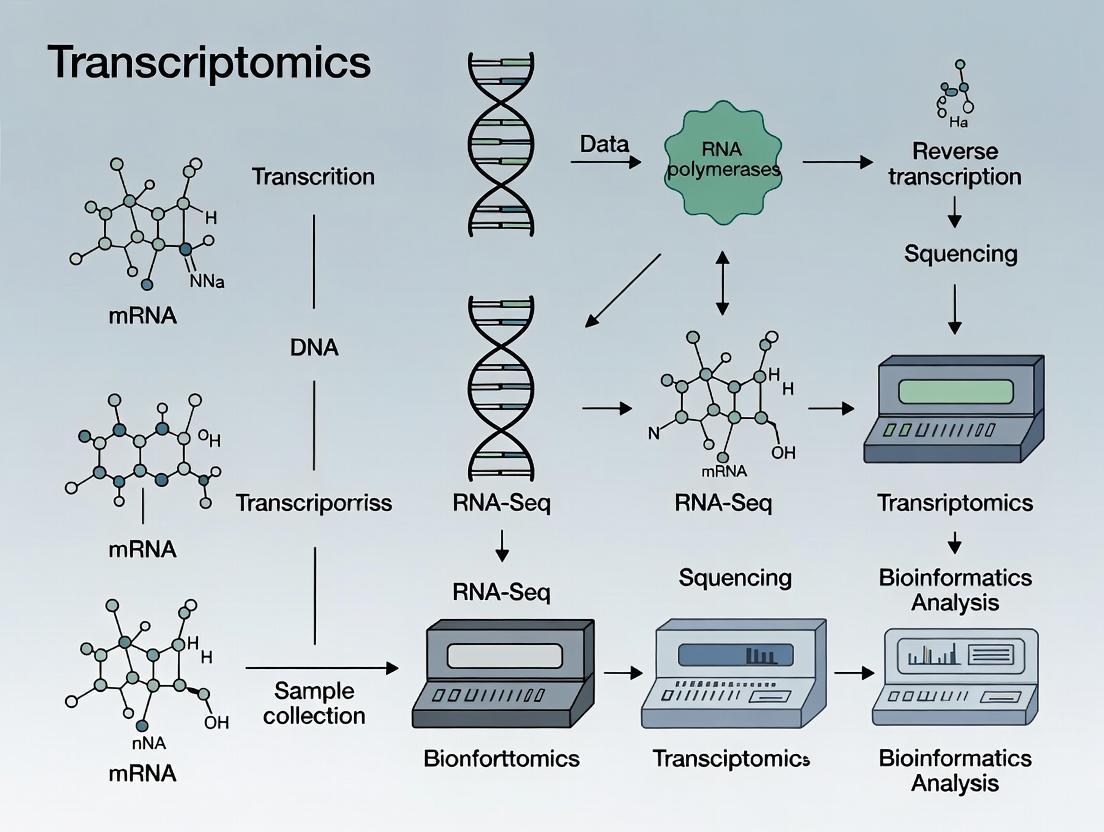
This comprehensive guide demystifies the entire RNA sequencing (RNA-seq) workflow for biomedical researchers and drug development professionals.
RNA Sequencing Explained: A Complete Guide to Modern Transcriptomics for Researchers
Abstract
This comprehensive guide demystifies the entire RNA sequencing (RNA-seq) workflow for biomedical researchers and drug development professionals. It begins by establishing the foundational principles of transcriptomics and why RNA-seq revolutionized the field. We then detail the core methodological steps—from experimental design and library preparation to sequencing platforms and bioinformatic pipelines—with a focus on practical applications in disease research and biomarker discovery. The guide addresses common troubleshooting scenarios and optimization strategies to ensure data quality. Finally, it provides a critical framework for validating RNA-seq findings and comparing them to alternative technologies like microarrays and qPCR. This article equips scientists with the knowledge to design, execute, and interpret robust transcriptomics studies that drive discovery.
What is Transcriptomics? Understanding the RNA Universe and the RNA-Seq Revolution
Transcriptomics is the comprehensive study of the transcriptome—the complete set of RNA transcripts produced by the genome in a specific cell or population of cells at a given time. It exists as the intermediary layer in the Central Dogma of molecular biology, which posits the directional flow of genetic information: DNA → RNA → Protein. While the genome is static, the transcriptome is dynamic, reflecting the genes actively expressed under specific physiological, developmental, or pathological conditions. This field has evolved from studying single genes to global profiling, forming a cornerstone of functional genomics, which aims to understand the functions and interactions of genes and their products.
Core Technologies and Quantitative Evolution
The evolution of transcriptomic technologies has driven exponential growth in data generation and resolution.
Table 1: Evolution of Transcriptomic Technologies and Output Metrics
| Technology Era | Approximate Year Introduced | Key Metric (Per Experiment) | Estimated Cost Per Sample (USD, ~2023) | Primary Readout |
|---|---|---|---|---|
| Northern Blot / qRT-PCR | 1977 / 1990s | 1 - 10 transcripts | $10 - $100 | Targeted mRNA quantification |
| Microarray | Mid-1990s | 10,000 - 50,000 features | $200 - $500 | Relative hybridization intensity |
| Bulk RNA-Seq | 2008 | 20 - 200 million reads | $500 - $2,000 | Digital counts of transcripts |
| Single-Cell RNA-Seq (scRNA-seq) | 2009 | 1,000 - 10,000 cells; 50K reads/cell | $1,000 - $5,000 | Cell-specific transcript counts |
| Spatial Transcriptomics | 2016 | Spatial resolution: 1 - 55 µm | $2,000 - $10,000 | Transcript counts with 2D coordinates |
Experimental Protocol: A Standard Bulk RNA-Seq Workflow
Protocol: Standard Poly-A Selected Bulk RNA-Seq (Illumina Platform)
Objective: To generate a digital gene expression profile from eukaryotic total RNA.
Key Reagents & Materials: See "The Scientist's Toolkit" below.
Step-by-Step Methodology:
RNA Extraction & QC:
- Extract total RNA using a guanidinium thiocyanate-phenol-chloroform method (e.g., TRIzol) or silica-membrane columns.
- Assess RNA integrity using an Agilent Bioanalyzer or TapeStation. An RNA Integrity Number (RIN) > 8.0 is typically required.
Library Preparation (Poly-A Selection):
- mRNA Enrichment: Use oligo(dT) magnetic beads to bind polyadenylated mRNA.
- Fragmentation: Fragment purified mRNA using divalent cations (e.g., Mg2+) at elevated temperature (94°C for 5-15 min) to generate fragments of 200-500 nucleotides.
- cDNA Synthesis: Perform first-strand synthesis using random hexamer primers and reverse transcriptase. Follow with second-strand synthesis using DNA Polymerase I and RNase H.
- End Repair, A-tailing, & Adapter Ligation: Convert DNA ends to blunt ends, add a single 'A' nucleotide, and ligate platform-specific sequencing adapters with a 'T' overhang.
- Library Amplification: Perform 10-15 cycles of PCR to enrich adapter-ligated fragments and add sample index barcodes.
- Library QC: Validate library size distribution (e.g., Bioanalyzer) and quantify using qPCR.
Sequencing:
- Pool libraries at equimolar concentrations.
- Load onto an Illumina flow cell for cluster generation via bridge amplification.
- Sequence using sequencing-by-synthesis chemistry. A common configuration is 150bp paired-end reads, generating 20-50 million reads per sample.
Primary Data Analysis (Bioinformatics):
- Demultiplexing: Assign reads to samples based on index sequences.
- Quality Control: Use FastQC to assess per-base sequence quality, adapter contamination, and GC content.
- Alignment: Map reads to a reference genome using a splice-aware aligner (e.g., STAR, HISAT2).
- Quantification: Generate a count matrix by assigning reads to genomic features (genes) using tools like featureCounts or HTSeq.
- Differential Expression Analysis: Using statistical packages like DESeq2 or edgeR in R, normalize counts and identify genes significantly differentially expressed between experimental conditions (e.g., adjusted p-value < 0.05, |log2 fold change| > 1).
Visualization of Core Concepts and Workflows
Diagram 1: Central Dogma and Transcriptomics Scope
Diagram 2: Bulk RNA-Seq Experimental and Analysis Workflow
The Scientist's Toolkit: Key Research Reagent Solutions
Table 2: Essential Reagents and Kits for RNA-Seq Library Preparation
| Item/Category | Example Product/Component | Primary Function in Protocol |
|---|---|---|
| RNA Isolation Kit | TRIzol Reagent, RNeasy Mini Kit | Lysis and purification of high-integrity total RNA. |
| Poly-A Selection Beads | Dynabeads mRNA DIRECT Purification Kit | Magnetic oligo(dT) beads for enrichment of polyadenylated mRNA. |
| RNA Fragmentation Buffer | NEBNext Magnesium RNA Fragmentation Module | Chemically fragments mRNA to optimal size for sequencing. |
| Reverse Transcriptase | SuperScript IV Reverse Transcriptase | Synthesizes first-strand cDNA from RNA template with high fidelity and yield. |
| Second-Strand Synthesis Mix | NEBNext Second Strand Synthesis Module | Converts ss-cDNA to double-stranded DNA using DNA Polymerase I and RNase H. |
| Library Prep Master Mix | Illumina Stranded mRNA Prep, Ligation Kit | Contains enzymes and buffers for end-prep, A-tailing, and adapter ligation in a streamlined workflow. |
| Indexing Primers (Barcodes) | IDT for Illumina UD Indexes | Unique dual indexes added via PCR to multiplex samples, enabling pooling and post-sequencing sample identification. |
| Size Selection Beads | AMPure XP Beads | Paramagnetic beads for clean-up and size selection of cDNA/library fragments. |
| Library QC Assay | Agilent High Sensitivity DNA Kit, KAPA Library Quantification Kit | Accurate sizing and quantification of final libraries for optimal sequencing pool balancing. |
Functional Genomics and Integrative Analysis
Transcriptomic data is the primary input for functional genomics. Differential expression results (gene lists) are interpreted through:
- Gene Set Enrichment Analysis (GSEA): Determines whether defined sets of genes (e.g., pathways) show statistically significant concordant differences between two biological states.
- Pathway Analysis Tools: (e.g., Ingenuity Pathway Analysis - IPA, Metascape) map genes to canonical signaling, metabolic, and disease pathways.
Table 3: Key Signaling Pathways Frequently Elucidated by Transcriptomics
| Pathway Name | Core Transcriptomic Regulators | Common Assay for Validation (Post-RNA-Seq) |
|---|---|---|
| Inflammatory Response (NF-κB) | NFKB1, RELA, TNF, IL1B, IL6 | Western Blot (p65 phosphorylation), ELISA (cytokine secretion) |
| Hypoxia (HIF-1α) | HIF1A, VEGFA, SLC2A1 | Immunofluorescence (HIF-1α nuclear localization) |
| Apoptosis (p53) | TP53, BAX, PUMA, CDKN1A | Flow Cytometry (Annexin V/PI staining) |
| MAPK/ERK Signaling | KRAS, BRAF, MAPK1, FOS, JUN | Phospho-specific Western Blot (p-ERK1/2) |
Diagram 3: Canonical NF-κB Pathway from Transcriptomic Insight
Transcriptomics has transformed from a tool for measuring gene expression to the central engine of functional genomics. By quantifying the dynamic transcriptome, it provides a direct readout of cellular state, enabling the deconvolution of disease mechanisms, identification of novel drug targets, and discovery of biomarker signatures. Its integration with other omics layers (genomics, proteomics) and spatial context is pushing the frontier towards a fully systems-level understanding of biology.
This technical guide frames the evolution of gene expression analysis within the broader thesis of transcriptomics, the study of the complete set of RNA transcripts produced by the genome. The shift from microarray technology to Next-Generation Sequencing (NGS)-based RNA sequencing (RNA-Seq) represents a paradigm change in resolution, throughput, and discovery power, fundamentally accelerating research in biology, biomedicine, and drug development.
Microarray Technology: Foundation and Methodology
Microarrays enabled the first high-throughput, parallel quantification of known transcript sequences. They operate on the principle of complementary hybridization.
Core Experimental Protocol: Two-Color Microarray Analysis
- RNA Extraction & Quality Control: Total RNA is isolated from test and reference samples (e.g., diseased vs. healthy tissue). RNA integrity (RIN > 7) is verified using an instrument like the Bioanalyzer.
- cDNA Synthesis and Labeling: RNA is reverse-transcribed into cDNA. The cDNA from the test sample is labeled with Cy5 (red) fluorescent dye, and the reference with Cy3 (green), using direct or indirect incorporation methods.
- Hybridization: Labeled cDNAs are mixed and hybridized competitively to a single microarray slide containing thousands of immobilized DNA probes (oligonucleotides or cDNA spots).
- Washing and Scanning: The slide is washed to remove non-specific binding and scanned at wavelengths specific to Cy3 and Cy5.
- Image and Data Analysis: Software quantifies fluorescence intensity at each probe spot. The ratio of Cy5 to Cy3 fluorescence per spot indicates the relative expression level of that gene in the test versus reference sample.
Key Limitations of Microarrays
- Requires a priori knowledge of the genome/transcriptome for probe design.
- Limited dynamic range due to background hybridization and signal saturation.
- Cross-hybridization artifacts can compromise specificity.
- Poor ability to detect splice variants, novel transcripts, or non-coding RNAs.
Next-Generation Sequencing (NGS) and RNA-Seq
RNA-Seq utilizes deep-sequencing technologies to provide a comprehensive, quantitative profile of the transcriptome without the need for pre-designed probes.
Core Experimental Protocol: Standard Bulk RNA-Seq Workflow
- RNA Extraction & Selection: Total RNA is extracted. Depending on the target, poly(A)+ mRNA is enriched using oligo-dT beads, or ribosomal RNA (rRNA) is depleted.
- Library Preparation: RNA is fragmented (chemically or enzymatically). cDNA is synthesized, and adapters containing sequencing primers and sample barcodes (indices) are ligated to the ends.
- Cluster Amplification & Sequencing (Illumina platform example): The library is loaded onto a flow cell. Fragments are bridge-amplified to generate clonal clusters. Sequencing-by-synthesis is performed using fluorescently labeled, reversible terminator nucleotides.
- Data Analysis (Primary): Base calling generates raw sequence reads (FASTQ files). Reads are aligned to a reference genome/transcriptome (e.g., using STAR or HISAT2 aligners), generating SAM/BAM files.
- Data Analysis (Secondary): Quantification of gene/transcript expression (e.g., using featureCounts or StringTie). Differential expression analysis is performed using statistical models (e.g., in DESeq2, edgeR).
Diagram Title: Standard RNA-Seq Experimental Workflow
Table 1: Key Technical Comparison Between Microarrays and RNA-Seq
| Feature | Microarray | RNA-Seq (NGS) |
|---|---|---|
| Underlying Principle | Hybridization to known probes | Direct cDNA sequencing |
| Throughput | High, but limited by probe set | Extremely high; scales with sequencing depth |
| Dynamic Range | ~3-4 orders of magnitude | >5 orders of magnitude |
| Background | Significant, from cross-hybridization | Very low |
| Quantitative Accuracy | Good for moderate-abundance transcripts | High across entire abundance range |
| Specificity | Limited by probe design and cross-hybridization | High, determined by read alignment |
| Discovery Power | Can only detect what is on the array | De novo transcript assembly, novel splice variant, mutation, and fusion detection |
| Required Input RNA | 10-100 ng (for standard arrays) | 1-1000 ng (protocol dependent) |
| Relative Cost per Sample | Low | Moderate to High |
Table 2: Global Adoption Metrics (Representative Data from Recent Publications)
| Metric | Approximate Value / Trend | Notes |
|---|---|---|
| PubMed Citations for "Microarray" (Yearly, peak ~2010) | ~25,000 | Steady decline post-2012. |
| PubMed Citations for "RNA-Seq" (Yearly, 2023) | ~18,000 | Steady increase, surpassing microarray citations post-2016. |
| Typical Sequencing Depth for Human Differential Gene Expression | 20-50 million reads per sample | Balances cost and statistical power. |
| Single-Cell RNA-Seq Studies (Cumulative, ~2023) | >15,000 published studies | Rapid growth since ~2015, enabled by NGS. |
The Scientist's Toolkit: Key Research Reagent Solutions
Table 3: Essential Materials for Modern RNA-Seq Workflows
| Item | Function / Description | Example Product Types |
|---|---|---|
| RNA Stabilization Reagent | Immediately inhibits RNases to preserve in vivo transcriptome state at collection. | RNAlater, QIAzol, TRIzol. |
| Poly(A) Selection Beads | Magnetic beads coated with oligo(dT) to enrich for polyadenylated mRNA from total RNA. | Dynabeads Oligo(dT), NEBNext Poly(A) mRNA Magnetic Isolation Module. |
| Ribo-depletion Kits | Probes to selectively remove abundant ribosomal RNA (rRNA) from total RNA, preserving non-polyA transcripts. | Illumina Ribo-Zero, QIAseq FastSelect. |
| Reverse Transcriptase | Enzyme for synthesizing first-strand cDNA from RNA template; critical for fidelity and yield. | SuperScript IV, Maxima H Minus. |
| Double-Stranded DNA Library Prep Kit | Integrated kits for end-repair, A-tailing, and adapter ligation to prepare sequencing libraries. | Illumina TruSeq, NEBNext Ultra II. |
| Unique Dual Index (UDI) Adapters | Adapters with unique barcode pairs to multiplex samples and eliminate index hopping errors. | Illumina IDT for Illumina UDIs, Nextera UD Indexes. |
| PCR Enzymes for Library Amplification | High-fidelity DNA polymerases for minimal-bias amplification of adapter-ligated libraries. | KAPA HiFi HotStart, PfuUltra II. |
| Library Quantification Kits | For accurate fluorometric or qPCR-based measurement of final library concentration prior to sequencing. | Qubit dsDNA HS Assay, KAPA Library Quantification Kit. |
Advanced Applications and Signaling Pathway Analysis
RNA-Seq enables systems biology approaches, including the dissection of complex signaling pathways through differential expression of pathway components and subsequent validation.
Diagram Title: Gene Expression in a Generic Signaling Pathway
The evolution from microarrays to NGS-based RNA-Seq has transformed transcriptomics from a targeted profiling tool into a comprehensive discovery engine. While microarrays provided the first scalable view of gene expression, RNA-Seq offers unparalleled accuracy, dynamic range, and the ability to characterize novel transcriptomic features. This shift underpins modern research in personalized medicine, biomarker discovery, and the mechanistic understanding of disease, solidifying RNA-Seq as the cornerstone technology for contemporary transcriptomics.
Transcriptomics is the comprehensive study of an organism's transcriptome—the complete set of RNA transcripts produced by the genome at a specific time or under specific conditions. RNA sequencing (RNA-seq) has revolutionized this field by providing a high-resolution, quantitative, and unbiased method for capturing this diversity. This guide details the core principles of RNA-seq as applied to the three major classes of coding and non-coding RNAs: messenger RNA (mRNA), long non-coding RNA (lncRNA), and microRNA (miRNA), framing them within the essential workflow of modern transcriptomics research.
Fundamental RNA-Seq Workflow and Principles
The core RNA-seq workflow involves converting a population of RNA into a library of cDNA fragments, which are then sequenced, aligned, and quantified. Key principles include the need to preserve strand-of-origin information and to employ appropriate library preparation methods for different RNA species.
Diagram Title: Core RNA Sequencing Workflow
Capturing Specific RNA Species: Methodologies and Challenges
mRNA Sequencing
mRNA constitutes 1-5% of total RNA and is typically captured via poly(A) selection. This involves annealing oligo(dT) beads or primers to the 3' polyadenylated tails of mature, protein-coding transcripts.
Detailed Protocol: Poly(A) Selection for mRNA-seq
- Input: 100 ng – 1 µg of total RNA with RIN > 8.0.
- Binding: Incubate RNA with magnetic beads conjugated with oligo(dT) at 65-70°C for 5 min, then cool to 4°C to promote annealing.
- Washing: Use high-salt buffer to wash beads, removing non-poly(A) RNA (rRNA, tRNA, non-adenylated ncRNA).
- Elution: Elute purified mRNA from beads in nuclease-free water at 80°C.
- Fragmentation: Use divalent cations (Mg²⁺) or enzymatic digestion at 94°C for 5-15 minutes to generate fragments of 200-300 bp.
- Library Construction: Perform first-strand cDNA synthesis (reverse transcription with random hexamers), second-strand synthesis, end repair, A-tailing, adapter ligation, and PCR amplification (typically 10-15 cycles).
Table 1: Comparison of RNA Species in Sequencing
| RNA Species | Abundance in Total RNA | Key Capture Method | Primary Challenge in RNA-seq |
|---|---|---|---|
| mRNA | 1-5% | Poly(A) selection | 3' bias, degradation sensitivity |
| lncRNA | Varies widely; often low | Ribosomal RNA depletion (Ribo-Zero) | Low abundance, similar structure to mRNA |
| miRNA | <0.01% | Size selection (<200 nt) | Sequence similarity within families, adapter dimer formation |
lncRNA Sequencing
lncRNAs are often non-polyadenylated and overlap with mRNA in size. Capture requires ribosomal RNA (rRNA) depletion from total RNA using probes targeting rRNA sequences (e.g., Ribo-Zero, RiboMinus).
Detailed Protocol: rRNA Depletion for lncRNA-seq
- Input: 100 ng – 1 µg of high-quality total RNA.
- Hybridization: Incubate RNA with biotinylated DNA probes complementary to conserved regions of cytoplasmic (5S, 5.8S, 18S, 28S) and mitochondrial rRNAs at 68°C for 10 minutes.
- Removal: Add streptavidin-coated magnetic beads to bind biotinylated probe-rRNA complexes.
- Recovery: Magnetize and retain the supernatant containing rRNA-depleted RNA (enriched for mRNA, lncRNA, pre-miRNA).
- Library Construction: Proceed with fragmentation and standard library prep. Strand-specificity is critical and is achieved using dUTP incorporation during second-strand synthesis, followed by enzymatic digestion prior to PCR.
miRNA Sequencing
miRNAs are short (~22 nt) and require specialized small RNA (smRNA) library prep. Detailed Protocol: smRNA-seq for miRNA
- Input: 1-1000 ng of total RNA or purified small RNA.
- Ligation: T4 RNA ligase 1 is used to ligate a 3' adenylated adapter specifically to the 3'-OH of miRNAs, followed by a 5' adapter ligation. This order prevents circularization.
- Reverse Transcription & PCR: Convert ligated RNA to cDNA and amplify with 12-18 PCR cycles.
- Size Selection: Use gel electrophoresis or magnetic beads to isolate library fragments in the 140-160 bp range (adapter + miRNA insert).
- Sequencing: Requires single-end, 50-75 bp reads for full-length miRNA capture.
Diagram Title: Library Prep Paths for Different RNA Classes
Key Data Analysis Metrics and Interpretation
Quantitative analysis involves aligning reads to a reference genome/transcriptome and counting them. Normalization is critical for cross-sample comparison.
Table 2: Essential RNA-seq Analysis Metrics
| Metric | Formula/Purpose | Target Value for mRNA/lncRNA | Target Value for miRNA |
|---|---|---|---|
| Total Reads | Raw sequencing output | 20-50 million per sample | 5-20 million per sample |
| Alignment Rate | (Aligned Reads / Total Reads) * 100 | >70-90% | >60% (allowing for mapping to mature/pri-miRNA) |
| rRNA Alignment Rate | (Reads aligning to rRNA / Total Reads) * 100 | <5% for poly(A)-enriched; <10% for rRNA-depleted | Not a primary concern |
| Genes/ miRNAs Detected | Number of features with counts above threshold | 10,000-15,000 coding genes; varies for lncRNA | 300-600 mature miRNAs (human) |
| Library Complexity | (Number of unique molecules / Total reads) | High, assessed via saturation curves | High, but PCR duplication rate is often higher |
The Scientist's Toolkit: Key Research Reagent Solutions
Table 3: Essential Reagents for Comprehensive RNA-seq
| Reagent/Category | Specific Example(s) | Function in RNA-seq Workflow |
|---|---|---|
| RNA Integrity Agent | RNAlater, TRIzol, Qiazol | Stabilizes RNA in tissues/cells at point of collection, inhibits RNases. |
| Poly(A) Selection Beads | NEBNext Poly(A) mRNA Magnetic Isolation Module, Dynabeads Oligo(dT) | Selectively binds polyadenylated mRNA from total RNA input. |
| rRNA Depletion Kits | Illumina Ribo-Zero Plus, QIAseq FastSelect, NEBNext rRNA Depletion Kit | Removes ribosomal RNA via hybridization, enriching for lncRNA and non-poly(A) mRNA. |
| Strand-Specific Library Prep Kits | NEBNext Ultra II Directional RNA Library Prep, Illumina Stranded mRNA Prep | Incorporates marking (dUTP) to preserve strand information during cDNA synthesis. |
| Small RNA Library Prep Kits | NEBNext Small RNA Library Prep Set, QIAseq miRNA Library Kit | Optimized for adapter ligation to short RNA molecules like miRNA. |
| RNA-Seq Quantification Kits | KAPA Library Quantification Kit, Qubit dsDNA HS Assay | Accurately measures library concentration for precise pooling before sequencing. |
| Universal Blocking Oligos | IDT Ultramer Duplex Probes, Truseq UD Indexes | Reduce index hopping and cross-contamination in multiplexed sequencing runs. |
Advanced Considerations: Integration and Single-Cell RNA-seq
Understanding the interplay between mRNA, lncRNA, and miRNA is key. Integrative analysis can identify miRNA-mRNA regulatory networks or lncRNA sponging activity. Furthermore, single-cell RNA-seq (scRNA-seq) adapts these principles to capture transcriptome diversity at cellular resolution, using unique molecular identifiers (UMIs) to correct for PCR bias and droplet- or well-based partitioning.
Diagram Title: miRNA-mRNA-lncRNA Interaction Network
Mastering the core principles of RNA-seq—from tailored library preparation for mRNA, lncRNA, and miRNA to rigorous bioinformatic analysis—is fundamental to unlocking the complexities of the transcriptome. These methodologies form the backbone of hypothesis-driven and discovery-oriented research in transcriptomics, directly feeding into downstream applications in biomarker discovery, therapeutic target identification, and understanding molecular mechanisms in health and disease.
RNA sequencing (RNA-Seq) has become the cornerstone of modern transcriptomics, enabling the comprehensive analysis of the transcriptome. This guide, framed within a broader thesis on Introduction to Transcriptomics and RNA Sequencing Research, details how RNA-Seq addresses three fundamental biological questions: quantifying differential gene expression, discovering novel isoforms, and identifying fusion genes. These capabilities are pivotal for advancing research in fields ranging from basic molecular biology to targeted drug development.
Differential Gene Expression Analysis
Differential expression (DE) analysis identifies genes with statistically significant changes in expression levels between conditions (e.g., diseased vs. healthy, treated vs. untreated). It is the most common application of RNA-Seq.
Experimental Protocol: A Standard Bulk RNA-Seq Workflow
- Sample Preparation & Library Construction: Isolate total RNA (often using poly-A selection for mRNA). Fragment RNA, reverse transcribe to cDNA, and attach sequencing adapters. Library preparation kits (e.g., Illumina TruSeq) are standard.
- Sequencing: Perform high-throughput sequencing (typically Illumina platforms) to generate 75-150bp paired-end reads, aiming for 20-40 million reads per sample for mammalian genomes.
- Bioinformatics Analysis:
- Quality Control: Use FastQC to assess read quality. Trim adapters and low-quality bases with Trimmomatic or Cutadapt.
- Alignment: Map reads to a reference genome using splice-aware aligners (e.g., STAR, HISAT2).
- Quantification: Count reads mapping to each gene feature using featureCounts or HTSeq-Count.
- Differential Expression: Import counts into statistical packages (DESeq2, edgeR, or limma-voom) to model data, normalize (e.g., using median-of-ratios or TMM), and test for significance. Correct for multiple testing (Benjamini-Hochberg).
Diagram Title: Bulk RNA-Seq Differential Expression Analysis Workflow
Key Quantitative Data (Example)
Table 1: Key Metrics for RNA-Seq DE Study Design
| Metric | Typical Value/Range | Importance | |
|---|---|---|---|
| Read Depth | 20-40 million reads/sample (mammalian) | Balances cost and detection power for mid-abundance transcripts. | |
| Replicates | 3-6 biological replicates/condition | Critical for statistical power and estimating biological variance. | |
| Alignment Rate | >70-90% (species-dependent) | Indifies quality of library and reference suitability. | |
| DE Significance | Adjusted p-value (FDR) < 0.05, | Minimizes false discoveries. | |
| Log2 Fold Change > | 1 or 2 (biologically relevant) |
Novel Isoform Discovery
RNA-Seq allows for the identification and quantification of previously unannotated splice variants (isoforms) of genes, crucial for understanding functional diversity.
Experimental Protocol: Isoform-Level Analysis
- Library & Sequencing: Use paired-end sequencing (longer reads, e.g., 150bp) and higher depth (>40M reads) to improve resolution across splice junctions. Consider strand-specific protocols.
- Bioinformatics Analysis:
- Alignment & Assembly: Align reads with a splice-aware aligner (STAR). Use a reference-guided transcriptome assembler (StringTie, Cufflinks) to reconstruct transcript models from the aligned reads.
- Novel Isoform Identification: Compare assembled transcripts to a reference annotation (e.g., Gencode, RefSeq) using tools like Cuffcompare or Gffcompare. Transcripts with "u" (unknown intergenic) or "i" (intronic) class codes are candidates.
- Quantification & Validation: Quantify expression of novel and known isoforms using Salmon or kallisto (pseudo-alignment). Predict coding potential (CPC2) and validate experimentally (RT-PCR, nanopore sequencing).
Diagram Title: Workflow for Discovering Novel Transcript Isoforms
Fusion Gene Detection
Fusion genes, created by chromosomal rearrangements, are key drivers in many cancers. RNA-Seq can detect expressed fusion transcripts.
Experimental Protocol: Fusion Gene Detection
- Library & Sequencing: Standard RNA-Seq libraries are suitable. Enriching for mRNA increases efficacy. Higher read depth and paired-end sequencing are advantageous.
- Bioinformatics Analysis:
- Dedicated Fusion Calling: Use specialized tools designed to detect chimeric transcripts. Common strategies include:
- Read-Pair Analysis: Tools like STAR-Fusion, Arriba identify discordant read pairs mapping to different genes.
- Split-Read Analysis: Tools like FusionCatcher detect reads split across two genes.
- Multi-Tool Consensus: Run multiple callers (e.g., STAR-Fusion, Arriba, FusionCatcher) and take consensus to reduce false positives.
- Filtering & Annotation: Filter out common artifacts, low-support fusions, and known false positives. Annotate breakpoints and functional domains.
- Validation: Essential confirmation via orthogonal methods (Sanger sequencing, RT-PCR, FISH).
- Dedicated Fusion Calling: Use specialized tools designed to detect chimeric transcripts. Common strategies include:
Diagram Title: Multi-Tool Consensus Strategy for Fusion Detection
Table 2: Comparison of Common Fusion Detection Tools
| Tool | Primary Method | Speed | Strengths |
|---|---|---|---|
| STAR-Fusion | Read-pair & split-read (from STAR aligner) | Fast | High sensitivity, integrated with STAR, good documentation. |
| Arriba | Read-pair & split-read | Very Fast | Excellent speed/sensitivity, useful for oncogenic fusions. |
| FusionCatcher | Multiple (split-read, read-pair, assembly) | Moderate | Comprehensive, built-in filters against false positives. |
The Scientist's Toolkit: Key Research Reagent Solutions
Table 3: Essential Reagents and Kits for RNA-Seq Studies
| Item | Function | Example Product(s) |
|---|---|---|
| RNA Stabilization Reagent | Prevents degradation immediately upon sample collection. | RNAlater, PAXgene Tissue Stabilizer |
| Total RNA Isolation Kit | Purifies high-integrity total RNA from cells/tissues. | Qiagen RNeasy, Zymo Quick-RNA, TRIzol Reagent |
| Poly-A Selection Beads | Enriches for mRNA by binding polyadenylated tails. | NEBNext Poly(A) mRNA Magnetic Kit, Dynabeads mRNA DIRECT |
| Ribosomal RNA Depletion Kit | Removes abundant rRNA to enrich for other RNA species (e.g., lncRNA). | Illumina Ribo-Zero Plus, QIAseq FastSelect |
| RNA Library Prep Kit | Converts RNA to sequencing-ready cDNA libraries with adapters. | Illumina TruSeq Stranded mRNA, NEBNext Ultra II Directional |
| RNA Integrity Number (RIN) Analyzer | Assesses RNA quality pre-library prep (critical for success). | Agilent Bioanalyzer RNA Nano Kit, Fragment Analyzer |
| cDNA Synthesis Master Mix | High-efficiency reverse transcription for library prep or validation. | SuperScript IV Reverse Transcriptase |
| qPCR Master Mix & Probes | Validates differential expression or fusion genes. | TaqMan Gene Expression Assays, SYBR Green |
This technical guide elucidates the core computational terminologies and metrics in RNA sequencing (RNA-seq) analysis. Framed within a broader thesis on transcriptomics, it provides researchers and drug development professionals with a foundational understanding of data quantification and interpretation, which is critical for differential expression analysis and biomarker discovery.
RNA-seq enables transcriptome profiling by generating millions of short nucleotide sequences (reads) from cDNA libraries. The transition from raw reads to interpretable gene expression values involves several key steps and metrics, each addressing specific technical biases. This process is foundational for all downstream analyses in research and therapeutic development.
Core Terminology and Definitions
Reads
A read is the fundamental unit of output from a sequencing instrument, representing the nucleotide sequence of a short DNA fragment derived from an RNA molecule. The quality and quantity of reads directly influence all subsequent analyses.
Key Read Metrics:
- Read Length: Typically 50-300 base pairs (bp) for short-read sequencing (Illumina).
- Read Depth/Count: The total number of reads generated per sample. Modern experiments often aim for 20-50 million reads per sample for mammalian transcriptomes.
- Read Alignment: The computational process of mapping reads to a reference genome or transcriptome. Alignment rates above 70-80% are generally considered acceptable.
Coverage
Coverage (or sequencing depth) at a genomic position is the number of reads aligned to that position. It determines the reliability of detecting transcripts and their variants.
Coverage Formula:
Coverage (X) = (Total # of reads * Read Length) / Total transcriptome length
Table 1: Implications of Sequencing Coverage
| Coverage Level | Typical Use Case | Limitations |
|---|---|---|
| Low (5-10X) | Quantification of highly abundant transcripts. | Poor detection of low-expression genes; inaccurate splice variant analysis. |
| Medium (20-30X) | Standard differential gene expression studies. | Suitable for most bulk RNA-seq experiments. |
| High (50-100X+) | Detection of rare transcripts, alternative splicing, and sequence variants. | Cost-prohibitive for large sample sets; increased data storage needs. |
Normalized Expression: FPKM and TPM
Raw read counts are not directly comparable between samples due to differences in sequencing depth and gene length. Normalization is essential.
FPKM (Fragments Per Kilobase of transcript per Million mapped reads): Normalizes for sequencing depth and gene length. It is calculated per sample.
FPKM = [Number of reads mapped to gene / (Total million mapped reads * Gene length in kilobases)]
TPM (Transcripts Per Million): First normalizes for gene length, then for sequencing depth. The sum of all TPM values in a sample is always 1 million, making values more comparable across samples.
TPMi = (Readsi / Gene Lengthi) / (Σ(Readsj / Gene Lengthj)) * 10^6
Table 2: Comparison of FPKM and TPM
| Metric | Normalization Order | Sum Across Sample | Primary Use | Key Limitation |
|---|---|---|---|---|
| FPKM | Depth, then length | Variable | Within-sample gene comparison. | Not reliable for cross-sample comparison due to variable sum. |
| TPM | Length, then depth | 1 million | Preferred for cross-sample comparison. | Sensitive to accurate transcript length annotation. |
Transcript Abundance
Transcript abundance refers to the estimated quantity of each RNA molecule in the sample. TPM and FPKM are proxies for relative abundance. Absolute quantification remains challenging. Analysis of differential abundance is the cornerstone of identifying biomarkers and therapeutic targets.
Experimental Protocol: A Standard Bulk RNA-seq Workflow
This protocol outlines the steps from tissue to expression matrix.
1. Sample Preparation & RNA Extraction:
- Input: Tissue or cells (preserved in RNAlater or snap-frozen).
- Protocol: Use TRIzol or column-based kits (e.g., Qiagen RNeasy). Assess RNA integrity via Bioanalyzer (RIN > 8 required).
2. Library Preparation:
- Poly-A Selection: Isolate mRNA using oligo(dT) beads.
- Fragmentation: Fragment RNA chemically (e.g., Mg2+, heat) or enzymatically.
- cDNA Synthesis: Reverse transcribe to double-stranded cDNA.
- Adapter Ligation: Ligate sequencing adapters with sample barcodes for multiplexing.
- PCR Amplification: Enrich adapter-ligated fragments (12-15 cycles).
3. Sequencing:
- Platform: Illumina NovaSeq or NextSeq.
- Configuration: Paired-end 2x150 bp recommended for gene-level and isoform analysis.
- Depth: Sequence to a minimum of 25 million read pairs per sample.
4. Bioinformatics Analysis (Reference-Based):
- Quality Control: FastQC to assess per-base sequence quality.
- Trimming & Filtering: Trim adapters and low-quality bases with Trimmomatic or Cutadapt.
- Alignment: Map reads to a reference genome/transcriptome using a splice-aware aligner (e.g., STAR, HISAT2).
- Quantification: Generate raw gene/transcript counts using featureCounts or Salmon (pseudo-alignment).
- Normalization: Calculate TPM values using software like StringTie or directly from Salmon output.
Visualizing the RNA-seq Workflow and Quantification Logic
Title: Bulk RNA-seq Analysis Pipeline
Title: Normalization Logic for FPKM vs. TPM
The Scientist's Toolkit: Key Research Reagent Solutions
Table 3: Essential Materials for RNA-seq Experiments
| Item | Example Product/Brand | Critical Function |
|---|---|---|
| RNA Stabilization Reagent | RNAlater (Thermo Fisher), PAXgene (Qiagen) | Preserves RNA integrity in tissues/cells immediately post-collection. |
| Total RNA Isolation Kit | RNeasy (Qiagen), TRIzol (Thermo Fisher) | Purifies high-quality, DNA-free total RNA from various sample types. |
| RNA Integrity Analyzer | Bioanalyzer (Agilent), TapeStation (Agilent) | Quantifies and assesses RNA quality via RIN (RNA Integrity Number). |
| Poly-A Selection Beads | NEBNext Poly(A) mRNA Magnetic Kit | Isolates eukaryotic mRNA from total RNA via oligo(dT) binding. |
| RNA-seq Library Prep Kit | Illumina TruSeq Stranded mRNA, NEBNext Ultra II | All-in-one kit for cDNA synthesis, adapter ligation, and library amplification. |
| High-Fidelity DNA Polymerase | KAPA HiFi HotStart ReadyMix (Roche), Q5 (NEB) | Ensures accurate, minimal-bias amplification of cDNA libraries. |
| Size Selection Beads/System | AMPure XP Beads (Beckman Coulter), Pippin Prep (Sage Science) | Selects cDNA fragments of optimal length for sequencing (e.g., 300-500 bp). |
| Sequencing Platform & Flow Cell | Illumina NovaSeq S-Prime Flow Cell | The hardware and consumable for generating millions of paired-end reads. |
| External RNA Controls | ERCC RNA Spike-In Mix (Thermo Fisher) | Adds known RNAs to sample for assessing technical performance and sensitivity. |
The RNA-Seq Workflow: Step-by-Step Protocol from Sample to Insight
The reliability of any transcriptomics study, particularly those employing RNA sequencing (RNA-seq), is fundamentally determined before a single sample is processed. A statistically sound experimental design and a rigorous a priori power analysis form the non-negotiable foundation for generating biologically interpretable and reproducible data. This guide details the core principles and practical execution of these critical first steps within the context of modern RNA-seq research for drug development and biomarker discovery.
The Pillars of Experimental Design
Effective design controls for variability and bias, ensuring that observed differential expression is attributable to the experimental conditions.
Core Principles
- Randomization: Assigning samples to processing batches and sequencing lanes randomly to avoid systematic technical bias.
- Blocking: Grouping similar experimental units (e.g., tissues from the same subject, cell lines from the same passage) to control for known sources of nuisance variation.
- Replication: The cornerstone of inference. Biological replicates (samples from different biological entities) are essential for generalizing conclusions to a population. Technical replicates (repeated measurements of the same sample) control for measurement error but cannot replace biological replication.
- Blinding: Where possible, personnel conducting library prep and data analysis should be blinded to group assignments to reduce subjective bias.
Common RNA-seq Designs
- Completely Randomized: Suitable for cell line experiments with minimal batch effects.
- Randomized Block: Essential for patient studies where age, sex, or batch are confounding factors.
- Paired/Matched Design: Used when samples are naturally paired (e.g., tumor and normal tissue from the same patient), dramatically increasing sensitivity.
Power Analysis: Determining Sample Size
Power analysis quantitatively links design choices to the probability of detecting true effects.
Key Parameters
Table 1: Key Input Parameters for RNA-seq Power Analysis
| Parameter | Description | Typical Value/Range | Impact on Sample Size |
|---|---|---|---|
| Significance Threshold (α) | False Positive Rate (Type I error). | 0.01 - 0.05 | Lower α requires larger n. |
| Power (1-β) | Probability of detecting a true effect (1 - Type II error). | 0.8 - 0.9 | Higher power requires larger n. |
| Effect Size (Fold Change) | Minimum biologically relevant difference in expression. | 1.5 - 2.0x | Smaller fold changes require much larger n. |
| Baseline Read Count (μ) | Expected average expression level for a gene. | Gene-specific; lowly expressed genes are harder to detect. | Lower μ requires larger n. |
| Dispersion (φ) | Biological variance of gene counts. | Estimated from pilot data or public datasets. | Higher dispersion requires larger n. |
Current Methodologies & Protocol
Protocol: Performing Power/Sample Size Analysis using PROPER in R
Install and Load Package: Use Bioconductor for current tools.
Define Simulation Parameters: Based on Table 1.
Run Power Simulation: Compare different sample sizes.
Analyze and Compare Results:
Alternative Tools: ssizeRNA (Bioconductor), Scotty (web tool), and commercial software like JMP Clinical.
Quantitative Data from Recent Benchmarks
Table 2: Impact of Design Parameters on Required Sample Size (Per Group)*
| Scenario | Fold Change | Dispersion | Mean Count | Power Target | Estimated n (per group) |
|---|---|---|---|---|---|
| High Sensitivity | 1.5 | High | 50 | 0.9 | 18 - 25 |
| Standard Detection | 2.0 | Moderate | 100 | 0.8 | 6 - 9 |
| Robust Discovery | 2.0 | Moderate | 100 | 0.9 | 8 - 12 |
| Low Expression Focus | 3.0 | High | 10 | 0.8 | 12 - 16 |
*Data synthesized from recent simulation studies using PROPER and edgeR (α=0.05, FDR controlled).
The Scientist's Toolkit: Research Reagent Solutions
Table 3: Essential Reagents for Robust RNA-seq Experimental Workflow
| Item | Function | Key Considerations |
|---|---|---|
| RNA Stabilization Reagent | Immediate inactivation of RNases post-sampling (e.g., TRIzol, RNAlater). | Compatibility with downstream isolation method and sample type. |
| High-Selectivity RNA Isolation Kit | Purification of high-integrity total RNA, removal of genomic DNA. | Yield from low-input samples, ability to handle degraded or FFPE samples. |
| RNA Integrity Number (RIN) Assay | Quantitative assessment of RNA quality (e.g., Agilent Bioanalyzer). | Critical QC step; RIN >7-8 typically required for standard mRNA-seq. |
| rRNA Depletion or Poly-A Selection Kit | Enrichment for mRNA or removal of ribosomal RNA. | Choice depends on organism and transcriptome of interest (e.g., bacterial vs. mammalian). |
| Stranded Library Prep Kit | Conversion of RNA to sequencing-ready cDNA libraries with strand information. | UMI incorporation for deduplication, input RNA requirement, compatibility with single-cell. |
| Unique Molecular Indexes (UMIs) | Molecular barcodes to correct for PCR amplification bias and duplicates. | Essential for accurate digital counting in single-cell and low-input protocols. |
| PCR Inhibitor Removal Beads | Cleanup of library prep reactions (e.g., SPRI beads). | Critical for consistent size selection and final library purity. |
| Sequencing Spike-in Controls | Exogenous RNA/DNA of known quantity added to samples. | Allows technical performance monitoring and cross-sample normalization. |
Visualizing the Experimental Framework
Title: Workflow for Robust Transcriptomics Study Design
Title: The Logic of Power Analysis for RNA-seq
The foundation of any transcriptomics or RNA sequencing (RNA-seq) study is the isolation of high-quality, intact RNA. The reliability of downstream analyses—differential gene expression, isoform detection, and biomarker discovery—is entirely contingent upon the initial RNA quality. Within this framework, the RNA Integrity Number (RIN) has emerged as the paramount, standardized metric for assessing RNA quality prior to costly and labor-intensive library preparation and sequencing.
The RNA Integrity Number (RIN): A Quantitative Metric
The RIN is an algorithmically assigned score ranging from 1 (completely degraded) to 10 (perfectly intact). It is derived from an electrophoretic trace of total RNA, typically obtained using microfluidic capillary systems like the Agilent Bioanalyzer or TapeStation.
Table 1: Interpretation of RIN Values
| RIN Score | RNA Integrity Level | Suitability for RNA-seq |
|---|---|---|
| 9-10 | Excellent, highly intact | Ideal for all applications, including full-length isoform sequencing. |
| 7-8 | Good, slight degradation | Suitable for standard mRNA-seq; may impact detection of long transcripts. |
| 5-6 | Moderate degradation | May be used with 3'-biased protocols; increases risk of biased data. |
| 3-4 | Significant degradation | Generally not recommended for RNA-seq; results will be severely compromised. |
| 1-2 | Fully degraded | Not suitable for any transcriptomic analysis. |
Protocol: RNA Quality Assessment Using a Bioanalyzer
This protocol details the standard workflow for RIN assignment.
Materials:
- Agilent RNA 6000 Nano Kit (Chip, dye, ladder, markers, buffer).
- Total RNA sample (typically 1 µL at 5-500 ng/µL).
- Agilent 2100 Bioanalyzer instrument.
- Thermal cycler or heat block.
Methodology:
- Chip Preparation: Prime the RNA Nano Chip by loading 9 µL of gel matrix into the designated well.
- Dye/Matrix Mix: Pipette 9 µL of gel matrix into a vial of RNA dye concentrate. Mix and centrifuge.
- Loading: Load 9 µL of the dye-matrix mix into the chip's additional well. Load 5 µL of RNA marker into all sample and ladder wells.
- Sample Preparation: Dilute 1 µL of RNA sample with 2 µL of nuclease-free water. Denature at 70°C for 2 minutes, then immediately cool on ice.
- Ladder & Sample Loading: Load 1 µL of RNA ladder into the ladder well. Load 1 µL of each prepared sample into subsequent sample wells.
- Vortex & Run: Place the chip in the vortex adapter, shake for 1 minute. Insert into the Bioanalyzer and run the "Eukaryote Total RNA Nano" assay.
- Analysis: The instrument software automatically analyzes the electrophoregram, identifies the 18S and 28S ribosomal RNA peaks, calculates the ratio, and assigns a RIN based on the entire trace's degradation profile.
The Impact of RIN on RNA-seq Data
Quantitative data underscores the critical influence of RIN on sequencing outcomes.
Table 2: Impact of RIN on RNA-seq Metrics
| Experimental Metric | RIN 10 (Optimal) | RIN 7 | RIN 4 |
|---|---|---|---|
| Mapping Rate (%) | High (typically >90%) | Slightly Reduced | Significantly Reduced |
| 5'/3' Bias | Minimal | Detectable | Severe 3' bias |
| Gene Detection | Maximal number of genes | Reduced, especially long genes | Severely reduced |
| Spike-in Recovery | Accurate | May show bias | Inaccurate |
| Differential Expression False Positives | Baseline | Increased | Sharply increased |
The Scientist's Toolkit: Essential Reagents for RNA QC
Table 3: Key Research Reagent Solutions for RNA Extraction & QC
| Item | Function | Key Consideration |
|---|---|---|
| RNase Inhibitors | Inactivate RNases during extraction and handling. | Essential for preserving high RIN. |
| Magnetic Bead-Based Kits | Selective binding of RNA for purification. | Enable high-throughput, automation-friendly workflows. |
| Acidic Phenol-Guanidine (e.g., TRIzol) | Denatures proteins and RNases during lysis. | Effective for difficult tissues, requires careful phase separation. |
| DNase I (RNase-free) | Removes genomic DNA contamination. | Critical for accurate RNA-seq quantification. |
| RNA Stable Storage Buffers | Chemically stabilize RNA at room temperature. | For biobanking and shipping without cold chain. |
| Agilent RNA 6000 Nano Kit | Microfluidic analysis for RIN assignment. | Industry standard for QC; consumes minimal sample. |
| Qubit RNA HS Assay Kit | Fluorometric quantification of RNA concentration. | More accurate than absorbance (A260) for dilute/purified samples. |
Visualizing the Role of RIN in the Transcriptomics Workflow
Title: RNA QC Decision Workflow in Transcriptomics
RNA Degradation Pathways and RIN Algorithm Logic
Title: RNA Degradation Pathway and RIN Assignment
The RIN number is not merely a preliminary check but a critical gatekeeper in transcriptomics research. Its systematic use ensures that the substantial investment in RNA-seq yields biologically meaningful and technically reproducible data, forming a credible foundation for scientific discovery and therapeutic development.
Within the broader thesis of Introduction to transcriptomics and RNA sequencing research, the selection of an appropriate library preparation strategy is a critical, foundational decision. The chosen method dictates the scope, resolution, and accuracy of downstream analyses, from differential gene expression to novel isoform discovery. This technical guide will dissect two principal RNA enrichment techniques—Poly-A Selection and Ribodepletion—and elucidate the crucial concept of strandedness, providing researchers and drug development professionals with the framework to design robust, hypothesis-driven RNA-seq experiments.
Part 1: Core Enrichment Methodologies
Poly-A Selection
This method targets the polyadenylated tail present on most messenger RNAs (mRNAs), long non-coding RNAs (lncRNAs), and some circular RNAs. It employs oligo(dT) beads or magnetic particles to capture and purify these transcripts, effectively depleting non-polyadenylated RNA species.
Detailed Protocol: Magnetic Bead-Based Poly-A Selection
- RNA Integrity Check: Verify RNA Integrity Number (RIN) > 8.5 via Bioanalyzer/TapeStation.
- Fragmentation: Using divalent cations under elevated temperature (e.g., 94°C for 5-15 min), fragment 10 ng–1 µg of total RNA to a desired size (e.g., ~200-300 nt).
- Capture: Incubate fragmented RNA with oligo(dT) magnetic beads. Poly-A+ RNA hybridizes to the beads.
- Washing: Apply a magnetic field, retain beads, and wash 2-3 times with high-salt buffer to remove non-specifically bound rRNA and other RNA.
- Elution: Elute the purified poly-A+ RNA in low-salt buffer or nuclease-free water.
- Proceed to reverse transcription and library construction.
Ribodepletion (Ribo-Zero / rRNA Depletion)
This method uses sequence-specific probes (DNA or RNA) to hybridize and remove abundant ribosomal RNA (rRNA) sequences, which can constitute >80% of total RNA. It preserves both poly-A+ and poly-A- RNA, including non-coding RNAs, nascent transcripts, and bacterial/archaeal RNA.
Detailed Protocol: Probe Hybridization-Based Ribodepletion
- RNA Denaturation: Denature 100 ng–1 µg of total RNA at 68°C for 2 minutes.
- Hybridization: Add biotinylated rRNA-targeting probes (spanning conserved regions of 5S, 5.8S, 18S, and 28S rRNAs) and incubate at 68°C for 10 minutes.
- Removal: Add streptavidin magnetic beads, which bind the biotinylated probe-rRNA complexes.
- Depletion: Apply a magnetic field. The supernatant, now depleted of rRNA, is transferred to a new tube.
- Clean-up: Purify the rRNA-depleted RNA using magnetic beads or column-based purification.
- Proceed to library construction.
Part 2: The Critical Role of Strandedness
A stranded (or strand-specific) library preserves the information regarding which genomic strand originated the transcript. This is achieved by incorporating specific adapters or using chemical marking (e.g., dUTP incorporation) during cDNA synthesis. Non-stranded libraries lose this information, making it impossible to distinguish overlapping genes on opposite strands or accurately quantify antisense transcription.
Workflow Comparison: Stranded vs. Non-Stranded
Part 3: Comparative Analysis & Decision Framework
Quantitative Comparison of Methods
Table 1: Technical Comparison of Enrichment Methods
| Feature | Poly-A Selection | Ribodepletion |
|---|---|---|
| Target Transcripts | Polyadenylated RNA (mRNA, lncRNA) | Total RNA minus rRNA (mRNA, lncRNA, pre-mRNA, ncRNA) |
| Typical Input | 10 ng – 1 µg total RNA | 100 ng – 1 µg total RNA |
| rRNA Removal Efficiency | High (for poly-A+ transcripts) | Very High (>99% of cytoplasmic rRNA) |
| Bias | 3' bias due to fragmentation post-capture | More uniform coverage; potential probe bias |
| Ideal For | Gene-level expression, eukaryotic mRNA | Whole-transcriptome analysis, bacterial RNA, non-poly-A RNA, fusion detection |
| Key Limitation | Misses non-poly-A transcripts (e.g., histones, some lncRNAs) | Higher residual rRNA in degraded samples; more complex protocol |
Table 2: Impact of Library Strandedness on Data Interpretation
| Analysis Goal | Non-Stranded Library | Stranded Library | Recommendation |
|---|---|---|---|
| Gene Expression Quantification | Accurate for non-overlapping genes | Accurate for all genes | Stranded |
| Antisense Transcription | Cannot be analyzed | Can be identified & quantified | Stranded |
| De Novo Transcript Assembly | High error rate in complex loci | Highly accurate | Stranded |
| Cost & Complexity | Lower | Higher (~10-20% cost increase) | Non-stranded if stranded info is irrelevant |
Part 4: The Scientist's Toolkit: Research Reagent Solutions
Essential Materials for RNA-seq Library Preparation
| Item | Function | Example/Kits |
|---|---|---|
| RNA Integrity Assessment | Assess RNA quality (RIN) prior to library prep. Critical for success. | Agilent Bioanalyzer RNA Nano Kit, TapeStation RNA ScreenTapes |
| Poly-A Selection Beads | Magnetic beads coated with oligo(dT) to capture polyadenylated RNA. | NEBNext Poly(A) mRNA Magnetic Isolation Module, Dynabeads mRNA DIRECT Purification Kit |
| Ribodepletion Probes/Kits | Sequence-specific probes to hybridize and remove rRNA. | Illumina Ribo-Zero Plus, QIAseq FastSelect, NEBNext rRNA Depletion Kit |
| Stranded cDNA Synthesis Kit | Incorporates specific markers (dUTP) to maintain strand information. | NEBNext Ultra II Directional RNA Library Prep Kit, Illumina Stranded mRNA Prep |
| Dual-Index Adapters | Unique combinations for sample multiplexing, reducing index hopping risk. | IDT for Illumina UD Indexes, Illumina CD Indexes |
| Library Amplification & Clean-up | PCR-enrich adapter-ligated fragments and size-select final library. | SPRIselect beads (Beckman Coulter), KAPA HiFi HotStart ReadyMix |
| Library QC | Quantify and size-distribute the final library before sequencing. | Qubit dsDNA HS Assay, Agilent Bioanalyzer High Sensitivity DNA Kit |
Library Prep Selection Decision Tree
The journey into transcriptomics research necessitates a deliberate choice at the library preparation stage. Poly-A selection offers a focused, efficient view of the mature, polyadenylated transcriptome, while ribodepletion provides a comprehensive snapshot inclusive of non-coding and nascent RNA species. Crucially, the adoption of stranded library protocols is now considered the standard for any experiment where accurate annotation and discovery of novel transcriptional units are required. Aligning these technical parameters with your biological question is paramount to generating meaningful, publication-quality RNA sequencing data.
This overview is framed within the context of a broader thesis on Introduction to transcriptomics and RNA sequencing research. The choice of sequencing platform fundamentally influences experimental design, data interpretation, and biological conclusions in transcriptomics. This guide provides a technical comparison of the three dominant platforms, detailing their methodologies and applications in RNA research.
Core Technologies & Principles
Illumina (Synthesis Sequencing - SBS): Utilizes reversible dye-terminators. Clonally amplified DNA fragments are attached to a flow cell and sequenced through cycles of nucleotide incorporation, imaging, and cleavage. It delivers high-throughput, short-read data.
Pacific Biosciences (PacBio - Single Molecule, Real-Time (SMRT) Sequencing): Measures nucleotide incorporation in real-time using zero-mode waveguides (ZMWs). Phospholinked nucleotides, each tagged with a fluorescent dye, are incorporated by a polymerase anchored to the bottom of a ZMW. The fluorescence pulse duration identifies the base.
Oxford Nanopore Technologies (ONT - Nanopore Sequencing): Measures disruptions in an ionic current as a DNA or RNA molecule is threaded through a protein nanopore. Each nucleotide (or k-mer) causes a characteristic current blockade, which is decoded in real-time.
Comparative Performance Data (Current as of 2024)
Table 1: Key Platform Specifications for Transcriptomics
| Feature | Illumina (NovaSeq X Plus) | PacBio (Revio) | Oxford Nanopore (PromethION 2) |
|---|---|---|---|
| Read Length | Short (up to 2x300 bp PE) | Very Long (HiFi: 10-25 kb; CLR: >50 kb) | Very Long (Ultra-long: N50 >100 kb; direct RNA) |
| Output per Run | Up to 16 Tb | 360-450 Gb (HiFi) | 200-300 Gb (V14 chemistry) |
| Accuracy | Very High (>99.9% Q30+) | High (HiFi > Q30, ~99.9%) | Moderate (duplex ~Q30; simplex ~Q20) |
| Run Time | 13-44 hours | 0.5-30 hours (HiFi mode) | Real-time, 24-72 hr typical |
| Primary RNA-seq Mode | cDNA (short-read) | Iso-Seq (cDNA, full-length) | Direct RNA-seq or cDNA |
| Key RNA App | Gene expression, splicing | Full-length isoform discovery, fusion detection | Direct RNA mod detection, isoform analysis |
| Cost per Gb (approx.) | $2-$5 | $8-$15 (HiFi) | $7-$12 |
Table 2: Suitability for Transcriptomics Applications
| Application | Illumina | PacBio HiFi | Oxford Nanopore |
|---|---|---|---|
| Quantitative Gene Expression | Excellent (high accuracy, depth) | Good (but lower throughput/cost) | Good (with sufficient depth) |
| Alternative Splicing Analysis | Indirect (via counting) | Excellent (full-length isoform resolution) | Excellent (long reads) |
| Variant Detection (SNP, Fusion) | Excellent (SNPs) | Excellent (phasing, fusion detection) | Good (especially with duplex) |
| RNA Base Modification Detection | Indirect (via treatment) | Limited (kinetic signals) | Native (Direct RNA) |
| Rapid/Real-time Analysis | No | No | Yes |
Detailed Experimental Protocols for RNA Sequencing
Illumina Stranded mRNA-seq Protocol
Principle: Enrich polyadenylated RNA, fragment, and generate a strand-specific cDNA library.
- RNA Extraction & QC: Isolate total RNA (RIN > 8). Use bead-based poly(A) selection.
- Fragmentation & cDNA Synthesis: Fragment mRNA chemically. Synthesize first-strand cDNA with reverse transcriptase and random hexamers. Synthesize second-strand cDNA with dUTP to mark strand orientation.
- End Repair, A-tailing, & Adapter Ligation: Repair ends, add 'A' overhang, ligate indexed adapters.
- Library Amplification: Perform PCR with strand-specific cleavage of dUTP-containing strand, enriching for the correct orientation.
- QC & Sequencing: Quantify library (qPCR), check size profile (Bioanalyzer). Load onto flow cell for cluster generation and paired-end sequencing.
PacBio HiFi Iso-Seq Protocol
Principle: Generate full-length cDNA without fragmentation for long-read sequencing.
- Reverse Transcription: Use template-switching oligonucleotides (TSO) and SMART (Switching Mechanism at 5' end of RNA Template) technology to generate full-length cDNA with identical 5' and 3' adapters.
- cDNA Size Selection: Use magnetic beads (e.g., SageELF) to select long cDNAs (>1-2 kb, up to 10+ kb).
- PCR Amplification: Amplify size-selected cDNA with primers matching the universal adapters.
- SMRTbell Library Prep: Repair ends, ligate hairpin adapters to create a circular, single-stranded template (SMRTbell).
- Sequencing: Bind polymerase to SMRTbell, load into ZMWs. Perform sequencing with HiFi mode (circular consensus sequencing - CCS), where multiple passes of the same molecule yield a highly accurate (HiFi) read.
Oxford Nanopore Direct RNA Sequencing Protocol
Principle: Sequence native RNA molecules directly without cDNA conversion.
- RNA QC & Poly(A) Tail Handling: Ensure high-quality RNA. For eukaryotic mRNA, use poly(A) polymerase to ensure a uniform 3' poly(A) tail if necessary.
- Adapter Ligation: Ligate a sequencing adapter with a processive motor protein directly to the 3' poly(A) tail of the RNA.
- Library Loading: Load the adapter-linked RNA directly onto the flow cell (R9.4.1 or R10.4.1 pores).
- Sequencing: The motor protein unwinds the RNA and threads it through the nanopore. The ionic current signal is decoded in real-time by the MinKNOW software.
- Basecalling & Analysis: Perform real-time or offline basecalling (e.g., Dorado). Use tools like
tomboorxPorefor modification detection.
Visualizations
Illumina Sequencing by Synthesis Workflow
PacBio SMRT Sequencing Principle
Nanopore Sequencing by Current Blockade
The Scientist's Toolkit: Key Reagent Solutions for RNA-seq
Table 3: Essential Research Reagents & Kits
| Item | Function | Typical Vendor/Example |
|---|---|---|
| Poly(A) Selection Beads | Enriches eukaryotic mRNA by binding poly(A) tail. | NEBNext Poly(A) mRNA Magnetic Isolation Module, Dynabeads Oligo(dT) |
| RNase Inhibitor | Prevents degradation of RNA during library prep. | Recombinant RNase Inhibitor (e.g., Lucigen, Takara) |
| Template Switching Reverse Transcriptase | Generates full-length cDNA with universal adapter for PacBio/Iso-Seq. | SMARTScribe Reverse Transcriptase (Takara) |
| dUTP Second Strand Mix | Incorporates dUTP for strand specificity in Illumina kits. | NEBNext Ultra II Directional RNA Library Prep Kit component |
| SMRTbell Prep Kit | Prepares circularized, hairpin-ligated libraries for PacBio. | SMRTbell Prep Kit 3.0 (PacBio) |
| Ligation Sequencing Kit (RNA) | Provides adapters & motor proteins for ONT direct RNA seq. | Direct RNA Sequencing Kit (SQK-RNA004, ONT) |
| Magnetic Bead Cleanup Beads | Size selection and purification of DNA/RNA fragments. | SPRIselect / AMPure XP Beads (Beckman Coulter) |
| Qubit RNA HS Assay | Fluorometric quantitation of low-concentration RNA. | Invitrogen Qubit Assay Kits (Thermo Fisher) |
| High-Sensitivity DNA/RNA Bioanalyzer Chip | Assesses integrity (RIN) and library size distribution. | Agilent Bioanalyzer 2100 system chips |
Within the broader thesis on Introduction to transcriptomics and RNA sequencing research, this technical guide details the core computational pipeline for analyzing RNA-seq data. This pipeline transforms raw sequencing reads into biologically interpretable results, enabling researchers and drug development professionals to understand transcriptome-wide gene expression changes under different conditions.
The Core Pipeline: From Reads to Insights
The standard pipeline consists of three primary, sequential stages: Alignment, Quantification, and Differential Expression (DE) Analysis. Each stage relies on specific algorithms and software tools.
Diagram 1: Core RNA-seq Bioinformatics Workflow
Stage 1: Alignment
Alignment maps the millions of short sequencing reads to a reference genome or transcriptome.
Key Algorithms & Tools
- Spliced Aligners: Essential for eukaryotic RNA-seq to handle reads spanning intron-exon junctions.
- STAR: Uses a sequential maximum mappable seed search in two passes.
- HISAT2: Employs hierarchical indexing with global and local FM indices.
- Pseudoalignment: A rapid, alignment-free approach for transcript-level analysis (e.g., Salmon, kallisto).
Detailed Protocol: Alignment with STAR
1. Prerequisite: Generate Genome Index
--sjdbOverhang should be read length minus 1.
2. Alignment of Reads
Output & Quality Metrics
Key alignment metrics include total reads, uniquely mapped reads, and reads mapped to multiple loci. MultiQC aggregates these across samples.
Table 1: Representative STAR Alignment Metrics (Simulated Data)
| Metric | Sample A | Sample B | Interpretation |
|---|---|---|---|
| Number of input reads | 25,000,000 | 24,800,000 | Total sequenced reads. |
| Uniquely mapped reads % | 88.5% | 87.2% | Primary alignments; ideal >70-80%. |
| % of reads mapped to multiple loci | 6.1% | 6.8% | Multi-mapped reads; often excluded. |
| % of reads unmapped: too short | 1.2% | 1.5% | Indicates potential adapter contamination. |
| Mismatch rate per base, % | 0.3% | 0.4% | Sequencing error or genetic variation. |
Stage 2: Quantification
Quantification summarizes aligned reads into counts per genomic feature (e.g., gene, exon).
Counting Strategies
- Intersection-Nonempty: Default in featureCounts; a read counts if it overlaps the feature by at least one base.
- Intersection-Strict: Requires the entire read to be within the feature.
- Transcript-Aware: Tools like StringTie or Cufflinks assemble transcripts and estimate their abundances (FPKM/TPM).
Detailed Protocol: Gene-level Counting with featureCounts
Output: The Count Matrix
The final output is a matrix where rows are genes, columns are samples, and values are integer counts.
Table 2: Excerpt of a Gene Count Matrix
| GeneID | Control_1 | Control_2 | Treated_1 | Treated_2 |
|---|---|---|---|---|
| Gene_A | 150 | 142 | 2050 | 2108 |
| Gene_B | 85 | 78 | 92 | 81 |
| Gene_C | 0 | 2 | 0 | 1 |
| ... | ... | ... | ... | ... |
Stage 3: Differential Expression Analysis
DE analysis identifies genes with statistically significant expression changes between conditions (e.g., treated vs. control).
Statistical Models
Modern tools use negative binomial distributions to model count data, accounting for biological variability and mean-variance relationship.
Diagram 2: Differential Expression Analysis Steps
Detailed Protocol: DE Analysis with DESeq2 (R/Bioconductor)
Interpretation of Results
Key outputs include the log2 fold change (log2FC) (magnitude of change), the p-value (statistical significance), and the adjusted p-value (FDR) (corrected for multiple testing).
Table 3: Top 5 Rows of a Typical DESeq2 Results Table
| GeneID | BaseMean | log2FC | lfcSE | stat | p-value | padj |
|---|---|---|---|---|---|---|
| Gene_X | 12500.6 | 3.85 | 0.12 | 32.1 | 1.5e-225 | 4.2e-222 |
| Gene_Y | 800.2 | -4.21 | 0.21 | -20.0 | 6.7e-89 | 9.1e-86 |
| Gene_Z | 205.5 | 2.15 | 0.15 | 14.3 | 1.1e-46 | 1.0e-43 |
| Gene_A1 | 50.1 | 1.98 | 0.18 | 11.0 | 3.3e-28 | 2.2e-25 |
| Gene_B2 | 1100.8 | -1.05 | 0.10 | -10.5 | 8.9e-26 | 4.8e-23 |
The Scientist's Toolkit: Research Reagent Solutions
Table 4: Essential Wet-Lab and Computational Reagents for RNA-seq
| Item / Solution | Function / Purpose | Example/Note |
|---|---|---|
| Poly-dT Magnetic Beads | mRNA enrichment from total RNA by binding poly-A tail. | Critical for standard mRNA-seq libraries. |
| RNase H / DNase I | Remove genomic DNA contamination from RNA samples. | Prevents false positives from unprocessed transcripts. |
| Ribo-Zero / RiboCop Kits | Depletion of ribosomal RNA (rRNA) from total RNA. | Essential for ribosomal RNA depletion protocols. |
| Fragmentation Buffer | Chemically or enzymatically fragment RNA or cDNA to desired size. | Determines insert size for sequencing. |
| Reverse Transcriptase | Synthesize first-strand cDNA from RNA template. | Use high-temperature, processive enzymes. |
| dNTPs (with dUTP for strand-specificity) | Nucleotides for cDNA synthesis and PCR. | dUTP incorporation allows strand-specific library prep. |
| Universal & Indexed Adapters (Illumina) | Ligation onto cDNA fragments for sequencing priming and sample multiplexing. | Dual-indexing improves demultiplexing accuracy. |
| High-Fidelity DNA Polymerase | Amplify the final library by PCR. | Minimizes PCR biases and errors. |
| AMPure XP Beads | Size selection and purification of libraries. | Removes adapter dimers and fragments outside target size. |
| Reference Genome FASTA | Digital reference sequence for alignment. | e.g., GRCh38.p14 for human. Must match annotation. |
| Annotation File (GTF/GFF) | Defines genomic coordinates of genes, exons, transcripts. | e.g., GENCODE, Ensembl, RefSeq. Critical for quantification. |
| Alignment Software (STAR Index) | Pre-computed genome index for fast read alignment. | Requires significant memory and storage. |
| Statistical Software (R/Bioconductor) | Environment for differential expression and visualization. | DESeq2, edgeR, and ggplot2 packages are essential. |
Transcriptomics, the study of an organism's complete set of RNA transcripts, is foundational to modern molecular biology. RNA sequencing (RNA-Seq) has revolutionized this field by enabling high-throughput, quantitative analysis of gene expression. Within this broader thesis on transcriptomics, its most impactful applications lie in biomedicine, specifically in deconvoluting complex diseases like cancer. By quantifying the transcriptome, researchers can move beyond histology to define molecular subtypes, predict therapeutic response, and identify critical biomarkers, thereby enabling precision oncology.
Cancer Subtyping via Transcriptomic Profiling
Cancer subtyping classifies tumors based on molecular features rather than tissue of origin alone. RNA-Seq provides a comprehensive profile for this stratification.
Core Methodology: Molecular Subtyping Workflow
A standard protocol involves:
- Sample Collection & RNA Extraction: Collect tumor biopsies (fresh-frozen or from FFPE blocks). Extract total RNA using kits with DNase treatment (e.g., Qiagen RNeasy). Assess RNA integrity (RIN > 7).
- Library Preparation & Sequencing: Perform poly-A selection or rRNA depletion. Prepare libraries (e.g., Illumina TruSeq Stranded mRNA). Sequence on platforms like Illumina NovaSeq to a depth of 20-50 million paired-end reads per sample.
- Bioinformatic Analysis:
- Alignment: Map reads to a reference genome (e.g., GRCh38) using STAR or HISAT2.
- Quantification: Generate gene-level counts using featureCounts or HTSeq.
- Normalization & Clustering: Apply TPM or FPKM normalization. Perform unsupervised clustering (e.g., Consensus Clustering, k-means) on the most variable genes to identify stable subgroups.
- Validation: Use independent cohorts (e.g., TCGA, GEO datasets) and supervised classifiers (e.g., Random Forest, SVM) to validate subtypes.
Key Findings and Data
Transcriptomic subtyping has redefined classifications for many cancers.
Table 1: Established Transcriptomic Subtypes in Selected Cancers
| Cancer Type | Molecular Subtypes (Consensus) | Key Defining Genes/Pathways | Clinical Prognosis |
|---|---|---|---|
| Breast Cancer | Luminal A, Luminal B, HER2-enriched, Basal-like | ESR1, PGR, ERBB2, KRT5/6/17 | Basal-like has poorest survival |
| Colorectal Cancer | CMS1 (MSI Immune), CMS2 (Canonical), CMS3 (Metabolic), CMS4 (Mesenchymal) | Immune checkpoint genes, MYC targets, metabolic enzymes, stromal genes | CMS1 (better), CMS4 (worse) |
| Glioblastoma | Proneural, Neural, Classical, Mesenchymal | PDGFRA, IDH1, EGFR, NF1, CHI3L1 | Proneural (better), Mesenchymal (worse) |
| Lung Adenocarcinoma | Proximal-Proliferative, Proximal-Inflammatory, Terminal Respiratory Unit | TP63, NKX2-1, CEACAM6 | TRU subtype associated with better survival |
Diagram Title: RNA-Seq Workflow for Cancer Subtyping
Drug Response Profiling
Predicting a tumor's sensitivity or resistance to therapeutics is a primary goal of precision oncology.
Experimental Protocol:In VitroDrug Screening with Transcriptomics
- Cell Line Screening: Culture a panel of genetically characterized cancer cell lines (e.g., from CCLE or GDSC).
- Drug Treatment: Treat cells with a range of drug concentrations (e.g., a 10-point dilution series). Incubate for 72-144 hours.
- Viability Assay: Measure cell viability using ATP-based assays (CellTiter-Glo) or live-cell imaging.
- Transcriptomic Profiling: In parallel, harvest RNA from untreated cells of the same lines. Perform RNA-Seq as in Section 2.1.
- Modeling: Calculate IC50 or AUC values from dose-response curves. Use computational tools (e.g., ridge regression, elastic net) to build models linking baseline gene expression signatures to drug sensitivity metrics.
Data and Predictive Signatures
Large-scale projects have generated publicly accessible response data.
Table 2: Examples of Transcriptomic Predictors of Drug Response
| Drug/Therapy Class | Predictive Gene Signature/Feature | Mechanism Link | Validation Context |
|---|---|---|---|
| PARP Inhibitors (Olaparib) | Low BRCA1 expression, "BRCAness" signature (HRD genes) | Homologous recombination deficiency | Breast & ovarian cancer cell lines and trials |
| PD-1/PD-L1 Immune Checkpoint Inhibitors | Tumor Inflammation Signature (TIS), IFN-γ response genes | Pre-existing immune cell infiltration | Melanoma, NSCLC patient cohorts |
| EGFR Tyrosine Kinase Inhibitors | High EGFR expression, specific mutant EGFR isoforms | Target abundance and activation | Lung adenocarcinoma cell lines and patients |
| MEK Inhibitors (Trametinib) | Expression of AXL, EMT signature | Activation of bypass signaling pathways | Melanoma and CRC models |
Diagram Title: Drug Response Profiling from Cell Lines to Patients
Biomarker Discovery
Biomarkers are measurable indicators of biological state. RNA-Seq enables discovery of diagnostic, prognostic, and predictive biomarkers.
Methodology: Differential Expression & Survival Analysis
- Cohort Design: Assemble patient cohorts with defined clinical endpoints (e.g., responders vs. non-responders, long vs. short survival).
- RNA-Seq & Quantification: As per Section 2.1.
- Statistical Analysis:
- Differential Expression: Use DESeq2 or edgeR to identify genes significantly differentially expressed between comparison groups. Apply FDR correction (q < 0.05).
- Survival Analysis: Perform univariate Cox proportional hazards regression for each gene. Use Kaplan-Meier analysis on genes dichotomized by median expression (log-rank test).
- Validation: Confirm candidates using orthogonal methods (qRT-PCR, Nanostring) in an independent, clinically annotated cohort.
Key Biomarker Classes and Examples
Table 3: Categories of Transcriptomic Biomarkers with Examples
| Biomarker Category | Purpose | Example (Gene/Signature) | Cancer Context |
|---|---|---|---|
| Diagnostic | Distinguish disease subtypes | TMPRSS2-ERG fusion (RNA) | Prostate Cancer |
| Prognostic | Predict natural disease outcome | Oncotype DX (21-gene recurrence score) | Breast Cancer |
| Predictive | Forecast response to a specific therapy | MammaPrint (70-gene signature) | Breast Cancer chemotherapy |
| Pharmacodynamic | Monitor biological response to treatment | Early change in IFN-γ signature | During immunotherapy |
Diagram Title: Biomarker Discovery and Validation Pipeline
The Scientist's Toolkit: Research Reagent Solutions
Table 4: Essential Reagents and Kits for Transcriptomics Applications
| Item | Example Product/Kit | Primary Function in Workflow |
|---|---|---|
| RNA Stabilization | RNAlater, PAXgene Tissue | Preserves RNA integrity immediately upon sample collection. |
| Total RNA Isolation | Qiagen RNeasy, Zymo Quick-RNA | Extracts high-quality, DNA-free total RNA from tissues/cells. |
| RNA Quality Assessment | Agilent Bioanalyzer RNA Nano Kit | Provides RIN for objective assessment of RNA degradation. |
| rRNA Depletion | Illumina Ribozero, NEBNext rRNA Depletion | Removes abundant ribosomal RNA for total RNA-Seq. |
| Poly-A Selection | NEBNext Poly(A) mRNA Magnetic Isolation | Enriches for eukaryotic mRNA using poly-T oligo beads. |
| Stranded RNA-Seq Lib Prep | Illumina TruSeq Stranded mRNA, KAPA mRNA HyperPrep | Converts RNA to a strand-specific, sequencing-ready library. |
| cDNA Synthesis for qPCR | High-Capacity cDNA Reverse Transcription Kit (Thermo) | Generates cDNA for orthogonal validation by qRT-PCR. |
| Multiplex Gene Expression | NanoString nCounter PanCancer Pathways | Profiles hundreds of genes without amplification for validation. |
| In Situ Validation | RNAscope Assay (ACD) | Allows visualization of RNA biomarkers in tissue context. |
Solving Common RNA-Seq Problems: A Troubleshooting Guide for High-Quality Data
The foundational goal of transcriptomics and RNA sequencing (RNA-Seq) is to capture a complete and accurate snapshot of the transcriptome at a specific point in time. The validity of any downstream analysis—differential expression, variant calling, or pathway analysis—is entirely contingent upon the initial quality of the input RNA. Degraded RNA introduces systematic bias, obscures true biological signals, and leads to irreproducible results. Therefore, mastering the diagnosis and prevention of RNA degradation is not a preliminary step but a core competency in transcriptomics research.
Diagnosing RNA Degradation: Key Metrics and Tools
Quantitative Assessment: The RNA Integrity Number (RIN)
The RIN algorithm, developed for the Agilent Bioanalyzer, is the industry standard for quantifying RNA integrity. It assigns a score from 1 (completely degraded) to 10 (perfectly intact) based on the entire electrophoretic trace.
Table 1: Interpretation of RIN Values for RNA-Seq
| RIN Range | Interpretation | Suitability for Standard mRNA-Seq | Suitability for Total RNA or Degraded RNA Protocols |
|---|---|---|---|
| 9 - 10 | Excellent | Ideal | Suitable |
| 7 - 8.9 | Good | Suitable | Ideal |
| 5 - 6.9 | Moderate | May require protocol adjustment; risk of 3' bias | Acceptable, may require specialized kits |
| 3 - 4.9 | Poor | Not recommended | May be considered with significant caveats |
| 1 - 2.9 | Highly Degraded | Not suitable | Not suitable |
Complementary Metrics: DV200and Fragment Analyzer
For highly fragmented samples (e.g., FFPE, single-cell), the DV200 metric (percentage of RNA fragments > 200 nucleotides) is more informative. Capillary electrophoresis systems like the Agilent Fragment Analyzer provide similar data with high sensitivity.
Table 2: Comparison of RNA Quality Assessment Methods
| Method | Sample Throughput | Required RNA Amount | Key Output | Best For |
|---|---|---|---|---|
| Agarose Gel Electrophoresis | Low | High (~100-500 ng) | Visual 28S/18S bands | Quick, low-cost check |
| Bioanalyzer (RIN) | Medium | Low (~5-500 ng) | RIN, Electropherogram | Standard cell/tissue RNA |
| Fragment Analyzer | High | Very Low (~1-50 ng) | DV200, RQN | Low-input, fragmented samples |
| qPCR-based Assays | High | Very Low | Ct difference of long vs. short amplicons | Functional assessment of integrity |
Experimental Protocol: RNA Integrity Assessment via Bioanalyzer
Principle: Microfluidic capillary electrophoresis separates RNA fragments by size, visualized with an intercalating dye.
- Prepare Gel-Dye Mix: Combine 65 µL of RNA gel matrix with 1 µL of RNA dye concentrate. Centrifuge and aliquot 9 µL into a spin filter.
- Prime the Chip: Load the gel-dye mix into the "G" well. Place the chip in the priming station and close the lid. Press the plunger until held by the clip. Wait 30 seconds, then release the clip.
- Load Samples: Pipette 5 µL of RNA marker into each sample and ladder well. Load 1 µL of RNA ladder into the designated ladder well. Load 1 µL of each sample (5-500 ng/µL) into subsequent sample wells.
- Run the Assay: Vortex the chip for 1 minute. Insert into the Agilent 2100 Bioanalyzer and run the "Eukaryote Total RNA Pico" or "Nano" program.
- Analysis: Software generates an electropherogram, calculates the RIN based on the ratio of ribosomal peaks, and assesses the baseline.
Title: Bioanalyzer RNA Integrity Workflow
Preventing RNA Degradation: A Systemic Approach
The RNase-Free Environment
RNases are ubiquitous, stable, and require no cofactors. Prevention requires both chemical and procedural controls.
Table 3: Common Sources of RNase Contamination and Countermeasures
| Source | Countermeasure |
|---|---|
| Skin and Bodily Fluids | Always wear gloves, changed frequently. Avoid touching surfaces, tubes, or tips. |
| Laboratory Surfaces | Decontaminate with RNase-inactivating solutions (e.g., RNaseZap). Use dedicated benches. |
| Consumables & Equipment | Use certified RNase-free tubes, tips, and water. Bake glassware at 240°C for >4 hours. |
| Endogenous RNases | Immediately homogenize tissue in a strong chaotropic denaturant (e.g., Guanidine isothiocyanate). |
From Collection to Storage: A Critical Chain of Custody
Title: RNA Sample Handling Chain of Custody
Experimental Protocol: Optimal Tissue Collection and Stabilization
Principle: Rapidly inactivate endogenous RNases post-collection. For Flash-Freezing:
- Prepare: Pre-cool a metal block or a small container of isopentane in liquid nitrogen (LN₂).
- Dissect: Quickly dissect the tissue of interest (<30 seconds if possible).
- Freeze: Immediately submerge the tissue piece in the pre-cooled block/isopentane for 15-30 seconds. Do not drop directly into LN₂, as this creates an insulating gas layer.
- Transfer: Move the frozen tissue to a pre-cooled, labeled cryovial. Store at -80°C. For RNase-inactivating Buffer (e.g., RNAlater):
- Dissect: Dissect a small tissue piece (<0.5 cm in any dimension).
- Immerse: Immediately place tissue in 5-10 volumes of buffer. Ensure full immersion.
- Infiltrate: Incubate at 4°C overnight to allow buffer penetration.
- Store: Remove buffer and store tissue at -80°C, or at -20°C for long-term.
The Scientist's Toolkit: Key Research Reagent Solutions
Table 4: Essential Reagents for RNA Integrity Preservation
| Reagent / Material | Function & Critical Property |
|---|---|
| RNase Inhibitors (e.g., Murine, Human) | Enzyme that non-covalently binds and inhibits RNase A-family enzymes; essential for cDNA synthesis. |
| Guanidine Isothiocyanate / Phenol-based Lysis Buffers (e.g., TRIzol, QIAzol) | Strong chaotropic agent that denatures proteins (including RNases) upon cell lysis. |
| RNase-inactivating Solutions (e.g., RNaseZap, DIECA) | Chemical spray/wipes to decontaminate surfaces, equipment, and gloves from RNases. |
| RNase-free Water | Molecular biology grade water tested and certified to be free of RNase activity. |
| RNA Stabilization Buffers (e.g., RNAlater) | Aqueous, non-toxic buffer that permeates tissue to stabilize and protect RNA at non-frozen temps. |
| RNase-free Plasticware | Tubes and tips manufactured and packaged under RNase-free conditions. |
| Liquid Nitrogen | Provides ultra-rapid freezing of tissues, halting all enzymatic activity instantly. |
Special Considerations for Challenging Sample Types
FFPE Samples: Use DV200 for assessment. Employ specialized extraction kits designed to reverse cross-links and recover fragmented RNA. Single-Cell RNA-Seq: Work swiftly on ice with lysis buffers containing RNase inhibitors. Use single-tube or droplet-based systems to minimize handling. Biofluids (e.g., Plasma): Add exogenous carrier RNA or RNase inhibitors during extraction to recover low-abundance RNA and inhibit abundant RNases.
In transcriptomics, the fidelity of the final dataset is irrevocably linked to the first step: preserving RNA integrity. By systematically implementing rigorous diagnostic checks (RIN, DV200) and enforcing a chain of custody that prioritizes immediate RNase inactivation—from flash-freezing to the use of appropriate reagents—researchers can ensure that their RNA-Seq data reflects true biology, not technical artifact. This discipline forms the bedrock upon which reliable gene expression analysis is built.
Transcriptomics, the study of an organism's complete set of RNA transcripts, has been revolutionized by RNA sequencing (RNA-Seq). A core thesis in introductory transcriptomics posits that the accuracy and biological validity of conclusions drawn from RNA-Seq data are fundamentally constrained by data quality, with sequencing depth and coverage uniformity being paramount. Insufficient depth can lead to missed or misquantified transcripts, especially those with low expression, while uneven coverage across transcripts can bias isoform assembly and differential expression analysis. This guide addresses these technical challenges, providing a framework for experimental design and data assessment to ensure robust scientific findings.
Quantitative Metrics: How Much Data is Enough?
Determining adequate sequencing depth is not a one-size-fits-all calculation. It depends on the organism's genome complexity, the specific biological question, and the desired resolution for transcript detection.
Table 1: Recommended Sequencing Depth for Common RNA-Seq Applications
| Application / Study Goal | Recommended Depth (Million Reads per Sample) | Key Rationale |
|---|---|---|
| Gene-level Differential Expression (Standard) | 20-30 M | Sufficient for robust detection of moderate-fold changes in moderately expressed genes in most organisms. |
| Detection of Low-Abundance Transcripts | 50-100 M | Increases probability of capturing rare transcripts or weakly expressed genes. |
| Alternative Splicing & Isoform Analysis | 50-100 M+ | Higher depth required to resolve exon-exon junctions and quantify multiple isoforms per gene. |
| De Novo Transcriptome Assembly | 50-100 M+ | Needs extensive coverage to reconstruct full-length transcripts without a reference genome. |
| Single-Cell RNA-Seq (per cell) | 0.5-1 M | Limited starting material; depth is traded off for profiling many individual cells. |
Table 2: Key Metrics for Assessing Coverage Evenness
| Metric | Calculation/Description | Optimal Value/Indicator |
|---|---|---|
| 5'-3' Bias | Ratio of coverage at the 5' end vs. the 3' end of transcripts. | ~1.0 (indicating no bias). Values >1.5 or <0.5 suggest protocol issues. |
| Coverage Uniformity | % of transcript bases achieving ≥X% of mean coverage (e.g., using Picard's CollectRnaSeqMetrics). |
>80% of bases with ≥0.2x mean coverage is a good target. |
| Coefficient of Variation (CV) of Gene Body Coverage | Standard deviation / mean of coverage across all gene bodies. | Lower CV indicates more uniform coverage. |
Experimental Protocols for Diagnosis and Mitigation
Protocol 3.1: Diagnosing Low Depth & Uneven Coverage
Objective: To assess the adequacy and uniformity of sequencing in an RNA-Seq dataset. Materials: FASTQ files, reference genome/transcriptome, high-performance computing access. Software Tools: FastQC, STAR or HISAT2 (alignment), Samtools, Picard Toolkit, RSeQC.
- Quality Control: Run
FastQCon raw FASTQ files to assess per-base sequence quality and GC content. - Alignment: Map reads to the reference using a splice-aware aligner (e.g.,
STAR --genomeDir /ref --readFilesIn R1.fastq R2.fastq --outSAMtype BAM SortedByCoordinate). - Depth Calculation: Use
Samtools depthon the sorted BAM file to calculate per-base coverage. Summarize total mapped reads:samtools flagstat aligned.bam. - Coverage Evenness Analysis:
- Use
Picard(java -jar picard.jar CollectRnaSeqMetrics I=aligned.bam O=output.txt REF_FLAT=ref_flat.txt STRAND=SECOND_READ_TRANSCRIPTION_STRAND). - Use
RSeQC(geneBody_coverage.py -r gene_model.bed -i aligned.bam -o output) to generate gene body coverage plots.
- Use
- Interpretation: Compare total mapped reads to Table 1. Inspect gene body coverage plot for 5'-3' bias (ideal: flat line). Review Picard output for 5'/3' bias metrics and coverage uniformity percentages.
Protocol 3.2: Library Preparation Optimization for Uniform Coverage
Objective: To minimize coverage bias introduced during cDNA library construction. Materials: High-quality, RNA Integrity Number (RIN) >8 total RNA, poly(A) selection or rRNA depletion kits, reverse transcriptase with high processivity, PCR amplification enzymes with low bias, library quantification kit (qPCR-based). Key Steps:
- RNA Integrity: Verify RNA quality using a Bioanalyzer or TapeStation. Degraded RNA severely biases coverage towards the 5' end of transcripts.
- Fragmentation Optimization: For strand-specific protocols, optimize enzymatic or chemical fragmentation time/temperature to achieve the desired insert size distribution, avoiding over- or under-fragmentation.
- PCR Cycle Minimization: Limit the number of PCR cycles during library amplification (typically 8-12 cycles) to reduce duplicate reads and amplification bias. Use unique molecular identifiers (UMIs) to later collapse PCR duplicates.
- Size Selection: Perform rigorous double-sided size selection (e.g., using SPRI beads) to isolate a tight fragment size distribution, promoting even sequencing.
Visualizations
Diagram Title: RNA-Seq Workflow with Critical QC Points
Diagram Title: Causes, Consequences & Solutions for Coverage Issues
The Scientist's Toolkit: Key Research Reagent Solutions
Table 3: Essential Materials for Robust RNA-Seq Library Preparation
| Item | Function | Key Consideration for Coverage |
|---|---|---|
| RNA Integrity Number (RIN) Analyzer (e.g., Agilent Bioanalyzer) | Assesses RNA quality by electrophoretic trace. | Ensures input RNA is not degraded, preventing 3' bias. Critical first step. |
| Poly(A) mRNA Magnetic Beads | Selects for polyadenylated mRNA, enriching for coding transcripts. | Efficiency impacts library complexity. rRNA depletion kits offer broader transcriptome view. |
| Reverse Transcriptase (High-Processivity) (e.g., SuperScript IV) | Synthesizes first-strand cDNA from RNA template. | High fidelity and processivity ensure full-length synthesis, reducing 5' bias. |
| Unique Molecular Identifiers (UMIs) | Short random barcodes ligated to each molecule before PCR. | Allows for precise removal of PCR duplicates, enabling accurate molecular counting and mitigating amplification bias. |
| PCR Enzymes for Low-Bias Amplification (e.g., KAPA HiFi) | Amplifies the final library for sequencing. | High-fidelity polymerases with uniform amplification efficiency are crucial for maintaining representation. |
| Size Selection Beads (e.g., SPRIselect) | Isolates cDNA fragments within a target size range. | Precise double-sided size selection yields uniform fragment lengths, leading to even sequencing coverage. |
| qPCR-based Library Quant Kit (e.g., KAPA Library Quant) | Precisely quantifies amplifiable library concentration. | Prevents over- or under-loading of the sequencer flow cell, ensuring optimal cluster density and data yield. |
Identifying and Mitigating Batch Effects in Experimental Design
In transcriptomics and RNA sequencing (RNA-seq) research, the goal is to accurately measure gene expression levels to understand biological states, disease mechanisms, and therapeutic responses. A fundamental challenge in achieving reproducible and biologically valid results is the management of technical artifacts, among which batch effects are paramount. A batch effect is a technical source of variation introduced when samples are processed in different groups (batches) defined by factors such as time, personnel, reagent kit lot, or sequencing lane. These effects can be substantial, often overshadowing biological signals of interest and leading to false conclusions. This guide provides an in-depth technical framework for identifying, diagnosing, and mitigating batch effects within RNA-seq experimental design and analysis, a critical component of robust omics research and drug development.
Batch effects arise from nearly every step in an RNA-seq workflow. Their impact is not merely additive noise; they can interact with biological variables, complicating detection and correction.
Primary Sources of Batch Effects in RNA-Seq:
- Wet-lab Procedures: RNA extraction method/kit, technician, lab location, time of day.
- Library Preparation: Reverse transcriptase lot, PCR amplification cycles, fragmentation method, library prep kit version.
- Sequencing: Flow cell, sequencing lane, machine type (e.g., HiSeq vs. NovaSeq), sequencing chemistry version.
Quantitative Impact: The following table summarizes common metrics for batch effect severity.
Table 1: Common Metrics for Assessing Batch Effect Severity in RNA-Seq Data
| Metric | Description | Typical Threshold Indicating Strong Batch Effect | Calculation/Example |
|---|---|---|---|
| Principal Component Analysis (PCA) | Visual inspection of sample clustering by batch in PC space. | Clear separation of batches along a leading principal component (e.g., PC1 or PC2). | Samples from Batch A cluster distinctly from Batch B on a PCA plot. |
| Percent Variance Explained | Proportion of total gene expression variance attributable to batch. | >10% variance explained by batch is a major concern. | Calculated using ANOVA or pvca R package. |
| Silhouette Width | Measures how similar a sample is to its own batch versus other batches. | High average silhouette width (>0.5) for batch labels indicates strong batch clustering. | Range from -1 to 1. Calculated using cluster analysis. |
| Inter-batch Correlation | Median correlation of expression profiles between batches. | Low median correlation relative to intra-batch correlation. | Compare correlation distributions (e.g., via boxplots). |
Experimental Design for Batch Effect Prevention
The most effective strategy is to design experiments a priori to minimize batch effects.
Key Principles:
- Randomization: Randomly assign biological replicates of different conditions (e.g., control vs. treated) across batches.
- Balancing: Ensure each batch contains a similar proportion of samples from all biological groups.
- Blocking: Treat "batch" as a blocking factor in the experimental design. Include a positive control sample (e.g., a commercial reference RNA) in every batch to monitor technical variation.
- Replication: Include sufficient biological replicates within each batch to disentangle batch from biological effects.
Title: Core Principles of Batch-Aware Experimental Design
Protocols for Batch Effect Detection and Diagnosis
Protocol 4.1: Principal Component Analysis (PCA) for Diagnostic Visualization
- Input: Normalized count matrix (e.g., TPM, FPKM, or variance-stabilized counts).
- Tool:
prcomp()in R orsklearn.decomposition.PCAin Python. - Procedure: a. Log-transform the normalized count matrix (if not already done). b. Center the data (subtract the mean for each gene). c. Perform PCA on the centered matrix. d. Plot the first 2-3 principal components, coloring points by batch and shaping points by biological condition.
- Interpretation: Strong separation of colors (batches) along a primary axis indicates a dominant batch effect. Overlap of shapes (conditions) within batches suggests the effect is technical.
Protocol 4.2: Percent Variance Contribution Analysis (PVCA)
- Input: Normalized count matrix and metadata (batch, condition, etc.).
- Tool:
pvcaR package (or custom linear mixed model). - Procedure:
a. Fit a linear mixed model for each gene:
Expression ~ Fixed Effects (e.g., Condition) + Random Effects (e.g., Batch). b. Average the variance components explained by each factor across all genes. c. Present the proportions of variance as a bar plot. - Interpretation: Quantifies the percentage of total technical and biological variance attributable to batch versus the biological variable of interest.
Title: Batch Effect Detection and Diagnosis Workflow
Methodologies for Batch Effect Correction
Table 2: Comparison of Common Batch Effect Correction Methods
| Method | Category | Key Principle | Use Case | Tools/Packages |
|---|---|---|---|---|
| ComBat | Model-based (Empirical Bayes) | Uses an empirical Bayes framework to adjust for known batches, preserving biological variance. | Correcting for known, discrete batch variables (e.g., sequencing date). | sva::ComBat() in R. |
| Remove Unwanted Variation (RUV) | Factor Analysis | Uses control genes (e.g., housekeeping, spike-ins) or replicates to estimate and remove unwanted factors. | When batch is unknown or complex; requires negative controls. | RUVSeq, ruv in R. |
| Surrogate Variable Analysis (SVA) | Factor Analysis | Estimates "surrogate variables" representing unmodeled factors (batch, unknown confounders). | Discovering and adjusting for unknown batch effects. | sva::sva() in R. |
| Harmony | Integration | Iterative clustering and correction based on principal components to align datasets. | Integrating multiple datasets (e.g., from different studies). | harmony R/Python package. |
Protocol 5.1: Batch Correction using ComBat
- Input: A log-transformed, normalized expression matrix; known batch vector; optional model matrix for biological condition.
- Procedure in R:
- Validation: Re-run PCA on
corrected_data. Batch clustering should be reduced, while biological condition clustering should be preserved or enhanced.
The Scientist's Toolkit: Research Reagent Solutions
Table 3: Key Reagents and Materials for Batch-Controlled RNA-Seq Experiments
| Item | Function in Batch Control | Example Product/Note |
|---|---|---|
| Universal Human Reference RNA (UHRR) | Positive inter-batch control. Spiked into each library prep to monitor and correct for technical variability across batches. | Agilent Technologies' UHRR or similar commercial standards. |
| External RNA Controls Consortium (ERCC) Spike-in Mix | Synthetic RNA molecules at known concentrations. Used to detect and normalize for batch effects in library prep and sequencing. | Thermo Fisher Scientific ERCC Spike-In Mix. |
| Duplex-Specific Nuclease (DSN) | For normalization in rare or degraded samples. Can reduce batch variation from PCR amplification bias. | Evrogen DSN Enzyme. |
| Unique Molecular Identifiers (UMI) | Molecular barcodes attached to each cDNA molecule during library prep. Mitigates batch-level PCR amplification bias during downstream analysis. | Included in many modern library prep kits (e.g., Illumina TruSeq). |
| Multiplexing Barcodes/Indexes | Allow pooling of samples from different conditions into a single sequencing lane, eliminating lane-to-lane batch effects. | Illumina Indexing Kits, IDT for Illumina UD Indexes. |
| Single-Batch Reagent Kits | Purchasing all kits from a single manufacturer lot for a full study minimizes reagent-driven batch variation. | Plan procurement for the entire study in advance. |
RNA sequencing (RNA-seq) has become the cornerstone of modern transcriptomics, enabling the quantification and discovery of RNA transcripts. The accuracy of any RNA-seq experiment, fundamental to downstream analyses in drug development and basic research, is heavily dependent on the quality of the sequenced library. A critical challenge in library preparation is the introduction of artifacts via polymerase chain reaction (PCR) amplification. These artifacts, primarily PCR duplicates and sequence-specific bias, skew transcript abundance measurements, leading to false conclusions about differential gene expression and isoform usage. This guide provides an in-depth technical analysis of these artifacts, their origins, and robust experimental and computational mitigation strategies.
Understanding PCR Duplicates and Bias
PCR Duplicates are multiple sequencing reads that originate from a single original RNA fragment. They are identified by sharing identical genomic start and end coordinates (and potentially unique molecular identifiers, UMIs). They inflate library size without adding independent biological information, reducing effective sequencing depth and statistical power.
PCR Bias refers to the non-uniform amplification of fragments during PCR, where certain sequences (e.g., those with high or low GC content, specific secondary structures) are preferentially amplified over others. This distorts the true molecular abundance in the final library.
Table 1: Common Sources and Estimated Impact of PCR Artifacts in RNA-seq
| Artifact Source | Typical Impact on Duplication Rate | Key Influencing Factors |
|---|---|---|
| Low Input RNA | 30-70% | Starting total RNA mass; RNA integrity (RIN) |
| Over-Amplification | Increases linearly with PCR cycles | Number of PCR cycles; enzyme fidelity |
| GC Content Bias | ±2-5 fold representation disparity | PCR enzyme chemistry; buffer composition |
| Adapter Dimer Carryover | Can cause 5-15% of reads to be uninformative | SPRI bead cleanup ratio; purification specificity |
Table 2: Comparison of Mitigation Strategies
| Strategy | Reduction in Duplicates | Reduction in Bias | Cost Impact | Complexity |
|---|---|---|---|---|
| UMI Integration | 80-95% (post-deduplication) | Minimal (corrects duplicates only) | Moderate | High |
| Duplex UMIs | >99% (post-deduplication) | Minimal | High | Very High |
| PCR-Free Library Prep | 100% (by definition) | High | Very High (requires high input) | Low |
| Optimized Cycle Number | 20-40% | 10-30% | Low | Low |
| High-Fidelity/Enhancer PCR | 10-20% | 30-50% | Low-Moderate | Low |
Detailed Experimental Protocols
Protocol 4.1: Determination of Optimal PCR Cycle Number Objective: To minimize over-amplification by establishing the minimum number of PCR cycles required for sufficient library yield.
- After adapter ligation, split the library into 6 identical aliquots.
- Perform PCR amplification on each aliquot with a different cycle number (e.g., 8, 10, 12, 14, 16, 18 cycles). Use a high-fidelity polymerase.
- Purify each reaction with a 1.0x SPRI bead cleanup.
- Quantify each library using a fluorometric assay (e.g., Qubit). Plot yield (ng/µL) vs. cycle number.
- Select the cycle number at the midpoint of the linear amplification phase, well before the plateau. This is the optimal cycle number for that specific input and protocol.
Protocol 4.2: UMI Integration and Deduplication Workflow Objective: To accurately identify and remove PCR duplicates using Unique Molecular Identifiers.
- Library Prep: Use a commercial kit that incorporates UMIs during the initial template priming (e.g., during first-strand cDNA synthesis). The UMI is a short, random nucleotide sequence.
- Sequencing: Sequence the library as normal, ensuring the UMI bases are read in an additional index read.
- Computational Processing:
a. Extract UMIs: Use tools like
umisorfgbioto extract UMI sequences from read headers/sequences. b. Align Reads: Align reads to the reference genome using a splice-aware aligner (e.g., STAR, HISAT2). c. Deduplicate: Use a UMI-aware deduplication tool (e.g.,fgbio,UMI-tools). The tool groups reads that map to the same genomic location and share the same UMI (allowing for UMI sequencing errors). Only one read per group is retained for downstream analysis.
Visualizing Workflows and Relationships
Diagram 1: Origin of PCR artifacts in RNA-seq
Diagram 2: UMI-based deduplication workflow
The Scientist's Toolkit: Research Reagent Solutions
Table 3: Essential Reagents for Mitigating PCR Artifacts
| Reagent/Material | Function & Role in Artifact Reduction | Example Product Types |
|---|---|---|
| High-Fidelity PCR Master Mix | Polymerase blends with proofreading activity reduce amplification errors and can improve uniformity. Essential for high-cycle amplifications. | Q5 Hot Start, KAPA HiFi, Platinum SuperFi |
| PCR Additives/Enhancers | Chemicals like DMSO, betaine, or commercial enhancers help denature GC-rich templates, reducing bias against high-GC fragments. | GC Enhancer, DMSO, Betaine solution |
| UMI-Adapter Kits | Provide adapters containing random nucleotide UMIs. Critical for true molecule counting and duplicate removal. | SMARTer smRNA-Seq, NEBNext Single Cell/Low Input |
| Size-Selective Beads | Paramagnetic beads (SPRI) clean up adapter dimers and primer artifacts before PCR, reducing competition for primers/polymerase. | AMPure XP, Sera-Mag Select beads |
| Duplex-Specific Nuclease (DSN) | Normalizes libraries by degrading abundant double-stranded cDNA (e.g., ribosomal RNA-derived), reducing dominance and improving coverage evenness. | DSN from evrogen, Terminator 5′-Phosphate-Dependent Exonuclease |
| Low-Bias Library Prep Kits | Optimized enzyme blends and buffers designed for even coverage across diverse GC content and minimal duplicate rates. | NuGEN Ovation, Takara SMART-Seq v4 |
Within the broader thesis of Introduction to Transcriptomics and RNA Sequencing Research, the optimization of protocols for single-cell and low-input RNA sequencing represents a pivotal advancement. These techniques enable the dissection of cellular heterogeneity and the study of rare or limiting samples, which are central to modern developmental biology, oncology, and drug discovery. This guide provides an in-depth technical analysis of current methodologies, their optimization points, and practical implementation.
Core Technical Principles and Quantitative Benchmarks
The performance of single-cell and low-input RNA-seq is governed by several key metrics, detailed in the tables below.
Table 1: Comparison of Major Single-Cell RNA-Seq Platforms (2024)
| Platform / Method | Cell Throughput (per run) | Estimated Genes/Cell | Cell Capture Efficiency | Key Technology | Best For |
|---|---|---|---|---|---|
| 10x Genomics Chromium | 1,000 - 80,000 | 500 - 5,000 | 50 - 65% | Droplet-based (barcoded beads) | High-throughput profiling, large cohorts |
| Smart-seq3 (Full-length) | 96 - 384 (plate-based) | 5,000 - 10,000 | >90% (manual) | Plate-based, UMIs, poly(A) priming | High gene sensitivity, splice variants |
| sci-RNA-seq3 (Combinatorial Indexing) | >100,000 | 2,000 - 4,000 | N/A (in situ) | Combinatorial indexing, no physical isolation | Ultra-high throughput, atlas generation |
| BD Rhapsody | 1,000 - 20,000 | 1,000 - 4,000 | 40 - 60% | Microwell array, magnetic beads | Targeted mRNA panels, protein co-detection |
| FLASH-seq (Rapid) | 96 - 384 | 3,000 - 6,000 | >90% | Plate-based, one-tube reaction, fast (4.5h) | Speed, low hands-on time |
Table 2: Optimization Targets for Low-Input Protocols (<100 cells)
| Parameter | Optimal Target | Impact on Data | Critical Reagent/Step |
|---|---|---|---|
| Input RNA Mass | 1 pg - 10 ng | Below 1 pg increases technical noise | Carrier RNA (e.g., ERCC spike-ins, yeast tRNA) |
| Amplification Cycles | Minimize (8-12 for SMARTer) | Reduces bias and duplication rate | Polymerase fidelity (e.g., Template Switching RT) |
| cDNA Yield | >15 ng for standard lib prep | Enables multiple library builds | Post-PCR purification (SPRI bead ratio) |
| PCR Duplication Rate | <30% (scRNA-seq) | Affects quantitative accuracy | Unique Molecular Identifiers (UMIs) |
| Mitochondrial Read % | <20% (mammalian cells) | Indicator of cell stress/lysis | Cell viability, lysis buffer optimization |
Detailed Experimental Protocols
Optimized Protocol: Low-Input RNA-seq using SMART-Seq v4
This protocol is designed for 10-100 cells sorted directly into lysis buffer.
Day 1: Cell Lysis and cDNA Synthesis
- Preparation: Pre-cool a 96-well PCR plate on a cold block. Prepare lysis buffer (0.2% Triton X-100, 2 U/µl RNase inhibitor, 2.5 µM oligo-dT primer, 1 mM dNTPs).
- Cell Isolation: FACS-sort single cells or small pools directly into 4 µl of lysis buffer per well. Centrifuge briefly.
- Lysis and Primer Annealing: Incubate at 72°C for 3 minutes, then immediately place on ice.
- Reverse Transcription and Template Switching: Add 6 µl of RT mix: 1x First-Strand Buffer, 5 mM DTT, 2 U/µl RNase Inhibitor, 5 U/µl SMARTScribe Reverse Transcriptase, 2 µM Template-Switch Oligo (TSO). Run the following thermocycler program:
- 42°C for 90 min
- 10 cycles of: 50°C for 2 min, 42°C for 2 min
- 70°C for 15 min (enzyme inactivation)
- Hold at 4°C.
- cDNA Amplification: Add 30 µl of PCR mix: 1x HiFi PCR Buffer, 0.5 µM ISPCR primer, 1x EvaGreen Dye (for monitoring), 1x SMARTScribe Enzyme Mix. Run PCR:
- 95°C for 1 min
- Determine optimal cycle number (C) using qPCR fluorescence: Cycle until just entering plateau phase (typically 18-22 cycles).
- 95°C for 20 s, 65°C for 30 s, 68°C for 3 min for C cycles.
- 72°C for 10 min final extension.
- Purification: Clean up amplified cDNA using 1x SPRI (Solid Phase Reversible Immobilization) beads. Elute in 17 µl of low TE buffer.
Day 2: Library Preparation and QC
- Fragmentation and Tagmentation: Use 150 pg - 1 ng of cDNA as input for a commercial tagmentation-based library prep kit (e.g., Nextera XT). Follow kit protocol, but scale reaction volumes by 0.7x to maintain reagent concentration.
- Library Amplification: Amplify with 12-14 cycles of PCR using dual-indexed primers.
- Size Selection and Cleanup: Perform double-sided SPRI bead clean-up (e.g., 0.5x and 0.8x ratios) to remove primer dimers and select for 300-800 bp fragments.
- Quality Control: Assess library concentration by Qubit (dsDNA HS assay) and profile by Bioanalyzer/TapeStation (expect broad peak ~500 bp). Pool libraries at equimolar ratios.
Critical Optimization Step: Cell Capture for 10x Genomics
Maximizing cell viability and reducing doublet rate.
- Cell Preparation: Dissociate tissue to single-cell suspension. Pass through a 40 µm flow strainer.
- Viability Staining: Use 0.4% Trypan Blue or a fluorescence-based viability dye (e.g., DAPI, Propidium Iodide). Target >90% viability.
- Cell Concentration Adjustment: Centrifuge, resuspend in PBS + 0.04% BSA. Count accurately with a hemocytometer or automated cell counter. Crucially, adjust concentration to 700-1,200 cells/µl (targeting 10,000 cells for recovery of 6,000). This overcomes Poisson loading statistics.
- Chip Loading: Mix cells, Master Mix, and Partitioning Oil according to the chip type (e.g., Chromium Chip B). Load immediately to prevent settling.
Visualizations
Diagram 1: Single-Cell RNA-Seq Droplet Workflow
Diagram 2: SMART-Seq Full-Length cDNA Principle
The Scientist's Toolkit: Essential Research Reagent Solutions
Table 3: Key Reagents for Protocol Optimization
| Reagent / Solution | Function / Purpose | Example Product(s) | Critical Note for Optimization |
|---|---|---|---|
| RNase Inhibitor | Protects intact RNA during cell lysis and RT. | Protector RNase Inhibitor (Roche), RNaseOUT (Thermo) | Use a high concentration (2 U/µl) in lysis buffer for low-input. |
| Template Switching RT Enzyme | Enables full-length cDNA capture and addition of universal adapter. | SMARTScribe (Takara), Maxima H- (Thermo) | High processivity is key for long transcripts. |
| SPRI (Ampure XP) Beads | Size-selective nucleic acid purification and cleanup. | AMPure XP (Beckman), SPRIselect (Beckman) | Precisely calibrate bead-to-sample ratio for fragment selection (e.g., 0.7x, 0.8x). |
| Cell Viability Stain | Distinguishes live/dead cells prior to capture. | DAPI, Propidium Iodide, Trypan Blue, AO/PI (Nexcelom) | Use a non-toxic, RNAse-free dye compatible with downstream chemistry (e.g., for 10x). |
| Unique Molecular Identifiers (UMIs) | Tags each original molecule to correct for PCR duplicates. | Included in 10x/BD bead oligos, SMART-seq oligos | Ensure sufficient UMI complexity (>4^10) to avoid collisions. |
| ERCC RNA Spike-In Mix | Exogenous RNA controls for absolute quantification and sensitivity assessment. | ERCC ExFold Mixes (Thermo) | Spike in at lysis stage at a defined, low concentration (e.g., 1:400,000 molecules/cell). |
| BSA or RNase-Free BSA | Reduces non-specific adsorption of cells/RNA to tubes. | Molecular Biology Grade BSA | Use in resuspension buffers (0.01-0.1%) for viscous master mixes. |
| Low-Binding Tubes/Plates | Minimizes loss of nucleic acids. | DNA LoBind Tubes (Eppendorf), Non-Binding Surface Plates | Essential for all post-amplification steps with low cDNA yields. |
Validating RNA-Seq Results: Strategies and Comparisons to Other Technologies
The Imperative of Technical and Biological Validation
Within the field of transcriptomics and RNA sequencing (RNA-seq), the transition from raw sequencing data to biologically meaningful conclusions is fraught with potential artifacts. Technical and biological validation is not merely a supplementary step but an absolute imperative for ensuring research integrity and reproducibility. This guide details the core principles, protocols, and tools necessary to validate findings in a modern transcriptomics pipeline.
The Dual Pillars of Validation
Technical Validation confirms that the measured signal (e.g., gene expression level, differential expression, splice variant) accurately reflects the output of the sequencing platform and computational pipeline. It answers: "Does my assay measure what I think it's measuring from this sample?"
Biological Validation confirms that the observed transcriptional changes are reproducible, biologically relevant, and causally linked to the phenotype or condition under study. It answers: "Is this result true in biology and not an artifact of this specific experimental context?"
Quantitative Landscape of Common Artifacts
The table below summarizes common issues identified in RNA-seq studies and their approximate prevalence as reported in recent literature surveys.
Table 1: Prevalence and Impact of Common RNA-seq Artifacts Requiring Validation
| Artifact Category | Example | Estimated Prevalence in Un-Validated Studies | Primary Validation Approach |
|---|---|---|---|
| Batch Effects | Technical variation from different library prep days, sequencers, or reagents. | 30-60% of studies show some batch influence. | Technical (PCA, batch-correction stats). |
| Low Concordance with qPCR | Discrepancy for DEGs, especially low-abundance transcripts. | ~10-20% of reported DEGs may be false positives/negatives. | Technical & Biological (qPCR on independent samples). |
| Ambiguous Mapping | Reads mapping to multiple genomic loci (pseudogenes, paralogs). | Affects 10-30% of reads in complex genomes. | Technical (Unique molecular identifiers, stringent mapping). |
| RNA Degradation | RIN score bias, 3' bias impacting expression quantification. | Common in archival or challenging samples. | Technical (Bioanalyzer/Qubit, RIN > 7 recommended). |
| Biological False Positives | DEGs driven by secondary variable (e.g., cell stress in treatment). | Context-dependent; a major source of irreproducibility. | Biological (Orthogonal assay, in vivo/model system follow-up). |
Core Experimental Protocols for Validation
Protocol: Technical Validation by Reverse Transcription Quantitative PCR (RT-qPCR)
Purpose: To independently verify the expression levels of key differentially expressed genes (DEGs) identified by RNA-seq.
Materials:
- RNA from the same biological samples used for RNA-seq (preferred) or from an independently replicated experiment.
- High-capacity cDNA reverse transcription kit (e.g., Applied Biosystems).
- Gene-specific TaqMan assays or designed SYBR Green primers.
- qPCR instrument.
Method:
- Candidate Selection: Choose 5-20 DEGs spanning a range of fold-changes and expression levels. Always include 2-3 candidate reference genes previously validated for stability under your experimental conditions (e.g., GAPDH, ACTB, HPRT1).
- Reverse Transcription: Convert 500 ng – 1 µg of total RNA to cDNA using a random hexamer and/or oligo-dT primer mix.
- qPCR Setup: Perform reactions in technical triplicates. Use a standard two-step cycling protocol (e.g., 95°C for 10 min, followed by 40 cycles of 95°C for 15 sec and 60°C for 1 min).
- Data Analysis: Calculate ΔΔCq values. Normalize target gene Cq values to the geometric mean of the reference genes' Cq values. Compare fold-change between experimental groups to the RNA-seq result. Correlation (R² > 0.85) and similar direction/magnitude of change indicate strong technical validation.
Protocol: Biological Validation by Orthogonal Functional Assay
Purpose: To establish a causal link between a transcriptional change and a phenotypic outcome.
Materials:
- Cell line or model system for functional manipulation.
- siRNA, shRNA, or CRISPR-Cas9 components for knockdown/knockout.
- OR: cDNA overexpression construct.
- Relevant phenotypic assay kits (e.g., proliferation, apoptosis, migration).
Method:
- Target Identification: Select 1-3 high-confidence DEGs with plausible links to the studied phenotype from pathway analysis.
- Perturbation: Genetically perturb the target gene(s) in your experimental model—knockdown for upregulated DEGs, overexpression for downregulated DEGs.
- Phenotypic Re-capitulation/Rescue: Assay for the original phenotype. For example, if the RNA-seq condition increased proliferation and upregulated Gene X, then knockdown of Gene X should attenuate the increased proliferation.
- Confirmation: Measure the expression of the perturbed gene (by qPCR) and other key DEGs from the same pathway to confirm the expected transcriptional cascade.
Visualizing the Validation Workflow
Diagram 1: Hierarchical Validation Workflow for Transcriptomics
The Scientist's Toolkit: Essential Research Reagent Solutions
Table 2: Key Reagents and Kits for RNA-seq Validation
| Item | Function & Rationale | Example Product(s) |
|---|---|---|
| RNA Integrity Number (RIN) Assay | Assesses RNA degradation pre-library prep. Critical for technical quality control. | Agilent Bioanalyzer RNA Nano Kit, TapeStation RNA ScreenTape. |
| High-Fidelity Reverse Transcriptase | Generates full-length, representative cDNA from RNA template for qPCR validation. | SuperScript IV, PrimeScript RTase. |
| TaqMan Gene Expression Assays | Probe-based qPCR assays offering high specificity and multiplexing capability for technical validation. | Applied Biosystems TaqMan Assays (FAM/MGB). |
| Validated Reference Gene Assays | Pre-validated, stable reference genes for reliable qPCR normalization across specific tissues/conditions. | TaqMan Endogenous Control Assays (e.g., Human ACTB, Mouse Gapdh). |
| Unique Molecular Identifiers (UMIs) | Oligonucleotide barcodes added to each molecule pre-amplification to correct for PCR duplication bias in RNA-seq. | Illumina UMI Adaptors, SMARTer smRNA-Seq Kit with UMIs. |
| Single-Cell RNA-seq Validation Reagents | For validating cell type-specific markers identified in scRNA-seq. | 10x Genomics Feature Barcoding kits, RNAscope Multiplex FISH. |
| CRISPR-Cas9 Knockout/Knockin Kits | For creating genetic perturbations to biologically validate gene function. | Synthego CRISPR kits, IDT Alt-R CRISPR-Cas9 System. |
| siRNA/shRNA Libraries | For transient or stable knockdown of target genes for functional studies. | Dharmacon SMARTpool siRNAs, MISSION shRNA Libraries. |
Rigorous technical and biological validation is the critical bridge between high-throughput transcriptional data and actionable scientific insight. By integrating the quantitative frameworks, detailed protocols, and specialized tools outlined in this guide, researchers can fortify their findings against artifacts, thereby enhancing the reliability and translational potential of their transcriptomics research.
Transcriptomics, the study of the complete set of RNA transcripts in a cell, has been revolutionized by RNA sequencing (RNA-seq). This high-throughput technique enables hypothesis-free discovery of novel transcripts, alternative splicing events, and differential gene expression across conditions. However, the quantitative nature of RNA-seq can be influenced by various technical factors, including sequencing depth, GC-content bias, and normalization methods. Therefore, validation of key findings using an independent, highly precise method is a cornerstone of rigorous research. Quantitative reverse transcription polymerase chain reaction (qRT-PCR) remains the "gold-standard" for targeted mRNA quantification due to its exceptional sensitivity, specificity, and dynamic range. This guide details the strategic use of qRT-PCR to validate RNA-seq results, thereby strengthening the conclusions of any transcriptomics study and providing essential confirmation for downstream applications in biomarker discovery and drug development.
The Validation Workflow: From RNA-Seq to qRT-PCR
The process of validating RNA-seq data is systematic and requires careful planning at the RNA-seq analysis stage.
Title: RNA-seq to qRT-PCR Validation Workflow
Candidate Gene Selection & Assay Design
Not all differentially expressed genes (DEGs) from RNA-seq require validation. Prioritization is key:
- Statistical Significance: Genes with low p-values and false discovery rates (FDR).
- Magnitude of Change: Genes with large fold-changes (e.g., log2FC > |2|).
- Biological Relevance: Genes central to hypothesized pathways or therapeutic targets.
- Technical Confidence: Genes with sufficient read coverage across samples.
For qRT-PCR, assay design is critical. For probe-based assays, ensure the probe spans an exon-exon junction to avoid genomic DNA amplification. SYBR Green assays require rigorous specificity checks via melt curve analysis. Reference gene (endogenous control) validation is mandatory; common candidates include ACTB, GAPDH, HPRT1, and RPLP0, but stability must be tested across all experimental conditions using algorithms like geNorm or NormFinder.
Table 1: Example Candidate Genes from a Hypothetical RNA-seq Study in Cancer Cell Lines
| Gene Symbol | RNA-seq log2 Fold Change | RNA-seq p-value (adj.) | Biological Pathway | Selection Rationale |
|---|---|---|---|---|
| MYC | +4.2 | 1.5e-10 | Proliferation | Large FC, key oncogene |
| CDKN1A | +3.1 | 5.2e-08 | Cell Cycle | Large FC, relevant mechanism |
| VEGFA | +2.5 | 3.1e-05 | Angiogenesis | Moderate FC, therapeutic target |
| SERPINE1 | +1.8 | 0.002 | EMT / Invasion | Moderate FC, potential biomarker |
Detailed qRT-PCR Protocol
RNA Quality Control & Reverse Transcription
- Input RNA: Use the same RNA aliquots that were submitted for RNA-seq.
- QC Metrics: Confirm integrity (RNA Integrity Number, RIN > 8.0) and purity (A260/A280 ratio ~2.0) using a bioanalyzer or spectrophotometer.
- Reverse Transcription: Use a dedicated kit. Perform reactions in a thermal cycler.
- Protocol: Genomic DNA elimination step (if required): 42°C for 2-5 min. Reverse transcription: 37-42°C for 30-60 min. Enzyme inactivation: 85°C for 5 min.
- Include a no-reverse transcriptase (-RT) control for each sample to detect gDNA contamination.
Quantitative PCR
- Reaction Setup: Use a validated master mix (probe- or SYBR Green-based). Typical 20 µL reactions contain: 10 µL 2X Master Mix, 1 µL 20X Assay (primers/probe), 4 µL nuclease-free water, 5 µL cDNA (diluted 1:10-1:20).
- Plate Layout: Include technical triplicates for each biological sample, no-template controls (NTCs), and a standard curve (for efficiency calculation) if using absolute quantification.
- Cycling Conditions (Standard):
- UNG Incubation (if using probe chemistry): 50°C for 2 min.
- Polymerase Activation/Hot Start: 95°C for 2-10 min.
- Amplification (40-45 cycles):
- Denature: 95°C for 15 sec.
- Anneal/Extend: 60°C for 1 min (acquire fluorescence).
Data Analysis & Correlation
qRT-PCR Data Processing
- Determine Cq values (Quantification Cycle) using the instrument software's regression algorithm.
- Calculate amplification efficiency (E) from the standard curve slope: E = 10^(-1/slope). Ideal efficiency = 100% (E=2.0, slope=-3.32).
- Normalize target gene Cq to the geometric mean of validated reference genes: ΔCq = Cq(target) - Cq(reference mean).
- Calculate relative expression using the ΔΔCq method: ΔΔCq = ΔCq(treated) - ΔCq(control). Fold Change = 2^(-ΔΔCq).
Correlation with RNA-seq Data
Plot RNA-seq fold change (log2) against qRT-PCR fold change (log2) for the validated genes. Perform linear regression and calculate the Pearson correlation coefficient (r). A strong correlation (r > 0.85) confirms the accuracy of the RNA-seq experiment.
Table 2: Correlation Data Between RNA-seq and qRT-PCR for Example Genes
| Gene Symbol | RNA-seq Log2FC | qRT-PCR Log2FC | Relative Concordance |
|---|---|---|---|
| MYC | +4.2 | +3.9 | Excellent |
| CDKN1A | +3.1 | +2.8 | Excellent |
| VEGFA | +2.5 | +2.7 | Excellent |
| SERPINE1 | +1.8 | +1.5 | Good |
| Overall Pearson r | 0.98 |
Title: qRT-PCR Critical Failure Points and Mitigation
The Scientist's Toolkit: Research Reagent Solutions
Table 3: Essential Reagents for qRT-PCR Validation of RNA-seq Data
| Item | Function & Importance | Example Product Types |
|---|---|---|
| High-Quality Total RNA | Starting material. Integrity is the single most important factor for accurate quantification. | Column-based purification kits (silica membrane), TRIzol-based methods. |
| RNase Inhibitors | Prevent degradation of RNA during handling and storage. Critical for maintaining sample integrity. | Recombinant RNasin, SUPERase•In. |
| Reverse Transcription Kit | Converts RNA to stable, amplifiable cDNA. Requires high efficiency and fidelity. | High-Capacity cDNA Reverse Transcription Kits, iScript. |
| qPCR Master Mix | Contains polymerase, dNTPs, buffer, and fluorescence chemistry. Defines sensitivity and specificity. | TaqMan Universal Master Mix (probe), SYBR Green PCR Master Mix. |
| Validated Primer/Probe Assays | Gene-specific oligonucleotides. Pre-designed, validated assays ensure reliable performance. | TaqMan Gene Expression Assays, PrimeTime qPCR Assays. |
| Validated Reference Genes | Endogenous controls for normalization. Must be experimentally validated for stability in your system. | Assays for ACTB, GAPDH, 18S rRNA, or sample-specific validated genes. |
| Nuclease-Free Water & Plastics | Prevents contamination from nucleases that degrade RNA/DNA or interfere with reactions. | Certified nuclease-free water, PCR plates, sealing films. |
Within the thesis on Introduction to Transcriptomics and RNA Sequencing Research, the evolution from microarray technology to RNA-Seq (RNA sequencing) represents a paradigm shift. This technical guide provides an in-depth comparison of these two foundational transcriptome profiling platforms, focusing on the core performance metrics of sensitivity, dynamic range, and discovery power, which are critical for researchers, scientists, and drug development professionals.
Core Technical Comparison
Principle of Detection
- Microarray: Hybridization-based. Fluorescently labeled cDNA from the sample binds to complementary DNA or oligonucleotide probes immobilized on a solid surface. Signal intensity corresponds to abundance.
- RNA-Seq: Sequencing-based. cDNA libraries are constructed from RNA, followed by high-throughput sequencing (e.g., Illumina, MGI platforms). Quantification is based on counting the number of reads mapping to genomic features.
Sensitivity and Dynamic Range
Sensitivity refers to the ability to detect low-abundance transcripts. Dynamic range is the ratio between the highest and lowest expression levels that can be quantitatively measured.
- Microarrays: Have a limited dynamic range of about 3-4 orders of magnitude due to background hybridization noise at the low end and signal saturation at the high end. Sensitivity is lower for transcripts with low expression or those that differ slightly from the probe sequence.
- RNA-Seq: Offers a superior dynamic range of 5-6+ orders of magnitude. It lacks an upper limit from saturation and can detect low-abundance transcripts with sufficient sequencing depth, provided they are uniquely mappable.
Table 1: Quantitative Comparison of Core Metrics
| Metric | Microarray | RNA-Seq | Implication for Research |
|---|---|---|---|
| Dynamic Range | 10³ - 10⁴ | 10⁵ - 10⁶ | RNA-Seq quantifies both highly and lowly expressed genes accurately in the same run. |
| Detection Sensitivity | Lower; ~0.1-1 copies/cell typical limit | Higher; can detect <0.1 copies/cell with sufficient depth | RNA-Seq is better for identifying rare transcripts, key in cancer or stem cell biology. |
| Background | Substantial, from non-specific hybridization | Very low, primarily from sequencing errors | RNA-Seq data has a higher signal-to-noise ratio. |
| Resolution | Limited to pre-designed probes. | Single-nucleotide resolution. | RNA-Seq can identify SNPs, mutations, and precise exon boundaries. |
| Discovery Power | Limited to known transcripts/annotations. | Hypothesis-free; can discover novel transcripts, splice variants, and fusion genes. | RNA-Seq is essential for de novo transcriptome assembly and exploring unknown biology. |
Experimental Protocols
Protocol A: Standard Microarray Workflow (Two-Color)
- RNA Extraction & QC: Isolate total RNA (e.g., using TRIzol or column-based kits). Assess purity (A260/A280) and integrity (RIN via Bioanalyzer).
- cDNA Synthesis & Labeling: Reverse transcribe RNA into cDNA. Incorporate fluorescent dyes (e.g., Cy3 and Cy5) into the cDNA during amplification.
- Hybridization: Mix labeled samples and competitively hybridize to the microarray slide for 12-16 hours in a specialized oven.
- Washing & Scanning: Stringent washes remove non-specifically bound cDNA. The slide is scanned with a laser scanner to excite dyes and capture fluorescence intensity at each probe spot.
- Image & Data Analysis: Software (e.g., GenePix, Feature Extraction) converts images into numerical probe intensity values for statistical analysis.
Protocol B: Standard RNA-Seq Workflow (Illumina Platform)
- RNA Extraction & QC: As in Protocol A. Ribosomal RNA (rRNA) depletion or poly-A selection is often performed to enrich for target RNA species.
- Library Preparation: Fragment RNA. Synthesize double-stranded cDNA. Ligate sequencing platform-specific adapters to cDNA ends. Perform PCR amplification to enrich adapter-ligated fragments.
- Library QC & Quantification: Validate library size distribution (e.g., Bioanalyzer) and quantify precisely by qPCR.
- Sequencing: Load library onto a flow cell for cluster generation (bridge amplification). Perform massively parallel sequencing-by-synthesis (e.g., 2x150 bp paired-end reads).
- Bioinformatics Analysis: Process raw reads (FASTQ) through a pipeline: quality control (FastQC), alignment to a reference genome (STAR, HISAT2), quantification (featureCounts, HTSeq), and differential expression analysis (DESeq2, edgeR).
Visualizations
Title: Microarray Experimental Workflow
Title: RNA-Seq Experimental Workflow
Title: Core Difference Drives Performance Gap
The Scientist's Toolkit: Key Research Reagent Solutions
| Item | Function in Transcriptomics | Example/Kits |
|---|---|---|
| Total RNA Isolation Kits | High-quality, intact RNA extraction from cells/tissues. Foundation for both platforms. | TRIzol, Qiagen RNeasy, Zymo Quick-RNA. |
| RNA Integrity Number (RIN) Analyzer | Assesses RNA degradation. Critical for data quality. Requires specialized instrument. | Agilent Bioanalyzer / TapeStation. |
| Microarray Platform | Integrated system for hybridization, washing, scanning, and initial data extraction. | Agilent SurePrint, Affymetrix GeneChip. |
| RNA-Seq Library Prep Kit | Converts RNA into a sequencing-ready DNA library. Often includes fragmentation, adapter ligation, and indexing. | Illumina TruSeq Stranded mRNA, NEBNext Ultra II. |
| rRNA Depletion Kit | Removes abundant ribosomal RNA to enrich for other RNA types (e.g., mRNA, lncRNA). Essential for non-poly-A transcripts. | Illumina Ribo-Zero, Invitrogen Ribominus. |
| Poly(A) Selection Beads | Enriches for eukaryotic mRNA via binding to the poly-adenylate tail. | Oligo(dT) magnetic beads (e.g., Dynabeads). |
| Universal cDNA Synthesis Kit | High-efficiency reverse transcription for diverse RNA inputs, especially critical for low-input or degraded samples (e.g., FFPE). | Takara SMARTer, Clontech. |
| Dual-Indexing Oligos (RNA-Seq) | Unique molecular barcodes for multiplexing samples in a single sequencing run, reducing cost. | Illumina Unique Dual Indexes (UDIs). |
| qPCR Quantification Kit | Precise, sensitive quantification of RNA or final DNA libraries prior to sequencing. | Kapa Biosystems Library Quant kit. |
| Sequence Alignment & Analysis Software | Essential bioinformatics tools for processing raw data into interpretable results. | STAR (aligner), DESeq2/edgeR (diff. expression). |
This whitepaper, framed within a broader thesis on Introduction to Transcriptomics and RNA Sequencing Research, addresses the critical challenge of data integration from disparate omics layers. While transcriptomics, primarily via RNA sequencing (RNA-Seq), provides a comprehensive snapshot of gene expression, this mRNA abundance often correlates poorly with functional protein levels due to post-transcriptional regulation. Integrating proteomics and epigenomics data is essential to bridge this gap and achieve a mechanistic, systems-level understanding of biological processes and disease states, particularly in drug discovery.
The Core Challenge: Discrepancy Between Omics Layers
The central dogma suggests a linear flow from epigenetic regulation to transcription to translation. However, biological systems exhibit complex, non-linear relationships. Key sources of discordance include:
- Post-transcriptional regulation: mRNA stability, microRNA activity, and RNA editing.
- Translational control: Regulation of initiation and elongation.
- Post-translational modifications (PTMs): Phosphorylation, glycosylation, etc., that alter protein function without changing abundance.
- Protein turnover: Differential degradation rates of proteins and their transcripts.
- Technical noise: Differences in platform sensitivity, dynamic range, and sample preparation.
Table 1: Quantitative Comparison of Omics Technologies
| Feature | Transcriptomics (RNA-Seq) | Proteomics (Mass Spectrometry) | Epigenomics (e.g., ChIP-Seq/ATAC-Seq) |
|---|---|---|---|
| Measured Entity | mRNA molecules | Peptides/Proteins | DNA-protein interactions / Chromatin accessibility |
| Primary Platform | Next-Generation Sequencing | Liquid Chromatography-Tandem MS (LC-MS/MS) | Next-Generation Sequencing |
| Dynamic Range | ~10⁵ | ~10⁴ - 10⁵ | ~10³ - 10⁴ |
| Coverage | >10,000 genes per sample | 3,000 - 10,000 proteins per sample (deep) | Genome-wide at ~100-300 bp resolution |
| Key Limitation | Does not predict protein activity | Lower throughput, depth, and higher cost | Indirect measure of regulatory activity |
| Typical Concordance with Protein Level | Moderate (R~0.4-0.7) | N/A | Variable (depends on regulatory mechanism) |
Methodologies for Integrated Multi-Omics Analysis
Experimental Design & Protocol for Multi-Omics Sample Preparation
A robust experimental design is paramount for valid integration.
Protocol: Coordinated Sample Processing for Multi-Omics
- Source Material: Use aliquots from a homogenized biological sample (e.g., cell pellet, tissue powder) to minimize biological variance.
- RNA Extraction (for Transcriptomics): Use a phenol-guanidine-based method (e.g., TRIzol) or column-based kits with DNase I treatment. Assess integrity via RIN > 8.5 (Agilent Bioanalyzer).
- Protein Extraction (for Proteomics): Lyse cells in a strong denaturing buffer (e.g., 8M Urea, 2M Thiourea in Tris pH 8.0) with protease/phosphatase inhibitors. Sonicate to shear DNA and reduce viscosity. Quantify via BCA assay.
- Nuclei Extraction (for Epigenomics):
- Lyse cell membrane in a hypotonic buffer with NP-40.
- Pellet nuclei by centrifugation.
- For ATAC-Seq: Use transposase (Tn5) treatment on intact nuclei.
- For ChIP-Seq: Crosslink with 1% formaldehyde, sonicate chromatin, immunoprecipitate with target antibody (e.g., H3K27ac for active enhancers).
- Library Preparation & Sequencing: Prepare stranded mRNA-seq, TMT or label-free proteomic, and sequencing libraries according to platform-specific protocols. Crucially, process all samples from the same condition in parallel to minimize batch effects.
Data Integration and Computational Analysis Workflow
Integration can be performed at the data, model, or knowledge level.
Workflow Diagram:
Diagram 1: Multi-omics data integration workflow.
Detailed Methodologies:
1. Preprocessing & Normalization:
- RNA-Seq: Align to reference genome (STAR/HISAT2), quantify gene counts (featureCounts), normalize (e.g., TMM for bulk, SCTransform for single-cell).
- Proteomics: Identify/quantify peptides from MS/MS spectra (MaxQuant, DIA-NN), normalize across runs (median centering, LOESS).
- Epigenomics: Call peaks (MACS2 for ChIP-Seq, MACS2/Genrich for ATAC-Seq), create count matrices over consensus regions.
2. Integration Techniques:
- Concatenation-Based: Use Multi-Omics Factor Analysis (MOFA+) to decompose multiple assays into latent factors representing shared and specific sources of variation.
- Similarity-Based: Perform Weighted Correlation Network Analysis (WGCNA) on each layer and correlate module eigengenes across layers to find coordinated gene/protein modules.
- Regression-Based: Apply Canonical Correlation Analysis (CCA) or its sparse variant (sCCA) to find linear combinations of transcriptomic and proteomic features that maximally correlate.
- Machine Learning: Use Random Forest or XGBoost to predict protein abundance from RNA expression and epigenetic features, identifying key predictive regulators.
Protocol for MOFA+ Integration (R):
Pathway & Regulatory Network Integration
True integration requires moving beyond correlation to infer causality within regulatory networks.
Pathway Diagram: Integrated Omics Regulatory Cascade
Diagram 2: Causal relationships between omics layers.
The Scientist's Toolkit: Research Reagent Solutions
Table 2: Essential Reagents and Kits for Multi-Omics Studies
| Item Name (Example) | Category | Function in Multi-Omics Integration |
|---|---|---|
| TRIzol Reagent | RNA/Protein Extraction | Simultaneous extraction of RNA, DNA, and protein from a single sample, preserving compatibility for transcriptomics and proteomics. |
| Multiomics ATAC-Seq & RNA-Seq Kit | Epigenomics/Transcriptomics | Enables ATAC-Seq and RNA-Seq from the same single cell, directly linking chromatin accessibility to transcriptome. |
| Tandem Mass Tag (TMT) 16-plex | Proteomics Multiplexing | Allows multiplexing of up to 16 samples in one MS run, reducing batch effects and enabling precise cross-omics sample matching. |
| Magnetic Beads (Protein A/G) | Epigenomics (ChIP) | For antibody-based chromatin immunoprecipitation, isolating specific histone marks or TF-bound DNA for sequencing. |
| DNase I (RNase-free) | Transcriptomics | Removal of genomic DNA contamination during RNA preparation, critical for clean RNA-seq libraries. |
| Trypsin/Lys-C, MS grade | Proteomics | Enzymatic digestion of proteins into peptides for LC-MS/MS analysis. Specificity influences protein coverage. |
| Crosslinking Reagent (Formaldehyde) | Epigenomics (ChIP) | Fixes protein-DNA interactions in place prior to ChIP-seq, capturing transient binding events. |
| RNase Inhibitor | Transcriptomics/Epigenomics | Protects RNA integrity during nuclei extraction and ATAC-seq protocols on shared samples. |
| Urea, Sequencing Grade | Proteomics | Strong chaotrope for efficient protein denaturation and solubilization from complex samples. |
| SPRIselect Beads | NGS Library Prep | Size selection and cleanup for all sequencing-based libraries (RNA-seq, ChIP-seq, ATAC-seq). |
Integrating transcriptomics with proteomics and epigenomics is not merely a technical exercise but a fundamental requirement for advancing from descriptive lists to mechanistic models in biology and drug development. Success hinges on meticulous coordinated sampling, application of robust computational integration methods like MOFA+ and sCCA, and interpretation through the lens of regulatory networks. As these methodologies mature, they will increasingly power the discovery of coherent biomarkers and actionable therapeutic targets.
Reproducibility is the cornerstone of rigorous scientific inquiry, especially in data-intensive fields like transcriptomics. As the primary method for profiling gene expression, RNA sequencing (RNA-seq) generates vast amounts of complex, multi-dimensional data. The broader thesis on "Introduction to Transcriptomics and RNA Sequencing Research" posits that the field's credibility and advancement are inextricably linked to the transparent sharing of this data. Public functional genomics repositories, primarily the Gene Expression Omnibus (GEO) and Sequence Read Archive (SRA), serve as the foundational infrastructure for this sharing, enabling validation, meta-analysis, and secondary discovery. This guide provides a technical assessment of their role and the practical protocols for their effective use.
Repository Landscape and Quantitative Data
The following tables summarize the core attributes and usage metrics of the major repositories as of current data.
Table 1: Core Repository Comparison
| Repository | Primary Focus | Data Types Hosted | Submission Format | Key Metadata Standards | Accession Prefix | Primary Funders/Stewards |
|---|---|---|---|---|---|---|
| GEO (NCBI) | Gene expression & epigenomics | Processed data (matrices), raw reads, metadata | SOFT, MINiML, raw data files | MIAME, MINSEQE | GSE (Series), GSM (Sample) | NIH/NCBI |
| SRA (NCBI) | High-throughput sequencing data | Raw sequence reads (FASTQ), alignment files | SRA Toolkit, direct FASTQ | SRA metadata schema | SRP (Project), SRR (Run) | NIH/NCBI |
| ArrayExpress (EBI) | Functional genomics data | Processed data, raw data, reads | ISA-Tab, MAGE-TAB | MIAME, MINSEQE | E-MTAB- | EMBL-EBI/ELIXIR |
| ENA (EBI) | Nucleotide sequence data | Raw reads, assemblies, annotations | Webin CLI, Portal | INSDC standards | PRJEB, SRX | EMBL-EBI/ELIXIR |
| DDBJ Sequence Read Archive | Sequencing data | Raw reads, alignment files | Submission Portal | INSDC standards | DRA, DRP | NBDC, Japan |
Table 2: Repository Growth Metrics (Representative Recent Data)
| Metric | GEO | SRA (NCBI) | ArrayExpress | ENA |
|---|---|---|---|---|
| Total Public RNA-seq Samples | ~2.1 Million (est. from datasets) | ~17 Petabases of RNA-seq data | ~300,000 assays | ~40 Petabases of all data |
| Avg. Monthly Submissions (RNA-seq) | ~2,000 new samples | ~0.8 Petabases new data | ~200 new experiments | ~1.2 Petabases new data |
| Data Volume (Cumulative) | ~1.5 PB (mixed data) | >45 Petabases | ~0.8 PB | >60 Petabases |
| Primary Retrieval Tool | GEO2R / geoquery (R) | SRA Toolkit / fasterq-dump | ArrayExpress API / ArrayExpress (R) | ENA API / enaBrowserTools |
Experimental Protocols for Repository Use
Protocol: Depositing an RNA-seq Dataset to GEO and SRA
Objective: To submit raw sequencing reads and processed gene expression data from an RNA-seq experiment, ensuring compliance with journal and reproducibility standards.
Materials: 1) Finalized, demultiplexed FASTQ files for all samples. 2) Processed gene/transcript count matrix (e.g., .csv or .txt). 3) Complete sample metadata (phenotype, protocol, instrument). 4) NCBI account.
Method:
- Prepare Metadata: Create a metadata spreadsheet detailing every sample (e.g.,
Sample_title,Source_name,Organism,Characteristics[e.g., genotype, treatment],Biomaterial_provider,Extracted_molecule,Library_selection,Instrument_model,Data_processingsteps). This satisfies MIAME/MINSEQE requirements. - Upload to SRA: Use the SRA Submission Portal.
a. Create a "New Submission".
b. Define a BioProject (
PRJNA...) and BioSamples (SAMN...) if not already existing. c. In the "SRA Metadata" section, link each BioSample to the corresponding FASTQ files. Upload files via FTP (e.g., usingasperaorftp) or directly from a controlled-access cloud. d. Validate the submission. Upon acceptance, SRA issues Run accessions (e.g.,SRR...). - Upload to GEO: Use the GEO Submission Portal.
a. Create a "New Submission". Link to the existing BioProject.
b. Upload the processed data file (the final count or normalized matrix).
c. Upload a metadata spreadsheet (GEO-specific template) that includes the SRA Run accessions (
SRR...) for each sample in a dedicated column. d. Write a README document describing the experimental design, protocols, and data file columns. - Finalize: GEO curators review the submission. Once approved, a GEO Series accession (
GSE...) is issued, which should be cited in the related publication.
Protocol: Reproducing an Analysis from a GEO RNA-seq Dataset
Objective: To download and re-analyze public RNA-seq data starting from a GEO Series accession (GSEXXXXX).
Materials: Linux/Mac terminal or Windows Subsystem for Linux, R/Bioconductor environment, adequate disk space, SRA Toolkit installed.
Method:
- Retrieve Metadata and Links:
- Download Raw FASTQ Data:
- Re-process Data:
a. Quality Control: Use
FastQCandMultiQC. b. Alignment & Quantification: Use a standardized pipeline (e.g.,STARfor alignment to a reference genome, followed byfeatureCounts; orkallisto/Salmonfor transcript-level quantification). c. Differential Expression: Import the generated count matrix into R/Bioconductor. Use the original publication's methods (e.g.,DESeq2,edgeR,limma-voom) to repeat the analysis, applying the same model design and statistical thresholds. - Compare Results: Compare the generated list of differentially expressed genes (DEGs) with the original publication's list, assessing concordance using metrics like Jaccard index or rank correlation.
Visualizations
RNA-seq Data Submission & Retrieval Workflow
Title: RNA-seq Data Submission and Reproduction Cycle
Key Relationships in Functional Genomics Repositories
Title: Data Flow and Standards in Public Repositories
The Scientist's Toolkit: Research Reagent Solutions
Table 3: Essential Tools for Repository-Based Research
| Item / Solution | Function / Purpose | Example Tools / Resources |
|---|---|---|
| SRA Toolkit | Command-line tools for downloading and converting SRA data to FASTQ. | prefetch, fasterq-dump, sam-dump |
| ENA Browser Tools | Set of utilities for high-performance download from ENA. | ena-data-get, ena-file-download |
| Bioconductor Packages | R packages for programmatic retrieval and analysis of repository data. | GEOquery (for GEO), SRAdb (for SRA), ArrayExpress (for AE), DESeq2, edgeR, limma |
| Metadata Validators | Tools to check metadata compliance before submission. | GEO's metadata spreadsheet template, ISA-Tab validator (EBI) |
| High-Speed File Transfer | Accelerated protocols for uploading/downloading large datasets. | Aspera Connect (IBM), FTP with lftp, AWS CLI (for cloud buckets) |
| Containerized Pipelines | Reproducible, self-contained analysis environments. | nf-core/rnaseq (Nextflow), Bioconda environments, Docker/Singularity images |
| Computational Resources | Platforms for executing large-scale reproducible analyses. | CWL/Airflow for workflow management, Jupyter/RStudio servers, Cloud compute (AWS, GCP, Azure) |
Within the broader thesis on Introduction to Transcriptomics and RNA Sequencing Research, a fundamental challenge is navigating the vast and rapidly evolving landscape of methodological tools. Selecting an inappropriate computational tool or experimental platform can lead to inconclusive results, wasted resources, and significant delays in drug development pipelines. This whitepaper provides a structured decision framework to empower researchers, scientists, and professionals to systematically match their specific biological question with the optimal transcriptomic tool.
The Tool Selection Decision Framework
The framework is built upon four sequential pillars: Question Definition, Technical Constraints, Tool Evaluation, and Validation Strategy.
Decision framework for transcriptomics tool selection.
Pillar 1: Define the Biological Question
Precisely categorizing your research question determines the primary analytical goal.
Categories of core biological questions in transcriptomics.
Pillar 2: Assess Technical & Sample Constraints
Practical limitations heavily influence viable options. Key constraints are summarized below.
Table 1: Technical & Sample Constraints Assessment
| Constraint Category | Options & Implications | Tool Influence |
|---|---|---|
| Sample Type & Quality | Fresh frozen (ideal), FFPE (degraded), low input (<10ng), single cell. | Impacts library prep kit choice and sequencing depth requirement. |
| Throughput & Scale | High-throughput (1000s of samples) vs. low-throughput (pilots). | Dictates automation compatibility and cost-per-sample model. |
| Available Budget | Low (<$500/sample), Medium ($500-$2000), High (>$2000). | Limits platform (bulk vs. single-cell), depth, and replication. |
| Available Bioinformatics Expertise | Limited, Moderate, Advanced. | Guides choice between all-in-one platforms vs. modular, customizable pipelines. |
| Required Turnaround Time | Fast (<1 week), Standard (1-4 weeks), Flexible (>1 month). | Affects in-house vs. core facility vs. commercial service decision. |
Pillar 3: Evaluate & Compare Available Tools
Based on the outputs of Pillars 1 and 2, researchers can evaluate specific tools. The following table provides a snapshot of current (2024-2025) dominant platforms and their best-use cases.
Table 2: Transcriptomics Platform Comparison (2024-2025)
| Platform/Technology | Best-For Question (Pillar 1) | Typical Cost per Sample* | Minimum Data per Sample | Key Strengths | Key Limitations |
|---|---|---|---|---|---|
| Bulk RNA-Seq (Illumina) | Differential Expression, Gene-level quantification. | $300 - $800 | 20-30M reads | Gold standard, highly reproducible, extensive analysis tools. | Lacks cellular/spatial resolution, averages population signal. |
| Long-Read Seq (PacBio, Nanopore) | Isoform discovery, fusion genes, direct RNA modification. | $1,000 - $3,000 | 2-5M reads | Resolves full-length transcripts, detects complex isoforms. | Higher error rate (Nanopore), lower throughput, higher cost. |
| Single-Cell RNA-Seq (10x Genomics) | Cellular heterogeneity, rare cell populations, atlas building. | $1,500 - $4,000 | 5,000-10,000 cells, 20-50K reads/cell | High-throughput cell profiling, standardized workflows. | Costly, complex data analysis, loses spatial information. |
| Spatial Transcriptomics (Visium, Xenium) | Expression in morphological context, tumor microenvironments. | $2,000 - $6,000+ | 1-10K RNA counts/spot (Visium) | Links histology to gene expression, spatially resolved. | Lower resolution than scRNA-seq, very high cost, specialized analysis. |
| RNA Microarray | Rapid, low-cost differential expression screening. | $100 - $300 | N/A (hybridization) | Fast, inexpensive, simple analysis. | Limited dynamic range, only detects predefined transcripts. |
*Costs are approximate and include library prep and sequencing on mid-range scales.
Pillar 4: Plan Validation & Iteration
No single experiment is definitive. The framework mandates a validation plan using orthogonal methods.
Validation and iteration cycle for transcriptomic findings.
Detailed Experimental Protocol: Bulk RNA-Seq for Differential Expression
This protocol is a standard for Pillar 1 questions focused on differential gene expression.
Sample Preparation & QC
- Tissue/Cell Lysis: Homogenize tissue or lyse cells in TRIzol or similar guanidinium-thiocyanate-based reagent to immediately inactivate RNases.
- RNA Extraction: Perform phase separation with chloroform. Precipitate RNA from the aqueous phase with isopropanol. Wash pellet with 75% ethanol.
- RNA Quantification & QC: Use a fluorometric assay (e.g., Qubit RNA HS Assay) for accurate concentration. Assess integrity via capillary electrophoresis (e.g., Agilent Bioanalyzer). Acceptance Criteria: RNA Integrity Number (RIN) ≥ 8.0 for most studies, though lower RINs may be acceptable for FFPE samples (DV200 > 30%).
- Poly-A Selection or rRNA Depletion: For mRNA sequencing, use oligo(dT) magnetic beads to enrich polyadenylated RNA. For total RNA or degraded samples (e.g., FFPE), use probe-based ribosomal RNA depletion kits.
Library Preparation (Illumina Stranded Protocol)
- RNA Fragmentation & Priming: Fragment purified RNA (50-500ng) using divalent cations at elevated temperature (e.g., 94°C for 2-8 minutes) to generate fragments of ~200 nucleotides. Prime with random hexamers.
- First-Strand cDNA Synthesis: Use reverse transcriptase and dNTPs to synthesize cDNA. Incorporate dUTP in place of dTTP for strand specificity.
- Second-Strand Synthesis: Generate double-stranded cDNA using RNAse H, DNA Polymerase I, and dNTPs (with dUTP). The dUTP incorporation marks the second strand.
- End Repair, A-tailing, and Adapter Ligation: Blunt the cDNA ends, add a single 'A' nucleotide, and ligate indexed Illumina sequencing adapters.
- Library Amplification & Clean-up: Perform PCR (10-15 cycles) to enrich adapter-ligated fragments. Use bead-based purification (e.g., SPRIselect beads) to size-select libraries (~200-500bp insert).
- Final QC: Quantify library using fluorometry and assess size distribution via Bioanalyzer.
Sequencing & Data Generation
- Pooling & Normalization: Pool indexed libraries in equimolar ratios.
- Sequencing: Load onto Illumina platform (NovaSeq 6000, NextSeq 2000). Recommended Depth: 20-50 million paired-end (2x150bp) reads per sample for mammalian genomes.
The Scientist's Toolkit: Key Research Reagent Solutions
Table 3: Essential Reagents & Materials for RNA-Seq Workflow
| Item | Function | Example Product/Kit |
|---|---|---|
| RNase Inhibitors | Critical for preventing RNA degradation during all handling steps. Added to lysis buffers and storage solutions. | Recombinant RNase Inhibitor (Murine). |
| Magnetic Beads (SPRI) | Size-selective purification of nucleic acids (RNA, cDNA, libraries). Replaces column-based cleanups for higher throughput and recovery. | SPRIselect Beads (Beckman Coulter). |
| Stranded mRNA Library Prep Kit | Integrated kit containing all enzymes, buffers, and adapters for converting RNA to sequencing-ready libraries. | Illumina Stranded mRNA Prep, NEBNext Ultra II. |
| Dual Indexing Kits | Provides unique combinatorial DNA barcodes (indexes) for each sample, enabling high-level multiplexing. | IDT for Illumina RNA UD Indexes. |
| High-Sensitivity DNA Assay | Accurate quantification of low-concentration cDNA and final libraries prior to pooling and sequencing. | Qubit dsDNA HS Assay (Thermo Fisher). |
| Bioanalyzer/ TapeStation Chips | Microfluidics-based quality control to assess RNA integrity and final library size distribution. | Agilent High Sensitivity DNA Chip. |
A systematic decision framework, integrating precise question definition with honest assessment of constraints, is paramount for successful transcriptomics research. By following the structured pillars outlined—Definition, Constraints, Evaluation, and Validation—researchers can navigate the complex tool landscape with confidence. This approach ensures that the chosen technology, whether bulk, single-cell, long-read, or spatial, is optimally aligned to generate robust, interpretable data that accelerates scientific discovery and therapeutic development.
Conclusion
RNA sequencing has fundamentally transformed transcriptomics from a targeted inquiry into a comprehensive, discovery-driven science. As outlined, a successful study rests on a solid foundational understanding, a meticulously executed methodological workflow, proactive troubleshooting, and rigorous validation. For researchers and drug developers, mastering these components is key to unlocking the profound insights hidden within the transcriptome—from elucidating disease mechanisms and identifying novel therapeutic targets to developing predictive biomarkers. The future of RNA-seq points towards greater integration with single-cell and spatial omics, long-read sequencing for full-length isoforms, and real-time clinical applications. By adhering to the principles and best practices detailed in this guide, scientists can ensure their transcriptomics research is robust, reproducible, and poised to contribute to the next wave of biomedical breakthroughs.