RNA-seq Demystified: A Step-by-Step Guide to Gene Expression Quantification for Researchers
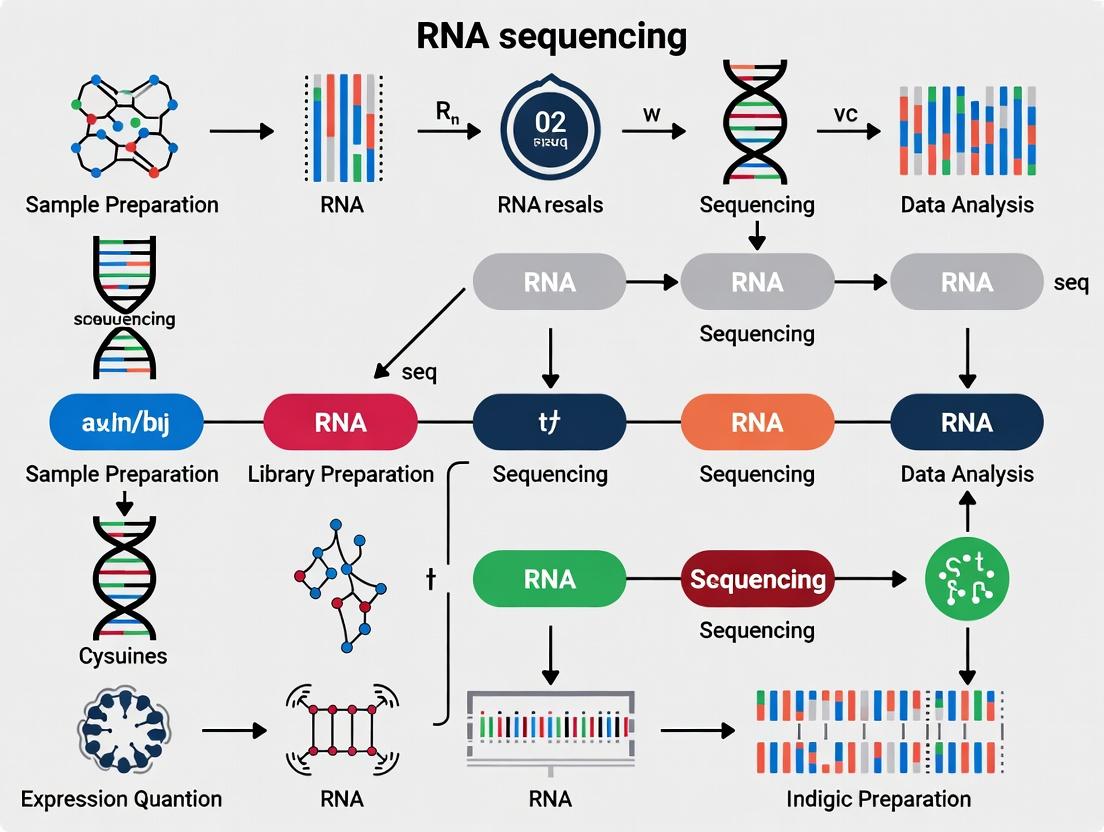
This comprehensive guide provides researchers, scientists, and drug development professionals with a detailed explanation of how RNA-seq works for quantifying gene expression.
RNA-seq Demystified: A Step-by-Step Guide to Gene Expression Quantification for Researchers
Abstract
This comprehensive guide provides researchers, scientists, and drug development professionals with a detailed explanation of how RNA-seq works for quantifying gene expression. We cover the foundational principles, from transcriptome extraction to next-generation sequencing. The article delves into practical methodologies, critical applications in biomarker discovery and therapeutic development, and addresses common challenges with troubleshooting strategies. Finally, we examine validation approaches and comparisons to microarrays and qPCR, offering insights into selecting the optimal method for robust and reliable gene expression analysis in biomedical research.
From Cell to Data: Understanding the Core Principles of RNA-seq Technology
Transcriptomics, the genome-scale study of RNA molecules, is fundamental to modern molecular biology. Quantifying gene expression is not merely an observational task; it is the primary method for decoding the functional state of a cell or tissue. This quantification provides the critical link between the static genome and dynamic phenotype, enabling researchers to identify differentially expressed genes in disease states, understand cellular responses to stimuli, discover biomarkers, and validate drug targets. Framed within the thesis of how RNA-seq enables this research, this guide details the rationale, methodologies, and analytical frameworks for gene expression quantification.
The Imperative for Quantification: From Sequence to Significance
Gene expression levels are dynamic and context-dependent. Measuring these levels answers core biological and clinical questions.
Key Motivations for Quantification:
- Disease Mechanism Elucidation: Compare transcriptomes of healthy vs. diseased tissues to pinpoint dysregulated pathways.
- Biomarker Discovery: Identify consistently over- or under-expressed transcripts correlating with clinical outcomes.
- Drug Discovery & Toxicology: Assess on-target drug effects and unintended transcriptomic changes (toxicogenomics).
- Functional Annotation: Infer gene function through co-expression networks and condition-specific expression.
- Systems Biology: Construct models of regulatory networks by integrating expression data.
Quantitative Data in Research Contexts: Table 1: Representative Studies Demonstrating the Utility of Expression Quantification
| Study Focus | Comparison Groups | Key Quantified Finding | Implication |
|---|---|---|---|
| Cancer Subtyping | Triple-Negative vs. Luminal A Breast Tumors | Elevated expression of PD-L1 and immune checkpoint genes in a subset. | Identifies patients likely to respond to immunotherapy. |
| Drug Response | Pre- vs. Post-Treatment (e.g., Kinase Inhibitor) | Downregulation of oncogenic MYC target genes and upregulation of apoptosis genes. | Confirms mechanism of action and efficacy. |
| Developmental Biology | Embryonic Stem Cells vs. Differentiated Neurons | Silencing of NANOG, POUSF1; activation of neuronal markers (MAP2, SYN1). | Maps transcriptional programs driving cell fate. |
| Host-Pathogen Interaction | Infected vs. Mock-Infected Cells | Induction of interferon-stimulated genes (ISGs) like ISG15, MX1. | Reveals innate immune activation pathways. |
Methodological Foundation: RNA-seq for Quantification
RNA sequencing (RNA-seq) has become the gold standard for transcriptome quantification due to its high throughput, sensitivity, and lack of requirement for prior sequence knowledge.
Detailed RNA-seq Experimental Protocol for Gene Expression Quantification
Principle: Convert a population of RNA into a library of cDNA fragments, add sequencing adapters, sequence on a high-throughput platform, and map reads to a reference genome/transcriptome to count them.
Protocol Steps:
- Total RNA Extraction & QC: Isolate RNA using guanidinium thiocyanate-phenol-chloroform (e.g., TRIzol) or column-based methods. Assess integrity (RNA Integrity Number, RIN > 8.0) using capillary electrophoresis (Bioanalyzer).
- Poly(A) Selection or Ribodepletion: Enrich for messenger RNA (mRNA) using oligo(dT) beads. For degraded or ribosomal-rich samples, use probes to remove ribosomal RNA.
- Library Preparation:
- Fragmentation: Fragment mRNA chemically or enzymatically (e.g., using divalent cations at elevated temperature).
- cDNA Synthesis: Perform first-strand synthesis using random hexamers and reverse transcriptase. Synthesize second strand with DNA Polymerase I/RNase H.
- End Repair, A-tailing, and Adapter Ligation: Generate blunt ends, add a single 'A' nucleotide, and ligate platform-specific sequencing adapters containing unique dual indices (UDIs) for sample multiplexing.
- Library Amplification: Perform limited-cycle PCR to enrich for adapter-ligated fragments.
- Library QC: Quantify using fluorometry (Qubit) and profile size distribution (Bioanalyzer).
- Sequencing: Pool libraries and sequence on an Illumina NovaSeq or NextSeq platform to generate paired-end reads (typically 2x150 bp), aiming for 20-50 million reads per sample for standard differential expression.
- Primary Data Analysis (Bioinformatics):
- Demultiplexing: Assign reads to samples based on index sequences.
- Quality Control & Trimming: Assess read quality (FastQC) and trim adapters/low-quality bases (Trimmomatic, Cutadapt).
- Alignment: Map reads to a reference genome (e.g., GRCh38) using a splice-aware aligner (STAR, HISAT2).
- Quantification: Assign aligned reads to genomic features (genes, transcripts) and generate count matrices (featureCounts, HTSeq-count). For transcript-level quantification, use alignment-free tools (Salmon, kallisto).
From Counts to Biological Insight: The Analysis Pipeline
The raw count matrix requires statistical normalization and testing.
Core Differential Expression Analysis Protocol:
- Data Import & Preprocessing: Load count matrices into R/Bioconductor (e.g., using
tximport/DESeq2oredgeR). - Quality Assessment: Visualize sample relationships with Principal Component Analysis (PCA) and check for outliers.
- Normalization: Account for differences in library size and RNA composition. DESeq2 uses the median-of-ratios method; edgeR uses trimmed mean of M-values (TMM).
- Model Fitting & Hypothesis Testing: Model counts using a negative binomial distribution. Test for differential expression using a generalized linear model (GLM), accounting for experimental design. Apply statistical tests (Wald test, likelihood ratio test).
- Multiple Testing Correction: Adjust p-values for false discovery rate (FDR) using the Benjamini-Hochberg procedure. A common significance threshold is adjusted p-value (padj) < 0.05.
- Functional Enrichment Analysis: Input lists of differentially expressed genes (DEGs) into tools like g:Profiler, Enrichr, or GSEA to identify over-represented biological pathways (KEGG, Reactome), Gene Ontology (GO) terms, or transcription factor targets.
The Scientist's Toolkit: Essential Reagents & Materials
Table 2: Key Research Reagent Solutions for RNA-seq Based Expression Quantification
| Reagent/Material | Function & Role in Workflow | Example Product/Kit |
|---|---|---|
| RNA Stabilization Reagent | Immediate stabilization of RNA in situ to prevent degradation post-collection. | RNAlater, PAXgene Tissue Tubes |
| Total RNA Isolation Kit | Purification of high-integrity total RNA, free of genomic DNA and contaminants. | Qiagen RNeasy, Zymo Quick-RNA, TRIzol |
| Poly(A) mRNA Magnetic Beads | Selective isolation of eukaryotic mRNA via poly(A) tail binding for strand-specific libraries. | NEBNext Poly(A) mRNA Magnetic Isolation Module |
| Ribo-depletion Kit | Removal of abundant ribosomal RNA (rRNA) to enrich for other RNA species (e.g., lncRNA, pre-mRNA). | Illumina Ribo-Zero Plus, NuGEN AnyDeplete |
| RNA-seq Library Prep Kit | All-in-one solution for converting RNA to a sequencing-ready library (fragmentation, cDNA synthesis, adapter ligation, indexing). | Illumina Stranded mRNA Prep, NEBNext Ultra II Directional RNA |
| Dual Indexed Adapters | Unique combinatorial barcodes for multiplexing many samples in a single sequencing run, reducing batch effects and cost. | Illumina IDT for Illumina RNA UD Indexes |
| High-Fidelity PCR Mix | Accurate amplification of the final library with minimal bias or errors. | KAPA HiFi HotStart ReadyMix, NEB Next Ultra II Q5 |
| Size Selection Beads | Cleanup and selection of cDNA fragments in the desired size range (e.g., 200-500bp) post-ligation and PCR. | SPRIselect Beads (Beckman Coulter) |
| qPCR Master Mix with dUTP | For validating differential expression results from RNA-seq on independent samples via reverse transcription quantitative PCR (RT-qPCR). | Power SYBR Green RNA-to-Ct, TaqMan RNA-to-Ct |
Applications and Future Directions
Quantitative transcriptomics via RNA-seq is integral to precision medicine, where it aids in molecular diagnosis and treatment stratification. Emerging single-cell RNA-seq (scRNA-seq) technologies dissect expression at cellular resolution, revealing heterogeneity within tissues. Spatial transcriptomics maps expression data onto tissue architecture. The continuous evolution of sequencing technologies and bioinformatic algorithms promises even more precise, comprehensive, and accessible quantification of the transcriptome, solidifying its central role in biological discovery and therapeutic development.
RNA sequencing (RNA-seq) has become the cornerstone of modern genomics, enabling precise, high-throughput quantification of gene expression. This whitepaper details the central workflow of an RNA-seq pipeline, framed within the broader research question: How does RNA-seq work for gene expression quantification research? The process transforms biological samples into digital expression counts, allowing researchers to compare transcript abundance across conditions, identify novel isoforms, and uncover biomarkers for disease and drug development.
The Core RNA-seq Workflow
The standard RNA-seq pipeline for gene expression quantification consists of a series of discrete, computational, and experimental steps. The following diagram provides a logical overview of this central workflow.
Diagram Title: The Central RNA-seq Pipeline Workflow.
Step 1: Sample & Library Preparation
- Objective: Isolate high-quality RNA and convert it into a sequencer-compatible library.
- Protocol: Total RNA is extracted (e.g., using TRIzol or column-based kits). mRNA is typically enriched using poly-dT oligos capturing the poly-A tail or ribosomal RNA is depleted. The RNA is fragmented, reverse-transcribed into complementary DNA (cDNA), and sequencing adapters are ligated to the ends. The final library is amplified via PCR.
- Critical QC: RNA Integrity Number (RIN > 7) assessed by Bioanalyzer; library concentration and size distribution checked by qPCR and/or Bioanalyzer.
Step 2: Sequencing
- Objective: Generate millions of short digital reads from the library.
- Platforms: Illumina short-read sequencing (e.g., NovaSeq) is most common for expression quantification. The library is loaded onto a flow cell, and clonal clusters are amplified. Sequencing-by-synthesis generates reads (typically 50-150 bp paired-end).
Step 3: Quality Control & Preprocessing
- Objective: Assess raw read quality and remove low-quality sequences or artifacts.
- Tools: FastQC for quality reports; Trimmomatic or Cutadapt for adapter trimming and quality filtering.
- Metrics: Per-base sequence quality, adapter content, GC distribution.
Step 4: Read Alignment
- Objective: Map the processed reads to a reference genome or transcriptome.
- Tools: Spliced aligners like STAR or HISAT2 are used to account for exon-exon junctions.
- Output: Sequence Alignment Map (SAM) or its binary version (BAM) file.
Step 5: Quantification
- Objective: Count the number of reads assigned to each genomic feature (gene, transcript).
- Methods:
- Alignment-based: Tools like featureCounts or HTSeq-count tally reads overlapping gene annotations (GTF file).
- Pseudoalignment: Tools like Salmon or kallisto bypass full alignment, mapping reads directly to a transcriptome index for faster, often more accurate, transcript-level quantification.
Step 6: Differential Expression (DE) Analysis
- Objective: Statistically identify genes with significant expression changes between experimental groups.
- Tools: R/Bioconductor packages like DESeq2, edgeR, or limma-voom. They model count data, account for biological variance, and test for significance.
- Output: A list of DE genes with log2 fold changes, p-values, and adjusted p-values (FDR).
Step 7: Interpretation & Validation
- Objective: Biologically interpret DE gene lists and confirm findings.
- Methods: Functional enrichment analysis (GO, KEGG), pathway analysis (GSEA), and network analysis. Key results are validated via qRT-PCR or orthogonal assays.
Table 1: Key Metrics and Benchmarks in a Typical RNA-seq Experiment
| Metric | Typical Target/Value | Purpose & Rationale |
|---|---|---|
| RNA Input | 10 ng - 1 µg total RNA | Ensures sufficient material for library prep; lower inputs possible with specialized kits. |
| Sequencing Depth | 20-50 million reads per sample | Balances cost with power to detect low-abundance transcripts and differential expression. |
| Read Length | 75-150 bp paired-end | Longer reads improve alignment accuracy, especially for isoform identification. |
| Alignment Rate | >70-90% | Measures the proportion of reads successfully mapped to the reference; low rates indicate contamination or poor reference. |
| Gene Detection | 10,000-15,000 genes per sample | Number of genes with non-zero counts; depends on tissue, depth, and quantification method. |
| Differential Expression | FDR < 0.05 (or 0.01) | Adjusted p-value threshold controlling false discoveries; common cutoff for significance. |
Table 2: Comparison of Primary Quantification & DE Analysis Tools (2024)
| Tool | Category | Key Algorithmic Feature | Primary Output | Best For |
|---|---|---|---|---|
| STAR + featureCounts | Alignment-based | Spliced alignment + exact overlap counting | Gene-level counts | Standard gene-level DE, using a well-annotated genome. |
| Salmon | Pseudoalignment | Selective alignment + EM algorithm for abundance | Transcript-level abundance | Speed, transcript-level analysis, including isoform switching. |
| kallisto | Pseudoalignment | Pseudoalignment via k-mer hashing + EM algorithm | Transcript-level abundance | Extremely fast quantification with low memory usage. |
| DESeq2 | DE Analysis | Negative binomial GLM with shrinkage estimation | DE gene list | Experiments with complex designs, small sample sizes (n>3). |
| edgeR | DE Analysis | Negative binomial models with robust dispersion estimation | DE gene list | Flexibility in experimental design, powerful for precision. |
Detailed Experimental Protocol: A Standard Bulk RNA-seq Experiment
Title: Protocol for Gene Expression Quantification via Poly-A Selected RNA-seq.
I. Sample Preparation & RNA Extraction
- Homogenize tissue sample in TRIzol reagent.
- Phase separate with chloroform and centrifuge.
- Precipitate RNA from the aqueous phase with isopropanol.
- Wash RNA pellet with 75% ethanol and resuspend in RNase-free water.
- Treat with DNase I to remove genomic DNA contamination.
- Quantify RNA using a fluorometer (e.g., Qubit) and assess integrity (RIN) with a Bioanalyzer or TapeStation. Accept samples with RIN > 7.0.
II. Library Preparation (Using a Standard Poly-A Selection Kit, e.g., Illumina Stranded mRNA Prep)
- Poly-A Capture: Incubate total RNA (100-1000 ng) with poly-dT magnetic beads to enrich for mRNA.
- Fragmentation & Priming: Elute and fragment mRNA at 94°C for specified time. Synthesize first-strand cDNA using random hexamers and reverse transcriptase.
- Second-Stand Synthesis: Synthesize second-strand cDNA with dUTP (for strand specificity), creating double-stranded cDNA.
- End Repair & A-tailing: Blunt ends and add a single 'A' nucleotide to 3' ends for adapter ligation.
- Adapter Ligation: Ligate indexed sequencing adapters to cDNA fragments.
- Size Selection & Clean-up: Use magnetic beads to select fragments of desired size (e.g., ~300 bp insert).
- Library Amplification: Perform PCR amplification (8-12 cycles) with primers that anneal to the adapters, incorporating unique dual indices for sample multiplexing.
- Final QC: Quantify library with qPCR (for accurate molarity) and check size profile on a Bioanalyzer.
III. Sequencing
- Pool libraries equimolarly.
- Denature and dilute the pool to appropriate loading concentration (e.g., 200 pM).
- Load onto an Illumina sequencer flow cell.
- Perform paired-end sequencing (e.g., 2x100 cycles) to a minimum depth of 25 million read pairs per sample.
The Scientist's Toolkit: Essential Research Reagent Solutions
Table 3: Key Reagents and Kits for RNA-seq Library Preparation
| Item | Function & Explanation | Example Product/Brand |
|---|---|---|
| RNA Stabilization Reagent | Immediately inhibits RNases upon sample collection to preserve RNA integrity. | RNAlater, TRIzol |
| Total RNA Isolation Kit | Purifies high-quality, DNA-free total RNA from various sample types. | Qiagen RNeasy, Zymo Quick-RNA, Invitrogen PureLink |
| Poly-A Selection Beads | Magnetic beads coated with oligo(dT) to selectively bind and enrich eukaryotic mRNA. | NEBNext Poly(A) mRNA Magnetic Isolation Module, Illumina Poly-A Beads |
| Ribo-depletion Kit | Removes abundant ribosomal RNA (rRNA) from total RNA, crucial for non-polyA transcripts or bacterial RNA-seq. | Illumina Ribo-Zero Plus, QIAseq FastSelect |
| Stranded mRNA Library Prep Kit | All-in-one kit for converting mRNA to a sequencing library, preserving strand-of-origin information. | Illumina Stranded mRNA Prep, NEBNext Ultra II Directional RNA Library Prep |
| Dual Indexing Oligos | Unique combinations of i5 and i7 index sequences for multiplexing many samples in a single sequencing run. | Illumina IDT for Illumina UD Indexes |
| High-Fidelity PCR Mix | Enzyme mix for final library amplification, minimizing PCR bias and errors. | KAPA HiFi HotStart ReadyMix, NEB Next Ultra II Q5 Master Mix |
| Library Quantification Kit | Accurate, qPCR-based quantification of amplifiable library fragments for precise pooling. | KAPA Library Quantification Kit |
Bioinformatics Pathway Visualization
The bioinformatics workflow involves specific data transformations and logical decisions, as shown below.
Diagram Title: Bioinformatics Decision Pathway for RNA-seq Analysis.
Within the broader thesis of How does RNA-seq work for gene expression quantification research, the initial wet-lab procedures of RNA extraction and library preparation are paramount. Their fidelity directly determines the accuracy and reliability of all subsequent computational analysis, making them the foundational determinants of data quality.
RNA Extraction: Purity, Integrity, and Quantity
The goal is to isolate total RNA that is pure, intact, and quantitatively representative of the in vivo transcriptome.
Key Protocol: Isolation of Total RNA from Cultured Mammalian Cells using a Silica-Membrane Column (e.g., TRIzol-based or direct lysis methods).
- Cell Lysis & Homogenization: Cells are lysed in a monophasic solution of phenol and guanidine isothiocyanate (e.g., TRIzol). This simultaneously inactivates RNases and dissociates nucleoprotein complexes.
- Phase Separation: Addition of chloroform separates the solution into aqueous and organic phases. RNA partitions into the aqueous phase, while DNA and proteins remain in the interphase and organic phase.
- RNA Precipitation & Wash: RNA is precipitated from the aqueous phase with isopropyl alcohol, washed with ethanol, and dissolved in RNase-free water.
- DNase Treatment: To remove genomic DNA contamination, the RNA is treated with DNase I, preferably in-column for convenience and to prevent re-introduction of RNases.
- Quality Control (QC): QC is performed via:
- Spectrophotometry (NanoDrop): Assesses purity (A260/A280 ~2.0, A260/A230 >2.0) and concentration.
- Capillary Electrophoresis (Bioanalyzer/TapeStation): Quantifies integrity via RNA Integrity Number (RIN) or RQN, visualizing the 18S and 28S ribosomal RNA peaks.
Table 1: Quantitative QC Benchmarks for High-Quality RNA in RNA-seq
| QC Metric | Method | Optimal Value/Range | Acceptable Threshold |
|---|---|---|---|
| Concentration | Fluorometry (Qubit) | >50 ng/µl | >20 ng/µl |
| Purity (A260/280) | Spectrophotometry | 1.9 - 2.1 | 1.8 - 2.2 |
| Purity (A260/230) | Spectrophotometry | >2.0 | >1.8 |
| Integrity (RIN/RQN) | Capillary Electrophoresis | ≥9.0 (Eukaryotes) | ≥7.0 |
| DV200 (%) | Capillary Electrophoresis (FFPE/degraded) | >70% | >50% |
Library Preparation: From RNA to Sequencer-Ready DNA
This process converts the isolated RNA into a pool of cDNA fragments with platform-specific adapters attached.
Core Protocol: Strand-Specific, Poly(A)-Selected mRNA Library Prep for Illumina Platforms.
- mRNA Enrichment: Total RNA is incubated with oligo(dT) magnetic beads to capture polyadenylated mRNA. (Alternative: Ribosomal RNA depletion for total RNA analysis).
- Fragmentation: mRNA is fragmented using divalent cations (e.g., Mg²⁺) at elevated temperature (e.g., 94°C) into pieces of ~200-300 bases.
- First-Strand cDNA Synthesis: Random hexamer primers and reverse transcriptase (e.g., SuperScript IV) generate cDNA. To preserve strand information, dUTP is incorporated in place of dTTP during second-strand synthesis.
- End Repair & A-tailing: cDNA blunt ends are created, and a single 'A' nucleotide is added to the 3' ends to facilitate ligation to 'T'-overhang adapters.
- Adapter Ligation: Flow cell-binding sequences, indices (barcodes), and primer binding sites are ligated.
- Library Amplification: PCR enriches for adapter-ligated fragments. The incorporated dUTP allows enzymatic degradation of the second strand, ensuring only the first (strand-specific) strand is amplified.
- Library QC & Quantification: Final libraries are assessed via:
- Fluorometry (Qubit): For total yield.
- qPCR: For accurate, amplifiable concentration.
- Capillary Electrophoresis: For precise size distribution.
Table 2: Comparison of Common RNA Enrichment Methods
| Method | Target | Key Advantage | Key Limitation | Typical Input |
|---|---|---|---|---|
| Poly(A) Selection | Polyadenylated mRNA | Excellent for coding transcriptome; reduces ribosomal RNA (rRNA) to <1% | Biases against non-polyA RNA (e.g., histone mRNAs, some lncRNAs); sensitive to RNA degradation | 10 ng - 1 µg Total RNA |
| Ribosomal Depletion | Total RNA (inc. non-polyA) | Captures both coding and non-coding RNA; suitable for degraded samples (FFPE) | Higher residual rRNA (~5-10%); more complex data | 100 ng - 1 µg Total RNA |
The Scientist's Toolkit: Research Reagent Solutions
| Item | Function |
|---|---|
| TRIzol/Qiazol | Monophasic lysis reagent for simultaneous cell/tissue disruption, protein denaturation, and RNase inactivation. |
| Silica-Membrane Spin Columns | Selective binding and washing of RNA, enabling efficient purification and DNase I on-column treatment. |
| RNase Inhibitors | Proteins (e.g., recombinant RNase inhibitor) added to reactions to protect RNA from degradation. |
| Magnetic Oligo(dT) Beads | For poly(A)+ mRNA isolation via hybridization to poly(T) tails, simplifying workflow through magnetic separation. |
| RiboCop rRNA Depletion Kit | Probe-based hybridization to remove abundant ribosomal RNA, preserving the broader transcriptome. |
| Fragmentase Buffer (Mg²⁺) | Controlled chemical fragmentation of RNA to optimal sizes for sequencing. |
| Reverse Transcriptase (SSIV) | High-temperature, processive enzyme for synthesizing stable, full-length cDNA from RNA templates. |
| dUTP / Strand-Specific Kit | Incorporation of dUTP during second-strand synthesis to enable strand discrimination in final sequencing data. |
| Indexed Adapters (IDT/Illumina) | Short, double-stranded DNA containing unique dual indices (barcodes) for sample multiplexing and flow cell binding sequences. |
| High-Fidelity PCR Mix | Enzyme mix for minimal-bias amplification of adapter-ligated libraries with high fidelity. |
RNA-seq Library Prep Core Workflow
RNA Quality Control Decision Path
Within the broader thesis on How does RNA-seq work for gene expression quantification research, understanding the sequencing platform is paramount. The core technology that translates prepared cDNA libraries into digital count data fundamentally shapes the resolution, accuracy, and biological insights of any RNA-seq experiment. This whitepaper provides an in-depth technical guide to the dominant and emerging platforms, detailing their mechanisms, comparative performance, and implications for expression quantification.
Core Sequencing Technologies and Methodologies
Illumina (Synthesis by Sequencing - SBS)
Illumina's technology is the current benchmark for high-throughput, short-read RNA-seq.
- Core Mechanism: Bridge amplification on a flow cell creates dense clusters of identical cDNA fragments. Cyclic reversible termination (CRT) uses fluorescently labeled, reversibly terminated nucleotides. Each cycle incorporates a single nucleotide, imaging identifies the base, then the terminator is cleaved for the next cycle.
- Protocol for Gene Expression: Following library preparation (poly-A selection/ribodepletion, fragmentation, adapter ligation), the library is loaded onto the flow cell for cluster generation. Sequencing-by-synthesis runs for a defined number of cycles (e.g., 2x150 bp). After base calling, reads are aligned to a reference genome/transcriptome for quantification.
Oxford Nanopore Technologies (ONT) (Nanopore Sensing)
ONT enables direct RNA or cDNA sequencing via real-time strand sensing.
- Core Mechanism: A library molecule is threaded through a biological nanopore embedded in an electrically resistant polymer membrane. A motor enzyme controls translocation. As each RNA/DNA base passes through the pore, it causes a characteristic disruption in an ionic current, which is decoded in real-time to determine the sequence.
- Protocol for Direct RNA-seq: RNA is reverse transcribed to generate a complementary strand. A sequencing adapter is ligated to the cDNA or directly to the RNA. The motor protein-bound complex is loaded onto the flow cell (e.g., MinION, PromethION). Sequencing occurs as the strand translocates through the pore, producing long, single-molecule reads.
Pacific Biosciences (PacBio) (Single Molecule, Real-Time - SMRT)
PacBio provides high-fidelity (HiFi) long reads for isoform-resolved expression analysis.
- Core Mechanism: A single polymerase molecule is anchored to the bottom of a zero-mode waveguide (ZMW). As the polymerase incorporates phospholinked nucleotides (each labeled with a fluorescent dye on the terminal phosphate), a light pulse is emitted and detected. The dye is cleaved off upon incorporation, allowing the process to continue.
- Protocol for Iso-Seq: cDNA is synthesized and converted into SMRTbell libraries (circular, double-stranded constructs). The polymerase binds to the library, and sequencing occurs over multiple passes of the same circular molecule, generating highly accurate consensus reads (HiFi reads) suitable for full-length transcript sequencing.
Comparative Platform Data
Table 1: Quantitative Comparison of Major RNA-seq Platforms (Representative Data)
| Platform | Technology | Read Length | Throughput per Run (approx.) | Run Time (approx.) | Key Advantages for Expression Quantification | Primary Limitations |
|---|---|---|---|---|---|---|
| Illumina (NovaSeq X) | Short-read SBS | 2x150 bp | 8-16B reads | 1-2 days | Extremely high accuracy (>99.9%), massive throughput, low per-base cost. | Short reads limit isoform resolution, amplification bias possible. |
| Oxford Nanopore (PromethION 2) | Long-read Nanopore | Up to >4 Mb (cDNA); Direct RNA reads shorter | 10-100M reads (device dependent) | Minutes to 3 days | Ultra-long reads, real-time analysis, direct RNA modification detection. | Higher raw error rate (~5%), requires bioinformatics for accuracy. |
| PacBio (Revio) | Long-read HiFi SMRT | 10-25 kb HiFi reads | 30-60M HiFi reads | 0.5-2 days | High accuracy (>99.9%) with long reads, ideal for isoform discovery & quantification. | Lower throughput than Illumina, higher instrument cost. |
| MGI (DNBSEQ-T20x2) | Short-read cPAS | 2x100 bp | 42-52B reads | 3-5 days | Extreme throughput, low cost per Gb, no fluorescent chemistry. | Similar short-read limitations as Illumina. |
Table 2: Platform Suitability for Key RNA-seq Applications
| Application | Recommended Platform(s) | Rationale |
|---|---|---|
| Bulk Gene Expression Profiling | Illumina, MGI | Unmatched throughput and accuracy for cost-effective differential expression. |
| Full-Length Isoform Analysis | PacBio HiFi, Oxford Nanopore | Long reads capture complete splice variants for isoform-level quantification. |
| Direct RNA Epitranscriptomics | Oxford Nanopore | Only platform that sequences native RNA, detecting base modifications directly. |
| Rapid, Field/Forensic Sequencing | Oxford Nanopore (MinION) | Portability and real-time data streaming enable immediate analysis. |
| Single-Cell RNA-seq (e.g., 10x Genomics) | Illumina | Compatible with high-throughput, barcode-based droplet methods. |
Workflow Visualization
Illumina Sequencing by Synthesis Workflow
Nanopore Sequencing Process
The Scientist's Toolkit: Key Research Reagent Solutions
Table 3: Essential Reagents and Kits for RNA-seq on Different Platforms
| Item | Function/Description | Typical Platform Association |
|---|---|---|
| Poly(A) mRNA Magnetic Beads | Enriches for polyadenylated mRNA from total RNA, removing rRNA. | Illumina, PacBio, ONT (cDNA) |
| Ribo-depletion/Ribo-zero Kits | Removes ribosomal RNA (rRNA) from total RNA to enrich for other RNA species. | Illumina, ONT |
| Reverse Transcriptase (e.g., SuperScript IV) | Synthesizes first-strand cDNA from RNA template with high fidelity and processivity. | Universal (except ONT Direct RNA) |
| NEBNext Ultra II RNA Library Prep Kit | Widely used, modular kit for constructing Illumina-compatible stranded RNA-seq libraries. | Illumina, MGI (with adapters) |
| Ligation Sequencing Kit (SQK-LSKxxx) | ONT kit for preparing DNA libraries (for cDNA sequencing) by ligating adapters to dsDNA. | Oxford Nanopore |
| Direct RNA Sequencing Kit (SQK-RNAxxx) | ONT kit for preparing native RNA libraries, preserving base modifications. | Oxford Nanopore |
| SMRTbell Prep Kit | Prepares cDNA or PCR amplicons into circularized, hairpin-ligated libraries for PacBio SMRT sequencing. | Pacific Biosciences |
| Unique Dual Index (UDI) Kits | Provides barcoded adapters for multiplexing many samples in one run, reducing index hopping risk. | Illumina, MGI |
| AMPure/SPRI Beads | Magnetic beads for size selection and purification of nucleic acids between enzymatic steps. | Universal |
| Qubit dsDNA/RNA HS Assay Kits | Fluorometric quantification of library concentration, critical for optimal loading. | Universal |
Within the context of understanding How does RNA-seq work for gene expression quantification research, the transformation of raw sequencing data into a digital matrix of counts or fragments is the fundamental, non-negotiable step. This process bridges the analog world of fluorescent signals from a sequencer to the discrete numerical data required for statistical analysis and biological inference. This guide details the technical journey from raw reads to counts, elucidating the core concepts, algorithms, and experimental considerations.
The Raw Data: Sequencing Reads
An RNA-seq experiment begins with the conversion of a population of RNA molecules (converted to complementary DNA, cDNA) into millions of short nucleotide sequences, called reads or fragments. A single run on a high-throughput sequencer (e.g., Illumina NovaSeq) produces billions of reads, each typically 50-300 base pairs (bp) in length, stored in FASTQ files. Each read in a FASTQ file is associated with a per-base quality score (Phred score), indicating the confidence of each base call.
Core Concepts: Fragments vs. Counts
The terminology is critical and often conflated:
- Fragment: This refers to the original cDNA molecule derived from an RNA transcript. During library preparation, each fragment is sequenced, often from one end (single-end) or both ends (paired-end).
- Read: The digital sequence obtained from sequencing a fragment (or one end of it).
- Count: The final digital representation. It can be:
- Read Count: The number of sequencing reads mapped to a genomic feature (e.g., a gene). Simple but biased by transcript length and library structure.
- Fragment Count: For paired-end experiments, a pair of reads is inferred to come from a single fragment. The fragment count is a more accurate estimate of the original RNA molecule abundance, especially when correcting for PCR duplicates.
Table 1: Comparison of Read Counts vs. Fragment Counts
| Feature | Read Counts | Fragment Counts (Paired-End) |
|---|---|---|
| Basic Unit | Individual sequenced reads | Inferred original cDNA molecule |
| Data Requirement | Single-end or paired-end | Requires paired-end sequencing |
| PCR Duplicate Handling | Challenging; over-counts amplified molecules | Possible via coordinate-based deduplication |
| Length Bias | Strongly biased; longer transcripts yield more reads | Less biased, but not fully eliminated |
| Common Use | Common in early RNA-seq; simpler computation | Current best practice for accuracy |
The Quantification Workflow: From FASTQ to Count Matrix
The standard computational workflow involves sequential steps, each with critical decisions.
Quality Control & Trimming
Protocol: Use tools like FastQC for quality assessment and Trimmomatic or cutadapt for trimming. Methodology: Adapters and low-quality bases (typically Phred score <20) are removed from the 3' and 5' ends of reads. Reads that become too short post-trimming are discarded.
Alignment to a Reference Genome/Transcriptome
Protocol: Use splice-aware aligners such as STAR, HISAT2, or subread. Methodology: The trimmed reads are mapped to a reference genome (or transcriptome). Splice-aware aligners use algorithms to handle reads that span exon-exon junctions, a hallmark of eukaryotic mRNA. Alignment produces SAM/BAM files.
Quantification at the Gene Level
This is the core step where aligned reads/fragments are assigned to genomic features (genes, transcripts).
A. Alignment-Based Quantification (e.g., featureCounts, HTSeq) Protocol: Input: Coordinate-sorted BAM file and a GTF/GFF annotation file. Methodology: The tool scans the alignments and assigns each read (or read pair) to a gene if it overlaps one of the gene's exons. Reads overlapping multiple genes ("multi-mapped reads") are either discarded, fractionally counted, or handled via probabilistic methods.
B. Pseudoalignment & Lightweight Quantification (e.g., Salmon, kallisto) Protocol: Input: Trimmed FASTQ files and a transcriptome sequence file (FASTA). Methodology: These tools bypass explicit alignment. They use k-mer indexing and probabilistic models to determine the transcript of origin for each read rapidly. They directly estimate transcript-level abundances, which can be summed to gene-level counts. This method is fast and incorporates correction for sequence-specific bias and GC bias.
Duplicate Marking & Handling
Protocol: Use tools like Picard MarkDuplicates or functionality within samtools. Methodology: For paired-end data, fragments with identical outer alignment coordinates are marked as PCR duplicates, likely arising from amplification during library prep. For accurate fragment counting, these are typically counted only once.
Table 2: Key Quantification Tools and Their Characteristics
| Tool | Quantification Type | Input | Key Algorithm | Output |
|---|---|---|---|---|
| featureCounts | Alignment-based | BAM, GTF | Overlap of reads with genomic features | Gene-level read counts |
| HTSeq | Alignment-based | BAM, GTF | Overlap with strict counting rules | Gene-level read counts |
| Salmon | Pseudoalignment | FASTQ, Transcriptome FASTA | Quasi-mapping + Expectation-Maximization | Transcript-level estimated counts (TPM) |
| kallisto | Pseudoalignment | FASTQ, Transcriptome FASTA | Pseudoalignment via k-mer hashing + EM | Transcript-level estimated counts (TPM) |
The Output: Count Matrix and Normalization
The final digital representation is a count matrix, where rows are genes, columns are samples, and each cell contains the integer count (reads or fragments) for that gene in that sample. However, raw counts are not directly comparable between samples due to differences in library size (total number of sequenced reads) and RNA composition.
Essential Normalization Steps for Downstream Analysis:
- Library Size Normalization: Counts are scaled by a factor (e.g., counts per million, CPM) to account for different sequencing depths.
- Gene Length Normalization: For between-gene comparisons within a sample, Transcripts Per Million (TPM) corrects for gene length.
- Composition Bias Normalization: Methods like DESeq2's "median of ratios" or edgeR's "trimmed mean of M-values" (TMM) adjust for the fact that differentially expressed genes can skew the count distribution between samples, making them the standard for differential expression analysis.
Workflow from raw reads to a normalized count matrix.
Conceptual pipeline for accurate fragment counting.
The Scientist's Toolkit: Research Reagent & Software Solutions
Table 3: Essential Tools for RNA-seq Quantification
| Category | Item/Reagent/Software | Function in Quantification Process |
|---|---|---|
| Wet-Lab Reagents | Poly(A) Selection or rRNA Depletion Kits | Enriches for mRNA, reducing background and increasing informative reads. |
| cDNA Synthesis & Library Prep Kits | Converts RNA to double-stranded cDNA, adds sequencing adapters and sample barcodes. | |
| Universal PCR Primers & Polymerase | Amplifies the adapter-ligated library for sufficient sequencing material. | |
| Reference Data | Reference Genome Sequence (FASTA) | The genomic coordinate system for alignment-based methods (e.g., GRCh38). |
| Gene Annotation (GTF/GFF) | Defines the coordinates of genomic features (genes, exons) for read assignment. | |
| Transcriptome Sequence (FASTA) | The set of all possible transcript sequences for pseudoalignment methods. | |
| Core Software | Trim Galore!/Trimmomatic | Performs adapter removal and quality trimming of raw reads. |
| STAR/HISAT2 | Splice-aware aligner for mapping reads to a reference genome. | |
| featureCounts/HTSeq | Assigns aligned reads to genes based on annotation overlap. | |
| Salmon/kallisto | Performs rapid transcript-level quantification via pseudoalignment. | |
| SAMtools/Picard | Utilities for manipulating and deduplicating alignment (BAM) files. | |
| Analysis Environment | R/Bioconductor (DESeq2, edgeR) | The standard ecosystem for normalizing count matrices and performing differential expression analysis. |
| Python (pandas, scikit-learn) | Commonly used for downstream analysis, machine learning, and visualization. |
The generation of a digital count matrix from raw RNA-seq reads is a meticulously engineered pipeline combining biochemical protocols, sophisticated algorithms, and statistical normalization. The choice between read counts and fragment counts, and between alignment-based and pseudoalignment-based quantification, has profound implications for the accuracy and interpretability of downstream gene expression analysis. Mastery of these core concepts is essential for any researcher employing RNA-seq to answer biological questions in the realms of basic science, biomarker discovery, and therapeutic development.
Within the broader thesis on "How does RNA-seq work for gene expression quantification research," understanding the core terminology is fundamental. RNA sequencing (RNA-seq) is a cornerstone technology for transcriptome analysis, enabling the quantification of gene expression levels. This process converts a population of RNA into a library of complementary DNA (cDNA) fragments, which are sequenced en masse to generate millions of short sequences (reads). The accurate interpretation of this data hinges on precisely defining and processing reads, alignments, transcripts, and expression values. This guide delineates these key terms, their technical interdependencies, and the methodologies that transform raw sequence data into quantitative biological insights.
Core Terminology and Technical Workflow
Reads
Reads are the fundamental digital output of a sequencing instrument. In RNA-seq, each read represents a short sequence (typically 50-300 base pairs) derived from a single cDNA fragment. The collection of all reads from a sample is a library. Modern high-throughput platforms (e.g., Illumina NovaSeq) generate vast quantities of data, as summarized in Table 1.
Table 1: Common Sequencing Output Metrics (Illumina Platforms, 2023-2024)
| Platform Model | Output Range per Flow Cell | Max Reads per Flow Cell | Typical Read Lengths (bp) |
|---|---|---|---|
| NovaSeq X Plus | 8-16 TeraBases (TB) | Up to 52 Billion | 2x150, 2x300 |
| NextSeq 2000 | 0.3-1.2 TB | Up to 8 Billion | 2x150 |
| MiSeq | 0.3-15 GigaBases (GB) | Up to 50 Million | 2x300 |
Experimental Protocol: Library Preparation (Poly-A Selection)
- RNA Isolation & QC: Extract total RNA using guanidinium thiocyanate-phenol-chloroform (e.g., TRIzol) or column-based methods. Assess RNA integrity (RIN > 8) via Bioanalyzer.
- Poly-A RNA Selection: Incubate RNA with oligo(dT) beads. Polyadenylated mRNA binds, while rRNA and other RNAs are washed away.
- Fragmentation: Use divalent cations (Mg²⁺) or enzymatic digestion at elevated temperature (e.g., 85°C) to shear RNA into 200-500 bp fragments.
- cDNA Synthesis: Reverse transcribe fragments using random hexamer primers and reverse transcriptase. Synthesize the second strand to create double-stranded cDNA.
- End Repair, A-tailing, & Adapter Ligation: Convert cDNA ends to blunt ends, add a single 'A' nucleotide, and ligate platform-specific sequencing adapters.
- PCR Enrichment & QC: Amplify the library using 8-12 cycles of PCR. Validate library size and concentration via qPCR and Bioanalyzer.
Diagram Title: RNA-seq Library Prep Workflow via Poly-A Selection
Alignments
Alignment (or mapping) is the computational process of determining the genomic origin of each read. Reads are aligned to a reference genome or transcriptome using splice-aware aligners (e.g., STAR, HISAT2) that can handle reads spanning exon-exon junctions. Alignment metrics are critical for quality control (Table 2).
Table 2: Key RNA-seq Alignment Metrics and Interpretation
| Metric | Typical Ideal Value | Calculation | Significance |
|---|---|---|---|
| Overall Alignment Rate | > 70-80% | (Aligned Reads / Total Reads) * 100 | Measures efficiency of mapping. Low rates suggest poor library quality or contamination. |
| Uniquely Mapped Reads | > 60-70% of total | Reads mapping to a single genomic locus. | Essential for accurate quantification. Multi-mapped reads are ambiguous. |
| Reads Mapped to Exonic Regions | > 60% | Reads overlapping annotated exons. | Indicates enrichment for mRNA; high intronic mapping may indicate genomic DNA contamination. |
| Strand Specificity | Varies by protocol | Reads mapping to the expected genomic strand. | Validates the success of strand-specific library protocols. |
Experimental Protocol: Read Alignment with STAR
- Generate Genome Index:
STAR --runMode genomeGenerate --genomeDir /path/to/genomeDir --genomeFastaFiles genome.fa --sjdbGTFfile annotation.gtf --sjdbOverhang 99(where--sjdbOverhangis read length minus 1). - Align Reads:
STAR --genomeDir /path/to/genomeDir --readFilesIn sample_1.fastq.gz sample_2.fastq.gz --readFilesCommand zcat --runThreadN 12 --outSAMtype BAM SortedByCoordinate --quantMode GeneCounts. - Post-process: Sort and index BAM files using
samtools. Generate alignment statistics from STAR log files.
Diagram Title: Read Alignment to Reference Genome
Transcripts
In RNA-seq analysis, a transcript refers to an RNA molecule inferred from read alignments. This can be a known isoform annotated in a database (e.g., GENCODE, RefSeq) or a novel isoform assembled de novo from the data using tools like StringTie or Cufflinks. Transcript-level reconstruction is a prerequisite for isoform-specific quantification.
Expression Values
Expression values are the final quantitative estimates derived from aggregating reads associated with genes or transcripts. Common units include:
- Counts: Raw number of reads mapping to a gene's exons. Requires a counting tool (e.g., featureCounts, HTSeq).
- FPKM/RPKM: Fragments/Reads Per Kilobase of transcript per Million mapped reads. Normalizes for gene length and sequencing depth. Note: TPM is now generally preferred.
- TPM: Transcripts Per Million. A length-normalized count that sums to 1 million per sample, allowing direct inter-sample comparison.
- Estimated Counts (for transcripts): Probabilistic estimates from tools like Salmon or kallisto, which use pseudoalignment to quantify transcript abundance without explicit genomic alignment.
Table 3: Common Expression Quantification Units
| Unit | Full Name | Normalization For | Best Use Case |
|---|---|---|---|
| Raw Counts | - | None | Input for differential expression tools (DESeq2, edgeR). |
| FPKM | Fragments Per Kilobase per Million | Gene length & sequencing depth. | Intra-sample gene-level comparison. Not for between-sample DE. |
| TPM | Transcripts Per Million | Gene length & sequencing depth (sums to 1M). | Inter-sample gene-level comparison. |
| Estimated Counts | - | Inferred from probabilistic models. | Input for differential transcript usage (DRIMSeq, DEXSeq). |
Experimental Protocol: Transcript Quantification with Salmon (Pseudoalignment)
- Build Transcriptome Index:
salmon index -t transcripts.fa -i transcripts_index --kmerLen 31. - Quantify Samples:
salmon quant -i transcripts_index -l A -1 sample_1.fastq.gz -2 sample_2.fastq.gz -o sample_quant --gcBias --validateMappings. - Generate Gene-level Summaries: Use the
tximportR/Bioconductor package to aggregate transcript-level counts/TPM to the gene level, while correcting for potential changes in isoform length and abundance.
Diagram Title: Generation of Expression Values from Reads
The Scientist's Toolkit: Research Reagent Solutions
Table 4: Essential Reagents and Kits for RNA-seq Experiments
| Item | Function & Purpose | Example Product(s) |
|---|---|---|
| RNA Stabilization Reagent | Immediately inactivates RNases in tissue/cells to preserve RNA integrity. | RNAlater, DNA/RNA Shield |
| Total RNA Isolation Kit | Purifies high-integrity total RNA, removing proteins, DNA, and contaminants. | QIAGEN RNeasy, Zymo Quick-RNA, TRIzol + columns |
| Poly(A) mRNA Selection Beads | Enriches for polyadenylated mRNA from total RNA, depleting rRNA. | NEBNext Poly(A) mRNA Magnetic Isolation Beads, Dynabeads Oligo(dT) |
| Stranded RNA-seq Library Prep Kit | Converts mRNA to a sequencing library with strand-of-origin information. | Illumina Stranded mRNA Prep, NEBNext Ultra II Directional RNA |
| cDNA Synthesis SuperMix | Efficiently reverse transcribes RNA into first- and second-strand cDNA. | SuperScript IV, ProtoScript II |
| High-Fidelity PCR Mix | Amplifies the final library with minimal bias and errors. | KAPA HiFi HotStart, NEBNext Q5U |
| Dual-Index Sequencing Adapters | Unique barcodes for multiplexing many samples in a single sequencing run. | Illumina IDT for Illumina UD Indexes |
| Library Quantification Kit | Accurate absolute quantification of library concentration for pooling. | KAPA Library Quantification Kit (qPCR) |
The RNA-seq Pipeline in Action: Protocols, Tools, and Applications in Biomedicine
RNA sequencing (RNA-seq) is a foundational technique in modern genomics for quantifying gene expression. This protocol details the critical initial computational steps: assessing raw read quality and aligning reads to a reference genome. Accurate alignment is prerequisite for all downstream quantification (e.g., with featureCounts or HTSeq) and differential expression analysis, forming the core of a thesis investigating transcriptional responses in biomedical research.
Initial Quality Assessment with FastQC
FastQC provides a preliminary diagnostic on raw sequencing data (FASTQ files) to identify potential issues like adapter contamination, low-quality bases, or sequence bias.
Protocol: Running FastQC
- Input: Unprocessed FASTQ files (single-end or paired-end).
Command:
-o: Specifies output directory.-t: Number of threads to use.
- Output: HTML report file (
sample_R1_fastqc.html) and a ZIP file containing raw data.
Interpreting Key Metrics
Critical metrics from FastQC reports must be evaluated before proceeding.
Table 1: Key FastQC Metrics and Acceptable Thresholds
| Metric | Ideal Result | Warning/Issue | Implication for Downstream Analysis |
|---|---|---|---|
| Per Base Sequence Quality | All positions ≥ Q28 (Illumina 1.8+ encoding) | Bases below Q20 | High error rates can cause misalignment. |
| Per Sequence Quality Scores | Sharp peak in the high-quality region (Q30+) | Significant proportion of reads with low mean quality | Poor overall read reliability. |
| Adapter Content | ≤ 0.1% for common adapters | > 5% adapter contamination | Adapters must be trimmed prior to alignment. |
| Overrepresented Sequences | None present | Any sequence > 0.1% of total | Indicates adapter contamination or PCR bias. |
| Sequence Duplication Levels | Low duplication for RNA-seq (inherently high is normal) | Extreme duplication in all sequences | May indicate technical artifacts or low library complexity. |
Read Trimming and Cleaning
Based on FastQC results, trimming is often necessary. Trimmomatic or Cutadapt are standard tools.
Protocol: Trimming with Trimmomatic (Paired-end Example)
ILLUMINACLIP: Removes adapter sequences.LEADING/TRAILING: Removes low-quality bases from ends.SLIDINGWINDOW: Scans read with a 4-base window, trimming if average quality <20.MINLEN: Discards reads shorter than 25 bp.
Read Alignment with STAR or HISAT2
Alignment maps sequencing reads to a reference genome. The choice between STAR (spliced aligner, fast) and HISAT2 (memory-efficient, supports splice sites) depends on experimental needs.
Table 2: Comparison of Alignment Tools STAR and HISAT2
| Feature | STAR (Spliced Transcripts Alignment to a Reference) | HISAT2 (Hierarchical Indexing for Spliced Alignment) |
|---|---|---|
| Primary Use | High-speed, accurate alignment of RNA-seq reads, excels in splice junction discovery. | Memory-efficient alignment, well-suited for genomes with extensive splice variants. |
| Speed | Very Fast (aligns ~50-100 million reads/hour). | Fast (typically slower than STAR). |
| Memory Usage | High (~30 GB for human genome). | Moderate (~5-10 GB for human genome). |
| Splice Awareness | Excellent, uses uncompressed suffix array index. | Excellent, uses hierarchical Graph FM index. |
| Typical Alignment Rate | 85-95% for human RNA-seq. | 85-95% for human RNA-seq. |
| Output | SAM/BAM format, junction files. | SAM/BAM format. |
Protocol: Alignment with STAR
A. Genome Indexing (One-time)
--sjdbOverhang: Should be read length minus 1 (e.g., 100-1=99).
B. Read Alignment
Protocol: Alignment with HISAT2
A. Genome Indexing
- Pre-built indices are available for common genomes (e.g., GRCh38).
B. Read Alignment
- Splice site file can be generated from a GTF annotation file.
Post-Alignment QC and Assessment
Evaluate alignment success using tools like QualiMap or samtools.
Key metrics: Total reads, properly paired percentage, alignment rate, and splice junction counts (from STAR SJ.out.tab file).
The Scientist's Toolkit
Table 3: Essential Research Reagent Solutions & Computational Tools
| Item | Function/Description | Example/Provider |
|---|---|---|
| Total RNA Extraction Kit | Isolates high-integrity, DNA-free total RNA from cells/tissues. | Qiagen RNeasy, TRIzol (Thermo Fisher). |
| Poly-A Selection Beads | Enriches for polyadenylated mRNA, removing rRNA. | NEBNext Poly(A) mRNA Magnetic Isolation Module. |
| RNA Library Prep Kit | Converts RNA to sequenceable cDNA libraries with adapters. | Illumina TruSeq Stranded mRNA, NEBNext Ultra II. |
| High-Sensitivity DNA Assay Kit | Quantifies and qualifies final cDNA libraries prior to sequencing. | Agilent Bioanalyzer High Sensitivity DNA chip. |
| FastQC | Quality control tool for high-throughput sequence data. | Babraham Bioinformatics. |
| Trimmomatic/Cutadapt | Removes adapter sequences and low-quality bases. | Usadel Lab (Trimmomatic). |
| STAR Aligner | Ultra-fast RNA-seq read aligner. | Alexander Dobin (Cold Spring Harbor Lab). |
| HISAT2 Aligner | Low-memory, efficient spliced aligner. | Center for Computational Biology (Johns Hopkins). |
| SAMtools | Utilities for processing and viewing alignments. | Genome Research Ltd. |
Visualized Workflows
Title: RNA-seq Analysis Workflow from FASTQ to Alignment
Title: Logic of Spliced Read Alignment by STAR/HISAT2
Within the broader thesis on How does RNA-seq work for gene expression quantification research, a critical analytical step is the assignment of sequenced reads to genomic features (e.g., genes, transcripts) and the estimation of their abundance. This quantification process underpins downstream differential expression and functional analysis. Two principal computational paradigms have emerged: traditional mapping-based methods and modern alignment-free (pseudoalignment) methods. This guide provides an in-depth technical comparison of representative tools from each category: HTSeq (mapping-based) versus Salmon and kallisto (alignment-free).
Core Algorithmic Principles
Mapping-Based Quantification with HTSeq
HTSeq operates on the principle of alignment-first. Input RNA-seq reads are first aligned to the reference genome using a splice-aware aligner (e.g., STAR, HISAT2). The resulting SAM/BAM file, which maps reads to genomic coordinates, is then processed by HTSeq. It assigns each read to a gene feature based on the overlap of its genomic coordinates with annotated features from a GTF/GFF file. The final output is a count table (reads per gene), which forms the basis for count-based statistical models like those in DESeq2 or edgeR.
Alignment-Free Quantification with Salmon & kallisto
Alignment-free methods, such as Salmon (in mapping-based and quasi-mapping modes) and kallisto, circumvent full genomic alignment. They use the concept of pseudoalignment or lightweight mapping to determine the set of transcripts in a reference transcriptome that a read is compatible with, without determining the exact base-to-base alignment coordinates. This is achieved using efficient data structures like the colored de Bruijn graph (kallisto) or the quasi-mapping/selective alignment approach (Salmon). These tools directly estimate transcript-level abundance in units of Transcripts Per Million (TPM) and estimated counts, incorporating sophisticated bias correction models (e.g., for GC-content, sequence bias, and fragment length).
Quantitative Comparison of Algorithm Performance
Table 1: Core Algorithmic Characteristics
| Feature | HTSeq (mapping-based) | kallisto (alignment-free) | Salmon (alignment-free) |
|---|---|---|---|
| Primary Input | Aligned reads (BAM) | Raw reads (FASTQ) | Raw reads or aligned BAM |
| Reference Required | Genome + Annotation | Transcriptome | Transcriptome |
| Key Data Structure | Genomic interval overlap | Colored de Bruijn Graph | Quasi-mapping index / FMD-index |
| Primary Output | Gene-level counts | Transcript-level TPM & counts | Transcript-level TPM & counts |
| Speed | Moderate (fast count) | Very Fast | Fast |
| Memory Usage | Low | Moderate | Moderate-High |
| Bias Correction | Minimal (via aligner) | Yes (sequence bias) | Yes (sequence, GC, fragment length) |
Table 2: Typical Experimental Benchmark Results (Summary)
| Metric | HTSeq+STAR | kallisto | Salmon |
|---|---|---|---|
| Run Time (CPU hrs) | 8-15 | 0.2-0.5 | 0.5-1.5 |
| Memory (GB) | 20-30 | 10-20 | 10-20 |
| Correlation with qPCR | High (0.85-0.95) | High (0.86-0.96) | Very High (0.88-0.97) |
| Accuracy on Simulated Data | High | Very High | Very High |
Detailed Methodologies for Key Experiments
Protocol 1: Gene-Level Quantification with HTSeq
Alignment: Align paired-end RNA-seq reads (
sample.fastq) to the reference genome using STAR with splice-aware settings.Sorting & Indexing: Sort the BAM file by read name (required by
htseq-count's default mode).HTSeq Count: Assign reads to genes using the annotation GTF file.
Protocol 2: Transcript-Level Quantification with kallisto
Index Building: Build a kallisto index from the reference transcriptome (FASTA).
Pseudoalignment & Quantification: Quantify abundance directly from raw FASTQ files.
Output: The
abundance.tsvfile contains estimated counts, TPM, and length for each transcript.
Protocol 3: Quantification with Salmon (Quasi-Mapping Mode)
Index Building: Create a Salmon-specific index.
Quantification: Run the quasi-mapping quantification algorithm with bias correction flags.
Output: The
quant.sffile contains transcript abundance estimates.
Visualizing Workflows and Relationships
RNA-seq Quantification Algorithm Pathways (Max Width: 760px)
Algorithm Selection Decision Tree (Max Width: 760px)
The Scientist's Toolkit: Research Reagent Solutions
Table 3: Essential Materials for RNA-seq Quantification Analysis
| Item | Function in Workflow | Example/Note |
|---|---|---|
| Reference Genome Sequence | The DNA sequence of the target organism for mapping-based alignment. | FASTA file (e.g., GRCh38.p13 from ENSEMBL). |
| Reference Transcriptome | The set of all known transcript sequences for alignment-free methods. | FASTA file (e.g., cDNA sequences from ENSEMBL). |
| Genome Annotation (GTF/GFF) | Defines genomic coordinates of genes, transcripts, exons, etc. Required for HTSeq and for generating a transcriptome. | GTF file from GENCODE or ENSEMBL. |
| Splice-Aware Aligner | Software to map RNA-seq reads to the genome, accounting for introns. | STAR, HISAT2, or Subread. |
| Quantification Software | Core tool for generating counts or abundance estimates. | HTSeq, featureCounts (mapping); kallisto, Salmon (alignment-free). |
| High-Performance Computing (HPC) Resources | Necessary for running alignment and quantification algorithms. | Cluster nodes with sufficient RAM (≥32 GB) and multi-core CPUs. |
| Downstream Analysis Package | For statistical analysis of the generated count matrix. | R/Bioconductor packages: DESeq2, edgeR, or limma-voom. |
Within the broader thesis on how RNA-seq works for gene expression quantification, normalization is the critical computational step that enables accurate biological interpretation. Raw read counts are confounded by technical variables such as sequencing depth and gene length. Without normalization, comparisons between samples or genes are invalid. This guide details the evolution and necessity of four cornerstone strategies: RPKM, FPKM, TPM, and DESeq2's Median of Ratios, each addressing specific biases in RNA-seq data.
The Normalization Imperative in RNA-seq Quantification
RNA-seq involves converting a population of RNA into cDNA fragments, sequencing them, and mapping the resulting reads to a reference genome or transcriptome. The fundamental output is a count matrix. However, these raw counts are not directly comparable because:
- Sequencing Depth: A sample sequenced to 50 million reads will generally have higher counts per gene than an identical sample sequenced to 25 million reads.
- Gene Length: For a given expression level, longer genes produce more fragments than shorter genes and thus accumulate more reads.
Normalization strategies mathematically adjust the raw counts to eliminate these non-biological artifacts, allowing researchers to infer true differential expression.
Core Normalization Methods: Theory and Application
RPKM (Reads Per Kilobase of transcript per Million mapped reads)
RPKM was designed for single-end RNA-seq experiments. It normalizes for both sequencing depth and gene length, enabling comparisons of expression levels for a gene across different samples.
Formula: RPKM = (Number of reads mapped to gene) / ( (Gene length in kilobases) * (Total million mapped reads) )
Experimental Protocol for Calculation:
- Input: Aligned reads (BAM file) and a gene annotation file (GTF/GFF).
- Count Reads: Using tools like
htseq-count, assign reads to genomic features (genes), counting only reads that fall within exonic regions. - Calculate Total Mapped Reads: Sum all reads assigned to genes.
- Compute Gene Length: Calculate the total exon length in kilobases for each gene from the annotation.
- Apply Formula: For each gene, divide its read count by the product of its length (in kb) and the total mapped reads (in millions).
FPKM (Fragments Per Kilobase of transcript per Million mapped reads)
FPKM is the extension of RPKM for paired-end experiments. A single DNA fragment (two paired reads) is counted once, preventing double-counting.
Formula: FPKM = (Number of fragments mapped to gene) / ( (Gene length in kilobases) * (Total million mapped fragments) )
TPM (Transcripts Per Million)
TPM addresses a key conceptual limitation of RPKM/FPKM. While RPKM/FPKM normalizes for depth and length, the sum of RPKM/FPKM values across all genes differs from sample to sample. TPM instead normalizes so that the sum of all TPM values in each sample is always one million, making the proportions of total transcriptome more comparable.
Formula: TPM for gene i = ( (Reads mapped to gene i / Gene length in kb) ) / ( Sum over all genes (Reads mapped to gene / Gene length in kb) ) * 10^6
Calculation Workflow:
- Divide the read count for each gene by its length in kilobases (yielding reads per kilobase).
- Sum all these "per kilobase" values for the sample.
- Divide each gene's "per kilobase" value by this sample sum total.
- Multiply by 10^6 to generate TPM.
DESeq2's Median of Ratios
This is a robust, within-lane normalization method designed explicitly for differential expression analysis of count data. It assumes that most genes are not differentially expressed (DE). For each gene, it calculates the ratio of its count to its geometric mean across all samples. The normalization factor for each sample is the median of these ratios (excluding genes with a zero or extremely low count). Raw counts are then divided by this sample-specific factor.
Key Advantage: It is less sensitive to extreme outliers (highly expressed genes) compared to total count or TPM normalization, which can be skewed by a few very abundant transcripts.
DESeq2 Experimental Protocol:
- Input: A matrix of raw, integer read counts.
- Estimate Size Factors: For each sample j, calculate the geometric mean of counts for each gene i across all samples. For each gene in sample j, compute the ratio of its count to this geometric mean. The size factor s_j for sample j is the median of these ratios.
- Normalize Counts: Divide the raw counts for sample j by its size factor s_j.
- Statistical Modeling: Use the negative binomial distribution to model normalized counts and test for differential expression.
Comparative Analysis of Normalization Strategies
Table 1: Comparison of Core RNA-seq Normalization Methods
| Method | Acronym Expansion | Designed For | Normalizes For | Output Interpretation | Key Limitation |
|---|---|---|---|---|---|
| RPKM | Reads Per Kilobase per Million | Single-end RNA-seq | Gene length & sequencing depth | Expression level of a gene in one sample | Not comparable across samples; sum varies. |
| FPKM | Fragments Per Kilobase per Million | Paired-end RNA-seq | Gene length & sequencing depth | Expression level of a gene in one sample | Not comparable across samples; sum varies. |
| TPM | Transcripts Per Million | Both single & paired-end | Gene length & relative RNA composition | Proportion of a transcript in a sample's transcriptome | Can be skewed by a few highly expressed genes. |
| DESeq2 Median of Ratios | - | Differential expression analysis | Library size and RNA composition | Size-factor-scaled counts for DE testing | Assumes most genes are not DE; meant for between-sample comparison. |
Table 2: Illustrative Normalization Calculation on a Simulated 3-Gene Dataset
| Gene | Length (kb) | Sample A Raw Counts | Sample B Raw Counts | Sample A TPM | Sample B TPM | Sample A RPKM | Sample B RPKM |
|---|---|---|---|---|---|---|---|
| GeneX | 2.0 | 100 | 150 | 357,143 | 300,000 | 25.0 | 30.0 |
| GeneY | 1.0 | 25 | 50 | 89,286 | 100,000 | 12.5 | 20.0 |
| GeneZ | 5.0 | 50 | 50 | 178,571 | 100,000 | 5.0 | 6.0 |
| Total | - | 175 | 250 | 1,000,000 | 1,000,000 | 42.5 | 56.0 |
Note: Sample B has deeper sequencing (250 vs 175 total counts). TPM correctly shows GeneX's *proportion of the transcriptome decreased in Sample B (357k to 300k), while RPKM values increase solely due to depth, misleadingly suggesting up-regulation.*
Visualizing RNA-seq Normalization Workflows
RNA-seq Normalization Strategy Decision Tree
DESeq2 Size Factor Calculation Steps
The Scientist's Toolkit: Research Reagent Solutions for RNA-seq
Table 3: Essential Materials for a Standard RNA-seq Experiment
| Reagent / Material | Function in RNA-seq Workflow | Key Considerations |
|---|---|---|
| Poly(A) Selection Beads | Enriches for polyadenylated mRNA from total RNA, removing rRNA and other non-coding RNA. | Critical for standard mRNA-seq. Alternatives: rRNA depletion kits for non-polyA RNA (e.g., bacterial RNA). |
| RNA Fragmentation Reagents | Chemically or enzymatically breaks full-length mRNA into short fragments (~200-300 bp) suitable for sequencing. | Size distribution impacts library complexity and coverage uniformity. |
| Reverse Transcriptase (RT) | Synthesizes first-strand cDNA from fragmented RNA templates. | High processivity and fidelity enzymes (e.g., SmartScribe, SuperScript IV) improve yield and accuracy. |
| Second-Strand Synthesis Mix | Replaces RNA strand with DNA to create double-stranded cDNA fragments. | Often uses RNase H and DNA Polymerase I. |
| Library Prep Kit | Contains enzymes and buffers for end repair, A-tailing, and adapter ligation to prepare cDNA for sequencing. | Illumina TruSeq, NEBNext Ultra II are industry standards. Choice dictates multiplexing capacity. |
| Unique Dual Index (UDI) Adapters | Short DNA oligos with unique barcodes ligated to each sample's cDNA, enabling sample multiplexing in a single sequencing run. | Essential for cost reduction and batch effect minimization. UDIs prevent index hopping errors. |
| PCR Amplification Mix | Amplifies the adapter-ligated cDNA library to generate sufficient material for sequencing. | Over-amplification can introduce bias; optimal cycle number must be determined. |
| Size Selection Beads | Paramagnetic beads (e.g., SPRIselect) that selectively bind DNA by size, cleaning up reactions and selecting final insert size. | Ratio of beads to sample determines size cutoff; critical for final library quality. |
| High-Sensitivity DNA Assay Kit | Quantifies and assesses size distribution of the final library (e.g., Agilent Bioanalyzer, Fragment Analyzer, or qPCR). | Accurate quantification is vital for optimal cluster density on the sequencer. |
The choice of normalization strategy is not merely a computational detail but a fundamental biological assumption in RNA-seq analysis. RPKM/FPKM enabled within-sample gene comparisons, TPM improved cross-sample proportion estimates, and DESeq2's Median of Ratios provided a robust statistical framework for differential expression. Within the thesis of RNA-seq quantification, understanding the "why" behind each method is as essential as knowing the "how," ensuring that biological conclusions rest on solid technical foundations. For differential expression, the Median of Ratios method is generally considered the standard, while TPM is often preferred for expression profiling and visualization.
Quantifying gene expression via RNA sequencing (RNA-seq) is a cornerstone of modern genomics. Within a broader thesis on RNA-seq for gene expression quantification, the critical step following alignment and read counting is the identification of genes whose expression changes significantly between experimental conditions. This differential expression (DE) analysis is the primary statistical challenge, addressed by specialized tools. Among these, DESeq2, edgeR, and limma-voom represent three robust, widely-adopted methodologies that share a common foundation in generalized linear models (GLMs) but differ in their underlying statistical assumptions and data normalization strategies. This guide provides an in-depth technical comparison of these three methods, detailing their workflows, key equations, and appropriate use cases.
Core Methodologies and Statistical Frameworks
DESeq2
DESeq2 employs a negative binomial (NB) distribution to model read counts, parameterized by a mean (μ) and a dispersion (α), where variance = μ + αμ². It uses an empirical Bayes approach to shrink dispersions toward a trended mean, improving stability for genes with low counts.
- Key Normalization: Uses a "median of ratios" method, calculating a size factor (sₖ) for each sample k relative to a pseudo-reference sample.
- Hypothesis Testing: Wald test or Likelihood Ratio Test (LRT) on model coefficients. p-values are adjusted for multiple testing using the Benjamini-Hochberg procedure.
edgeR
edgeR also models counts with a negative binomial distribution. It offers both a classic (exact test) and a GLM-based approach for complex designs.
- Key Normalization: Uses a trimmed mean of M-values (TMM) method, scaling libraries based on the log-fold change (M) and intensity (A) of genes assumed to be non-differentially expressed.
- Dispersion Estimation: Estimates common, trended, and tagwise dispersions, applying empirical Bayes shrinkage toward a trend.
- Hypothesis Testing: For GLMs, uses quasi-likelihood F-tests or likelihood ratio tests.
limma-voom
limma-voom transforms the analysis into a linear modeling framework. voom (variance observed mean) estimates the mean-variance relationship from the data, generating precision weights for each observation, which are then fed into the empirical Bayes linear modeling pipeline of limma.
- Key Transformation: Log-counts per million (log-CPM) with an offset.
- Modeling: Models the mean-variance relationship explicitly to generate weights, allowing the use of powerful Gaussian-based linear models.
Table 1: Core Statistical Comparison of DESeq2, edgeR, and limma-voom
| Feature | DESeq2 | edgeR | limma-voom |
|---|---|---|---|
| Primary Distribution | Negative Binomial | Negative Binomial | Gaussian (after transformation) |
| Normalization | Median of Ratios | Trimmed Mean of M-values (TMM) | Typically TMM on log-CPM |
| Dispersion Estimation | Empirical Bayes shrinkage to a trend | Empirical Bayes shrinkage (common, trended, tagwise) | Precision weights from mean-variance trend (voom) |
| Core Model | GLM with NB link | GLM with NB link (or exact test) | Weighted Linear Model |
| Statistical Test | Wald test or LRT | Quasi-Likelihood F-test, LRT, or exact test | Empirical Bayes moderated t-statistic |
| Key Strength | Robust to size factor differences, stringent control | Flexible for complex designs, powerful for small replicates | Extremely powerful for large sample sizes & complex designs |
Detailed Experimental Protocol for a Standard DE Analysis
This protocol assumes input data is a matrix of unnormalized integer read counts (rows=genes, columns=samples) with associated sample metadata.
Step 1: Data Preparation & Quality Control.
- Filter low-count genes (e.g., require >10 counts in at least n samples, where n is the size of the smallest group).
- Perform exploratory analysis (PCA, clustering) on transformed data (e.g., rlog, log-CPM) to check for batch effects or outliers.
Step 2: Model Specification & Fitting.
- DESeq2:
edgeR (GLM):
limma-voom:
Step 3: Results Extraction & Interpretation.
- Extract tables with log₂ fold changes, p-values, and adjusted p-values.
- Apply a significance threshold (e.g., adjusted p-value < 0.05, |log₂FC| > 1).
- Visualize results using MA-plots and volcano plots.
Step 4: Downstream Analysis.
- Functional enrichment analysis (GO, KEGG) on the DE gene list.
- Pathway visualization.
Visualizing the Differential Expression Analysis Workflow
Diagram Title: Comparative RNA-seq Differential Expression Analysis Workflow
The Scientist's Toolkit: Essential Research Reagent Solutions
Table 2: Key Reagents & Kits for RNA-seq DE Analysis Experiments
| Item | Function in RNA-seq for DE Analysis |
|---|---|
| Poly(A) Selection Beads | Isolate messenger RNA (mRNA) by capturing the polyadenylated tail, enriching for protein-coding transcripts. |
| Ribosomal RNA Depletion Kits | Remove abundant ribosomal RNA (rRNA) to increase sequencing depth of non-coding and pre-mRNA species. |
| Strand-Specific Library Prep Kits | Preserve the orientation of the original RNA transcript, allowing determination of the sense strand. |
| Ultra-Fidelity Reverse Transcriptase | Synthesize high-quality cDNA from RNA templates with low error rates and high processivity. |
| Dual-Index UMI Adapter Kits | Incorporate Unique Molecular Identifiers (UMIs) and sample barcodes to correct for PCR duplicates and multiplex samples. |
| High-Sensitivity DNA Assay Kits | Precisely quantify final cDNA libraries prior to sequencing to ensure optimal cluster density on the flow cell. |
| SPRI Beads | Perform size selection and clean-up of cDNA libraries, removing primers, adapters, and fragments of undesired size. |
| Phusion High-Fidelity DNA Polymerase | Amplify cDNA libraries with high fidelity during the PCR enrichment step to minimize sequencing artifacts. |
Within the broader thesis on How does RNA-seq work for gene expression quantification research, this technical guide explores three pivotal applications that leverage the quantitative power of RNA sequencing. Moving beyond simple read counting, these applications transform raw expression data into biological insight, driving discovery in basic research and drug development.
Biomarker Discovery via RNA-seq
Biomarker discovery aims to identify measurable RNA indicators of biological states, such as disease diagnosis, prognosis, or treatment response.
Experimental Protocol: Differential Expression for Biomarker Identification
- Cohort Design: Assemble case and control samples (e.g., tumor vs. normal tissue) with careful clinical annotation. Minimum recommended sample size is 6-12 per group for initial discovery.
- RNA-seq & Quantification: Perform standard RNA-seq (see core thesis). Quantify expression using alignment-based (e.g., STAR/HTSeq) or alignment-free (e.g., Salmon, kallisto) methods.
- Statistical Analysis: Using R/Bioconductor:
- Normalize read counts (e.g., using DESeq2's median-of-ratios or edgeR's TMM).
- Perform differential expression analysis with tools like DESeq2, edgeR, or limma-voom.
- Apply multiple testing correction (Benjamini-Hochberg) to control False Discovery Rate (FDR).
- Candidate Selection: Filter results for significant (FDR < 0.05) and biologically relevant fold-change (e.g., |log2FC| > 1). Prioritize genes with clear expression patterns.
- Validation: Confirm candidates in an independent, larger cohort using RT-qPCR or targeted RNA-seq.
Table 1: Key Statistical Outputs from a Typical Differential Expression Analysis
| Metric | Description | Typical Threshold for Biomarker Candidate | ||
|---|---|---|---|---|
| Log2 Fold Change (log2FC) | Magnitude of expression difference. | log2FC | > 1 (2-fold change) | |
| p-value | Raw probability that observed difference is due to chance. | < 0.05 | ||
| Adjusted p-value (FDR) | p-value corrected for multiple hypothesis testing. | < 0.05 (or < 0.01 for stringent lists) | ||
| Base Mean | Average normalized count across all samples. | Context-dependent; very low counts less reliable. |
Pathway Analysis: Gene Set Enrichment Analysis (GSEA)
GSEA moves beyond single-gene lists to determine if defined a priori biological pathways or gene sets show statistically significant, concordant differences between two states.
Experimental Protocol: Pre-Ranked GSEA
- Generate a Ranked Gene List: From your differential expression analysis, rank all genes genome-wide by a metric of differential expression (e.g., by log2 fold change or by signal-to-noise ratio). This incorporates subtle but coordinated expression changes.
- Select Gene Set Database: Choose relevant collections (e.g., MSigDB's Hallmark, KEGG, Reactome, GO terms).
- Run GSEA Algorithm: Using the GSEA software (Broad Institute) or R/clusterProfiler:
- The algorithm walks down the ranked list, calculating an enrichment score (ES) that reflects the overrepresentation of a gene set at the top or bottom of the list.
- A normalized enrichment score (NES) is computed by normalizing ES to the size of the gene set.
- Statistical significance (FDR q-value) is assessed by permutation testing (typically 1000 permutations).
- Interpretation: Significant positive NES indicates pathway up-regulation in the case phenotype; significant negative NES indicates down-regulation.
Table 2: Core GSEA Output Metrics and Interpretation
| Metric | Definition | Interpretation |
|---|---|---|
| Enrichment Score (ES) | Maximum deviation from zero encountered while walking the ranked list. | Reflects the degree to which a gene set is overrepresented. |
| Normalized Enrichment Score (NES) | ES normalized for gene set size. | Allows comparison across different gene sets. |
| Nominal p-value | Statistical significance of the ES. | < 0.05 is standard. |
| FDR q-value | Probability that the NES represents a false positive. | < 0.25 is standard cutoff (per Broad Institute guidance). |
| Leading Edge | Subset of genes within the set that contribute most to the ES. | Identifies core effector genes within the enriched pathway. |
Diagram 1: Gene Set Enrichment Analysis (GSEA) Core Workflow
Uncovering Novel Transcripts
RNA-seq enables de novo transcriptome assembly, revealing unannotated transcripts, splice variants, gene fusions, and non-coding RNAs.
Experimental Protocol:De NovoTranscript Assembly & Identification
- Library Preparation: Use strand-specific, paired-end sequencing protocols to preserve transcriptional orientation and improve assembly accuracy.
- Sequencing Depth: Sequence deeply (>100 million reads per sample) to capture low-abundance isoforms.
- Assembly: Two primary approaches:
- Reference-guided: Use a spliced aligner (STAR, HISAT2) followed by an assembler (StringTie, Cufflinks) that leverages the genome to build transcripts.
- De novo: Use assemblers (Trinity, SOAPdenovo-Trans) without a reference genome, suitable for non-model organisms.
- Merge & Compare: Merge assemblies from multiple samples (StringTie --merge) and compare against known annotations (e.g., GENCODE) using GFFCompare to classify transcripts as known, novel isoform, or intergenic.
- Quantification & Filtering: Quantify expression of novel transcripts (with StringTie or Salmon) and filter for those with sufficient expression (e.g., >1 FPKM) and supporting reads (e.g., junction reads for splice variants).
- Functional Prediction: Assess coding potential (CPC2, CPAT) and predict protein domains (InterProScan) for novel transcripts.
Table 3: Classification Codes from GFFCompare for Novel Transcript Discovery
| Code | Classification | Meaning |
|---|---|---|
| = | Complete match | Matches a reference transcript in all introns and boundaries. |
| c | Contained | Contained within a reference transcript. |
| j | Potentially novel isoform | At least one junction is shared with a reference transcript. |
| u | Unknown, intergenic | Located in intergenic space. |
| i | Intronic | Fully contained within an intron of a reference transcript. |
| x | Exonic overlap on opposite strand | Exonic overlap with a reference on the opposite strand. |
Diagram 2: Workflow for Novel Transcript Discovery from RNA-seq
The Scientist's Toolkit: Essential Research Reagents & Materials
Table 4: Key Research Reagent Solutions for Advanced RNA-seq Applications
| Item | Function & Application |
|---|---|
| Stranded mRNA-Seq Kit (e.g., Illumina Stranded mRNA Prep) | Preserves strand orientation during library prep, critical for novel transcript annotation and accurate quantification of overlapping genes. |
| Ribo-depletion Kits (e.g., Illumina Ribo-Zero Plus) | Removes ribosomal RNA to enrich for coding and non-coding RNA, essential for whole-transcriptome analysis and lncRNA discovery. |
| Single-Cell RNA-seq Kit (e.g., 10x Genomics Chromium) | Enables biomarker discovery and expression analysis at single-cell resolution from complex tissues. |
| RNase H-based rRNA Depletion Probes | Used in conjunction with ribo-depletion kits for superior removal of cytoplasmic and mitochondrial rRNA. |
| Spike-in RNA Controls (e.g., ERCC ExFold RNA Spike-in Mixes) | Added to samples in known quantities to monitor technical variation, assess sensitivity, and normalize samples. |
| PCR Depletion Kit for Hemoglobin/Glioma | Selectively depleves abundant transcripts that can consume sequencing reads in blood or specific tissue samples. |
| Long-Read Sequencing Kit (e.g., PacBio Iso-Seq) | For direct sequencing of full-length cDNA, providing definitive evidence for novel splice isoforms and fusion genes. |
| Targeted RNA-seq Panel (e.g., Illumina TruSight RNA Pan-Cancer) | Focuses sequencing on a curated gene set for cost-effective validation of biomarker candidates in large cohorts. |
RNA sequencing (RNA-seq) has become an indispensable tool in modern drug development, providing a comprehensive, high-resolution view of the transcriptome. Within the broader thesis of How does RNA-seq work for gene expression quantification research, this guide details its technical application across the pharmaceutical pipeline. RNA-seq enables the quantification of gene expression levels by sequencing cDNA libraries constructed from RNA samples, allowing for the discovery of novel drug targets, the understanding of drug mechanisms of action, and the identification of biomarkers for patient stratification and pharmacodynamic (PD) response.
Core Quantitative Data in Drug Development RNA-seq
Table 1: Key RNA-seq Metrics and Their Implications in Drug Development
| Metric | Typical Range/Target | Significance in Drug Development | ||
|---|---|---|---|---|
| Sequencing Depth (Reads per Sample) | 20-50 million (bulk RNA-seq) | Ensures sufficient coverage for detecting differentially expressed genes (DEGs), especially for low-abundance transcripts of potential therapeutic interest. | ||
| Mapping Rate | >70-90% | Indicates quality of library prep and alignment; low rates may suggest sample degradation or contamination. | ||
| Genes Detected | 10,000 - 15,000 (human) | Breadth of transcriptome coverage is critical for comprehensive target identification and pathway analysis. | ||
| Differential Expression Threshold | FC | > 1.5 & FDR < 0.05 | Standard cutoffs for identifying statistically and biologically significant changes in response to compound treatment. | |
| PD Biomarker Sensitivity | Ability to detect <2-fold change | Required for measuring subtle, early pharmacodynamic responses to therapy. |
Table 2: RNA-seq Applications Across the Drug Development Pipeline
| Stage | Primary Application | Typical Study Design | Key Output |
|---|---|---|---|
| Target Identification | Discovery of disease-associated genes/pathways | Case vs. Control (e.g., tumor vs. normal) | List of candidate target genes with aberrant expression. |
| Mechanism of Action (MoA) | Understanding compound-induced transcriptomic changes | Treated vs. Vehicle (in vitro/in vivo, multiple time points/doses) | Dysregulated pathways, gene signatures indicative of specific cellular responses. |
| Biomarker Discovery | Identification of predictive & pharmacodynamic biomarkers | Pre- vs. Post-treatment (patient samples); Responder vs. Non-responder | Gene expression signatures predictive of efficacy or indicative of target engagement. |
| Toxicology & Safety | Assessment of off-target effects | Treated vs. Control in relevant tissues (e.g., liver) | Activation of stress, apoptosis, or inflammatory pathways. |
Detailed Experimental Protocols
Protocol: RNA-seq for Pharmacodynamic Biomarker Assessment in a Clinical Trial
Objective: To identify transcriptomic changes in patient blood or tumor biopsy samples following drug administration, confirming target engagement and biological activity.
Sample Collection & Stabilization:
- Collect matched pre-dose (baseline) and post-dose (e.g., Cycle 1 Day 15) PAXgene blood tubes or tumor biopsy specimens.
- For blood, stabilize RNA immediately using PAXgene reagent. For tissue, snap-freeze in liquid nitrogen within 30 minutes.
- Store at -80°C.
RNA Extraction & QC:
- Extract total RNA using column-based kits (e.g., Qiagen RNeasy) with on-column DNase digestion.
- Assess RNA Integrity Number (RIN) using Agilent Bioanalyzer (Target: RIN > 7 for tissue; >8 for biomarker-grade studies).
- Quantify RNA using Qubit fluorometer.
Library Preparation:
- Use a stranded mRNA-seq library preparation kit (e.g., Illumina TruSeq Stranded mRNA).
- Steps: Poly-A selection of mRNA, fragmentation (targeting ~300 bp insert size), first and second strand cDNA synthesis, adapter ligation, and PCR amplification (12-15 cycles).
- Clean up libraries using AMPure XP beads.
Library QC & Pooling:
- Quantify final libraries via qPCR (for accurate molarity).
- Check size distribution on Bioanalyzer (Agilent High Sensitivity DNA kit).
- Pool equimolar amounts of uniquely indexed libraries.
Sequencing:
- Sequence on Illumina NovaSeq 6000 platform using a 150 bp paired-end configuration.
- Target depth: 30-50 million read pairs per sample.
Bioinformatics Analysis:
- Quality Control: FastQC for raw read quality. Trim adapters/low-quality bases with Trimmomatic.
- Alignment: Map reads to human reference genome (GRCh38) using a splice-aware aligner (e.g., STAR).
- Quantification: Generate gene-level read counts using featureCounts, aligned to a gene annotation database (e.g., GENCODE).
- Differential Expression: Analyze using R/Bioconductor packages (DESeq2 or edgeR). Model includes paired design (pre- vs. post-treatment for same patient).
- Pathway Analysis: Perform Gene Set Enrichment Analysis (GSEA) on ranked gene lists to identify enriched biological pathways (e.g., Hallmark, KEGG).
Protocol: In Vitro RNA-seq for Compound Mechanism of Action
Objective: To elucidate the transcriptional response of a cell line to a novel compound treatment.
Cell Treatment & Harvest:
- Seed cells in triplicate for each condition: vehicle (DMSO) and three concentrations of compound (IC50, 10x IC50).
- Treat for 6 and 24 hours.
- Harvest cells directly in TRIzol reagent for RNA stabilization.
RNA Extraction & QC:
- Extract RNA using the TRIzol-chloroform method.
- Perform DNase treatment and column purification (e.g., Zymo RNA Clean & Concentrator).
- Assess RIN as above.
Library Prep & Sequencing:
- Follow steps 3-5 from Protocol 3.1.
Bioinformatics Analysis:
- Follow steps from Protocol 3.1, using a statistical model that accounts for dose and time factors in DESeq2.
- Perform clustering analysis (PCA, heatmaps) to visualize global transcriptomic changes.
Visualization of Key Concepts
RNA-seq Workflow in Drug Development
Diagram Title: RNA-seq Experimental and Analytical Workflow
From RNA-seq Data to Drug Development Decisions
Diagram Title: Applications of RNA-seq Data in Drug Development
The Scientist's Toolkit: Key Research Reagent Solutions
Table 3: Essential Reagents and Kits for RNA-seq in Drug Development
| Item | Function/Benefit | Example Product(s) |
|---|---|---|
| RNA Stabilization Reagent | Preserves RNA integrity immediately post-collection, critical for clinical and in vivo samples. | PAXgene Blood RNA Tubes, RNAlater, TRIzol |
| Total RNA Extraction Kit | Purifies high-quality, DNA-free total RNA from diverse sample types (tissue, cells, blood). | Qiagen RNeasy, Zymo Quick-RNA, Invitrogen PureLink |
| RNA Integrity Assessment | Accurately measures RNA degradation; essential for QC prior to costly library prep. | Agilent Bioanalyzer RNA Nano Kit |
| Stranded mRNA Library Prep Kit | Selects for poly-adenylated RNA and retains strand information, enabling accurate quantification. | Illumina TruSeq Stranded mRNA, NEB NEBNext Ultra II |
| Dual-Indexing Adapters | Allows multiplexing of many samples in one sequencing run, reducing cost and batch effects. | Illumina IDT for Illumina UD Indexes |
| Library Quantification Kit | Precise qPCR-based quantification ensures optimal cluster density on sequencer. | KAPA Library Quantification Kit |
| PCR Clean-up Beads | Size-selects and purifies cDNA libraries, removing adapter dimers and short fragments. | Beckman Coulter AMPure XP Beads |
| Sequencing Reagents | Provides chemistry for cluster generation and sequencing-by-synthesis. | Illumina NovaSeq 6000 S-Prime Reagent Kits |
Overcoming Common RNA-seq Challenges: A Troubleshooting Guide for Robust Results
Within the broader thesis on How does RNA-seq work for gene expression quantification research, the integrity of raw sequencing data is the foundational determinant of all downstream biological conclusions. High-throughput sequencing, while powerful, is susceptible to numerous technical artifacts that can confound expression quantification. This guide provides an in-depth technical framework for diagnosing poor data quality using the industry-standard tools FastQC and MultiQC, ensuring that only high-fidelity data proceeds to alignment and quantification steps.
The FastQC Module-by-Module Interpretation Guide
FastQC analyzes sequence data across multiple modules, each probing a specific aspect of data quality. The following table summarizes key metrics, their implications, and diagnostic thresholds.
Table 1: FastQC Module Interpretation and Diagnostic Thresholds
| Module | Key Metric | Optimal Result / Pass Threshold | Warning / Fail Implication | Primary Impact on RNA-seq Quantification |
|---|---|---|---|---|
| Per Base Sequence Quality | Median Phred Score | ≥30 across all bases | Scores <20 indicate low-quality calls. | Increased base-calling errors lead to misalignment and biased counts. |
| Per Sequence Quality Scores | Mean Quality per Read | Majority of reads ≥30 | Peak in low-quality range (<20). | A subset of universally poor reads can skew overall mapping statistics. |
| Per Base Sequence Content | Nucleotide Proportion | Flat lines after ~12 bases (balanced). | Non-parallel lines, especially at 5'/3'. | Indicates library preparation bias (e.g., random hexamer priming issues). |
| Overrepresented Sequences | % of Total Library | <0.1% of total library | Sequence >0.1% and present in adapter list. | Inflates mapping to specific loci; indicates adapter contamination or PCR bias. |
| Adapter Content | % Adapter at Position | 0% across read length | Steady increase across read length. | Short inserts cause non-genomic sequence to be counted, invalidating quant. |
| Per Tile Sequence Quality | Mean Quality per Tile | Uniform green heatmap. | Systematic low-quality (blue) tiles. | Flow-cell defect causing spatial bias, potentially non-random wrt sample. |
| Per Base N Content | % N Calls | 0% across all positions. | Any significant peak. | Indicates base-calling uncertainty, reducing mappable reads. |
Experimental Protocol: A Standard RNA-seq QC Workflow
The following detailed methodology should precede any gene expression analysis.
- Sequencing Data Acquisition: Obtain raw sequencing files in FASTQ format (
.fqor.fastq.gz). For paired-end experiments, ensure forward (_R1) and reverse (_R2) files are correctly paired. FastQC Execution:
-o: Specifies output directory.-t: Number of threads for parallel processing.
MultiQC Aggregation:
MultiQC will scan for
fastqc_data.txtfiles and compile an interactive HTML report.- Interpretation & Decision Point: Based on the MultiQC summary, decide if data requires preprocessing (trimming, filtering) or if quality is sufficient for alignment with tools like STAR or HISAT2.
Visualizing the QC Decision Pathway
Title: RNA-seq Data QC and Preprocessing Workflow
The Scientist's Toolkit: Essential Reagents & Software for RNA-seq QC
Table 2: Key Research Reagent Solutions for RNA-seq Library Preparation and QC
| Item / Solution | Function in RNA-seq Workflow | Common Example / Kit |
|---|---|---|
| Poly(A) Selection Beads | Enriches for messenger RNA (mRNA) by binding the polyadenylated tail, crucial for eukaryotic gene expression studies. | NEBNext Poly(A) mRNA Magnetic Isolation Module |
| Ribosomal Depletion Probes | Removes abundant ribosomal RNA (rRNA) to increase sequencing depth of target transcripts, essential for bacterial RNA or total RNA. | Illumina Ribo-Zero Plus / QIAseq FastSelect |
| RNA Fragmentation Buffer | Chemically or enzymatically fragments RNA to an optimal size (~200-300 nt) for cDNA synthesis and short-read sequencing. | NEBNext First Strand Synthesis Reaction Buffer |
| RNase Inhibitor | Protects RNA templates from degradation by ubiquitous RNases during library preparation. | Recombinant RNase Inhibitor (e.g., Murine) |
| Dual-Indexed Adapter Oligos | Provides unique molecular barcodes (indexes) for each sample, enabling multiplexed sequencing and demultiplexing. | Illumina TruSeq RNA UD Indexes |
| High-Fidelity DNA Polymerase | Performs PCR amplification of final libraries with low error rates to minimize sequence bias. | KAPA HiFi HotStart ReadyMix |
| Library Quantification Kit | Accurately measures library concentration via qPCR (avoiding dsDNA dyes) for precise pooling and loading on the sequencer. | KAPA Library Quantification Kit for Illumina |
| FastQC / MultiQC Software | Not a wet-lab reagent, but critical. Performs computational QC on raw sequencing output to diagnose library preparation or sequencing issues. | Babraham Bioinformatics |
Integrating QC into the RNA-seq Thesis Framework
The interpretation of FastQC/MultiQC reports is not an isolated step. It directly informs the validity of the entire expression quantification pipeline. For instance, unresolved adapter contamination leads to spurious multi-mapping. Systematic 3' bias can distort isoform-level quantification. Therefore, rigorous quality diagnosis is the first and most critical analytical checkpoint in ensuring that subsequent steps—alignment, transcript assembly, and differential expression—accurately reflect biological truth rather than technical artifact. This foundational practice safeguards the investment in costly sequencing and, ultimately, the reliability of conclusions drawn in drug development and basic research.
Within the framework of gene expression quantification using RNA sequencing (RNA-seq), RNA integrity is a fundamental prerequisite. The RNA Integrity Number (RIN), an algorithm-based score (1=degraded, 10=intact), is a critical quality metric. Degraded RNA, characterized by low RIN values, introduces substantial bias, compromising the accuracy and reproducibility of downstream analyses. This guide details the impacts of degradation and outlines robust methodologies for handling compromised samples.
The Impact of Low RIN on RNA-seq Results
RNA degradation is non-uniform, affecting transcript regions differently based on sequence, secondary structure, and ribonuclease (RNase) accessibility. This bias systematically skews RNA-seq data.
| Impacted Metric | Effect of Low RIN | Consequence for Analysis |
|---|---|---|
| Gene/Transcript Abundance | 3’ bias: Increased reads from the 3’ end of transcripts. | False quantification differences; bias against 5’ regions. |
| Differential Expression (DE) | Increased false positive and false negative rates. | Erroneous biological conclusions and target identification. |
| Transcript Isoform Analysis | Compromised assembly and quantification of full-length isoforms. | Inaccurate alternative splicing and fusion gene detection. |
| Total Usable Reads | Increased proportion of reads mapping to intronic/intergenic regions. | Reduced library complexity and sequencing depth for exons. |
Detailed Experimental Protocols for Degraded Samples
Protocol 1: RIN Assessment Using TapeStation/Bioanalyzer
- Equipment: Agilent TapeStation 4200 or Bioanalyzer 2100.
- Reagent: RNA ScreenTape or RNA Nano/Micro Chip.
- Procedure: Load 1 µL of RNA sample. The system electrophoretically separates RNA and calculates the RIN based on the entire electrophoretic trace, including the 18S and 28S ribosomal peaks, and the degradation profile.
- Interpretation: RIN > 8 is generally acceptable for standard RNA-seq. RIN 5-7 requires protocol adjustment. RIN < 5 indicates severe degradation.
Protocol 2: RNA-seq Library Prep with rRNA Depletion (vs. Poly-A Selection)
- Principle: Poly-A selection fails on degraded RNA due to loss of the poly-A tail. Ribosomal RNA (rRNA) depletion targets intact rRNA sequences, which are often still present.
- Procedure (e.g., Ribo-zero/RNase H-based depletion): a. Fragment RNA (if RIN > 4). b. Hybridize with sequence-specific oligonucleotides complementary to rRNA (human/mouse/bacterial). c. Remove rRNA:oligo hybrids using RNase H and/or magnetic beads. d. Proceed to stranded cDNA synthesis and adapter ligation.
- Advantage: Captures both coding and non-coding RNA, independent of poly-A status.
Protocol 3: Exome Capture RNA-seq (exomeRNA-seq)
- Principle: Uses DNA exome capture baits to enrich for RNA sequences corresponding to exonic regions, effective even from highly fragmented RNA.
- Procedure: a. Construct a sequencing library from total/fragmented RNA (dual-indexed). b. Hybridize the library to biotinylated oligonucleotide baits covering the human exome. c. Capture hybridized fragments using streptavidin beads. d. Wash stringently and amplify the enriched library.
- Advantage: Superior performance on FFPE-derived and other severely degraded (RIN < 3) samples compared to standard methods.
Visualizing the Decision Workflow for Degraded Samples
Decision Workflow for RNA-seq Method Based on RIN
The Scientist's Toolkit: Key Research Reagent Solutions
| Reagent/Material | Function | Application Note |
|---|---|---|
| RNase Inhibitors | Inactivate RNases during extraction/handling. | Essential for all steps pre-fixation. Use broad-spectrum formulations. |
| RNAstable Tubes/Matrix | Chemically stabilizes RNA at room temperature. | For sample collection/transport when immediate freezing is impossible. |
| Ribosomal RNA Depletion Kits | Remove abundant rRNA via hybridization. | Critical for degraded or non-poly-A samples (e.g., bacterial RNA). |
| Exome Capture Probes | Biotinylated oligos for enriching exonic RNA. | Enables sequencing from FFPE or highly fragmented samples. |
| Single-Tube Library Prep Kits | Minimize sample loss by reducing purification steps. | Maximize yield from low-input, degraded samples. |
| DV200 Metric | % of RNA fragments > 200 nucleotides. | Complementary to RIN for FFPE; >30% often required for capture protocols. |
Best Practices for Preventing and Managing Degradation
- Pre-analytical Control: Snap-freeze tissue in liquid nitrogen. Use RNase-free collection tubes with stabilization reagents (e.g., PAXgene, RNAlater).
- Rigorous QC: Use both RIN and DV200 for archival samples. Establish sample-specific acceptance thresholds.
- Informed Library Prep Selection: Follow the decision workflow (see diagram) to match the protocol to the sample integrity.
- Bioinformatic Correction: Employ tools like
RSeQCordupRadarto measure 3’ bias and PCR duplicates. Consider algorithms (salgner,degradeSt) that can model and correct for degradation bias in differential expression analysis.
In RNA-seq for gene expression quantification, low RNA integrity is a pervasive challenge that introduces systematic bias. Successful navigation requires a dual approach: stringent pre-analytical practices to preserve quality, and the strategic application of specialized laboratory protocols (rRNA depletion, exome capture) and bioinformatic tools tailored to degraded inputs. By adhering to these best practices, researchers can derive reliable biological insights from even suboptimal samples, maximizing the value of precious clinical or archival specimens.
RNA sequencing (RNA-seq) has become the cornerstone of gene expression quantification research, enabling transcriptome-wide analysis with high sensitivity and dynamic range. The core thesis—understanding how RNA-seq works for gene expression quantification—is fundamentally undermined by uncontrolled technical variation. This guide details how replicates, batch effect management, and rigorous experimental design are critical to isolating true biological signal from technical noise in RNA-seq data.
Technical variation arises at every step of the RNA-seq workflow, from sample collection to sequencing. Key sources include:
- Library Preparation: Efficiency of RNA extraction, rRNA depletion/poly-A selection, reverse transcription, amplification bias, and adapter ligation.
- Sequencing: Flow cell lane effects, cluster generation efficiency, sequencing chemistry cycle variation, and base-calling errors.
- Sample Handling: Operator differences, reagent lot variability, and instrument calibration.
The Critical Role of Replicates
Replicates are essential for estimating and accounting for technical variation, thereby providing statistical power to detect differential expression.
Table 1: Types of Replicates in RNA-seq Experiments
| Replicate Type | Definition | Primary Purpose | Minimum Recommended Number (Per Condition) |
|---|---|---|---|
| Technical Replicate | Multiple library preparations from the same biological sample. | Quantifies variation from library prep and sequencing. | 2-3 (often sequenced at lower depth) |
| Biological Replicate | Measurements from different biological samples (e.g., different individuals, cultures). | Captures biological variation within a population; essential for statistical inference. | 3-5 (minimum), >6 for subtle effects |
| Experimental Replicate | Independently performed experiments with fresh materials. | Accounts for variability introduced on different days or by different personnel. | 2-3 |
Batch Effects: Identification and Correction
A batch effect is systematic technical variation introduced when samples are processed in distinct groups (batches). In RNA-seq, batches can be defined by library preparation date, sequencing lane, or operator.
Table 2: Common Batch Effects in RNA-seq & Diagnostic Signs
| Batch Source | Typical Effect on Data | Diagnostic Check (PCA Plot) |
|---|---|---|
| Sequencing Lane/Run | Differences in overall coverage, base quality scores, or GC content. | Samples cluster strongly by lane/run rather than by treatment group. |
| Library Prep Date | Global shifts in expression due to reagent lot or protocol drift. | Samples cluster by preparation date. |
| Operator | Consistent technical differences introduced by different personnel. | Samples cluster by technician identity. |
Experimental Protocol: Using PCA to Detect Batch Effects
- Generate Count Matrix: Start with a gene-by-sample matrix of raw or normalized read counts.
- Variance Stabilization: Apply a variance-stabilizing transformation (e.g.,
vstin DESeq2) or use log-transformed normalized counts (e.g., TPM, CPM). - Perform PCA: Conduct Principal Component Analysis on the transformed matrix.
- Visualize: Plot samples in the space of the first 2-3 principal components. Color points by both the experimental condition and potential batch variables (e.g., preparation date).
- Interpret: If samples separate more clearly by batch than by condition, a significant batch effect is present.
Title: Workflow for Batch Effect Detection via PCA
Experimental Protocol: Batch Effect Correction with ComBat
- Prepare Data Input: Create a matrix of normalized, log-transformed expression values (genes as rows, samples as columns).
- Define Model & Batch: Specify a statistical model matrix for the biological conditions of interest. Define a batch variable vector.
- Run ComBat: Use the
ComBatfunction (from thesvaR package) with the expression matrix, batch variable, and optional model matrix. - Validate: Re-run PCA on the ComBat-adjusted data. Check that batch clustering is reduced and biological condition separation is maintained or improved.
Experimental Design Principles for Minimizing Variation
Proactive design is more effective than post-hoc correction.
Table 3: Experimental Design Strategies
| Strategy | Implementation in RNA-seq | Benefit |
|---|---|---|
| Randomization | Randomly assign samples from different biological groups across library prep dates and sequencing lanes. | Prevents confounding of batch effects with biological conditions. |
| Blocking | Treat each technical batch (e.g., a prep day) as a "block." Process at least one sample from each biological condition within every block. | Technically varies conditions equally, making them directly comparable within a block. |
| Balancing | Ensure an equal number of samples from each condition is processed in every batch. | Simplifies statistical analysis and increases correction power. |
Title: Comparison of Confounded vs. Balanced Experimental Designs
The Scientist's Toolkit: Key Research Reagent Solutions
Table 4: Essential Reagents & Kits for Controlled RNA-seq Workflows
| Item | Function in Managing Technical Variation | Example Products/Technologies |
|---|---|---|
| External RNA Controls Consortium (ERCC) Spike-in Mix | Synthetic RNA added in known quantities to each sample. Allows normalization for technical variation and detection of batch effects. | ERCC Spike-in Mix (Thermo Fisher) |
| Unique Molecular Identifiers (UMIs) | Short random barcodes ligated to each molecule before PCR. Enables accurate correction for PCR amplification bias and duplicate reads. | Duplex-Specific Nuclease kits; UMI adapters (Illumina) |
| Automated Nucleic Acid Extraction Systems | Standardizes RNA extraction across samples and operators, reducing handling variation. | QIAcube (Qiagen), KingFisher (Thermo Fisher) |
| Robust Library Prep Kits | High-efficiency, low-bias kits designed for consistent performance across a wide input range and between lots. | Illumina Stranded mRNA Prep, Takara SMART-Seq v4 |
| Library Quantification Kits | Accurate, dye-based quantification (e.g., fluorometric) for precise pooling of libraries, ensuring balanced sequencing depth. | Qubit dsDNA HS Assay (Thermo Fisher) |
| Inter-run Calibration Standards | Commercially available control libraries sequenced across multiple runs to monitor platform performance. | PhiX Control v3 (Illumina) |
Integrated Analysis Workflow
A robust analysis pipeline must incorporate design-aware statistical models.
Title: Integrated RNA-seq Analysis Workflow with Variation Control
For RNA-seq gene expression quantification, managing technical variation is not a secondary concern but a primary determinant of data integrity and biological validity. A synergistic approach—employing sufficient biological replication, implementing balanced and randomized experimental designs, proactively monitoring for batch effects, and utilizing appropriate reagent controls—is essential. This rigorous framework ensures that the conclusions drawn about differential gene expression are robust, reproducible, and reflective of true underlying biology.
Optimizing Library Complexity and Avoiding PCR Duplicates
In RNA-seq gene expression quantification, accurate measurement of transcript abundance is paramount. Library complexity—the number of unique DNA fragments in a sequencing library—directly impacts statistical power and quantification accuracy. PCR duplicates, identical copies of the same original molecule generated during library amplification, can skew expression estimates by over-representing certain fragments. This guide details strategies to maximize complexity and identify or prevent duplicates, thereby ensuring data fidelity within the RNA-seq workflow.
Fundamentals: Library Complexity & Duplicate Origins
Library complexity is determined by the initial RNA input, capture efficiency, and conversion to cDNA. PCR amplification is necessary to generate sufficient material for sequencing but can introduce duplicates when a small number of original molecules are over-amplified.
Table 1: Factors Influencing Library Complexity and Duplicate Rate
| Factor | High Complexity / Low Duplicates | Low Complexity / High Duplicates |
|---|---|---|
| Input RNA Amount | High input (≥100 ng total RNA) | Low input (≤10 ng total RNA) |
| PCR Cycle Number | Minimal cycles (≤12) | High cycles (≥18) |
| Enzyme Fidelity | High-fidelity polymerases | Standard Taq polymerases |
| Fragmentation | Optimal, uniform fragmentation | Incomplete or biased fragmentation |
| Protocol | Unique Molecular Identifiers (UMIs) | Standard library prep |
Experimental Protocols for Optimization
Protocol A: UMI Integration for Duplicate Marking
Objective: To tag each original RNA molecule with a unique barcode, enabling bioinformatic distinction between PCR duplicates and unique fragments.
- Reverse Transcription: Perform first-strand cDNA synthesis using a primer containing a random UMI (8-12 nt) and a sequencing adapter sequence.
- Second Strand Synthesis: Generate double-stranded cDNA using RNase H and DNA Polymerase I.
- Library Construction: Proceed with standard fragmentation, end-repair, A-tailing, and adapter ligation. Use a reduced PCR cycle number (8-12 cycles).
- Bioinformatic Processing: Use tools like
UMI-toolsorzUMIsto group reads by UMI and genomic coordinates before quantification.
Protocol B: Optimized PCR for Maximizing Complexity
Objective: To amplify the library while preserving maximal diversity of fragments.
- Reaction Setup: Use a high-fidelity polymerase (e.g., KAPA HiFi, Q5) in a 50 µL reaction. Maintain final library concentration ≤ 10 nM before PCR.
- Cycle Determination: Perform a pilot qPCR assay to determine the minimum cycles required to reach the amplification plateau (Ct value). Set final cycle number to Ct + 2.
- Amplification: Run PCR with a thermal profile suitable for the enzyme. Include a purification step (e.g., SPRI beads) post-amplification.
Protocol C: High-Input Ribosomal RNA Depletion
Objective: To maximize coverage of mRNA from high-quality input, reducing the need for high PCR cycles.
- RNA Quality Check: Verify RNA Integrity Number (RIN) ≥ 8.5 (Agilent Bioanalyzer).
- rRNA Depletion: Use probe-based kits (e.g., Ribo-Zero Plus) with 1 µg of total RNA. Follow manufacturer's protocol.
- Fragmentation & Library Prep: Fragment purified mRNA to ~200-300 bp. Use strand-specific library preparation kits (e.g., Illumina Stranded mRNA). Limit PCR to 10 cycles.
The Scientist's Toolkit: Research Reagent Solutions
Table 2: Essential Reagents for Optimized RNA-seq Library Prep
| Reagent / Kit | Function in Optimization | Key Feature |
|---|---|---|
| UMI Adapter Kits (e.g., Illumina TruSeq UD) | Tags each cDNA molecule at origin | Integrated Unique Dual Indexes for sample and molecule ID |
| High-Fidelity PCR Mix (e.g., KAPA HiFi HotStart) | Minimizes PCR errors and bias | High accuracy and processivity for low-cycle amplifications |
| RNase H-based Depletion Kits (e.g., New England Biolab's NEBNext rRNA Depletion) | Removes ribosomal RNA | Increases unique mRNA sequencing reads, improving complexity |
| SPRI Beads (e.g., Beckman Coulter AMPure XP) | Size selection and purification | Removes primer dimers and optimizes library fragment distribution |
| Strand-Specific Prep Kits (e.g., Illumina Stranded Total RNA) | Maintains strand orientation | Improves annotation accuracy, indirectly aiding duplicate detection |
Data Analysis & Duplicate Identification
Table 3: Bioinformatics Tools for Complexity Assessment & Duplicate Handling
| Tool | Primary Function | Key Metric Output |
|---|---|---|
| Picard MarkDuplicates | Identifies position-based duplicates | Duplicate rate (%); Estimated library size |
| UMI-tools | Deduplicates based on UMI sequences | Corrected unique molecule count |
| RSeQC | Evaluates sequencing quality and complexity | Reads duplication rate; Saturation curves |
| Preseq | Estimates library complexity and yield | Complexity curve; Projected unique reads at deeper sequencing |
Visualizing the Workflow and Impact
Diagram 1: RNA-seq Workflow with Duplicate Optimization
Diagram 2: Impact of Library Complexity on RNA-seq Accuracy
Optimizing library complexity and mitigating PCR duplicates are critical, interconnected technical challenges in RNA-seq for gene expression quantification. Through a combination of wet-lab strategies—including UMI integration, careful titration of PCR cycles, and use of high-fidelity enzymes—and robust bioinformatic post-processing, researchers can ensure their data accurately reflects the true biological variation in transcript abundance. This foundation is essential for downstream discovery in both basic research and drug development pipelines.
Handling Challenges with Ribosomal RNA Depletion and Poly-A Selection
Understanding how RNA-seq works for gene expression quantification requires a critical examination of its foundational step: RNA selection. The transcriptome consists of diverse RNA species, with protein-coding mRNAs typically representing only 1-5% of total RNA in a sample, while ribosomal RNA (rRNA) constitutes 80-95%. Accurate quantification of gene expression hinges on the specific enrichment of mRNA or the depletion of abundant non-target RNAs. Poly-A selection and ribosomal RNA depletion are the two principal methods to achieve this, each with inherent advantages, technical challenges, and biases that directly impact downstream data interpretation and the validity of the broader research thesis.
Core Methodologies: Principles and Comparative Challenges
Poly-A Selection
This method exploits the polyadenylated tail present on most eukaryotic mRNAs. Oligo(dT) beads or matrices are used to capture these poly-A tails.
- Primary Challenge: It inherently excludes non-polyadenylated RNA species. This includes many long non-coding RNAs (lncRNAs), histone mRNAs, and bacterial/archaeal transcripts. Furthermore, mRNAs with short or partially degraded poly-A tails are inefficiently captured, introducing a 3' bias in sequencing and compromising the accuracy of full-length transcript quantification.
Ribosomal RNA Depletion
This method uses sequence-specific probes (DNA or RNA) to hybridize and remove rRNA molecules (e.g., 5S, 5.8S, 18S, 28S in eukaryotes) from total RNA.
- Primary Challenge: Probe specificity is critical. Off-target hybridization can lead to the inadvertent depletion of non-rRNA transcripts that share homology with rRNA sequences. It is also less effective on degraded RNA samples (e.g., FFPE), and the efficiency of depletion varies across species, requiring optimized probe sets.
Table 1: Quantitative Comparison of Poly-A Selection vs. rRNA Depletion
| Feature | Poly-A Selection | Ribosomal RNA Depletion |
|---|---|---|
| Target RNA | Polyadenylated mRNA | All non-rRNA (mRNA, lncRNA, miRNA, etc.) |
| % of Total RNA Captured | ~1-5% | ~5-20% |
| Bias Introduced | 3' bias; excludes non-polyA RNA | Potential sequence bias from probes |
| Ideal Sample Type | High-quality, intact RNA | Total RNA, including degraded (FFPE) |
| Species Specificity | High for eukaryotes | Requires tailored probes for different species |
| Cost per Reaction | ~$10-$20 | ~$20-$40 |
| Typical rRNA Residual | <1% | 2-10% (varies by kit/species) |
Experimental Protocols for Key Validation Experiments
Protocol: Assessing rRNA Depletion Efficiency using Bioanalyzer/Qubit
Objective: Quantify the percentage of ribosomal RNA remaining post-depletion. Materials: Depleted RNA sample, Agilent RNA 6000 Pico Kit, Qubit RNA HS Assay Kit, appropriate instrumentation. Procedure:
- Quantify the depleted RNA sample using the Qubit RNA HS assay to obtain concentration (ng/µL).
- Run 1 µL of the sample on an Agilent Bioanalyzer using the RNA 6000 Pico chip according to manufacturer instructions.
- In the Bioanalyzer software, integrate the peaks corresponding to ribosomal RNA (18S and 28S) and the broader mRNA/non-rRNA smear.
- Calculate the proportion of the total signal area under the rRNA peaks.
- An efficient depletion should reduce rRNA to <10% of the total signal. Combine with Qubit data to assess total recovery yield.
Protocol: Evaluating 3' Bias in Poly-A Selected Libraries using qPCR
Objective: Measure the evenness of coverage across a transcript. Materials: cDNA from poly-A selected RNA, qPCR master mix, primer pairs designed for the 5' end, middle, and 3' end of a housekeeping gene (e.g., GAPDH, ACTB). Procedure:
- Synthesize cDNA from the poly-A selected RNA using a standard reverse transcription protocol.
- Perform qPCR reactions in triplicate for each primer set (5', mid, 3') using a serially diluted cDNA standard curve.
- Calculate the absolute copy number or relative quantity for each amplicon.
- Compare the quantities. A strong 3' bias will result in significantly higher amplification efficiency from the 3' end amplicon compared to the 5' end amplicon.
Visualization of Workflows and Logical Decision Trees
Poly-A Selection Wet Lab Workflow
Choosing Between Poly-A and Depletion Methods
The Scientist's Toolkit: Research Reagent Solutions
Table 2: Essential Materials for rRNA Depletion and Poly-A Selection
| Item | Function | Key Consideration |
|---|---|---|
| RNase Inhibitors | Protect RNA from degradation during all processing steps. | Essential for maintaining RNA integrity, especially during lengthy depletion protocols. |
| Magnetic Oligo(dT) Beads | For poly-A selection; bind poly-A tail for magnetic separation. | Binding capacity dictates input RNA range. Bead uniformity affects reproducibility. |
| Sequence-Specific rRNA Depletion Probes | Biotinylated DNA/RNA oligonucleotides that hybridize to rRNA for removal. | Species-specificity is critical. Off-the-shelf vs. custom panels for non-model organisms. |
| Streptavidin Magnetic Beads | Used in rRNA depletion to bind biotinylated probe-rRNA complexes. | High binding capacity and low non-specific binding reduce loss of target RNA. |
| Fragmentation Buffer (Enzymatic or Chemical) | Fragment enriched RNA to optimal size for library construction. | Enzymatic (e.g., RNase III) offers more controlled fragmentation than metal-ion based methods. |
| SPRI (Solid Phase Reversible Immobilization) Beads | For post-enrichment clean-up and size selection. | Ratios of beads to sample are critical for removing small RNA fragments and excess probes. |
| High-Sensitivity RNA QC Kits | Accurately quantify and assess integrity of low-concentration enriched RNA (Bioanalyzer, TapeStation). | Standard sensitivity assays fail post-depletion/poly-A due to low RNA mass. |
Within the thesis context of "How does RNA-seq work for gene expression quantification research," the computational analysis phase presents a critical trilemma: optimizing for speed, analytical accuracy, and financial/ infrastructural cost. Modern RNA-seq pipelines involve computationally intensive steps where choices in algorithms, hardware, and data fidelity directly impact research validity, scalability, and budget. This guide details the trade-offs and provides structured methodologies for informed decision-making.
A core task in RNA-seq is aligning sequencing reads to a reference genome/transcriptome and quantifying gene/transcript abundance. Different algorithms prioritize different aspects of the trilemma.
Table 1: Comparison of RNA-seq Quantification Tools (Aligned vs. Alignment-Free)
| Tool (Type) | Typical Speed (CPU-hr per 10M reads) | Accuracy Metric (vs. Ground Truth) | Typical Cost / Resource Demand | Primary Use Case & Notes |
|---|---|---|---|---|
| STAR (Spliced Aligner) | ~1.5 - 2.5 | High mapping accuracy, detects junctions | High RAM (≥32 GB), high CPU | Comprehensive genomic alignment, required for novel isoform detection. Costly but accurate. |
| HISAT2 (Spliced Aligner) | ~0.5 - 1.5 | High accuracy, slightly faster than STAR | Moderate RAM (8-16 GB) | Efficient alignment for well-annotated genomes. Balances speed and accuracy. |
| Kallisto (Pseudoalignment) | ~0.1 - 0.3 | High transcript-level accuracy for known transcriptomes | Low RAM (<8 GB), very low CPU | Ultra-fast transcript quantification. Sacrifices genomic alignment detail for massive speed gains. |
| Salmon (Alignment-Free) | ~0.15 - 0.4 | High accuracy, robust to GC bias | Low RAM (<8 GB), very low CPU | Fast, sample-aware quantification. Enables bootstrapping for uncertainty estimation with minimal overhead. |
| FeatureCounts (Quantifier) | ~0.05 (post-alignment) | Accurate count summarization from aligned reads | Low RAM, low CPU | Efficient generation of gene-level counts from coordinate-sorted BAM files. |
Table 2: Computational Cost Breakdown for a Standard RNA-seq Pipeline (Human, 30M paired-end reads)
| Pipeline Stage | High-Cost/High-Accuracy Config | Balanced Config | Low-Cost/Fast Config | Key Parameter Influencing Trade-off |
|---|---|---|---|---|
| Trimming/QC | Trim Galore (strict), FastQC | Fastp (auto-adjust) | Fastp (minimal) | Adapter stringency, quality threshold. |
| Alignment | STAR (full genome, 2-pass) | HISAT2 | -- | Genome index type, splice junction sensitivity. |
| Quantification | FeatureCounts → DESeq2 | Salmon (with GC-bias corr.) | Kallisto (default) | Transcriptome completeness, bias correction. |
| Total CPU Hours | ~50-70 hrs | ~5-15 hrs | ~0.5-2 hrs | -- |
| Peak RAM Need | 32+ GB | 16 GB | 8 GB | -- |
| Cloud Cost Estimate | $40-$60 | $10-$20 | $2-$5 | Based on AWS r5.2xlarge pricing. |
Experimental Protocols for Benchmarking
Protocol 1: Benchmarking Quantification Tools for Accuracy vs. Speed
- Objective: Empirically determine the speed-accuracy trade-off for your specific organism and data type.
- Materials: A validated RNA-seq dataset with spiked-in synthetic RNAs (e.g., ERCC RNA Spike-In Mix) or a well-characterized cell line.
- Method:
- Data Preparation: Download or generate an RNA-seq dataset (FASTQ files).
- Parallel Processing: Run quantification on an identical subset (e.g., 10 million reads) using STAR+FeatureCounts, HISAT2+FeatureCounts, Salmon, and Kallisto. Ensure all use the same reference transcriptome.
- Timing: Use the
/usr/bin/time -vcommand (Linux) to record real/wall-clock time, CPU time, and peak memory usage for each tool. - Accuracy Assessment: Compare quantified abundances of the spiked-in controls or a set of housekeeping genes against the known input concentrations or a consensus baseline (e.g., median of all tools). Calculate correlation (Pearson R²) and mean absolute error.
- Analysis: Plot accuracy (R²) vs. computational time (CPU-hr) for each tool.
Protocol 2: Cost-Benefit Analysis of Cloud vs. On-Premise Clusters
- Objective: Determine the most economical infrastructure for a recurring RNA-seq analysis workload.
- Materials: Access to a local HPC cluster and a cloud computing account (e.g., AWS, GCP).
- Method:
- Define Workload: Standardize the analysis pipeline (e.g., Fastp > Salmon > tximport > DESeq2).
- On-Premise Costing: Calculate the effective cost per sample on the local cluster: [(Capital cost of hardware / lifespan in years) + annual maintenance & power] / (number of samples processed per year). Include personnel time for queue management.
- Cloud Costing: Run the pipeline on 3 cloud instance types (e.g., memory-optimized, compute-optimized, general-purpose). Use spot/ preemptible instances if workflow allows. Record total compute time and storage egress fees.
- Sensitivity Analysis: Model costs for varying sample batch sizes (1, 10, 100 samples). Cloud typically wins for bursty, small batches; on-premise may be cheaper for large, continuous throughput.
Visualizations of Workflows and Decision Logic
Title: RNA-seq Quantification Tool Selection Logic
Title: Computational Infrastructure Options for RNA-seq
The Scientist's Toolkit: Key Research Reagent & Software Solutions
Table 3: Essential Resources for RNA-seq Quantification Analysis
| Item / Solution | Function / Purpose | Example Providers / Tools |
|---|---|---|
| Reference Genome & Annotation | Provides the coordinate system for alignment and gene/transcript definitions. Accuracy is paramount. | GENCODE (Human/Mouse), Ensembl, UCSC Genome Browser. |
| Spike-in Control RNAs | Exogenous RNA added at known concentrations to calibrate measurements and assess technical variation, enabling absolute accuracy benchmarking. | ERCC ExFold RNA Spike-In Mix (Thermo Fisher), SIRVs (Lexogen). |
| Quality Control Software | Assesses raw read quality, adapter contamination, and sequence bias to inform trimming needs and data usability. | FastQC, MultiQC. |
| Trimming & Adapter Removal Tool | Removes low-quality bases and adapter sequences, impacting downstream alignment rates. | Fastp (speed), Trim Galore (robustness), cutadapt. |
| Spliced Read Aligner | Maps reads to the genome, accounting for introns. Computationally intensive but information-rich. | STAR (comprehensive), HISAT2 (efficient). |
| Alignment-Free Quantifier | Directly estimates transcript abundance from reads using k-mer matching, bypassing costly alignment. | Salmon, Kallisto. |
| Quantification Aggregator | Summarizes transcript-level counts to gene-level for tools like DESeq2. | tximport (R package), featureCounts. |
| Differential Expression Engine | Statistical modeling to identify significantly differentially expressed genes, with varying sensitivity/specificity. | DESeq2 (negative binomial), limma-voom (precision weights), edgeR. |
| Containerization Platform | Ensures computational reproducibility and portability across different infrastructures (local, cloud). | Docker, Singularity/Apptainer. |
| Workflow Management System | Automates multi-step pipelines, manages software dependencies, and scales across clusters. | Nextflow, Snakemake, Cromwell. |
RNA-seq vs. Alternatives: Validation Strategies and Choosing the Right Tool
Within the broader thesis on How does RNA-seq work for gene expression quantification research, RNA sequencing provides a comprehensive, high-throughput snapshot of the transcriptome. However, its findings are probabilistic, subject to technical artifacts (e.g., amplification bias, mapping errors), and require orthogonal validation for high-confidence conclusions. This guide details the critical roles of quantitative Reverse Transcription PCR (qRT-PCR) and droplet digital PCR (ddPCR) as gold-standard methods for confirming RNA-seq results, ensuring reliability for downstream research and drug development decisions.
The following table summarizes the core quantitative characteristics of the three platforms.
Table 1: Core Characteristics of RNA-seq, qRT-PCR, and ddPCR for Expression Analysis
| Feature | RNA-seq (NGS-based) | Quantitative RT-PCR (qRT-PCR) | Digital PCR (ddPCR) |
|---|---|---|---|
| Throughput | High (10,000s of targets) | Low to Medium (typically < 100 targets) | Low (typically 1-10 targets per assay) |
| Detection | Relative or absolute (with standards) | Relative (ΔΔCq) or absolute (with standard curve) | Absolute (counts of molecules) |
| Dynamic Range | ~10⁵ (library prep dependent) | ~10⁷ (dependent on assay efficiency) | ~10⁵ (limited by partition count) |
| Precision & Sensitivity | Moderate; limited at very low/high expression | High for medium-to-high abundance | Extremely High; ideal for low-abundance targets & rare variants |
| Requires Calibration Curve? | No (for differential expression) | Yes (for absolute quantification) | No (endpoint binary detection) |
| Primary Role | Discovery, global profiling | Targeted validation, routine testing | Absolute validation, copy number variation, rare transcript detection |
| Key Advantage | Unbiased, hypothesis-generating | Sensitive, well-established, fast, cost-effective for few targets | High precision, absolute quantification without standard, resistant to PCR inhibitors |
Experimental Protocols for Validation
3.1. Candidate Gene Selection for Validation
- Source: Prioritize genes from RNA-seq differential expression analysis.
- Criteria: Select genes spanning a range of statistical significance (p-value, q-value), fold-change magnitudes (high, medium, low), and biological relevance.
- Number: Typically 5-20 target genes, plus reference genes (housekeeping genes) validated for stability under experimental conditions.
3.2. Detailed qRT-PCR Protocol
- Step 1: cDNA Synthesis. Using 100 ng – 1 µg of the same total RNA used for RNA-seq. Use reverse transcriptase with random hexamers and/or oligo-dT primers. Include a no-reverse transcriptase (-RT) control.
- Step 2: Assay Design. Design TaqMan probes or SYBR Green primers amplicons (80-150 bp) spanning an exon-exon junction to avoid genomic DNA amplification. Verify specificity via in silico analysis.
- Step 3: Reaction Setup. Perform triplicate reactions per sample. For SYBR Green: 1X Master Mix, primers (200-400 nM each), cDNA template. Include a no-template control (NTC).
- Step 4: Cycling & Quantification. Standard cycling: 95°C for 3 min, followed by 40 cycles of 95°C for 10 sec and 60°C for 30 sec. Record quantification cycle (Cq).
- Step 5: Data Analysis (ΔΔCq Method).
- Normalize target gene Cq to the geometric mean of stable reference genes: ΔCq = Cq(target) – Cq(reference mean).
- Calculate the difference between conditions: ΔΔCq = ΔCq(test group) – ΔCq(control group).
- Determine fold-change: Expression Fold Change = 2^(-ΔΔCq).
3.3. Detailed ddPCR Protocol
- Step 1: cDNA Synthesis. Identical to qRT-PCR protocol.
- Step 2: Assay Design. Similar to qRT-PCR, but optimization for ddPCR is recommended. Fluorescent probes (FAM/HEX) are standard.
- Step 3: Droplet Generation. Mix ddPCR Supermix, primers/probe, and cDNA template. Load into a droplet generator to create ~20,000 nanoliter-sized oil-emulsion droplets, effectively partitioning the PCR mix.
- Step 4: PCR Amplification. Transfer droplets to a PCR plate and run endpoint PCR (e.g., 40 cycles).
- Step 5: Droplet Reading & Absolute Quantification. Load plate into a droplet reader. It classifies each droplet as positive (contains target) or negative (no target) based on fluorescence. Concentration (copies/µL) is calculated directly via Poisson statistics:
Concentration = -ln(1 - p) * (1 / Partition Volume), wherepis the fraction of positive droplets.
Visualizing the Validation Workflow & Relationship
Title: Orthogonal Validation Workflow from RNA-seq to PCR
The Scientist's Toolkit: Essential Research Reagents & Materials
Table 2: Key Research Reagent Solutions for Validation Experiments
| Item | Function | Key Consideration |
|---|---|---|
| High-Capacity cDNA Reverse Transcription Kit | Converts RNA to stable cDNA for PCR amplification. | Includes RNase inhibitor; optimal for low-input RNA. |
| TaqMan Gene Expression Assays | Sequence-specific primers & FAM-labeled probes for target amplification. | Pre-designed, highly specific; minimizes optimization. |
| SYBR Green Master Mix | Fluorescent dye intercalating into double-stranded DNA. | Cost-effective; requires stringent primer design and melt curve analysis. |
| ddPCR Supermix for Probes | Optimized reagent mix for droplet generation and robust endpoint PCR. | Formulated for clean negative/positive droplet separation. |
| Droplet Generation Oil | Creates stable, uniform water-in-oil emulsion partitions. | Must be compatible with the droplet generator system. |
| Nuclease-Free Water | Solvent for all reaction setups. | Prevents degradation of RNA and sensitive reagents. |
| Validated Reference Gene Assays | Primers/probes for stable housekeeping genes (e.g., GAPDH, ACTB, HPRT1). | Critical: Must demonstrate stable expression across all test conditions. |
| Digital PCR Plate (ddPCR) | Specialized plate for droplet PCR and reading. | Ensures optimal droplet transfer and thermal uniformity. |
Data Interpretation and Success Criteria
- Correlation: Successful validation typically requires a high correlation (e.g., R² > 0.85) between RNA-seq log2(fold-change) and PCR log2(fold-change) for the selected genes.
- Direction & Magnitude: The direction of change must match. The magnitude may differ due to technical biases (e.g., mapping bias in RNA-seq, efficiency differences in PCR) but should be qualitatively consistent.
- Statistical Significance: Validated genes should show statistical significance (p < 0.05) in the PCR assay, which has higher per-target sensitivity.
- Tiered Validation: Use qRT-PCR for initial, cost-effective screening of multiple targets. Employ ddPCR to resolve inconsistencies, quantify splice variants, or provide absolute copy numbers for biomarkers or critical therapeutic targets.
This technical guide provides a comparative analysis of RNA sequencing (RNA-seq) and microarray technologies within the context of gene expression quantification research. As the field has evolved, RNA-seq has largely become the dominant method for transcriptome profiling, yet microarrays retain specific niches. Understanding their relative strengths and limitations is critical for experimental design in biomedical research and drug development.
Microarray Technology
Microarrays rely on hybridization of fluorescently labeled cDNA to predefined, oligonucleotide probes immobilized on a solid surface. The signal intensity at each probe location is proportional to the abundance of the target transcript.
Detailed Protocol: Two-Color Microarray Experiment
- RNA Extraction & QC: Isolate total RNA using TRIzol or column-based kits. Assess purity (A260/A280 ratio ~1.8-2.0) and integrity (RIN > 8.0 using Bioanalyzer).
- Reverse Transcription & Labeling: Convert RNA to cDNA using reverse transcriptase. Subsequently, incorporate Cy3 (green) into the control sample cDNA and Cy5 (red) into the experimental sample cDNA via amino-allyl coupling.
- Hybridization: Mix labeled cDNAs and apply to the microarray slide. Incubate at 42-65°C for 12-16 hours in a hybridization chamber to allow specific probe-target binding.
- Washing & Scanning: Stringently wash slides to remove non-specifically bound cDNA. Scan slides at wavelengths specific to Cy3 and Cy5 using a confocal laser scanner.
- Image & Data Analysis: Use software (e.g., GenePix) to align the grid, quantify spot intensities, perform background subtraction, and calculate log2(Experimental/Control) ratios.
RNA-seq Technology
RNA-seq involves converting a population of RNA into a library of cDNA fragments, which are then sequenced en masse using high-throughput next-generation sequencing (NGS) platforms to determine nucleotide sequence and abundance.
Detailed Protocol: Standard Bulk RNA-seq Workflow
- RNA Extraction & QC: As above, with stringent removal of genomic DNA.
- Library Preparation:
- Poly-A Selection: Isolate mRNA using oligo(dT) beads. For total RNA, use ribosomal RNA depletion kits.
- Fragmentation: Fragment RNA chemically or enzymatically to ~200-300 bp.
- cDNA Synthesis: Perform first-strand synthesis with random hexamers or oligo(dT), followed by second-strand synthesis.
- Adapter Ligation: Ligate platform-specific sequencing adapters to cDNA ends, often incorporating sample-specific barcodes (indexes) for multiplexing.
- PCR Amplification: Amplify the library to add sufficient material for sequencing.
- Library QC: Precisely quantify library concentration (via qPCR) and size distribution (via Bioanalyzer/TapeStation).
- Sequencing: Load pooled libraries onto an NGS platform (e.g., Illumina NovaSeq). Perform clustered generation and massively parallel sequencing-by-synthesis, typically generating 20-50 million paired-end reads per sample.
- Bioinformatic Analysis: Process raw reads (FASTQ) through a pipeline: quality control (FastQC), alignment to a reference genome (STAR/HISAT2), quantification of gene/transcript counts (featureCounts, Salmon), and differential expression analysis (DESeq2, edgeR).
Table 1: Core Technical Specifications and Performance
| Feature | Microarray | RNA-seq |
|---|---|---|
| Detection Principle | Hybridization to known probes | Direct cDNA sequencing |
| Throughput (Samples/Run) | Up to 96 (custom arrays) | High; 10s-100s via multiplexing |
| Dynamic Range | ~10³-10⁴ (limited by background & saturation) | > 10⁵ (limited by sequencing depth) |
| Required RNA Input | 50-500 ng (standard) | 10 ng - 1 µg (varies with protocol) |
| Background Signal | High, requires background subtraction | Inherently low |
| Quantitative Accuracy | Good for moderate-abundance transcripts | High across entire abundance range |
| Reproducibility (CV) | High (> 0.99 for technical replicates) | High (> 0.99 for technical replicates) |
Table 2: Analytical Capabilities and Applications
| Capability | Microarray | RNA-seq |
|---|---|---|
| Known Transcript Detection | Excellent, limited to designed content | Excellent, for all transcripts |
| Novel Transcript Discovery | None | Yes (splicing events, novel genes/isoforms) |
| Allele-Specific Expression | Possible with specialized designs | Yes, straightforward |
| Variant Detection | No | Yes (SNPs, indels within expressed regions) |
| Differential Sensitivity | Good for >1.5-2 fold changes | Excellent, can detect subtle changes (<1.5 fold) |
| Cost per Sample (2025) | $50 - $300 | $200 - $1000+ (scales with depth) |
Table 3: Key Limitations
| Limitation | Microarray | RNA-seq |
|---|---|---|
| Prior Knowledge Requirement | Absolute; cannot detect un-annotated features | Minimal; reference genome beneficial but not always required |
| Cross-Hybridization Artifacts | Yes, can confound quantification | No |
| Upper Limit of Detection | Signal saturation at high abundance | Linear with sequencing depth |
| Technical Complexity | Moderate (wet-lab), simple analysis | High (both wet-lab and complex bioinformatics) |
| Data Storage Needs | Low (MBs per sample) | Very High (GBs per sample for raw data) |
Visualizations
Microarray Workflow Diagram
RNA-seq Library Prep and Sequencing
Technology Selection Decision Tree
The Scientist's Toolkit: Essential Research Reagents & Materials
Table 4: Key Reagent Solutions for RNA-seq & Microarray Experiments
| Item | Function | Example/Note |
|---|---|---|
| RNA Stabilization Reagent | Immediately inhibits RNases, preserves transcriptome integrity at collection. | RNAlater, TRIzol. Critical for field/clinical sampling. |
| Poly-A Selection Beads | Enriches for eukaryotic mRNA by binding the poly-adenylated tail. | Oligo(dT) magnetic beads (e.g., Dynabeads). |
| Ribosomal Depletion Kits | Removes abundant rRNA from total RNA, enriching other RNA species. | Human/Mouse/Rat-specific or pan-species probes (e.g., Ribo-Zero). |
| Fragmentation Buffer | Chemically breaks RNA into uniform fragments for library construction. | Magnesium-catalyzed hydrolysis (94°C, time-sensitive). |
| Reverse Transcriptase | Synthesizes first-strand cDNA from RNA template. Critical for fidelity. | Moloney Murine Leukemia Virus (M-MLV) or engineered variants with high processivity. |
| Sequencing Adapters with Indexes | Short, double-stranded DNA oligos ligated to cDNA; enable binding to flow cell and sample multiplexing. | Illumina TruSeq adapters, IDT for Illumina. |
| High-Fidelity DNA Polymerase | Amplifies the final cDNA library with minimal bias and errors. | Pfu, KAPA HiFi polymerase. |
| Array Hybridization Buffer | Provides optimal ionic and chemical environment for specific cDNA-probe hybridization. | Contains blocking agents (e.g., Cot-1 DNA, poly-dA) to reduce non-specific binding. |
| Cy3 and Cy5 Dyes | Fluorescent cyanine dyes for labeling cDNA in two-color microarray experiments. | NHS-ester derivatives for amine coupling. Light-sensitive. |
| Bioanalyzer/ TapeStation Kits | Microfluidics-based kits for precise assessment of RNA and final library size/quality. | Agilent RNA 6000 Nano Kit, High Sensitivity DNA Kit. |
Assessing Sensitivity, Dynamic Range, and Reproducibility Across Platforms
The quantification of gene expression via RNA sequencing (RNA-seq) is a foundational technique in modern biology, driving discoveries in basic research, biomarker identification, and drug development. The core workflow involves converting RNA to a cDNA library, high-throughput sequencing, and bioinformatic alignment/quantification. However, the reliability of the biological conclusions drawn is inherently tied to the performance characteristics of the experimental platform used. This guide provides an in-depth technical assessment of three critical performance metrics—Sensitivity, Dynamic Range, and Reproducibility—across major RNA-seq platforms, framed within the essential workflow of gene expression quantification. Understanding these metrics is paramount for experimental design, data interpretation, and cross-study validation.
Key Performance Metrics: Definitions and Importance
- Sensitivity: The ability to detect transcripts present at low abundance. It is often measured by the number of genes detected at low input amounts (e.g., 1 ng total RNA) or by the limit of detection for spike-in control RNAs.
- Dynamic Range: The span of expression levels over which a platform can provide accurate quantitative measurements. A wide dynamic range (often exceeding 10⁶) is required to capture both highly expressed and rare transcripts in the same experiment.
- Reproducibility: The consistency of measurements between technical replicates (same sample, same platform) and, crucially, across different platforms. It is typically quantified by the Pearson correlation coefficient (r) or measures like the intraclass correlation coefficient (ICC).
The following table summarizes recent benchmarking studies (e.g., SEQC/MAQC-III, ABRF studies) comparing leading high-throughput sequencing platforms. Data is illustrative of consensus findings.
Table 1: Performance Metrics Across Major RNA-seq Platforms
| Platform (Representative System) | Sensitivity (Genes Detected at 10M reads) | Dynamic Range (Log₁₀) | Technical Reproducibility (Pearson r) | Key Strengths | Key Limitations |
|---|---|---|---|---|---|
| Illumina (NovaSeq X) | ~60,000 (Human) | > 6 | > 0.99 | Very high throughput, excellent reproducibility, mature ecosystem. | Read length typically short (PE150), requires high RNA input for standard protocols. |
| MGI (DNBSEQ-G400) | ~58,000 (Human) | > 6 | > 0.99 | High throughput, cost-effective, no phasing errors. | Similar to Illumina; ecosystem less established in some regions. |
| Element Biosciences (AVITI) | ~57,000 (Human) | > 6 | > 0.98 | Low perceived duplication rates, high data quality. | Emerging platform, growing but smaller tool ecosystem. |
| Oxford Nanopore (PromethION) | ~55,000 (Human) | ~5 | ~0.95-0.98 | Ultra-long reads, direct RNA sequencing, real-time analysis. | Higher per-base error rate (~5%), which can affect base-level quantification. |
| PacBio (Sequel II/Revio) | ~52,000 (Human) | ~5 | > 0.98 | Highly accurate long reads (HiFi), ideal for isoform detection. | Lower throughput, higher cost per sample, requires PCR amplification. |
Table 2: Impact of Library Prep on Performance (Across Platforms)
| Library Preparation Method | Recommended Input | Sensitivity at Low Input | 3' Bias | Best For |
|---|---|---|---|---|
| Standard Poly-A Selection | 100 ng - 1 µg | Low | Low | High-quality RNA, mRNA-focused studies. |
| Standard Total RNA (Ribo-depletion) | 100 ng - 1 µg | Medium | Low | Whole transcriptome, including non-coding RNA. |
| Ultra-Low Input/Single-Cell | 1 pg - 10 ng | High | High | Single-cell RNA-seq, limited samples. |
| SMART-based Amplification | 1 pg - 10 ng | Very High | Very High | Extremely low input, but with amplification bias. |
Experimental Protocols for Benchmarking
To assess these metrics, controlled benchmark experiments are essential.
Protocol 1: Assessing Sensitivity and Dynamic Range Using Spike-in Controls
- Reagents: Use a commercially available spike-in mixture (e.g., ERCC ExFold RNA Spike-In Mix, SIRV Eset). These contain known RNAs at defined, staggered concentrations spanning a wide dynamic range (e.g., 10⁶-fold).
- Methodology: Spike the control mix into a constant amount of background total RNA (e.g., from human cell line) prior to library preparation.
- Library Prep & Sequencing: Prepare libraries using the standard protocol for each platform. Sequence to a standard depth (e.g., 30M reads per sample).
- Analysis: Map reads, count spikes separately. Calculate:
- Sensitivity: The lowest spike-in concentration where reads are reliably detected above background noise.
- Dynamic Range: The linear correlation (R²) between the log10(observed read count) and log10(expected input concentration) across all spikes.
- Accuracy: The slope of the linear fit (ideal = 1).
Protocol 2: Assessing Inter-Platform Reproducibility
- Sample Design: Use a well-characterized reference sample (e.g., Universal Human Reference RNA, UHRR). Include at least 3 technical replicates per platform.
- Library Preparation: Perform library prep for each platform independently, following respective best-practice protocols.
- Sequencing & Processing: Sequence all libraries to comparable depth. Process data through a uniform bioinformatic pipeline (e.g., STAR alignment -> Salmon quantification) to isolate platform variability from analytical variability.
- Analysis: Generate gene-level counts. Calculate pairwise Pearson/Spearman correlations between all replicates within and across platforms. Perform principal component analysis (PCA) to visualize clustering.
Diagrams of Workflows and Relationships
Title: Core RNA-seq Workflow for Performance Assessment
Title: How Platform Choice Impacts Key Performance Metrics
The Scientist's Toolkit: Key Research Reagent Solutions
Table 3: Essential Reagents and Kits for RNA-seq Benchmarking
| Item | Function & Rationale |
|---|---|
| Reference RNA Sample (e.g., Universal Human Reference RNA) | Provides a stable, biologically complex standard for cross-platform and cross-site reproducibility studies. |
| RNA Spike-in Controls (e.g., ERCC, SIRV) | Synthetic RNAs at known concentrations used to empirically measure sensitivity, dynamic range, and accuracy of the workflow. |
| High-Fidelity Reverse Transcriptase (e.g., SuperScript IV) | Minimizes introduction of errors during cDNA synthesis, critical for accurate quantification. |
| Strand-Specific Library Prep Kit (Platform-specific) | Preserves the information about which DNA strand was transcribed, essential for accurate annotation in complex genomes. |
| Ribosomal RNA Depletion Kit (e.g., Ribo-Zero) | Removes abundant ribosomal RNA from total RNA samples, increasing sequencing depth on informative transcripts. |
| Library Quantification Kit (e.g., qPCR-based) | Provides accurate, amplification-ready quantification of final libraries, essential for balanced multiplexed sequencing. |
| Bioanalyzer/Tapestation & RNA/DNA Kits | Provides electrophoretic assessment of RNA integrity (RIN) and final library fragment size distribution, critical QC checkpoints. |
| Uniform Bioinformatics Pipelines (e.g., nf-core/rnaseq) | Standardized, containerized analysis workflows ensure platform comparisons are not confounded by software/tool version differences. |
This technical guide explores the two principal RNA-sequencing methodologies within the broader thesis of How does RNA-seq work for gene expression quantification research. Understanding their distinct data outputs, technical requirements, and analytical trade-offs is fundamental for experimental design in biomedical research and drug development.
Foundational Principles and Quantitative Trade-offs
Bulk RNA-seq measures the average gene expression across a population of thousands to millions of input cells, masking cellular heterogeneity. In contrast, scRNA-seq profiles the transcriptome of individual cells, enabling the discovery of novel cell types, states, and transcriptional dynamics within a seemingly homogeneous population.
The core trade-offs are quantitatively summarized below:
Table 1: Core Technical and Analytical Trade-offs
| Parameter | Bulk RNA-seq | Single-Cell RNA-seq |
|---|---|---|
| Input Material | 100 ng – 1 µg total RNA (or tissue/cells) | Single cell or ~100 pg – 10 ng total RNA |
| Sequencing Depth | 20-50 million reads per sample (saturates detection) | 20,000 – 200,000 reads per cell (sparse data) |
| Cost per Sample | $500 – $2,000 | $1,000 – $5,000+ (including library prep & sequencing) |
| Key Output | Average expression level per gene per sample | Expression matrix (genes x cells) with high zeros (dropouts) |
| Cell Type Resolution | None (aggregate signal) | High (enables clustering & novel type discovery) |
| Detectable Dynamics | Differential expression between conditions | Trajectory inference, rare cell populations (>0.1% abundance) |
| Technical Noise | Low to moderate | High (amplification bias, batch effects, dropout events) |
| Primary Analytical Challenge | Normalization, differential expression | Normalization, batch correction, imputation, clustering |
Table 2: Common Applications and Suitability
| Research Goal | Recommended Method | Rationale |
|---|---|---|
| Biomarker discovery from tissue biopsies | Bulk RNA-seq | Cost-effective for large cohorts; measures consistent population shifts. |
| Deconvoluting tumor microenvironment | scRNA-seq | Identifies malignant, immune, and stromal cell composition and interactions. |
| Differential expression with high statistical power | Bulk RNA-seq | Greater sequencing depth per gene lowers false negative rates. |
| Constructing cell atlases or lineage trajectories | scRNA-seq | Essential for mapping discrete cell types and continuous differentiation paths. |
| Analyzing low-input or rare samples (e.g., CTCs) | scRNA-seq | Designed for minimal starting material; can capture rare cells. |
Detailed Experimental Protocols
Protocol 1: Standard Bulk RNA-seq Workflow
Principle: Extract total RNA from a population of cells or tissue, convert to cDNA, and prepare a sequencing library representing the pool of transcripts.
- Sample Preparation & Lysis: Homogenize tissue or pellet ~1x10^6 cells in TRIzol or similar guanidinium-based lysis buffer to inactivate RNases.
- RNA Extraction & QC: Isolate total RNA via phenol-chloroform extraction (e.g., TRIzol) or silica-membrane columns (e.g., RNeasy). Assess purity (A260/A280 ~2.0), integrity (RIN >8.0 via Bioanalyzer), and quantity.
- Poly-A Selection & Fragmentation: Enrich for mRNA using oligo(dT) magnetic beads. For standard Illumina protocols, fragment purified mRNA chemically (e.g., Mg2+, heat) to ~300-400 bp.
- cDNA Synthesis & Library Prep: Reverse transcribe fragmented RNA using random hexamers and reverse transcriptase to create first-strand cDNA. Synthesize second strand. Perform end-repair, A-tailing, and ligation of indexed adapters.
- Library Amplification & QC: Amplify the library via 10-15 cycles of PCR. Validate library size distribution (Bioanalyzer) and quantify (qPCR) for accurate pooling.
- Sequencing: Pool libraries and sequence on platforms like Illumina NovaSeq (typically 2x150 bp) to a depth of 20-50 million paired-end reads per sample.
Protocol 2: Droplet-Based scRNA-seq (10x Genomics Chromium)
Principle: Partition individual cells into nanoliter droplets with barcoded beads for cell-specific labeling of cDNA.
- Single-Cell Suspension Preparation: Dissociate tissue to a single-cell suspension. Critical step: Assess viability (>90% via Trypan Blue) and remove doublets via filtration (40 µm strainer). Target concentration: 700-1200 cells/µL.
- Droplet Partitioning & RT: Load cells, Gel Beads (containing barcoded oligo(dT) primers), and enzyme mix onto a Chromium chip. Each cell and a single bead are co-encapsulated in a droplet. Within the droplet, cell lysis occurs, and poly-adenylated RNA binds to the bead primer. Reverse transcription creates full-length, barcoded cDNA.
- cDNA Amplification & Library Construction: Break droplets, pool barcoded cDNA, and amplify via PCR. The amplified cDNA is then fragmented, and a second round of ligation adds sample indexes and sequencing adapters.
- Library QC & Sequencing: Validate library size (~500-700 bp) and quantify. Sequence on an Illumina platform. Required depth is lower per cell but high in aggregate (e.g., 50,000 reads/cell for 10,000 cells = 500 million total reads).
Visualizing Workflows and Analytical Pathways
Bulk RNA-seq Experimental Workflow
Droplet-based scRNA-seq Workflow
Downstream Analysis Pathway Comparison
The Scientist's Toolkit: Key Research Reagent Solutions
Table 3: Essential Materials for RNA-seq Experiments
| Item | Function | Example Product (Supplier) |
|---|---|---|
| RNA Stabilization Reagent | Immediately inhibits RNases during sample collection to preserve RNA integrity. | RNAlater (Thermo Fisher), TRIzol (Thermo Fisher) |
| Poly-A Selection Beads | Enriches for messenger RNA (mRNA) by binding polyadenylated tails, removing rRNA. | NEBNext Poly(A) mRNA Magnetic Isolation Module (NEB), Dynabeads mRNA DIRECT Purification Kit (Thermo Fisher) |
| Reverse Transcriptase | Synthesizes complementary DNA (cDNA) from RNA template; critical for fidelity and yield. | SuperScript IV (Thermo Fisher), Maxima H Minus (Thermo Fisher) |
| Double-Sided SPRI Beads | Size-selects and purifies nucleic acids (cDNA, libraries) without columns. | AMPure XP Beads (Beckman Coulter) |
| Library Prep Kit | Provides all enzymes and buffers for end-prep, A-tailing, adapter ligation, and indexing. | NEBNext Ultra II DNA Library Prep Kit (NEB), TruSeq RNA Library Prep Kit (Illumina) |
| Single-Cell Kit | Integrated solution for cell partitioning, barcoding, RT, and pre-amplification. | Chromium Next GEM Single Cell 3' Kit (10x Genomics), SMART-Seq Single Cell Kit (Takara Bio) |
| Cell Viability Stain | Distinguishes live from dead cells prior to scRNA-seq to reduce background. | DAPI, Propidium Iodide (PI), Trypan Blue |
| Cell Strainer | Filters out cell clumps and debris to prevent channel clogging in droplet systems. | Falcon 40 µm Cell Strainer (Corning) |
| Bioanalyzer/ TapeStation Kit | Provides high-sensitivity electrophoretic analysis of RNA and library fragment size. | Agilent RNA 6000 Pico Kit, High Sensitivity D5000 ScreenTape (Agilent) |
| Quantitation Kit | Accurate fluorescent quantification of library concentration for pooling. | Qubit dsDNA HS Assay Kit (Thermo Fisher), Kapa Library Quantification Kit (Roche) |
Understanding transcriptome-wide gene expression is fundamental to biological research and therapeutic development. This guide provides a technical, cost-benefit framework for selecting the optimal methodology within the context of gene expression quantification, a core application of RNA sequencing (RNA-seq).
Foundational Thesis: How RNA-seq Works for Gene Expression Quantification
RNA-seq enables transcriptome profiling by converting RNA into a library of cDNA fragments, which are then sequenced, aligned to a reference genome, and quantified. The core workflow involves: 1) RNA extraction and quality control, 2) library preparation (fragmentation, reverse transcription, adapter ligation, amplification), 3) high-throughput sequencing, and 4) bioinformatic analysis (alignment, quantification, differential expression). This provides a comprehensive, digital measure of transcript abundance.
Diagram Title: RNA-seq Gene Expression Workflow
Comparative Methodologies
Bulk RNA-seq
The standard for discovery-phase profiling of entire transcriptomes.
- Protocol (Illumina stranded mRNA-seq): Total RNA is purified. Poly(A)+ RNA is selected using oligo-dT beads. RNA is fragmented, then reverse transcribed into cDNA using random hexamers. Strand-specific adapters are ligated, followed by PCR amplification and sequencing (e.g., 2x150bp on NovaSeq).
- Key Benefit: Unbiased detection of known and novel transcripts, splice variants, and fusion genes.
- Key Limitation: Averages expression across cell populations, masking heterogeneity.
Targeted RNA Panels
Uses hybridization capture or amplicon-based sequencing of a predefined gene set.
- Protocol (Hybridization Capture, e.g., Illumina TruSight): A total RNA library is prepared. Biotinylated oligonucleotide probes complementary to target transcripts are hybridized to the library. Probe-bound targets are captured with streptavidin beads, washed, and amplified before sequencing.
- Key Benefit: High sensitivity for low-abundance transcripts, cost-effective at high sample volumes.
- Key Limitation: Limited to known targets; no discovery potential.
Single-Cell/Nucleus RNA-seq (sc/snRNA-seq)
Profiles gene expression in individual cells.
- Protocol (10x Genomics 3' Gene Expression): Cells are partitioned into nanoliter-scale droplets with barcoded beads. Each bead carries oligos with a unique cell barcode, a UMI (Unique Molecular Identifier), and a poly-dT primer. Within each droplet, RNA is reverse-transcribed, creating barcoded cDNA. Libraries are constructed and sequenced.
- Key Benefit: Resolves cellular heterogeneity and identifies rare cell types.
- Key Limitation: High cost per cell, technically complex, sparse data matrix.
Quantitative Real-Time PCR (qRT-PCR)
The gold standard for validating expression of a small number of genes.
- Protocol (TaqMan Probe-based): RNA is reverse transcribed to cDNA. Gene-specific primers and a fluorescently labeled probe are used. PCR amplification is monitored in real-time. The cycle threshold (Ct) is used for quantification relative to housekeeping genes.
- Key Benefit: Highest sensitivity and precision for low-abundance targets, rapid, low cost per assay.
- Key Limitation: Extremely low multiplexing capability (<10 targets per reaction).
Microarrays
A legacy technology for profiling known transcripts.
- Protocol (Affymetrix): Labeled cDNA (biotinylated) is hybridized to a chip containing millions of oligonucleotide probes. Fluorescent signal intensity at each probe location is measured by a scanner.
- Key Benefit: Low cost per sample for large studies, standardized analysis.
- Key Limitation: Relies on prior knowledge, limited dynamic range, background hybridization.
Cost-Benefit Analysis: Quantitative Comparison
Table 1: Technical and Financial Specifications of Expression Profiling Methods
| Method | Typical Cost per Sample (USD) | Detection Limit | Dynamic Range | Multiplexing Capacity | Primary Application | Turnaround Time (Wet Lab + Analysis) |
|---|---|---|---|---|---|---|
| Bulk RNA-seq (30M reads) | $500 - $1,200 | Moderate (0.1-1 TPM) | ~10⁵ | Whole transcriptome (~20k genes) | Discovery, differential expression | 1-3 weeks |
| Targeted RNA Panel (500 genes) | $150 - $400 | High (<0.01 TPM) | ~10⁵ | 50 - 2,000 genes | Clinical diagnostics, validation | 1-2 weeks |
| scRNA-seq (10k cells) | $2,500 - $5,000 | Low (≥1 TPM) | ~10³ | Whole transcriptome per cell | Cellular atlas, heterogeneity | 3-6 weeks |
| qRT-PCR (per 96-well plate) | $5 - $20 per gene | Very High (single copy) | ~10⁷ | 1 - 10 genes per well | Target validation, biomarker testing | 1-3 days |
| Microarray | $200 - $400 | Moderate | ~10³ | Whole transcriptome (known) | Large cohort studies (legacy) | 1-2 weeks |
Table 2: Decision Matrix for Method Selection Based on Study Goals
| Research Goal | Recommended Primary Method | Rationale | Key Alternative for Validation/Supplement |
|---|---|---|---|
| Hypothesis-free discovery | Bulk RNA-seq | Unbiased, detects novel features (isoforms, fusions). | scRNA-seq if heterogeneity is suspected. |
| Monitoring known biomarkers | Targeted Panel or qRT-PCR | Cost-effective, high sensitivity for predefined targets. | - |
| Resolving cell types/states | scRNA-seq or snRNA-seq | Only method providing single-cell resolution. | Follow-up with targeted FACS + RNA-seq. |
| Validating few DE genes | qRT-PCR | Highest precision, gold standard for validation. | - |
| Profiling 1000s of samples | Microarray or Targeted Panel | Lowest cost per sample at very high throughput. | RNA-seq on subset for discovery. |
| Low-quality/FFPE samples | Targeted Panel (Amplicon) | Works with highly fragmented RNA. | - |
The Scientist's Toolkit: Key Research Reagent Solutions
Table 3: Essential Reagents and Kits for RNA Expression Analysis
| Item | Function & Key Characteristics | Example Product(s) |
|---|---|---|
| RNA Stabilization Reagent | Immediately inhibits RNases to preserve RNA integrity in situ during sample collection/storage. | RNAlater, PAXgene Tissue Stabilizer |
| Poly(A) Selection Beads | Magnetic beads coated with oligo-dT to selectively isolate polyadenylated mRNA from total RNA. | NEBNext Poly(A) mRNA Magnetic Isolation Module, Dynabeads mRNA DIRECT Purification Kit |
| Stranded mRNA Library Prep Kit | Integrated reagents for converting mRNA into a sequencing library while preserving strand-of-origin information. | Illumina Stranded mRNA Prep, NEBNext Ultra II Directional RNA Library Prep Kit |
| Hybridization Capture Probes | Biotinylated DNA oligonucleotides designed to enrich specific target transcripts from a complex library. | IDT xGen Hybridization Capture Probes, Twist Human Pan-Cancer RNA Panel |
| Single-Cell Partitioning System | Reagents and microfluidics for encapsulating single cells with barcoded beads. | 10x Genomics Chromium Next GEM Chip & Master Mix |
| Reverse Transcriptase | Enzyme for synthesizing cDNA from RNA template; critical for sensitivity and cDNA yield. | SuperScript IV (high processivity), Maxima H Minus (high temperature) |
| UMI Adapters | Oligonucleotides containing Unique Molecular Identifiers to correct for PCR duplication bias in sequencing. | Illumina TruSeq UMI Adapters, SMARTer UMI Adapters |
| qRT-PCR Master Mix | Optimized buffer, enzymes, and dNTPs for efficient, specific cDNA amplification with real-time detection. | TaqMan Fast Advanced Master Mix, SYBR Green PCR Master Mix |
Pathway Visualization: Method Selection Logic
Diagram Title: Gene Expression Method Selection Logic
The choice between RNA-seq, targeted panels, and alternative methods hinges on the specific research question, required sensitivity, sample number/quality, and budget. Bulk RNA-seq remains the cornerstone for discovery within the thesis of transcriptome quantification. Targeted panels offer a cost-efficient, sensitive follow-up for validation or clinical application, while qRT-PCR provides the highest precision for a handful of targets. scRNA-seq is indispensable for deconvoluting heterogeneity. A strategic, often tiered, approach leveraging the strengths of each methodology is paramount for robust and efficient gene expression research.
Benchmarking Studies and Reproducibility Initiatives (e.g., SEQC, MAQC) in the Field
RNA sequencing (RNA-seq) has revolutionized gene expression quantification by providing a high-resolution, high-throughput view of the transcriptome. However, its quantitative accuracy is influenced by numerous technical variables, including library preparation protocols, sequencing platforms, read depth, and bioinformatic analysis pipelines. This inherent variability necessitates rigorous benchmarking to establish standards, assess performance, and ensure data reproducibility across labs and studies. Key large-scale consortium efforts, namely the MicroArray Quality Control (MAQC) and its successor, the Sequencing Quality Control (SEQC) projects, have been instrumental in this endeavor. This whitepaper details their methodologies, findings, and ongoing impact on the field of transcriptomics, particularly for researchers and drug development professionals relying on robust gene expression data.
Core Initiatives: MAQC and SEQC
MicroArray Quality Control (MAQC) Project
Initiated by the FDA in 2005, the MAQC project initially focused on microarray technology. Its primary goals were to assess the reproducibility of microarray data across multiple sites and platforms and to develop guidelines for data analysis and interpretation. MAQC-I (2006) established reference RNA samples (e.g., Universal Human Reference RNA) and demonstrated that with proper experimental design and analysis, reproducible results could be achieved.
Sequencing Quality Control (SEQC) Project
SEQC (MAQC-III), launched in 2010, extended these principles to next-generation sequencing, with a major focus on RNA-seq. It involved a large international consortium of academic, industrial, and government labs.
Primary Aims of SEQC:
- Evaluate the technical performance of RNA-seq platforms (e.g., Illumina HiSeq, Life Technologies SOLiD).
- Assess the reproducibility, accuracy, and reliability of RNA-seq data across labs and protocols.
- Examine the impact of different bioinformatic pipelines on gene expression quantification.
- Develop reference data sets and standards for RNA-seq.
Experimental Design & Key Protocols
Reference Samples
The SEQC project utilized two well-characterized RNA samples:
- Sample A: Universal Human Reference RNA (UHRR, Agilent) – derived from 10 human cell lines.
- Sample B: Human Brain Reference RNA (HBRR, Ambion) – derived from post-mortem adult brain.
These were used individually and in known mixtures (e.g., 75% A: 25% B) to create a titration series with a priori known expression differences, serving as a "ground truth" for accuracy assessment.
Multi-Laboratory, Multi-Platform Study Design
Over 150 participants at multiple sites performed RNA-seq using:
- Library Protocols: Poly-A selection and ribo-depletion.
- Sequencing Platforms: Primarily Illumina HiSeq 2000 and Life Technologies SOLiD 5500.
- Replication: Extensive technical and biological replication across sites.
Complementary qPCR Validation
A subset of ~1,000 genes was assayed using TaqMan qPCR, considered the "gold standard" for quantification, to provide an orthogonal measurement for benchmarking RNA-seq accuracy.
The SEQC project generated massive datasets. Key quantitative conclusions are summarized below.
Table 1: SEQC Key Performance Metrics Summary
| Metric | Finding | Implication for RNA-seq Research |
|---|---|---|
| Inter-site Reproducibility | Very high (Pearson correlation >0.96 for expression levels across labs). | RNA-seq is highly reproducible across competent laboratories when using standardized materials. |
| Inter-platform Consistency | High for expression levels (correlation >0.9), but lower for detection of differential expression. | Choice of platform influences specific results, particularly for low-abundance transcripts. |
| Accuracy vs. qPCR | RNA-seq showed strong correlation with qPCR for medium- to high-abundance genes. Lower accuracy for very lowly expressed genes. | RNA-seq is a reliable quantitative tool for moderate/high expression; caution needed for low-expression genes. |
| Protocol Impact (Poly-A vs. Ribo) | Ribo-depletion detected more non-coding RNAs and partially degraded transcripts. | Protocol choice should be driven by biological question (e.g., poly-A for mRNA, ribo-depletion for total RNA). |
| Detection of Differential Expression | Performance highly dependent on read depth and bioinformatic algorithm. At sufficient depth (>10M reads), most tools performed well. | Read depth and analysis pipeline are critical experimental design parameters. |
Table 2: Impact of Read Depth on Gene Detection (Representative Data)
| Read Depth (Millions) | Approx. % of Detectable Genes (in human sample) | Typical Use Case |
|---|---|---|
| 5-10 M | ~60-70% | Targeted or pilot studies. |
| 30-50 M | ~85-90% | Standard differential expression study. |
| 100+ M | >95% | Detection of low-abundance transcripts, isoform discovery, allele-specific expression. |
Detailed Experimental Protocol: SEQC Benchmarking Workflow
Protocol Title: SEQC Consortium RNA-seq Benchmarking Experiment for Gene Expression Quantification
1. Sample Distribution & Preparation:
- Materials: Aliquots of reference RNA samples A (UHRR) and B (HBRR) and their defined mixtures (A:B = 100:0, 75:25, 50:50, 25:75, 0:100) are distributed to participating labs under controlled conditions.
- Spike-in Controls: External RNA Controls Consortium (ERCC) synthetic spike-in RNAs are added at known concentrations to provide an absolute scaling reference and assess dynamic range.
2. Library Construction (Two parallel methods per lab):
- Poly-A Selection Protocol: Using oligo(dT) beads to enrich for polyadenylated mRNA. Followed by fragmentation, first- and second-strand cDNA synthesis, end-repair, A-tailing, adapter ligation, and PCR amplification.
- Ribosomal RNA Depletion Protocol: Using probe-based kits (e.g., Ribo-Zero) to remove cytoplasmic and mitochondrial rRNA. Subsequent steps similar to Poly-A protocol.
3. Sequencing:
- Libraries are sequenced on designated platforms (e.g., Illumina HiSeq, 2x100bp paired-end) to a target depth of 30-50 million reads per library, with technical replicates.
4. Data Analysis & Benchmarking:
- Raw Data Distribution: FASTQ files are centrally collected.
- Bioinformatic Pipeline Comparison: Multiple independent teams analyze the same dataset using different pipelines:
- Alignment: Tools like STAR, TopHat2, BWA.
- Quantification: Methods like HTSeq-count, featureCounts, Cufflinks, or direct alignment-free tools like Salmon/kallisto.
- Differential Expression (DE): Tools like DESeq2, edgeR, limma-voom.
- Performance Metrics Calculation:
- Reproducibility: Pearson/Spearman correlation between replicates and sites.
- Accuracy: Comparison of log2 fold-change (RNA-seq) versus known mixture ratios and versus qPCR-derived log2 fold-change (for the ~1k gene subset). Metrics include root mean square error (RMSE).
- Sensitivity/Specificity: For DE detection, using the known differentially expressed genes between pure A and B samples as the truth set.
Diagram 1: SEQC Project RNA-seq Benchmarking Workflow (76 chars)
The Scientist's Toolkit: Essential Research Reagents & Materials
Table 3: Key Research Reagent Solutions for RNA-seq Benchmarking
| Item | Function in Benchmarking | Example/Supplier |
|---|---|---|
| Certified Reference RNA | Provides a stable, homogeneous, and well-characterized biological material for cross-lab comparison. | Universal Human Reference RNA (Agilent), Human Brain Reference RNA (Thermo Fisher). |
| ERCC Spike-in Control Mix | Synthetic RNA molecules at known, staggered concentrations. Used to assess technical sensitivity, dynamic range, and absolute quantification accuracy. | ERCC ExFold RNA Spike-in Mixes (Thermo Fisher). |
| Library Prep Kits (Dual Protocol) | To compare the impact of enrichment strategy on results. Poly-A for mRNA, Ribo-depletion for total RNA/broad transcriptome. | TruSeq Stranded mRNA (Illumina); NEBNext Ultra II (NEB); Ribo-Zero Gold (Illumina). |
| Sequencing Platform Reagents | Platform-specific flow cells, polymerases, and nucleotides required to generate the sequencing data. | HiSeq SBS Kits (Illumina). |
| qPCR Assay & Master Mix | For orthogonal validation of expression levels and differential expression on a subset of genes. | TaqMan Gene Expression Assays, TaqMan Fast Advanced Master Mix (Thermo Fisher). |
| Bioinformatic Software | For running standardized alignment, quantification, and differential expression analysis pipelines. | STAR, HISAT2; Salmon, kallisto; DESeq2, edgeR (open source). |
Impact on the Field & Ongoing Initiatives
The MAQC/SEQC projects have profoundly shaped RNA-seq practice:
- Data Standards: Promoted the adoption of standard data formats and metadata reporting (e.g., MINSEQE).
- Pipeline Development: Informed the development and selection of optimal bioinformatic tools.
- Regulatory Science: Provided a framework for the use of RNA-seq in safety assessment and drug development, supporting submissions to regulatory bodies like the FDA.
- Foundation for New Benchmarks: Paved the way for subsequent initiatives focusing on long-read sequencing (e.g., LRGASP for isoform detection), single-cell RNA-seq benchmarking, and tumor microbiome analysis.
These projects underscore that while RNA-seq is a powerful tool for gene expression quantification, rigorous experimental design, the use of standards and controls, and transparent bioinformatic analysis are non-negotiable for producing reproducible and reliable scientific data.
Conclusion
RNA-seq has revolutionized gene expression quantification, offering unparalleled sensitivity, dynamic range, and discovery power for researchers and drug developers. Mastering its workflow—from robust experimental design and informed library preparation to choosing appropriate analysis tools and normalization methods—is critical for generating reliable biological insights. While challenges like batch effects and data complexity persist, ongoing advancements in long-read sequencing, single-cell applications, and integrated multi-omics analysis continue to expand its utility. The future of RNA-seq lies in its convergence with clinical diagnostics and personalized medicine, where its ability to provide a comprehensive molecular snapshot will be indispensable for understanding disease mechanisms, identifying novel therapeutic targets, and developing predictive biomarkers. Successful implementation requires a blend of technical rigor, computational proficiency, and biological validation to fully harness its transformative potential.